“Behold the Land”

This year and every year, we are reminded that the great liberation of Black people on Juneteenth 1865 is a call towards more life, wider commitment, and deeper freedom. In the shadow of Callais and on the eve of the 250th anniversary of the United States, we must honor the best of what our ancestors have struggled, died, and lived for by struggling and fighting for the hearts and minds of millions.
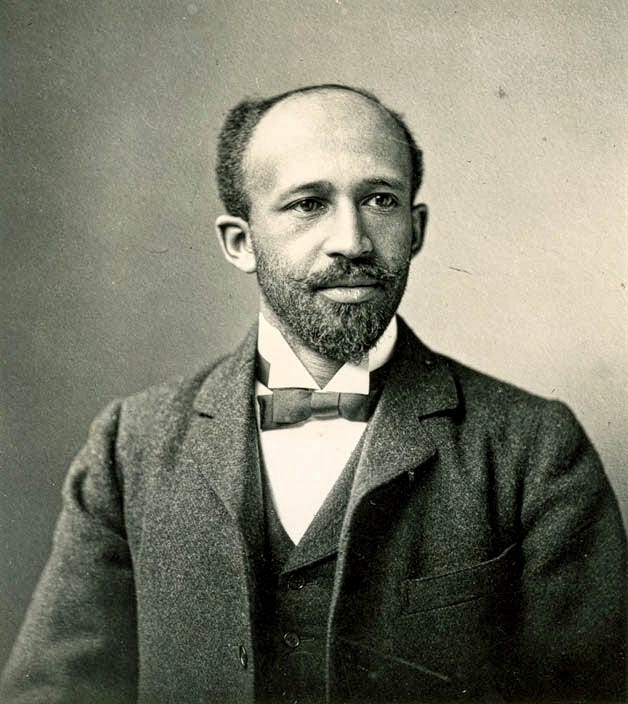
In this moment we look to an address by W.E.B. DuBois at the Southern Negro Youth Congress in Columbia, South Carolina, October 1946, urging young people to regard the South as the battleground in the struggle for emancipation of working people, Black and white. He called on them to fight for “a new nation, a new economy, a new culture in a South really new.”
The future of American Negroes is in the South. Here three hundred and twenty-seven years ago, they began to enter what is now the United States of America; here they have made their greatest contribution to American culture; and here they have suffered the damnation of slavery, the frustration of reconstruction and the lynching of emancipation. I trust then that an organization like yours is going to regard the South as the battle-ground of a great crusade. Here is the magnificent climate; here is the fruitful earth under the beauty of the southern sun; and here, if anywhere on earth, is the need of the thinker, the worker and the dreamer. This is the firing line not simply for the emancipation of the American Negro but for the emancipation of the African Negro and the Negroes of the West Indies; for the emancipation of the colored races; and for the emancipation of the white slaves of modern capitalist monopoly.
Remember here, too, that you do not stand alone. It may seem like a failing fight when the newspapers ignore you; when every effort is made by white people in the South to count you out of citizenship and to act as though you did not exist as human beings while all the time they are profiting by your labor, gleaning wealth from your sacrifices and trying to build a nation and a civilization upon your degradation. You must remember that despite all this, you have allies—and allies even in the white South.
First and greatest of these possible allies are the white working classes about you, the poor whites whom you have been taught to despise and who in turn have learned to fear and hate you. This must not deter you from efforts to make them understand, because in the past in their ignorance and suffering they have been led foolishly to look upon you as the cause of most of their distress. You must remember that this attitude is hereditary from slavery and that it has been deliberately cultivated ever since emancipation.
Slowly but surely the working people of the South, white and Black, must come to remember that their emancipation depends upon their mutual cooperation; upon their acquaintanceship with each other; upon their friendship; upon their social intermingling. Unless this happens each is going to be made the football to break the heads and hearts of the other.
White youth in the South is peculiarly frustrated. There is not a single great ideal which they can express or aspire to, that does not bring them into flat contradiction with the Negro problem. The more they try to escape it, the more they land into hypocrisy, lying and double dealing; the more they become, what they least wish to become, the oppressors and despisers of human beings. Some of them, in larger and larger numbers, are bound to turn toward the truth and to recognize you as brothers and sisters, as fellow travelers toward the dawn.
There has always been in the South that intellectual elite who saw the Negro problem clearly. They have always lacked and some still lack the courage to stand up for what they know is right. Nevertheless they can be depended on in the long run to follow their own clear thinking and their own decent choice. Finally even the politicians must eventually recognize the trend in the world, in this country, and in the South. James Byrnes, that favorite son of this commonwealth, and Secretary of State of the United States, is today occupying an indefensible and impossible position; and if he survives in the memory of men, he must begin to help establish in his own South Carolina something of that democracy which he has been recently so loudly preaching to Russia. He is the end of a long series of men whose eternal damnation is the fact that they looked truth in the face and did not see it; John C. Calhoun, Wade Hampton, Ben Tillman are men whose names must ever be besmirched by the fact that they fought against freedom and democracy in a land which was founded upon democracy and freedom.
Eventually this class of men must yield to the writing in the stars. That great hypocrite, Jan Smuts, who today is talking of humanity and standing beside Byrnes for a United Nations, is at the same time oppressing the Black people of Africa to an extent which makes their two countries, South Africa and the American South, the most reactionary peoples on earth, peoples whose exploitation of the poor and helpless reaches the last degree of shame. They must in the long run yield to the forward march of civilization or die.
If now you young people, instead of running away from the battle here in Carolina, Georgia, Alabama, Louisiana and Mississippi, instead of seeking freedom and opportunity in Chicago and New York — which do spell opportunity — nevertheless grit your teeth and make up your minds to fight it out right here if it takes every day of your lives and the lives of your children’s children; if you do this, you must in meetings like this ask yourselves what does the fight mean? How can it be carried on? What are the best tools, arms, and methods? And where does it lead?
I should be the last to insist that the uplift of mankind never calls for force and death. There are times, as both you and I know, when
Tho’ love repine and reason chafe,
There came a voice without reply,
‘Tis man’s perdition to be safe
When for truth he ought to die.
At the same time and even more clearly in a day like this, after the millions of mass murders that have been done in the world since 1914, we ought to be the last to believe that force is ever the final word. We cannot escape the clear fact that what is going to win in this world is reason if this ever becomes a reasonable world. The careful reasoning of the human mind backed by the facts of science is the one salvation of man. The world, if it resumes its march toward civilization, cannot ignore reason. This has been the tragedy of the South in the past; it is still its awful and unforgivable sin that it has set its face against reason and against the fact. It tried to build slavery upon freedom; it tried to build tyranny upon democracy; it tried to build mob violence on law and law on lynching, and in all that despicable endeavor, the state of South Carolina has led the South for a century. It began not the Civil War — not the War between the States — but the War to Preserve Slavery; it began mob violence and lynching and today it stands in the front rank of those defying the Supreme Court on disfranchisement.
Nevertheless reason can and will prevail; but of course it can only prevail with publicity — pitiless, blatant publicity. You have got to make the people of the United States and of the world know what is going on in the South. You have got to use every field of publicity to force the truth into their ears, and before their eyes. You have got to make it impossible for any human being to live in the South and not realize the barbarities that prevail here. You may be condemned for flamboyant methods; for calling a congress like this; for waving your grievances under the noses and in the faces of men.
That makes no difference; it is your duty to do it. It is your duty to do more of this sort of thing than you have done in the past. As a result of this you are going to be called upon for sacrifice. It is no easy thing for a young Black man or a young Black woman to live in the South today and to plan to continue to live here; to marry and raise children; to establish a home. They are in the midst of legal caste and customary insults; they are in continuous danger of mob violence; they are mistreated by the officers of the law and they have no hearing before the courts and the churches and public opinion commensurate with the attention which they ought to receive. But that sacrifice is only the beginning of battle; you must re-build this South.
There are enormous opportunities here for a new nation, a new economy, a new culture in a South really new and not a mere renewal of an old South of slavery, monopoly and race hate. There is a chance for a new cooperative agriculture on renewed land owned by the state with capital furnished by the state, mechanized and coordinated with city life. There is chance for strong, virile trade unions without race discrimination, with high wage, closed shop and decent conditions of work, to beat back and hold in check the swarm of landlords, monopolists and profiteers who are today sucking the blood out of this land. There is chance for cooperative industry, built on the cheap power of T.V.A. [Tennessee Valley Authority] and its future extensions. There is opportunity to organize and mechanize domestic service with decent hours, and high wage and dignified training.
There is a vast field for consumers’ cooperation, building business on public service and not on private profit as the main-spring of industry. There is chance for a broad, sunny, healthy home life, shorn of the fear of mobs and liquor, and rescued from lying, stealing politicians, who build their deviltry on race prejudice.
Here in this South is the gateway to the colored millions of the West Indies, Central and South America. Here is the straight path to Africa, the Indies, China and the South Seas. Here is the path to the greater, freer, truer world. It would be shame and cowardice to surrender this glorious land and its opportunities for civilization and humanity to the thugs and lynchers, the mobs and profiteers, the monopolists and gamblers who today choke its soul and steal its resources. The oil and sulfur; the coal and iron; the cotton and corn; the lumber and cattle belong to you the workers, Black and white, and not to the thieves who hold them and use them to enslave you. They can be rescued and restored to the people if you have the guts to strive for the real right to vote, the right to real education, the right of happiness and health and the total abolition of the father of these scourges of mankind, poverty.
“Behold the beautiful land which the Lord thy God hath given thee.” Behold the land, the rich and resourceful land, from which for a hundred years its best elements have been running away, its youth and hope, Black and white, scurrying North because they are afraid of each other, and dare not face a future of equal, independent, upstanding human beings, in a real and not a sham democracy.
To rescue this land, in this way, calls for the Great Sacrifice; this is the thing that you are called upon to do because it is the right thing to do. Because you are embarked upon a great and holy crusade, the emancipation of mankind, Black and white; the upbuilding of democracy; the breaking down, particularly here in the South, of forces of evil represented by race prejudice in South Carolina; by lynching in Georgia; by disfranchisement in Mississippi; by ignorance in Louisiana and by all these and monopoly of wealth in the whole South.
There could be no more splendid vocation beckoning to the youth of the twentieth century, after the flat failures of white civilization, after the flamboyant establishment of an industrial system which creates poverty and the children of poverty which are ignorance and disease and crime; after the crazy boasting of a white culture that finally ended in wars which ruined civilization in the whole world; in the midst of allied peoples who have yelled about democracy and never practiced it either in the British Empire or in the American Commonwealth or in South Carolina. Here is the chance for young women and young men of devotion to lift again the banner of humanity and to walk toward a civilization which will be free and intelligent; which will be healthy and unafraid; and build in the world a culture led by Black folk and joined by peoples of all colors and all races — without poverty, ignorance and disease!
William Edward Burghardt (W.E.B.) Du Bois (1868–1963) was a foundational sociologist, historian, civil rights activist, and author who shaped the trajectory of Black liberation and civil rights in twentieth-century America. As the first African American to earn a Ph.D. from Harvard University, Du Bois rejected accommodationist policies, co-founded the NAACP, pioneered empirical sociology, and championed global Pan-Africanism.

1 Comment
This 80-year-old prophetic inspirational speech of one of our most honorable citizens is still very relevant today. It might sound like a socialist utopia, but it contains many practical ideas that should be considered by the modern Left “reformers” and “revolutionaries”. Unfortunately, articles of this depth and breadth are rarely to find in the popular Left media today.
A Farmer Reflects on Juneteenth
I sunk the saved fingers of turmeric root into the tub of soil back in Winter. I waited weeks—as always.
No growth.
After more weeks a light dusting of white mold ghosts spots on the soil surface above the hidden root—as sometimes happens.
No growth.
I imagine the mold signifies rotting turmeric root below. I waited more weeks—this seems longer than last year.
No growth.
The author at Diaspora Gardens on Madeline Island in Wisconsin. (Diaspora Gardens)
The danger of frost is past, and farm and plants are beginning to grow in Diaspora Gardens up here on Madeline Island off of Lake Superior’s southern shore.
I could use these large containers for something else. I could rehabilitate the soil for garden plantings. The morning I’m about to add “reclaim soil” to my to-do list, there it is: a thin sliver of green.
For a few years I’ve played with growing turmeric and ginger. Each year they surprise and teach me with their timing of life rising after a long below-the-surface rest and internal unfolding.
I consider this teaching as I wrap my soul and thoughts around the Juneteenth holiday and story. It is the story of the last enslaved people of African descent to learn, on June 19, 1865, in Galveston, Texas, of their emancipation—two and a half years after U.S. President Abraham Lincoln proclaimed their freedom.
Today, 161 years later, a range of emotions surfaces around the delayed notification.
There is celebration—celebration that freedom was more lived into. This is perhaps a truer Independence Day, if one adheres to Dr. King’s notion that none of us are free until all of us are free.
There is the grief and anger over living enslaved when one could have been living free … and even over those who died in the delay not ever knowing or living their freedom.
There is the grief and loss of being declared free, but lacking the resources, power, safety or systems to actually exist in what is labelled “freedom.” And there is the gratitude that a national holiday acknowledges Juneteenth’s significance.
But back to the slender turmeric stem. How it rises from what has existed and lived for months without my awareness makes me consider how liberation was in theory existing before it was visible, “enforced,” risen. Existing even prior to the announcement from a human mortal president (or before that a human created constitution) and the Union general in Galveston, Texas, on June 19, 1865.
The drum story presentation I used to offer to school children begins with the heartbeat of freedom, wholeness, and life moving in the universe before life as we know it existed—becoming embedded in each of us. Maybe it is still so in this world of humans and earth trapped by warfare, greed, poverty, addiction and more.
Perhaps liberation, wholeness, life are still moving and maturing where we cannot yet know or see. Perhaps these rise—sometimes explosively, sometimes quietly—in so many small sprigs. These sprigs hint at what could yet rise in more fullness.
My growing and sharing of food and medicine is a constant Juneteenth freedom act. I honor and re-live the liberation resolve of those newly emancipated ones. How they created free lives for themselves with businesses and sustenance grown from their expertise with soil, seed and the natural surroundings.
And my soil life holds the practice of believing in what happens in the unseen hidden places. I also consider the turmeric rhizome/root teaching as I sow new seeds with this deepened dedication to cultivating aspiring growers of healthy food and healthy communities.
For 15 years at our micro-farm life, Diaspora Gardens, we have mentored volunteers, interns and apprentices. As many know, most plants grow stronger and healthier with companion plants and mycelial threads planted and growing around them.
So these seeds (and spores) being started are for a vibrant supportive community of companions to strengthen the roots and growth of Diaspora Gardens. They will be rooted in regenerative land cultivation, business skills, cultural and community connection, low-impact life ways, and a model of fair and ethical work life. We truly believe that when we cultivate, empower, and support healing of our next generations who grow our food and grow our communities, we are rooting the future.
When we do this—especially with those most impacted by racism, marginalization and historical wounds—we reclaim and redeem the soil and seeds for tomorrow’s resilience and flourishing.
Regina M. Laroche is founder of Diaspora Gardens, a Land-Art-Spirit practice rooted in regenerative relationships with land, community and heritage. She engages farming, arts, mentoring and spiritual connection to repair, celebrate, and grow a future of justice and abundance. As the daughter of an Afro-Caribbean refugee and an African American sharecropper, a mother, sibling, and spouse, she is devoted to healing wounds of inequity and strengthening bonds of land, community, and ancestry.