The case’s outcome will show whether nondisclosure policies created after the #MeToo movement still hold weight.
By Shireen Akram-Boshar ,
June 26, 2026
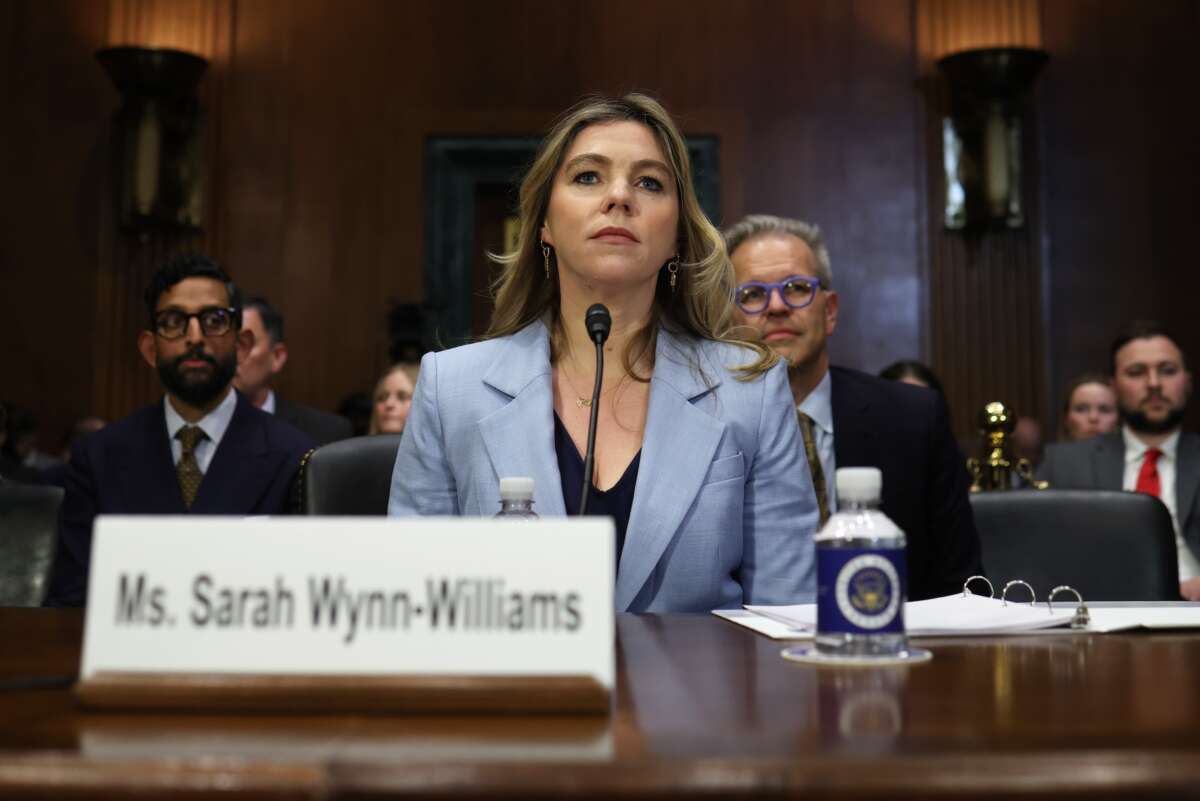
Sarah Wynn-Williams, former Director of Global Public Policy at Facebook, prepares to testify during a Senate Judiciary Committee hearing on Capitol Hill on April 09, 2025 in Washington, DC. In a memoir, Wynn-Williams detailed allegations of misconduct and sexual harassment at Facebook and claimed the company undermined U.S. national security in dealings with the Chinese government.
Win McNamee / Getty Images
Aformer Facebook policy executive is suing parent company Meta to overturn an order barring her from speaking about the company or promoting her memoir detailing the sexual harassment she faced as an employee.
Sarah Wynn-Williams, who worked as director of global public policy at Facebook from 2011 to 2017, filed the suit in a U.S. district court in California on Thursday. The 57-page complaint states that Meta fired her before she could complain about the sexual harassment she faced while working at Facebook, and that the company compelled her to sign a severance agreement that prevented her from “disparaging” Meta and its executives. The suit also states that Meta used “coercive surveillance,” monitoring her public appearances and her ability to speak about her time at Facebook.
“Meta is punishing Sarah Wynn-Williams for disclosing its illegal and indefensible workplace conditions and corporate misconduct,” the complaint says.
In 2025, the former policy director published a memoir called Careless People, detailing the toxic internal culture at the company and the sexual harassment she faced at the hands of Meta executives. The memoir describes how Zuckerberg and other high-level executives demanded absolute loyalty from employees. It also alleges that Facebook provided the Chinese government with access to its citizens’ data, enabling their surveillance, and that Facebook helped “accelerate genocide in Myanmar” against the country’s Muslim population in 2017. Additionally, Wynn-Williams outlines how Facebook targeted young women whom it identified as having low self-esteem in order to generate more revenue.
The lawsuit states that upon firing her, Meta insisted that Wynn-Williams sign a severance agreement as a condition to receiving reimbursement for hundreds of thousands of dollars she had spent booking travel expenses for Zuckerberg and other executives out of pocket. Further, the company tied the severance agreement to her and her two children’s ability to retain health care, while she was experiencing health issues. These financial and health concerns compelled her to sign the agreement that demanded her silence.

Meta’s Allowance of Hate Speech Is Another Side Effect of Big Tech Monopoly
Activists say debates over content moderation devolve into partisan food fights instead of challenging tech titans. By Mike Ludwig , Truthout January 10, 2025
The next year, in the wake of the 2017 #MeToo movement, Meta pledged that it would not force arbitration for sexual harassment claims – as it had done with Wynn-Williams – and later, that it would not require employees to sign agreements preventing their disclosure of workplace misconduct.
Wynn-Williams’ lawsuit states that after this apparent change in policy, she began to speak about her experiences, and soon after that, published her memoir. But Meta responded by obtaining an emergency order that prevented her from publicizing the memoir or speaking about the experiences. She says that the company also surveilled her public appearances, demanded to know her future appearances, and smeared her publicly while preventing her from responding. Meta’s actions show an about-face on its claims to have changed its policies after the #MeToo movement.
“Meta should not be allowed to use forced arbitration and NDA agreements to silence conscientious employees who risk their careers to speak out about company abuses that affect public health and safety,” said Debra Katz, a civil rights and whistleblower attorney who focuses on sexual harassment and whistleblower retaliation.
Katz went on:
Ms. Wynn-Williams sought only to tell the truth about the company’s actions, and about the sexual harassment she experienced at work, truths that Meta has never denied. Now, every current and former Meta employee who signed a forced arbitration agreement is watching to see whether Meta will succeed in using such an agreement to silence and punish whistleblowers. We are hopeful that the court will put a stop to this retaliatory overreach.
The outcome of the case will also demonstrate whether policies created around #MeToo still hold weight, or whether the backlash against it has, at least for the time being, quashed efforts to protect victims of sexual violence in the workplace.

No comments:
Post a Comment