“Transparency can save lives, and keeping park deaths quiet may put visitors at risk,” one critic wrote.
“Disproportionately, those injured and killed from vehicle pursuits are Black.”
By Chris Walker ,
A recently revealed memo issued by the Interior Department late last year directs staff of the department, including within the National Park Service (NPS), not to alert or even confirm to the public when deaths have occurred at national parks.
The current policy is a marked shift from past practices. According to several current and former NPS employees, who spoke to The Washington Post about the new directive, the usual practice has been to alert the public as soon as possible, including by placing a press release on websites within 24-48 hours of a death occurring.
The current policy orders “all Interior bureaus and offices” to “not confirm a death” or any “fatalities, suspected fatalities, serious injuries, or emotionally sensitive incidents.”
“Interior shall not confirm the severity of injuries. Interior may state only that an individual was transported and the method of transport. No additional medical information may be released,” the directive states.
Only “appropriate authorities” — a term that stands undefined — can confirm a death.
National Parks Service Ends Free Entry on MLK Day, Juneteenth
The change “sends a troubling message about who our national parks are for,” one critic said. By Chris Walker , Truthout December 9, 2025
Around 275 people have died each year in national parks across the country from 2020 to 2025, a tiny fraction of the close to 330 million people who visit them each year. Still, the decision to keep information hidden from the public could have consequences, potentially endangering the public if a current threat exists, and possibly stymying criminal investigations.
“Transparency can save lives, and keeping park deaths quiet may put visitors at risk,” Madison Dapcevich from Outside magazine wrote.
Indeed, while some parks like Yosemite have sole jurisdiction of criminal investigations, “In other national parks like Joshua Tree, the responsibility for investigations falls to either the San Bernardino County Sheriff-Coroner or Riverside County, depending on exactly where the injury or fatality occurred,” said Dan Whitten, a search-and-rescue expert, speaking to Outside. “If there has been an issue with federal employees, releasing information without coordinating that through a local agency having jurisdiction, I could understand it could generate problems.”
Last weekend, four deaths occurred at national parks throughout the country. NPS has yet to confirm any of them.
Other NPS-related rules implemented by the Trump administration over the past year have also put visitors at risk.
In August 2025, President Donald Trump, at the urging of Interior Secretary Doug Burgum, relaxed rules regarding U.S. Park Police pursuits within NPS-managed areas. Previous policy limited pursuits in certain non-necessary situations to prevent unintended harm, including to bystanders. The new policy allows pursuits in all situations.
At the time of the policy change, Trump and other officials chortled at the idea of how “much fun” Park Police would have chasing “bad guys” under the new directive. But per a report from Popular Information, the policy has already resulted in at least two deaths of uninvolved bystanders, who were killed in police pursuits that would not have been allowed under the old standard.
On average, at least one person per day dies from a police vehicle pursuit. Many of those killed are bystanders. Often, those who are killed are the people being pursued, who are being chased by police over trivial matters.
“Overwhelmingly, despite their danger to motorists, pedestrians, and officers, these chases begin over relatively minor issues such as a low-level traffic infraction or non-violent misdemeanor, not any kind of violent crime,” an analysis from the Policing Project at the New York University of Law explains. “Disproportionately, those injured and killed from vehicle pursuits are Black.”
By Chris Walker ,
June 26, 2026
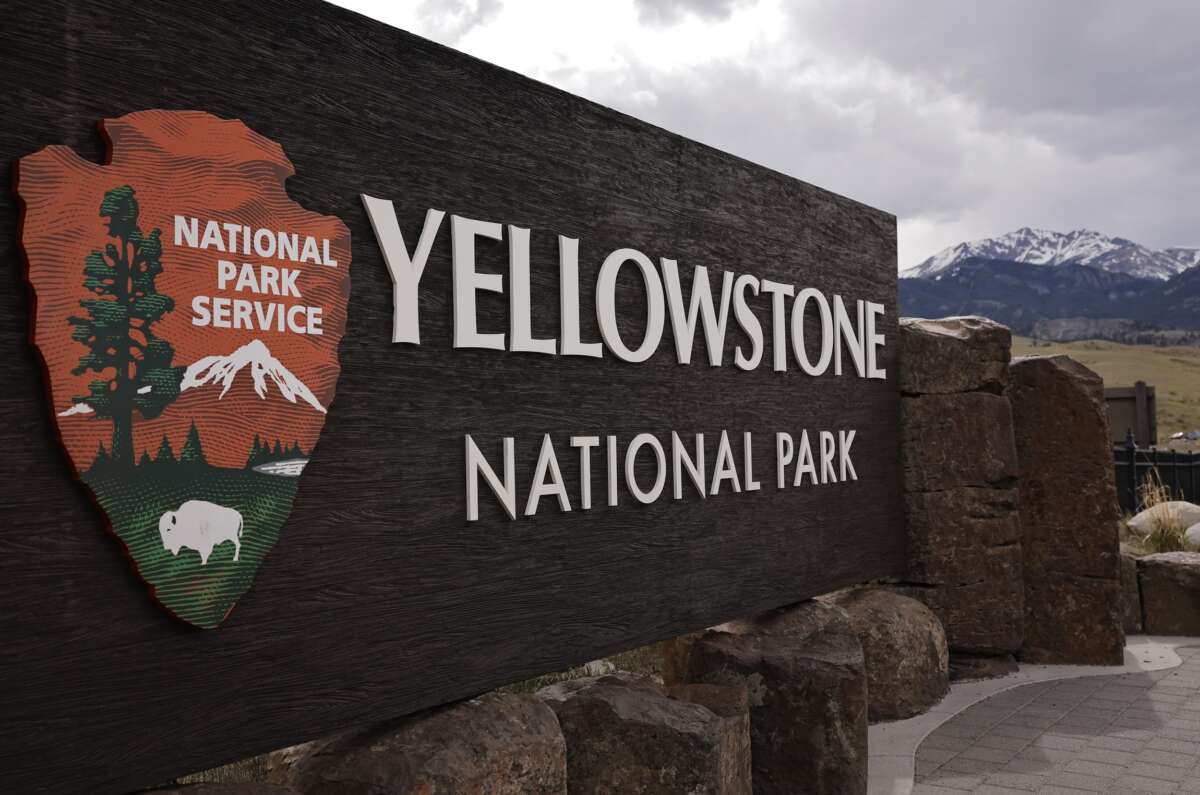
A sign is posted near the North Entrance to Yellowstone National Park on May 19, 2026 in Gardiner, Montana.Mario Tama / Getty Images
A recently revealed memo issued by the Interior Department late last year directs staff of the department, including within the National Park Service (NPS), not to alert or even confirm to the public when deaths have occurred at national parks.
The current policy is a marked shift from past practices. According to several current and former NPS employees, who spoke to The Washington Post about the new directive, the usual practice has been to alert the public as soon as possible, including by placing a press release on websites within 24-48 hours of a death occurring.
The current policy orders “all Interior bureaus and offices” to “not confirm a death” or any “fatalities, suspected fatalities, serious injuries, or emotionally sensitive incidents.”
“Interior shall not confirm the severity of injuries. Interior may state only that an individual was transported and the method of transport. No additional medical information may be released,” the directive states.
Only “appropriate authorities” — a term that stands undefined — can confirm a death.
National Parks Service Ends Free Entry on MLK Day, Juneteenth
The change “sends a troubling message about who our national parks are for,” one critic said. By Chris Walker , Truthout December 9, 2025
Around 275 people have died each year in national parks across the country from 2020 to 2025, a tiny fraction of the close to 330 million people who visit them each year. Still, the decision to keep information hidden from the public could have consequences, potentially endangering the public if a current threat exists, and possibly stymying criminal investigations.
“Transparency can save lives, and keeping park deaths quiet may put visitors at risk,” Madison Dapcevich from Outside magazine wrote.
Indeed, while some parks like Yosemite have sole jurisdiction of criminal investigations, “In other national parks like Joshua Tree, the responsibility for investigations falls to either the San Bernardino County Sheriff-Coroner or Riverside County, depending on exactly where the injury or fatality occurred,” said Dan Whitten, a search-and-rescue expert, speaking to Outside. “If there has been an issue with federal employees, releasing information without coordinating that through a local agency having jurisdiction, I could understand it could generate problems.”
Last weekend, four deaths occurred at national parks throughout the country. NPS has yet to confirm any of them.
Other NPS-related rules implemented by the Trump administration over the past year have also put visitors at risk.
In August 2025, President Donald Trump, at the urging of Interior Secretary Doug Burgum, relaxed rules regarding U.S. Park Police pursuits within NPS-managed areas. Previous policy limited pursuits in certain non-necessary situations to prevent unintended harm, including to bystanders. The new policy allows pursuits in all situations.
At the time of the policy change, Trump and other officials chortled at the idea of how “much fun” Park Police would have chasing “bad guys” under the new directive. But per a report from Popular Information, the policy has already resulted in at least two deaths of uninvolved bystanders, who were killed in police pursuits that would not have been allowed under the old standard.
On average, at least one person per day dies from a police vehicle pursuit. Many of those killed are bystanders. Often, those who are killed are the people being pursued, who are being chased by police over trivial matters.
“Overwhelmingly, despite their danger to motorists, pedestrians, and officers, these chases begin over relatively minor issues such as a low-level traffic infraction or non-violent misdemeanor, not any kind of violent crime,” an analysis from the Policing Project at the New York University of Law explains. “Disproportionately, those injured and killed from vehicle pursuits are Black.”

No comments:
Post a Comment