(RNS) — The Equal Justice Initiative’s Bryan Stevenson says confronting America’s lynching history is a matter of faith that demands truth-telling and repentance — especially on America’s most recently recognized national holiday.

The Rev. Marcus A.L. Freeman III, center, leads a Communion service at the historic Wesley United Methodist Church, Sunday, June 7, 2026, in Austin, Texas. (Video screen grab)
Chloe Landen
June 18, 2026
RNS
AUSTIN, Texas (RNS) — In 2016, 89-year-old Opal Lee walked from Fort Worth, Texas, to Washington, D.C., in hopes of establishing Juneteenth as a national holiday. Partly due to her efforts, it became one in 2021.
Juneteenth commemorates June 19, 1865, when the nation’s last enslaved people in Texas learned of their freedom. The news arrived over two years after Abraham Lincoln’s Emancipation Proclamation.
But for “the grandmother of Juneteenth,” the holiday carries a grief more personal than for most living today. When she was 12 years old, her family moved into a predominantly white neighborhood in Fort Worth. Shortly after, on June 19, 1939, a mob of over 500 white residents burned the family’s home down.
“It’s just another iteration of a lynching, in a way,” said the Rev. Marcus A.L. Freeman III, senior pastor of the historic Wesley United Methodist Church in Austin. “To just take everything you work for and just burn it down.”
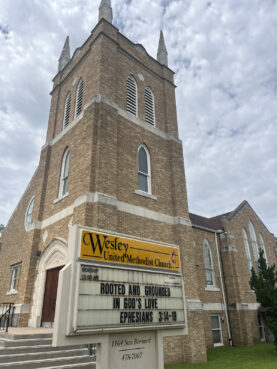
Wesley United Methodist Church in Austin, Texas. (RNS photo/Chloe Landen)
Founded in 1865 by newly freed people, Wesley is one of Austin’s oldest Black institutions. It’s also home to the city’s only lynching marker, which serves to document the history of lynching in America for current and future generations.
Installed in December 2017, the marker is one of over 80 such plaques erected across the nation by the Equal Justice Initiative’s Community Remembrance Project, which began placing the markers to help communities face the violent truths of their past. EJI also constructed the country’s first lynching memorial, the National Memorial for Peace and Justice, in Montgomery, Alabama.
Bryan Stevenson, EJI’s executive director, told RNS that Juneteenth is a time to celebrate emancipation but also to acknowledge continued harm. Despite the positive development in recognizing Juneteenth nationally, “Black people in this country were subjected to another century of torture violence.”
For Stevenson, the work is a matter of faith. Drawing on his own religious community, Stevenson told RNS that people cannot claim to want “heaven and redemption and salvation” but be unprepared to acknowledge, repent or confess to anything. The fact that very few people can name a single Black lynching victim, he added, reveals how much work remains.
Several of EJI’s lynching markers are placed on or near church properties. The Community Remembrance Project erects markers at locations where lynchings occurred, which in some cases have been churches. Yet in instances where very little is known about a lynching, the EJI has asked local Black churches to house the markers.
Black churches served as vital protective spaces for Southerners terrorized by lynchings near and far — which has made them appropriate homes for lynching history, Stevenson said.
That was the case for the marker at Wesley in Austin.
The plaque commemorates a triple lynching in August 1894 after a white child’s death while in the care of a Black female domestic laborer. Without evidence or investigation, the woman and two Black men presumed to be accomplices were quickly arrested. A white mob then abducted the three from jail, took them to a neighboring city, tied them to stakes and shot them to death. No one was ever charged with their killings. The few surviving records suggest the victims were innocent.
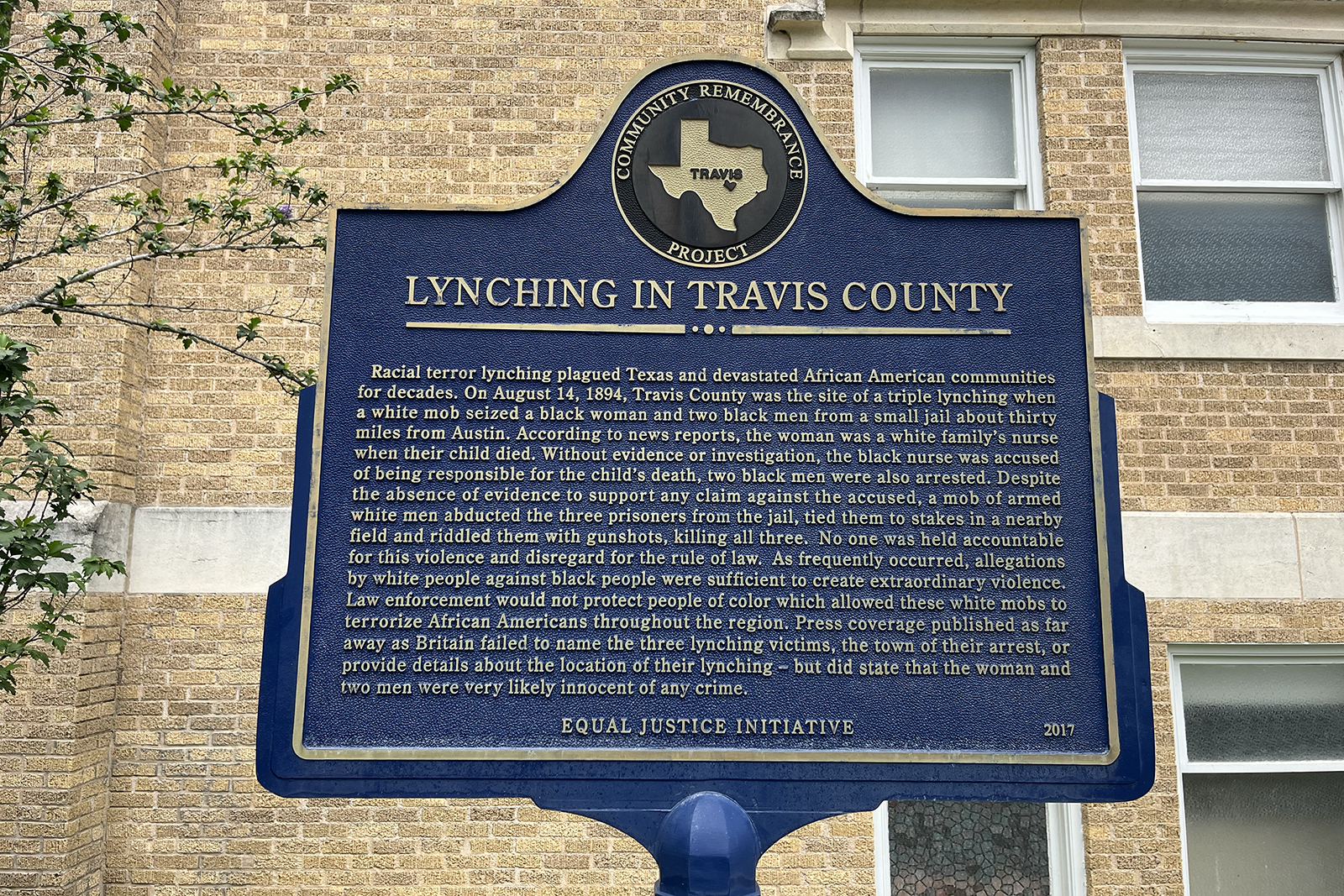
A lynching marker from the Equal Justice Initiative’s Community Remembrance Project on the property of Wesley United Methodist Church in Austin, Texas. (RNS photo/Chloe Landen)
Their tragic story was not unique. From the late 19th to the mid-20th century, Texas was a leader in mob violence. The Tuskegee Institute recorded 493 lynching victims in Texas between 1882 and 1968 — 352 of whom were Black. Nationally, the same archive documented 4,743 people killed by lynching during that period — 3,445 of them Black. But many lynchings went unreported, and the actual statistics are believed to be far higher.
Like the three individuals commemorated by Wesley’s marker, many lynching victims were held in jails, often on false charges or scant evidence, when white mobs came for them. Law enforcement routinely served as willing accomplices and sometimes participated in lynchings.
In some cases, lynchings were communal spectacles that drew thousands and generated a tourist economy. The 1893 lynching of Henry Smith in Paris, Texas, was attended by at least 10,000 white men, women and children. Bound to a 10-foot-tall scaffold bearing the word “JUSTICE,” Smith was tortured for nearly an hour before his body, still alive, was set aflame. Smith’s bones, pieces of his clothing and photographs of his death became fiercely sought-after souvenirs.
No white person was ever convicted of lynching a Black American. And mob members did not conceal their identities when posing beside corpses they had lynched.
Several historians of religion have interpreted lynching as a form of Southern religious practice. Lynch mobs frequently conceived of their violence as divinely ordained justice and were known to praise God amid killings. The ritualized elements of lynching, including forced confessions, drawn-out physical torture and the exchange of relics in a post-lynching marketplace, bear unmistakable resemblances to religious ceremony.
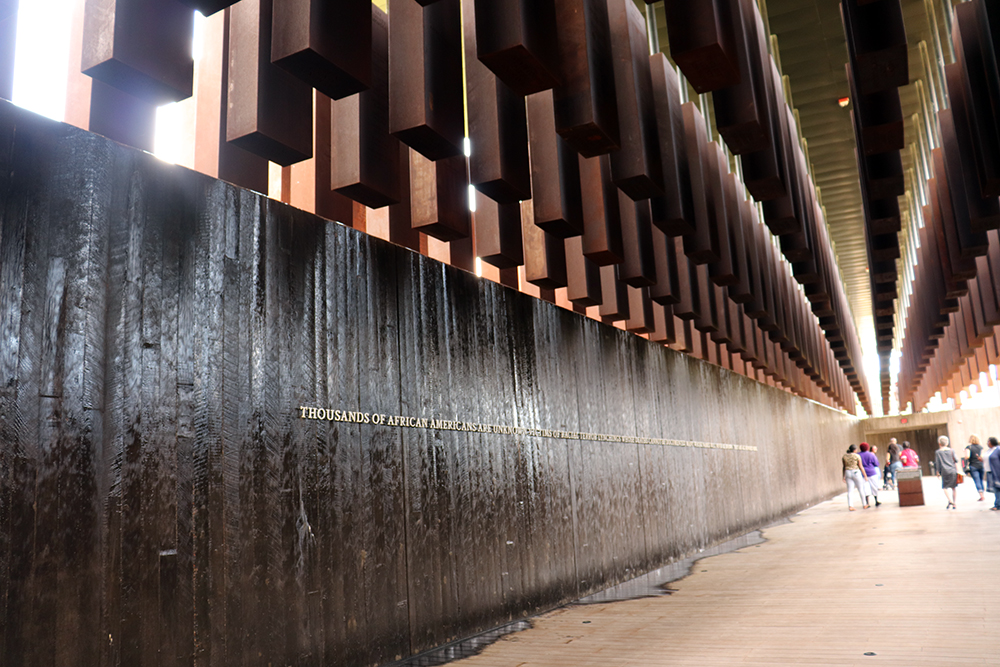
Columns memorializing lynching victims at the National Memorial for Peace and Justice in Montgomery, Ala. (RNS photo/Adelle M. Banks)
And justifying it all were powerful mythologies of Black criminality, none more enduring than the myth of the “Black rapist.” Though accusations of sexual assault were mostly false — and though rape in the South has historically manifested as a crime with Black women as the primary victims — the defense that lynching was necessary for the protection of white women outlived all others.
These myths about Black criminality and inferiority trace their roots to enslavement, Stevenson said, allowing some to “feel moral and decent and Christian” as they sold human beings and then lynched them decades later.
With this context, placing a lynching marker at a Black church carries theological weight, functioning as a counternarrative on sacred ground. For Wesley’s church historian Arlene L. Youngblood, the symbolism is direct. “When you put daylight on something that’s ugly, something that’s shameful,” she told RNS, “Satan has to run.”
According to Youngblood, Wesley was the only Black church in Austin that agreed to take the EJI’s marker. “Even though it’s a sad circumstance,” Youngblood said it was an honor to be asked. And it took courage for Wesley’s reverend at the time, Sylvester Chase, to say yes, she added.
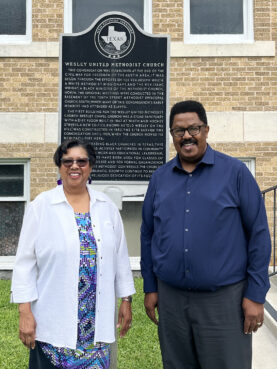
Church historian Arlene L. Youngblood, left, and senior pastor the Rev. Marcus A.L. Freeman III at Wesley United Methodist Church in Austin, Texas. (RNS photo/Chloe Landen)
“It was a public acknowledgment (that) something has happened to us,” Youngblood said.
Since then, Freeman, the current senior pastor, has observed that the marker engenders a discerning “reverence” in those who walk by it, sometimes so totalizing that they don’t turn their heads as he passes behind them. “It’s amazing to watch,” he said.
Freeman sees those moments as an extension of what he calls Wesley’s “ministry of presence” and “ministry of information.” The church has a long educational history rooted in the traditions of the Black church and the theological commitments of the United Methodist denomination. The lynching marker, in his view, is fully consistent with Wesley’s tradition.
“If we don’t learn our history,” Freeman said, “we’re likely to repeat it.”
“And it’s still happening — that’s the killer,” Youngblood added.
For many Black Americans, the history of lynching has never felt distant. Instances of racial terror were not isolated events but part and parcel of systemic racism and white supremacy. Lynchings’ expansive violence reshaped the American landscape, leaving thousands dead and fueling the Great Migration of more than 6 million Southern Black refugees to the North and West, in addition to contributing to the continued disenfranchisement of African Americans.
As EJI research has shown, communities where lynchings occurred are areas that remain disproportionately poor and highly incarcerated. The Center for Justice Research has similarly demonstrated that states’ lynching rates predict current poverty levels, which in turn emerge as the strongest predictor of incarceration. The national incarceration rate of Black Americans is six times the rate of white Americans. Black people are also disproportionately sentenced to death, particularly when the crime involves white victims.
Notably, the first piece of anti-lynching legislation to be signed into law was the 2022 Emmett Till Antilynching Act, which made lynching a federal hate crime. The victory came decades after several failed attempts in the early to mid-20th century.
Stevenson and Youngblood join countless others who understand the police killings of George Floyd, Breonna Taylor, Michael Brown, Trayvon Martin, Ahmaud Arbery and far too many more as modern-day lynchings.
“They were victims of these presumptions of dangerousness and guilt because of their color,” Stevenson said, adding these presumptions are themselves an enduring legacy of slavery’s “great evil” — the false narrative “that somehow Black people aren’t as good as white people or less human, less evolved, less decent.”
“We are not yet free of that narrative,” Stevenson said. “The work remains.”
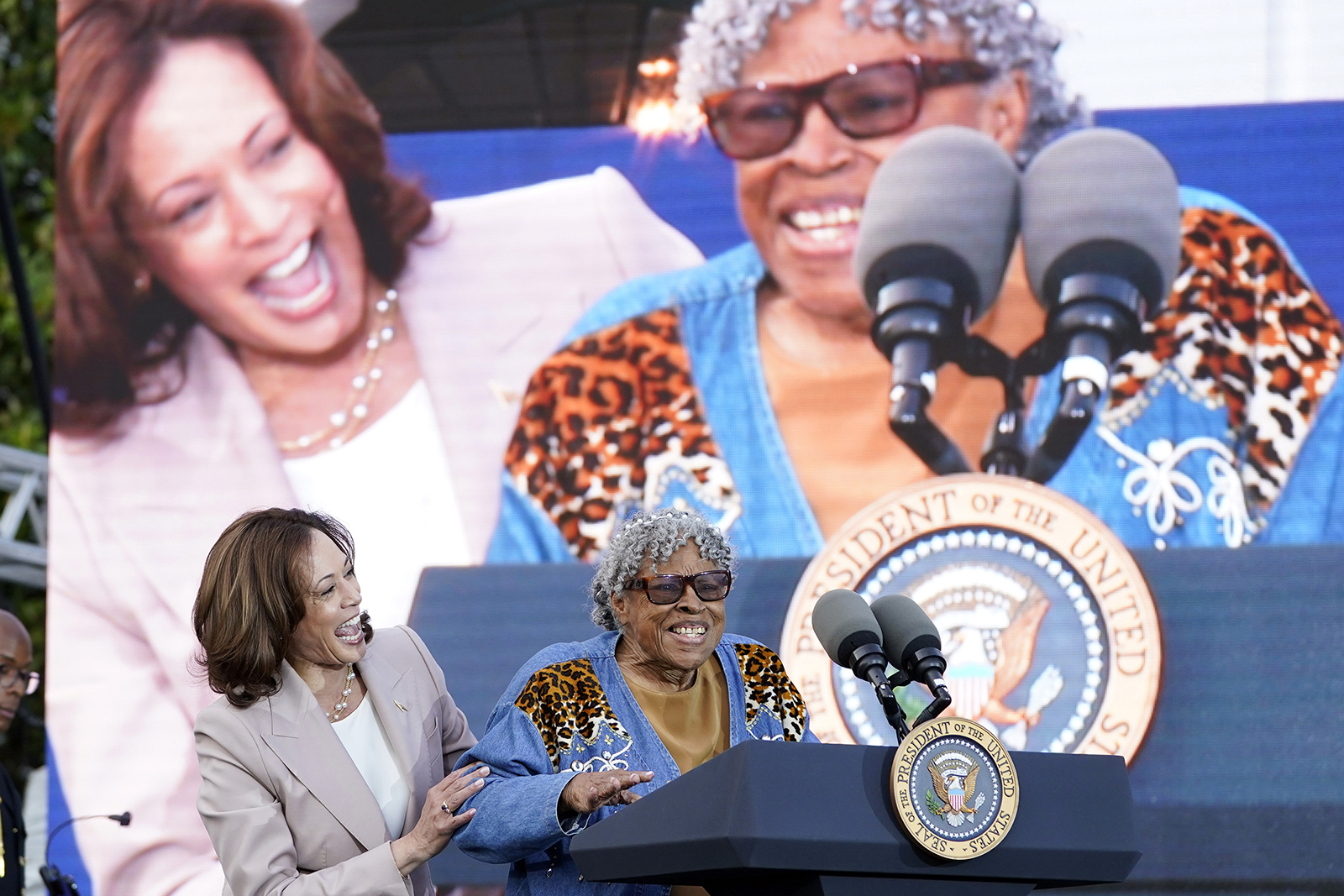
Vice President Kamala Harris welcomes Opal Lee to the stage during a Juneteenth concert on the South Lawn of the White House in Washington, June 13, 2023. Lee is considered the grandmother of Juneteenth. (AP Photo/Susan Walsh)
Stevenson envisions America’s 250th birthday, like Juneteenth, as an opportunity to celebrate but also to acknowledge persisting challenges and commit to overcoming them. The effort of installing lynching markers that draw people of diverse racial backgrounds together “to talk about these tragic incidents of the past and to commit to a healthier future” is, he said, “a microcosm of what the whole nation must do.”
Those at Wesley who shepherd Austin’s only lynching marker are similarly sitting with the full weight of that paradox. Youngblood cited a lack of affordable housing, widespread homelessness, the school-to-prison pipeline that disproportionately affects Black youth, deep cuts to the Supplemental Nutrition Assistance Program and ongoing redistricting and gerrymandering as reasons for grief, not celebration.
“This is the best country in the world,” Youngblood said. “But right now, this is not a pretty year to celebrate America.”
Freeman has found inspiration from Opal Lee herself. In a recent Texas Co-op Power article, Lee, now nearly 100 years old, laughed off the idea of retirement. “People who are old can’t sit in a rocking chair and wait for the Lord to come and get them,” she said. “There’s still plenty of work to be done.”
“The struggle continues, as we say,” Freeman concurred.
In Richmond, churches retrace the path of the enslaved to confront their own history
RICHMOND, Va. (RNS) — Just as the country prepares to celebrate the 250th anniversary of the Declaration of Independence — and Juneteenth — Virginia Episcopalians are trying to reckon with the role of their city and their denomination in slavery as a founding reality of the United States.
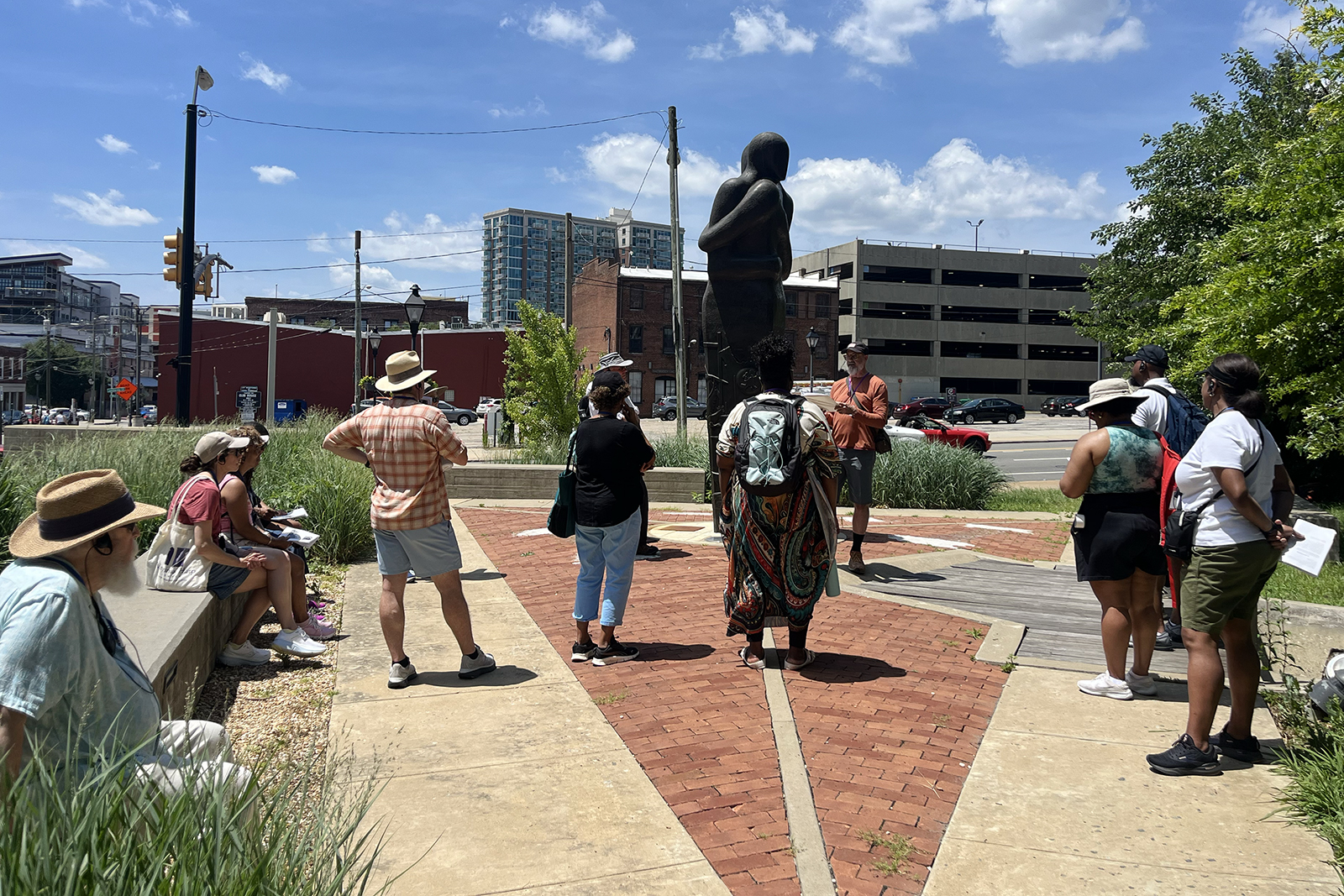
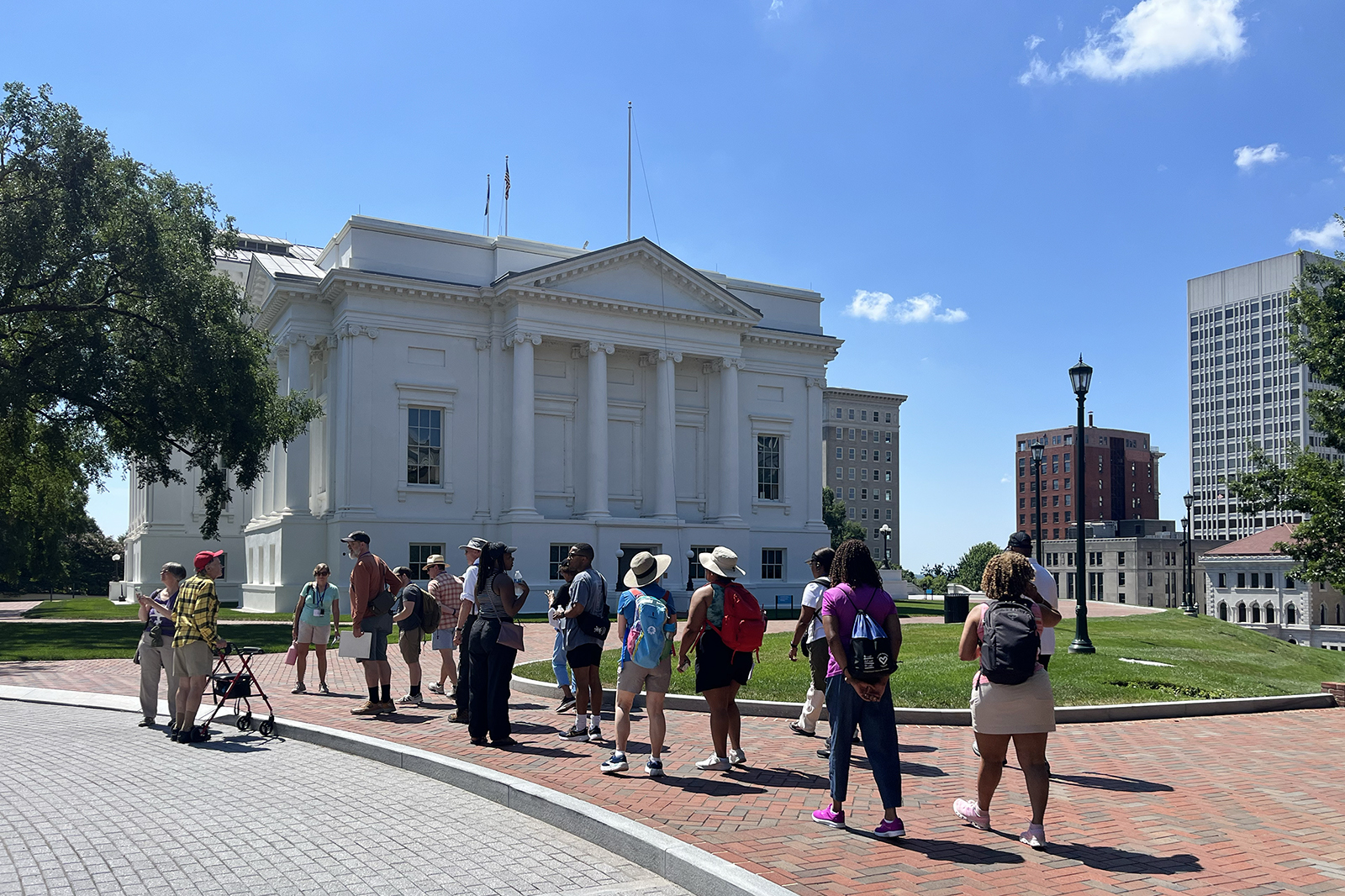
Participants in a slavery pilgrimage visit State Capitol square, Saturday, June 13, 2026, in Richmond, Va. (RNS photo/Fiona André) TOP PHOTO: Docent Glyn Hughes, center right, speaks to a group at the Richmond Slavery Reconciliation Statue, Saturday, June 13, 2026, in Richmond, Va. (RNS photo/Fiona André)
The daylong retreat grew out of a partnership between St. Paul’s Episcopal Church, Virginia’s largest Episcopal parish that was once attended by Confederate army Gen. Robert E. Lee and Confederate President Jefferson Davis, and St. Philip’s Episcopal Church, one of the South’s oldest Black Episcopal churches, founded in 1861 by enslaved and freed Richmonders. The two congregations designed the experience centered on stories of enslaved people and enslavers, prayer and African American spirituals, which they hope will make for a transformative and eye-opening encounter for all who take part.
Just as the country prepares to celebrate the 250th anniversary of the Declaration of Independence — and Juneteenth, the commemoration of when enslaved people of Galveston got news of their liberation on June 19, 1865 — these Episcopalians are trying to reckon with the role of their city and their denomination in slavery as a founding reality of the United States. The churches’ collaboration reflects both the Episcopal Church’s racial reconciliation focus, announced in 2016, by then-Presiding Bishop Michael Curry — the first African American to lead the denomination nationally — and a broader citywide effort to confront the city’s slave-trading past.
St. Paul’s and St. Philip’s, both of whose histories were shaped by Richmond’s role as a major slave-trading center and the capital of the Confederacy, are hoping to translate these efforts into personal transformation.
Before they embarked on the pilgrimage, the group gathered for an introduction session at St. Philip’s. Nikki Fernandes, one of the tour’s docents, reminded them of the day’s spiritual goal. “We hope you leave this pilgrimage with something, and that the Holy Spirit will guide what that something is,” said Fernandes, a Virginia native and a Ph.D. candidate at the University of Pittsburgh.
Walking through these historic sites is more likely to transform people and help the history solidify in their minds than something less immersive, said Jerry Gilbert, one of the pilgrimage’s co-chairs and a vestry member at St. Paul’s. “That may be what people would call the ancestors talking to you, or the place talking to you. … But I think it really happens because I’ve felt it happen,” Gilbert told RNS in an April interview.
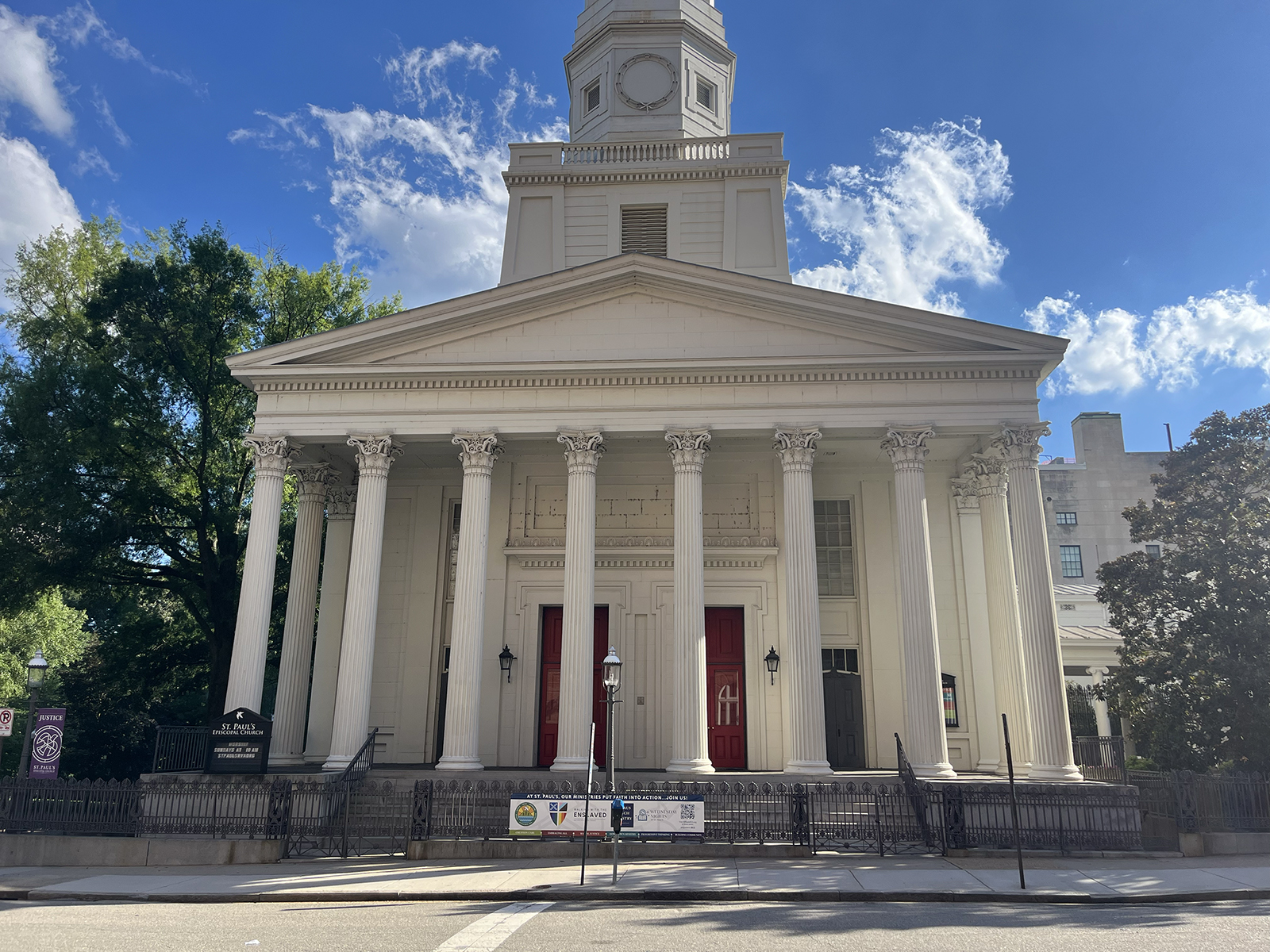
St. Paul’s Episcopal Church, Saturday, June 13, 2026, in Richmond, Va. (RNS photo/Fiona André)
Many participants had heard about the pilgrimage through the churches. The project started at St. Paul’s and took off after the congregation reached out to St. Philip’s to collaborate. Gilbert said the church needed a “nonwhite majority” partner to improve the walks.
“We knew that sometimes white privilege is very blind to seeing all of the aspects of a situation when race is involved,” he said.
St. Paul’s, perched on Richmond Hill near the Virginia Capitol, traces its roots to Monumental Church, established in 1814 by prominent Richmonders — “nearly all” enslavers, according to the church’s website. During a tour stop on Richmond Hill, Glyn Hughes, another docent, stressed that the freedom ideals that fueled America’s founding collided with Virginia’s reliance on slave trading and its leaders’ affiliation with Episcopal and Presbyterian churches.
In front of the state Capitol, which once held church services for Presbyterians and Episcopalians but also served as the Confederate States Congress during the Civil War, Hughes invited participants to “think about how they were mingling Christian values to their ideals.”
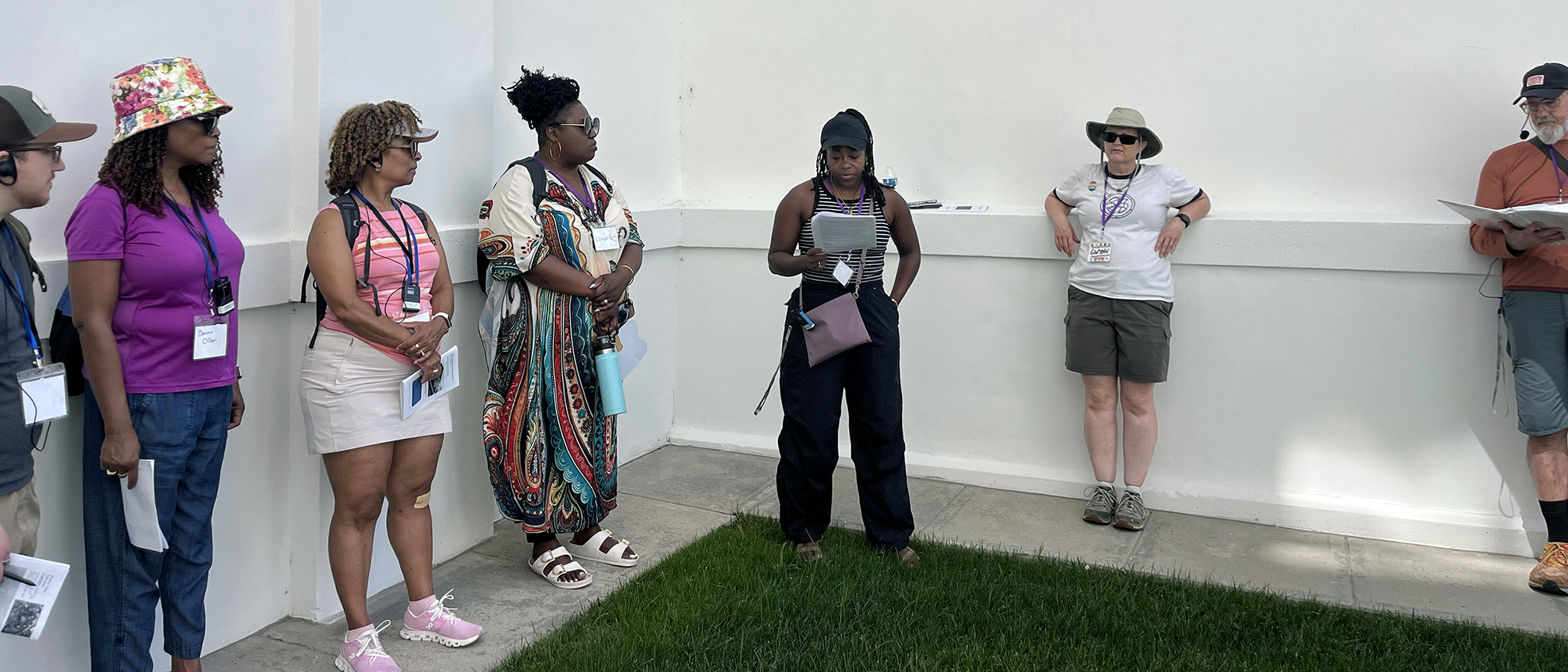
Docent Nikki Fernandes, center, addresses a slavery pilgrimage group on Saturday, June 13, 2026, in Richmond, Va. (RNS photo/Fiona André)
After the 2015 killing of nine Black worshippers at Mother Emanuel AME Church in Charleston, South Carolina, St. Paul’s started examining its own racist past. Five years later, the church removed Confederate symbols from the sanctuary, shedding the most visible reminders of its support for the Confederacy and cutting off its embrace of Lost Cause ideology after the Civil War.
St. Philip’s, nestled in Richmond’s North Side, has served as a refuge for Black Richmonders through the Civil War, the Jim Crow era and today. Despite its prominence for the city’s Black Episcopalians, the church didn’t gain full representation at the diocesan convention until 1937.
The churches’ partnership has been “transformational,” said Crystal Green, a co-chair of the project and a member of St. Philip’s. “It’s part of a healing process that is 400 years in the making, so it’s transformed our lives, our worship styles, and it’s also built a lifetime of friendships.”
Beginning at the “slave trail” shapes participants’ experience of the pilgrimage’s nine remaining stops, organizers noted. The recovered stories of Black Richmonders also ensure participants center the perspectives of enslaved people during the pilgrimage.
At the fifth stop, the First African Baptist Church, Fernandes recounted the story of Henry “Box” Brown, a member of the congregation born into slavery on a Louisa County plantation. In 1849, Brown escaped by shipping himself to Philadelphia in a wooden box to reach freedom in the North.
The tour cultivates a sense of sacredness through prayers, silent reflections and songs. The pilgrimage’s opening prayer, which invites participants to “leave the familiar, the comforting, the known” to find a deeper sense of God, is echoed through the Bible verses associated with each stop. A preacher-style call and response ritual in front of each site also reinforces the pilgrimage’s spiritual dimension.
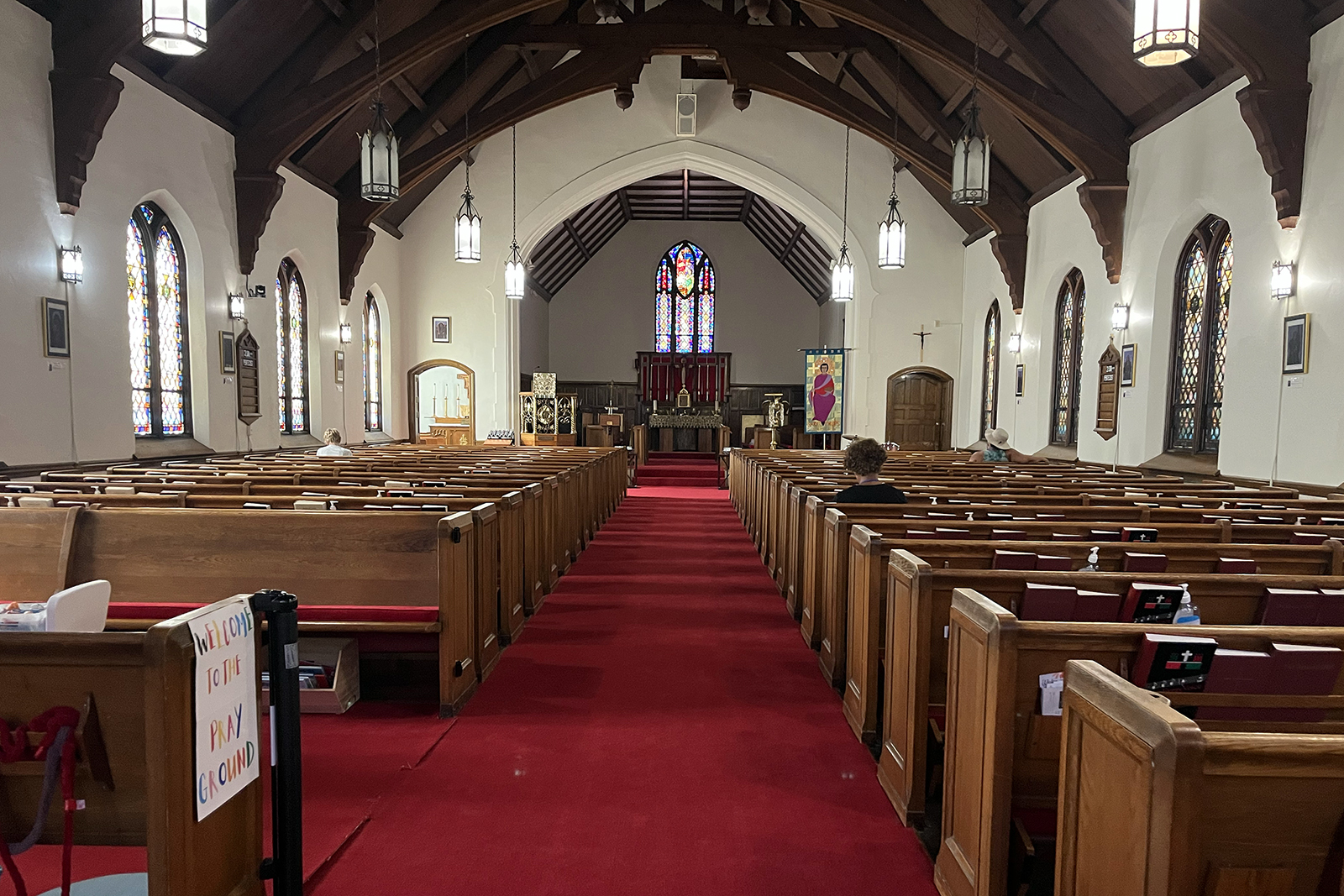
Participants in a slavery pilgrimage take some quiet time in St. Philip’s Episcopal Church, Saturday, June 13, 2026, in Richmond, Va. (RNS photo/Fiona André)
“God of love who traces our journeys,” Hughes said as the group approached each stop. “Enlighten the eyes of our hearts,” participants replied in unison.
The spirituals — including “Amazing Grace,” a hymn that predates the United States, and Thomas Dorsey’s 1930s classic “Take My Hand, Precious Lord” — also help set the pilgrimage’s solemn tone. For Shauntae Lilly, the gospel singer who accompanies the group, the songs are a tribute to the enslaved.
“My voice provides the voice of the journey,” said the 43-year-old singer. “ … Sometimes stories are easier felt than heard.”
Lilly, who grew up attending both Southern Baptist and Black Episcopal churches, said years of observing and listening to church choirs compensate for her lack of classical training. Like some Black participants, Lilly said she feels the presence of her ancestors during her performances.
“I feel as if the good Lord uses my voice to do that,” she said.
The pilgrimage’s last stops — the Shockoe Bottom African Burial Ground, the sunken slave jail of Shockoe Bottom and its dried-up reconciliation fountain — sit under the shadow of Interstate 95. Built in 1958, the highway severed Sixth Mount Zion Baptist Church, a 150-year-old Black Baptist congregation and the pilgrimage’s final stop, from Jackson Ward, Richmond’s historical Black neighborhood.
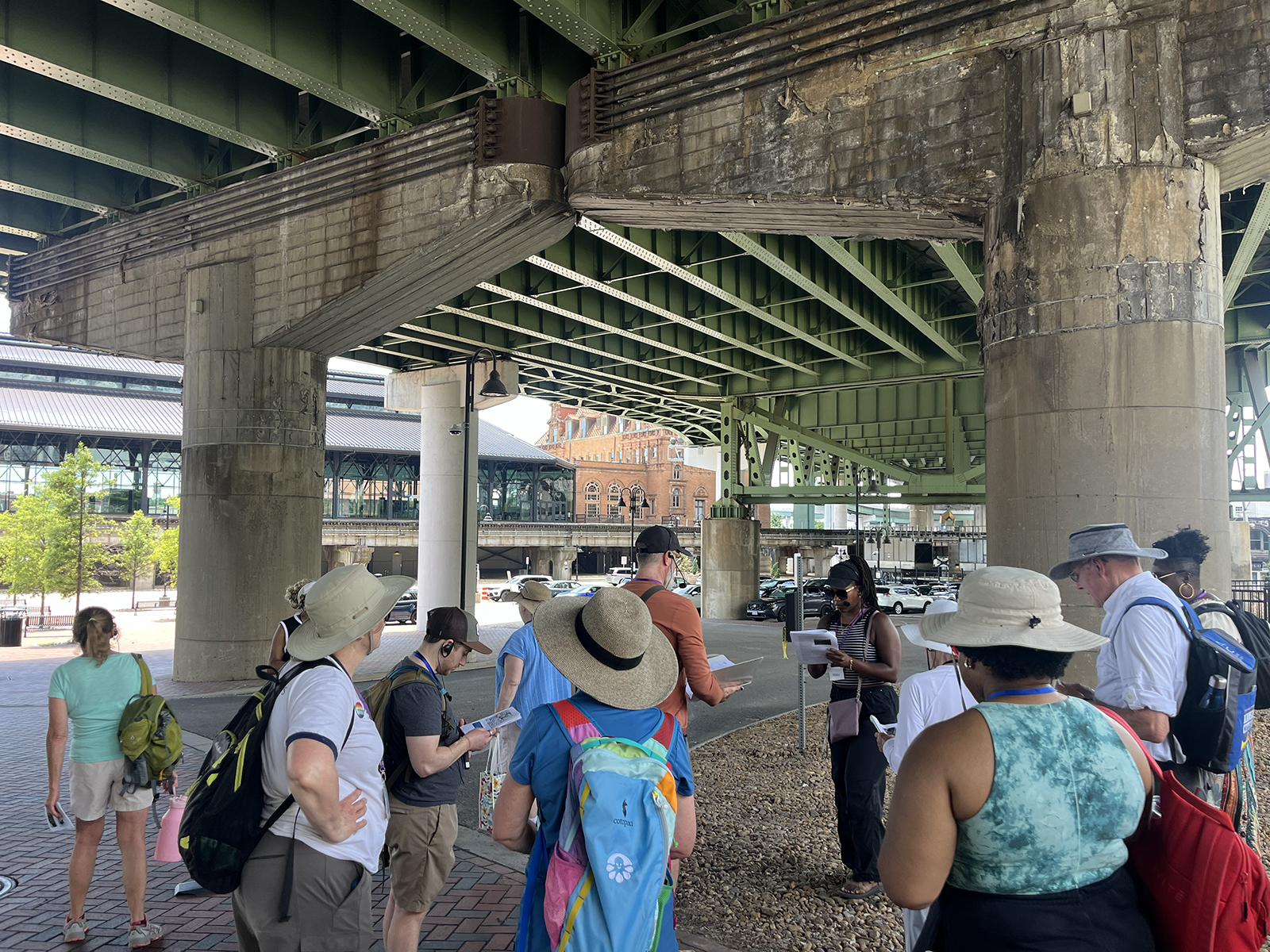
Participants in a slavery pilgrimage stop under Interstate 95, Saturday, June 13, 2026, on the way to Shockoe Bottom African Burial Ground in Richmond, Va. (RNS photo/Fiona André)
To Hughes, the interstate’s path through Jackson Ward is an example of “infrastructural violence” and a reminder of continued harm inflicted on Black Richmonders, he told participants on the bus ride back to St. Philip’s.
After lunch at St. Philip’s, participants scattered across the sanctuary and garden for a period of silent reflection. Guided by a Gospel of Matthew verse quoting the Prophet Isaiah about people who “listen, but never understand … look, but never perceive,” participants then shared their emotions, frustrations and awakenings. Equipped with a form inquiring about how they felt, what they thought and what value they carried as they completed the walk, the group embarked on an hourlong discussion on the pilgrimage.
As she sat on a bench by herself in St. Philip’s garden after the walk, Monica Melton, an educator who has lived in Richmond for 20 years, said she was thinking about how to get more involved.
Ever since the U.S. Supreme Court ruled against a Louisiana congressional map that included two Black-majority districts, thereby hollowing out a key provision of the 1965 Voting Rights Act, Melton said she has been concerned about Black voters’ political power in the South.
“I was really thinking less, maybe about the experience throughout the day, but like ‘where is my voice?’ like my political voice,” she said.
The personal stories of the enslaved, which she called the “most powerful piece,” also changed how she plans to approach discussions on racial history with her students.
Her husband, the Rev. Brent Melton, has also been impacted by the enslaved people’s stories. When the couple, who are white, got home on Saturday, Brent Melton modified the sermon he had prepared for the next-day service to mention the pilgrimage.
As he told the parishioners of Richmond’s Grace & Holy Trinity Church that the “work of the Kingdom coming near” requires building communities, Brent Melton noted how the pilgrimage created community by pushing participants to convene with strangers.
“It was kind of like doing the stations of the cross, we had a simple liturgy, the story slowly unfolded, we even had music with a cantor,” he said. “Before we met in our small group, we were asked to do the most hated thing: do not sit with anyone you know. It was a God experience of movement with strangers. We were in the action of bringing God’s kingdom near.”
As she stepped into St. Philip’s that morning, Munford said, she felt weary of the experience ahead. Time invested in multiple racial reconciliation efforts that ultimately stalled had left her skeptical. “It made me kind of bitter towards the whole reconciliation thing,” she said. But seeing white Virginians willing to face this history gave her hope.
“All I could think is, you’ve got these white people that are interested enough to take out time on their Saturday and go through this process with us,” she said.
RICHMOND, Va. (RNS) — Just as the country prepares to celebrate the 250th anniversary of the Declaration of Independence — and Juneteenth — Virginia Episcopalians are trying to reckon with the role of their city and their denomination in slavery as a founding reality of the United States.
Fiona André
June 18, 2026
June 18, 2026
RNS
RICHMOND, Va. (RNS) – From 1830 to 1860, tens of thousands of enslaved people disembarked ships at Richmond’s Manchester Docks, an entry point into a bondage system that built Virginia’s wealth and shaped the city’s history. Shackled together, the enslaved people trudged along a muddy trail connecting the docks to the city’s auction house, where they were sold and bought as property.
Today, the path, known as the “slave trail,” is part of a citywide walking tour exploring Richmond’s role as a major hub of the domestic slave trade.
As about 20 Virginians marched in line, in silence, over the muddy trail on Saturday (June 13) — some clinging to one another to understand the experience of enslaved people who walked the trail in chains — a gospel singer performed the African American spiritual “Wade in the Water” alongside them.
Walking silently, Renee Munford, who is Black, said she felt her ancestors. The 65-year-old wondered what they thought as they walked, whether they were afraid, confused or both. At some point, she cried.
“Every time I looked out at the water, all I could see was people coming in on ships and disembarking, and just in a frenzy, so my heart bled for that,” she said.
The silent walk was the first part of a historical and spiritual pilgrimage through Richmond led by two local Episcopal churches. The gathering, called “Walking With the Enslaved: The Church’s Role in Slavery Pilgrimage,” seeks to cover the city’s racial history from the steps of Virginia’s state Capitol to a notorious 19th-century slave jail to Richmond’s first African church.
RICHMOND, Va. (RNS) – From 1830 to 1860, tens of thousands of enslaved people disembarked ships at Richmond’s Manchester Docks, an entry point into a bondage system that built Virginia’s wealth and shaped the city’s history. Shackled together, the enslaved people trudged along a muddy trail connecting the docks to the city’s auction house, where they were sold and bought as property.
Today, the path, known as the “slave trail,” is part of a citywide walking tour exploring Richmond’s role as a major hub of the domestic slave trade.
As about 20 Virginians marched in line, in silence, over the muddy trail on Saturday (June 13) — some clinging to one another to understand the experience of enslaved people who walked the trail in chains — a gospel singer performed the African American spiritual “Wade in the Water” alongside them.
Walking silently, Renee Munford, who is Black, said she felt her ancestors. The 65-year-old wondered what they thought as they walked, whether they were afraid, confused or both. At some point, she cried.
“Every time I looked out at the water, all I could see was people coming in on ships and disembarking, and just in a frenzy, so my heart bled for that,” she said.
The silent walk was the first part of a historical and spiritual pilgrimage through Richmond led by two local Episcopal churches. The gathering, called “Walking With the Enslaved: The Church’s Role in Slavery Pilgrimage,” seeks to cover the city’s racial history from the steps of Virginia’s state Capitol to a notorious 19th-century slave jail to Richmond’s first African church.
Participants in a slavery pilgrimage visit State Capitol square, Saturday, June 13, 2026, in Richmond, Va. (RNS photo/Fiona André) TOP PHOTO: Docent Glyn Hughes, center right, speaks to a group at the Richmond Slavery Reconciliation Statue, Saturday, June 13, 2026, in Richmond, Va. (RNS photo/Fiona André)
The daylong retreat grew out of a partnership between St. Paul’s Episcopal Church, Virginia’s largest Episcopal parish that was once attended by Confederate army Gen. Robert E. Lee and Confederate President Jefferson Davis, and St. Philip’s Episcopal Church, one of the South’s oldest Black Episcopal churches, founded in 1861 by enslaved and freed Richmonders. The two congregations designed the experience centered on stories of enslaved people and enslavers, prayer and African American spirituals, which they hope will make for a transformative and eye-opening encounter for all who take part.
Just as the country prepares to celebrate the 250th anniversary of the Declaration of Independence — and Juneteenth, the commemoration of when enslaved people of Galveston got news of their liberation on June 19, 1865 — these Episcopalians are trying to reckon with the role of their city and their denomination in slavery as a founding reality of the United States. The churches’ collaboration reflects both the Episcopal Church’s racial reconciliation focus, announced in 2016, by then-Presiding Bishop Michael Curry — the first African American to lead the denomination nationally — and a broader citywide effort to confront the city’s slave-trading past.
St. Paul’s and St. Philip’s, both of whose histories were shaped by Richmond’s role as a major slave-trading center and the capital of the Confederacy, are hoping to translate these efforts into personal transformation.
Before they embarked on the pilgrimage, the group gathered for an introduction session at St. Philip’s. Nikki Fernandes, one of the tour’s docents, reminded them of the day’s spiritual goal. “We hope you leave this pilgrimage with something, and that the Holy Spirit will guide what that something is,” said Fernandes, a Virginia native and a Ph.D. candidate at the University of Pittsburgh.
Walking through these historic sites is more likely to transform people and help the history solidify in their minds than something less immersive, said Jerry Gilbert, one of the pilgrimage’s co-chairs and a vestry member at St. Paul’s. “That may be what people would call the ancestors talking to you, or the place talking to you. … But I think it really happens because I’ve felt it happen,” Gilbert told RNS in an April interview.
St. Paul’s Episcopal Church, Saturday, June 13, 2026, in Richmond, Va. (RNS photo/Fiona André)
Many participants had heard about the pilgrimage through the churches. The project started at St. Paul’s and took off after the congregation reached out to St. Philip’s to collaborate. Gilbert said the church needed a “nonwhite majority” partner to improve the walks.
“We knew that sometimes white privilege is very blind to seeing all of the aspects of a situation when race is involved,” he said.
St. Paul’s, perched on Richmond Hill near the Virginia Capitol, traces its roots to Monumental Church, established in 1814 by prominent Richmonders — “nearly all” enslavers, according to the church’s website. During a tour stop on Richmond Hill, Glyn Hughes, another docent, stressed that the freedom ideals that fueled America’s founding collided with Virginia’s reliance on slave trading and its leaders’ affiliation with Episcopal and Presbyterian churches.
In front of the state Capitol, which once held church services for Presbyterians and Episcopalians but also served as the Confederate States Congress during the Civil War, Hughes invited participants to “think about how they were mingling Christian values to their ideals.”
Docent Nikki Fernandes, center, addresses a slavery pilgrimage group on Saturday, June 13, 2026, in Richmond, Va. (RNS photo/Fiona André)
After the 2015 killing of nine Black worshippers at Mother Emanuel AME Church in Charleston, South Carolina, St. Paul’s started examining its own racist past. Five years later, the church removed Confederate symbols from the sanctuary, shedding the most visible reminders of its support for the Confederacy and cutting off its embrace of Lost Cause ideology after the Civil War.
St. Philip’s, nestled in Richmond’s North Side, has served as a refuge for Black Richmonders through the Civil War, the Jim Crow era and today. Despite its prominence for the city’s Black Episcopalians, the church didn’t gain full representation at the diocesan convention until 1937.
The churches’ partnership has been “transformational,” said Crystal Green, a co-chair of the project and a member of St. Philip’s. “It’s part of a healing process that is 400 years in the making, so it’s transformed our lives, our worship styles, and it’s also built a lifetime of friendships.”
Beginning at the “slave trail” shapes participants’ experience of the pilgrimage’s nine remaining stops, organizers noted. The recovered stories of Black Richmonders also ensure participants center the perspectives of enslaved people during the pilgrimage.
At the fifth stop, the First African Baptist Church, Fernandes recounted the story of Henry “Box” Brown, a member of the congregation born into slavery on a Louisa County plantation. In 1849, Brown escaped by shipping himself to Philadelphia in a wooden box to reach freedom in the North.
Four years after promising $10M for racial reparations, Virginia’s Episcopalians have little to show
The tour cultivates a sense of sacredness through prayers, silent reflections and songs. The pilgrimage’s opening prayer, which invites participants to “leave the familiar, the comforting, the known” to find a deeper sense of God, is echoed through the Bible verses associated with each stop. A preacher-style call and response ritual in front of each site also reinforces the pilgrimage’s spiritual dimension.
Participants in a slavery pilgrimage take some quiet time in St. Philip’s Episcopal Church, Saturday, June 13, 2026, in Richmond, Va. (RNS photo/Fiona André)
“God of love who traces our journeys,” Hughes said as the group approached each stop. “Enlighten the eyes of our hearts,” participants replied in unison.
The spirituals — including “Amazing Grace,” a hymn that predates the United States, and Thomas Dorsey’s 1930s classic “Take My Hand, Precious Lord” — also help set the pilgrimage’s solemn tone. For Shauntae Lilly, the gospel singer who accompanies the group, the songs are a tribute to the enslaved.
“My voice provides the voice of the journey,” said the 43-year-old singer. “ … Sometimes stories are easier felt than heard.”
Lilly, who grew up attending both Southern Baptist and Black Episcopal churches, said years of observing and listening to church choirs compensate for her lack of classical training. Like some Black participants, Lilly said she feels the presence of her ancestors during her performances.
“I feel as if the good Lord uses my voice to do that,” she said.
The pilgrimage’s last stops — the Shockoe Bottom African Burial Ground, the sunken slave jail of Shockoe Bottom and its dried-up reconciliation fountain — sit under the shadow of Interstate 95. Built in 1958, the highway severed Sixth Mount Zion Baptist Church, a 150-year-old Black Baptist congregation and the pilgrimage’s final stop, from Jackson Ward, Richmond’s historical Black neighborhood.
Participants in a slavery pilgrimage stop under Interstate 95, Saturday, June 13, 2026, on the way to Shockoe Bottom African Burial Ground in Richmond, Va. (RNS photo/Fiona André)
To Hughes, the interstate’s path through Jackson Ward is an example of “infrastructural violence” and a reminder of continued harm inflicted on Black Richmonders, he told participants on the bus ride back to St. Philip’s.
After lunch at St. Philip’s, participants scattered across the sanctuary and garden for a period of silent reflection. Guided by a Gospel of Matthew verse quoting the Prophet Isaiah about people who “listen, but never understand … look, but never perceive,” participants then shared their emotions, frustrations and awakenings. Equipped with a form inquiring about how they felt, what they thought and what value they carried as they completed the walk, the group embarked on an hourlong discussion on the pilgrimage.
As she sat on a bench by herself in St. Philip’s garden after the walk, Monica Melton, an educator who has lived in Richmond for 20 years, said she was thinking about how to get more involved.
Ever since the U.S. Supreme Court ruled against a Louisiana congressional map that included two Black-majority districts, thereby hollowing out a key provision of the 1965 Voting Rights Act, Melton said she has been concerned about Black voters’ political power in the South.
“I was really thinking less, maybe about the experience throughout the day, but like ‘where is my voice?’ like my political voice,” she said.
The personal stories of the enslaved, which she called the “most powerful piece,” also changed how she plans to approach discussions on racial history with her students.
Her husband, the Rev. Brent Melton, has also been impacted by the enslaved people’s stories. When the couple, who are white, got home on Saturday, Brent Melton modified the sermon he had prepared for the next-day service to mention the pilgrimage.
As he told the parishioners of Richmond’s Grace & Holy Trinity Church that the “work of the Kingdom coming near” requires building communities, Brent Melton noted how the pilgrimage created community by pushing participants to convene with strangers.
“It was kind of like doing the stations of the cross, we had a simple liturgy, the story slowly unfolded, we even had music with a cantor,” he said. “Before we met in our small group, we were asked to do the most hated thing: do not sit with anyone you know. It was a God experience of movement with strangers. We were in the action of bringing God’s kingdom near.”
As she stepped into St. Philip’s that morning, Munford said, she felt weary of the experience ahead. Time invested in multiple racial reconciliation efforts that ultimately stalled had left her skeptical. “It made me kind of bitter towards the whole reconciliation thing,” she said. But seeing white Virginians willing to face this history gave her hope.
“All I could think is, you’ve got these white people that are interested enough to take out time on their Saturday and go through this process with us,” she said.

No comments:
Post a Comment