“When will Trump impose consequences for this obstructionism?”
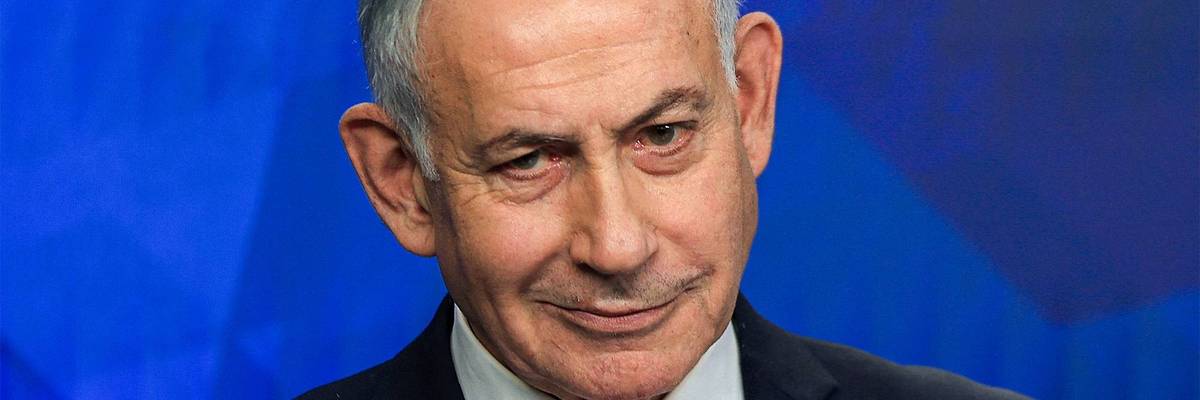
Israel’s Prime Minister Benjamin Netanyahu gives a news conference in Jerusalem on June 15, 2026.
(Photo by Ronen Zvulun/Pool/AFP via Getty Images)
Stephen Prager
Jun 20, 2026
COMMON DREAMS
Israel’s attempts to sabotage the peace agreement between the United States and Iran appear to be working again, with its relentless attacks on Lebanon reportedly prompting Iran to once again close the Strait of Hormuz on Saturday, mere days after it reopened.
“In light of the United States’ clear bad faith and breach of its commitment to implement the first clause of the memorandum of understanding (MOU) for ending the war, and in response to the continuous and ongoing violations of the ceasefire by the Zionist regime in southern Lebanon, it is hereby announced that the Strait of Hormuz will be closed to maritime traffic,” said the Khatam al-Anbiya central headquarters of the Iranian armed forces on Saturday.
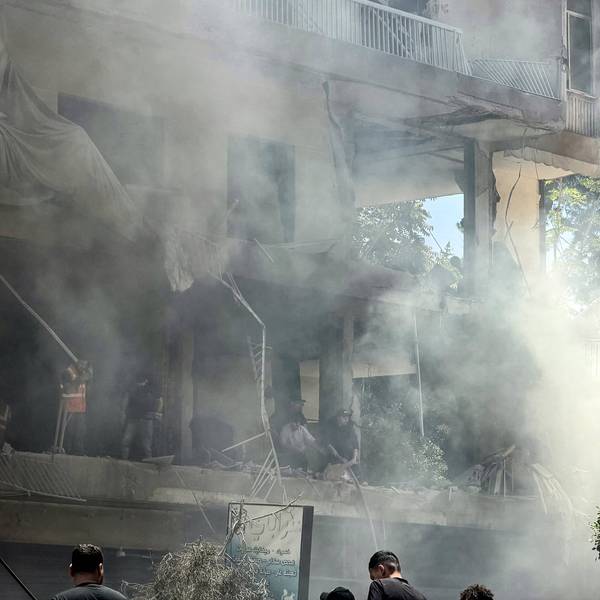
‘Evidently Hoping to Sabotage’ US-Iran Deal, Israel Bombs Beirut
US Central Command claimed that traffic through the strait had continued, with 55 commercial ships traveling through it, though it was unclear when those crossings took place.
The announcement that the strait had once again closed came after days of escalating attacks by Israel despite the memorandum of understanding signed this week, which included terms for a ceasefire “on all fronts, including in Lebanon.”
A ceasefire mediated by the US and Qatar between Israel and Hezbollah went into effect on Friday afternoon despite continuing bombardments by Israel earlier in the day that killed 47 people and wounded 97 after Hezbollah killed four Israeli soldiers occupying Lebanese territory.
Within an hour of the agreement taking effect, Israel began carrying out additional attacks across southern Lebanon and the Bekaa Valley that continued through the night and into Saturday. One strike, on a three-story apartment building in the town of Barish in the Tyre district, reportedly killed a mother, father, and their two children, while wounding 12 others and leaving seven trapped beneath rubble.
Israel said its continued attacks were in response to Hezbollah’s firing of projectiles at Israeli forces in southern Lebanon, which Hezbollah said it launched as Israel attempted to further expand its occupation toward the strategically important Ali al-Taher hills “under the cover of the ceasefire.”
Israel’s leaders have explicitly stated in recent days that they have no intention of abiding by any ceasefire reached between the US and Iran, leading President Donald Trump and Vice President JD Vance to issue uncommonly blunt criticism of Israel’s tactics.
Quoting a senior Trump adviser on Friday, Zeteo reported that behind the scenes, the president is “madder at the Israelis than the Iranians,” believing that Prime Minister Benjamin Netanyahu is trying to drag him back into a war that has brought his popularity to new lows and sparked a global economic crisis.
Just as it has for months, Israel’s tried-and-true tactic of raining hell upon Lebanon every time a US-Iran ceasefire appears close seems to be working once again. The wave of attacks earlier this week led peace talks in Switzerland planned for Friday to be postponed.
As Iranian negotiators departed for Switzerland on Saturday, Esmaeil Baghaei, a spokesperson for the Iranian Foreign Ministry, said little was likely to happen there unless there was evidence that the US would “fulfill its obligations.”
Those obligations include stopping Israel’s occupation and ethnic cleansing campaign in southern Lebanon, which has now killed more than 4,000 people, wounded nearly 12,000, and led to the forced expulsion of more than 1.2 million Lebanese civilians by Israeli forces.
“Israel is still trying to sabotage the ceasefire with Iran by continuing to launch attacks in Lebanon,” said Kenneth Roth, the former executive director of Human Rights Watch. “When will Trump impose consequences for this obstructionism?”
The renewed closure of the Strait of Hormuz raises the stakes considerably for the Trump administration, which has described opening it and restoring economic normalcy as a core objective, with Trump warning of “bedlam” in a matter of weeks if the deal fails and the critical oil shipping route remains closed.
James Bays, the diplomatic editor for Al Jazeera, explained that as Iranian diplomats prepare to negotiate with the US, they feel that “now is a time of maximum leverage” and that they are “using that weapon now” to try to force the US to restrain Israel.
While Trump has had no shortage of angry words and is reportedly “swearing a lot” about Netanyahu behind closed doors, Joe Kent, Trump’s former counterterrorism chief—who resigned earlier this year because of his vocal opposition to the Iran war—argued that unless the US exerts material pressure on Israel, the prime minister has no incentive to stop attacking Lebanon.
“For the MOU to hold and result in a lasting peace, we must restrict aid to Israel immediately and make it clear that we will not defend them should Iran opt to strike in response to Israel’s attacks in Lebanon,” he said. “Israel has not responded to our verbal and written demands—that is not going to change, unless we change it by taking action.”
‘Psychopath’ Ben-Gvir Slammed for Demand That ‘All Lebanon Must Burn’
Ben-Gvir’s invocation of mass slaughter came as the US is trying to negotiate an end to President Donald Trump’s illegal war with Iran.
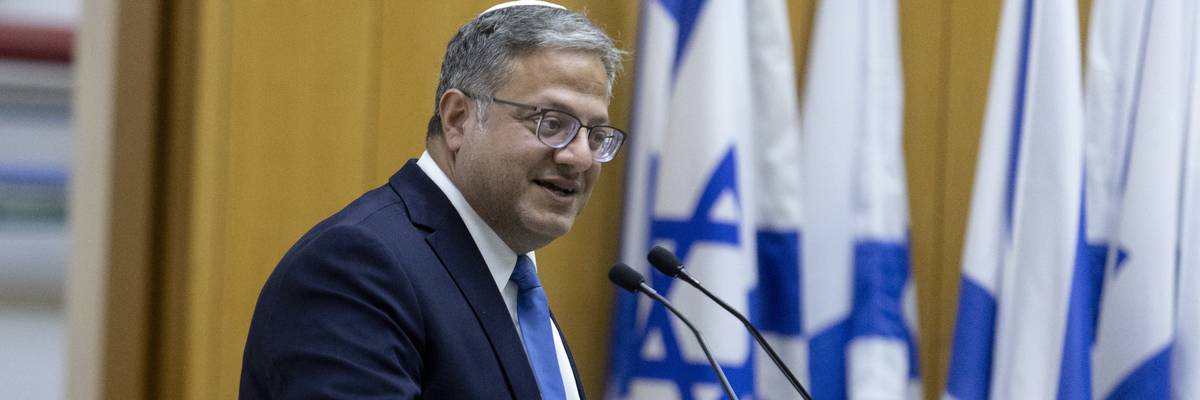
Israel’s Minister of National Security Itamar Ben Gvir speaks at the Israeli parliament on June 3, 2024 in Jerusalem.
(Photo by Amir Levy/Getty Images)
Brad Reed
Jun 19, 2026
COMMON DREAMS
Israeli National Security Minister Itamar Ben-Gvir drew widespread condemnation on Friday when he declared that “all Lebanon must burn” shortly after four Israeli soldiers were killed in a fight with Hezbollah.
In a social media post, Ben-Gvir said that Israel should retaliate for the deaths of the soldiers with a scorched-earth military campaign aimed at killing large numbers of Lebanese people.
“For every tear of an Israeli mother, a thousand Lebanese mothers must weep,” the far-right Israeli Cabinet member wrote. “Enough with the ping-pong. In the Middle East, you don’t win with measured responses and restraint—you need to go berserk. To obliterate. To crush the terror.”
Ben-Gvir also took a subtle shot at the Trump administration, which has called for Israel to cease its military operations in Lebanon so that the US and Iran can negotiate an end to the illegal war of choice President Donald Trump launched earlier this year.
“With all due respect to the Americans, Israel must make it clear to the entire world that the blood of our sons and the security of our citizens are not forfeit,” he wrote. “All of Lebanon must burn.”
Ben-Gvir’s demands for mass slaughter were widely condemned as the ravings of a genocidal maniac.
“You are a psychopath and one of the greatest threats to the security of Israel and of Jewish people around the world,” journalist Yashar Ali wrote in response to Ben-Gvir. “You belong in a psychiatric institution, not in a government role.”
Humza Yousaf, former first minister of Scotland and leader of the Scottish National Party, argued that Ben-Gvir’s ravings should end any question about the nature of Israel’s current government.
“For those who continue to deny Israel has any intention of committing genocide then read this tweet from a minister at the heart of the Israeli government,” Yousaf wrote. “He belongs in the Hague, convicted and in a jail cell.”
Trita Parsi, executive vice president of the Quincy Institute for Responsible Statecraft, said that Ben-Gvir’s post should make Western nations reconsider which nation is the largest obstacle to achieving peace in the Middle East.
“While regional states are intrinsically involved in efforts to bring about peace in the region,” Parsi noted, “this Israeli cabinet minister tweets that ‘All of Lebanon must burn!’ And he repeats that call twice in the post. When will the West ask the question that never gets asked: How is the rest of the region supposed to live in peace and security next to a state that behaves like this?”
British journalist Owen Jones remarked that, in calling for mass killing in Lebanon, Ben-Gvir “sounds like a Nazi.”
“If this wasn’t Israel,” Jones added, “everybody would say he sounds like a Nazi.”
Palestinians May Pay the Price for Netanyahu’s Defeat in Iran
Historically, when Israel fails to secure a strategic breakthrough on one front, it seeks compensation on another—typically where Palestinians are most vulnerable and where international scrutiny is weakest.

A Palestinian boy looks at a burnt vehicle following a reported attack by Israeli settlers in Jalud village, south of Nablus in the occupied West Bank, on March 22, 2026.
(Photo by Jaafar Ashtiyeh/ AFP via Getty Images)
Ramzy Baroud
Jun 19, 2026
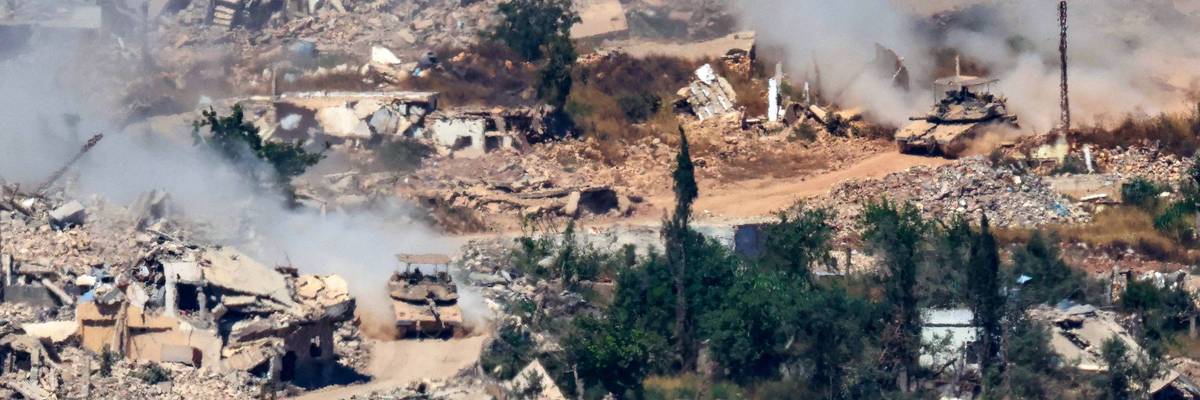
A photo taken from a position in northern Israel shows Israeli Merkava tanks driving along a road past destroyed buildings in southern Lebanon on June 17, 2026.
(Photo by Jack Guez/AFP via Getty Images)
Jake Johnson
Jun 18, 2026
COMMON DREAMS
The Israeli military carried out drone strikes in southern Lebanon on Thursday, just hours after the presidents of the US and Iran signed a memorandum of understanding that establishes a framework for negotiations to end the war launched by the Trump administration and Israel in late February.
Lebanese media reported that “an Israeli drone dropped a munition on Beit Yahoun, injuring two people.” A separate drone strike “on a vehicle at the roundabout between Kfartebnit and Arnoun killed one person and critically wounded another,” according to Lebanon’s National News Agency.
The attacks underscored the threat that Israel’s ongoing military occupation of and assault on Lebanon poses to the prospects of a final peace agreement between the US and Iran. The memorandum of understanding (MOU) that Trump signed in France late Wednesday explicitly includes Lebanon and indicates that continued Israeli attacks would violate the deal.
“The United States of America and the Islamic Republic of Iran and their allies in the current war, by signing this MOU, declared the immediate and permanent termination of military operations on all fronts, including in Lebanon, and undertake from now on not to initiate any war or any military operation against each other and to refrain from the threat or use of force against each other and ensuring the territorial integrity and sovereignty of Lebanon,” the document states.
Israeli Prime Minister Benjamin Netanyahu, who has been accused of working to sabotage diplomatic progress, has voiced defiance in response to negotiations between the US and Iran, refusing to commit to the withdrawal of Israeli troops from southern Lebanon. Since March 2, Israeli attacks on Lebanon have killed around 3,800 people, including hundreds of children, according to Lebanese authorities.
Reuters reported Thursday that Israel is “holding negotiations with the US as it seeks to continue its deployment of troops in southern Lebanon.” An unnamed senior Israeli official, described as close to Netanyahu, told the news outlet that “Israel would not back down on its positions, including keeping troops deployed in the area south of Lebanon’s Litani River.”
“A second Israeli official told Reuters that the outcome of the talks would ultimately depend on whether US President Donald Trump ‘decides to force the issue’ by threatening repercussions if Israel does not abide by the interim Iran pact’s terms,” the outlet added.
Speaking during a press conference on Wednesday, Trump called Netanyahu “a very good man” and an “amazing prime minister.”
“We have a little dispute over Lebanon,” the president added. “I say, ‘You can do a little softer touch, Bibi. You don’t have to knock down a building every time somebody walks into it that’s from Hezbollah.’”
Esmaeil Baqaei, the spokesperson for Iran’s Foreign Ministry, said Thursday that the MOU signed Wednesday would be “nullified” in the absence of a full Israeli withdrawal from Lebanon and an end to military attacks.
“It is the responsibility of the US,” said Baqaei, to “force” Israel to “respect the US commitments to Iran in this document.”
Ben-Gvir’s invocation of mass slaughter came as the US is trying to negotiate an end to President Donald Trump’s illegal war with Iran.
Israel’s Minister of National Security Itamar Ben Gvir speaks at the Israeli parliament on June 3, 2024 in Jerusalem.
(Photo by Amir Levy/Getty Images)
Brad Reed
Jun 19, 2026
COMMON DREAMS
Israeli National Security Minister Itamar Ben-Gvir drew widespread condemnation on Friday when he declared that “all Lebanon must burn” shortly after four Israeli soldiers were killed in a fight with Hezbollah.
In a social media post, Ben-Gvir said that Israel should retaliate for the deaths of the soldiers with a scorched-earth military campaign aimed at killing large numbers of Lebanese people.
“For every tear of an Israeli mother, a thousand Lebanese mothers must weep,” the far-right Israeli Cabinet member wrote. “Enough with the ping-pong. In the Middle East, you don’t win with measured responses and restraint—you need to go berserk. To obliterate. To crush the terror.”
Ben-Gvir also took a subtle shot at the Trump administration, which has called for Israel to cease its military operations in Lebanon so that the US and Iran can negotiate an end to the illegal war of choice President Donald Trump launched earlier this year.
“With all due respect to the Americans, Israel must make it clear to the entire world that the blood of our sons and the security of our citizens are not forfeit,” he wrote. “All of Lebanon must burn.”
Ben-Gvir’s demands for mass slaughter were widely condemned as the ravings of a genocidal maniac.
“You are a psychopath and one of the greatest threats to the security of Israel and of Jewish people around the world,” journalist Yashar Ali wrote in response to Ben-Gvir. “You belong in a psychiatric institution, not in a government role.”
Humza Yousaf, former first minister of Scotland and leader of the Scottish National Party, argued that Ben-Gvir’s ravings should end any question about the nature of Israel’s current government.
“For those who continue to deny Israel has any intention of committing genocide then read this tweet from a minister at the heart of the Israeli government,” Yousaf wrote. “He belongs in the Hague, convicted and in a jail cell.”
Trita Parsi, executive vice president of the Quincy Institute for Responsible Statecraft, said that Ben-Gvir’s post should make Western nations reconsider which nation is the largest obstacle to achieving peace in the Middle East.
“While regional states are intrinsically involved in efforts to bring about peace in the region,” Parsi noted, “this Israeli cabinet minister tweets that ‘All of Lebanon must burn!’ And he repeats that call twice in the post. When will the West ask the question that never gets asked: How is the rest of the region supposed to live in peace and security next to a state that behaves like this?”
British journalist Owen Jones remarked that, in calling for mass killing in Lebanon, Ben-Gvir “sounds like a Nazi.”
“If this wasn’t Israel,” Jones added, “everybody would say he sounds like a Nazi.”
Palestinians May Pay the Price for Netanyahu’s Defeat in Iran
Historically, when Israel fails to secure a strategic breakthrough on one front, it seeks compensation on another—typically where Palestinians are most vulnerable and where international scrutiny is weakest.
A Palestinian boy looks at a burnt vehicle following a reported attack by Israeli settlers in Jalud village, south of Nablus in the occupied West Bank, on March 22, 2026.
(Photo by Jaafar Ashtiyeh/ AFP via Getty Images)
Ramzy Baroud
Jun 19, 2026
Common Dream
Israeli Prime Minister Benjamin Netanyahu is facing perhaps the most precarious moment of his political career. He knows it. His allies know it. And his rivals—both within his coalition and across Israel’s political spectrum—are preparing to capitalize on his growing weakness.
Former Israeli Justice Minister Haim Ramon, who also served as deputy prime minister between 2007 and 2009, is among the latest Israeli political figures to join a growing chorus of criticism directed at Netanyahu.
“In the final result,” Ramon said in an interview with Radio Galey, cited by the Israeli outlet Srugim, “we did not win.” He then broke down that failure in blunt terms: “We did not win in Lebanon, we did not win in Iran, and we did not win against Hamas.”
Another prominent critic is former Israeli army chief Gadi Eisenkot, who joined Netanyahu’s emergency war government following the events of October 7, 2023, before resigning with Benny Gantz in June 2024.
Arab and Muslim countries, along with their allies in the international community, must not wait for Israel to launch a much larger assault on the West Bank before responding.
Beyond accusing Netanyahu of failing to protect Israel on October 7, Eisenkot argues that the prime minister has effectively surrendered Israel’s political decision-making to US President Donald Trump, thereby strategically weakening Israel.
Ironically, Netanyahu’s coalition partners have often been even more opportunistic than the opposition.
Since the formation of the current coalition government on December 29, 2022—widely regarded as the most right-wing government in Israel’s history—figures such as National Security Minister Itamar Ben-Gvir and Finance Minister Bezalel Smotrich have repeatedly used Netanyahu’s political vulnerability to expand their own influence. Whenever Netanyahu needed political support to remain in power, they demanded concessions in return.
For Israel’s far-right extremists, Netanyahu’s inability to secure decisive strategic victories has often translated into opportunities to advance their own agendas. Every setback on the battlefield became an opening for greater settlement expansion, harsher measures against Palestinians, and deeper entrenchment of extremist policies.
Unable to deliver “victory,” Netanyahu turned perpetual war into a political strategy in its own right. The result has been a genocidal war in Gaza, widespread devastation in Lebanon, and a dangerous confrontation with Iran that has repeatedly brought the region to the brink of a wider catastrophe.
For a time, this formula proved politically sustainable. Netanyahu successfully enlisted unwavering US support to keep the fires of war burning. At the same time, the failure of Europe and much of the international community to hold a wanted war criminal accountable provided him with the political space necessary to continue his bloody calculations.
Yet that formula may be nearing its limits. While this possibility may appear encouraging, it comes with a serious warning. If Netanyahu can no longer sustain the wars that have prolonged his political life for nearly three years, he may escalate where resistance is weakest: the occupied West Bank.
Regarding Iran, there is growing recognition that the current confrontation is unsustainable indefinitely and that some form of arrangement will eventually emerge. Likewise, regardless of whether Lebanon is formally included in any future agreement, Israel’s ambition of permanently occupying parts of Lebanese territory remains untenable.
Historically, when Israel fails to secure a strategic breakthrough on one front, it seeks compensation on another—typically where Palestinians are most vulnerable and where international scrutiny is weakest.
As Israeli elections approach, it is therefore reasonable to fear a further escalation of the genocide in Gaza, pushing both the death toll and the level of destruction to new heights. According to Gaza health authorities, nearly 1,000 Palestinians have been killed since the ceasefire agreement was announced in October, bringing the overall death toll of Israel’s genocide in Gaza to 73,000 Palestinians.
Though Israel’s war has already failed to break Palestinian steadfastness, the broader objective remains unchanged: the ethnic cleansing of Palestinians from Gaza and the transformation of the strip into a space that can no longer sustain Palestinian life.
The West Bank, however, presents a different challenge.
There, Israel faces a fragmented political landscape and a Palestinian Authority that refuses to develop an effective strategy for confronting accelerating Israeli violence, ethnic cleansing, home demolitions, land confiscation, and the relentless expansion of illegal settlements.
This vulnerability has enabled Israel to move from discussing annexation to implementing it in practice. The strategy rests on two interconnected pillars: extreme violence and displacement on the one hand, and rapid settlement expansion on the other.
According to an Oxfam International study published on June 12, Israel has killed 1,244 Palestinians, including 268 children, in the occupied West Bank since 2023—more than the total number killed during the previous 17 years combined.
This bloodshed has been accompanied by large-scale displacement that has already uprooted nearly 46,000 Palestinians, many of them from refugee camps and vulnerable communities across the northern West Bank.
An Amnesty International report published on June 10 documented the full or partial displacement of at least 117 Palestinian Bedouin and herding communities between January 2023 and April 2026.
Expectedly, the violence, displacement, settlement expansion, and land seizures are not isolated developments but components of a coherent political project. In September 2025, Smotrich openly proposed the annexation of 82% of the occupied West Bank. What was once presented as a political vision is now steadily being translated into facts on the ground.
The era of Netanyahu may be nearing its end, but before this bloody political chapter closes, countless more Palestinians may be forced to bear the cost.
Arab and Muslim countries, along with their allies in the international community, must not wait for Israel to launch a much larger assault on the West Bank before responding.
The matter demands urgent attention and immediate action.
Our work is licensed under Creative Commons (CC BY-NC-ND 3.0). Feel free to republish and share widely.
Ramzy Baroud
Ramzy Baroud is a journalist and the Editor of the Palestine Chronicle. He is the author of five books including: "These Chains Will Be Broken: Palestinian Stories of Struggle and Defiance in Israeli Prisons" (2019), "My Father Was a Freedom Fighter: Gaza's Untold Story" (2010) and "The Second Palestinian Intifada: A Chronicle of a People's Struggle" (2006). Dr. Baroud is a Non-resident Senior Research Fellow at the Center for Islam and Global Affairs (CIGA), Istanbul Zaim University (IZU). His website is www.ramzybaroud.net.
Full Bio >
Israeli Prime Minister Benjamin Netanyahu is facing perhaps the most precarious moment of his political career. He knows it. His allies know it. And his rivals—both within his coalition and across Israel’s political spectrum—are preparing to capitalize on his growing weakness.
Former Israeli Justice Minister Haim Ramon, who also served as deputy prime minister between 2007 and 2009, is among the latest Israeli political figures to join a growing chorus of criticism directed at Netanyahu.
“In the final result,” Ramon said in an interview with Radio Galey, cited by the Israeli outlet Srugim, “we did not win.” He then broke down that failure in blunt terms: “We did not win in Lebanon, we did not win in Iran, and we did not win against Hamas.”
Another prominent critic is former Israeli army chief Gadi Eisenkot, who joined Netanyahu’s emergency war government following the events of October 7, 2023, before resigning with Benny Gantz in June 2024.
Arab and Muslim countries, along with their allies in the international community, must not wait for Israel to launch a much larger assault on the West Bank before responding.
Beyond accusing Netanyahu of failing to protect Israel on October 7, Eisenkot argues that the prime minister has effectively surrendered Israel’s political decision-making to US President Donald Trump, thereby strategically weakening Israel.
Ironically, Netanyahu’s coalition partners have often been even more opportunistic than the opposition.
Since the formation of the current coalition government on December 29, 2022—widely regarded as the most right-wing government in Israel’s history—figures such as National Security Minister Itamar Ben-Gvir and Finance Minister Bezalel Smotrich have repeatedly used Netanyahu’s political vulnerability to expand their own influence. Whenever Netanyahu needed political support to remain in power, they demanded concessions in return.
For Israel’s far-right extremists, Netanyahu’s inability to secure decisive strategic victories has often translated into opportunities to advance their own agendas. Every setback on the battlefield became an opening for greater settlement expansion, harsher measures against Palestinians, and deeper entrenchment of extremist policies.
Unable to deliver “victory,” Netanyahu turned perpetual war into a political strategy in its own right. The result has been a genocidal war in Gaza, widespread devastation in Lebanon, and a dangerous confrontation with Iran that has repeatedly brought the region to the brink of a wider catastrophe.
For a time, this formula proved politically sustainable. Netanyahu successfully enlisted unwavering US support to keep the fires of war burning. At the same time, the failure of Europe and much of the international community to hold a wanted war criminal accountable provided him with the political space necessary to continue his bloody calculations.
Yet that formula may be nearing its limits. While this possibility may appear encouraging, it comes with a serious warning. If Netanyahu can no longer sustain the wars that have prolonged his political life for nearly three years, he may escalate where resistance is weakest: the occupied West Bank.
Regarding Iran, there is growing recognition that the current confrontation is unsustainable indefinitely and that some form of arrangement will eventually emerge. Likewise, regardless of whether Lebanon is formally included in any future agreement, Israel’s ambition of permanently occupying parts of Lebanese territory remains untenable.
Historically, when Israel fails to secure a strategic breakthrough on one front, it seeks compensation on another—typically where Palestinians are most vulnerable and where international scrutiny is weakest.
As Israeli elections approach, it is therefore reasonable to fear a further escalation of the genocide in Gaza, pushing both the death toll and the level of destruction to new heights. According to Gaza health authorities, nearly 1,000 Palestinians have been killed since the ceasefire agreement was announced in October, bringing the overall death toll of Israel’s genocide in Gaza to 73,000 Palestinians.
Though Israel’s war has already failed to break Palestinian steadfastness, the broader objective remains unchanged: the ethnic cleansing of Palestinians from Gaza and the transformation of the strip into a space that can no longer sustain Palestinian life.
The West Bank, however, presents a different challenge.
There, Israel faces a fragmented political landscape and a Palestinian Authority that refuses to develop an effective strategy for confronting accelerating Israeli violence, ethnic cleansing, home demolitions, land confiscation, and the relentless expansion of illegal settlements.
This vulnerability has enabled Israel to move from discussing annexation to implementing it in practice. The strategy rests on two interconnected pillars: extreme violence and displacement on the one hand, and rapid settlement expansion on the other.
According to an Oxfam International study published on June 12, Israel has killed 1,244 Palestinians, including 268 children, in the occupied West Bank since 2023—more than the total number killed during the previous 17 years combined.
This bloodshed has been accompanied by large-scale displacement that has already uprooted nearly 46,000 Palestinians, many of them from refugee camps and vulnerable communities across the northern West Bank.
An Amnesty International report published on June 10 documented the full or partial displacement of at least 117 Palestinian Bedouin and herding communities between January 2023 and April 2026.
Expectedly, the violence, displacement, settlement expansion, and land seizures are not isolated developments but components of a coherent political project. In September 2025, Smotrich openly proposed the annexation of 82% of the occupied West Bank. What was once presented as a political vision is now steadily being translated into facts on the ground.
The era of Netanyahu may be nearing its end, but before this bloody political chapter closes, countless more Palestinians may be forced to bear the cost.
Arab and Muslim countries, along with their allies in the international community, must not wait for Israel to launch a much larger assault on the West Bank before responding.
The matter demands urgent attention and immediate action.
Our work is licensed under Creative Commons (CC BY-NC-ND 3.0). Feel free to republish and share widely.
Ramzy Baroud
Ramzy Baroud is a journalist and the Editor of the Palestine Chronicle. He is the author of five books including: "These Chains Will Be Broken: Palestinian Stories of Struggle and Defiance in Israeli Prisons" (2019), "My Father Was a Freedom Fighter: Gaza's Untold Story" (2010) and "The Second Palestinian Intifada: A Chronicle of a People's Struggle" (2006). Dr. Baroud is a Non-resident Senior Research Fellow at the Center for Islam and Global Affairs (CIGA), Istanbul Zaim University (IZU). His website is www.ramzybaroud.net.
Full Bio >
Israel Hits Lebanon With Drone Strikes Hours After Trump and Iran Sign Interim Peace Deal
A spokesperson for Iran’s Foreign Ministry said the agreement with the US would be “nullified” if the Trump administration refused to “force” Israel to end its assault on Lebanon.
A spokesperson for Iran’s Foreign Ministry said the agreement with the US would be “nullified” if the Trump administration refused to “force” Israel to end its assault on Lebanon.
A photo taken from a position in northern Israel shows Israeli Merkava tanks driving along a road past destroyed buildings in southern Lebanon on June 17, 2026.
(Photo by Jack Guez/AFP via Getty Images)
Jake Johnson
Jun 18, 2026
COMMON DREAMS
The Israeli military carried out drone strikes in southern Lebanon on Thursday, just hours after the presidents of the US and Iran signed a memorandum of understanding that establishes a framework for negotiations to end the war launched by the Trump administration and Israel in late February.
Lebanese media reported that “an Israeli drone dropped a munition on Beit Yahoun, injuring two people.” A separate drone strike “on a vehicle at the roundabout between Kfartebnit and Arnoun killed one person and critically wounded another,” according to Lebanon’s National News Agency.
The attacks underscored the threat that Israel’s ongoing military occupation of and assault on Lebanon poses to the prospects of a final peace agreement between the US and Iran. The memorandum of understanding (MOU) that Trump signed in France late Wednesday explicitly includes Lebanon and indicates that continued Israeli attacks would violate the deal.
“The United States of America and the Islamic Republic of Iran and their allies in the current war, by signing this MOU, declared the immediate and permanent termination of military operations on all fronts, including in Lebanon, and undertake from now on not to initiate any war or any military operation against each other and to refrain from the threat or use of force against each other and ensuring the territorial integrity and sovereignty of Lebanon,” the document states.
Israeli Prime Minister Benjamin Netanyahu, who has been accused of working to sabotage diplomatic progress, has voiced defiance in response to negotiations between the US and Iran, refusing to commit to the withdrawal of Israeli troops from southern Lebanon. Since March 2, Israeli attacks on Lebanon have killed around 3,800 people, including hundreds of children, according to Lebanese authorities.
Reuters reported Thursday that Israel is “holding negotiations with the US as it seeks to continue its deployment of troops in southern Lebanon.” An unnamed senior Israeli official, described as close to Netanyahu, told the news outlet that “Israel would not back down on its positions, including keeping troops deployed in the area south of Lebanon’s Litani River.”
“A second Israeli official told Reuters that the outcome of the talks would ultimately depend on whether US President Donald Trump ‘decides to force the issue’ by threatening repercussions if Israel does not abide by the interim Iran pact’s terms,” the outlet added.
Speaking during a press conference on Wednesday, Trump called Netanyahu “a very good man” and an “amazing prime minister.”
“We have a little dispute over Lebanon,” the president added. “I say, ‘You can do a little softer touch, Bibi. You don’t have to knock down a building every time somebody walks into it that’s from Hezbollah.’”
Esmaeil Baqaei, the spokesperson for Iran’s Foreign Ministry, said Thursday that the MOU signed Wednesday would be “nullified” in the absence of a full Israeli withdrawal from Lebanon and an end to military attacks.
“It is the responsibility of the US,” said Baqaei, to “force” Israel to “respect the US commitments to Iran in this document.”

No comments:
Post a Comment