EU sea defence: the new race to protect cables, pipelines and trade
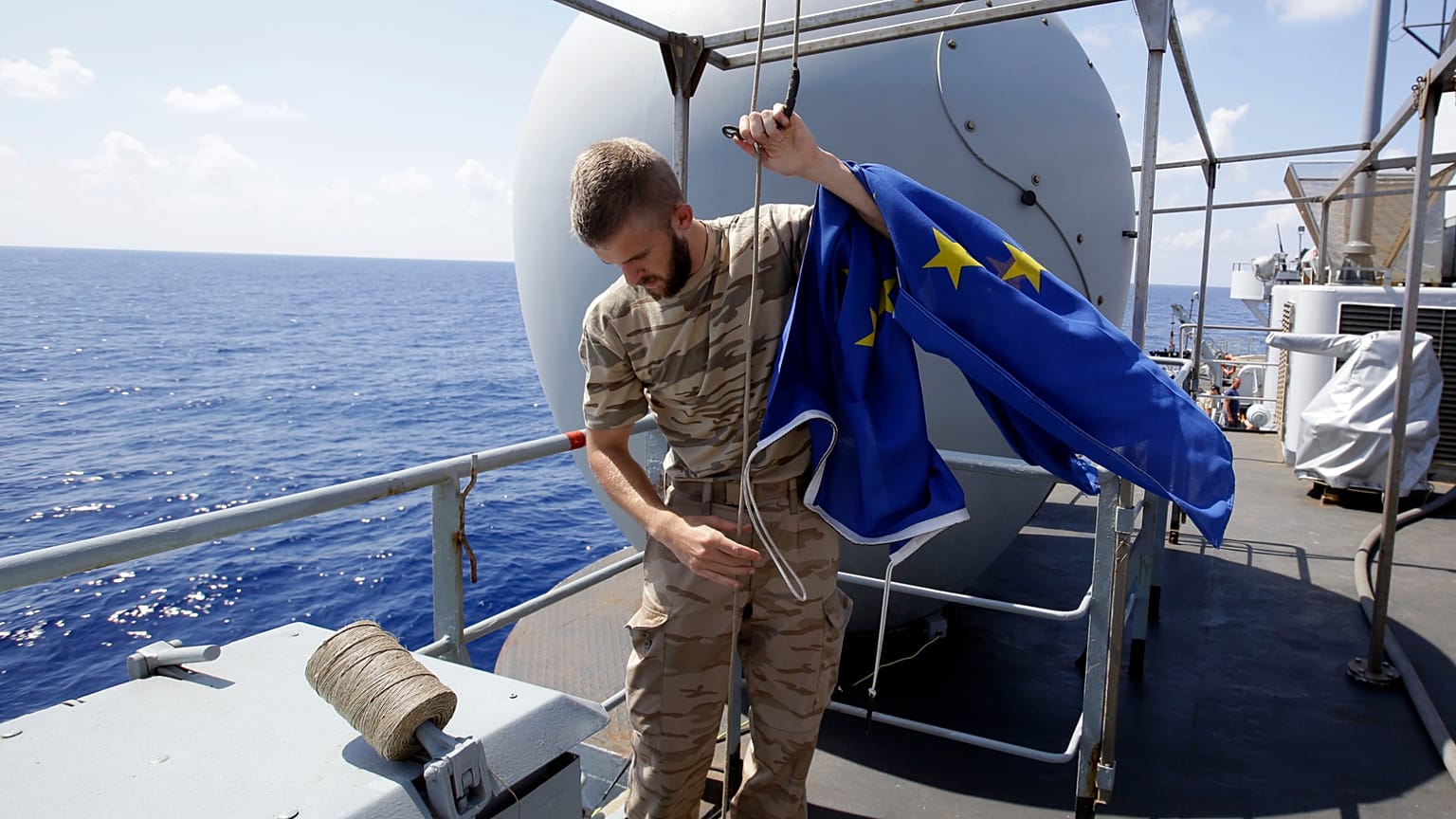
Is the deep blue sea the next frontier for defence? Global economies are increasingly dependent on vulnerable subsea data and energy pipelines. So, the EU and its members are shifting budgets towards maritime defence tools.
In just the last decade, the EU has spent almost €118 billion in maritime defence, with a sharp 23.6 percent increase in 2022 after Russia’s invasion of Ukraine.
Data from the EU Blue Economy Observatory show a sharp rise in domestic maritime defence spending, reaching a record high of €11.6 billion. Submarines alone account for 27 percent of the EU's total production value; the rest includes surface ships, aircraft, and other types of warfare.
The bloc decided to transition from a purely commercial ‘blue’ economy approach to a securitised maritime strategy. In 2023, it updated its European Union Maritime Security Strategy (EUMSS) to protect critical seabed infrastructure.
Then it locked in its strategic defence priorities by launching dedicated European Defence Projects of Common Interest and implementing a Submarine Cable Security Toolbox to counter grey-zone threats and protect underwater networks.
Protecting international trade
The global economy relies almost completely on secure, open seas. More than 95 percent of international digital traffic moves through them. Financial transfers happen through over 1.4 million kilometres of submarine fibre-optic cables, which carry an estimated €9.2 trillion in financial transactions every single day. Approximately two-thirds of the world’s oil and gas is either extracted at sea or transported by water.
80 percent of global trade volume is transported by ocean shipping. For the EU, maritime transport accounts for 75.6 percent of all imports and 73 percent of all exports. It totals around €1.126 trillion in goods annually. A disruption at key maritime chokepoints risks triggering inflation and global manufacturing shortages.
An attack on these sea lanes and underwater assets would paralyse Europe, so it needs more than traditional naval patrols. “Underwater Domain Awareness is a critical activity to know what is happening below the surface, particularly around cables, pipelines and offshore energy infrastructure, prioritising those identified as critical for the security of the Union”, said Jürgen Scraback, Head of the Maritime Domain Unit at the European Defence Agency (EDA).
As threats increasingly come from low-cost drones, uncrewed underwater vehicles and mine warfare, governments are investing in autonomous technologies and surveillance systems. Between 2016 and 2025, the EU's annual production value of crewless vehicles, including aerial and submarine drones, increased by 132 percent to €847 million. Fixed-wing unmanned systems accounted for one third of that output, worth €277 million, while production of traditional unmanned submarine platforms fell by 23 percent over the same period.
Fleet modernisation continues to focus on both conventional naval assets and autonomous platforms. Manned surface ships now account for 65 percent of EU maritime defence vehicle production value and serve as the primary platforms for command, logistics and force projection.
Submarines represent another 27 percent of production, supported by new procurement programmes and investment in next-generation underwater weapons. At the same time, autonomous surface vessels and unmanned underwater vehicles are becoming increasingly important for surveillance, reconnaissance and infrastructure monitoring missions.
Investments also extend to digital tech for maritime surveillance, with European operators deploying AI-enabled unmanned systems to monitor ports, offshore energy infrastructure, and submarine cables, detecting threats across large areas
For Scraback, “autonomous and unmanned systems combined with AI-enabled data fusion are among the technologies likely to have the greatest impact. They can provide persistent surveillance over large areas without requiring expensive crewed platforms to remain almost permanently deployed”.
How is the EU boosting maritime defence?
The 2014 Maritime Security Strategy guides Europe's maritime strategy, protecting citizens, the economy, infrastructure, and borders, while redefining Europe’s approach to maritime defence.
“The new strategy calls for a greater emphasis on the hard power aspects of maritime defence and security, where the EU had previously faced challenges in establishing a role and identity”, said Chris Kremidas-Courtney, senior advisor at the European Policy Centre and associate fellow at the Geneva Centre for Security Policy. It identifies “the protection of critical infrastructure in the maritime domain as a key priority”, they added.
The Industrial Maritime Strategy, adopted in March 2026, backs this shift. It boosts Europe's naval production through a new EU Industrial Maritime Value Chain Alliance and reinforces naval, underwater, and dual-use capabilities, including a dual-use ferry construction programme.
By July, Europe allocated €325 million to five European Defence Projects of Common Interest, including one maritime and seabed defence project to strengthen its industrial base. Since February, a new Counter-Drone Action Plan has shifted production towards unmanned naval drones and counter-drone systems for aerial, surface, and underwater threats.
The EU funds its naval ramp-up through defence tools, such as the European Defence Industrial Strategy and the €1.5 billion European Defence Industry Programme. The Readiness 2030 roadmap totals over €800 billion, including naval capabilities and sea lines of communication protection.
The bloc also invests in detection and surveillance technologies to fight threats and sabotage to seabed cables. As cables cover large areas, are privately owned and can be easily damaged, “the best approach is a layered resilience system designed to make interference detectable, limit the disruption caused by a successful attack and restore service quickly”, Kremidas-Courtney explained.
This thinking now drives EU policy. The Action Plan on Cable Security (2025) strengthens Europe’s ability to prevent, detect, respond to, and recover from cable incidents that disrupt critical functions like communication and energy supply. The €92 million OceanEye expands maritime awareness using AI, autonomous sensors, and digital twins.
Under Horizon Europe, the UnderSect and Smart Maritime and Underwater Guardian projects invest nearly €6 million each in underwater threat-detection systems for ports and maritime infrastructure. European Defence Fund (EDF) projects, such as SHIELD and SOUND2, develop AI systems to detect threats using underwater acoustic signals.
Ramping up maritime defence goes beyond detecting and repairing cable breaks. For Kremidas-Courtney, authorities should identify behavioural patterns such as unexplained slowing, shipping lane deviations, and manipulation of identification signals.
“The most effective solution to me is an integrated information-and-action network that fuses undersea sensors, AIS data, coastal radar, satellite imagery, intelligence and port records into a continuously staffed existing regional maritime operations centre”, Kremidas-Courtney explained.
Who invests the most?
Between 2016 and 2025, cumulative EU production of maritime defence vehicles and equipment reached €117.8 billion. According to the EU Commission’s Blue Economy Observatory, production remained concentrated in four countries. France, Germany, Italy and Spain together account for 87 percent of the bloc's maritime defence industrial output. The Netherlands, Sweden and Poland contribute a further 8 percent, largely through surveillance technologies and maritime security systems.
In 2025, France generated 37 percent of the EU’s total production of maritime defence vehicles. Germany and Italy each contributed 19 percent, and Spain followed with 8 percent. These four countries accounted for 82 percent of the EU’s total output value and 60 percent of the EU's total defence expenditure. This shows that defence spending remains higher in member states with a long tradition of armaments.
“A few large navies can provide scarce high-end capabilities, but they can’t secure every coastline, patrol the sea lanes, and protect every piece of undersea infrastructure. Europe doesn’t need everyone to build a fleet to match Italy's or France's, but it does need credible, distributed forces connected by interoperable systems and a shared maritime picture. The only way to make that work is a whole-of-Europe approach which includes the UK and Norway”, Kremidas-Courtney warned.
At company level, the France-based Naval Group led with 24 percent of the EU’s total output, producing advanced surface combatants (frigates and corvettes), nuclear-powered submarines, and unmanned surface and underwater systems. Italy’s Fincantieri (15 percent) specialises in warships and underwater defence systems, including torpedoes and sonars.
The German Thyssenkrupp Marine Systems accounted for 8 percent of the EU’s overall market for maritime defence vehicles, focusing on surface vessels and submarine construction. Spain’s Navantia (7 percent) builds multi-mission frigates, AIP-equipped submarines, aircraft carriers and patrol vessels.
The EDF supports European companies in developing joint defence technologies and equipment. It invests €2.7 billion in collaborative defence research and €5.3 billion in collaborative capability development for the period 2021-2027. The 2025 EDF totals €1.07 billion and funds 57 projects, including E-DOMINION, which develops a digital architecture and combat cloud for European navies.
According to Scraback, “we need to continue shifting from fragmented national solutions towards interoperable, scalable and jointly developed capabilities”. He explained that the European Defence Project of Common Interest on Integrated Maritime and Seabed Defence “can be a key vehicle for this, bringing Member States, existing European programmes and investments together under one coherent framework”.
EU pours billions into maritime defence as threats to its seas persist
From undersea cables to warships, the EU is spending record sums to defend its waters. Watch the video.
The EU is increasing maritime defence spending as threats to its ports, undersea cables and offshore infrastructure grow.
90 percent of EU trade, energy supplies and internet data move by sea. This exposes the bloc to hybrid and cyber attacks, border tensions and infrastructure sabotage, including from Russia.
Brussels updated its Maritime Security Strategy in March 2023 and funding followed. EU countries spent €343 billion on defence in 2024, up 19 percent year-on-year. Equipment procurement jumped 39 percent. Spending hit a record €392 billion in 2025, much of it through the €150 billion SAFE fund under the EU's Readiness 2030 roadmap.
A large share goes to building ships. The bloc's maritime defence industry produced €13.7 billion worth of vessels in 2025, two-thirds surface ships. France, Germany, Italy and Spain accounted for 82% of output. Shipbuilders Naval Group, Fincantieri, Thyssenkrupp Marine Systems and Navantia cooperate on the European Patrol Corvette project while securing multi-billion-euro export deals with Norway and Indonesia.
Which EU countries invest more in maritime defence and why?
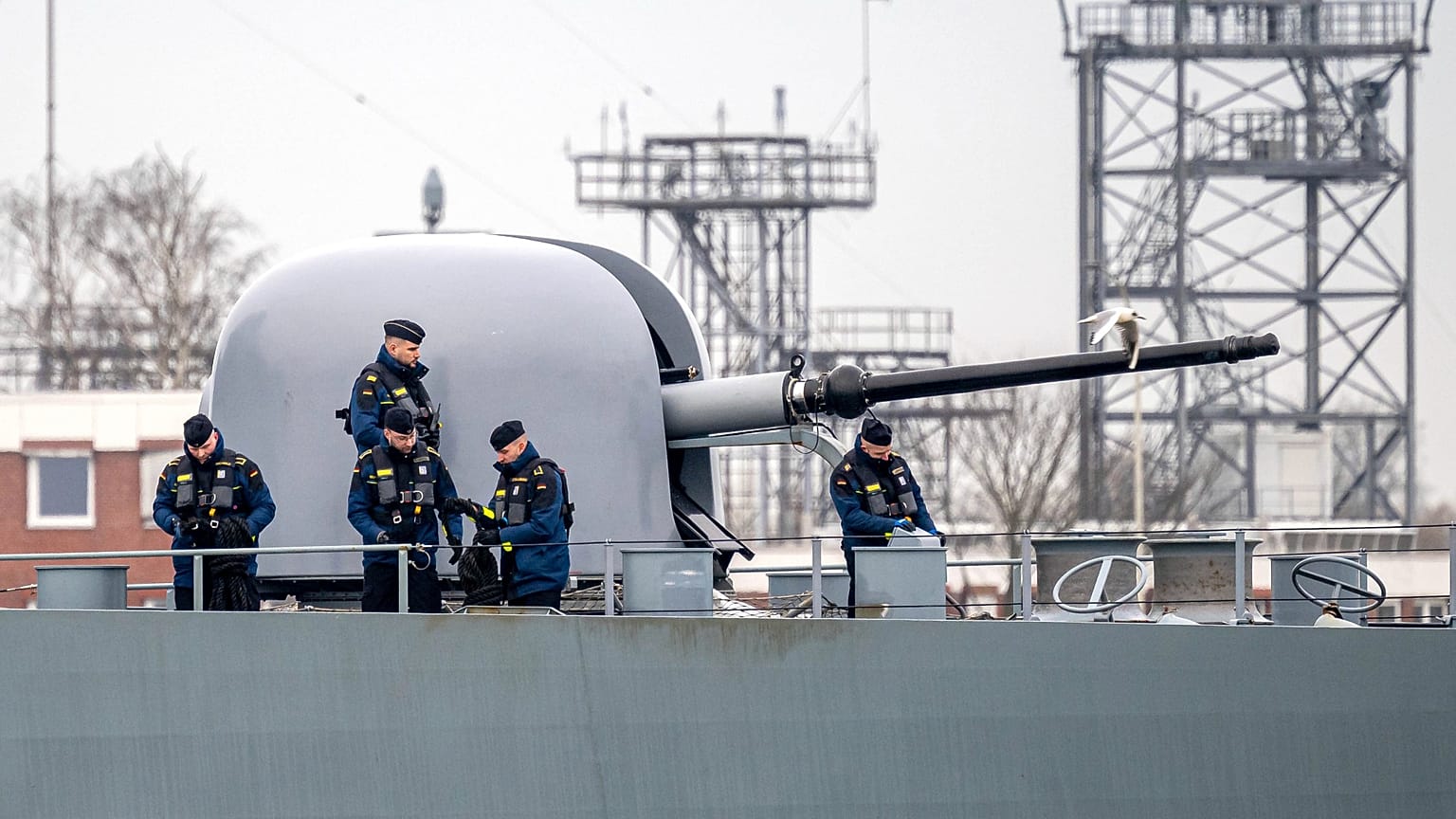
Europe's naval rearmament is rising. Which countries drive the maritime defence boom and why the map may be misleading.
Europe’s militaries are pouring money into the sea. EU defence expenditure rose to €418 billion in 2025, a 20 percent increase from the previous year, and is projected to reach €454 billion in 2026, equivalent to 2.4 percent of GDP. Maritime defence is one of the fastest-growing sectors. Production of naval vehicles and equipment across the bloc has reached €117.8 billion since 2016, with output hitting €13.7 billion in 2025 alone.
Who’s building Europe’s navies
On paper, four countries dominate that output. France, Germany, Italy and Spain account for 87 percent of the EU’s maritime defence industrial base and captured 82 percent of its total output value last year. France alone produced 37 percent of the bloc’s maritime defence vehicles in 2025, followed by Germany and Italy at 19 percent each, and Spain at 8 percent. Together, the four also account for 60 percent of the EU’s total defence expenditure.
For Christophe Tytgat, Secretary General of SEA Europe, the shipyards and maritime equipment association, that pattern is no accident: “the concentration is real and structural, not incidental,” reflecting decades of naval-industrial history and geography concentrated in a handful of states. Submarines are also a growth area, now 27 percent of EU maritime defence output, with the same four countries producing 93 percent of the bloc’s naval exports.
A skewed picture?
But industrial output isn’t the same as military commitment, according to Chris Kremidas-Courtney, senior advisor at the European Policy Centre, who argues the four-country narrative overlooks some of Europe’s most exposed navies. “Industrial concentration is not the same as maritime-defence commitment,” they said, naming Greece and Sweden as “conspicuous omissions.”
Greece runs one of Europe’s strongest conventional submarine fleets and maintains a demanding operational posture across the Aegean, Eastern Mediterranean and Red Sea. Sweden’s smaller navy is purpose-built for the Baltic and backed by a serious domestic defence industry.
The real test, Kremidas-Courtney says, is integration rather than size. “Europe doesn’t need everyone to build a fleet to match Italy or France, but it does need credible distributed forces connected by interoperable systems and a shared maritime picture”, an approach they argue must extend beyond the bloc to include the UK and Norway.
Measured against GDP rather than raw output, the map zooms towards the east. Poland spends the largest share of any EU state on defence at 4.48 percent of GDP, ahead of Lithuania (4.00 percent), Latvia (3.73 percent) and Estonia (3.38 percent), all frontline states bordering Russia or its ally Belarus. Germany has more than doubled its share of GDP since 2021, from 1.27 percent to 2.14 percent, and aims to reach €162 billion in annual defence spending by 2029.
Tytgat argues neither the industrial giants nor the frontline states can carry EU maritime security alone: “only four EU countries cannot substitute for broad-based EU maritime security, because collective security strategy requires interoperable capability, resilient supply chains and genuine burden-sharing across the whole Union.”
What’s driving this spending
Behind all this spending is Russia’s war on Ukraine and the maritime threats that followed. A “shadow fleet” of sanctioned tankers allegedly used for surveillance and sabotage has put the EU on alert. A series of undersea cable cuts in the Baltic Sea, including the BCS East-West Interlink, C-Lion1 and Estlink 2 incidents in late 2024, pushed Brussels to adopt a Cable Security Action Plan in 2025, alongside NATO’s “Baltic Sentry” naval patrol mission.
The EU revised its Maritime Security Strategy in 2023. The previous strategy was built with a focus on “piracy, illegal fishing, migration flows”; the updated one is built to confront state-based threats, Tytgat explains. He also warns the current strategy lacks teeth: “the tools have multiplied, but the financing and governance architecture to actually translate the strategy into tangible action is still lacking.”
How is the EU helping with funding?
A Commission subsea infrastructure package announced in February 2026 carries €347 million, alongside a separate €92 million ocean-observation initiative launched mid-2026. Tytgat calls both “a first step,” but says the sums are “far from enough if the EU wants to face the daily threats it deals with appropriately.”
Brussels is trying to close that gap through other channels: the €150 billion SAFE loan facility under its “Readiness 2030” roadmap, the European Defence Fund, 68.4% of which has gone to France, Germany, Italy and Spain, and PESCO’s joint shipbuilding projects, including the Italian-led European Patrol Corvette.
In March 2026, the EU also launched an Industrial Maritime Strategy, folding shipbuilding into a bloc-wide industrial framework for the first time rather than leaving it to national champions and earmarked €325 million for naval and undersea defence projects.
The real test for burden-sharing will be when the European Commission releases its progress report on the maritime strategy in October 2026. For now, Tytgat says the EU should focus on ensuring it has “the necessary tools and investment to meet the current challenges it faces in its vicinities but also in all global chokepoints that create threats to the EU's security of supply, trade and economy."

No comments:
Post a Comment