Friday, February 02, 2024

Demand for BYD's cars is so nuts the company had to create its own shipping fleet to export them around the world

Lauren Steussy,Nora Naughton
Thu, February 1, 2024 

The world's largest EV maker BYD is getting into the shipping business.


The company has purchased its first vessel to ship cars around the world.


The BYD Explorer No.1 set sail on its maiden voyage this month with 5,000 BYD cars.


BYD, the world's biggest electric vehicle maker, isn't just hitting roads in a major way — it's hitting the open seas.

The Chinese company and Tesla rival set sail in January with 5,000 cars on its first vehicle carrier, named "BYD Explorer No.1."

The new ship represents a major milestone for BYD because it'll help the company meet the growing global demand for its electric cars by reducing the cost of getting them out to the masses.

China only has access to a small sliver — 2.8% — of domestic car-carrier vessels, according to the MIT Technology Review. Car giants like Japan's Toyota have whole fleets in place already to transport their cars around the world.

BYD's new roll-on, roll-off (RORO) carrier is now headed for India after making stops in the Netherlands and Germany, according to Reuters.

The company said in a press release it plans to add seven more vessels to its fleet in the next two years.

BYD sold about 3 million cars in 2023. Though a majority of the vehicles were sold to Chinese buyers, the company exported about 243,000 cars to countries including Australia, Brazil, and Israel, according to Reuters, citing the China Passenger Car Association.

Those limited exports were still enough to surpass Tesla for the first time in the fourth quarter. While EV demand in key regions like Europe and the US has waned significantly in the past several months, auto industry experts say much of this softening in demand has more to do with an affordability issue for electric cars and customers adjusting to a more brutal economic environment.

This could usher in the next stage of a long-awaited Chinese takeover of the electric vehicle market, with BYD's more affordable models situated well to meet US demand in particular.

EV demand hasn't dried up in the US so much as it has changed in the past year, with customers prioritizing price and practicality over style and performance. That leaves a perfect opening for BYD, particularly if lower shipping costs allow the company to keep sticker prices low.


A German dealership is launching a BYD-only showroom in Berlin, as Tesla killer tries to make its presence in Europe known

Ryan Hogg
Thu, February 1, 2024 
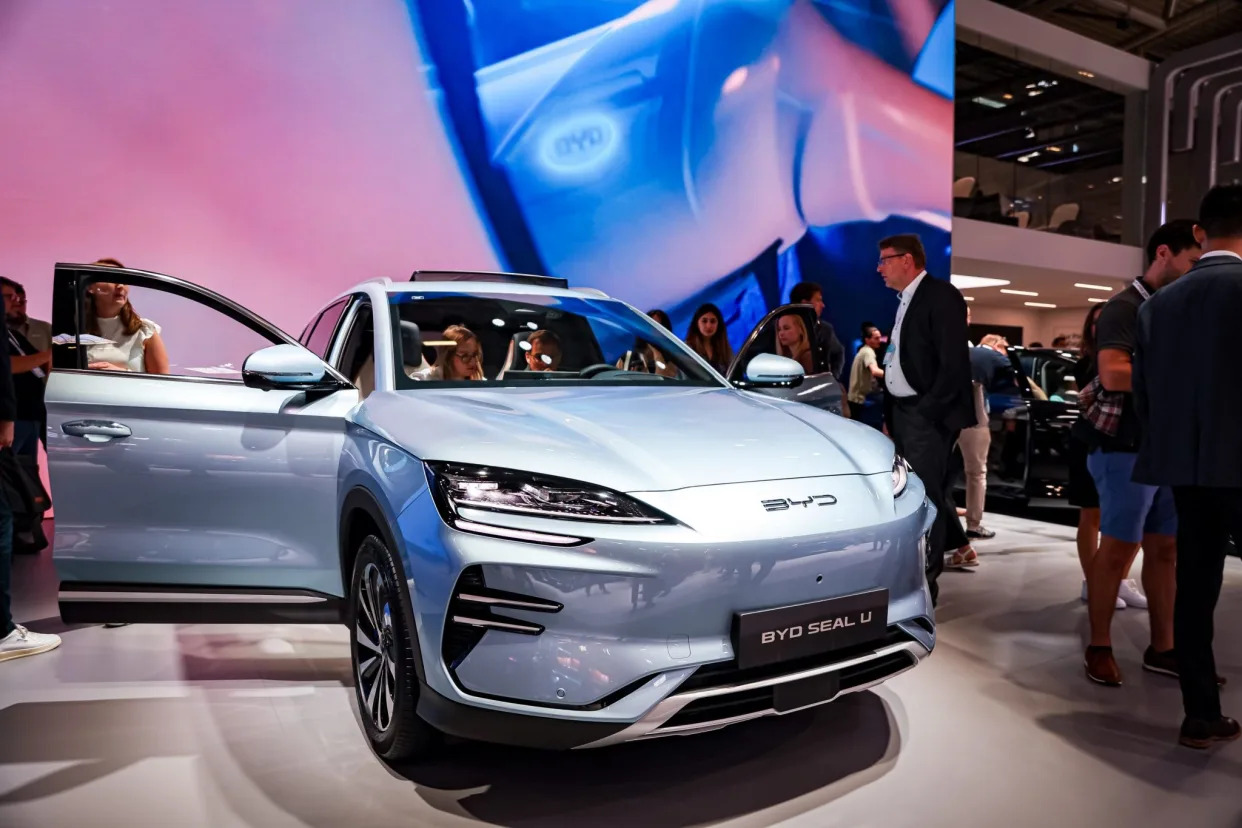


BYD is sounding the drum on its march into Europe. So far, the main result of those war cries has been to leave legacy carmakers in a “state of shock” at the Warren Buffett-backed group’s ultra-low prices.

Now manufacturers and curious customers in Europe will get a fresh opportunity to view the competition up close.

German dealership Stern Auto will launch a BYD-only dealership in Berlin, Reuters reports.

Stern Auto, which has exclusive rights to sell BYD in east Germany, plans to showcase the group’s five models at the store as it aims to foster brand recognition in a market that has long favored local manufacturers.

BYD, which still makes the vast majority of its sales in China, passed Tesla for EV sales in the fourth quarter of 2024. It also beat German giant Volkswagen to become the biggest automaker in China in 2023.

The group is now looking west as part of its ambitious plans to shift more units of its cars amid an ongoing price war with Tesla and other automakers.

In October, BYD announced its distribution partners for the German market, which will see the group’s cars don showrooms in cities including Berlin, Munich, Hamburg, and Frankfurt.

The group’s newly announced factory in Hungary is expected to start churning out cars in the next three years in a bid to avoid steep import tariffs. In the meantime, it has also earmarked special cargo ships to transport EVs from to Europe. The first ship carrying 7,000 cars set sail in January.

However, the carmaker will face several challenges as a new market entrant to Europe.
BYD fighting for brand recognition

Beyond potential connectivity issues and the prospect of higher labor costs outside its native China, a major obstacle to conquering Europe highlighted by analysts has been the often unshakeable brand loyalty of drivers who have grown up with Volkswagen, Renault, or Mercedes-Benz on their driveways.

A September study by Bloomberg Intelligence found three out of five European drivers expected to stick with their current brand; only 17% expected to switch to a new automaker.

“I do believe that the credibility and trust that European brands enjoy will help them defend their inventory against new entrants," Fabian Brandt, head of automotive and industrial goods at management consultancy Oliver Wyman, told Fortune last week.

“It’s also very much about local presence and local trusts and dealerships, and all that is relatively hard to build.”

BYD has sought to narrow a brand recognition gap by doubling down on marketing and advertising to familiarize Europeans with its growing presence on the continent.

"One of the biggest topics for BYD is that it is not that familiar to German customers," Oliver Hein, head of BYD for Stern Auto, told Reuters. However, he told the publication that recognition was growing “exponentially” thanks to the group’s increased marketing.

Beyond convincing Germans and other Europeans to buy its cars, BYD also faces regulatory headaches.

The carmaker is the subject of a major EU antitrust investigation into its cut-price cars, with the entry-level Seagull priced at $11,000.

European Commission president Ursula von der Leyen pledged to crack down on carmakers offering cheaper models in Europe thanks to subsidies enacted in their home countries, with BYD the obvious target of this frustration.

This story was originally featured on Fortune.com


Elon Musk Thinks This Warren Buffet-Backed Chinese EV Manufacturer Is Going To 'Demolish Most Other Car Companies'

Caleb Naysmith
Thu, February 1, 2024

Elon Musk, CEO of Tesla Inc. (NASDAQ:TSLA), quickly changed his perception of BYD Co. Ltd. (OTC:BYDDY), a Warren Buffett-backed Chinese carmaker that has transformed within one year.

During a live Bloomberg interview last year, when Musk was asked about his competitor BYD, he laughed and responded, "Have you seen their car? ... I don’t think they have a great product."

Musk said he wasn’t concerned about BYD as a serious competitor in the electric vehicle (EV) market.

BYD surpassed Tesla in EV sales, delivering 526,409 cars compared to Tesla’s 484,507, according to the companies' fourth-quarter reports.

This unexpected surge prompted Musk to acknowledge BYD’s prowess, saying, “Frankly, if there are not trade barriers established, they will pretty much demolish most other car companies in the world.”

This shift highlights the dynamic nature of the electric car industry and the intense competition among global players.

Trending: Cheddar was acquired for $200 million yielding a return of 370.37% for its investors. This startup aims to replicate and potentially surpass this success.

Musk’s acknowledgment of BYD’s competitive strength and subsequent revelation of Tesla’s decline in EV sales had a tangible impact on the market.

Following Musk’s comments in the earnings report, Tesla’s shares dropped 12%. Tesla also missed earnings and revenue expectations and expects next year "may be notably lower."

This reaction underscores the sensitivity of investors to the evolving landscape of the electric car industry and the significance of recognizing emerging contenders.

© 2024 Benzinga.com. Benzinga does not provide investment advice. All rights reserved.

German dealership Sternauto opens BYD store in Berlin


Wed, January 31, 2024 
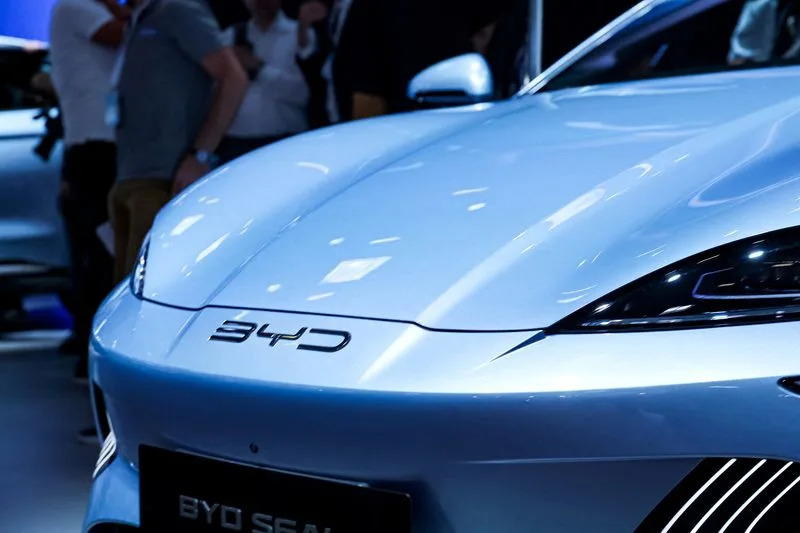
FILE PHOTO: 2023 Munich Auto Show IAA Mobility


By Victoria Waldersee and Annegret Hilse

BERLIN (Reuters) - Chinese EV giant BYD's five models on sale in Germany will be showcased at a new BYD-only store in Berlin run by dealership Sternauto, in the latest sign that the carmaker is rapidly encroaching on European competitors' turf.

Sternauto, which has exclusive rights to sell BYD cars in eastern Germany, set up the store to get closer to customers as awareness of the brand grows among Germans seeking an affordable electric vehicle.

"One of the biggest topics for BYD is that it is not that familiar to German customers," Oliver Hein, head of BYD for Sternauto, told Reuters. But recognition is growing "exponentially" as the brand invests heavily in marketing, he added.

While most of BYD's revenues still stem from sales in China, the carmaker has set its sights overseas with new manufacturing capacity under construction in Hungary, Brazil, and Thailand.

It sold more EVs than Tesla in the fourth quarter of last year and is growing at a fierce speed, with 2023 net profit expected some 86.5% above 2022's.

Already, it is coming under scrutiny from European officials investigating whether carmakers exporting China-made EVs to Europe have an unfair advantage over domestic players, in a sign of the looming regulatory battle between Europe and China as Europe attempts to shield its market from low-cost competition.

While Chinese brands can sell their vehicles in Europe at higher prices than in China and still undercut local pricing, they also face challenges from supply chain bottlenecks to import costs and complex certification requirements.

"There's going to be a major shakeout of Chinese brands in the next 5-10 years," Hein said. "If someone runs out of steam, they'll be out of the market relatively fast," he said, adding Sternauto felt BYD had what it takes to succeed.

(Reporting by Victoria Waldersee; Editing by Mark Potter)

BYD Seal review: the Chinese contender giving Tesla something to think about

Alex Robbins
Thu, February 1, 2024 
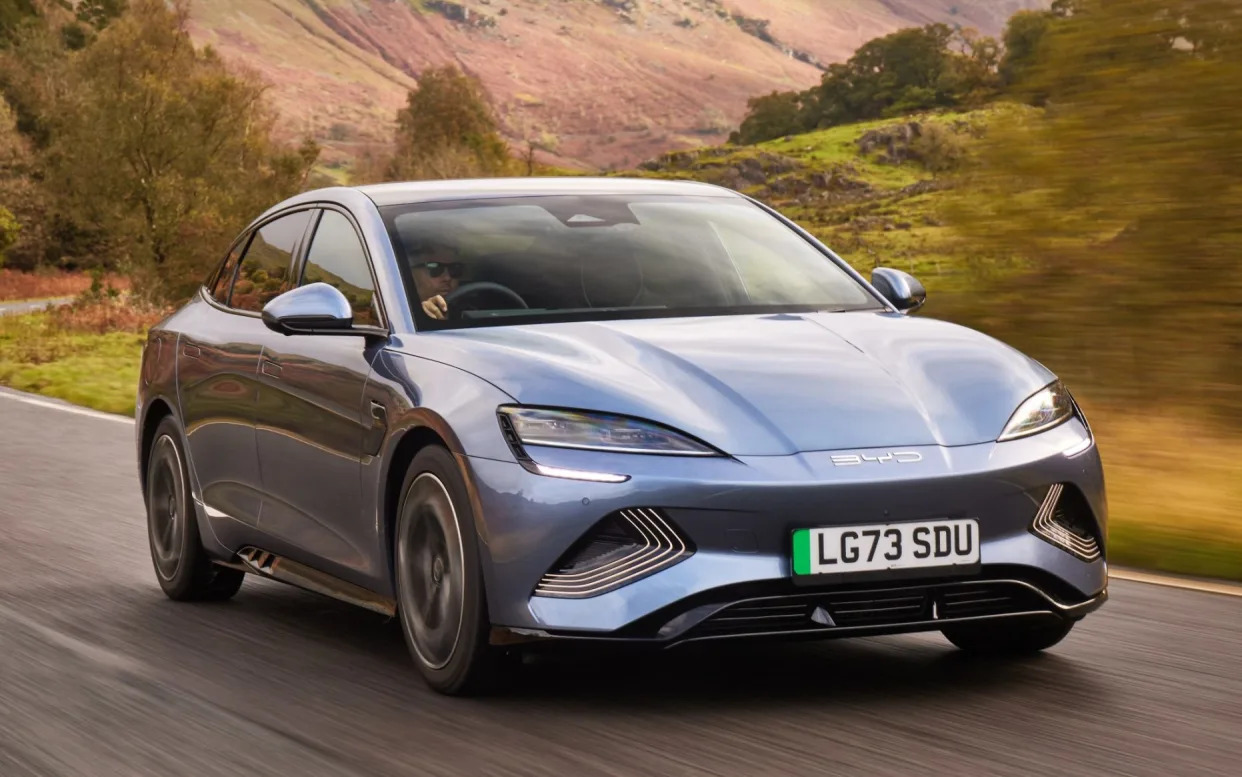

The BYD Seal electric executive saloon - James Arbuckle

“The what?” said my friend, when I said what I was reviewing next. “Never heard of it. Seal? As in, sea lion?” I sighed and nodded, opting to ignore his flagrantly inaccurate conflation of pinniped species. The fact is the BYD Seal does have a bit of an odd name. And that won’t be the only thing that might put off buyers.

Despite this being the third car Chinese manufacturer BYD has decided to bring to the UK, it could hardly claim widespread brand recognition. But where its previous models, the Atto 3 and Dolphin SUVs, are going after value-conscious families, the Seal has a tougher market to crack: user-choosers of executive saloons provided on their company car scheme.

Never has there been a more image-conscious driver, so its name may cause the Seal to stumble at the first hurdle – especially when friends ask what the BYD bit stands for (it’s, ahem, Build Your Dreams). Which is a shame, because behind the slightly dorky badging sits a car of some talent.

The badging may be 'slightly dorky', but the car behind it is impressive - James Arbuckle
Pros

Impressive battery tech

Lots of equipment for the cash

Smooth, slick drive
Cons

Relatively slow charging speeds

Gimmicky touchscreen with fiddly menus

Some quality glitches inside
Seal of approval?

It’s worth delving beneath the Seal’s skin just for a moment, for while this is superficially just another electric executive saloon in the vein of the Tesla Model 3, Hyundai Ioniq 6 and Volkswagen ID.7, there are several key differences.

For one thing, BYD uses a lithium ferro-phosphate (LFP) technology for its battery, which means unlike a lithium ion (Li-ion) battery of the sort you’ll find in most other EVs, there’s no cobalt, thus reducing the amount of precious metals required.

It also means it won’t catch fire and burn for days if it’s holed – as BYD is only too keen to demonstrate by showing us at every opportunity videos of its batteries being poked, prodded and pierced alongside Li-ion batteries subjected to the same treatment.

Traditionally, LFP batteries suffer from lower energy density, which means they take more space to achieve the same range. BYD, however, has come up with long, thin cells it calls blades, which can be used to fill awkward gaps in the car’s platform. As a result, it has managed to fit them into all sorts of nooks and crannies without impinging on interior space.
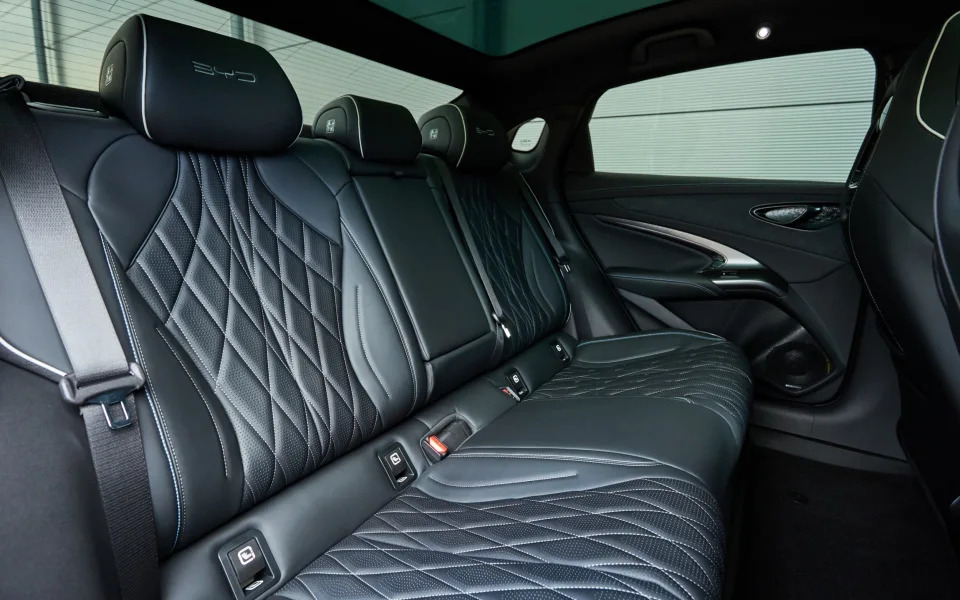
The BYD Seal's clever, compact battery technology means that interior space isn't compromised - James Arbuckle

This means you get 82.5kWh – and unlike a Li-ion battery, all of this is usable, meaning a 354-mile range in the rear-wheel-drive version, which shrinks to 323 miles in the all-wheel-drive model with its extra motor (expect around 260 and 240 real-world miles respectively).

The by-product is that this sort of construction is so strong that the battery can be incorporated into the car’s platform and used as a stressed member, adding stiffness. This results in impressive torsional rigidity and crashworthiness – borne out by some rather impressive results in industry-standard Euro NCAP crash tests.

And this is before we get to the clever space-saving integrated eight-in-one controller, or the standard high-efficiency heat pump. Make no mistake, this is no cheap Chinese knock-off.
Charged with loitering

Charging speeds could be quicker, though – 150kW isn’t bad at first glance, but it’s a big old battery, while its technology means you get fewer miles per kWh than you do elsewhere.

So it takes just shy of 40 minutes to get your Seal from 10 to 80 per cent capacity, and you’ll only have gained 170-odd miles of real-world range in the process; by contrast, a Hyundai Ioniq 6 on a suitably fast charger will take only 16 minutes to add a similar number of miles.

There are only two versions of the Seal; the rear-wheel-drive Design and the four-wheel-drive Excellence. Even the former can crack the 0-62mph sprint in only 5.9sec and has sufficient equipment to make the £45,000 price feel justifiable. The latter costs only £3,000 more, yet will hit 62mph in 3.8sec, which is a price-to-performance ratio not even a Tesla Model 3 can live with.

Inside, you’ll find BYD’s trademark rotating screen is here, allowing you to switch between portrait and landscape modes (as long as you’re not using Apple CarPlay or Android Auto, in which case you’re locked into the former, for now at least).

The rotating screen controls virtually all of the car’s main systems, and is quite hard to navigate - James Arbuckle

It’s rather gimmicky, and enough to make one clutch one’s pearls at the thought of potential repair costs 10 years down the line; what’s more, the software powering it is quite hard to navigate, a drawback made worse by the fact it controls practically every one of the car’s main systems, including the climate control.

So labyrinthine is the set-up, in fact, that turning the heated seats on or off requires no fewer than six prods if you’re to get there from the navigation screen, all of which require you to take your eyes off the road as you can’t feel where on-screen “buttons” are.

BYD’s argument is that it uses a sophisticated voice control system to allow you to do this simply by telling the car – but would it really have been such a burden to give us a row of physical buttons beneath or alongside the screen, instead of making it rotate? It’s a great party trick, but it feels as though it comes at the expense of basic usability.
Plastic fantastic

There are a couple of other odd decisions inside, too, for example the face-level air vents being fixed, so if you don’t like the direction in which they blow, well, tough.

The door handles are made from nasty plastic, too, which feels like a peculiar dropped ball given the rest of the interior materials are tactile and high-quality, with lashings of faux suede swooping across the dashboard, lots of colour-changing ambient lighting and dense plastics. It’s still not quite as high-end as a BMW i4, but against other rivals the Seal can cut it.

Space in the front is good, with huge amounts of storage for odds and ends all over the place. In the back, the seating position won’t suit everyone – your hips are placed quite low relative to your knees, which isn’t entirely natural.

Space in the front is good, with plenty of room for storage - James Arbuckle

There’s plenty of leg and head room, though, so you won’t feel cramped. Boot space, meanwhile, is about par for the course, with 400 litres in the back and an additional 53 under the bonnet – about the same as the Hyundai and Tesla, but less than the VW; the saloon boot lid, however, isn’t quite as practical as the hatchback you’ll find on the BMW.

It’s good, but not great, so far – but in fact the Seal is at its best when you start driving it.
Tracking device

BYD offered us half an hour on a test track, which felt somewhat extraneous in a car like this, but given the rain was biblical during our slot, it did at least prove just how predictable and safe the handling is.

In fact, the all-wheel-drive model was able to show off its astonishing traction – even in these conditions, you can still floor the throttle out of a bend and it’ll somehow get all that power down onto the sodden circuit.

In the real world, the Seal is just as impressive. BYD has obviously spent a lot of time finessing the controls; the accelerator, for example, is progressive and easy to moderate, in contrast to the hair-trigger sharpness of a Tesla’s. The brakes, meanwhile, blend friction and regenerative stopping power seamlessly, while the steering is direct and progressive.

The all-wheel-drive model has astonishing traction, even in the wet - James Arbuckle

The only surprise is that there are no surprises, meaning that despite the lack of feel through the wheel or the chassis you quickly build confidence that the car will go where you point it, so you can flow it satisfyingly through bends. Granted, it lacks the dynamism of the i4, but it’s safe, responsive, agile and well balanced.

There’s a bit of softness to the suspension set-up which means it floats a little over crests, but the payoff for this is that the ride over most roads is cushiony soft – far more so than most of these EV saloons’. The large wheels and narrow-sidewalled tyres generate just a bit of patter over heavily ridged surfaces, but bigger bumps disappear under the wheels with nary a trace and potholes are blotted out remarkably well.
Verdict

In other words, the Seal has more going for it than just the added smugness of going cobalt-free – not to mention knowing your car is less incendiary than other EVs might be – thanks to that innovative battery tech.

Granted, there are some frustrating niggles that prevent it from being a five-star car. However, this is a cogent and well-rounded effort that impresses out on the road, feels pretty smart inside and offers enough range and practicality to mix it with the best.

If I were told it was to be my next company car, I wouldn’t be disappointed. Even if it meant putting up with a few quizzical looks when I told people what it was.
The facts

On test: BYD Seal Excellence AWD

Body style: Four-door saloon

On sale: Now

How much? £48,695 on the road (range from £45,695)

How fast? 112mph, 0-62mph in 3.8sec

How economical? 3.4mpkWh (WLTP Combined)

Electric powertrain: AC asynchronous (front) & permanent magnet synchronous (rear) motors with 82.5kWh LFP battery, 150kW on-board charger, Type 2/CCS charging socket

Electric range: 323 miles (WLTP Combined)

Maximum power/torque: 523bhp/494lb ft

CO2 emissions: 0g/km (tailpipe), 32.1g/km (well-to-wheel)

VED: £0

Warranty: Six years/93,000 miles

Spare wheel as standard: No (not available)
The rivals
Tesla Model 3 Long Range

346bhp, 390 miles, £49,990 on the road
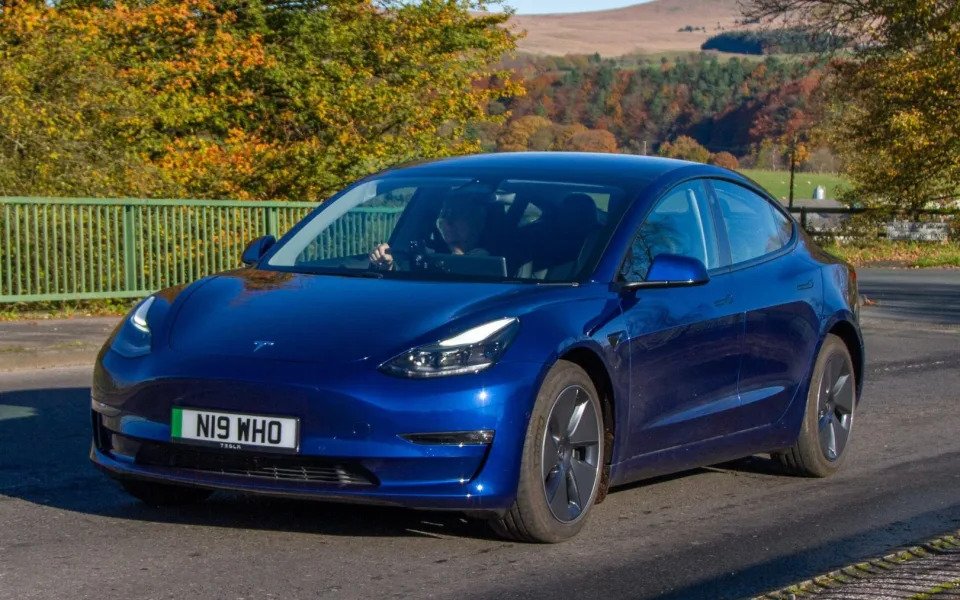
Tesla Model 3 Long Range - ZarkePix/Alamy

The Model 3 is a touch more expensive, but it’ll go further on a charge and be faster to pump volts into when you do need to stop. Its minimalist interior is less busy and less gimmicky than the BYD’s swoopy affair, though the wheel-mounted, button-operated indicator switches feel like a bridge too far. And while the Model 3 is roomier inside, it can’t match the BYD’s ride comfort, nor its gentle, progressive control weights.
Hyundai Ioniq 6 AWD Ultimate

321bhp, 322 miles, £50,540 on the road
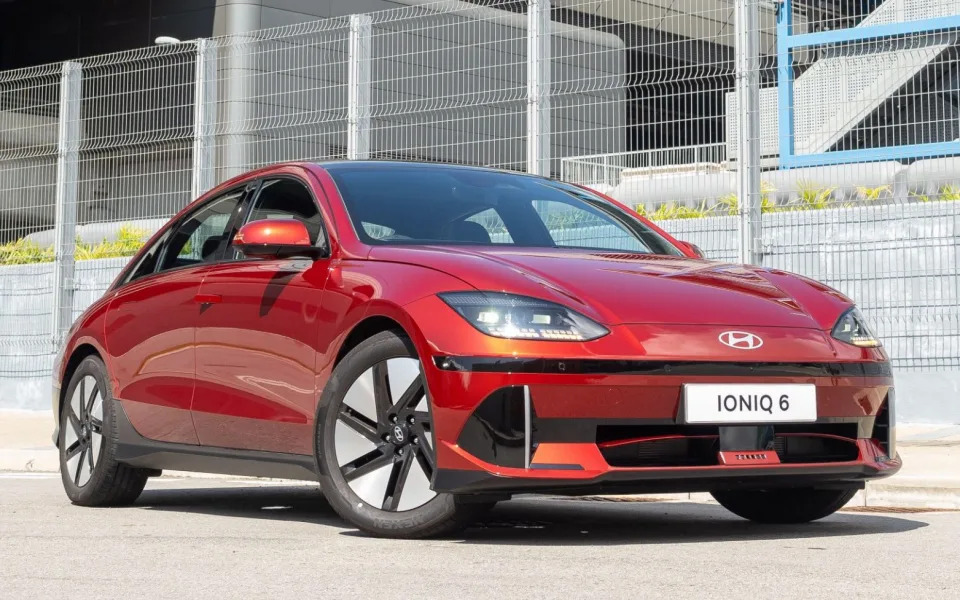

Hyundai Ioniq 6 - Wing Lun Leung/Alamy

Hyundai’s fancy streamliner is certainly eye-catching and is both a lovely place to be and a delight to drive. It also has the fastest available charging speeds here, on the proviso you can find a charging point to match. And you get a smart interior with a slicker touchscreen than the BYD’s. All good news, then – but the Ioniq 6 costs a couple of grand more.


BMW i4 eDrive35 Sport

282bhp, 293 miles, £49,995 on the road


BMW i4 - CJM Photography/Alamy

BMW brings you less for more, it seems. Less range, less power – and of course you have to get past that challenging front end, too. Having said that, there are intangibles that might make the i4 worthwhile – namely, the higher-quality interior, the more versatile hatchback boot and the fabulous ride and handling balance; indeed, if you want an EV that you can have a bit of fun in, this is the one to have.


Two Native American boys died at a boarding school in the 1890s. Now, the tribe wants them home

JIM SALTER
Updated Thu, February 1, 2024


Indigenous Boarding School Remains
FILE - An entrance sign is seen outside the U.S. Army's Carlisle Barracks, June 10, 2022, in Carlisle, Pa. When two Native American boys from Nebraska died after being taken to the notorious boarding school hundreds of miles away in Pennsylvania, they were buried there without notice. Nearly 130 years later, the tribe wants the boys' remains back home. So far, the Army has refused to return the remains of Samuel Gilbert and Edward Hensley.
 (AP Photo/Matt Slocum, File)


When two Native American boys from Nebraska died after being taken to a notorious boarding school hundreds of miles away in Pennsylvania, they were buried there without notice. Nearly 130 years later, the tribe wants the boys' remains back home.

So far, the Army has refused to return to the Winnebago Tribe the remains of Samuel Gilbert and Edward Hensley. A federal lawsuit filed on behalf of the tribe accuses the Army of ignoring a law passed more than three decades ago aimed at expediting the return of the deceased to Native American lands.

Samuel had been at the Carlisle Indian Industrial School in Pennsylvania for just 47 days when he died in 1895. Edward spent four years at the school before dying in 1899. Both died in their teens, but records do not disclose their exact ages. Tribal leaders weren't informed when the boys died, and relatives never learned what killed them.


The tribe made a formal request to the Office of Army Cemeteries for the remains in October but learned in December that the request was denied, according to the lawsuit filed Jan. 17.

“The Army always sought to maintain a position of control, dominance over native peoples while they were alive — and while they were dead,” said Greg Werkheiser of Cultural Heritage Partners, one of the lawyers for the tribe.

The bodies remain in a graveyard along with those of about 180 other children not far from where the school once stood in Carlisle, some 1,150 miles (1,850 kilometers) from the tribe's eastern Nebraska home. The graveyard serves as a “tourist attraction,” the lawsuit states.

A spokesperson for the Office of Army Cemeteries said she can't comment on pending litigation. But the spokesperson said in an email that Samuel and Edward, along with other children who died at the boarding school, are buried in individual graves with named headstones.

“The cemetery is a dignified resting place demonstrating respect and care of all the deceased buried there and is absolutely not treated as a tourist attraction," the spokesperson said.

The Carlisle Indian Industrial School in south-central Pennsylvania, the first government-operated school for Native Americans, was founded by a former military officer, Richard Henry Pratt. He believed that Native Americans could be a productive part of society, but only through assimilation.

After it opened in 1879 in an old Army barracks, thousands of Native American children were sent by train and stagecoach to Carlisle. Drastic steps were taken to separate them from their culture, including cutting their braids, dressing them in military-style uniforms and punishing them for speaking their native languages. They were forced to adopt European names.

More than 10,000 children from more than 140 tribes passed through the school by the time it closed in 1918, including Olympian Jim Thorpe. The children — often taken against the will of their parents — endured harsh conditions that sometimes led to death from tuberculosis and other diseases. The remains of some of those who died were returned to their tribes. The rest are buried in Carlisle.

After the school closed, the property was transferred from the Department of Interior to the War Department. It was used by the Army for a rehabilitation hospital and the Medical Field Service School.

The OAC spokesperson said the original cemetery was “in an inappropriate location adjacent to the pre-existing refuse dump, and blacksmith shop,” so the remains were moved in 1927 to another location on Carlisle Barracks. Servicemembers, veterans and their families also are buried there.

In 1990, Congress passed the Native American Graves Protection and Repatriation Act, or NAGPRA. It allowed for remains to be returned to tribes at their request. But the lawsuit said the Army refused to follow that law and is instead requiring the tribe to adhere to an Army policy.

The difference: While NAGPRA requires the remains to be returned, Army policy gives the agency discretion to decide if, and when, to do so. It also requires a request from the boys' “closest living relative” — which the lawsuit called “nearly impossible to apply in these circumstances.”

“Defendants’ conduct perpetuates an evil that the United States Congress sought to correct when it enacted NAGPRA in 1990,” the lawsuit states.

The Army has disinterred 32 remains of Native American children at the Army's expense since 2017, the OAC spokesperson said.

But Werkheiser said those remains weren't technically returned to the tribes, but rather to the children's relatives, and often after arduous waits. He said that using the Army process rather than NAGPRA “strips the tribes of all of their political rights.”

Tribes whose members had remains returned include the Sisseton Wahpeton Oyate, Spirit Lake, Washoe, Umpqua, Ute, Rosebud Sioux, Northern Arapaho, Blackfeet, Oglala Sioux, Oneida, Omaha, Modoc, Iowa and Alaskan native.

“The Winnebago, after listening to what all those other tribes went through, said, ‘We’re not going to play this game. We’re not going to be bullied.’"

Interior Secretary Deb Haaland, the first Native American Cabinet secretary, has pushed the government to reckon with its role in Native American boarding schools. In 2022, her agency released a report naming the 408 schools the federal government supported to strip Native Americans of their cultures and identities. At least 500 children died at some of the schools, including Carlisle.

The lawsuit states that the Winnebago Tribe “continues to experience the pain of knowing that Samuel’s and Edward’s spirits remain lost."

“The way Winnebago views it is that the boys have been waiting to come home for nearly 125 years," said another attorney involved in the lawsuit, Beth Wright of the Native American Rights Fund. “Their spirits can’t rest and they can’t go on unless they are returned to the place that they were taken from.”
Another sneaky Biden energy move

Rick Newman
·Senior Columnist
Wed, January 31, 2024 

President Biden has done more to promote green energy than any other president in US history. It’s ironic that he remains remarkably bound to fossil fuels, in ways he probably hopes nobody notices.

Biden’s entire energy agenda during the last three years has paired the overt promotion of renewables with a covert effort to keep fossil fuels plentiful and cheap. The latest example is the Biden administration’s Jan. 26 decision to temporarily suspend the approval of new facilities for exporting natural gas. Current facilities will continue to operate, without any limit on exports.

The pause will let the Energy Department study the impact of surging US natural gas exports on the climate, domestic energy prices, national security concerns, and other factors. The review will take several months, followed by the usual comment period. You won’t go broke betting the farm that an outcome will come in 2025, well after the November elections.

In one regard, a review makes sense. The fracking revolution that kicked off around 2010 generated a massive boom in US fossil fuel production, which has made the United States the world’s biggest oil and gas producer. US law limited energy exports until President Barack Obama signed legislation and changed other rules broadly allowing oil and gas exports. Starting in 2015, gas exports soared. The Biden administration now says the rules for approving export facilities are outdated and need to account for the nearly fivefold rise in gas exports since 2014.

But there’s also a likely political angle when a president makes a controversial policy change in an election year. Environmental groups lobbied hard for the pause on new gas-export facilities, and they declared victory when the White House made the decision. So maybe Biden is reinvigorating his pitch to environmentally minded voters, who skew young and want to see more forceful action to banish the source of greenhouse gases causing global warming.


The Biden administration is delaying consideration of new natural gas export terminals in the United States, even as gas shipments to Europe and Asia have soared since Russia’s invasion of Ukraine. 
(AP Photo/Cliff Owen, File) 

There could also be another target: keeping American energy prices low. Drillers often say that robust exports create an incentive to produce more gas, which in turn keeps domestic supplies abundant and prices low. But that may be wishful thinking. A 2023 analysis by the US Energy Information Administration found that “higher [gas] exports results in upward pressure on US natural gas prices and lower [gas] exports results in downward pressure.” It’s also true that gas prices in other markets, such as Europe and Asia, are considerably higher than in the United States, which creates an obvious incentive for American producers to sell outside the country where they can make more money.

So Biden might be making sure there’s no uptick in US energy prices while he’s running for reelection. Natural gas prices get far less attention than gasoline prices, but they’re arguably more important because natural gas powers 40% of the nation’s electricity generation and 60% of home heating. “It seems likely,” Kurt Cobb wrote recently on OilPrice.com, “that someone whispered into the administration's ear something about the possibility of much higher domestic prices in the coming years if the US LNG [liquified natural gas] export juggernaut is allowed to continue.”

US natural gas prices did spike in 2022, as Russia’s invasion of Ukraine led to a sharp reduction of Russian gas exports to Europe and a scramble by other gas exporters to fill the gap. US natural gas prices are now back to the relatively low levels typical from 2015 to 2021.

Electricity costs have jumped, however, and stayed there. Since Biden took office, electricity costs have risen 27%. That’s a stealthy source of inflation, which has been Biden’s biggest economic problem. Higher electricity prices boost consumers’ utility bills, while also making it more expensive for businesses to produce goods and keep the lights on (literally). Businesses normally try to pass cost increases on to consumers.

When inflation spiked in 2022 and gasoline prices hit $5 per gallon, Biden's approval rating dropped sharply. Overall inflation is almost back to normal levels, but Biden clearly recognizes the risk that high energy prices pose to his political future. Since 2022, Biden has taken a variety of measures to lower energy prices: selling oil from the US reserve, asking Saudi Arabia to produce more oil, and even encouraging more energy production by ne'er-do-well nations Iran and Venezuela. Biden's credibility with environmentalists comes from the massive green energy plan he signed into law in 2022, but Biden's overall popularity relies far more on the cost of fossil fuels we're still dependent on.

There's good reason for Biden to retain the pro-export policy that began under Obama, continued under President Trump, and remained in place for Biden’s first three years in office. In a Jan. 26 analysis, the Eurasia Group argued that ongoing high levels of American gas exports are an important lifeline to Europe and a key lever of US power in other parts of the world, including Asia. Russia would clearly love more influence in those parts of the world, and the availability of American energy as an alternative to Russia's exports is a barrier to Russia's malign ambitions.

So maybe the Biden review will sound the all-clear, with a few permit denials to appease the climate lobby, if Biden wins reelection. But if evidence mounts that energy exports are raising costs for Americans, Biden won’t be the last president to have a problem with that.

Rick Newman is a senior columnist for Yahoo Finance
Follow him on Twitter at @rickjnewman.
Why I teach a course called ‘White Racism’

Ted Thornhill, Florida Gulf Coast University
Wed, January 31, 2024 
THE CONVERSATION 

Florida Gulf Coast University professor Ted Thornhill discusses his course on 'White Racism.' Aaron Nunes-Zaller, CC BY-ND

This article was published on Feb. 1, 2018. Prof. Thornhill now teaches at Western Washington University.

The need for students to learn about racism in American society existed long before I began teaching a course called “White Racism” at Florida Gulf Coast University earlier this year.

I chose to title my course “White Racism” because I thought it was scholarly and succinct, precise and powerful.

But others saw it differently. Many white Americans (and some people of color) became upset when they learned about this course.

Thousands took to social media and far right news sites and racist blogs to attack the course and me personally.

Some 150 of these individuals sent me hateful and threatening messages.

It might be tempting to blame the hostility to my course on the current political climate in which the president of the United States routinely makes overtly racist statements and receives some of his strongest support from members of white racist hate groups. But I cannot recall a time when scholarly critiques of white supremacy in the United States have not been met with scorn.

For instance, an identically titled course taught at the University of Connecticut also ignited controversy when it made its debut in the 1990s.

‘White racism’ is nothing new

Whether a course is titled “White Racism,”or “The Problem of Whiteness,” or any other appropriate term, in no way diminishes the academic legitimacy of the course. Scholars have used the term for decades.

I’ve taught courses on racial stratification in the U.S. for nearly a decade myself. The course, and others like it, are all anchored in a damning body of historical and contemporary scholarship. That scholarship shows that Europeans and their white descendants colonized what would become the United States as well as other places around the globe. They practiced all manner of inhumanity against non-whites. This has included genocideslavery, murder, rape, torture, theft, chicanerysegregation, discrimination, intimidation, internment, humiliation and marginalization. This is inarguable.

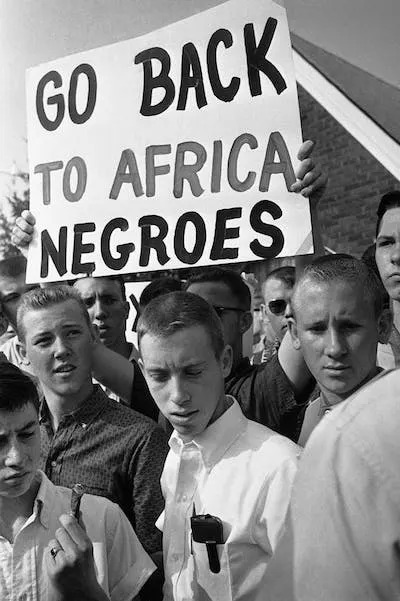
Young male students protest school integration in Birmingham, Alabama, in 1963. <a href="http://www.apimages.com/metadata/Index/Watchf-AP-A-AL-USA-APHS268312-African-American-/e7382a8b2ba748c8a073f188913d5af3/4/0" rel="nofollow noopener" target="_blank" data-ylk="slk:AP;elm:context_link;itc:0;sec:content-canvas" class="link ">AP</a>
Young male students protest school integration in Birmingham, Alabama, in 1963. AP

Most Americans may have a general awareness of the trans-Atlantic slave tradeJim Crow lawslynchings, housing and labor market discrimination, and police brutality. Where we differ is about the gravity and scope of these white racist practices and the extent to which their effects continue to this day.

This disagreement is due in large part to many white Americans (and more than a few folks of color) subscribing to what I and others refer to as the myth of a colorblind society.

This myth holds that the United States is a “post-racial” society where race is no longer related to individuals’ life chances. Some buy into this myth to the point where it prevents them from recognizing the everyday realities that show the United States is white supremacist in nature.

But the myth of a colorblind society crumbles underneath a substantial body of social science research that documents how race still matters in numerous areas of American life. For instance, the evidence shows that race still matters in the labor market and workplaceeducation, and even in access to clean water. Race matters in health carethe criminal justice system, and even everyday retail and dining experiences.

Still, many refuse to believe that racism persists. They point to the civil rights legislation of the 1960s or, more recently, the election of Barack Obama as the 44th president of the United States, as evidence of the “end of racism” or at least the “declining significance of race.”

Some might suggest that it would be easier to talk about white racism if it were done in less inflammatory or offensive ways. Perhaps this delicate approach — one that takes into account what author Robin DiAngelo refers to in her forthcoming book as “white fragility” — might be desirable or necessary for those who are fearful of the consequences of speaking unvarnished truth on racial matters. But when it comes to professors who deal with racial stratification, we should not be whitewashing reality.

Can there be ‘black racism’?

The most common complaint about my course that I’ve encountered thus far is that anybody can be racist. They ask indignantly: What about “black racism”? Or what about other forms of racism they believe exist on the part of Latinos, Asian Americans and Native peoples. My answer is: There is no such thing as black racism.

I am in no way the only one who holds this view. As Eduardo Bonilla-Silva, president of the American Sociological Association, said here at FGCU recently when asked if it would be fair to have classes such as “Asian Racism” or “Latino Racism”: “We can all be prejudiced, yeah? So, black people can be anti-white, but there is a big difference between having prejudiced views about other people and having a system that gives systemic privilege to some groups.”

Indeed, blacks did not develop and benefit from a centuries-old comprehensive system of racial oppression comprised of laws, policies, practices, traditions and an accompanying ideology — one that promotes the biological, intellectual and cultural superiority of whites to dominate other groups. Europeans and their white descendants, however, did. This is systemic racism. And students in courses such as mine are introduced to the scholarship that attests to this reality, past and present.

For instance, students will read and discuss pieces by and about W.E.B. Du BoisEduardo Bonilla-SilvaJoe FeaginKimberlé CrenshawCharles MillsPaul ButlerNikki Khanna, and Derrick Bell, among many others. They will also do work that will strengthen their ability to identify and confront colorblind racist statements.

Public money for a public problem

Some detractors of my course have suggested that students stand a better shot at getting a good grade in my course if their racial politics align with my own. This is nonsense. If a student finds peer-reviewed empirical evidence counter to that covered in the course, I would welcome the opportunity to review it.

Agreeing with my take on racial matters doesn’t impact a student’s grade. Whether a student earns an “A” in any of my courses is entirely dependent on the quality of the work they produce.

Another criticism I’ve heard is that I am teaching a course titled “White Racism” at a public university at taxpayer expense. Not only should my course and others like it be taught at public colleges and universities, they must be taught at such institutions.

Florida Gulf Coast University President Michael Martin has strongly and publicly supported my academic freedom to teach my “White Racism” course.

“Reviewing the course content is much more instructive than passing judgment based on a two-word title,” he said in a statement. “At FGCU, as at all great universities, we teach our students critical thinking skills by challenging them to think independently and critically about important, even if controversial, issues of our times.”

Indeed, white supremacy and white racism remain terrible and intractable features of American society. It is in the public interest that students be provided with not only an opportunity to learn about the origin, logic and consequences of white racial domination but also how to challenge and dismantle it. The public university classroom is among the best places for this to occur.

This article is republished from The Conversation, a nonprofit, independent news organization bringing you facts and trustworthy analysis to help you make sense of our complex world. It was written by: Ted ThornhillFlorida Gulf Coast University

Read more:

Ted Thornhill is affiliated with the American Sociological Association and the Midwest Sociological Society.

Takeaways from the AP's look at the role of conspiracy theories in American politics and society

DAVID KLEPPER
Updated Wed, January 31, 2024 

This image provided by the Adventist Digital Library shows part of a Millerite document circulated on Oct. 16, 1844, in the Boston area, with a headline reading, "End of the World, October 22, 1844!!" Before the appointed day, many of William Miller’s followers sold or gave away their possessions, donned white clothing and headed for high land — in some parts of Massachusetts they climbed trees on the highest hills — so as to hasten their reunion with God. 
(Adventist Digital Library via AP)


WASHINGTON (AP) — Conspiracy theories have a long history.

Humans have always speculated about secret motives and plots as a way to understand their world and avoid danger.

These days, however, conspiracy theories and those who believe them seem to be playing an outsize role in politics and culture.

Republican Donald Trump has amplified conspiracy theories about climate changeelectionsvoting and crime, and has expressed support for the QAnon conspiracy theory. His lies about the 2020 election he lost to Democrat Joe Biden spurred the attack on the U.S. Capitol on Jan. 6, 2021, an event that quickly spun off its own conspiracy theories.

On the left, Robert F. Kennedy Jr. has exploited conspiracy theories about vaccines to wage his own campaign for the presidency this year.

Conspiracy theories have also proven lucrative for those cashing in on unfounded medical claims, investment proposals or fake news websites.

The Associated Press has examined the history of conspiracy theories in the United States.

Interviews with experts on technology, psychology and politics give insight into why people choose to believe and spread conspiracy theories, and how those beliefs are affecting our mental health, our politics and our society.

A look at some of the biggest takeaways from the investigation:

A LONG HISTORY

Conspiracy theories exposed social tensions long before the American Revolution and the birth of U.S. democracy.

Just as now, early conspiracy theories reflected popular worries of the day. In the years immediately after the American Revolution, rumors and hoaxes circulated about dark plots by the Illuminati and Freemasons, suggesting those secret organizations wanted to control the republic.

Likewise, the conspiracy theories of the modern age often reflect uncertainties about technology, immigration and government overreach. Stories about UFO coverupsmicrochips in vaccines or the attacks of Sept. 11, 2001, being an inside job are examples.

While the specific claims in many of these tales can be debunked, the stories reflect anxieties shared by millions of people.

“We are the stories we tell ourselves,” said John Llewellyn, a professor at Wake Forest University who studies conspiracy theories and why people believe what they believe.

WHY PEOPLE BELIEVE

Humans thirst for information that can help them protect themselves and help them make better decisions for the future. This information, along with personal experiences, upbringing and cultural perspectives, creates a view of the world that helps people understand big events and forces in their lives.

Disasters, elections, wars and even the outcomes of sporting events can shake our perspective, and make us look for explanations. Sometimes that means accepting the facts. But sometimes it can be easier to embrace an alternative explanation.

Conspiracy theories can act as a shortcut to understanding. They fill in the gaps of understanding with speculation that often reflects more about the believer's inner beliefs than the events themselves. Conspiracy theories suggesting vaccinations are being used to implant microchips in people, for instance, reflect concerns about technology, medicine and government power.

With the internet, false claims and conspiracy theories can travel further and faster than ever. Social media algorithms prioritize content that elicits strong emotions, like anger and fear.

FACING THE DEMONS

The AP interviewed dozens of current and former conspiracy theory believers to understand what led them to believe. They consistently said conspiracy theories offered them a sense of power and control in a world that can seem random and chaotic.

“The pieces did not fit,” said Melissa Sell, a conspiracy theorist from Pennsylvania who began doubting the official narrative of history after the Sandy Hook Elementary School shooting in Connecticut in 2012.

They spoke of growing distrust of democratic institutions and the media, and a gnawing feeling they were being lied to. The world of online conspiracy theories offered answers, and a built-in community of like-minded people.

“I was suicidal before I got into conspiracy theories,” said Antonio Perez, a Hawaii man who became obsessed with Sept. 11 conspiracy theories and QAnon until he decided that they were interfering with his life. But when he first found other online conspiracy theorists, he was ecstatic. “It’s like: My God, I’ve finally found my people!”

TURNING IDEAS INTO ACTION

Polls show nearly half of Americans believe a conspiracy theory and that those beliefs are almost always harmless. But when fringe views interfere with a person's job or relationships, they can lead to social isolation. And when people put their conspiracy theory beliefs into action, it can lead to violence.

In recent years, conspiracy theorists have tried to stop vaccine clinics, they've attacked election officials and they've committed murders that they say were motivated by their beliefs. The Jan. 6 riot is perhaps the most notable example of how conspiracy theories can lead to violence: The thousands of people who stormed the Capitol and fought with police were motivated by Trump's election lies.

Such rapidly spreading disinformation fuels extremist groups and encourages distrust — a particular concern during a year of big elections in the U.S. and other nations. RussiaChinaIran and other U.S. adversaries have worked to amplify conspiracy theories as a way to destabilize democracy further. Artificial intelligence's ability to rapidly create lifelike video and audio only increases the challenge.

“I think the post-truth world may be a lot closer than we’d like to believe,” said A.J. Nash, vice president for intelligence at ZeroFox, a cybersecurity firm that tracks disinformation. “What happens when no one believes anything anymore?”

PROFITING OFF BELIEF

As long as there have been conspiracy theories, people have tried to make a buck off of them. A century or more ago, peddlers went from town to town selling tonics and pills that they said could cure just about any problem. Nowadays, sales take place online. Business is booming.

There are supplements that claim to reverse aging, bogus treatments for COVID-19, T-shirts, investment scams claiming a new financial order is just around the corner.

The AP took a close look at conspiracy theories involving medbeds, which are futuristic-looking devices that believers think can reverse aging and cure a long list of illnesses. According to claims circulating online, the U.S. military is hiding the technology from the public but Trump, if he wins another term as president, will make them available for free. For people desperate to find help with a medical condition, the claims can be too tempting to ignore.

“There have always been hucksters selling medical cures, but I do feel like it’s accelerating,” said Timothy Caulfield, a health policy and law professor at the University of Alberta who studies medical ethics and fraud. “There are some forces driving that: obviously the internet and social media, and distrust of traditional medicine, traditional science. Conspiracy theories are creating and feeding this distrust.”

Grave peril of digital conspiracy theories: 'What happens when no one believes anything anymore?'

DAVID KLEPPER
Wed, January 31, 2024 


WASHINGTON (AP) — Days after Maui's wildfires killed scores of people and destroyed thousands of homes last August, a shocking claim spread with alarming speed on YouTube and TikTok: The blaze on the Hawaiian island was set deliberately, using futuristic energy weapons developed by the U.S. military.

Claims of “evidence” soon emerged: video footage on TikTok showing a beam of blinding white light, too straight to be lightning, zapping a residential neighborhood and sending flames and smoke into the sky. The video was shared many millions of times, amplified by neo-Nazis, anti-government radicals and supporters of the QAnon conspiracy theory, and presented as proof that America's leaders had turned on the country's citizens.

“What if Maui was just a practice run?” one woman asked on TikTok. “So that the government can use a direct energy weapon on us?”


The TikTok clip had nothing to do with the Maui fires. It was actually video of an electrical transformer explosion in Chile earlier in the year. But that didn't stop a TikTok user with a habit of posting conspiracy videos from using the clip to sow more fear and doubt. It was just one of severalsimilarvideos and images doctored and passed off as proof that the wildfires were no accident.

Conspiracy theories have a long history in America, but now they can be fanned around the globe in seconds, amplified by social media, further eroding truth with a newfound destructive force.

With the United States and many other nations facing big elections in 2024, , the perils of rapidly spreading disinformation, using ever more sophisticated technology such as artificial intelligence, now also threaten democracy itself — both by fueling extremist groups and by encouraging distrust.

“I think the post-truth world may be a lot closer than we’d like to believe,” said A.J. Nash, vice president for intelligence at ZeroFox, a cybersecurity firm that tracks disinformation. “What happens when no one believes anything anymore?”

Extremists and authoritarians deploy disinformation as potent weapons used to recruit new followers and expand their reach, using fake video and photos to fool their followers.

And even when they fail to convince people, the conspiracy theories embraced by these groups contribute to mounting distrust of authorities and democratic institutions, causing people to reject reliable sources of information while encouraging division and suspicion.

Melissa Sell, a 33-year-old Pennsylvania resident, is among those who has lost faith in the facts.

“If it’s a big news story on the TV, the majority of the time it’s to distract us from something else. Every time you turn around, there’s another news story with another agenda distracting all of us,” she said. Sell thinks the Maui wildfires may have been intentionally set, perhaps to distract the public, perhaps to test a new weapon. “Because the government has been caught in lies before, how do you know?” she said.

Absent meaningful federal regulations governing social media platforms, it's largely left to Big Tech companies to police their own sites, leading to confusing, inconsistent rules and enforcement. Meta, the owner of Instagram and Facebook, says it makes an effort to remove extremist content. Platforms such as X, formerly known as Twitter, as well as Telegram and far-right sites like Gab, allow it to flourish.

Federal election officials and some lawmakers have suggested regulations governing AI, including rules that would require political campaigns to label AI-generated images used in its ads. But those proposals wouldn't affect the ability of extremist groups or foreign governments to use AI to mislead Americans.

Meanwhile, U.S.-based tech platforms have rolled back their efforts to root out misinformation and hate speech, following the lead of Elon Musk, who fired most of the content moderators when he purchased X.

“There's been a big step backward,” said Evan Hansen, the former editor of Wired.com who was Twitter's director of curation before leaving when Musk purchased the platform. “It’s gotten to be a very difficult job for the casual observer to figure out: What do I believe here?”

Hansen said a combination of government regulations, voluntary action by tech titans and public awareness will be needed to combat the coming wave of synthetic media. He noted the Israel-Hamas war has already seen a deluge of fake and altered photos and video. Elections in the U.S. and around the world this year will create similar opportunities for digital mischief.

The disinformation spread by extremist groups and even politicians like former President Donald Trump can create the conditions for violence, by demonizing the other side, targeting democratic institutions and convincing their supporters that they're in an existential struggle against those who don't share their beliefs.

Trump has spread lies about elections, voting and his opponents for years. Building on his specious claims of a deep state that controls the federal government, he has echoed QAnon and other conspiracy theories and encouraged his followers to see their government as an enemy. He even suggested that now-retired Army Gen. Mark Milley, whom Trump himself nominated to be the top U.S. military officer during his administration, was a traitor and deserved execution. Milley said he has had to take security precautions to protect his family.

The list of incidents blamed on extremists motivated by conspiracy theories is growing. The Jan. 6, 2021, riot at the U.S. Capitol, attacks on vaccine clinics, anti-immigrant fervor in Spain; and anti-Muslim hate in India: All were carried out by people who believed conspiracy theories about their opponents and who decided violence was an appropriate response.

Polls and research surveys on conspiracy theories show about half of Americans believe in at least one conspiracy theory, and those views seldom lead to violence or extremism. But for some, these beliefs can lead to social isolation and radicalization, interfering with their relationships, career and finances. For an even smaller subset, they can lead to violence.

The credible data that exists on crimes motivated by conspiracy theories shows a disturbing increase. In 2019, researchers at the University of Maryland’s National Consortium for the Study of Terrorism and Responses to Terrorism identified six violent attacks in which perpetrators said their actions were prompted by a conspiracy theory. In 2020, the year of the most recent survey, there were 116.

Laws designed to rein in the power of social media and artificial intelligence to spread disinformation aren't likely to pass before the 2024 election, and even if they are, enforcement will be a challenge, according to AI expert Vince Lynch, CEO of the tech company IV.AI.

“This is happening now, and it's one of the reasons why our society seems so fragmented," Lynch said. “Hopefully there may be AI regulation someday, but we are already through the looking glass. I do think it's already too late.”

To believers, the facts don’t matter.

“You can create the universe you want,” said Danielle Citron, a professor at the University of Virginia School of Law who studies online harassment and extremism. “If the truth doesn’t matter, and there is no accountability for these false beliefs, then people will start to act on them.”

Sell, the conspiracy theorist from Pennsylvania, said she began to lose trust in the government and the media shortly after the 2012 Sandy Hook Elementary School shooting in Newtown, Connecticut, that left 20 students and six educators dead. Sell thought the shooter looked too small and weak to carry out such a bloody act, and the gut-wrenching interviews with stricken loved ones seemed too perfect, almost practiced.

“It seemed scripted,” she said. “The pieces did not fit.”

That idea — that the victims of the rampage were actors hired as part of a plot to push gun control laws — was notably spread by conspiracy theorist Alex Jones. The families of Sandy Hook victims sued, and the Infowars host was later ordered to pay nearly $1.5 billion in damages.

Claims that America's elected leaders and media cannot be trusted feature heavily in many conspiracy theories with ties to extremism.

In 2018, a committed conspiracy theorist from Florida mailed pipe bombs to CNN, former Secretary of State Hillary Clinton and several other top Democrats; the man’s social media feed was littered with posts about child sacrifice and chemtrails — the debunked claim that airplane vapor clouds contain chemicals or biological agents being used to control the population.

In another act of violence tied to QAnon, a California man was charged with using a speargun to kill his two children in 2021. He told an FBI agent that he had been enlightened by QAnon conspiracy theories and had become convinced that his wife “possessed serpent DNA and had passed it on to his children.”

In 2022, a Colorado woman was found guilty of attempting to kidnap her son from foster care after her daughter said she began associating with QAnon supporters. Other adherents have been accused of environmental vandalism, firing paintballs at military reservists, abducting a child in France and even killing a New York City mob boss.

The coronavirus pandemic, with its attendant social isolation, created ideal conditions for new conspiracy theories as the virus spread fear and uncertainty around the globe. Vaccine clinics were attacked, doctors and nurses threatened. 5G communication towers were vandalized and burned as a wild theory spread claiming they were being used to activate microchips hidden in the vaccine. Fears about vaccines led one Wisconsin pharmacist to destroy a batch of the highly sought after immunizations, while bogus claims about supposed COVID-19 treatments and cures led to hospitalizations and death.

Few recent events, however, display the power of conspiracy theories like the Jan. 6 insurrection, when thousands of Trump supporters stormed the Capitol, vandalized the offices of Congress and fought with police in an attempt to disrupt the certification of the 2020 election.

More than 1,200 people have been charged with Capitol riot-related crimes. About 900 have pleaded guilty or been convicted after trials. Over 750 have been sentenced, with roughly two-thirds receiving some term of imprisonment, according to data compiled by The Associated Press. Many of those charged said they had bought into Trump’s conspiracy theories about a stolen election.

“We, meaning Trump supporters, were lied to,” wrote Jan. 6 defendant Robert Palmer in a letter to a judge, who later sentenced him to more than five years for attacking police. “They kept spitting out the false narrative about a stolen election and how it was ‘our duty’ to stand up to tyranny.”

Many conspiracy theorists reject any link between their beliefs and violence, saying they're being blamed for the actions of a tiny few. Others insist these incidents never occurred, and that events like the Jan. 6 attack were actually false-flag events concocted by the government and media.

“Lies, lies lies: They're lying to you over and over and over again,” said Steve Girard, a Pennsylvania man who has protested the incarceration of Jan. 6 defendants. He spoke to the AP while waving a large American flag on a busy street in Washington.

While they may have taken on a bigger role in our politics, surveys show that belief in conspiracy theories hasn't changed much over the years, according to Joe Uscinski, a University of Miami professor and an expert on the history of conspiracy theories. He said he believes that while the internet plays a role in spreading conspiracy theories, most of the blame lies with the politicians who exploit believers.

“Who was the bigger spreader of COVID misinformation: some guy with four followers on Twitter or the president of the United States? The problem is our politicians,” Uscinski said. “Jan. 6 happened, and people said: ‘Oh, this is Facebook’s fault.’ No, the president of the United States told his followers to be at this place, at this time and to fight like hell.”

Governments in Russia, China, Iran and elsewhere have also pushed extremist content on social media as part of their efforts to destabilize Western democracy. Russia has amplified numerous anti-U.S. conspiracy theories, including ones claiming the U.S. runs secret germ warfare labs and created HIV as a bioweapon, as well as conspiracy theories accusing Ukraine of being a Nazi state.

China has helped spread claims that the U.S. created COVID-19 as a bioweapon.

Tom Fishman, the CEO at the nonprofit Starts With Us, said that Americans can take steps to defend the social fabric by turning off their computer and meeting the people they disagree with. He said Americans must remember what ties them together.

“We can look at the window and see foreshadowing of what could happen if we don’t: threats to a functioning democracy, threats of violence against elected leaders,” he said. “We have a civic duty to get this right.”