Wednesday, September 03, 2025

DESANTISLAND; EVAGELICAL'S VS SCIENCE

Florida set to become first US state to ban all childhood vaccine mandates

Florida plans to scrap vaccine mandates, becoming the first US state to end long-standing requirements protecting schoolchildren and adults from infectious diseases. State Surgeon General Joseph Ladapo announced the move Wednesday, denouncing existing rules as “immoral” intrusions on parental rights that restrict families’ ability to make health decisions.


Issued on: 04/09/2025 -
By: FRANCE 24
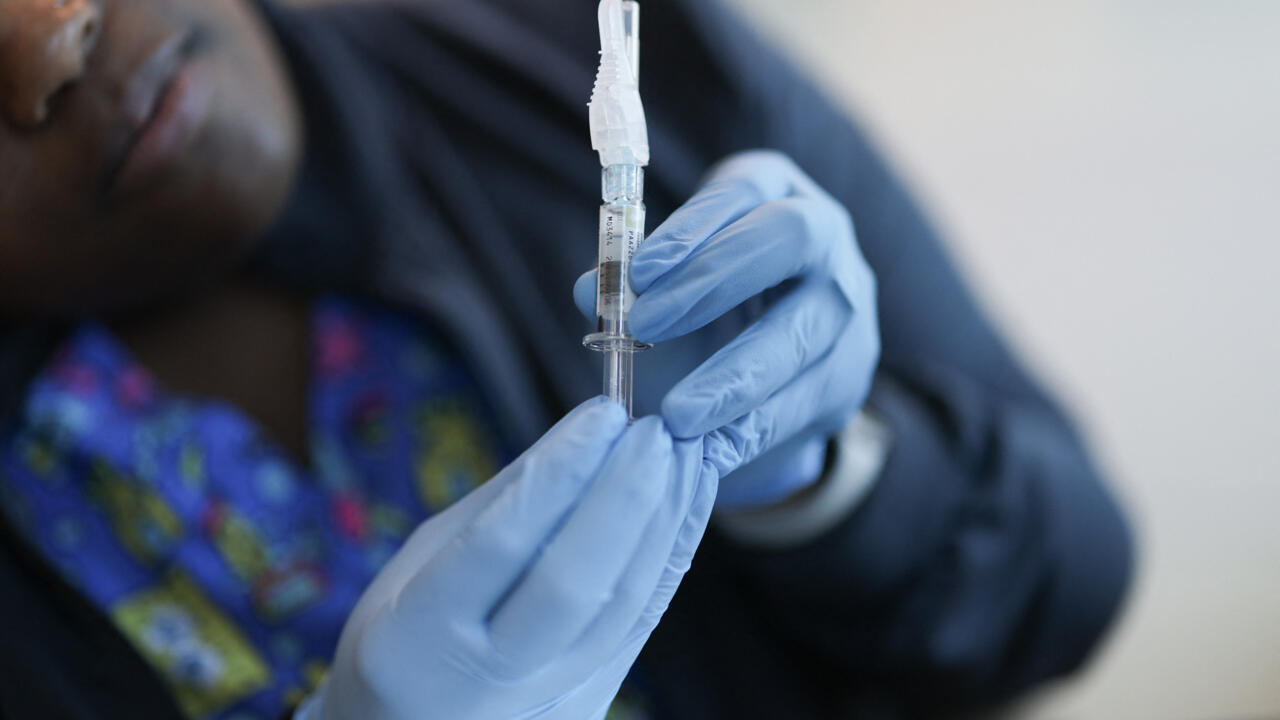
Ruth Jones, Immunization Nurse, holds a Pfizer-BioNTech COVID-19 vaccine (brand name: Comirnaty) at Borinquen Health Care Center on May 29, 2025 in Miami, Florida. © Joe Raedle, AFP

Florida plans to become the first state to eliminate vaccine mandates, a longtime cornerstone of public health policy for keeping schoolchildren and adults safe from infectious diseases.

State Surgeon General Dr. Joseph Ladapo, who announced the decision Wednesday, cast current requirements in schools and elsewhere as “immoral” intrusions on people's rights that hamper parents' ability to make health decisions for their children.

“People have a right to make their own decisions, informed decisions,” Ladapo, who has frequently clashed with the medical establishment, said at a news conference in Valrico. “They don’t have the right to tell you what to put in your body. Take it away from them.”

Florida's move, a significant departure from decades of public policy and research that has shown vaccines to be safe and the most effective way to stop the spread of communicable diseases, especially among schoolchildren, is a notable embrace of the Trump administration's agenda led by Health Secretary Robert F. Kennedy Jr., a longtime anti-vaccine activist.

Dr. Rana Alissa, chair of the Florida Chapter of the American Academy of Pediatrics, said removing vaccines puts students and school staff at greater risk.

“When everyone in a school is vaccinated, it is harder for diseases to spread and easier for everyone to continue learning and having fun,” Alissa said in an email. “When children are sick and miss school, caregivers also miss work, which not only impacts those families but also the local economy.”

Democratic state Rep. Anna Eskamani, who is running for Orlando mayor, said in a social media post that scrapping vaccines “is reckless and dangerous” and could cause outbreaks of preventable disease.

“This is a public health disaster in the making for the Sunshine State,” Eskamani said on the social platform X.

Amid turmoil at the US Centers for Disease Control and Prevention caused by Kennedy's extensive restructuring and downsizing, the Democratic governors of Washington, Oregon and California announced Wednesday that they had created an alliance to safeguard health policies, contending that the administration is politicising public health decisions.

The partnership plans to align immunization plans based on recommendations from respected national medical organisations, according to a joint statement from the states' governors.

Read more

Vaccines have saved at least 154 million lives globally over the past 50 years, the World Health Organisation reported in 2024. The majority of those were infants and children.

“Vaccines are among the most powerful inventions in history, making once-feared diseases preventable,” said Dr. Tedros Adhanom Ghebreyesus, WHO director-general.

In Florida, vaccine mandates for child day care facilities and public schools include shots for measles, chickenpox, hepatitis B, diphtheria-tetanus-acellular pertussis, polio and other diseases, according to the state Health Department’s website.

Ladapo didn't give a timeline for the changes but said the department can scrap its own rules for some vaccine mandates, though others would require action by the Florida Legislature. He did not specify any particular vaccines but repeated several times that the effort would end “all of them. Every last one of them.”

The American Medical Association issued a statement saying Florida’s plan to end vaccine mandates “would undermine decades of public health progress.”

“While there is still time, we urge Florida to reconsider this change to help prevent a rise of infectious disease outbreaks that put health and lives at risk,” said Dr. Sandra Adamson Fryhofer, an AMA trustee.

Under Republican Gov. Ron DeSantis, Florida resisted imposing COVID vaccines on schoolchildren during the pandemic, requiring “passports” for places that draw crowds, school closures and mandates that workers get the shots to keep their jobs.

“I don’t think there’s another state that’s done as much as Florida. We want to stay ahead of the curve,” the governor said.

DeSantis also announced the creation of a state “Make America Healthy Again” commission Wednesday modeled after similar initiatives that Kennedy established at the federal level.

The commission would look into such things as allowing informed consent in medical matters, promoting safe and nutritious food, boosting parental rights in medical decisions about their children and eliminating “medical orthodoxy that is not supported by the data,” DeSantis said. The commission will be chaired by Lt. Gov. Jay Collins and Florida first lady Casey DeSantis.

The commission's work will help inform a large “medical freedom package” to be introduced in the Legislature next session, which would address the vaccine mandates required by state law and make permanent the recent state COVID decisions relaxing restrictions, DeSantis said.

(FRANCE 24 with AP)
RFK Jr. Is 'Compromising the Health of This Nation,' Say 1,000+ Staffers Demanding Resignation


"Under Secretary Kennedy's leadership," said the employees, "HHS policies are placing the health of all Americans at risk, regardless of their politics."


Julia Conley
Sep 03, 2025
COMMON DREAMS

After a deadline passed for the nation's top health official to pledge to protect the federal public health workforce, more than 1,000 current and former employees of the US Department of Health and Human Services said Wednesday that "it's time for Robert F. Kennedy Jr. to resign" from his position leading the agency.


The employees addressed their letter to Kennedy, President Donald Trump's health and human services secretary, as well as members of Congress, warning that since HHS staffers spoke out in a previous letter last month about a shooting at the Centers for Disease Control and Prevention (CDC), Kennedy has continued "to endanger the nation's health."

The number of signatories on the initial correspondence has grown to more than 6,800 since 750 employees signed it in August, with federal workers endorsing the concerns it raised about how Kennedy is "sowing public mistrust" and spreading misinformation about immunizations, including the measles vaccine and mRNA vaccines like the Covid-19 shot that's credited with saving millions of lives.

"Secretary Kennedy did not respond to the letter, and HHS released a statement accusing us of politicizing a tragedy," wrote the HHS workers on Wednesday. "To be clear, the HHS workforce is nonpartisan, implementing science-based policies developed under both Republican and Democratic administrations. We believe health policy should be based on strong, evidence-based principles rather than partisan politics. But under Secretary Kennedy's leadership, HHS policies are placing the health of all Americans at risk, regardless of their politics."

The letter listed ways in which Kennedy has doubled down on harming the nation's public health infrastructure since a gunman fired more than 500 rounds of ammunition into six buildings on the CDC's main campus in Atlanta, killing a police officer before he turned the gun on himself. The shooter was reportedly motivated by his "discontent" with Covid-19 vaccines and believed he and others had been injured by the immunization.

Since then, Kennedy's employees said, the secretary has:Facilitated the firing of Dr. Susan Monarez, the Senate-confirmed CDC director, after reportedly clashing with her on vaccine science;
Caused the resignations of public health officials at the CDC;
Appointed idealogues "who pose as scientific experts and manipulate data to fit predetermined conclusions," including mRNA vaccine opponent Retsef Levi, the leader of the Advisory Committee on Immunization Practices' Covid-19 work group, and ACIP member Robert Malone, who "has made multiple inaccurate claims regarding Covid-19 and measles";
Refused to be briefed on vaccine-preventable diseases by CDC experts;
Disparaged the American Academy of Pediatrics for recommending the Covid-19 vaccine for children; and
Made "ongoing verbal attacks" on the HHS workforce, including by stating, "Trusting experts is not a feature of either a science or democracy."

The workers noted that they "swore an oath to support and defend the United States Constitution and to serve the American people" and are bound to "speak out when the Constitution is violated and the American people are put at risk."

"Thus, we warn the president, Congress, and the public that Secretary Kennedy's actions are compromising the health of this nation, and we demand Secretary Kennedy's resignation," said the HHS employees.

Should Kennedy refuse to resign, the workers wrote, the president and Congress must appoint a new secretary of health and human services—"one whose qualifications and experience ensure that health policy is informed by independent and unbiased peer-reviewed science."

"We expect those in leadership to act when the health of Americans is at stake," said the employees.

Last week, US Sen. Bernie Sanders (I-Vt.) wrote an op-ed in the The New York Times demanding Kennedy's resignation, citing Monarez' ouster and warning of the danger of Kennedy's "advocacy of conspiracy theories that have been rejected repeatedly by scientific experts."

"Covid is just the beginning," said Sanders. "Mr. Kennedy's next target may be the childhood immunization schedule, the list of recommended vaccines that children receive to protect them from diseases like measles, chickenpox, and polio."

The signatories of Wednesday's letter, who work at HHS agencies including the CDC, the Food and Drug Administration, the office of the secretary, and the Centers for Medicare and Medicaid Services, noted that in addition to the named signers, anonymous employees endorsed the letter.

The signers "speak for countless others across HHS who share our concerns but who chose not to sign out of well-founded fear of retaliation and threats to personal safety," reads the letter.

The signers also urged members of the public to join the push for Kennedy to resign or be removed, calling on them to use the 5 Calls platform to contact their elected representatives and demand Congress take action to "hold him accountable for his careless statements and actions that are endangering the health and safety of every American."


Online retailer Zalando bound by strictest EU platform rules: court

A Zalando office in Germany.
Copyright © Kirsten Bucher/ Kirsten Bucher

By Cynthia Kroet
Published on 

EU Court sides with European Commission in landmark platform rules case.

German fashion website Zalando is bound by the strictest online platform rules, the EU’s general court said in a judgment on Wednesday. 

Zalando is the first online platform to challenge its designation under the EU’s platform rules, the Digital Services Act (DSA), claiming that its user numbers are a lot lower than was estimated by the European Commission upon its designation.

The legislation, meant to combat illegal content online, started applying in August 2023 to the bloc's biggest online platforms – those with more than 45 million users per month.

The court said that since Zalando could not distinguish, among the more than 83 million people who used its platform, those who were actually exposed to the information provided by third-party sellers from those who were not, the "European Commission could consider that they were all deemed to have been exposed to it."

"The Commission could therefore consider that the average monthly number of active recipients of the Zalando platform amounted to more than 83 million, and not only around 30 million as Zalando claimed on the basis of the gross value of sales generated under the Partner Programme," the court said

The landmark ruling is a blow to other platforms with similar business models, as well as others which have appealed their designation including e-commerce player Amazon, and porn websites Pornhub, Stripchat and Xvideos. 

A Zalando spokesperson told Euronews that the company will appeal the judgement.

"We are disappointed by today's decision (... ) the judgement maintains the uncertainty about user counts (“active recipients of a service”), as the current absence of a common methodology leads to an incoherent, uneven application of the law," the statement said.

In June the court heard a second challenge to the Commission’s DSA policy brought by Amazon. A ruling in this case is expected at a later stage.

User numbers

In August 2023, the Commission designated the first batch of 19 platforms – including Facebook, Instagram, TikTok, LinkedIn, Amazon and Zalando – that are considered a Very Large Online Platform (VLOPs). The Commission has since designated six other platforms that pass the threshold of 45 million active users per month.

Those VLOPs face stricter rules than other platforms with lower user numbers including supervisory fees and more transparency reporting obligations.

Zalando challenged that decision, claiming that it differed from the others VLOPs. The platform, founded in 2008 in Berlin, said the Commission's methodology for counting user numbers and assessing whether a company is a VLOP lacked clarity and consistency.

In addition, in its defence, Zalando claimed that it operates a “hybrid business model” with a retail business and a partner business. It claims its retail business, which represents 61% of its business, for which Zalando’s provides its own content, does not fall within the scope of the DSA.

The Commission said in its designation decision that it's impossible to know whether a particular recipient of Zalando is “exposed to products stemming from Zalando SE’s proprietary retail business or from third-party traders using its intermediation service, as both types of products are indistinctly displayed on Zalando’s online interface.”

Judge's Ruling on Google Search Monopoly Decried as 'Slap on the Wrist' for Tech Giant

"You don't find someone guilty of robbing a bank and then sentence him to writing a thank you note for the loot," said one critic.


American multinational technology company Google logo seen at Googleplex in Mountain View, California on February 23, 2020.
(Photo by Alex Tai/SOPA Images/LightRocket via Getty Images)

Brad Reed
Sep 03, 2025
COMMON DREAMS


A federal judge's Tuesday ruling on tech giant Google has drawn criticism from anti-monopoly advocates who say that it let the company walk away without having to give up its economic stranglehold over online searches and advertising.

As reported by The New York Times, Judge Amit Mehta of the US District Court for the District of Columbia ruled that Google had to share some of its data with competing search platforms, while also placing restrictions on the company's ability to pay to ensure its search engine receives preferential treatment on web browsers and phones.

However, these remedies fell far short of measures requested by the US Department of Justice, which had asked that Google be forced to share more of its data with competitors and to sell off its Chrome web browser.

Nidhi Hegde, executive director of the American Economic Liberties Project, offered a scathing assessment of Mehta's ruling, and she urged the government to appeal and push for harsher penalties against Google.

"You don't find someone guilty of robbing a bank and then sentence him to writing a thank you note for the loot," she said. "Similarly, you don't find Google liable for monopolization and then write a remedy that lets it protect its monopoly. This feckless remedy to the most storied case of monopolization of the past quarter century is a complete failure of his duty and must be appealed."

She went on to describe Mehta's decision as "bizarre" given that he had "found Google liable for maintaining one of the most consequential and damaging monopolies of the internet era."

Barry Lynn, the executive director of the Open Markets Institute, accused Mehta of letting Google get away with a "slap on the wrist" given the scale of the damage it has caused.

"Google for years has wielded its vast power over all layers of the digital economy to crush competitors, halt innovation, and rob Americans of their right to read, watch, and buy what they want without being manipulated by one of the most powerful corporations in human history," he said. "Judge Mehta's order that Google share search data with competitors and cease entering into exclusive contracts does nothing to right those wrongs."

Like Hegde, Lynn also urged the government to appeal the ruling.

Elise Phillips, policy counsel at the freedom of expression advocacy group Public Knowledge, took aim at Mehta for letting Google maintain control of both Chrome and the Android mobile operating system, even though he concluded that Google had abused its market power to stifle competition.

Phillips also suggested that elected officials needed to pick up the slack when it comes to holding giant corporations accountable for their actions.

"Judge Mehta's remedies decision signals why the courts cannot be the end-all, be-all of antitrust," she said. "Google's anticompetitive behavior, and behavior like it, can and must be confronted by legislation that targets conflicts of interest, self-preferencing, and discrimination online. The American people need sector-specific legislation that addresses these harms and breaks down barriers of entry into online markets, fostering competition, innovation, and choice."

Agnès Callamard, secretary general of human rights organization Amnesty International, also weighed in to express disappointment with Mehta's decision.

"This ruling was a missed chance to rein in Google's power," said Callamard. "Google's toxic business model is built on pervasive surveillance. By tracking people across the web and monetizing their personal data through targeted advertising, the company has severely undermined our right to privacy."

Google was first sued for antitrust violations by the DOJ in 2020 under the first Trump administration, and then again in 2023 under the Biden administration.
France fines Google, Shein record sums over cookie law violations

France’s data protection watchdog CNIL on Wednesday fined Google €325 million ($380 million) and fast-fashion retailer Shein €150 million ($175 million) for violating cookie rules. The record penalties target two platforms with tens of millions of French users, marking among the heaviest sanctions the regulator has imposed.


Issued on: 04/09/2025 -
By: FRANCE 24


Google received a 325-mn-euro fine, one of the largest ever imposed by France's regulator © SEBASTIEN BOZON, AFP

France's data protection authority on Wednesday issued record fines against search giant Google and fast-fashion platform Shein for failing to respect the law on internet cookies.

The two groups, each with tens of millions of users in France, received two of the heaviest penalties ever imposed by the CNIL watchdog: 150 million euros ($175 million) for Shein and 325 million euros for Google.

Both firms failed to secure users' free and informed consent before setting advertising cookies on their browsers, the authority found in a decision the companies can still appeal.

Cookies are small files saved to browsers by websites that can collect data about users' online activity, making them essential to online advertising and the business models of many large platforms.

Read more EU orders AI companies to clean up their act, stop using pirated data

The CNIL has stepped up its scrutiny of their use, part of "a general strategy of bringing (market players) into line over the past five years, targeting especially sites and services that receive a lot of traffic," the authority said.

Shein had amassed "massive" amounts of data from the cookies it placed on 12 million monthly users' computers in France, it added.

The Asian low-cost clothing firm failed to secure users' consent or inform them adequately, as well as offering inadequate options to withdraw consent.

Shein has updated its systems to comply with the CNIL's requirements under French and European law since the investigation.

It told AFP that it would appeal the fine, which it said was "totally disproportionate given the nature of the alleged grievances" and its "current compliance" with the legislation.

Google said it would study the decision, and that it has complied with earlier CNIL demands.

'Cookie wall'

Wednesday's fine against Google is the third issued by the CNIL over the search giant's use of cookies, after paying 100 million euros in 2020 and 150 million in 2021.

Prosecutors had requested an even heavier penalty this time, of 520 million euros.

Authorities have justified the size of the punishments with reference to the sheer number of Google users in France and the broad array of "negligence" the CNIL says it is guilty of.

They especially highlight the case of a so-called "cookie wall" when creating a Googleaccount, which requires users to accept the tracking software before proceeding.

While not in itself illegal, the implications were not sufficiently explained to users, who could therefore not provide informed consent, the CNIL found.

Some 53 million French people were also affected by Google's practice of inserting adverts between inbox items in its popular Gmail email service.

Such "direct canvassing" of users requires prior consent by users under European legal precedent, which Google did not secure according to the CNIL.

On top of the fines, Google has been ordered to bring its systems into compliance within six months.

Failure to comply would draw further penalties of 100,000 euros per day for both Googleand its Irish subsidiary.

(FRANCE 24 with AFP)
France told to revisit pesticide rules in 'historic win' for green groups

France has been ordered to overhaul its pesticide authorisation procedures after a court ruled on Wednesday that current methods do not adequately protect biodiversity and human health.


Issued on: 03/09/2025 - RFI

France has been ordered to review its pesticide approval system after a court ruled current checks do not protect health or biodiversity. APN - Mark Keppler

The Paris Administrative Court of Appeal delivered the verdict in the “Justice for the Living” case, brought more than three years ago by five environmental groups.

They include Pollinis, a bee and biodiversity advocacy group; Notre Affaire à Tous (Our Common Cause), a climate justice organisation, and the nature conservation group ASPAS.

The campaigners said the state had failed to protect biodiversity through weak pesticide rules.

The court said in a statement that there was “ecological damage resulting from the use of plant protection products”, particularly affecting human health.

It told the government to review pesticide authorisations that have already been granted, to make sure they meet the rules.


Evaluation methods criticised

Judges ordered the state to carry out risk assessments “in light of the latest scientific knowledge, particularly regarding non-target species”. The authorities were given 24 months to complete the review.

France’s food and chemicals safety agency, Anses, was singled out. The court said Anses “committed a fault by not evaluating plant protection products in view of the latest scientific knowledge”.

It also said French authorities had failed to meet the requirements of a 2009 European regulation on pesticide marketing.

That regulation states that pesticides must not have “immediate or delayed harmful effects on human or animal health” and must not have “unacceptable effects on plants or the environment”.


'Historic victory'

Pollinis called the ruling a “historic victory”. The groups urged the government not to appeal to France’s highest administrative court, the Conseil d’État.

The appeal court’s decision on Wednesday went further than a June 2023 ruling, which had only ordered the government to take “all useful measures to repair ecological damage”.

The organisations, only partly satisfied at the time, had appealed to push the state to close what they saw as gaps in pesticide risk checks.

Public concern over pesticide use in France has been mounting. In July, more than 2.1 million people signed a petition opposing a draft law that would have relaxed restrictions on agricultural chemicals.

The government must now update its approval procedures and re-examine pesticide authorisations that were not assessed with methods meeting these requirements. The court gave a two-year deadline.

(with newswires)
Colombia coal exports plummet after ban on Israel sales

Tausa (Colombia) (AFP) – Colombia's coal exports fell by almost half in July compared to the same month last year, official figures showed Wednesday, amid a global price crisis and days after President Gustavo Petro's ban on sales to Israel.


Issued on: 04/09/2025 - RFI
Colombia's coal exports -- like the rocks mined at the Mineria LyC coal mine in Tausa -- have dropped dramatically since President Gustavo Petro's ban on sales to Israel 
© Raul ARBOLEDA / AFP/File

Colombia is Latin America's leading coal producer but the sector has contracted for five consecutive quarters due to the collapse of international prices and domestic policies.

The country exported $479.8 million worth of coal in July, a 45.8 percent drop from the $885.8 million sold during July 2024, according to the National Administrative Department of Statistics.

Local mining unions blame increased production in Indonesia that has driven down global prices.

Last month, Petro issued a second decree for Colombia to halt coal exports to Israel in protest against its deadly war in Gaza, renewing a June 2024 edict

Colombia was previously Israel's top coal supplier.


In a broader push for sustainability, the leftist president has imposed higher taxes on coal with a view to moving his country toward renewable energies.

Since coming to power in 2022, Petro has also halted several mining projects and instead promoted agriculture and tourism as alternative sectors for the roughly 350,000 people employed in mineral exploration.

But some miners have told AFP they fear losing their jobs, while towns whose economies depend on the industry are also feeling the impact.

"The government wants to end mining ... but they don't think about us," said Jorge Noriega, a 60-year-old worker at a coal mine in Tausa, a town about 50 miles (80 kilometers) from capital Bogota.

El Cerrejon, Colombia's largest coal mine operated by Anglo-Swiss firm Glencore, said in March it would reduce its production by 50 percent due to high operating costs.

© 2025 AFP
Guyanese President Irfaan Ali claims election victory


Georgetown (Guyana) (AFP) – Guyana's President Irfaan Ali claimed reelection Wednesday to a second term, tasked with turning the South American nation's newfound oil riches into prosperity while navigating tensions with neighbor Venezuela.


Issued on: 04/09/2025 - RFI

Guyana's President Irfaan Ali has won re-election for another five-year term
 © Joaquin SARMIENTO / AFP

"The numbers are clear... We have a great majority and we are ready to take the country forward," the 45-year-old told AFP by telephone.

Official final results of Monday's vote have not yet been published.

Ali faces the uphill challenge of reconstructing a country with the highest proven crude oil reserves per capita in the world but one of the highest poverty levels in Latin America.

According to a 2024 report by the Inter-American Development Bank, 58 percent of Guyanese lived in poverty despite an oil boom that has quadrupled the state budget to $6.7 billion since production began in 2019.

Some 750,000 Guyanese were eligible to vote © JOAQUIN SARMIENTO / AFP


Guyana, with its breakneck pace of economic growth at 43.6 percent in 2024 -- the highest in Latin America -- aims to boost oil output from 650,000 barrels per day to over a million by 2030.

Ali had promised on the campaign trail to "put more money in your pocket."

"Guyana will soon be a rich country, and the question is whether it will be a rich country full of poor people or whether... the wealth meets the needs of the people," Jason Carter of the US-based Carter Center NGO, which observed Monday's vote, told reporters in Georgetown Wednesday.

"The world is watching," he added.

Wealth 'like we've never had'

Much of the crude reserves are in the Essequibo region that makes up two-thirds of Guyana's territory but is also claimed by once-rich petrostate Venezuela.

A territorial dispute between the neighbors has intensified since ExxonMobil discovered massive offshore oil deposits in Essequibo a decade ago.

The region has been administered by Guyana for over 100 years.

On election day, Venezuela upped the ante by accusing its neighbor of "trying to create a war front" after Guyana claimed Venezuelan troops had shot at a boat transporting election materials in Essequibo.

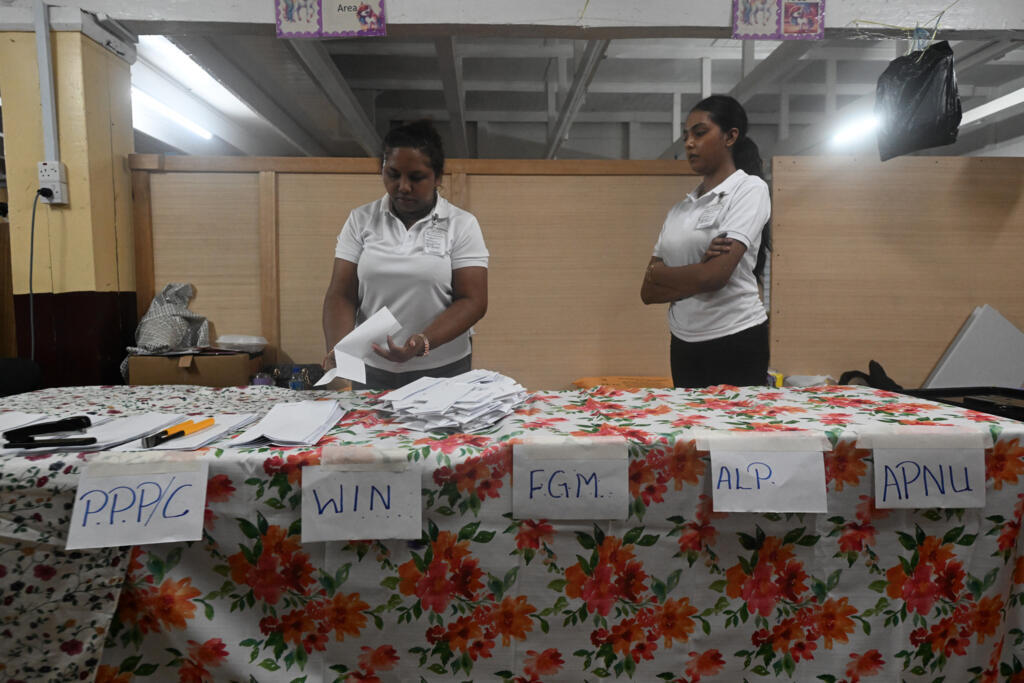
Ali's main rivals in Monday's vote were Aubrey Norton of the leftist opposition People's National Congress Reform (PNCR) and multi-millionaire populist Azruddin Mohamed, who founded his own We Invest in the Nation (WIN) party.

Observers from the Carter Center and the European Union reported Wednesday that the vote took place without any major incident, but highlighted an "uneven playing field" created by the use of public resources to exert "undue influence" on voters in favor of the ruling party.

Ninety-five percent of the territory of Guyana, an English-speaking country of some 850,000 people, is covered by tropical rainforest, making elections logistically challenging © Joaquin SARMIENTO / AFP

"The President and his administration inaugurated a high number of public projects (hospitals, schools, roads and bridges) and launched several social support programs combining these events with campaign activities," said the EU mission's preliminary report.

The top presidential contenders had all vowed to improve the lot of Guyanese, promising better health, education, infrastructure and higher salaries.

Opposition leader Amanzia Walton-Desir, who also stood in the presidential race, lamented that Guyanese are still poor despite "wealth coming into this country like we've never had."

She argued that government spending on infrastructure and social subsidies were contributing to inflation.

"The trickle-down economics that the government continues to practice... will not work," she told AFP, adding that "for every dollar we spend on infrastructure, 41 cents is wasted" due to corruption.

© 2025 AFP

Guyana's President Irfaan Ali: oil industry 'puppet' or visionary?


Georgetown (Guyana) (AFP) – Irfaan Ali, in office since 2020, is the first Guyanese leader to benefit from the South American country's massive oil reserves, which he leveraged to claim a second presidential term.


Issued on: 04/09/2025 - RFI

Guyanese President Irfaan Ali has won reelection to a second five-year term 
© SARAH SILBIGER / POOL/AFP

Guyana was recently found to have the biggest known crude reserves per capita in the world, and the state budget has quadrupled to $6.7 billion since production began in 2019.

It has allowed Ali to boost spending on infrastructure and social programs, and to campaign on promises to "put more money in your pocket."

At the age of 45, he claimed a second five-year term Wednesday before official results from Monday's election were published.

Venezuela's President Nicolas Maduro calls Ali "a puppet of ExxonMobil," the main oil operator in English-speaking Guyana -- a former British and Dutch colony.

Undeterred, Ali has pressed on with promises of development that will benefit all Guyanese -- among the poorest of Latin Americans.

"We have delivered. You can trust us," he repeated on the campaign trail, pointing to numerous infrastructure projects, tax cuts and expanded social programs.

His detractors accuse Ali of window-dressing and "ribbon-cutting.


Defender of Essequibo


From a Muslim background and Indian origins like the majority of Guyana's population, Ali was born to a couple of teachers on April 25, 1980, in a village on the opposite bank of the Demerara River from the capital Georgetown.

He studied in Britain and Jamaica, earning a doctorate in urban planning and regional development.

Ali was first elected to parliament in 2006, serving later in several ministerial positions in governments led by his center-left People's Progressive Party.

It is widely believed he was handpicked as the candidate for 2020 elections by the party's general secretary Bharrat Jagdeo -- himself a former president and still considered by many to be Guyana's most powerful man.

Ali is married, has two children, and likes to point to the bright future that oil revenues can bring for the country's young generation.

Ambitiously, he seeks to achieve this while also protecting the rainforest that covers 95 percent of Guyana and serves as a source of income through carbon credits.

On the international stage, Ali has positioned himself as a staunch defender of the oil-rich Essequibo region administered by Guyana but claimed by neighbor Venezuela in an ever-escalating territorial row.

Essequibo holds much of the oil on which Guyana is planning a more glorious future.

Ali has stood firm in the face of repeated Venezuelan threats to Essequibo, winning him the backing of many compatriots.

"We will continue to seek diplomatic solutions, but we will not tolerate threats to our territorial integrity," he vowed in March.

The territorial dispute is pending before the International Court of Justice in The Hague.

Ali has embraced closer defense cooperation with the United States, and earned Caracas's ire by welcoming a recent deployment of US warships in the Caribbean in an anti-drug operation Washington linked to a cartel it said was controlled by Maduro.

Ali's administration has been accused of corruption by the opposition, and observers from the European Union and US-based Carter Center pointed to state resources being used for campaigning in Guyana's latest election, which gave the ruling party an unfair advantage.

© 2025 AFP


Toyota expands Czech plant to build its first European EV

A Toyota logo is seen at a dealership in El Monte, Calif., Thursday, March 27, 2025.
Copyright Jae C. Hong/Copyright 2025 The AP. All rights reserved

By Doloresz Katanich with AP
Published on 

Japanese carmaker Toyota said on Wednesday it would invest €680 million to build a new production line in the Czech Republic to make a battery electric car.

Toyota is set to manufacture its first European-made battery-electric vehicle in its plant in the Czech Republic. The company's European president Yoshihiro Nakata made the announcement in a ceremony at the Czech government office on Wednesday.

The firm will join forces with the Czech state to expand the production line and build a new battery assembly facility at Toyota's existing plant in Kolin, around 50 kilometres east of Prague.

For Toyota, this decision signals a further rollout of its strategy designed to make operations carbon-neutral in Europe by 2040, the company said in a statement.

"This advanced technology project will enhance our presence in the European market and contribute alongside our other solutions towards more efficient transportation," Yoshihiro Nakata, president and CEO of Toyota Motor Europe, said at the event

The production of the new EV and batteries is a €680 million investment by Toyota, including a government incentive of up to €64 million.

"The estimated benefits for the state reach €250 million," said Lukáš Vlček, Czech minister of industry and trade at the event.

Prime Minister Petr Fiala said the new line will create another 245 jobs at the factory that already employs 3,200 people.

"The automotive industry makes up around 10% of our GDP, and if we want to keep it, we must systematically modernise it. It is exactly such projects that are crucial for the future of the Czech automotive industry," said Fiala.

Toyota did not disclose details of when production would start or of the model.

The world’s top automaker currently makes Aygo X and Yaris Hybrid models at the plant, which made over 225,000 cars last year.


Study finds Europe’s red squirrels may cope better with global warming than expected

Europe's red squirrels may have a secret superpower: climate resilience
Copyright Rebecca Prest/Unsplash

By Craig Saueurs
Published on 

Habitat loss, food, disease and competing species appear to have a greater impact on the species.

Europe’s red squirrels may be small, but they’re mighty.

A new study from Bournemouth University (BU) and the Wight Squirrel Project has found that this native species is surprisingly resilient in the face of climate change.

The research, led by BU conservation biologist Alyson Buchanan, used climate models to test how red squirrels across Europe would fare under different warming scenarios. The team looked at factors that might affect food supply and habitat, including shifts in rainfall and temperature. They got some good news.

“We can see that red squirrel populations are not directly affected by current climate patterns in the models,” Buchanan said in a statement. Instead, other threats such as habitat loss, competition from the invasive grey squirrel, and disease matter more.

That’s particularly relevant in the UK, where grey squirrels introduced from the US have almost completely displaced their red-furred relatives in most areas. The Isle of Wight remains one of its few strongholds thanks to its isolation, which keeps grey squirrels out.

Animals adapt to climate change in unique ways

Red squirrels aren’t the only species showing a knack for resilience. Clownfish, made famous by Pixar’s Finding Nemo, have surprised scientists with an unusual survival tactic.

A study published earlier this year found that clownfish can shrink their bodies during marine heat waves, lowering their energy needs and boosting their chances of survival when food and oxygen are scarce.

It’s the same tactic that marine iguanas use during El Niño events, which bring warm waters into their native habitat in the Galapagos Islands.

On land, some animals are being reintroduced to help ecosystems fight back against climate change. In the Scottish Highlands, conservationists plan to release up to 15 tauros, a modern breed of large wild cattle, by 2026. The hefty grazers are expected to churn up soil, restore biodiversity, capture carbon and drive eco-tourism in the region.

Conservation efforts remain essential

Climate change remains the biggest challenge for ecosystems worldwide, but studies like BU’s are a reminder that not all species are equally vulnerable. Still, scientists stress that resilience isn’t a free pass.

As Buchanan put it, safeguarding habitats and tackling invasive species remain critical.

“Other factors such as habitat, food availability, disease and competing species appear to matter more and underline the need to maintain positive conservation efforts for this well-loved species,” she explained.