International Climate Negotiations at a Cross Road
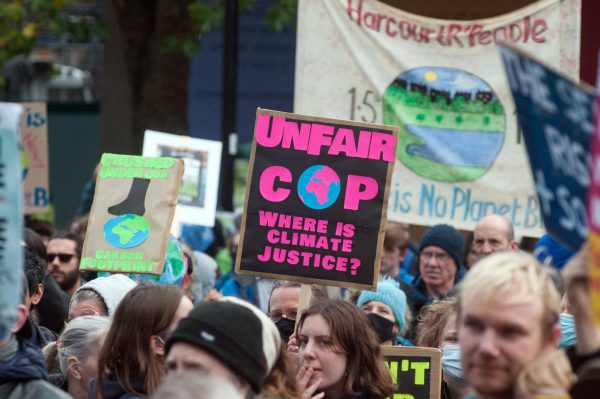 COP26 Sheffield Climate March 4,000 people marched to a rally outside City Hall demanding greater action on reducing greenhouse gas emissions
It is easy to conclude that thirty years of intransigence by more developed countries doom hopes of any effective international agreement, as many climate activists have done. But I believe it is premature to throw in the towel on international negotiations, not only because if they are not eventually successful, we will not avoid cataclysmic climate change, but also because careful examination reveals a silver lining in the pledges countries have already made.
However, let me begin by acknowledging that it is certainly possible to be discouraged by the failure of every more developed country to pledge to do its fair share of greenhouse gas emission reductions given their greater responsibility for having created the problem and their greater capacity to contribute toward its solution, as was once again demonstrated at the latest COP 30 in Brazil. Nor, as justified as their frustration is, unfortunately in my opinion the recent meeting of delegates from less developed countries in Santa Marta Colombia failed to agree on a plan likely to break the deadlock.1
Global emission reductions
Climate Scientists have told us in no uncertain terms that unless global carbon emissions are reduced by at least 80% by 2050, and, if possible, by even more, humanity is taking a risk no sane person would take. It’s that simple. So why isn’t the solution simply to hold every country responsible for reducing its national emissions by the same percentage, i.e. by at least 80% by 2050?
National “Fair Shares”
Beginning in Rio de Janeiro in 1992, and at every COP meeting since, those assembled have acknowledged the principle that countries’ responsibilities for emission reductions should be guided by different responsibilities for having caused the problem, and different capabilities for contributing to its solution, or what is referred to as common but differentiated responsibilities and capabilities, or CBDRC. However, for decades nobody knew how to make the principle of common but differentiated responsibility operational, that is how to calculate national fair shares of emission reductions. Fortunately, the intellectual problem of how to measure differential responsibility and capability has now been solved by several research groups, and anyone can now use EcoEquity’s Climate Equity Reference Project calculator, https://calculator.climateequityreference.org/, to see if a country is pledging to do its fair share of emission reductions.
When using the calculator one must choose: (1) a “level of ambition,” i.e how much to reduce global emissions, (2) how much weight to put on “responsibility” vs. “capability,” (3) what year to begin when calculating countries’ “historic responsibilities,” and (4) a subsistence income level below which people are not expected to contribute to solving climate change until they have met their minimal economic needs. For the calculations below I chose to use the 1.5 degrees Celsius “standard pathway” for “ambition,” 50% weights for both “responsibility” and “capability,” 1990 as the year to start measuring historic emissions, and a minimal subsistence income of $7,500 per year. If one chooses different weights results will differ, but only rarely will results for a country differ significantly for different choices for weights because when countries began to develop economically, and how developed they now are, not surprisingly turns out to be highly correlated.
What do we find?
- The good news is that by 2022 almost every less developed country had already pledged to reduce its emissions by what it is fair to expect them to do given their lower levels of responsibility and capability. And if all countries would do likewise, we would be within reach of an effective and equitable international climate agreement.
- The bad news is that no more developed country has yet to pledge to do its fair share given their higher levels of responsibility and capability.
For example, the latest United States’ pledge was 16.1 metric tons per capita below its fair share, and the European Union’s pledge was 9.0 metric tons per capita below its fair share. In contrast, South Africa’s pledge was 0.4 metric tons per capita above its fair share. Nigeria’s pledge was 0.4 metric tons per capita above its fair share. Senegal’s pledge was 0.1 metric tons per capita above its fair share. Kenya’s pledge was 0.5 metric tons per capita above its fair share. Mozambique’s pledge was 0.5 metric tons per capita above its fair share. And Egypt’s pledge was only 0.1 metric tons per capita below its fair share.
A Silver Lining
However, a careful examination of more developed country pledges reveals that many more developed countries have already pledged to reduce their domestic emissions sufficiently. As readers can verify for themselves using the Climate Equity Calculator, on three occasions, but only when a Democrat was in the White House, the US has pledged to reduce emissions by amounts that are what it can be reasonably expected to accomplish domestically. What the US has failed to do, however, is to pledge to pay for additional reductions the US should take responsibility for which could be done more cheaply elsewhere. Moreover, this is a common pattern for most MDCs. Put differently, the problem is that more developed countries’ greater responsibility and capability require them to pay for considerably more emission reduction than they can accomplish reasonably cheaply through domestic reductions.
But that need not mean “game over.” Fortunately, more developed countries can make up for the remainder of their fair share of reductions at a reasonable cost if emission sources in more developed countries are allowed to buy “certified emission reduction credits,” or CERs, from sources in less developed countries as I explain below. For example, a recent study by the Political Economy Research Institute at the University of Massachusetts estimates the cost of both domestic reductions and credits purchased for reductions elsewhere for the US to do its fair share would be roughly 1.5% of US GDP… which is far less than the 3.5% of GDP the US currently spends on our military.
How to Police an International Carbon Market
I am painfully aware that “carbon markets” have become a virtual bugaboo among climate activists. Nothing disgusts many climate activists more than the idea of selling the right to pollute, and stories of bogus carbon credits awarded in the European Union as well as in the Clean Development Mechanism under the Kyoto Protocol are legion. But the hard truth is this:
It is all but impossible to reduce the cost of deep developed country reductions to levels their governments will accept without permitting sources in more developed countries to purchase reduction credits from sources in less developed countries for less than those reductions would cost them to do domestically.
Fortunately, there is a way to insulate buying and selling CERs from the kinds of loopholes and shenanigans that have plagued ill-designed programs to date. This is all countries need to agree to:
(1) If they wish any country government should be allowed to certify emission reduction credits for emitters within its national territory who apply for credits to sell.
(2) When calculating whether a country has complied with its national pledge to reduce emissions, any emission reduction credits purchased by anyone within the country will be added to the country’s national emission allowance, and any emission reduction credits sold by anyone within the country will be subtracted from the country’s national emission allowance.
A country’s allowance sets a limit on its national emissions, and when set according to differential responsibility and capability allowances will be more restrictive the more developed a country is. Under my proposal a country can meet its emissions cap in two ways:
- Sources of emissions within the country can reduce their emissions.
- Or they can pay for reductions to be done elsewhere by purchasing certified emission reduction credits.
When sources in a country buy emission reduction credits this allows the country to emit more domestically than the emission cap the international agreement assigned to the country. When sources in a country sell emission reduction credits this requires the country to emit less domestically than the emission cap the international agreement assigned the country. Because it is generally cheaper for sources in lesser developed countries to reduce their emissions than it is for sources in more developed countries to do so, sources in lesser developed countries would generally be sellers of emission reduction credits and sources in more developed countries would generally be buyers of emission reduction credits under my proposal.
Why This Can Work
But why would this prevent the problem of bogus certification and phantom reductions critics have complained so much about in the past with good reason? It is difficult to determine how many credits to award an applicant for reductions that are additional to what would have occurred in any case. This requires not only verifying if the emission reduction credits which an applicant applies for are real, and not fictitious, which is hard enough for a certification agency to do. It also requires a certification agency to estimate what would have happened in any case, i.e. had the applicant for the credits done nothing. In other words, the certification agency must determine if the reductions are “additional” to what would have happened in any case. As anyone working in the field knows, judging “additionality” is even more difficult than deciding if the reductions an applicant for certification claims a project will yield are realistic and not over exaggerated.
It is because these two tasks are difficult and subject to challenge, and because there are clearly cases where “excessive” and even “bogus” credits have been awarded in various programs to date, that critics have understandably soured on carbon markets. However, while it is admittedly difficult to decide how many credits a particular project deserves, perhaps surprisingly it is relatively easy to measure actual annual national emissions, which must be measured in any case to determine if a country is in compliance with any international agreement. Which brings us to the crucial point:
If a country government makes a mistake and awards more credits than it should, as long as national emissions are capped and compliance with national emissions are enforced, any mistake in awarding credits cannot undermine global reductions. Instead, the erroneous awarding of credits only harms others within the country who will have to make up the difference if the country’s certifying agency awards excessive, or bogus credits.
In other words, as long as any credits sold abroad are added to the amount of emissions a country is required to reduce, and any credits purchased from abroad are subtracted from the amount of emissions a country is required to reduce; global emissions reductions will be exactly what the international agreement called for.2 Because this can be difficult to wrap one’s mind around, in chapter 14 of my book, Climate Change Policy: The Eleventh Hour, I provide an example to explain how it would work in which I assume that sources applying for credits may well try to cheat, and government agencies granting credits may well collude with cheaters. To be clear, my proposal does not prevent crimes from being committed, nor eliminate victims. When emitters in less developed countries cheat, and when agencies in less developed countries either make honest mistakes when carrying out what is admittedly a difficult task – awarding reduction credits accurately – or conspire with cheaters, there are victims! But the victims are whoever must reduce emissions by more than they should have had to inside the country where bogus credits are awarded. In short, my proposal does not prevent mistakes from being made, nor eliminate victims. What it does is change who those victims are.
Because victims of cheating are innocent parties I recommend that countries should be allowed to certify emission reduction credits for sale only if they wish to do so. And I point out that countries would be well advised to consider whether they are up to this difficult task. As I explain, it is hard to judge how many credits should be awarded for a project. And there are perverse incentives for applicants and officials who evaluate proposals to cheat. And, when bogus credits are awarded, this will impose hardships on others inside the country, who must then reduce emissions more than they should have had to. So, if a country government does not feel up to this task, it should not certify credits for sale.
However, because it would be highly advantageous for emitters in less developed countries with low reduction costs to sell legitimate reduction credits for more than the emission reductions would cost them to emitters in more developed countries with high reduction costs, it would be very helpful if the Intergovernmental Panel on Climate Change (IPCC) offered to provide technical assistance to any government in a less developed country which asks for help to make their certification process as competent as can be hoped for. Under the Koto Protocol the executive board of the Clean Development Mechanism developed considerable expertise in this kind of work. While the absence of caps on less developed country emissions under Kyoto was a fatal flaw, and the backlog of applications also caused problems which critics jumped all over; in many ways the historical record of the Clean Development Mechanism suggests that the IPPC could be of great help to less developed countries asking for its technical assistance in evaluating applications for reduction credits.3
A Hypothetical Example to Explain How This Works
Suppose there is an electric utility in the US. Suppose laws in the US have already induced the US utility to shift from coal to natural gas to reduce its carbon emissions by 1 gigaton. But now US law requires the US utility to reduce its emissions by an additional gigaton, and reducing this second gigaton will be considerably more expensive than reducing the first gigaton was. Suppose there is also an electric utility in India which is still producing all its electricity by burning low grade coal. And suppose that by substituting natural gas for some of the low-grade coal it is burning, it can reduce its emissions by 1 gigaton comparatively cheaply.
If the utility in the US does not reduce the second gigaton domestically but instead buys emission reduction credits for 1 gigaton from the utility in India, and the utility in India truly does reduce its emissions by 1 gigaton, global carbon emissions have been reduced by 1 gigaton. They were simply reduced in India, where they were cheaper to reduce, rather than in the US, where it would have been more expensive to reduce them. And the price the US utility pays the utility in India for 1 gigaton of emission reduction credits simply divides this “efficiency gain” from relocating them from the US to India between the two utilities. At least this is how we economists teach it in our environmental economics classes. But would it really work this way? Let me walk readers through a worst-case scenario where actors with an incentive to cheat get away with cheating — the nightmare scenario that keeps critics of carbon markets awake at night.
What if the certifying agency in India — say India’s Environmental Protection Agency, or EPA — does a terrible job of judging whether the emission reduction credits the electric utility in India is applying to have approved are real? What if the utility in India lies about making reductions? What if it claims it reduced its emissions by 1 gigaton, but in truth it did not reduce its emissions at all — it goes right on producing all its electricity by burning low grade coal and therefore emitting the same large amount of greenhouse gases as before. However, assume the EPA in India certifies that the Indian utility did really reduce its emissions by 1 gigaton, and awards it credits for 1 gigaton. This might be because the India EPA made an honest mistake. As explained above, it is often not easy to ascertain how much emissions will be reduced, much less how much more they will be reduced than they would have been reduced in any case. Or it could be that the India EPA was bamboozled by the India utility’s clever misrepresentation. Or it could be that the officials working for India’s EPA were corrupt, and in cahoots with the utility, and knew they were awarding bogus credits, but did so because the utility bribed them. The important point is that there is clearly what economists call a perverse incentive for the Indian utility to try to cheat, and also a perverse incentive for corrupt officials at the Indian EPA to co-conspire… because the Indian utility is going to get paid for the credits it will sell, and in my example of a worst case scenario, the Indian utility has incurred no expense at all. What will happen?
We have no real reduction of 1 gigaton of greenhouse gas emissions by the utility in India, which continues to burn very low-grade coal just as before. But that utility in India is awarded credits for 1 gigaton by India’s EPA… which the Indian utility sells to the utility in the US… which satisfies its obligation to reduce its emissions by an additional 1 gigaton by turning in the credits for 1 gigaton of reductions it purchased from the utility in India to the US EPA. What is the result?
One gigaton which the US utility would have had to reduce in the US if there were no credits to be purchased is now no longer reduced in the US. But there is no reduction in India, or at least no reduction which would not have taken place in any case. At this point in the analysis, it looks like the nightmare critics of international carbon trading fear and loath, who therefore conclude: “You see? We’re now 1 gigaton of greenhouse gas reduction short. All of us fighting to prevent climate change, and all who suffer when we fail to do so, have been cheated.” However — and this is the key feature of my proposal – despite first appearances, this bogus emission reduction credit scam will not diminish global reductions one iota under my proposal. And this is why: The country of India is still responsible for whatever reductions it was responsible for under the treaty.
It is true that India is a less developed country with low responsibility and capability, so India’s fair share of reductions is low compared to the responsibilities and capabilities of more developed countries like the US. But under the treaty India is still responsible for whatever reductions its responsibility and capability warrant. And when the India EPA certifies 1 gigaton of reductions for the utility in India to sell, now India is responsible for 1 gigaton more than India would have been responsible for had the India EPA not certified the 1 gigaton of bogus credits. Of course, if the reduction by the utility in India had been real, then the real reduction would exactly make up for the additional responsibility. But there was no real reduction. So, what will happen under the treaty I propose?
India now must come up with 1 gigaton of reductions it would otherwise not have had to achieve to meet its treaty obligations.Put differently, when the treaty is enforced, India will be found in non-compliance unless someone else in India reduces emissions by 1 gigaton, that is, 1 gigaton of reductions which someone else in India would not have had to reduce had the bogus credits not been certified by India’s EPA and sold to the utility in the US.
In sum: If there is no cheating of course everything works out for the best. The global cost of achieving reductions is reduced by locating them where they cost the least, and both the utility in the US and the utility in India are better off financially than had the utility in the US not been permitted to buy credits from the utility in India. In the second scenario, however, either an honest mistake was made by the India EPA, or crimes were committed by the utility in India who misrepresented their reductions, and/or corrupt officials in India’s EPA who approved bogus credits. And whether it was an honest mistake or a crime, there are victims! But the victims are whoever in India ends up having to reduce emissions by 1 gigaton more than they otherwise would have had to. The International community is not harmed by the crime. Nobody outside India is harmed by the crime. What my proposal does is immunize or insulate everyone outside India from becoming victims of either honest mistakes or cheating by an Indian utility and perhaps corrupt officials working for the India EPA.
As should now be clear, my proposal does not prevent crimes from being committed, nor eliminate victims. When emitters in less developed countries cheat, and when EPAs in less developed countries either make honest mistakes when carrying out what is admittedly a difficult task – awarding reduction credits accurately – or conspire with cheaters, there are victims! But the victims are whoever must reduce emissions by more than they should have had to inside India.
Because victims of cheating are innocent parties inside India is why I recommend that countries should be allowed to certify emission reduction credits for sale, only if they wish, or choose to do so. Countries would be well advised to consider whether they are up to a difficult task. As explained, it is hard to judge how many credits to award for a project. And there are perverse incentives for applicants and officials who evaluate proposals to cheat. And, when bogus credits are awarded, this will impose hardships on others inside the country, who must then reduce emissions more than they should have had to. So, if a country’s government does not feel up to this task, they should not certify credits for sale.
However, because it would be highly advantageous for emitters in less developed countries with low reduction costs to sell legitimate reduction credits for more than the emission reductions would cost them to emitters in more developed countries with high reduction costs, it would be very helpful if the Intergovernmental Panel on Climate Change (IPCC) offered to provide technical assistance to any government in a less developed country which asks for help to make their certification process as competent as can be hoped for. Under the Kyoto Protocol the executive board of the Clean Development Mechanism developed considerable expertise in this kind of work. While the absence of caps on less developed country emissions under Kyoto was a fatal flaw, and the backlog of applications also caused problems which critics jumped all over; in many ways the historical record of the Clean Development Mechanism suggests that the IPCC could be of great help to less developed countries asking for its technical assistance in evaluating applications for reduction credits.4
Conclusion
For all the reasons critics have pointed out it is often very difficult to make an honest assessment of how much and when any project will reduce carbon emissions. Moreover, there is every reason to assume there will be two kinds of dishonest actors: (1) Applicants who know full well their project will not reduce emissions by as much as they claim it will. And (2) officials with the power to award credits who can be induced to award more than they know are deserved in exchange for a bribe from the applicant. And finally, whether mistakes are honest or due to corruption, there will be victims! My proposal does not prevent mistakes from being made, nor eliminate victims. What it does is reduce the cost of taking responsibility for their “fair share” of global emission reductions for MDCs, and change who mistakes and cheating victimizes. When bogus credits are sold by emitters in a country whose national emissions are capped, the victims will not be, indeed cannot be those who suffer everywhere in the world from climate change, because the country’s emissions are capped and therefore are not increased. Instead, the victims are others within the country which is awarding bogus emission credits who must make up the difference so the country’s national emissions will still be under its national cap.
1 It is my hope that those who attended the meeting in Santa Marta will consider the proposal I outline below as the most likely way to overcome the deadlock that has plagued international climate negotiations for over thirty years.
2 Because this can be difficult to wrap one’s mind around, I provide an example in chapter 14 of my book, Climate Change Policy: The Eleventh Hour.
3For more on the much-maligned history of the Clean Development Mechanism under Kyoto see chapters 8 and 9 in Hahnel, Green Economics: Confronting the Ecological Crisis, M.E. Sharpe, 2011.
4For more on the much-maligned history of the Clean Development Mechanism under Kyoto see chapters 8 and 9 in Hahnel, Green Economics: Confronting the Ecological Crisis, M.E. Sharpe, 2011.

It is easy to conclude that thirty years of intransigence by more developed countries doom hopes of any effective international agreement, as many climate activists have done. But I believe it is premature to throw in the towel on international negotiations, not only because if they are not eventually successful, we will not avoid cataclysmic climate change, but also because careful examination reveals a silver lining in the pledges countries have already made.
However, let me begin by acknowledging that it is certainly possible to be discouraged by the failure of every more developed country to pledge to do its fair share of greenhouse gas emission reductions given their greater responsibility for having created the problem and their greater capacity to contribute toward its solution, as was once again demonstrated at the latest COP 30 in Brazil. Nor, as justified as their frustration is, unfortunately in my opinion the recent meeting of delegates from less developed countries in Santa Marta Colombia failed to agree on a plan likely to break the deadlock.1
Global emission reductions
Climate Scientists have told us in no uncertain terms that unless global carbon emissions are reduced by at least 80% by 2050, and, if possible, by even more, humanity is taking a risk no sane person would take. It’s that simple. So why isn’t the solution simply to hold every country responsible for reducing its national emissions by the same percentage, i.e. by at least 80% by 2050?
National “Fair Shares”
Beginning in Rio de Janeiro in 1992, and at every COP meeting since, those assembled have acknowledged the principle that countries’ responsibilities for emission reductions should be guided by different responsibilities for having caused the problem, and different capabilities for contributing to its solution, or what is referred to as common but differentiated responsibilities and capabilities, or CBDRC. However, for decades nobody knew how to make the principle of common but differentiated responsibility operational, that is how to calculate national fair shares of emission reductions. Fortunately, the intellectual problem of how to measure differential responsibility and capability has now been solved by several research groups, and anyone can now use EcoEquity’s Climate Equity Reference Project calculator, https://calculator.climateequityreference.org/, to see if a country is pledging to do its fair share of emission reductions.
When using the calculator one must choose: (1) a “level of ambition,” i.e how much to reduce global emissions, (2) how much weight to put on “responsibility” vs. “capability,” (3) what year to begin when calculating countries’ “historic responsibilities,” and (4) a subsistence income level below which people are not expected to contribute to solving climate change until they have met their minimal economic needs. For the calculations below I chose to use the 1.5 degrees Celsius “standard pathway” for “ambition,” 50% weights for both “responsibility” and “capability,” 1990 as the year to start measuring historic emissions, and a minimal subsistence income of $7,500 per year. If one chooses different weights results will differ, but only rarely will results for a country differ significantly for different choices for weights because when countries began to develop economically, and how developed they now are, not surprisingly turns out to be highly correlated.
What do we find?
- The good news is that by 2022 almost every less developed country had already pledged to reduce its emissions by what it is fair to expect them to do given their lower levels of responsibility and capability. And if all countries would do likewise, we would be within reach of an effective and equitable international climate agreement.
- The bad news is that no more developed country has yet to pledge to do its fair share given their higher levels of responsibility and capability.
For example, the latest United States’ pledge was 16.1 metric tons per capita below its fair share, and the European Union’s pledge was 9.0 metric tons per capita below its fair share. In contrast, South Africa’s pledge was 0.4 metric tons per capita above its fair share. Nigeria’s pledge was 0.4 metric tons per capita above its fair share. Senegal’s pledge was 0.1 metric tons per capita above its fair share. Kenya’s pledge was 0.5 metric tons per capita above its fair share. Mozambique’s pledge was 0.5 metric tons per capita above its fair share. And Egypt’s pledge was only 0.1 metric tons per capita below its fair share.
A Silver Lining
However, a careful examination of more developed country pledges reveals that many more developed countries have already pledged to reduce their domestic emissions sufficiently. As readers can verify for themselves using the Climate Equity Calculator, on three occasions, but only when a Democrat was in the White House, the US has pledged to reduce emissions by amounts that are what it can be reasonably expected to accomplish domestically. What the US has failed to do, however, is to pledge to pay for additional reductions the US should take responsibility for which could be done more cheaply elsewhere. Moreover, this is a common pattern for most MDCs. Put differently, the problem is that more developed countries’ greater responsibility and capability require them to pay for considerably more emission reduction than they can accomplish reasonably cheaply through domestic reductions.
But that need not mean “game over.” Fortunately, more developed countries can make up for the remainder of their fair share of reductions at a reasonable cost if emission sources in more developed countries are allowed to buy “certified emission reduction credits,” or CERs, from sources in less developed countries as I explain below. For example, a recent study by the Political Economy Research Institute at the University of Massachusetts estimates the cost of both domestic reductions and credits purchased for reductions elsewhere for the US to do its fair share would be roughly 1.5% of US GDP… which is far less than the 3.5% of GDP the US currently spends on our military.
How to Police an International Carbon Market
I am painfully aware that “carbon markets” have become a virtual bugaboo among climate activists. Nothing disgusts many climate activists more than the idea of selling the right to pollute, and stories of bogus carbon credits awarded in the European Union as well as in the Clean Development Mechanism under the Kyoto Protocol are legion. But the hard truth is this:
It is all but impossible to reduce the cost of deep developed country reductions to levels their governments will accept without permitting sources in more developed countries to purchase reduction credits from sources in less developed countries for less than those reductions would cost them to do domestically.
Fortunately, there is a way to insulate buying and selling CERs from the kinds of loopholes and shenanigans that have plagued ill-designed programs to date. This is all countries need to agree to:
(1) If they wish any country government should be allowed to certify emission reduction credits for emitters within its national territory who apply for credits to sell.
(2) When calculating whether a country has complied with its national pledge to reduce emissions, any emission reduction credits purchased by anyone within the country will be added to the country’s national emission allowance, and any emission reduction credits sold by anyone within the country will be subtracted from the country’s national emission allowance.
A country’s allowance sets a limit on its national emissions, and when set according to differential responsibility and capability allowances will be more restrictive the more developed a country is. Under my proposal a country can meet its emissions cap in two ways:
- Sources of emissions within the country can reduce their emissions.
- Or they can pay for reductions to be done elsewhere by purchasing certified emission reduction credits.
When sources in a country buy emission reduction credits this allows the country to emit more domestically than the emission cap the international agreement assigned to the country. When sources in a country sell emission reduction credits this requires the country to emit less domestically than the emission cap the international agreement assigned the country. Because it is generally cheaper for sources in lesser developed countries to reduce their emissions than it is for sources in more developed countries to do so, sources in lesser developed countries would generally be sellers of emission reduction credits and sources in more developed countries would generally be buyers of emission reduction credits under my proposal.
Why This Can Work
But why would this prevent the problem of bogus certification and phantom reductions critics have complained so much about in the past with good reason? It is difficult to determine how many credits to award an applicant for reductions that are additional to what would have occurred in any case. This requires not only verifying if the emission reduction credits which an applicant applies for are real, and not fictitious, which is hard enough for a certification agency to do. It also requires a certification agency to estimate what would have happened in any case, i.e. had the applicant for the credits done nothing. In other words, the certification agency must determine if the reductions are “additional” to what would have happened in any case. As anyone working in the field knows, judging “additionality” is even more difficult than deciding if the reductions an applicant for certification claims a project will yield are realistic and not over exaggerated.
It is because these two tasks are difficult and subject to challenge, and because there are clearly cases where “excessive” and even “bogus” credits have been awarded in various programs to date, that critics have understandably soured on carbon markets. However, while it is admittedly difficult to decide how many credits a particular project deserves, perhaps surprisingly it is relatively easy to measure actual annual national emissions, which must be measured in any case to determine if a country is in compliance with any international agreement. Which brings us to the crucial point:
If a country government makes a mistake and awards more credits than it should, as long as national emissions are capped and compliance with national emissions are enforced, any mistake in awarding credits cannot undermine global reductions. Instead, the erroneous awarding of credits only harms others within the country who will have to make up the difference if the country’s certifying agency awards excessive, or bogus credits.
In other words, as long as any credits sold abroad are added to the amount of emissions a country is required to reduce, and any credits purchased from abroad are subtracted from the amount of emissions a country is required to reduce; global emissions reductions will be exactly what the international agreement called for.2 Because this can be difficult to wrap one’s mind around, in chapter 14 of my book, Climate Change Policy: The Eleventh Hour, I provide an example to explain how it would work in which I assume that sources applying for credits may well try to cheat, and government agencies granting credits may well collude with cheaters. To be clear, my proposal does not prevent crimes from being committed, nor eliminate victims. When emitters in less developed countries cheat, and when agencies in less developed countries either make honest mistakes when carrying out what is admittedly a difficult task – awarding reduction credits accurately – or conspire with cheaters, there are victims! But the victims are whoever must reduce emissions by more than they should have had to inside the country where bogus credits are awarded. In short, my proposal does not prevent mistakes from being made, nor eliminate victims. What it does is change who those victims are.
Because victims of cheating are innocent parties I recommend that countries should be allowed to certify emission reduction credits for sale only if they wish to do so. And I point out that countries would be well advised to consider whether they are up to this difficult task. As I explain, it is hard to judge how many credits should be awarded for a project. And there are perverse incentives for applicants and officials who evaluate proposals to cheat. And, when bogus credits are awarded, this will impose hardships on others inside the country, who must then reduce emissions more than they should have had to. So, if a country government does not feel up to this task, it should not certify credits for sale.
However, because it would be highly advantageous for emitters in less developed countries with low reduction costs to sell legitimate reduction credits for more than the emission reductions would cost them to emitters in more developed countries with high reduction costs, it would be very helpful if the Intergovernmental Panel on Climate Change (IPCC) offered to provide technical assistance to any government in a less developed country which asks for help to make their certification process as competent as can be hoped for. Under the Koto Protocol the executive board of the Clean Development Mechanism developed considerable expertise in this kind of work. While the absence of caps on less developed country emissions under Kyoto was a fatal flaw, and the backlog of applications also caused problems which critics jumped all over; in many ways the historical record of the Clean Development Mechanism suggests that the IPPC could be of great help to less developed countries asking for its technical assistance in evaluating applications for reduction credits.3
A Hypothetical Example to Explain How This Works
Suppose there is an electric utility in the US. Suppose laws in the US have already induced the US utility to shift from coal to natural gas to reduce its carbon emissions by 1 gigaton. But now US law requires the US utility to reduce its emissions by an additional gigaton, and reducing this second gigaton will be considerably more expensive than reducing the first gigaton was. Suppose there is also an electric utility in India which is still producing all its electricity by burning low grade coal. And suppose that by substituting natural gas for some of the low-grade coal it is burning, it can reduce its emissions by 1 gigaton comparatively cheaply.
If the utility in the US does not reduce the second gigaton domestically but instead buys emission reduction credits for 1 gigaton from the utility in India, and the utility in India truly does reduce its emissions by 1 gigaton, global carbon emissions have been reduced by 1 gigaton. They were simply reduced in India, where they were cheaper to reduce, rather than in the US, where it would have been more expensive to reduce them. And the price the US utility pays the utility in India for 1 gigaton of emission reduction credits simply divides this “efficiency gain” from relocating them from the US to India between the two utilities. At least this is how we economists teach it in our environmental economics classes. But would it really work this way? Let me walk readers through a worst-case scenario where actors with an incentive to cheat get away with cheating — the nightmare scenario that keeps critics of carbon markets awake at night.
What if the certifying agency in India — say India’s Environmental Protection Agency, or EPA — does a terrible job of judging whether the emission reduction credits the electric utility in India is applying to have approved are real? What if the utility in India lies about making reductions? What if it claims it reduced its emissions by 1 gigaton, but in truth it did not reduce its emissions at all — it goes right on producing all its electricity by burning low grade coal and therefore emitting the same large amount of greenhouse gases as before. However, assume the EPA in India certifies that the Indian utility did really reduce its emissions by 1 gigaton, and awards it credits for 1 gigaton. This might be because the India EPA made an honest mistake. As explained above, it is often not easy to ascertain how much emissions will be reduced, much less how much more they will be reduced than they would have been reduced in any case. Or it could be that the India EPA was bamboozled by the India utility’s clever misrepresentation. Or it could be that the officials working for India’s EPA were corrupt, and in cahoots with the utility, and knew they were awarding bogus credits, but did so because the utility bribed them. The important point is that there is clearly what economists call a perverse incentive for the Indian utility to try to cheat, and also a perverse incentive for corrupt officials at the Indian EPA to co-conspire… because the Indian utility is going to get paid for the credits it will sell, and in my example of a worst case scenario, the Indian utility has incurred no expense at all. What will happen?
We have no real reduction of 1 gigaton of greenhouse gas emissions by the utility in India, which continues to burn very low-grade coal just as before. But that utility in India is awarded credits for 1 gigaton by India’s EPA… which the Indian utility sells to the utility in the US… which satisfies its obligation to reduce its emissions by an additional 1 gigaton by turning in the credits for 1 gigaton of reductions it purchased from the utility in India to the US EPA. What is the result?
One gigaton which the US utility would have had to reduce in the US if there were no credits to be purchased is now no longer reduced in the US. But there is no reduction in India, or at least no reduction which would not have taken place in any case. At this point in the analysis, it looks like the nightmare critics of international carbon trading fear and loath, who therefore conclude: “You see? We’re now 1 gigaton of greenhouse gas reduction short. All of us fighting to prevent climate change, and all who suffer when we fail to do so, have been cheated.” However — and this is the key feature of my proposal – despite first appearances, this bogus emission reduction credit scam will not diminish global reductions one iota under my proposal. And this is why: The country of India is still responsible for whatever reductions it was responsible for under the treaty.
It is true that India is a less developed country with low responsibility and capability, so India’s fair share of reductions is low compared to the responsibilities and capabilities of more developed countries like the US. But under the treaty India is still responsible for whatever reductions its responsibility and capability warrant. And when the India EPA certifies 1 gigaton of reductions for the utility in India to sell, now India is responsible for 1 gigaton more than India would have been responsible for had the India EPA not certified the 1 gigaton of bogus credits. Of course, if the reduction by the utility in India had been real, then the real reduction would exactly make up for the additional responsibility. But there was no real reduction. So, what will happen under the treaty I propose?
India now must come up with 1 gigaton of reductions it would otherwise not have had to achieve to meet its treaty obligations.Put differently, when the treaty is enforced, India will be found in non-compliance unless someone else in India reduces emissions by 1 gigaton, that is, 1 gigaton of reductions which someone else in India would not have had to reduce had the bogus credits not been certified by India’s EPA and sold to the utility in the US.
In sum: If there is no cheating of course everything works out for the best. The global cost of achieving reductions is reduced by locating them where they cost the least, and both the utility in the US and the utility in India are better off financially than had the utility in the US not been permitted to buy credits from the utility in India. In the second scenario, however, either an honest mistake was made by the India EPA, or crimes were committed by the utility in India who misrepresented their reductions, and/or corrupt officials in India’s EPA who approved bogus credits. And whether it was an honest mistake or a crime, there are victims! But the victims are whoever in India ends up having to reduce emissions by 1 gigaton more than they otherwise would have had to. The International community is not harmed by the crime. Nobody outside India is harmed by the crime. What my proposal does is immunize or insulate everyone outside India from becoming victims of either honest mistakes or cheating by an Indian utility and perhaps corrupt officials working for the India EPA.
As should now be clear, my proposal does not prevent crimes from being committed, nor eliminate victims. When emitters in less developed countries cheat, and when EPAs in less developed countries either make honest mistakes when carrying out what is admittedly a difficult task – awarding reduction credits accurately – or conspire with cheaters, there are victims! But the victims are whoever must reduce emissions by more than they should have had to inside India.
Because victims of cheating are innocent parties inside India is why I recommend that countries should be allowed to certify emission reduction credits for sale, only if they wish, or choose to do so. Countries would be well advised to consider whether they are up to a difficult task. As explained, it is hard to judge how many credits to award for a project. And there are perverse incentives for applicants and officials who evaluate proposals to cheat. And, when bogus credits are awarded, this will impose hardships on others inside the country, who must then reduce emissions more than they should have had to. So, if a country’s government does not feel up to this task, they should not certify credits for sale.
However, because it would be highly advantageous for emitters in less developed countries with low reduction costs to sell legitimate reduction credits for more than the emission reductions would cost them to emitters in more developed countries with high reduction costs, it would be very helpful if the Intergovernmental Panel on Climate Change (IPCC) offered to provide technical assistance to any government in a less developed country which asks for help to make their certification process as competent as can be hoped for. Under the Kyoto Protocol the executive board of the Clean Development Mechanism developed considerable expertise in this kind of work. While the absence of caps on less developed country emissions under Kyoto was a fatal flaw, and the backlog of applications also caused problems which critics jumped all over; in many ways the historical record of the Clean Development Mechanism suggests that the IPCC could be of great help to less developed countries asking for its technical assistance in evaluating applications for reduction credits.4
Conclusion
For all the reasons critics have pointed out it is often very difficult to make an honest assessment of how much and when any project will reduce carbon emissions. Moreover, there is every reason to assume there will be two kinds of dishonest actors: (1) Applicants who know full well their project will not reduce emissions by as much as they claim it will. And (2) officials with the power to award credits who can be induced to award more than they know are deserved in exchange for a bribe from the applicant. And finally, whether mistakes are honest or due to corruption, there will be victims! My proposal does not prevent mistakes from being made, nor eliminate victims. What it does is reduce the cost of taking responsibility for their “fair share” of global emission reductions for MDCs, and change who mistakes and cheating victimizes. When bogus credits are sold by emitters in a country whose national emissions are capped, the victims will not be, indeed cannot be those who suffer everywhere in the world from climate change, because the country’s emissions are capped and therefore are not increased. Instead, the victims are others within the country which is awarding bogus emission credits who must make up the difference so the country’s national emissions will still be under its national cap.
1 It is my hope that those who attended the meeting in Santa Marta will consider the proposal I outline below as the most likely way to overcome the deadlock that has plagued international climate negotiations for over thirty years.
2 Because this can be difficult to wrap one’s mind around, I provide an example in chapter 14 of my book, Climate Change Policy: The Eleventh Hour.
3For more on the much-maligned history of the Clean Development Mechanism under Kyoto see chapters 8 and 9 in Hahnel, Green Economics: Confronting the Ecological Crisis, M.E. Sharpe, 2011.
4For more on the much-maligned history of the Clean Development Mechanism under Kyoto see chapters 8 and 9 in Hahnel, Green Economics: Confronting the Ecological Crisis, M.E. Sharpe, 2011.

1 Comment
Escalating Climate and Geopolitical Shocks Force a Choice: Build Resilience or Be Shaped by Crisis
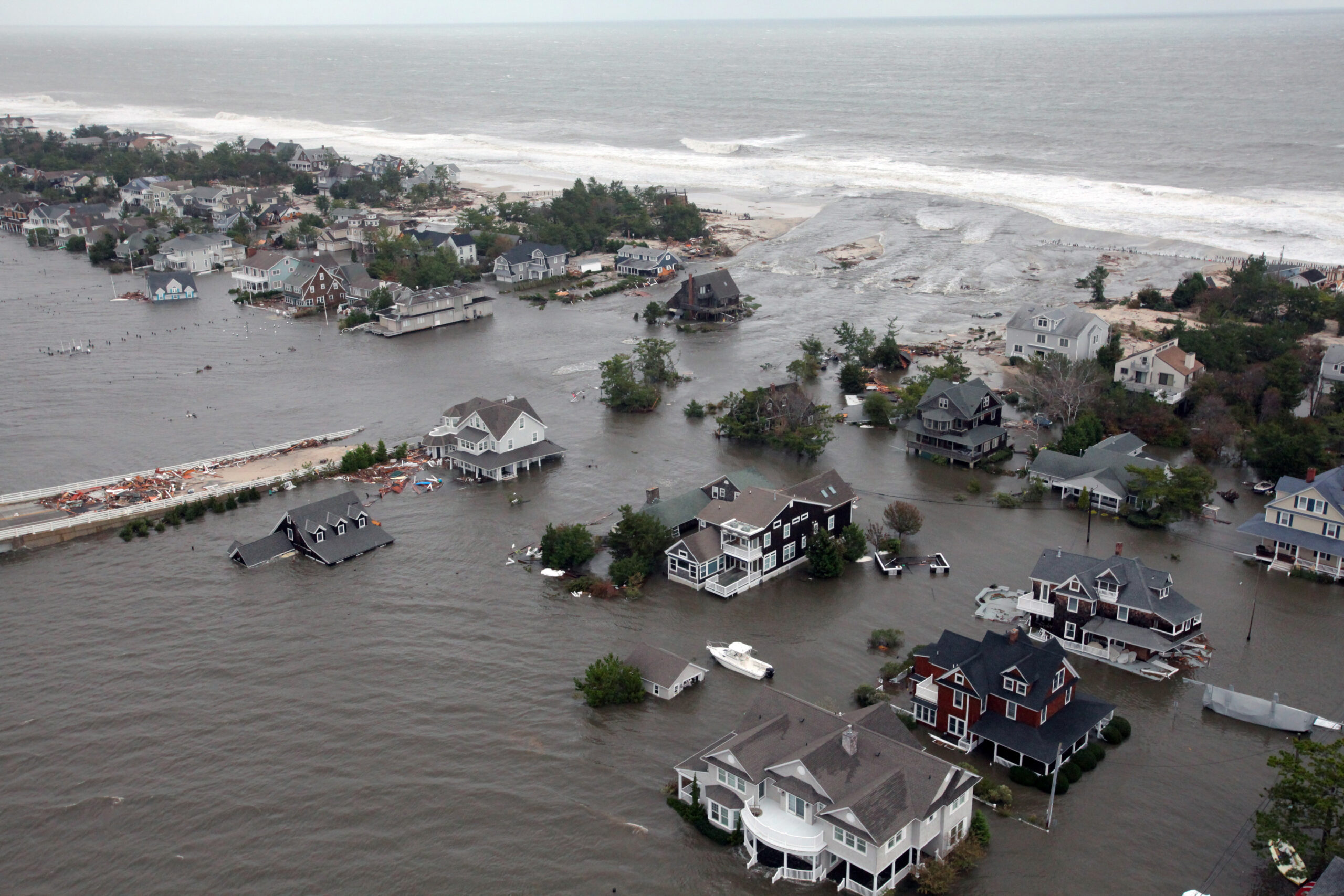
As we enter what is likely the worst El Niño event in history, amid geopolitical turmoil that would have put our systems under grave pressure even on its own, consideration of how we can adapt and survive is urgent. It is in that context that I assert this:
Adaptation needs to grow up. To mature it cannot remain a technocratic exercise in flood defences and heatwave plans. It has to become a project of national (and local and international) resilience.
One of the most significant developments in recent years has come about with, as yet, quite insufficient public discussion: the growing recognition that, as I’ve written about here in Resilience earlier this year, climate decline and ecological breakdown are not merely environmental problems but national security issues. This represents an important shift in perspective; a game-changer in how ‘environmental’ questions are seen.
Crucially, national security planning is not primarily about predicting the future. It is about asking what plausible worst cases might arise and ensuring that society is resilient enough to withstand them. Governments routinely think in these terms when preparing for military threats. The realisation that they must now think in similar terms about ecological risks marks a historic change.
What matters is not simply the prospect of more extreme weather or biodiversity loss in themselves, but the cascading effects that ecological disruption can have upon the systems upon which modern societies depend. Britain’s vulnerabilities are particularly acute. We rely heavily upon imported food and imported agricultural inputs, leaving us exposed to shocks far beyond our shores. The security of our food supply depends upon stable ecosystems, reliable international trade and fragile global supply chains. A serious disruption to any of these could have profound consequences. Well, buckle up; serious disruption to them is possible and likely within the next 18 months. It will be expressed as a further cost-of-living increase and, probably, as shortages of some goods on our shelves. If we are unlucky, foolish and unprepared, it will express as bare shelves and failing systems and panic.
Thinking in terms of resilience changes the policy agenda. It means asking not simply how to reduce emissions, important of course though that remains, but how to ensure that our food systems, infrastructure, communities and institutions can cope with increasing and potentially now imminent instability. Greater food self-reliance, more nature-friendly farming, reduced waste, healthier diets and stronger local economies begin to look less like optional environmental policies and more like sensible — essential — measures of national preparedness.
This points towards a broader truth. Climate adaptation cannot be understood simply as defending the status quo against external threats. The status quo itself has become increasingly fragile. The question is no longer whether our societies will undergo significant transformation but whether we will shape that transformation deliberately or merely react to crises as they unfold. The choice is not between change and no change. It is between planned adaptation and forced adaptation.
There is an encouraging aspect to this. Many of the measures that would make us more resilient would also make our lives better: this is what I term ‘the beautiful coincidence’. More local food production, healthier landscapes, stronger communities, less waste and a closer relationship with the natural systems that sustain us are not ‘sacrifices’ demanded by an ecological emergency. They are positive goods in themselves. There is a fortunate convergence between what is needed for security and what is needed for human flourishing.
History offers a useful analogy. Britain’s wartime “Dig for Victory” campaign was not simply about producing more food. It was a national project of resilience, equipping ordinary people with practical skills and a greater degree of self-reliance. We have allowed many of those capacities to wither. Recovering them would not represent a retreat from modernity but an intelligent adaptation to a more uncertain world.
Perhaps the most unsettling conclusion is institutional. The structures of government we have inherited were designed for a world in which risks could largely be treated separately: defence over here, agriculture over there, the environment somewhere else. Climate decline and ecological breakdown do not respect those boundaries. They create interconnected risks that demand joined-up responses. Adaptation, therefore, cannot be left to a single department or reduced to a collection of technical fixes. It must become a central organising principle of government.
Seen in this light, adaptation is not a gloomy exercise in managing decline. It is the task of building a society capable of weathering the shocks of the twenty-first century while improving the quality of life of those who inhabit it. The challenge before us is not simply to survive an age of ecological instability, but to emerge from it with communities that are more resilient, more self-reliant and ultimately more worth living in.
Resilience is not merely instrumental; it is a civic virtue.
10 Ways to Reduce Climate-Harming Subsidies in Germany
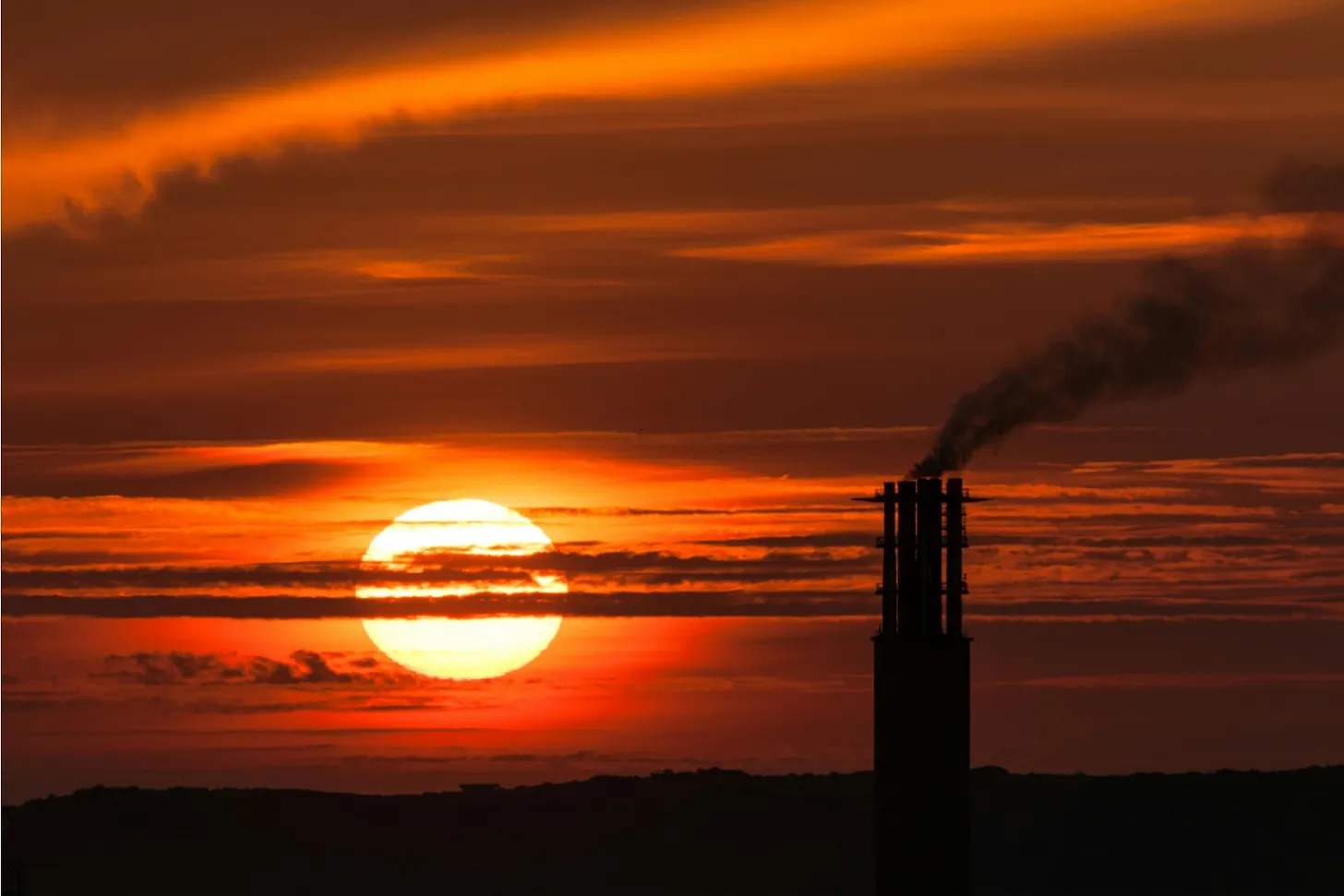
Seemingly, climate change and capitalism have an incompatible relationship. One seeks to preserve life on Earth while the other is a profit-driven system that delivers consumer goods but also exploits the Earth beyond its capacity to sustain it.
To make matters worse, the camouflaging ideology of the free market assures corporations that they can receive handsome subsidies from the government. These are monetary benefits and other assistance provided by a government – the German government, for example – to businesses, industries, companies and corporations.
According to one of Germany’s main corporate lobbying associations – in this case represented by the Institut der deutschen Wirtschaft – Germany’s state supports capitalism rather generously. In October 2025, the IWD noted that Germany’s conservative Merz government plans to spend around €78 billion on financial aid and tax breaks for capital in 2026. €78bn looks like this: 78.000.000.000. It also means that everyone, including babies, hands over €1,000 to companies and corporate bosses.
Besides the sheer, almost unimaginable number of 78.000.000.000 Euro, the mere fact that a government hands out so much dosh to corporate bosses should make the apostles of the free market wonder: why? Why is this needed when the free market is supposed to do it all?
Yet, the state looks like an institution that is bitterly needed by free market capitalism. At least German capitalism has 78 billion very good reasons to love the state – while carrying on with its neoliberal ideology of a free market.
But wait, it gets worse. Not only does German capital treat the state as a supermarket without a checkout, it also cashes in when it comes to subsidies – many of them will destroy Earth – and, most likely, us with it.
Given this level of state support for polluting industries, there is no reduction of environmentally harmful subsidies (EHS). The opposite is the case. There is a ramping up of such subsidies. Worse, environmentally damaging economic practices are still rewarded in Germany. Year after year, billions in incentives and subsidies flow into the consumption of oil, gas and coal. Still more worryingly, Germany’s current conservative-social-democratic coalition government is significantly increasing the cash handed out to counterproductive industries.
To camouflage all this, terms like “sustainability” and “a sustainable future” have featured heavily in the Sunday speeches of German politicians – year after year. It might follow the proven propaganda model of repeating it often enough until everyone believes it! Mass marketing has known this since the 1930s.
Yet, neatly hidden behind the Orwellian double-speak of politicians, unsustainable and environmentally damaging economic practices continue to be “re”-warded, if not “a”-warded in Germany. In the past, such climate-damaging subsidies have, at times, amounted to as much as €65bn per year, as calculated by Germany’s own Umweltbundesamt.
It gets worse. There are also hidden subsidies tucked away deep inside Germany’s annual budget. For example, the figure above doesn’t even include the billions of euros in agricultural subsidies received by Germany’s monoculture-pushing agro-monsters – via the EU budget. Here is the trick. Germany gives money to the EU. The EU returns it as subsidies to industrial-style farmers. And the German state can claim that the money came from the EU.
Meanwhile, many of these subsidies – hidden or otherwise – are environmentally harmful. In 2026, Germany’s conservative government implemented measures that “promote” (!) oil and gas consumption. The generous state support for capital amounted to a whopping eleven billion euros ($12.5bn), according to calculations by Germany’s Forum Ökologisch-Soziale Marktwirtschaft (FÖS). And where is the free market in all this? Nowhere to be seen. It only turns up when ideological justifications are needed.
Germany’s state subsidies include, for example, the abolished gas storage levy [Gasspeicherumlage]. This is a zero-sum game. The government loses €3bn. Companies cash in. Similarly, the fuel discount to limit the impact of oil corporations cranking up prices in the wake of the USA’s attack on Iran, which was limited to two months, “cost” the federal government €1.6 billion. This supports petrol cars – not electric cars. Yet, what is framed as a “cost” actually lowers the government’s tax revenue – less money for hospitals, roads, schools etc.
With goodies like these handed out to petro-guzzling motorists and corporations, no wonder the coalition is under considerable pressure to close the gaps in its budget planning. Merz’s conservative coalition is desperately searching for ways to save money – usually health and education, not the military – while, simultaneously, squandering billions on ever more climate-damaging subsidies generously handed over to businesses. This is not only a haphazard and directionless fiscal policy, it is also extremely damaging to the environment.
Meanwhile, the USA-Iran war and the resulting price shocks for oil and gas are causing clean alternatives like heat pumps, electric cars and public transportation to boom in Germany. These are huge opportunities to make Germans less dependent on oil and gas.
The German government should utilise this momentum by fostering a smart combination of financial incentives and targeted support for those hardest hit, instead of artificially making oil and gas cheaper. The money for this is available if harmful subsidies like the increased commuter allowance or exemptions for agricultural diesel are eliminated. This is not to be expected from a government that calls itself conservative but has next to no interest in conserving the environment.
This comes despite the fact that – as early as 2016 – all seven major industrialized nations (the G7) decided in Japan to reduce harmful subsidies, such as those for coal, oil, and gas. Above all, they set a date for phasing out subsidies. This was a minor sensation. The G7’s 2016 final declaration said: we remain committed to eliminating inefficient subsidies for fossil fuels and encourage all countries to follow our lead by 2025.
In 2025, it was time to know what had happened since then. Is Germany – together with other G7 countries – on track to fulfil the G7 promise? The devastating answer is: they are not. This is supported by a study of the Forum Ökologisch-Soziale Marktwirtschaft (FÖS).
The opposite is the case. These were “empty promises.” In fact, the total amount of fossil fuel subsidies has increased by 15% since 2016. This is the exact opposite of the G7’s promise to eliminate inefficient subsidies for fossil fuels.
It gets worse as the underlying figures from the – otherwise rather neoliberal – International Monetary Fund recorded $1.4 trillion of subsidies for 2023 alone. In other words, despite or perhaps because of the G7’s 2016 promise, the seven richest countries hand over cash to polluting industries – big time.
Even more worryingly. In Germany, tax breaks for fossil fuels increased by a staggering 49% during this period – paying half the tax they paid before. This cranks up pollution, moving us ever faster towards what Mr Guterres (UN) calls “climate hell”.
On the way to climate hell, Germany’s conservative government has, in the course of its first year in office, adopted a number of environmentally damaging subsidies and incentives amounting to around €11 billion in the year 2026. In the face of scarce public resources, this measure will cause damage to Germany’s climate policy.
In spite of numerous briefings, there has been insufficient progress in the reform of environmentally harmful subsidies. In many cases, these have a regressive structure. They disproportionately favour wealthy households.
At the same time, their removal would open up considerable potential for a social (less inequality creating) and climate (less damaging to the environment) consolidation directed towards a balanced transition towards a socially acceptable and sustainable future.
In view of the foreseeable funding gaps and savings constraints, Germany’s next budget is currently under intensive discussion by the government with the goal of either targeting subsidies even better or, alternatively, a lawnmower-style reduction [Rasenmäher-Ansatz] – a tiny reduction of subsidies for each and every company.
Worse, the CDU-SPD agreement for their coalition government contains a number of measures to escalate already existing environmentally harmful subsidies or even to expand them. Since taking office, the government has already pushed several such projects. This includes the re-introduction of an agricultural diesel subsidy; the expansion of the commuter tax that supports car use; the reduction in the air transport tax; and additional tax relief for energy companies and energy-intensive companies. Germany’s government has already adopted three key measures that are environmentally damaging and harmful to the climate:
Increases or the introduction of direct financial assistance to lower energy costs for companies.
Increases or the introduction of tax reductions for companies.
Withdrawals or reductions of existing (or already adopted) instruments to reduce environmental costs for companies.
Interestingly, the government uses the word “Umweltkosten“, indicating that it sees the environment [Umwelt] merely as a cost [Kosten]. This further implies, as it does in corporate financing, a reduction of such costs. This is done in a two-step process. Firstly, the environment is reduced to a cost and secondly this “cost” is reduced.
As mentioned, the financial impact of all this for the year 2026 is around €11 billion. Worse, Germany’s conservative government spends more money on subsidies than the €10 billion it spends on investing in climate protection and into what Germans call the “Klima- und Transformationsfonds (KTF)” – funding the transition towards a sustainable future. Seemingly, this is something of a low priority for the Merz government.
If one divides Germany’s corporate subsidies into companies engaged in transportation, energy companies, manufacturing industry and agriculture, the biggest support goes to energy corporations (€6bn). This is followed by transport (€3bn), manufacturing (€2.2bn), and agriculture (€320 million).
Despite all these rather grim illustrations, there are, however, ten avenues to reduce the harmful impact of state subsidies for German corporations. The first three measures alone would save the German government approximately 73 million tons of CO₂ and €18 billion in lost taxes annually. Ranked according to where the greatest tax savings could be achieved, the list starts with:
The elimination of the tax exemption for kerosene used to fuel aircrafts.
The reduction of electricity subsidies for industry.
The abolition of tax breaks for polluting electricity generation.
No VAT exemptions for international flights.
Cancellation of the commuter allowance that pushes petrol cars.
A reduction of the VAT on animal products (for example, cow’s milk is taxed at 7% in Germany while oat milk is taxed at 19%).
The abolition of the diesel tax privilege that allows diesel vehicles to be refuelled more cheaply.
Cutting down on subsidies for company car tax breaks.
Eliminating tax breaks for polluting energy industries.


Excellent proposal … to consider once there is a mechanism for implementing it. As you said: “when the treaty is enforced…”
Who will enforce it?
Unfortunately, the logic of capitalism compels all of humanity to compete against each other, whether as individuals, corporations, or heavily armed nation states. It seems to me, addressing climate change requires first that we find a way for 8 billion people to make democratic decisions and act collectively.
The internet provides us with the hardware we need to create global democracy. We just have to stop allowing capitalists to control all the software (for-profit platforms) in their own interests.
Every human is already organized into at least one community in which we know and trust each other such as our neighbourhood, our religious or cultural community, our workplace or school…
With an open-source, democratic platform-cooperative, we could begin to connect these communities into a global cooperative network by simply REQUIRING the registration of a REAL community to participate. This platform-cooperative could then scale up gradually to eventually include all humans in one global democratic system.
joe@liberigi.net