Friday, January 02, 2026

Opinion


Zoos used to be entertainment venues, but now they're central to heritage and conservation


Nouf Al Naqbi
Nouf Al Naqbi is a senior officer for heritage programmes at Al Ain Zoo

January 02, 2026

The holiday season between Eid Al Etihad and the New Year is always a good time to honour our rich history and culture, and also an opportunity to reflect on the many facets of our heritage. While heritage is often viewed through the lens of cultural traditions, historical landmarks and ancestral wisdom, it goes beyond this. It is woven into the natural world around us, into our landscapes, native species and ecosystems. From the vast deserts that inspired resilience to the Arabian oryx and falcons that have become symbols of survival and grace, these elements are features of our environment, but they are also integral to our shared identity, deeply rooted in the history and traditions of our nation.

Considered through the lens of heritage, the mission of modern zoos becomes profoundly meaningful. Historically, zoos were seen as entertainment venues, places where animals could be observed for leisure. But today this couldn’t be further from the truth, as the role of zoos has evolved dramatically, transitioning into institutions with a deep focus on education, conservation and connecting people to the natural world. Today’s zoos serve as living classrooms where visitors can engage with wildlife, gain a deeper understanding of biodiversity, and develop an emotional connection to the environment.

The importance of this role cannot be overstated. Conservation discussions often centre on complex topics, such as the impact of climate change on ecosystems or the urgent need to combat species extinction. These discussions, though critical, can feel distant or overwhelming to many. Zoos help bridge that gap, translating these pressing issues into tangible, accessible narratives that resonate with people of all ages. For example, observing an endangered species up close or learning about its habitat loss can turn abstract concerns about biodiversity into a personal and emotional connection, inspiring individuals to take action.

Zoos also play a pivotal role in nurturing a conservation mindset, especially among the younger generation. In the UAE, where urban environments dominate much of the landscape, zoos provide a crucial link between city dwellers and the natural world. They offer a space for discovery, where children and adults alike can gain firsthand exposure to the beauty and diversity of wildlife. Initiatives such as Al Ain Zoo’s series of camps combine learning and adventure, exposing children to nature and sparking curiosity about sustainability and environmental stewardship, while educational venues like the Sheikh Zayed Desert Learning Centre provide programmes for schools and families, helping people to understand that the future of our planet depends on the choices we make today.

In the UAE, zoos provide a crucial link between city dwellers and the natural world

Beyond education and mindset, modern zoos are at the forefront of conservation efforts, working to protect species that are part of our global natural heritage. Many zoos, including those here in the UAE, are involved in global repopulation programs that ensure the survival of endangered species. These programs help us preserve individual animals, but also ensure the continuity of entire ecosystems, which rely on the delicate interplay of species to remain stable and healthy.

For instance, the Arabian oryx stands as a powerful symbol of what conservation can achieve. Once on the brink of extinction, the species has been brought back from the edge through years of collaborative research and reintroduction programs. This remarkable success story represents a significant win for biodiversity and stands as testament to both the resilience of our natural heritage and to the power of human commitment to protecting it.

Similarly, conservation efforts to protect species like the endangered sand gazelle or the migratory houbara bustard are invaluable, not just for the creatures themselves but for the ecosystems they inhabit. Each of these species plays a role in maintaining the delicate balance of nature, and their survival is a reflection of the health of the environment as a whole.

The landscapes and wildlife that surround us are as much a part of our legacy as the traditions and values we pass down through generations. Preserving this natural heritage is an environmental obligation and a societal one, tied to our history, identity and future aspirations. The UAE – a nation that celebrates both its rich traditions and its forward-thinking vision – is uniquely positioned to lead in these efforts. By continuing to support education, conservation, and environmental sustainability, we can ensure that our cultural and natural heritage remains a source of pride and inspiration for generations to come.

As custodians of this legacy, let us reflect on the lessons of our ancestors, who understood the importance of living in harmony with nature. Let us also look to the future, where our efforts to protect wildlife and the environment will contribute to a world where humanity and nature can thrive together. This month serves as the perfect time to renew our commitment to safeguarding the natural treasures that bind us to our past and illuminate the path forward. After all, when we protect our environment and wildlife, we are not just conserving species or ecosystems; we are preserving a piece of ourselves, our country, our story and our shared heritage.

Updated: January 02, 2026, 12:04 AM
SPACE JUNK

China warns Elon Musk’s Starlink satellites pose ‘safety and security’ risk


Chinese diplomat calls for countries to better enforce regulations on their commercial space activities
Friday 02 January 2026


Beijing has warned the United Nations that the rapid expansion of Elon Musk’s Starlink satellite constellations in low-Earth orbit pose “pronounced safety and security” concerns globally.

“With the rapid expansion of commercial space activities, the unchecked proliferation of commercial satellite constellations by a certain country, in the absence of effective regulation, has given rise to pronounced safety and security challenges,” a Chinese representative said at an informal UN Security Council event.

The Beijing representative cited several incidents, including near collisions between Starlink satellites and the Chinese space station in 2021.

Referring to SpaceX’s Starlink satellites, the representative said that “such constellations crowd frequency-orbit resources [data shared by all satellites in orbit for communication] and significantly increase the risk of collisions”, SCMP first reported.

A SpaceX Falcon 9 rocket rises after launching from Vandenberg Space Force Base carrying 28 Starlink internet satellites (Getty Images)

Several recent studies have warned that as the number of satellites in orbit increase rapidly in the era of mega-constellations like SpaceX Starlink probes, there is rapidly increasing chances of satellite collisions.

Currently, as many as 8,500 of the 12,955 active satellites in low-Earth orbit, with just over 66 per cent part of these probes part of SpaceX’s Starlink constellation.

SpaceX chief Elon Musk has said the Starlink constellation could eventually have over 42,000 satellites, with the company currently having permission to launch 12,000.

Each of these satellites is designed for a five-year lifespan before it is deliberately burned up in the Earth’s atmosphere.

Meanwhile, Chinese projects, including the Quianfan broadband network, plans to launch their own internet satellite megaconstellations rivalling SpaceX.

The Shanghai state-backed project aims to mass produce and launch over 15,000 satellites by 2030 to provide global broadband coverage.


With the low-Earth orbit increasingly getting crowded since 2018, the Chinese representative called for countries to better enforce regulations on their commercial space activities.

The diplomat said a Starlink satellite in 2021 “conducted dangerous close approaches to China’s space station ... posing grave threats to the safety of Chinese astronauts”.

“For spacecraft operated by developing countries that lack orbit-control capability, space situational awareness, or sufficient reaction time, this undoubtedly constitutes a major risk,” the unnamed representative said in a statement.

SpaceX has not immediately responded to The Independent’s request for comment.

Beijing also warned that commercial satellites are increasingly being used for reconnaissance and battlefield communications, which “aggravated the risk of an arms race in outer space”.

The diplomat called on the US in a veiled reference to “strengthen regulation and oversight of its commercial space activities, and respond to the concerns of the international community”.

Friday, January 2, 2026


Russia Fell Further and Further Behind China for Second Place in Space Race in 2025

Paul Goble

            Staunton, Jan. 1 – In Soviet times, Moscow’s space program competed with that of the United States; but now, it is falling behind China, which is launching more satellites into orbit, has more facilities to launch them, and has developed public-private cooperation to the point that it can respond to challenges far more quickly and efficiently, Mariya Sokolova says.

            The Novyye Izvestiya observer points out that the Chinese successfully launched 86 rockets in 2025, 30 percent more than it had a year earlier, while Russia remained far behind with the same number this past year as in 2024 – 17 (newizv.ru/news/2025-12-30/kitay-nam-drug-no-kosmos-dorozhe-est-li-shans-u-rossii-ne-sdat-kosmos-kitaytsam-438498).

            Moreover, Sokolova notes, China now has four working cosmodromes, while Russia has only three – and one of those has suffered sufficient damages to delay takeoffs for the time being. But what is most striking is China’s use of private companies to power the expansion of its space program, something Russia has not done.

            These companies have allowed China to innovate far more rapidly than Russia can, given that Moscow as far as space is concerned largely rests on its laurels from the Soviet past, and to put vehicles into service far more rapidly to rescue its astronauts when problems have arisen in space station components.

            And the observer concludes that it is “unfortunately” true that “the Russian Federation lives in the past while the Chinese Peoples Republic lives in the future,” a pattern that if it continues for much longer will further marginalize Russia and give China the chance to challenge the US for leadership in space much as Moscow did decades ago.


Bulgaria Joins EU’s Secure Satellite Network to Monitor Space Debris


 January 2, 2026, Friday 


Bulgaria has officially joined the European Union’s secure satellite system, gaining access to a coordinated mechanism for managing radio frequencies and orbital resources, as well as the capacity to use secure satellite communications at a continental level.

“This concerns telecommunications satellites that track objects in space and alert countries that may be affected. Essentially, it is connected to the issue of space debris, which fills near-Earth orbit and can threaten the security of satellite infrastructure. Monitoring their positions and trajectories is therefore essential,” explained Assoc. Prof. Elisaveta Peneva, a meteorologist and remote Earth observation specialist, on NOVA News.

Until now, Bulgaria had not been part of this system. With approval from the Ministry of Innovation and Growth, the country will now utilize its ground infrastructure to monitor these objects and provide warnings to relevant users.

Among the services offered by the system is the ability to track satellites when they are decommissioned or re-enter the atmosphere to burn up, marking the end of their operational life. Assoc. Prof. Peneva emphasized that such processes must be carefully monitored along their entire path. Satellites or debris could pass over Bulgarian territory without being tracked if the coun
try were not part of the system, making participation a significant security advantage.


Turkmenistan legalises crypto mining and exchanges in shift for economy

Legislation signed by President Serdar Berdimuhamedov establishes a licensing scheme overseen by country’s central bank.

Since succeeding his father as president in 2022, Serdar Berdymukhamedov has signalled some opening in the country, but social media remains highly regulated by the government [File: Adem Altan/AFP]

By News Agencies
Published On 2 Jan 2026

Turkmenistan, one of the world’s most isolated nations, has officially legalised mining and exchanging cryptocurrency in a major shift for the country’s tightly controlled, gas-dependent economy.

President Serdar Berdimuhamedov signed the legislation on Thursday, regulating virtual assets under civil law and establishing a licensing scheme for cryptocurrency exchanges overseen by the country’s central bank.

However, digital currencies will still not be recognised as a means of payment, currency or security.

Turkmenistan, a former Soviet country in Central Asia, relies heavily on the export of its vast natural gas reserves to support its economy.

China is the country’s main importer of gas, and Turkmenistan is currently working on a pipeline to supply gas to Afghanistan, Pakistan and India.

Turkmenistan has been taking steps to digitalise government functions as well as its economy.

In April, it adopted a law introducing electronic visas aimed at simplifying entry for foreigners.

After gaining independence in 1991, the tightly governed nation typically placed strict entry requirements on would-be visitors, with many visa applications turned down for unclear reasons.

A mostly desert country of seven million people with the world’s fourth-largest natural gas reserves, Turkmenistan declared itself officially neutral in 1995 under its first president, Saparmurat Niyazov, who spurned both Western and Russian influence.

Until his death in 2006, Niyazov maintained tight control over politics, a policy of isolationism from the outside world, and an economy heavily based on natural gas exports.


Since succeeding his father as president in 2022, Berdymukhamedov has signalled some opening.

In December, he hinted at possible political reforms ahead of a meeting with Russian President Vladimir Putin, Turkish President Recep Tayyip Erdogan and Iran’s Masoud Pezeshkian.

“We are carrying out extensive work aimed at transforming our neutral country into a powerful, democratic, and rule-of-law state where citizens live happy lives,” Berdymukhamedov said in the article, without giving further details.

While Turkmenistan’s internet remains tightly regulated and controlled by the government, curbs on social media have been eased, and the government has pledged to open new air transport links and liberalise its visa system.

Still, the country is ranked by the Committee to Protect Journalists as one of the worst in the world for independent media.

Kyrgyzstan, another former Soviet Central Asian republic, has also positioned itself as a regional leader in the sector, launching a national stablecoin in partnership with cryptocurrency exchange Binance.
GameChangers 2025: Cryptocurrency Is Now in the Criminal Mainstream


2 Jan 2026


A decade ago, Latin America’s criminal groups were starting to experiment with cryptocurrency, but in 2025, they went all in. From an unprecedented bank heist to nearly untraceable money laundering techniques, virtual currencies went mainstream. And as the amount of cocaine trafficked around the globe exploded, rigid criminal organizations have been replaced by loose, modular networks that invest in innovation and technology. In this new criminal underworld, the use of cryptocurrency is only going to keep growing.

The very nature of cryptocurrency makes it appealing for major criminal transactions, where cash has traditionally been the preferred method due to its anonymity. Cryptocurrencies weigh nothing and take up no physical space, solving two major problems with bulk cash transfers. Payments can be made without having to be physically present — a big advantage in criminal industries like the cocaine trade, in which billions are made shipping Andean cocaine to all corners of the globe.

And while mainstream coins, such as bitcoin, record every transaction on a public ledger called the blockchain, who is behind those transactions is anonymous. Some countries, like Brazil and Chile, have tried to crack down by bringing cryptocurrencies into their banking systems and instituting “know-your-customer” (KYC) laws, which require institutions to verify who is behind an account before someone can start trading cryptocurrency. But many countries in the region are behind on this, and even existing regulations can often be skirted by creative criminals.
Bank Heists From Your Bedroom

The largest known robbery of a Brazilian financial institution took place in July 2025 after cyberattackers stole $150 million without having to step foot in a bank. Exploiting a flaw in Pix, Brazil’s electronic payment system, the group drained the funds and then converted the money to cryptocurrency to try to hide the trail. The robbers worked internationally, with suspects arrested in Argentina, Portugal, and Spain, in addition to 11 states in Brazil. Those at the head of the group, however, are still at large.

The Brazil-based cybercrime network Grandoreiro, which first appeared around 2016, sent malicious extensions to the victims that later allowed them to steal credentials and log into their bank accounts. When several arrests were made in Argentina in 2025, authorities were able to piece together the modus operandi. The group used local accounts to do normal bank transfers before buying and selling cryptocurrency to break up the trail. The bulk of the cryptocurrency was eventually transferred to a server in Brazil.


SEE ALSO: Borders Are No Barrier to Booming Cyber Crime, and Authorities Must Adapt

Cases like these show how Brazil’s digital criminal economy saw an unprecedented expansion in 2025, with the emergence of specialized cyber gangs using malware to invade and steal bank accounts or converting funds into cryptocurrencies to disguise the money trails of massive digital heists.

Taking advantage of the anonymity provided by the blockchain and the ease of digital transactions, wiring funds through various accounts has become a rising criminal method.
The Old Meets the New

Not to be outdone by new cyber players, Latin America’s trafficking groups embraced cryptocurrency to launder drug money across their networks. While hiding profits from drugs and arms trafficking through the old-school method of using shell companies, they increased the obscurity of that process by using techniques such as cryptocurrency blenders.

Brazil’s main criminal groups, as well as specialized cybergangs such as Grandoreiro, have also embraced cryptocurrency. The First Capital Command (Primeiro Comando da Capital – PCC) and the Red Command (Comando Vermelho) began as prison gangs and bank robbers. But over the past decade, they moved into cocaine trafficking, which caused their profits and power to surge.

While maintaining their traditional activities, both gangs constantly search for new ways to expand their criminal portfolio. And even though they are rivals, the groups allegedly cooperated last year to launder around $1.1 billion using the PCC’s digital banking system.

The trend of old-school crime groups embracing new laundering techniques goes beyond Brazil. In Mexico, cryptocurrencies are now the preferred payment method in the precursor chemical supply chain, especially for fentanyl pre-precursor transactions. Authorities seized $5.5 million from a network related to Mexican networks that used cryptocurrency to pay Chinese suppliers in May 2025.
Other Criminal Markets

Several events in 2025 suggest the use of cryptocurrency has expanded beyond drug trafficking.

In Chile, authorities dismantled a network linked to Tren de Aragua that helped launder more than $13 million via cryptocurrency. The organization used a sophisticated system that converted illicit funds to digital assets and transferred them internationally through cryptocurrency brokers to conceal their origins. Criminals were able to hide profits from what police and prosecutors termed “criminal taxes,” derived from extortion, drug trafficking, sexual exploitation, migrant smuggling, and kidnappings.


SEE ALSO: Kidnapping Data for Ransom Is a Booming Business in Brazil

In Brazil, the country’s Federal Police dismantled a network that used shell companies and front partners to import electronics without paying taxes and then sold them via a major e-commerce platform. The proceeds were then laundered through cryptocurrency assets. The September 2025 operation found that one of the operators laundered over $190 million in just over a year through cryptocurrency exchanges.

Besides that, a $10 million seizure of cryptocurrency assets made by the US Drug Enforcement Administration (DEA) in July 2025 and linked to the Sinaloa Cartel showed that traditional Mexican criminal organizations are also taking advantage of digital assets to operate.
Organized Crime Is Winning the Cryptocurrency Arms Race

Some countries in the region implemented new measures to tackle cybercrime. But law enforcement is struggling to keep pace with criminal organizations in Latin America and the Caribbean.

Governments have scrambled to regulate the new digital Wild West of online payments via increased traceability and know-your-customer laws, which are designed to protect financial institutions from money laundering, corruption, and fraud.

In 2025, Brazil improved its regulations around the traceability of funds handled by financial technology companies. New procedures required digital banks to follow the same process as traditional banks and report suspicious transactions to the country’s financial institutions.


SEE ALSO: Cryptocurrency Money Laundering Is on the Rise in Brazil

Chile has also invested in its anti-money laundering fight. From July 2025, bitcoin transactions over $1,000 were not permitted to be done anonymously as authorities started demanding cryptocurrency platforms identify the transmitters and receivers of these operations. A new structure was set to enforce the rule using recording, alert, and verification systems to control the movement of funds. The initiative reduced the anonymity of digital transactions, increasing their traceability and facilitating the identification of suspicious trades.

Despite relevant advances, the common scourge of corruption and a dearth of specialized investigative capacity and resources for enforcement have made clamping down on illegal cryptocurrency elusive for many governments. Cryptocurrencies are often traded across borders and in seconds. And the use of tumblers, which are services that mix cryptocurrency while it goes from the buyer to the receiver, increases the difficulty of identifying the trail and makes it even harder to follow the origin of funds.

Many governments already struggle to detect traditional money laundering, and even with specialized training to tackle cybercrime, cryptocurrencies are constantly evolving, meaning that combatting methods soon become obsolete.

Organized crime is winning the cryptocurrency arms race, and 2026 will likely see this continue—unless law enforcement can find a way to catch up to the ever mutating digital criminal landscape.

A look at some of the worst fires in bars, nightclubs and music venues world wide


By — Associated Press
Jan 1, 2026 


A fire at a bar in the Swiss ski resort of Crans-Montana in the early hours of New Year's Day has left dozens of people presumed dead and around 100 injured, according to authorities.

READ MORE: Fire at Swiss Alpine resort bar during New Year's celebration kills at least 40, 115 injured

Here is a look at some other nightclub, bar and music venue fires that have led to significant death tolls.

December 2025: A fire ripped through a popular nightclub in Arpora village, in India's Goa state, killing 25 people, including kitchen workers and tourists.

March 2025: A fire and ensuing stampede at the crowded Pulse club in Kocani, North Macedonia, killed 63 people, most of them young revelers, and injured more than 200. It was set off by a pyrotechnic flame that engulfed the roof of the club.


Dragi Stojanov reacts while holding a photo of his late son Tomche, 21, who was killed in a fire at the Pulse nightclub that resulted in dozens of deaths, during a March 17, 2025, protest in the town of Kocani, North Macedonia. Photo by Alexandros Avramidis/Reuters.

April 2024: A blaze at the Masquerade nightclub in Istanbul, Turkey, trapped workers and employees while the venue was closed for renovations, leaving 29 people dead. It was located on the ground and basement floors of a 16-story residential building.

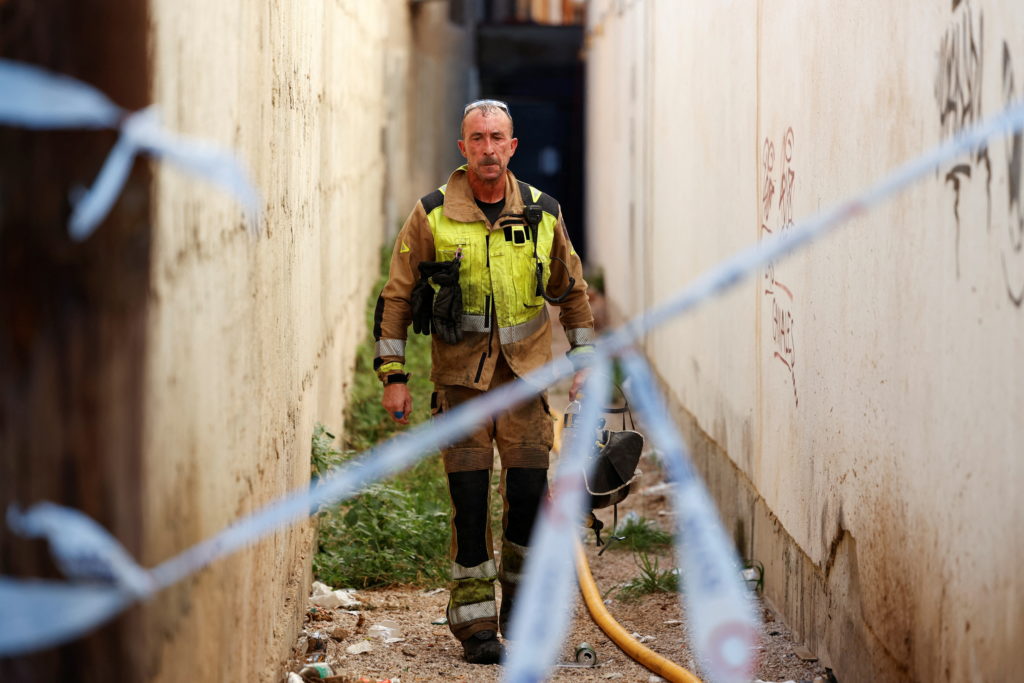
October 2023: A fire that started at a nightclub in the southeastern Spanish city of Murcia and spread to two other clubs left 13 people dead.


A firefighter walks out of a nightclub that caught fire October 2023 in Murcia, Spain. Photo by Eva Manez/Reuters

January 2022: A nightclub in Sorong, in Indonesia's West Papua province, burned after two groups attacked each other inside the building. Nineteen people were killed.

January 2022: A blaze at Liv's Nightclub Yaouba in Yaounde, the capital of Cameroon, set off explosions that killed 17 people. The government suggested that fireworks set the roof alight and the fire then spread to areas where cooking gas was stored.

December 2016: Thirty-six people died in a fire at a warehouse in Oakland, California, that had been converted into a residence and event space for artists dubbed the "Ghost Ship." The blaze, which broke out during an electronic music and dance party, moved so quickly that victims were trapped on the illegally constructed second floor.


File Photo: Two children place flowers Dec. 6, 2016, at a makeshift memorial near the scene of the fatal warehouse fire in Oakland, California. Photo by Stephen Lam/Reuters.

October 2015: A blaze that broke out during a rock band's pyrotechnics display at the Colectiv nightclub in the Romanian capital, Bucharest, killed 64 people and left some 190 injured.

January 2013: A fire killed more than 200 people at the Kiss nightclub in the city of Santa Maria in southern Brazil. Investigators said soundproofing foam on the ceiling caught fire and released poisonous gases that quickly killed those attending a university party.

December 2009: Some 152 people died when a blaze broke out at the Lame Horse nightclub in Perm, Russia. It started when an indoor fireworks display ignited a plastic ceiling decorated with branches.


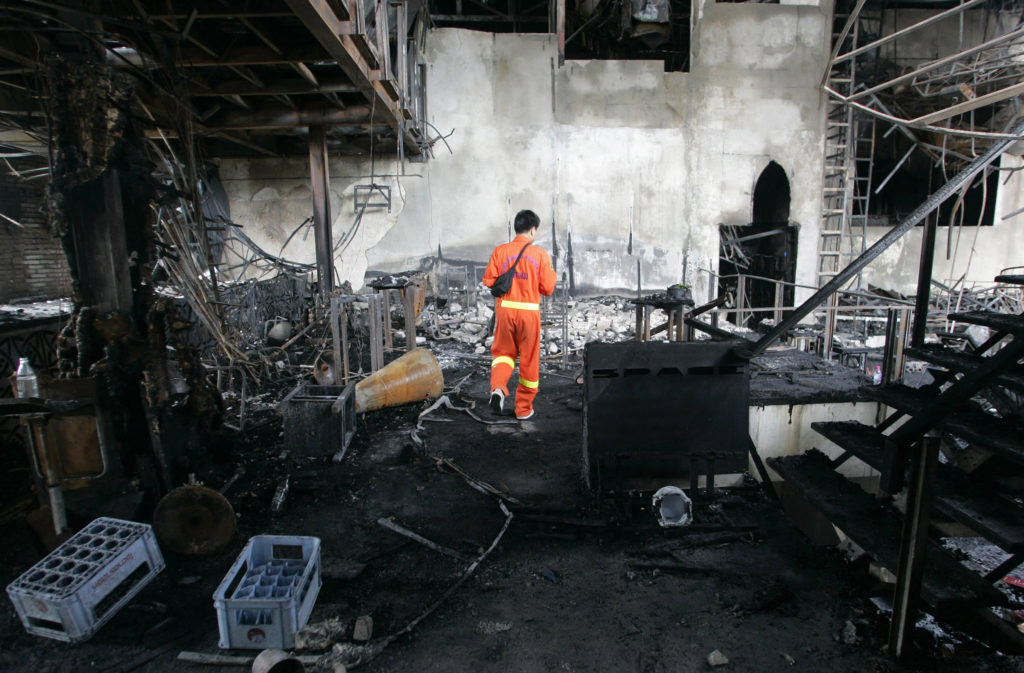
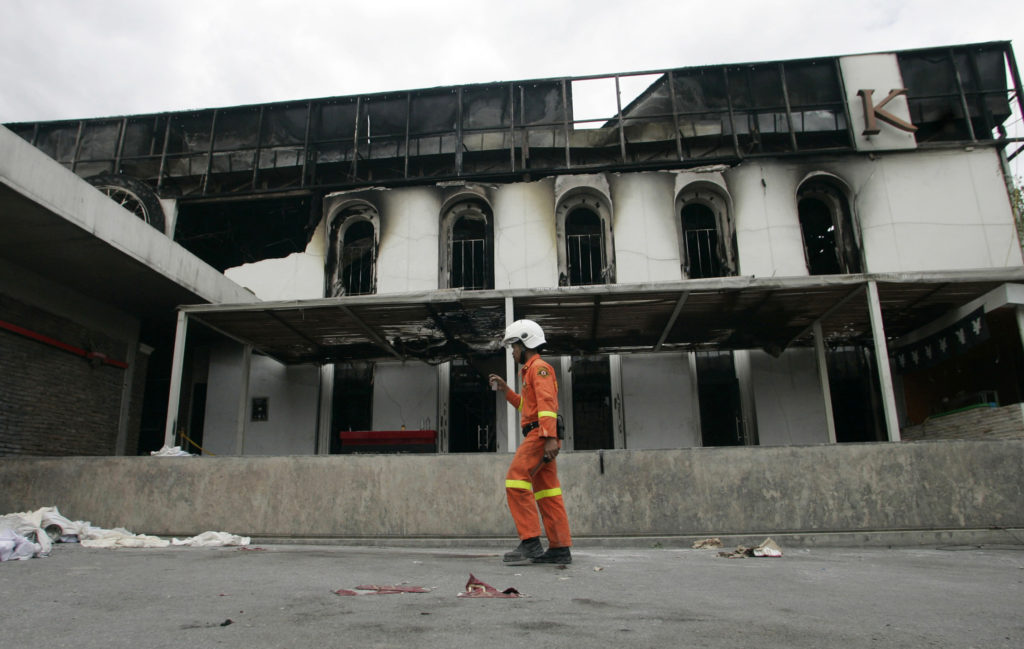
A rescue worker walks past the wreckage of Santika Club in Bangkok on Jan. 1, 2009. A blaze at a top Bangkok nightclub killed 59 people including a Singaporean celebrating the New Year and injured more than 100 others, police said on Thursday. Photo by Kerek Wongsa/Reuters.

January 2009: An indoor fireworks display after a New Year's countdown ignited a blaze in the Santika club in Bangkok, Thailand, killing 67 people and injuring many more. Victims died from burns, smoke inhalation, and from being crushed.

September 2008: A fire killed 44 people at the jammed King of Dancers nightclub in Shenzhen, China, when a stampede broke out after a fireworks show ignited the ceiling.

December 2004: In Buenos Aires, Argentina, a fire killed 194 people at the crowded Cromagnon Republic club after a flare ignited ceiling foam. Club owner Omar Chaban was sentenced to 20 years in prison for causing the deadly fire and for bribery. Others received lighter sentences.


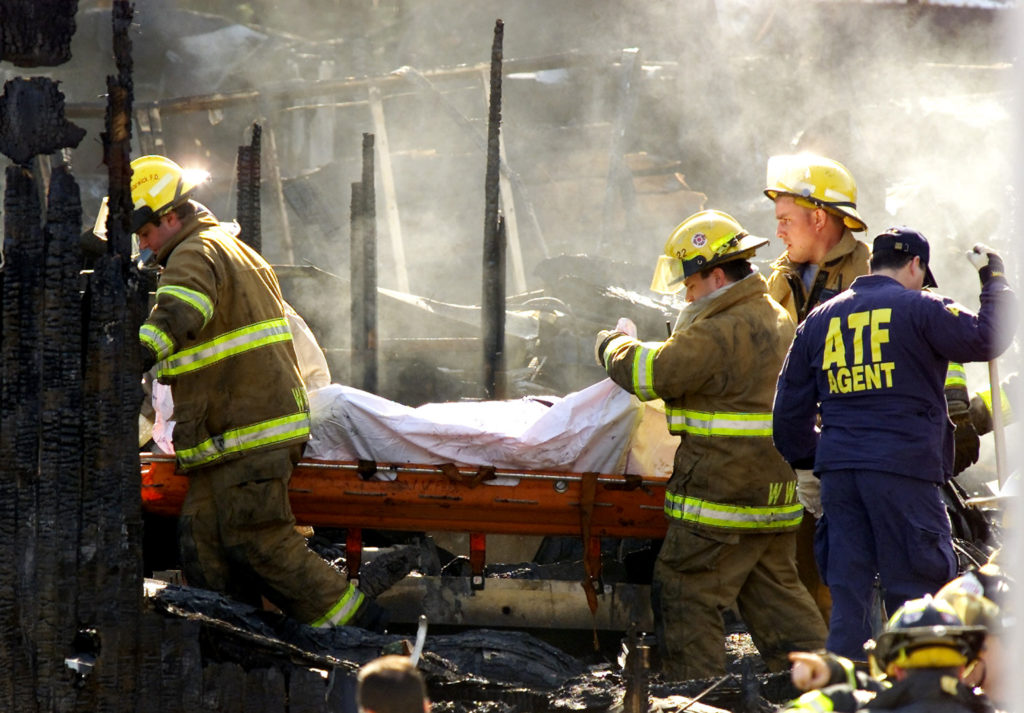
Firefighters carry the remains of a victim through the burnt wreckage of "The Station" nightclub February 21, 2003 in West Warwick, Rhode Island. Authorities at the scene confirmed that the fire had killed at least 65 people and injured at least 170 after being started by an onstage pyrotechnics display during a concert by the band "Great White." Photo by Reuters.

February 2003: A fire at the Station nightclub in West Warwick, Rhode Island, in the United States, killed 100 people and injured more than 200 others. Fireworks being used by the band set fire to flammable foam inside the club.


A police man looks away from a broken window of the burned out disco "Het Hemeltje" ( Little Heaven ) after a fire ripped through, killing 14 in the early morning of January 1, 2001, in the town of Volendam. Photo by Reuters.

January 2001: A fire at a cafe in the Dutch town of Volendam where people were celebrating the New Year killed 14 people and injured more than 200.

December 2000: A fire that was blamed on a welding accident killed 309 people at a disco in the central Chinese city of Luoyang.

October 1998: An arson attack against an overcrowded youth disco in the Swedish city of Goteborg killed 63 people and left around 200 injured. Four people were later convicted for starting the fire.

March 1996: A fire at the Ozone Disco Pub in Quezon City, Philippines, killed 162 people. A large proportion of the victims were students partying to mark the end of the academic year.


Firemen bring out a body from Happy Land Nightclub in the Bronx after a deadly fire on March 25, 1990. File photo by Mark Cardwell/Reuters

March 1990: An arson attack at the Happy Land nightclub in the Bronx borough of New York City killed 87 people. It started when a man angry with his girlfriend threw gasoline on the club's only exit and set it on fire, then jammed down the metal front gate so people were trapped.

December 1983: A fire at the Alcala dance hall in Madrid, Spain, left 78 people dead and more than 20 injured.

May 1977: A fire at the Beverly Hills Supper Club in Southgate, Kentucky, killed 165 people and injured more than 200.

November 1942: The deadliest nightclub fire in U.S. history killed 492 people at Boston's Cocoanut Grove club. The fire at what had been one of Boston's foremost nightspots led to new requirements for sprinkler systems and accessible exits.

April 1940: A fire ignited the decorative Spanish moss draping the ceiling of the Rhythm Night Club in Natchez, Mississippi, killing 209 people. The windows had been boarded up to prevent people from sneaking in.
Hong Kong arrests 21 for corruption in building renovation crackdown


A flock of egrets fly next to burned buildings of the Wang Fuk Court housing complex after the deadly fire, in Tai Po, Hong Kong, China, Nov 30, 2025.
PHOTO: Reuters file

REUTERS
January 02, 2026 

HONG KONG — Hong Kong's anti-graft agency arrested 21 people on suspicion of corruption in relation to renovation work at two residential estates, it said on Friday (Jan 2).

Hong Kong has stepped up a crackdown on corruption linked to building renovation following a fire in late November that ripped through seven high-rise towers and killed more than 160 people.

John Lee, the city's leader, last month set up an independent committee to investigate the fire and the construction industry, and determine whether there was any bid-rigging in the award of contracts.

The Independent Commission Against Corruption (ICAC) said in a statement it conducted enforcement operations last week against a triad-linked corruption syndicate associated with building renovation.

The 21 arrested included middlemen, project consultants, project contractors and members of the owners' corporation of the two housing estates, the agency added.

In one of the estates, the contractor involved was suspected of bribing the project consultant and some members of the owners' corporation to obtain a project contract worth HK$33 million (S$5.44 million).

In the other estate, the middlemen allegedly collected instruments of proxy, or authorisation tickets from homeowners "by corrupt means" in an attempt to manipulate votes and win future renovation contracts. It did not elaborate.

"Building maintenance is closely related to the public and involves multiple stakeholders. The ICAC has always attached great importance to corruption in building maintenance," the statement said.


The two estates targeted in last week's operation were in the Kwun Tong district in eastern Kowloon and not related to Wang Fuk Court, the site of the fire that broke out on Nov 26.

The ICAC has arrested at least 11 people in a corruption probe into renovation work at Wang Fuk Court.

Residents reacted with anger to the inferno, which took nearly two days to extinguish. Authorities have said substandard building materials used in renovating the high-rise blocks fuelled the fire.
Relief for H-1B techies as Amazon breaks rule to allow WFH from India

Hundreds, if not thousands, of techies on H-1B work permit are stranded in India after their visa interviews got postponed. Amazon has made a rare exception to its strict 5 days in office rule for these professionals. Any Amazon employee in India as of December 13, awaiting a rescheduled visa appointment, has been allowed to work remotely until March 2, reported Business Insider.


Amazon has decided to allow limited remote work for stranded employees amid H-1B visa crisis. (Image:File)


India Today World Desk
New Delhi,
Jan 2, 2026 
Written By: Shounak Sanyal

There is relief for some of the Indian techies on H-1B stranded in India after their visa interviews got postponed by months. Amazon has offered temporary relief to H-1B tech workers stranded in India by allowing them to work from home, breaking its strict office attendance rule amid mounting visa delays, according to a Business Insider report.

The Amazon decision, outlined in an internal memo reviewed by Business Insider, applies to US-based employees who were in India as of 13 December and are awaiting rescheduled H-1B or H4 visa appointments. Under the policy, eligible employees can work remotely from India until second March 2026.

WHY AMAZON HAS ALLOWED TEMPORARY REMOTE WORK FROM INDIA

The move marks a rare relaxation of Amazon’s return to office mandate, which requires employees to work from the office five days a week. The relief comes as visa backlogs leave hundreds of foreign workers unable to return to the US after travelling abroad for visa renewals.

However, Business Insider reported that the work-from-home permission comes with sweeping restrictions. Employees working remotely from India are not allowed to do any coding, including testing, troubleshooting or documentation. They are also barred from making strategic decisions, managing products, negotiating or signing contracts, interacting with customers or supervising Amazon staff in India. All final reviews, approvals and sign-offs must be completed outside India.

Amazon told Business Insider that these restrictions were required to comply with local laws and that no exceptions would be made. Employees are also prohibited from working from or visiting Amazon offices or facilities in India and must operate only from a residential or non-Amazon location.

AMAZON AMONG BIGGEST USER OF H-1B VISA PROGRAMME

Although Amazon is not the only tech company affected by the H1B crisis, it is among the largest corporate users of the programme. During the 2024 US fiscal year, Amazon filed 14,783 certified H1B applications, underlining its reliance on foreign skilled workers for core roles. Other major firms such as Google, Microsoft and Apple have also issued travel advisories warning visa holders against international travel.

The limitations have triggered frustration among technical staff. One Amazon software engineer told Business Insider, "Seventy to eighty percent of my job is coding, testing, deploying, and documenting", tasks that are now prohibited while working remotely from India. Amazon has not clarified what options will be available for employees whose visa appointments extend beyond March or for those stranded in countries other than India.

Weighing in on the issue, the US Investor and Ed-Tech Chairperson was reported by Times of India as saying on X that Amazon had managed to "find a workaround for H-1B visa delays", while claiming this idea merely keeps stranded individuals on the company payroll instead of letting them do meaningful work.

WHAT IS THE CRISIS AFFECTING THE H-1B VISA PROGRAMME?

The temporary relief reflects wider disruption caused by recent changes to the H-1B visa process under the Trump administration. A ban on third-country visa renewals and tighter screening measures, including mandatory reviews of applicants' social media activity, have significantly slowed processing times.

As a result, US embassies and consulates have pushed visa appointments back by several months or even years. In some cases, interviews scheduled for December 2025 were postponed to late 2026. These delays have left hundreds, and possibly thousands, of H-1B professionals stranded in their home countries after travelling for visa stamping, forcing companies to adopt stopgap measures to keep operations running.

- Ends

Women’s rights in the 21st century: Progress made, challenges remain

Over 1,500 legal reforms have been implemented globally over the past 30 years to advance gender equality

Kanyshai Butun |02.01.2026 - TRT WORLD

Artistic expressions are displayed as thousands of people march in front the obelisk to mark International Women's Day with feminist demonstrations and events worldwide, advocating for safety against gender-based violence, equal rights and opportunities, and socioeconomic well-being, in Buenos Aires, Argentina, on March 8, 2025.

The past 25 years show that architecture of gender equality is real and resilient, says UN Women’s Sarah Hendriks‘Progress is possible, but it is uneven, fragile and at risk of being erased,’ Hendriks adds

ISTANBUL

The first quarter of the 21st century has brought tangible gains for women’s rights worldwide, marked by sweeping legal reforms and a growing recognition that gender equality is a public responsibility – even as deep inequalities persist and new risks threaten progress.

Since 1995, governments have implemented 1,531 legal reforms aimed at advancing gender equality, addressing issues ranging from violence against women and workplace discrimination to family law and political participation, a 2025 UN Women report shows.

Today, women around the world are more likely to be elected to parliament, hold high-ranking government and leadership positions, obtain quality education and build successful careers than before.

“We can certainly speak to progress on women’s rights globally since 2000,” UN Women's Director of the Policy, Programme and Intergovernmental Support Division Sarah Hendriks told Anadolu.

But she cautioned against the idea that progress has been inevitable or self-sustaining.

“Every right gained reflects political choice and sustained pressure,” she said. “When governments act, change happens. When women’s movements are resourced, change happens. When they are not, progress stalls – or reverses.”

Violence no longer ‘private’

One of the clearest transformations has been the legal response to violence against women.

By 2024, 84% of countries with available data had enacted laws addressing domestic or intimate partner violence, according to UN Women. Sixty-six percent had adopted national action plans, and 78% reported allocating budgetary resources for related services.

“This is a clear shift away from treating violence in the home as a private matter beyond the reach of the law,” Hendriks said.

The impact has been measurable. Countries with domestic violence legislation report significantly lower rates of intimate partner violence – 9.5%, compared to 16.1% in countries without such laws.

Still, Hendriks stressed that laws alone are not enough.

“Across decades of evidence, we know that the presence of a strong and autonomous women’s rights movement, able to organize, advocate, and hold institutions to account, is the single most critical factor in driving progress to end violence against women,” she said.

Despite legal advances, violence remains pervasive. Globally, one woman or girl is killed every 10 minutes by an intimate partner or family member.

Education gains, uneven power


Education has been another area of significant progress.

Nearly half of adolescent girls and young women were out of school in 2000. By 2023, that figure had fallen to 30%, according to a joint report by UN Women, UNICEF and Plan International.

Globally, the number of illiterate young women aged 15 to 24 declined from about 97 million in 1995 to nearly 50 million in 2023. The steepest gains were recorded in South Asia, where illiteracy among young women fell from more than four in ten in 1995 to about one in ten today.

“Today, more girls than boys are enrolling and completing school,” Hendriks said.

Political representation has also expanded, though more slowly.

Women now hold around 27.2% of parliamentary seats worldwide, up from 11.3% in 1995, according to a 2025 Inter-Parliamentary Union study. Six parliaments have reached or exceeded gender parity – a milestone no country had achieved three decades ago.

The most significant progress in women’s representation has been achieved in Rwanda, where women now outnumber men in parliament. The United Arab Emirates and Andorra have also reached near gender parity.

In the workplace, the number of countries with laws prohibiting gender-based discrimination in employment has increased from 58 to 162 since 1995, according to UN Women.

Yet gaps persist. Women hold only about 30% of managerial positions globally.

“At the current pace, parity is still a century away,” Hendriks said.

Progress under pressure


Despite legal and political gains, women continue to face mounting pressures.

Today, women still have only 64% of the legal rights men have, according to the UN Women. For instance, in more than half of all countries, there is at least one restriction preventing women from doing the same jobs as men.

Hendriks explained that the rate of extreme poverty among women has remained virtually unchanged since 2020, with 351 million women and girls expected to live in extreme poverty by 2030 under current trends.

Conflict has also taken a growing toll. In 2024, an estimated 676 million women and girls lived within 50 kilometers of active conflict – the highest number since the 1990s.

“Progress is possible, but it is uneven, fragile, and at risk of being erased,” Hendriks said. “The choice before us is not whether gender equality is achievable, it is whether we are willing to fight for it.”

She warned against the assumption that gender equality will advance automatically.

“There is a dangerous myth that progress is self-sustaining,” she said. “We can speak of collective global advancement only if we understand that it must be actively protected and renewed.”

A resilient, contested foundation


Looking ahead, Hendriks said the next decade will be defined by whether governments choose to reinforce – or hollow out – the foundations that enabled past gains.

“The past 25 years have shown that the architecture of gender equality is real and resilient,” she said. “Shared norms, laws and institutions have been built – and they are holding.”

But those foundations are under strain. Financing for gender equality and women’s rights organizations is shrinking, backlash against women’s rights is increasingly organized and transnational, and gender data systems that underpin accountability are weakening.

“When women disappear from the data, their rights disappear from decisions,” Hendriks said.

She said the priority for the next decade must be political will, sustained financing and robust data.

“This is a moment to reimagine, rebuild and resource,” she said. “So that gender equality is not deferred for another generation, but delivered in ours.”


Nine killed and 200 hospitalised due to contaminated water in India's Indore city

Indore, in Madhya Pradesh state, has been named India's cleanest city and has topped the national cleanliness rankings for the past eight years.


Authorities had deployed teams of doctors for door-to-door screening and were distributing chlorine tablets to help purify water. / Reuters

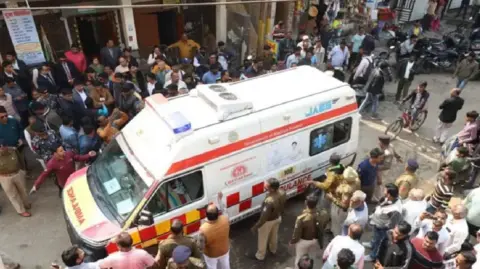
At least nine people have died and more than 200 have been hospitalised in the central Indian city of Indore after a diarrhoea outbreak that officials said was linked to contaminated drinking water, according to a lawmaker and local health authorities.

Kailash Vijayvargiya, a lawmaker, said nine people had died in Indore.

Indore's chief medical officer, Madhav Prasad Hasani, told Reuters by phone that drinking water in the Bhagirathpur area of the city was contaminated due to a leak, and a water test had confirmed the presence of bacteria in the pipeline.

"I cannot say anything on the death toll but yes over 200 people from the same locality are undergoing treatment at different hospitals of the city. The final report of the water sample collected from the affected area is awaited," Hasani said.

Shravan Verma, the district administrative officer, said authorities had deployed teams of doctors for door-to-door screening and were distributing chlorine tablets to help purify water.

"We have found one leakage point that could have contaminated the water and that point has been fixed," Verma said, adding that officials had screened 8,571 people and identified 338 with mild symptoms.

Families grieve toxic tap water deaths in India city


Khan,Indore and Abhishek Dey,
Delhi
BBC

Sameer Khan
More than 200 people are admitted in hospitals in Indore


Sunil Sahu bitterly regrets the day his five-month-old son was given some cow milk diluted with tap water.

Avyan was being breast-fed but his father says the family - who live in Indore city in India's central Madhya Pradesh state - gave him the diluted mixture in addition.

In many Indian families, cow's milk is believed to be too thick for infants and capable of upsetting their digestion, leading caregivers to dilute it.

Aware that tap water is unsafe to drink, the family said they boiled the milk–water mixture and allowed it to cool before feeding Avyan.

The infant started suffering from diarrhoea on 26 December. Despite being treated by a local doctor, the child died within three days. Mr Sahu alleges that the tap water killed his son.

Avyan is among several people suspected to have died after drinking contaminated water in Indore's Bhagirathpura neighbourhood. Investigations are still going on but officials say that a pipeline leak led to sewage mixing with drinking water, leading to a diarrhoea outbreak in the area.

The exact death toll remains unclear. Madhya Pradesh Chief Minister Mohan Yadav said postmortem reports have so far confirmed four deaths linked to contaminated drinking water.

But the number is likely to increase. While state minister Kailash Vijayvargiya says he has heard about eight deaths so far, local journalists told BBC Hindi that the toll is close to 14.

More than 200 people have been admitted to hospitals in the city.

Over the past week, around 40,000 residents of Bhagirathpura - a neighbourhood of largely poor and lower-middle income families - were screened by health authorities and around 2,450 cases of vomiting and diarrhoea were identified, said the government.

The deaths in Indore - often ranked India's cleanest city - have sparked an uproar and put the governing Bharatiya Janata Party (BJP) on the defensive.

District Magistrate Shivam Verma said the leak that caused the contamination has been fixed and officials are checking for others. One municipal officer has been dismissed and two suspended.

"It should not have happened in the first place. We have set up a committee to investigate the matter, and no stone will be left unturned to make sure that it does not happen again," Chief Minister Yadav told the media.

The local municipal corporation is currently supplying water to Bhagirathpura through tankers. Residents say they have been told not to use tap water until further notice.

Sameer Khan
Nandalal Pal (left) and Seema Prajapat (right) are among the victims

While government teams conduct inspection drives in Bhagirathpura, families are grieving.

Sanjay Yadav, a tailor, says his 69-year-old mother started vomiting on the evening of 26 December.

"We took her to a hospital, but she died in less than 24 hours," said Mr Yadav, whose 11-month-old son is also unwell.

His neighbour Sudha Pal's 76-year-old father Nandalal Pal also died after a bout of severe diarrhoea.

"The tap water in our house is still contaminated and it stinks," she says.

"The water smelt foul, but we never thought it could kill someone," said Arun Prajapat, who alleges that his mother Seema died after consuming the contaminated water.

According to media reports, residents of Bhagirathpura had complained about the foul-smelling and contaminated water for more than two months before the diarrhoea outbreak.

When asked about this, local councillor Kamal Waghela of the BJP told news agency ANI on Thursday that Indore's sewage and water pipelines need a lot of repairs and that work had been progressing in most areas.

Jitu Patwari of the opposition Congress, however, accused the BJP government of misgovernance and hiding the actual number of deaths.

"Indore has consistently given votes to the BJP but they have given poisoned water instead," he told ANI.
U.S. Army squadron in S. Korea deactivated last month amid concerns about potential troop cut

By Song Sang-ho, Yonhap News Agency


This file photo shows the 5th Air Cavalry Squadron, 17th Cavalry Regiment, taking part in the Spur Ride event at Camp Humphreys, a key U.S. base in Pyeongtaek, on Sept. 25, 2025. File Photo by Pfc. Kalisber Ortega/U.S. Army/UPI

A U.S. Army squadron tasked with a reconnaissance mission in South Korea was deactivated last month, a congressional report showed Thursday, amid speculation that Washington could consider a troop drawdown in the allied country in a force posture adjustment.

The 5th Air Cavalry Squadron, 17th Cavalry Regiment (5-17 ACS) at Camp Humphreys, a key U.S. base in Pyeongtaek, some 60 kilometers south of Seoul, ceased its operation on Dec. 15, a recent Congressional Research Service (CRS) report said, citing information from the U.S. Army. It had served in Korea to support the 2nd Infantry Division since May 2022.

Its deactivation as part of an Army transformation initiative came amid lingering concerns that U.S. President Donald Trump's administration could seek a ground troop reduction of the 28,500-strong U.S. Forces Korea (USFK) as part of an adjustment to better counter threats from an assertive China.

5-17 ACS is known to have had hundreds of personnel, as well as aviation and reconnaissance assets, including AH-64E Apache helicopters and RQ-7B Shadow drones. It is unclear whether the deactivation means the pullout of the unit's personnel and assets or whether there will be a replacement unit.

Comment from the U.S. Army on the deactivation was not immediately available.

A day after the 5-17 ACS deactivation, the Army restructured the 2nd Infantry Division's Combat Aviation Brigade Medical Evacuation (CAB MEDEVAC) unit, the CRS report said without elaboration.

5-17 ACS was activated in 2022, taking over the role of what had been rotational air cavalry squadrons to provide more stability to U.S. defense operations and enhance defense readiness in South Korea.

Speculation about a potential U.S. troop cut in Korea has persisted as Washington calls for Seoul to take greater responsibility for its own defense while seeking to bolster U.S. capabilities to better address potential China-related contingencies, including those related to Taiwan.

That speculation was reinforced as last year's key security document between Seoul and Washington omitted language committing the U.S. to maintaining the "current" USFK troop level, with U.S. officials emphasizing the importance of "capabilities" rather than the troop numbers.

Last May, The Wall Street Journal reported that the U.S. was weighing the idea of pulling out roughly 4,500 troops from South Korea and moving them to other locations in the Indo-Pacific, including Guam. The Pentagon dismissed it as "not true," reaffirming that America remains "fully" committed to the defense of South Korea.


Copyright (c) Yonhap News Agency