Sunday, April 26, 2026

The Myth of the Apolitical University: 


Education, Power and the Lie of Neutrality


April 24, 2026

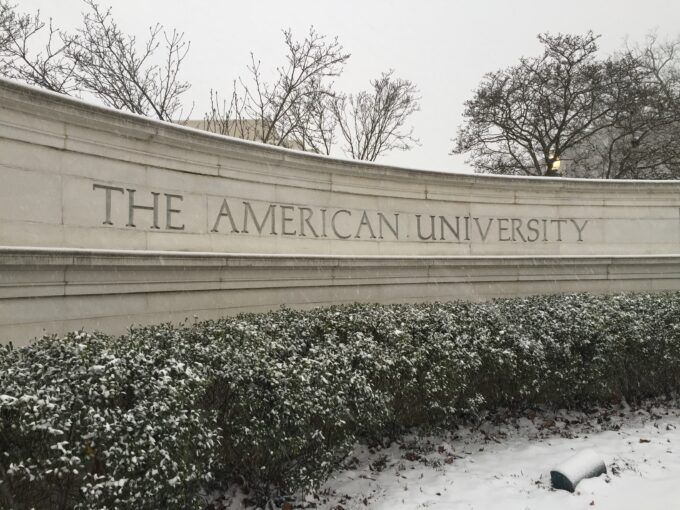
Photograph Source: Samschoe – CC BY 4.0

In a time of war, resurgent authoritarianism, and an escalating assault on higher education, the language of “institutional neutrality” has emerged not as a safeguard of academic integrity, but as one of the most effective ideological weapons in the campaign to depoliticize the university. In the wake of Hamas’s October 7 attack on Israel, the genocidal destruction of Gaza, and the return of Donald Trump to the presidency, universities have come under intense pressure to demonstrate their “balance” by retreating from political engagement. What has followed is not a principled defense of intellectual independence, but a quiet alignment with power, as institutions rush to adopt policies that prohibit them from taking positions on political and ethical issues deemed external to their “core functions.” Reports suggest that more than 150 universities have embraced such measures, while proposals such as the Trump administration’s “Compact for Higher Education” threaten to make institutional neutrality a condition for federal funding. Under these conditions, neutrality is no longer an abstract ideal; it is fast becoming an instrument of coercion.

The appeal to neutrality, of course, is not new. It draws its legitimacy from the 1967 Kalven Report, which famously asserted that “the university is the home and sponsor of critics; it is not itself the critic.” Yet this formulation depends on a fiction that collapses under historical and political scrutiny: that can stand outside the conflicts that actively constitute the wider society. In reality, there is no dimension of higher education that is not already political. Universities continuously make decisions about what knowledge counts, whose voices matter, which histories are preserved, and which forms of dissent are tolerated or punished. These are not neutral acts; they are structured by power, shaped by ideology, and embedded in larger struggles over the meaning and direction of public life.

What the language of neutrality does, then, is not remove politics from the university but conceal it. More precisely, it functions as a form of political cover, allowing institutions to disavow their own agency even as they engage in deeply political practices, disciplining student protest, sanctioning faculty for dissent, and in some cases, collaborating with state power in ways that endanger those who challenge injustice. Under the current political climate, this posture has taken on an especially troubling form. As universities such as Columbia, Northwestern, and Brown move to accommodate the demands of an increasingly aggressive right-wing agenda, neutrality becomes indistinguishable from capitulation. It serves to normalize a broader project aimed at cleansing higher education of dissenting voices and remaking it as a site of ideological conformity.

At a more fundamental level, the claim that universities can be apolitical is neither naïve nor innocent; it is a disingenuous fiction. There is no institutional decision, from the allocation of research funding to the design of curricula, from hiring practices to the governance of student life, that exists outside relations of power. To invoke neutrality in this context is to render those relations invisible and to legitimize decisions that would otherwise have to be defended as political choices. As McKenna Roberts, a student at Columbia University, makes clear in a striking indictment of this fiction:

Columbia has never been a neutral institution. From the University’s progressive displacement of West Harlem’s Black and Latinx residents and expansion of its spatial and economic domination in the neighborhood, to its storied history of brutalizing anti-war student protestors, one thing has remained clear: This University has never operated on an axis that prioritizes the interests of its students, faculty, staff, or the broader community. While the debate regarding whether or not colleges and universities should function as spaces of apolitical higher learning continues to swirl, there is nothing about education that is apolitical. A claim of institutional neutrality serves an explicitly ideological purpose: to make invisible the power structures at work and depoliticize the deeply political functionings of elite educational institutions like Columbia.

Roberts’s critique is not exceptional; it is diagnostic. His argument is crucial because it names what the discourse of neutrality attempts to erase: the university is not a passive observer of power, but an active participant in its reproduction. Neutrality does not suspend this role; it obscures it, allowing institutions to present politically charged decisions as if they were merely administrative or procedural.

This is what makes the current invocation of neutrality so dangerous. It emerges precisely at a moment when universities are being openly targeted by authoritarian forces. When political leaders such as Trump and J.D. Vance cast professors as the enemy, when dissent is criminalized, and when entire fields of study are subject to political surveillance and control, the call for neutrality does not defend academic freedom, it disarms it. Neutrality, in such a context, is not a refusal of politics; it is a form of complicity. This broader erasure of power sets the stage for a second move: recasting the crisis in higher education not as political control from above, but as excess politics from below.

It is against this backdrop that recent critiques of higher education, particularly those emerging from influential platforms such as The Chronicle of Higher Education, must be understood and addressed. When Len Gutkin, in his essay “When Professors Mistake Themselves for Revolutionaries,” insists that “the price of academic autonomy has always been a measure of distance from politics proper,” he reproduces the very illusion that sustains the current crisis. By framing political engagement as a threat to academic freedom, Gutkin not only misidentifies the problem, he redirects attention away from the far more consequential structural transformation reshaping higher education. This misdiagnosis has consequences

What Gutkin overlooks is that the crisis in higher education does not arise from an excess of political engagement, but from a long history of structural abandonment and an intensifying right-wing assault. Universities have not been “radicalized” by faculty; they have been reshaped by forces far more consequential and coercive. Over the past four decades, higher education has been steadily colonized by the logic of capital, redefining knowledge as a commodity, students as consumers, and research as a revenue stream. He is strikingly indifferent to the reality that this market-driven transformation is now being fused with a right-wing political project that imagines the university not as a democratic public sphere, but as a laboratory for ideological indoctrination, a vision openly advanced by the Trump administration. In this context, the call for neutrality does not protect academic freedom; it disarms it, functioning as a cover for the very authoritarian forces that seek to narrow, regulate, and ultimately suppress critical thought.

As Will Bunch observes, “the problem for roughly three-quarters of U.S. college students in public universities and community colleges is that since the so-called ‘Reagan revolution’ of the 1980s, state tax-dollar support for higher education has plummeted, by a staggering 42 percent.” In this context, as Chris Newfield has argued, when public funding erodes, tuition rises, adjunct labor proliferates, and corporate governance hollows out democratic commitments, fields that address history, race, inequality, and justice are not becoming politicized, they are rendered visible. They give language to conditions the neoliberal university would rather recast as technical, managerial, or neutral. This broader landscape is crucial because the forces reshaping higher education are not confined to internal disputes over activism; they are driven by powerful external political agendas whose reach and consequences far exceed the boundaries of the university itself.

In doing so, such arguments lend intellectual legitimacy to a deeply troubling project. They do not remove politics from the university; they help to replace one form of politics, rooted in critique, dissent, and democratic possibility, with another grounded in control, conformity, and the policing of thought. The real question, then, is not whether universities are political, they always have been, but whether they will align themselves with the forces that seek to narrow the space of critical inquiry or with those that insist on its expansion.

The Far Right Attack Is Not Peripheral

More troubling is the article’s relative silence regarding the escalating, coordinated assault on higher education by the far right. Universities are no longer merely criticized; they are being methodically reshaped through a politics of intimidation and erasure. Institutions are pressured to conform or face defunding. Books are banned and histories rewritten to purge structural critique. Diversity initiatives are dismantled or criminalized. Faculty are surveilled and publicly vilified. Legislatures arrogate themselves the power to determine what can and cannot be taught about race, gender, colonialism, and the meaning of democracy. Even student protest is recoded as disorder. This is not a culture-war skirmish; it is a struggle over whether higher education will sustain and defend democracy as a democratic public sphere or be reduced to an instrument of ideological control.

In that context, calls for “depoliticization” function less as principled critique than as a form of retreat. When authoritarian movements seek to transform universities into instruments of nationalist myth-making and civic illiteracy, neutrality becomes complicity. Appeals to “learning for its own sake” ring hollow if they ignore the political forces actively attempting to dismantle the conditions under which such learning is even possible.

Higher education matters precisely because it holds the promise of cultivating historical consciousness, ethical reasoning, and critical literacy. These capacities are crucial democratic public goods, equipping students not simply to enter markets, but to interrogate power. More importantly, they equip students with the knowledge and skills they need to be informed and active citizens, without which democracy dies. When critics lament that higher education has embraced advocacy, they often overlook the deeper question: advocacy for what? If the advocacy in question is the defense of civil rights, democratic memory, and human dignity, then to cast it as contamination misunderstands the democratic vocation of higher education itself.

Funding Is the Structural Question.

Higher education did not become politically expressive in a vacuum. It was starved. Public investment declined. Philanthropic foundations became lifelines. Universities outsourced their missions to development offices and branding consultants. Under such conditions, grant priorities inevitably exert influence. But the solution to concentrated funding power is not to frame social justice as the problem or to claim that higher education should free itself from politics or from addressing social issues.

The deeper coercion in higher education is not that scholars occasionally tailor language to political issues. It is that entire institutions have been reorganized around the curse of neoliberal market metrics, rankings, revenue generation, donor appeal, and return on investment. That transformation predates and far exceeds any shift in foundation priorities. It undermines the role of the university as a public good and offers no vision for how to educate students.

If we are concerned about intellectual independence, we must confront the corporatization of the university, the exploitation of contingent faculty labor, and the financialization of research. Otherwise, critiques of politicization become selective,  aimed leftward while ignoring the pervasive political economy that governs universities from above.

Democracy Is the Unspoken Horizon

“What ultimately troubles me about Gutkin’s attack is not that it questions funding strategies or ignores the escalating assaults by the far right and the Trump regime on public discourse, including efforts to restrict what books can be read, what histories can be taught, and what values can be affirmed. Debate is healthy. What troubles me is the normalization of the idea that higher education should retreat from explicit engagement with democracy at a moment when democracy itself is under siege.

When authoritarian forces attack universities as enemies of the nation, when they weaponize white nationalist narratives, when they seek to replace historical reckoning with myth, the call for restraint sounds eerily like an invitation to stand down. Students should not be trained to endure the dismantling of democratic institutions as spectators. They should be equipped to analyze, resist, and transform unjust social arrangements.

Higher education, and the humanities in particular, are not ornamental culture. They are public memory in action. They are the spaces in which societies interrogate their past, imagine alternatives, and cultivate civic courage. To reduce them to apolitical contemplation in the name of restoring public trust is to misunderstand both the crisis and the cure.

The question is not whether politics or social justice enters the classroom, it is already there, woven into every syllabus, every silence, every claim to neutrality. The real question is whether the university will defend its role as a crucible of critical thought and democratic possibility, or submit to the twin forces of market fundamentalism and resurgent authoritarianism. This is not a debate over pedagogy, it is a struggle over the conditions of agency itself: whether education will cultivate the courage to question, to remember, and to resist, or be hollowed out into a training ground for conformity, amnesia, and obedience. The university is not a refuge from these forces, it is one of the primary terrains on which they are fought, and what is decided there will echo far beyond its walls, shaping whether democracy endures as a living project or fades into a managed illusion.

Henry A. Giroux currently holds the McMaster University Chair for Scholarship in the Public Interest in the English and Cultural Studies Department and is the Paulo Freire Distinguished Scholar in Critical Pedagogy. His most recent books include: The Terror of the Unforeseen (Los Angeles Review of books, 2019), On Critical Pedagogy, 2nd edition (Bloomsbury, 2020); Race, Politics, and Pandemic Pedagogy: Education in a Time of Crisis (Bloomsbury 2021); Pedagogy of Resistance: Against Manufactured Ignorance (Bloomsbury 2022) and Insurrections: Education in the Age of Counter-Revolutionary Politics (Bloomsbury, 2023), and coauthored with Anthony DiMaggio, Fascism on Trial: Education and the Possibility of Democracy (Bloomsbury, 2025). Giroux is also a member of Truthout’s board of directors.

Trump’s recent racist rant against Somalia, Somalis and Somali Americans

Friday 24 April 2026, by Thomas Tews


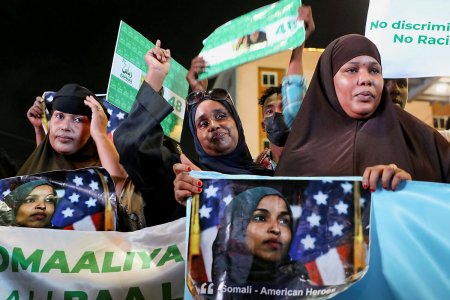
During a White House Easter lunch, US President Donald Trump made racist comments on people of Somali origin, calling them “low-IQ” and “bad people”.

On Wednesday, 1 April, US President Donald Trump attended an Easter lunch in the East Room of the White House. During the event, Trump called Somalia “just terrible” and “probably the worst, most dangerous country” with “no government” and “no police”. In his view, Somalis “have no money, no nothing” and “just shoot each other all day long”. Trump also called Somalis who had come to the United States, specifically to Minnesota, “low-IQ” and “bad people”, who “don’t want to work”, and accused them of having “stole[n] 19 billion dollars”. Furthermore, he insulted the Somali-born US Representative Ilhan Omar as “a stone-cold crook”, who had “married her brother”.

In his neocolonial, racist view of Somalia and its people, Trump ignores the fact that the policy of continued imperialist intervention by the United States, which supported Siad Barre’s authoritarian regime in Somalia during the Cold War to secure its geopolitical interests and counter Soviet influence, led to long-term instability, corruption and human rights violations in the country. The 1993 Battle of Mogadishu, in which US troops were involved, ended in disaster and contributed to the further destabilisation of Somalia.

Today, life expectancy among the Somali population is only 54 years for men and 59 years for women (by comparison, in the United States it is 79 years for men and 83 years for women). In the 2024 Global Hunger Index, Somalia ranks last out of 127 countries for which sufficient usable data is available. According to the index, 51.3% of the Somali population is undernourished, and 25.6% of children under the age of 5 suffer from stunted growth. Despite this situation, described as “alarming”, the Trump administration drastically cut financial support for humanitarian development programmes in Somalia in March 2025.

That Somalia’s current economic misery is not rooted in the supposed nature of Somalis, as racistly postulated by Trump, becomes clear by looking at the rich history of present-day Somalia prior to European colonisation.

A rich history

As early as 600 AD, the coastal inhabitants of East Africa were trading across the Indian Ocean for the first time. This trade between Africa’s east coast, Arabia and Asia began to flourish in the 8th century, and between the 11th and 15th centuries, the port settlements along Africa’s east coast developed into established trading cities. Muslim travellers had settled along the coast amongst the Bantu-speaking population, who were descended from immigrants from West Africa, and thus the unique hybrid Swahili culture emerged. Some 400 Swahili city-states were scattered along a 3,219 km coastline from present-day Somalia to present-day Mozambique, including Mogadishu, the current capital of Somalia.

Through trade with the African kingdoms in the interior, the Swahili obtained raw materials such as gold, copper, ivory, salt and iron from the Great Lakes region in the East African Great Rift Valley, which they transported to the coast and sold there to foreign traders from the Red Sea, the Persian Gulf, the Comoros, India and Madagascar. These traders arrived in dhows, Arab sailing ships, laden with cloves, pepper, ginger, jewels, pearls and more, and subsequently exported the East African goods to Oman, India, China and Cambodia.

From 1285 to 1415, the powerful Sultanate of Ifat flourished in parts of what is now Somalia, Ethiopia and Djibouti. Important trade routes ran from its centre, the port city of Zeila.

In 1418, Chinese sailors led by Zheng He reached East Africa and landed in Mogadishu and Brava in present-day Somalia. They began trading on equal terms with the East African population, exchanging valuable Chinese goods, including silk and porcelain, for local goods such as animal skins, tortoiseshell and rhinoceros horns. This trade in luxury goods and artefacts between China and East Africa boosted the incomes of East African artisans and merchants, thereby increasing the prosperity of East African societies.

That Trump is seemingly unaware of and uninterested in learning about the rich history of present-day Somalia, which contradicts his racist worldview, is a testimony of his neo-colonial, imperialist ignorance.

5 April 2026

South Africa

17,000 households deliberately deprived of water

Sunday 26 April 2026, by Amandla!


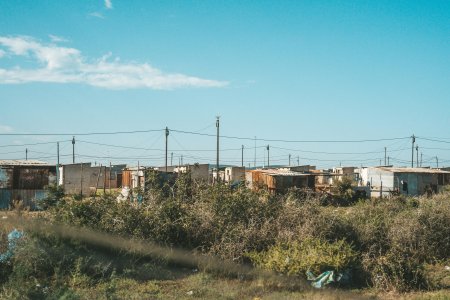
Amandla! Interviewed Nqobile Ndima, an activist in the struggle for water in Phumlamqashi informal settlement near the Lenasia suburb, in the provice of Gauteng. [1]

Nqobile Ndima: I’m an activist, a resident. We moved to Phumlamqashi in 2017. At first, we were happy that we found a place here. We built shacks for ourselves. In fact, it’s not a shack, it’s a home to us. Then we connected the water. There were existing communal taps. As a community, we gathered together and contributed R50 per household to buy the pipes and materials. So by June 2018, everyone had water in their yard.

Then in 2023, our councillor, our so-called councillor, came. She has never come before. Even if we’ve had strikes and riots, she has never showed up. But in 2023, she came with a notice saying they will disconnect the pipes. We won’t get water anymore. Then, after that, notice we just saw the JMPD [Johannesburg Metropolitan Police Department], with a lot of police, a lot of security, and private security. And they just disconnected that huge pipe which supplied Extension 3, which is Vlakfontein, and Phumlamqashi as well.

People of the community, they gathered there to ask, why are they disconnecting the water without even informing us when are they going to disconnect? That’s when the JMPD and the Metro police people, they started firing at the community. And then, because the Taxi Association were part of the strike, they shot back at the JMPD. So the struggle then started.

We stayed almost a year without having any tanks. There was no plan to get us water after disconnecting. There were only 15 households that had water at that time, because their connection was somewhere else. But we struggled. We have 17,868 shacks in Phumlamqashi. Just imagine all those shacks gathering at those 15 households just to get water. It was nine to ten months before we started getting jojo tanks.

Amandla!: Did they explain in any way why they were doing this?

NN: None of them answered us. We asked, “Why are you disconnecting? Where is the councillor, if you are here to disconnect?” Their response was, “We were sent by your councillor”. They never wanted to hear anything from us. And then the community got angry. We started to make noise. We sang, I think that made them to be frustrated more. And then they started shooting at us. They wanted to scare us.

A!: And do they provide other services to you, like refuse and electricity?

NN: No, they don’t. Nothing. We haven’t got anything.

A!: How did you manage for all those months without water?

NN: To be honest, I don’t know how. I don’t know how to even explain. It’s tough. It’s hard. Yoh, I don’t know what I would say. It’s so, so painful. I don’t have words to explain the feeling. My child, he’s now eight. I’m working in a call centre. When he comes back from school, sometimes he even has to take a five-litre bucket to go fetch water, because there is no water in the house. And at the time, the tank was 2 km away.

A!: Have you tried to talk to Joburg water or to the city about getting the water reinstated?

NN: Yes, we went several times to Joburg Water and even to the state. Their response was to ask for seven days, and then after that seven days, that’s when they will come and sort this water crisis issue. But they didn’t. After the seventh day, we went back again to Joburg Water, but no one showed up. We were there for eight hours, from seven in the morning until two in the afternoon. No one showed up. We went to Joburg Water in September 2023. We went again in January 2024. And again in March 2024. Then we went to Pretoria in August 2024, and then we had a meeting again last year, in February or March 2025. But the response is the same. They are coming to fix it. Even today, they are still coming.

A!: It must make you feel very desperate that they simply don’t care.

NN: They don’t. They actually don’t care. It looks like it’s going to continue to be like this because no one is talking about it, and no one is saying anything.

22 April 2026

Source: Amandla!.

Footnotes

[1Featured image by Filiz Elaerts on Unsplash.


The West’s blind spot on Iran


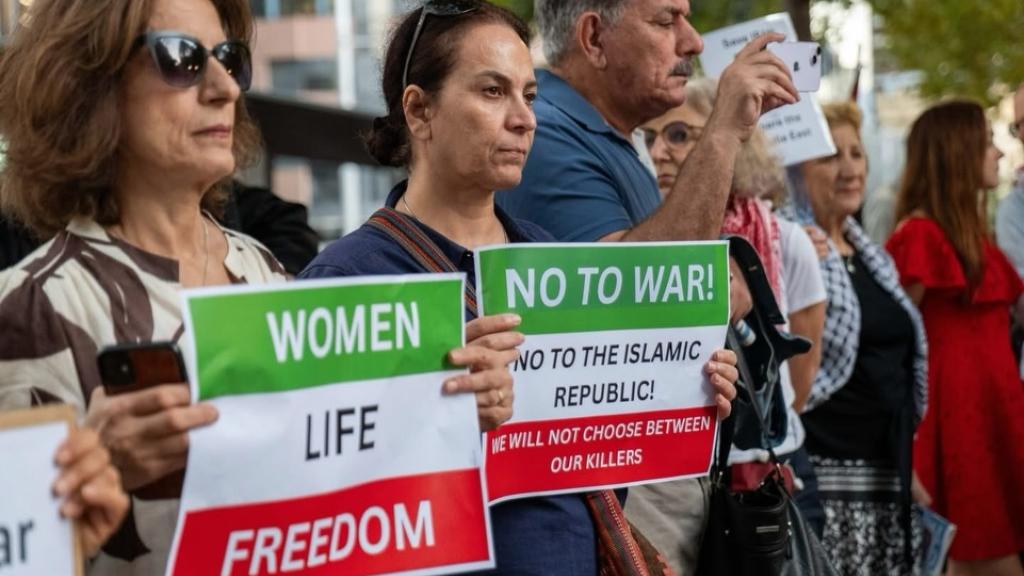
Iran protest Sydney

The Western media promotes Iranian voices who support the United States and Israel bombing Iran. The only other Iranian voices they broadcast are those that rally around the Islamic regime’s flag. But these voices do not speak for the majority of Iranians — Iranians like me. And this blind spot has existed for many years.

We, the majority of Iranians, stand against the war and the regime. We stand against the US, Israel and all aggression against innocent civilians, be that in Iran, Palestine or Sudan. But we are made invisible and talked over. The suffering of the Iranian majority, and others at the hands of regimes and foreign powers, needs to be acknowledged.

The Western media ignores us, preferring to promote those who back the monarchy, the regime or Western imperialism. Western regimes use bombs and sanctions to oppress peoples already oppressed by their own regime. In this sense, Western governments are no different to the Islamic regime. If the fight against these evils is to succeed, we must support the invisible majority who reject these powers.

Yet, I have been to anti-war demonstrations in England and, to my horror, witnessed English people waving the Islamic regime’s flag. Have they not heard how this regime treats people in Iran? Do they not know how many people are in prison there simply for expressing dissent or attempting to form a union?

They seem unaware that there are Westerners in Iranian prisons being used as leverage. They seem clueless to the fact that Iran is the world leader for executions per capita, or that there are millions of child workers and homeless children in Iran. Yet, with minimal research, anyone can obtain information about these humanitarian crimes.

Unfortunately, many people view this as a black and white conflict between great powers. They support the “anti-imperialist” power because they are against imperialism. They do not know — or prefer to ignore — that the Islamic regime is ruthlessly capitalist, with many of its leaders having become extremely wealthy by stealing the country’s wealth and investing it privately.

The Western media is uninterested in the voices of Iranians who oppose both the Islamic regime and Western imperialism. Some media outlets even generate support for the regime by amplifying an inaccurate and oversimplified narrative that garners sympathy from anti-imperialists that do not know better. I ask these people to wake up.

Westerners with little knowledge of Iran view the regime as a victim, and not as a product of capitalism that is devouring its civilians in an existential struggle. The regime is not fighting this war for the Iranian people; it is fighting to preserve its system of oppression to protect the financial interests and comforts of a small group of people. The Islamic regime has never sought to meet the Iranian people’s needs. Rather, it has squeezed them so much that there have been countless uprisings during its 47-year reign.

I find it interesting that some Westerners see the former Shah’s regime as oppressive, but not the Islamic regime. Based on their opposition to the US, certain Western intellectuals reject a US-installed monarchy, but support a regime that is strongly pro-Russia and pro-China.

It surprises me that self-described intellectuals could support a regime that oppresses its own people. It surprises me that government-approved chants of “Death to America, Death to Israel” could lead some to support a regime that beats workers for establishing unions and executes activists. I wonder if this support would waver if the same rules were imposed upon these regime supporters.

Their thinking mirrors that of the Western media they so often criticise. When the US explicitly tells its soldiers to go and die in a self-described religious war, there are no repercussions in the Western media. But when a non-white majority religion does the same, it is portrayed differently.

Conversely, these Western intellectuals oppose oppression in the West. But they believe it is okay for Iran to oppress its own people because the regime is pro-Russia and pro-China. They fail to understand that one can oppose imperialism and the Islamic regime.

They choose to ignore the fact that, except for a short period after the people’s revolution in 1979, the censorship that existed under the Shah remained in force under the Islamic regime. That all of the Shah’s prisons quickly filled up again under the Islamic regime. That in some cases, what was once tolerated by the Shah became arrestable offences under the Islamic regime: exercising personal freedoms, immodest clothing and being a woman in public with a man outside marriage would place you in danger.

These Western intellectuals reduce Iranians to objects exploited only under the Shah’s reign. They ignore the voices of workers subjected to lashings by the Islamic regime for wanting a union. Similarly, the numerous executions of activists that go unreported by the Western media. The Islamic regime’s treatment of women is also brushed aside.

So too is the Iranian women’s 47-year fight for their rights. This movement was born just one month after the Islamic regime took power, when Ayatollah Ruhollah Khomeini decreed women must cover their hair. My generation was imprisoned, executed and defeated. But Iranian women continue to fight for their basic rights. We want to wear what we like, say what we believe in, love who we want, live freely and not be forced to marry. Why are we women not heard in the West?

Some of these Westerners accuse every uprising in Iran of being pro-US or somehow organised by Western forces. I wonder why we are viewed as so naive as to support another power crushing us in our own country. 

The truth is that foreign meddling is no excuse for ignoring the voices of those calling for freedom from oppression. It does not negate the genuine cries of people who need bread and freedom. But these people remain pro-regime, no matter how many people are killed or tortured, as I was.

There was foreign meddling during the January uprisings in Iran. Reza Pahlavi, the son of the former Shah, called on Iranians to come out into the streets when they were already there calling for change. Israeli Prime Minister Benjamin Netanyahu claimed Israeli agents were “on the ground” with the Iranian protestors. 

This meddling was the excuse the regime needed to start massacring demonstrators under the charge of being foreign agents. Pahlavi and his US backers knew this, but they still chose to sacrifice countless lives so that they could appear powerful. These regimes help each other while barking at each other's throats.

I also wonder why Westerners who are not pro-Russian equally remain silent on Iran? It seems such people only see systems of power, and not the people exploited by them. It is not seen as a problem if teachers cannot pay their rent or nurses must work overtime to raise a child. They have no knowledge of the women arrested for not wearing “proper” clothing or journalists placed in psychiatric hospitals for saying the “wrong” thing.

This war has worsened the lives of those in Iran significantly. Unemployment is at a record high, people have lost loved ones, and many are suffering from the impact of the bombs. The loss of homes, jobs and loved ones is made worse by the lack of food and destruction of infrastructure. So, we must march against this war — for the people of Iran, not for the regime.

Let us finish all wars being waged on peoples around the world. Let us fight for the universal rights of peoples around the world. The right to a peaceful life means an end to all wars. The war in Iran is clearly illegal. We must demand the arrests of the warmongers, their trials in international courts and, ultimately, their imprisonment.

We also need to call for the sanctions on Iran to be lifted, as it is the people not the regime who suffer their effects. At the same time, we must demand the Islamic regime stop its executions, release political prisoners and provide Internet access for people. Human rights should not be forgotten in these ceasefire talks. The Iranian people have lost so much under the regime and the recent bombings — they too must get something out of these talks.

Nasrin Parvaz is author of the award-winning One Woman’s Struggle in Iran, A Prison Memoir (Victorina Press 2018) and The Secret Letters from X to A (Victorina Press 2018). Her articles have been published in The Guardian, The New Arab, Morning Star, LBC and Huck, among others. Her website is nasrinparvaz.org.

The myth of the ‘miscalculation’: Why the war on Iran was no accident


Iran NYT

First published at Ali Keshtkar’s Substack.

When wars begin, the narratives that explain them tend to emerge almost as quickly as the wars themselves. These are narratives designed to offer rational justification, to a questioning public, for why a war started, who won, and who lost. Rarely in the history of warfare is it acknowledged that wars are the product of deliberate decisions, of power projects, of the internal logic and rationality that governs them. Instead, they are consistently explained in ways that strip them of their own internal logic and reduce them to human error: the fallibility of individuals. Errors attributed, on one hand, to the psychological disorders and mental illness of the human agents involved, conditions that allegedly caused them to deny the rational logic governing war, and on the other hand, to failures of analysis and calculation: miscalculation, faulty intelligence, or weakness of political judgement.

This pattern, the reduction of decision-making structures to individual human error, appears to be a well-established convention in the tradition of Western political analysis, and it serves several important functions. First, it reduces war to individual decisions in order to absolve structures of power from responsibility. The agent of the war becomes Donald Trump or Benjamin Netanyahu, not the entire power structure of the United States and Israel. Second, it provides moral justification for rival political factions, transforming political and strategic disagreements within the governing establishment into a moral narrative of “the rational versus the reckless.” Rather than being analysed as competing positions within a shared structure of power, these disagreements are narrated as ethical conflicts between individuals, in order to preserve public confidence in the system itself. Third, and most importantly, it obscures the strategic rationality of war. While genuine disagreements exist within power structures, about timing, method, and risk, the option of war itself was already present on the horizon of decision-making long before the first bomb fell. What is ultimately presented in official narratives as a confrontation between the prudent and the impulsive is, in reality, a dispute within a shared rationality: a disagreement about how to exercise power, not about whether to exercise it.

The New York Times’ recent report, “How Trump Took U.S to War with Iran,” published on April 6, falls squarely within this framework. Drawn from extensive interviews with officials speaking on condition of anonymity, and previewing a forthcoming book titled Regime Change: Inside the Imperial Presidency of Donald Trump, the piece reconstructs a series of highly classified Situation Room meetings in which President Trump weighed his options before authorising what would become a major US-Israeli military assault on Iran. The report attempts to demonstrate how Trump was ultimately swept along by Netanyahu’s hard sell, how internal warnings were dismissed, and how a fateful decision was made despite serious misgivings among senior advisers.

But what if the “miscalculation” narrative is itself part of the problem?

The war was already in motion

The NYT’s narrative centres on a classified Situation Room meeting on February 11, in which Netanyahu presented Trump with a sweeping case for joint military action. But to treat that meeting as the origin point of this war is to misread the timeline entirely.

By mid-January, the contours of the conflict were already visible. On January 13, as protests intensified inside Iran, Trump publicly urged Iranians to “keep protesting, help is on the way,” and later warned that those responsible for killing and torturing demonstrators would “pay a very heavy price.” Within days, he announced that a US carrier strike group, led by the USS Abraham Lincoln, was heading to the Middle East. A second carrier, the USS Gerald R. Ford, followed in early February. On February 13, two days after the Situation Room presentation, Trump declared that regime change in Iran would be "the best thing that could happen.” The following day, US officials told Reuters that the military was preparing for a sustained, multi-week campaign targeting not just nuclear facilities but Iran’s broader governmental and security infrastructure.

By February 24, in his State of the Union address, Trump described Iran as “the world’s greatest sponsor of terrorism,” alleged it had resumed efforts to build a nuclear weapon, and warned that its missiles could already reach Europe and American overseas bases, “and soon the United States itself.”

This is not the picture of a president manoeuvred into war by a persuasive foreign leader in a single meeting. It is the picture of a war that had been gestating for weeks, with military assets pre-positioned, public opinion being prepared, and diplomatic channels being tested, and ultimately used, as a countdown mechanism.

The official story: War as error

Within this broader context, the NYT’s account of the Situation Room deliberations deserves careful scrutiny, not because its details are inaccurate, but because of the interpretive framework it imposes upon them.

According to the report, Netanyahu’s February 11 presentation outlined four objectives: killing Supreme Leader Khamenei; dismantling Iran’s capacity to project military power; triggering a popular uprising; and achieving regime change, with a secular figure, including, in a video shown to Trump, exiled shah’s son Reza Pahlavi, installed to govern. Netanyahu assured the room that Iran’s ballistic missile program could be destroyed within weeks, that the regime would be too weakened to close the Strait of Hormuz, and that Mossad could help foment street protests sufficient to accelerate the regime’s collapse.

Overnight, US intelligence analysts assessed Netanyahu’s pitch. The following day, CIA Director John Ratcliffe briefed Trump’s inner circle. His verdict on Parts 3 and 4, the popular uprising and regime change scenarios, was unambiguous: he described them as “farcical.” Secretary of State Marco Rubio, more bluntly, translated this as “bullshit.” General Dan Caine, Chairman of the Joint Chiefs, told the president that this was "standard operating procedure for the Israelis, they oversell, and their plans are not always well-developed." Vice President JD Vance, the most consistent voice of opposition throughout the deliberations, warned that a regime-change war would cause regional chaos, devastate America’s munitions stockpiles, already strained by years of support for Ukraine and Israel, and fracture Trump’s own political coalition.

The implied message of the NYT’s account is clear: this war could have been avoided, if better judgement had prevailed.

‘Mistake’ as narrative, not explanation

This framing, however, carries a fundamental problem, one the NYT does not address. The United States does not suffer from a shortage of intelligence. It possesses one of the most sophisticated intelligence systems in the world: surveillance satellites, extensive human networks, and the layered analytical capacity of institutions like the Pentagon and the CIA. Senior intelligence and military officials, as the NYT itself reports, had already assessed the regime-change scenarios as detached from reality before the president even entered the room.

The warnings were there. The objections were articulated clearly, at the highest levels. And the decision moved toward war regardless.

The NYT’s own reporting makes this plain. Ratcliffe described the Iranians’ rejection of an offer of free nuclear fuel for the life of their programme as “playing games.” Rubio told the final Situation Room meeting on February 26: “If our goal is regime change or an uprising, we shouldn’t do it. But if the goal is to destroy Iran’s missile program, that’s a goal we can achieve.” Vance told Trump directly: “You know I think this is a bad idea, but if you want to do it, I’ll support you.” Defence Secretary Pete Hegseth was more straightforward still: “We’ll have to take care of the Iranians eventually, so we might as well do it now.” And the president, having heard all of this, gave the order aboard Air Force One on February 27, 22 minutes before General Caine’s deadline: “Operation Epic Fury is approved. No aborts. Good luck.”

This is not the record of a decision-making process that went wrong. It is the record of a decision-making process that produced exactly the outcome it was structured to produce. To understand this outcome, we need to move beyond the language of “error” and toward an analysis of the logic of power.

The NYT notes that Trump’s hawkish instincts on Iran long predated Netanyahu’s February presentation, that the two leaders’ views had been closely aligned across two administrations, “more so than even some of the president’s key advisers recognised.” Trump, the report observes, regarded Iran as a “uniquely dangerous adversary" and was willing to take considerable risks to prevent it acquiring nuclear weapons or threatening US and Israeli interests. He was also, a detail the report mentions but does not dwell on, emboldened by the January commando raid that captured Venezuelan president Nicolás Maduro without American casualties, and by what he regarded as the tepid Iranian response to the June 2025 bombing of its nuclear facilities.

Hegemonic powers have historically been prone to a structural form of overconfidence, a systemic belief in their capacity to reshape political realities quickly and decisively. This is not merely individual arrogance. It is embedded in institutions, doctrines, and historical experience. The assumption that a complex society like Iran could be brought to the point of collapse within weeks is not an intelligence conclusion. It is an ideological projection.

Within this framework, wars do not begin despite uncertainty, they begin from within it. They are instruments for reasserting power, demonstrating capability, and reordering the geopolitical landscape, particularly when that landscape is perceived to be shifting in unfavorable directions.

The NYT frames the relationship between Washington and Tel Aviv as one in which the United States was effectively sold a bill of goods by an overselling ally. But rather than “deception,” what the record reveals is more accurately described as alignment of interests. Israeli security imperatives and US hegemonic calculations are not identical, but they substantially overlap. The optimistic scenarios Netanyahu presented, the popular uprising, the regime’s rapid disintegration, did not need to be literally believed to serve their political function. They provided a narrative through which decisions already tilted toward confrontation could be publicly justified. As General Caine himself observed, the Israelis “know they need us, and that’s why they’re hard-selling.”

The insistence on “miscalculation” ultimately obscures the true nature of the decision that was made. This war was not the product of intelligence failures, strategic naivety, or an impulsive president misled by an overbearing ally. It was the product of a specific kind of rationality, formed within structures of power, reinforced by institutional culture, and directed by the imperative of maintaining regional and global dominance.

This is not to say that internal disagreements were without significance. Vance’s opposition was genuine and persistent. Caine’s repeated warnings about munitions depletion and the unpredictability of Iranian retaliation were substantive. But the structure within which these voices operated continuously reproduced war as an available option, and, at this particular historical moment, as an attractive one. As the NYT’s own account makes clear, the most consequential decision was not made in the Situation Room on February 26. It was made over the preceding weeks, as carrier groups moved into position, as diplomatic channels were deliberately tested to their breaking point, and as a president who had long regarded the Islamic Republic as a problem to be solved looked at the calendar and decided the time had come.

If we continue to call such outcomes “mistakes,” we run the risk of drawing entirely the wrong lessons from them. Not: how do we prevent war? But: how do we justify it more convincingly next time?