Sunday, July 12, 2026


Volkswagen unveils four-year plan but lacks backing for overhaul with up to 100,000 job cuts


By Doloresz Katanich
Published on

Volkswagen's proposed restructuring plan failed to win backing from the labour bloc on the company's supervisory board on Thursday, leaving uncertainty over additional job cuts and factory closures. The carmaker nevertheless laid out plans to reduce production capacity and simplify its model range.

Volkswagen's labour representatives on the supervisory board blocked a sweeping restructuring plan at a meeting on Thursday, Reuters reported on Friday, citing company sources.

This comes as Europe's largest carmaker wrestles with falling profits, rising costs and competition. Volkswagen said on Friday that its global vehicle deliveries fell 8.6% year on year in the second quarter, a steeper decline than in the previous quarter.

The company's share price was down by 0.6% around noon in Europe. The focus, however, remained on the restructuring proposals that divided the supervisory board.

As the board met at Volkswagen’s headquarters in Wolfsburg on Thursday, IG Metall, one of Germany’s largest trade unions, organised coordinated protests across the country to stop a plan that reportedly includes up to 100,000 job cuts worldwide — more than 15% of its workforce — and closing four plants in Germany: Volkswagen factories in Hanover, Emden and Zwickau, as well as Audi's Neckarsulm plant.

According to Reuters, citing unnamed company sources, these measures were rejected by the supervisory board on Thursday, which includes labour representatives and representatives of the state of Lower Saxony. The committee voted against management's proposed restructuring by 12 to seven, after opposition from labour representatives.

Volkswagen ⁠made no mention of possible job cuts or plant closures late on Thursday. Instead, after the meeting, Volkswagen unveiled its strategy through to 2030, including plans to halve the number of models it offers and reduce the number of vehicle variants by as much as 75% in an effort to cut costs and complexity, measures that did not require the approval of the supervisory board.

Volkswagen said it would reduce annual production capacity to around 9 million vehicles to respond to “sharply intensified competition”. That compares with capacity of around 12 million vehicles before the Covid-19 pandemic and about 10 million today.

Other measures include tailoring products and technology more closely to regional markets, aligning production capacity to match demand, and simplifying the group’s corporate structure and investment portfolio.

Volkswagen chief executive Oliver Blume said in a video statement that “the global situation has deteriorated over the past 12 months”, pointing to geopolitical tensions, tariffs, high costs, increasing regulation and intensifying global competition.

He also said Volkswagen needed to “get rid of excess capacity”, leaving open the possibility of factory closures in the longer term. Blume added that “digitalisation, artificial intelligence and shared services will help increase productivity and speed”.

Arno Antlitz, Volkswagen Group’s chief financial officer, said the cost reductions already agreed were “not sufficient in the current economic and geopolitical environment”.

He said the company planned to improve vehicle cost structures, “significantly reduce overhead costs”, increase plant efficiency and accelerate technology development and decision-making.

Volkswagen employs about 657,000 people worldwide, but the company has not said how the planned reduction in production capacity would affect its workforce. According to Reuters, Volkswagen's works council has demanded clarification on management's cost-cutting plans by the end of Friday.

The group has repeatedly argued that deeper restructuring is necessary after its net profit fell 28% to €1.56bn while revenue declined 2.5% year on year to €75.7bn in the quarter to March 2026.

“The next few years will decide who will play a decisive role in the automotive industry in the future,” Blume said.


Volkswagen workers furious as management withholds cost-cutting plans


11.07.2026

Photo: Lars Penning/dpa

Volkswagen's workforce has suffered a major loss of confidence in the German automotive giant's leadership after top management failed to share details about rumoured cost-cutting plans, employee representatives said on Saturday.

Europe's largest carmaker is in uproar over reported cuts of around 100,000 jobs across Germany, with trade union IG Metall holding protests nationwide on Thursday. A supervisory board meeting on the same day ended without confirmation of chief executive Oliver Blume's plans.

Angered at being excluded, the VW works council issued a demand for the release by Friday of full information about what Blume called the "most comprehensive realignment" in Volkswagen's history.

"We strongly condemn the fact that, at the same time, he continues to withhold this information from the tens of thousands of affected employees outside management," the council said in a statement on Saturday.

The works council had demanded that Blume address the workforce by Friday. 

"The workforce's main focus will be on whether the Executive Board intends to tackle this crisis by taking the necessary measures together with the employees, or against them," the statement continued. 

The details of the cost-cutting package - which was reportedly rejected by the supervisory board - are as yet known only from media reports.

According to Manager Magazin, up to 100,000 jobs could be cut worldwide - twice as many as previously planned. The Bild tabloid reported that the figure could even be as high as 120,000.

Four of the VW Group's plants in Germany are also reportedly under threat of closure, in Hanover, Emden, Zwickau and Neckarsulm.

Volkswagen boss prefers 'smarter solutions' over factory closures

12.07.2026, 


Photo: Johannes Neudecker/dpa


Volkswagen Group chief executive Oliver Blume said he believed the carmaker could avoid factory closures as it presses ahead with efforts to cut costs.

"There are smarter solutions than closing plants," Blume told the Bild am Sonntag newspaper in an interview published on Sunday.

A cost-cutting programme at Volkswagen's German production sites was already delivering results, he said.

"We were able to reduce our factory costs in Germany by an average of 20% last year alone. That's significant progress."

Blume's comments came after a meeting of the supervisory board on Thursday, where he reportedly failed to secure approval for a more far-reaching cost-cutting package.

According to a report in the Süddeutsche Zeitung newspaper, which cites sources within the group, representatives of the workforce and the German state of Lower Saxony voted against the package.

Details of the rejected package have so far emerged only through media reports. 

According to Manager Magazin, up to 100,000 jobs could be cut worldwide - twice as many as previously planned. 

Bild reported that the figure could even be as high as 120,000. 

Four of the Group's plants in Germany are also under threat of closure including a factory operated by VW's Audi subsidiary.

Car crisis takes toll on Germany's young engineers

Frankfurt (Germany) (AFP) – Despite a year of searching, previous stints at big automotive suppliers and sending out about 50 applications, German software engineer Max Peil is still looking for a job.


Issued on: 12/07/2026 - RFI

German engineering graduates used to be guaranteed good jobs, but times are changing © JENS SCHLUETER / AFP

Trained in computer vision, a critical part of autonomous and intelligent driving systems, Peil could once have expected to sail into a role at one of Germany's industrial giants.

But years of stagnant growth in Europe's biggest economy and increasingly fierce Chinese competition are now taking their toll on young engineers like Peil.

"Usually you just get rejected straight up," the 30-year-old told AFP in the western city of Frankfurt.

"I've had one interview. It was the same with my friends, one has sent over 60 applications."

'Golden age' is gone

Known the world over for cutting-edge technology and innovative design, Germany's car industry, powered by exports, has so far managed to avoid the drastic decline seen in countries like Britain, France and Italy.

But Chinese carmakers like BYD and Xpeng have eaten into German carmakers' sales in the world's largest auto market, leading to painful adjustments at home.

Germany has a long history of automotive engineering © THOMAS KIENZLE / AFP

"Ten years ago we made about six million vehicles a year and we've now stabilised at about four, 4.2 million," transport economist Thomas Puls of the IW economic institute in Cologne told AFP.

"That's good compared to other European countries, but we now need to accept that the golden age is not coming back."

In a sign of the times, workers on Thursday protested at Volkswagen sites across the country over reports that Germany's biggest carmaker is mulling up to 100,000 job cuts.

Total employment in the German automotive sector fell eight percent in the five years to 2025, according to Federal Employment Agency (FEA) data, even as it grew a little over one percent overall.

German industry as a whole is struggling against what some have dubbed the "China Shock 2.0" as the country's firms shift away from low-value production and into making more high-tech goods, often at lower prices.

This is pushing German companies out of once reliable export markets.

Total German exports were last year 1.56 trillion euros ($1.78 trillion), down almost two percent from a 2022 peak, according to data from statistics office Destatis.

Exports to China meanwhile plunged almost a quarter to 81.3 billion euros over the same period.

Chinese carmakers, including XPeng, are presenting a huge challenge to Volkswagen © Tobias SCHWARZ / AFP

For Peil, who last year completed a traineeship at tyre-maker and industrial supplier Continental before it spun off its automotive business, the crisis meant it was clear he would not be taken on.

"Even when I started you could see, and you'd always read about it in the news, that this or that part of the business was being restructured," he said.

"And when you see experienced colleagues going, then you know it's unlikely you'll be hired for the role."

'What's wrong?'

Anja Robert, who for 20 years has led the careers service at one of Germany's leading engineering schools, told AFP that even some of the best students now had to search a while.

"There's people who come to us and say, 'Wow, I've written 30 applications and heard hardly anything back: What's wrong?'", said Robert, head of careers at RWTH Aachen University.

"It's not the case anymore that you just get your application in with BMW and you get a job."

Germany has a long tradition of high-tech engineering © RONNY HARTMANN / AFP
Qualified engineers last year had an unemployment rate of 3.8 percent, according to the FEA data, an increase of almost 50 percent compared to 2022.

Electrical engineer Luca Linhsen is one of the luckier ones -- she took up a job as a software consultant in Hamburg this month.

But she still had to endure a "frustrating" months-long job hunt.

"As engineers we were led to understand when beginning our studies that you've practically got a job even before finishing the degree," she told AFP.

"If you want to study engineering, do it because you have a passion for technology. Don't do it for the money or the job security."

Daimler Truck chief says sector's existence in Europe is under threat

12.07.2026

Photo: Kay Nietfeld/dpa

By Robin Wille, Benedikt von Imhoff and Astrid Maier, dpa


Daimler Truck chief executive Karin Rådström says the existence of Europe's commercial vehicle industry is at risk, warning that unchanged CO2 rules would jeopardize competitiveness. 

"If the CO2 regulation remains unchanged, Europe is putting the competitiveness of its commercial vehicle industry at risk," Rådström told dpa in Berlin in an interview published on Sunday. She said she did not believe policymakers had understood the urgency.

Rådström is also chairwoman of the commercial vehicle committee of the European Automobile Manufacturers' Association (ACEA).

To meet the European Union's climate targets CO2 emissions for new heavy commercial vehicles must fall by 43% by 2030 compared with 2019.

According to the European Commission, heavy commercial vehicles account for more than 25% of road transport greenhouse gas emissions in the EU and more than 6% of total greenhouse gas emissions.

Daimler Truck chief sees "big challenge"

To achieve savings of 43%, Rådström calculates that around 35% of all newly registered lorries in Europe in 2030 would have to be battery-electric or hydrogen-powered.

The challenge, she said, is that in 2025 just 2% of all heavy lorries in Europe were electric. Getting from 2% in 2025 to 35% in 2030 would be "a really big challenge."

Daimler Truck would have to pay around €120 million ($137 million) for every percentage point it misses. "For the European commercial vehicle industry, that would therefore have existential consequences," she said.

"If we miss the targets by, for example, 10 percentage points, we will practically no longer make any money at all from the Mercedes-Benz Trucks segment."

By comparison, the segment posted an operating result  - earnings before interest and taxes (EBIT) - of €698 million in 2025. In 2024, Mercedes-Benz Trucks recorded an EBIT of €922 million. Revenue was roughly €20 billion in both years.

Mercedes-Benz Trucks operates under the Mercedes-Benz brand in Europe, Asia, Africa and Latin America.

What's hurting e-lorry growth

"The biggest problem remains infrastructure and charging," Rådström said. Even those who want to switch to e-mobility are unsure whether they will be able to charge their vehicles along their routes in future, said the head of the DAX-listed group based in Leinfelden-Echterdingen near Stuttgart.

Another challenge is achieving cost parity to make electric lorries competitive with combustion engines. That depends on electricity and diesel prices.

"Diesel is relatively not an expensive energy source," Rådström said. Her customers run their businesses with very small profit margins. "They cannot afford expensive experiments," said the Swedish-born manager.

In most cases, diesel still makes sense for customers.

What Daimler Truck wants

"We are calling for a review of the CO2 regulation. This has to be a reality check," Rådström said. Among other things, the regulation must be tied to the ramp-up of infrastructure, which must be expanded more quickly.

"It is still too early to say that we need to change the targets," Rådström said. But given the slow build-out of infrastructure and the lack of willingness among key EU member states to implement CO2 differentiation in lorry tolls, it is clearly foreseeable that the sector needs more time to reach the targets set for 2030.


France adds a new millionaire every 15 minutes. How does Europe compare?

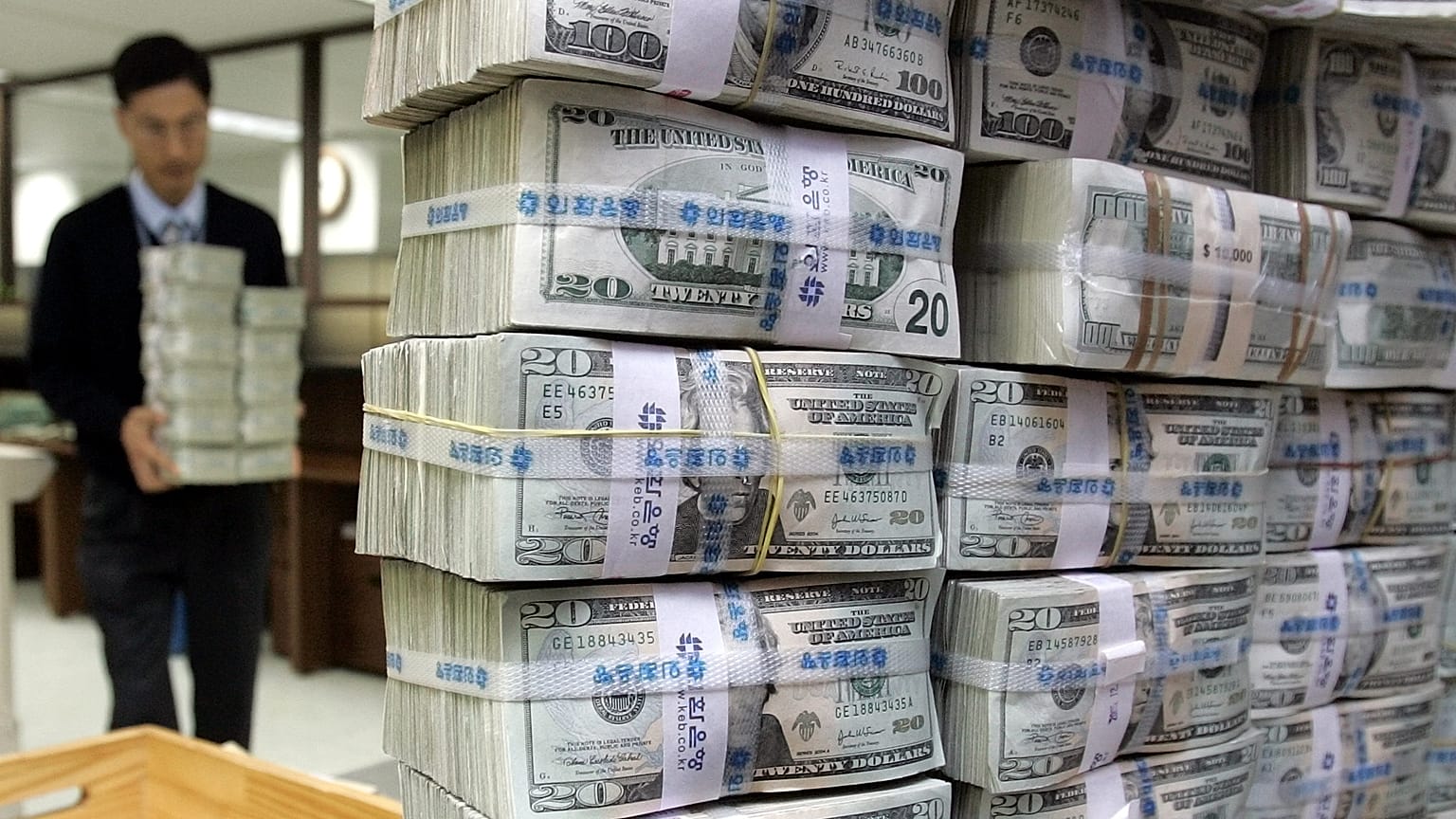
A South Korean bank clerk carries bundles of U.S. banknotes at a local bank in Seoul, Wednesday, Jan. 4, 2006.
Copyright LEE JIN-MAN/AP

By Servet Yanatma
Published on

Eastern Europe recorded the fastest growth in dollar millionaires in percentage terms, while the UK, France and Spain ranked just behind the US in the number of new millionaires added.

Nearly one million people joined the ranks of US dollar millionaires worldwide in 2025, according to UBS, equivalent to more than 2,680 new millionaires a day, 112 an hour or almost two every minute.

Europe accounted for much of the growth outside the United States, with the UK adding an average of 118 new dollar millionaires a day and France 95.

At current exchange rates, $1 million is worth about €875,000.

In percentage terms, however, Eastern European countries recorded the fastest growth. The first five places in the global top 30 were all European countries, including EU member states, EU candidate countries, EFTA members and the UK.

Lithuania recorded the highest growth at 8%, meaning it gained 921 new dollar millionaires in 2025.

Turkey ranks second at 6.4%, with 5,650 new millionaires. Latvia saw growth of 5.7%, adding 1,131 millionaires.

Hungary saw a 5.3% rise, gaining 1,349 new millionaires. Ireland ranks fifth at 5.2%, but added considerably more people to the millionaire ranks than the countries above, with 9,491 new millionaires.

The growth rate stood at 4% in Poland and 3.5% in Greece.

The report notes that, to some extent, the increase in millionaires depends on how close to the $1 million threshold the newly minted millionaires were the previous year.

UK, France and Spain follow the US in absolute numbers

The number of dollar millionaires also rose by 3.1% in Spain, 2.4% in Italy, 1.8% in the UK, 1.5% in France, 1% in Switzerland and 0.9% in Germany.

However, absolute numbers provide a clearer picture for these countries, as their millionaire populations are already large, resulting in comparatively lower growth rates.

The US saw the largest increase in the number of millionaires, adding 441,078, nearly half of the global growth.

In Europe, the UK gained more than 43,000 new dollar millionaires last year, while France and Spain each added more than 32,000.

Italy and Germany also ranked among the global top 10, each adding more than 24,000 new millionaires.

Not surprisingly, Europe's five largest economies all feature in the global top 10. All other European countries saw fewer than 10,000 new millionaires.

Japan (31,428), India (31,033), Australia (25,089) and Russia (21,951) also feature in the global top 10.

New millionaires per day

When these figures are converted into daily rates, the numbers become even more striking. In 2025, an average of 1,208 people joined the millionaire club each day in the US, or 47 per hour.

Among European countries, the UK added an average of 118 new millionaires a day, or 4.5 per hour.

France saw 95 per day and Spain 90. Italy added 67 new millionaires per day and Germany 66.

“More people moving up the wealth ladder, stronger ranks at the top, and steady growth across a remarkably wide field of markets,” the report said.

Not a single nation in the UBS sample of 56 markets ended 2025 with fewer millionaires than it had at the beginning of the year.

Over 40% of the world's dollar millionaires live in the US, amounting to more than 23.6 million people out of roughly 57.5 million in the UBS sample. Western Europe is home to just under 15 million dollar millionaires, or 25% of the total.

What do these figures tell us?

The report points out that the number of millionaires in a given market is not always a reflection of its size, economic strength or even average wealth per person.

Much depends on factors beyond economic might, such as home ownership, private retirement savings and the availability of tax incentives for saving and investing.

The UBS report defines net worth, or "wealth", as the value of financial and real assets (principally housing) owned by private individuals, less their debts.

Saturday, July 11, 2026

India And Indonesia: Asian Giants That Refuse To Bow To The Superpowers – Analysis
India's Prime Minister Narendra Modi with President Prabowo Subianto in Jakarta, Indonesia on July 07, 2026. Photo Credit: India PM Office


Modi’s Visit Strengthens India-Indonesia Strategic Partnership — During his July 6–8, 2026 visit to Indonesia, Modi and President Prabowo Subianto signed major agreements on defense (including BrahMos supersonic cruise missiles and air-to-air missiles worth ~$630 million) and critical minerals, elevating bilateral ties to a new level.

Defense Cooperation Enhances Strategic Autonomy — The missile deals significantly boost Indonesia’s maritime defense capabilities, particularly in disputed areas like the South China Sea and Strait of Malacca, while helping both nations maintain independence from major powers like China and the U.S.

Economic and Cultural Ties Are Also Deepening — Bilateral trade reached $28 billion, with new agreements on rare-earth magnets and critical minerals. The visit highlights strong historical and cultural links, and both nations are pursuing a pragmatic foreign policy that balances relations with Russia, the U.S., and others without full alignment with any bloc.

These days, in early July, we are witnessing an intense diplomatic offensive by Indian Prime Minister Narendra Modi. After hosting his Japanese counterpart Sanae Takaichi in New Delhi, Modi embarked on a six-day tour of Indonesia, New Zealand, and Australia from 6 to 11 July. His visit to the Republic of Indonesia (6–8 July) is undoubtedly the most significant stop on the trip, as the two countries further strengthened their already existing strategic partnership through a series of concrete agreements.

This is Modi’s first official visit to Indonesia since 2018, and it comes as a reciprocal visit following Indonesian President Prabowo Subianto’s trip to New Delhi in January 2025, when he attended India’s Republic Day celebrations as the guest of honour. Modi last visited Jakarta in 2023 to participate in the Association of Southeast Asian Nations (ASEAN) Summit.

A Visit of Great Importance


“Our history is built on shared culture, independence, and mutual trust, and our future will likewise be defined by shared prosperity,” Modi declared during a joint press conference

Prabowo was even more explicit:

“This visit reflects the commitment of our two countries to continue strengthening our Comprehensive Strategic Partnership through concrete and mutually beneficial cooperation.”

During Modi’s visit to Jakarta, representatives of India and Indonesia signed a series of strategic agreements, including deals on defence cooperation and the supply of critical minerals. In doing so, Prime Minister Modi and President Prabowo gave fresh momentum to India–Indonesia relations, which have often failed to realise the full potential that undoubtedly exists between Asia’s two largest democracies. It is enough to note that there are still no direct flights connecting New Delhi and Jakarta.


A Strategic Partnership Awaiting Full Implementation


India and Indonesia share remarkably deep cultural ties dating back approximately 2,000 years. Throughout history, these connections have manifested themselves through Hinduism, Buddhism, literature, theatre, cuisine, and the trade of spices and textiles.

Although the two countries signed a Comprehensive Strategic Partnership Agreement in 2018, it has rarely been implemented to its fullest potential. New Delhi and Jakarta concluded the agreement with the aim of expanding cooperation in national and maritime security, trade, infrastructure development, and economic relations.

The geostrategic significance of the India–Indonesia partnership is underscored by the fact that India’s southernmost territory, the Andaman and Nicobar Islands, lies in close proximity to Indonesia’s Aceh Province, adjacent to the Strait of Malacca—one of the world’s most important maritime trade routes. A substantial share of global commerce, including shipments of oil and liquefied natural gas between the Indian and Pacific Oceans, passes through this narrow waterway.

Indonesians Acquire Elite Indian Military Technology

During Modi’s visit to Indonesia, the greatest attention was drawn to two defence agreements that will significantly boost exports of Indian military technology to Indonesia. The agreements include the purchase of India’s BrahMos supersonic cruise missile system and Indian air-to-air missiles for the Indonesian armed forces. The combined value of the two missile deals amounts to approximately $630 million.

India has already exported BrahMos missile systems to the Philippines and Vietnam. The BrahMos is a versatile missile platform that can be launched from land-based batteries, warships, submarines, and combat aircraft. Its supersonic speed reaches up to Mach 3, roughly three times the speed of sound. The system was developed by Indian engineers with assistance from Russian specialists.

It is particularly noteworthy that the agreements on advanced Indian military technology were concluded just one day after China conducted a test launch of a long-range ballistic missile. Indonesia could use BrahMos systems not only to protect its extensive coastline but also to secure maritime routes in disputed areas of the South China Sea and the Strait of Malacca. The most likely potential adversary, of course, would be China.

Viewed in this context, the partnership between India and Indonesia carries considerable strategic significance amid Asia’s increasingly intense arms race.


Advanced Military Technology Gives Indonesia Greater Strategic Autonomy


The acquisition of Indian missile technology enhances Indonesia’s strategic autonomy in the broader Indo-Pacific region. More precisely, Indonesia has no intention of becoming anyone’s satellite state—neither China’s nor America’s.

Jakarta is determined not to take sides in the growing rivalry between China and the United States across the Indo-Pacific. Instead, it seeks to preserve as much freedom of action, independence, and neutrality as possible.

In simple terms, Indonesia aspires to be recognised as a middle power in international relations, and it has strong credentials to support such ambitions: a population of 288 million people (the fourth largest in the world and the largest Muslim-majority country), the world’s 17th-largest economy, a strategic position between Asia and Australia, and membership in the G20, BRICS, and ASEAN.

Indonesia: A Middle Power with Friendly Ties to Russia


This explains why the newly signed agreements with India are so important, as are the defence and economic partnerships Indonesia has previously concluded with South Korea, Japan, Türkiye, Russia, and other countries.

Indonesia, in particular, maintains notably warm relations with Russia. Few people realise that Jakarta did not condemn Russia’s invasion of Ukraine, instead adopting a neutral position.

The breadth of Russian-Indonesian relations was demonstrated by President Prabowo Subianto’s participation as the guest of honour at the St. Petersburg International Economic Forum in June 2025. On that occasion, Prabowo and Russian President Vladimir Putin signed a Strategic Partnership Agreement, further elevating bilateral ties.

An Underrated Economic Partnership


While most analysts focus on military cooperation, the economic dimension of India–Indonesia relations is equally significant.

The two countries signed agreements on the development of rare-earth magnets as well as on the exploration, extraction, and processing of critical minerals. As one of the world’s fastest-growing economies, India is eager to diversify its sources of critical minerals. Indonesia, meanwhile, possesses vast reserves of nickel and substantial untapped deposits of rare-earth elements and other strategically important minerals.

These complementary strengths create an opportunity for the establishment of a reliable supply chain between the two countries.

In fiscal year 2024/25, bilateral trade between India and Indonesia reached $28 billion, highlighting the growing importance of their economic relationship.


Indonesians Hold India and Its Prime Minister in High Esteem


The importance Indonesia attaches to India is reflected in two highly symbolic gestures.

The first was Indonesia’s decision to award Prime Minister Narendra Modi its highest civilian honour, the Bintang Adipurna. Accepting the decoration from President Prabowo Subianto, Modi said that the award “belongs to the people of India” and represents a tribute to the enduring friendship between the two nations.

With this latest distinction, Modi has now received at least 35 of the highest state honours from foreign countries—more than any other Indian leader. Admittedly, this remarkable achievement is partly explained by the fact that he has been in office for more than 12 years, making him India’s second-longest-serving prime minister. The record is still held by independent India’s first prime minister, the legendary Jawaharlal Nehru.

Modi has received eight foreign state honours this year alone, while U.S. President Donald Trump has received just one. That fact illustrates the Indian leader’s considerable international standing and suggests that, after Nehru, he has arguably done more than any other prime minister to shape India’s foreign policy and global profile. At present, Modi can certainly be regarded as one of the world’s most respected active statesmen.

The second gesture demonstrating Indonesia’s appreciation of India was its decision to allow Modi to address the People’s Consultative Assembly (MPR). While foreign leaders occasionally address national legislatures around the world, Indonesia grants this privilege only on rare occasions.

Before Modi, only Xi Jinping in 2013 and Saudi King Salman bin Abdulaziz Al Saud in 2017 had been given the honour of addressing the Indonesian parliament.

Given the honours bestowed upon Modi, some observers might describe India and Indonesia as enjoying a brotherly relationship. While such a characterisation may be an exaggeration, there is little doubt that Jakarta and New Delhi currently enjoy the best relations in their modern history. Their partnership could even be compared to the kind of special relationship that exists between the United States and the United Kingdom.

India–Indonesia relations demonstrate that two large neighbouring countries can cooperate successfully without allowing major powers to divide them or draw them into a new Cold War.

India and Indonesia have shown that it is possible to maintain excellent relations simultaneously with Russia and the United States, pursuing national interests without becoming subordinate to either side.

That is a diplomatic balancing act worthy of admiration.


About Matija Šerić
Matija Šerić is a geopolitical analyst and journalist from Croatia and writes on foreign policy, history, economy, society, etc.

From The Arctic To ASEAN, Russia Is Recasting Its Role In Asia – Analysis


Key Takeaways

Russia Is Actively Seeking Greater Relevance in Southeast Asia — Through the ASEAN-Russia Commemorative Summit in Kazan and initiatives like Panamax, Moscow is positioning itself as a fallback partner in energy, food security, and defense, capitalizing on regional anxieties about U.S.-China rivalry and supply chain vulnerabilities.

Energy and the Arctic/Northern Sea Route Are Key Levers — Russia is leveraging its energy exports and the Northern Sea Route to diversify its Asian engagement, offering alternatives to traditional Middle Eastern routes and reducing over-dependence on China in its Far East strategy.

Russia Remains a Secondary Player with Structural Limitations — While gaining traction in areas of regional vulnerability, Russia is still far behind China, the U.S., Japan, and the EU in overall influence. Its outreach is one of strategic convenience for ASEAN rather than ideological alignment, and success depends on overcoming sanctions, geography, and competition.


The ASEAN-Russia Commemorative Summit in Kazan in 17 – 18 June was not merely a ceremonial gathering, but a strategic intent to showcase presence and mark decades of relations, reflecting Moscow’s quest to strengthen fallback options and show resilience and defiance despite the Ukraine war.

Moscow is aware that Southeast Asia is not keen to be trapped in the binary Washington-Beijing rivalry and sees an opening to extend its sphere of relevance, presence and strategic influence in a region that is now actively searching for alternative options. It also senses that the region’s current vulnerabilities – particularly in energy, food, and security – create the means for Russia to reposition itself as a third strategic provider, away from the conventional choices.

In context, Russia’s strategic relevance to Southeast Asia has long been limited when measured against the predominant and historical roles of China, the United States, Japan, the European Union and other established partners. The latest State of Southeast Asia survey still ranks Russia only ninth among ASEAN Dialogue Partners in strategic relevance. This suggests that Moscow remains a peripheral player in ASEAN’s wider strategic calculus over the years. However, this looks set to change.


Russia is now increasingly becoming a functional fallback partner in practice. Its relevance is now no longer framed only by Cold War nostalgia, defence links with certain countries like Vietnam, or residual ties with Myanmar and Laos. It is being shaped by a broader set of regional anxieties that reflect the region’s growing vulnerabilities: energy insecurity, supply-chain disruption, food vulnerability, uncertainty over US policy, fear of overdependence on China, and the need for strategic redundancy in a more volatile and unpredictable international order.

This signals a new shift where Russia does not need to dominate ASEAN to become relevant.

Russia is not about to displace China or the United States in Southeast Asia at least in economic, defence or geopolitical weight, being far behind as compared to the economic reach of China, the security architecture of the United States, the development credibility of Japan, or the regulatory and investment weight of the European Union. However, it only needs to become useful in areas where regional states feel exposed, and this becomes the strategic opening.
Energy as the Immediate Opening

Energy is now Russia’s most important window of opportunity in Southeast Asia. The disruption around the Strait of Hormuz has exposed the region’s energy dependence and insecurity, and it is not just about affordability. It is now equally important about access, route security, reserves, diversification and fallback supply.

For decades, much of Southeast Asia’s dependence has been on the access to Middle Eastern crude and global maritime routes. The Hormuz crisis exposed the fragility and in this context, Russia’s offer of crude, LNG, LPG and nuclear energy becomes strategically attractive, even if it is politically sensitive.

Apart from crude support, nuclear-related deals involving Vietnam and Laos show that Russia is positioning itself in the diversification of energy support, connecting Russia’s energy diplomacy to ASEAN’s long-term transition needs.

The region is trying to transition itself into new energy platforms, but will still need gradual transition. Its industrialisation, urbanisation, data-centre expansion, transport demand and climate commitments all require a more complex energy mix where conventional fossil fuel sources, LNG, nuclear power, renewables, grids, storage and transition financing will all be part of the equation. Knowing that Southeast Asia cannot transition away from fossil fuels overnight, Russia is trying to present itself as a provider across a strategic spectrum of phased transition: oil and gas for today, nuclear energy for stability, and possibly advanced technologies for future energy systems.

Sanctions have never been enough to deter or block the path of Russian energy, at least in the path towards Asian states. Regional players have shown that, during crisis conditions, energy security often takes precedence over geopolitical signalling. For ASEAN, engagement with Russa will not be framed as alignment but as diversification.
The Arctic and the Northern Sea Route

Russia’s energy strategy also has an Arctic dimension that Southeast Asia cannot ignore. The Northern Sea Route (NSR) and the Arctic now remain at the forefront of the next strategic global route and frontier. Although the NSR remains constrained by weather, insurance risk, infrastructure gaps, sanctions, environmental risks and specialised vessel requirements, its long-term strategic significance is growing.


For Russia, the Northern Sea Route is part of a wider effort to redirect energy and trade flows as fallback options, toward Asia, amidst how the Western markets narrows due to sanctions and the Ukraine conflict. It is also part of Moscow’s larger attempt to revive Russia’s position as an energy bank for Asia, and this position relies on the Arctic LNG, Siberian resources, Far Eastern ports, icebreaker capacity, and the eventual integration of rail, maritime and energy corridors across the Eurasian landmass.

This strategic opening remains with high potential. It is not only about shorter shipping distance, but strategic optionality. Traditional maritime routes that have become increasingly vulnerable whether through the Strait of Hormuz, the Red Sea, Suez, the Malacca Strait or other chokepoints, will mean that alternative northern routes will gain greater strategic attention. For Southeast Asia and East Asia, which depend heavily on open sea lanes and these traditional routes which will now fall under greater scrutiny and vulnerability, the NSR introduces a new layer of strategic opening.

For Asian economies, the Arctic is gaining in future prominence because it may open shorter routes between parts of Europe and Asia, expand access to Arctic LNG and minerals, and create new logistical options outside traditional chokepoints. Major maritime economies especially Singapore, Malaysia and Indonesia will watch whether Arctic routing changes the balance of global shipping and energy transit.

The NSR will not replace the Malacca Strait or South China Sea for now, but it could diversify Eurasian trade flows and reduce the monopoly of existing southern routes for certain cargoes.

This also will change ASEAN’s energy future. The more Russia can move Arctic and Siberian energy eastward, the more Moscow can present itself as a resilient supplier beyond the Middle East.

The Northern Sea Route strengthens Russia’s long-term narrative that Moscow is not only a continental Eurasian power, but also an energy, logistics and resource gateway to Asia.
Russia’s Far East Intent and the Wider Indo-Pacific Repositioning

Russia’s renewed push toward Southeast Asia should also be seen through the lens of its Far East strategy. The Russian Far East is no longer just a distant peripheral region in Moscow’s domestic geography but is now adjusted as the strategic front door of Russia’s pivot to Asia.

Strategic advantages like Vladivostok, Sakhalin, Primorye, Kamchatka, the Kuril chain, the Pacific Fleet, Far Eastern ports, Arctic logistics and eastern rail corridors have become central to Russia’s long-term geopolitical readjustments as it looks East. Moscow sees the Far East as a new asset to serve multiple purposes at once: an energy export base, a defence frontier, a maritime gateway, a logistics hub, a mineral and resource platform, and a diplomatic bridge to Northeast and Southeast Asia.

Russia’s traditional westward economic model has been made almost obsolete by the Ukraine war and Western sanctions, with reduced access to European markets and technology.


The Far East allows Russia to project itself as an Asian power, not merely a European power under pressure. Initiatives including the Eastern Economic Forum, port development, rail modernisation and energy projects all reflect this objective.
No Limits but Persistent Wariness

But this ambition faces real constraints. Russia wants to use the Far East to diversify away from the West, but it risks becoming excessively dependent on China instead. That is why Southeast Asia, India, Japan and other Asian partners matter to Moscow. They provide Russia with a wider Asian field and fallback and reduce the risk that Russia’s entire eastern pivot becomes a one-way dependence on Beijing.

Despite the No Limits Ties, Russia and China are not identical actors. Both have overlapping ambitions and intent in Central Asia, the Arctic, energy corridors, minerals, logistics and influence across Eurasia, and excessive Chinese dominance could reduce Russia’s strategic autonomy in its own eastern frontier.

Russia’s outreach to Southeast Asia is not only about ASEAN but a wider effort to make the Russian Far East more internationally connected and less dependent on China alone. ASEAN provides markets, diplomatic legitimacy, energy demand, and a broader Asian audience at a time when Russia is trying to show that China alone it not its solitary strategic future.

China will watch this carefully where it may welcome Russian influence that reduces Western influence, but it will be cautious if Moscow gains ground in energy infrastructure, critical minerals, defence technology, ports or transport corridors that will challenge or dilute China’s traditional stronghold and ingrained presence in what Beijing calls as its own backyard. Russia’s Southeast Asian strategy is therefore not only about Russia versus the West, it is also about navigating an Asia where China is both partner and competitor.
The Japan Factor: A Possible Future Reset

Russia-Japan ties have been strained since the Ukraine war, with Tokyo being a part of Western sanctions and maintained a hard political line against Moscow. The unresolved territorial dispute over the Southern Kurils/Northern Territories still remains a barrier.

Yet Japan has not fully severed its Russia connection, with energy being the factor. Japan remains exposed to Russian energy, especially LNG from the Sakhalin-2 project. Even as Tokyo aligns with the G7 position on Ukraine, it will still need the energy channels because energy security remains a national-security priority. This creates a pragmatic dilemma: politically, Tokyo must oppose Moscow’s actions in Ukraine, while strategically and economically, it cannot fully ignore the Russian energy equation.

This is where Russia sees an opening for a future recalibration. Moscow is aware that Japan cannot easily replace all Russian energy supplies without cost in the near term. It also knows that Japan remains ultimately concerned about China and North Korea’s threats and the long-term balance in Northeast Asia.


These give factors for future recalibration of ties.

For Russia, improving ties with Japan would be a multi-faceted beneficial outcome. It would reduce Russia’s overdependence on China in the Far East, reopen channels for technology, capital, maritime cooperation and energy investment, and strengthen Moscow’s claim that it remains a serious regional power, not a junior partner to Beijing. Meanwhile, for Japan, targeted engagement with Russia could preserve energy access, maintain communication in Northeast Asia, and prevent Russia from moving even more tightly into China’s strategic orbit.

Japan will not abandon its G7 commitments or reverse its Ukraine position but a limited, pragmatic and sectoral reset is possible over time. If Japan still has to preserve certain Russian energy links, ASEAN states will feel justified and validated to maintain their own pragmatic approach,and this strengthens Moscow’s argument that engagement with Russia is not ideological alignment, but strategic necessity.
Defence and Food Security

Food security is another Russian advantage where conflicts and climate shocks, and fertiliser and maritime disruption have exposed deep vulnerabilities. Russia remains a major supplier of wheat, fertilisers and agricultural inputs and this gives Moscow practical leverage. Russia’s offer to ASEAN is through the three-pronged pillar of energy, food and security. Energy supports supply resilience, food helps manage inflation pressure, and security provides defence fallback and strategic hedging.

Defence has traditionally been Russia’s strongest anchor in Southeast Asia, especially through ties with Vietnam, Laos and Myanmar. Moscow is now trying to expand into maritime Southeast Asia, but its position is weaker than before. Arms exports have fallen because of the Ukraine war and regional states also worry about sanctions exposure.


Russia hopes to give ASEAN another option: a non-Western partner and source of cooperation in energy, food, nuclear technology, defence maintenance and minerals but still faces serious limitations. Distance and geography constrain its regional presence. The Ukraine war and sanctions further drain resources, and competition is intense from traditional powers that have established a historical presence in the region. In many sectors, Russia is the fallback rather than the first choice.

ASEAN’s relationship with Moscow is largely, for now, a partnership of convenience, but if Russia becomes more Asia-oriented, and other variables improve including when Arctic routes strengthen, energy instability persists and ASEAN continues to be trapped in the binary US-China pressure -Moscow’s relevance and reach could grow, as the region continues to seek geopolitical breathing space. Still, it is hard to dislodge the commanding presence of traditional powers here in the Indo-Pacific.


About Collins Chong Yew Keat
Collins Chong Yew Keat has been serving in University of Malaya, the top university in Malaysia for more than 9 years. His areas of interests include strategic and security studies, American foreign policy and power analysis and has published various publications on numerous platforms including books and chapter articles. He is also a regular contributor in providing op-eds for both the local and international media on various contemporary global issues and regional affairs since 2007.
View all posts by Collins Chong Yew Keat →
1,000 Days After Oct. 7, Israelis Still Wait For Answers – OpEd

July 12, 2026 
Arab News
By Yossi Mekelberg


Key Takeaways

Netanyahu’s Government Bears Heavy Responsibility for October 7 — The article argues that the Israeli government, led by Netanyahu, failed in its most basic duty to protect citizens, with policies that strengthened Hamas and left the country catastrophically unprepared for the attack.

Lack of Accountability Persists — Despite the scale of the failure, Netanyahu refuses to accept responsibility, blaming others and resisting an independent state commission of inquiry, while the defense minister and security chiefs who did take responsibility stepped down.

The Response Has Been Morally and Strategically Flawed — The prolonged military campaigns, disproportionate force, and lack of a credible political exit strategy have caused massive civilian suffering, deepened Israel’s international isolation, and failed to deliver decisive victory, leaving the country in a state of prolonged trauma and insecurity.


To mark 1,000 days since the horrific surprise attack on Israeli border communities near the Gaza Strip on Oct. 7, 2023, many thousands of Israelis took to the streets in protest. Others visited the affected communities to pay their respects in silent vigils, carrying photographs of those killed as a reminder that the worst failure in the country’s history has a face, indeed many faces, of lives suddenly and cruelly cut short.

Common to these gatherings was a unified call for the establishment of a state commission of inquiry to investigate the failures of the government on the day of the Hamas attack, which left almost 1,200 people dead and 251 taken hostage in Gaza, as well as the conflicts on multiple fronts that followed. Yet the failure did not end on Oct. 7. More than 1,000 days later, it continues to haunt the country through a deep collective trauma and Israel’s prolonged involvement in fighting on seven fronts, with scarcely any respite. This has left little room for the country to reflect, draw lessons from what led to Oct. 7, assess what has happened since, and determine how to ensure such a catastrophe never happens again.


It needs little explanation why the current government, led by an aging, ailing, and increasingly authoritarian prime minister, who is also standing trial on corruption charges while repeatedly attempting to obstruct the judicial process, should long ago have left office. For Benjamin Netanyahu, the country’s future has become secondary to the political survival of both his government and himself.

Nothing can diminish the responsibility of Hamas and the others who carried out the Oct. 7 massacre. Nevertheless, for Israel to recover from its collective trauma, it must also understand how Netanyahu and his government, without in any way excusing the brutality of that day, contributed to creating the conditions that made such an attack possible. Equally important is asking difficult questions about the morality and wisdom of Israel’s response.

The justified anger directed at the perpetrators of Oct. 7 gradually became, for many, a justification for the destruction of large parts of Gaza. About 75,000 people are estimated to have been killed there, roughly two-thirds of them noncombatants, many of them children, while the view that “there are no innocent people in Gaza” has become disturbingly widespread in parts of Israeli society. Responding to one war crime with another can never be morally justified. It has led only to moral bankruptcy, failed to defeat Hamas, and resulted in a degree of international isolation unprecedented in Israel’s history.

The grief, pain, and sadness of families who lost loved ones will never disappear. The suffering of those who were kidnapped and later returned from captivity may gradually ease with time, but it can never be erased. Their pain and anger are only compounded by the absence of accountability from those who failed to protect them on that terrible day. They, like the rest of Israeli society, deserve answers from those who were responsible for the country’s security.

Yet this government, and above all, Netanyahu, whose lack of moral compass has become more obvious than ever, refuses to accept responsibility. Instead, they blame everyone else: the security services, the opposition for allegedly weakening the military through its resistance to the government’s assault on Israel’s democratic institutions, and even promote baseless conspiracy theories suggesting that elements within the security establishment colluded with Hamas to allow the attack to happen.

One thousand days later, the central conclusion remains straightforward. Regardless of what an independent state commission of inquiry, rather than the politically appointed body the government seeks, may ultimately conclude, it was the government of the day that failed its people, and it continues to fail them. Had its members possessed even a basic sense of public decency and integrity, they would long ago have resigned from political life, bowing their heads and asking the nation for forgiveness.

They owe this not only to the families of those murdered on Oct. 7, but also to the soldiers and civilians who have since lost their lives, to the destroyed communities, to those who endured captivity, to the reservists who have served hundreds of days away from their families, to the conscripts whose military service has been extended, and to every Israeli citizen.


Despite the nearly three years that have passed since Oct. 7, a profound sense of insecurity has become deeply entrenched throughout Israeli society. Its impact extends far beyond psychology; it has far-reaching political consequences. The most basic expectation citizens have of their government is that it will protect them from those who seek to murder or abduct them. On that fundamental test, Netanyahu, his government, and the security establishment failed in the worst possible way.

Yet, while the defense minister at the time, the heads of Israel’s security agencies, and numerous senior military commanders accepted responsibility and left their positions, Netanyahu has consistently blamed everyone but himself. What many Israelis want is a candid account of what happened, or at the very least one delivered under oath before an independent state commission of inquiry. It was, after all, Netanyahu’s policy of allowing large sums of money to flow into Hamas-controlled Gaza that helped strengthen the militant group’s rule and military capabilities, while Israel itself was catastrophically unprepared when those capabilities were ultimately turned against it.

The reckoning does not end there. One thousand days later, Israelis also deserve answers about why, despite repeated promises of “total victory,” no decisive strategic success has been achieved on any of the fronts on which Israel is fighting, even though severe damage has undoubtedly been inflicted on its enemies. Moreover, the extensive use of disproportionate force, the apparent disregard for civilian lives, and the destruction of communities and essential infrastructure in both Gaza and Lebanon have exposed an increasingly troubling side of Israel.

The government frequently argues that its public relations efforts have failed to explain or justify its policies at home and abroad. This fundamentally misunderstands the problem. The issue is not one of communication but of policy. A strategy centered on overwhelming military force, lacking a credible political or diplomatic exit strategy, and increasingly shaped by the demands of the most extreme elements within the governing coalition, is itself deeply flawed.

When leaders take their country to war, whether by choice or because war is forced on them, they have an obligation to provide a full account of their decisions and to accept responsibility when those decisions fail. One thousand long days later, the Israeli people are still waiting for that accountability. Judging by everything we have learned about Netanyahu and his political allies, the people may be waiting in vain, at least until the coming general election.


Yossi Mekelberg is a professor of international relations and an associate fellow of the MENA Program at Chatham House. X: @YMekelberg


About Arab News
Arab News is Saudi Arabia's first English-language newspaper. It was founded in 1975 by Hisham and Mohammed Ali Hafiz. Today, it is one of 29 publications produced by Saudi Research & Publishing Company (SRPC), a subsidiary of Saudi Research & Marketing Group (SRMG).
View all posts by Arab News →
African Drone Manufacturers Seek ‘Security Sovereignty’


Based in Abuja, Nigeria, Terra Industries manufactures attack and surveillance drones. 


July 12, 2026 
By Africa Defense Forum

Key Takeaways

Africa accelerates local defense manufacturing: Nine countries now produce drones domestically as Nigeria leads via public-private deals like Terra Industries with DICON, reducing costly imports.

Terra Industries delivers real capability: 23-year-old CEO Nathan Nwachuku’s firm demonstrated combat drones and mine-clearers, scales to 30,000 drones/year in Abuja, builds Africa’s largest factory in Ghana (50,000/year), and exports to 8 countries.

Sovereign defense enables Pax Africana: Nwachuku argues local security tech is essential to defeat insecurity, enable industrialization, and achieve lasting African peace.


Nathan Nwachuku’s vision of Pax Africana is front and center on his company’s website: “Bringing lasting peace to the continent through African security sovereignty, a future in which Africa builds, deploys and controls its own defense technology.”

The 23-year-old Nigerian is CEO of Abuja-based startup Terra Industries, which signed a joint venture agreement in February with Nigeria’s state-run military-industrial ⁠corporation Defence Industries Corp. of Nigeria (DICON) to research and develop drones, robotics and cybersecurity systems.

After years of buying drones from China, Pakistan and Türkiye, Nigeria’s military has turned its attention inward, exemplifying a trend across the continent of governments investing in indigenous manufacturing. Costs and delays in acquiring and maintaining drones have only strengthened the case for local production.


Between 1980 and 2026, 34 countries procured 1,959 drones, according to 234 purchase records compiled by defense website Military Africa. More than half — 1,054 of the 1,959 — were acquired between 2020 and 2026. Today, nine African countries are manufacturing drones domestically with South Africa, Nigeria, Algeria and Ethiopia leading the way.

Moses Wambui, CEO of Kenyan research and consulting firm Insight Strategists Solutions Africa, said the continent’s nascent drone market has shifted from agriculture and healthcare to serving military combat and intelligence needs.

“The penetration rate of drones in Africa is around 14% of the whole drone market in the world,” he told Lagos-based News Central TV in a December 2025 broadcast. “The initial cost becomes an issue. You’re talking about an economy of around $8 billion.”

The proliferation of drones in the hands of armed groups has changed the calculus for African militaries. Cheap commercial drones modified for surveillance or attack roles have forced armies to invest in counterdrone systems, electronic warfare and autonomous ground equipment.


Nigeria is positioning itself as a leading defense manufacturing hub in the region, as government and private companies invest in local production to strengthen security and surveillance capabilities. Lagos-based Elite Logistics & Development Services launched military drone production and assembly in 2023.

More recently, Terra conducted a live demonstration of its interceptor drones and unmanned mine-clearing vehicles for military and government officials on April 27.

“Today is a day that we show our readiness for battlefield operations and actual forward deployment onto the frontlines,” Nwachuku told Reuters news service while standing outside his company’s 1,394-square-meter drone factory.

DICON chief Maj. Gen. Babatunde Alaya said Terra’s attack and surveillance drone systems are designed to aid counterinsurgency operations and fill capability gaps.

“There is no other company that is bringing these [drones] on board for our troops in the field to use for real-life challenges that we are having, for example, with improvised explosive devices that we are having in the northeast, now in the northwest,” he said in a news conference before the demonstration. “The highest casualties that we are sustaining are through improvised explosive devices.”

Terra’s Abuja factory is ramping up to an annual capacity of 30,000 drones, including long-range drones built for surveillance missions, quadcopters for first response and data collection, and small self-driving vehicles for ground surveillance and transport. The company said it exports drone systems to eight African countries.

It also has expanded manufacturing to Ghana with the construction of a 3,159-square-meter factory that Nwachuku says will be the largest on the continent and will be able to produce 50,000 drones a year at full capacity.

“Ghana just makes sense as a country,” he told defense technology website Tectonic for an April 20 article. “It’s one of the safest in Africa right now, and it’s also one of the fastest-growing economies [with a] strong currency, strong manufacturing base, really smart people and a high political will to want to lead the continent in terms of industrial development and sovereign defense.”

Nwachuku said his dream is to help industrialize Africa, but for that to happen, “we must solve the common denominator, which is insecurity.”

“The only way Africa can have lasting peace is by uniting to build sovereign defense, not by relying on foreign security architecture,” he said on Terra’s website. “We need to control our own destiny by building the tools and systems needed to protect ourselves. That’s how this continent defeats terrorism.”


About Africa Defense Forum
The Africa Defense Forum (ADF) magazine is a security affairs journal that focuses on all issues affecting peace, stability, and good governance in Africa. ADF is published by the U.S. Africa Command.


Africa records world’s fastest growth in ultra-rich population

Africa records world’s fastest growth in ultra-rich population
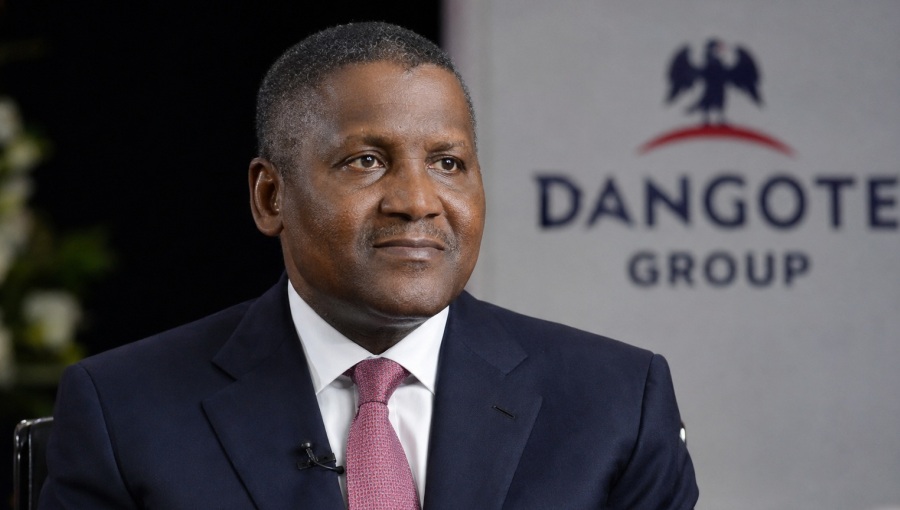
Nigerian entrepreneur Aliko Dangote is Africa’s richest person, with an estimated fortune of $28.5bn. / Dangote GroupFacebook
By bne IntelliNews July 10, 2026

Africa recorded the fastest growth in its population of ultra-high-net-worth individuals worldwide in 2025, although the continent still accounted for less than 1% of global ultra wealth, according to a report by wealth intelligence firm Altrata.

The number of Africans with net worth of more than $30mn rose 23.7% to 3,440 last year, the strongest increase of any region, the World Ultra Wealth Report 2026 showed. This compared with growth of 15.8% in Asia, 15% in North America and 14.5% in Europe.

The combined wealth of Africa’s ultra-rich increased 22.4% to $400bn, giving the continent 0.7% of global ultra-high-net-worth wealth and 0.6% of the worldwide population in this category.

Altrata attributed Africa’s growth to more favourable financing conditions, the appreciation of several currencies against the US dollar, expanding digitalisation and new investment linked to rising demand for the continent’s critical mineral reserves.

The firm expects Africa to remain the fastest-growing ultra-wealth region through 2030, projecting average annual growth of 8.4% in the number of ultra-high-net-worth individuals.

The continent’s ultra-rich population is forecast to rise to about 5,200 by the end of the decade, supported by infrastructure development, commodity demand and expanding consumer markets. Its share of the global total is nevertheless expected to remain below 1%.

Africa’s wealthiest individuals remain concentrated in a small number of countries and industries, particularly manufacturing, luxury goods, mining, telecommunications, construction and food production.

Dangote remains Africa’s richest person

Nigeria’s Aliko Dangote remained Africa’s richest person in Forbes’ 2026 ranking, with an estimated fortune of $28.5bn. Dangote built his wealth through the Dangote Group, whose interests include cement, sugar, fertiliser and oil refining. His fortune rose sharply following gains in Dangote Cement’s share price and the expansion of the group’s large oil refinery near Lagos.

South Africa’s Johann Rupert and his family ranked second with an estimated $16.1bn. Rupert’s wealth comes primarily from his family’s controlling interest in Swiss luxury goods group Compagnie Financière Richemont, whose brands include Cartier, Montblanc and Van Cleef & Arpels. He also has investments through South African holding company Remgro Ltd. (JSE:REM).

Nigerian industrialist Abdul Samad Rabiu ranked third with an estimated fortune of $11.2bn. He founded BUA Group, a conglomerate active in cement production, sugar refining, food processing and real estate. Rabiu controls listed cement producer BUA Cement Plc (NGX:BUACEMENT) and food company BUA Foods Plc (NGX:BUAFOODS).

South Africa’s Nicky Oppenheimer and his family ranked fourth with an estimated $10.6bn. Their wealth was built through a controlling interest in diamond producer De Beers, which the family sold to Anglo American Plc (LSE:AAL; JSE:AGL) for $5.1bn in 2012. Oppenheimer has since invested in private equity, conservation and aviation.

Egyptian businessman Nassef Sawiris ranked fifth. His fortune stems largely from stakes in Amsterdam-listed chemicals and fertiliser group OCI Global (Euronext Amsterdam:OCI) and engineering and construction company Orascom Construction Plc (Nasdaq Dubai:OC; EGX:ORAS). Sawiris is also a major shareholder in sportswear company Adidas AG (Xetra:ADS) and co-owns English football club Aston Villa.

Other prominent African billionaires include Nigeria’s Mike Adenuga, whose wealth comes from telecommunications operator Globacom and oil producer Conoil Plc (NGX:CONOIL), and Egypt’s Naguib Sawiris, who built his fortune in telecommunications before expanding into gold mining and other investments.

The ranking illustrates the continued importance of traditional sectors in the creation of large African fortunes. Cement, mining, energy, telecommunications and consumer goods remain dominant, although technology and financial services account for a growing share of newly created wealth.

Global ultra wealth reaches $63.8 trillion

Worldwide, the ultra-high-net-worth population grew 14.4% in 2025 to a record 556,850, marking the strongest annual expansion since 2017. Their combined wealth rose 14.3% to $63.8 trillion.

Altrata said ultra-rich portfolios benefited from lower inflation, continued fiscal and monetary support, resilient corporate earnings and investor enthusiasm for artificial intelligence. Global equities also delivered double-digit returns for a third consecutive year.

The US remained the world’s largest ultra-wealth market, with 206,880 individuals, or 37% of the global total. China ranked second with 55,490, followed by Germany with 28,330, Japan with 22,435 and the UK with 20,495.

Altrata forecasts that the global ultra-high-net-worth population will reach 746,570 by 2030, an increase of almost 190,000 from 2025, while its combined wealth is projected to rise by one-third to $85 trillion.