Tuesday, July 21, 2026


The gas blamed for warming the planet is about to be used to store Ireland’s renewable electricity.

The gas blamed for warming the planet is about to be used to store Ireland’s renewable electricity.
CO2 is killing the planet, but Italian company Energy Dome has worked out a way to use the gas to store power that cuts out the need for expensive and hard to source lithium. / bne IntelliNewsFacebook
By Balthasar Hesse in Berlin July 21, 2026

The gas blamed for warming the planet is about to be used to store Ireland’s renewable electricity.

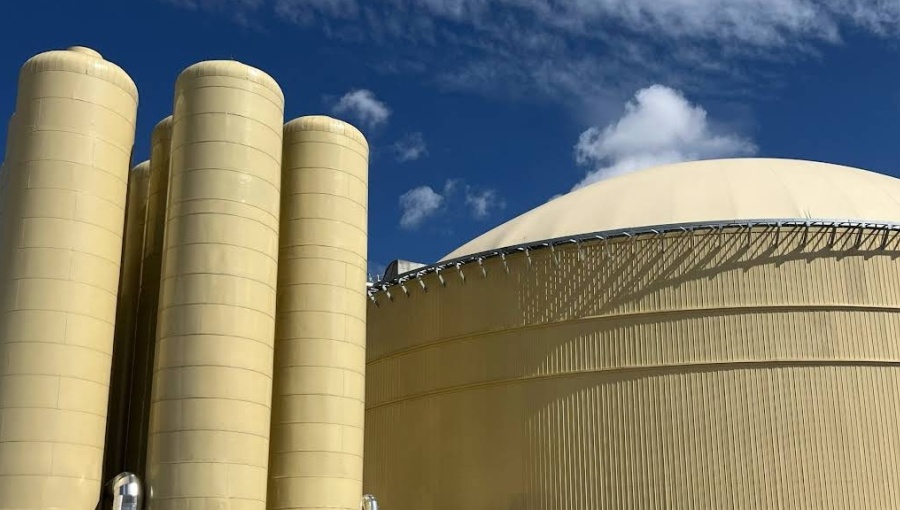
Energy Dome, a Milan-based energy-storage developer, plans to build a battery in County Offaly that uses carbon dioxide rather than lithium to store surplus wind and solar power. The system can discharge electricity for about eight hours — long enough to cover an entire night rather than the short evening bursts handled by most conventional grid batteries.

The project brings together four elements that make it more than another experimental green technology. It uses the very gas governments are trying to keep out of the atmosphere; avoids costly and increasingly contested lithium supplies; stores power for far longer than most lithium-ion batteries; and has already moved beyond the drawing board.

Energy Dome will design, own and operate the 200 MWh plant with Irish developer Lumcloon Energy. It will be built on the site of a former peat-fired power station near Rhode in the Irish Midlands, adding another layer of symbolism to a project intended to help Ireland abandon fossil fuels.

Ireland’s state-owned transmission operator EirGrid has awarded the plant a 10-year capacity contract. Energy Dome expects it to enter service in 2028 and plans to add a second 200 MWh unit at the same site.

The agreement is the first bilateral commercial contract between Energy Dome and Lumcloon and the first time the Italian company has connected one of its CO2 batteries directly to a national transmission grid under a capacity contract, rather than operating it as a standalone demonstration project.

“This project unlocks the path to 24/7 carbon-free energy in Ireland,” said Claudio Spadacini, Energy Dome’s founder and chief executive.

The battery stores electricity through physics rather than conventional battery chemistry.

When Ireland produces more electricity than the grid needs, the plant will use the surplus power to compress carbon dioxide until it becomes a liquid. The heat created during compression is captured and stored.

When demand rises, that heat is used to turn the liquid CO2 back into a gas. As the gas expands, it drives a turbine, generating electricity that can be returned to the grid.

The carbon dioxide is neither burned nor released. It remains sealed inside the system, cycling repeatedly between liquid and gas.

That makes the technology fundamentally different from the lithium-ion batteries that have so far dominated the rapid expansion of energy storage.

Lithium batteries are highly effective at responding almost instantly to changes in electricity supply and demand. But most grid installations are designed to discharge for only one or two hours. They can smooth an evening price spike or stabilise a grid, but they struggle to cover a windless night, a cloudy day or a prolonged fall in renewable generation.

The bigger prize is an economically viable battery capable of supplying electricity for eight hours or more.

Australia has already demonstrated how shorter-duration batteries can transform electricity markets, flattening evening power-price spikes that once reached $500 per MWh. Europe, however, still has enough grid-scale storage to cover only about 15 minutes of average electricity demand.

The planned Offaly battery is intended to help close that gap. Its eight-hour discharge period would allow it to absorb excess wind and solar generation during periods of low demand and release the power later, when electricity is scarcer and more expensive.

The project also offers an alternative to the supply chains on which conventional batteries depend.

Global lithium demand is expected to continue rising rapidly as electric-vehicle production and grid storage expand. Mining is concentrated in a relatively small number of countries, while China dominates much of the processing industry. That leaves battery developers exposed to commodity-price volatility, trade disruption and geopolitical risk.

Energy Dome says its system can instead be built largely from established industrial materials, including steel, water and carbon dioxide, without relying on lithium, cobalt or rare-earth metals.

For developers and financiers, such technologies are increasingly being considered not merely as greener alternatives, but as a hedge against the cost and supply risks surrounding lithium.

The Irish project is also not simply a laboratory experiment. Energy Dome already operates a 20 MW, 200 MWh CO2 battery in Sardinia, which has been running for about a year with French utility Engie as its offtaker.

Earlier in June, Energy Dome, Google and Arizona utility Salt River Project announced a smaller 19 MW, 200 MWh project in the US.

Google is also supporting the Irish development. Vanessa Hartley, head of Google Ireland, said the deal would “help scale their promising long-duration energy storage technology”.

The Offaly site already has land rights, planning consent and a connection to the electricity network serving Dublin. It is located in an area where grid congestion can force renewable generators to reduce output, even when wind and solar power are available.

Ireland’s Electricity Storage Policy Framework identifies long-duration storage as central to the country’s target of generating 80% of its electricity from renewable sources by 2030.

There are still important questions. The Offaly plant will not begin operating at grid scale until 2028, while its long-term costs, reliability and competitiveness against falling lithium-ion battery prices remain to be demonstrated.

But the project has already passed an important dividing line. It is no longer merely an ingenious idea for turning a climate pollutant into a battery. It has a site, planning permission, a grid connection and a 10-year contract.

If it performs as intended, Ireland will be able to store a night’s worth of renewable electricity using the same gas the energy transition is designed to eliminate — without needing a single tonne of lithium.

Rare Colombian fruit offers food industry a sustainable natural blue

Rare Colombian fruit offers food industry a sustainable natural blue
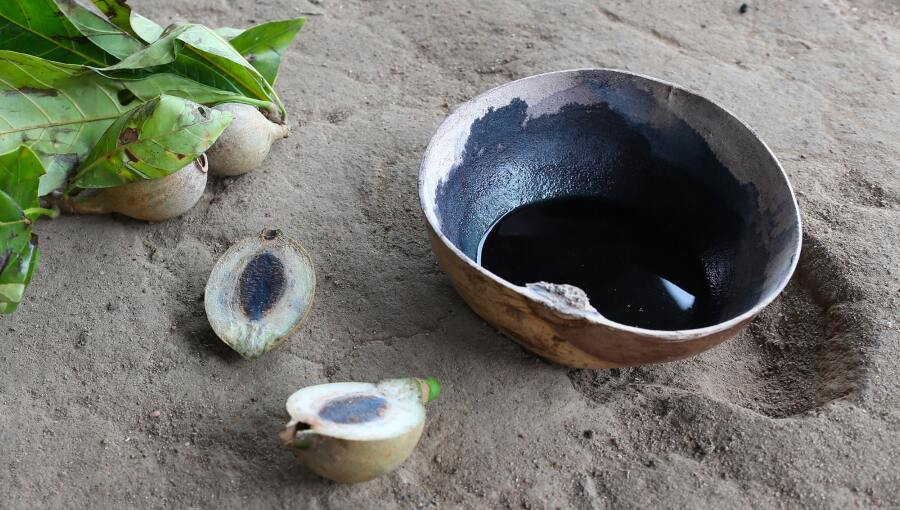
The extraction process requires unripe fruit, whose juice reacts with a nitrogen-based compound to produce the distinct blue pigment.Facebook
By Cynthia Michelle Aranguren Hernández July 20, 2026

A Colombian company has developed one of the world's few commercially viable natural blue food colourings, extracted from the jagua fruit found in the country's tropical forests, according to a report by Caracol TV’s Los Informantes.

Medellín-based Ecoflora, led by chief executive Nicolás Cock Duque, spent roughly 20 years developing the pigment alongside Luis Fernando Echeverri, a pharmaceutical chemist at the University of Antioquia who first isolated the compound from jagua fruit brought back from a student field trip.

Blue is notoriously rare in nature. It requires substances capable of absorbing a very narrow band of solar radiation, Echeverri said. The jagua tree, which grows more than 15 metres tall in Colombia's Magdalena Medio region, has long been used by indigenous communities for body paint, but its commercial potential as a dye had gone unexploited.

A chance discovery

Echeverri stumbled on the pigment almost by accident, mixing extracts from fruit that students had brought back from a field trip and setting the resulting blue liquid aside. The sample sat unused for 15 years, until an employee from a local company approached him with a problem she thought it might solve.

That problem had originated years earlier, when a German consultant advising Ecoflora told Cock Duque that the discovery would be transformative if it ever happened, describing a natural blue as nothing short of "the Holy Grail of the global food industry." The remark stayed with Cock Duque for years, until the answer appeared, fittingly, in a market. On a Sunday trip to Chocó, he spotted an unfamiliar fruit at a stall and asked the indigenous vendor selling it to cut it open, revealing blue veins running through its white pulp. The chance encounter connected him back to the consultant's prediction and eventually led him to Echeverri.

The extraction process requires unripe fruit, whose juice reacts with a nitrogen-based compound to produce the pigment. Ecoflora now processes the pigment at industrial scale, sourcing all its raw material from farming operations in the Magdalena Medio region.

The product has secured approval from the US Food and Drug Administration and has been added to the Codex Alimentarius, the list of food additives permitted in more than 180 countries under the Food and Agriculture Organization and World Health Organization, alongside halal and kosher certifications. Ecoflora holds two patent families approved in more than 35 countries for the technology.

A crowded but flawed market

Jagua is not the only natural blue on the market, but its main rivals both carry drawbacks that have limited their use. Spirulina-derived phycocyanin, the most established natural blue colourant, is a protein-based pigment that degrades quickly in acidic conditions and under heat, restricting its use in fruit-flavoured drinks or yoghurt. Butterfly pea flower extract, approved by the FDA in 2021 and widely used in Southeast Asian beverages, shifts colour with pH, moving from blue toward purple or magenta as acidity rises. That trait is prized in novelty colour-changing drinks but is unsuitable where a stable, consistent blue is required.

Peer-reviewed research comparing the three pigments found that jagua blue retained its colour substantially longer than spirulina and synthetic alternatives, under both acidic conditions and prolonged storage, giving it markedly better shelf stability and making it viable across categories where its rivals fall short.

With a reliable blue now available, Cock Duque said the pigment also unlocks infinite new natural greens, pinks, purples and browns when blended with other approved colourants, shades that were previously difficult or impossible to achieve without synthetic dyes. That expanded palette matters commercially because blue-hued products have particular appeal with younger consumers. Brightly coloured sweets, drinks and dairy products aimed at children represent some of the fastest-growing categories for natural-colourant substitution, as manufacturers respond to parental demand for products free of synthetic additives. A stable natural blue gives food companies the ability to reformulate blue and blue-derived confectionery, drinks and snacks marketed to that audience, without compromising on shelf life or appearance.

The commercial stakes are considerable. The global natural-colourant market is approaching $3bn, of which close to $700mn relates specifically to blue pigments, a segment the industry had effectively been unable to serve at scale until jagua's approval. For Colombia, the venture represents a rare case of a domestically developed, patented biotechnology reaching international commercial scale, with exports now reaching manufacturers across more than 180 countries.

Beyond the balance sheet

The venture's impact reaches beyond the balance sheet. Ecoflora sources its fruit from farming and indigenous communities in the Magdalena Medio, describing them as a fundamental link in its supply chain who receive both monetary and non-monetary benefits tied to improved quality of life and more sustainable land use. The jagua tree is considered a pioneer species capable of regenerating degraded soils, including land previously affected by mining, giving the business an ecological-restoration dimension alongside its commercial one, and creating a rural income stream in a region historically associated with extractive industry rather than biodiversity-based enterprise.

The development illustrates a broader gap between Colombia's frequently cited biodiversity wealth and the small number of Colombian biodiversity-derived products that have reached global markets. Cock Duque and Echeverri have said that despite Colombians growing up hearing biodiversity described as the country's greatest asset, relatively few technologies or products drawn from it have made it to international shelves.

Jagua blue's approval across more than 180 countries, its adoption by global food manufacturers, and two decades of patented development stand as one of the clearest examples yet of that potential being converted into an export-ready product, one that began, by Cock Duque's own account, with a chance conversation about a colour that supposedly did not exist in nature.


OpenAI planning to establish operations in Israel

OpenAI planning to establish operations in Israel
OpenAI planning to establish operations in Israel. / bne IntelliNewsFacebook
By IntelliNews Tel Aviv bureau July 21, 2026

OpenAI is planning to establish a business development centre in Israel, Calcalist reported, with the ChatGPT maker recruiting a senior Israeli executive from Amazon.

An open position for an account manager covering Israeli high-tech clients also appeared on OpenAI's careers site, listed officially under Paris but intended for Israel-based staff. A country manager role is expected to follow, contingent on the pace of initial activity. The company is planning a startup event in the country later this month.

This move indicates OpenAI’s ambition to enter Israel’s burgeoning AI sector. Nvidia has recognised Israel’s AI potential, inaugurating a new R&D centre in southern Israel. Meanwhile, local Israeli players have been making strides in the AI market, including AI video generator Artlist and app-building platform Base44, which launched its own large language model.

OpenAI's entry into Israel signals the company’s new international expansion plan. In India, the company began recruiting for similar roles approximately a year ago and had an active office operational by the end of 2025. Development centres, where they exist, come later. OpenAI currently operates only two outside the United States, in London and Zurich.

Israel's appeal is grounded in usage data. According to figures from Anthropic, Israel ranks first globally in per capita use of Claude among the working population, ahead of the US and Singapore, a metric that underscores the depth of AI adoption across the country's corporate sector. OpenAI is looking to convert that adoption into direct commercial relationships with local startups, modelling its approach on cloud providers that embed themselves in ecosystems early and scale revenues as clients grow.

Towards the end of July, OpenAI is expected to hold a startup-focused event in Israel in collaboration with AWS, where its enterprise products will be presented. The initiative also reflects competitive pressure from Anthropic and Google, both of which have moved aggressively to capture enterprise AI spending in the Israeli market.

US ties to Israel rattle rare earth deal in Malaysia

Zsombor Peter in Bangkok
DW July 20, 2026

Malaysia's rare earth refinery in Gebeng is essential to a strategic deal between the Pentagon and Australia's Lynas mining corporation. Now, Malaysian activists are using it as leverage to support Palestinians in Gaza.


The Gebeng refinery is the largest facility of its kind outside of China
Image: Lai Seng Sin/AP Photo/picture alliance
ADVERTISEMENT

The US needs to secure a supply of rare earth elements independent of China — but Washington's Middle East policy is now triggering pushback on a $96 million (€84 million) rare earth deal in Muslim-majority Malaysia.

In March, the US Department of Defense (DoD) signed a four-year deal with Australian mining firm Lynas to obtain 17 metals known as rare earths. These elements are at the core of modern industrial production and used for everything from smartphones and electric cars to cutting-edge weapons systems.

The strategic deal, however, hinges on Lynas' main processing plant in Gebeng, a gritty industrial town hugging the east coast of mainland Malaysia — the largest facility of its kind outside of China.

Malaysia's government pressured over US-Israel ties

The news of the deal has prompted strong backlash in Malaysia, which has a long record of championing Palestinian statehood and rebuking Israel over its actions in Gaza and the West Bank.

Locals are urging the government in Kuala Lumpur to either block the Lynas deal or provide guarantees that the rare earths that pass through the Gebeng plant would not end up in any weapons system.

In an open letter to Malaysian Prime Minister Anwar Ibrahim, over 50 non-government groups said the deal risks implicating the country in "credible allegations of violations of international law across multiple theaters" including Gaza, pointing out that the US is one of Israel's main arms suppliers.

The connection between Malaysian rare earths and Israeli weapons, however, is less than straightforward. While the materials can be used to build fighter jets and missiles, they could also end up in washing machines or wind turbines.

"What the Malaysian protesters demand is the equivalent of banning natural rubber exports to the US because the tires might end up on Israeli vehicles in Gaza," Thomas Kruemmer, director of Ginger International Trade and Investment, a Singapore-based firm focused on the rare earths market, told DW.

Lynas key to providing dysprosium and terbium

A parliamentary committee held a hearing last week to determine if the Lynas project would jeopardize "Malaysia's reputation as a staunch supporter of Palestine." Anwar's government now has until the end of the month to state its official position on the deal.

"For the Malaysians, this isn't really a case about rare earths. It's a case about Palestine," Kruemmer said.

The activists hope to use the Gebeng refinery as leverage affecting US geopolitical calculations. The US' rival China currently does most of the world's mining and processing of the rare metals. Beijing has also been restricting exports of these materials to the West.

Moreover, Australia's Lynas is one of the few companies that can provide commercial quantities of two particular rare earths: dysprosium and terbium, according to Kruemmer. He notes that America's flagship rare earths investment project, MP Materials' Mountain Pass mine in California, has little of either.

"And since China stops rare earth exports destined for military applications, Lynas will be the only source available to the Pentagon for the time being," said Kruemmer.

Rare earths 'national security imperative' for US

With few rare earth sourcing options outside of China at the moment, the US government is investing in several projects both at home and abroad. But these can take years to come online, says Meredith Schwartz, an associate fellow at the Center for Strategic and International Studies.

"The Pentagon needs secure supply in the event China continues to deny access — it is a national security imperative. This makes projects that are actively operating, like Lynas' rare earth refinery in Malaysia, especially strategic to the United States," she said.

Australia's rich mineral deposits and mining expertise make it "central" to Washington's plans to break China's near-monopoly on rare earths, Schwartz added. She also called the Lynas refinery in Malaysia, which gets its raw material from Australia, a "key node" in the "mine to magnet supply chain."

Pentagon's involvement indicates wartime use

The deal announcement published by Lynas in March did not say whether any of the material it sells to the US Department of Defense will be used for weapons.

But given that the deal is specifically with the Department of Defense, says Kruemmer, it probably will.

"If the material weren't destined for defense, the Pentagon wouldn't have signed the contract — it doesn't care about Ford Motor's EVs or Whirlpool's kitchen gear," he said.

Neither Lynas nor the DoD replied to DW's requests for comment.
Pollution trauma haunts Malaysia

Foreign miners have a practical need to gain the trust of the local community for their operations, says Schwartz.

That is a tall order for rare earth projects in Malaysia, where a Japanese-backed venture in the 1980s left behind pools of radioactive waste — an inherent byproduct of mining and refining the metals. These have been blamed for a spate of birth defects, cancer cases and deaths in the region.

Lynas has also been hounded by questions over its own handling of radioactive waste.


If the Malaysian government were to try and block or at least "frustrate" the US-Lynas deal, it could possibly raise those concerns again and connect them to license renewals for the Gebeng plant, says Oh Ei Sun, a senior fellow at the Singapore Institute of International Affairs.

International law can also be used as a point of pressure. In their letter to Prime Minister Anwar, groups of activists cited Malaysia's obligation to ensure that anyone in its jurisdiction also respects this broader legal framework, he added.

"It's basically political will. If you want to do something, you can always find an excuse for doing that," Oh said.

Will Anwar's government risk isolation?

Whether the government will actually want to disrupt the project is another question.

"As of this moment, it [Malaysia] is still a major trading power, a major investment destination in the world," said Oh, and "once you do such things, you are going to isolate yourself, and that's a choice the Malaysian government has to make."

At the same time, Malaysia is also an increasingly conservative country. Islamist parties are on the rise and the government is facing pressure to appease the Muslim majority.

Anwar's government could score some political points by moving against the US-Lynas deal, says Oh.

"So, if I'm a politician and political survival is my main goal, I could do something to buttress my religious credentials, and the Palestinian cause is a very convenient and handy way of doing so."

Edited by: Darko Janjevic
EU ban on destroying unsold clothes takes effect
DW with AFP, European Commission
July 19, 2026

Under new rules to reduce waste, large companies across the European Union can no longer dispose of unsold clothes, accessories and footwear.


The rise of fast fashion retailers prompted the EU ban
Image: Christophe Ena/AP Photo/picture alliance

A ban on the disposal of unsold clothes and shoes took effect across the European Union on Sunday, in the bloc's latest move to cut waste.

Hundreds of thousands of tons of fashionwear are destroyed every year across the 27-member EU due to damage, old stock and returned online orders.

The new rule is expected to affect large fashion retailers, wholesalers and manufacturers of apparel — only 20% of which are produced in the EU.

What are the new rules?


Under the EU's Ecodesign for Sustainable Products Regulation, large companies with more than 250 employees and over €50 million in net annual turnover are banned from destroying stocks of unsold clothing, accessories and footwear.

Firms must now find ways of selling the products, including via discounts, alternative markets and charity donations.

Unsold clothes can only be destroyed when items are unsafe, damaged, counterfeit or rejected by charities, according to a post on the European Commission's website.

Companies are now required to publish annual reports on the goods they have discarded and keep records for five years.

The regulation, which was approved by Brussels more than two years ago, will be extended to medium-sized firms in 2030.

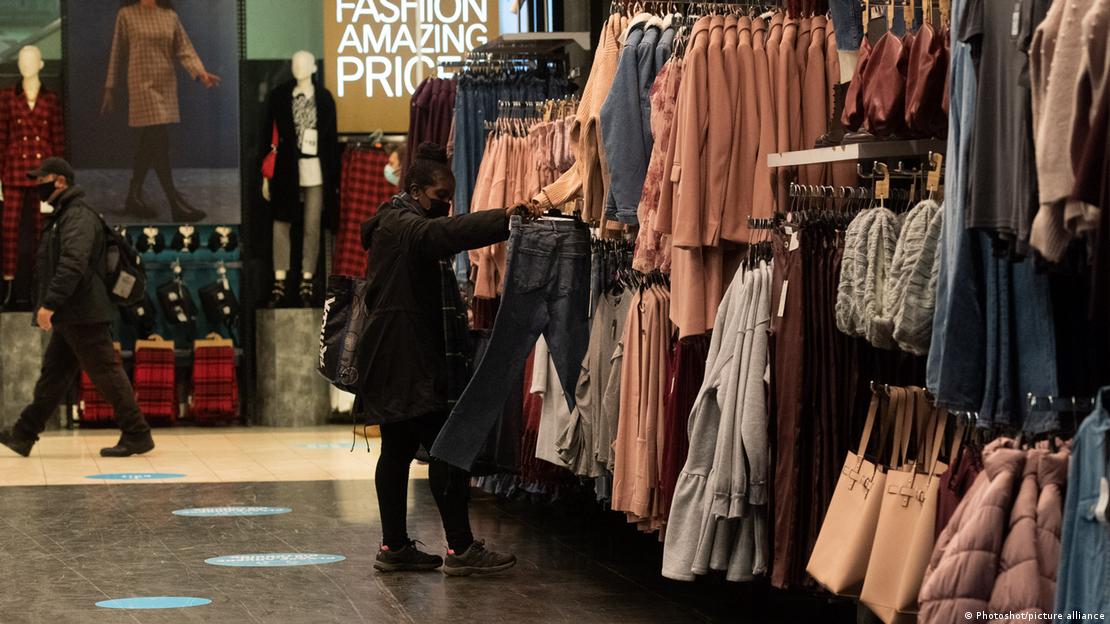
The EU hopes the disposal ban will help cut CO2 emissions
Image: Photoshot/picture alliance

How big is the fashion waste issue?

Concerns about so-called fast fashion — low-cost, lower-quality mass-produced clothing — have grown significantly over the past decade.

According to the European Environment Agency (EEA), around 4% to 9% of unsold textile products are destroyed each year.

The waste has been exacerbated by rapid growth in online shopping and returns.

Across the EU, one in five fashion goods ordered online is later returned to the retailer and not resold.

Combined, this amounts to hundreds of thousands of tons of clothes, accessories and footwear.

The new ban aims to help reduce the impact on the environment, as the incineration of millions of clothes hits efforts to cut greenhouse gas emissions.

EU states are also under pressure to consider waste from raw materials, water, energy and transport in the apparel sector and to encourage more recycling and the reuse of products.

In a recent LinkedIn post, the EEA said the bloc wanted the textile industry to become more sustainable.

"A circular economy — where products are designed to last, and are reused, repaired and recycled — is no longer just a vision, but is being embedded in law through these new legislative measures," the EEA wrote.

The fashion industry has repeatedly defended its tactics, noting that disposal is often cheaper than storing, repairing or discounting the products.

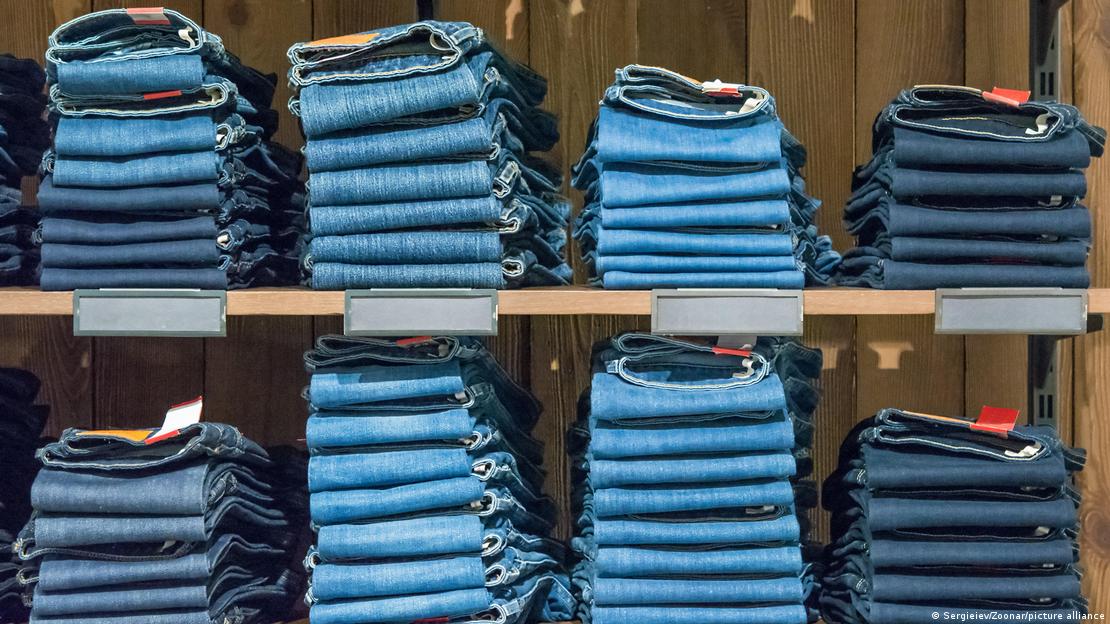
Environment groups hope the ban will cut waste and overproduction
Image: Sergieiev/Zoonar/picture alliance

What's the reaction to the ban?

The German Retail Federation (HDE) said consumers would benefit from the ban as more discounted apparel is put on sale through outlets, clearance markets and second-hand channels.

HDE Managing Director Stefan Genth warned, however, that the rule change would be a challenge for many stores.

"Not all unsold goods can be resold or donated easily," he said, due to damaged packaging, high logistics costs, lack of demand or low product values.

Edited by: Saim Dušan Inayatullah


What does ‘infinite scrolling’ on phones do to our brains?

21.07.2026,


Photo: Fernando Gutierrez-Juarez/dpa

Infinite scrolling can hit teens hardest, experts say, because their “brake system” in the brain is still maturing and each swipe works like a slot machine’s reward lure. So how do you stop the dopamine loop before it starts reshaping your mood, focus and stress levels?

By Camilla Foster, Press Association

We all know how easy it is to get hooked on scrolling, but what does this endless scrolling actually do to our brains? We asked experts to explain the psychology behind the habit…

“Our brain’s prefrontal cortex is where the core of our inhibition control sits and infinite scrolling is particularly a problem with teenagers because the prefrontal cortex is not fully matured for most people until their mid 20s,” says Matteo Parissi, registered and chartered forensic psychologist and head of psychology at Cygnet Hospital Harrow in the UK.

“Therefore, teenagers and adolescents are a bit more vulnerable when it comes to their ability to stop infinite scrolling.”

Interactions on social media also trigger a rush of dopamine.

“Dopamine is a chemical messenger which is central in how our brain’s reward system works. We get dopamine in order to get motivated and when we’re feeling pleasure,” explains Parissi.

“Teens often get triggered and hijacked by the social reward of likes that they get on social media, which is essentially a metaphor of peer feedback that keeps this dopamine circle going.”

The slot machine effect

Parissi highlights how the core mechanism of infinite scrolling is similar to slot machines.

“Our brain does not know when the next rewarding piece of content will appear, so each swipe while scrolling has the possibility of getting a reward,” he explains.

“For our brain this is quite detrimental because, from a dopamine perspective, the anticipation of getting rewarding content matters even more than the rewarding content itself, and this is the reason why this behaviour persists.

“For example, when we’re scrolling on Instagram and the content is only mediocre and we don’t really see what we want to see, we continue scrolling because our brain and reward system is hijacked by this mechanism.”

He highlights how unlike books, there’s no natural stopping points with social media.

“In books there are natural stopping points where your brain will ask ‘should I read another chapter?’ However, the issue with scrolling is that we don’t have any of that, unless we decide to self-initiate this inhibition or put limitations in place.”

Creates entrenched neural pathways

“If you stimulate certain thinking patterns, certain neural pathways, the brain will rewire accordingly,” explains Sarah Warley, neurophysiological psychologist and founder of BeBright, a digital platform bringing biology-led methodology to families.

“Therefore, if you are being fed an algorithm of negativity, your brain will begin to rewire according to the stimulation that it’s given, so you will become much more negative in your outlook.

“It’s a very simple mechanism. The nerves, the thinking patterns that get stimulated get entrenched, and the ones that don’t begin to peter out.”

Impacts on focus

“There’s quite a lot of correlated evidence that suggests that younger generations are becoming less and less able to hold focus for a long period of time,” says Warley.

“If you think about the brain as a muscle, if you’re only giving it quick hits of dopamine [through scrolling] it’s not going to learn how to maintain that focus over the longer term because you just haven’t practiced it.

“If you’re not using that ability to focus longer, it won’t develop that ability.”

Increases stress and anxiety

“One of the key traits we’ve evolved to have is to perpetually scan our environment for any potential threats and dangers, and when you’re in the world of doomscrolling, you’re being fed so many things to have to worry about, and your body can’t differentiate between them,” highlights Warley.

Being alert puts your body into a fight-or-flight state.

“This triggers high cortisol stress levels, high adrenaline and makes you feel alert because you expect something negative to happen, and your body feels primed for that,” says Warley.

“Stress is fine when it comes in bursts, it has a functional purpose, but if it’s there 24/7 because of what you’re consuming, then you will get absolutely worn out emotionally. You’ll become much more anxious and are likely to have a much more negative outlook on the world.”

Here are some tips on how to overcome this…

Recognise that progress won’t happen overnight

“It’s important to understand that it’s not just going to happen overnight. You’re not going to go from a pattern of addictive scrolling to suddenly doing things that are healthier for you,” says Warley.

“However, you can gradually get there if you just chip away at it little by little until it’s gone.”

Start small

“If you spend hours doomscrolling every day, it might be helpful to reduce your scrolling time by 10 minutes everyday to start with and then gradually increase this to 15 minutes and then 30 minutes,” suggests Warley.

Avoid going on your phone as soon as you wake up

“The first thing many people do when they wake up is check their notifications, open social media and start scrolling,” says Parissi. “Instead of hijacking and bypassing the fact that our body biologically is wired to have a gradual wake-up time, I would recommend waking up to natural light.

“It’s better to gradually build up and reach the peak of our activity to midday, rather than immediately open a world of endless videos as soon as you wake up.”

Carve out time for fun activities and get outdoors

“Think about all the fun things that you can do together as a family, such as a board game, to replace some of that scrolling time,” advises Warley.

Going for a walk in nature is one of the things that you can do that’s incredibly effective at reducing your stress levels and cortisol levels, recommends Warley.

'The Odyssey' conquers global box office on opening weekend

19.07.2026


Photo: Ian West/PA Wire/dpa


Director Christopher Nolan's "The Odyssey" has delivered the biggest opening weekend of his career, according to industry estimates published on Sunday.

Trade publications "Variety" and "The Hollywood Reporter" estimated the epic grossed about $264 million worldwide in its opening weekend, surpassing the global debuts of Nolan's Batman movies "The Dark Knight Rises" ($249 million in 2012) and "The Dark Knight" ($198 million in 2008).

In North America alone, the film was estimated to have taken in more than $124 million, making it the biggest opening this year for a live-action film. Only the animated releases "Toy Story 5" ($159 million) and "The Super Mario Galaxy Movie" ($131 million) opened to larger domestic totals in 2026.

Nolan is one of Hollywood's most acclaimed directors, known for films including "Oppenheimer," "Inception," "Interstellar" and the "Dark Knight" trilogy.

The result significantly exceeded Universal Pictures' initial expectations of an $80 million to $100 million domestic opening, according to US media reports.

The performance is considered particularly strong because "The Odyssey" carries an R rating in the United States, meaning viewers under 17 must be accompanied by an adult. 

Released on Thursday, "The Odyssey" is based on Homer's epic poem and stars Matt Damon as the Greek hero Odysseus on his long and perilous journey home after the Trojan War.

The cast also includes Anne Hathaway, Tom Holland, Robert Pattinson, Lupita Nyong'o, Zendaya and Charlize Theron. The film was shot in the IMAX format at locations around the world.

Louvre to reopen gallery after spectacular royal jewellery theft

21.07.2026


Photo: Christian Böhmer/dpa


The Louvre's Galerie d'Apollon is to reopen on Wednesday nine months after a spectacular theft of royal jewellery - albeit completely empty.

The gallery at the famous Paris museum will be displayed as the magnificent ceremonial hall it was originally intended to be. The collections and precious objects previously displayed there will be moved to a windowless vault, Louvre director Christophe Leribault told the newspaper Le Parisien.

"We want a fresh start," Leribault said, adding that the gallery's elaborate wall and ceiling decorations will take centre-stage once again.

The Galerie d'Apollon is considered one of the Louvre's most magnificent rooms. Its ceilings were designed by Charles Le Brun and later enhanced by artists including Eugène Delacroix.

Leribault compared the gallery to the Hall of Mirrors at the Palace of Versailles, describing it as a surviving part of the original royal palace that visitors can still experience within today's museum.

During the burglary in mid-October 2025, eight valuable pieces of jewellery, estimated to be worth around €88 million ($100 million), were stolen. They remain missing.

The crown of Empress Eugénie, which was damaged during the break-in, is currently being restored. According to Leribault, almost all of its components have been recovered. Once it returns to the Louvre, it will be given more space to improve both its security and the flow of visitors.

The museum director believes the crown's story will only enhance its fame. "This crown will be more famous than it was before - just as the Mona Lisa became after its theft in 1911," he said.

Ousted Turkey opposition leader plans to create a new party

DW with AFP, AP, Reuters

Turkey's main opposition CHP faces a potentially historic rupture after months of infighting over its leadership.

In a speech in ​parliament, ‌Ozel said the resignation of his team from the CHP did not mean they were succumbing to political pressure, but rather that they were embarking on a ‌new kind of opposition to Erdogan
Image: Dogukan Keskinkilic/Anadolu Agency/IMAGO

Turkey's ousted opposition leader, Ozgur Ozel, on Tuesday announced he would resign from the Republican People's Party, or CHP, and launch a new political party.

"Today, we are on the brink of a sad farewell that has become inevitable and whose time has come. However, we would like to share with the people that we carry the hope of a new beginning," Ozel said to more than 80 CHP lawmakers.

Ozel was removed as head of the CHP by court orderin May, in a ruling that also reinstated former leader Kemal Kilicdaroglu as interim leader.

Ozel and Kilicdaroglu disagreed on how to resolve the leadership issue permanently, leading to a dispute within the CHP.

New party did deepens split in Turkish opposition

Ozel's supporters say the case is part of a broader campaign by President Recep Tayyip Erdogan to weaken the opposition, while the government insists Turkey's courts operate independently.

Ozel is reportedly due to submit an application to the Interior Ministry to establish the new party, which, according to reports, will be called the "Yeni Party" ("New Party").

He enjoys strong support from CHP parliamentarians, and many of them are expected to defect from the CHP to join the new party once it is formed.

"Once the necessary procedures are completed, the new party we are about to establish will become the main opposition force in the Grand National Assembly by a wide margin," Ozel said. "We carry within us an unwavering hope for a new beginning," Ozel told lawmakers, who gave him a standing ovation.

Crackdown on the CHP


The dispute comes as investigations targeting CHP-run municipalities continue, including cases against Istanbul Mayor Ekrem Imamoglu, a prominent rival to President Recep Tayyip Erdogan.

Imamoglu has been imprisoned since March last year and faces multiple criminal cases that could result in decades-long sentences.


After Imamoglu's arrest, Ozel played a key role in mobilizing Turkey's largest street protests in more than a decade, which saw the party's popularity rise in the polls.

Under Ozel's leadership, the CHP also made major gains in the 2024 municipal elections, strengthening its control of key cities including Istanbul and Ankara.

Edited by: Jenipher Camino Gonzalez


Louis Oelofse DW editor and writer covering

Suspect linked to German youth centre killings found dead in cell

LIKE ULRIKE MEINHOFF

21.07.2026


Photo: Carsten Neff/dpa


A suspect being held in pretrial detention in connection with the fatal shooting of six people in a youth welfare centre in the north-western German town of Stade last month has been found dead in his cell, justice officials reported on Tuesday.

The Lower Saxony Ministry of Justice said that a prison officer had found the 45-year-old in his cell at the prison in Bremervörde, in Rotenburg east of Bremen.

An emergency physician confirmed his death, determining that he had died by hanging. Investigators believe he died by suicide and said there was no evidence of foul play. The relatives of both the deceased suspect and the victims have been informed.

The man, reported be a German-born Turkish national, was accused of killing six people at a mother-and-child facility on June 28, including three employees of the Hanover Youth Welfare Office and three staff members of the facility in Stade.

According to investigators, the attack was linked to a custody dispute over the suspect's 3-month-old daughter. Police arrested the man shortly after the shooting.