Tuesday, July 21, 2026

MS NOW hosts 'fascinated' as Fox News flips on Trump's war: 'The clock is ticking'

Tom Boggioni
July 21, 2026 
RAW STORY


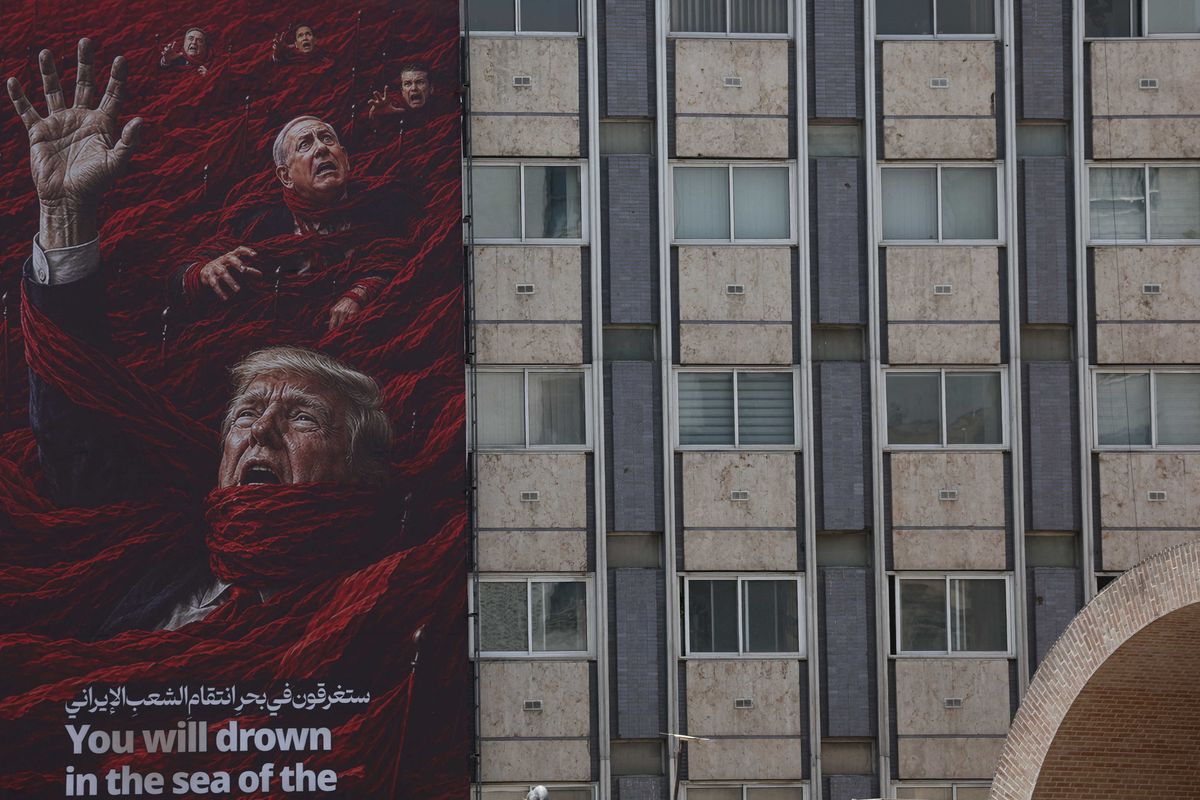
A billboard depicting U.S. President Donald Trump and Israeli Prime Minister Benjamin Netanyahu on a building in Tehran, Iran, July 21, 2026. Majid Asgaripour/WANA (West Asia News Agency) via REUTERS

President Donald Trump is not only losing his war with Iran, he is also losing the hearts and minds of prominent Fox News personalities who are reading the writing on the wall that voters are taking his failure seriously, Morning Joe's hosts said Tuesday.

The hosts of the MSNOW show shared clips from their conservative network counterpart, where longtime commentator Britt Hume was nothing but gloom and doom about a war that one White House insider told Politico is nothing less than a “quagmire.”

“Some of the things that he might need to do to get the Strait [of Hormuz] open, for example, and perhaps even to accomplish other ends in dealing with Tehran, may be militarily feasible,” Hume told Fox host Bret Baier. “But politically they're very difficult. I mean, we're seeing some casualties now. So I think the president's in kind of a tough spot here in that sense.”

He then added, “And he promised to keep us out of endless wars or unsatisfactory wars and now he's in one and it's not at all clear how it's going to end.”

That was followed by a clip of a grim-faced Laura Graham, who put the president — and Republicans — on notice.

“With the midterm elections a little more than 100 days away, the clock is ticking for President Trump to get out of this war before voters head to the polls,” she told viewers.

“It’s making a lot of Republicans nervous. It’s already, as we know, unpopular,” she continued. “According to the new Washington Post/Ipsos poll, 69 percent of Americans disapprove of the handling of this conflict. Republicans cannot let this become an endless distraction, especially if they want to win in November.”

Returning to “Morning Joe,” co-host Joe Scarborough observed, “That's some Fox News analysis of the political cost for Donald Trump and the Republican Party: the ongoing war in Iran. Fascinating, if you listen to them talking about politics.”

“And it's, of course, something that the Iranians always depend on,” he added. “They depend on Americans being strapped down to elections coming up that create false deadlines, that put us in a weak place to negotiate.”


Why a 90-year-old treaty limits NATO in the Black Sea

DW
07/20/2026

A 90-year-old treaty still shapes the balance of power in the Black Sea. As Ukraine fights on against Russia, can NATO project power into waters it can't enter freely?


"Whoever controls the Turkish Straits also controls, to some extent, trade through the Black Sea and also has an enormous military advantage," says Thomas de Waal
Image: Liu Lei/Xinhua/IMAGO

Now more than four years after Russia's full-scale invasion of Ukraine, the Black Sea has become one of Europe's key security frontiers. And yet, it is currently "quite empty of warships," Thomas de Waal, a senior fellow at Carnegie Europe, told DW. This, he said, "is a bit of a paradox." To understand that paradox, we first need to need to take a closer look at the map.


The Black Sea is bordered by six countries: Turkey, Bulgaria, Romania, Ukraine, Russia, and Georgia. The first three on that list are part of the North Atlantic Treaty Organization, or NATO — the other three are not. To make matters more complicated, two of the latter three are at war with each other.
Narrow bottleneck to maneuver

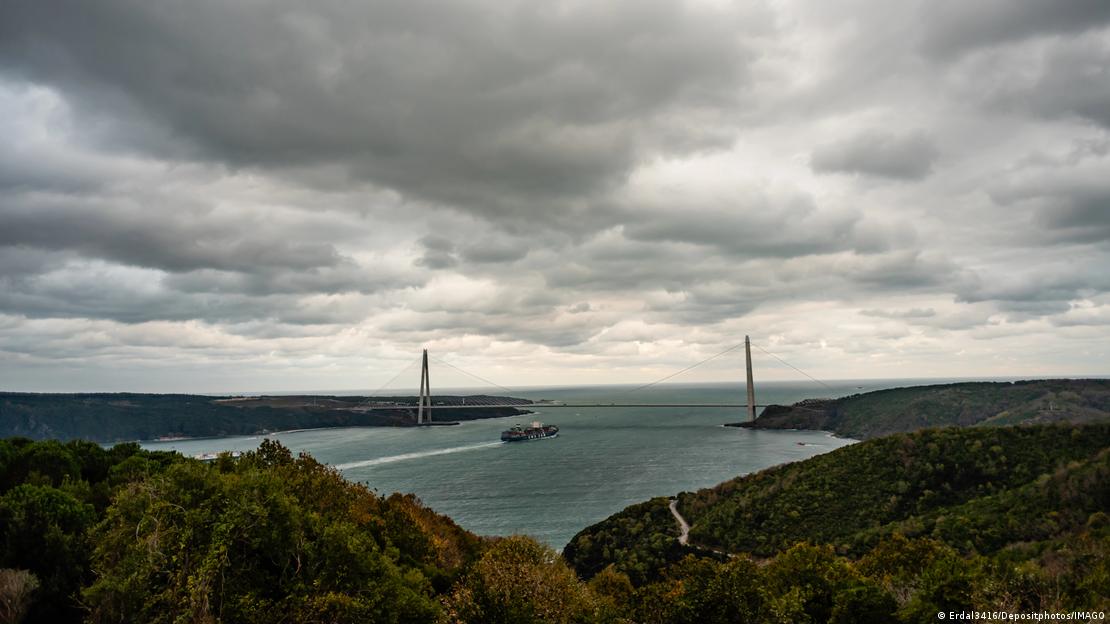
Access to the Black Sea runs through a single, narrow bottleneck. To get there, a ship coming from the Mediterranean Sea would have to pass the Dardanelles Straits and the Bosporus, which crosses through the heart of Turkey's largest metropolis Istanbul.

At its narrowest point, the Bosporus is just 700 meters (0.4 miles) wide. For comparison, another critical passageway currently in the headlines is the Strait of Hormuz, which is approximately 33 kilometers (21 miles) wide at its narrowest point.

It is this geographic bottleneck to the Black Sea that makes it "an economic choke point," said de Waal. "Whoever controls the Turkish Straits also controls, to some extent, trade through the Black Sea and also has an enormous military advantage."

The Bosporus divides Istanbul into two sides, forming the boundary between Europe and Asia
Image: Erdal3416/Depositphotos/IMAGO

Russia also has a special interest in the Black Sea, according to Daria Isachenko, a visiting fellow at the German Institute for International and Security Affairs. "A strong military position in the Black Sea for Russia is not an end in itself, but also a means to advance its geopolitical ambitions beyond and also strengthen its great power status."

The second part of the equation goes back to a treaty signed exactly 90 years ago.
Treaty that made Turkey gatekeeper

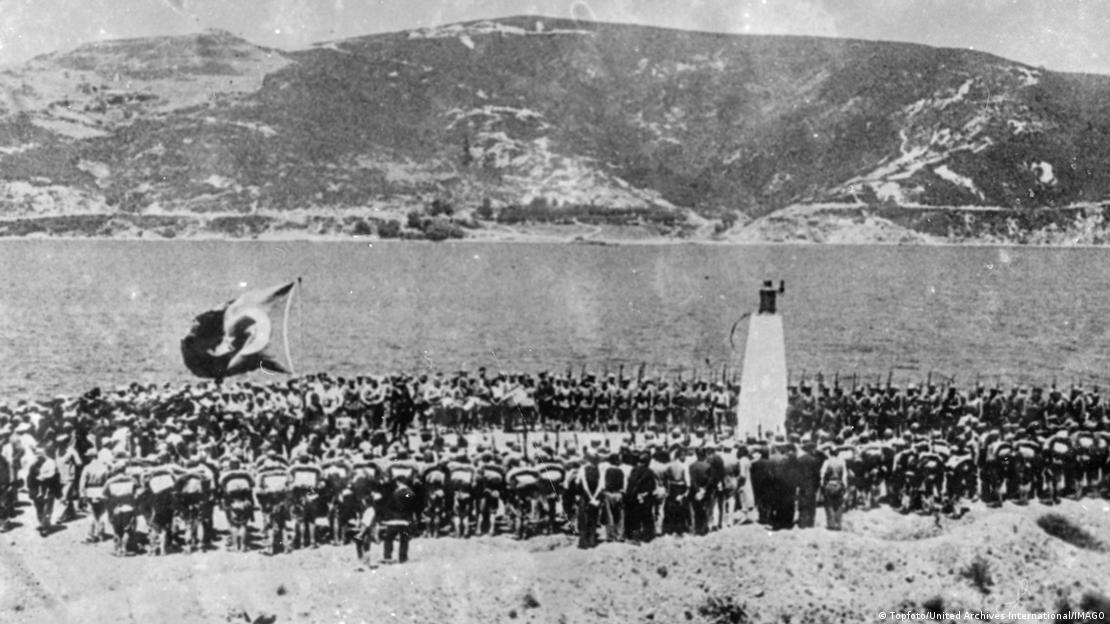
On July 20, 1936, representatives from just under a dozen countries gathered in the Swiss town of Montreux to settle a long-standing dilemma: How — and by whom — should these vital waterways be governed? They established the Montreux Convention, an agreement that essentially restored Turkey's sovereignty over the Dardanelles Strait and Bosporus. This came after years of international oversight, following the Ottoman Empire's defeat in the First World War.


Turkey reoccupied the Dardanelles Strait in July 1936, following the signing of the Montreux ConventionImage: Topfoto/United Archives International/IMAGO

Negotiations resulted in a document of nearly 30 pages, which set the legal framework that governs the Turkish Straits to this day. The treaty keeps the straits open to passenger and commercial traffic during peacetime — crucial for the important trade route.

When it comes to military ships, Black Sea states are allowed to move their warships through the straits relatively freely. Any navy from outside the region faces restrictions on their fleet size, tonnage, and how long they are allowed to stay in the sea — no longer than 21 days during peacetime.
Special rules for war

During times of war, these rules become stricter. When Turkey is not part of the conflict, warships belonging to any nation involved in the fight are not allowed to pass through — a clause that has had profound consequences for the region since February 2022.

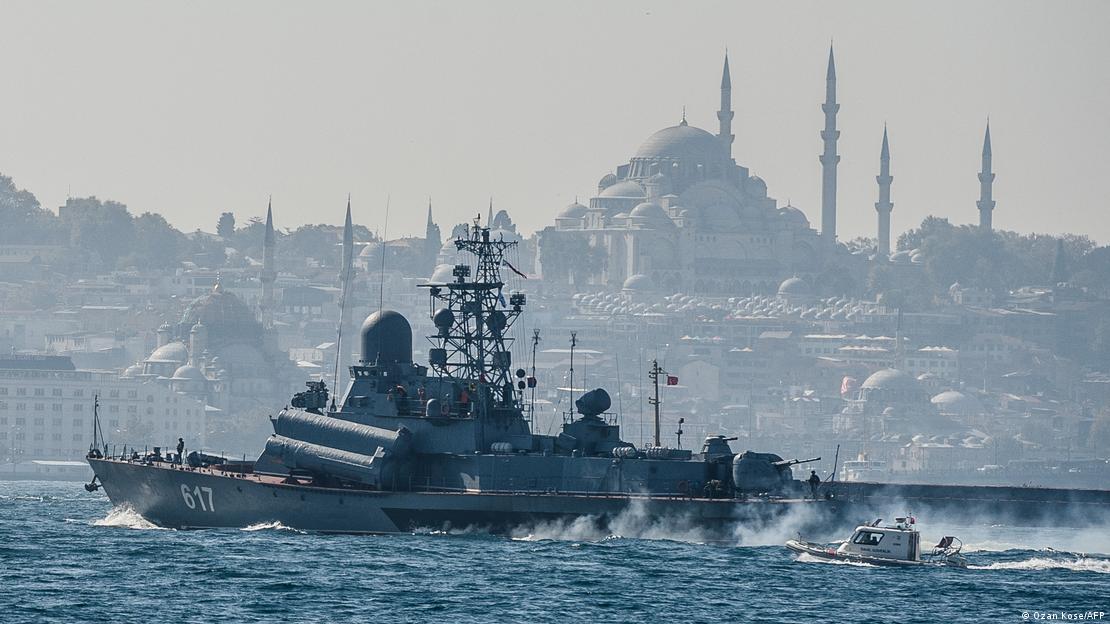
Russian warships passed through the Bosporus during the Syrian civil war
Image: Ozan Kose/AFP

This special system of access rights keeps the Turkish government in a very powerful position. "The most privileged Black Sea state is Türkiye itself," Isachenko said.

It also helps explain why NATO doesn't maintain a continuous presence in the Black Sea — unlike in other waters such as the Mediterranean or the North Sea. "For NATO, Montreux is a constraint," Isachenko pointed out. "For Türkiye, it is an instrument to keep the balance in the Black Sea."

War in Ukraine tests Montreux Convention

When Russia launched its full-scale invasion of Ukraine in late February 2022, the Montreux Convention arguably faced its greatest test in decades. A few days after the military operation began, Turkey invoked Article 19 of the treaty, which applies during wartime and restricts military ships belonging to countries engaged in the fight from passing through the straits.

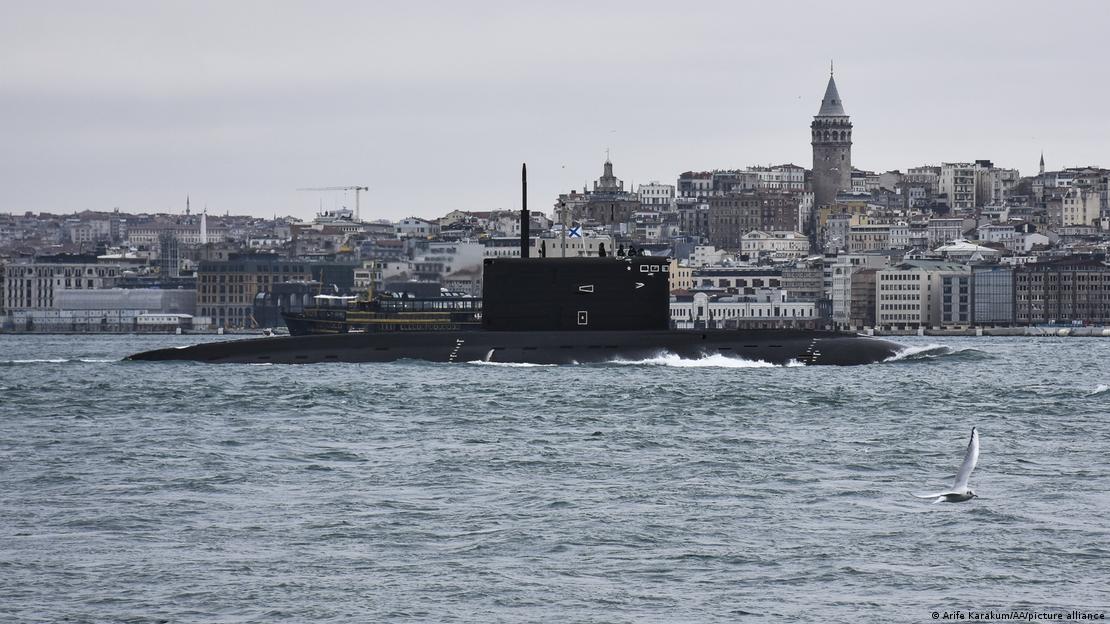
Essentially, from that point onwards, neither Russia, nor Ukraine, could freely reinforce their naval forces in the Black Sea — with one exception: warships registered to a home port in the Black Sea could return to their base.

A Russian submarine passed through the Bosporus on February 13, 2022 — days before the full-scale invasion of Ukraine
Image: Arife Karakum/AA/picture alliance

"I think the Montreux Convention and Turkey's policy at the beginning of the war was absolutely crucial in allowing Ukraine to survive," Thomas de Waal told DW.

He argued that it prevented Russia from adding more vessels to their Black Sea fleet, saying that "up to 30 Russian ships stayed outside." This, he added, contributed to Ukraine holding "the upper hand in the Black Sea."

Those restrictions may also have highlighted how warfare itself has changed, with Ukraine turning to drones and other modern technology not covered by the 1936 document. "Ukraine didn't build military vessels," according to Iulian Chifu, a Romanian foreign policy analyst. "It just shifted the generation of attack," he said.

The maritime treaty has also restricted the options available to Ukraine's supporters in the West. In 2024, the United Kingdom donated two minesweepers to Ukraine, which were unable to enter the Black Sea, according to the UK Ministry of Defence. That's because Turkey considers them to be "vessels of war," according to de Waal. Instead, the ships have been docked in Portsmouth, in southern England.

For de Waal, this illustrates Turkey's wider approach: "It's a very carefully constructed strategy," he said," in which Turkey basically says to other NATO countries: 'Leave us alone in the Black Sea, we will handle this.'"

Key to the convention's enduring relevance may be its long-standing recognition by states. "Turkey has come up with an arrangement, a regime, which Russia is not especially happy about, but accepts, and that's very important," he noted.

At a time when the international rules-based order has increasingly come under pressure, the Montreux Convention stands out as a rare example of a multilateral diplomatic mechanism that is still observed and respected 90 years after it was signed.

How is NATO adapting?

The geography of the Turkish Straits — plus their complex governance structure — have led to NATO rethinking how it can operate in the region. At times, the issue even creates some tension between its alliance members: "In the Black Sea," de Waal explained, "Turkey is very much Turkey first and NATO second."

This security logic, he argued, has shaped Turkey's message to its Western allies: "We don't want to see your permanent presence in the Black Sea, but Romania and Bulgaria have this shared Black Sea ownership, so you can support them."

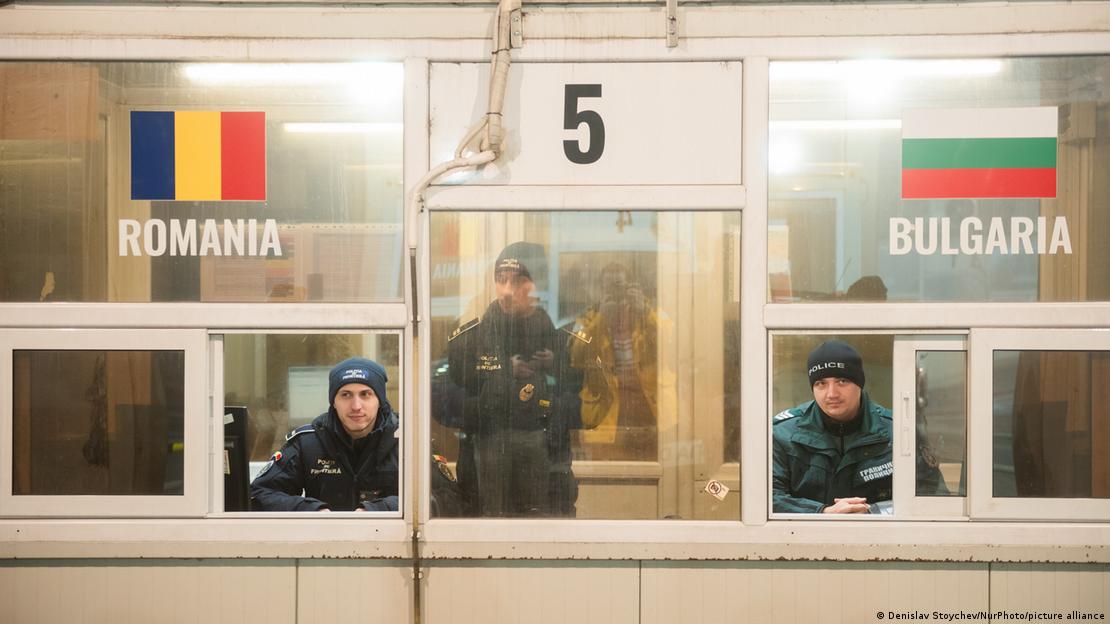
Romania and Bulgaria joined NATO in 2004 and the European Union in 2007
Image: Denislav Stoychev/NurPhoto/picture alliance

As a result, greater focus has been placed on these two Eastern European states, which have been NATO members since 2004. However, some experts remain doubtful: "The military capabilities of Bulgaria and Romania," said Chifu, "are barely limited to their capacity of defending their territories."

Nevertheless, he argued that Romania had been "trying to improve our capabilities building ships," as well as purchasing military assets, with the aim of "enforcing our footprint in the Black Sea."

One example is the planned expansion of Mihail Kogalniceanu Air Base near the Romanian port city Constanța. Romania's government is expected to spend € 2.5 billion ($ 2.8 billion) on transforming it into the largest NATO military base in Europe — bigger than Ramstein, a US military base in Germany.

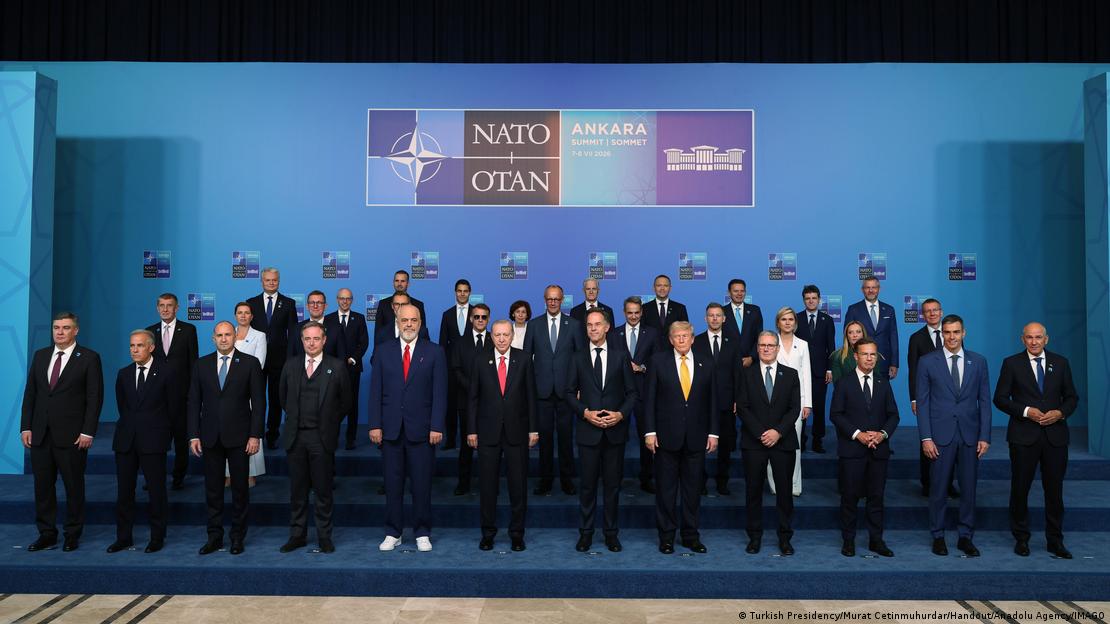
Earlier this month, the region was in the spotlight once again, as leaders of NATO's member states met in the Turkish capital Ankara for their annual summit. There, Turkey, Romania, and Bulgaria announced a trilateral task group for mine-clearing efforts to protect underwater infrastructure.

The 2026 NATO summit in Ankara was the second hosted by Turkey, after the 2004 summit in Istanbul
Image: Turkish Presidency/Murat Cetinmuhurdar/Handout/Anadolu Agency/IMAGO


What is next for the 90-year-old treaty?

The Montreux Convention is "quite an archaic document," de Waal told DW, pointing out that it still refers to the League of Nations — the UN's predecessor, which ceased to exist 80 years ago. "But I think no one wants to touch it," out of concern that it "opens a kind of Pandora's box when all the issues have to be renegotiated with Russia," he added.

"For Türkiye," said Isachenko, Montreux "also belongs to a number of founding treaties of the Turkish Republic." Beyond its role as a maritime access treaty, it reflects Turkey's core interests: "sovereignty, security and status," she added, so challenging Montreux means "dealing, revising and challenging" those core interests.

Security analyst Chifu stressed that he was "not revisionist" and believed the convention should stay in place while the Ukraine war rages on. "But after the war," he said, "we should reconsider very clearly how this is applied to our allies in NATO."

To him, the question of how exactly the treaty's clauses are applied and interpreted by Turkey remains a sore point.

"You have no option but to work with Turkey," is the key message de Waal took away from the recent NATO summit in Ankara. "You can't work without it," he said, referring to what he calls the strongest power in the Black Sea.

For the past nine decades, the Montreux Convention has outlasted wars, leaders, and entire generations. And as long as it lasts, Turkey holds sway over the Black Sea gateway.

Editors: Peter Hille and Don MacCoitir

Athina Bohner Multimedia journalist

Wildberries Russia warehouse strikes leave sellers facing more than $1bn in losses

Wildberries warehouse strikes leave sellers facing more than $1bn in losses
The destruction of two logistics hubs belonging to Wildberries, “The Amazon of Russia” by Ukrainian drones has caused millions of dollars’ worth of damage to the company, but also exposes insurance gaps and threatens the survival of thousands of small Russian businesses. / bne IntelliNewsFacebook
By Ben Aris in Berlin July 20, 2026

Ukrainian drone strikes on two of Wildberries’ largest warehouses could leave Russia’s biggest online marketplace and its merchants facing losses of more than RUB100bn ($1.28bn), with independent sellers expected to bear the greater part of the damage, The Bell reported on July 20.

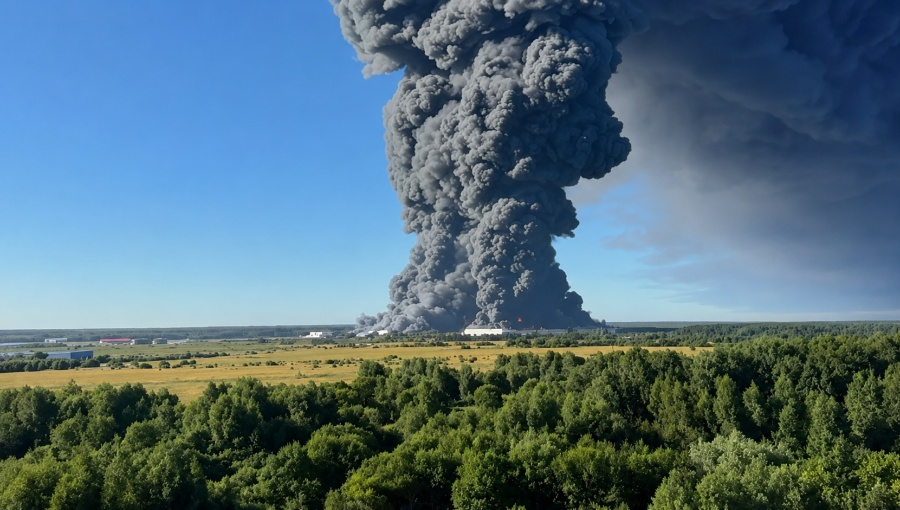
The attacks overnight at the weekend struck logistics centres in Elektrostal, east of Moscow, and Kotovsk in the Tambov region. Seven night-shift workers were killed in Kotovsk and another person later died after the Elektrostal attack, while more than 80 people were injured, according to Russian officials. Fires continued at the Elektrostal complex for more than a day.

The two centres formed an important part of Wildberries’ distribution system as well as providing a platform for the businesses of thousands of entrepreneurs. The Elektrostal facility was a principal hub serving Moscow and its surrounding region, while Kotovsk was a recently opened, highly automated regional centre capable of holding as many as 54mn items.

Using a conservative estimate of 250,000 square metres for Elektrostal and 108,000 square metres for Kotovsk, the facilities represented about 7% of the logistics estate of Wildberries and Russ, the merged group known as RWB, The Bell reported. The company had more than 200 logistics sites covering 5.2mn square metres at the end of 2025. Some estimates put the full Elektrostal complex at more than 360,000 square metres, implying that the affected share could be larger.

The loss will not paralyse Wildberries’ operations, but it is likely to put severe pressure on deliveries around Moscow, its most important market, and force the company to reroute millions of items through more distant warehouses.

The Bell estimated that rebuilding the two facilities alone could cost between RUB21bn and RUB35bn ($268mn-$447mn), based on construction costs of RUB60,000-RUB100,000 ($766-$1,277) per square metre. That calculation excludes the value of equipment, destroyed merchandise, lost revenue, logistics disruption and any compensation paid to merchants.

The direct cost should be manageable for RWB, which reported RUB175bn ($2.23bn) in net profit and gross merchandise value of RUB6.1tn ($77.9bn) in 2025. The group invested more than RUB310bn ($3.96bn) in logistics, IT infrastructure and new businesses during the year.

Merchants hit hardest

The larger financial threat falls on Wildberries’ sellers, many of which stored most or all of their inventory at Elektrostal.

“For many, Elektrostal served as their primary warehouse; for some sellers, the loss of goods spells the total collapse of their business and irreparable financial damage,” The Bell said.

Kirill Agapov, managing partner of Umbrella Consulting Group, told The Bell he estimated that combined losses from the two warehouse fires would exceed RUB100bn ($1.28bn), with merchants carrying most of the burden.

The previous large Wildberries warehouse fire provides a guide to the possible bill. A blaze at Shushary near St Petersburg in January 2024 caused an estimated RUB10bn-RUB12bn ($128mn-$153mn) of direct damage. Wildberries subsequently paid sellers RUB34.9bn ($446mn), covering about 95% of the assessed losses on their goods.

Applying a similar ratio to Elektrostal and Kotovsk would produce a compensation bill several times greater than the cost of reconstructing the buildings.

Wildberries has not disclosed the value of inventory destroyed or the extent of its insurance coverage. The Shushary case is not a clear precedent: the warehouse itself was widely reported to lack adequate property insurance, although Tatyana Kim, Russia’s richest woman and Wildberries’ co-founder and chief executive, later said that goods had been insured while in storage and transit.

Insurance coverage among sellers appears to be extremely limited. Insurance industry sources cited by Kommersant estimated that only 5-7% of Wildberries merchants had obtained their own policies, and that only 10-20% of those policies covered sabotage or military-related damage.

New terms and conditions

The uncertainty has been intensified by a change to Wildberries’ standard seller agreement that took effect on July 7, just 11 days before the attacks. The new terms exempt the company from liability for losses caused by “force majeure”, explicitly including artillery fire, drone and missile attacks, military equipment, political protests, strikes and riots.

Wildberries therefore appears to have no contractual obligation to reimburse merchants. However, Kim has said that the company is nevertheless working on compensation.

“Despite the emergency and the absence of an obligation to compensate for lost goods, we are already working out the volume of payments to sellers and other financial-support measures,” she said.

Kim said the company would conduct an “assessment to determine the payout amount for our sellers”, which could take as long as 30 days.

Initial measures fall short of direct compensation. Wildberries has offered temporary discounts on storage charges, free transfers of merchandise to some regional warehouses and accelerated payments of sales revenue.

WB Bank will provide affected small and medium-sized companies with up to six months’ deferral on debt repayments, as well as preferential loans. The bank has also said it will consider requests from affected merchants as a priority.

For sellers whose entire working capital was tied up in stock at Elektrostal, additional borrowing may only postpone insolvency. One electronics merchant said he had lost PlayStation consoles with a retail value of RUB10mn-RUB12mn ($128,000-$153,000) and was selling his car for RUB2.8mn ($36,000) to finance replacement inventory. Another seller said the combined effect of higher commissions and the warehouse losses had made trading through Wildberries commercially unviable.

Politically sensitive

The compensation decision has also become politically sensitive ahead of Russia’s State Duma elections on September 20. Wildberries provides the main route to market for tens of thousands of small manufacturers, importers and retailers, many of which could struggle to survive without assistance.

Even the state television programme Vesti Nedeli described Wildberries as a “people’s” business, claiming that Ukraine had targeted it to “pressure Russians with Western support” and cause “problems, including a psychological reaction among the public”.

Wildberries is unlikely to commit its entire annual profit to compensation. But transferring most of the losses to sellers risks bankruptcies, litigation and an exodus of merchants to rival marketplaces or their own distribution channels.

The attacks have exposed a structural weakness in the marketplace model: Wildberries controls the warehouses and logistics network, but much of the merchandise — and therefore much of the financial risk — belongs to its partners.

The goal of Bankova, Ukraine’s presidential administration, was likely to be exactly this: bring the war in Ukraine into the homes of regular Russians, who Russian President Vladimir Putin has been careful to insulate from his war until now. In a sign of how painful the warehouse strike was, Russia unleashed one of its most intense missile barrages on Kyiv the following day as the tit-for-tat missile war continues to intensify.

Turkish readywear retailer Koton’s stock damaged by Ukrainian bombing of Wildberries warehouses in Russia


By Akin Nazli in Belgrade July 21, 2026

Inventory of Turkish fashion retailer Koton (KOTON) held at fulfillment centres belonging to Russian ecommerce giant Wildberries has been damaged by Ukrainian drone attacks, Koton said on July 20.

The apparel group said the damaged stocks at two major Wildberries logistics facilities was equivalent to 0.4% of its total assets as of end-Q1.

The logistics hubs operated by Russia’s leading ecommerce platform, owned by Ozon (Moscow/OZON), were struck during aerial attacks on July 17.

Koton said the incident would not exert a material impact on its financial position, ongoing operations or business continuity.

Wildberries is currently conducting comprehensive damage assessment procedures at the affected sites and it has pledged support measures for impacted vendor partners. Koton noted that it is actively pursuing indemnity claims under its existing property and cargo insurance policies, working in close coordination with local and regional insurance brokers to recover losses.

Exodus of Western brands

Following the exodus of Western retailers from Russia in the wake of the Kremlin's February 2022 full-scale invasion of Ukraine, Turkish apparel chains stepped in aggressively to expand into vacated commercial spaces and digital marketplaces across Russia.

Wildberries serves as the central digital distribution backbone for foreign apparel and consumer goods imported into Russia, making it a critical sales channel for Turkish brands navigating Russian consumer demand.

In April, Koton ended store operations by closing its two locations in Ukraine and decided to continue operations in the country via online channels.

War in the north, war in the south

Koton has also been expanding into the Gulf Cooperation Council (GCC) region, which is imperilled by the continuing Iran War. On July 16, the company said that it launched a third store in Oman in addition to a fourth store in Qatar.

The company also operates stores in Saudi Arabia, the UAE and Bahrain.

So far, the company’s GCC stores remain unaffected by the conflict.

In March, the company launched its seventh franchise store in Azerbaijan. In December, it opened its sixth store in Hungary.

As of end-March, Koton operated 464 stores, including 226 franchise stores. A total of 226 stores were abroad, including 76 franchise stores.

Koton, launched in 1988, opened its first stores in the Middle East, Russia and Balkans in 2002.

MOSCOW BLOG: Hitting the Wildberries warehouse is a lot more painful than it looks
MOSCOW BLOG: Hitting the Wildberries warehouse is a lot more painful than it looks
Ukraine destroyed the warehouse of Russia's biggest e-commerce site. It did more damage than just disrupting grocery deliveries. Thousands of small businesses rely on the new marketplaces for their livelihoods. / bne IntelliNewsFacebook
By Ben Aris in Berlin July 20, 2026

The tit-for-tat missile war escalated at the weekend after Ukraine hit the largest distribution centre belonging to Wildberries, the “Amazon of Russia.” The Kremlin hit back the next day with a massive drone and missile barrage.

The war has entered a new and brutally destructive phase with both sides adopting a “punishment strategy” – both are deliberately targeting civilian infrastructure and assets with the intention of just making people’s lives hell.

Zelenskiy was careful to say that Wildberries sells things like drone parts and both Wildberries, and its Ukrainian equivalent Nova Poshta, are used by regular people to send their men at the front care packages and supplies.

Zelenskiy claims the military supply component makes the Wildberries’ warehouse a legitimate military target, but we all know what is going on here: the AFU just wants to bring the war into the homes of regular Russians, who have been largely insulated from the effects until now. Pictures coming out of Moscow over the weekend show a huge black cloud over the city leading people to quip that it looks like Mordor.

But destroying the Wildberries’ warehouse is actually a lot more painful than it first appears. Wildberries became not only the largest e-commerce site in Russia, but the largest retail outlet of any kind in 2019 when it overtook Sportsmaster, the previous leader. The destruction of its stockpile is not just going to make shopping harder, it has also destroyed the livelihoods of thousands of SMEs that have already been struggling due to the sharp economic slowdown this year.

People (and the sanctions) focus on Russia’s oil wealth, but as I detailed in a piece way back in 2004, Russia is a “Soviet Sandwich” – there is a top piece of tasty and nutritious bread that is the oil and gas sector, but there is also a bottom piece equally appealing that is the retail sector. The middle was made up of greasy, grislily, and unhealthy pink processed and unreformed Soviet industrial sausage meat. There is a reason why half of all Russia’s imports over the last three decades has been machinery.

People forget how vast Russia’s consumer market is: 150mn gadget- and fashion-hungry punters. That is half as big again as Germany, the second most populous country in Europe. Pre-war retail turnover was approaching half a trillion dollars – about one third of GDP. This is why companies like Auchan and Raiffeisen Bank International (RBI) refuse to leave the Russian market – when I was at the EIU companies told me that not only was Russia their biggest market in terms of headcount, but also their most profitable, because the barriers to entry were so high, that pushed up the profit margins.

The upshot is amongst my Russian friends from the 1990s, anyone that had any good idea for any product or service, quickly became a millionaire, simply because the market is vast.

Light manufacturing  Which brings us to Wildberries and why it is so successful. The second unusual factor that plays into this equation is not only is the consumer market vast, but so is the country. To get your goods to punters you have to send them over huge distances – literally halfway across the planet if a Moscow widget-maker sells something to a customer in Vladivostok.

Companies like Wildberries, and its rival Ozon (see my 2019 interview with the boss here), stepped into the breach here and have set up marketplaces which have become the basis of a flourishing micro-economy. But crucially they also set up the logistics distribution network. As Ozon CEO Alexander Shulgin told me: “Someone that makes nice chairs used to only be able to sell them to people in his town or city. What we do is open up the whole country to these craftsmen.” The way it works is you make your wooden stylish chair and drop it off at the local distribution centre (or they come and pick it up) but once it goes online and is sold, Wildberries or Ozon take over and will send it anywhere in the country, as well as taking care of billing and collection. Suddenly a small shop in Ryazan has access to 150mn people.

This is Germany’s Mittelstand with knobs on. The German version is thousands of small firms that make things like specialist high precision engineering goods or machines that they sell to bigger companies. The Russian version is much broader and is largely B2C rather than Germany’s B2B.

In other words, we are talking about jobs for regular people. The online marketplaces make it even easier to invent yourself as an entrepreneur in Russia than in Germany, and a very successful one at that if you have a good product.

This process has also been fuelled in a fundamental change in the cost of production. A great example and early success story was Obuv Rossii, a Siberian shoe shop, catering to the middle classes. The CEO, Anton Titov, told me that he used to have his shoes made in China, but after a decade of growth, Chinese wages grew at the same time as the ruble devalued to the point where it became cheaper to make things in Russia. China stopped being the world’s factory, as Chinese President Xi Jinping switched from an export-led economic model to a consumption-led one. This led to an explosion of light-weight manufacturing investment that was catalysed by online market places which appeared at exactly the right time to solve the very serious marketing and distribution problems overnight. In many ways Russia’s online sector has leapfrogged western retail which still relies on bricks and mortar chains on the high street.

Russia is physically so big, and the cities so spread out, that the physical distribution and shop networks make a lot less sense as they are so much more expensive. The heart of the online marketplace revolution is that a handful of leading companies have basically concentrated Russia’s entire logistics into a few centrally controlled systems that cover the whole range of products to make it as efficient as possible and have the economies of scale. The same is true to Ukraine’s Nova Poshta, probably the best company in the country.

Russia skipped over the light manufacturing stage in 1991. Usually, emerging markets get their first shot in the arm after the transition by attracting light manufacturing foreign direct investment (FDI) because wages are so low. But in Russia’s case the so-called Dutch disease of a heavily overvalued currency, thanks to oil and gas exports, meant that the cost of labour was too high, adding to the pain of the Yeltsin-era chaos. When I arrived in Moscow in 1993, despite the fact the economy had collapsed about a year earlier, the city was insanely expensive.

Belatedly, the light manufacturing boom finally took off nearly 20 years after the collapse of central planning. The tasty bottom layer of bread in the Soviet sandwich is also part of the reason the Russian economy has been so robust in the last few years as it can’t be sanctioned. VAT is the biggest contributor to budget revues (40%), far more than oil & gas (25%). How do you sanction retail sales that happen entirely inside the Russian economy and rely on no imports? That’s the whole point of local light manufacturing: it only uses Russian inputs to keep things cheap.

And there is the rub. Not only did Ukraine blow up a retail distribution hub so it will be harder to get your groceries this week in Moscow, but it also blew up the stock of thousands of small entrepreneur businesses. This has wrecked not just their jobs, but many of these small businesses have sunk life savings into funding their production in an effort to grow. I have seen reports of one woman that had invested $25,000 into her children’s clothes production and all her capital was tied up in inventory – all stored in the Wildberries’ Elektrostal logistics centre. She will have to go back to scratch and start all over again, carrying some heavy debt.

That is why Zelenskiy’s decision to hit the warehouse is so painful. He has chosen a target that is in many ways more painful for the economy than blowing up the oil terminals at Primorsk and Ust-Luga last month, not because it will hurt the budget, but because it will hurt a big source of employment for regular people. It was a lot more painful than it first appears as it hit a part of economy that was flourishing.

It was only one warehouse, but that is the main feature of the escalating missile war: both sides are now hitting warehouses, supermarket, delivery trucks and transport hubs. For example, Russia has started to systematically target Ukraine’s petrol stations. There are hundreds of these, but Russia is producing millions of drones. It will slowly wear Ukraine’s ability to put fuel in cars in the same way that Ukraine has already caused a fuel crisis by targeting Russian oil refineries. Soon just getting your shopping could become hard too. And currently the plan is to continue the war for two more years.
Russia-Ukraine war: First half of 2026 sees sharp rise in civilian casualties

The first six months of 2026 saw a steep rise in the number of civilians killed or wounded in the war between Russia and Ukraine, the UN said Tuesday. Both Moscow and Kyiv have increased the number of air strikes targeting vital infrastructure as the Russian invasion grinds into its fifth year.


Issued on: 21/07/2026 
By: FRANCE 24


In this photo provided by the Ukrainian Emergency Service, firefighters put out a fire of residential building following a Russian air attack in Sumy, Ukraine, Tuesday, July 21, 2026. © Ukrainian Emergency Service via AP

The United Nations said Tuesday that civilian casualties in the war raging between Russia and Ukraine rose 37 percent in the first half of this year.

"We documented 1,396 civilians killed (and) 7,978 injured ... that amounts to a 37 percent increase from the same period in the previous year," Danielle Bell, head of the UN Human Rights Monitoring Mission in Ukraine, told reporters in Geneva.

Russia and Ukraine – which deny targeting civilians – have stepped up daily strikes on each other in recent months, as US-led talks on ending the nearly four-and-a-half year conflict remain stalled.

The UN rights office decried multiple attacks in recent days causing civilian casualties across Ukraine and in Russia.

"Civilians and civilian infrastructure are strictly protected under international humanitarian law, and any such deliberate attack is a war crime," spokesman Thameen Al-Kheetan told reporters.


Russia has pounded Ukraine's capital with a series of deadly missile strikes this summer, with June seeing the most civilian casualties in Ukraine since 2022.

Ukraine has also stepped up its long-range strikes on Russian infrastructure in an attempt to undermine Moscow's war effort, including oil depots and refineries.

A Ukrainian drone attack on two key warehouses of Russia's biggest online retailer Wildberries killed eight night-shift workers Saturday. Kyiv accused the facilities of supplying the Russian military with Western-sanctioned drone components, which Moscow has denied.

(FRANCE 24 with AFP)


Ukraine plunges into political crisis as anger over defence minister's dismissal grow


Issued on: 21/07/2026 - FRANCE24

Street protests were held for a fifth day on July 19 in Ukraine, over the firing of Defense Minister Mykhailo Fedorov. Fedorov was dismissed following frequent clashes with top Army general Oleksandr Syrsky, sparking indignation particularly among young Ukrainians, who credit the tech-savvy 35-year old Fedorov with innovative drone tactics that have given Ukraine new battlefield momentum against the Russian invasion. Fedorov has publicly blamed the 60-year-old Syrsky for his ouster. President Volodymyr Zelensky is now seeking to defuse the mounting political crisis and restore unity to the country's military.

Video by:  Bryan QUINN


Nicaragua buries democracy to build a Chinese-backed economic fortress

Nicaragua buries democracy to build a Chinese-backed economic fortress
Ortega, frail and seated for most of the event after two months out of public view, said the National Assembly would now draft laws to build "a wall, a block" against any opposition party trying to reach government by the ballot box. / el19digitalFacebook
By Alek Buttermann July 21, 2026

Daniel Ortega has stopped pretending. On July 19, at a rally marking the 47th anniversary of the Sandinista revolution, Nicaragua's 80-year-old strongman and former revolutionary declared that competitive elections are finished for good. "Aquí no volverán a haber elecciones," he told the crowd in Managua: there will be no more elections here. The line drew scattered applause. It also tore away the last fig leaf covering a regime that has spent two decades hollowing out every democratic institution it inherited.

This was not a slip. Ortega, frail and seated for most of the event after two months out of public view, said the National Assembly would now draft laws to build "a wall, a block" against any opposition party trying to reach government by the ballot box, however much money the Americans hand them. Nicaragua was due to hold general elections in November 2027, itself a year later than scheduled after a February 2025 constitutional reform stretched the presidential term from five to six years, created a copresidency for his wife Rosario Murillo, and stripped the judiciary and legislature of independence. That reform already made a mockery of the ballot, as the last internationally recognised free and fair elections, legitimately won by Ortega, took place in 2006. His speech now removes any pretence that one is still planned. Exiled former presidential candidate Félix Maradiaga put it bluntly: the mask that gave the regime a veneer of legality has fallen off. What comes next, opposition figures like Juan Sebastián Chamorro argue, looks less like Nicaragua's old rigged elections and more like China's one-party model, where officials are chosen inside the Frente Sandinista rather than contested at the polls.

The Washington squeeze tightens

Ortega is picking this fight with the United States Trade Representative (USTR) already circling. Washington remains Nicaragua's single largest export market, and that dependence is precisely the regime's vulnerability. An October 2025 USTR Section 301 investigation found that Ortega-Murillo's laws and practices restrict American trade, opening the door to tariffs rising in stages towards 15% by 2028 and to threats of suspending Nicaragua's benefits under the Dominican Republic-Central America Free Trade Agreement (CAFTA-DR), the deal that has underpinned its export economy for two decades. Free trade zone employers have already shed tens of thousands of jobs amid the uncertainty. Meanwhile, the US Treasury's Office of Foreign Assets Control (OFAC) has sanctioned gold mining firms and members of the presidential family directly, including the Ortega-Murillo children who run the country's most lucrative business lines. Every sanction narrows the family's access to dollar clearing. Every narrowing pushes them harder towards Beijing.

Building the China fortress

In June 2026 the National Assembly rushed through a reform of the Empresa Nicaragüense de Importaciones y Exportaciones (ENIMEX), the state trading company. It handed the chair to Laureano Ortega Murillo, the president's son and his investment adviser, gave him a casting vote on a three-person board, and scrapped the internal conflict of interest controls that used to sit in the old law. ENIMEX now oversees import and export deals with strategic partners, chiefly China and Russia, free of the oversight that once applied. The message is unambiguous: family control over trade flows that OFAC cannot easily touch.

Mining tells the same story at scale. Between 2021 and June 2026, Managua handed 22 Chinese firms concessions across 84 lots covering 1.28mn hectares, according to the environmental group Fundación del Río. That is roughly 10% of Nicaragua's entire national territory, up from a figure of 8.5% only weeks earlier, a pace of expansion that is neither slow nor routine. It includes protected areas and indigenous and Afro-descendant territories, and the group's president has warned the regime is eyeing concessions covering as much as 40% of the country. This is not diversification. It is a rapid transfer of the national subsoil to Chinese capital while OFAC sanctions squeeze the gold sector from the American side.

Trade tells an even starker story. Under the China-Nicaragua free trade agreement, in force since January 2024 and reinforced by a May 2026 decree zeroing out remaining tariffs on Chinese goods, Nicaragua exported just $81.1mn to China in 2025 while importing $1.89bn, a deficit of $1.81bn. That is a 23:1 imbalance in Beijing's favour, and it is getting worse, not better, as cheap Chinese consumer goods flood in and undercut small domestic retailers. The Ortega-Murillo marital dictatorship is not building an economy. It is building a fortress, one stocked increasingly with Chinese capital and Chinese goods rather than Western ones.

Paranoia, spillover and the single party model

The timing is not accidental. Since US forces captured Venezuelan president Nicolás Maduro in Caracas in January and whisked him to New York to face narco-terrorism charges, analysts say the Ortega-Murillo government has been operating under heightened paranoia. Ortega called the operation that ousted his former close ally a "monstrosity" in his speech and branded Donald Trump "mentally deranged" back in April. Managua, Caracas and Havana long formed an informal troika chiefly with Russia and China's blessing. But with Venezuela now under de facto US tutelage and Cuba facing mounting US pressure, Nicaragua finds itself more isolated than at any point in years. And the fact that Moscow and Beijing's reaction to increased US hostility toward socialist governments in Latin America did not extend beyond diplomatic statements must keep Ortega and Murillo awake at night.

Exiled analyst Eliseo Núñez reads the election announcement as an attempt to reset the terms of any future negotiation with Washington. Ortega, he argues, is establishing facts on the ground: if pressure eventually forces talks, the starting point will no longer be a demand for free and competitive elections, but the plain statement that none exist. Maradiaga goes further, calling the bravado a symptom of fear rather than strength, born of a regime that still cannot fully dismantle the opposition it claims to have crushed, including dissent inside the Frente Sandinista itself. Chamorro agrees the model taking shape resembles China's internal selection process more than Cuba's. Either way, Ortega has traded the last of his democratic cover for closer economic dependence on Beijing, a risky bet that buys survival today at the cost of sovereignty tomorrow.


Turkey still most expensive iPhone market in world

Turkey still most expensive iPhone market in world
Retail price in Turkey: $2,592, more than twice what is paid on the US market. / Ahmad Ali Karim, CC0 1.0 UniversalFacebook
By bne IntelliNews July 20, 2026

The price demanded of the consumer in Turkey for an Apple (Nasdaq: AAPL) iPhone 17 Pro is higher than anywhere else in the world, according to Deutsche Bank Research Institute’s Mapping the World’s Prices 2026 report.

The study estimated the handset’s retail price in Turkey at $2,592, making it roughly 2.2 times more expensive than the price paid on the US market.

IntelliNews has been reporting on the eyewatering cost of iPhones in Turkey for several years.

Researchers linked the significant price premium to Turkey’s tax structure as well as the substantial depreciation of the Turkish lira over the past decade.

Forty one economies were surveyed.

The study also suggested that Istanbul, Turkey's largest city by population, remained comparatively affordable across several everyday spending categories. Grocery prices were calculated at 42% of New York levels, while average monthly utility bills amounted to $90 and internet subscriptions cost around $16.5 per month.

In Deutsche Bank’s restaurant affordability comparison, Istanbul placed 53rd among 69 cities. A three-course dinner for two at a mid-range restaurant averaged $53, equivalent to about 38% of the cost of a similar meal in New York.

The report also estimated the city’s average monthly net income at $1,173, positioning Istanbul 56th in the global salary ranking.