Monday, August 03, 2026

The Dartmouth Workshop: The $7,500 investment that gave birth to AI (2/2)

ANALYSIS


Some 70 years before the current frenzy of record-breaking fundraising by modern AI giants such as OpenAI and Anthropic, the Rockefeller Foundation made what may have been the first investment in the history of AI. With a $7,500 grant from the foundation in 1956, four eminent mathematicians organised the Dartmouth Workshop, where the term “artificial intelligence” was first coined.

Issued on: 01/08/2026 
FRANCE24
By: Sébastian SEIBT


The Dartmouth Workshop was where the term "artificial intelligence" was used for the first time. © FMM graphics studio, Chat GPT

In the second part of our summer series “AI before AI”, FRANCE 24 looks back at the early days of artificial intelligence. Click here to read Part I on the forgotten Soviet programme that developed early AI concepts.


Billions of dollars are now pouring into artificial intelligence, and AI start-ups have little trouble convincing investors to back them financially.

But back in 1955, the Rockefeller Foundation rejected a $13,500 request to fund a conference submitted by John McCarthy, a young American mathematician who, although promising, was still at the start of his career.

Rockefeller Foundation administrators balked at approving so much money – the equivalent of more than $160,000 today – to organise a workshop for a field of research that did not yet exist. What was “artificial intelligence”, and why devote two summer months to it at New Hampshire's Dartmouth College?

Nevertheless, McCarthy was backed by some high-profile figures and had teamed up with Marvin Minsky, another young mathematics prodigy. The two rising stars managed to convince other heavyweights to join the project. Nathaniel Rochester, who invented the first commercial computer for IBM, was one of the co-signatories of the funding application. At the time, the few computers in existence resembled large cupboards overflowing with electrical wires and bore little resemblance to today's modern computers.

McCarthy and Minsky also managed to secure the involvement of Claude Shannon, whose reputation as a mathematician was already well established following his seminal 1948 paper on the mathematical theory of communication. Shannon ranks among the names most frequently cited when discussing early AI pioneers alongside Alan Turing and John von Neumann, according to Philippe Mathieu, director of the Multi-Agent Systems and Behaviour team at the University of Lille.

They promised to explore topics at the conference including automatic computers, neural networks, the creation of a computer “programmed to use a language” and even the “self-improvement” of intelligent machines – which might today be described as “deep learning”.
The birth of AI

One man at the Rockefeller Foundation offered a ray of hope: Warren Weaver, director of the Division of Natural Sciences, had already approved funding for several landmark projects of the time, including in genetics, molecular engineering and agriculture. Weaver had also written an analysis of Shannon’s work.

“Weaver was a friend of Shannon's, which is why the application was addressed directly to him,” said Rudolf Seising, who specialises in the history of science and technology at the Deutsches Museum in Munich.

But although Weaver found the proposal interesting, he felt it was focused on how the brain works, and that brain research sounded more like medicine than mathematics, according to Seising. “He therefore forwarded it to Robert S. Morison, the director of medical research at the foundation,” he added.

Morison decided to award $7,500 to this biomathematics project, making the first AI investment in history.

Are we in an AI bubble?
Cover image: PEOPLE & PROFIT © FRANCE 24
11:59


The term “artificial intelligence” was still not yet a fait accompli. In a joint article written with Shannon, McCarthy suggested referring to “Intelligent Machines”, but “Shannon felt the term was much too big,” Seising said. They eventually settled on “Automata Studies”, which McCarthy found less promising.

“‘Artificial intelligence’ was a good term for raising money and to interest the public and policymakers. But it was not purely a marketing decision, as it also served to define a common vision; it was the starting point for a community of researchers on artificial intelligence,” said Hartmut Hirsch-Kreinsen, a sociologist who specialises in technology.

That was the aim of the Dartmouth Summer Research Project on Artificial Intelligence. The group of four – McCarthy, Minsky, Shannon and von Neumann – wanted to bring together mathematicians, philosophers and economists alike to work on the future of AI.

Disappointing results?


In June 1956, the team took up residence at Dartmouth College apartments for five weeks. The true significance of the research programme is debated to this day: was this really the founding moment of AI, or were the results disappointing overall?

The conference itself yielded little of substance. Its organisers had hoped for an exchange of ideas that would in the near future enable them to demonstrate in concrete terms that “every aspect of learning or any other feature of intelligence can in principle be so precisely described that a machine can be made to simulate it”, as McCarthy wrote.

In reality, the various accounts of this historic conference show that most of the participants – the exact number of whom is not known – interacted with one another only very sporadically and were present for just a few days, sometimes simply to make use of the computers.

But the Dartmouth workshop went down in history, and the 50th anniversary of AI was celebrated in 2006.

And at least one breakthrough was unveiled at the conference: the “Logic Theorist”, considered to be the very first AI programme, was presented by its creators, Allen Newell and Herbert Simon, to the Dartmouth assembly.

Many of the workshop's participants went on to have brilliant careers, and several went on to win Turing Awards, the equivalent of the Nobel Prize for AI.

The conference even influenced the silver screen in the 1968 film, “2001: A Space Odyssey”. Director Stanley Kubrick consulted Minsky as he was developing his concept for the HAL 9000 – the hyper-rational, potentially deadly AI computer and centerpiece of the film's spaceship.

This article has been translated from the original in French.


Brazil's Lula says he is 'in great shape' as he launches fourth term bid


Brazil's Workers' Party on Sunday formally endorsed President Luiz Inacio Lula da Silva, setting up his candidacy for the October elections as the 80-year-old faces increasing pressure from foreign leaders.

Issued on: 02/08/2026 - 
By: FRANCE 24

Brazil's President Luiz Inacio Lula da Silva speaks during the Workers' Party (PT) national convention in Sao Paulo, Brazil, on August 2, 2026, where he formally announces his bid for re-election. © Miguel Schincariol, AFP


Brazilian President Luiz Inacio Lula da Silva, 80, said Sunday he was "in great shape" as he launched his candidacy for October elections, with pressure from President Donald Trump's administration looming over the campaign.

Lula, a leftist titan of Latin American politics who is loved and despised in near-equal measure in Brazil, highlighted what he called his stamina and good health as he addressed a convention of his Worker's Party (PT) in Sao Paulo attended by around 3,000 people.

"I want to fight against old age. I don't want to be shuffling along. That's why I work out my legs. That's why I work out my arms. That's why I walk for an hour," said the veteran leftist, adding he was far fitter than when he was first elected in 2002.

The former metalworker and union leader made a dramatic comeback when he returned to power three years ago after a stint in jail on corruption charges that were later annulled.

He is seeking a fourth and final term in office.

Brazil's constitution allows presidents to serve two consecutive terms. After sitting out at least one term, they can run again, with no lifetime limit on the number of terms.

In his speech to a crowd awash in red, the colour of the PT, Lula compared himself to World Cup icons like Argentina's Lionel Messi and Portugal's Cristiano Ronaldo.

"What people don't realise is that this World Cup of mine is the seventh," he said, referring to the number of times he has run for the top job in the past four decades.

Standing next to his wife, Rosangela da Silva, 59, he said he would not run again, because "after we hand Brazil back to the Brazilian people in perfect shape – we're going on vacation to focus on romance for another 20 years."

Lula's main election rival is Flavio Bolsonaro, eldest son of far-right former president Jair Bolsonaro.

The 45-year-old senator stepped into the role after his father was convicted of plotting a coup to prevent Lula from taking power in 2023.
Trump looms

The Bolsonaro family is allied with Trump, who has backed several victorious right-wing candidates in Latin America.

"In Brazil, we do not accept anyone sticking their nose where it does not belong," said Lula.

In July, the United States imposed two rounds of tariffs on Brazilian goods, alleging unfair trade practices which Brasilia denies.

Last year, encouraged by another of Jair Bolsonaro's sons, Eduardo, Washington hiked tariffs in retaliation for the trial against the former leader. These were largely lifted after diplomatic efforts.

Staring down a renewed trade war, Lula has built his strategy around defending Brazilian sovereignty and reminding voters of his four decades as the country's most consequential political figure.

He has derided Flavio Bolsonaro as a "traitor to the nation".

"The sovereignty message comes at the perfect time for Lula. It allows him to identify an external enemy to blame for some of the problems we are facing," Leonardo Paz, a political science professor at the Getulio Vargas Foundation, said.

A recent survey by the Datafolha institute showed that 48 percent of those polled would vote for Lula in a second round and 43 percent for Flavio Bolsonaro.

In 2022, Lula beat Jair Bolsonaro by a razor-thin margin.

Supporters praise Lula's anti-poverty and social programs.

"I'm here today because Lula's policies changed my life and my family's. Thanks to him, we own our own home today," Cristiane Rosa Julho, a 51-year-old social worker, told AFP.

The veteran leftist's administration boasts solid economic growth and record employment levels. But families complain about the cost of living and the fiscal deficit is worsening.

Brazilians are also extremely concerned by security and corruption.

(FRANCE 24 with AFP )
Burkina Faso added to human rights watchlist over crackdown on civil society

Burkina Faso has been added to the watchlist of human rights monitoring NGO Civicus, with the country's military authorities drastically escalating restrictions on civil society and intensifying reprisals against its critics in recent months.


Issued on: 01/08/2026 - RFI

Burkina Faso's military leader Ibrahim Traoré took power in September 2022
. AP - Stanislav Krasilnikov

By: Melissa Chemam

"We have witnessed an escalating pattern of repression. But what pushed us to include the country this year is the sharp scale and intensity of state action against civil society," said Civicus's Nelson Baiye Mbu.

The NGOs cites increasingly restrictive laws, notably a law on freedom of association enacted in July 2025, for the addition of Burkina Faso to its 2026 watchlist.

This legislation introduced strict compliance requirements and regulations, which "the military authorities have instrumentalised to suspend civil society organisations and associations," said Baiye Mbu.

The military authorities dissolved 118 civil society organisations on 15 April, citing non-compliance with the new freedom of association law. A further 564 were suspended between April and May.

"These organisations were given a one-year grace period to comply, yet the suspensions came before that period ended and again one month later, on 11 June, another 245 civil society organisations were suspended," said Baiye Mbu.

"We are looking at about 1,174 civil society organisations either suspended or dissolved, and [this] comes amidst trends of silencing critical voices in the country."


Civicus noted that the military authorities, in power since 2022, have systematically used criticism and dissent as grounds for repression, across multiple sectors.

"For example, the General Student Union of Burkina Faso published statements criticising the military authorities' security record, and the authorities responded by suspending the union," Baiye Mbu continued.

"We also have the case of the prominent Sunni Imam, Muhammad Ishaq, who was arrested in May 2026 after he publicly criticised a religious freedom bill."

The authorities also dissolved the country's 100 registered political parties in January, transferring their assets to the state – "a formality" according to Baiye Mbu, "as activities of political parties were already banned since September 2022".
Predictable deterioration

Burkina Faso's inclusion on the watchlist was anticipated, Baiye Mbu said. "If you look at the trajectory, it has been very visible since 2023."

Media outlets including French news magazine Jeune Afrique, in 2023, and broadcasters Voice of America and BBC Africa, in 2024, have had their activities suspended in the country.

Francophone TV channel TV5 Monde was suspended indefinitely on 5 May of this year.

Journalists and activists have been forcibly conscripted, with the authorities accused of using military conscription to silence their critics.

They are also increasingly limiting international scrutiny, recently suspending the United Nations Human Rights Office in Burkina Faso.


Similar trajectories have been seen in neighbouring Niger and Mali – both of which also underwent military coups and have since formed the Alliance of Sahel States with Burkina Faso, with all three leaving regional body the Economic Community of West African States (Ecowas).

"What's striking is that all three countries... have made a deliberate choice to align themselves together rather than remain within traditional regional structures, presenting themselves as distinct from the wider West African community," said Baiye Mbu.

"But what is peculiar about Burkina Faso in this equation is the intensity and the pace of civil space contraction," he added.

"So, while Mali and Niger may be competing in this area, Burkina Faso's 2026 civil space record represents a particularly aggressive consolidation of military authority, with very little space left for dissent or independent organising."


No go for Infantino: How FIFA's World Cup private investment plan imploded

The planet's most powerful football administrator Gianni Infantino on Saturday yielded to the international collective when he pulled the plug on a plan to allow private investment in the World Cup. His proposals for world football's governing body FIFA to reform its commercial operations had sparked a furious backlash.


Issued on: 01/08/2026 - RFI

Football federations across the globe combined to voice their unhappiness with plans from the world game's governing body Fifa to reform the commercial operations of its competitions. REUTERS - Lee Smith

The setback to his authority came less than two weeks after the 56-year-old declared the 2026 World Cup in the United States, Mexico and Canada as the most successful tournament in its 96-year history.

Infantino's fall from the crest took place over five days.

Tuesday

The British newspaper The Times breaks the story. European football's governing body Uefa issues a statement: "None of us are the owners of football. It is not Fifa's to sell."


Fifa, having issued a "no comment" to The Times, reveals details of the plan saying: "It would retain a majority share in Fifa Forward Enterprise (FFE)" but hoped to raise €3.64 billion later this year by "carefully selecting long-term investors who will purchase minority, non-controlling interests".

Wednesday


If Infantino had been hoping for reassurance from other confederations he was to be disappointed.

Concacaf, Central and North American football's governing body – which includes the co-hosts of the 2026 World Cup – said it was deeply concerned at having not been consulted.

"We share the disappointment of many within our region and the game that this level of detail has been designed and shared publicly before any discussion with the relevant governance bodies and stakeholders has taken place," read the Concacaf statement.

The Asian Football Confederation expressed its disappointment at not being informed of the plans.

Various media outlets reported Infantino had sent a letter to Fifa's member associations saying they will each receive €34 million if they back the plan but they must sign up by 19 September.

"Fans from everywhere in the world would gain immeasurably from this game-changing potential because it will transform football in their countries," said Infantino on Wednesday in a video.

Thursday

Infantino's video message fails to stem the anger. European football's ruling body issues a statement saying its 55 members, which included World Cup winners Spain as well as semi-finalists England and France, say they will boycott all Fifa competitions.

"No Uefa national teams will participate in any Fifa competition for so long as these proposals remain alive," read Uefa's statement.

Infantino took a further hit when Concacaf's 41 members unanimously rejected the proposal.

Friday

Seemingly impervious to the mounting criticism and shrugging aside Uefa's threat of a boycott, Fifa ploughed on. It released a statement blaming media misreporting of the proposals.

"Nobody is selling football," Fifa said in the statement. "This is not something Fifa would ever entertain.

"We respect the feedback and concern aired in public and reaffirm our commitment to an open and democratic consultation," the statement added.

Carlos Cordeiro, Infantino's special advisor on the White House task force for the 2026 World Cup, resigns.

"Let me be clear: I had no involvement in this proposal, and I oppose it unequivocally," said the former investment banker and ex-head of the US Soccer Federation in his resignation letter.

"It is a bad deal for Fifa's member associations, a bad deal for football, and a bad deal for the long-term future of the game."

The AFC also chipped in offering little succour to the increasingly beleaguered Infantino.

"The fact that the situation has reached the point where the real possibility of a Fifa World Cup boycott has entered public discourse should concern everyone who cares about the future of our game," said the AFC.

South America's governing body, Conmebol, issued a statement saying it had requested additional information and clarifications about the proposals.

Saturday

Infantino admitted defeat.

"Our purpose has always been – and will always be – to unite and improve," Infantino said in a statement.

"As a result, this proposal will not proceed."

(With newswires)

Sri Lanka deploys troops after prison riot

Colombo (AFP) – Sri Lanka deployed hundreds of troops and elite commandos on Sunday to contain riots at an overcrowded prison in which one inmate was killed and six others wounded, police said.


Issued on: 02/08/2026 - RFI

Sri Lankan Army personnel patrol outside the riot-hit Mahara Prison on the outskirts of Colombo © Ishara S. KODIKARA / AFP

Deputy police inspector-general Sanjeewa Medawatte said the situation was under control after inmates destroyed multiple buildings on Saturday inside Mahara Prison, just outside the capital Colombo.

"We got reinforcements from the armed forces and the Special Task Force commandos to restore order and send the inmates back to their cells," Medawatte told reporters outside the prison.

In November 2020, a riot erupted at the facility in which 11 inmates were shot and killed, and nearly 120 others wounded.

The latest unrest came almost a month after another prison riot in the same region, in which 10 guards and 21 inmates were killed.


Police say a riot at the Mahara Prison on the outskirts of Colombo killed an inmate © Ishara S. KODIKARA / AFP

Medawatte said inmates at Mahara Prison had completely destroyed the kitchen, the hospital, a newly built rehabilitation building and vocational training facilities.

The prison housed 4,100 inmates, about four times its capacity, an issue common across the country's jails.

Last month, the authorities announced plans to convert disused state buildings into prisons.

More than three-quarters of the inmates in Sri Lanka are remand prisoners awaiting trial, and most are held in connection with drug offences.

© 2026 AFP
'Marriage is no longer a shield': new law in Mauritius recognises marital rape

Mauritius's parliament has unanimously voted to criminalise marital rape and impose harsher sentences for femicide, after a spate of violent attacks against women exposed serious gaps in protection. New reforms aim to improve safeguards for victims who have long gone unheard and unprotected.


Issued on: 02/08/2026 - RFI

A protester at a demonstration in Nairobi against the rise in cases of femicide in Kenya. © AP/Brian Inganga

By:  Zeenat Hansrod

"We are refining the law, thereby ensuring that the most horrific and despicable crimes are punished for what they are," Gavin Glover, the country's attorney general told parliament last July.

Nine women were killed in 2025 by a partner, former partner or family member. Four more have died this year.

One in four Mauritian women has experienced gender-based violence, according to government figures.

United Nations figures show the African continent has the world's highest rate of intimate partner and family-related femicide, at three victims per 100,000 women – double the rate in the Americas and six times that in Europe.

"The situation in Mauritius left us with no alternative but to bring stronger laws to protect victims of domestic abuse. This is about the most brutal form of oppression there is: violence, rape, killing – and more importantly about the place where it hides best, the family unit," Glover told RFI.

'Horrifying case'

On 10 December, 2025, the Supreme Court sentenced the husband of 24-year-old Sheena to life imprisonment for her killing, describing her death as "a horrifying case of femicide" and noted "a deeply troubling rise in violent attacks on women by partners or former partners".

Sheena had left her violent husband and rebuilt her life, taking a job at a hotel. He followed her and harassed her there. She sought police help several times – the last time on 5 November, 2019, just three days before he abducted, brutalised and raped her, then stabbed her 22 times in a sugarcane field.

The Minister of Gender and Equality noted that of 10 women killed by their partners over a 15-month period, seven had held a police protection order.

"Clearly there was a flaw in the system. We have somehow failed these women. If they were protected, then how come they were killed?" asked Najah Ahmed, deputy chairperson of the National Human Rights Commission of Mauritius.

"A protection order that is not enforced is a mere piece of paper," Glover said.

He explained that the three new amendments to the 1838 Criminal Code – covering marital rape and femicide – work hand in hand with the Domestic Abuse Act passed on 10 July.

“Together they ensure our criminal law names, confronts and punishes violence committed by those closest to a victim: in the home, in the family, in a relationship,” he said.

Harsher sentences

The amendments, voted through on 21 July, address marital rape and femicide. The sentence for murder "in aggravating circumstances where the victim was, inter alia, subject to acts of domestic abuse" is now 15 years to life. Marital rape carries a sentence of 10 to 45 years.

For Passerelle, an organisation which supports female victims of domestic violence and human trafficking, the reforms empower them to tell victims the system is listening, and that the law will protect them.

“A 29-year-old victim came to our shelter a few weeks ago. She said her husband regularly forced her to have sex. She thought it was something normal, something she had to accept,” said Kashif Imambaccass, Passerelle’s legal advisor.

"Rape is rape, and consent means the same thing inside a marriage as outside it. Marriage, civil or religious, is no longer a shield," said Glover.

“If anyone has non-consensual sex with his lawful wedded wife, companion, partner, girlfriend, he can no longer tell the police, the prosecutor or the judge: 'we are together, we live together, its normal'. No, it’s not normal – it is in fact, worse.”


The new Domestic Abuse Act also provides for protection for those in same-sex relationships, widening the definition of who can be an offender – "one of the most noteworthy changes", according to Ahmed.

Economic abuse and coercive control are now also clearly defined under the new law.

Glover has also announced an upcoming revision of the country's definition of rape, towards an approach centred on positive consent.

Women in Mauritius demonstrating in the capital, Port-Louis, in 2019 demanding better laws to protect victims of gender-based violence. © Passerelle.

'Living in fear'

Ahmed, recalling the times as a young barrister she accompanied victims of domestic violence to police stations, told RFI: “There have been instances when officers tried to turn me away, assuming I did not know the law. So imagine how hard it is for a victim alone, without a lawyer or anyone else, to hear 'this is between husband and wife, why don't you two work it out?’ and be casually dismissed."

Police officers will now be trained in how to receive such complaints – which, alongside raising public awareness, will be a challenge, said Ahmed.

Marital rape remains taboo in Mauritius, Glover told parliament: "The Bill removes the automatic immunity of the husband."

Imambaccass told RFI he does not believe only law reforms can bring deep changes.

"I'm not sure the amendments alone can deter offenders. They already know they have done something illegal. What matters more is every stakeholder being involved: neighbours, family, police."

He said victims live in fear as partners play mind games with them, and that it often takes a long time following calls to Passerelle for a woman to eventually leave her home for shelter.

The organisation runs two shelters – one currently housing 35 human trafficking victims, the other for domestic violence victims, currently home to 20 mothers and children.

"The women at our shelters need long-term housing and financial independence to get back on track," Imambaccass said. "Many left home with the abuser still living there. If they leave our shelter, they will be on the streets, as [they are] often rejected by their own families."

Under the new legal framework, police must investigate any violent act even if a victim withdraws a protection order. Orders can now be issued on the spot, even remotely by a magistrate, and an exclusion order requires the offender – not the victim – to leave the home, with psychological support guaranteed to victims and children.

“That is how femicide is prevented: not at the graveside, but at the first blow, the first violation, the first police report,” said Glover.
France tightens checks on foreign investment amid concerns over national security

France is strengthening its oversight of non-European investment in strategically important companies, lowering the threshold at which foreign share purchases require government approval.


Issued on: 03/08/2026 - RFI

France's Prime Minister Sebastien Lecornu leaves after the weekly cabinet meeting at the Elysee Palace in Paris on 22 July 2026. AFP - DIMITAR DILKOFF

Prime Minister Sébastien Lecornu issued a decree on Sunday extending France’s investment-screening system to acquisitions of 10 percent or more of a listed French company operating in a sensitive sector – regardless of whether its shares are traded in France or abroad.

The government said the measure was intended to prevent opportunistic investors from acquiring influential stakes in French businesses and technologies considered vital to national security.

Under the previous rules, transactions were generally subject to screening when a non-European investor acquired 25 percent of the voting rights in a French company.

A lower 10 percent threshold already applied to certain French companies listed on regulated markets. The decree broadens that protection to French businesses listed outside the European Union, closing a potential gap in the existing system.

The government said the change was needed “to guard against opportunistic, non-European equity acquisitions in French companies listed outside the EU that could pose threats to national security”.

Strategic industries


France has gradually expanded its foreign-investment controls over the past decade, amid concern that critical businesses could be taken over or weakened by investors whose interests do not align with those of the French state.

The screening system allows the economy ministry to examine transactions involving activities that could affect public order, public security or national defence.

The sectors covered include defence, cybersecurity, artificial intelligence, semiconductors, quantum technology, robotics, space operations and goods with both civilian and military applications.

Controls also extend to essential infrastructure and services in energy, water, transport, telecommunications and healthcare, as well as food security, political and general-interest news media and critical raw materials.

Low-carbon technologies, energy storage and biotechnology have also been brought within the system as France seeks to protect industries considered important to its future economic and technological independence.

The decree comes amid heightened geopolitical tensions and a broader European shift towards treating investment, supply chains and advanced technologies as matters of sovereignty rather than purely commercial concerns.

France has previously approved sensitive foreign acquisitions only after securing commitments on employment, production, research or the continued operation of strategic facilities.

The sale of a controlling stake in Sanofi’s consumer health business Opella – which makes the widely used painkiller Doliprane – to a US investment fund in 2024 prompted a fierce debate over foreign ownership and industrial sovereignty.

The deal was ultimately approved after the government obtained guarantees on jobs, production and the continued manufacture of key medicines in France.

Attracting investment


The government is nevertheless seeking to avoid unnecessary delays for companies that need to raise money on international markets.

Under the new rules, the finance ministry must decide within 10 days of receiving an application whether the proposed transaction requires a more detailed examination.

The accelerated assessment is intended to give companies and investors greater certainty while preserving the state’s ability to investigate deals that could raise national-security concerns.

The measure highlights the balancing act facing the government – protecting sensitive businesses while continuing to attract the foreign capital needed to support investment, innovation and employment.

France remained Europe’s leading destination for foreign investment projects in 2024, according to consultancy EY, although the number of projects fell by 14 percent to 1,025. The number of jobs associated with those investments declined by 27 percent to around 29,000.

The new rules are due to enter into force later in August.

(with newswires)


Housing in Portugal: Why €400,000 may no longer be enough to buy a home

Buying a home costs an average of 430,500 euros. What is behind this figure?
Copyright AP Photo

By Ana Filipa Palma
Published on

In Portugal, finding a home under €400,000 is increasingly difficult — and sometimes impossible. The average asking price is now €430,500, according to Imovirtual.

The latest Imovirtual Barometer, produced by the property portal specialising in the housing market and published in May 2026, put the average asking price of a home in Portugal at €430,500. This figure covers all types of property, both new and existing, and is beyond the reach of a large part of the population.

A quick search on a property portal or a walk past estate agents' windows is enough to see how far house prices in Portugal have risen. But is it no longer possible to buy cheaper homes? The answer depends on several factors, the first being the lack of properties available.

"Without new homes coming onto the market and with extremely dynamic demand, it is becoming very difficult for young people and for Portuguese families to manage to buy their own home," Patrícia Barão, president of the Professional Association Representing Portugal's Estate Agents (APEMIP), explained in an interview with Euronews.

On top of that, "we have the cost of land, the cost of construction, the cost of labour, project and specialist fees, taxes and planning charges," Barão said, all of which make a major contribution to high housing prices.

Ricardo Vagarinho, CEO of the construction company MomentVM, pointed to another factor that has helped drive up market prices. "It seems that a new threshold has now been set based on what the government has allowed young people, giving them the possibility of buying a property with a state-backed guarantee, with an upper limit of €450,000," which led the market to "push prices up across the board, for both resale and new homes, because people have that financing available," he told Euronews.

The support scheme can provide financing of between 85% and 100% of a property's value, backed by a state guarantee covering up to 15%. It is available to young people aged between 18 and 35 whose income does not exceed the eighth income tax band, for the purchase of a first permanent home costing no more than €450,000. Separate tax exemptions are also available to eligible young buyers.

In a recent report published in June, in the chapter analysing the Portuguese economy, the International Monetary Fund (IMF) recommended suspending some of the government's measures in the sector, including this public guarantee for young people, arguing that they had widened "market imbalances". In other words, more people are now looking to buy homes who previously were not in the market, but the number of homes available has stayed the same.

Barão argued that it is necessary to go further and take a "holistic view" of the market. "There is no silver bullet for housing. There is no such thing as a single measure that solves everything, so we have to act on several fronts," she said.

Labour shortages have pushed house prices up

The housing crisis is defined not only by the lack of homes, but also by the shortage of people to build them. And the story repeats itself: if supply is scarce and demand is high, prices go up.

There is a shortage of specialised workers such as "bricklayers, electricians, plumbers, formwork specialists or subcontractors", Ricardo Vagarinho listed.

With the arrival of the international bailout programme in Portugal, the state cut investment in infrastructure and major projects, and banks stopped granting credit for housing and business activity, forcing many construction companies into bankruptcy and triggering a "brain drain" in the sector.

"Those who were good and stayed here are not enough for the volume we want to build," he said.

"It is estimated that 80,000 people are missing from the construction sector and, if everyone needs workers, of course they will end up offering a little more. That is why the price of labour rises," he explained.

The entrepreneur also recalled that the housing construction market competes with large state and private projects. "Airports, railway lines, roads and all those bigger projects also absorb a lot of labour," Ricardo Vagarinho added.

This year in Portugal, the storms that devastated the centre of the country also fuelled demand for labour in the construction sector, leading to the fast-tracking of the so-called "green lane" for migrant workers in the industry.

The protocol signed between the state and the Portuguese Confederation of Construction and Property (CPCI) was designed to respond to the urgent need for labour on public works planned under the Recovery and Resilience Plan (PRR). However, after the tragedy in central Portugal, the government indicated that some ongoing public works might have to be temporarily suspended or delayed to prioritise interventions considered more urgent.

Construction materials have also become more expensive

Construction-material inflation has also been one of the variables driving up the final price of a home since 2021, with Russia's invasion of Ukraine in 2022 adding further pressure.

According to data from the National Statistics Institute (INE), the cost of construction materials rose by 3.7% year-on-year in March 2026.

Among the materials that contributed most to the increase were glass and mirrors, bare and insulated copper wire, and concrete slabs and ceramic blocks. "Everything depends on energy," Ricardo Vagarinho said.

"A large part of materials depends on energy and, therefore, if there is a war that pushes up fuel prices, energy costs rise, as do the costs of materials that depend on it, and inevitably this ends up affecting construction costs," he concluded.

Land prices also carry great weight in the final budget for a project. "Since demand for homes is high, land prices also inevitably rise," said the entrepreneur, who estimated that land accounts for 20% of a construction project's budget.

Put simply, Ricardo warned that "building costs the same anywhere"; what really weighs is the value of land and of the square metre in different regions. "Location is the big issue," he concluded.

In addition, the time it takes to obtain planning consent for a site "represents a risk for the property developer and is also a factor behind high house prices," explained Patrícia Barão.

Waiting times for urban planning consent are a very important variable in the property market and represent an indirect cost in the final price of a home.

"If we look at a local council process that takes a year, sometimes two years, that is a long time to have significant capital, namely the price of the land, sitting idle without generating any return," explained Ricardo Vagarinho. "During that time, the money invested there, which should be earning at least 6% a year, is not earning anything. So what happens is that investors factor that into the final price of the product," he said.

'New housing is needed in locations where young people and families can afford to buy'

According to a property-market observatory published in March 2026, the average asking price for homes in Portugal stood at €3,693 per square metre on 1 March.

"These are high prices that young people and Portuguese families cannot afford" and, therefore, it is necessary "to bring new housing onto the market in locations where young people and families can buy and can reach their jobs without it taking an eternity," argued Barão.

The Lisbon district is the region with the highest price per square metre, at €5,796. Faro is the second most expensive district, where a square metre costs €4,804. It is followed by Madeira, at €4,333 per square metre, and Setúbal, at around €4,000.

The difference is staggering at the other end of the scale, where the price per square metre is below €1,000 in the districts of Guarda (€739 per square metre), Bragança (€943 per square metre) and Castelo Branco (€981 per square metre).

"We need to think about regions that are not in the city centre and build large-scale projects, but with a transport network that allows people to travel to their workplaces in a fast and efficient way," Patrícia Barão said.

"We do not want to create dormitory towns; we have to create a network of services and infrastructure with schools, banks, restaurants and supermarkets," she explained.

However, although building is important, it would not have an immediate effect, and the APEMIP president argues that, as a first measure with "more immediate" results, the state should create "conditions to bring empty properties back onto the market", through public-private partnerships.

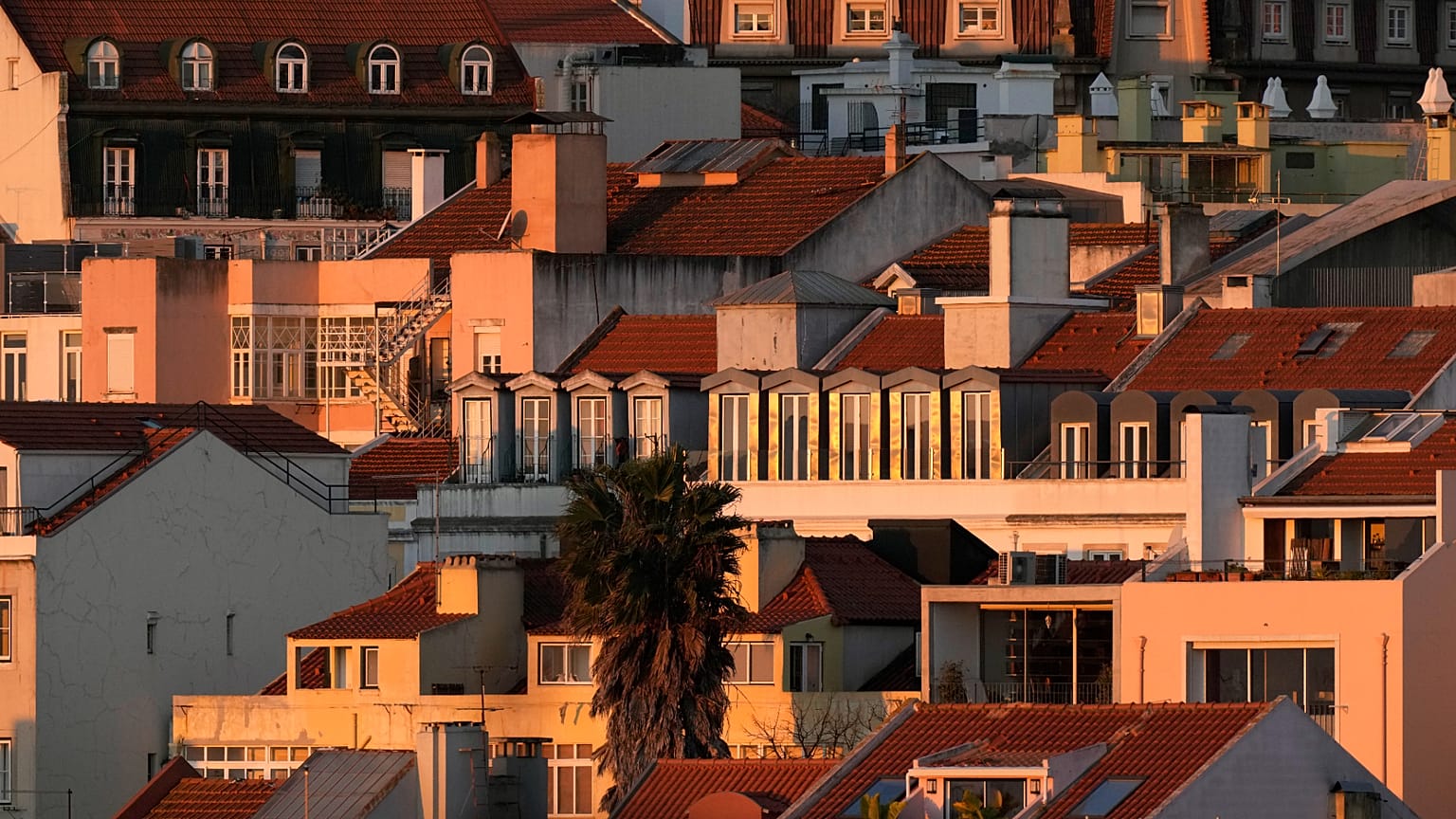
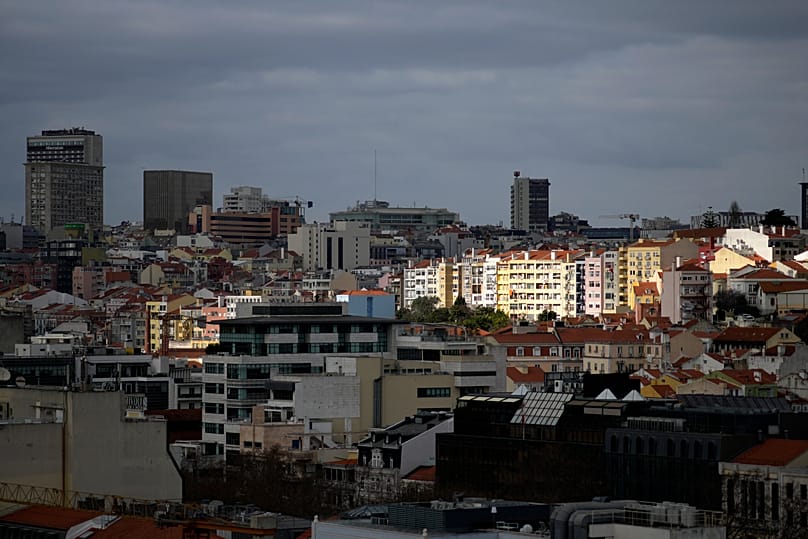
A view of Lisbon's buildings, Monday, 27 February 2023. AP Photo

Patrícia Barão rejected the idea that estate agents are responsible for the price spiral. "It is not estate agents who set house prices," she said.

The APEMIP president believes that estate agencies can help make the process of buying and selling a home more transparent and democratic. She also noted that the association has contributed to a proposed law aimed at strengthening training and professionalism in the sector.

"A good estate agent, who knows the market, who knows what property prices are, who has information on transactions involving similar homes in recent times, who knows every detail of a purchase and sale operation, who knows exactly what documentation is needed, who knows the market trends, helps ensure that house prices are fair and appropriate," she explained.

For Ricardo Vagarinho, the construction sector also needs more specialised professionals. The entrepreneur also pointed to the urgent need for the state to speed up licensing processes as an important measure to facilitate construction and expand the housing stock.

Both sectors recognise that, as long as the supply of land, homes and qualified professionals remains insufficient, and construction costs stay high, buying a home will continue to be beyond the reach of a significant proportion of Portuguese people.


This Scottish startup saves wild fish by replacing them with Omega-3 algae fed on whisky waste

Copyright Denis Loctier/

By Denis Loktev
Published on

Are farmed fish a sustainable choice? Many still depend on wild-caught fish for feed – algae grown on Scottish whisky industry waste could change that.

Aquaculture is now the world's largest source of fish for human consumption, outpacing wild catch globally.

But the industry has a hidden problem: farmed fish, especially salmon, are carnivores that need omega-3 fatty acids – and almost all of that omega-3 comes from fish oil, which itself is extracted from wild-caught fish.

"The sustainable limits of what you can catch out of the ocean at the moment have been reached," Douglas Martin, founder and CEO of MiAlgae, tells Euronews Earth. "You can't physically catch any more out of the seas."

The result is a cycle that undermines the environmental credentials of farmed fish: the more aquaculture grows, the more pressure it places on already-strained wild fish populations.


Carnivore fish still depend on wild-caught fish for feed Getty Images

Going back to the source of omega-3

Martin's answer is to go further down the food chain – all the way to microalgae. Oily fish do not actually produce omega-3 themselves; they accumulate it from the algae they eat. MiAlgae cuts out the middle step entirely.

"The algae are the ones that actually produce the omega-3s," Martin tells Euronews Earth. "If you can produce the algae and you can grow that algae, you can get the omega-3s without actually having to go through the whole food chain."

The challenge that has frustrated researchers for years has been cost. Growing algae on high-grade feedstocks makes the economics unworkable when competing against cheap wild fish oil. MiAlgae's solution is to use low-value industrial byproducts as the algae's food source – specifically, the liquid waste from Scotch whisky distilleries.

Whisky production generates an eight per cent alcohol beer, from which distillers extract the alcohol. The remaining 92 per cent – produced in billions of litres every year across Scotland – is largely low-value waste.

MiAlgae feeds that liquid to algae cells in large stainless steel tanks, harvesting the resulting biomass as a direct replacement for fish meal and fish oil.

"It's a bit like brewing," Martin explains. "You take a very small number of algae cells and you take all the whisky byproducts and some other bits and you put them into these big stainless steel tanks and you let the algae feed on all of that nutritious goodness."

MiAlgae production tanks The Earthshot Prize

Scaling up production of dried algae

MiAlgae's current product is dried algae, bagged and shipped to aquafeed and pet food manufacturers as a drop-in substitute for wild fish ingredients. The pet food sector is the company's primary market for now, with aquafeed customers also in the pipeline.

The company is currently building out its first full commercial production site, which Martin says will produce thousands of tonnes of product per year – significant, but still a fraction of global demand.

"In the omega-3 world that's a good start, but a drop in the bucket," he tells Euronews Earth. "So we've got lots more fish to save still."

On price competitiveness, Martin acknowledges the challenge of matching fish oil at current scale, but frames the comparison in terms of value per unit of omega-3 delivered. "We're looking to be cost parity with any fish oil that's coming out of the world," he says.

MiAlgae reached the finals of the Earthshot Prize in 2024 – a platform Martin credits with boosting the company's credibility. "Having the Earthshot Prize behind us has been a huge win for us," he says.

With commercial scale production on the horizon and industry interest growing, MiAlgae is positioning itself as a systemic alternative to one of aquaculture's most entrenched – and least visible – sustainability problems.


How Europe’s working day is increasingly encroaching on personal time

A tired employee at a desk, showing signs of exhaustion and stress, exemplifying workplace burnout.
Copyright  Nataliya Vaitkevich/Pexels

By Indrabati Lahiri
Published on

One in five EU workers say that they are contacted for work reasons beyond normal working hours many times a month, contributing significantly to always-on culture and adding considerable stress.

Have you ever found yourself replying to work emails late at night? Unfortunately, this is a scenario that many people are all too familiar with.

The rise of remote working, combined with ongoing volatility and layoffs across the global labour market, has increasingly blurred the boundaries of reasonable working hours.

As a result, millions of Europeans are finding that their work is steadily encroaching on their personal time.

According to a key Eurofound study published in June, around one in five EU workers say that they are contacted for work-related reasons outside normal working hours many times each month, leading to significant additional stress and reinforcing an always-on culture.

This phenomena extends to the UK as well, with CV company MyPerfectCV’s new Always-On Workforce Report 2026 highlighting that more than half of British employees work beyond their normal working hours every day.

Contact outside working hours a key driver of stress

Around 59% of European workers surveyed by Eurofound said they always or almost always experienced stress at work. The study found that the frequency with which workers were contacted outside normal working hours was directly linked to higher levels of stress.

By contrast, only 17% of workers who were never contacted outside working hours reported feeling stressed.

Similarly, according to a recent analysis of the UK Labour Force Survey by the Trades Union Congress (TUC), approximately 3.5 million British workers – or one in eight – regularly worked unpaid overtime last year, contributing an estimated £28.5 billion (€33.3 billion) in unpaid labour.

As such, the increasingly prevalent always-on culture is having a significant impact on mental health and work–life balance.

Heavy workloads were the biggest driver of out-of-hours contact in Europe, according to Eurofound.

Remote workers, in particular, struggled to maintain boundaries and were more frequently exposed to overtime, irregular schedules and work spilling into their free time, alongside an expectation that they should remain constantly available.

“Among employees with flexible start and finish times, 64% report being contacted outside working hours at least occasionally, compared with 49% of those with standard schedules. A similar pattern appears by work location: 63% of teleworkers report such contact, compared with 48% of employees working exclusively at their employer’s premises,” the Eurofound survey said.

According to the Always-On Workforce Report, 92% of UK employees struggle to mentally switch off during their time off, well above the European average of 78%. Similarly, 88% said they feel anxious or guilty when requesting leave.

A combination of operational, personal and cultural factors prevents workers from switching off completely, including fear of missing out, management expectations, work apps on their phones and concerns about being perceived as replaceable.

What are European countries doing about it?

In an effort to better protect workers' work–life balance, several European countries, including France, Italy, Belgium, Spain, Portugal, Ireland, Greece and Luxembourg, have introduced legal measures, labour regulations or workplace codes aimed at limiting out-of-hours contact and safeguarding employees' right to rest.

These measures range from statutory right-to-disconnect laws and amendments to labour codes to collective agreements and non-binding codes of practice. By contrast, the UK currently has no standalone statutory right to disconnect.

Despite these advances, implementing and enforcing the rules remains challenging. National approaches vary considerably, creating a fragmented regulatory landscape across Europe. Employers must also contend with deeply ingrained always-on workplace cultures, while hybrid working, international collaboration and cross-border teams can make it harder to establish clear boundaries between working and personal time.

This is particularly true for senior managers and employees with flexible working arrangements, whose roles often involve irregular schedules, greater autonomy and collaboration across different time zones. As a result, it can be less clear when they are expected to be available and when their personal time begins.

In some countries, certain obligations apply only to employers above a specified size, meaning workers in smaller businesses may not benefit from the same level of protection.

Fear of retaliation or being perceived as less committed can also lead employees to respond to work communications outside normal hours voluntarily, making it more difficult for organisations to foster lasting cultural change.


1933