Friday, August 14, 2026


Trump’s vaccine overhaul could fuel mistrust and leave Europe vulnerable to disease resurgence


By Giedre Peseckyte
Published on


The fallout from US President Donald Trump’s executive order aimed at reducing the number of universally recommended childhood immunisations could extend beyond the United States, fuelling vaccine mistrust and creating immunisation gaps.

US President Donald Trump signed the executive order on Monday, recommending reducing the number of diseases covered by universal routine childhood vaccination recommendations from 18 to 11.

Decisions as such could lead to immunisation gaps, leaving populations vulnerable to outbreaks and fuel mistrust in vaccines, Marco Cavaleri, head of the European Medicines Agency’s Public Health Threats Department, told Euronews.

Skipping routine childhood vaccinations could be “catastrophic," he said, adding that it risks “the return of diseases that we were able to contain and eliminate from our countries."

Moreover, it could hamper vaccine trust in society. Such decisions, as the one in the US, “unfortunately, could be very detrimental in terms of vaccine confidence,” Cavaleri warned.

The video player is currently playing an ad.

Unpacking Trump’s order

Trump’s order moves recommendations for COVID-19, influenza, rotavirus, meningococcal disease, RSV and hepatitis A and B away from universal routine vaccination. Some immunisations will remain recommended for children considered at higher risk, while others will be subject to “shared clinical decision-making” between parents and healthcare providers.

The order also recommends splitting the measles, mumps and rubella (MMR) vaccine into three separate shots and administering them at separate visits. Separate measles, mumps and rubella vaccines are currently not available in the US.

The move comes as US Health Secretary Robert F. Kennedy Jr. has questioned vaccine safety and promoted claims linking vaccines to autism, despite extensive scientific evidence finding no causal association between vaccination and autism.

“The current evidence is unequivocal: vaccines - including the MMR vaccine - are safe and do not cause autism,” World Health Organization (WHO) chief Tedros Adhanom Ghebreyesus said on X on Wednesday.

Combination vaccines can also make immunisation easier for children, parents and healthcare workers. Therefore, vaccine development has been moving towards more combination vaccines, rather than fewer.

“So in actual fact, this [US] decision is going against what the future is going to bring to us in terms of getting better protection for children, adults and the elderly,” said Cavaleri, adding that "there is no scientific basis to split these vaccines."

While parents would still be able to choose to vaccinate their children through shared clinical decision-making, health experts warn that requiring separate shots and additional healthcare visits could lead some families to delay or skip vaccinations.

The changes could also reinforce vaccine hesitancy, potentially leaving populations more vulnerable to outbreaks of preventable diseases that have been eliminated or brought under control in many countries.

“Recent changes to US immunisation policy are not aligned with decades of evidence,” said Tedros. “That evidence is reviewed continuously as new data emerge from across the globe,” he added.

ADVERTISEME

The risks for Europe and the globe

Europe has already seen the consequences of falling vaccination coverage. Six countries — Armenia, Austria, Azerbaijan, Spain, the United Kingdom and Uzbekistan — were found to have re-established measles transmission in 2024, according to the WHO.

Measles offers a stark example of what can happen when vaccination coverage falls.

“We are already now seeing the return of measles whenever the vaccination coverage gets lower,” Cavaleri said. “And we will see more coming, unfortunately, in the United States and other parts of the world.”

He warned that the situation can get “much worse” if vaccination numbers fall. “Just think about poliomyelitis. Do we want this to come back? I hope not,” Cavaleri said, urging people to vaccinate.

Health experts also warn that the US decision could further undermine public confidence in vaccines also in Europe.

The European Commission’s State of Vaccine Confidence report found that overall vaccine confidence has declined among the general public since 2020, with particularly notable decreases in confidence in many Central and Eastern European countries. US decision could fuel this trend even further.

And the consequences do not stop at borders.

“Europe is the region that we have a duty to look at. But these infectious diseases are causing global problems, global outbreaks, global epidemics,” Cavaleri said.

Ukraine: Civilian casualties hit highest level since May 2022

Issued on: 14/08/2026 - FRANCE24


Russian strikes have killed at least one person and wounded 15 in Kramatorsk, eastern Ukraine, according to regional authorities, while a separate attack on Zaporizhzhia in the southeast injured two. The latest strikes come as Moscow steps up its long-range attacks, with the United Nations reporting that civilian deaths in Ukraine last month reached their highest level since shortly after Russia’s full-scale invasion in 2022. Even passenger trains have come under fire in recent days.


A war on words: why Russian strikes are targeting Ukrainian publishers

On 1 August Russian drone strikes on a logistics and distribution centre in northern Kharkiv destroyed more than 8 million books, in a war being waged not just at the frontline, but on Ukraine's culture and identity.


Issued on: 13/08/2026 - RFI

One million of the 8 million Ukrainian books destroyed in the strike on the Kharkiv distribution centre were school textbooks. © Emmanuelle Chaze


By:Emmanuelle Chaze

In a northern district of the city of Kharkiv, in northeastern Ukraine, the street leading to one of the country's largest book storage and distribution centres is quiet and green.

From the outside, the scale of the devastation is invisible, save for the wooden panels replacing the windows.

Upon entering the building, the first whiff of burnt paper sets the scene inside – one of total desolation. Only the shell of this 10,000 m2 warehouse, bigger than a football pitch, remains and it is filled with mountains of ash, scattered piles of burnt books and iron shelves that have been melted and distorted by fire. This is all that's left of the 8 million books that were stored here.

The contents of the warehouse were destroyed in the Russian strike of 1 August. © Emmanuelle Chaze


Impact on education

Viktor Kruhlov, CEO of the Ranok publishing house, a leading producer of children's and educational books and one of many that used this distribution centre, recalls the inferno after the Russian drone strikes hit.

"Two explosions followed each other, a few minutes apart. There were around 50 employees on site at the time, and it is a miracle that nobody died. Everything melted because of the temperature after the two explosions."

The loss to his publishing house is immense. Nothing could be saved. At the busiest time of the year for educational publishing, 1 million of the 8 million books destroyed here were schoolbooks.

"A week later, firefighters are still extinguishing fire hotspots... who would have thought that books would take so long to burn?" he asks, walking across a thick carpet of ashes.

"The Little Prince was somewhere here. I don't think we will find it now."

Pointing at a pile of charred textbooks, he adds: "Those are books for primary school, which were to be delivered across the country the following day. We deliver them to every school. Here is a science book, it's about nature, life, and you can still see this chapter called 'air'."

The destruction of these books will have a lasting impact on education throughout the country, he says.

"Ranok is the main children's publishing house in Ukraine; we publish at least one third of the total number of textbooks in Ukraine. Of course, we have other warehouses across the country, but that was the bulk of our production. This was a huge blow to the book industry."


Viktor Kruhlov, CEO of the Ranok educational publishing house, says the effect of this loss of resources on education in Ukraine will be lasting. © Emmanuelle Chaze


Erasure of identity


For Kruhlov, strikes like these are further proof that Russia wants to annihilate all forms of Ukrainian identity.

"The whole world should know about what happened here. We learned that during the Second World War, Nazis would burn thousands of books. Now, Russians routinely destroy millions of Ukrainian books. It is a deliberate strategy to damage Ukrainian culture and identity, because Russia doesn't want to accept a prosperous Ukraine."

This view is shared by Nata Protas, director of Zhorzh, another publishing house.

"We have known over 400 bans on the Ukrainian language by Russia throughout history. So what happened is an issue of survival of the Ukrainian language and of the Ukrainian nation in general. Russia continues to pose a threat with its imperial narrative, and its will to simply seize or destroy something that is not theirs."

For Protas, Russia's imperialism is why Ukrainian publishing houses must be saved.

"These businesses simply can't disappear, because those strikes aren't simply destroying our book reserves, they are destroying us, our language, our nation and the country as a whole."

Russian strikes have repeatedly targeted Ukrainian publishing infrastructure. © Emmanuelle Chaze


Targeted attacks

Zhorzh, a young publishing house founded in Kharkiv in 2016, has lost the bulk of its inventory – 400,000 books, ranging from contemporary fiction and non-fiction for children and adults to anti-stress colouring books.

In the aftermath of the strikes, readers and authors have rallied in support, Protas says.

"Readers were the first to respond, by ordering books, pre-ordering even if they know that it will be very difficult for us to republish. Some of our authors have waived their royalties and advances for the time being, in order for us to use this money for restoration. But realistically we are hoping for financial assistance, maybe at a global scale. So far we haven't received any."

Ranok, Zhorzh and the other publishing houses affected – including Varvar, Fabula, Shche Odnu Storinku, Korali Books, as well as distributor Knyholend – will struggle to reprint their stocks. All have had to temporarily cease operating.

This strike was not an isolated incident. On 19 July, publishing houses in Kyiv were heavily targeted by a barrage of missiles and drones. Those strikes saw 750,000 books destroyed. On 2 July, 800,000 books were destroyed in similar strikes.

This summer alone, Russia has wiped out more than 9.5 million Ukrainian books – a third of Ukraine's average annual book production of 25 million.

In light of these attacks, the Ukrainian Book Institute is urging the international community and global publishers to support the Ukrainian publishing sector's recovery, and to cease all cooperation with Russian entities.

While millions of books may have been reduced to ashes, the fight to preserve Ukrainian language and identity has only become more visible.


Ukraine needs 5% of US Patriot stocks just to get through winter, Zelenskyy says

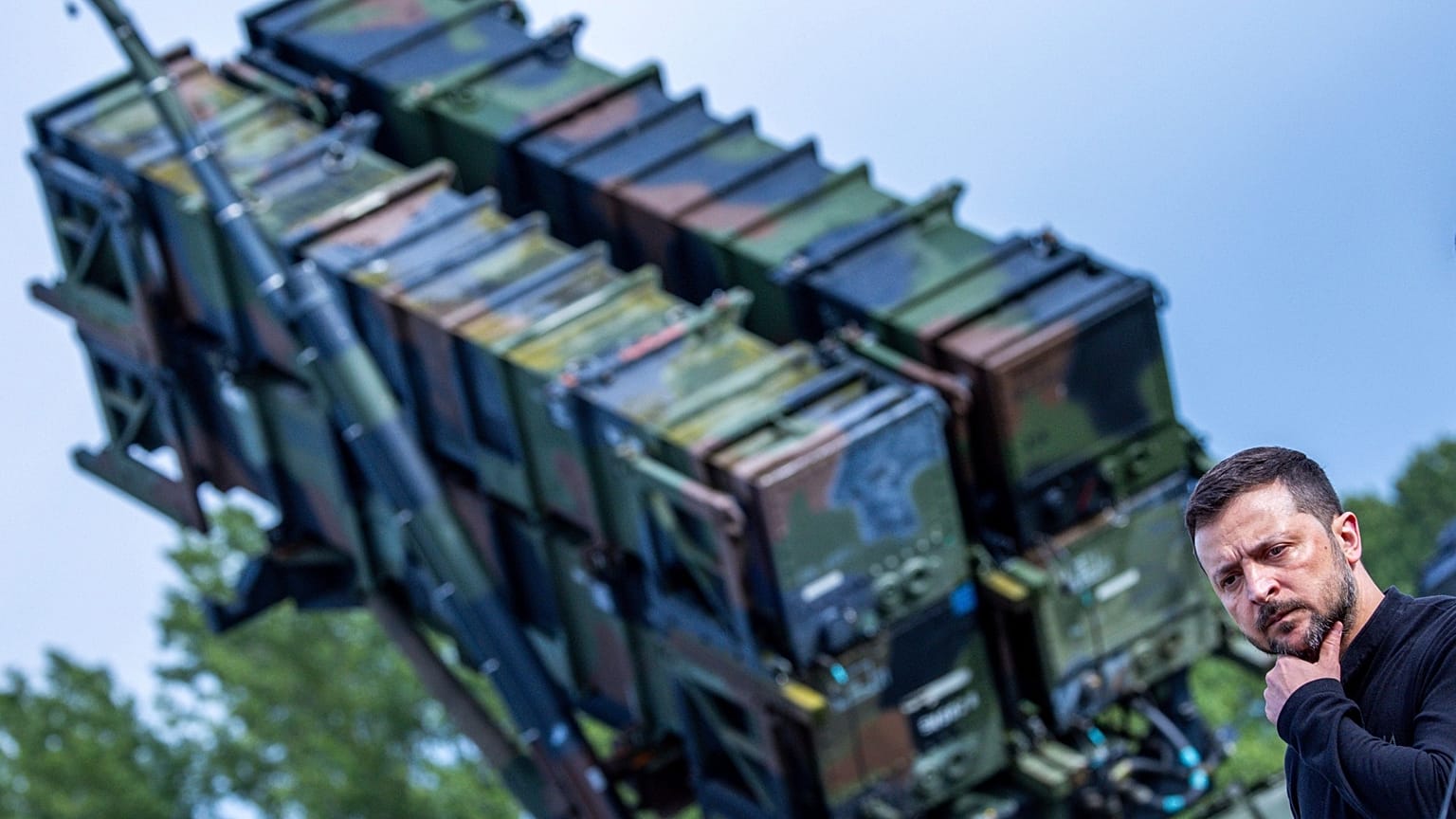
Ukraine's President Volodymyr Zelenskyy stands in front of a Patriot air defence missile system during a visit to a military training area in Western Pomerania, 11 June, 2024
Copyright AP Photo

By Sasha Vakulina
Published on

Volodymyr Zelenskyy said Kyiv currently receives only 1% of the interceptor missiles it needs from Washington, as Russian strikes continue to outpace the country's air defences.

Volodymyr Zelenskyy is calling on Washington to release a portion of the US Patriot interceptor stockpile, saying Ukraine needs 5% of the missiles simply to get through the winter and “save people’s lives.”

"If they sell us 5% we will go through the winter and save people’s lives. If they can sell us 10%, we will destroy all the Russians’ ballistic missiles," Zelenskyy said in an interview with CNN.

Kyiv currently only has 1% of what it needs, he said.

“From one percent to five percent, I have some months and millions (of) phone calls and anything else.”

Pressed on whether the US had responded to the request, he hinted at undisclosed diplomatic efforts.

"I do some things which I can't even share. It doesn't mean it's out of the law. But I can't speak about it.”

Ukraine has no more interceptors

The appeal comes as Russia has stepped up its bombardment of Kyiv, launching mass missile attacks roughly once a week that have killed civilians and destroyed homes.

In one such strike earlier this month, Ukrainian air defences failed to bring down a single one of the 28 ballistic missiles fired at the city.

Zelenskyy said Ukraine now has "two-and-a-half times less interceptors than we had in 2025," even as "Russia has two times more ballistic missiles per month than they had before."

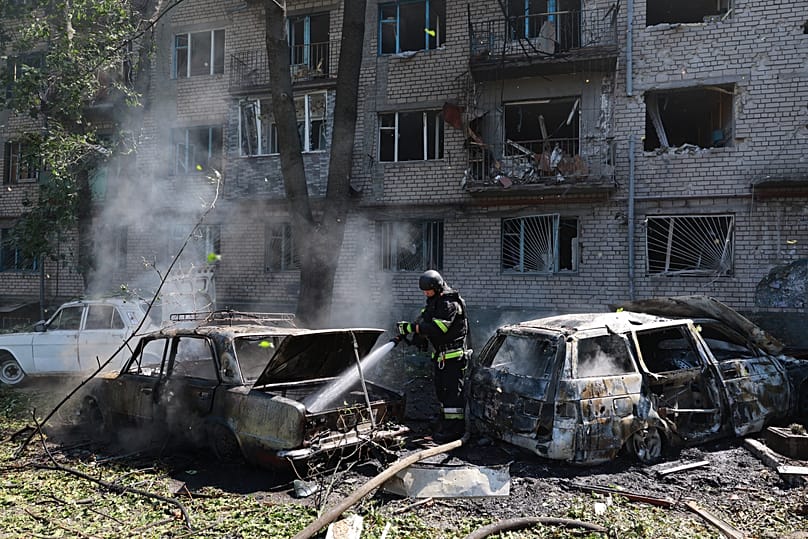
Rescue workers try to put out a fire of a residential building and cars burning after a Russian air guided bomb strike in Zaporizhzhia, 10 August, 2026
Rescue workers try to put out a fire of a residential building and cars burning after a Russian air guided bomb strike in Zaporizhzhia, 10 August, 2026 AP Photo

Ballistic missiles are significantly harder to intercept than cruise missiles or drones because of their speed and steep flight path and Kyiv's stock of Patriot interceptors has been squeezed since the US and Israel went to war with Iran in the end of February, diverting supplies of the systems elsewhere.

Russia fired more than 450 missiles at Ukraine last month, nearly 200 of them on ballistic trajectories, part of a bombardment the UN has called the deadliest for civilians since the 2022 full-scale invasion began.

EURO REARMAMENT

Explosion rocks ammunition factory near Rome, Italian police say

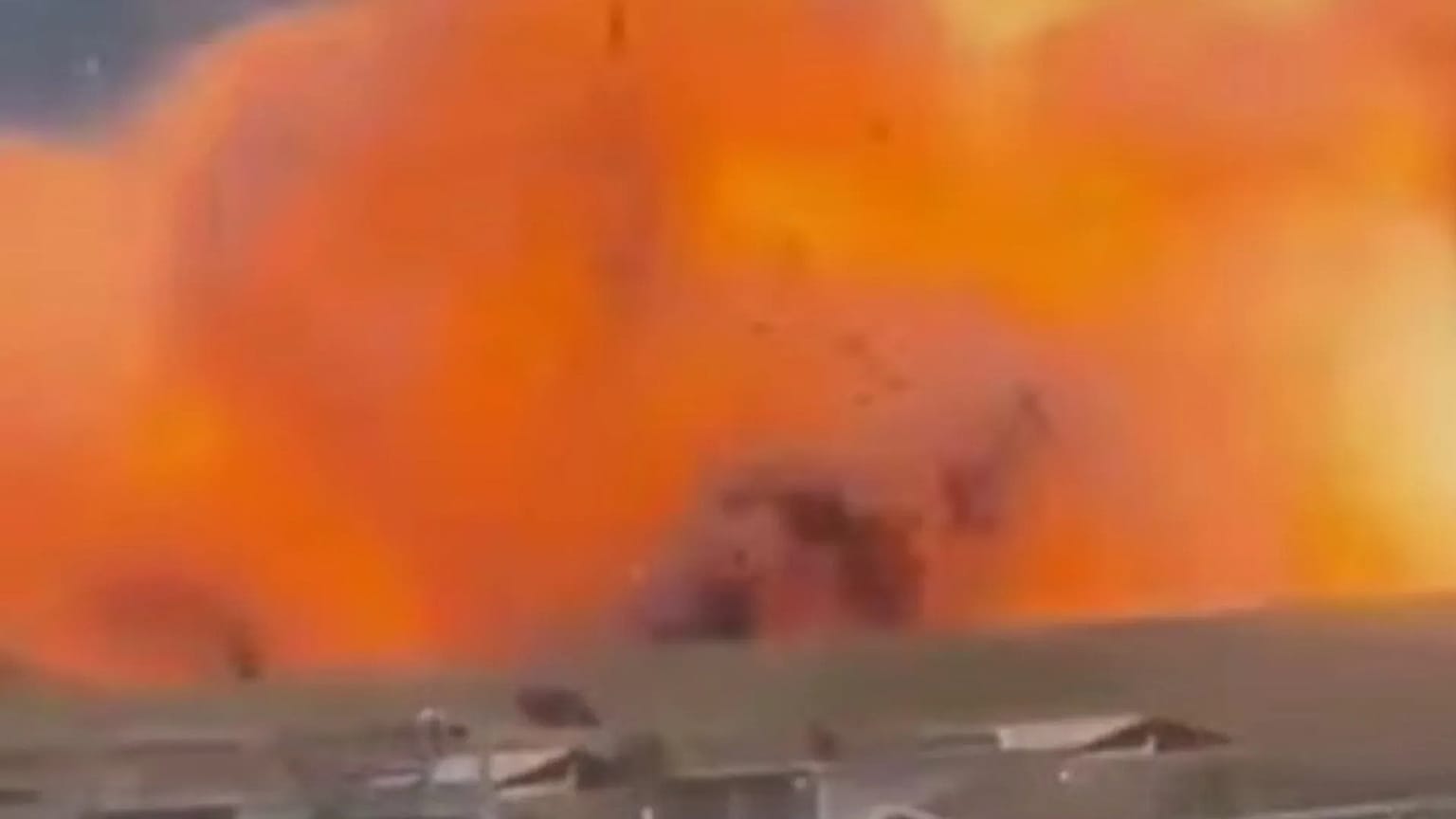
Screenshot of video of an explosion at a munitions plant in Colleferro, 13 August, 2026
Copyright Instagram/atlas.news3

By Cecilia Attanasio Ghezzi & Gavin Blackburn
Published on

Italian media reported that there were no casualties, with the AGI news agency saying employees sheltered in secure areas at the facility.

A powerful explosion rocked an ammunition factory near Colleferro, a town about 40 kilometres southeast of Rome, police said on Thursday.

Firefighters and police were at the site and "complex operations" were underway at the Knds Ammo Italy plant which was formerly Simmel Difesa.

Videos shared on social media showed a fire at the factory followed by a massive explosion.

Italian media reported that there were no casualties, with the AGI news agency saying employees sheltered in secure areas at the facility.

The mayor of Colleferro, Giulio Calamita, wrote in a post on Facebook that "the situation is under control."

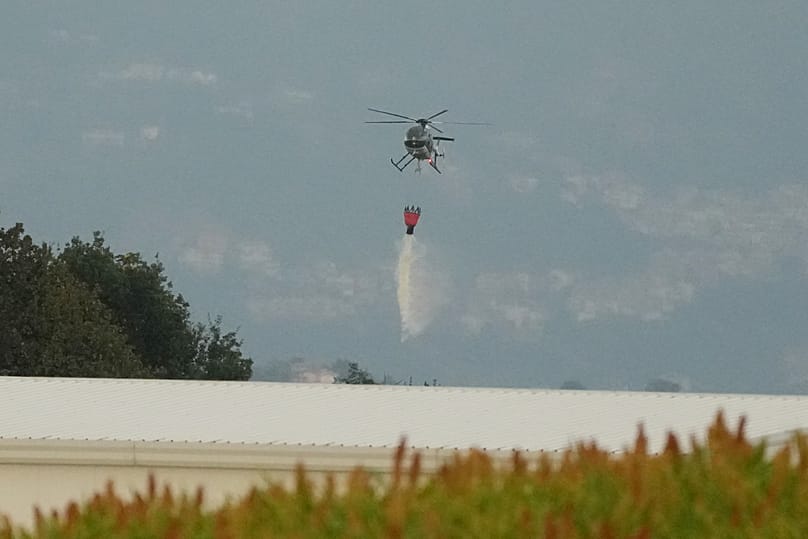
A helicopter drops water over the scene of an explosion at an ammunition plant in Colleferro, 13 August, 2026
A helicopter drops water over the scene of an explosion at an ammunition plant in Colleferro, 13 August, 2026 AP Photo

"The fright is great, but right now it is essential to keep calm and, above all, to avoid spreading untrue information, such as that relating to the 2007 accident which is once again circulating. We will update you as soon as possible with verified information," he wrote.

His post reference a major explosion at the same plant in October 2007which caused killed one worker and left 13 others injured.

The plant is owned by European defence group KNDS and manufactures medium and large-caliber ammunition, Ansa news agency reported.

The Corriere della Sera daily said that the fire started at a compaction press for explosive powder.


Etna eruption enters seventh day in phenomenon unseen since the 1970s

Mount Etna's eruption continues, with lava flows along its slopes seen from Serracozzo on 11 August 2026. (AP Photo/Simone Genovese)
Copyright AP Photo

By Greta Ruffino
Published on

Euronews has gathered the views of experts and local guides on the unusual length of the eruption and on the precautions to take to watch it safely.

The eruption of Mount Etna has been ongoing for seven days, causing disruption to air traffic in Sicily at the height of the summer season.

Catania airport has extended the suspension of flights until 08:00 on 14 August because of volcanic ash.

In the meantime, Etna, affectionately nicknamed "Her Majesty" by locals, continues to attract large numbers of visitors.

Euronews has gathered the views of experts and local guides on the unusual length of the eruption and on the precautions to take to watch it safely.

Explosive activity concentrates at the north-east crater of the Mount Etna, 29 December, 2025
Explosive activity concentrates at the north-east crater of the Mount Etna, 29 December, 2025 AP Photo

An exceptionally long eruption

According to Salvo Gambino, director of the Etnean Observatory in Catania at the National Institute of Geophysics and Volcanology (INGV), the current eruptive phase of Etna shows characteristics already observed in the past, but it is its duration that makes it stand out.

"Similar phenomena were seen in the late 1970s," Gambino told Euronews. In recent decades, lava fountains and flows have occurred on several occasions, but "these processes generally lasted for a very limited time, from a few hours to half a day. In this case we have seven days of continuous activity, which is a distinctive feature of the current eruption."

Behind the length of the eruption, Gambino believes there may be "magma rising from greater depth and richer in gas."

The eruption is affecting several sectors of the volcano at the same time. At the Voragine crater, activity and lava fountains are ongoing, accompanied by a steady emission of ash, while in the Valle del Bove several vents are feeding a lava field. For now, Gambino stresses, the flows do not pose a danger to inhabited areas.

Eruptive activity continues on Mount Etna, 11 August, 2026
Eruptive activity continues on Mount Etna, 11 August, 2026 AP Photo

The ash cloud is instead causing the greatest disruption. Southerly winds have pushed it towards Catania airport and even beyond Sicily.

"The biggest problem at the moment is mainly linked to the continuous plume coming from the Voragine. This plume is clearly a cloud that is dispersed in the atmosphere and in recent days the wind has been blowing towards the south, which has complicated matters, in the sense that this cloud is being pushed towards the airport area and causing disruption," the director explained.

The minister for Civil Protection and Sea Policies, Nello Musumeci, stressed on Wednesday that "it is not the volcano that is out of place, but the airport," whose proximity to Etna makes Catania airport particularly vulnerable to eruptions.

An increasingly crowded Etna

The eruption has drawn an exceptional number of people to Etna, creating traffic and disorder along the roads and paths leading to the spots from which volcanic activity can be observed.

"There are too many people and too many cars parked in a chaotic way," Cristian Alessi, a nature guide with EtnaWay, told Euronews. To describe the crowds on the volcano, Alessi compares them to the busiest resorts and roads in the area: "It feels like being in Taormina or Catania on a Saturday."

The crowds are also pushing towards the points closest to the lava flows. Alessi says he has seen people on the rim of the Valle del Bove, "on that very unstable slope," just a short distance from the area affected by volcanic activity.

"It is wonderful to see, but it has to be done safely, with guides."

The Alpine Rescue service has in turn urged caution after several call-outs on Etna during the current eruption.

Tourists on Etna during the eruption, 12 August 2026. Photo: courtesy of Cristian Alessi.
Tourists on Etna during the eruption, 12 August 2026. Photo: courtesy of Cristian Alessi. Cristian Alessi

How to visit Etna safely?

According to Gambino, it is vital to exercise particular caution during hikes on Etna, especially in the evening.

The director urged people to "go to areas where it is possible to watch without venturing too far" and to wear suitable clothing, including hiking boots and long trousers.

After sunset it is also important to carry a torch, as paths can become difficult to negotiate in the dark.

"The trails are rough, so it is not that hard to fall," Gambino warned.