Friday, August 14, 2026

Indonesia to close more than 750 state-owned enterprises

Jakarta (AFP) – Indonesia's president mulled the possibility of a special court on Friday to investigate "unproductive" boards reporting "made up" profits, as he vowed to close 750 state-owned enterprises by year end.


Issued on: 14/08/2026 - FRANCE24

Indonesia's President Prabowo Subianto has vowed a crackdown on 'uproductive' state-owned enterprises © BAY ISMOYO / AFP

Southeast Asia's biggest economy has long battled corruption in its public and private sectors despite strengthening anti-graft laws, creating special investigative commissions and arresting several high profile people.

"There are far too many unproductive state-owned enterprises, always reporting losses while claiming profits -- those profits are just made up," Prabowo said in his state of the nation address to parliament.

With the establishment last year of Indonesia's Danantara sovereign wealth fund to manage state assets, "we discovered that there are 1,074 state-owned enterprises," the president told lawmakers.

"I had thought there were 300 or 400 state-owned enterprises, but it turns out there are 1,074. And these state-owned enterprises sometimes operate as they please, with no sense of responsibility to the nation, to the state."

So far, 290 have been closed, Prabowo added, and by December 31, there should be no more than 300 left.

"We will close more than 750 enterprises and retain only those that are productive, those that create added value for the people," the president added, in what "may be the largest corporate restructuring in the world."

The drive has already saved about 50 trillion rupiah (more than $2.8 billion) in overhead costs, including directors' and commissioners' salaries, building and car rentals and business travel, said Prabowo.

The target for this year was to save more than 70 trillion rupiah.

Thanks to "improvements" in how state-owned enterprises are managed, profits rose more than 75 percent from 2024 to 326 trillion rupiah last year, the president said.
'Improvements and efficiency'

Prabowo mooted the creation of "a special ad hoc court to investigate the management and boards" of state-owned enterprises "going back 30 years, maybe."

But he also asked lawmakers to consider a kind of "special amnesty for those who repent."

Indonesia scored a low 34 out of 100 on Transparency International's Corruption Perceptions Index for 2025.

Graft has also been a rallying cry for protesters decrying rising living costs as Indonesia and the region reels from high oil prices caused by the Middle East war.

One project that comes in for particular criticism is the costly free school meals programme, Prabowo's signature project which he vowed Friday to pursue "but with improvements and efficiency."

"We cannot accept that one in four Indonesian children suffer from stunting," the president said.

Despite global uncertainty, Prabowo insisted the country was food and energy secure and said he was "confident" economic growth would reach 6.0 percent by the end of 2026.

GDP came in at 5.3 percent in the second quarter of the year, following on 5.6 percent in the first, though analysts have repeatedly expressed scepticism about Indonesia's official growth data.

"Growth and investment are not the ultimate goal," Prabowo said Friday.

"Our goal is the prosperity of our people... Every rupiah of investment must create jobs and improve the quality of life of our people, especially those at the bottom."

© 2026 AFP
Brazilian police recover Matisse works stolen in 2025

Sao Paulo (AFP) – Police in Brazil have recovered eight engravings by French artist Henri Matisse that were stolen from a Sao Paulo library last year by an organized gang of thieves, officials said on Thursday.


Issued on: 14/08/2026 - FRANCE24

Sau Paulo police say thieves overpowered a security guard at the library before grabbing the Matisse engravings and fleeing © Handout / SAO PAULO'S POLICE PRESS OFFICE/AFP

Vividly colored artwork from Matisse's limited-edition art book "Jazz" were laid out on a table alongside a handgun, in an image released by police.

The works, estimated to be worth $200,000, were found at a home in the town of Sao Bernardo do Campo, near Sao Paulo.

Officers arrested a man who was keeping the works for the mastermind of the heist, police said, adding that he will face charges of receiving stolen goods and illegal weapon possession.

The alleged mastermind was apprehended in April and a woman has also been arrested in the case.

Police said the gang behind the robbery was highly organized and structured, with specific tasks assigned to members as it stole artworks in Brazil and sold them on the black market.

In the Matisse robbery last year, police say thieves overpowered a security guard and an elderly couple visiting the Mario de Andrade Library, grabbed the engravings and other items from a glass dome where they were kept, and fled.

They also stole five works by the Brazilian artist Candido Portinari, but these have not been recovered and may have already been sold.

One of the suspects was arrested the day after the theft via the use of the city's facial recognition system.

As part of the investigation, police conducted operations targeting "establishments related to the auction market and the sale of artworks" in municipalities such as Sao Paulo and Rio de Janeiro.

The Matisse engravings were part of a modern art exhibition highlighting a collaboration between the library and the Museum of Modern Art of Sao Paulo.

"Jazz" was published in France in 1947 and there are 250 copies signed by the artist, according to auction house Christie's.

© 2026 AFP
Earthquake in Colombia: Nearly 300 people trapped in rubbles

Issued on: 14/08/2026 - 

In Colombia, hopes are fading of finding survivors after Monday’s powerful earthquake. Rescue teams are now turning their focus to recovering bodies, but families are still holding out hope of finding their loved ones alive beneath the rubble. Many have taken matters into their own hands, as our reporters found when they visited Cali, a city near the quake’s epicentre.


Race to free trapped quake survivor offers hope in Colombia


Rescue workers rushed to free a survivor Friday in Colombia amid the rubble left by a powerful earthquake nearly four days earlier that killed at least 285 people and injured 4,000. Some 400 people were still missing and tens of thousands of homes were ​damaged, leaving many Colombians sleeping in shelters or outside.


Issued on: 14/08/2026
By: FRANCE 24

Cover image: Rescue workers search an area of rubble where they believe a person may be trapped the day after an earthquake struck Pereira, Colombia, on August 11, 2026. © Fernando Vergara, AFP
01:51


Rescuers raced against time ⁠in Colombia ​on Friday to free a man found alive beneath a collapsed hotel, a rare sign of ​hope nearly four days after one of the strongest earthquakes to hit the Andean nation in decades reduced neighbourhoods to rubble and left hundreds dead or missing.

The operation in the coffee-region city of ​Pereira had become ‌the main focus of a disaster response increasingly shifting from the ⁠search for survivors to the grim work of clearing debris and accounting for the missing.

"Possibly there are (still) people alive, we ‌believe so," rescuer John Bedoya told Caracol Television from the site, where emergency crews ⁠worked through a mound of concrete, brick and twisted metal. "One or two could be alive."

The 7.4-magnitude quake struck shortly after 7:30am on Monday, with its ​epicentre in San Jose del Palmar in the Choco department. It toppled ‌apartment blocks and damaged homes, schools and hospitals across western Colombia, from the Pacific port of Buenaventura to the inland cities of Cali and Pereira.

Authorities said on Friday morning that 285 people ‌had been killed and nearly 4,000 injured. Nearly 400 others were still missing.

The government said tens of thousands of homes were ​damaged and many destroyed, underlining the scale of a disaster that has left many Colombians sleeping in shelters or outside unsafe buildings.

Colombia rescuers cling to hope as quake survival window closes
Cover image: © France 24
04:43


The UN refugee agency warned on Friday the earthquake could trigger ​fresh displacement in a country already grappling with conflict, migration and other humanitarian pressures.

"For ​internally displaced people and refugees who are already trying to rebuild ​their lives, this earthquake risks becoming another displacement on top of displacement," UNHCR spokesperson Eujin Byun told reporters in Geneva.

Authorities have recorded ​scores of aftershocks since Monday, adding to the danger for rescuers combing through unstable debris and for families reluctant to return to damaged homes.

The disaster is shaping up as the first major test for President Abelardo De La Espriella, who took office just days before the quake and ⁠has faced criticism for his initial handling of the disaster. He is set to make flying visits to five ⁠affected cities and ​towns on Friday, including Pereira, Cali and Quibdo.

(FRANCE 24 with Reuters)

German Court Issues Arrest Warrant For Far-Right Lawmaker


Maximilian Krah at an AfD campaign in Nordhausen, Thuringia in 2023. Photo Credit: Vincent Eisfeld, Wikipedia Commons


August 14, 2026
EurActiv

By Magnus Lund Nielsen


Key Takeaways

A German court has issued a civil arrest warrant for sitting AfD lawmaker Maximilian Krah after he failed to appear at a bailiff’s appointment over unpaid legal costs stemming from a failed lawsuit against satirist Jan Böhmermann.

The dispute arose when Böhmermann repeated a claim that Krah had ordered a large quantity of champagne at Oktoberfest; the court dismissed Krah’s injunction request and ordered him to pay costs, of which a small outstanding sum remains.

Because Krah holds a Bundestag seat, the warrant cannot be enforced without parliamentary authorization; he states he paid the main amount earlier and was unaware of the appointment.


(EurActiv) — A German court has issued a civil arrest warrant for sitting AfD lawmaker and former MEP Maximilian Krah after he failed to attend a bailiff’s appointment concerning unpaid legal costs, German media reported on Thursday.

The dispute began after German satirist Jan Böhmermann read out a claim on a podcast that Krah had ordered 200 bottles of champagne at Munich’s Oktoberfest in 2024. Böhmermann subsequently said research suggested the number was closer to 50.


Krah sought an injunction, arguing that the allegation violated his personal rights because it could portray him as boastful and self-important. However, the Düsseldorf regional court dismissed the case, noting that Böhmermann had presented the allegation as a submission from a listener, and later corrected the claim. It ordered Krah to cover the legal costs of the case.

Böhmermann’s lawyers subsequently recovered around €5,000 in costs through enforcement proceedings. A further €296.26 reportedly remains outstanding. Krah said he had paid the main amount in January, was unaware of the bailiff’s appointment and would pay any additional costs verified by his lawyer.

Krah served in the European Parliament from 2019 to 2025. In 2025, he was elected to the German Bundestag. His current mandate means the warrant cannot be enforced without authorisation from the Bundestag.

Krah caught headlines in 2024 when he said that not everybody serving in Nazi-Germany’s SS elite unit was “automatically a criminal”. The comments threw the AfD into disarray and led French political allies in Rassemblement National to distance themselves from the AfD.

Survivors tell of horror of Zimbabwe ferry sinking as police say death toll hits 46

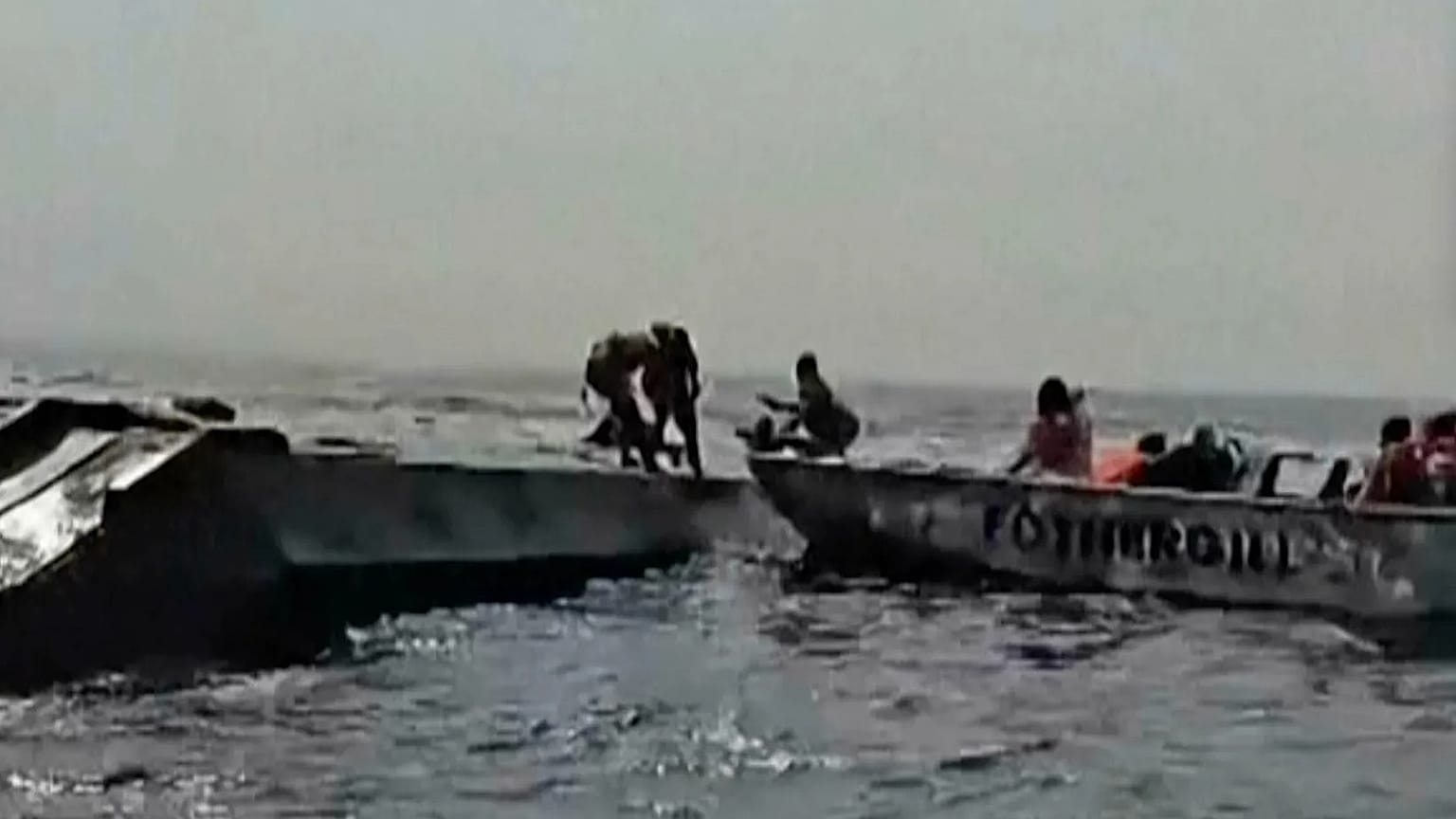
In this image taken from a video people are rescued from an overloaded ferry that capsized on Zimbabwe's Lake Kariba, 11 August, 2026
Copyright AP Photo

By Gavin Blackburn
Published on

The overloaded government ferry, a vital link for villagers and fish traders around the vast Lake Kariba, overturned in choppy waters on Tuesday in one of the country's worst passenger boat disasters.

A man who survived a ferry disaster that claimed at least 46 lives on Zimbabwe's Lake Kariba told the AFP news agency on Thursday how he watched helplessly as people tried to save themselves, with his best friend and seven of his relatives among the dead.

The overloaded government ferry, a vital link for villagers and fish traders around the vast lake, overturned in choppy waters on Tuesday in one of the country's worst passenger boat disasters.

"Thank God that a wave pushed the sinking vessel and we managed to climb on top," Chance Siyamavhu said at a memorial service in the lakeside town of Kariba close to the border with Zambia.

Perched on the upended boat, he watched as passengers struggled to survive, unable to save them.

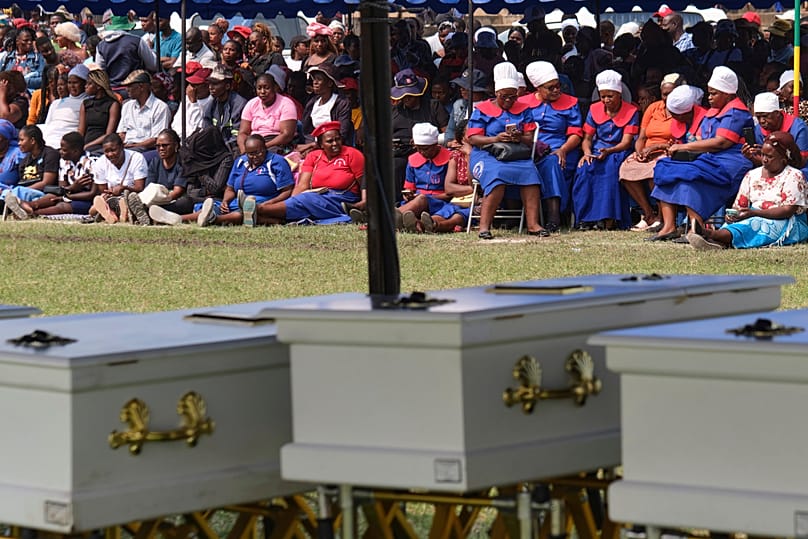
Mourners gather for a memorial service for the victims of a ferry capsized on lake Kariba in Kariba, 13 August, 2026 AP Photo

"When the boat capsized, most of the people scrambled to get the life jackets but most of them did not even know how to use them," the 45-year-old told AFP. "Most people could not make it."

"Our relatives were swept in another direction and they sank because we were not in a position to help them," he said.

Dozens of mourners gathered in front of 44 coffins at the emotional service, as police announced that the death toll had risen to 46.

"The names of the victims who perished in the accident will be released in due course," a police statement said.

Officials say the boat was authorised to carry 90 people but was packed with 114 adults, five crew members and an unspecified number of children.

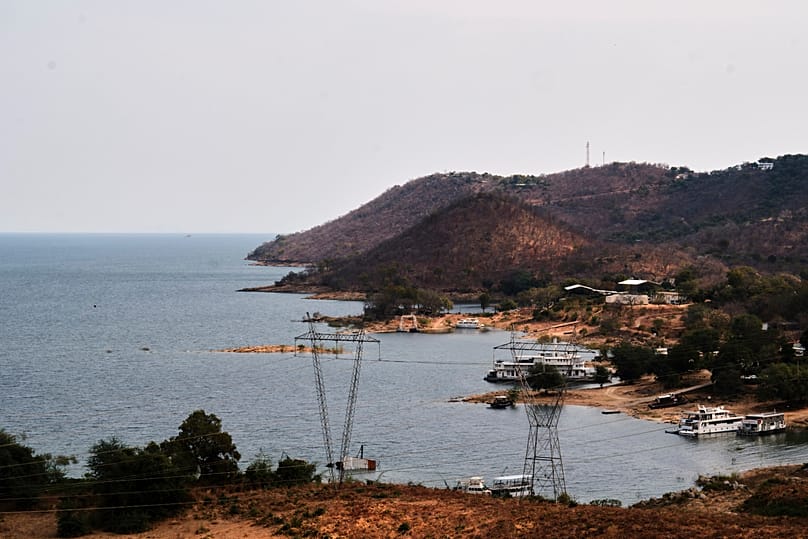
A view of Kariba Port where a ferry capsized, 13 August, 2026 AP Photo


The civil protection unit said 77 people were rescued and there were fears that other passengers may be unaccounted for.

Survivors said they had pleaded for the captain to turn back as the boat took on water.

Anymore Chambati, who had been a security official on the vessel, told AFP he had tried to hand out life jackets as the boat began to sink.

"I managed to only give not more than 10," he said. "The ferry engines were filled with water because of the heavy winds and eventually they failed, save for one."


Ceremony held in Zimbabwe to pay tribute to capsized ferry victims


Cover image: EYE ON AFRICA © FRANCE 24
Issued on: 13/08/2026 
13:47 min  From the show

In tonight's programme: Mourners gather in memory of the 44 people killed in Tuesday's ferry accident on Zimbabwe's Lake Kariba. Also, ballot counting has started in Zambia, where President Hakainde Hichilema is expected to win a second term. Finally, researchers believe that the rising cost of living and changing societal expectations is behind a marked drop in birthrates across North African countries.

UN Letter Warns Nigeria Of Violence Risk To Christian Women, Girls


August 14, 2026
EWTN News
By Madalaine Elhabbal


Key Takeaways

A joint letter from five UN human rights experts, made public after Nigeria failed to respond within 60 days, warns of heightened risks of religiously motivated violence against Christian women and girls in northern Nigeria and the Middle Belt.

The experts cite patterns of killings, abductions, sexual violence, forced conversion and forced marriage attributed to groups such as Boko Haram, ISWAP and Fulani herder militias, along with alleged official inaction, negligence or complicity.

They call on Nigerian authorities to investigate the reported cases, protect religious minorities, review laws affecting freedom of religion and expression (including blasphemy laws), implement interim protective measures for victims, and hold perpetrators accountable.


A joint letter from U.N. human rights experts warning Nigerian officials of the heightened risk of violence against Christian women and girls in the country has been made public after the government failed to respond within 60 days.

The June 1 letter cited attacks against Christian women and girls in northern Nigeria and the Middle Belt region, including killings, forced conversion, and sexual violence. The letter was signed by Reem Alsalem, U.N. special rapporteur on violence against women and girls; Gabriella Citroni, chair-rapporteur of the Working Group on Enforced or Involuntary Disappearances; Morris Tidball-Binz, U.N. special rapporteur on extrajudicial, summary, or arbitrary executions; Nicolas Levrat, U.N. special rapporteur on minority issues; and Alice Jill Edwards, U.N. special rapporteur on torture and other cruel, inhuman, or degrading treatment or punishment.


“With respect to the situation of religious or belief minorities, we wish to raise serious concern regarding patterns of religiously motivated violence and persecution or otherwise disproportionately targeting persons belonging to religious minority communities within affected federated states or local areas, especially Christians, including women and girls,” the letter said.

The U.N. experts attributed the rising violence to armed extremist groups such as Boko Haram, Islamic State West Africa Province (ISWAP), and Fulani herder militias operating across the north and Middle Belt region and pointed to “acquiescence” and “negligence” on the part of Nigerian officials to counter them.

The letter cited the abduction and sexual assault of two women by armed militants, the forced conversion and marriage of a 13-year-old girl, and the abduction of a pastor’s two daughters along with several members of a church by Boko Haram, as well as a 16-year-old girl whose hand was cut off after her family refused a marriage proposal by armed militants.

“While we do not wish to prejudge the accuracy of these allegations reported to us, we would like to especially express our grave concern regarding the alleged abduction and sexual assault of girls, the intimidation by armed groups and subsequent abduction and acts tantamount to enforced disappearance of the church members in Shikarkir,” the U.N. experts said.

“We are also disturbed by reports of the inaction and complicity of government officials in the face of these abuses, the slowness of investigations and search actions aimed at determining the fate and whereabouts of abducted girls,” they said.

The letter further called on Nigerian officials to respond to the allegations and to provide status updates on investigations and measures taken to combat violence against women and girls. They also asked for status updates on “any laws that affect the exercise of freedom of religion or belief and freedom of opinion and expression, including so-called ‘blasphemy’ laws.”


The letter asked the Nigerian government to provide information on measures taken to protect the rights of religious minorities, particularly in northern states, and urged authorities to take immediate steps to halt violence against women and girls.

The experts concluded by calling for interim measures to protect abductees, victims of sexual violence, and victims of forced conversion and forced marriage, particularly minors and those who have not been reunited with their families. The experts also urged Nigerian officials to prevent further violations and hold accountable those responsible if the allegations are substantiated.
UN urges faster action as world falls behind on nature protection

The world is falling behind on its commitments to protect nature, the UN’s biodiversity chief has warned, ahead of a major international conference in Armenia aimed at accelerating action.


Issued on: 14/08/2026 - RFI

A dead fish floats in the Mediterranean Sea in the Gador sea reserve, northern Israel, on 29 October, 2022. Climate change, invasive species and human activity are threatening what remains of the eastern Mediterranean's severely impacted ecosystems. © AP Photo/Ariel Schalit

Four years ago, nearly all the world's countries agreed to protect 30 percent of the planet’s land and seas by 2030, while wealthy nations pledged to provide developing countries with $30 billion (€26 billion) a year to help safeguard biodiversity.

But Astrid Schomaker, executive secretary of the United Nations Convention on Biological Diversity, said progress was still too slow to meet those goals.

“Implementation is not yet happening at the pace and scale needed to achieve [the targets]," Schomaker said in a statement, following nearly three weeks of preparatory negotiations in Nairobi, Kenya.

Representatives from the 196 countries that agreed to the biodiversity framework are due to meet in the Armenian capital Yerevan in October for the COP17 biodiversity conference, where they will assess progress and discuss how to step up their efforts.

“The task awaiting us in Yerevan in nine weeks will take all the stamina and determination that parties can summon,” Schomaker said.

France must speed up climate action, as watchdog warns current efforts fall short
Conservation gains

The Convention on Biological Diversity stated that governments had recognised that the world was not currently on track to achieve its biodiversity targets.

While there had been “promising efforts on conservation targets”, it said progress had been slower in areas including raising finance, redirecting environmentally harmful subsidies and ensuring more inclusive decision making.

Countries have nevertheless laid out an ambitious framework for halting the destruction of ecosystems and reversing biodiversity loss by the end of the decade.

At the centre of the agreement is a target of conserving at least 30 percent of the world’s land, inland waters and seas by 2030 – widely known as the 30 by 30 goal.

Governments are also under pressure to reduce incentives and subsidies that encourage activities harmful to nature, while significantly increasing financial support for biodiversity protection in developing countries.

However, the Convention said differences remained over how countries should strengthen implementation, including during “intense discussions around the Cali Fund”.

Created during the COP16 biodiversity talks in Colombia, the fund is intended to channel a share of the profits made by companies using genetic information derived from plants and animals towards countries and communities that help conserve those resources.

Almost all UN member states are parties to the Convention on Biological Diversity. The most notable exception is the United States.

Five major threats

Scientists and international organisations have repeatedly warned that human activity is driving a rapid decline in wildlife and ecosystems around the world.

The UN identifies five main human-induced causes of the biodiversity crisis – sometimes referred to as the “Five Horsemen of the Apocalypse”.

They are the destruction and alteration of natural habitats, the over-exploitation of resources such as water and wildlife, climate change, pollution and the spread of invasive species.

Agriculture, urban expansion, deforestation, industrial development and the extraction of natural resources have transformed large areas of the planet, while rising temperatures are placing additional pressure on already vulnerable ecosystems.

More than a quarter of the world’s animal and plant species are threatened with extinction, according to the International Union for Conservation of Nature.

The Yerevan conference will be closely observed as governments seek to demonstrate that the biodiversity commitments agreed four years ago can still be translated into concrete action before the 2030 deadline.

Despite the slow progress so far, the UN says existing conservation efforts show that countries do have the tools to reverse some of the damage – provided governments can increase funding and turn their pledges into action quickly enough.

Vietnam discovers more than a tonne of concealed ivory illegally shipped from Africa

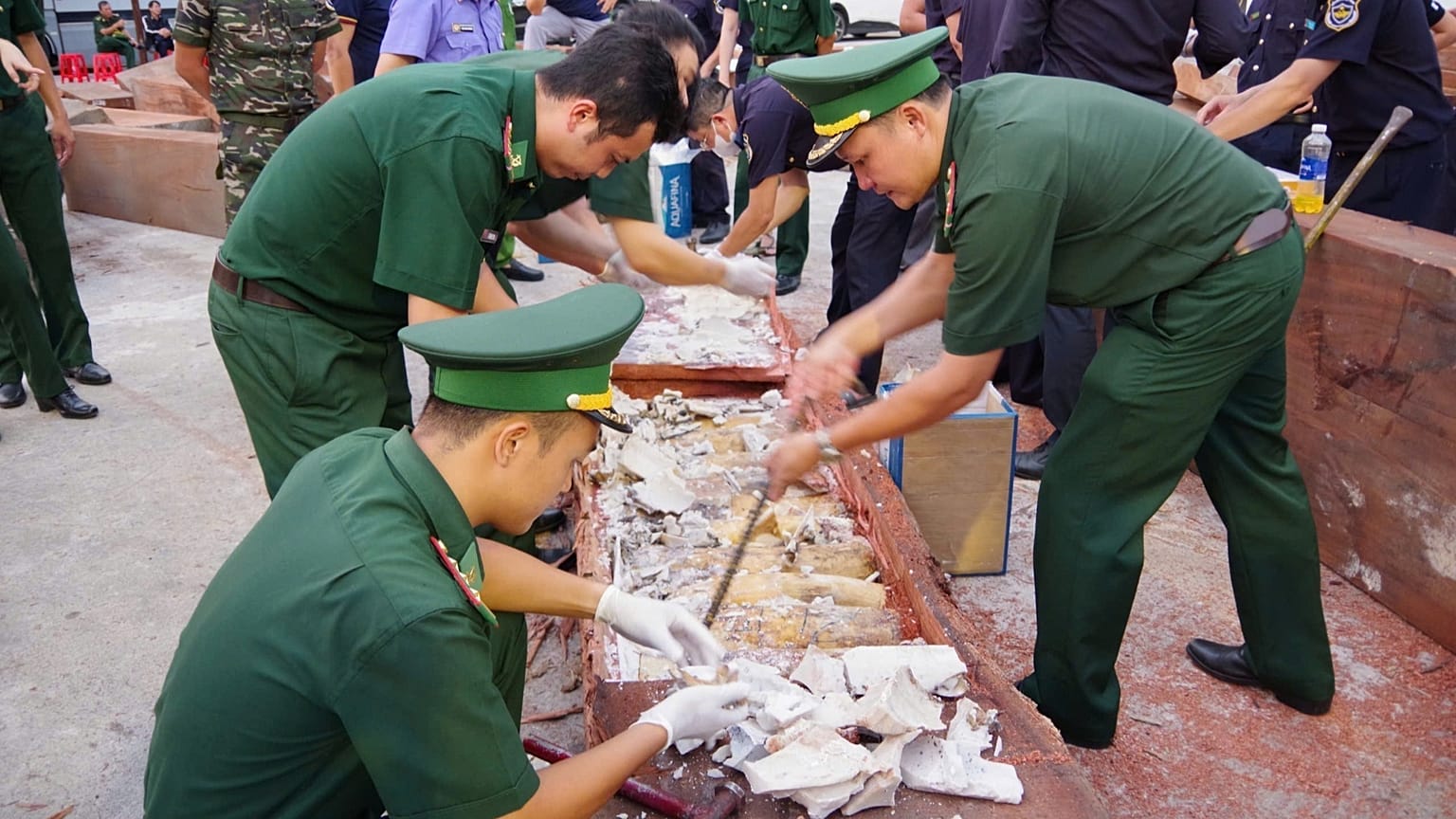
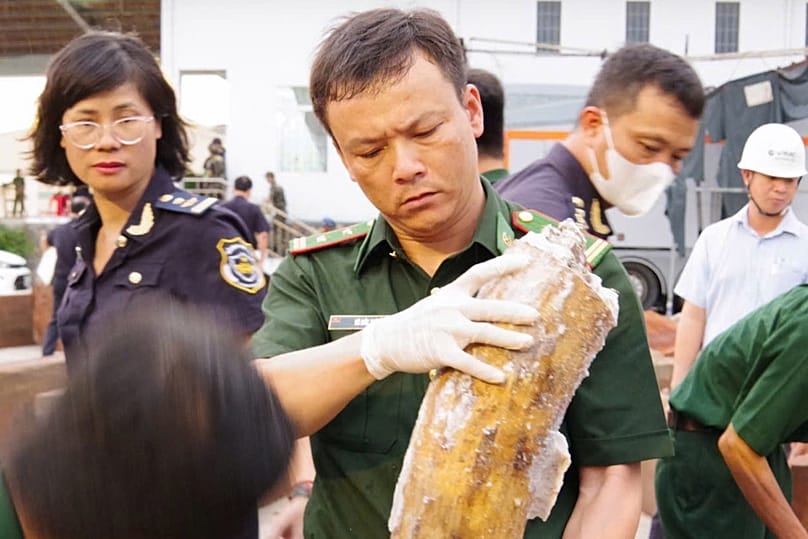
Police inspect a log that was being used to conceal 1.2-tonness of trafficked ivory at Quy Nhon port, 12 August, 2026
Copyright AP Photo

By Gavin Blackburn
Published on

Most trade in ivory from elephants and other endangered animals is banned by international agreement under CITES, a treaty to which almost all UN member countries are parties.

Authorities in Vietnam have announced a major seizure of ivory they say was illegally shipped from Africa, Vietnamese media reported on Thursday.

The haul of 221 pieces of elephant ivory weighing 1,193 kilograms was announced and displayed to the media at Quy Nhơn port in the central province of Gia Lai, said reports by the Vietnam News Agency and other news outlets.

Vietnam is a major hub for the illicit trade of wildlife, both dead and alive.

Much of the contraband is transhipped to China, but there is also demand in Vietnam itself and other Southeast Asian countries.

Thursday’s reports said inspections last week discovered the ivory hidden in sawn timber that was in a shipment of three containers that arrived on 9 July.

Police inspect a log that was being used to conceal 1.2-tonness of trafficked ivory at Quy Nhon port, 12 August, 2026 Nguyen Sy Thang/VNA

The illegal cargo also contained 79.3 kilograms of animal bones that reports said came from animals in the category of big cats, such as tigers.

Crushed animal bones are used in traditional Chinese medicine.

The website of the Tuoi Tre newspaper said that Gia Lai Provincial Police announced that the shipment had been transported from the Republic of the Congo.

It also said that after the contraband's discovery during customs clearance, a criminal investigation was launched for violation of regulations regarding protected animals.

Most trade in ivory from elephants and other endangered animals is banned by international agreement under CITES, the Convention on International Trade in Endangered Species of Wild Fauna and Flora, a treaty to which almost all UN member countries are parties.

While the ivory shipment was reported to be the biggest ever at Quy Nhơn, it has been dwarfed by several others in the past decade of more than seven tons each in the central port city of Danang and the northern port of Haiphong.


BP returns to Venezuela with Gulf partners as post-Maduro energy opening speeds up

FILE. The logo of British Petroleum, BP, adorns a petrol station in west London, Aug. 2020
Copyright AP Photo/Alastair Grant


By Quirino Mealha
Published on


Venezuela has awarded BP a licence to develop the offshore Loran gas field alongside state-backed partners from the UAE and Qatar, marking the British company's return to a country whose energy sector has been reopening to foreign investors since US forces captured Nicolás Maduro.

BP is going back into Venezuela.

The agreement signed in Caracas on Thursday gives the company operatorship of Loran phase two, an offshore gas project holding more than four trillion cubic feet of proven gas resources, with Abu Dhabi's XRG, Qatar's UCC Oil and Gas Holding taking equal stakes beside it.

It is the clearest signal yet that the opening of Venezuela's energy industry to foreign capital, underway since Maduro's removal, is gathering pace.

All three companies will hold equal working interests, with BP as operator, and the licence remains subject to regulatory approvals.

PDVSA Gas, the state producer's gas arm, transferred part of its interest to XRG, the international investment vehicle of Abu Dhabi's ADNOC. For both XRG and UCC, a unit of the Qatari conglomerate of the same name, this marks a first entry into Venezuela.

The field itself is shared as Loran forms the Venezuelan portion of the Loran-Manatee accumulation, which straddles the maritime boundary with Trinidad and Tobago and holds roughly 10 trillion cubic feet of recoverable gas in total.

Shell won the licence for the first phase in June and is separately developing Manatee on the Trinidadian side, where first gas is expected next year.

BP says both Venezuelan phases will now be developed in parallel and signed a further memorandum of understanding covering exploration at the Carúpano East Block.

The agreements were concluded during a visit to Caracas by CEO Meg O'Neill and David Campbell, BP's senior vice president for Latin America and the Caribbean.

A sector reopened under US pressure

The licences are the product of a bargain struck with Washington.

After Maduro was seized by US forces in January, interim president Delcy Rodríguez rewrote the country's energy law at the Trump administration's urging, opening the world's largest proven oil reserves to foreign firms.

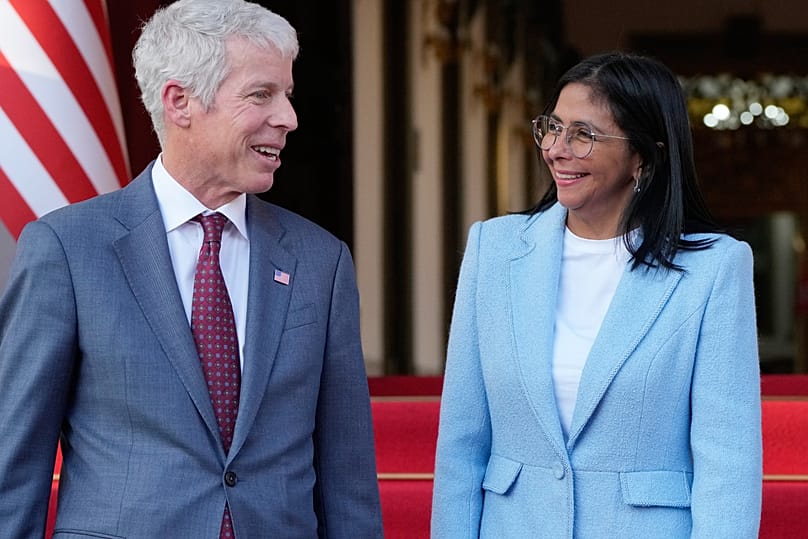
FILE. Venezuela's acting President Delcy Rodriguez bids farewell to US Energy Secretary Chris Wright after their meeting at Miraflores Palace in Caracas, 11 Feb. 2026
FILE. Venezuela's acting President Delcy Rodriguez bids farewell to US Energy Secretary Chris Wright after their meeting at Miraflores Palace in Caracas, 11 Feb. 2026 AP Photo/Ariana Cubillos

In return, the US relaxed sanctions that had frozen most Western investment, including the licences it revoked from BP, Shell and Chevron in 2025.

Eni, Repsol and Shell have all signed since.

The awards process stalled after the earthquakes of 24 June, which killed more than 6,300 people, and resumed only on Thursday, when the three Loran permits were issued and the agreements signed.

"I have a special interest in gas to promote national development," Rodríguez said at the ceremony, which was broadcast on state television.

BP is not a newcomer as it held a licence for the Cocuina field from 2024, before Washington withdrew its permission to use it.

Brazil: Supreme Court Upholds Deal Banning Purchase Of Soy From Deforested Areas


August 14, 2026

 ABr
By Andre Richter and Fabiola Sinimbu


Key Takeaways

Brazil’s Supreme Court upheld the constitutionality of the 20-year-old Soy Moratorium, a private industry agreement under which major companies commit not to purchase soy grown on Amazon land deforested after July 2008.

In the same ruling the court also found partially constitutional state laws in Mato Grosso and Rondônia that restrict tax incentives and public-land access for companies participating in the moratorium, a decision environmental groups fear could weaken the agreement.

Major industry associations have already begun withdrawing from the voluntary pact following the state measures, and researchers estimate that ending the moratorium could lead to an additional 1.4 million hectares of Amazon deforestation over the next decade.


Brazil’s Supreme Court on Wednesday (Aug. 12) ruled to uphold the so-called Soy Moratorium – an agreement signed 20 years ago by leading companies in the sector to prevent the purchase of soybeans from deforested areas.

By a majority vote, the court’s full bench ruled that the private agreement among companies is in accordance with the Constitution and helps preserve the environment.


In addition, the court also ordered the dismissal of pending administrative proceedings that challenged the moratorium’s validity and sought compensation.

Established in 2006, the Soy Moratorium stipulates that companies in the sector commit to not trading soy originating from deforested areas in the Amazon after July 2008. In exchange, they receive tax exemptions and preferential terms for access to credit, or are allocated public lands for production.
Environmentalists are concerned

However, environmental organizations have expressed concern over the Supreme Court’s decision, which, in the same ruling, also deemed two state laws partially constitutional. These laws prohibit the granting of tax incentives and public land to companies participating in the deal. The court upheld these laws for the states of Mato Grosso and Rondônia.

“The ruling that the state laws are constitutional represents a step backward that could, in the medium term, reverse – as recent studies have indicated – the positive trend of reduced deforestation in the Amazon over the past year,” warned Cristiane Mazzetti, coordinator of Greenpeace Brasil’s Zero Deforestation campaign.


In analyzing the petitions challenging the constitutionality of the laws filed with the Supreme Court, the justices deemed the restrictions imposed on the granting of benefits to be lawful, but ruled that the withdrawal or reduction of incentives could only take effect in the following tax year – or after 90 days in special cases.

According to Cristiane Mazzetti, the laws in question discourage the private sector from making current and future zero-deforestation commitments, hindering Brazil’s ability to meet its climate goals.

Ever since certain state laws went into effect, major companies in the sector have decided to withdraw from the voluntary soy moratorium agreement. One example was the withdrawal of the Brazilian Association of Vegetable Oil Industries (Abiove) in January of this year.

A recent study published in the journal Science estimated an additional 1.4 million hectares of deforestation in the Amazon over the next ten years if the Soy Moratorium were to be abolished.


About ABr
Agência Brasil (ABr) is the national public news agency, run by the Brazilian government. It is a part of the public media corporation Empresa Brasil de Comunicação (EBC), created in 2007 to unite two government media enterprises Radiobrás and TVE (Televisão Educativa).