It’s possible that I shall make an ass of myself. But in that case one can always get out of it with a little dialectic. I have, of course, so worded my proposition as to be right either way (K.Marx, Letter to F.Engels on the Indian Mutiny)
Sunday, September 06, 2026
ANTI MIGRANT RIGHT WING
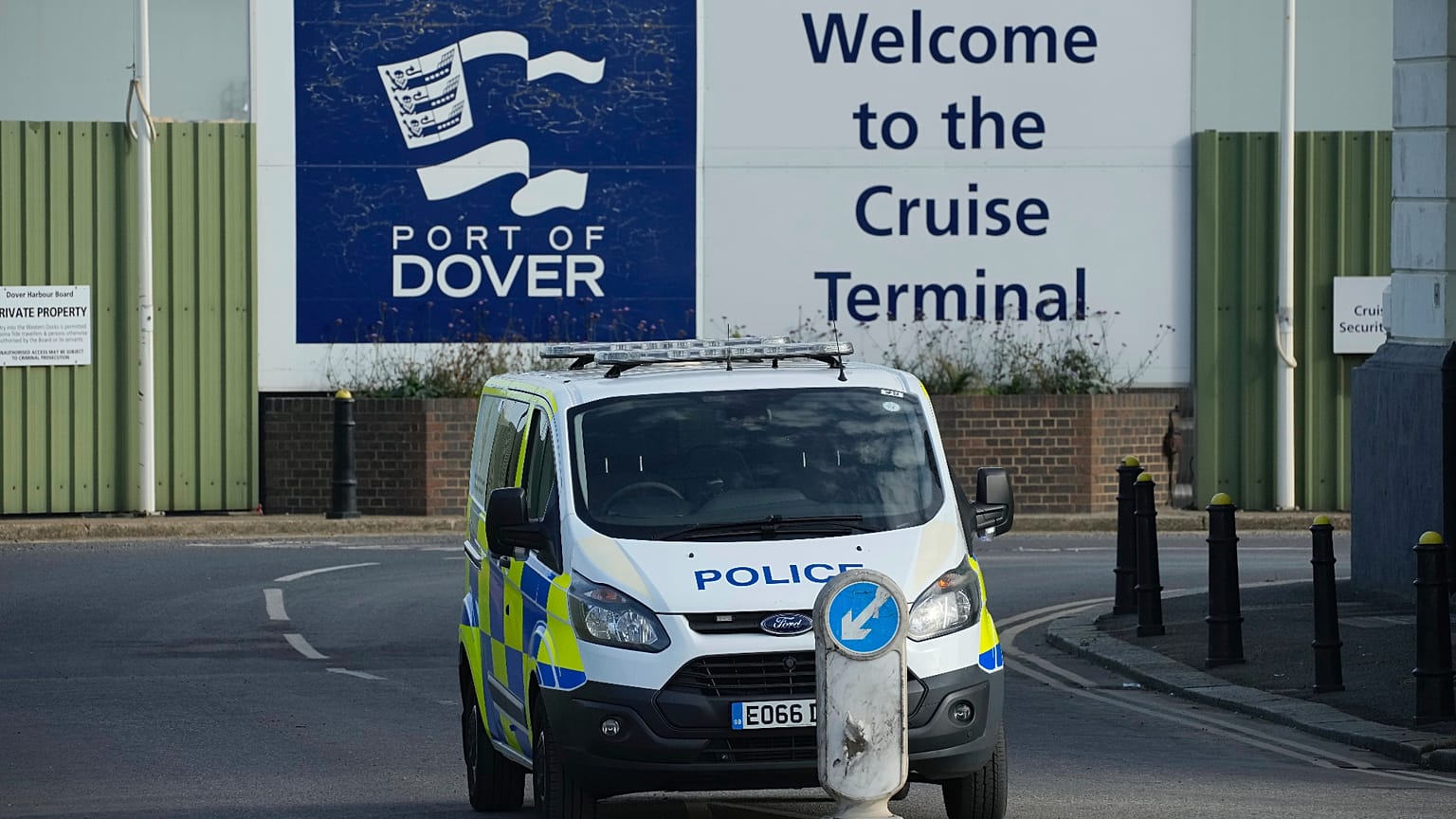
'Protest' at Port of Dover causes delays to ferry services as masked men descend on the town
Copyright Copyright 2022 The Associated Press. All rights reserved
"No arrests were made. Traffic is flowing normally, and all involved had dispersed by midday," Kent police said in an update on Saturday afternoon.
Dozens of masked men dressed in all black descended on the Port of Dover on Saturday morning in what police have described as a "protest."
Port authorities said there was an "ongoing public order incident" happening across the town, which is a key passenger hub for ferry services between the UK and mainland Europe.
The Port of Dover has since confirmed that "operations have returned to normal," with routes in and out of Dover and the port open and traffic "moving freely."
It had earlier said the incident was "affecting all routes in and out the port and town.
P&O Ferries, which operates a ferry from Dover to Calais, said its services were operating with delays of up to an hour following the disruption.
Video footage circulating online shows protesters - many wearing balaclavas, hoods and hats - gathering in the Kent town and chanting.
Far-right anti-immigration activist Tommy Robinson shared a video of the protest on his X account, writing in the caption: "British patriots send a warning shot to the establishment in Dover this morning."
"Patriots can organise and gather huge numbers without the need for social media. Watch this grow," he continued, adding: "We want our country back."
Mike Tapp, the Labour MP for Dover and Deal, criticised those involved in another post on X, telling protesters to go home and saying he was speaking with police.
"Dover Park Run cancelled, port access disrupted, the lives of residents made more difficult," he wrote.
"I am fed up with idiots coming to Dover to cause disruption. I bet if you asked any one of those 'protesters' they wouldn’t know small boat crossing are down by 40%," Tapp added, referring to migrant Channel crossings.
Officers from Kent police attended the scene and were "engaging with protesters," according to the force.
"No arrests were made. Traffic is flowing normally, and all involved had dispersed by midday," it added in an update on Saturday afternoon.
Bardella signs pact with Farage to stop small boat crossings 'forever'
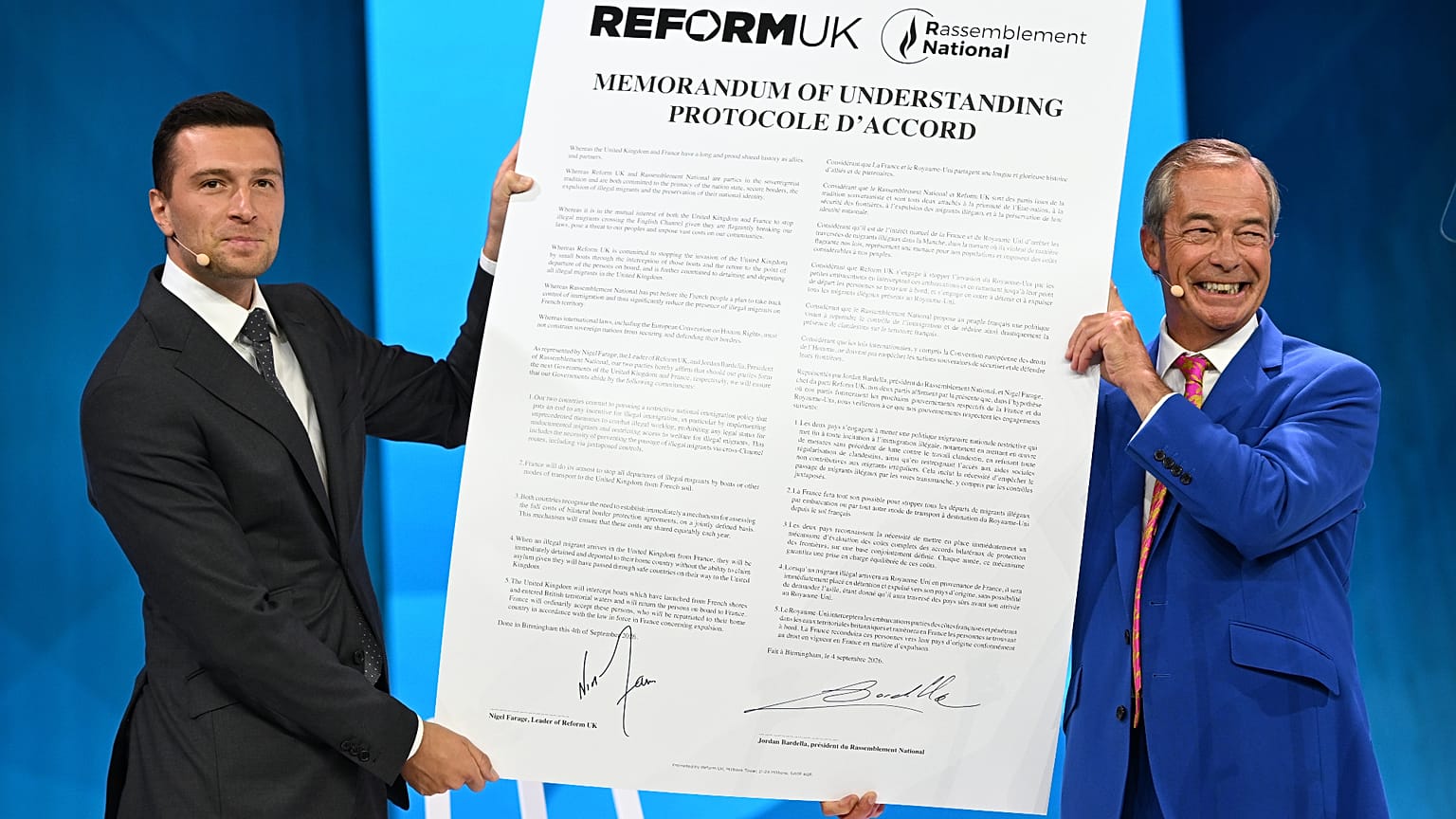
At the Reform UK Party conference on Friday, Nigel Farage and Jordan Bardella signed an agreement, vowing to end irregular migrant crossings "forever", should their respective parties come to power.
On Friday, Jordan Bardella of the far-right National Rally party signed a "memorandum of understanding" with Reform UK leader Nigel Farage, aimed at stopping the boats "forever" — should their parties come to power — at the party's annual conference in Birmingham
Farage and Bardella signed the agreement which vows to end irregular migrant crossing on stage. The Reform UK leader hailed the deal as a "genuine new entente cordiale" between the two countries and political parties.
Bardella — who is hoping to become France's next Prime Minister — said that "the United Kingdom must not be the destination for illegal immigrants entering France. They must be sent back to their countries of origin.”
Delivering his speech in English, something he rarely does, he accused French President Emmanuel Macron of "failing" to protect France. Switching to French for the press conference that followed his speech, Bardella argued that “if France managed its borders better, no one would leave Calais.”
Bardella and Farage's meeting followed the French President's trip to London on Thursday, where he met with British Prime Minister Andy Burnham to discuss how to "scale up" efforts to tackle illegal crossings and strengthen the UK's relationship with Europe.
Britain's Labour government said this week that the UK had recorded the lowest number of boats carrying migrants and asylum seekers across the Channel from France to England this summer since 2019.
Tense past relations with the National Rally party
Farage and Bardella last met in December last year at a private members' club in London. But despite their shared eurosceptic views, Farage has not always had a smooth relationship with the National Rally Party — or with Le Pen.
In 2014, Le Pen accused Farage of "aggression" against her party, after he refused to form an alliance with the National Rally party (which at the time was known as the National Front) in the European Parliament due to what he described as the party's "anti-Semitism and general prejudice."
When questioned about his past ties to the National Rally party by the press, Farage conceded on Friday that he had been “nervous” about the National Front, founded by Jean-Marie Le Pen, when he began his career as a member of the European Parliament in 1999.
“When Marine took over, I observed the situation; I didn’t get involved right away. What she has accomplished, namely ridding the party of those extremist elements and bringing it into the mainstream is a considerable achievement", said Farage.
Reform UK led national polls in the UK for over a year until July, but the party's standing has slumped in recent weeks amid multiple scandals involving allegations of irregular political funding.
On Friday, hours before Reform's conference was set to begin, Farage's Reform UK was reported to the Metropolitan Police and the Electoral Commission over alleged illegal donations.
This followed an undercover investigation aired by British broadcaster Channel 4 News, in which an investigative group called Verbatim posed as a wealthy American financier and his UK-based son. Under UK law, donations from foreign investors are illegal.
Bosnian Serb war criminal Mladić commemorated in Belgrade, but no state honours
Thousands are expected at Mladić's burial in Belgrade on Monday, which will proceed without serving officials, artillery salutes or ceremonial military presence. Brussels has said earlier any glorification would be "incompatible with the values on which the EU path is built".
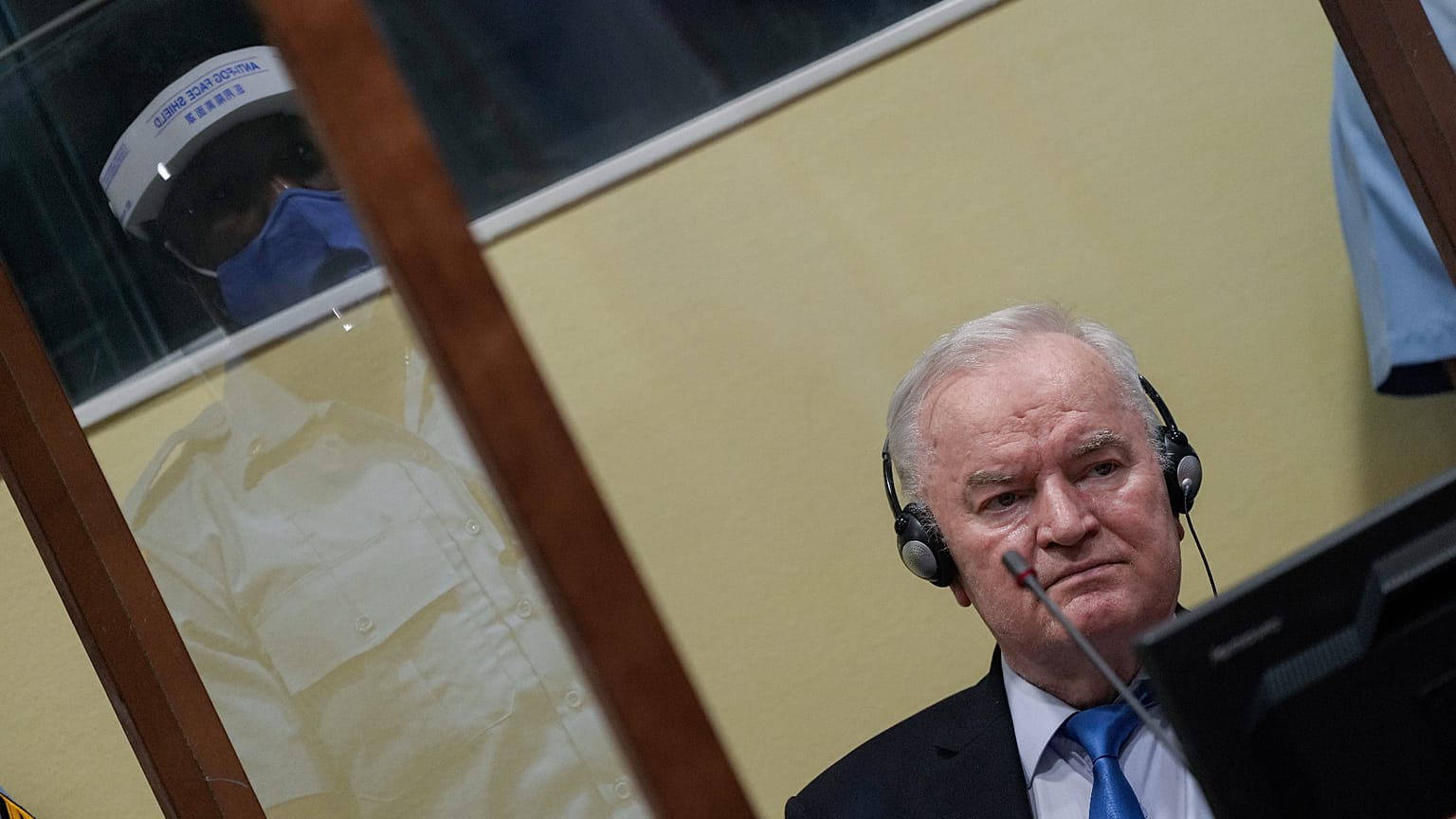
A commemoration for former Bosnian Serb army commander and convicted war criminal Ratko Mladić opened on Saturday at the House of the Serbian Army in Belgrade as Serbia faces mounting European pressure over what Brussels has described as his glorification — an accusation Serbia rejects.
Mladić died last week while serving a life sentence for genocide, war crimes and crimes against humanity during the war in Bosnia. His remains were flown to Serbia from The Hague on a government plane on Thursday.
Serbian army soldiers carried the coffin with Mladić’s body wrapped in the national flag from the plane to an unmarked maroon van, which was then given a police escort down Belgrade’s main motorway.
Serbia's Justice Minister Nenad Vujić — who initially announced that Serbia would give Mladić "all the military and state honours" — was on the plane along with Mladić’s son Darko and two of his former army assistants.
The body was transferred to the military hospital in Belgrade for an autopsy before his coffin is displayed at a church near the Košutnjak cemetery on Monday morning, where he will be buried later in the day, his family announced on Friday.
He will be buried without state or military honours, with no serving officials in attendance including President Aleksandar Vučić, the prime minister and the speaker of parliament, Euronews has learned.
There will be no artillery salutes or ceremonial military presence, and he will not be buried in the Alley of the Greats or the Alley of Distinguished Citizens despite requests to that effect.
Serbian authorities clarified earlier that Saturday's commemoration was not organised by the state, but rather by an association of retired generals. Mladić's family said he would be buried next to his daughter, who died by suicide in the 1990s, according to domestic media outlets.
Belgrade has contributed to covering Mladić's personal expenses and family visits while at the Hague tribunal, and has repeatedly asked for an early release on humanitarian grounds due to his declining health in recent years.
Thousands to gather at funeral
After Bosnia declared independence from Yugoslavia in early 1992 following in the footsteps of Slovenia and Croatia, Bosnian Serb leaders, backed by the government in Belgrade led by Slobodan Milošević, created their own parastate.
The ensuing military offensive led by Mladić — a career Yugoslav army officer who also took part in the fighting in neighbouring Croatia — aimed at ethnically cleansing as much of the country’s territory as possible of the other two ethnic groups, Bosniaks and Croats.
The International Criminal Tribunal for the former Yugoslavia (ICTY) convicted Mladić of genocide for orchestrating summary executions of more than 8,000 Bosniak men and boys in Srebrenica in July 1995 — considered the worst bloodbath on European soil since the end of World War II.
He was also found guilty of war crimes and crimes against humanity during the siege of Sarajevo, the longest siege of a capital city in modern warfare.
His troops in the surrounding hills terrorised the residents of the Bosnian capital with daily shelling and sniping for nearly four years after the war broke out in early 1992.
Known as the “Butcher of Bosnia,” he became the most notorious figure of the war in the former Yugoslav republic of 3,5 million that left more than 100,000 people dead and over 2 million displaced or seeking refuge abroad before it ended in late 1995 in a US-brokered peace agreement.
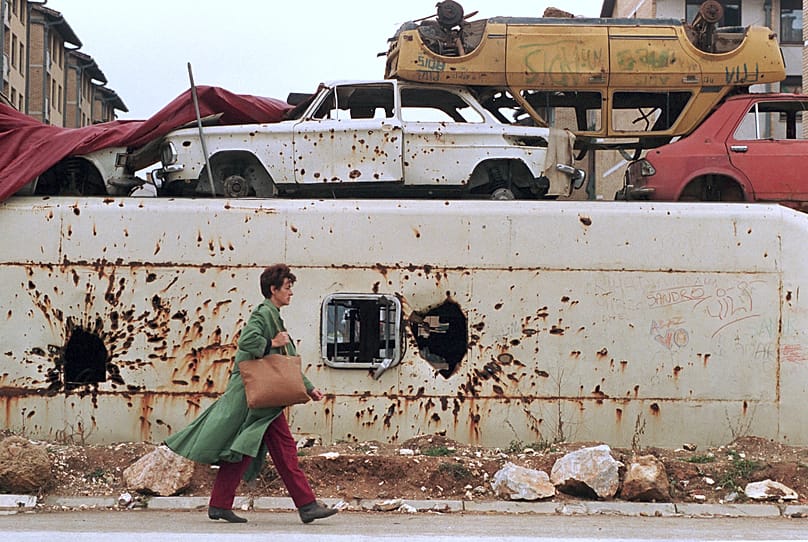
FILE: A woman walks next to a barricade made of mortar and damaged vehicles as she makes her way through the frontline neighbourhood of Dobrinja in Sarajevo, 13 November 1994AP Photo/Jacqueline Arzt
Serbian President Aleksandar Vučić predicted that Mladić’s admirers — who consider him a hero despite his sentence — could come to the funeral in large numbers.
“It will be hard to secure and guarantee security to everybody,” Vučić said. He added that Serbia’s police and the state security agency predicted that “tens of thousands” could attend. “It will be a demanding job for our services and we will use everything at our disposal to provide security.”
“I have spoken to the Mladić family and I wish it all passes in a dignified way,” Vučić added.
The Serbian president later said he would not attend Mladić’s funeral because of a previously scheduled high-level visit.
“I have an official visit on Monday and all day Tuesday by the President of Uzbekistan (Shavkat Mirziyoyev), scheduled four months ago,” Vučić, who is touring the country to showcase infrastructure development, stated on Friday.
“Have I done everything necessary and everything possible for this to proceed in a dignified manner, in a serious and responsible manner, for the state to conduct itself properly? That is exactly what I have done,” he added.
Sparks fly over glorification accusations
Following Mladić’s death last Thursday, thousands of Serbs held vigils and marches in his honour, drawing condemnation from Brussels and elsewhere.
EU Enlargement Commissioner Marta Kos on Friday cancelled an upcoming visit to Serbia, a long-standing candidate for membership in the 27-member bloc.
"The glorification surrounding his death is incompatible with the values on which the EU path is built," Kos said on X.
"Ratko Mladić was convicted of genocide, crimes against humanity and war crimes," Kos said. “The return of his remains to Belgrade reminds Europe of the darkest pages in our recent history.”
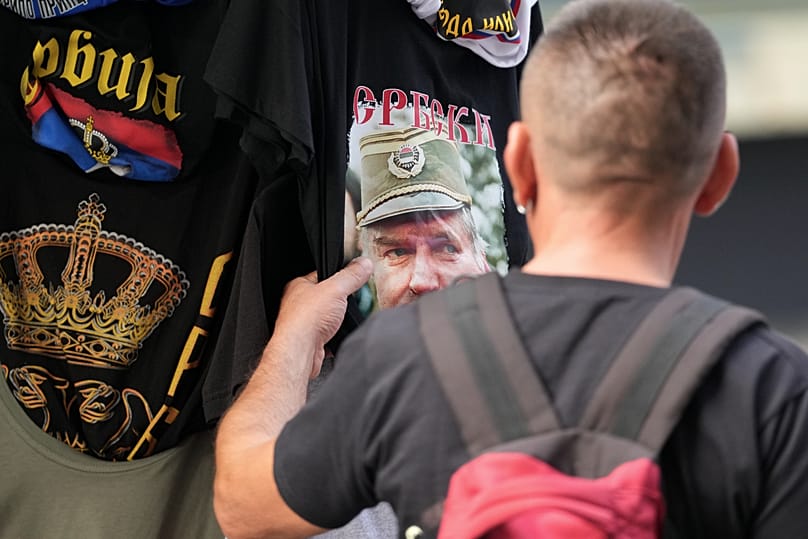
A buyer checks a T-shirt with a picture of former Bosnian Serb wartime general Ratko Mladic displayed on Belgrade's main pedestrian street, 4 September 2026AP Photo
Vučić responded by stating that Kos’ explanation was "very short but stupid, as usual".
"I suppose we should ban people from showing up, ban the funeral, make cemeteries for dogs," he added.
Earlier on Friday, Kos said the next days ahead of the burial "will be a very important test" for Belgrade.
The Council of Europe Commissioner for Human Rights Michael O’Flaherty on Friday urged authorities in Serbia and in the Bosnian Serb-run entity of Bosnia to "counter the glorification of convicted war criminals," which is illegal in Bosnia and "is not protected speech under the European Convention on Human Rights."
"I abhor the public glorification of Ratko Mladić, a deceased war criminal convicted for the Srebrenica genocide and crimes against humanity," O'Flaherty said in a statement.
Calls have also multiplied for the European People’s Party (EPP) to cut its ties to the ruling Serbian Progressive Party (SPS).
European Commission President Ursula von der Leyen is an EPP member, along with European Parliament President Roberta Metsola and other top officials.
The legacy court in The Hague, now formally known as the International Residual Mechanism for Criminal Tribunals, said it stood “in solidarity with the victims, survivors and their families who suffered the crimes for which Mr Mladić was found guilty.”
It condemned “any actions that glorify those convicted of war crimes, crimes against humanity and genocide by international courts.”
Belgian and Irish foreign ministers have both publicly objected to any honours granted to a person convicted of genocide.
Meanwhile, Serbian football club Red Star Belgrade was fined by UEFA for fans chanting in honour of Mladić, who died on the day of their Europa League game last week, which Red Star lost 5-1 against Czech club Viktoria Plzeň.
UEFA said late Friday its judges fined Red Star €90,000 for charges including chants not fit for a sports event plus "racist and/or discriminatory behaviour".
The European footballing body doled out a similar penalty to Bosnia's FK Borac Banjaluka, fining it €39,500 for chants in favour of Mladić and other fan infractions during their Conference League match against Iceland's Vikingur Reykavik.
Red Star is the most decorated football club in the former Yugoslavia, winning the Champions League in 1991.
Berlin cyberattack: hackers leak highly sensitive data across dark web
A large amount of personal data has also been leaked, particularly relating to state civil servants, including birth certificates, what appear to be absence lists, telephone numbers and home addresses.
The hacker group "Rhysida" has published almost six terabytes of data from Berlin's state administration on the dark web. Among the data is said to be highly sensitive information.
The scale of the leak is enormous: 1,439,893 files. So far, there has been hardly any response from Berlin's administration and political leaders.
Among the published files is a folder titled "AG CBRN-Rahmenplanung." CBRN stands for chemical, biological, radiological and nuclear threats. This means that highly sensitive information about potential threat scenarios may now be publicly accessible and could also be viewed by terrorists or foreign intelligence services.
Investigative journalist Lars Winkelsdorf has sounded the alarm on "X." According to him, the cyberattack is "of a magnitude that threatens the state."
"In addition to LKA documents related to investigations, the files also include plans concerning national defense—ranging from the federal government’s secret communication channels in the event of an apocalypse to defense-related companies and emergency plans developed by government agencies," he wrote.
A large amount of personal data has also been leaked, particularly relating to state civil servants, including birth certificates, what appear to be absence lists, telephone numbers and home addresses.
The hackers had previously threatened to publish the data on their leak site and demanded a ransom of 30 Bitcoin, around two million euros. They set a countdown that expired at about 3.35 pm on Friday. The Berlin Senate had already made it clear before the ultimatum expired that, as a matter of principle, it does not give in to such blackmail demands.
Shortly after the countdown ended, the data package was published on the dark web, and members of the hacker group have already been sharing lists of filenames on social media.
Paris drops Mercator projection: France now looks smaller on world maps
France is redrawing its world map: deeming the Mercator projection misleading, the foreign ministry will drop it in favour of a map that better reflects actual continental sizes, especially Africa.
A shrunken Africa, a Greenland and a northern Russia that seem to stretch into infinity: that is about to disappear from the maps used by French diplomacy.
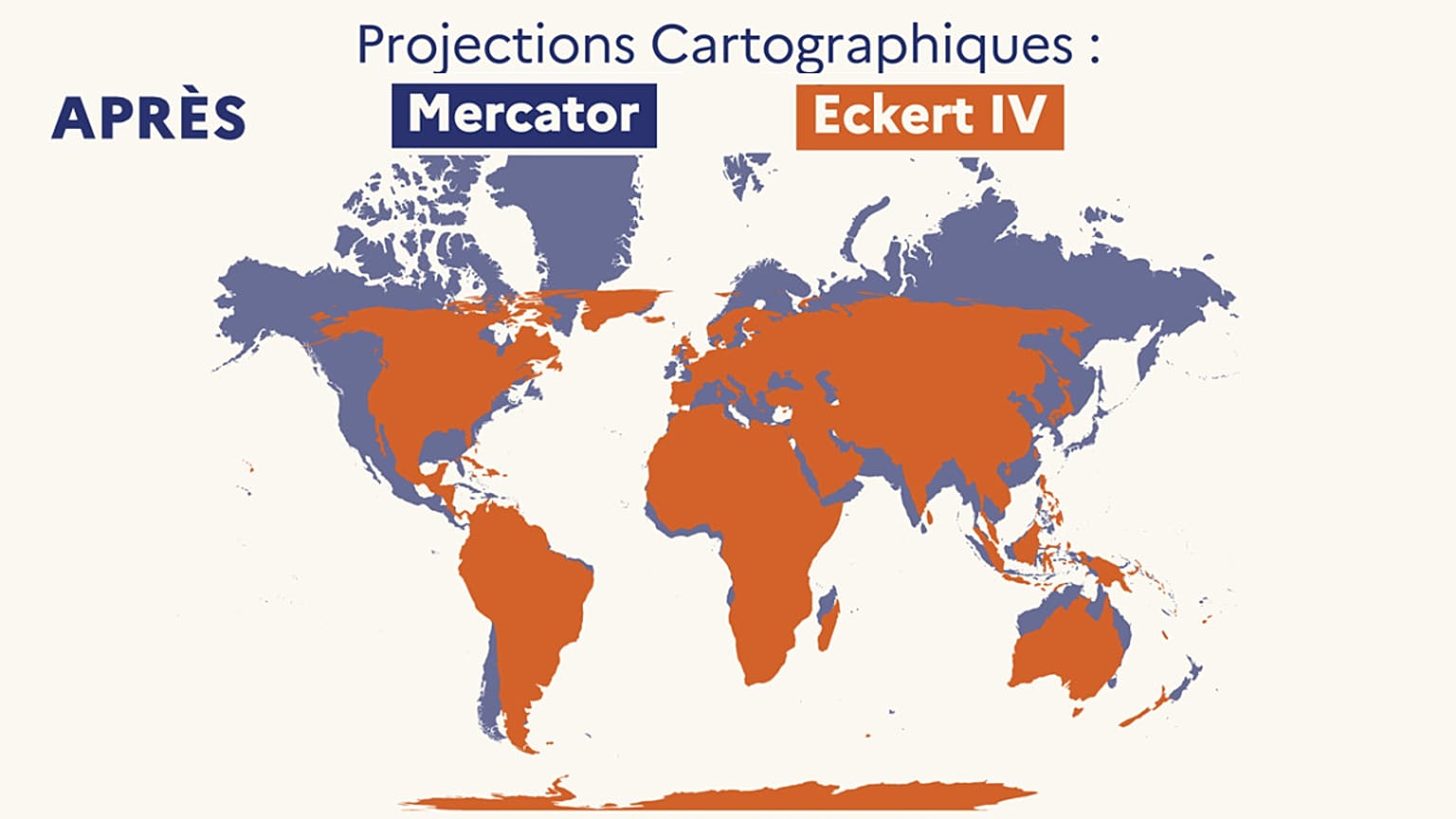
Foreign Minister Jean-Noël Barrot announced on Friday that his department is abandoning the so-called Mercator projection, which artificially enlarges polar regions and visually downplays the size of equatorial areas. France will now use instead the Eckert IV projection, which reflects the true proportions of the continents more accurately.
As a result, France will appear smaller on the map compared with countries close to the equator, just like the United States or Russia.
'A map is never entirely neutral'
In a speech at the Sorbonne university during the public event "La Fabrique de la diplomatie" or "The making of diplomacy", the French minister said that "the time has come" to "correct" how the world is perceived through maps inherited from 16th-century Western navigators.
In a speech delivered at the Sorbonne for the public event "La Fabrique de la diplomatie", the French minister said that "the time has come" to "correct" how the world is perceived through maps inherited from 16th-century Western navigators.
"A map is never entirely neutral. Take the Mercator projection, the one every one of us has known since childhood. The areas we see on it do not correspond to actual areas: (...) The United States, Russia, China take on a disproportionate visual importance compared with Africa, Latin America or South-East Asia," the French foreign minister said.
Jean-Noël Barrot also cited the example of Greenland, which is roughly the same size as the Democratic Republic of Congo or Algeria, even though it "seems almost as vast" as the entire African continent.
"Changing the map obviously does not change the world. But correcting a representation that distorts it is already an act of truth," he stressed.
The ministry began reducing its use of the Mercator projection in 2021
Meanwhile, French diplomatic maps will not change overnight but the process is already underway, Euronews has learned from a diplomatic source. The ministry began reducing its use of the Mercator projection in 2021, "with the aim of providing a more accurate geographical representation of the world."
The projection has been "gradually phased out" across all public diplomacy websites, the source said.
"The advantages and biases associated with each type of representation are presented at various events attended by the ministry's cartographers," the Quai d'Orsay added, citing the European Heritage Days and the International Geography Festival in Saint-Dié-des-Vosges.
"France will continue this work, prioritising map projections suited to different purposes and providing a more accurate reflection of geographical realities in its diplomatic communications."
French diplomats nevertheless acknowledge that the Mercator projection remains relevant "in a limited number of cases", including regional or local uses around the equatorial zone, as well as for navigation charts.
At the UN, a cartographic victory for Africa
The announcement in Paris comes as, in New York, the world map is also being redrawn. A few hours later, the United Nations General Assembly officially abandoned the Mercator projection in favour of a projection based on the Equal Earth model, created in 2018 and closer to the real proportions of the continents.
The non-binding resolution, entitled "Correcting the map"and sponsored by Togo, was backed by 164 member states. The African Union had already adopted Equal Earth in March, and the text now encourages countries to do the same.
Only the United States voted against, denouncing what it called a "radical ideological project", notably because of a passage in the resolution stating that "correcting cartographic distortions relating to the size of continents constitutes an act of cognitive justice and memorial reparation".
Six countries – Estonia, Georgia, Lithuania, Moldova, Serbia and Ukraine – abstained.
The United Nations General Assembly adopts an African proposal for a new world map In favor: 164 Against: 1 Abstentions: 6
The UN stresses that the resolution does not ban the Mercator projection, "nor does it impose a single map". The resolution "encourages governments, educational institutions, international organisations and technology companies to make use of the Equal Earth projection, or of other so-called 'equal-area' maps that preserve the true proportions of surface areas.
France has therefore joined this movement, but has opted to adopt the Eckert IV projection, created in 1906. It is similar to the Equal Earth projection recommended by the UN, though not identical. Both represent the size of the continents much more faithfully than the Mercator projection, but they differ slightly in the shapes they give to the landmasses.
As the UN points out, Mercator mapping will not disappear altogether. Digital platforms such as Google Maps also currently use a version of this projection.
In French schools, most world maps are still in Mercator. "You can find Eckert or Peters* in some textbooks, but that is very rare," says Grégory, a senior history and geography teacher in Rennes, speaking to Euronews.
It remains to be seen whether the maps used in schools will also follow the shift launched by the foreign ministry.
*another equal-area projection, which provides a better representation of the continents' true surface area – Euronews.
Shein’s stock market debut was a major flop. Does it signal the death of ultra-fast fashion?
Copyright Copyright 2025 The Associated Press. All rights reserved.
“A model that floods the market with thousands of new daily styles at single-digit price points can only exist by passing its true costs onto labour and the environment.”
Shein’s ultra-fast fashion empire has taken a dramatic fall following its post-IPO valuation collapse.
The e-commerce platform, which is headquartered in Singapore but outsources much of its manufacturing to China, failed to go public in London and New York following concerns around its supply chain and heavy criticism of its environmental impact.
Shein therefore pivoted to the Hong Kong Stock Exchange, where it was valued at around $27 billion (approximately €23.24 billion) on 1 September. It may seem like a huge financial win, but it’s 70 per cent lower than its private market peak of almost $100 billion (€86 billion) back in 2022.
Why was Shein’s IPO such a flop?
“Capital markets aren’t acting out of pure altruism: they’re reacting to material financial risk,” sustainability expert and founder of tech company E&S Solutions Ildiko Almasi Simsic tells Euronews Earth.
“Shein’s delayed public listings and severely discounted valuation prove that investors now recognise ESG issues as direct threats to terminal value.”
Simsic argues that a business model that has been exposed to multiple controversies, such as forced labour and hazardous chemicals in clothing, carries an “enormous risk profile”.
She says environmental and human rights issues have now crossed over from “ethics to equity”, signalling a watershed moment for the fast-fashion industry.
But what makes Shein so controversial in the first place, and can its super cheap garments and on-trend styles ever become sustainable?
Shein’s controversial supply chains
“For years, ultra-fast fashion grew by leveraging hyper-fragmented, outsourced supply chains that kept prices absurdly low while keeping liabilities at arm’s length,” Simsic tells Euronews Earth.
“But that model created a massive structural vulnerability. When your business relies on thousands of sub-contractors operating in grey regulatory zones, supply chain oversight isn’t just an operational headache – it becomes a central business risk.”
Shein’s supply chain has been shrouded in controversy since its conception. In 2022, an investigation by environmental NGO Greenpeace Germany found hazardous chemicals above the EU regulatory limits in seven of 47 Shein products tested.
At the time, Shein acknowledged the chemical contamination and pledged “substantial improvements” to its chemical management.
However, a 2025 investigation found that little had changed. Greenpeace purchased 56 garments from Shein across eight countries and analysed them for hazardous chemicals. They found that 18 of 56 (32 per cent) of the garments exceeded the EU limits, including children’s clothing.
Among other chemicals, the plasticizers phthalates and water- and dirt-repellent “forever chemicals” (PFAS) were detected. These are hazardous chemicals that have been linked to various health concerns, including cancer, reproductive disorders, growth disorders in children, and immunodeficiency disorders.
Workers in producing countries are often exposed without protection, while chemicals are discharged untreated into waterways and soils,
Greenpeace
Global campaigning network
“Consumers are also at risk as they can be exposed to these chemicals through several ways – directly through the skin, by inhaling textile fibres in the air and, in the case of small children, through mouthing contaminated clothes.”In 2023, Shein admitted to finding two cases of child labour in its supply chain during the first nine months of the year.
The firm introduced new rules so that any child labour or forced labour violations have become grounds for immediate termination of contracts.
“Both cases were resolved swiftly, with remediation steps including terminating contracts with underage employees, ensuring the payment of any outstanding wages, arranging medical checkups and facilitating repatriation to parents/ legal guardians as needed,” Shein said at the time.
“Following appropriate remediation, the contract manufacturers were permitted to resume business.”
Despite Shein’s clampdown on labour violations, concerns of poor working conditions remain rife. A 2025 investigation by the BBC found that workers were sitting behind sewing machines for around 75 hours a week in contravention of Chinese labour laws.
Many employers told the publication that they only have one day off each month and have to endure 12-hour shifts, which didn’t include breaks for lunch and dinner, often working until past 10pm.
A 2024 report by Swiss advocacy group Public Eye also found that excessive overtime was still common for many workers – despite Shein promising to improve conditions following previous probes.
Can Shein ever be sustainable?
As Shein geared up for going public, scrutiny on its fast-fashion model grew stronger.
The company’s draft prospectus included the slogan “We believe in doing well by doing good”. However, according to Public Eye, this was removed from the final document.
Shein insists that “commitment to sustainable and responsible growth is woven into the fabric” of its business model. However, the expected IPO proceeds allocate just 10 per cent to sustainability and corporate responsibility.
An investigation by global nonprofit Rest of World found that between July and December of 2021, Shein added anywhere between 2,000 and 10,000 SKUs (stock keeping units, or individual styles) to its app each day.
This is because Shein orders small batches of each garment, sometimes as low as a few dozen pieces, then waits to see how consumers respond. If a particular item seems to be selling well, Shein orders more.
“A model that floods the market with thousands of new daily styles at single-digit price points can only exist by passing its true costs onto labour and the environment,” Simsic says.
“Cheap prices are an illusion created by systemic outsourcing. When garments are produced at a fraction of a cent per stitch, it almost guarantees non-compliance with fair wages, excessive overtime, and cheap, fossil-fuel-derived synthetic fabrics.”
The expert acknowledges that while efficiency and tech-driven demand forecasting can reduce excess inventory, it cannot bypass the “physical limits of planetary resources or basic human rights”.
“Ultra-low cost and sustainability are fundamentally incompatible concepts,” she adds. “One inherently undermines the other.”
Can fast fashion survive the scrutiny?
Shein’s scrutiny has gone far beyond complaints from environmentalists and individuals. Earlier this week, France passed a law targeting companies known for selling large volumes of low-quality clothing at rock-bottom prices.
“The harmful effects of ultra-fast fashion on our environment and our economy are well known and documented,” says Mathieu Lefevre, the minister for ecological transition.
Under the bill, firms like Shein are assessed under two criteria: the volume of clothing placed on the market and the cost of repairing garments relative to their purchase price.
The per-item fee will vary on a set scale according to how each product scores on both of these standards.This year, companies will pay fines such as a 50-cent levy on underwear falling into the ultra-fast fashion category, rising to €2 for T-shirts, €9 for jeans and €12 for a jacket.
The levy could reach up to €19.50 per item by 2030, though the cap remains at 50 per cent of the product’s pre-tax price.
Beijing has bitten back, urging France to abandon the law and describing it as “clearly discriminatory” due to Shein – and sites like Temu – being located in Asia.
“Should France persist in this course of action, China will take necessary measures to safeguard the legitimate rights and interests of Chinese enterprises,” says commerce ministry spokeswoman Huang Ling. “France will bear full responsibility for all consequences arising from this.”
Simsic argues that while fast-fashion giants will still be able to survive new laws like this, it’s likely they won’t reach their historical growth model.
We’re witnessing a decisive shift from voluntary corporate sustainability to hard, enforceable law.
Ildiko Almasi Simsic
Sustainability expert
“Historically, labour issues or toxic chemical findings were managed by public relations or board-level sustainability committees. Today, with legislation like the EU’s Corporate Sustainability Due Diligence Directive and Extended Producer Responsibility, these are strict legal compliance matters carrying fines of up to five per cent of global turnover.”
Simsic adds that if non-compliance directly threatens a company’s bottom line through hefty regulatory penalties and import bans, growth will inevitably slow. It means sites like Shein will have no choice but to internalise these costs, by investing heavily in supply chain traceability and safer materials.
Euronews Earth has contacted Shein for comment.
'Anti-fast-fashion' law: France rejects China's discrimination claims
China has claimed that the new "anti-fast-fashion" law which came into force in France on Tuesday amounts to "discrimination." Responding to these accusations, a source from the Ministry of Foreign Affairs told Euronews that such claims were false.
On Thursday, China claimed that France's new fast-fashion law, targeting major Asian e-commerce platforms including Shein and Temu was "clearly discriminatory." Responding to these accusations, a source from a department linked to France's Ministry of Foreign Minister Affairs told Euronews that these claims were false.
A source from the French Foreign Trade and Attractiveness office said that the new law was "not discriminatory" and that it was introduced to "protect the environment and consumers."
"It is in everyone's interest, including China's, to have a peaceful relationship with France, with the European Union, and a civil trade relationship", the source said.
Speaking at a press conference on Thursday, Chinese commerce ministry spokesperson Huang Ling called for the suspension of the new law, which came into force on Tuesday, after it was voted in July.
The law imposes fees on certain items — which will eventually reach almost 20 euros per garment — as part of a push to curb the industry's environmental and local economic impacts.
"China urges France to immediately halt the implementation of the anti-ultra-fast fashion law," said Huang, adding that China stands in "firm opposition to France's insistence on pushing forward this trade-restrictive measure, which is clearly discriminatory".
"Should France persist in this course of action, China will take necessary measures to safeguard the legitimate rights and interests of Chinese enterprises," she stated, while warning that "France will bear full responsibility for all consequences arising from this."
"No discrimination"
According to the source at France's Foreign Trade and Attractiveness Office, while there is "no discrimination", China is within its rights to raise issues around the law with the WTO.
"The fact that China feels targeted is indeed something we have heard. We are of course ready to talk to them to understand to what extent they feel targeted [...] If China has technical issues with the law, it is perfectly entitled to submit them to the WTO."
"Our Parliament is sovereign and has had its say. It has passed this law and we will fully respect its decision. This kind of threat, this challenge to a state's sovereign position, is coercion, economic retaliation. But for now, it remains a threat."
The European Commission has expressed reservations about whether France's "anti-fast-fashion" law is compatible with EU law, particularly relating to its advertising ban, which prohibits promotional campaigns and influencer marketing for fast-fashion brands.
However, according to the source, the law has undergone revisions and is robust. "We have taken the time to respond to the European Commission's concerns, to questions about compatibility with various directives. Questions remain, but we are confident",
"From our point of view, there are no outstanding issues".
For now, China has not said what retaliatory measures it could take, but Beijing has already targeted French interests in the past, imposing anti-dumping measures on European brandy in 2024, after the European Union decided to impose duties on Chinese electric vehicles.
Under France's new legislation, what counts as "ultra-fast fashion" is determined on the basis of two sets of criteria: the volume of clothing placed on the market and the cost of repairing garments relative to their purchase price.
The per-item fee is set to vary on a set scale, according to how each product scores on both these standards.
Shein, known for its ultra-low prices and rapidly produced clothes, made a tepid Hong Kong Stock Exchange debut on Tuesday, after previous plans for initial public offerings in New York and London were derailed.
The online retailer moved its headquarters to Singapore between 2021 and 2022, which analysts say was intended to avoid increasing global scrutiny of Chinese firms.