BRINGING THE WAR HOME
Russia's ruling party on track to win election after Ukraine's drone attacks on Moscow
Russia's ruling United Russia party on Sunday was projected to win the country's tightly controlled parliamentary elections, according to exit polls. Ukraine launched a massive drone attack on Moscow, killing three people, said city officials, on the third and final day of Russia's wartime vote.
Issued on: 20/09/2026 -
By: FRANCE 24
Video by: Gulliver CRAGG

05:18
Russia's ruling United Russia party was on track to easily win a parliamentary election that President Vladimir Putin has cast as a test of support for the war in Ukraine, partial official results showed on Sunday, after Ukraine launched a massive drone attack on the Russian capital.
In a tightly controlled political system which critics say does not tolerate genuine dissent, initial results showed United Russia comfortably ahead with 57.5% of the vote. Other parties like the Communists, the ultra-nationalist LDPR, the New People party and the Just Russia party – who all vote the same way as United Russia on major issues – trailed by a huge margin but were on course to win seats in the State Duma, the lower house of parliament.
Dmitry Medvedev, the deputy chairman of Russia's Security Council and a former president, was quick to declare that United Russia had performed with dignity, a result he said showed that Russians had entrusted it to govern further.
Russian government officials accused Ukraine of trying to disrupt the State Duma vote - the first since Russia launched its full-scale war in Ukraine in February 2022 – after Kyiv launched hundreds of drones at Moscow and other regions in what the TASS state news agency said was the biggest attack of its kind since the war began.
The drone strikes killed three people in the Moscow region and two more in the Russian-held part of Ukraine's Kherson region, including an election official, according to the region's governor and the election commission.
A facility at Moscow's oil refinery, which has been targeted before, was also damaged. As voting got underway in the capital, flames and huge columns of smoke rose from the site on its outskirts.
"The biggest attack by enemy drones has been repelled," Moscow Mayor Sergei Sobyanin said on Telegram. "This unprecedented attack was clearly planned with the aim of disrupting the elections. The enemy did not succeed."
Russia's Defence Ministry said Ukraine had also fired Flamingo cruise missiles and said it had downed nearly 2,000 Ukrainian drones targeting various regions and 8 cruise missiles in the last 24 hours. It said it would intensify its own strikes on Ukrainian military targets in response.

01:33
Voting systems hit by cyberattacks, say officials
Voting systems also faced waves of cyber attacks, according to election authorities, who said that the electoral process had nonetheless been mostly smooth.
Russia's opposition in exile had called on those who opposed the authorities to stand in line at voting stations at noon to express their dissent, a call which saw long lines form in some locations. It was unclear, however, what impact that had on the overall outcome.
The Kremlin is likely to present the results as evidence of public backing for Putin's policies and for the war, now in its fifth year with no sign of ending soon.
Central Election Commission Chairwoman (CEC) Ella Pamfilova said the latest attacks had not deterred voters. "The more pressure they put on us, the more we are seeing an unprecedented level of what I would call public unity," RIA news agency quoted her as saying.
Turnout had reached nearly 57% as of early evening Moscow time, CEC data showed.
Most anti-war candidates have been barred from the ballot. Those who did run from the liberal Yabloko party, which has polled in the single digits in recent years but hoped to tap into war fatigue, said they feared for their freedom after courts handed long jail terms to two senior party figures before the vote for comments about the conflict.
Discrediting the army or spreading what authorities regard as fake news is punishable by lengthy prison sentences.
In a small act of defiance, Yabloko's leader, Nikolai Rybakov, demonstrably spoiled his ballot paper, writing his party's name and the slogan "For peace".
The Kremlin says national unity and some censorship are necessary during what it calls its special military operation in Ukraine. It casts the conflict - Europe's deadliest since World War Two - as part of an existential struggle with a hostile West. Moscow says Ukrainian intelligence services and other enemies are stepping up efforts to stir unrest inside Russia.
'Pseudo election'
Kyiv, which has suspended elections under martial law, has dismissed the Russian vote as a "pseudo election".
Despite what experts see as the election's predictable outcome, the NEST think-tank in Berlin, co-founded by Kremlin critic Mikhail Khodorkovsky, whom Russian authorities have designated "a foreign agent", said the vote could still produce awkward moments for the Kremlin at a time of economic strain.
It said the Communist party and the New People party could attract votes the authorities would prefer to go to United Russia.
"The consequences of the war are increasingly being felt within the country, and accumulated anxiety and frustration may translate into votes for the systemic opposition parties that the Kremlin has allowed to remain on the ballot," it said in a note.
(FRANCE 24 with Reuters)
Moscow hit by 'largest-scale attack' on capital so far, mayor says
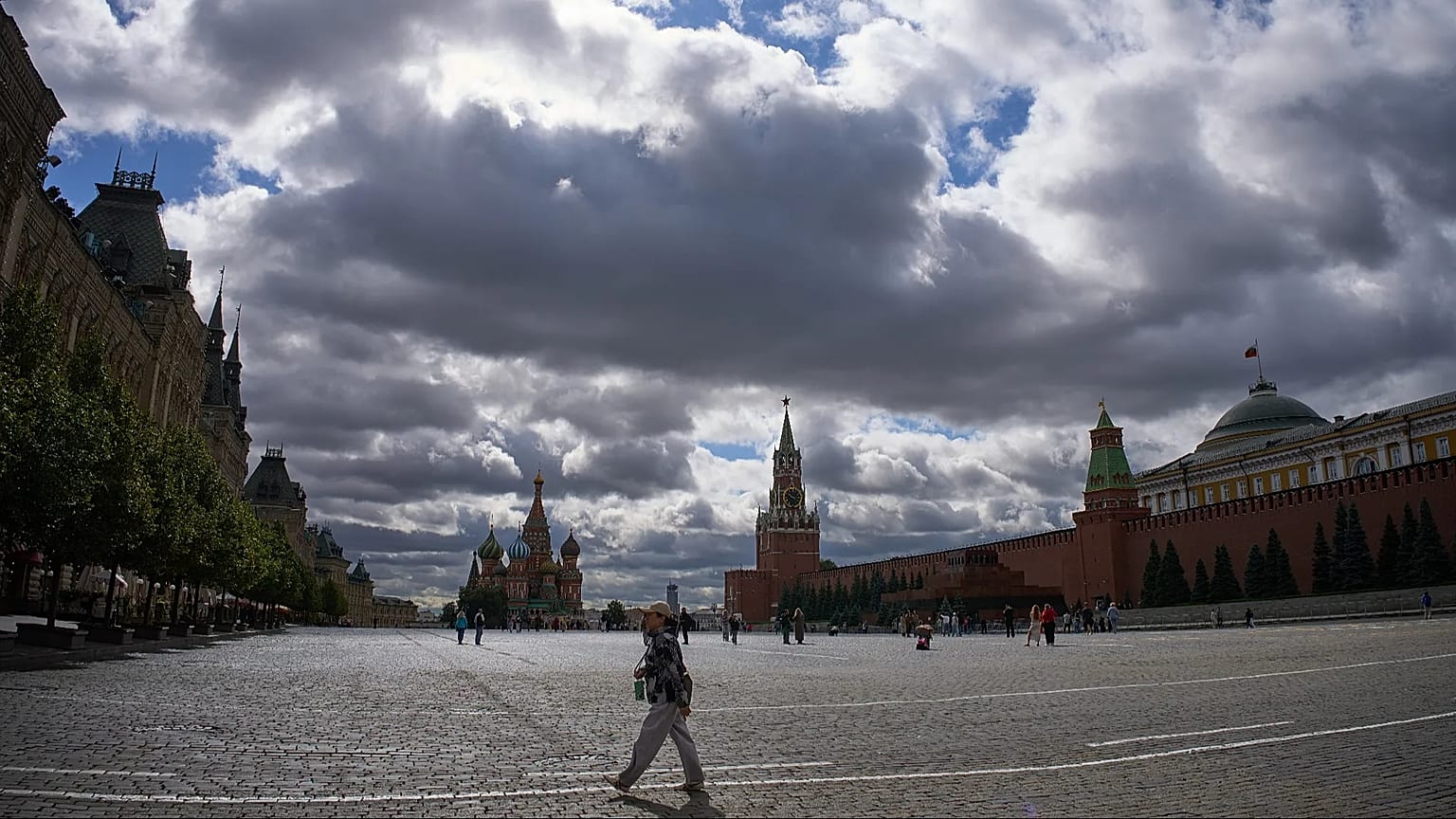
Ukrainian President Volodymyr Zelenskyy confirmed that Ukraine had targeted the Moscow region overnight, saying a "key" oil industry facility as well as a logistics facility were hit.
Ukrainian forces launched their "largest-scale attack" on Moscow since the war in Ukraine began, the city's mayor said on Sunday.
In a post on Telegram, Sergey Sobyanin reported that Russian air defences had shot down more than 1,600 drones across the country since Saturday, 450 of which he said had been heading towards the capital.
"Several drones reached the territory of the Moscow refinery, and one struck a residential building. There were no fatalities," he wrote. Moscow Oblast governor Andrey Vorobyov said two people had been killed in attacks across the wider region.
Ukrainian President Volodymyr Zelenskyy confirmed that Ukraine had targeted the Moscow region overnight, saying a "key" oil industry facility as well as a logistics facility were hit.
"Our long-range responses had a very significant impact in the Moscow region last night," he wrote in a post on X, adding that the attacks had involved FP-1 attack drones and Palianytsia missiles, among other munitions.
"Moscow must end its brutal war and choose peace instead of building layered rings of air defense at the expense of other regions," Zelenskyy continued, while also sharing video footage appearing to show the aftermath of the strikes.
Russian attacks on Ukraine
It comes as Ukrainian authorities reported that a child had died following a Russian strike on the Kyiv region, bringing the death toll from the attack to four.
Timur Tkachenko, the head of the Kyiv Regional State Administration, said on Sunday that the child died in hospital after having been injured in an attack on the Vyshhorod district.
"The Kyiv region has endured more than a day of enemy attacks," Tkachenko said in an update, adding that 31 structures had been damaged across five districts.
In the southern Kherson region, a 71-year-old priest was also killed in a drone attack on a monastery in the village of Chervonyi Mayak on Saturday, per local authorities. Four others were reportedly injured in the incident.
According to Zelenskyy, who has been calling for further sanctions against Moscow, Russia launched over 2,000 attack drones, 1,700 aerial bombs and 19 missiles against Ukraine this week.
Moscow faced its biggest Ukrainian drone attack as Russia entered the final day of parliamentary voting, Mayor Sergey Sobyanin said on September 20.
Air defences shot down 450 drones on the approach to the capital, Sobyanin said, putting the total repelled on all lines of defence since September 19 at more than 1,600; the defence ministry counted 1,110 destroyed across Russia overnight. Two people were killed in Moscow region, a 74-year-old man and a 44-year-old woman, Governor Andrey Vorobyov said, and about 20 were injured, 15 of them taken to hospital, Meduza reported. The Moscow Oil Refinery in Kapotnya was damaged, a combined heat and power plant in Dzerzhinsky was struck, and Vnukovo, Domodedovo, Sheremetyevo and Zhukovsky airports restricted flights.
The Kremlin spent the year engineering a low-key managed vote it could win quietly, and Ukraine's drones have put the war in front of voters on their way to the polling station instead. Russian officials say that was the point of the strikes. Ukraine has not said so.
Sobyanin called the attack an unprecedented attempt to disrupt the election and said "the enemy failed in this regard". Foreign ministry spokeswoman Maria Zakharova said commission staff in regions being attacked were "challenging all this terrorist scum" simply by turning up for work, and Central Election Commission chairwoman Ella Pamfilova said saboteurs had left four large regions in the Far East without communications during voting, TASS reported. Polling hours in Russian-held Donetsk were cut to six on September 20 because of drone activity.
President Volodymyr Zelenskiy said the overnight operation used Flamingo and Pelican missiles alongside drones and hit oil and logistics facilities: "These are billions of dollars that sustain the war machine," he said, AP reported, making no mention of the election. Ukraine's long-range campaign has shifted steadily onto refineries, fuel depots and logistics sites, part of a turn by both sides towards each other's civilian economy. The Kapotnya plant refines 11mn tonnes a year and supplies about 40% of Moscow's fuel market, according to Kyiv Independent.
Turnout stood at 45.1% at 07:50 Moscow time on September 20, the Central Election Commission said, after 40.79% at the close of the second day, TASS reported. In occupied Zaporizhzhia, voting for the Russian parliament for the first time, the commission put turnout at 72.88% by the evening of September 19.
Remote electronic voting, the most contested part of the system, ran on the federal platform in 32 regions and on Moscow's separate system, covering 48.4mn registered voters between them. Close to 6mn ballots had been cast online by 02:00 on September 20, 3.33mn on the federal platform and about 2.5mn in Moscow, RIA Novosti reported. Moscow's monitoring headquarters said the system was under "large-scale cyberattacks" hitting three network layers, while Dmitry Reut, deputy chairman of the city election commission, said they were being repelled without voters noticing, Kommersant reported. Online tallies are published as a single regional block and cannot be set against paper counts station by station, which is the core of the objection to them.
Roughly 4,500 polling stations processed ballots on the first day far faster than the national average of 20 an hour, some at 230 an hour, with the heaviest clusters in Chechnya, Dagestan, North Ossetia and the Leningrad, Voronezh, Smolensk and Ivanovo regions, according to a count by the investigative outlet IStories that The Insider published. Communist Party deputy Sergey Kazankov published video he said showed a commission member pushing two packets of ballots into a box in Mari El after observers left the room, and more than 1,300 observers were refused entry to polling stations on September 18. In Moscow, 92% of those who voted on the first day did so electronically.
There is no independent national count to test any of it against. Golos, the last independent Russian election monitor, closed in July 2025 after its co-chair was jailed, and Russia did not invite an observation mission from the Organization for Security and Co-operation in Europe.
About 1,600 veterans of the Ukraine war are standing across the parliamentary, regional and local contests and roughly 200 for the Duma itself, after United Russia rewrote its rules to ease them onto its slates, the New York Times reported. President Vladimir Putin has called them the country's "new elite".
Counting began as stations closed in Kamchatka and Chukotka, with the last ballots due in at 20:00 local time in Kaliningrad and first figures expected from about 18:00 GMT. No results had been published by midday on September 20. United Russia is expected to keep control of the chamber; what is open is whether it holds the 300 seats needed for a two-thirds Duma majority, and how far its vote has slipped in industrial regions, where the Kremlin's own pollsters could not agree on its standing in the final week.
Ukraine hits Russia with major drone attack, targeting refinery
Issued on: 20/09/2026 - FRANCE24
In Russia, voters are on the third and final day of casting ballots in the country's first wartime parliamentary election. Despite the voting however, Ukraine carried out what Moscow described as the "largest ever" drone attack on the Russian capital. Kyiv reportedly fired over 1.000 drones at the country, leaving two dead in the Moscow region and inflicting damage upon an oil refinery. Details by FRANCE 24 correspondent in Kyiv, Gulliver Cragg.
Video by: Gulliver CRAGG
Ukrainian drones set fire to the refinery that supplies about 40% of Moscow's fuel overnight, in what the city's mayor called the heaviest drone attack on the capital yet.
Moscow Mayor Sergei Sobyanin said a facility on the grounds of the Moscow Oil Refinery at Kapotnya, operated by Gazprom Neft, was damaged in the raid of September 19 to 20. A logistics warehouse complex at Sofyino in the Ramensky district of Moscow oblast, run by Sovremennye Skladskie Tekhnologii, burned the same night. Moscow region Governor Andrei Vorobyov reported at least two people dead and six injured across the province without tying the casualties to either site.
The strike puts Ukraine's refinery campaign inside Moscow's city limits at a moment when the Russian fuel system can least absorb it. Gasoline production covered only about 70% of domestic demand at the end of August, and half of Russia's six largest diesel-producing refineries had cut or halted runs this month, Reuters reported, citing fuel market participants. A plant inside the city is no longer only a symbolic target.
"I also approved new long-range operations in response to Russian strikes. We are preparing to expand our long-range capabilities," President Volodymyr Zelenskiy said on September 19, the day before the raid.
What Moscow says was damaged, and what it does not say
Sobyanin's account is narrow. He said a facility on the refinery grounds was damaged and that the attack was the most massive yet on the capital. He did not say the refinery had stopped, and no Russian official, company statement or outlet has said its output fell. Gazprom Neft has not commented. Until one of them does, Kapotnya is a fire and not a shutdown, and this monitor records it as one.
The plant's scale is not in dispute. Reporting puts its capacity at about 11mn tonnes a year and its share of Moscow's fuel at about 40%, with a larger share of the wider region's gasoline and jet fuel.
Ukrainian drone maker Fire Point said its FP-1 long-range drones took part. That is the manufacturer of the weapon describing the effect of its own weapon, and it carries no independent confirmation.
A second impact site was reported on Orekhovy Boulevard in southern Moscow. No facility was identified there and no damage was described.
The night before, and the one still being counted
This edition carries two nights rather than one.
On the night of September 18 to 19, Russia's defence ministry claimed 344 drones were destroyed over 16 regions and the Black Sea. It named no damaged facility, and no regional governor reported economic damage anywhere on that list. The correct reading is that no economic facility was reported hit, not that none was hit: the assessment of the Tatarstan refinery strike that arrived five days late is the standing reminder that Russian damage surfaces slowly.
The night of September 19 to 20 is reported only for Moscow and Moscow oblast, because Sobyanin and Vorobyov posted early given the scale of the attack on the capital. At the time of writing, governors in Ryazan, Leningrad, Volgograd, Samara, Krasnodar, Rostov, Tatarstan and Bashkortostan had said nothing about that night. The Russian side of it is not yet reported.
Russia's fuel arithmetic
The cumulative picture is firmer than any single night. Reuters, citing market participants, reported that Kirishi was fully shut and that Volgograd and NORSI were running at about a quarter of nameplate capacity, with the six biggest diesel producers accounting for about half of Russian diesel output. The International Energy Agency counts a successful strike on a Russian refinery once every three days over the first eight months of this year.
At Nizhnekamsk in Tatarstan, satellite imagery published on September 18 by the monitoring project Dnipro Osint indicates the September 13 strike hit the ELOU-AVT-7 crude distillation unit. Militarnyi says that unit processes 9.2mn tonnes a year, about 52% of the refinery's primary capacity. That is capacity read off an image rather than an outage confirmed by Tatneft, which has said nothing, and it amends an existing ledger row rather than opening a new one.
Odesa loses power, Kherson loses a pipeline
Russia's own targeting stayed on the grid and the logistics chain.
DTEK said 178,700 consumers were without power on the morning of September 19 in the Peresypskyi and Prymorskyi districts of Odesa, with more than 60,000 households already restored, and warned of possible disruption to critical infrastructure and electric transport. Neither the company nor the region named a damaged facility, so none is named here. These were emergency cuts rather than the scheduled kind, and they follow the pattern of winter grid attacks that has run through this war.
Odesa Governor Oleh Kiper said one strike hit again an administrative building that had been attacked the previous day, starting a fire on the upper floors, and also damaged two residential buildings, a two-storey educational facility, a car and a minibus. Nobody was hurt overnight. The September 18 strike on the same building injured 10 people, two of them rescue workers.
In Kherson region a gas pipeline was destroyed, along with administrative buildings, stores and a mobile phone tower. Five high-rise blocks and seven private houses were damaged and two people were killed. No source identifies the operator or says whether the line was transmission or local distribution.
Warehouses in Dnipro and a shopping centre in Nikopol were damaged by drones and artillery. No owner was named, which is now routine for the warehouse and retail targeting both sides practise.
Russia's defence ministry said Geran-4 Seeker drones struck two commercial vessels, a Ukrainian dry cargo ship bound for Odesa and a tanker docked in Odesa port, asserting both carried military supplies. It named neither vessel, described no cargo and produced no evidence, and Ukraine has not confirmed any damage. It is a claim, and the ledger carries it as one. Ships have been a target for a year, as the shift to crippling ports set out.
The nights, counted
All figures below are claims by one side, not counts.
Ukraine's air force said Russia launched 174 drones and two Zircon anti-ship missiles from Kursk region on the night of September 18 to 19, about half the drones jet-powered, and claimed 138 drones and three Banderol or Dan-T munitions downed or suppressed, with both Zircons failing to reach their targets. It recorded strikes at 15 locations and debris at nine.
For the night of September 19 to 20 the air force command said 138 drones were launched and 101 shot down or neutralised, with no regional breakdown published.
The 141 figure circulating for the earlier night covers drones and Banderol munitions only. The two Zircons sit outside it, so no overall interception rate can be drawn from it.
Manpower
A new standing section, because the competition for soldiers is now an economic story on both sides.
Ukraine's 100-day window for servicemen who went absent without leave to return without prosecution closes today. It opened under Cabinet Resolution 767 of June 12 and has run through more than 70 units. No total for the number who came back has been published. The General Staff has said only that returns exceeded new departures during August, without giving a figure for either.
On September 18 Prime Minister Serhii Koretskyi said the National Guard had created a recruitment centre for foreign volunteers, to handle interviews, checks and training for contract service. No pay rates were published. Former defence minister Mykhailo Fedorov said in June that Ukraine wanted foreigners in 30% to 50% of assault and infantry positions, which is a stated aim and not an achievement.
Russia has announced no change of manpower policy in the past 48 hours. Its State Duma election ran from September 18 to 20, and the reported internal discussion of a further mobilisation has been framed around what follows that vote. Nothing has been decreed.
The economics are visible without a decree. Sakha postponed a 5.4% public-sector pay rise by two months, citing what it called unforeseen spending on contract soldier payments. Rostov region refused a 4% rise for civil servants and Sakhalin indexed teachers, doctors and childcare workers by nothing at all. Russian regions allocated RUB813.4bn to military-related spending in 2024, 3.6 times their 2021 military spending, and the finance ministry projects their combined deficits widening to RUB1.9tn this year from RUB1.5tn.
That is soldier pay displacing civilian pay through a regional budget, which is the cleanest form the labour competition takes. Rosstat unemployment stands at 2.3%, yet vacancies at the largest job site fell 13% year on year in August while active applications rose 25%, the most competitive market in eight years, and 93% of employers still say they are short of staff. A labour shortage and a hiring freeze at the same time is what happens when military pay sets the floor for wages.
Recruitment itself is being bought at a rising price. The average sign-on bonus went from RUB2,167,000 in July to RUB2,339,000 in early September, and Volgograd raised its to RUB3.4mn. Irkutsk quadrupled what it pays recruiters, to RUB1.5mn for signing a foreign or stateless recruit. Several regions have cut their death benefits while doing it: Bashkortostan's fell from RUB2mn to RUB100,000 in stages and Orenburg abolished its in July.
Weapons and technology
The significant development is defensive. On September 19 Ukraine's Security Service released video of a jet-powered interceptor downing a Geran-5, the Russian jet-powered strike drone that propeller interceptors have not been able to catch. Zelenskiy confirmed it and claimed a second downing the same day. It is the second Ukrainian interceptor to be publicly unveiled; the crew involved credited a system called STING in one account, and the attribution between the two is not settled.
The Geran-5 wreckage carried a Chinese TELEFLY TF-TJ2000A engine rated at 200 kgf. That is the clearest foreign-component finding of the week: Chinese propulsion in Russia's fastest long-range strike drone. It sits alongside the sanctions-evasion routes that EU measures against Kyrgyzstan were written to close. Ukraine's own interceptor problem, set out in the hunt for air defence ammunition, is what makes a working answer to the Geran-5 matter.
On the Russian side, Reuters reported that of 228 ballistic and hypersonic missiles fired between July and August 8, more than half were RM-48U, a converted air-defence training target with a warhead of 150 to 180 kg. Ukrainian analysts at the Prosecutor General's Office put its average miss distance at about 300 m, which is why these land in residential blocks. The figures come from Ukrainian intelligence and Ukrainian analysts, with no named individual behind them, and they extend the expansion of Russia's missile arsenal this monitor has tracked.
Arson, sabotage, drone incursions and unexplained fires at defence, aviation and energy sites in the EU and the UK, August 4 to September 17 2026. Non-exhaustive. Attribution is given as the authorities state it and no further.
The pattern
Two economies are being taken apart at different speeds and with different bookkeeping. Ukraine went for a refinery inside Moscow and a warehouse park on its edge. Russia went for a city grid in Odesa, a gas pipeline in Kherson and warehouses in Dnipro. Both sides hit the thing that moves or heats something rather than the thing that fires back.
The asymmetry is in what gets admitted. Ukraine publishes launch points, weapon types, interception counts and the number of locations hit, on a night when the number was not flattering. Russia published a figure for drones destroyed over 16 regions and named not one damaged building, then, on a night when its capital was burning, let two governors describe two fires and left the rest of the country silent.
That silence is doing work. A refinery that supplies 40% of a capital's fuel caught fire and the operator has said nothing about its output. The number that would settle whether this was a bad night or a bad quarter for Russian refining is the one number nobody will print.
Behind both ledgers sits the same shortage. Russian regions are postponing teachers' pay rises to fund sign-on bonuses and Ukraine is opening a recruitment office for foreigners. Each side is running out of the same thing at once, and buying it at a rising price.
On production, the Multilateral Sanctions Monitoring Team assessed that up to 25,000 North Koreans may be working in Russian military drone manufacturing, entering on student visas to evade UN sanctions, and named the Alabuga special economic zone in Tatarstan. Bloomberg reported it first. Alabuga is the plant Ukraine struck in 2024 and it is still the centre of Russian drone assembly.
A representative of the maker of Ukraine's Bars jet drone told NV that production runs at more than 2,000 a month across variants, with none held in reserve. That is a manufacturer talking about its own output and nobody has verified it.
What is not being published remains part of the story. Ukraine's air force stopped releasing exact ballistic missile launch and interception figures on August 13. The effect shows in this window: two Zircons were named for the night of September 18 to 19 with no interception claim attached to them.
No single-night record was set on either side in this period. The largest salvo against Ukraine was 174 drones.
Arson and sabotage in Europe
Three items, and the attribution on each is narrower than the headlines around them.
In Latvia, the State Security Service opened criminal proceedings over a published threat demanding the country stop supplying Ukraine by October 7, issued in the name of a pro-Kremlin group calling itself Global Citizens Against War 1984. One person was detained in Riga on September 10 and remanded, and storage devices were seized. That is a security service case and a detention, not a charge tested in court, and no Latvian state body has attributed the threat to the Russian state. Firms in Poland and Portugal were named in the same threat.
In Britain, Illia Bilyk, 21, a Ukrainian national, pleaded guilty to five counts of racially and religiously aggravated criminal damage over graffiti attacks on three east London mosques, a primary school and the Islamic Shariah Council in January 2025. The BBC, working with Hope Not Hate, linked him to the network behind the 2025 arsons at properties connected to Keir Starmer and named a Russian diplomat as the suspected handler, while saying it could not conclusively establish that identification. British police said they had no evidence the attacks were state-sponsored and the Russian embassy denied any connection. A guilty plea to criminal damage is what exists on the record.
In Slovakia, a fire at the ZVS Holding ammunition plant at Snina on September 16 shut part of the site and suspended production. Owner Czechoslovak Group says it started during roof repairs by an external contractor, and Defence Minister Robert Kalinak suggested welding may have sparked it while stressing that investigators had established no cause. No evidence of sabotage has been presented and no state body has suggested any. It enters the table as an unexplained fire at a defence site and nothing more.
Poland scrambled fighters and raised air defence readiness during the overnight strike on Ukraine on September 18. No aircraft or drone crossed into Polish airspace and no incident is recorded.
Major strikes and targets
Three tables follow. Russian strikes on Ukraine first, Ukrainian strikes on Russia second, arson and sabotage in Europe third. The tables record strikes and incidents only; the corporate and macro consequences discussed above are deliberately not in them.