Friday, September 25, 2026

NAZA Filmmakers to Make Film Available for Free Online Amid Israel’s Smear Campaign

“It is the duty of every citizen whose government commits crimes to know, and of every soldier who witnessed them to tell.”
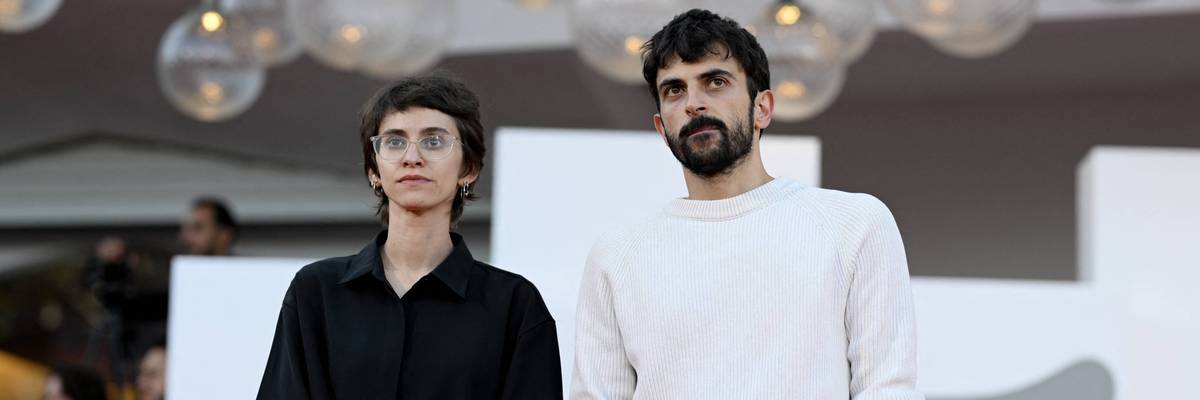

Israeli journalists and filmmakers Rachel Szor and Yuval Abraham attend the red carpet of the closing ceremony of the 83rd Venice Film Festival at Venice Lido on September 12, 2026
(Photo by Tiziana Fabi/AFP via Getty Images)


Julia Conley
Sep 24, 2026
COMMON DREAMS


Israeli journalists and filmmakers Yuval Abraham and Rachel Szor are determined to ensure that their documentary, NAZA, has the farthest reach possible even as Prime Minister Benjamin Netanyahu’s government accuses them of “blood libel” for interviewing soldiers who described the Israeli military’s mass killing of civilians, and threatens to revoke their citizenship for making the film.

Abraham said Thursday morning on social media that he, Szor, and The Guardian, which produced the film, had decided to make NAZA accessible “online for free, without any time limit, so that every person can watch it and the soldiers’ testimonies,” starting in November.



‘Pathetic’: Israeli Minister Threatens to Revoke Citizenship of NAZA Filmmakers

Israeli Documentary ‘NAZA’ Exposes ‘System of Killing’ in Gaza From Eyes of Secret Intelligence Unit

Until then, the filmmakers are approaching movie theaters in Israel and offering the film “at no cost, in the hope that it will be screened in the country” as it is distributed worldwide.

Commentators in Israel have criticized Abraham and Szor for not making the film free, said journalist Ryan Grim, and theaters are now “being dared to follow through on their bluff and screen it.”

The film builds on reporting Abraham has done since the beginning of Israel’s current assault on Gaza, which started in 2023 in retaliation for a Hamas-led attack. In NAZA, as well as in investigative reports for the Israeli news outlets +972 Magazine and Local Call, Abraham has extensively covered the Israel Defense Forces’ rules of engagement in Gaza, including its use of artificial intelligence for targeting and the IDF policy of allowing the killing of more than 100 Palestinian civilians for every Hamas commander killed.

The film’s title refers to the IDF’s term for the number of civilians commanders expected to be killed in a particular strike.

“ Journalism is not betrayal. Criticism is not betrayal.”

NAZA received a record-breaking standing ovation and the Special Jury Prize at the Venice Film Festival this month, and the film will premiere in North America at the New York Film Festival this Saturday, with a theatrical release beginning four days later. A wider release in the US is scheduled for October 9, and 50 other countries and territories are also expected to release the film.

While the film has been widely acclaimed, Abraham noted that at home in Israel, “many incorrect things were said about us and about the film in the past week.”

Officials have accused the filmmakers, who interviewed 24 military and intelligence officers for the film, of lying about the IDF’s practices in Gaza.

Netanyahu, who is facing legislative elections next month, said after the film’s release at the Venice Film Festival that he would introduce a bill to revoke the citizenship of Israelis who defame the IDF. Eyal Zamir, chief of staff at the IDF, said military lawyers were considering legal action against Abraham and Szor.

Protesters outside Szor’s family home could be heard chanting, “Death sentence for traitors” one evening, and the Committee to Protect Journalists noted that the call for violence “followed days of increasingly hostile public rhetoric targeting the filmmakers, which underscores the risks created when government officials publicly target journalists.”

The offices of +972 Magazine and Local Call were also reportedly broken into.

“We made the film to spark a public discussion about the government’s actions in Gaza, the killing of more than 73,000 people, most of them civilians, the normalization of a war of extermination, of the notion that ‘there are no uninvolved,’” said Abraham.

“Journalism is not betrayal. Criticism is not betrayal,” he continued. “It is the duty of every citizen whose government commits crimes to know, and of every soldier who witnessed them to tell. There are thousands of such soldiers walking around here, who will watch the film and recognize what is described in it personally: the killing of unarmed people crossing an imaginary line, the [NAZA] approvals in the hundreds, the systematic attacks on family homes, the burning and physical destruction of Gaza, murder and shooting at hungry people in food distribution centers, and other crimes that have no justification.”

Ali Abunimah, director of Electronic Intifada, said the filmmakers should have made the film free for viewers “from the start.”

He also called for Abraham and Szor to “turn over any and all evidence they have that could lead to the arrest and punishment of perpetrators of war crimes, crimes against humanity, and genocide to the International Criminal Court,” which has a warrant out for the arrest of Netanyahu and former Defense Minister Yoav Gallant.
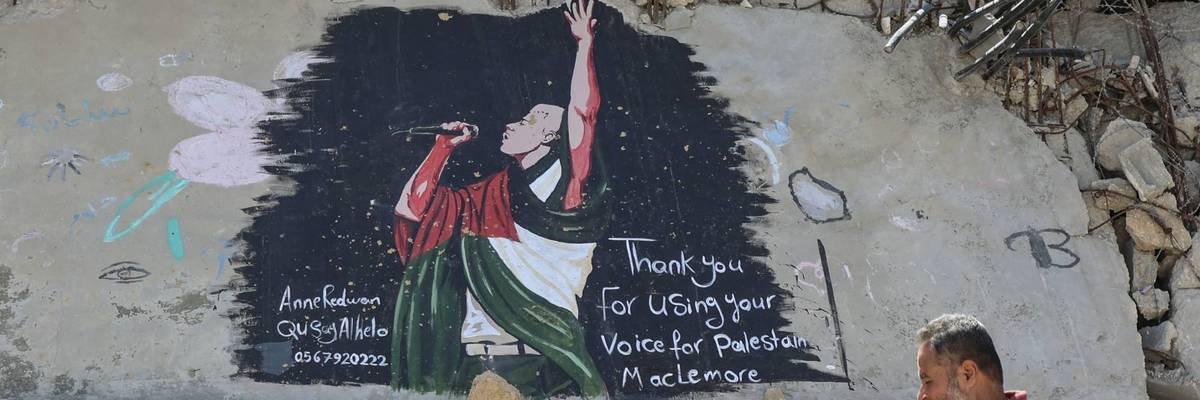
Macklemore and the US Cultural Revolution for Palestine

The attempt to punish Macklemore ultimately placed Robert Kraft, Ed Sheeran, and the entertainment establishment itself under unprecedented scrutiny. Far from silencing the message of Palestinian freedom, their actions amplified it.


A Palestinian man walks past a mural painted on the rubble of a destroyed building and dedicated to US rapper, singer, dancer, and DJ, Benjamin Haggerty, known as Macklemore, in Gaza City on September 19, 2026.
(Photo by Omar Al-Qattaa / AFP via Getty Images

Ramzy Baroud
Sep 24, 2026
Common Dreams


Page Six Hollywood recently declared: “War of Open Letters Erupts Between Pro-Israel and Pro-Palestine Factions in Hollywood.” Only a few years ago, a headline like this would have seemed unthinkable.

The article described an increasingly open struggle between pro-Palestine and pro-Israel forces within the entertainment industry. On one side are artists and other industry figures taking a clear stand against Israel’s genocide in Gaza; on the other are defenders of Israel attempting to deny that genocide in the face of irrefutable evidence.


Rapper Macklemore Says NFL Owners Got Him Kicked Off Concert Tour For Criticizing Israel

Yet even this framing failed to tell the whole story. What is unfolding is far more consequential than a quarrel among celebrities or a “war of open letters.” It is part of a brewing cultural revolution in American society—one that has now reached the highest echelons of the country’s cultural establishment. And in that struggle, Israel is losing—and losing badly.

When the pendulum swings this far, neither Kraft’s money nor the stadiums he controls can stop the movement.

Though the article acknowledged that support for Palestine has become powerful enough to divide Hollywood openly, it concealed the scale of the transformation underway by presenting the moment as a “war” between two factions.

Long before Israeli filmmakers, production companies, and actors established a significant presence in Hollywood, the industry’s cultural infrastructure routinely elevated Israel at every opportunity. Film and television constructed a glossy image of a heroic nation whose establishment and continued survival were portrayed as miraculous, while the dispossession and violence underpinning that narrative were largely erased from view.

Palestinians, Arabs, and Muslims, meanwhile, were almost invariably cast in a negative light: the uncultured and menacing “other,” supposedly possessing no legitimate claim to civilization, no recognizable morality, and no history or identity worthy of serious consideration.

Indeed, Hollywood played a central role in the systematic dehumanization of Palestinians in Western popular culture. When thousands of actors, filmmakers, producers, and artists begin taking principled public stands for Palestine—often at considerable professional risk—we can therefore speak confidently of a cultural shift of historic proportions.

Susan Sarandon, Mark Ruffalo, Penélope Cruz, Javier Bardem, Joaquin Phoenix, Tilda Swinton, Olivia Colman, Emma Stone, Cynthia Nixon, and Riz Ahmed are only some of the most visible names on an ever-expanding list of morally driven and courageous artists confronting an archaic industry establishment.

The story, however, extends far beyond Hollywood. Consider the major controversy that recently erupted in the US following Macklemore’s removal from the remaining dates of Ed Sheeran’s Loop Tour.

Macklemore is far more than a pro-Palestine singer. The Grammy-winning rapper and songwriter is a gifted political storyteller whose career has combined mainstream artistic success with an enduring commitment to social causes. Since the beginning of the genocide, he has emerged as one of the most powerful voices of Palestinian solidarity in the US and beyond.

During Sheeran’s recent concerts at MetLife Stadium in New Jersey, Macklemore expressed solidarity with Palestinians in Gaza and the occupied West Bank, called for a “free Palestine,” and performed “Hind’s Hall,” his protest anthem honoring Hind Rajab, the Palestinian child killed by Israeli forces in Gaza.

The response to Macklemore’s courageous stand was immediate, but also predictable. The billionaires who controlled the venues reached for the weapon still at their disposal: financial power. Robert Kraft, the owner of Gillette Stadium, refused to allow Macklemore to perform there.

Sheeran, who appeared to underestimate the gravity of the moment, went on the defensive. “I am not complicit,” he declared, insisting that Macklemore’s removal had been the promoter’s decision rather than his own. But such a weak response by one of the world’s most influential musicians, particularly while an artist on his own tour was being punished for speaking out, could hardly be presented as a politically “neutral” position.

In the past, the story might have ended there. Macklemore would have been isolated and his career placed in jeopardy, while Sheeran, the promoters, and the stadium owners continued largely untouched.

Those days are gone. Global solidarity with Macklemore—and, by extension, with Palestine—spread so rapidly that the people responsible for his removal were forced to issue a succession of defensive and sometimes contradictory explanations.

By then, however, the damage had been done. Sheeran faced mounting boycott calls, protests, and even the suspension of his music by an Irish radio station. Finneas, Lukas Graham, and Aaron Rowe withdrew from the tour, while Beoga, Sheeran’s backing band, also pulled out. Artists and public figures began speaking openly about the genocide, freedom of expression, and the power of billionaires to dictate the political boundaries of art.

Podcasters and social-media commentators also mobilized, reaching audiences of millions and digging deeper into the controversy. They began asking who Kraft was, examining his longstanding relationship with Israel; his campaign against Boycott, Divestment, Sanctions; and the enormous financial machinery behind his political advocacy.

The attempt to punish Macklemore ultimately placed Kraft, Sheeran, and the entertainment establishment itself under unprecedented scrutiny. Far from silencing the message of Palestinian freedom, their actions amplified it.

Ultimately, this is not a story about two feuding artists, just as Hollywood’s transformation cannot be reduced to two camps trading open letters. Both are manifestations of a much larger cultural upheaval rooted in grassroots American society, where people from diverse backgrounds are finally opening their eyes to Israeli crimes and to the extraordinary influence Tel Aviv has long exercised over their country.

Beyond the occasional opinion poll, that story rarely makes headlines. But when the pendulum swings this far, neither Kraft’s money nor the stadiums he controls can stop the movement.

Nor can they silence Macklemore’s cry of “Free Palestine”—a cry now echoed by millions of people throughout the world.


Our work is licensed under Creative Commons (CC BY-NC-ND 3.0). Feel free to republish and share widely.


Ramzy Baroud
Dr. Ramzy Baroud is a journalist, author, and the editor of The Palestine Chronicle. He is the author of nine books. His latest books are Before the Flood (Seven Stories Press) and Gaza Rising (Clarity Press). His other books include Our Vision for Liberation, My Father Was a Freedom Fighter, and The Last Earth. Baroud is a non-resident senior research fellow at the Center for Islam and Global Affairs (CIGA). His website is www.ramzybaroud.net.
Full Bio >

Macklemore Announces ‘Free Palestine Tour’ With Dates in Paris, London, and Dublin

“When the billionaire class can decide which voices are allowed on stage and which ones are too dangerous to hear, everyone should be paying attention.”

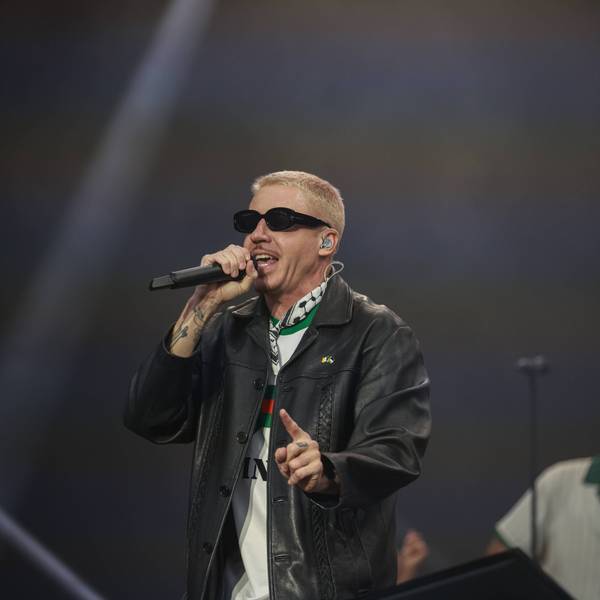
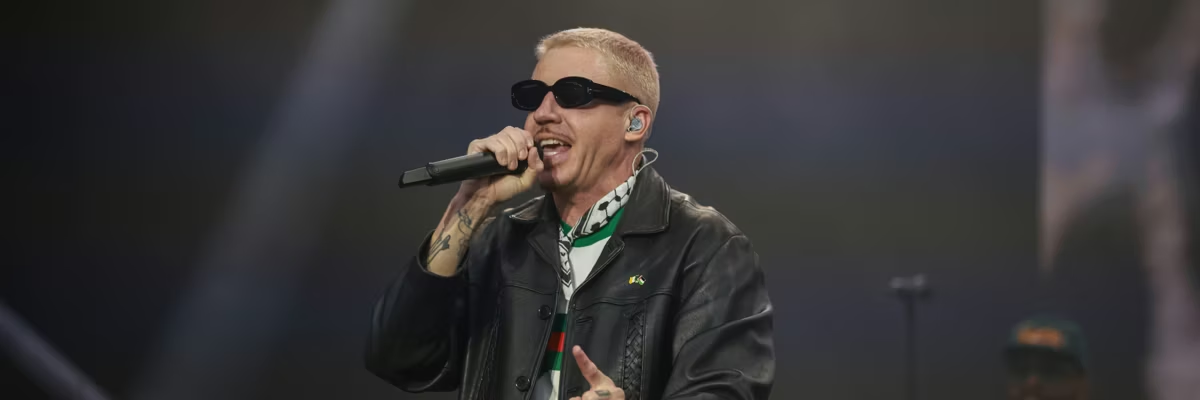
Macklemore performs at Virgin Media Park on June 5, 2025 in Cork, Ireland.
(Photo by Debbie Hickey/Getty Images)

Brad Reed
Sep 24, 2026
COMMON DREAMS


Rapper Macklemore on Thursday revealed a new phase in his campaign to raise awareness of the plight of Palestinians.

Macklemore, whose pro-Palestinian statements got him removed as a supporting act for fellow musician Ed Sheeran’s stadium tour, announced a series of live shows aimed at raising money for organizations that provide aid to Palestinian civilians suffering under Israeli military occupation and assault.

Several other opening acts for Sheeran subsequently quit the tour in solidarity with Macklemore.

“What happened to me is bigger than one artist or one stage,” Macklemore wrote. “When the billionaire class can decide which voices are allowed on stage and which ones are too dangerous to hear, everyone should be paying attention. So we’re going on tour. All proceeds will benefit organizations supporting the Palestinian people and movement.”

The “Free Palestine Tour” so far has concerts scheduled in London, Dublin, and Paris, and Macklemore said that additional musical guests would be revealed at a later date.

Earlier this month, Macklemore pledged to donate $1 million to six organizations who were aiding Palestinians: HEAL Palestine, Gaza Soup Kitchen, Medical Aid for Palestinians, the United Nations Relief and Works Agency for Palestine Refugees in the Near East (UNRWA), and American Near East Refugee Aid.

Those groups will also be beneficiaries of the upcoming tour, as will organizations such as Jewish Voice for Peace and the Institute for Middle East Understanding.

Rachel Griffin Accurso, the YouTube star and child educator known popularly as Ms. Rachel, last week pledged to match Macklemore’s $1 million donation to Palestinian aid groups, and encouraged “every wealthy white celebrity to match it and speak out against the genocide in Gaza.”

“Over 20,000 precious Palestinian children have been killed and children continue to be killed every day,” Ms. Rachel said. “We have a moral obligation to use our privilege and platforms to protect children and human rights.”

‘Dangerous for Democracy’: Paramount Merger Opponents File Emergency Motion to Fight Settlement Deal

“We believe the consent decree fails to meaningfully address or mitigate the harms that will be caused by this monopoly merger.”


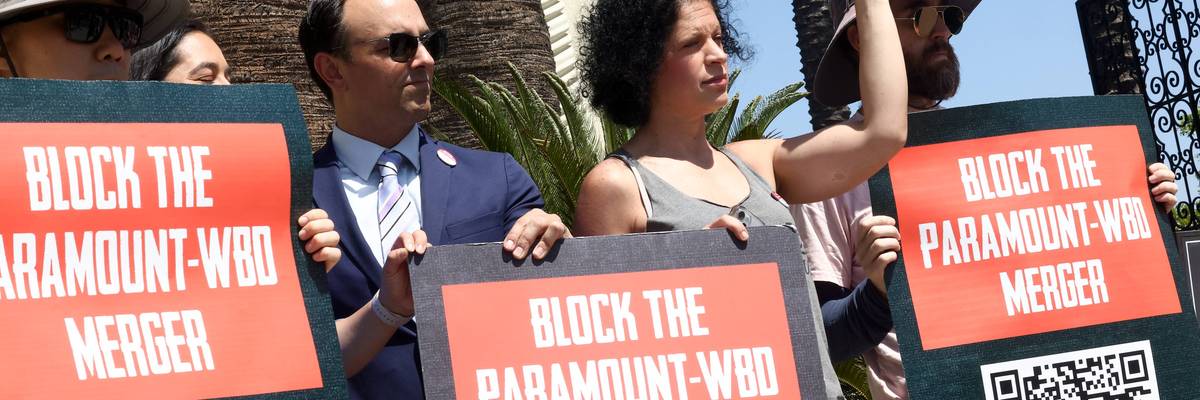
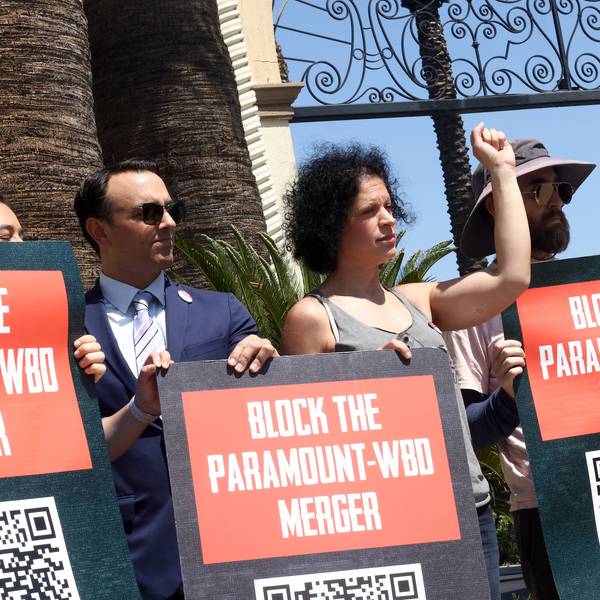
Demonstrators protest the proposed merger of Paramount and Warner Bros. Discovery at Paramount Pictures Studio on September 3, 2026 in Los Angeles, California.
(Photo by Tommaso Boddi/Variety via Getty Images)


Jake Johnson
Sep 24, 2026
COMMON DREAMS


A coalition of advocacy groups fighting the Paramount-Warner Bros. Discovery merger said Thursday that the judge overseeing the case granted their emergency motion to allow opponents of the combination to file briefs against a settlement reached earlier this week by Paramount and a dozen state attorneys general.


‘Don’t You Dare’: Alarm as State AGs Weigh Deal to Advance Paramount Megamerger

‘Massive Betrayal’: Fury at Newsom and Bonta Over Merger Deal With Paramount

“The consent decree the state AGs agreed to in a backroom deal is weak, unenforceable, and leaves workers, journalists, and consumers in the dust,” members of the anti-merger coalition said in a statement. “The settlement fails to address the grave dangers this merger poses—and no amount of spin can change that. Judge Araceli Martínez-Olguín’s ruling will allow the public to weigh in on this important issue and ensure the interests of those who will actually pay the price for the Ellisons’ sweetheart deal that the AGs failed to adequately represent are heard. We look forward to explaining that in further detail in our brief due at midnight tonight.”

Earlier:

Opponents of Paramount’s proposed acquisition of Warner Bros. Discovery filed an emergency motion in federal court on Thursday asking the judge overseeing the merger proceedings to grant them an opportunity to formally oppose a settlement deal that Paramount reached earlier this week with a coalition of state attorneys general, led by California’s Rob Bonta.

The merger opponents’ filing asks Judge Araceli Martínez-Olguín of the US District Court for the Northern District of California to give them “an opportunity to be heard” before she rules on the proposed consent decree between Paramount and the 12 state attorneys general—a deal that drew widespread outrage. The anti-merger coalition—which includes Free Press, the Committee for the First Amendment, the Future Film Coalition, and other groups—described the tentative deal as “dangerous for democracy.”

The coalition’s filing was submitted shortly before a court hearing that’s scheduled to begin at 2:00 pm ET. Martínez-Olguín set the hearing to “address certain outstanding questions regarding the factual and legal underpinnings of the parties’ proposed consent decree.”

Mara Verheyden-Hilliard, a constitutional rights litigator who serves on the steering panel for the Committee for the First Amendment, said in a statement that “we believe the consent decree fails to meaningfully address or mitigate the harms that will be caused by this monopoly merger to the entertainment industry, diverse storytelling, independent filmmaking, consumer interests, a free press, First Amendment rights, and fundamentally, democracy.”

“It does not serve to benefit anyone except the owner family of Paramount and those holding political power, who will use this corporate consolidation as a proxy force for First Amendment suppression of disfavored expression and viewpoints,” Verheyden-Hilliard added.

Paramount is headed by David Ellison, the son of billionaire Oracle co-founder Larry Ellison, one of the richest people in the world and a megadonor to President Donald Trump.

If Martínez-Olguín approves the proposed consent decree and the merger is finalized, Paramount would control both CBS and CNN, as well as other major media properties such as HBO.

As part of the consent decree, Paramount committed to “News Editorial Independence Boards” for CBS and CNN comprised of five “established journalists.” Critics, including the Freedom of the Press Foundation (FPF), have characterized the proposed editorial independence boards as “worthless” and a potential “First Amendment nightmare.”

“The solution for the Ellisons letting Donald Trump and [Federal Communications Commission Chair] Brendan Carr police journalism is not to let attorneys general and judges police journalism too,” said Seth Stern, chief of advocacy at FPF, part of the anti-merger coalition.

“It’s to keep the government out of the newsroom, period,” Stern added. “No one seriously believes the Ellisons (or their rumored new investor Elon Musk) will do that, with or without a self-appointed sham editorial board, which is why this merger cannot proceed.”

The League of United Latin American Citizens and a group of religious leaders filed a separate motion on Thursday asking Martínez-Olguín to “defer entry of the decree” to “ensure this court has sufficient opportunity to consider the important issues raised” in the case.

“The proposed consent decree raises grave doubts whether the parties’ settlement adequately addresses the harms alleged in the plaintiff states’ complaint,” the filing reads.


Billionaire Trump Suck-Ups Owning More News Outlets Is an Existential Threat

This is critical stuff: no democracy can survive the assault of what Jefferson referred to as “an artificial aristocracy founded on wealth and birth, without either virtue or talents” when only one family or political perspective dominates the media.


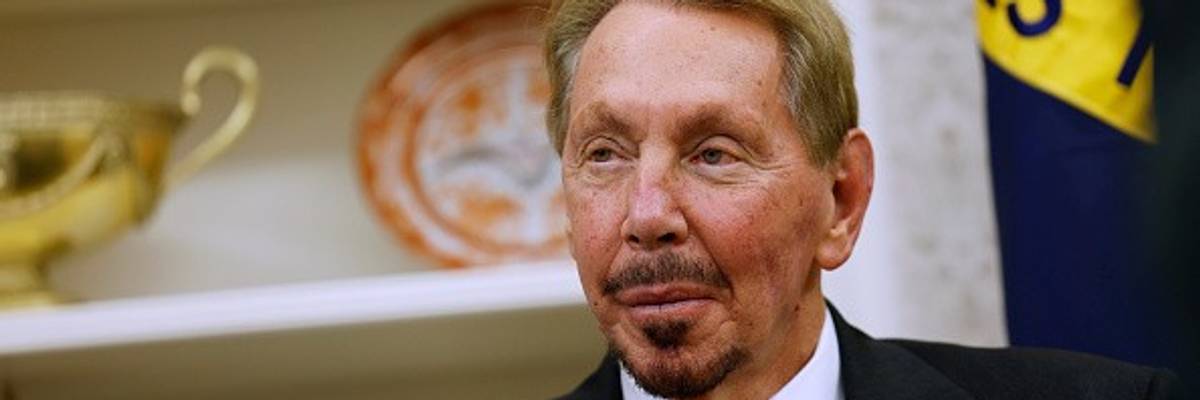
Oracle co-founder, CTO, and executive chairman Larry Ellison listens as US President Donald Trump speaks to reporters in the Oval Office of the White House on February 3, 2025, in Washington, DC.

(Photo by Anna Moneymaker/Getty Images)


Thom Hartmann
Sep 24, 2026
Common Dreams


A CNN insider told Variety magazine yesterday that the mood inside CNN right now is “like a funeral.” Nepo-baby David Ellison, bankrolled by his father who’s one of the richest men in the world and a major Trump suck-up and donor (and is in the Epstein Files), is on the verge of taking over the company that owns the news network.

The day-before-yesterday, California Attorney General Rob Bonta and a group of Democratic state attorneys general rolled over and agreed to stop trying to block the $111 billion takover of Warner Bros. Discovery, now to be almost 50% funded by rightwing dictatorships in the Middle East who’ve given billions in gifts, loans, and investments to Trump and his family.

California Governor and presidential hopeful Gavin Newsom hailed the agreement, saying it would both protect California jobs and preserve CNN’s “editorial independence.”

If you believe that, I’ve got a bridge for you in Brooklyn.

As The Lever reported yesterday, the fine print tells the entire story:

Going forward, CNN and CBS will be overseen by an “editorial independence board” composed of people hand-picked by the Ellisons and their agents. When Rupert Murdoch took over The Wall Street Journal from the Bancroft family back in 2007, he ran the same scam, as CBS News then reported:
“As part of the deal package that cemented Rupert Murdoch’s longstanding effort to acquire Wall Street Journal publisher Dow Jones & Co., the two sides agreed to create an editorial board that would act as a buffer between the media mogul and the newspaper…”


That worked out real well, right?

There are also squishy promises for movies and jobs that are not backed up with any meaningful enforcement mechanism, and all of Ellison’s commitments can be set aside via a force majeure clause that lets Paramount off the hook in the event of “strikes, labor disruptions, [or] economic recessions.” So, all Trump has to do is extend the Iran war another few months to crash our economy and the oligarchs are free to do what they want!

And if that doesn’t happen, there’s still the sunset clause that ends all their commitments in five years. Lee Hepner of the American Economic Liberties Project called it “a countdown to a cliff.”

These are the same billionaires who handed Trump a check for $16 million to “settle” a frivolous lawsuit against 60 Minutes, then cancelled Stephen Colbert’s show days after he referenced that as a “big fat bribe,” then reportedly offered the Trump White House up to $20 million in free “public service announcements” and installed a Trump-humping “ombudsman” at CBS News to police “bias” at the network.

The simple reality is that in every country that’s slid from democracy into strongman rule over the past half-century, the first step was capture of the media by friends of the regime.


And the FCC, run by Trump’s favorite brown-noser Brendan Carr, has blessed Saudi Arabia, the UAE, and Qatar taking a 49.5 percent equity state in the new entity that will control two of the three most important news networks in America.

Don’t expect any future analysis of Saudi involvement in 9/11, critical exploration of what Trump gave up in exchange for a $400 million 747 jet, or the billions that have gone to Kushner and the Trump boys, Uday and Qusay.

Because of momentous decisions made by presidents Reagan and Clinton, freedom of the press in America is now as much an economic issue as a political one. As I laid out in The Hidden History of Monopolies (with a foreword by Ralph Nader), when Reagan came into office 90 percent of the American media landscape was scattered among over 50 companies; now a mere five conglomerates dominate that 90 percent of the media Americans consume.

Reagan stopped enforcing the Sherman Anti-Trust Act (and others) in 1983, leading to the “M&A Mania” of mergers and acquisitions that characterized the late 1980s and 1990s. As a result, there’s not a single major industry in America that’s not dominated by a handful of companies that generally behave like cartels, and the average American family pays an annual “monopoly tax” — in additional costs for pretty much everything — of around $5,000, according to economist Thomas Philippon.

Cell phone service that costs $15 a month in France or $12 a month in Australia bills out at an average of $61.85 per month in the United States. High-speed broadband that’s a bit over $31 a month in France or $36 in Germany (for higher speeds and better reliability than almost anywhere in the United States) averages nearly $70 per month in the US.

Similar metrics are found with pharmaceuticals, airfares, and medical costs, among dozens of other product and service categories.

But it’s most deadly to democracy when it comes to the media.

Since Bill Clinton signed the Telecommunications Act of 1996 — which eliminated most of the rules about how many outlets one family or company could own — oligarchic monopoly of the media has spread its cancerous tentacles into politics, as well, destroying the ability of government to make policy that allows free people to make their own decisions about their own lives.

As Teddy Roosevelt, the great trust buster, said:
“There can be no effective control of corporations while their political activity remains. To put an end to it will be neither a short nor an easy task...”


And as Adam Smith wrote, in Wealth of Nations,
“...the monopoly which our manufacturers have obtained...like an overgrown standing army, they have become formidable to the government, and upon many occasions intimidate the legislature.”


And this is no small project by billionaires who explicitly distrust democracy and want complete control over America and her people. I’ve seen how this works up-close and personal when a Republican billionaire came after a media business I helped start.

In 2003, Louise and I had sold our last business and were retired in Vermont; that Thanksgiving, we drove to Michigan to visit my family for the holidays and all the way there I kept tuning across the radio dial looking for an intelligent conversation to occupy my mind while driving. In city after city, all I could find was Sean Hannity.

The outcome of that trip was my writing the initial business plan for Air America Radio and starting the radio show I’m still hosting 23 years later as a “proof of concept.” We were leasing stations from Clear Channel and reached over 90 percent of America; many credited Obama’s 2008 victory to our being on the air.

So, of course, billionaire Mitt Romney — with an eye to running for president in 2012 — had his company Bain Capital buy up all of the Clear Channel radio stations and, one at a time, take us off the air until we didn’t have enough of a signal to make money selling advertising. The network died in 2010 (and Romney lost).

The people who own the media pipes, in other words, get to decide what flows through them.

Remember when Uber was offering rides for half the price of taxis, until they’d put so many of the taxi companies out of business? Or Walmart offering goods at little to no margin just to drive local competitors out of business? Monopolists and wannabe monopolists understand exactly how this works.

While Rupert Murdoch reportedly lost an average of $80 to $90 million a year for about five years before Fox News turned a profit, he never viewed that as a loss: it was an investment. Economists Stefano DellaVigna and Ethan Kaplan later did the math and found that Fox News succeeded in shifting 3 to 8 percent of its audience toward the Republican Party, which in Florida alone in the 2000 election was worth more than 10,000 votes for George W. Bush in a state he carried by fewer than 600.

Had there been no Fox “News,” in other words, there would have been no war in Iraq or Afghanistan, and thousands of Americans and millions of Iraqis and Afghans would still be alive. And there would have been no Bush tax cuts, so our national debt would be nowhere near so bad. And Al Gore would have done something about the environment.

This is critical stuff: no democracy can survive the assault of what Jefferson referred to as “an artificial aristocracy founded on wealth and birth, without either virtue or talents” when only one family or political perspective dominates the media.

Franklin D. Roosevelt — the Bernie Sanders of his day — saw all of this coming. On April 29, 1938, in his Message to Congress on the Concentration of Economic Power, he told the country what fascism actually is:
“The first truth is that the liberty of a democracy is not safe if the people tolerate the growth of private power to a point where it becomes stronger than their democratic state itself. That, in its essence, is fascism—ownership of government by an individual, by a group, or by any other controlling private power.”


FDR understood that when a monopolized industry gets big enough, its main rival then becomes the government itself because only the government has enough remaining power to break it up. Adam Smith made the same point in Wealth of Nations in 1776, writing that the East India Company and its allies had, “like an overgrown standing army,” become “formidable to the government” and could “intimidate the legislature.”

The simple reality is that in every country that’s slid from democracy into strongman rule over the past half-century, the first step was capture of the media by friends of the regime.

— Four days after Vladimir Putin was inaugurated in May, 2000, ICE-like masked agents raided the offices of Media-Most, the company that owned Russia’s largest independent national TV network (NTV). They threw its owner, Vladimir Gusinsky, in prison on fraud charges and confiscated his stake in Gazprom, then took over the network with the deal finalized in April of 2001. That same year Boris Berezovsky was forced to sell his share of the ORT network to Roman Abramovich, a fellow oligarch but one who’d pledged his total loyalty to Putin. Within a few years, every national channel in Russia was in the hands of the state or a Putin-friendly billionaire, and still are.

— Viktor Orbán’s people were slightly more sophisticated in 2018, having his oligarch buddies buy up media properties after he sued dissenters into bankruptcy by claiming libel. By the following year, the media monitor Mérték estimated that 77.8 percent of Hungary’s news media was directly or indirectly controlled by Orbán’s party, which is why when Péter Magyar successfully ran against Orbán he had to visit virtually every city and town in the country to get around the media blackout on his candidacy.

— In Egypt, el-Sisi was less elegant in his approach to the media. He had his version of the FBI — the General Intelligence Service — use a front company called Eagle Capital to buy up virtually every TV network, radio station, and newspaper in the country. Reporters Without Borders found that a dozen once-powerful media owners were pushed to sell to intelligence-linked companies, while the handful of businessmen who backed Sisi got to keep theirs. The spy agency’s media group now owns the ON, CBC, Al-Hayah, and DMC networks, and those Egyptian journalists who dared criticize the regime all went to prison.

— Rodrigo Duterte in the Philippines used regulatory power the same way Trump lickspittle Brendan Carr’s FCC does. The country’s largest newspaper, the Philippine Daily Inquirer, was forced to sell to a billionaire Duterte ally under threat of imprisonment for breaking “media rules.” Duterte’s rightwing buddies in Congress then refused to renew the broadcast franchise of ABS-CBN, the nation’s biggest network, which had made the mistake of exposing the extrajudicial killings of his so-called drug war. Eleven thousand people lost their jobs, and Nobel laureate Maria Ressa’s little opposition newspaper The Rappler was ordered shut.

Almost without exception, this is the process autocrats use to destroy democracies, as documented brilliantly by people like Timothy Snyder and Ruth Ben-Ghiat.

First the strongman’s friends acquire the newsrooms, then the coverage softens, then the elections start experiencing “anomalies,” and by the time most people notice, there’s nobody left on the air to expose the oligarchs and fascists.

As Thomas Jefferson wrote in 1786:
“Our liberty depends on the freedom of the press, and that cannot be limited without being lost.”


So, here we are. Bonta and Newsom have caved, and only the attorneys general of New York, Connecticut, Massachusetts, and Minnesota tried to hold out. You may want to call your own state attorney general and ask where they were on this case; you should be able to easily find their number with a quick internet search.

We should also contact our members of Congress (202-224-3121) and demand hearings on the FCC’s corrupt behavior, restoration of our anti-trust laws, and a return to the media ownership limits that Clinton blew up in 1996.

And please share this piece and hartmannreport.com with anyone who still thinks it can’t happen here. It has already happened everywhere else that’s seen their democracy disintegrate, and the first thing to go into oligarchic hands was always the news.


Our work is licensed under Creative Commons (CC BY-NC-ND 3.0). Feel free to republish and share widely.


Thom Hartmann
Thom Hartmann is a talk-show host and the author of "The Hidden History of Monopolies: How Big Business Destroyed the American Dream" (2020); "The Hidden History of the Supreme Court and the Betrayal of America" (2019); and more than 25 other books in print.
Full Bio >


‘Massive Betrayal’: Fury at Newsom and Bonta Over Merger Deal With Paramount

“Today, billionaires have yet again bribed, censored, and bullied their way to the top.”


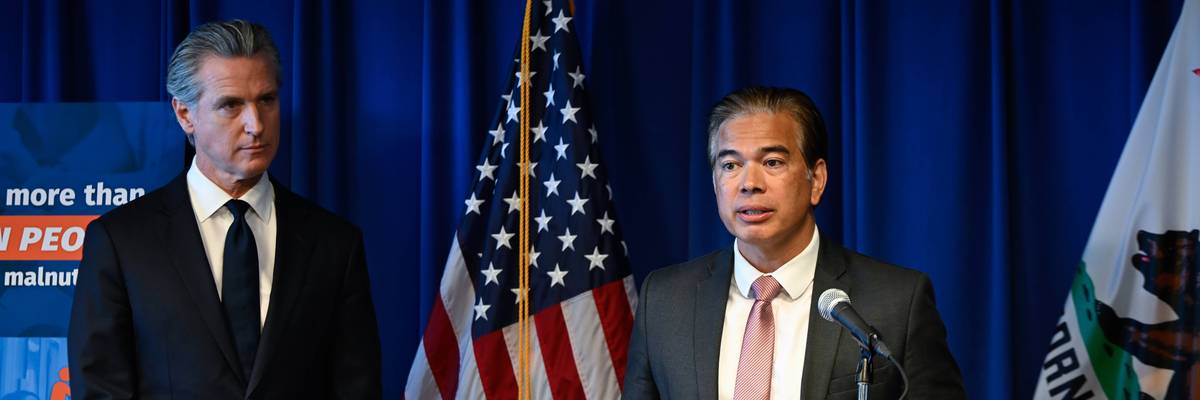
California Gov. Gavin Newsom and Attorney General Rob Bonta speak during a press conference in Sacramento, California, United States on October 28, 2025.
(Photo by Tayfun Cokun/Anadolu via Getty Images)

Jake Johnson
Sep 21, 2026
C0MMON DREAMS


A coalition of state attorneys general led by California’s Rob Bonta reportedly reached a deal on Monday to let Paramount’s acquisition of Warner Bros. Discovery proceed, an outcome that press freedom advocates and antitrust campaigners condemned as a disaster for journalism, entertainment industry workers, and American democracy.

The deal, which is set to be formally announced later Monday, will pave the way for the creation of one of the largest media conglomerates in the world, helmed by the son of a billionaire megadonor to President Donald Trump and the Republican Party.

If the merger is finalized, the resulting media behemoth would control nearly 30% of both wide-release theatrical film distribution and basic cable channel licensing in the US. The combination would also put CNN under Ellison’s control, heightening press freedom concerns that have intensified since Paramount’s takeover of CBS.

“The AGs’ capitulation marks a new low.”

“Today, billionaires have yet again bribed, censored, and bullied their way to the top,” Alvaro Bedoya, senior adviser at the American Economic Liberties Project, said in a statement. “As a result, a billionaire media conglomerate closely allied with the president will soon own one of its closest rivals, including some of the nation’s most critical news outlets. Saudi Arabia’s sovereign wealth fund will co-own those outlets, too.”

Bedoya criticized Bonta and California’s Democratic governor, Gavin Newsom, who privately pushed the state attorney general’s office to settle the lawsuit out of court. Xavier Becerra, the frontrunner to succeed Newsom, also called for a settlement, citing Paramount’s threat to leave California if its proposed acquisition of Warner Bros. was blocked.

“People want champions who are not afraid of rich bullies. Newsom, Becerra, and Bonta did not meet that mark,” said Bedoya. “The people who work in the film and TV industry and the small businesses who support it will suffer as a result. And so will everyone who values dissent in our democracy.”

Jessica González, co-CEO of the advocacy group Free Press, also denounced Bonta for reneging on “his promise to enforce the law and protect consumers and workers.”

“Hundreds of thousands of people called on our state AGs to stand up to the Ellisons, who have engaged in a campaign of corruption and extortion to pave the way for this unlawful merger. We can no longer rely on the federal government to enforce the law and protect regular people. That much is clear. But the AGs’ capitulation marks a new low. It’s a sad day for all of us who have been opposing this merger because it will cut jobs and raise prices, all as it consolidates the media even more to enable authoritarians.”

Actor Mark Ruffalo, an outspoken opponent of the merger who was subjected to what critics called a corporate “smear campaign” because of his stance, trained his ire on California’s governor in response to news of the settlement.

“Gavin Newsom hands huge win to Trump and his billionaire cronies,” Ruffalo wrote on social media.

The trial was scheduled to begin in March of next year. In its original lawsuit against the proposed merger—filed shortly after the Trump Justice Department dropped its investigation of the proposed purchase—the coalition of 12 attorneys general warned the deal would “combine two of Hollywood’s five major film distributors and two of the five major basic cable channel owners, extinguishing competition between Paramount and Warner Bros. and inflicting substantial harm on movie theaters, basic cable distributors and, ultimately, audiences nationwide.”

The settlement deal reached Monday also reportedly includes the lawsuit filed by the Writers Guild of America, which represents TV screenwriters and others in the entertainment industry.

Bloomberg reported that the attorneys general of New York, Connecticut, and other states that had pushed back during settlement talks were able to secure “independent editorial boards for CBS and CNN as part of the deal”—though it’s unclear how such boards would function.

“The terms are said to include a financial penalty if the company fails to make good on a promise to distribute 30 films per year in theaters,” Bloomberg added.


The Los Angeles Times noted that Paramount’s purchase of Warner Bros. “will be heavily leveraged.”

“The company’s bankers have lined up nearly $80 billion in debt to finance the merger. [Paramount CEO David] Ellison’s father, billionaire Larry Ellison, late last year agreed to backstop the $47-billion in equity needed to complete the acquisition. Royal families from Saudi Arabia, Qatar and Abu Dhabi have agreed to chip in $24 billion for an equity stake by assuming some of Ellison’s financial commitments.”

González of Free Press warned Monday that “consolidating the media in the hands of friendly oligarchs is right out of the authoritarian playbook.”

“What’s exceedingly clear is that our laws and our political system are not strong enough to resist the pressure and manipulation of corrupt billionaires,” said González. “We need to strengthen democratic systems of government, including getting money out of politics, and pass laws that break up big media conglomerates. We need to ensure that a few billionaires can’t drown out the masses to dictate bad policy.”


‘Outrageous’: Sanders Slams FCC for Approving Saudi and UAE Ownership of Paramount-Warner Bros.

“We don’t need Middle East dictators to control American media.”


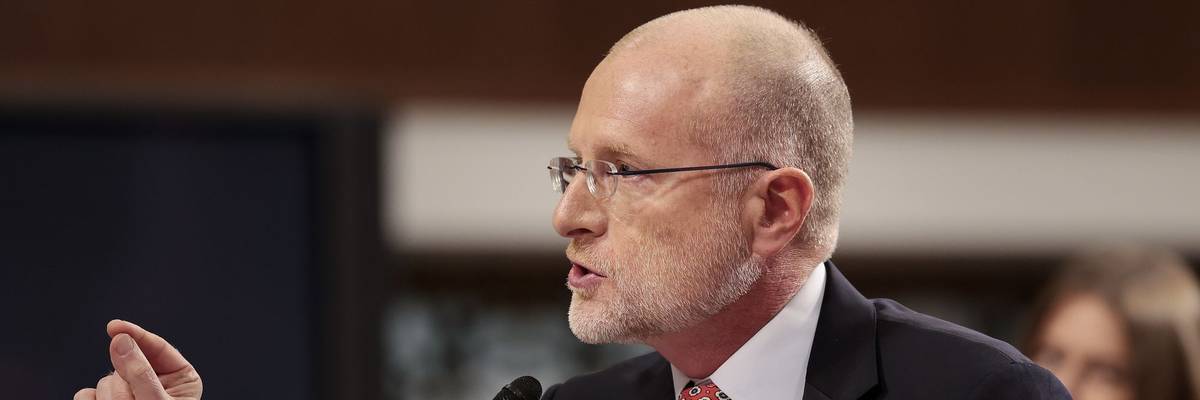
Brendan Carr, commissioner of the Federal Communications Commission, speaks at the Senate Commerce, Science, and Transportation Committee oversight hearing in the US Capitol Building on December 17, 2025 in Washington, DC.
(Photo by Heather Diehl/Getty Images)

Jessica Corbett
Sep 18, 2026
COMMON DREAMS

US Sen. Bernie Sanders on Friday joined a growing chorus of critics angered by the Federal Communications Commission’s approval of foreign investment in the company that would be created if Paramount Skydance and Warner Bros. Discovery are allowed to merge.

Led by Chair Brendan Carr, an appointee of President Donald Trump, the FCC on Thursday approved Paramount’s petition to allow foreign investors to hold over 25% of ownership. The commission concluded it would be in the “public interest” to greenlight a plan for 49.5% foreign ownership, including 38.5% from investment funds based in Qatar, Saudi Arabia, and the United Arab Emirates (UAE).

“Trump’s FCC just approved Trump pal David Ellison’s deal to allow Saudi Arabia, Qatar, and the UAE to own nearly 50% of a merged Paramount-Warner Bros,” Sanders (I-Vt.) wrote on social media Friday, referring to Paramount’s chair and CEO—and the son of billionaire Republican megadonor Larry Ellison.

The merged company would include CBS, CNN, HBO, the Discovery Channel, BET, Fandango, MTV, Nickelodeon, Paramount, PlutoTV, Showtime, TBS, The CW, TNT, Warner Bros., and more, the senator noted. He added: “Outrageous: We don’t need Middle East dictators to control American media.”

Anna Gomez, the sole Democratic commissioner, was similarly critical: “The FCC just let some of the most repressive governments in the world indirectly control nearly all of a combined Paramount-Warner Bros. An investment this large in one of America’s biggest media companies doesn’t just buy equity, it secures influence over what gets said and made.”

“That’s why I called for this new and novel issue to go to a full commission vote given what’s at stake,” she noted. “Instead, the FCC snuck this ruling out as a staff-level decision, with no public vote and no accountability for a call of this magnitude.”


Welcoming Gomez’s comments, Michael Sozan pointed to his and Andrew Miller’s June article for the Center for American Progress highlighting that “the three Middle Eastern authoritarian regimes have deep financial relationships with Trump and his family, and... long records of human rights abuses and engage in media censorship.”

“These autocracies could leverage Paramount’s news outlets and other media properties to advance their own interests at the expense of the United States’ national security and foundational rights, including press freedoms,” the pair warned. “Given these factors, these foreign ownership levels are another reason why regulators must rigorously review this merger and take all lawful actions to block it.”

As the Los Angeles Times reported:
Several groups, including the 1st Amendment nonprofit Free Press, asked the FCC to consider additional safeguards to shield the news organizations—CNN and CBS—from foreign control. One suggestion was to spin off CBS and CNN into a subsidiary that would be wholly owned by Americans.

Paramount and the FCC were dismissive, arguing “the concerns raised in the record... are speculative and unsupported,” according to the FCC ruling.


While a Paramount spokesperson welcomed the FCC’s decision not to block the plan—and pointed out that “when the proposed transaction with Warner Bros. Discovery closes, the Ellison family and RedBird will collectively hold the largest equity stake in the combined company and 100% of the voting shares, with no other equity participant having any governance rights”—fresh outrage mounted over the already widely criticized $111 billion merger.

Lee Hepner, an antitrust lawyer and senior legal counsel for the American Economic Liberties Project, addressed the questions: “But it’s just indirect equity interests, right? What about the condition that the Saudis, UAE, and Qatar cannot interfere with or even comment on any decisions related to content?”

As he explained: “The only way that firewall is conceivably enforceable is if the FCC assigns an independent monitor to sit in on every meeting, taps every burner phone, and is invited to every Signal chat between any representative of Paramount and its new financial backers. The point is not that that should happen, but that this condition is patently unenforceable. Which is all to say, the FCC just approved the sale of a crown jewel of the entertainment and media industry to foreign interests that relish in exercising economic, political, and regional military leverage over the United States. All based on a pinky promise.”

“The reality is that ownership alone, even of nonvoting, indirect equity interests, creates its own financial leverage and influence,” he warned. “To the extent Paramount’s new owners are prohibited from exercising influence, it’s patently paradoxical. Paramount won’t approve anything that risks losing half of its financial backing, including criticizing a regime that not too long ago ordered the execution of a Washington Post columnist, Jamal Khashoggi, who became an international figurehead for politically persecuted journalists.”

“Does anyone think CBS’ new leadership has the will, much less fortitude, to prioritize truth over financial ruin?” he added. “If this all sounds like a total mess, that’s because it is. And it only becomes doubly worse if Paramount acquires Warner Bros.-Discovery.”


Due to legal pushback from state attorneys general and unions, the merger—which some opponents have condemned as an “existential” threat—is on hold until the outcome of a trial scheduled to begin in March.
‘Is the President Telling the Truth?’ Sanders Corners Trump FDA Nominee on His Bogus Drug Price Claims

“Wow! The American people are so excited to know now that!” US Sen. Bernie Sanders sarcastically said of Trump’s false prescription drugs claim.


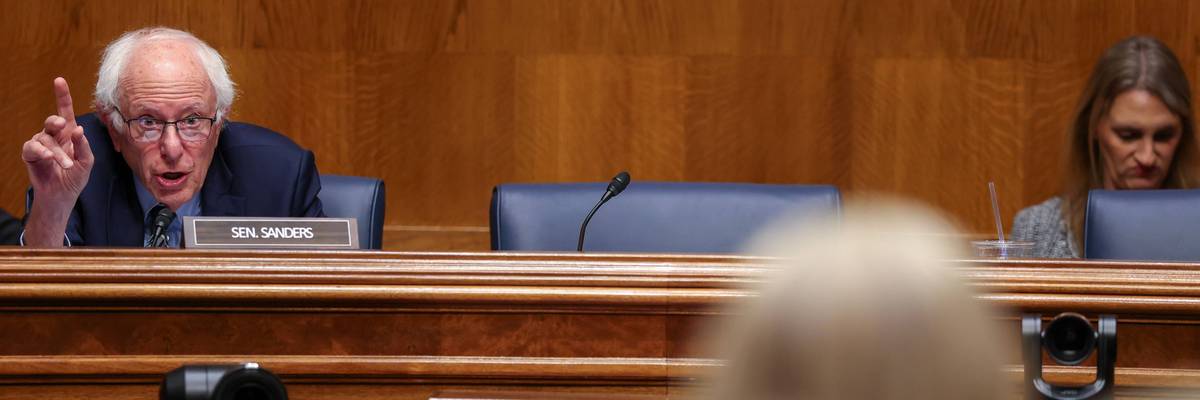
Sen. Bernie Sanders (I-VT) speaks at a Senate confirmation hearing for Dr. Heidi Overton on September 24, 2026 at the US Capitol in Washington, DC.

(Photo by Tasos Katopodis/Getty Images)


Brad Reed
Sep 24, 2026
CO,MMON DREAMS


Sen. Bernie Sanders on Thursday grilled President Donald Trump’s nominee to lead the US Food and Drug Administration about the president’s false claims about the price of prescription drugs in the US.

During a Senate confirmation hearing, Sanders (I-Vt.) asked Dr. Heidi Overton about Trump’s boast at this year’s State of the Union address about giving Americans the cheapest medications of any country in the world.


“President Trump has claimed... that he took prescription drugs from the highest price in the entire world to the lowest,” Sanders said in an incredulous tone.

“Wow!” he continued sarcastically. “The American people are so excited to know now that we pay the lowest prices in the world for prescription drugs.”


“What do you think?” Sanders asked Overton. “Are we paying the lowest prices in the world for prescription drugs?”

“Senator... there has been immense progress, especially on individual products,” Overton replied. “Right now, 89% of branded drugs have signed agreements to lower their prices and make that available...”

Sanders at this point interjected.

“Do we pay the lowest prices?” he asked. “The president said it. He’s your boss... He just said we pay the lowest prices in the world for prescription drugs. It’s true or it’s not true. Is it true?”

“Senator, we have seen...” Overton began.

“Is it true that we pay the lowest prices in the world for prescription drugs, as President Trump has said?” Sanders persisted.

“So, senator, the results that we have seen for the American people... have dropped prices,” she replied. “And right now [the Consumer Price Index] says that, for the first time in 60 years, prescription drug prices have gone down by 3%.”

“Which may have something to do with the legislation that we passed several years ago,” said Sanders, in reference to provisions in the 2022 Inflation Reduction Act that granted Medicare the power to negotiate lower prices for certain prescription drugs.

Even if Trump’s policies were solely responsible for a 3% drop in drug prices, that would not make them the lowest in the world by any stretch of the imagination.

A 2024 study from the RAND Corporation found that Americans pay nearly three times as much for prescription drugs compared to the rest of the world.

Sanders’ office last year released a report showing that, during the first year of Trump’s second term, drug companies raised prices on 688 medications, with a median increase of 5.5%.

Trump has a long history of making false claims about reducing prescription drug costs, and has even said that he has slashed them by as much as 600%, which would mean that pharmaceutical companies are paying consumers to take their medications.


Secret Trump Drug Deals Reveal Perks for Big Pharma, Uncertainty for Patients

“The Trump team appears to be doing more to protect pharma profits than patients’ pocketbooks,” said Public Citizen.


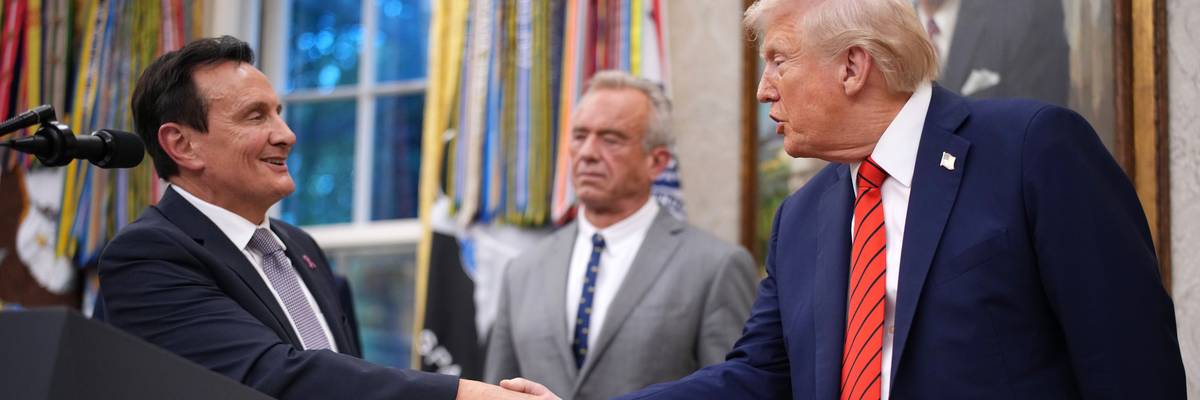
AstraZeneca CEO Pascal Soriot (left) shakes hands with U.S. President Donald Trump in the Oval Office of the White House as Health and Human Services Secretary Robert F. Kennedy Jr. stands by on October 10, 2025 in Washington, DC.
(Photo by Andrew Harnik/Getty Images)

Brett Wilkins
Sep 20, 2026
COMMON DREAMS


The Trump administration’s secretive deals with Big Pharma to lower prescription drug prices included benefits for the companies that were not publicly disclosed, according to documents obtained by the consumer advocacy group Public Citizen via a Freedom of Information Act request and published Saturday.

Public Citizen said the deals allow drugmakers to raise prices overseas and limit the scope of promised savings for American patients.

“Trump’s drug pricing deals are a mirage, designed to convince Americans that he’s taken significant action on drug pricing while creating minimal, if any, downside for Big Pharma,” Peter Maybarduk, director of Public Citizen’s Access to Medicines program, said Saturday.

“The texts show Trump handing out favors to Big Pharma, undercutting his own models to lower prices, and throwing the support of the US government behind corporate decisions to deny medicines entirely to other countries,” he added.


The disclosures come as President Donald Trump continues to tout his “most-favored nation” (MFN) drug-pricing initiative. On Friday, the administration announced that all 50 states, Washington, DC, and Puerto Rico had applied to participate in a Medicaid program built around MFN pricing, under which participating drugmakers are supposed to offer certain medicines at prices comparable to those charged in other wealthy nations.

However, Public Citizen said the newly disclosed contracts raise questions about how much patients will actually save. The deal with Eli Lilly excludes the company’s blockbuster GLP-1 drugs Mounjaro and Zepbound from the definition of products subject to certain MFN discounts. Public Citizen said a similar carveout for Novo Nordisk could reduce potential Medicaid savings by $1.7 billion.

Eli Lilly’s agreement also permits the company to stop supplying a medicine to another country under certain circumstances, removing that nation’s price from the calculation used to determine the US MFN price.

“That practice threatens patients’ health,” Public Citizen said, adding that such provisions could effectively encourage pharmaceutical companies to make medicines unavailable abroad rather than reduce US prices.

“By agreeing to terms that endorse and facilitate pharma companies discontinuing supplying drugs in other countries, so they can continue to charge US customers more, the Trump team appears to be doing more to protect pharma profits than patients’ pocketbooks,” it said.

Public Citizen also said that the documents do not publicly reveal the full scope of tariff exemptions and other incentives provided to drugmakers, including reported benefits involving expedited US Food and Drug Administration reviews. The Pfizer agreement indicates that the company may share additional revenue generated by higher prices abroad with the US government. But crucial portions are redacted, leaving the public unable to determine how much money is involved, who receives it, or how it would be spent.

“The Trump administration continues to favor secrecy in these limited disclosures under FOIA today,” Maybarduk said, noting that the government has blacked out “the prices, product lists, and information needed to assess whether Trump accomplished anything of substance.”

Public Citizen’s disclosures follow months of criticism over Trump’s claims that his administration has dramatically reduced drug prices. In August, Sen. Elizabeth Warren (D-Mass.) accused the administration of failing to make the agreements public despite Health and Human Services Secretary Robert F. Kennedy Jr.'s previous commitment to provide them, saying, “still crickets.”

A War Without the Name: The Billion-Dollar Cost of America’s Iran Conflict

Military operations, the consumption of munitions, the deployment of forces, equipment losses, and economic consequences do not disappear because of a change in terminology.


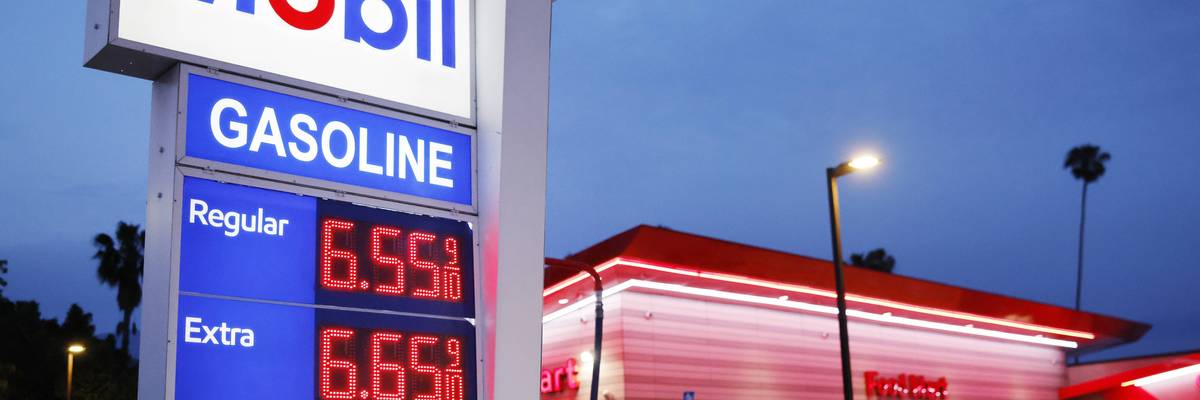
Gas prices are displayed at a Mobil gas station on March 30, 2026 in Pasadena, California.
(Photo by Mario Tama/Getty Images)

Timothy Hopper
Sep 22, 2026
Common Dreams


The Trump administration does not call it a war. But a recent estimate of the operation’s costs shows that the US military campaign against Iran has already generated at least $38 billion in Department of Defense expenses, with additional costs continuing to accumulate. While officials have avoided using the term “war,” the financial consequences increasingly resemble those of a prolonged military campaign.

Vice President JD Vance has said he does not describe the situation as a war, and President Donald Trump himself, responding to the same question on September 4, 2026, referred to it as a “military conflict” rather than “a big deal” for America. This is despite the fact that Trump has at other times explicitly used the word “war.”

But the issue is not merely a matter of wording. What is unfolding in Washington is the gap between the name the administration chooses for the operation and its real costs. Military operations, the consumption of munitions, the deployment of forces, equipment losses, and economic consequences do not disappear because of a change in terminology.

A conflict without a name can still produce a bill. Part of that bill is paid through public spending; part through higher energy and consumer costs; and part through long-term consequences for equipment, military stockpiles, and the economy.

The operation known as “Operation Epic Fury,” from February 2026 through August 1, has already cost the Department of Defense at least about $38 billion, according to a recent cost assessment. However, this figure does not represent the full cost of the conflict.

The estimate covers only operational, logistical, and support expenses and does not include costs from other parts of the government or certain expenses already included in existing military budgets. It also projects that if the conflict continues at a relatively low intensity, approximately $2 billion more will be added to military costs each month, while a return to a higher operational tempo could increase that figure to about $3 billion per month.

The broader cost, however, extends beyond government accounts. A recent analysis of energy costs estimates that additional gasoline and diesel expenses paid by American consumers from the beginning of the conflict on February 28, 2026 through Labor Day on September 7, exceeded $100 billion. These costs were driven by higher energy prices following disruptions to oil and gas flows and shipping routes in the region.

In practical terms, Americans with no direct connection to foreign policy or military operations still experience part of the cost of the conflict through higher fuel prices, transportation expenses, and the broader cost of goods. The additional cost of gasoline and diesel alone since the beginning of the conflict has surpassed $100 billion.

Beyond energy markets, economists have also attempted to measure how these broader costs affect household finances. One estimate places the combined effects of military spending, higher energy prices, increased food and transportation costs, and interest-rate pressures at approximately $1,200 per typical American household by late July. This figure is not an official bill for individual households, but an estimate of the direct and indirect economic effects of the conflict.

The importance of this issue grows because these economic pressures have emerged while the Trump administration continues to emphasize maintaining its policy toward Iran. The same cost assessment notes that one of the conflict’s most significant economic effects comes from inflationary pressure caused by reduced oil and gas transit through the Strait of Hormuz and disruptions to shipping routes. The consequences of the operation have therefore extended beyond the battlefield and into key areas of the US economy, including energy prices, inflation, and transportation costs.

This is where the question of naming becomes politically significant. When an administration avoids using the term “war,” the public may perceive the operation as limited, temporary, and low-cost, while available data show a more complicated picture. The distinction between “war” and “military conflict” does not change the financial burden created by military operations or their economic effects.

A substantial portion of the costs associated with the operation also remains uncertain and continues to accumulate. In June, the US government requested a supplemental appropriation of approximately $87.6 billion, including $67.1 billion for the Department of Defense, while future costs are expected to depend on the duration and intensity of the conflict. The uncertainty remains significant because the Defense Department did not provide all requested information.

Ultimately, the central question is not only what word the administration chooses for this operation. The larger issue is whether a military campaign can be separated from its real consequences. For service members involved in the operation, the difference between “war” and “military conflict” does not change the risks they face. For the Pentagon, the cost of weapons, logistics, and deployments remains. And for American households, higher prices remain higher prices regardless of the terminology used.

A conflict without a name can still produce a bill. Part of that bill is paid through public spending; part through higher energy and consumer costs; and part through long-term consequences for equipment, military stockpiles, and the economy. The name a government chooses may shape political debate, but the financial consequences ultimately appear in budgets and everyday life.


Our work is licensed under Creative Commons (CC BY-NC-ND 3.0). Feel free to republish and share widely.


Timothy Hopper
Timothy Hopper is an international relations graduate of American University and a freelance foreign policy writer.
Full Bio >
‘Unforgivable Sin’: Pentagon Reportedly ‘Hiding’ US Deaths in Iran War

“When the government hides the true cost of its war, it misleads the country and dishonors the fallen,” said one veterans’ group.


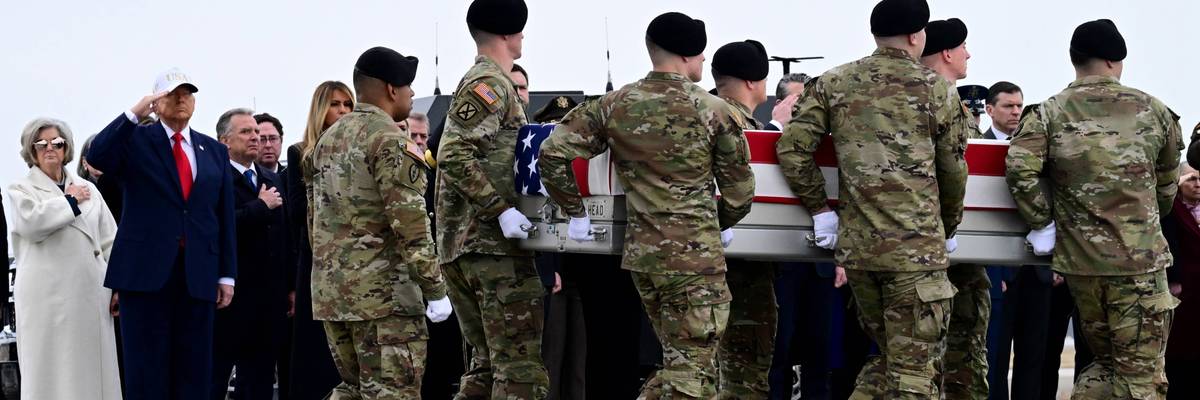
US President Donald Trump salutes as troops carry the flag-draped casket of a service member killed in the Iran War, in Dover, Delaware on March 7, 2026.
(Photo by Kyle Mazza/Anadolu via Getty Images)

Brett Wilkins
Sep 19, 2026
COMMON DREAMS

The Trump administration—which calls itself the “most transparent administration in history”—is once again under fire for its lack of transparency after The Washington Post on Friday published a report in which US officials said more American troops have died during the Iran War than the Pentagon has disclosed.

Five officials familiar with the Pentagon’s internal casualty accounting told the Post under condition of anonymity that at least 22 US service members have died since Trump launched the Iran War on February 28—four more than the 18 fatalities currently listed in the Pentagon’s public Defense Casualty Analysis System, or DCAS. A sixth official put the number at 23.

The officials said that not all of the additional deaths were necessarily caused directly by Iranian attacks, but rather involved US personnel stationed in the Middle East.


The report raises questions regarding transparency, as well as the military’s line-of-duty investigations following service member deaths that can affect survivors’ benefits.

Retired US Army Brig. Gen. Steve Anderson asked some of those questions in a Friday Substack post directed at Hegseth and calling the reported obfuscation an “unforgivable sin”:Why are you hiding from the American people and the media?
Why haven’t you done a press conference in the Pentagon for four months?
What were the families of the fallen told about the circumstances around the deaths of their loved ones? Were they denied recognition for their loved ones’ service and sacrifice in war?
Who made the call to hide the number from the American people?
How many more people have been wounded than we know about?
What are [you] going to do to make this right?

Responding on social media to the Post report, US Defense Secretary Pete Hegseth wrote, “This is DISGUSTING and FAKE. A complete LIE.”

“Shame on The Washington Post—they’re worse than Iranian state media,” Hegseth added.

Hegseth’s denial follows earlier controversies over the Pentagon’s casualty reporting.

In July, the department’s public database briefly excluded four US service members killed during renewed fighting, even though the Pentagon had separately announced the deaths. Officials subsequently blamed the discrepancy on technical problems.

Also in July The New York Times revealed that the Pentagon hid dozens of US military injuries from Iranian strikes on bases in Jordan.

Sen. Tammy Duckworth (D-Ill.), a disabled Iraq War veteran, wrote on Bluesky in response to the Post report that “22 of our service members have been killed in Trump’s illegal war. Not 18 like we were told.”

“The Pentagon hid four more heroes’ deaths from us for months,” she added. “Congress cannot let them get away with this.”

To that end, Duckworth and other Democratic lawmakers in both the House and Senate have introduced legislation aimed at preventing the Pentagon from manipulating troop casualty data.

Last month, Duckworth led 17 upper chamber colleagues in introducing the Honoring the Sacrifices of Our Troops in War Act, which her office said came partly in response to the Trump administration’s “shameless attempt to downplay the damage done and evade accountability to the American people.”

Outgoing Congressman Thomas Massie (R-Ky.) on Thursday separately moved to force a House vote on impeaching Hegseth, accusing the defense secretary of violating provisions of the War Powers Resolution by continuing hostilities without congressional authorization.

After several failed attempts, both houses of Congress in June passed a war powers resolution directing Trump to withdraw US forces from hostilities with Iran. Trump did not comply.

The number of US troops killed and wounded in the Iran War pales in comparison to Iranian casualty figures. Thousands of Iranians—including more than 3,500 civilians, more than 380 of them children—have been killed and tens of thousands more wounded by US and Israeli attacks since February 28, according to Iranian and international officials.