Sunday, September 27, 2026


Russian Military Cargo Ship Heads for Turkey from Tobruk
Russian military cargo ship
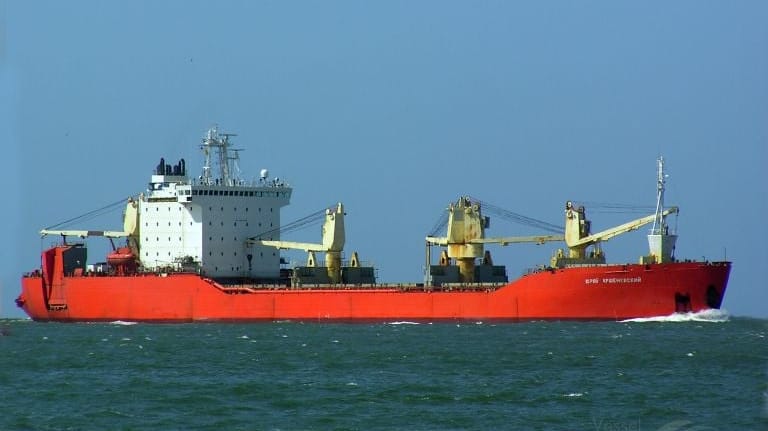
Yuriy Arshenevskiy vessel which has been known to carry Russian military cargo (Aart van Bezooijen photo courtesy of VesselFinder)

Published Sep 25, 2026 10:13 AM by The Maritime Executive


A Russian-flagged cargo ship with a history of ties to weapons shipments and sanctioned military cargo vessels has broken away from a convoy that had a naval escort into the port of Tobruk in Libya. It has headed north through the Dardanelles towards the Bosporus and the Black Sea.

The Yuriy Arshenevskiy (IMO 8406705) was sailing with the US-sanctioned cargo vessel Anastasiia (IMO 9349291), with an escort provided by the Ropucha Class landing ship Aleksandr Shabalin (L110) when it left the Baltiysk naval base in the Kaliningrad headquarters of Russia’s Baltic Fleet, transited the Strait of Gibraltar in early September, then arrived in the port of Tobruk. Ural trucks and armored vehicles were seen on the quayside in Baltiysk being loaded onto the two cargo vessels. At the other end in Tobruk, social media postings showed tarpaulin-covered military vehicles, including what appeared to be 8-wheeled armored personnel carriers and multiple-barreled rocket launchers, being moved out of the port on low loaders. 
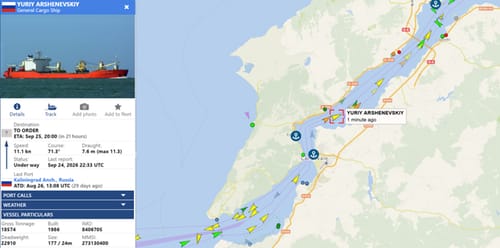
 

The Yuriy Arshenevskiy makes its way north through the Dardanelles, September 24 (VesselFinder)


It is not clear when the Anastasiia and the landing ship Aleksandr Shabalin (L110) left Tobruk. From low-resolution imagery, it appears that the Anastasiia was on the quayside still on September 21, but on September 25 she was cruising westwards between Sicily and Malta. The Yuriy Arshenevskiy left sometime beforehand, and was seen passing through the Dardanelles with its AIS system switched on late on September 24. It was approaching the Bosporus early on September 25, but now appears to have switched course and is heading for the anchorage or port at Tuzla. It was previously incorrectly reported that the Yuriy Arshenevskiy was sanctioned, but this is not the case – not that sanctioned status would have been a bar to transit of the Bosporus, as Turkey – unlike Iran – strictly applies UNCLOS rules regarding innocent passage through narrow channels. 

The military equipment was unloaded in Tobruk, which is controlled by Field Marshal Haftar’s Libyan National Army, while the Turkish government supports the other side in the Libyan civil war, the UN-recognized government based in Tripoli. 
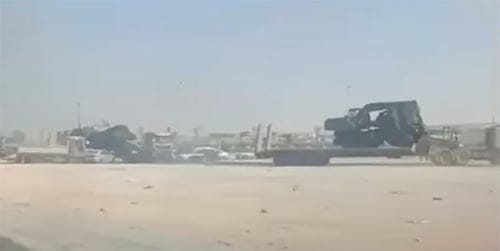
 

A convoy of low-loaders moves military equipment out of Tobruk docks (Screen grab from Tanasuh TV)


If the Yuriy Arshenevskiy resumes its journey northwards and heads through the Bosporus, it will become vulnerable to similar attacks that Ukraine has mounted previously on Russian-flagged vessels in the Black Sea, particularly as the vessel has an association with the movement of arms and military equipment. While the vessel was still in the Mediterranean, it appears to have escaped the attention of the Ukrainian drone unit, which is believed to be based in Misrata – midway between Tripoli and Tobruk – and which is believed to have carried out several attacks against sanctioned and Russian dark fleet vessels. But whether the Yuriy Arshenevskiy resumes its journey northwards, or turns round and heads back into the Mediterranean, whichever way, it will be vulnerable to Ukrainian attack.

Top photo by Aart van Bezooijen - courtesy of VesselFinder


New Standoff Between China and Philippines Near Second Thomas Shoal

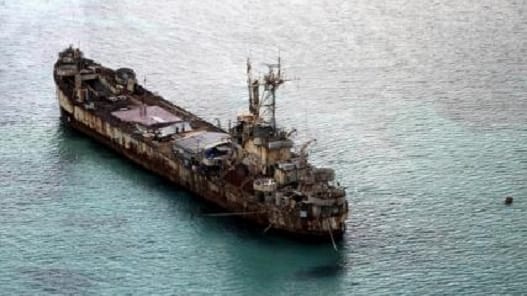
grounded Philippine warship
Yesterday's incident took place as the Philippine forces were attempting to resupply BRP Sierra Madre

Published Sep 25, 2026 3:27 PM by The Maritime Executive


The Philippine Coast Guard is reporting a new standoff between two of its vessels on a resupply mission in the Spratly Islands. While it is part of the long-running dispute over the presence of Filipino forces on a purposefully grounded warship, it is the first time since July that the sides squared off in the area. It also follows another recent bumping incident between a Chinese and Philippine vessel.

The Philippines asserts it sent two vessels, BRP Malabrigo and BRP Cabra, on September 24 as part of the regular Rotation and Resupply mission to the BRP Sierra Madre, which has been grounded on the Second Thomas Shoal since 1999. The vessel, built by the United States in the 1940s and operated from the late 1970s until 1999 as an amphibious transport by the Philippine Navy, was grounded to establish a Philippine presence in the Spratly Islands. The Philippines maintains a small crew aboard the ship.

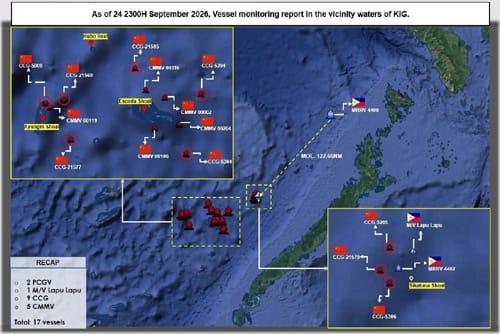
During the recent incident, the Philippines asserts there was a large presence of Chinese vessels in the area and that they were "continuously shadowing" its vessels. 


Chat posted by the Philippine Coast Guard showing the Chinese vessels is says are around the disputed shoal (PCG)


“The mission was temporarily suspended after a CCG vessel carried out dangerous maneuvers against M/V Lapu-Lapu that threatened a collision, although no one was injured,” said Jay Tarriela, the spokesperson for the Philippine Coast Guard.

The Chinese responded today, calling the incident a “provocation” and saying the Philippines was “attempting to deliver supplies to an illegally ‘grounded’ warship.” Further, they say it happened during a Chinese holiday and that the Filipinos "hyped up" the incident.  The statement called on the Philippines to “stop provocations and troublemaking,” asserting that the Philippines is "reneging on its commitments” and disregarding Chinese warnings. It said the Philippines "willfully" dispatched the supply mission.

“The real troublemakers are China’s warships and coast guard vessels that ganged up on an unarmed resupply boat at night and put Filipino lives at risk,” responded Tarriela. 

He asserts the China Coast Guard vessels conducted dangerous maneuvers that threatened a collision. He said it happened “after a PLA Navy warship warned it would take ‘compulsory measures’.”

The Philippines asserts the area is part of its EEZ and that it does not require permission to support the Sierra Madre. Further, it claims a 2024 provisional arrangement with China does not require Beijing’s permission for the resupply missions.

The Philippine Coast Guard asserted in July that the China Coast Guard used its water cannon on the resupply mission vessels. It also claimed a navy crewmember was struck by the Chinese using a wooden baton. Just a week ago, Chinese and Filipino forces clashed in another region during a supply mission to the Philippines’ fishermen. Media reports said the Chinese vessel caused more than US$22,000 in damage after it destroyed railings and equipment on the vessel. China asserted the Philippine vessel maneuvered in front of the Chinese ship, causing the collision.


Japanese Naval Strengthening Steals Limelight at U.S.-China Talks

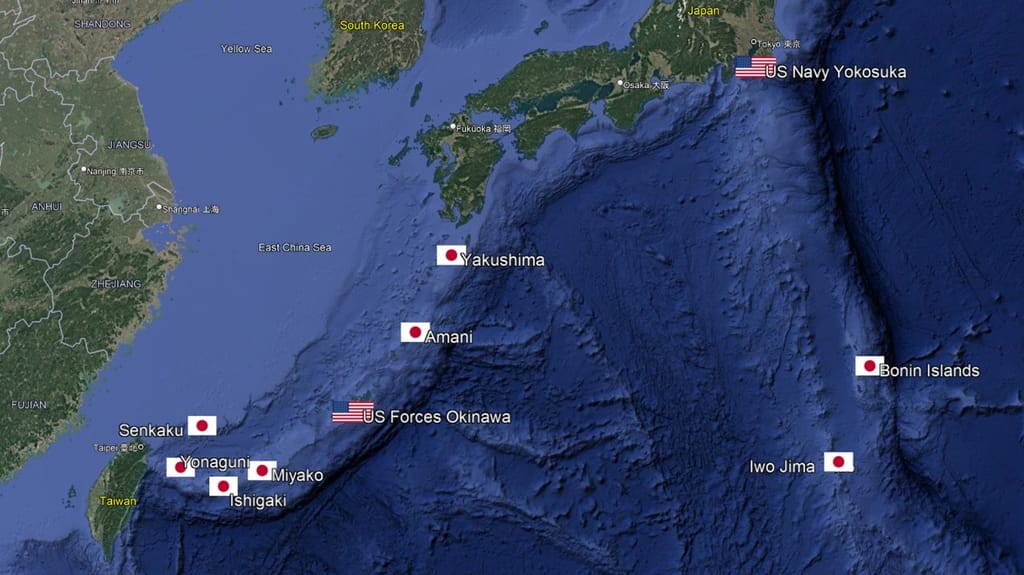
The Japanese southern islands worrying China (Google Earth/CJRC)

Published Sep 26, 2026 6:37 PM by The Maritime Executive

Chinese criticism of Japan’s growing defense budget appears to have been one of the most consequential developments coming out of the days President Xi Jinping spent in Washington for his state visit, which otherwise seems to have done little to move forward Sino-US relations. In advance of the meeting, Chinese Ambassador to Washington Xie Feng had warned that President Xi should not be challenged over Taiwan, democracy and human rights, nor restrictions to China’s growing development influence in the world, so the agenda between the two presidents was limited.

Japan’s Sanae Takaichi was in New York at the same time to make her first appearance as Prime Minister at the UN General Assembly, and held bilateral meetings with President Trump in New York. Chinese state media chose the moment of the Sino-US summit to launch a stinging attack on Prime Minister Takaichi’s radical plans to increase Japanese defense spending, and in particular to strengthen naval and air defense forces defending Japan’s isolated southern islands, specifically the Nansei Chain islands of Miyako, Ishigaki and Yonaguni.

Japan’s possession of these islands, and others to the east and north-east of Taiwan, would prove an obstacle to any Chinese plan to invade Taiwan. If long-range anti-aircraft and anti-shipping missiles are stationed on these islands, they would be able to disrupt the deployment of the PLA Navy to encircle Taiwan and cut it off from external reinforcement.

Prime Minister Takaichi has already made it clear that a Chinese invasion of Taiwan would be a causus belli for Japan, and a strategic threat to Japan’s national security. Her approach has been endorsed in this year’s general election in Japan, which gave her an unprecedented supermajority in the Japanese Diet, sufficient to change the constitution and to support a doubling of the percentage of GDP devoted to defense.

Besides a significant expansion of the Japan Maritime Self Defense Force, in particular enhancements to its Mogami Class frigates and submarine fleet, the Japanese Defense Minister Shinjiro Minister Koizumi has already announced that infrastructure to support a permanent presence of Chu-SAM (Type-03) medium-range air defense missiles on the Japanese island of Yonaguni will be in place by 2030. Field-deployed Chu-SAM systems are probably there already, with sufficient range to cover the eastern approaches to Taiwan.

These systems will thicken up air defense cover for the Okinawa-based 12th Marine Littoral Regiment, which is tasked alongside the JGSDF with defending Japan’s outlying islands, and which has recently been re-equipped with the Navy-Marine Expeditionary Ship Interdiction Systems (NMESIS) and Marine Air Defense Integrated Systems (MADIS). Mobile Japanese Type 88 coastal defense anti-ship missile systems can also be expected to be deployed to the islands, and all these systems have ranges which cover Taiwan’s eastern flank and coastal areas.

The Chinese diplomatic assault on Japan was headlined in the Chinese Military Bugle newspaper, which told its readers that China had rights over Japan, because Japan is still defined by the United Nations - as it has been since 1945 - as an ‘enemy country’, entitling China to take unilateral action if it feels threatened. The same paper criticized Japan for its Free and Open Indo-Pacific project, which looks very similar to the Chinese Belt and Road outreach program combining security and economic development objectives. The Chinese defense spokesperson upbraided Japan for supporting Filipino protests over aggressive Chinese coastguard actions off the Spratly Islands, over which the Japanese Embassy in the Philippines had said it was "gravely concerned". The Xi-Trump talks attracted one story in the Chinese Military Bugle, whilst China’s criticism of Japan was covered in four stories.

The opinions expressed herein are the author's and not necessarily those of The Maritime Executive.


Iran Says It Offered the US a New Proposal to Open the Strait of Hormuz

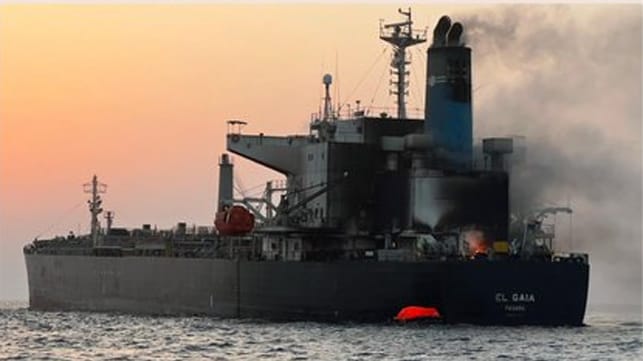
Tanker attacked in Strait of Hormuz
Iran reports it gave mediators a new proposal for open the Strait of Hormuz after a week in which it struck at least four vessels (Oman Maritime Security Center)

Published Sep 25, 2026 8:02 PM by The Maritime Executive


Iranian officials appearing at the United Nations on Friday, September 25, said they have offered a new proposal for opening the Strait of Hormuz in a week’s time. They said it all depends on the U.S. response to the proposal, which was reportedly conveyed by mediators from Qatar.

The core of the proposal appears little changed from the previous interim agreement and terms that have been repeatedly presented and then violated. Iran set as the key conditions the lifting of the U.S. naval blockade of Iranian ports and embargo on Iranian shipping, waiving the sanctions on Iranian oil sales, and observing a ceasefire with Iran that would also include Lebanon. 

The reports indicated that, as a “sweetener” or “enticement,” Iranian Foreign Minister Abbas Araghchi said Iran would restart talks with the U.S. on its military program, seven days after the agreement is accepted. Reuters, however, is quoting another “senior Iranian official” who it says indicated on Friday that Iran would show no flexibility over its nuclear program even if the United States accepts its proposal to reopen the Strait of Hormuz.

Today’s message came, Reuters reports, after Iranian President Masoud Pezeshkian told the media at the UN on Thursday that he hoped a deal to end the hostilities could be reached before the US midterm elections on November 3. Donald Trump has said in the past that he thinks a deal will be reached after the elections and that Iran was waiting to see the outcome of the vote.

There was no immediate response from the White House to the Iranian comments, but it said earlier in the week that U.S. officials had positive and constructive conversations with mediators on the Iran war. The Associated Press is citing Saudi Arabian officials who said they were “skeptical of the latest push for a deal.”

Trump had used harsh words after the collapse of the June deal, saying Iran did not respect its agreements and that he accused it of prolonging the discussions and wasting time. He has said he was skeptical that an agreement would be honored and, in his speech to the United Nations this week, threatened Iran with “annihilation.” 

The administration continues to insist the Strait of Hormuz is open despite at least four vessels being struck in the past few days. At least two were reported on fire and abandoned, with casualties among the crew. U.S. Central Command on Friday also reported that it has redirected 122 commercial vessels to ensure strict compliance with the blockade.

Exact numbers on the number of passages are hard to confirm, as most vessels are currently turning off AIS transmission for a “dark” passage. However, Reuters, citing data from Kpler, said crude oil flows out of the Strait of Hormuz so far this week reached 33.7 million barrels, versus a total of 49.2 million barrels of crude for the full period last week. It is also citing a consistent trickle of vessels, which remains below last year's levels. Bloomberg is also reporting that Qatar increased LNG shipments, reaching the highest tanker traffic through the Strait in more than two months.

Iran’s so-called Persian Gulf Strait Authority (PGSA) continues to assert that it is responsible for the safe, secure, efficient, and coordinated passage of vessels navigating through the Strait of Hormuz. It says vessels must seek its approval and that it is ensuring compliance with national and international maritime regulations. Although it did not announce it, its non-compliant list has been expanded to a total of 81 vessels that it says are violating Iranian protocols for the Strait of Hormuz and shall face restrictions on future passages, including fines, detention, or confiscation.

The International Maritime Organization now lists 85 confirmed incidents as of September 24. It says there are 24 confirmed seafarer fatalities, although there is no accurate count of the number of seafarers injured or who remain trapped in the Persian Gulf.


US Appears Set to Seize $600M in Iranian Crude Oil From Three Tankers

US seizing tanker linked to Iran
US forces stopping the VLCC Davina in the Indian Ocean (INDOPACOM)

Published Sep 25, 2026 5:51 PM by The Maritime Executive


Speculation is mounting after trackers revealed that three of the tankers stopped by U.S. forces as part of the economic blockade against Iran have been spotted on the move toward the United States. The U.S. has a history of pursuing forfeiture complaints, and the Trump administration has hinted at it as a step in the ongoing efforts to punish Iran.

The discussions began when TankerTrackers.com posted a brief message on Wednesday saying, “Nearly six million barrels (valued at nearly $600M) of seized Iranian crude oil are quietly crossing the Atlantic Ocean towards the United States of America.” It did not provide further details.

The ships, however, have now been identified using data from Kpler and others. Two of the VLCCs are the Tifani (IMO 9273337), a 300,000 dwt tanker falsely claiming registry in Botswana, stopped in April in the Indian Ocean, and the Majestic X (IMO 9198317), a 281,500 dwt tanker falsely claiming registry in Guyana, which was stopped two days after the first tanker, also in the Indian Ocean. Both of these vessels were detected sailing north along the coast of Brazil. Both were laden with Iranian crude and made it out of the Persian Gulf, likely heading for China, before the blockade was first imposed in April 2026.

The Pentagon asserted the vessels were stopped under the right of visit, inspecting sanctioned stateless vessels. The Department of Homeland Security later inspected the vessel, and reports said the US would seek seizure orders.

The third tanker drew some more speculation before it was identified as Davina (300,976 dwt), although most databases list the vessel as Lenore. It was claiming a false registry in Curacao and, before that, had also falsely claimed it was sailing under the flag of Palau. It was stopped in June off Sri Lanka. Kpler’s data said the vessel had sailed past Africa’s Cape of Good Hope, recently entering the Atlantic.

Combined, the three ships would be laden with approximately six million barrels of Iranian crude. That would be a value of roughly $600 million based on current market prices. Only the Majestic X, briefly in late July, showed a destination of the United States, according to Kpler’s data. Observers, however, are confident the ships are headed toward the United States, likely Texas, where the U.S. will enforce its forfeiture.

The Trump administration has spoken about the possibility of seizures. Further, at the end of August, reports said it had moved to reestablish the so-called prize court, a special-purpose tribunal that is used to determine the legality of the seizure and forfeiture of an enemy merchant vessel. 

In the past, the process has been drawn out as it worked through the courts. After seizing a tanker off Venezuela last year, government lawyers complained to the court about the cost of maintaining the tanker Skipper, saying it was reducing the value of the cargo.

The U.S. has achieved the seizures in the past, such as in the case of the Bella 1, aka Marinera (IMO 9230880), which it chased from Venezuela across the Atlantic. That vessel was empty, but the Trump administration won a court order to seize and sell the ship, with it ultimately going to a cash buyer for recycling.

The United States seized and sold oil products in 2020 from tankers that it stopped before they could reach Venezuela. In that case, it only went after the cargo and let a Greek owner retain the vessels. The same thing happened in 2023, when the U.S. seized the cargo aboard the Suez Rajan, which was interdicted in the Far East. The vessel was ultimately brought to the United States and offloaded before it was permitted to sail away under the new identity of St Nikolas.

In that case, Iran did not stand by when the oil was seized. It seized the St Nikolas in January 2024 when the vessel was in the Persian Gulf. It admitted it was retaliation, and it took the crude oil cargo from the vessel, saying it was sold as compensation. 

Iran is calling the U.S. seizure of its tankers and the ongoing blockade piracy. It has made dropping the blockade one of the conditions for reopening the Strait of Hormuz. U.S. Central Command, however, says the blockade is being enforced and posted on social media that, as of September 25, it has redirected 122 commercial vessels to ensure strict compliance.

Observers point out that the United States has stopped other tankers linked to Iran beyond the three. For example, the VLCC Skywave (IMO 9328716) is currently unaccounted for in the reports. The 302,481 dwt tanker was stopped in May between Malaysia and Sri Lanka, falsely claiming to be registered in Botswana.

Bloomberg points out that the VLCCs Majestic X and Tifani are likely just a few weeks away from the United States, setting the stage for a potential showdown. The Lenore will take longer to reach her destination. 


Somali Forces Free Third Ship Seized by Pirates

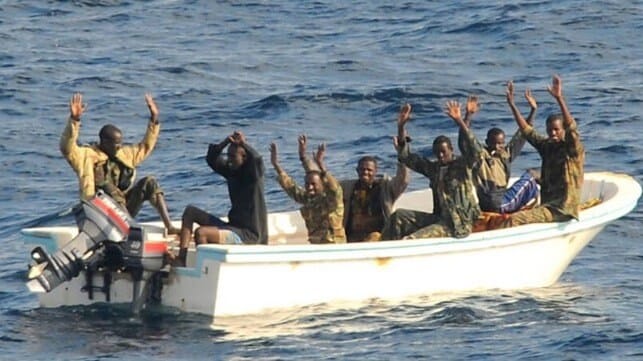
Somali pirates surrender
Forces in Puntland said the pirates were arrested while media reports indicates several people were killed (file photo)

Published Sep 25, 2026 1:45 PM by The Maritime Executive


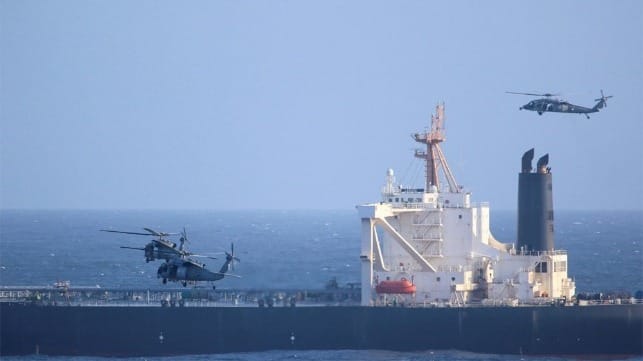
Authorities in the Puntland region of Somalia are reporting that they freed another vessel being held by pirates. Somali pirates took control of six vessels between April and August this year, with three still believed to be under the control of pirates.

The Puntland Navy and Puntland Maritime Police Force only said that the product tanker Sibu 1 had been freed and the pirates were arrested. They reported it was a planned 48-hour operation, and they were continuing to follow up.

The local news outlet, the Daily Somalia, however, reports it was a violent clash between the Somali forces and the pirates. The unconfirmed story says the fight took place off the coast of Mudug and that three people were dead and several others injured. It did not specify whether it was all pirates or some of the crew from the ship. 

The Sibu 1 was transporting oil products when it was boarded on August 20 off the coast of Yemen, approximately 136 nautical miles east of Al Mukalla. UK Maritime Trade Operations was informed that six individuals had boarded the ship and directed it to the coast of Somalia. The crew appeared to hastily transmit a final message on AIS reading “PRIRATE ONBOARD HEL,” [sic] as the ship was being seized. The ship was reported to have a crew of 20, including 16 Indian nationals and four Arab crewmembers.

The 32,238 dwt product tanker, which was built in 2001 and also operating under the name Seamul, had a murky past and was sanctioned by the United States in December 2025 in an effort targeting an Egyptian businessman. OFAC asserted his companies were associated with multiple shadow fleet vessels, as well as several shipping companies, used to transport Iranian oil products. The Seamul was transferred to UAE management and also started using the name Sibu 1. It was claiming registry in Eritrea, which is considered false.

The rescue of the tanker followed the release of the small cargo ship Sward on September 11 after 138 days in captivity. The 8,500 dwt cargo ship, which is registered in St. Kitts and Nevis, was carrying a cargo of fertilizer bound for Mombasa, Kenya, when it was boarded on April 26. It had a crew of 17, made up of 15 Syrians and two Indians. Reports said an undisclosed amount of ransom had been paid.

Turkish commandos working with the Somali forces also freed another cargo ship, Lufut (1,400 dwt), at the end of August. The ship, which was operating under the flag of Cameroon, was carrying Turkish military equipment for a base in Africa when it was seized. Reports said it was a violent confrontation, and between four and six pirates were killed.

The last reported incident in the region near the Horn of Africa came on September 10 when pirates boarded the Glamor southwest of Yemen. The crew was able to secure itself, and EU forces conducted a show of force, which was believed to scare the pirates into disembarking the vessel.

The Maritime Security Center Indian Ocean (MSCIO), however, reports it is still tracking three other vessels whose crews were hijacked and remain off the coast of Somalia. They include the Honour 25, Eureka, and Asana, and while there have been reports of diplomatic efforts and possible negotiations, the crews remain in the custody of the pirates.

Crew Rescued After Abandoning Small MSC Boxship off Vietnam

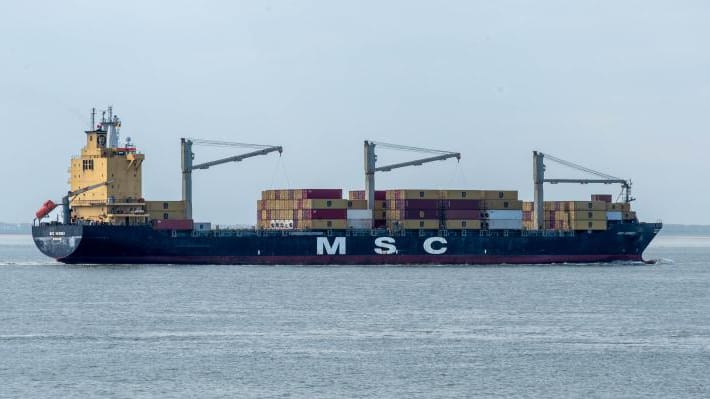
MSC containership
Crew of the MSC Hermes III abandoned the ship east of Vietnam (Martin Krombeen photo from 2025 courtesy of Vessel Finder)

Published Sep 22, 2026 11:48 AM by The Maritime Executive


Singapore’s Maritime Rescue Coordination Center is reporting that the crew of an MSC containership was rescued on September 22 after abandoning their vessel. The report indicates there were no injuries to the crew, but no details were provided on the circumstances that caused the crew to abandon ship.

The distress call was made around 08:45 local time in Singapore on September 22 from the MSC Hermes III. The 38,193 dwt vessel, which was built in 2006, was acquired by MSC in 2020. It is 212 meters (695 feet) in length with a capacity of 2,490 TEU. The ship had a crew of 25 aboard.

The ship had been sailing from Shanghai to Jakarta before returning to Singapore, according to MSC's onlien schedule. It was operating a regional feeder service.

The authorities in Singapore broadcast a request for nearby vessels to assist. The MSC Hermes III was in a busy shipping lane, approximately 160 nautical miles (300 km) east of Vietnam in a position north of Ho Chi Minh City. The Singapore MRCC said three vessels responded to the call, and the MSC Ruby, a larger 13,000 TEU vessel, was able to reach the area. 

The crew of MSC Hermes III had abandoned the vessel to its lifeboat. They were recovered by the MSC Ruby, and the Singapore MRCC says arrangements are being made with the Vietnamese MRCC to land the crew.

The MSC Hermes III showed no significant issues on recent Port State inspections. Last year it was cited mostly for paperwork issues during an inspection in Le Havre, but otherwise has not been cited for issues on several recent inspections.

AIS signals appear to indicate that the vessel has remained afloat on Tuesday, and the MSC Ruby appears to be standing by. At least two other MSC containerships had been in the vicinity as well. Later, a maritime warning was issued saying the vessel is derelict and adrift.

MSC has been contacted for a statement on the incident. It is unclear if a salvage effort is being launched.

There were several high-profile incidents with MSC vessels in 2025. The MSC Baltic III blacked out in February 2025 off Newfoundland, Canada, and the crew had to be airlifted off the ship. The vessel was driven ashore in a strong winter storm, and salvage efforts are still underway in Canada. Three months later, in May 2025, MSC Elsa 3 took on a list off the west coast of India. The crew was rescued from the vessel before it sank.


Top photo of MSC Hermes IIII in 2025 by Martin Krombeen, courtesy of VesselFinder 


Bulker Comes Free on High Tide After Being Aground for a Week off Australia

grounded bulker refloated
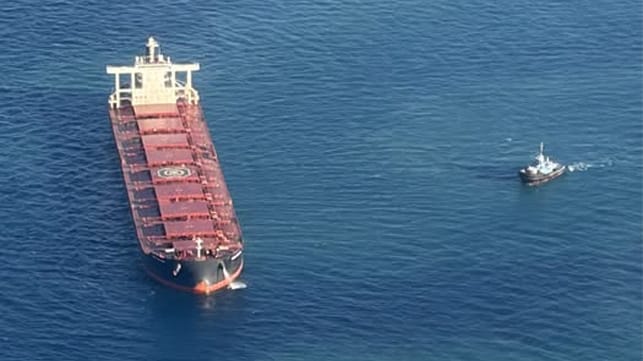
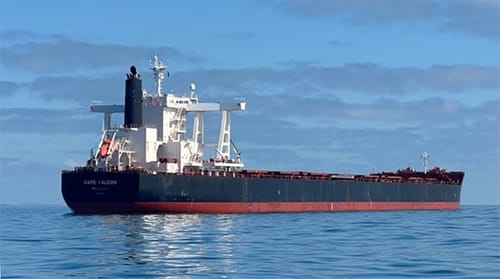
Cape Falcon came free on the morning tide after a week aground (Maritime Safety Queensland)

Published Sep 24, 2026 12:58 PM by The Maritime Executive


The grounded bulker Cape Falcon (182,066 dwt) came free Thursday morning, September 24, in an earlier-than-planned effort. A salvage attempt had been scheduled to start during the evening tide for the vessel, which grounded on September 18.

Maritime Safety Queensland (Australia) reported the vessel had been refloated on the morning high tide after several previous efforts over the past week had failed to free the Capesize bulker. The vessel is reported to be fully laden and was aground approximately six nautical miles off Gladstone, located in the northeast of Australia.

The Regional Harbour Master had approved a salvage plan yesterday. They said a refloating effort was planned for 1900 on Thursday local time when the high tide was expected to reach around 3.6 meters (nearly 12 feet). The effort was dependent on favorable weather conditions, the sea state, and tidal conditions.

Cape Falcon was maneuvering at slow speeds, according to Maritime Safety Queensland, while attempting to anchor in the bunkering anchorage off the Port of Gladstone. It was declared aground at 1524 local time on September 18. Maritime Safety Queensland was enforcing a one-nautical-mile exclusion zone around the vessel and said that while it was outside the port shipping channel, there would still be some impact to the shipping schedule. Tugs were being used from the port to support the recovery effort, but attempts to pull the vessel free over the weekend failed.


Cape Falcon grounded six nautical miles offshore while attempting to anchor for bunkering (Maritime Safety Queensland)

The ship, which was built in 2022 and is approximately 292 meters (958 feet) in length, is managed by Japan’s Shoei Kisen Kaisha and registered in Liberia. The Australian Transport Safety Bureau advises there are no reports of injury to the crew and no pollution reported, while media reports said it grounded near the edge of the dredge spoil ground.

Cape Falcon was directed after being refloated to anchor pending a further investigation. The Australian Maritime Safety Authority detained the ship to ensure all safety and regulatory requirements are met before the vessel resumes service. The Australian Transport Safety Bureau said it would launch a short investigation, including conducting interviews and collecting evidence and data, and it had ordered the ship’s voyage data recorder preserved. Investigators will be looking at the ship’s tracking data, weather, the crew and operator, and its maintenance records.

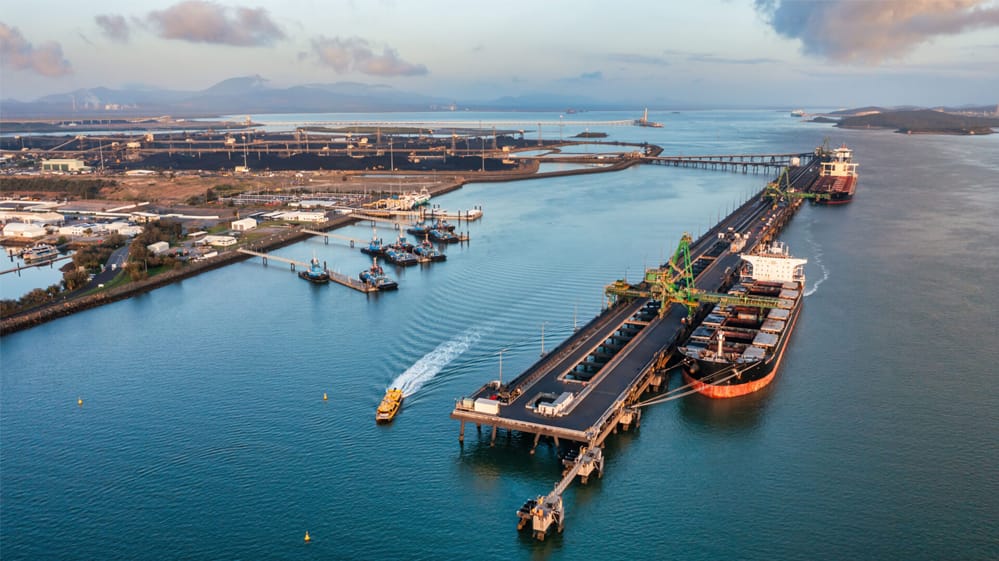
Gladstone is one of Australia’s large dry bulk ports and a major export location. Port officials note it handles more than 30 commodities, including coal and minerals.


Giant Japanese Bulker Remains Aground Off Australia After Four Days

Gladstone Australia
The Capesize bulker was offshore maneuvering into an anchorage for bunker when it grounded five days go (Port of Gladstone)

Published Sep 21, 2026 6:18 PM by The Maritime Executive


Efforts, so far, have been unsuccessful in pulling the large, Japanese-owned bulker free after it grounded last Friday (September 18) off the Gladstone port in Northeast Australia. Officials are monitoring the case and plan to start a full investigation just as soon as the ship is salvaged.

The Capesize dry bulk carrier Cape Falcon (182,066 dwt) was maneuvering at slow speeds, according to the Australian Broadcasting Corporation (ABC), when it went aground south of the bunkering anchorage off Gladstone. Reports place the ship about six nautical miles outside the port and say the ship, which is 292 meters (958 feet) in length, had been attempting to anchor for bunkering. It is near the edge of the dredge spoil ground.

The ship, which was built in 2022, is owned by Japan’s Shoei Kisen Kaisha and registered in Liberia. The Australian Transport Safety Bureau advises there are no reports of injury to the crew and no pollution reported at this point, but the ship remains stuck, possibly in the mud. Tugs went alongside on Saturday and attempted to pull the vessel free, and the media reports said there was a second attempt on Sunday. As of the beginning of Tuesday in Australia, the vessel’s AIS still reads “aground.”

The Australian Maritime Safety Authority says the ship will be detained when it is free. It will require a seaworthiness inspection before it will be permitted to depart. The tracking shows it had come from China and made stops in multiple Australian ports before grounding.

The Australian Transport Safety Bureau reports it will launch a full investigation, including conducting interviews and collecting evidence and data when it is appropriate. For now, it has ordered the ship’s voyage data recorder preserved. Investigators will be looking at the ship’s tracking data, weather, the crew and operator, and its maintenance records.

ABC reports the ship is outside the shipping channel. However, port operations have been impacted as the recovery efforts continue. They were waiting for news of the appointment of salvors, but the ATSB points out the salvage efforts are the responsibility of the owner and operator. ATSB says it is not involved in the recovery operations, but it is being closely monitored as part of the safety investigation.
 
Gladstone is one of Australia’s large dry bulk ports and a major export location. Port officials note it handles more than 30 commodities, including coal and minerals.


Video: Greek Cargo RoRo Abandoned After Fire Breaks Out Off Mykonos

cargo ship fire
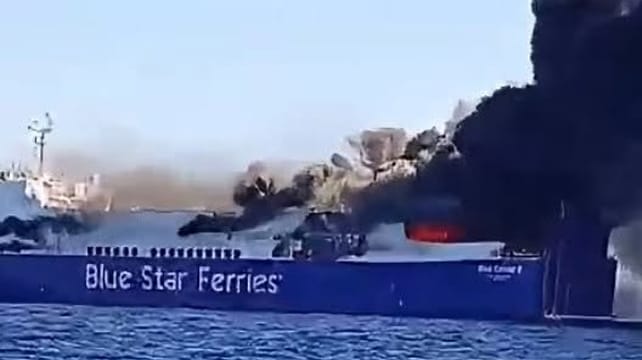
A RoRo cargo ferry is engulfed in fire north of Mykonos ( PENEN - Panhellenic Sailors' Union)

Published Sep 25, 2026 12:45 PM by The Maritime Executive


The crew and one truck driver aboard the Greek RoRo cargo ferry Blue Carrier 2 have been safely evacuated after a fire broke out on the ship Friday morning, September 25, north of Mykonos. Firefighting efforts are still underway, although it appears they have been able to place a towline on the 9,655-dwt RoRo.

The fire appears to have started on the deck of the ferry, possibly in one of the garages. The vessel was carrying 166 trucks and 29 cars. It was sailing from Syros to Samos. 


Built in 1997 in Japan, the ferry is 162 meters (531 feet) in length. It was acquired by Greece’s Attica Ferries in July 2023 from CLDN Ferries, which had been operating it as the Clementine for Cobelfret Ferries. The Blue Carrier 2 is registered in Greece.

Attica confirmed in a statement that the fire was reported at 08:57 this morning, and the crew attempted to fight it, but it has spread to large portions of the vessel. The crew and the one truck driver aboard abandoned the vessel and took to the lifeboats. They were later picked up by passing ships. The Hellenic Coast Guard reports there were no injuries, and everyone was taken to the neighboring island of Tinos.

At least two firefighting vessels as well as tugs responded to the vessel.  A salvage tug with firefighting capabilities has also reached the scene. Attica Ferries said that it has assigned a specialized company and that it is working with the authorities to manage the situation.