Sunday, September 27, 2026


Atomic Eagle expects renewed financing interest in Niger after uranium deal


A drill rig at Atomic Eagle’s Madaouela project in Niger. Credit: Atomic Eagle

An agreement reached this week between the government of Niger and uranium developer Atomic Eagle (ASX: AEU) is expected to help improve access to financing for uranium projects in the West African nation, the company’s chief executive told Reuters.

Niger doubled its stake in the Madaouela uranium project to 40%, bringing an end to a dispute with Australia’s Atomic Eagle, the mining ministry said on Wednesday.

The country is one of Africa’s largest uranium producers, holding about 336,000 metric tons of identified uranium resources in 2023, according to the World Nuclear Association in August.

The Madaouela agreement came just days after the US International Development Finance Corporation (DFC) backed rival Global Atomic’s (TSX: GLO) Dasa uranium project, and at a time when spot uranium prices are almost a fifth higher than a year earlier, at around $89.68 per pound in August, according to industry data.

The recent support secured by Global Atomic is a “fantastic indication that international finance is willing to finance Niger uranium projects again”, Atomic Eagle CEO Phil Hoskins said on Thursday.

Niger tightens control over uranium sector

Military leaders who seized power in a 2023 coup have tightened state control over Niger’s uranium sector, revoking permits held by Orano and GoviEx, now Atomic Eagle, triggering arbitration proceedings and raising investor concerns over resource nationalism.

Atomic Eagle now plans to update feasibility studies, secure environmental approvals and arrange financing over the next two years, aiming to bring the Madaouela project back to construction-ready status, Hoskins said.

Under the agreement, Niger will hold a 15% stake at no cost and a further 25% stake that it must help fund to maintain. Atomic Eagle agreed to cover up to $40 million of Niger’s future funding commitments under the project, the CEO said.

“I don’t believe (the deal) has any negative implications on the ability to develop the mine or the economics,” Hoskins said, adding that the company would consider funding from a range of investors, including China, as it advances the project.

(Reporting by Maxwell Akalaare Adombila, Additionall reporting by Niamey newsroom; Editing by Robbie Corey-Boulet; Kirsten Donovan)

Niger increases stake in Madaouela uranium project to 40%, statement says

Credit: RHJ/AdobeStock

Niger increased its stake in the Madaouela uranium project to 40% from 20%, bringing an end to its dispute with Australian explorer Atomic Eagle (ASX: AEU), the West African country’s mining ministry said on Wednesday.

Niger is a major uranium producer. In 2016, it awarded a permit to exploit uranium at the Madaouela project located in the Agadez region to Atomic Eagle, formerly named GoviEx.

In 2024, Niger revoked the miner’s permit for the Madaouela uranium project and returned the asset to the state, prompting the company to file for international arbitration.

The parties agreed in February 2025 to suspend the proceedings while pursuing a negotiated settlement and, in September 2025, extended the pause by a further six months to allow talks to continue, Atomic Eagle said.

According to the new agreement that was signed with the mines ministry, Atomic Eagle, which is responsible for operational oversight, will now hold 60% of the project, down from 80%.

Atomic Eagle did not immediately respond to a request for comment.

“Niger has prioritized dialogue and negotiation to usher in a new phase based on partnership and development,” a statement from the mines ministry said, without detailing the terms.

Military-led governments across the Sahel region are trying to assert more control over their resources in a bid to generate more revenue.

(Reporting by Niger Newsroom; Writing by Anait Miridzhanian; Editing by Maxwell Adombila and Thomas Derpinghaus)



 

SuperCritical, University of Michigan team up on offshore uranium recovery 


SuperCritical Materials Corp. has partnered with the University of Michigan to test whether its uranium-from-seawater technology can withstand the mechanical demands of industrial-scale offshore deployment. 

The research will focus on the mechanical design, prototyping and testing of systems using SuperCritical’s licensed adsorbent technology, which captures dissolved uranium as seawater passes across its surface. The material is retrieved after a defined exposure period and processed to recover the uranium. 

“This collaboration combines SuperCritical’s technology and development program with the University of Michigan’s expertise in offshore system design, hydrodynamics and experimental validation,” Dr. Maha Haji, research lead, assistant professor of mechanical engineering at the University of Michigan and director of the symbiotic engineering and analysis laboratory said. “Together, we are working to develop part of the fuel layer needed to support clean, firm energy through the next century.” 

The partnership comes as the US looks to expand and strengthen domestic nuclear-fuel supply and reduce its reliance on foreign uranium supply.  

SuperCritical aims to be part of the US nuclear-fuel supply chain through its nearshore development program that is engineering industrial-scale and cost competitive design for uranium extraction from seawater, as oceans contain 4.5 billion metric tons of dissolved uranium. 

The work moves Supercritical’s adsorbent material method towards a key engineering challenge: determining whether large quantities of the material can be deployed, exposed to seawater and recovered repeatedly and efficiently under marine conditions. 

The research 

The University of Michigan research program will examine how SuperCritical’s adsorbent behaves under different mechanical stresses such as packing, deployment, ocean exposure and retrieval.  

“Extracting critical materials from the ocean requires more than a high-performing absorbent,” Dr. Haji said. “It requires an offshore system that can operate efficiently, reliably and responsibly under demanding marine conditions.”  

Testing is expected to take place at the University of Michigan’s Aaron Friedman Marine Hydrodynamics Laboratory, which includes tanks capable of simulating waves, currents and other marine conditions in a controlled environment. 

“The question is whether the adsorbent can be deployed, exposed and retrieved efficiently and repeatedly at industrial scale,” SuperCritical CEO Alexander Canon Bryan said.  

The research will proceed in phases, which will mechanically characterize the adsorbent, evaluate packing configurations, develop prototypes, hydrodynamic testing it, and refine systems for future offshore pilot deployments.  

Developing and testing systems that can deploy and retrieve large quantities of adsorbent through repeated operating cycles is the next step to then move on to offshore testing.  

Results from the University of Michigan program are also expected to inform a future feasibility study aimed at advancing SuperCritical’s system towards an industrial-scale design.  


UN to help six nations get more value from critical minerals


Madagascar. (Stock image by jordieasy.)

The United Nations selected six countries across Africa and Asia to receive support aimed at helping them extract more value from their critical-mineral deposits seen as crucial to the global energy transition. 

The announcement, made by UN Secretary-General Antonio Guterres on Wednesday, will initially benefit Indonesia, Zambia, Guinea, Zimbabwe, Madagascar and Nigeria. UN agencies will work in a coordinated manner to help the countries develop their industries.

Without this support, “we run the risk of repeating the mistakes of the past, where these countries are trapped at the bottom of global value chains,” Selwin Hart, Guterres’ special adviser and assistant secretary-general for climate action, said in an interview. They would remain “mere exporters of raw materials, while others benefit enormously from their mineral wealth,” he said. 

The Country Support Mechanism on Critical Energy Transition Minerals follows Guterres’ creation of a panel to promote processing two years ago. It’s being initiated as demand for copper, cobalt, lithium and other metals surges with the global rollout of renewable-energy plants and increasing adoption of electric vehicles. 

Zambia is Africa’s second-biggest copper producer, while Zimbabwe is the continent’s leading supplier of lithium that’s used in batteries. Indonesia is the world’s top nickel miner while Guinea is the largest bauxite producer and has undeveloped deposits of critical minerals. Madagascar has reserves of cobalt, graphite and nickel. Nigeria’s mineral deposits are largely untapped.

They were chosen following an assessment of “government demand and political commitment; UN system readiness; mineral endowment and development impact potential; resource mobilization prospects; and demonstration and replicability value,” Hart’s office said in a later reply to queries.

UN agencies will work together to offer “policy advice, legal and regulatory expertise, helping countries strengthen environmental and social safeguards,” Hart said. “The system can also provide assistance with value chains.”

Already, some countries are seeking to extract more value from their resources. Zimbabwe is pressing lithium miners to process the mineral domestically — with a ban on exports of unprocessed ore due to take effect — and has suspended exports of tungsten and antimony. 

The program will be led by the UN Development Programme and the UN Development Coordination Office. The six nations were selected from a list of 15 including the Democratic Republic of Congo, the world’s leading cobalt producer, Hart said. 

“The work that is already ongoing and taking place in these other countries will continue” Hart said. “There will be a more coordinated system of prioritized support to the six countries that have been identified.”

(By Antony Sguazzin)


Mercuria commits $500 million to US strategic minerals reserve initiative


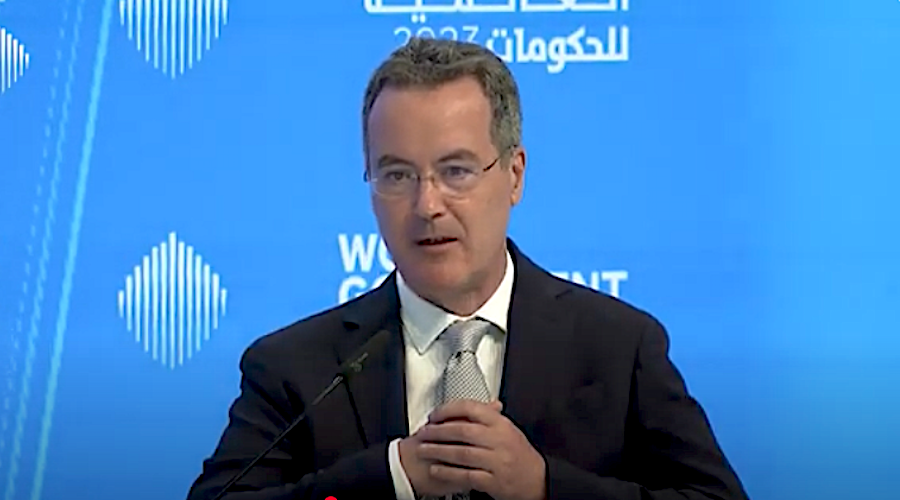
Marco Dunand | CEO and co-founder, Mercuria Energy Group. (Image: World Governments Summit 2023.)

Swiss-based commodities trader Mercuria announced a $500 million commitment to Project Vault on Wednesday, aimed at ensuring US industry participants retain access to critical minerals during periods of supply disruption or market dislocation.

Project Vault, designed with support from the Export-Import Bank of the United States, seeks to build strategic inventories of critical minerals for use by the US.

Mercuria announced its commitment to the initiative in New York during the United Nations General Assembly summit.

Switzerland-based mining company Glencore also announced on Wednesday its selection by the US government to be a founding partner in the project.

Meanwhile, US President Donald Trump has taken a less combative approach than usual ahead of his meeting with Chinese President Xi Jinping this week, largely due to China’s near-total control of rare earth minerals, experts said.

China controls up to 70% of global rare-earth mining, 85% of refining capacity, and about 90% of rare-earth metal alloy and magnet production, according to consultancy AlixPartners.

Some Chinese rare earth suppliers are declining to ship to the US for fear of repercussions from Beijing, three sources said, underscoring how access to the materials remains an issue for the US.

(Reporting by Pablo Sinha in Bengaluru; Editing by Elaine Hardcastle)

High copper prices support miners in Chile, but investments dent gains


El Teniente mine smelter. (Image courtesy of: Codelco | Flickr.)

Despite strong copper prices, growing investment demands are offsetting much of the gains posted by mining companies in Chile, Moody’s said in a report on Thursday.

Chile, the world’s largest producer of the red metal, is undergoing an investment cycle focused largely on maintaining production levels and replacing depleted reserves as large deposits age.

Moody’s said that the current investment cycle in the industry favors reserve replacement and strengthens long-term competitiveness, although it requires substantial financing at a time of rising costs and operational risks.

“High copper prices support profits, but capital expenditures absorb much of that profit and leave high-cost producers exposed to a price correction,” the report said.

Copper prices are up 9% so far this quarter on the London Metal Exchange.

Moody’s said that projects linked to desalination plants and complementary infrastructure have helped to resolve relevant operational constraints, especially those related to access to water in the north of the country.

However, the industry continues to face pressures stemming from declining ore grades and increased operational complexity, factors that have raised production costs along with the rising cost of labor, energy, and other inputs.

The report noted how recent tax and permitting system reforms could gradually support the development of new projects.

Chile’s state-owned Codelco operates in the country alongside global players such as BHP (ASX: BHP), Glencore (LON: GLEN) and Anglo American (LON: AAL).

(Reporting by Fabian Cambero, writing by Paolo Laudani. Editing by Lucinda Elliott)


Outokumpu announces brand for low-carbon metals technology

AI-generated stock image by Wendy.

Finnish stainless steel maker Outokumpu on Thursday announced the launch of EvoMaterials, a brand for its proprietary low-CO2 metals processing technology.

The technology is based on an advanced sulfidation process and is designed to increase the chromium content and chromium-to-iron ratio in ferrochrome.

It also has potential applications in nickel, molybdenum and metal recovery from industrial side streams, according to Outokumpu’s press release.

“As the only chrome mine in the EU, Outokumpu’s Kemi mine in Finland provides a unique strategic asset, enabling EvoMaterials to start with enriched ferrochrome and chromium metal,” the release said.

The company plans to scale up the technology at a pilot plant in New Hampshire, which is expected to become operational in the first half of 2027, with an industrial-scale facility targeted by 2030.

The announcement highlights growing efforts by western producers to secure critical mineral supply chains and develop lower-carbon metal production technologies.

(Reporting by Anjana Anil in Bengaluru; Editing by Cynthia Osterman)

Indonesian coal miner Bayan Resources lifts force majeure after quota revision approval


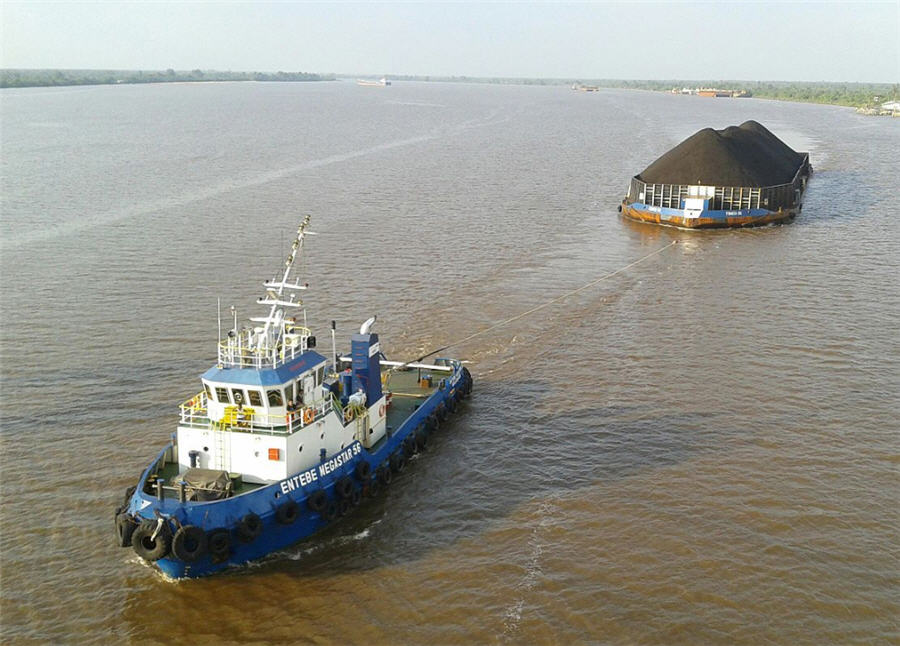
Barge coal – Image courtesy of Wikimedia Commons

Indonesian coal miner PT Bayan Resources (IDX: BYAN) said on Thursday that it has lifted a force majeure declaration on coal supply deals after the government granted additional production quotas to the company for this year.

Bayan and three of its units declared force majeure on their coal supply obligations last week because proposed revisions to their mining quotas had not yet been issued.

The companies’ production quota revisions were obtained on September 23, Bayan said in a stock exchange filing.

Bayan said it expects the units to resume operations soon.

Indonesia granted an additional quota of around 15 million to 20 million metric tons for Bayan’s three units, a mining ministry official said earlier this week.

In the first half of this year, Bayan produced 32.9 million tons of coal, versus 27.7 million tons in the same period of last year.

Bayan announced last week that its biggest shareholders, Low Tuck Kwong and Elaine Low, had signed a conditional agreement to sell 10 billion shares to PT Jhonlin Baratama, a company controlled by tycoon Haji Isam.

(Reporting by Fransiska Nangoy, Bernadette Christina; Editing by David Stanway)


Hedge fund with 235% return says gold price decline is temporary


Stock image by Maksym Yemelyanov.

Australian hedge fund manager Raphael Lamm, whose long-short gold fund has delivered a net return of more than 200% to investors since its launch last year, sees the recent decline in bullion as temporary, arguing that the key forces underpinning its long-term rally remain intact.

The “unsustainability of fiscal situations in key markets,” particularly US government debt of more than $40 trillion, as well as the growing central-bank allocations will support gold over the medium to long term, said Lamm, who co-manages the A$1.5 billion ($1.1 billion) L1 Gold Fund with Mark Landau. In the near term, prices are set to be driven by developments in the US-Iran war, real interest rates and inflation data, he said.

Gold has been under pressure since hitting a record in January, as surging energy prices and bets on Federal Reserve rate hikes weigh on the non-yielding metal. It is down about 16% since the US-Iran war erupted in late February.

“While there’s been some headwinds to gold markets and the gold price since the Iran war, we think they’re very temporary in nature,” Lamm said in an interview. “Most of the key drivers of demand for gold are going to remain intact or even strengthen over the medium term.”

Bullion traded at $4,286.01 an ounce on Thursday evening in Sydney. 

Lamm’s fund, which pairs long positions in gold-related stocks with a short position in gold futures as a hedge, has returned a net 235% through August since its launch in February last year, according to a spokesperson. That compares with a gain of about 148% for VanEck Gold Miners ETF and 55% advance in physical gold prices over the same period. 

Part of the Melbourne-based L1 Group Ltd., which manages about $14 billion in assets, the L1 Gold Fund is using the decline in bullion to add to its long gold equity positions. Most of its holdings are in companies with market value of at least $5 billion, Lamm said. To protect against downside risk, the fund also shorts some gold stocks it views as expensive or facing operational headwinds, he said.

“We started to increase our long positions relatively aggressively when the gold price got below $4,000, and now we’re keeping it where it is, which is in the low- to mid-60% net long,” said Lamm. The fund will consider trimming long positions only if its expectations of further upside to gold price materialize, he said.

Lamm and Landau have also doubled down on their gold strategy with their own money. Both increased their personal stakes in L1 Gold Fund through an entitlement offer that raised A$160 million ($114 million) in August. The fund listed on the Australian exchange in April, and has posted a net 18% return for its clients through August even as gold prices fell 6%, according to its most-recent statement.

“We’ve been very active in materials equities, particularly resources, gold and base metals over the last 12 years,” said Lamm. The mid-cap gold equities space that L1 Gold Fund invests is “over a trillion dollars of addressable market cap and we think there’s a really strong angle for a specialist group to focus on that space,” he said.

L1 Group’s clients include large superannuation funds, pension funds, family offices, high net worth and retail investors.

The fund’s stock-picking strategy focuses on companies with lower valuations and near-term cash flows in the gold-mine development space. Its biggest position is in Canadian miner Eldorado Gold Corp. The fund is also the largest shareholder of K92 Mining Inc., which operates the Kainantu Gold Mine in Papua New Guinea.

Consolidation in the mining sector has also boosted the fund’s returns, and Lamm expects more dealmaking in the gold industry. OceanaGold Corp.’s recent acquisition of Australian miner Ausgold Ltd. for A$1.36 a share is set to deliver a sizable gain for the fund, which added the stock to its portfolio at about A$0.50 apiece, according to an August investor update.

“We’re really excited about some of the returns that are gonna come through M&A,” said Lamm. “We think a lot of our developers are gonna be extremely attractive targets for the mid-cap and the large-cap players.”

(By Carmeli Argana and Yihui Xie)


Metals are stock puppets, Bloomberg strategist says


Stock image.

The stock market now functions as the economy, and metals are its puppets in the ups and downs, senior commodity strategist at Bloomberg Intelligence, Mike McGlone says.  

“It is the economy and the metals are complete stock puppets, unfortunately, as a broad sector,” he told MINING.COM host Devan Murugan in a recent Top of Mine episode.    

McGlone argues that, out of all metals, copper is the one that follows the stock market the most. 

“Copper is just a stock puppet. Stock market goes up, it goes up at a higher volatility and a lesser performance. Stock market goes down, it’s the same thing,” he said. “But the key thing is if and when we ever get that normal 10% correction in the stock market, copper will probably drop 20 or 30%.” 

This is also the time for investors to be cautious about what to do with gold, according to McGlone. 

“The signals are very scary. I point out the basic facts, but you have to point out the stuff behind the market that are the warning signals and that to me is a warning sign,” he said. “The bottom line I repeat is when gold gets exciting it’s usually best for investors to be cautious. You’re supposed to be selling when they’re yelling and this is just too peakish for me and I have to be bold enough to say it.” 

Fed hikes, checks and balances 

For McGlone, the Fed’s recent decision to increase interest rates shows how the US government still balances power. 

“The first time I heard Mr. Warsh speak, I [thought] ‘this might be a guy who’s willing to push back and actually hike rates when the person who hired him asked him to cut rates,’” he said. “It’s just such an example of the checks and balances and the self-correcting mechanism of this country kicking in.” 

“This is the best thing to curtail inflation, which is the number one issue. It’s going to bring down mortgage rates, but it shows the responsibility of the system,” he added. 

McGlone warns that the first sign we’ll see of post-inflation deflation will be the stock market going down.  

“That’s the number one force for the Fed to reverse and the number one force to alleviate this massive wealth effect inflation in this country,” he says. 

Watch the full episode:  


South Africa seeks partners for $2.7 billion manganese corridor


Credit: Transnet SOC Ltd.

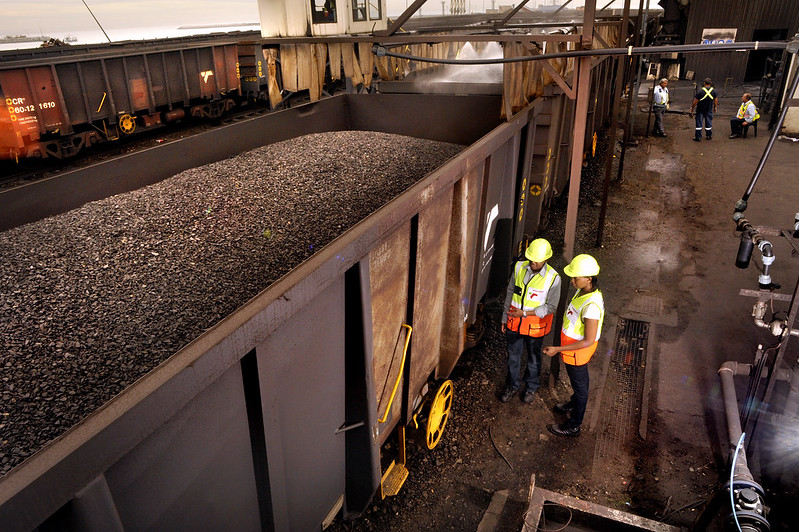
South Africa’s state-owned ports and rail operator is looking for a private partner to expand and operate a key manganese corridor that will cost as much as 44 billion rand ($2.7 billion) to roll out. 

Transnet SOC Ltd. issued a request for qualifications for the Ngqura manganese export corridor that runs from mines in the Northern Cape province to ports in the Eastern Cape on Friday. 

The harbors at Port Elizabeth and Ngqura — two of several where the steelmaking ingredient leaves South Africa — have become “fragmented and inefficient, ” resulting in significant road haulage, increased logistics costs and growing environmental and social impacts.

The upgrade will form part of the logistics giant’s private sector participation program “through which the company seeks to attract investment and leverage private-sector expertise to strengthen infrastructure performance,” it said.

The southern African country has some of the world’s largest reserves of the mineral, used in steel production and battery manufacturing.

The deadline for applications is Feb. 26.

(By Bonolo Mokonoto)