It’s possible that I shall make an ass of myself. But in that case one can always get out of it with a little dialectic. I have, of course, so worded my proposition as to be right either way (K.Marx, Letter to F.Engels on the Indian Mutiny)
Friday, July 24, 2026
MAX Power Mining increases landholding at Lawson hydrogen project in Saskatchewan
MAX Power Mining (CSE: MAXX; OTC: MAXXF) announced Friday it has acquired key permits covering 155,125 acres (628 sq. km) contiguous to the 1,224 sq. km Lawson project striking southeast toward Moose Jaw as part of a material expansion of the company’s permitted landholdings in south-central Saskatchewan.
Meanwhile, drilling continues at the Lawson discovery, where the multi-well commercial validation drill program is in search of what the company calls “world’s first large-scale commercial discovery of natural hydrogen.”
Moose Jaw is the western flank of a major corridor featuring heavy industry and one of Canada’s largest data center developments, with MAX Power and the City recently signing an MOU to explore joint opportunities around the world’s first new primary energy source in decades.
This strategic new permitted land package next to Lawson comprises the newly named Aurora project, a basement-controlled structural play that the company said may be hosted – like Lawson – by a large alkaline igneous complex situated on the contact of younger Paleoproterozoic exotic terrane and the older Archean Sask Craton.
With the right source rocks, migration pathways, reservoirs, structural traps and seals underpinning the geological model for the Aurora project, the 628 sq. km of permits at Aurora are interpreted to cover ground that has Lawson-like high-impact, near-term potential for multiple Natural Hydrogen discoveries and commercialization pathways, the company said.
In total, based on in-house analysis of comprehensive proprietary geological and geophysical datasets, MAX Power has added660,263 acres (2,672 sq. km) of provincial government-issued permits throughout the Genesis Trend and elsewhere in south-central Saskatchewan as it targets the world’s first large-scale commercial development of natural hydrogen as a new primary energy source in close proximity to a major industrial corridor.
“Expanding our permit coverage to this scale gives us great optionality, including new potential monetization opportunities and advancement of our near-term commercialization strategy as our confidence around Lawson and the geological model grows by the day,” MAX Power CEO Ran Narayanasamy said in a news release.
“We are driven by a ‘months to molecules’ approach that will lead to a further expansion of permits as success on the ground accelerates.”
Costa Rican President Laura Fernández has placed the proposed reopening of the Crucitas gold deposit at the centre of her new administration’s agenda, testing one of Latin America’s strongest anti-mining policies and reviving a national debate over whether resource development can coexist with the country’s environmental identity.
Fernández, who took office on May 8 after winning February’s presidential election in the first round, moved quickly to elevate Bill 24.717 by including it in the Legislative Assembly’s extraordinary-session agenda just four days after her inauguration.
The measure would permit gold exploration and mining only in the 84,800-hectare district of Cutris de San Carlos, home to the Crucitas deposit, while preserving Costa Rica’s broader ban on open-pit metal mining elsewhere in the country.
The move marks a sharp reversal for a country that has built much of its international reputation on conservation, ecotourism and sustainable development.
Government officials argue the current prohibition has failed to stop mining activity at Crucitas, instead allowing illegal operators to expand, often using mercury and cyanide without environmental controls.
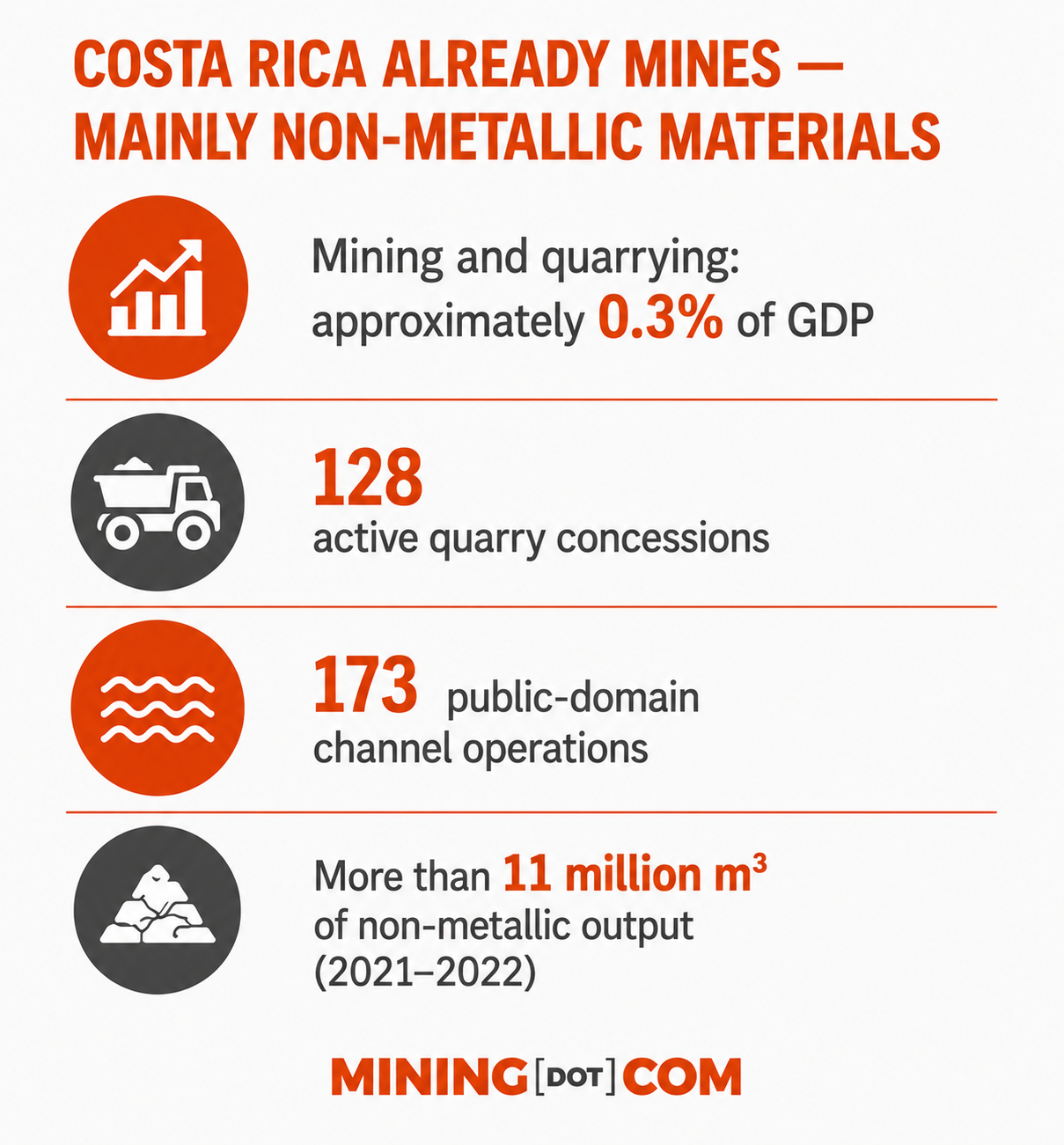
Juan Ignacio Guzmán, CEO of GEM Mining Consulting, said the debate is increasingly centred on governance rather than mining itself, noting that Costa Rica already maintains an active non-metallic mining industry supplying aggregates, limestone, silica and other industrial materials used in construction and infrastructure.
Eduardo Zamanillo and Marta Rivera, analysts at Geopolitical Mining, argue that Crucitas reflects a broader challenge they describe as “anomic mining”: situations where formal mining rules remain in place but no longer govern what is happening on the ground. In their view, the debate is less about mining versus conservation and more about whether the state can manage mineral extraction better than illegal networks already operating in the area.
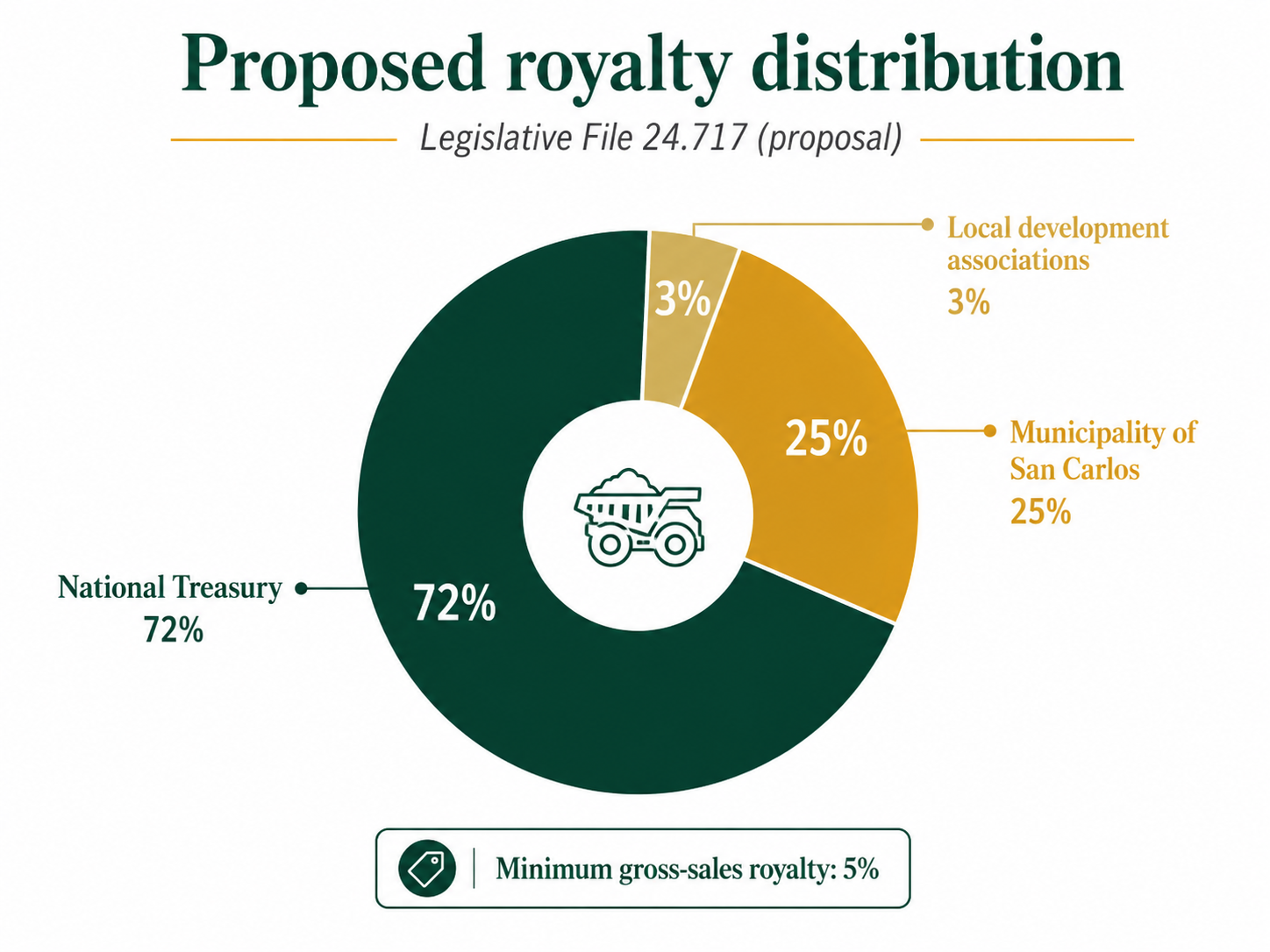
The proposed legislation would award mining concessions through public auctions administered by the Directorate of Geology and Mines under the Ministry of Environment and Energy. Companies would have to demonstrate technical expertise, financial capacity and a satisfactory environmental record before qualifying to bid. The bill also proposes a minimum 5% royalty on gross mineral sales, with most revenues flowing to the central government (over 70%) while municipalities and local development associations receive smaller allocations.
(Courtesy of GEM Mining Consulting.)
Juan Carlos Guajardo, executive director of mining consultancy Plusmining, said the government’s argument that regulated mining could reduce environmental damage is plausible but far from guaranteed. Formal mining operations can operate under significantly higher environmental standards than illegal miners through engineered tailings facilities, water-management systems, chemical controls and legally enforceable closure plans.
He warned that successful displacement of illegal mining requires broader measures including territorial control, enforcement against criminal networks, gold traceability systems and alternative economic opportunities for people currently dependent on informal mining.
“The challenge is not simply replacing illegal mining with legal mining,” Guajardo said. “The deeper question is whether Costa Rica can transform an environmental liability that contradicts its development model into an opportunity to generate economic value, restore damaged ecosystems and reinforce its sustainability credentials.”
Political battle
Despite the government’s push, the legislation remains far from becoming law.
The bill has already cleared committee review and won an endorsement from the Special Committee of Alajuela in September 2025. It is now before the legislative plenary, where opposition lawmakers have filed hundreds of delaying motions.
Opposition remains fierce. Members of the left-wing Frente Amplio party and factions within the Partido Liberación Nacional argue that reopening open-pit mining would threaten sensitive ecosystems and undermine decades of environmental policy. Environmental organizations have likewise mobilized against the proposal.
The debate is also influenced by the legacy of Canadian miner Infinito Gold. The company’s concession was annulled by Costa Rica’s courts in 2010, the same year lawmakers voted to ban new open-pit metal mining. Infinito subsequently pursued international arbitration against the state.
That dispute ended in Costa Rica’s favour with an international tribunal declining to award Infinito damages in 2021. The company abandoned its bid to annul the ruling in 2024, removing a major legal uncertainty surrounding the project. Officials now view the ruling as an opportunity to reconsider development of the deposit under a new framework.
Zamanillo and Rivera said the Infinito dispute illustrates how mining risk extends beyond permits and contracts. A project can satisfy legal requirements yet still become politically and socially unsustainable if public opinion, courts or governments shift course.
Fernández has suggested she may seek a national referendum if lawmakers reject the bill.
The prospect of a public vote serves both as a possible route around legislative gridlock and as leverage on undecided lawmakers. The administration believes its arguments on employment, local economic development, public security and illegal mining could resonate with voters.
Investor signal
For mining investors, the significance of the proposal extends beyond the Crucitas deposit itself.
Costa Rica has long ranked among the least accessible jurisdictions for metallic mining in Latin America. The government’s willingness to reconsider its longstanding prohibition sends a signal that the country may be open to resource investment under carefully controlled conditions.
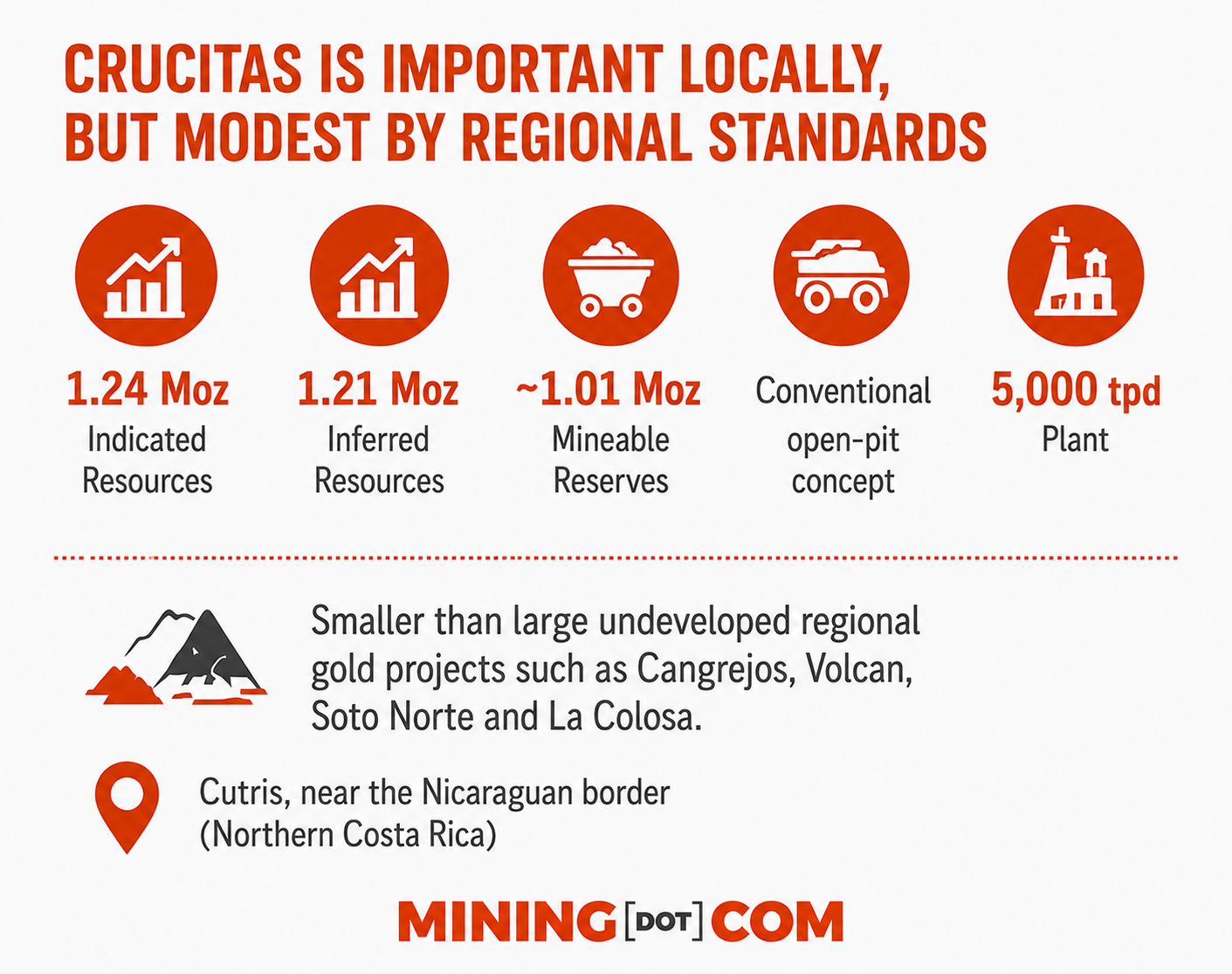
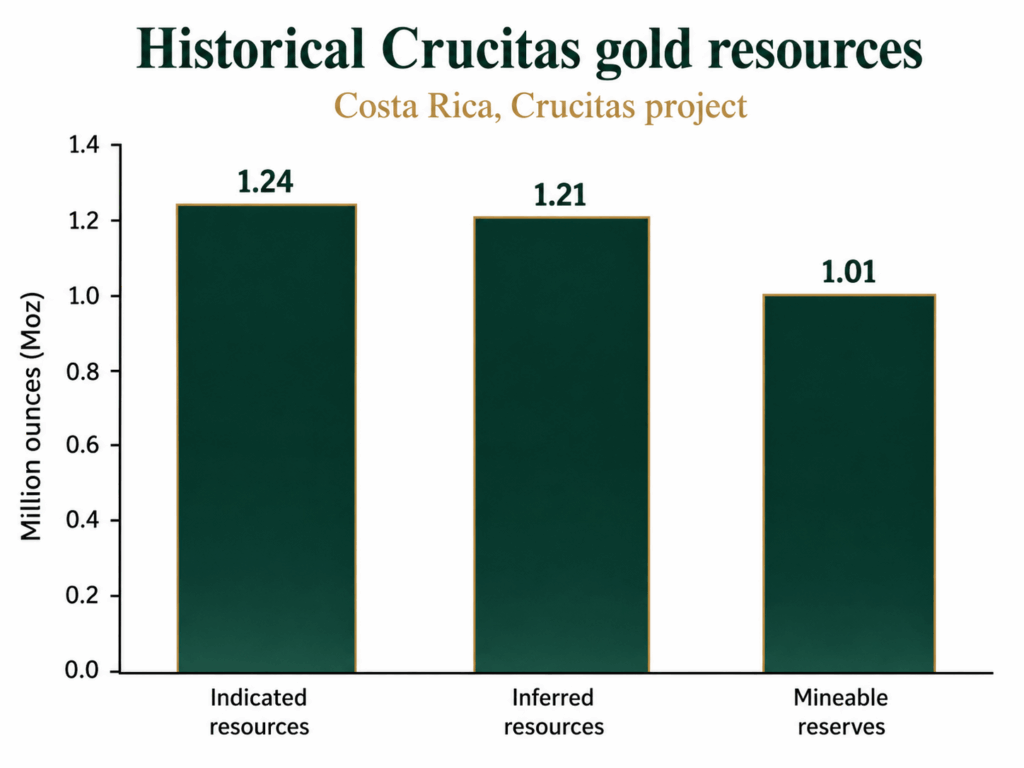
Guzmán said Crucitas is significant by Costa Rican standards but remains modest compared with many of Latin America’s largest undeveloped gold projects. Guajardo agreed, describing Crucitas as a mid-sized gold project rather than a world-class discovery on the scale of major Andean deposits.
Even so, he said the project could attract serious industry attention if legal barriers are removed. Earlier studies found the deposit economically viable when gold prices were trading in the $1,000–$1,300 range versus today $4,000 an ounce levels, suggesting the asset could become attractive again under the right regulatory conditions.
Guajardo said major mining companies would likely apply a substantial political and ESG discount to any evaluation of Crucitas because of its history of litigation, environmental controversy, reputational damage and illegal mining activity. While juniors and mid-tier producers could show interest, many larger operators would likely require greater legal and security assurances.
Zamanillo and Rivera said passage of Bill 24.717 would likely be viewed as an important signal that Costa Rica is willing to reopen the mining discussion. However, they cautioned that legislative approval alone would not materially change perceptions of regulatory risk.
Guzmán likewise believes the project’s greatest test lies in governance rather than geology.
“The key question is whether the government can secure the area, reduce illegal mining, enforce environmental standards and identify an operator capable of financing long-term compliance and remediation,” he said.
Costa Rica’s environmental sensitivity means any future project would face intense scrutiny.
“Companies would not evaluate Crucitas like a conventional project in Peru, Ecuador or Chile,” Guzmán said. “They would price in constitutional risk, litigation risk, security concerns, environmental liabilities and the possibility of future policy reversals.”
Guajardo also questioned whether the proposed concession auction, which emphasizes royalty bids, would attract the most qualified operators. He warned that, while politically attractive, systems focused primarily on maximizing royalties can favour aggressive bidders with optimistic assumptions rather than technically capable companies with strong environmental and social performance records.
“In a project as sensitive as Crucitas, technical competence, environmental performance, financial strength, mine-closure capacity and understanding of Costa Rica’s institutional realities should carry at least as much weight as the economic offer,” he said.
Environmental test
The broader debate reflects a growing challenge facing governments across the Americas as they attempt to balance resource development, environmental protection and economic growth.
Guzmán argued that legal mining alone is unlikely to eliminate illegal activity. Drawing on examples from Peru and Colombia, he said illegal operators often relocate unless governments simultaneously strengthen enforcement and improve gold traceability systems.
Guajardo of Plusmining believes the environmental threshold for public acceptance will be exceptionally high and argued that a future concessionaire may need to help finance restoration of areas already damaged by illegal mining in order to build credibility with the public.
(Courtesy of GEM Mining Consulting.)
“The company that eventually develops Crucitas may need to act not only as a mining operator, but also as an agent of environmental restoration, institutional rebuilding and public trust,” Guajardo said.
Zamanillo and Rivera caution that Costa Rica’s greatest reputational risk may not come from formal mining itself, but from failing to control an illegal mining economy that continues to damage forests, waterways and local communities outside regulatory oversight. They argue the government must clearly distinguish between accountable, regulated mining and what they describe as anomic extraction if it hopes to preserve the country’s conservation credentials.
Whether Bill 24.717 succeeds or fails, Fernández has already changed the conversation.
The debate now extends far beyond a single gold project. It has become a test of whether Costa Rica can restore environmental and institutional control over a territory already affected by illegal mining while preserving the conservation-focused identity that underpins much of its international reputation.
If successful, Crucitas could become a model for how governments address environmentally damaging illegal extraction through formal regulation, enforcement and remediation. If it fails, critics say it could reinforce concerns that mining and conservation-led development remain fundamentally incompatible.
The outcome could shape not only the future of Crucitas, but also how investors assess Costa Rica’s long-term regulatory credibility and political risk.
Latin America and its resources have been at the centre of a growing global power struggle, as governments and investors focus on who controls critical minerals and the supply chains behind them. If the region matters to you, don’t miss MINING.COM’s series tracking the geopolitical forces reshaping it and why markets are increasingly driven by global alliances as much as local politics.
Chinese gold imports rose to a two-year high in June, underscoring resilient demand in the world’s biggest bullion market after a plunge in international prices.
Overseas purchases rose a third month to about 173 tons, according to the latest customs data, the highest mark since March 2024. Cheaper prices and a stronger yuan kept investors interested, while banks were motivated to use up import quotas and stock up on bullion to meet retail commitments.
“Investors buying the dip is an important driver of recent demand,” said Zijie Wu, an analyst at Jinrui Futures Co. “Commercial banks need to build up their inventories to provide the physical backing for retail bullion sales and gold accumulation plans, as well as preserving some safety reserve for when demand spikes.”
Accumulation plans are offered by numerous banks and allow individuals to pick up gold in small increments. They’re one of the main ways for Chinese retail investors to gain exposure to bullion.
Bullion-backed exchange traded funds, another popular investment, have also seen net inflows of around 28 tons this year, according to a tally by the Shanghai Gold Exchange.
Banks hold licenses to import gold based on strictly controlled quotas given out irregularly by the People’s Bank of China. Imports were also likely lifted by a new licensing regime from June 1, which would have encouraged banks to exhaust existing quotas.
Some banks may have booked shipments before June, but the gold wouldn’t have registered until later because of the time required for financing, transportation and customs paperwork, said Wu.
The domestic premium on gold that has persisted for most of the first half means that it’s cheaper for banks to procure bullion from the international market, he said.
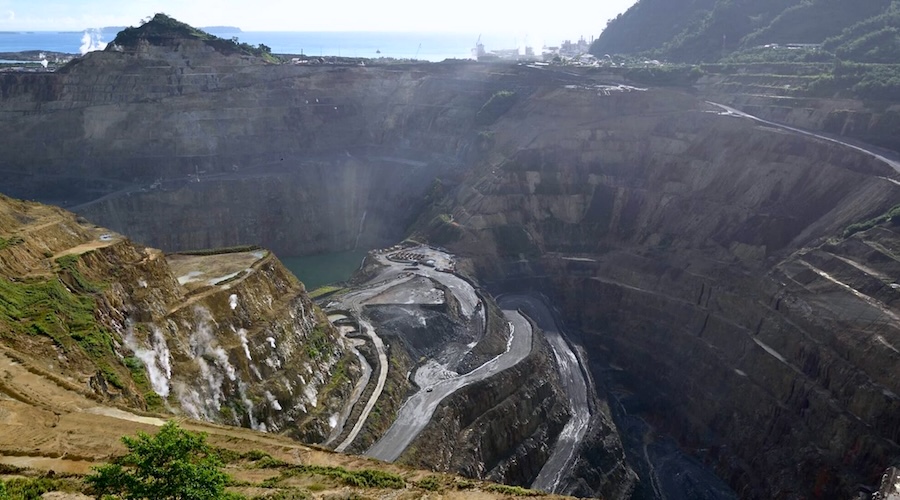
Lihir mine, in Papua New Guinea’s New Ireland Province. (Image courtesy of Newmont.)
Newmont (NYSE: NEM)(TSX: NGT) expects a nearshore barrier at its Lihir mine in Papua New Guinea to unlock more than 5 million ounces of gold beginning in 2028, as the world’s largest gold producer reaffirmed its 2026 production guidance after reporting record quarterly free cash flow.
Chief executive Natascha Viljoen said the company remains on track to meet its full-year guidance after producing 1.3 million oz. of gold, 17,000 tonnes of copper and 7 million oz. of silver in the second quarter.
Cash flow from operations reached $2.9 billion after working capital, while free cash flow climbed to a quarterly record of $2.2 billion.
“We delivered a strong second quarter and remain on track to achieve our full year 2026 guidance,” Viljoen said in a conference call commenting on second quarter results.
Newmont returned about $1.9 billion to shareholders through dividends and share repurchases since its previous earnings call, including buybacks completed in July. The company has now repurchased more than 100 million shares since launching the program just over two years ago.
Chief financial officer Brian Tabolt said adjusted EBITDA totalled $3.8 billion and adjusted net income reached $2.10 a share, supported by an average realized gold price of $4,414 per ounce. Gold all-in sustaining costs were $1,621 per ounce, below the company’s full-year guidance of $1,680 per ounce, although Tabolt warned sustaining capital spending is expected to rise by about $150 million in the third quarter, pushing unit costs moderately higher.
Growth pipeline
Management highlighted progress across several growth projects, including regulatory approvals for the Red Chris block cave project in British Columbia, Canada, which is advancing toward a feasibility study and a board investment decision.
At Cadia in Australia, production resumed from the operating caves in mid-June following an April seismic event, with no impact expected on full-year production guidance.
The company’s long-term growth outlook also hinges on a pipeline that includes Ahafo North, Cerro Negro, Tanami, Boddington and the Lihir nearshore barrier, which the company identified as key drivers of future production growth.
Viljoen told analysts the company was “quite positive and encouraged” by operational improvements at Lihir, citing greater mining stability, improved reliability and lower costs.
Investor concerns
The update comes as investors continue to scrutinize inflation, project capital costs and regulatory risks. Analysts pressed management on oil prices, Ghana policy uncertainty and expected cost increases at Red Chris, where Viljoen acknowledged capital spending will likely exceed estimates prepared under Newcrest.
She also said discussions with Barrick (TSX: ABX)(NYSE: B) over Nevada Gold Mines remain unresolved, while Newmont expects to revisit its approach to multi-year guidance early next year.
Gold miner Cadillac, backers raise $273 million in Canada IPO
Cadillac Mines Corp. and some of its backers raised C$385 million ($273 million) in an upsized initial public offering, adding to the mining-driven rebound of listing activity in Canada.
The Toronto-based mineral exploration company priced the common shares at C$6.90 each and special flow-through shares at C$9.52 apiece, according to a statement late Thursday. It raised about C$190 million in gross proceeds, while the selling shareholders raised roughly C$173 million.
The company sold 18.8 million shares and 6.3 million flow-through shares, the statement showed. The holders sold 28.2 million common shares, increased from 25.1 million.
Agnico Eagle Mines Ltd. had agreed to buy 8.7 million shares in a concurrent private placement for around C$60 million. The deal is set to increase Agnico Eagle’s stake in Cadillac to about 11%, up from 9.7%, a separate statement showed.
The company is one of Cadillac’s existing shareholders and entered into a royalty agreement in 2023, the preliminary prospectus shows. Franco-Nevada Corp., whose co-founder Pierre Lassonde is Cadillac’s chairman, also agreed a royalty deal at that time.
Cadillac holds claims to property in Ontario where its main Kerr-Addison gold mine is located, as well as Quebec, according to the preliminary prospectus. The mining firm is the latest in a growing Canadian listing pipeline of metals-based listings that also includes BG Gold Capital II Corp. and Amapa Minerals Holdings Inc., which announced the pricing of its IPO on Friday and expects to raise C$140 million.
The offering adds to activity in Canada’s equity capital markets, which have seen $1.81 billion of IPOs this year, excluding blank-check firms and other financial vehicles, up from just $9.3 million of deals in the same period in 2025, data compiled by Bloomberg show.
Also on Friday, Amapa Minerals Holdings Inc. raised C$140 million in its Toronto IPO. Shares are expected to begin trading July 27.
Bank of Montreal, National Bank of Canada and Stifel Financial Corp. led Cadillac’s IPO. The shares are expected to trade Friday on a when-issued basis on the Toronto Stock Exchange under the symbol CADY.
By Stephanie Hughes
BAN DEEP SEA MINING
Japan finds heavy rare earths dominate seabed deposit
Japan said on Friday that medium and heavy rare earth elements accounted for about 54% of the rare earth content in deep-sea mud recovered off a remote Pacific island, bolstering its push to secure domestic supplies of critical minerals as China tightens export controls.
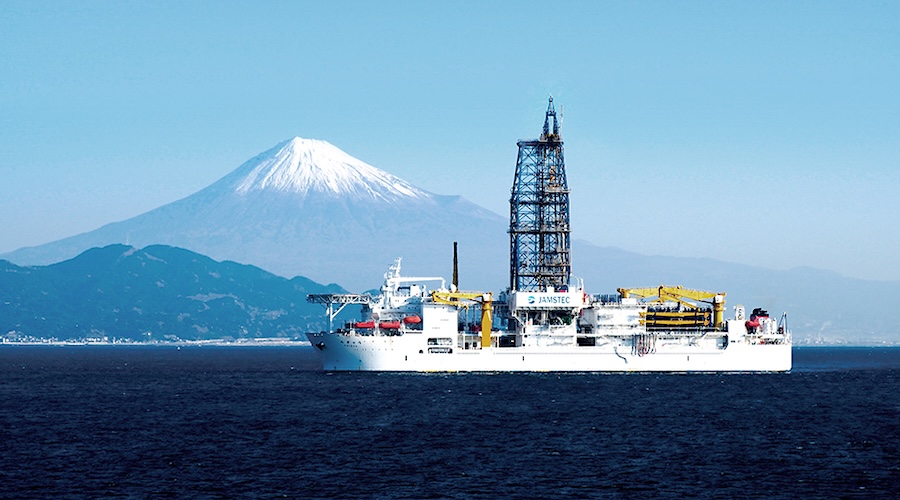
The government-backed mining vessel Chikyu recovered about 50 tonnes of mud during a month-long mission completed in February near Minamitori Island, about 1,900 km southeast of Tokyo.
The expedition marked the world’s first successful continuous recovery of rare earth-bearing seabed mud from a depth of about 6 km.
“The trial is expected to verify the feasibility of domestic rare earth production,” Kazushige Kikuchi, project manager at the Japan Agency for Marine-Earth Science and Technology, told Reuters. A comprehensive assessment of the project’s commercial potential is due by March 2028.
Cut China reliance
The project could help Japan reduce its dependence on China for strategic minerals used in defence equipment, electric vehicles and advanced technologies. Beijing imposed export controls on some heavy rare earths and related magnets in April 2025 before tightening restrictions on shipments to Japan in January and twice more the following month.
Japan’s government did not disclose the size of the rare earth deposit or the concentration of material in the recovered mud. Officials said the limited duration and geographic scope of the sampling program provided insufficient data for a broader resource estimate.
Analysis identified yttrium, used in aerospace, energy and semiconductor applications; gadolinium, used in magnetic resonance imaging and other high-tech products; and dysprosium, an essential component in high-performance magnets for electric vehicles.
In 2024, researchers from the University of Tokyo and the Nippon Foundation had already identified over 200 million tonnes of manganese nodules rich in battery metals in the Pacific Ocean, highlighting vast resource potential at depths around 5,500 meters.
A separate survey by the University of Tokyo and the Nippon Foundation estimated the seabed nodules contain approximately 610,000 tonnes of cobalt—enough for 75 years of Japan’s consumption—and 740,000 tonnes of nickel, covering 11 years of domestic demand.
Commercial test
Japan plans a new month-long mining trial in the same waters beginning in February 2027, targeting production of 350 tonnes of mud a day.
The material will be dewatered on Minamitori Island, about 1,900 km southeast of Tokyo, before being shipped to the mainland for separation, refining and smelting tests.
The pilot program is designed to determine whether the offshore resource can support commercial rare earth production and reduce Japan’s dependence on imported supplies.
Rio Tinto Takes Delivery of Record-Setting Self-Unloader Built by CSSC
Wontanara is the first of five record setting unloaders built in China (CSSC)
A newly built self-unloader designed to support the African ore operations of Rio Tinto named Wontanara was delivered on July 21 by its Chinese builders. China State Shipbuilding Corp. (CSSC) is calling the new vessel “the king of self-unloading ships” due to three records it reports the ship achieved.
CSSC says the class of five ships will be the world’s largest shallow-water transshipment self-unloaders (by deadweight) as well as the fastest self-unloader in terms of discharge speed among specialized vessels. They are also the first bidirectional self-unloaders in their tonnage class. The vessels were specifically designed for Rio Tinto’s operations at the Simandou iron ore project in Guinea, in West Africa.
The project is being developed in partnership with China and will be a world-class exporter of high-quality ore. A Chinese consortium will operate two of the four mines, with the other two controlled by Rio Tinto. Operations began in late 2025 at the site and have been ramping up this spring, with reports saying the total deposit is valued at more than $24 billion.
Wontanara is said to be the largest and fastest unloader of its kind (CSSC)
Among the challenges at the site is the shallow water position near the mines. The solution is the fleet of five vessels that will load ore and transship it to the larger ocean-going ore carriers that will anchor offshore. Each of the five self-loaders will be 41,800 dwt and 215 meters (705 feet) in length with a capacity for 29,000 cubic meters of ore. The vessels will operate with a draft of just 14.5 meters (47.5 feet) versus a typical large ore carrier, which would have a draft of approximately 18 meters (60 feet) or greater.
The new vessels reportedly also set a speed record for the rate of discharge. Each will move 12,000 tons of ore per hour, which CSSC claims is a 71 percent increase in efficiency. It says the previous record was 7,000 tons per hour, held by another vessel that it refitted in 2023.
With each of the five vessels able to transport 41,800 tons of cargo and their discharge speed, it claims the five vessels will be able to fully load a 200,000-ton ocean-going bulk carrier within 24 hours.
To increase the maneuverability of the vessels, they can fully operate in either direction. They are powered by a diesel-electric propulsion system. It also features a high level of automation and can be operated with a small number of crew.
Construction on the Wontanara began in May 2025 at the Yangzhou shipyard, and the vessel was completed in just 14 months. The ship underwent 12 days of sea trials in late June and early July before today’s delivery. CSSC reports the second vessel of the class is scheduled to be delivered in October. It launched the two vessels of the class in May and June of this year. All five ships will be delivered before the middle of 2027.