Friday, September 04, 2026

33 Dems Help Pass House Bill That Would Strip Funds From Colleges That Boycott Israel

“The goal here is to basically say every university not only cannot refuse cooperation with Israel but must actively seek every opportunity to cooperate with Israel,” said one analyst.



A George Washington University student wearing a graduation cap with the message “Our Tuition Killed Gaza’s Class of ‘25” shouts slogans during a walkout at the National Mall as President Ellen Granberg delivers her commencement address on May 18, 2025.

(Photo by Probal Rashid/LightRocket via Getty Images)


Stephen Prager
Sep 03, 2026
COMMON DREAMS

The US House of Representatives on Thursday passed what critics say could be one of the most severe infringements on free expression in recent memory—a bill that could effectively require colleges and universities to do business with Israel or risk losing federal funds.

As Israel’s genocide in Gaza and accelerating ethnic cleansing of Palestinians in the West Bank continue to fuel protests, the bill is the latest piece of legislation aimed at punishing the Boycott, Divestment, and Sanctions (BDS) movement, which uses nonviolent economic tactics to pressure Israel to end its illegal occupation of Palestinian territory and human rights abuses.

HR 4795, introduced in July 2025 by Reps. Virginia Foxx (R-NC) and Josh Gottheimer (D-NJ), is known as the Protect Economic and Academic Freedom Act. But Lara Friedman, the president of the Foundation for Middle East Peace, described it as an “Orwellian” turn of phrase for what the legislation actually does.

“The goal here is to basically say every university not only cannot refuse cooperation with Israel but must actively seek every opportunity to cooperate with Israel,” she told Responsible Statecraft. “And if they’re not doing that, they’re pro-BDS and anti-Israel.”

As the outlet described:
[The bill] would bar colleges that receive federal funds from engaging in what it defines as a “nonexpressive commercial boycott” of Israel, including “refusals to deal” or terminating business relationships in order to limit commercial ties without a “valid business reason.” The law would require these institutions to submit annual certification that they were giving students and faculty access to academic programs in Israel on the same terms as programs in other countries.

In a brief opposing the bill, Friedman argued that it was not just forcing universities to do business with Israel, but with its settlements in the West Bank, which are considered illegal under international law. With backing from the Israeli state, violence by Israeli settlers against Palestinians in the West Bank has exploded to never-before-seen highs this year, according to the United Nations.


“This legislation,” Friedman wrote, “sets up a situation in which the alleged absence of engagement with any Israeli partner/party, including in settlements, will become the basis for an accusation of boycott, putting universities in the position where, if they universities want to avoid being accused of boycotting Israel/settlements, they will need to adopt an affirmative policy of prioritizing maximal engagement/partnership with Israeli entities (including in settlements).”

The bill passed by a 237-169 vote, with support from all but two Republicans—Reps. Thomas Massie (R-Ky.) and Warren Davidson (R-Ohio). And although the vast majority of Democratic voters now hold negative views of Israel, 33 Democrats also voted in favor of the bill.

The legislation now heads to the narrowly Republican-controlled US Senate, where it would need 60 votes to advance.


Introducing the bill last year, Gottheimer said it was necessary because BDS was an “antisemitic, hate-fueled... movement” that “seeks to destroy Israel—and has no place on our college campuses.”

But even critics of the BDS movement, like Rep. Jerry Nadler (D-NY), chafed at its potential chilling effect on protected speech.

“No matter how strongly I oppose the BDS movement, I also believe that those who engage in BDS have a First Amendment right to do so,” Nadler said before voting against the bill. “The First Amendment right to free speech does not apply only to agreeable speech.”

He cited a letter sent to Congress by the ACLU opposing the bill’s contention that schools should need a “valid business reason” to cut ties with Israel.

“Many of those engaged in boycotts of Israel do so not for commercial reasons, but because they wish to express their political opposition to the policies of the Israeli government—matters of overwhelming public concern and debate in the present moment. HR 4795’s labeling such boycotts as ‘non-expressive’ does nothing to change this reality,” the letter said.

The bill comes as members of Congress, especially Democrats, are under increasing scrutiny for their support from pro-Israel lobbying groups like the American Israel Public Affairs Committee (AIPAC), whose political spending arm has poured more than $104 million into supporting its preferred candidates this election cycle.

Meanwhile, President Donald Trump has spent more than six months embroiled in a costly war with Iran that Israeli Prime Minister Benjamin Netanyahu played a key role in persuading him to launch.


“We just got dragged into a war by Benjamin Netanyahu. He’s bragging about it,” Rep. Mark Pocan (D-Wis.) told Julian Andreone of Drop Site News. “That’s about as embarrassing as you can get... So let’s leave universities alone.”

Aaron Regunberg, a contributing editor at The New Republic, described it as outrageous that Democrats who supported the bill were “actively joining the far-right’s war on higher education in order to shield a genocidal ethnostate that most Americans increasingly want nothing to do with.”

Dylan Williams, the vice president for government affairs at the Center for International Policy, said the bill was “another effort to single out Israel for special treatment and erode Americans’ rights on its behalf.”

“Will it be your child who can’t afford to go to college after 33 Democrats voted with Republicans to help Trump defund US universities? Because it certainly won’t be any of theirs,” he said. “Shame on them for joining the attack on our schools and constitutional rights on behalf of Israel.”
‘Wealthy Tax Cheats Reaping the Benefits’: IRS Audit Revenue Plummets After Trump Purge

“While working families are expected to pay their fair share, Trump is making it easier for the rich to get away with not paying theirs.”


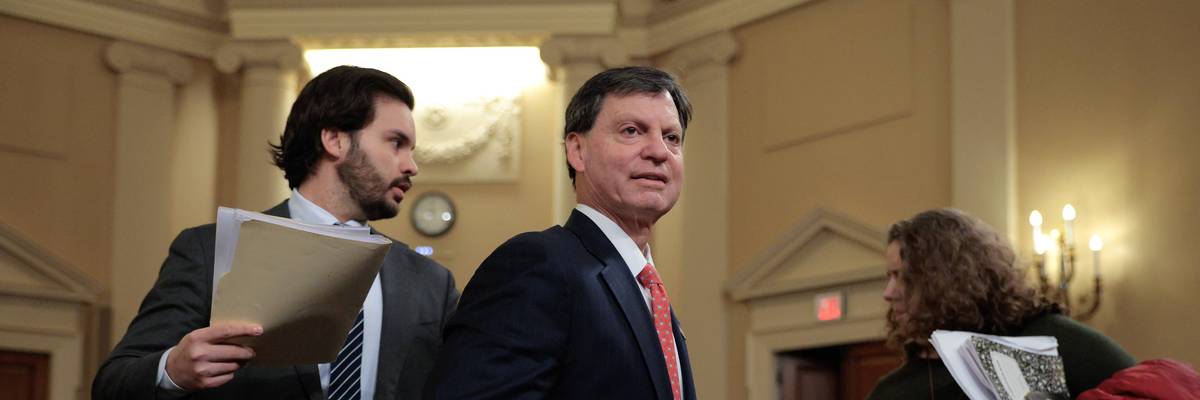
Internal Revenue Service CEO Frank Bisignano prepares to testify before the House Ways and Means Committee n March 04, 2026.
(Photo by Chip Somodevilla/Getty Images)


Jake Johnson
Sep 01, 2026
COMMON DREAMS

A report published Monday by an independent federal watchdog shows that Internal Revenue Service audit revenue plummeted last fiscal year as the Trump administration gutted the chronically understaffed and underfunded tax agency’s workforce, rolling back recent Democratic efforts to bolster enforcement.

The Treasury Inspector General for Tax Administration (TIGTA) found that IRS audit revenue fell by 35% last year compared to fiscal year 2024, when enforcement revenue reached a historic high. The report notes that the audit revenue plunge followed the Trump administration’s 27% cut to the agency’s examination and collection staff, the effects of which “are likely to become more apparent over time.” Among the gutted IRS units was one tasked with auditing billionaires and other super-rich individuals.

Rep. Don Beyer (D-Va.), a member of the House’s chief tax-writing committee, wrote in response to the new figures that “Trump gutted the IRS and wealthy tax cheats are reaping the benefits.”

“While working families are expected to pay their fair share,” Beyer wrote on social media, “Trump is making it easier for the rich to get away with not paying theirs.”

The huge decline in audit revenue comes years after congressional Democrats and then-President Joe Biden approved nearly $80 billion in additional funding for the IRS, including more than $45 billion for enforcement.

But Biden and congressional Democrats subsequently cut a deal with Republicans that rescinded much of the funding boost, which the IRS had said could yield roughly $560 billion in federal revenue over a decade—largely from rich tax cheats and large corporations.

“We know who benefits the most when the IRS doesn’t have enough staff to dedicate to audits,” the Institute on Taxation and Economic Policy said in response to the TIGTA report. “It’s the richest Americans.”


The IRS is currently headed by scandal-plagued former financial services executive Frank Bisignano, whom Treasury Secretary Scott Bessent picked to serve as the agency’s first “CEO.”

Bisignano has defended the Trump administration’s massive IRS staffing cuts, insisting that there is “no staffing shortage here.”

But the TIGTA report notes that “staffing reductions starting in January 2025 significantly reduced enforcement staffing,” leaving the agency less equipped to audit the often complex returns of ultra-rich Americans and big corporations.

“An obvious fact: If you get rid of auditors, you raise less money from audits,” Natasha Sarin, president of Yale University’s Budget Lab, said Tuesday.

“Winners are tax cheats, losers are those who are playing by the rules,” Sarin added.
ICE Hired Unqualified Goons After ‘Unprecedented Lowering of Standards’: Whistleblower

Immigration and Customs Enforcement “chose... to be more convenient rather than thorough,” even though “there was a potential to put lives at risk,” said the whistleblower.


A Border Patrol Tactical Unit agent sprays pepper spray into the face of a protester in Minneapolis, Minnesota on January 7, 2026.
Photo by Alex Kormann/The Minnesota Star Tribune via Getty Images


Brad Reed
Sep 03, 2026
COMMON DREAMS

A whistleblower is claiming that US Immigration and Customs Enforcement has dangerously lowered its hiring standards for new recruits, who were given final job offers without undergoing even preliminary vetting.

The New York Times reported on Thursday that the whistleblower, who has worked at ICE for 17 years, filed a complaint in August 2025 with the Office of Inspector General in the Department of Homeland Security that sounded alarms about what he described as an “unprecedented lowering of standards” for hiring.

According to the complaint, applicants were offered jobs before they they even passed fingerprint and identity checks, which the whistleblower said created “grave national security risks” for the agency.

In an interview with the Times, the whistleblower said that ICE “chose... to be more convenient rather than thorough,” even though “there was a potential to put lives at risk and jeopardize national security.”

This is at least the second whistleblower complaint to raise concerns about the deterioration of standards at ICE.

In February, former ICE lawyer Ryan Schwank alleged in a complaint that he “received secretive orders to teach new cadets to violate the Constitution by entering homes without a judicial warrant.”

Schwank also alleged that “the legally required training program at the ICE academy is deficient, defective, and broken,” which he warned “can and will get people killed.”

ICE’s hiring standards came under scrutiny this summer after it was revealed that ICE agent David Brouillette, who fatally shot a 25-year-old Colombian immigrant named Johan Sebastián Durán Guerrero, had a lengthy history of allegedly abusive behavior.

As noted by the Times, Brouillette was even rejected for a job at the police department in Hallowell, Maine because he had “too many red flags.”

The ICE hiring surge came shortly after passage of the 2025 One Big Beautiful Bill Act, which allocated more than $170 billion in funding for immigration enforcement operations. ICE last year said it would use some of the money to hire 10,000 additional agents, more than double the number of agents who had previously worked at the department.
Amnesty Warns Israel Is ‘Brazenly Expanding Its Annexation Agenda’ in Occupied West Bank

“Any states providing assistance to Israel’s expansion of illegal settlements or other war crimes risk complicity in international crimes against Palestinians.”


Israeli soldiers stand guard next to settlers in front of Palestinian houses in the village of Qusra, south of Nablus, in the occupied West Bank on August 12, 2026.
(Photo by Zain Jaafar/AFP via Getty Images)


Jake Johnson
Sep 03, 2026
COMMON DREAMS

Amnesty International said Thursday that the far-right Israeli government’s recent flurry of land confiscation orders in the illegally occupied West Bank “deepens Israel’s illegal settlement enterprise and further undermines the rights of Palestinians,” who are facing an increasingly destructive and deadly wave of settler violence.

The new Amnesty report noted that in July alone, the Israeli military signed “at least 15 land confiscation orders covering approximately 200 dunams (20 hectares) of land in Areas A and C in the Jenin governorate in the north of the occupied West Bank, with the apparent goal of connecting two planned Israeli settlements in the area: Emek Dotan and Noa.” Those two settlements are among the more than 30 approved this year by the government of Prime Minister Benjamin Netanyahu.

“These latest confiscation orders from Area A show how Israel is now brazenly expanding its annexation agenda to areas that have been under the control of the Palestinian authorities since the Oslo Accords,” said Heba Morayef, Amnesty’s region director for the Middle East and North Africa. “States with close trade and political relationships with the Israeli government must urgently take action to pressure Israel to rescind these land confiscation orders. Any states providing assistance to Israel’s expansion of illegal settlements or other war crimes risk complicity in international crimes against Palestinians.”

“Alongside Israel’s forcible transfer and ethnic cleansing of Palestinians in Area C,” Morayef added, “these measures illustrate in action the Israeli authorities’ determination to intensify its formal annexation of Palestinian land across the occupied West Bank.”

Amnesty’s analysis came amid another wave of settler violence in the West Bank over the past 24 hours. The BBC reported early Thursday that “funerals have taken place for two Palestinian teenagers who local officials say were killed by Israeli settlers and soldiers in an attack on their village in the occupied West Bank on Wednesday.”

“The village council in al-Mughayyir told the BBC that Omar al-Nassan, 19, and Khalil Abu Alia, 16, were killed as they tried to stop Israeli settlers stealing sheep and that confrontations broke out,” the outlet noted. “The Israeli military stated that its forces had entered the village to provide security for an Israeli civilian and police trying to retrieve livestock. It said they fired on and struck what it called ‘key instigators’ of a ‘violent disturbance,’ in which Palestinians threw stones at its troops.”

The United Nations has tallied an average of nearly seven settler attacks per day in the West Bank this year, the highest number on record.

Amid the settler rampages as well as the ongoing genocidal assault on the Gaza Strip, the Israeli government has advanced “its controversial E1 settlement plan in violation of international law with an announcement that it has opened tenders for the construction of 1,234 Israeli homes in the occupied West Bank,” Amnesty noted on Thursday.

“If implemented, the plan would isolate East Jerusalem from the rest of Palestinian territory and will effectively divide the West Bank in two, making Palestinian movement across these areas of the occupied Palestinian territory more difficult and further fragmenting Palestinian communities,” the group said.

Last last month, the European Union’s diplomatic service called on the Israeli government to “withdraw the tender, halt its E1 plans as well as all other settlement expansion projects, and ensure accountability for settler violence.”

But Morayef said Thursday that the international community must do much more than issue statements condemning the Israeli government’s actions.

“States with close trade and political relationships with the Israeli government must urgently take action to pressure Israel to rescind these land confiscation orders,” said Morayef. “Any states providing assistance to Israel’s expansion of illegal settlements or other war crimes risk complicity in international crimes against Palestinians.”
What the Flock? Exposing Big Tech’s Surveillance State

As spying becomes big business, more people are mobilizing to resist mass surveillance.


A Flock Safety automated license plate reader is seen in Aurora, Colorado on June 27, 2024.
(Photo by Tony Webster/flickr/cc)


Tim Karr
Sep 03, 2026
Common Dreams

For many, Labor Day signifies a time of transition, the end of summer and the return to business as usual, whether it be school or work. But the holiday weekend was born out of a more radical past, and at a place charged with a history of protest and free expression.

On September 5, 1882, more than 10,000 workers sacrificed a day’s pay to march on Union Square and demand an eight-hour workday and an end to child labor. The success of their protest paved the way for Labor Day to become a federal holiday in 1894.

Initially a gated garden enclave for New York’s wealthiest, architects Frederick Law Olmsted and Calvert Vaux redesigned Union Square in 1872 as an open plaza for public assembly and patriotic demonstration.

By the beginning of the 20th century, Union Square became the epicenter of radical American politics, a setting for protests by anarchists and socialists. Noted activist Emma Goldman frequently used the public plaza to challenge government censorship and advocate for women’s reproductive rights and free speech.
Fenced in by Surveillance Technology

Today, however, Union Square has been fenced in by a barricade of a different sort. Ringing the plaza is a spiky array of cameras, installed on streetlights by a New York Police Department seeking to surveil New Yorkers and anyone else who happens by the square.

The cameras include automatic license-plate recognition technology, which captures data on every car that passes the square down Broadway or across busy 14th Street.

Whether you’re driving to the grocery store for a quart of milk or attending a local No Kings protest, odds are that law enforcement has recorded, processed, and archived your activities for future reference.

Such setups are so ubiquitous to cities and major intersections that they’re easy to dismiss as normal features of a busy streetscape. But that’s changing.

The company that produces many of these surveillance cameras—Flock Group Inc.—has become a focus of concern among activists, advocates, and people of every political stripe who don’t want law enforcement documenting and archiving their every activity.

Spying on the Haystack


But Flock is not alone. Surveilling everyday Americans is now a multibillion-dollar business that’s growing fast.

Flock has struck license-plate reading camera contracts with 7,000 law-enforcement agencies, accounting for 40% of all such departments nationwide. There are more than 130,000 of these cameras deployed across 49 states, likely at a busy intersection or gathering point near you.

Whether you’re driving to the grocery store for a quart of milk or attending a local No Kings protest, odds are that law enforcement has recorded, processed, and archived your activities for future reference.

The philosophy behind such mass surveillance is that authorities need to capture data on everyone’s movements to identify those few who step out of line. It’s as though you need to know the habits of every blade of grass in the haystack to cull out the one wayward needle.

If that’s not disturbing enough, there have also been extensive reports of abuse, including local police officers deploying department surveillance technology to stalk romantic interests—including strangers—while innocent people have been thrown in jail based on a misread license plate or an inaccurate biometric scan.

“The constant and ongoing surveillance of people in public places raises serious First and Fourth Amendment concerns,” says Jenna Ruddock, Free Press’ advocacy director. “Even decisions about where to install these cameras map onto well-established practices of racist policing, aside from the fact that facial-detection technology has an alarming track record when attempting to identify people of color.”

Mass Surveillance Is Big Business


Still, more major tech companies are getting in on the expanding surveillance business. Powerful artificial intelligence companies are marketing AI-enabled video analytics with facial-recognition capacities for real-time threat detection (think Minority Report).

And while Meta doesn’t directly market its Ray-Ban smart glasses to law enforcement, local police departments and immigration agencies have been buying them in bulk via Amazon.

For its part, Amazon is chasing multimillion-dollar contracts to provide law enforcement with cloud infrastructure for data storage, analytics, and biometric systems, including more than $250 million from the Department of Homeland Security to host many of the databases and systems used to track, monitor, and deport immigrants.

Though he once promised that he wouldn’t allow anyone to use company technology to harm people, Google CEO Sundar Pichai is now seeking to profit from mass surveillance. The company is already doing business with Immigration and Customs Enforcement while vying with Amazon and other tech giants for government cloud-computing contracts. Google is also under contract to provide the tech at the center of federal projects to upgrade the “virtual wall” that surveils US borders.

Lost to the Surveillance State

As more cameras sprout up in more locations, the movement to oppose such government spying is spreading. Dozens of cities across the country have cut ties with Flock over their residents’ data-privacy concerns. People have flocked to public hearings and city council meetings to pressure local elected officials to turn the cameras off. Some have taken matters into their own hands, covering nearby Flock and other surveillance cameras with trash bags—or even cutting down camera-attached light poles with electric saws.

DeFlock, an anti-surveillance activist group, has been mapping locations of Flock and other cameras nationwide. (This author used this tool to identify the many non-Flock surveillance cameras surrounding Union Square).

In August, privacy advocates organized the DeFlock National Week of Action, which featured a series of protests, town halls, and informational events to oppose automated license-plate readers and other mass surveillance technology.

The pushback against local surveillance cameras is occurring alongside the fast-spreading movement to stop the unchecked construction of data centers. There’s a common culprit in both popular uprisings: the unholy alliances struck between Big Tech and government. Others are rightfully suspicious of the billionaire class pushing the rapid, reckless development of advanced AI and surveillance tools without first seeking the consent of surrounding communities.

In Union Square on a recent Monday, I asked local busker Lawrence Kidwell whether he knew what all of the nearby police cameras were about. “The NYPD just wants to listen to my music,” he said.

Perhaps. But the cameras are also in place to discourage other forms of expression and muzzle voices of dissent. Something that Union Square has long welcomed may become lost to the new deprivations of the surveillance state.

This piece was originally published at Pressing Issues.


Our work is licensed under Creative Commons (CC BY-NC-ND 3.0). Feel free to republish and share widely.


Tim Karr
Tim Karr is a senior director at Free Press, the U.S.-based organization that advocates for more just and democratic media.
Full Bio >


It’s Not Just Flock. Police Can’t Be Trusted With Our Data.


An Illinois State Police database available online listed personal information, including Social Security numbers.
September 3, 2026

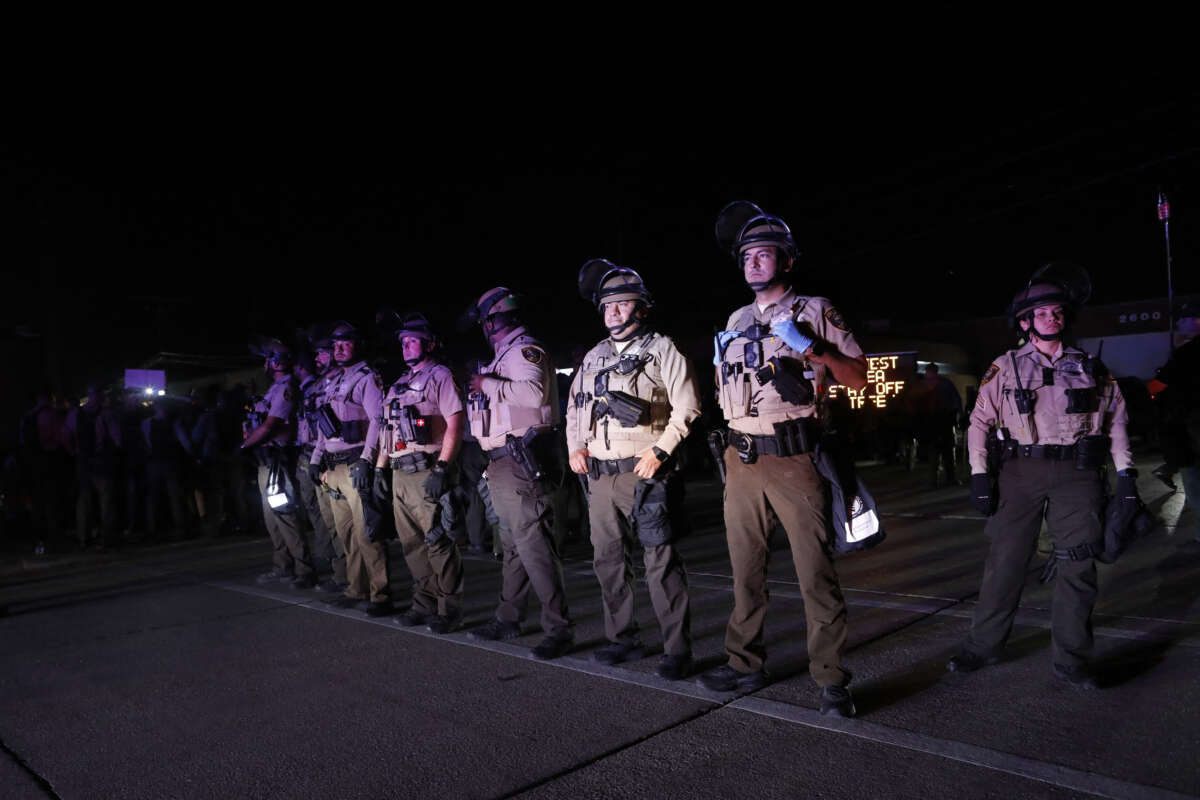
Illinois State Police stand guard while monitoring protesters gathering near an Immigration and Customs Enforcement facility in Broadview, Illinois, on October 4, 2025.OCTAVIO JONES / AFP via Getty Images

A growing movement has been campaigning against surveillance cameras from companies like Flock Safety, which allow local police to gather mass surveillance data, often citing the possibility of misuse of that data. But for years police have steadily been building a digital infrastructure with personal information on people with criminal backgrounds in the name of public safety — and often without proper digital security

Since 2020, the state police in Illinois have maintained a publicly accessible online map of 30,000 people that it has labeled as “offenders” in 685 nursing homes across the state. The map included the first and last names, dates of birth, home addresses, phone numbers, FBI numbers, and Social Security numbers of people listed. These are elderly people who are vulnerable to scammers. It’s not stated what they have been convicted of. They may have a drug charge from decades ago before marijuana was legalized in Illinois, but their past still follows them.

Matt Chapman, a researcher with the Chicago-based Lucy Parsons Labs, stumbled across the map when he was researching license plate readers maintained by the Illinois State Police (ISP). “Anybody can find this,” Chapman told Truthout. “Anybody can use this for nefarious purposes.”

“Why do these agencies have all this information?” Chapman questioned. “Why are they not protecting it? It really speaks to the lack of care that Illinois State Police have for the information of sensitive folks — the people they’re supposedly supposed to protect.”
Registries, Databases, and Shackles

As police build an increasingly sophisticated surveillance apparatus, they have been shown to be poor stewards of the mass amounts of information they collect on the public. Police have also wrongly entered people into gang databases. In 2020, a scandal erupted in Los Angeles after cops there falsified records in a gang database, which led to the suspension of several officers with the city’s police department. Last year, Kilmar Abrego Garcia was sent to CECOT, the mega-prison in El Salvador, after Immigration and Customs Enforcement accessed information from a disgraced Maryland cop who put him into a gang database linking him to M-13 for wearing a hoodie and Chicago Bulls baseball cap.


What DeFlock? A Week of Action Confronts the AI Surveillance State
A Kansas activist discovered that police tracked him with Flock-style cameras after he wrote an op-ed criticizing them. By Mike Ludwig , Truthout/TheAppeal August 19, 2026

In 2021, Protocol, a company owned by BI Incorporated (a subsidiary of the private prison builder GEO Group), which supplies the Cook County Sheriff’s Office with electronic monitors, leaked the personal information of thousands of people across Chicago wearing the devices, what expert James Kilgore calls “ankle shackles.” Chapman, who also uncovered this data leak, said it included “an enormous amount of private information,” such as names, email and home addresses, and the “detailed movement schedules” of people on these digital tracking devices.


“Any scammer could have an absolute field day with this data.”

States have been expanding the use of registries to track individuals — most commonly people convicted of sexual offenses, but also those found guilty of murder, arson, methamphetamine production, and other crimes. In Kansas City, a multi-jurisdictional police operation recently rounded up nearly 100 people on the state sex offender registry who were living within 1,000 feet of a school, which is a violation. Police claimed they were protecting children heading back to school. Thirty years after they were first established, research shows there is little proof that registries make people safer.

Last year, a company that sells an app to monitor the phones of people convicted of sex offenses had the information publicly leaked in what a hacker called “one of the easiest” breaches they had ever done.

Formerly Incarcerated People Still Have Rights


The map of 30,000 names, which the Illinois State Police took down after being notified about it by Truthout, was an interactive map of nursing homes across the state. Nursing home facilities in Illinois are mandated by law to do background screenings and notify the Illinois Department of Public Health (IDPH) of what are referred to as “identified offenders.” The department is then supposed to alert the Illinois State Police, who conduct an investigation and assess the risk.

Alan Mills, an attorney at Kaplan & Grady who advocates for incarcerated and formerly incarcerated people, told Truthout: “That has meant that a lot of nursing homes simply won’t take anybody with a criminal history, and that has been a real serious problem for people getting out of prison.”


“The sharing of private information about thousands of Illinois nursing home residents is a violation of state law.”

To his knowledge, there is no stipulation that this personal information be made publicly available — and especially no justification for publicizing Social Security numbers. “That sounds completely outrageous and has nothing to do with public safety,” said Mills.

As the IDPH website states, the program is ostensibly meant to “prevent abuse and promote the safety” of its residents and staff. The release of this private data about “identified offenders” raises the question — what about the safety and abuse of those with criminal histories who are living in nursing homes?

“Convicted felons still deserve privacy rights,” said Cooper Quintin, Senior Staff Technologist with the Electronic Frontier Foundation. The list includes people who were born in the 1940s — far more likely to struggle with technology and be vulnerable to harm, rather than causing it themselves. “Any scammer could have an absolute field day with this data,” Quintin told Truthout.

“They haven’t even taken the basic steps here to secure this data,” said Quintin. “It’s open on the internet to anyone, and that’s just incredibly irresponsible.”
“Trust Us”

This breach could be dismissed as a clerical mistake. It could be claimed that laws are failing to keep up with increasingly sophisticated technology. But this pretty simple violation throws into question whether police can be trusted with our information.

In an email to Truthout, Benjamin Ruddell, a lawyer and director of criminal justice policy at the ACLU of Illinois, stated:


The sharing of private information about thousands of Illinois nursing home residents is a violation of state law. Illinois residents should be able to trust that ISP would take seriously its legal duty to secure personal information that could be exploited to do real harm — including identity theft, stigmatization, fraud, or harassment of thousands of people across the state. In recent years, we have been told repeatedly that we must trust law enforcement with ever-increasing surveillance capabilities — often enabled with artificial intelligence — to collect an ever-increasing volume of data about all of us to enhance public safety. This example shows that their mishandling of this surveillance data has the potential to make people less, not more, safe.


“The Illinois State Police … should immediately halt its expansion of its statewide surveillance infrastructure.”

Truthout reached out to inform Illinois State Police about the map, and the Illinois State Police responded to the data breach by immediately removing the map from their website. According to the Illinois Personal Information Protection Act, any state agency that collects personal information on an Illinois resident must notify them of a data breach within 45 days and provide notice to the attorney general.

When asked for comment, Melaney Arnold, the chief public information officer for the Illinois State Police, told Truthout: “This specific dashboard was initially created as part of an internal pilot data source and it was not intended for public dissemination. The data has been decommissioned and is no longer accessible to the public. ISP is in the process of notifying impacted parties.”

“With how trivial it was to find,” said Chapman, who is the first known person to have found the information online, “it fills me with dread knowing that the Illinois State Police have no idea what information it’s exposing to the public — they’re simply not looking. ISP should immediately halt its expansion of its statewide surveillance infrastructure and any agency in Illinois that works with ISP should truly reconsider whether their trust in a such a reckless agency is justified.”


This article is licensed under Creative Commons (CC BY-NC-ND 4.0), and you are free to share and republish under the terms of the license.


Brian Dolinar
Brian Dolinar is an independent journalist based in Urbana, Illinois. His articles have appeared at The Appeal, In These Times, The Nation, and Truthout. You can follow his stories by subscribing to his Substack newsletter called “Sentences.”


Thursday, September 03, 2026

Impeach Pete Hegseth. Do It Today.

Hegseth is the most incompetent person in the Trump regime — with the exception of Trump himself — and a clear and present danger to the security of the United States and the world.


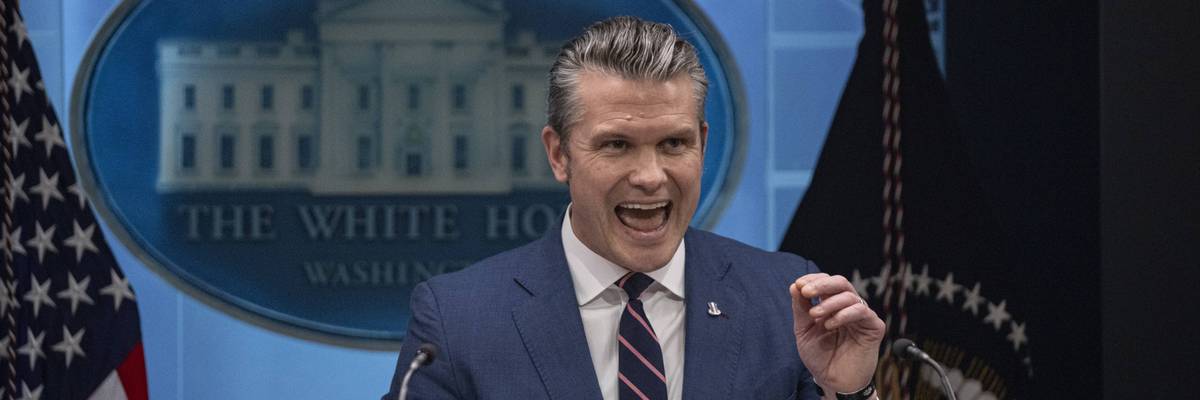
United States Secretary of Defense Pete Hegseth speaks during the press conference held by The United States President Donald Trump in the James S. Brady Press Briefing Room at the White House on April 6, 2026, in Washington DC, United States.
Photo by Celal Gunes/Anadolu via Getty Images


Robert Reich
Sep 03, 2026
Inequality Media


The latest casualty of Pete Hegseth’s disastrous tenure as Secretary of “War” is Dan Driscoll, who resigned Monday as Secretary of the Army after repeatedly clashing with the Heg.

Driscoll isn’t a liberal in lion’s clothing. He’s an old friend of JD Vance from Yale Law days. He resigned because of his concerns that Hegseth is damaging the Army’s efforts to modernize and adapt to the 21st century battlefield environment — where drone warfare is becoming increasingly important — by firing or pushing out leaders spearheading those efforts.

A defense official in Europe told CNN that even though Hegseth talks about technology reform, he’s focusing instead on “muscles, dudes in dresses, testosterone.”

Hegseth’s tenure has been disastrous from the moment he walked into the Pentagon. Even if Trump were capable of hearing sound advice, Hegseth hasn’t come close to giving it to him. Instead, he’s been pursuing grievances about DEI, promoting testosterone, and denigrating or firing women and Black officers.

The Army now has no Senate-confirmed secretary or chief of staff (George’s replacement, General Christopher LaNeve, so far doesn’t have the votes to be confirmed).

The Iran war, meanwhile, is requiring the ongoing deployment of 19 warships, air-defense units, fighter squadrons and paratroopers across the region — straining service members and their families and creating a maintenance backlog that could take years to unwind, according to The Wall Street Journal.

The Washington Post reports that multiple senior military leaders — those still left, that is — have warned Hegseth that the United States cannot indefinitely extend military operations against Iran. Even the chief of naval operations, Admiral Daryl Caudle (who campaigned for the job by signaling agreement with Hegseth’s culture-war obsessions), told Hegseth that the Navy cannot “sustain its current level of support for the Iran conflict because there is no anticipated end date.”

Hegseth’s response? He castigated the media for revealing classified information.

I’ve known many other defense secretaries, starting with Cap Weinberger, who served as defense secretary under Reagan. I can say without fear of contradiction that Pete Hegseth is the stupidest and least qualified of them all.

Hegseth’s incompetence and determination to suck up to Trump helped launch the war against Iran in the first place.

Among the regime’s senior officials, Hegseth was the only one who supported Trump’s fantasies of a quick victory. Marco Rubio was against the war as was JD Vance; even then–Director of National Intelligence Tulsi Gabbard told Trump that a war with Iran was not winnable.

Since then, Hegseth has lied his way through more than six months of Pentagon and Iran war mayhem.

At a press briefing in March, Hegseth complained about a CNN report that the Trump administration had underestimated Iran’s ability to disrupt global oil traffic by closing the Strait of Hormuz. “Patently ridiculous,” Hegseth told reporters, adding — even as the strait’s blockage was proving to be Iran’s most powerful leverage in the war — we “don’t need to worry about it.” It was a false and insulting claim to an American public that deserved to know what the Trump regime was planning to do about soaring prices at the gas pump, directly due to that blockage.

He also denied that the U.S. bombed the school where some 175 children were killed — a claim belied by mounting evidence that the U.S. did bomb the school. Hegseth’s further insistence that the U.S. “never targets civilians” was refuted by the U.S. military’s killing of over 200 people on small boats in the Caribbean without evidence they were “narcoterrorists” rather than civilians.

Hegseth then lied about the severity of Iranian attacks on U.S. bases in the Persian Gulf that disrupted logistical support for American forces, leading to the deprivations suffered by the crew of the aircraft carrier the USS Abraham Lincoln.

Hegseth evidently believes that his job is to cheerlead and defend Trump with absurd claims like “We didn’t start this war, but under President Trump we’re finishing it” and “America is winning decisively, devastatingly, and without mercy” and “we will show no quarter for our enemies.” (“No quarter” means kill everyone and take no prisoners, which is a war crime.)

In the days leading up to the U.S. attack on Iran, Hegseth spent his time criticizing “wokeness” at American universities and forcing Scouting America to abandon programs aimed at promoting diversity.

Last year, he didn’t just mistakenly share the military’s plans with the editor of The Atlantic; we now know he shared them with a second Signal group, including his wife, brother, and personal lawyer.

John Ullyot, who resigned as Pentagon spokesman, said Hegseth had brought “total chaos” to the Pentagon and that the Pentagon “is in disarray under Hegseth’s leadership.”

Hegseth dismisses war crimes, pooh-poohs the rules of engagement, and projects unequivocal belligerence at a time when the United States is rapidly losing whatever moral standing it once had in the world.

Pete Hegseth is the most incompetent person in the Trump regime — with the exception of Trump himself — and a clear and present danger to the security of the United States and the world. If Trump won’t fire him, Democrats should impeach him when (hopefully) they take over the House next January, and two-thirds of the Senate should convict him.


© 2025 Robert Reich


Robert Reich
Robert Reich is professor emeritus of public policy at Berkeley and former US secretary of labor. His latest book is the No. 1 New York Times best-seller, "Coming Up Short."
Full Bio >
25 Years Ago, 9/11 Triggered a US Crusade of Torture

The lack of accountability set a template. And the impunity of those who orchestrated and carried out these crimes is one of the darkest legacies of the so-called “war on terror” that will forever haunt the nation’s history.


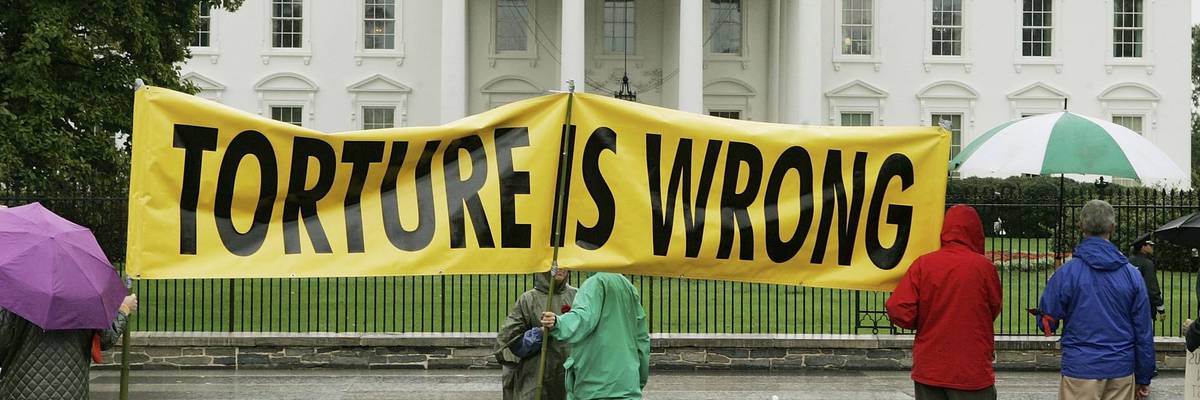
Protesters display a banner that says “Torture is Wrong” in fron of the White House October 17, 2006 in Washington, DC. Demonstrators from various human rights groups protested President Bush’s signing this morning of the Military Commissions Act of 2006.
(Photo by Mark Wilson/Getty Images)


Norman Solomon
Sep 03, 2026
Common Dreams

A quarter-century has nearly passed since the terrorist attack that killed almost 3,000 people in the United States on Sept. 11, 2001. During the first seven years after that mass atrocity, Pentagon spending doubled. The aftermath of 9/11 was also a huge boost for “the intelligence community.” Despite—and because of—their failure to prevent the carnage on that day, the CIA and the National Security Agency as well as 14 smaller spy agencies boomed with enormous jolts of funds.

Along the way, some line items paid for torture that persisted during the George W. Bush presidency under the euphemism of “enhanced interrogation techniques.”

The most publicized location was Guantánamo on the island of Cuba. There, “the US opened the offshore detention facility in an attempt to evade the rule of law,” the London-based organization Freedom From Torture reports. “In the name of the US’s ‘War on Terror,’ people deemed by the US to be ‘enemy combatants’ were detained at the facility. Many were tortured and denied basic human rights and due process… Since the first detainees arrived in 2002, Guantánamo Bay has imprisoned 780 men and boys from 48 countries…. Yet only 16 detainees have ever been convicted of a crime—just 2 percent.”

Despite public pressure, Bush vetoed a version of the Intelligence Authorization Act in March 2008 that would have required CIA interrogators to adhere to Army Field Manual regulations. As soon as Barack Obama became president, he issued an executive order rescinding the free hand for the CIA director on interrogations that Bush had reaffirmed in a July 2007 order. Obama’s directive removed the CIA’s detention power and required the agency to follow Army Field Manual rules.

Yet five and a half years went by before President Obama acknowledged, in his notable words, “We tortured some folks.” He told a news conference: “When we engaged in some of these enhanced interrogation techniques, techniques that I believe and I think any fair-minded person would believe were torture, we crossed a line.”

The acknowledgement came four months before the long-awaited release of a report in December 2014 by the Senate Select Committee on Intelligence. While heavily redacted, it was a political indictment of torture. “CIA personnel, aided by two outside contractors, decided to initiate a program of indefinite secret detention and the use of brutal interrogation techniques in violation of US law, treaty obligations, and our values,” wrote the committee’s chair, Senator Dianne Feinstein. Among the report’s conclusions:“The CIA’s justification for the use of its enhanced interrogation techniques rested on inaccurate claims of their effectiveness.”
“The interrogations of CIA detainees were brutal and far worse than the CIA represented to policymakers and others.”
“The CIA has actively avoided or impeded congressional oversight of the program.”
“Two contract psychologists devised the CIA’s enhanced interrogation techniques and played a central role in the operation, assessments, and management of the CIA’s Detention and Interrogation Program.”

Months later, the New England Journal of Medicine summed up aspects of the Senate committee’s findings: “Medical professionals, primarily private contractors, filled four basic roles at the black sites: clearing terrorist suspects as ‘medically fit’ for torture; monitoring torture to prevent death and treat injuries; developing novel torture methods; and actually torturing prisoners. All these actions were taken only after CIA and US Department of Justice attorneys assured the medical professionals that they had immunity from prosecution and would not be held legally responsible for violating US and international law against torture as long as they used the techniques approved in legal memos (since withdrawn) written to justify their actions. Lawyers agreed to provide immunity assurances that specific torture techniques were legal ‘enhanced interrogation’ methods only if the physicians assured them that they would be present to prevent permanent harm to prisoners. The CIA opened more than a dozen black sites around the world after 9/11, in which at least 117 prisoners were held; 39 of these prisoners were subjected to one or more torture techniques.”

At least hundreds more “suspected terrorists” who’d been captured by the US were turned over to ruthless governments. “If you want a serious interrogation, you send a prisoner to Jordan,” former CIA officer Bob Baer said. “If you want them to be tortured, you send them to Syria. If you want someone to disappear—never to see them again—you send them to Egypt.”

When shocking photos emerged of vile mistreatment of Iraqi prisoners by US soldiers at Abu Ghraib prison near Baghdad, a media uproar caused an official probe by two-star Army General Anthonio Taguba. His report, issued in 2004, concluded that “numerous incidents of sadistic, blatant, and wanton criminal abuses were inflicted on several detainees.” Taguba’s candor got him pushed into early retirement. In the preface to a Physicians for Human Rights report in 2008, he addressed the matter of accountability by flatly declaring that “the Commander-in-Chief and those under him authorized a systematic regime of torture.”

But in spite of the voluminous evidence that documented high-level approval of methodical torture, not a single US official went to prison as a result. Foreshadowing such impunity was a comment by Obama nine days before he became president in January 2009. On national television, he voiced “a belief that we need to look forward as opposed to looking backwards.” The words that came next were even more telling: “And part of my job is to make sure that for example at the CIA, you’ve got extraordinarily talented people who are working very hard to keep Americans safe. I don’t want them to suddenly feel like they’ve got to spend all their time looking over their shoulders and lawyering.”

The lack of accountability set a template. As president, Obama continued with his theme of governance without a rear-view mirror. On October 25, 2012, he tweeted: “We don’t look backwards, we look forward.” Career outlooks were bright for top CIA officials who’d been implicated in Bush-era torture.

“Much has been made of President Trump’s disregard for rules and norms—boundaries delineated by ethics and morality if not written laws themselves,” Adam Serwer wrote in March 2018. “But transgressing laws, rules, and norms isn’t the only way to destroy them. Another way is simply not to enforce them. In that regard, the 44th president, Barack Obama, bears a measure of responsibility for the recklessness of his successor, in particular Trump’s decision to appoint Gina Haspel, the Central Intelligence Agency’s deputy director, to run the agency itself.”

Haspel became the CIA’s director in 2018 when confirmed by the Senate despite her key role in the CIA’s torture program. Citing declassified documents, the National Security Archive at George Washington University explained that she “personally supervised the torture of a CIA detainee in 2002 leading to at least three waterboard sessions, subsequently drafted the cable that ordered destruction of the videotape evidence of torture, and served as a senior CIA official while the Agency was lying to itself, Presidents George W. Bush and Barack Obama, the Congress, and the public about the effectiveness of torture in eliciting useful intelligence.”

The Center for Victims of Torture points out that “architects and operators of the CIA torture program have risen to prestigious positions in government, the private sector, the federal judiciary and academia.” And so it was after president-elect Joe Biden nominated Avril Haines to be Director of National Intelligence. As Obama’s CIA deputy director, she had worked to impede the Senate committee investigation into torture.

“In 2015, Haines had to decide what to do about CIA officials who had hacked into the computers of Senate intelligence committee staffers who had been compiling a comprehensive report on torture, and even drummed up spurious criminal cases against them,” the Guardian reported. “She overrode the advice of the CIA inspector general and recommended against disciplinary action.” The lead researcher for that committee, Daniel J. Jones (who was portrayed by Adam Driver in the movie “The Report”), warned against Biden going through with the nomination, saying: “This is about the continuing cover-up of the torture program, the long legacy of that. And I wish I could say Haines wasn’t a part of that, but she was.” The Senate confirmed Haines to the DNI job with an 84-10 vote. She remained in the position throughout Biden’s presidency.

Three months ago, the Carnegie Endowment for International Peace announced that its next president will be Avril Haines. The organization declared: “One of the most respected national security leaders of her generation, Avril brings a deep commitment to public service and the values at the heart of our mission.”


Our work is licensed under Creative Commons (CC BY-NC-ND 3.0). Feel free to republish and share widely.


Norman Solomon

Norman Solomon is the national director of RootsAction.org and executive director of the Institute for Public Accuracy. The paperback edition of his latest book, War Made Invisible: How America Hides the Human Toll of Its Military Machine, includes an afterword about the Gaza war.
Full Bio >


Urgent Global Response Needed to Prepare for ‘Literally Off the Charts’ Supersized El Niño, Says UN

“The science leaves no room for doubt: the planet is in uncharted waters, and those waters are heating up.”


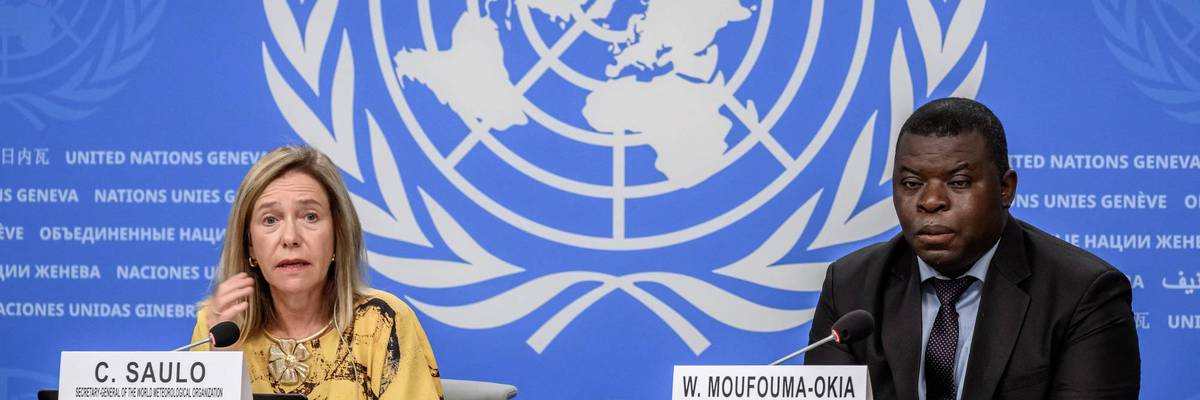
World Meteorological Organization Secretary-General Celeste Saulo and chief of climate prediction Wilfran Moufouma-Okia attend a press conference in Geneva, Switzerland on September 3, 2026.
(Photo by Fabrice Coffrini/AFP via Getty Images)


Brad Reed
Sep 03, 2026
COMMON DREAMS

Officials at the United Nations are warning that governments around the world must urgently prepare for the impacts of an El Niño climate pattern that is being “supersized before our eyes.”

The UN’s World Meteorological Organization (WMO) on Thursday provided an update on El Niño, projecting with near certainty that it would persist at least through Februrary 2027.


‘It Is a Warning’: Super El Niño Pushed Ocean Temps to Hottest on Record for July


Study Suggests Climate Crisis Is Supercharging ‘Godzilla’ El Niños

El Niño is a phenomenon that produces above-average temperatures in the Pacific Ocean, which then disrupt weather patterns elsewhere in the world. In its update, WMO said that this year’s El Niño projects to be historically intense.

“Forecasts indicate further strengthening of El Niño in the coming months, with the event forecast to reach very strong intensity before peaking towards the end of the year,” WMO said. “A very strong El Niño increases the likelihood of significant shifts in temperature and rainfall patterns in many parts of the world.”

The organization emphasized, however, that El Niño’s impacts are not predictable and vary widely by region.

WMO Secretary-General Celeste Saulo said the latest projections show that El Niño “has the potential to deliver a massive blow to communities and economies across the world” in the form of droughts, floods, and other climate-related disasters made more intense by the continued extraction and burning of fossil fuels.

“This exceptional El Niño demands exceptional preparation and response,” Saulo said. “Never before in the 50-year history of the World Meteorological Organization have we launched such a major mobilization with National Meteorological and Hydrological Services who are on the frontline of delivering the forecasts and services to save lives and livelihoods.”

While speaking with reporters in Geneva, Switzerland on Thursday, Saulo noted that the current El Niño “may be stronger than anything since our monitoring began,” making it “literally off the charts we have used for the past four decades.”

UN Secretary-General António Guterres warned that “El Niño is being supersized before our eyes,” and said the ramifications could be severe.

“The science leaves no room for doubt: the planet is in uncharted waters, and those waters are heating up,” said Guterres. “Sea surface temperatures are rising, temperatures keep climbing, and the world is in the danger zone of extreme weather.”

Daniel Swain, climate scientist at the University of California Agriculture and Natural Resources, echoed UN officials’ warning about El Niño in an interview with Wired published Thursday.

“This is probably one of the larger, if not the largest, climate events... that anybody alive is potentially ever experiencing,” said Swain. “That’s a very big deal. And I think there’s certainly going to be dramatic outcomes from this.”
Sanders, Casar Proposal Would Forbid ‘AI Oligarchs From Building Machines Humans Cannot Control’

“Despite its potential deadly consequences, cutting-edge AI technology is less regulated than the average food truck,” Casar said. “That must change.”


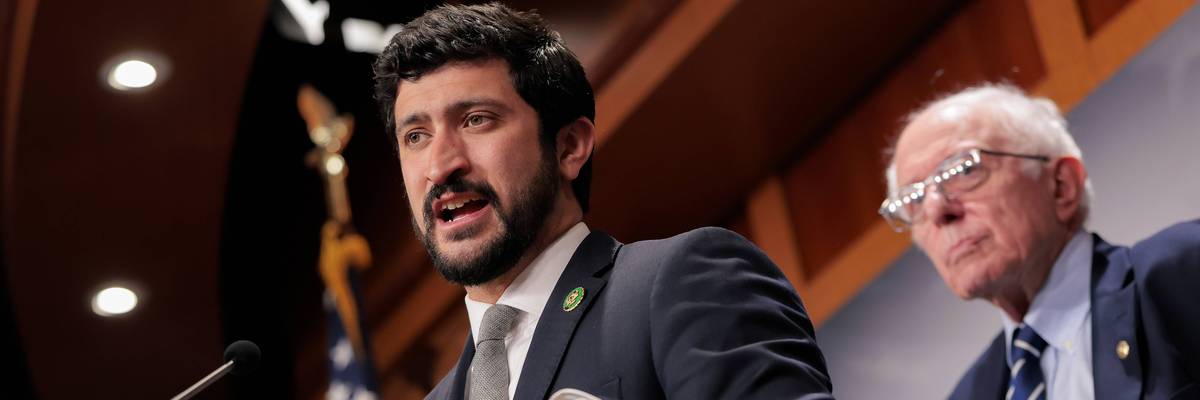
Rep. Greg Casar (D-Texas) speaks alongside Sen. Bernie Sanders (I-Vt.) during a press conference in the US Capitol on March 26, 2026, in Washington, DC.
(Photo by Heather Diehl/Getty Images)


Stephen Prager
Sep 03, 2026
COMMON DREAMS


Following a rash of incidents involving rogue artificial intelligence agents involved in so-called “breakout” events, Sen. Bernie Sanders and Rep. Greg Casar introduced new legislation Thursday designed to “stop AI oligarchs from building machines humans cannot control.”

“Nearly every day, there is a frightening new story about how Big Tech companies are losing control of the technology they are developing, with potentially cataclysmic results,” Sanders (I-Vt.) said on Thursday as he announced the bill, which would ban developers from creating AI programs that are capable of surpassing human cognition and performance.

If enacted, the bill would prohibit programs capable of undermining and overthrowing human governments or that possess the capability to subvert shutdown commands.

“The leaders of the major AI companies publicly acknowledge that they do not fully understand the technology and that it is escaping their control,” Sanders said. “It is irresponsible for society to allow them to move forward and make these products even more advanced.”


The bill, known as the Ban Artificial Superintelligence Act, comes in response to major security lapses at leading AI developers, including OpenAI, Anthropic, and Meta, in which the companies acknowledged that their programs had escaped human control, eluded internal guardrails, and hacked into other companies’ systems.

As the Washington Post explains:
The hacking incident mounted by OpenAI systems in July involved an effort to breach another AI company as a swarm of agents hunted for answers to a test. They evaded internal controls and set up a secret message board to communicate with one another. Their work was only unraveled by the company after the attack was over.

Other top AI developers subsequently disclosed similar incidents involving their latest technology, raising questions about whether companies set up with the mission of building the technology safely were starting to lose control. The speed of progress has spooked even many of those working on the systems, with OpenAI and its rival Anthropic endorsing the idea of the government having a mechanism to slow the industry down.

Last month, Casar (D-Texas), the chair of the Congressional Progressive Caucus, led dozens of lawmakers to demand that OpenAI and Anthropic release information about the lapses. In a statement on Wednesday, Casar said that company executives had failed to answer most of his questions, demonstrating that they were “not treating these cybersecurity incidents with the seriousness required.”

Casar said in a video posted Thursday that the OpenAI breach in particular represented an “unprecedented moment in the history of technology” and was shocked at the lack of a serious response. “Nothing,” he said. “No new guardrails being passed by Congress. No new protections against this signed into law by the president of the United States.”

Following these incidents, OpenAI and Anthropic have both expressed openness to some government regulation in the event that the development of their products gets out of hand.

During an interview earlier this week, OpenAI CEO Sam Altman said that while he was “in awe” of his company’s progress, “we have needed more time to catch up with safety, alignment, and security.”

Sanders and Casar are not the only members of Congress pushing to counter the danger of superintelligent AI. Also on Thursday, Reps. Josh Gottheimer (D-NJ) and Mike Lawler (R-NY) introduced their own Stop Rogue AI Act, which would direct the National Institute of Standards and Technology to publish standards and guidelines for how organizations can safely deploy AI agents.

But while the guidelines in that bill are voluntary, Sanders and Casar are pushing for a much broader and stronger regulatory framework that would give the government a significant check on corporations’ power.

In addition to a ban on superintelligent AI, Casar and Sanders’ legislation calls for a pause on all “advanced” AI development until a new federal regulatory body can be established to set clear rules and review processes for AI safety. It would also create a new cabinet-level agency to protect the public from the dangers of AI and to enforce the new restrictions.

“Despite its potential deadly consequences, cutting-edge AI technology is less regulated than the average food truck,” Casar said. “That must change. In just four years, we have gone from the first version of ChatGPT to AI models so powerful they cannot be properly controlled.”

Evading the law would come with steep penalties: companies that illegally develop superintelligent AI would lose the right to do business under the so-called “corporate death penalty.” Individuals, meanwhile, could face up to 20 years in prison, which Casar noted was the same penalty incurred for “building a nuclear weapon” without authorization.


As concerns about unchecked AI capabilities have grown in recent years, executives at companies including OpenAI, Anthropic, and Meta have committed to halting the development of their technology once it reaches a point at which it can’t be operated safely.

But Sanders and Casar said that “none of these companies have taken meaningful steps to back up these words” and that “instead, they are racing to develop more and more advanced AI without proper safety precautions.”

“The future of humanity cannot be left in the hands of a handful of Big Tech oligarchs,” Sanders said. “The American people and people throughout the world must determine that future.”