Sunday, September 27, 2026

From Compliance to Capability in Environmental Performance
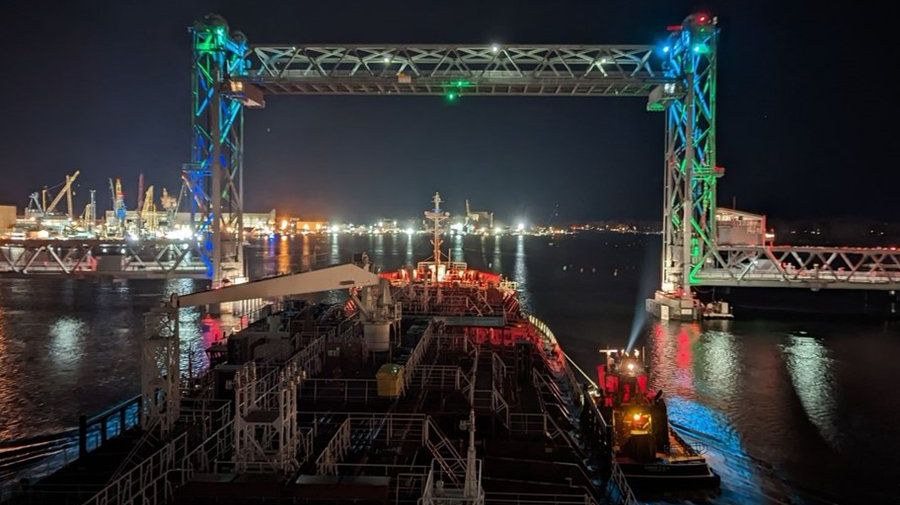
File image courtesy OSM Thome
File image courtesy OSM Thome / Capt. Nicolae Gainuse

Published Sep 23, 2026 11:35 PM by Julia Anastasiou

Shipping is no stranger to regulation. New requirements come into force, procedures are updated, training is arranged and vessels adapt. It is a cycle our industry knows very well. But the scale and pace of the environmental transition we are now facing means that responding to each new requirement as it arrives is no longer enough.

That makes this year’s World Maritime Day, taking place on 24 September, particularly relevant. The International Maritime Organization has chosen “From Policy to Practice: Powering Maritime Excellence” as its theme for 2026, extending across 2026 and 2027.

For me, the message goes to the heart of one of the biggest challenges facing shipping today. We have spent decades building strong regulatory frameworks, but regulation alone does not deliver change. The real question is how we translate policy into what happens every day onboard our vessels and across our shore-based operations.

As we move towards decarbonisation and more sustainable shipping, compliance will of course remain essential, but we also need to look beyond compliance and build the long-term capability required to achieve what these regulations are ultimately intended to deliver.

Environmental performance is a very good example. Shipowners and ship managers are already navigating tighter emissions requirements, efficiency targets and increasing reporting obligations, while technology continues to change the way vessels are operated. At the same time, we are preparing for a future involving a broader mix of alternative fuels and propulsion systems, each bringing different operational, technical and safety considerations.

The danger is that, with so much happening at once, we begin to view environmental performance primarily through the mechanics of compliance: update the procedure, complete the training, collect the data and submit the report.

All of those things are necessary. But completing them does not necessarily mean that sustainability has become part of how we operate or how our people make decisions.

For me, this is where we need to bring the conversation back to people.

We can put increasingly sophisticated technology onboard a vessel. We can collect enormous amounts of data and develop detailed procedures around new systems and fuels. But ultimately, somebody has to understand that technology, operate it safely and make the right decisions based on the information available.

That is why training cannot simply be about preparing a seafarer to meet the requirements of the next regulation. We need our people to understand what is changing, why it is changing and what it means for the work they do every day.

This becomes even more important as the energy transition gathers pace. Alternative fuels and new propulsion technologies will introduce different operational and safety requirements, and our seafarers need to be prepared for them.

We cannot expect people to make this transition successfully simply by giving them another manual or asking them to complete another course. They need practical knowledge, experience and the confidence to apply what they have learned.

The same applies ashore, where superintendents, crew management teams and other colleagues supporting our vessels need to understand this changing operating environment well enough to make informed decisions and, importantly, to give our seafarers the support they need.

Technology and data are important parts of that picture. We are collecting more environmental and operational information than ever before, but collecting data is not the same as using it effectively. Its real value comes when we understand what it is telling us and turn that insight into action.

Why is one vessel performing differently from another? What can we learn from that? Is there an operational adjustment that could improve efficiency? Is there something that should be incorporated into training or shared with another vessel?

When we start asking these questions, reporting becomes much more than a regulatory requirement. It becomes a tool for continuous improvement.

And this cannot be a one-way conversation from shore to ship. Our seafarers are often the first people to understand whether a procedure works in practice, where a technology is helping and where challenges remain. We need to listen to that experience and create a proper feedback loop between ship and shore. That feedback can then help us improve our training, procedures and operational practices.

For a global ship manager such as OSM Thome, our scale gives us an opportunity to take those lessons further. What we learn on one vessel can potentially benefit many others. Training can evolve as our experience grows, good practices can be shared across fleets, and at the same time we can recognise that different vessels, trades and customers will have different requirements.

This, for me, is where the real transition from compliance to capability takes place.

It happens when environmental performance becomes part of how we think, how we train, how we operate and how we make decisions every day — rather than something we address primarily because another regulation or deadline is approaching.

Compliance will always be essential. It gives us standards, accountability and direction. But it should be our starting point, not the limit of our ambition.

Ultimately, the transition towards more sustainable shipping will depend just as much on people as it does on fuels, technology and regulation. Policy can set the direction and technology can provide us with increasingly powerful tools, but it is our people — equipped with the right knowledge, practical skills, confidence and support — who will turn that direction into meaningful and lasting environmental performance.

Julia Anastasiou is Chief Crew Management Officer at OSM Thome.

The opinions expressed herein are the author's and not necessarily those of The Maritime Executive.


Carnival Cruise Line Celebrates Commitment to Cleaner Oceans
Carnival cruise line

Published Sep 26, 2026 12:50 PM by The Maritime Executive


[By Carnival Cruise Line]
 

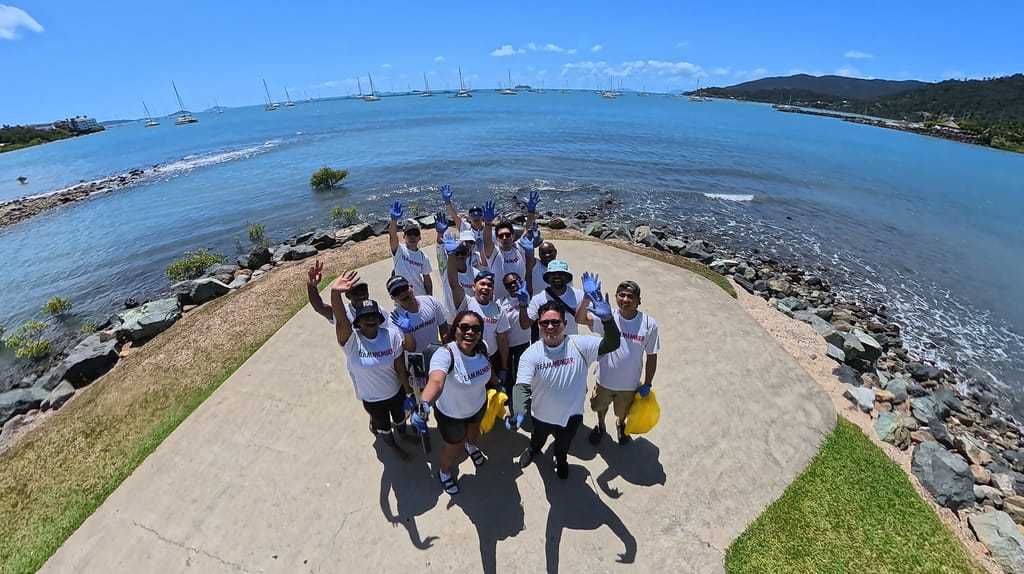
In recognition of International Coastal Cleanup Day on Sept. 19, Carnival Cruise Line brought ship and shoreside team members and community partners together for a coastal cleanup initiative spanning destinations and homeports around the world, reflecting the cruise line’s ongoing commitment to healthier oceans and coastal communities.

Throughout September, 377 shipboard team members across 29 ships and 111 shoreside team members, along with local community partners, participated in 31 beach and waterway cleanups, collecting approximately 175 bags and over 5,000 pounds of trash, waste and debris from coastal and waterway communities. Carnival Glory, the final ship to participate, will complete its cleanup on Sept. 30 bringing the effort to 100% participation across the fleet.

Cleanup locations spanned major U.S. homeports, including Galveston, Texas; Port Canaveral and Miami, Florida, as well as destinations across Alaska, Caribbean, The Bahamas, Mexico, Greece, France and Australia.

“We have the privilege of operating on the world’s oceans and visiting some of its most beautiful coastal destinations, and with that privilege comes a responsibility to protect them,” said Christine Duffy, president of Carnival Cruise Line. “This effort demonstrates what is possible when our people and partners come together around a common goal, taking meaningful action to protect the oceans and destinations we proudly visit.”

The September effort builds on Carnival’s year-round commitment to cleaner coastal communities, with Carnival team members participating in cleanup events throughout the year and contributing more than 7,200 pounds of collected debris across ship and shoreside efforts in 2026.

Supported by local environmental organizations, port partners and community groups, the effort is part of Carnival’s broader sustainability commitment through its Our Sea Pledge program, which focuses on Climate Action, Circular Economy, Sustainable Tourism, Biodiversity & Conservation and Good Health, Inclusion & Belonging. Together, these areas guide Carnival’s efforts to protect the environment, preserve the destinations it visits and make a positive impact in the communities it serves.

The products and services herein described in this press release are not endorsed by The Maritime Executive.

 

U.S. Navy Gives Unmanned Systems Their Own Warfighting Development Center

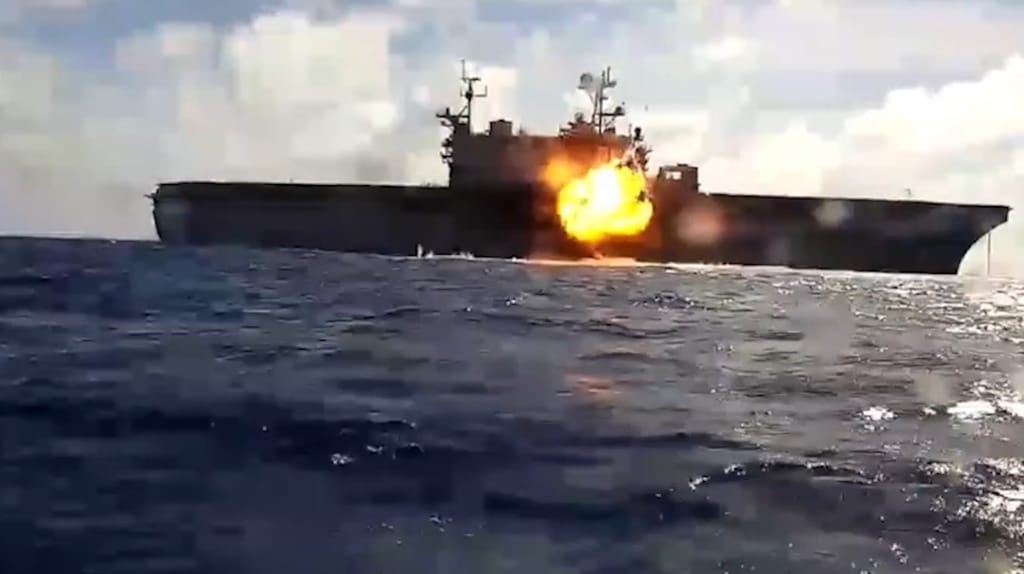
An unmanned bomb boat hits the former USS Peleleiu during a sinking exercise at RIMPAC 2026 (USN)
An unmanned bomb boat hits the former USS Peleliu during a sinking exercise at RIMPAC 2026 (USN)

Published Sep 24, 2026 9:47 PM by The Maritime Executive


The U.S. Navy is taking more steps to restructure its unmanned-system programs, putting operational integration work under the newly-created Robotic and Autonomous Systems Warfighting Development Center (RASWDC, pronounced "Rass-Widdick").

It is the latest in a long string of administrative structures housing various aspects of unmanned systems innovation in the Navy: Third Fleet's Surface Development Squadron One (SURFDEVRON One), the Navy's first real home for unmanned surface vessels; NAVSEA's Program Executive Office Unmanned and Small Combatants (PEO USC); the short-lived Portfolio Acquisition Executive for Robotic and Autonomous Systems (PAE RAS); and the newly-created Direct Reporting Portfolio Manager for Robotic and Autonomous Systems (DRPM RAS). The new center will be more comprehensive in scope, and will include unmanned surface, subsea and aviation systems.

RASWDC will live at Base Little Creek-Fort Story, seven miles east of Norfolk Naval Station. Its role will be a "dedicated, Fleet-facing operational integration point for robotic and autonomous capabilities" - that is, getting the new systems acquired by DRPM RAS to generate capability out in the fleet. 

The one-month-old DRPM RAS - headed by Christopher Miller, who is also the chief developer and buyer of surface combatants, Program Acquisition Executive Maritime - will be accountable for buying, budgeting and setting technical standards for autonomous systems, reporting to Performing the Duties of Under Secretary of the Navy William Toti. Meanwhile, RASWDC will be responsible for "operational employment" of all unmanned systems, reporting to Fleet Forces Command. This includes equipment testing, but the center will also develop the tactics, techniques and procedures to put the equipment to use in a combat environment. 

“Our purpose here is to consolidate the Navy’s autonomous efforts across air, surface, and undersea domains, and give them a single home here at Little Creek. Our mandate is straightforward: educate our warfighters, equip the Fleet with tools that actually survive the environment, and develop the combined tactics to employ them decisively. We are here to make sure our forces don't just field unmanned systems, but dominate with them," said Rear Adm. Melvin Smith, the first commander of RASWDC. 

RASWDC is not taking command of existing unmanned-systems units out in the fleet, nor is it absorbing their responsibilities, so the diversity of local innovation (like the work of Fifth Fleet's Task Force 59) can continue. 


Birdon and C&C Begin Building MUSVs for U.S. Navy Competition

The parent hull design for Birdon's MUSV program (Birdon)

Published Sep 24, 2026 10:46 PM by The Maritime Executive


Australian-owned marine engineering firm Birdon has begun building its first "tranche" of Medium Unmanned Surface Vessels for the long-awaited U.S. Navy MUSV program, and at a fast pace of one vessel every two months. 

After several iterations of its MUSV acquisition strategy, the U.S. Navy has picked out seven different companies to compete for the Medium Unmanned Surface Vessel program, including Sea Machines; Leidos; Saronic Technologies; Galliano Marine Services; PacMar Technologies; Birdon; and Huntington Ingalls Industries (HII), many in partnership with other firms. 

Birdon has partnered with autonomous navigation and control firm Mythos AI, based in Florida, for its underlying unmanned-systems technology. For construction, it has an agreement with New Orleans-area shipyard C&C Marine, a modern, high-automation fabrication facility. Birdon provides system integration, design and prime-contractor oversight. 

The choice of an established shipyard was deliberate, aimed at satisfying the Navy's needs for rapid prototyping and delivery. C&C has been building and repairing working vessels for nearly three decades, and puts a premium on on-time, on-budget performance. It worked with Birdon previously on the Marine Corps' Ancillary Surface Craft (ASC), a prototype 150-foot beach landing vessel for combat logistics. 

Birdon has put C&C's immediate production-ready capability at front and center in the consortium's plans. 

"Starting the build moves this effort from planning into execution. It demonstrates our certainty of delivery, founded on in-place - not promised - capacity," said Birdon President Kevin Mooney. "We are pairing production-ready engineering with a trusted serial manufacturer."


US Adds Large Vehicle Carrier to Support Maritime Security Program

US flagged vehicle carrier
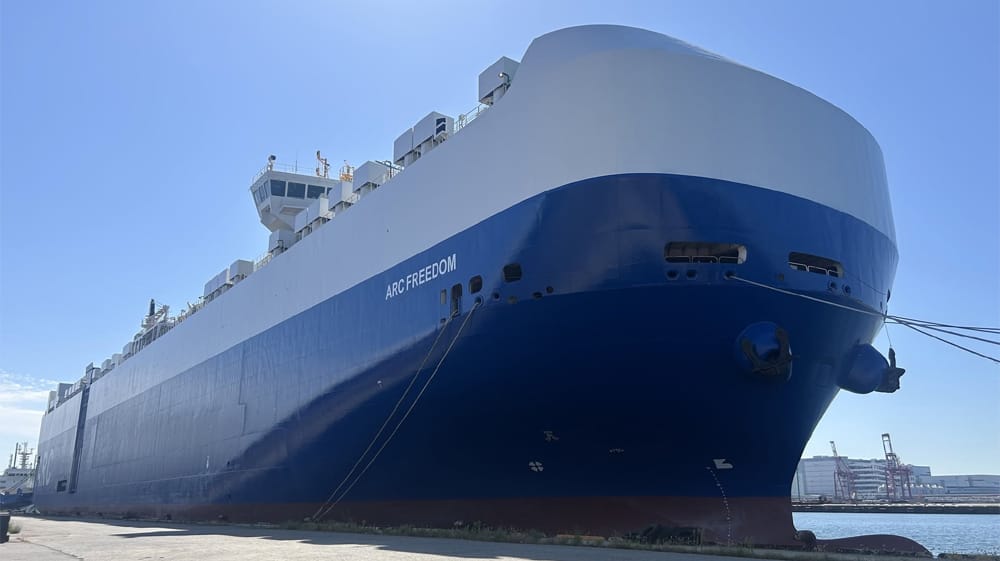
ARC Freedom enters the US registry and supports MARAD'as Maritime Security Program (ARC Group)

Published Sep 25, 2026 6:50 PM by The Maritime Executive


Florida-based American Roll-On/Roll-Off Carrier Group (ARC Group) is highlighting its recent addition of a large vehicle carrier to its U.S.-flagged fleet. The ship, which moved from the Swedish flag, will support commercial and government customers while adding further capacity to the Maritime Administration’s Maritime Security Program.

Built in 2011 at Daewoo Shipbuilding & Marine Engineering in South Korea, the vessel had been operating for Wallenius Marine as the Figaro. Data show her ownership was transferred to ARC Group in June, and she entered the American register. ARC, which is a subsidiary of Norway’s Wallenius Wilhelmsen Group, supports the U.S. Government with a fleet of 10 vessels.

The addition of the new vehicle carrier, which was renamed ARC Freedom, expands the company’s capacity and adds a large new carrier. The ship is 231 meters (757 feet) and 31,143 dwt with a capacity of nearly 8,000 units. It has 13 vehicle decks, including five hoistable decks that will provide flexibility for various sizes and configurations of cargo.

ARC’s president and CEO Eric Ebeling said the name ARC Freedom was a fitting name for a vessel carrying the U.S. flag as America marked its 250th anniversary.


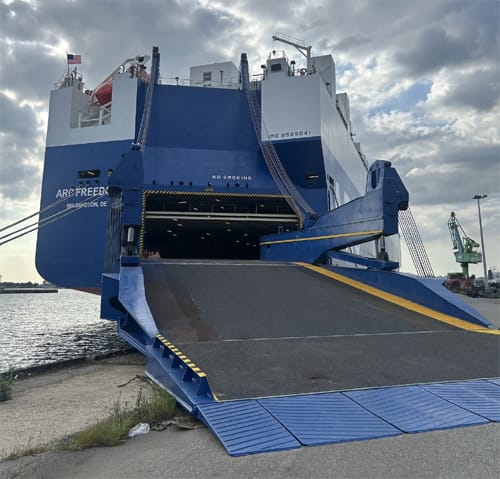
Large stern ramp gives the vessel good flexibility for cargo including helicopters (ARC Group)


“Adding the ARC Freedom to the U.S.-flag fleet is a major win for America’s national security,” said Captain Stephen M. Carmel, Administrator of the Maritime Administration (MARAD) at the U.S. Department of Transportation. “As a member of the Maritime Security Program, this vessel will deliver the rapid response our military depends on to keep America safe.”

The Maritime Security Program (MSP) maintains a fleet of commercially viable, militarily useful merchant ships active in international trade. The MSP fleet is available to support U.S. Department of Defense (DoD) sealift requirements, with MARAD currently authorized to have a total of 60 vessels in the program. Its authorization currently runs through September 30, 2035.


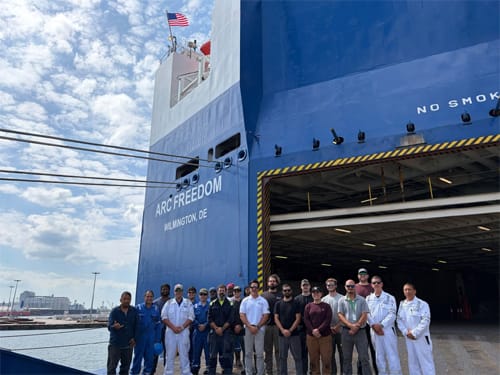
AMO provides manning for all the licensed positions on the ARC fleet (ARC Group)

ARC highlights that the ship features a 6.5-meter-high (21-foot) main deck/door and a stern ramp capable of handling rolling loads of up to 320 metric tons. It says the vessel has the capability to transport a broad range of cargo, from automobiles and commercial equipment to heavy industrial cargo and military equipment, including the V-22 Osprey tiltrotor aircraft and the CH-47 helicopter.

The American Marine Officers union celebrated the addition of the vessel, highlighting the placement of the master, deck, and engine officers from the union. The ARC U.S. flag fleet is manned in all licensed positions by AMO, and the fleet is managed by Tote Services. ARC has two other large, nearly 8,000-unit vessels in service, as well as others in the 6,350 to 6,736 unit range.

Port Canaveral and GT USA Sign Lease Agreement to Expand Cargo Operations

Agreement expands the footprint of longtime Canaveral Cargo Terminal Operator GT USA to accommodate more breakbulk and general cargo

Port Canaveral
The M/V Whale Orca is docked at Port Canaveral as part of a new container service launched earlier this year in partnership with GT USA and Green Tide Logistics   (Credit: Canaveral Port Authority)

Published Sep 26, 2026 4:27 PM by The Maritime Executive


[By Canaveral Port Authority]


Port Canaveral announced today that it has executed an agreement with longtime Canaveral Cargo Terminal operator GT USA for a new lease of up to 25 years for an additional 10 acres of land adjacent to their existing 20-acre operation at the Port’s North Cargo Berth 6.

“Today’s announcement strengthens our position as a global gateway for commerce to ensure supply chain stability for a range of materials essential to our growing region,” said Capt. John W. Murray, Port Canaveral CEO. “GT USA and Port Canaveral have been partners since 2014.  This expanded commitment to our Port builds on our shared responsibility to be an economic engine and job creator that will pay dividends for generations to come.”

 The new agreement takes effect immediately. The additional 10-acre parcel will include GT USA’s improvements of no less than 15 hurricane-resistant warehouses totaling nearly 170,000 square feet to handle, store and process breakbulk and general cargo such as lumber, steel and project cargo.

“The approval of GT USA’s expansion at Port Canaveral is an important milestone after significant hard work and collaboration. We are grateful for the Canaveral Port Authority’s continued support and excited to bring this project to life,” said Luke Richards, Managing Director of GT USA. “The larger footprint will give us the capacity to pursue new commodities, attract additional cargo, and better serve customers — driving further growth for GT USA and economic activity through the port.”

Today’s announcement continues GT USA’s diversification of cargo operations at the Port that includes the recent launch of a new bi-monthly international container service that connects Central Florida with key markets in Mexico and the U.S. Northeast.

Port Canaveral’s total cargo throughput includes more than 6 million tons in FY2026 with $25 million in earned revenues from operations, including liquid and dry bulk, breakbulk, project cargo and petroleum operations while promoting economic growth throughout Central Florida.

 With 11 multi-purpose deep water cargo berths, state-of-the-art facilities and efficient services, Port Canaveral serves as Central Florida’s gateway to global markets with fast and reliable operations for containerized goods, bulk commodities, and specialized shipments.
 

The products and services herein described in this press release are not endorsed by The Maritime Executive.
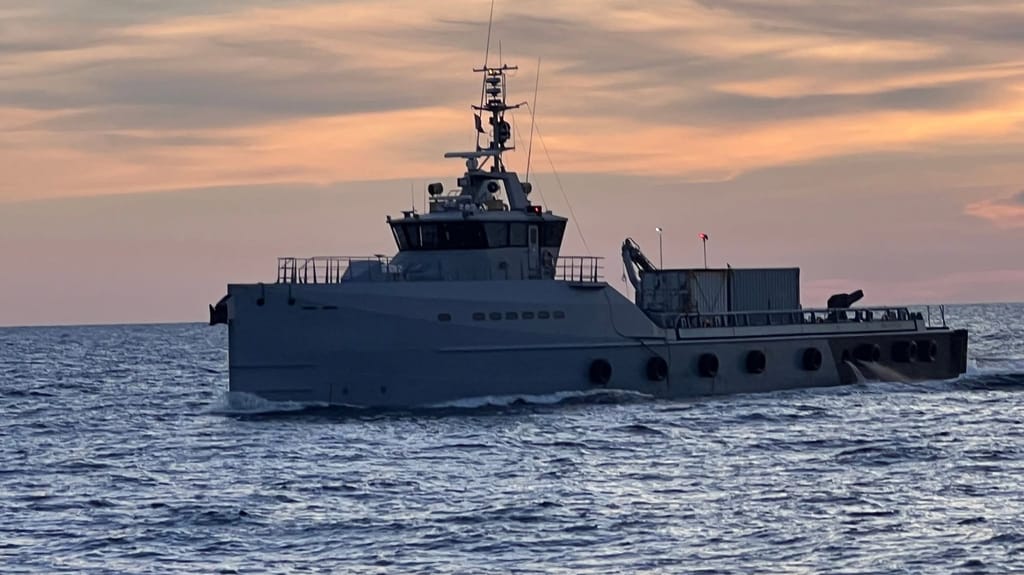
 

India’s Cochin Shipyard to Work With Synergy Marine to Grow Commercial Work

Indian Cochin Shipyard
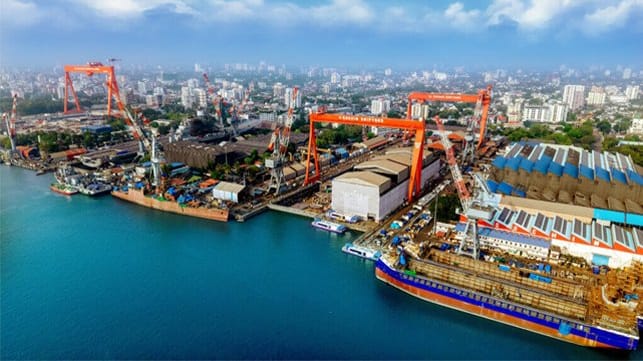
Cochin looks to use partnerships as it grows its commercial portfolio (Cochin Shipyard)

Published Sep 23, 2026 4:16 PM by The Maritime Executive

As the latest step in the efforts to expand India’s role in commercial shipbuilding and repair, the state-owned Cochin Shipyard, which is the largest builder in India, signed an agreement with global ship manager Synergy Marine. The companies look to share expertise to support the growth of the business for both newbuilds as well as vessel engineering and conversion projects.

Synergy Marine Group and Cochin Shipyard Limited signed a memorandum of understanding to jointly pursue shipbuilding, repair and conversion projects in India. The MoU covers joint business development in ship repair, conversion, newbuilding, module fabrication, and oil and gas projects. It also provides for mutually agreed technical and strategic advisory support to CSL’s newbuilding activities, including project planning, execution, and quality assurance.

The MoU provides a framework to combine CSL’s industrial capacity with Synergy’s experience in owners’ representation, engineering, project management and long-term technical management across shipbuilding and ship repair.

Jesper Kristensen, Group CEO of Synergy Marine Group, highlights the group’s experience in working with shipowners’ requirements for engineering and project execution. “Combining that experience with CSL’s industrial capabilities gives us a practical basis to develop shipbuilding and conversion opportunities in India, with decisions guided by safety, reliability and total cost of ownership.”

Synergy reports it has supported the delivery of more than 250 newbuilding projects, and its current portfolio of newbuilding assignments covers more than 150 vessels under construction at 20 shipyards across six countries. The group also has experience in converting LNG carriers into floating storage and regasification units (FSRUs), alongside engineering studies for floating storage and LNG bunkering applications. Its conversion experience includes feasibility studies and engineering design, equipment procurement, site supervision and commissioning, supported by preparation for safe operations and subsequent technical management.

Cochin Shipyard, which was launched in 1972, is a shipbuilding and ship repair company based in Kochi. It has been using its capacity for defense projects for India but is now expanding its commercial projects for customers in India and overseas.

The agreement with Synergy Marine follows a series of other steps, including an agreement with Singapore’s Seatrium for offshore projects and a recent joint venture agreement with DP World’s Drydocks World. 

The yard signed an agreement in February 2026 with the French CMA CGM Group, which committed to build six feeder-sized vessels, each with a capacity of 1,700 TEU. The vessels, which will be LNG-powered, will be the first India has built for an international shipping company. Cochin has also been exploring opportunities with Maersk, which is likely to start with ship maintenance while the government has been courting more international investment and assignments for its shipbuilding sector. 

The Indian government has declared a goal of being among the top ten global shipbuilding nations by 2030. By 2047, it wants to be among the top five shipbuilding nations.


Report: Saudi Aramco Achieves Partial Restart on Strategic Red Sea Pipeline

EIA
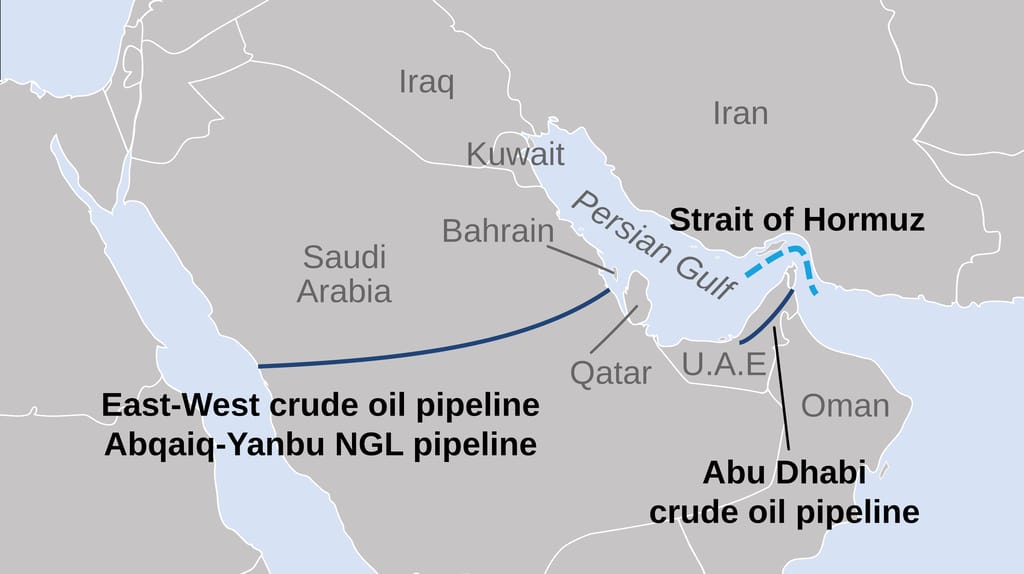
Courtesy U.S. EIA

Published Sep 22, 2026 7:12 PM by The Maritime Executive


Saudi Aramco has achieved the technical means for a partial restart on its strategic East-West Pipeline, which was significantly damaged in a drone attack on September 11, according to multiple outlets. The pipeline is now operating at reduced capacity or will be soon, industry sources confirmed to Reuters, Bloomberg and the FT. 

The interim objective is to achieve a pipeline transfer rate of about four million barrels per day - enough to supply Saudi Arabia's own refineries along the Red Sea, plus a small amount more. One crude export loading has already been scheduled at the key export hub at Yanbu, Reuters reports.


Fully regaining the pipeline's nameplate capacity of seven million barrels per day could take as long as six weeks because three damaged pumping stations will have to be restored. The remaining eight stations are enough to move crude at a reduced rate with reconnected temporary line sections. 

For now, the resumption of flow on the line has been enough to bring global benchmark oil prices down - in combination with increasing loading volumes at Ras Tanura, the appearance of a weakening Iranian blockade at the Strait of Hormuz, and the possibility of new diplomatic talks to resolve the Iran conflict. After spiking to $108 per barrel last week, the Brent crude benchmark receded to just $98 on Tuesday, reflecting trader expectations of a better-supplied global energy market. 


Chinese Ports Had Busiest Week Ever for Containers, Says Bloomberg

Shanghai container port
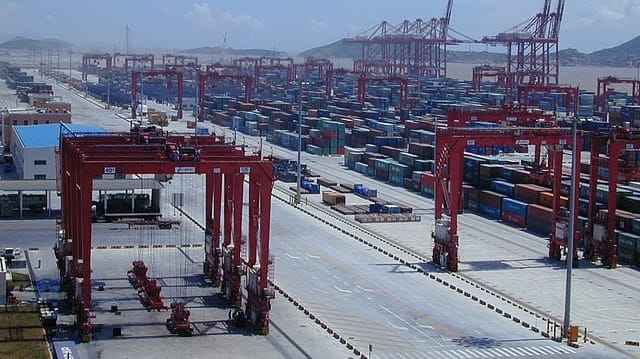
Volumes moving through China's ports continue at peak levels above 2025 (SIPC)

Published Sep 24, 2026 4:19 PM by The Maritime Executive

Export levels from China, especially to the United States, have been defying all the predictions, and now comes news of a further boom. Citing data from China’s Ministry of Transport, Bloomberg reports that Chinese ports had their busiest week in history.

The data shows a record 7.3 million containers passed through Chinese terminals in the seven days through September 20, reports Bloomberg. It says this represents a nine percent increase in volume versus the same period of 2025. The gains were accelerating from the six percent increases in each of the first two weeks of September, with Bloomberg saying it is “evidence of another month of rapid gains in exports and imports.” Citing a report from Goldman Sachs, Bloomberg reports that the volume of cargo leaving China's 20 major ports continues above 2025 levels.

The data aligns with the observations from the U.S.’s major ports, which also cite strong increases in import volumes. The Port of Los Angeles, for example, reported it handled 955,907 TEU in August, six percent above its five-year average and capping the busiest three consecutive months in port history. Between June and August, the Port of Los Angeles handled more than 2.9 million TEUs. Similarly, the neighboring Port of Long Beach highlighted its busiest August on record and the fifth-strongest month in the port’s 115-year history as it moved 919,992 TEUs. 

Bloomberg speculates that it is “extending a boom in shipments abroad in a possible sign exporters were rushing goods out of the country as uncertainty hovered over tariffs.” Bloomberg News had previously reported that the Trump administration intended to release a report on alleged excess trade capacity that would recommend a 7.5 percent tariff on Chinese goods.

China’s largest ports have been reporting increased congestion and backlogs, in part due to the impact of two typhoons that caused Shanghai and other ports to suspend operations. Linerlytica's port congestion tables show Shanghai/Ningbo had more than 1.2 million TEU at anchor as of September 19, with Qingdao also among the Top 5 congested ports, with others including Shenzhen lower on the list.

In addition, trying to beat possible new tariffs and restrictions, shippers also appear to be rushing shipments ahead of China’s pending Mid?Autumn Festival (September 25?27), closely followed by Golden Week (October 1?7). Carriers have been announcing blank sailings from their schedules due to the pending holidays.

The future direction of the tariffs and restrictions on trade are likely to emerge after the summit between Chinese President Xi Jinping and Donald Trump. Xi arrived in Washington, D.C. on September 23, and Trump has said they had a good first meeting as part of the state visit running until September 25.

U.S. Treasury Secretary Scott Bessent announced Thursday that the United States and China agreed to extend their current standstill on tariffs and trade that was due to expire on November 10. He said it was extended for two months as they work on a potential “bigger deal.”

The retail trade association, NRF, at the beginning of September said that peak season imports were continuing. It forecasted that September could be the busiest month of 2026, but it predicted that retail import volumes would fall back to levels similar to 2025 during the fourth quarter. After expecting a year of soft volumes, the NRF is now projecting a one percent gain in U.S. import volumes for the full year 2026.


Exclusive: Salvage Operation Under Way at Tanker Wreck Site Off Oman

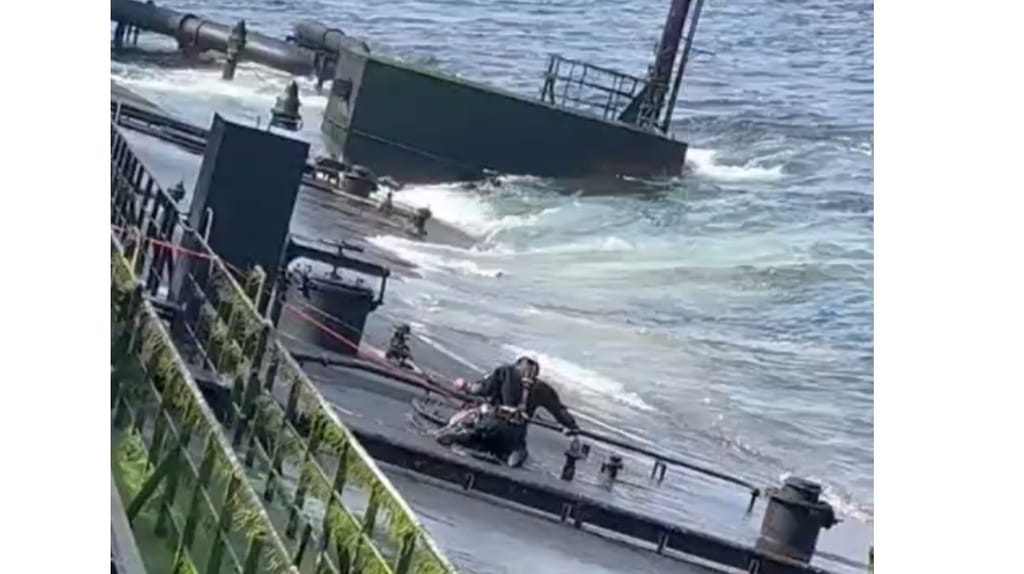
Salvor at work on the oily, inclined deck of the Caroline Bezengi (supplied)
Salvor at work on the oily, inclined deck of the Caroline Bezengi (Credit TME / supplied)

Published Sep 23, 2026 2:56 PM by The Maritime Executive


Pictures obtained by the Maritime Executive show that the salvage operation to recover the cargo of crude still on board the Caroline Bezengi, stranded on rocks off the southwest tip of Jazirat Al Qibliyyah, is well underway. 

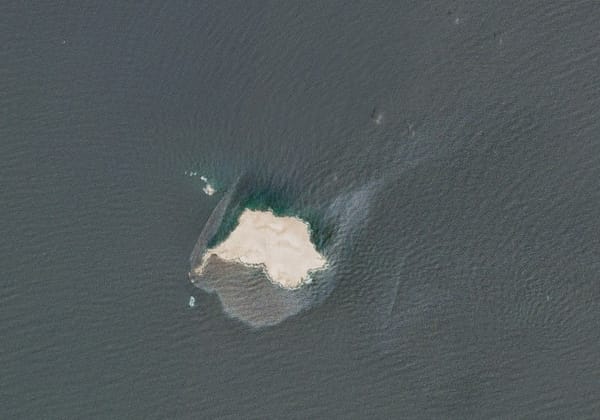
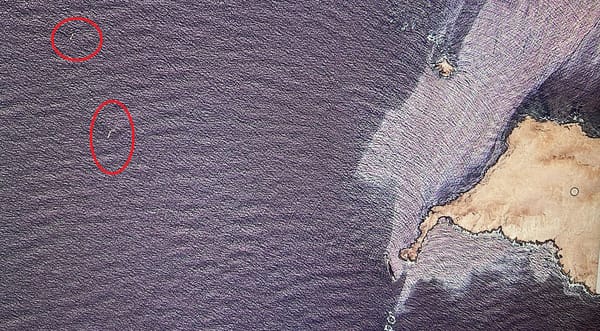
Al Qibliyyah is the easternmost of the Hallaniyat Islands off the Omani coast of Dhofar. The operation appears to have commenced within the last few days, as recent satellite imagery of the wreck showed no other vessels in the vicinity.

Pictures show that the high winds and rough seas common during the Khareef period in this area off the southern coast of Oman have now abated, allowing the salvage operation to proceed. 

Credit TME / supplied

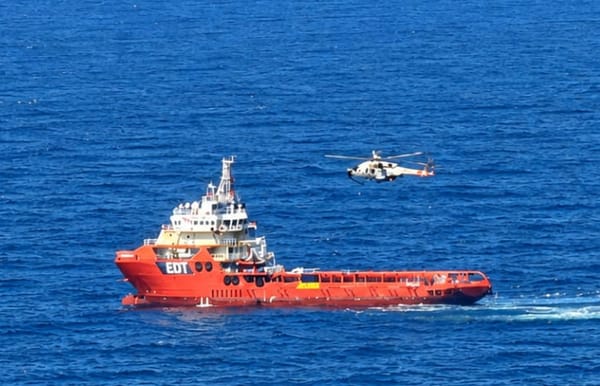
Featuring prominently in the operations underway is the Multi-Purpose Offshore Vessel EDT Kennedy (IMO 9671400), which has the logo of its owners EDT Offshore on its bow. EDT Offshore normally provisions offshore support vessels for the oil and gas industry, and is headquartered in Limassol, Cyprus.

AIS tracking service VesselFinder also shows the offshore supply tug Astro Sculptor (IMO 1091599) off Al Qibliyyah as well, a vessel associated with Mola Marine Services LLC, an Omani diving and underwater services based in Shinas. Both vessels are likely to be involved in the salvage operation.

A salvor can be seen operating on the deck of the Caroline Bezengi, which has a pronounced list to starboard, with the salvor having to work on the deck of the ship whilst being washed with waves (top). 

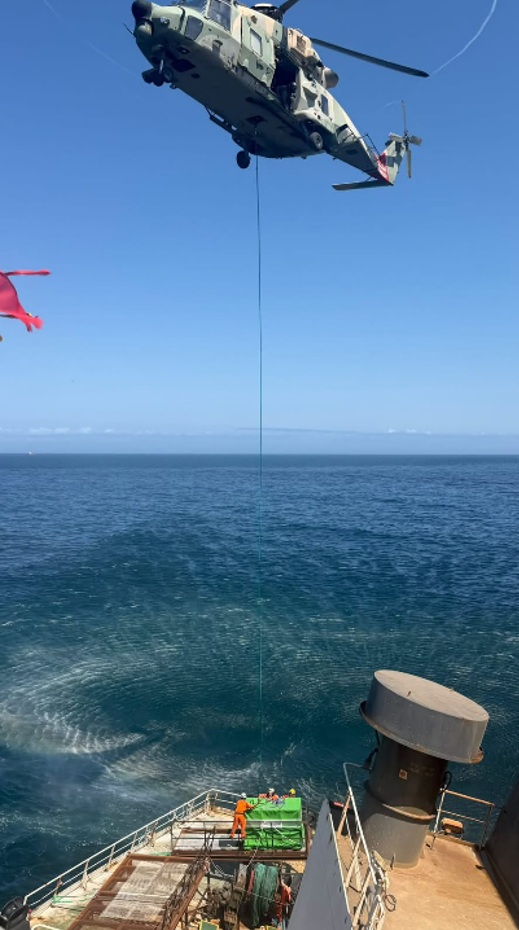
Pump machinery is being winched by helicopter off the EDT Kennedy and onto Caroline Bezengi's stern, which is well out of the water (left, Credit TME / supplied).

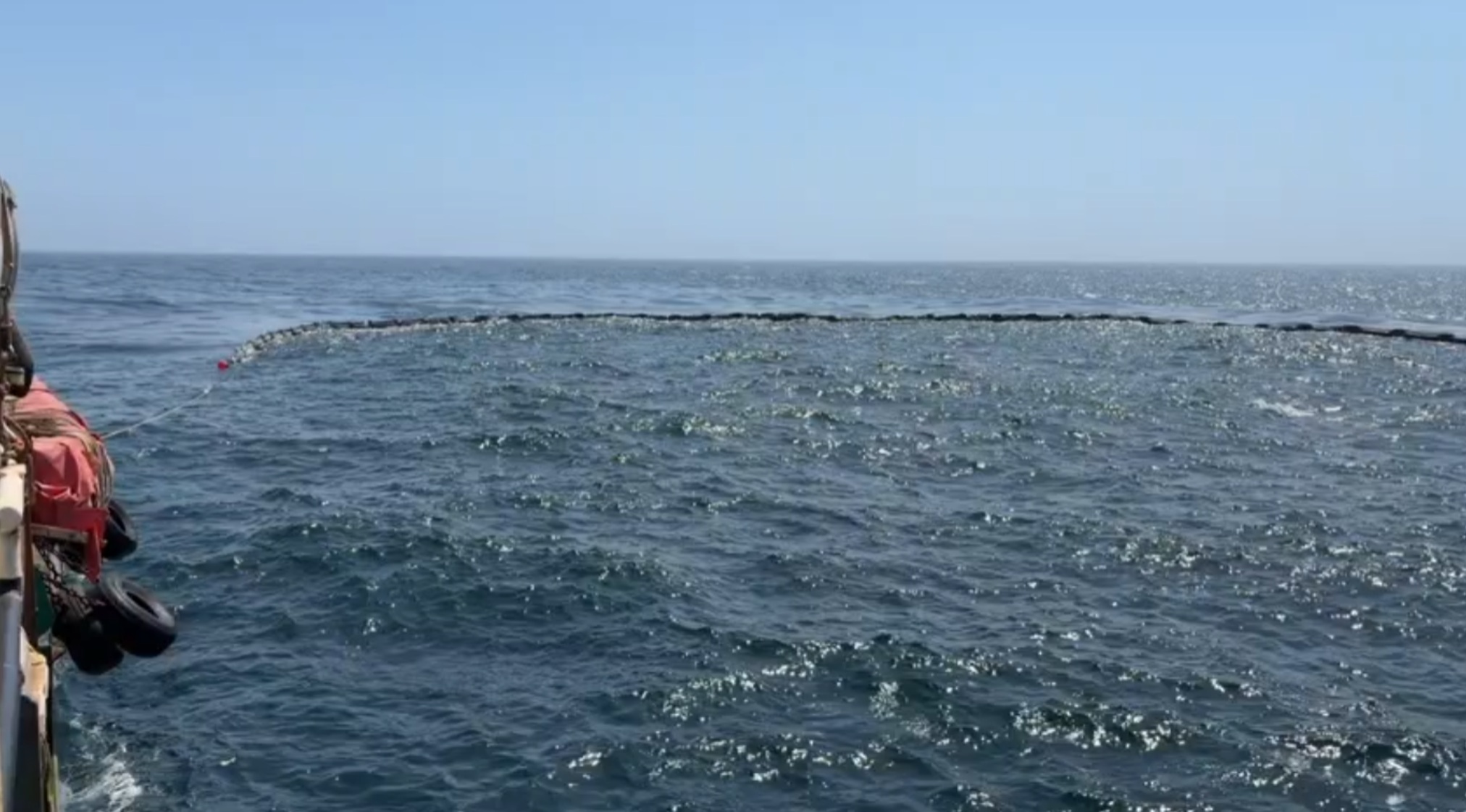
Also shown is floating heavy gauge rubber pipe being hauled from the EDT Kennedy towards the Caroline Bezengi, in line with the original salvage plan to run a 1,000-meter line to a tanker moored in the island's sheltered northwestern lee. 

No tanker for receiving the oil can yet be seen in the area. The salvor’s main initial priority may be to move oil from one tank to another on board the ship to stabilize it, protect the hull and prevent further listing.

Floating hose being towed off the EDT Kennedy (Credit TME / supplied)

An NH90 provided by the Royal Air Force of Oman is assisting with the lift of pumps from the EDT Kennedy onto the Caroline Bezengi, and there is possibly a second civilian helicopter assisting with operations as well.

Although there originally had been an intention to establish a forward operating base on the small port and airfield of the main Halliniyat Island which lies 25 nautical miles to the west of Al Qibliyyah, the mainland port of Duqm now appears to be the principal base for the operation ashore, based on vessel movements. 

Weather at the end of the Khareef monsoon season can be variable, and the operation could be delayed if squalls comes in, but the forecast for the next week shows that average wind speeds will rarely exceed 20 knots - an improvement over the rough conditions on scene during the past month. 

Sentinel-2A pass over the wreck site shows reduced sheening, Sept. 21 (Copernicus / Sentinel-2)

Two salvage vessels are visible in high-resolution satellite imagery (CJRC)


In other good news, imagery of the oil plume leaking from the Caroline Bezengi over the last week appears to show a reduced flow of oil (above), suggesting that previously breached tanks are now leaking at a lower rate. 

The operation is not yet over, but appears to have been an endorsement of the Omani National Center for Emergency Management’s patient approach, plus a tribute to the resourcefulness of the salvage partners involved.