Thursday, October 08, 2026


Sardinian village may be a new longevity hotspot, UIC research finds


University of Illinois Chicago
Sunset over Bolotana

image: 

Sunset over Bolotana, a village on the Italian island of Sardinia.
 

view more 

Credit: (Courtesy of S. Jay Olshansky and Marisa Montibeller)


A terracotta-tiled village in the mountains of Sardinia may offer researchers a rare opportunity to uncover the secrets of exceptional longevity. 

A new study co-authored by S. Jay Olshansky, professor emeritus of epidemiology at the University of Illinois Chicago School of Public Health, found that women in the village of Bolotana, on the Italian island of Sardinia, are nearly three times as likely to reach age 100 once having reached the age of 70, as women in the United States. The findings suggest the community could represent a newly identified “blue zone,” an area where people live unusually long lives.  

The study, published in the journal Frontiers in Aging, examined demographic records from the village of about 2,300 residents and found a favorable pattern of survival among older adults, particularly women. Researchers estimated that 13.8% of women in Bolotana who reach age 70 will live to 100, compared with approximately 3.5% of women in Italy and 3.6% of women in the United States.  

“What makes Bolotana extraordinary is that it has an incredible historical record that allows us to definitively evaluate ages at birth and death,” Olshansky said. “The municipal and baptismal records date back centuries and allowed us to independently verify ages.” 

The project was supported by National Geographic and involved an international team of researchers. 

Exceptional lifespans and record-keeping

The concept of blue zones originated from studies of communities where residents routinely outlive people in surrounding regions. Other blue zones that have been singled out and confirmed by researchers include Okinawa, Japan, and the Nicoya peninsula in Costa Rica. 

To evaluate whether Bolotana meets that standard, researchers assessed two key measures: life expectancy at age 70 and the likelihood that someone who reaches age 70 will survive to age 100. Bolotana first attracted attention because of its unusual concentration of centenarians. In 2024, six people aged 100 or older were living in the village, a prevalence roughly 11 times higher than that of the United States, according to the researchers’ estimates.  

The team then conducted a deeper analysis using civil records and church archives to reconstruct the life histories of residents across more than a century. The team’s age-validation process involved matching birth, death and baptismal records to ensure the accuracy of centenarian ages.  

“Every single person that has made it past 100, we can validate,” Olshansky said. “There is no ambiguity.” 

The study documented 38 centenarians among 3,060 people born in Bolotana between 1900 and 1925.

A different kind of Sardinian longevity

Sardinia is already famous among researchers who study aging. The island’s original blue zone, identified more than two decades ago, is known for unusually high male longevity. In Bolotana, women emerged as the standout group. Female residents who reached age 70 were estimated to have nearly 21 years of additional life expectancy. Among international longevity benchmarks, Bolotana women ranked second only to Hong Kong in both life expectancy at age 70 and the probability of surviving to age 100.  

“Females almost always live longer than males anywhere in the world, but in Sardinia that wasn’t the case. It’s one of the things that made it so unusual,” Olshansky said. “We think this is the longest-lived female population in the world, or close to it.” 

The findings are particularly notable because some critics have recently argued that reports of extreme longevity are driven by inaccurate records, Olshansky said. Bolotana’s extensive municipal and church archives allowed researchers to validate ages through multiple independent sources. 

Diet, activity and social bonds

While the study confirms that something unusual is happening in Bolotana, it doesn’t explain why. However, the village offers several clues worth further investigation, Olshansky said. Residents live in a highly walkable community with steep streets and hills. Most food is grown locally, including olive oil rich in healthy fats. Families often live close together, and social isolation appears rare.  

“You’ve got this close-knit community where people take care of each other,” Olshansky said. “Movement is largely done by walking, not by driving.” 

Researchers believe factors such as diet, physical activity, family support, social connection and genetics likely all contribute.  

For Olshansky, the broader significance extends beyond one Sardinian village. 

“If we can identify the characteristics behind this longevity and help people adopt them, the rest of the world can benefit from understanding the values practiced by these communities.” 

Written by Tess Joosse 

UVM study reveals how lake trout embryos acquire thiamine in the wild


University of Vermont

Dr. Matt Futia deploying egg bags

image: 

Dr. Matt Futia deploying egg bags for rearing lake trout in Lake Champlain

view more 

Credit: Provided by Matthew Futia


For decades, fisheries managers have struggled to restore wild populations of lake trout recruitment across the Great Lakes region, with limited success. Returning this species to its former abundance is hampered by overfishing, sea lamprey predation, invasive species, and habitat alterations. 

A potential barrier to recovery is Thiamine Deficiency Complex (TDC), a disorder caused by insufficient vitamin B1, or thiamine. This syndrome is considered a major threat to conservation and restoration efforts widely.

TDC can cause severe behavioral and neurological abnormalities and extremely high mortality of newly hatched fish. It is typically observed in hatcheries that rear salmon and trout egg obtained from wild populations, and hatchery staff can mitigate its effects using thiamine treatments.

Now, scientists from SUNY Brockport, the University of Vermont (UVM), and Oregon State University have conducted the first study to examine whether embryos can acquire thiamine naturally in their wild environment. The study, published in Scientific Reports and funded by the Great Lakes Fishery Commission, found that lake trout embryos developing in Lake Champlain accumulated substantial amounts of thiamine, while paired embryos reared under controlled laboratory conditions did not show the same increase. 

The findings provide new insight into how the effects of thiamine deficiency may play out differently in the wild than in hatcheries. 

Until now, all research on TDC-related mortality has taken place in hatcheries, leaving uncertainty about how the disorder functions in natural ecosystems. Thiamine must be acquired from the diet or environment – and is potentially highly available in water, where lake trout eggs incubate for over five months before hatching.

“Prior to this study, practically everything we knew about the effects of TDC on newly hatched fish was based on studies in labs and hatcheries”, says Matthew Futia, the study’s lead author. “Our findings suggest that what occurs in natural environments may actually be quite different, and thankfully, in a good way for the fish.”

Lake Champlain was selected as an experimental system because TDC has been documented in stocked populations of lake trout and Atlantic salmon, and spawning sites are well-studied. In field work led by UVM’s Rubenstein Ecosystem Science Laboratory and the Rinchard Lab at SUNY Brockport, fertilized eggs from Lake Champlain were split between natural incubation and controlled laboratory rearing. The team measured thiamine levels at four developmental stages and analyzed the lake water to learn how much thiamine is available in the surrounding environment.

The researchers found that lake-reared embryos experienced significant increases in thiamine concentrations at the time of hatching and in the following weeks, compared to the lab-reared embryos, which showed no increase at all.

The team also detected thiamine precursors and byproducts in Lake Champlain. Together, these findings indicate that developing embryos may be able to uptake sufficient concentrations of thiamine during development to offset problems due to thiamine deficiency. 

By revealing a previously unknown pathway for thiamine acquisition in the wild, this study opens the door to improved restoration strategies, more accurate assessment of TDC, and better-informed management decisions for lake trout and other salmonines across the Great Lakes and beyond.


Researchers study how psychopathic traits shape language


Findings reveal differences in language associated with psychopathic traits


University of Mississippi

Language of Psychopathy

image: 

 Subtle differences in how people talk about their lives and experiences can reveal tendencies toward psychopathy. Ole Miss psychologists are studying responses from 450 people to understand how psychopathic traits such as meanness, boldness and disinhibition show up in everyday language.

view more 

Credit: Graphic by Sarah Tewolde/University Marketing and Communications


Popular culture often depicts people with psychopathy as cold, emotionless and hollow, but a recent University of Mississippi study found that the language associated with psychopathic traits is more complicated than often described.

University of Mississippi psychologists studied hundreds of autobiographical essays and found that the three traits often used as a framework to understand psychopathy – boldness, meanness and disinhibition – were linked to different patterns in language. The researchers published their findings in the journal Personality and Individual Differences.

"The goal here is not to diagnose psychopathy based on language," said Ky Bray, an Ole Miss doctoral candidate in psychology. "It's to point to the fact that psychopathy shows up in everyday behaviors, even subtle behaviors like language.

"If we want to understand psychopathy and the different traits that comprise it, we need to think creatively about how these traits shape social interaction."

The three traits used to understand and assess the pathology are called the Triarchic Model of Psychopathy. They can influence everyday actions and behaviors, such as the way a person talks about themselves, said Laura Drislane, assistant professor of psychology.

The research surveyed 450 participants, including college students and people who reported prior incarceration. Drislane and Bray first asked participants to answer open-ended questions about their life's high, low and turning points. Then participants filled out a survey to measure their psychopathic traits.

The researchers used text-analysis software to examine how often participants used words associated with categories such as positive tone, negative tone, achievement, clout and risk.

They found that people scoring higher in disinhibition were more likely to use negative words and less likely to reference friends, use positive words or use words related to achievement. Higher meanness was associated with more positive tone and more achievement and reward-related language, with less negative emotional language.

People scoring higher in boldness used fewer words related to anxiety – such as fear, afraid or worry – and made fewer references to mental illness.

"What this tells us is the story we tell about our life has meaning," Drislane said. "It helps people make sense of their experiences, develop a worldview and a coherent sense of who they are.

"What we're starting to see is that in psychopathy, there are traits that relate to differences in meaning-making and the ways people think about their life."

The associations in word choice and trait were also dependent on which narrative question the participants were answering, indicating that psychopathic language is not hollow or lacking in emotion as often depicted; rather, it is context- and trait-dependent.

"People tend to think of psychopathy as one thing, but it's actually multidimensional," Bray said. "What we mean when we say that is everyone exists on this spectrum. Everyone has some degree of meanness, boldness and disinhibition.

"Viewing it from a multidimensional perspective allows us to observe how those traits might manifest in nonforensic populations, in people who have not committed a crime. That allows us to see how these traits affect college students, business professionals or interpersonal relationships."

Like many personality pathologies, psychopathy exists on a spectrum, with the common conception of a "psychopath" on one end and a person scoring low in boldness, meanness and disinhibition on the other.

"That's in part why there's a movement away from calling people 'psychopaths,' because we don't view psychopathy as a category," Drislane said. "But psychopathic dimensions can predict important outcomes, things like crime, recidivism or intimate partner violence.

"What our research, including this paper, suggests is that it's important to look beyond that label and into the different components or dimensions of psychopathy, because each of those dimensions actually has a unique set of outcomes or things that it can predicts."

Also, like many mental conditions, psychopathy can be treated to minimize symptoms.

"If we want to be able to treat or ideally even prevent psychopathy from developing, we need to understand the mechanisms at play," she said. "That comes down to understanding the unique contributors for all three of these dimensions."

ARTISTS AGAINST FASCISM UK


Join us for a day of artist discussions, exhibitions, live music, comedy, and anti-fascist resistance - with the support of Manifesto Press.


Meet poet Micahael Rosen, comedian Alexei Sayle, Fran Lock, Arthur Smith, Rick Blackman, musician Ben Lunn, leading activist Victoria Holmes and writer film-maker Deidre O'Neill.


This inaugural event - arising from a world-historic juncture, when the choice between “socialism and barbarism” is reigniting in its starkest, most unforgiving light - will unite cultural workers across the country. To share ideas, workshop solutions, and above all, to mobilise against the politics of hate, once again underwritten by the crises and contradictions of capitalism.


From writers and musicians to dancers and videogame developers, producers of culture must play their part. As they have historically…


Artists Against Fascism is part of a long working-class tradition that dates back almost a century to the Artists International Association (AIA) of the 1930s, the Stars Campaign for Inter-Racial Friendship of the 1950s, Rock Against Racism of the 1970s, and, in the 1980s, Cable Street Beat.


This important gathering has wide support across the labour and trade union movement and includes live music and comedy performances. It is sponsored by publisher Manifesto Press, bookstore Bookmarks, daily newspaper The Morning Star, Smokestack books, Cuba solidarity, the Workers Music Association, Culture Matters, the Communist Party and the Young Communist League. 


So come along, continue the struggle for cultural democracy. This weekend, Saturday 10th October  at Newington Green Meeting House, running 11am to 11pm. 


To book and for Programme: www.artistsagainstfascism.art


Be there. Bring others. Organise.


Our website

Follow us on Instagram

Follow us on X

We are a workers' co-operative. Please consider supporting our work with a donation.


Water level of Danube near Slovak capital Bratislava hits historical low

Water level of Danube near Slovak capital Bratislava hits historical low
/ Image by Peter Tóth from PixabayFacebook

By bne IntelliNews October 7, 2026

The water level of the largest European river, the Danube, at the Slovak capital Bratislava has fallen to the lowest level since measurement began in 1900.

The average daily water flow at the Devín section of the river just outside Bratislava reached 575.9 cubic metres per second on October 5, the Slovak Hydrometeorological Institute (SHMÚ) reported on October 6.

“The Danube, one of the most significant European rivers, rewrites more than hundred years of its history,” SHMÚ stated, adding that the previous “historic minimum from January 1900” was deepened by “another 4.1m3/s".

This summer, Slovakia was coping with a severe drought, which also hit other countries in the region. SHMÚ noted that June, July and August this year “were assessed as below normal to dry months”, and that average water flow reached “only about 36% of the long term monthly values”.  September was assessed as significantly below normal.

Slovakia also reported very low water levels in other major rivers as well as water reservoirs. The summer of 2026 was the third hottest since 1931 and the sixth driest since 1881, Czech online news outlet Novinky.cz noted.


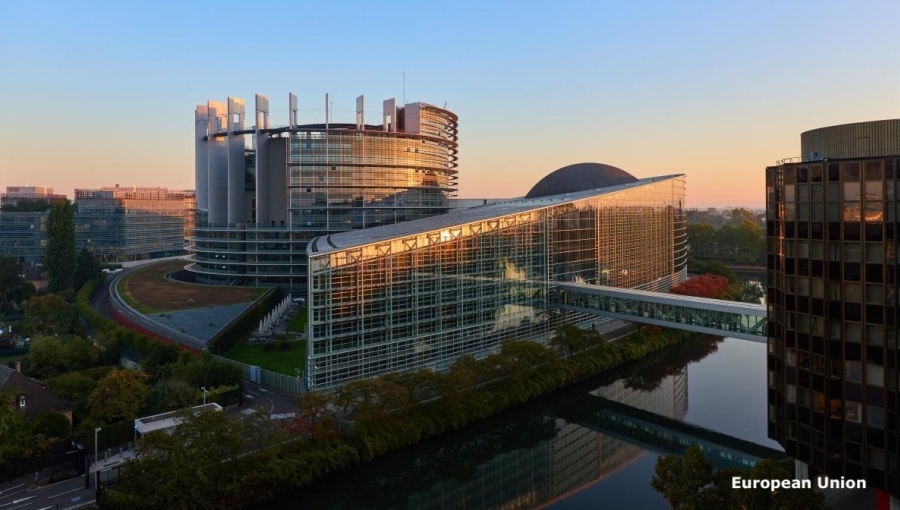
EU should tap financial, digital and wealth taxes to fund priorities, wiiw says

EU should tap financial, digital and wealth taxes to fund priorities, wiiw saysFacebookTwitter


By IntelliNews October 7, 2026

The European Union should broaden the sources of revenue funding its budget to include financial transactions, digital companies and wealthy individuals as it faces rising costs for defence, competitiveness and the green transition, the Vienna Institute for International Economic Studies (wiiw) said on October 7.

The EU needs to raisebns of euros in additional funding as it confronts higher defence spending and seeks to strengthen its economy while financing its green and digital transitions. The European Commission has proposed a budget of almost €2 trillion for 2028-2034, with new and adjusted EU revenue sources expected to raise €58.2bn annually.

In a study, wiiw economists Bernhard Schütz and Philipp Heimberger argued that the bloc should become less dependent on contributions from member states and develop a broader range of EU-level revenue sources.

"Even greater dependence on member states’ contributions risks narrowing the debate over the EU budget further to the question of which country pays how much, rather than focusing on how to address the challenges of our time and how to finance the measures needed to tackle them," Heimberger said.

The researchers said a wider mix of revenue sources could distribute the financing burden more evenly, make it easier for governments to reach agreement on the EU budget and reduce tax competition between member states.

The current system relies heavily on national contributions linked to gross national income and value-added tax, meaning that labour and consumption indirectly bear much of the burden.

Labour accounted for 52% of total tax revenue in the EU in 2024, while consumption accounted for 27%, according to the study. Capital and wealth taxes contributed just 5% and 2%, respectively.

The economists therefore called for greater use of taxes that draw revenue from financial markets, digital activity and wealth.

A financial transaction tax could generate tens ofbns of euros annually depending on its design and participation, while potentially discouraging high-frequency trading that can contribute to financial-market volatility, the study said.

A common EU digital tax could raise as much as €26bn a year, according to the researchers. Such a tax could also address what they see as a gap in the taxation of large foreign technology companies that earn revenue from EU users without necessarily having a physical presence in the countries where that revenue is generated.

"Large foreign digital corporations can currently generate substantial revenues from processing user data without having to pay tax on those revenues in the EU countries concerned, as they do not have a physical presence there. A digital tax would change this," Schütz said.

The study also examined a minimum tax on individuals with net wealth above €100mn, which it estimated could generate up to €40bn a year for the EU budget.

Other possible sources included taxes on crypto-assets and online gambling, as well as a bank levy, alternative forms of corporate taxation and a carbon-based tax on air tickets.

The Commission has already proposed several new own resources, including revenues from the EU emissions trading system and the Carbon Border Adjustment Mechanism, alongside a levy on uncollected electronic waste and a tobacco tax.

The wiiw researchers said the debate should extend beyond simply finding enough money to cover the EU's spending plans, arguing that decisions on revenue sources would also determine how the costs of common priorities were distributed.

They also called for common EU borrowing to remain part of the discussion, pointing to the experience of the €800-billion NextGenerationEU recovery programme launched after the COVID-19 pandemic.

"A stronger and more independent financing base, complemented by common borrowing for strategic investment, could substantially strengthen the EU’s capacity to act, including in its competition with China and the United States," Heimberger said.