EU and China clinch deal over cars after heated trade talks as Brussels pushes to rebalance trade
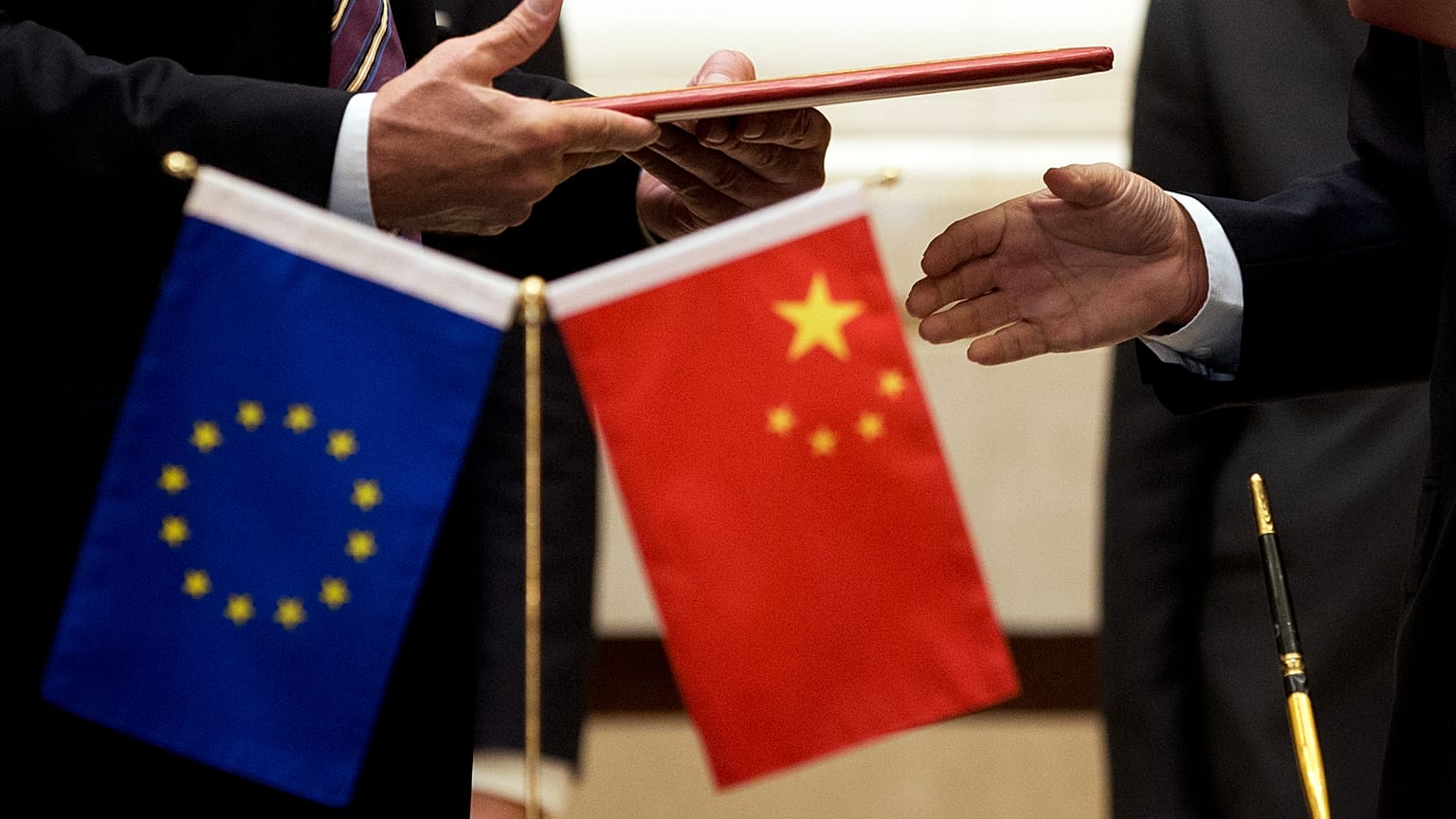
EU Trade Commissioner Maroš Šefčovič described the deal as marking the end of the “first phase” of negotiations. Brussels is pushing for a fundamental rebalancing in trade relations with Beijing.
EU Trade Commissioner Maroš Šefčovič announced a deal with China on Friday to curb imports of Chinese hybrid vehicles into the EU and facilitate access to rare earths.
While the understanding signals a preference for a diplomatic resolution to the growing trade imbalance, European leaders are pushing for stronger measures to level the playing field. They are expected to review the details at a summit in Brussels next week.
The EU has also floated retaliatory measures if the outcome falls short of expectations.
Šefčovič travelled to Beijing on Wednesday for two days of intensive talks with his Chinese counterpart, Wang Wentao, in a bid to rebalance EU-China trade relations.
The EU is facing a record trade deficit with China of €1 billion a day, as a surge in low-cost Chinese imports threatens entire sectors of European industry.
“We have reached a shared understanding to moderate China's export of hybrids and plug-in hybrids to the European Union,” Šefčovič said. “This opens up the prospect of cutting China's exports by more than half.”
The commissioner said the deal would also improve access to the Chinese market for a range of EU products, from “car parts to olive oil and footwear”, representing almost €4 billion in current export value. It should generate at least €225 million in duty savings, he added.
Market access has been at the heart of EU-China discussions since negotiations began last June. Beijing has been reluctant to relinquish access to the EU's 450-million-consumer market, which provides an outlet for its excess production.
Meanwhile, Brussels has proposed several legislative measures aimed at restricting Chinese companies' access to the European market, while pressing Beijing to open up its own market to EU businesses.
Šefčovič also said China had agreed to facilitate exports of rare earths, which are essential to Europe's green technology, defence and automotive industries.
“We have reached a shared understanding to further facilitate China's export licensing for rare earths and permanent magnets,” he said.
The EU has accused China of “weaponising” its dependence on Chinese rare earths after Beijing restricted exports in 2025 amid a trade war with the US.
Šefčovič described the agreement as the conclusion of a “first phase of negotiations”.
The deal comes ahead of a meeting of EU leaders in Brussels next week, with expectations running high for concrete results from negotiations led by the European Commission on their behalf since last June.
A consensus on China has been emerging across the EU this week.
All EU countries now run trade deficits with China. On Monday, Germany and France urged the European Commission to take strong action against unfair Chinese trade practices that cause severe market distortions.
In a joint document, Paris and Berlin called for measures that could include “an immediate cut-off from the internal market if needed”.
On Wednesday, MEPs overwhelmingly adopted a resolution calling for resolute measures against Beijing.
Meanwhile, 44 EU industries, including chemicals, machinery, metals, solar, glass and cement, issued a joint statement on Friday warning that “Europe cannot maintain and grow its industrial base, quality jobs, and attract investment without the ability to respond effectively to unfair trade practices and distortions”.
Toyota Motor Corp. (TYO:7203) has agreed a three-way alliance with China FAW Corp. and Guangzhou Automobile Group Co. (HKG:2238, SHA:601238), two state-owned Chinese carmakers that are already its partners in China, Jiji Press reported on October 9.
The deal restructures how the Japanese carmaker works with its Chinese partners. Toyota operates two separate joint ventures in China: FAW Toyota Motor Co. with China FAW, and GAC Toyota Motor Co. with Guangzhou Automobile. The new arrangement is intended to speed up the shift to electric vehicles and add more smart functions to cars.
Under the agreement, Guangzhou Automobile will take over China FAW's 50% holding in FAW Toyota. It will pay for the stake by issuing new shares to China FAW.
Once the share transfer is complete, China FAW will become "a key strategic shareholder" of Guangzhou Automobile, according to a joint statement from Toyota and the two Chinese companies.
The three carmakers said they would work together more closely on research and development, purchasing, manufacturing and sales under the new structure.
The announcement did not give a value for the stake or say when the share transfer is expected to close.
Electrification and Chinese brands: Paris Motor Show opens Monday
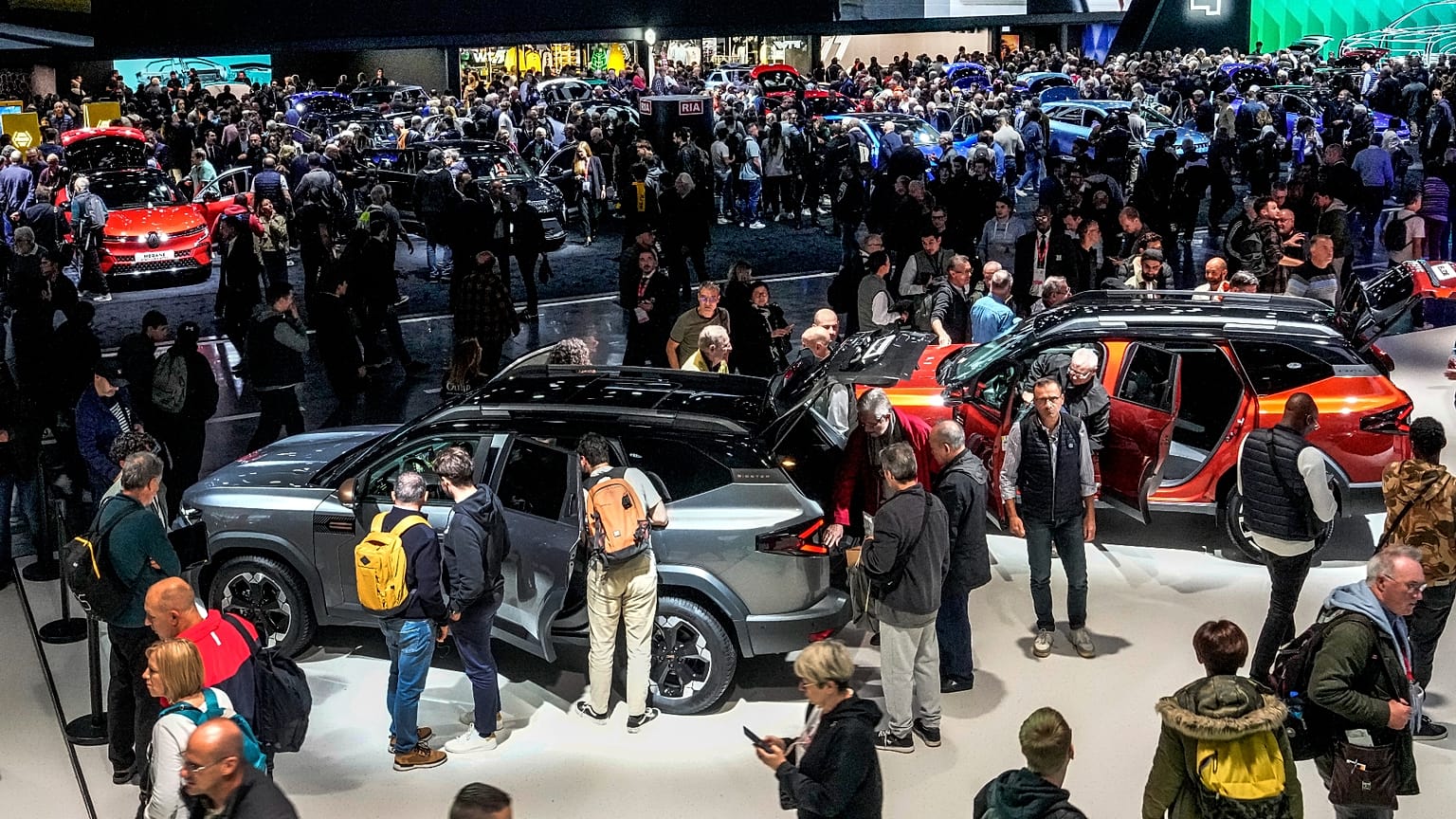
As the 91st Paris Motor Show draws near, European carmakers face fierce competition from China, waning confidence and mounting geopolitical pressures.
First held in 1898 in the Tuileries Gardens in Paris, the Paris Motor Show has, year after year, drawn crowds of visitors keen to discover new models – around a hundred of them for the 2026 edition, taking place from 12 to 18 October 2026.
"I genuinely think people need to see the cars, touch them, sit in them, and try them out", says Serge Gachot, CEO of the Paris Motor Show. That is particularly true for electric models.
According to the European Automobile Manufacturers’ Association (ACEA), fully electric cars accounted for 21.7% of all new vehicle registrations in the EU in the first eight months of 2026, up from 15.8% over the same period a year earlier. France has been one of the key markets posting the fastest growth, with registrations of fully electric vehicles rising by 74.2% compared with the previous year.
China’s rapidly expanding automotive industry is especially keen to showcase its vehicles to European buyers. Around 20 Chinese brands are expected in Paris.
"The outlook is extremely worrying for traditional European carmakers", says Tim Urquhart, principal automotive analyst at Mobility Global. "The advances made by China’s car industry in recent years have been extraordinary, particularly over the past decade, but above all that progress has accelerated even further over the last five years."
Their arrival comes as European buyers increasingly turn away from conventional petrol and diesel cars.
For European manufacturers, a transition in a challenging climate
According to ACEA, hybrid electric vehicles remained the most popular powertrain type in the EU up to August, with a market share of 36.6%, while plug-in hybrids reached 10%. The combined share of petrol and diesel fell to 29%, down from 37.5% a year earlier.
High petrol prices, government support and a far wider choice of cheaper electric cars have all helped drive this shift.
But carmakers are trying to manage this transition in exceptionally tough conditions. Elevated oil prices, linked to the conflict involving Iran, are weighing on automotive margins. European manufacturers also face weak consumer confidence, stricter emissions rules and mounting pressures in China, once a major source of growth for German giants such as Volkswagen, BMW and Mercedes-Benz.
"There was a time when the Chinese market was something of a cash cow for European carmakers. That’s no longer the case", says Urquhart.
At the same time, the European Union and China remain locked in a trade dispute over state aid, tariffs and the growing influx of Chinese-made vehicles into Europe.
"There are huge geopolitical tensions, oil prices are very high, the overall economic environment is under pressure, and confidence in Europe is suffering as a result", Urquhart explains.
In response, European manufacturers are choosing to look both to the past and to the future. Retro-inspired cars are expected to be one of the headline themes at the Paris show, with models from Renault, Citroën, Peugeot, Opel, Lancia and Fiat.
The 91st Paris Motor Show opens with its press day at Paris Expo Porte de Versailles on 12 October, before welcoming the public from 13 to 18 October.