Tuesday, October 13, 2026

Cu

Codelco suffers new fatalities as avalanche hits copper mine
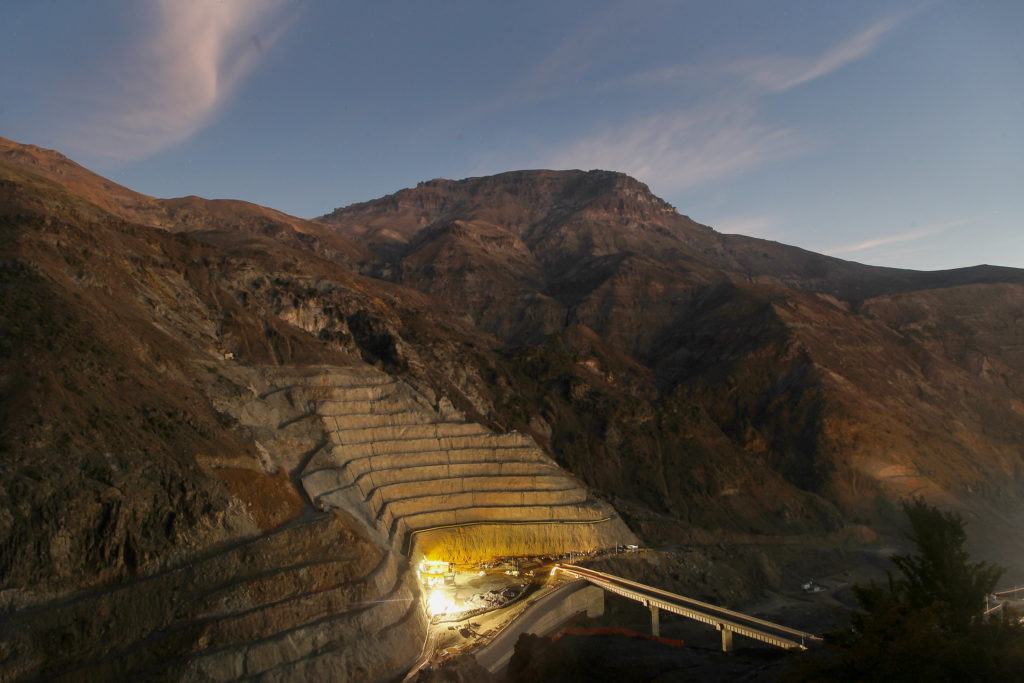

El Teniente mine. Credit: Codelco | Flickr, under licence CC BY-NC-ND 2.0.

Two workers died after a snow avalanche struck Codelco’s giant El Teniente mine, as wild weather continues to batter Chile and compound setbacks for the biggest copper-producing country.

The two subcontractor employees, who had been carrying out inspections in the mine’s open-pit area, were found dead Sunday after initially being reported missing, the state-owned company said in a statement.

The open pit remained halted Monday, while other parts of El Teniente, including its sprawling underground operations and processing plants, were running normally, according to Amador Pantoja, head of a workers’ union at the mine. The open pit accounts for less than 10% of the mine’s total production.

The fatalities are the latest consequence of bouts of severe weather that have hit Chile in recent months, disrupting mines and infrastructure. Heavy rain and storms have contributed to a drop in copper output, while flooding and debris flows have also caused damage in the capital Santiago.

Open-pit operations at El Teniente had already been halted because of bad weather when the avalanche of snow, rock and mud struck. Investigative police and prosecutors were at the site carrying out inquiries into the circumstances surrounding the accident.

“The life and physical safety of our workers are non-negotiable values that must take precedence over any production target or operational continuity,” Economy and Mining Minister Daniel Mas said in a statement.

Weather-related disruptions are adding to operational setbacks, accidents and declining ore quality that have weighed on copper production in Chile. Labor tensions are also adding to supply risks, with workers on strike at Antofagasta Plc’s Centinela mine and a separate wage dispute at BHP Group’s Escondida.

The blows come as the copper market grapples with constrained mine supply, trade dislocations and growing demand. Copper surged to a record near $15,000 a metric ton last month, with some analysts forecasting further gains. Futures rose as much as 1% Monday.

El Teniente, Codelco’s largest operation, was the site of a rock burst in July 2025 that killed six workers and disrupted production. Earlier this month, a worker died at the Santiago-based miner’s Radomiro Tomic mine, just over a week after a separate fatal accident at Escondida.

The latest fatalities come as Codelco grapples with a prolonged slump in output that’s contributed to a broader decline in Chilean copper production. While the previous administration sought to restore production, the new leadership under Chairman Bernardo Fontaine is looking to consolidate output around current levels while prioritizing value over volume.

The recent disruptions also offer a glimpse of the risks facing South American copper mines in the months ahead as El NiƱo develops, potentially bringing heavier rainfall and flooding to key producing regions in Chile and Peru.

(By James Attwood)


U.S. Navy Sees a Big Bill Coming Due for Extended Overseas Deployments

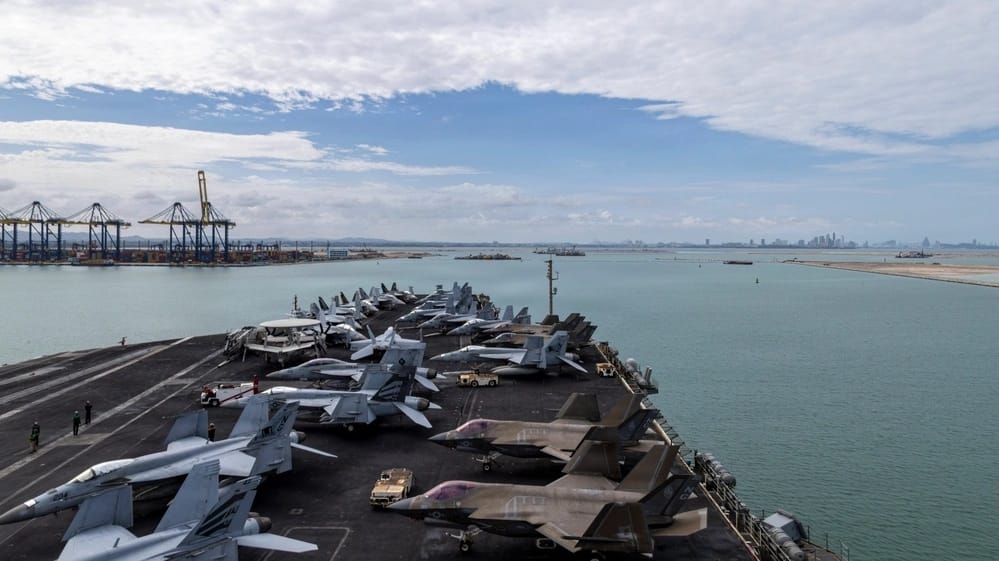
Carrier USS Abraham Lincoln arrives in Laem Chabang, Thailand after a record-setting continuous voyage at sea. Her deployment was extended twice before her return to the U.S. (USN)

The U.S. Navy's carrier force has been carrying an unusually heavy load in the Mideast for years, and has been setting records with extended carrier deployments. Extensions come with well-known consequences: deferred maintenance causes unexpected issues, which cause delays during the next yard period, which can then cascade into delays for the yard itself and for other carriers in the fleet. The Navy is very good at performing on an extended deployment when asked, the service's second-in-command told a blue-ribbon panel on navy reform on Thursday - but its willingness to jump when ordered by a combatant commander comes at a cost, and that cost only becomes clearer down the line. 

"We're seeing artificially high combat surge ready rates because those ships are over there [in the Mideast], and they haven't been introduced back into maintenance," Vice Chief of Naval Operations Adm. James Kilby told the National Commission on the Future of the Navy in an unclassified hearing. "The problem will come when eventually they do come home. The industrial base will not be able to swallow that pill." 

To get a worn-down and late-returning carrier into the yard and back out again, Kilby said, the Navy has to triage the workload. Some maintenance has to be deferred, and necessary modernization work gets skipped in the interest of conserving time and shipyard capacity. "That's the piece that I think we need to be better at articulating and demonstrating: what the cost of this extension will be two years from now, so that [decisionmakers] see that and sign that bill," he said. 

Kilby also emphasized the impact of long operational deployments on Military Sealift Command, both on maintenance and on mariners. MSC's ships are civilian-crewed, and the command has long struggled with finding and keeping enough people to man its full fleet of naval auxiliaries - the oilers and dry stores ships that keep carriers running. Congress has recently provided MSC with legislative changes to provide mariners with more competitive pay and timely relief - a significant step forward - but the long deployments to the Mideast are offsetting that progress, Kilby said. 

"Relief of mariners on time is key to building their trust and having them want to work for [MSC], and now we're pulling that rubber band in the other direction now with the conflict we're in," he said. "More than just the material part, there's a human part that I think we've got to be thoughtful about."

The Navy hopes that its future unmanned capabilities will be able to alleviate some of the burden on the carrier force, along with the destroyers, naval auxiliaries and thousands of crewmembers who provide support while under way. Kilby suggested that a lighter-weight task force built around unmanned surface vessels and unmanned aviation could fulfill a regional combatant commander's requirements for lower-end missions, leaving the carriers more time to regenerate readiness. A task force of smaller assets could perform monitoring, presence and even combat missions, without the need to mobilize an entire carrier strike group or amphibious ready group.  

"But that's a long time coming, because [combatant commanders] don't see that offer on the menu right now," he said. "We've got to action that and produce that thing for them to ask for." 

The equipment will be arriving fast: the Navy recently ordered 30 Medium Unmanned Surface Vessels (MUSVs) from three different contractors, and on a rapid delivery timeline. But Commission member Arthur "Trip" Barber questioned whether the Navy was yet doing enough to operationalize that unmanned capability. The service does not yet have a type commander or base infrastructure assigned for these small warships, Barber noted. 

"We've seen a great degree of emphasis on the platforms - but the people, the payloads, the piers, we have not seen that degree of emphasis," Barber said. "How are you going to make sure that you have the other elements needed to make them a useful capability?"

Adm. Kilby highlighted Fleet Forces Command's new warfighting development center for robotic and autonomous systems (RASWDC), just outside Norfolk, which will be tasked with integrating MUSV capabilities into fleet operations. 

"The Secretary of War is developing capability very fast from an unmanned perspective, and the Navy needs to do a better job of integrating with that capability so that we know what we're receiving," Kilby said. "I'm not satisfied with where we are, but I do believe we have the elements to provide the governance and structure that you need moving forward." 


Inland Vessel Grounds in the Rhine With 250 Tonnes of Hydrogen on Board

Sandbars on the banks of the Rhine, Oct. 5, 2026 (Sentinel-2 / Copernicus)

On Sunday, an inland vessel laden with a cargo of hydrogen went aground on the Rhine, restricting traffic on the upper stretches of the river. It is the latest in a string of groundings of varying severity on the drought-stricken waterway, which has been unable to carry typical volumes of industrial traffic due to months of persistent low water levels. 

At about 0700 hours on Sunday morning, the cargo vessel was downbound on the Rhine near the village of Ludwigshohe when it became stranded, the local water police reported. It was the fourth such instance of the weekend, three other ships having grounded nearby on Saturday and Sunday.

All of the incidents have reportedly resolved without difficulty and the vessels were able to refloat. To prevent a recurrence, a vessel size restriction was put into effect on the Rhine near Mainz. 

The low water levels on the Rhine have set new records this year and have disrupted German industry. In Cologne, levels fell to just 40 centimeters at a key river gage, a historic low, according to NTV. The situation is not expected to improve until significant volumes of rain return to the entire region at the end of the season. Augmented train and truck transport networks are filling the gap for industrial commodities like coal, coke, iron ore and scrap metal, according to trading news outlet Eurometal. Specially-constructed shallow draft inland vessels also can carry more cargo and operate at lower river gage levels than conventional peers, but availability of this newer tonnage is limited. For most commercial vessels, the water near Mainz is so low that the Rhine is divided in two, unnavigable in the middle when laden with cargo.

"At the moment, the Rhine is fed – roughly speaking – only by sewage treatment plants, glacial ice and a little groundwater inflow," Rhine Waterways and Shipping Office expert Florian Krekel told DPA. 

Overall, the Rhine's low water restrictions are expected to trim nearly half a percentage point off of Germany' GDP for 2026, according to a forecast by the German Economic Institute (IW). The losses are concentrated in the industrial enterprises that line the Rhine corridor, the historic cradle of German manufacturing. 


EU Sanctions Russian Shipbuilding Sector, From Top Yards to Small Suppliers

File image courtesy Sevmash / USC

The European Union has released its largest-ever sanctions package on Russian defense-industry companies, a counterpoint to the Trump administration's decision to lift sanctions on Russian diesel fuel. The 930-page list is exhaustive, covering nearly 1,600 businesses and individuals across the defense industrial base, and there are dozens of shipyards, ship repair plants, design bureaus and equipment suppliers among the designees. Taken in total, it covers the majority of Russian shipbuilding activity.

"This is the strongest package of listings we have adopted so far," said the EU's top diplomat, Kaja Kallas, at a press conference Monday. "It is clear that at this time we need more pressure on Russia and not sending signals that we are easing up somehow, because they are actually killing more civilians than they have ever done. They are really escalating on the ground, and that is why it is time for no concessions."

Shipyards are inherently dual-use infrastructure, and the EU drew on Russia's own list of militarily-relevant companies to determine whether or not the selected facilities were part of the Russian military-industrial complex. Many of the firms are known subsidiaries of United Shipbuilding Corporation, a conglomerate which accounts for about 80 percent of all Russian newbuild tonnage and is already heavily sanctioned. Among many others, the 23 listed shipyards and ship repair plants include:

- Admiralty Shipyard, one of the best-known yards in Russia and a division of already-sanctioned United Shipbuilding Corporation (USC).

- Sevmash, the primary builder of Russia's nuclear submarine fleet, also a division of USC.

- Almaz Shipbuilding Company, a commercial and government shipbuilding contractor located in St. Petersburg. It has built icebreakers, amphibious craft and assault hovercraft (LCACs) for the Russian Navy.

The European Council also individually sanctioned one top executive at nearly every one of the yards. 

Also listed are some of the most prominent ex-Soviet ship design bureaus, including the Rubin, Malakhit and Lazurit submarine engineering departments, all part of USC. The detailed sanctions listings also extend down into independent manufacturers of smaller components, including valves, heat exchangers, desalination units, and navigational and communications equipment.

In all, about 50 individual executives, two dozen service and supply-chain companies and two dozen shipyards were named in Monday's announcement, and the majority of Russia's defense shipbuilding industrial base is now sanctioned in granular detail.


Germany’s Rheinmetall Acquires Romania’s Mangalia Shipyard

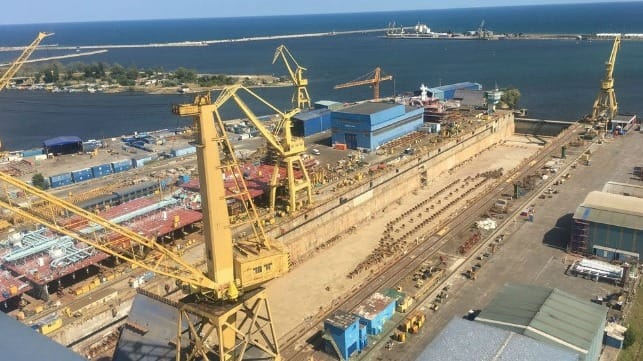
Romania Mangalia shipyard
Rheinmetall and Romania have agreed to the sale of the shipyard to the German group (file photo)

The long-running battle over the future of Romania’s Mangalia Shipyard was settled with the court-appointed liquidator confirmed a deal to sell the yard, with the goal of quickly resuming work. Germany’s Rheinmetall has agreed to acquire the yard for €138 million ($154 million) as part of an effort to build four ships for the Romanian Navy.

Once one of the largest shipyards in Europe and a major employer in Romania, the yard of late had been in a joint venture with the Damen Group. Reports said the yard had, at its peak a decade ago, employed between 2,000 and 2,500 people.

Damen entered into a joint venture with the Romanian government in 2018 to operate the yard as part of its Eastern European operations in addition to the Gala?i shipyard, which has been operating in Romania since 1999. Damen owned 49 percent of the joint venture for Mangalia, with the government holding the other 51 percent. However, according to media reports, the troubles began in 2023 when Romania changed the rules for the management of private enterprises, and Damen asserted it was a breach of contract for Mangalia.

Damen filed in 2024 to put the yard into insolvency, citing the large loans it had made to the joint venture for the modernization and operation of the yard. A plan to reorganize the operations was rejected by the creditors, of which Damen is the largest, and the courts declared the company bankrupt in April 2026.

The court-appointed liquidator set the value of the assets at €84 million, and the creditors agreed to a series of auctions starting at €184 million. By August, it was reported that the first three auctions had received no bidders, and the administrators were proposing to the court to begin lowering the price for the subsequent auctions. Under the rules, there were to have been six auctions at the full price, and then they were going to step down the price first to 75 percent and then potentially 50 percent. The yard was reported to have debts totalling €190 million.

Rheinmetall acquired the yard at 75 percent of the originally agreed auction price. Romania’s former Minister of Economy and now the Minister of Defense called it a major step forward in the promise to revitalize the operation and restore employment at Mangalia. He asserted the ministry had been offered just €10 million for the yard when the process began, and he rejected it despite criticism from opponents.

The German company best known as an arms manufacturer entered shipbuilding with the acquisition of Naval Vessels Lürssen (NVL) in Germany, completed in March 2026. In May, it confirmed that it was exploring taking over Mangalia as part of its effort to build four ships for the Romanian Navy. It was awarded a contract valued at approximately €920 million in May 2026 under the European Union’s Security Action for Europe (SAFE) program, which includes the naval vessels for the Romanian Navy. It is to build two offshore patrol vessels (OPVs) and two support vessels.


Morocco Cancels Concession Tender for Casablanca Shipyard

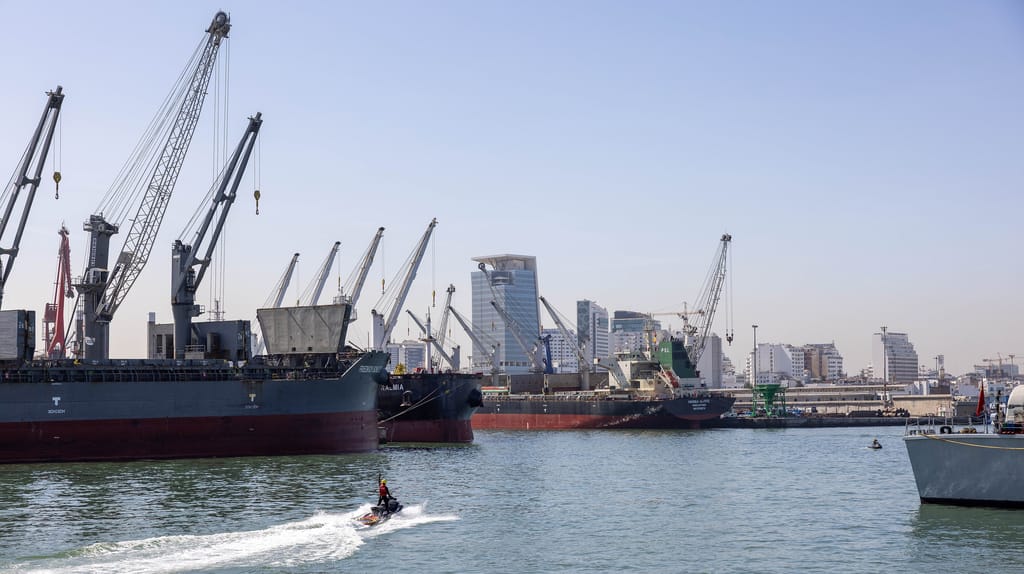
Merchant bulkers at the Port of Casablanca, 2025 (Utah National Guard file image)

Morocco’s National Ports Agency (ANP) has reportedly cancelled the concession tender for Casablanca shipyard. ANP had launched the tender process in April last year seeking a private operator to upgrade and operate the yard for 30 years. Preliminary results for the tender were expected in July 2025. This was later delayed, with ANP saying the winner would be announced in August 2026, then delayed again until December 31.

Now, after the 18-month delay, ANP has decided to cancel the tender and says it has adopted a new strategic direction for the yard. According to local media reports, the ANP board is said to have considered national sovereignty concerns. Other factors which were mentioned include a new focus towards national control of critical maritime assets, aligning with the vision of the Moroccan royal family.

In a speech in 2023, King Mohammed VI directed for development of a “strong, competitive national commercial marine fleet.” In the same year, a Moroccan public think-tank - the Economic, Social and Environmental Council (CESE) - highlighted shipbuilding as a potential high-growth sector for the Moroccan economy. The Casablanca Shipyard was one of the designated shipbuilding zones. With a projected cost over $300 million, the shipyard would have been the largest in Africa if fully built. The yard was planned to cover a 21 hectare site with a 244-meter by 40-meter dry dock.

ANP made its first attempt to concession the yard back in 2019 but failed to attract any bids. Around that time, ANP also tried to negotiate with France’s Naval Group to operate the yard without reaching an agreement. The tender re-launched in April last year has now ended with a cancellation.

Sources within ANP quoted by local media indicated that the cancellation had nothing to do with the candidates or their offers. Notably, the tender round had attracted global shipbuilding giants. One bidding consortium was backed by Morocco’s Somagec, South Korea’s HD Hyundai Heavy Industries and Turkey’s Kuzey Star Shipyard.

The other consortium included Morocco’s Radi Holding, Spain’s Marina Meridional and the Chinese Ningbo Xinle Shipbuilding Group. In addition, Italian operator San Giorgio del Porto submitted an individual bid.


First of Matson’s New Containerships Is Christened

Matson containership christened
First of Matson's new Jones Act-compliant containerships was christened ahead of deliver in early 2027 (Matson)

Work is proceeding on three new large container ships being built for Matson as part of what the company reports is a $1 billion investment in fleet expansion and modernization. The Makua was christened at the Hanwha Philly Shipyard on October 10.

At nearly 51,000 dwt, Matson's three new Jones Act-compliant vessels are being built to match the size and speed of Matson's two existing Aloha Class ships, Daniel K. Inouye and Kaimana Hila, which were also built in Philadelphia and introduced in 2018 and 2019. The ships are each 850 feet long with a capacity of 3,600 TEU, with 408 reefer slots.

Like their sisterships, the new vessels will be equipped with dual-fuel engines designed to operate on either conventional marine fuels or liquefied natural gas (LNG). They are being delivered LNG-ready to join the older ships, which were recently converted to LNG operations. They will have a top speed of 24 knots. Other "green ship technology" features include a fuel-efficient hull design, environmentally safe double hull fuel tanks, and freshwater ballast systems. 

"We're excited that adding three new Aloha Class ships to Matson's fleet over the next 18 months will improve operating efficiencies and reliability, and increase capacity in our core Hawaii service, as well as our China-Long Beach Express service,” said Matt Cox, chairman and chief executive officer of Matson.

Matson board member Jenai Wall officially christened the vessel Makua in front of an audience of approximately 300 invited guests, including U.S. Maritime Administration Deputy Administrator Mark Johnson, Matson and Hanwha executives, shipyard workers, and union leaders. The new ship is scheduled for delivery in the first quarter of 2027. Assembly of the ship began with the first grand block being placed in the dry dock in August 2025. The second vessel began assembly in May 2026, and steel cutting is underway for the third vessel. 

Matson plans to name the other two new containerships Malama and Makena, with delivery scheduled for the third quarter of 2027 and the second quarter of 2028. The three new ships will replace three vessels currently deployed in Matson's Hawaii and China-Long Beach Express services. In turn, those vessels will replace three older vessels currently deployed in Alaska service, introducing bigger and faster vessels into that trade lane.

The three Matson newbuilds are proceeding as Hanwha Philly Shipyard is also completing the last of the MARAD training ships, Golden State, which was assigned to California. The yard also recently finalized the contract to build the Missile Defense Agency’s (MDA) new Missile Range Instrumentation Vessel (MRIV) due for delivery in 2030. The project, which will be managed by TOTE Services, calls for up to three ships built on the same hull design as the training ships. The new MRIVs will replace Pacific Tracker and Pacific Collector, which currently support missile range instrumentation missions and were constructed in 1965 and 1970, respectively.


New Framework Helps Ports Accelerate the Safe Transition to Green Fuels

A new guideline integrates safety measures for the use of methanol, ammonia, and hydrogen in ports.

New Framework Helps Ports Accelerate the Safe Transition to Green Fuels

[By DBI]

As ports prepare for ships powered by methanol, ammonia, and hydrogen, they face a common challenge: how to introduce new fuels safely while keeping daily operations steady. A new guideline, provides ports, operators, emergency services and authorities with a practical framework for managing that transition.

The guideline is the final output from the SafeSBU project, and it integrates the entire safety chain from fuel storage and bunkering to onboard use within a single risk-based framework. Rather than prescribing one-size-fits-all solutions, it helps organisations understand hazards, assess risks, and implement appropriate safety measures for their specific operations. The SafeSBU guideline brings together contributions from DBI, Force Technology, Aalborg University, Port of RĆønne, Complete Solutions, DFDS and MHO-Co.

"The maritime industry is turning towards low-carbon fuels, and many ports are asking the same questions: What are the risks? How do we demonstrate that operations are safe? And how do we coordinate across the many organisations involved? This guideline provides a common language and a structured approach to answering those questions," says Nicklas SjĆøgren Koch, Team Leader at DBI.

SafeSBU is part of MissionGreenFuels, a Danish partnership working to accelerate the development and deployment of sustainable green fuels in sectors such as shipping and aviation.

“Green fuels are essential to decarbonising shipping, but large-scale deployment requires confidence that new solutions can be introduced safely. By turning shared knowledge into practical guidelines for stakeholders across the value chain, SafeSBU helps the maritime sector move from ambition to adoption and accelerates the deployment of green fuels,” says Carina Jensen, Partnership Director at MissionGreenFuels.

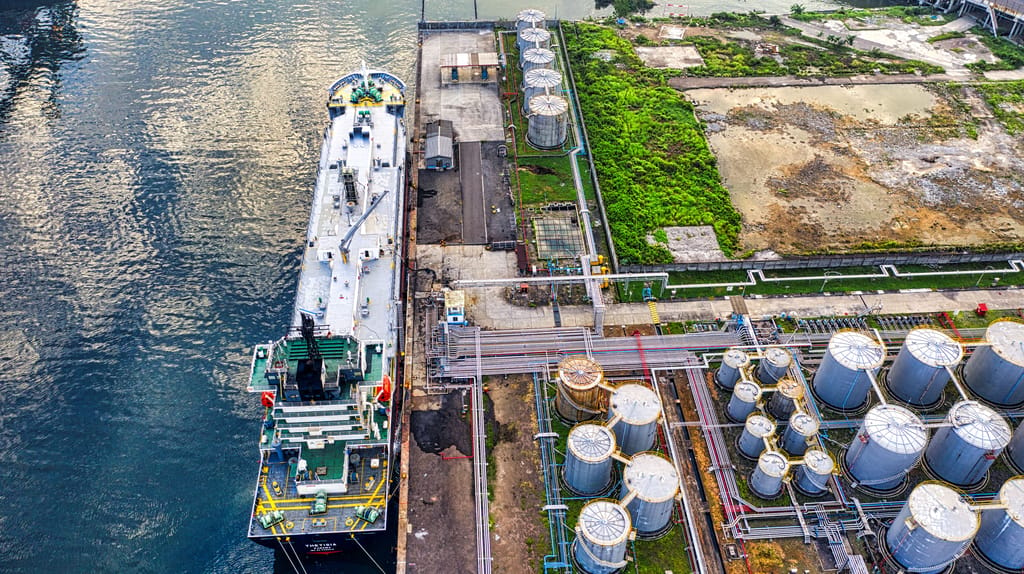
Ports are increasingly becoming a preferred hub for the production, storage and distribution of green fuels. Unlike conventional marine fuels, methanol, ammonia and hydrogen introduce very different hazard profiles, requiring new approaches to risk assessment, emergency preparedness, operational procedures and competence development.

The guideline addresses these challenges through a layered safety model that links hazard identification (HAZID), risk evaluation, technical, operational and organisational safety barriers, emergency preparedness, governance and stakeholder engagement, including public perception, and the combination enables ports to develop coherent safety strategies while maintaining flexibility for local conditions and future technologies.

"Safety must keep pace with innovation. Our ambition has been to develop a practical framework that supports the deployment of green fuels rather than becoming another barrier to implementation. Risk-based decision-making allows ports to build confidence while adapting solutions to their own operational realities," says Robert McTaggart, Risk Engineer and Research Consultant at DBI.

DBI and FORCE Technology have developed the guideline in close collaboration with industry partners. It combines literature reviews, site visits, interviews, workshops and multidisciplinary HAZID studies with practical experience from early green-fuel projects.

The framework is built to give multiple stakeholders a common reference point:

- Port authorities and port operators
- Storage and terminal owners
- Bunkering operators and fuel suppliers
- Shipowners and vessel operators
- Authorities and regulators
- Emergency services
- Training providers

Each stakeholder is provided with guidance tailored to their role while working within a common safety philosophy.

Beyond technical guidance, the publication introduces a structured approach to assessing organisational readiness for green-fuel operations. By combining risk management, governance, competence development and emergency preparedness, the SafeSBU project delivers a framework that helps organisations prepare not only for regulatory approval but also for making everyday operation safer. The framework allows ports to assess their current readiness level, identify gaps and plan their progression towards routine green-fuel operations.

"The transition to green fuels is not only about new infrastructure. It is also about creating trust in technology, in operations and between all the organisations involved. We hope this guideline will contribute to that shared confidence and support the continued decarbonisation of maritime transport," says Rian Holdstock, Project Manager at Force Technology.

The products and services herein described in this press release are not endorsed by The Maritime Executive.


Op-Ed: Royal Navy Still Stuck in the Doldrums

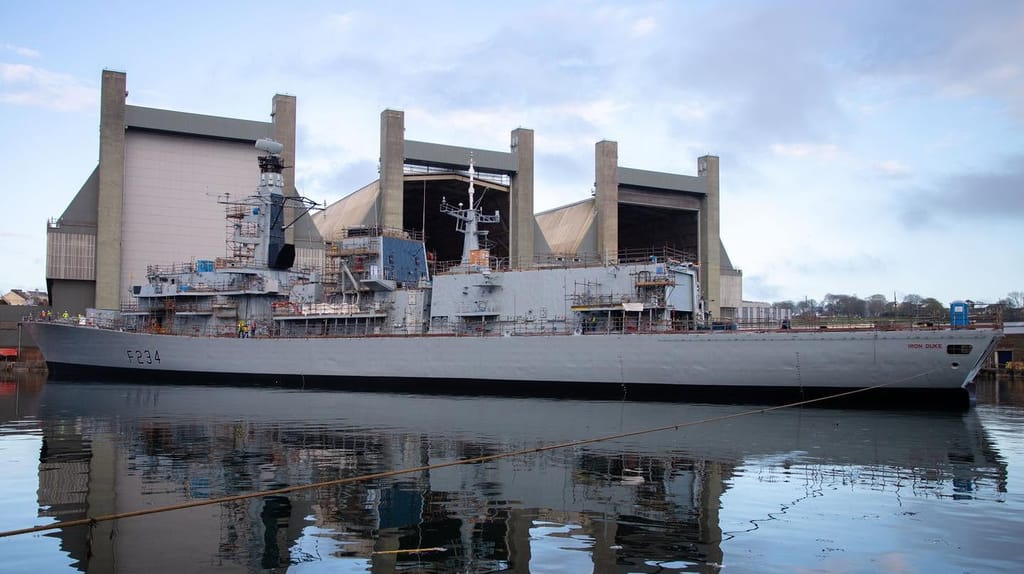
HMS Iron Duke towards the end of a 49-month refit, 2022. The vessel was de facto decommissioned after 16 months of additional operational service (Royal Navy)
HMS Iron Duke towards the end of a 49-month refit, 2022. The vessel was de facto decommissioned in 2025 after 16 months of full operational availability (Royal Navy)

There has been no appreciable change in the Royal Navy's dire financial situation, which has seen its capability sink below what is operationally necessary in several important areas.

There had been some hope that the resignation of John Healey as Minister of Defense over the lack of commitment to raise UK defense spending to 3% of GDP by 2030 would finally bring about a commitment from the UK’s government to achieve the target. Hopes rose further when Healey was subsequently put in charge of the nation’s finances after new Prime Minister Andy Burnham appointed Healey as Chancellor of the Exchequer.

But it now appears that the resignation of John Healey as Minister of Defense was less a matter of principle regarding defense spending and part instead of maneuvers to unseat Sir Keir Starmer as Prime Minister and replace him with Andy Burnham. There have been no additional funds allocated to defense since the government reshuffle, and a decision as to when spending should be increased to fund the 3% of GDP target by 2030 has apparently been further delayed, pushed from the budget and spending review this year into some time later next year.

Furthermore, the new prime minister has made it clear that welfare spending is a higher priority than defense. Defense did not get a mention in the Prime Minister’s recent keynote political strategy speech at the annual convention of his party.

The delay – if indeed it is a delay – has serious strategic implications, as it demonstrates to the UK’s adversaries that not only is there a continuing capability gap, but also a lack of resolve and will to put effective deterrence in place. In the short term, this increases the likelihood that the UK will be subject to incrementally-increasing hybrid attacks, which might expand from unattributable drone attacks on airbases in the UK to ballistic missile attacks on overseas bases such as RAF Akrotiri in Cyprus.

Of all the services, the shortfall in current operational capability is being felt the hardest in the Royal Navy. The lack of immediate additional funding is lengthening the delay before equipment currently in the build pipeline will be delivered, extending the period before capability is restored to the bare minimum. The Ministry of Defence is already struggling to fund its existing program, leading to in-year cuts to training and ammunition expenditure.

The Royal Navy is believed currently to have no operational attack submarines, vital both for defending the UK ballistic missile submarines and for tracking those fielded by Russia. These are also the only platforms which can fire Tomahawk cruise missiles.

Of the seven boats in the Astute Class fleet, as of this week HMS Achilles is still being built, three are non-operational at the Faslane Naval Base (HMS Astute, HMS Ambush and HMS Artful), two boats are under maintenance in Devonport (HMS Audacious and HMS Anson), and HMS Agamemnon is on pre-delivery sea trials.

Of the ballistic missile submarines, HMS Vanguard (S28) completed a record-breaking 208 day patrol in April. Her relief, which appears to been escorted out to sea by a French Navy Suffren-class nuclear attack submarine in the absence of a British submarine to do the job, is still out after about 180 days.

The frigate fleet is down to five ships, all well past their planned end of service dates, of doubtful reliability and in danger any moment of falling out of the fleet.

The situation with the Daring Class destroyers is slightly improved: three out of six are currently operational, with their Sampson radar and Sea Viper air defense missiles providing a thin but critical national counter to the ballistic missile threat.

The Royal Navy is managing to maintain operational availability of its Queen Elizabeth-class aircraft carriers, albeit HMS Prince of Wales (R09) is operating in the Atlantic with an air wing of less than ten F-35Bs. The Navy is also restoring its dry stores at sea replenishment capability by bringing RFA Fort Victoria (A387) into service.

These capability gaps have been around for some time. What is causing concern is that the lack of funding is causing delays and cutbacks to the ships in the program which are intended to alleviate the problem and are still to be delivered.

Frigate and destroyer capability will be extremely thin for at least the next five years. The Daring Class destroyers are being extended in service, with the successor class of ships canceled. The first two Type 31 frigates, intended to plug the frigate shortage, are both launched; but in-service dates for HMS Venturer (F12) and HMS Active (F08) have slipped from 2027 to sometime beyond 2030 because of construction requiring reworking. Meanwhile HMS Glasgow (F88) and HMS Cardiff (F89), the first two Type 26 frigates, are currently fitting out and may be the only new frigates to join the fleet before 2030. But the third and fourth Type 26s look now as if they will be allocated to the Royal Norwegian Navy.

The government has not yet confirmed the 12 boat commitment for nuclear attack submarines to succeed the Astute Class, which formed part of the AUKUS agreement.

The UK government clearly does not regard these gaps as a serious problem, given the lack of any remedial action and notwithstanding an increasingly volatile global security situation. All the indications are that the capability and deterrence shortfalls will persist.

The opinions expressed herein are the author's and not necessarily those of The Maritime Executive.


Chinese-Owned Bulker Driven Ashore Near Russian Resort on the Baltic

cargo ship aground
Cargo ship was driven ashore in the Baltic during a strong storm

Russians near the city of Kaliningrad on the Baltic were rushing to the beaches over the weekend to view a large cargo ship that had been driven aground during a fierce storm. Officials were even posting directions on how best to reach the ship as the tourist crowds grew.

According to the report, the Bahamas-flagged general cargo ship Sunny Faith (17,221 dwt) was holding off Kaliningrad on a trip from Skikda, Algeria. The officials said they believed the crew misjudged the strength and direction of the hurricane-force winds as a storm moved through the area on Friday, October 9.

There was no distress call from the vessel, but instead residents found the vessel firmly aground near the tourist town of Yantarny. The vessel, which is 130 meters (426 feet) in length, had a crew of 19 aboard. It is listed as being Chinese-owned and managed.

Winds across the region reportedly reached 60 mph during the storm. In addition to the cargo ship, the officials were reporting that a jack-up platform had broken free and was adrift in the high surf.


The Marine Rescue Service contacted Sunny Faith, and the captain said they did not need to evacuate. He said the conditions were fine, and they would contact the authorities if they required assistance. They were awaiting the storm and high seas to calm down so that tugs could begin to explore pulling the vessel off the shoreline.

There were limited concerns about pollution, according to the officials. They reported the ship was on a ballast voyage. They said there appears to be no hull damage or breaches.


Fire Breaks Out Aboard Seismic Ship off U.S. Gulf Coast

Rem Andes
Rem Andes (file image courtesy Rem Offshore)

[Breaking] A fire has been reported aboard the seismic survey ship Rem Andes off the coast of Grande Isle, Louisiana, according to the U.S. Coast Guard. 

42 people were on board at the time of the incident, and abandon-ship operations were initiated, the Coast Guard said in a statement. An unspecified number of those on board disembarked into life rafts and transferred to nearby Good Samaritan vessels. The agency's SAR aircrews were dispatched to the scene to ensure that all of the survivors who departed the vessel were properly accounted for. 

AIS data provided by Pole Star Global suggests that the ship slowed and began to drift to the north of its normal racetrack survey route at about 0955 hours on Monday morning. According to local media, the fire was out by about 1445 hours. The effort to retrieve crewmembers from lifeboats that had already cast off from the stricken ship was still underway as of mid-afternoon.

The ship continued to broadcast AIS through the day, drifting slowly northeast at a position some 90 nautical miles south of Whiskey Island, Louisiana. 

Rem Andes is a Norwegian-operated ship that entered service in 2012. The vessel is classed and equipped as a seismic ship, and AIS records show that it has been engaged in running survey tracklines on the deepwater U.S. continental shelf for at least the past year, operating out of Gulfport and Port Fourchon. It passed its last U.S. Coast Guard port state control inspection in late 2025 with no issues recorded.

Rem Andes' trackline, Oct. 2025 - Oct. 2026 (Pole Star Global)