Tuesday, October 13, 2026


Coal’s revival is creating divisions in Canada’s energy heartland

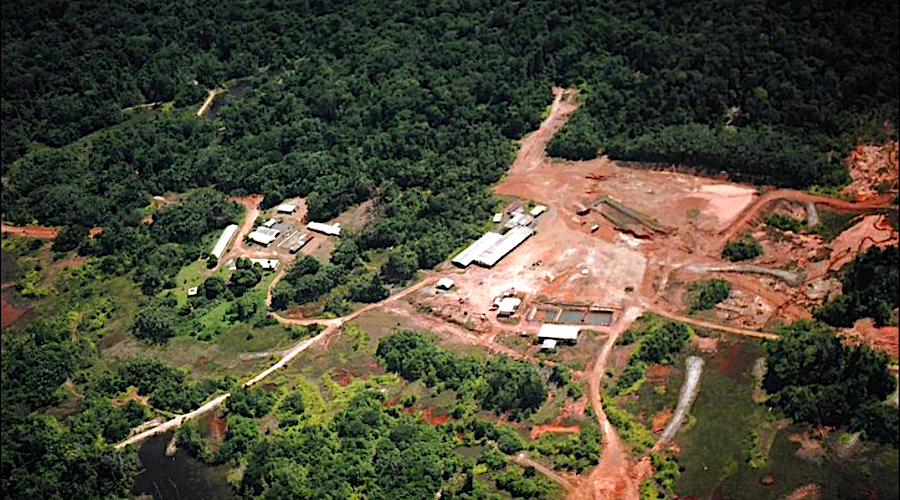
Grassy Mountain is on the site of an old mine that closed about 50 years ago. (Image courtesy of Northback Holdings.)

At the top of Grassy Mountain, some 6,700 feet above sea level, seams of coal are baked into the mountainside, visible through mining in this stretch of the Rocky Mountains in southwestern Alberta from the early to mid-1900s. This and other former mines dot the picturesque mountain towns on the eastern side of the continental divide, the industry having moved out of the region decades ago after plummeting prices and demand made mining here unprofitable. 

But Grassy still has more coal to give — much more. It’s now the center of a yearslong battle pitting nearby towns’ economic interests against environmental worries from downstream communities and ranchers. And this time, it’s being driven not by demand to heat homes in Canada, but to feed steelmakers in China, Japan, South Korea, India and other Asian countries.

Nearly 60 years after this site closed, locals are once again pinning their hopes for an economic revival on this windswept mountainside. Northback Holdings Corp., a division of Australian billionaire Gina Rinehart’s Hancock Prospecting Pty., is working to reopen the former mine.

This is Hancock’s second attempt after an earlier application was rejected by a joint federal and provincial review panel in 2021 over concerns about the impact on the nearby water ecosystem. Northback Chief Executive Officer Brad Johnston believes the company can address the deficiencies in its first application and go further in restoring the mountain, including much of the unreclaimed former mine site.

Hancock has spent more than a decade and over C$150 million ($105 million) on a project that faces stiff opposition and is still at least four years from opening. It’s promising to scale back its original plans by around 40% to produce 2.5 million metric tons a year instead of 4 million, boost reclamation efforts during the course of mining, build a water treatment plant and stick around for years after production ceases.

The company is persistent because its forecasts show an undersupply in the global market within the next decade and pricing levels far beyond what it costs to extract the coal.

The proposal and others like it have struck a nerve in Alberta, a region traditionally friendly toward resource development, both in terms of public support and government policy. Country music star Corb Lund led a petition campaign this year to stop coal mining in the eastern slopes of the Rockies, attempting to force a provincial vote on the issue this month, unsuccessfully. A recent survey found a majority of the public would have supported his position in a referendum.

The fight over the project also reveals a little-known fact about Canadian coal. Within the country, it has been on a long decline, as governments moved to reduce coal used for power production. But at the country’s western ports, coal is still king of commodity volumes. About 39.9 million metric tons were exported from Vancouver last year, compared to 30 million tons of petroleum products.

While the province of British Columbia now accounts for the majority of coal production, Alberta has seen a number of proposals in recent years and the province recently approved an expansion of the Vista Coal Mine in Hinton, near Jasper National Park, that will make it the largest thermal coal mine in North America.

About 70% of the world’s steel supply depends on metallurgical coal and Canada is the fifth-largest global supplier, accounting for roughly C$9 billion in exports.

Northback isn’t the only such new proposal in the Rockies. Northwest of Calgary, Valory Resources Inc. is pitching Blackstone, an underground metallurgical mine in Clearwater County, and another one called Mine 14 near the town of Grande Cache.

In BC, Conuma Resources Ltd. reopened a mine near Tumbler Ridge in 2024 and a sister project was included in the province’s recent deal book marketed to global investors. Glencore Plc is also seeking to expand its Fording River site to maintain the mine’s 10 million metric tons of annual production.

Johnston, who took over as Northback’s CEO in July, says any coal mined at Grassy Mountain will all be for export off the west coast of Canada, largely out of the ports of Vancouver and Prince Rupert. The company’s projections, he says, show it can be profitable over the course of its projected 25-year lifespan due to strong Asian demand for steel-making coal, listing Japan, South Korea, Vietnam, Malaysia and India as possible customers.

The type of coal here is also high-quality enough for European steel producers. “The world wants this coal, it needs it,” he says.

The proposal would be a major employer for the five historic mining communities near Grassy Mountain. He cites the roughly 400 full-time jobs needed to operate it and the C$2.2 billion ($1.5 billion) in government revenue the mine will generate over its lifetime, according to a report prepared for the company by EY.

The company has already been sponsoring local organizations and has hired locals for its preparatory work, including a First Nations security contractor. Johnston says he is aiming to file another application in the coming months, with a potential target of opening in late 2030 if it receives regulatory approval.

He acknowledges the company’s first application did not sufficiently deal with concerns over its environmental impact. A joint federal-provincial review panel found the project was “not in the public interest” and would harm the nearby population of westslope cutthroat trout. He believes their new proposal is improved enough to meet regulatory hurdles, but knows there’s widespread opposition to coal.

“There are some people that are opposed to what we do, no matter how well we do it, or whatever systems of controls we propose to put into place,” he says. The company is always willing to answer questions about environmental management, he says, and local support “doesn’t come unconditionally, and their expectation is that we’re going to provide jobs and economic benefit, but we’re going to do so in an environmentally responsible way. 

There’s been more public backing in Canada for energy projects since US President Donald Trump’s administration began pressuring the country on trade, says Heather Exner-Pirot, director of energy, natural resources and environment at the Macdonald-Laurier Institute. That attention has largely been around oil and gas, and hasn’t necessarily translated to coal.

“I think most people, even in Canada, don’t appreciate that metallurgical coal is our biggest export by volume out of the Port of Vancouver and the Port of Prince Rupert, and that by revenue, after gold, it’s usually our top-producing mineral product,” she says.

She points out the towns closest to the proposed mine are largely in favor and people further away are opposed. In Crowsnest Pass, the municipality nearest Grassy Mountain, more than 70% voted to support the mine in a 2024 plebiscite. But municipal councils downstream, including in Lethbridge, Alberta’s fourth-largest city, have been staunchly opposed.

While Prime Minister Mark Carney’s federal government has been encouraging “nation building” projects to spur economic activity and build stronger interprovincial connections, the coal in western Canada won’t be going to the steel factories of southern Ontario and Quebec. The cost to ship by rail across the country makes it too expensive for the steel factories to use.

Instead, demand is driven by Asian countries and interest in Canada as a conscientious steward in producing coal. “If you are a Japan or a Korea, you may be willing actually to pay a premium for that better environmentally and socially responsible product,” Exner-Pirot says.

Source: Bloomberg News.

Steel is “ubiquitous” in products ranging from batteries to large-scale energy infrastructure, said Ian Lange, a professor at the Colorado School of Mines. Demand for steel and therefore metallurgical coal can be a proxy for economic activity around the world. Alberta is one of the most attractive places for natural resource extraction given its friendly regulatory environment and ease of getting to Pacific ports, he says, and miners have been making greater efforts to ensure environmental protection.

But he says “it’s really hard to say with certainty that this won’t be a problem 30, 40 years down the line.” 

The environmental pushback to increased mining in the Rockies can point to substantial levies against operators in recent years. Coal mines in BC faced C$60 million in federal fines in 2021 for water contamination breaches, and another C$16 million in fines from the province in 2023. And as recently as this past July, Glencore-owned Elk Valley Operations Ltd. was fined an additional C$269,000  as part of a larger C$3.6 million ruling over delaying construction of water treatment facilities and 171 water quality breaches related to selenium.

Concerns over water quality extend south of the border. A 2024 study from the US Geological Survey found evidence of selenium pollution as far as 350 miles away from Elk Valley’s mine along the Columbia River and contamination in other cross-border waterways.

Lund is a fourth-generation Albertan, his family settling in the early 1900s on ranch land they still own near the Montana border. He spearheaded a petition to have a referendum on banning some new coal mining that garnered more than 170,000 signatures earlier this year, though the question did not get put on the ballot for voting day on Oct. 19. 

He says he was drawn into the issue after rancher friends of his worried about the potential impacts on downstream water from selenium and other contamination. The amount of water used and the air quality are other concerns.

“As far as I can tell, it’s a bad deal and it’s going to ruin our water and our ranch land, and there’s nothing in it for Albertans,” he said. “And I think it’s a foreign billionaire coming here to take our coal and make all the money and leave us with the mess.”

His family’s land isn’t threatened by the mine reopening, but his residence in Lethbridge is served by the watershed from around Grassy Mountain. He says he’s seen the issue resonate across political lines in the largely conservative, pro-resource development province. Many Albertans view the Rocky Mountains as “the soul of the province, and that includes a good chunk of the conservative base who are hunters and fishermen and ranchers and irrigating farmers,” Lund says. “So it’s not just a left-right issue. It’s very close to a lot of people’s hearts here.”  

He’s “been in this fight for almost seven years now, and we’ve outlasted two premiers” as well as “multiple CEOs from the coal companies” and they will do everything they can to stop new mining in the nearby Rockies.

Lucas Michalsky, a cattle rancher about 20 minutes east of Grassy Mountain, has a different take on the mine’s impact. “We are the forgotten corner of Alberta,” says Michalsky, whose family worked in nearby coal mines after moving from Poland in the early 1900s.

The Grassy Mountain proposal has already brought more hope to local residents about the prospect of higher-quality jobs. “Northback has put in tens of millions of dollars,” into the area, he says. “All the people that are against coal haven’t put a dime into our community.”

Some local residents work in Glencore’s coal mines across the BC border, or see their children move to work in northern Alberta’s oil sands. The draw for Michalsky is seeing his kids close to home where they might “have a job as a millwright or a welder or an electrician at Northback, and come home every night so they can run cattle.”

He believes the environmental impact is overstated by opponents, who are largely not from the immediate towns that will benefit from the mine. “This is a blue-collar community. It always has been. And we’ve lost our logging. We’ve lost our oil and gas. Mining is the only thing we have left, because we never really had much of the first two.”

(By Iain Boekhoff, Michael McKee and Arielle Schwartz)


This Ultra-Rare Gas Could Become An Ace In Canada’s Hands

  • Canada is the leading, non-military producer of helium-3 globally, a non-radioactive, light isotope of helium used in quantum computing, deep cryogenics, border security neutron detection, and experimental nuclear fusion.

  • Industry experts: Canada can leverage its dominance in a certain critical element in future trade negotiations with its neighbor to the south.

  • Quantum computing is projected to be the biggest driver of commercial helium-3 demand in the coming years.


Back in July, the U.S. slapped an extra 50% duty on a wide range of Canadian exports, including items like dairy, alcohol and cement, with the Trump administration citing alleged Canadian trade discrimination against various U.S. goods. In response, Prime Minister Mark Carney’s government implemented dollar-for-dollar counter-tariffs targeting U.S. goods such as steel, aluminum, appliances and electronics as the tit-for-tat tariffs and trade war between the two nations escalated. Despite Trump’s frequent bluster, Canada remains the United States’ second-largest trade partner behind only Mexico, as well as its largest foreign supplier of crude oil, accounting for ~60% of total U.S. crude imports. And now, industry experts are saying that Canada can leverage its dominance in a certain critical element in future trade negotiations with its neighbor to the south. According to Chris Cassin, chief executive of Zero Point Cryogenics, Canada, is in a unique position to stockpile and sell helium-3, a much-sought-after ultra-rare gas.

Canada is the leading, non-military producer of helium-3 globally, a non-radioactive, light isotope of helium used in quantum computing, deep cryogenics, border security neutron detection, and experimental nuclear fusion. Canada generates the precious gas in significant quantities as a byproduct of tritium removal from heavy water in its CANDU (Canada Deuterium Uranium ) nuclear reactors. CANDU reactors use unenriched, natural uranium (about 0.7% U-235) instead of enriched uranium, eliminating the need for expensive, complex uranium enrichment facilities, resulting in lower fuel cycle costs. Their high neutron economy also allows CANDU reactors to run on alternative fuels including recycled uranium, mixed oxide (MOX) fuels, thorium or spent fuel from conventional pressurized water reactors. Canada is home to 17 of the world’s fleet of 26 CANDU reactors.

In contrast, the U.S., Russia and China produce helium-3 mainly as a by-product when it’s removed from nuclear bombs to achieve higher tritium concentrations. Most of the helium-3 these nations produce stays in government hands for use in neutron detectors by port inspectors looking for smuggled nuclear materials.

Quantum computing is projected to be the biggest driver of commercial helium-3 demand in the coming years, with governments worldwide increasingly viewing quantum supremacy as a cornerstone of national security and economic sovereignty.

The looming threat of Q-Day has forced governments, banks, and enterprises into a defensive arms race, fueling massive, immediate investments into post-quantum cryptography (PQC) and quantum-safe security architectures. Q-Day is the future moment when quantum computers become powerful enough to break public-key cryptography--such as RSA and elliptic-curve cryptography (ECC)--that currently secures the internet, financial systems, private communications and digital identities. 

The quantum computing boom is likely to drive future demand for helium-3. Quantum computing requires operating temperatures near 0 Kelvin (absolute zero). Conventional cooling methods can cool ordinary helium (helium-4) down to 1–4 K. To go even colder, scientists mix helium-4 with super-cooled helium-3, with the entropy gain from the mixing cooling the system further down to as low as 5 millikelvin.

And that’s probably the biggest reason why the U.S. government is investing in a startup that’s looking to mine helium-3 from the moon. Back in May, NASA awarded Interlune a $6.9 million Small Business Innovation Research (SBIR) contract to develop a lunar payload suite that will fly to the moon by 2028 to scoop, heat and extract helium-3 and hydrogen directly from lunar regolith. The DoE even signed a first-of-its-kind agreement to purchase 3 liters of lunar-harvested Helium-3 from Interlune, marking the first time a government agency has agreed to buy a non-terrestrial natural resource from space. Interlune is a Seattle-based space startup that builds robotic systems to harvest natural resources from the Moon.

The Moon is estimated to contain 1-3 million tons of helium-3 embedded in its surface dust, compared with about 15 to 20 kilograms of helium-3 per year produced annually in our planet, mostly as a byproduct of the decay of tritium used in thermonuclear weapons or minor amounts in natural gas wells.

Over billions of years, solar wind from the sun continuously bombarded the lunar surface and "spray-painted’’ helium-3 on its surface thanks to the moon’s lack of a protective magnetic field. Additionally, whereas tritium is a radioactive isotope that decays to helium-3 with a half-life of about 12.3 years, the economics make little sense for countries like the U.S. to produce helium-3 from tritium, with a kilo of the heavy hydrogen isotope going for ~$30,000 compared to $20,000 for a kilo of helium-3.

Interestingly, there’s no shortage of companies betting on helium-3 from the moon: Interlune has already secured nearly $500 million in binding purchase orders and supply contracts from customers looking to use the rare isotope for quantum computing cooling systems, national security and clean fusion energy development.

By Alex Kimani for Oilprice.com


Gold Mountain weighs revival of wartime Brazil tungsten mine


The company owns Araxá, the world’s largest niobium mine, which holds 94% of global reserves. (Image courtesy of Gold Mountain.)

Gold Mountain (ASX: GMN) is considering reviving a Brazilian tungsten mine that operated during World War II as the explorer looks to expand its exposure to a metal increasingly prized for defence and strategic supply chains.

The company said earlier this week it secured an exclusive right to acquire the mining application covering about 858 hectares at the former Malhada do Angico mine in north-east Brazil’s Seridó Tungsten Province, one of South America’s main tungsten-producing regions.

Under the 12-month agreement with Emprogeo Mining Business EPP Ltda. (EMPG), Gold Mountain will conduct due diligence before deciding whether to proceed with the acquisition. The transaction could involve payments of as much as 3 million reais ($600,000).

“GMN is excited about this opportunity in the tungsten sector, which I recently visited,” Gold Mountain CEO David Evans said in a statement. “We are accelerating the exploration program and will start drilling as soon as we obtain the necessary permits.”

The potential acquisition would add a historic producer to Gold Mountain’s Brazilian portfolio at a time when Western governments are seeking more secure supplies of tungsten, a metal used in ammunition, high-strength materials and other defence and industrial applications.

Historic workings

Malhada do Angico was mined by Mineração Fluminense during the Second World War, when operators extracted scheelite-mineralized rocks exposed in the area.

The mine was developed in skarn units containing scheelite associated with the Jucurutu Formation, which hosts several deposits across the Seridó district. The project lies in the same broad structural and stratigraphic setting as the producing Brejuí mine, one of Brazil’s largest tungsten operations.

Brejuí is about 47 km north of Gold Mountain’s Logradouro tenements, giving the company exposure to a district with an established history of tungsten mining.

Gold Mountain has already started auger drilling of historic tailings at Malhada do Angico to confirm grades and collect samples for metallurgical testing.

Supply security

Tungsten’s importance extends beyond conventional industrial uses because of its role in defence applications, including ammunition and materials requiring exceptional strength and heat resistance.

Global supply is heavily concentrated in China, while Russia and North Korea are also producers, raising concerns among Western governments about access to secure sources of the metal.

Those concerns have intensified as geopolitical tensions drive higher military spending and efforts by governments to strengthen domestic and allied supply chains for strategically important raw materials.

Gold Mountain’s immediate focus will be on due diligence, drilling and metallurgical work needed to determine whether the historic workings and tailings can support a modern operation.

Namibia diamond mine revival draws $50M investment

Elizabeth Bay is a ghost mining town in Namibia. (Image by Druschba 4 – Own work, CC BY-SA 4.0.)

Dutch private equity investor Kenzoll Capital is partnering with Namibian-registered MSF Commercials to restart the Elizabeth Bay diamond mine with $50 million in planned investment as the country’s diamond industry struggles with falling exports.

The Sperrgebiet operation, formerly known as Elizabeth Bay, holds 10.5 million carats of onshore and offshore diamond resources, Kenzoll Capital said Wednesday. Part of the planned investment will also fund exploration for other minerals.

“We’re committed to getting the mine producing again, providing jobs and economic value to an area that has relied heavily on diamonds for over a century,” Kenzoll Capital CEO Corné Melissen said. “This partnership is part of our long-term commitment and investment in Namibia, with diamonds as the starting point and critical minerals to follow.”


The restart comes as Namibia contends with a steep downturn in one of its key mining industries. Diamond exports fell 67% from NAD 5.1 billion ($306.9 million) in 2022 to NAD 1.7 billion ($102.3 million) in 2025, with the Bank of Namibia identifying the industry slump as a major threat to economic growth.

New investment

Kenzoll Capital has already invested more than $10 million in Namibia as it seeks to support local employment and the broader economy. Its partnership with MSF Commercials marks a return of foreign capital to a mine that previous owner De Beers determined it could no longer operate economically.

De Beers began the sale process for Elizabeth Bay in 2018, and the final transaction took place the following year. The purchasing consortium included Lewcor Group as majority owner and MSF Commercials as a minority shareholder.


A Wall Street upstart bets on Trump’s Venezuelan mining push

Brisas project camp. (Image courtesy of Gold Reserve.)

At a port near New Orleans on Monday, Interior Secretary Doug Burgum welcomed the first shipment of Venezuelan aluminum to the US in nearly a decade.

The roughly 15,000-ton cargo, sourced from the country’s largest aluminum smelter, marked an early milestone in the Trump administration’s push to secure Venezuela’s vast mineral resources for American supply chains.

Standing next to Burgum were the founders of Heeney Capital, an investment firm that has partnered with Swiss trading giant Mercuria Energy Group to ship aluminum from Venezuela’s state producer Venalum and sell it to US manufacturers.

Even in the relatively small world of the mining and metals industry, few have heard of New York-based Heeney Capital. The closely held company, whose website is restricted to registered investors describes itself as an investor in early-stage mining projects. In a matter of months, its co-founders Henry Heeney, who is 38 years old, and Sean Pi, who is 36, have gone from giving elevator pitches to Trump Administration officials to playing a central role in Washington’s efforts to revive American mining investment in Venezuela.

Discover more
Learn Spanish
Look Up Facts
Track Exec Orders

“They’re a very small and relatively unknown firm,” said Alexis Harmon, an associate director at the Atlantic Council’s Global Energy Center. “But the portfolio they’re talking about is huge.”

Heeney’s rapid emergence reflects a feature of Washington’s push to reopen Venezuela’s commodities sectors to US investment. Since the Trump administration captured former president Nicolas Maduro, smaller and independent firms like Pacific Coast Energy Co., Augusta Capital and Gold Reserve Ltd. have rushed in to seize opportunities that many larger companies leery of economic and political risks have so far avoided. 

Heeney and Pi met while working as analysts in New York for Evercore Inc. The pair went into business together after leaving the investment bank and amassed a portfolio of early-stage mineral deposits through acquisitions, while co-founding companies like Mayfair Gold, which owns a deposit in Canada, and Siguiri Gold in Guinea. 

Pi and Heeney did not respond to requests for comment.

Pi was a last-minute addition to a US delegation to Caracas in March that was meant to spur metals deals in Venezuela but struggled to rope in major US mining companies. Alcoa Corp., the top US aluminum producer, declined an invitation to attend the delegation, according to people familiar with the matter. A company spokesperson declined to comment on the March trip.

Pi met with US officials including Jarrod Agen, head of the White House’s National Energy Dominance Council, and David Copley, a former Newmont executive who has emerged as one of the administration’s principal officials on mining investments.

Alongside the shipping deals, Heeney is trying to secure operational control of Venezuela’s Venalum aluminum smelter, the largest plant in the country. The co-founders also unveiled a deal in September to invest as much as $1 billion to develop and operate Venezuela’s Choco gold mine over the next 30 years. Heeney estimates it could produce as much as 200,000 ounces a year, worth roughly $820 million at today’s prices.

Discover more
Find Metal Stocks
Study Chemistry
Buy Maps

Venezuela’s Venalum and the government’s Information ministry did not immediately reply to a request for comment.

Heeney is also exploring arrangements for other minerals such as coal and has ambitions through the Venezuela deals to build a US-based trading house for metals, the people said.

Should Heeney secure access to Venalum, the site will need about $500 million to restore it to full capacity of 430,000 aluminum tons per year, according to people familiar with the asset. Restoration could take five to seven years, while the smelter is currently operating at only a small fraction of its capacity. 

Little is publicly known about Heeney’s finances or its access to funding. According to a public filing from March, Heeney controls at least one private fund with a gross asset value of $20 million.  In testimony to the US House of Representatives in February, Heeney’s co-founder Pi said the firm supports a portfolio of roughly $1.2 billion of assets, comprising nine mining projects in six countries outside the US. Those projects include a steel and vanadium project in Trinidad and Tobago and an iron ore project in the Republic of the Congo.

Unlike the oil and gas sector, which has seen a flurry of deals in recent months, Venezuela’s mining sector remains largely underdeveloped. The country sits on extensive deposits of gold, bauxite, iron ore and coal, but years of economic turmoil and isolation have left much of Venezuela’s formal mining and metals industry diminished. There is also little independent data on the extent of the country’s mineral resources, which makes investing in the country a risky play.

Private companies like Heeney have more liberty to take on Venezuelan assets without drawing the ire of institutional shareholders or meeting the internal due-diligence requirements of giant mining companies. But they still have to contend with Venezuela’s political uncertainty. 

The Choco gold mine is particularly fraught. Gold-mining areas around El Callao, where Choco is located, have long been dominated by criminal organizations that control mines and enforce their rules with violence. Venezuela’s government, under acting president Delcy Rodríguez, has tried to wrest mining areas from criminal groups, sending troops and armed helicopters into the region in June. But analysts say the state has yet to establish lasting control over the territory. 

Discover more
Read Opinions
Buy Gold & Silver
Study Geology

“The big veterans of the mining world – Newmont, Barrick Mining Corp. or BHP Group – are not going into the smoking ruins of Venezuela to pick up somebody else’s assets,” said Christopher Ecclestone, a strategist at Hallgarten & Company, an advisory firm specializing in mining. “They know that there lies trouble.”

Newmont and Barrick declined to comment. BHP didn’t respond to requests for comment. 

A White House spokesman said US investments will stabilize Venezuela’s mining industry.

“For years, Venezuela’s mining industry has been stolen from the Venezuelan people and has been used to prop up dangerous gangs and support bad actors around the globe,” White House spokesperson Taylor Rogers said in a statement. “The United States is helping solve this long-standing problem. We are cleaning up Venezuela’s mining industry. Western companies are improving and legitimizing it.”

Miners now looking to enter Venezuela are focused initially on so-called brownfield assets that are now run by Venezuela’s state-owned enterprises. The existing legacy infrastructure offers a quicker path to production and lowers the investment risk.

Pi described his firm’s approach to risky jurisdictions like Venezuela at an industry panel in June.

“The struggle with our industry is we have to go where the rocks are — we can’t really discriminate,” he said. “This means going to jurisdictions that, I would say, investors in the west go, ‘Well, that’s outside of our mandate.’”

(By Jacob Lorinc and James Attwood)