Judge Blocks US Federal Government From Accessing Medical Records of Trans Minors
The Trump administration had demanded medical records of trans minors receiving care in NYC hospitals since 2020.
By Shireen Akram-Boshar ,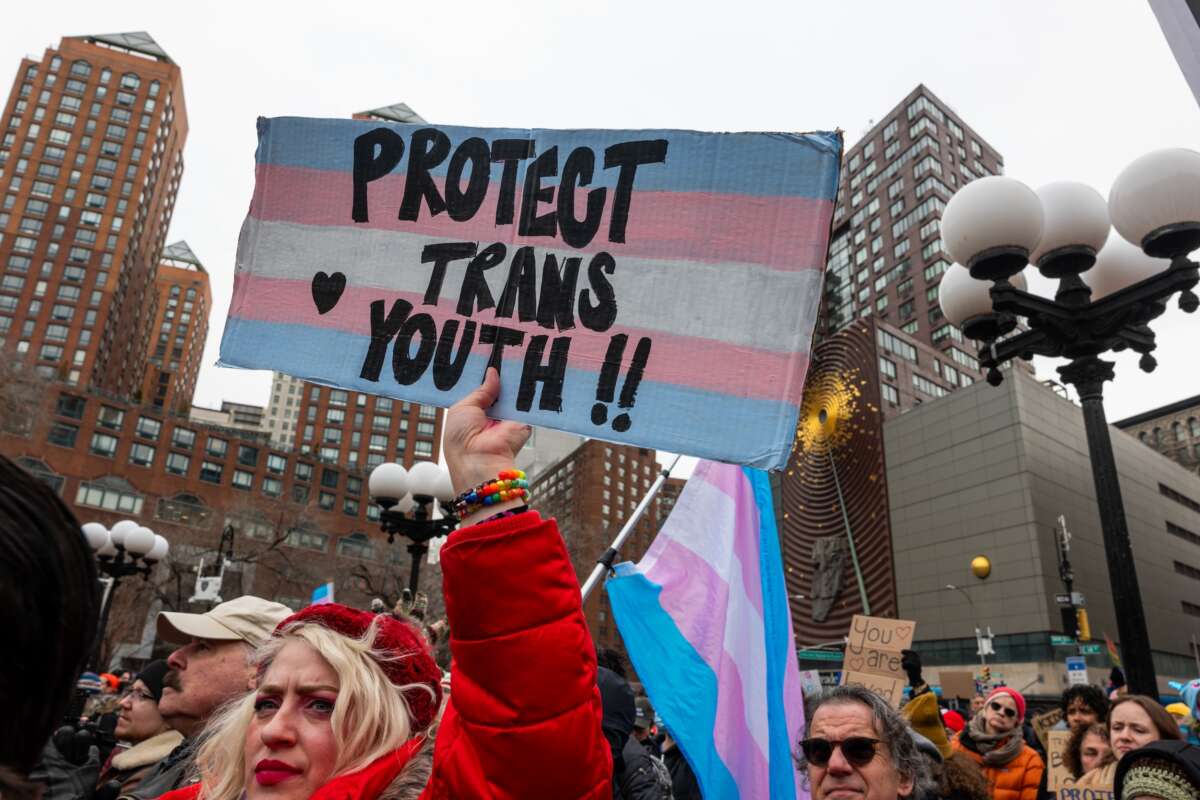
Failla said that the executive order was one of many issued by Trump “that sought to identify, to demonize, and ultimately to eradicate an entire population of transgender people.”
The judge also pointed out that the Trump administration had previously issued many other subpoenas prior to this grand jury subpoena, and they had all been partly or fully shut down.
For Decades, Trans People Have Helped Lead the Fight Against Sexual Violence
Today, trans and gender-nonconforming survivors continue a legacy of resistance that goes back longer than we may know. By Gabriel Arkles , Truthout April 29, 2026
“ But undeterred by its disastrous showing in the courts, DOJ decided to issue nearly identical document requests in the form of grand jury subpoenas emanating from the Northern District of Texas,” Failla said.
Families and patients had filed a lawsuit in early June asking Manhattan’s federal court to block New York City’s hospitals from turning over their records, arguing that the subpoena violates patients’ civil rights as well as laws ensuring physician-patient privileges.
The suit stated that the subpoena was issued “as part of the Administration’s systemic campaign to exclude transgender people from public life and to ‘end’ the gender-affirming medical care that enables many transgender people to live authentically as themselves.”
Activists have also called for NYU Langone, Mount Sinai, and New York-Presbyterian hospitals to be banned from participating in Sunday’s annual NYC Pride March over their complicity in Trump’s attacks on transgender health care. NYU Langone and Mount Sinai ended their gender-affirming medical programs for minors in February, and the hospitals have agreed to provide the Trump administration with minors’ medical records. While the hospitals claim that they will anonymize the medical records, the DOJ could later request the identifying information, and could likely use data to identify the records anyway.
In a letter to organizers of the annual NYC Pride March, activists and parents of transgender children wrote: “We call on NYC Pride to prohibit any hospital system that has ended, restricted, or suspended gender-affirming care for transgender youth from marching in the 2026 NYC Pride March and festival, and any future prides, unless and until they restore that care and publicly commit to protecting trans youth and their families.”
Mount Sinai Health System plans to attend the parade.
Activists have also criticized Mayor Zohran Mamdani, whose new clinic for transgender people – put forward as a solution to Trump’s attacks — will deny care to anyone under 19 years old, essentially replicating Trump’s cutoff for care for transgender youth.
In May, a survey of over 10,000 transgender people found that transgender and nonbinary youth who are denied access to gender-affirming hormone therapy are nearly twice as likely to report a suicide attempt over the past year. A previous study also found that anti-transgender laws increased suicide attempts by up to 72 percent, particularly among youth. And the Centers for Disease Control and Prevention’s Youth Risk Behavior Survey has found that over half of transgender high school students seriously considered suicide and over a quarter attempted it during the recent rise in anti-transgender laws.
Trans People Behind Bars Face Great Risks. US Prison Officials Are Making It Worse.The Trump administration had demanded medical records of trans minors receiving care in NYC hospitals since 2020.
By Shireen Akram-Boshar ,
June 24, 2026
People attend a rally in Union Square in Manhattan supporting transgender youth on February 08, 2025 in New York City, in opposition to the Trump administration's attacks on the transgender community.
Spencer Platt / Getty Images
A federal judge in Manhattan has temporarily blocked the Department of Justice (DOJ) from using grand jury subpoenas to obtain medical records of patients who have received gender-affirming care as minors at NYU Langone, Mount Sinai, and other New York City hospitals.
On Wednesday, U.S. District Judge Katherine Polk Failla granted a temporary restraining order after several families and patients sued to block a grand jury subpoena that demanded the medical records of all transgender minors who have received gender-affirming care at the New York City hospitals since 2020. The order blocks the subpoena until the case’s next hearing on July 8.
Shortly after taking office, President Donald Trump signed an executive order ending federal funding for gender-affirming care for transgender youth and directing the DOJ to investigate doctors and hospitals that provide such care.
A federal judge in Manhattan has temporarily blocked the Department of Justice (DOJ) from using grand jury subpoenas to obtain medical records of patients who have received gender-affirming care as minors at NYU Langone, Mount Sinai, and other New York City hospitals.
On Wednesday, U.S. District Judge Katherine Polk Failla granted a temporary restraining order after several families and patients sued to block a grand jury subpoena that demanded the medical records of all transgender minors who have received gender-affirming care at the New York City hospitals since 2020. The order blocks the subpoena until the case’s next hearing on July 8.
Shortly after taking office, President Donald Trump signed an executive order ending federal funding for gender-affirming care for transgender youth and directing the DOJ to investigate doctors and hospitals that provide such care.
Failla said that the executive order was one of many issued by Trump “that sought to identify, to demonize, and ultimately to eradicate an entire population of transgender people.”
The judge also pointed out that the Trump administration had previously issued many other subpoenas prior to this grand jury subpoena, and they had all been partly or fully shut down.
For Decades, Trans People Have Helped Lead the Fight Against Sexual Violence
Today, trans and gender-nonconforming survivors continue a legacy of resistance that goes back longer than we may know. By Gabriel Arkles , Truthout April 29, 2026
“ But undeterred by its disastrous showing in the courts, DOJ decided to issue nearly identical document requests in the form of grand jury subpoenas emanating from the Northern District of Texas,” Failla said.
Families and patients had filed a lawsuit in early June asking Manhattan’s federal court to block New York City’s hospitals from turning over their records, arguing that the subpoena violates patients’ civil rights as well as laws ensuring physician-patient privileges.
The suit stated that the subpoena was issued “as part of the Administration’s systemic campaign to exclude transgender people from public life and to ‘end’ the gender-affirming medical care that enables many transgender people to live authentically as themselves.”
Activists have also called for NYU Langone, Mount Sinai, and New York-Presbyterian hospitals to be banned from participating in Sunday’s annual NYC Pride March over their complicity in Trump’s attacks on transgender health care. NYU Langone and Mount Sinai ended their gender-affirming medical programs for minors in February, and the hospitals have agreed to provide the Trump administration with minors’ medical records. While the hospitals claim that they will anonymize the medical records, the DOJ could later request the identifying information, and could likely use data to identify the records anyway.
In a letter to organizers of the annual NYC Pride March, activists and parents of transgender children wrote: “We call on NYC Pride to prohibit any hospital system that has ended, restricted, or suspended gender-affirming care for transgender youth from marching in the 2026 NYC Pride March and festival, and any future prides, unless and until they restore that care and publicly commit to protecting trans youth and their families.”
Mount Sinai Health System plans to attend the parade.
Activists have also criticized Mayor Zohran Mamdani, whose new clinic for transgender people – put forward as a solution to Trump’s attacks — will deny care to anyone under 19 years old, essentially replicating Trump’s cutoff for care for transgender youth.
In May, a survey of over 10,000 transgender people found that transgender and nonbinary youth who are denied access to gender-affirming hormone therapy are nearly twice as likely to report a suicide attempt over the past year. A previous study also found that anti-transgender laws increased suicide attempts by up to 72 percent, particularly among youth. And the Centers for Disease Control and Prevention’s Youth Risk Behavior Survey has found that over half of transgender high school students seriously considered suicide and over a quarter attempted it during the recent rise in anti-transgender laws.
Even state-level legal protections for trans people have not always extended to those behind bars.
By Victoria Law ,
June 27, 2026
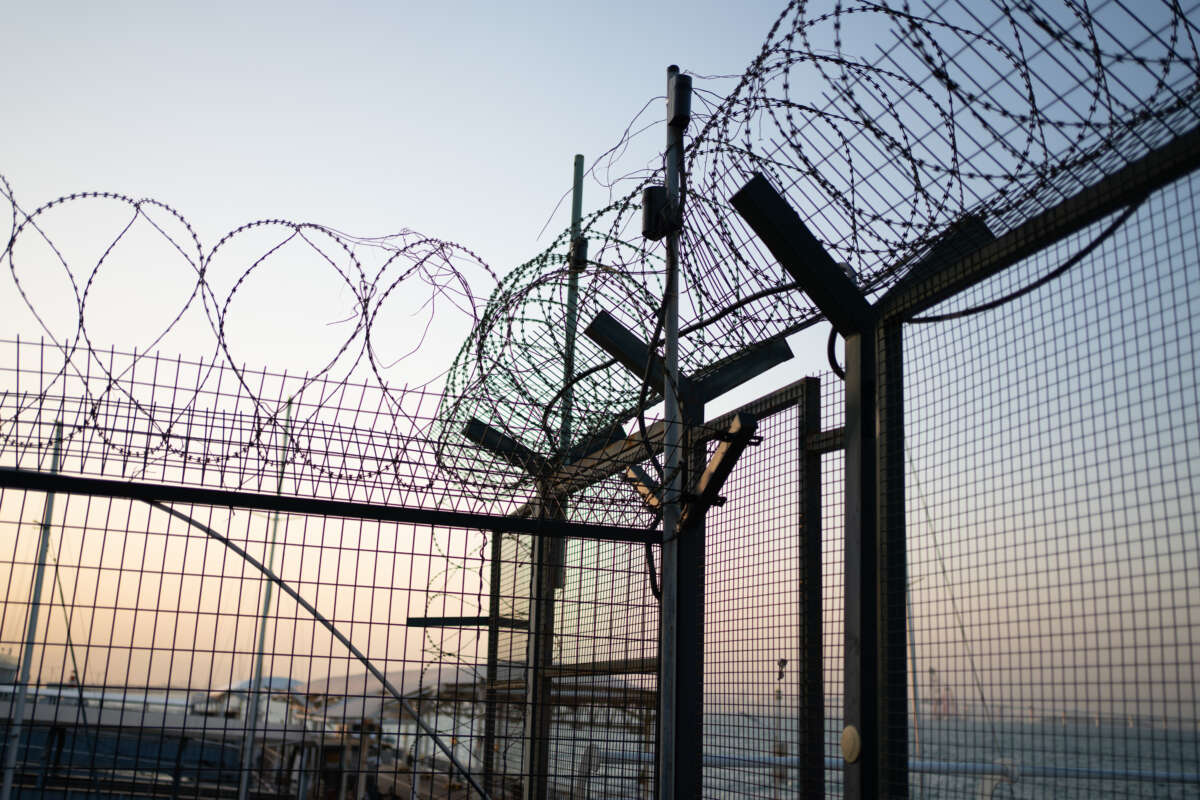
Weiquan Lin via Getty Images
“Iam the ONLY female being held in a male prison here in New Jersey all because I am transgender,” Gia Valentina told Truthout.
In January 2026, after years of requesting the procedure, Valentina had vaginoplasty, a gender-affirming surgery that creates a vagina and vulva. She was hoping that the procedure would allow her to be moved to Edna Mahan Correctional Facility, New Jersey’s sole women’s prison. But in June, she learned that the state’s prison system denied her transfer request.
The denial left Valentina aghast. “So now the NJDOC [New Jersey Department of Corrections] will house a female with a vagina in male population. I’ve been approved by the NJDOC to be the very first woman to begin their coed housing,” she wrote in an electronic message after learning about the denial.
In 2021, the New Jersey Department of Corrections implemented a policy giving incarcerated trans people the “presumption” to be housed according to their gender identity. In 2023, however, a trans woman impregnated two women at the Edna Mahan and the state reversed that policy.
No one had accused Gia Valentina of sexual activity during her 58 days at EMCF. Nonetheless, she was transferred to New Jersey State Prison in May 2023 and placed in protective custody, where she spent at least 22 hours each day in her cell.
Families of Victims Who Died From Heat in Prison Fight to Prevent More Deaths
Over 200,000 incarcerated people face deadly summer heat in California and Texas.
By Victoria Law , Truthout/TheAppeal June 6, 2026
Approximately 70 trans women are in New Jersey state prisons. Since October 2022, three transgender women have been approved for transfer to the appropriate facility. But, Christopher Greeder clarified in an email to Truthout, “The New Jersey Department of Corrections does not base housing assignments or transfer decisions solely on whether an incarcerated person has undergone a specific medical procedure.”
Valentina had a ray of hope when Jamie Belladonna, another trans woman at New Jersey State Prison, was transferred to Edna Mahan after having vaginoplasty.
But the increasing hostility toward trans people might affect her as well as the unknown number of trans women behind bars. Since 2020, state legislatures have passed hundreds of anti-trans bills. Last year the Supreme Court upheld bans on gender-affirming care for young people, which 20 states had already passed. State-level legal protections for trans people have not always extended to those behind bars.
After taking office in 2025, Trump signed an executive order stating that the federal prison system “shall ensure that no federal funds are expended for any medical procedure, treatment, or drug for the purpose of conforming an inmate’s appearance to that of the opposite sex.”
In February 2026, the Bureau of Prisons, which oversees the federal prison system, announced it would stop providing gender-affirming medical and transition care to trans people in custody. Under the new policy, trans people will no longer have access to surgery, clothing, or toiletry items that align with their gender identity. People on hormone medications will be forced to taper off and instead (allegedly) be offered therapy and psychiatric medications like antidepressants.
Incarcerated trans people are over five times more likely than the general population to be sexually assaulted by staff and over nine times more likely to be assaulted by other incarcerated people.
In March, the Department of Justice announced investigations against Maine and California, and another against Washington in May, for housing (some) trans women in women’s prisons. In April, a federal court declined to block the Bureau of Prisons’ efforts to transfer 18 trans women to men’s prisons. (The court sent the case back to the district judge, who had earlier blocked their transfer.)
Still, trans women behind bars have described ongoing violence and hostility that have predated the current administration’s attacks. Incarcerated trans people are over five times more likely than the general population to be sexually assaulted by staff and over nine times more likely to be assaulted by other incarcerated people.
“Always Afraid of My Safety”
Protective custody has not protected Valentina from sexual harassment and discrimination from staff or the incarcerated men around her.
It also did not protect her from threats of violence. On April 27, she told Truthout, “my life was put in danger when I was almost physically attacked by an individual who recently made known that he wanted to kill me. If the corrections guards were not there to stop this individual physically, I’m sure this man would have killed me.”
In response, staff moved her to the Restorative Housing Unit, a unit for those who have violated prison rules.
But, wrote Valentina, “I HAVE NOT RECEIVED ANY CHARGES.” Instead, she said that staff told her that “this the ‘safest’ place I can be housed as a female until I am eventually transferred to a women’s prison.”
She leaves her cell only for a shower and to sync her tablet to the kiosk. She is guarded during those fleeting minutes out of her cell. In 2019, New Jersey passed the Isolated Confinement Restriction Act, limiting time in isolation to no more than 20 consecutive days or longer than 30 days within a 60-day time period. It also prohibits the use of solitary for certain vulnerable populations, including those who are LGBTQ+.
Valentina explained that she can appeal her denial to the DOC commissioner. If that appeal is denied, she can appeal to the state’s appellate court. But, she added, “the whole time [I will be] continued to be held in complete isolation.”
Even in isolation, Valentina says, “I’m always afraid of my safety here and there have been times when I would not leave my cell.”
Fearful for Her Future
Alexa Scott knows firsthand the discrimination and harassment in the federal prison system.
Scott is currently incarcerated at Bedford Hills Correctional Facility, New York’s largest women’s prison. But between 2023 and 2024, she was in federal custody on a different charge.
While in federal custody, she told Truthout that no one — from federal jail staff to court officials to U.S. marshals — acknowledged her gender identity. When she showered, she was exposed to incarcerated men. When she was transferred from the federal jail in New York to another in Oklahoma, she was strip searched in front of incarcerated men and male staff. The same occurred when she was transferred again.
Those weren’t the only indignities. While incarcerated at a federal prison in Oklahoma, she said, “the counselor of my unit posted a flyer about me that was very derogatory.” Accompanying a lewd stick figure drawing, the counselor wrote, “Beware, LGBT Velociraptor on the prowl.”
“I was constantly harassed and targeted,” Scott recalled. “And this was under the Biden administration.”
Scott has not encountered physical orsexual violence at Bedford Hills, where she is serving a state sentence. But she is not free from transphobic harassment.
“When Trump first issued the executive orders, I was living in a general population unit that started mocking us and laughing,” she recalled. “The staff eventually joined in on this banter and at first we genuinely felt fearful.”
“I have never seen a trans woman represented in any progressive program or opportunity from a men’s prison in NYS DOCCS [New York State Department of Corrections and Community Supervision],” she pointed out. The lack of participation in educational or religious programs counts against them at parole hearings. “Conversely, trans women here are involved in myriad rehabilitative opportunities preparing us for reentry or allowing us to become better human beings.”
The fear of being transferred to a men’s prison has subsided. But, says Scott, “seeing the ignorance about and discrimination against transgender women in the highest levels of government has certainly weighed heavily on my psyche.”
Once she completes her state sentence, Scott will be transferred to a federal prison to serve her federal sentence. The federal attacks on trans women, coupled with her previous experiences, leave her fearful for her future.
“I am doing things because I have opportunities to do so,” she said. “This does not exist for us in men’s facilities. If the policies change here I fear I will go back to doing nothing other than utilizing my body to survive, and that is terrifying. Further, it is inevitable that I go to federal custody, and I fear what that looks like for me.”
“What About My Rights to Be Safe?”
In March, the Department of Justice announced that it would start an investigation into the placement of trans women in women’s prisons in Maine and California, claiming that the practice subjected cisgender women to physical and sexual violence.
But for Angel White and Tarryn Unique, two trans women in a California men’s prison, the sexual violence came from inside.
Between March and August 2019, both women were incarcerated at the male Salinas Valley State Prison, where a prison psychologist allegedly raped them repeatedly. The assaults ended when both were transferred to another prison. There, they filed grievances against the psychologist. Then, the intimidation began: Staff tore apart their cells, separated them, and fabricated rules violations against them.
In 2022, after multiple transfers, both were sent to the Richard J. Donovan Correctional Facility (RJD). There, they were permitted to live in the same two-person cell, avoiding the threat of sexual or physical abuse from predatory roommates.
The next year, White and Unique filed a lawsuit against the prison psychologist, other Salinas Valley staff members, and the California Department of Corrections and Rehabilitation (CDCR). Although the lawsuit did not involve staff at RJD, they still suffered retaliation.
“It was as if they [housing officers] were told to make our lives hell,” White told Truthout. She said that staff searched their cells at least once a week, each time overturning all of their belongings and confiscating anything that might seem gay. “Anything pink, anything pride, just bad,” she wrote.
When they filed grievances about the searches and confiscations, the searches intensified. Still, they continued to file grievances. They also contacted their attorneys.
“The very people who taxpayers paid to keep vulnerable populations like myself safe were the sole abusers of my physical and mental safety,” White said.
In 2024, White and Unique helped plan a Pride event for the prison. They raised funds to purchase Pride flags and items with the Pride logo like pens, coin purses, and make-up, which were distributed to attendees.
Less than seven days later, in the early morning hours, the prison’s investigative services unit raided their cell. Both women were strip searched by male officers. Their belongings were strewn across the tier as guards searched through their belongings, confiscating everything that had been given to them at the Pride event as well as their bras, panties, and feminine clothing. Later, both were issued rules violations for having $2.30 in quarters and nickels, then later for having equipment in an attempt to escape and possession of a controlled substance, both of which could be prosecuted as new felonies. (These violations were later dismissed.)
Both women wrote grievances against every member of the search team. They were then subjected to a repeat cell search. White, who was scheduled for her first parole hearing, waived it for three years, knowing that two violations that could become felony charges would automatically result in a denial and a years-long wait for another hearing. (Those violations were later dropped.)
In December 2024, White and Unique settled with CDCR. “We wanted CDCR to sign documents stating that Unique and I could not be separated as cellmates, that if we had to transfer, they…had to transfer us together,” White explained. They also demanded federal oversight, including an agreement that the two women not be separated and that they cannot be transferred to a prison which does not have audio and video surveillance and where the staff do not wear body cameras. The presiding judge will act as a federal monitor for the next two years, enabling Unique and White to go to him about any violations or retaliation.
The settlement included a monetary settlement, enabling them to replace the bras, panties, and other feminine clothing that had been confiscated during the repeat cell searches. The settlement also enabled White to send money to her family as well as to her victim. When the prison offers food, such as pizza, as part of fundraisers, White and Unique are able to buy enough to share with those who can’t afford to buy foods.
CDCR does not comment on past or pending litigation. “Every allegation of sexual misconduct is taken seriously and investigated thoroughly. CDCR does not track complaints by sexual orientation or gender identity,” spokesperson Terri Hardy told Truthout.
Hardy also noted that, in 2020, the state passed The Transgender Respect, Agency and Dignity Act, allowing incarcerated transgender, non-binary, and intersex people to request to be housed and searched in a manner consistent with their gender identity. Each request is reviewed on an individualized basis.
White says that she and Unique were denied transfer to a women’s prison. “They put us through a committee [hearing] where they shame you, saying, ‘This is how terrible this person is,’” she told Truthout. She said that both decided not to resubmit a request. “I don’t want to go through that again just to be denied again.”
“I can’t imagine that the Department of Justice investigation is going to help us.”
She also isn’t sure if she would be safer from violence at a women’s prison, especially after learning about the August 2024 mass use-of-force event, in which staff assaulted people incarcerated at the Central California Women’s Facility.
To avoid sexual harassment, White and Unique largely avoid going to the yard or to groups, programs, or events. When White does leave her cell, she wears a large jacket and a face mask.
“I got feminizing breast surgery and I don’t want to hear dudes talk about it,” she said. “I have nice facial features. I have nice lips. I cover my face because I don’t want to hear a man talk about my lips. I don’t want to hear it.”
“I can’t imagine that the Department of Justice investigation is going to help us,” White said. “I would love for it to bring about something good. Like, what about my constitutional rights to be safe from predatory male inmates?”
This article is licensed under Creative Commons (CC BY-NC-ND 4.0), and you are free to share and republish under the terms of the license.
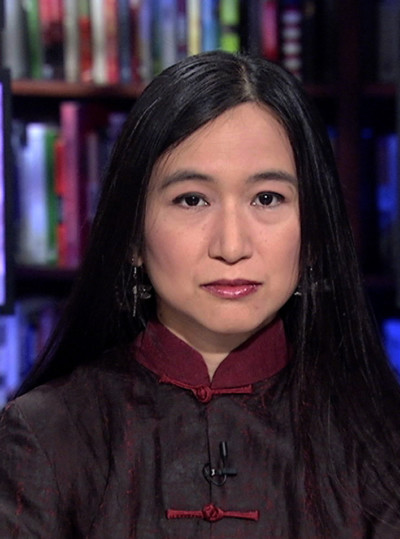
Victoria Law
Victoria Law is a freelance journalist who focuses on incarceration, gender and resistance. Her books include Resistance Behind Bars: The Struggles of Incarcerated Women (2009), Prison by Any Other Name: The Harmful Consequences of Popular Reforms (2020), “Prisons Make Us Safer” & 20 Other Myths about Mass Incarceration (2021), and Corridors of Contagion: How the Pandemic Exposed the Cruelties of Incarceration (2024).

No comments:
Post a Comment