AFP
July 17, 2026

Kimi K3, a new artificial intelligence program from a Chinese startup called Moonshot AI, stunned the US tech industry on Friday, setting off fresh discussion over the China-US rivalry to dominate AI.
The program was released Thursday and within hours hit the top spot on a widely watched ranking of AI coding tools called Arena, marking the first time a Chinese model had claimed the number one position on the list.
Investors in Silicon Valley and on Wall Street, as well as White House officials, worry that if China can build AI as good as America can, then US companies like OpenAI and Anthropic may struggle to keep charging high prices for their products.
Kimi K3’s release follows that of other much-hyped Chinese AI models. Like most of China’s offerings, it costs less and uses source code that programmers can customize.
Some experts compared the moment to early 2025, when another Chinese company called DeepSeek shocked markets by releasing a powerful AI model at a fraction of the usual cost.
That episode briefly wiped hundreds of billions of dollars off the value of US tech companies.
– ‘Reckoning’ –
Anastasios Angelopoulos, who runs the Arena ranking site, told the TITV podcast that Kimi K3 could force investors to rethink the whole AI industry, since businesses may prefer free Chinese programs they can customize on their own computers over paid American ones that require sharing data with outside companies.
He said the release will likely “cause a reckoning in the capital markets” since it “brings into question what the dominance will be” of US-based, closed-source models like those from OpenAI and Anthropic.
David Sacks, a venture capitalist who advises the White House on AI and is a vocal opponent of tech regulation, said on X that Kimi’s success showed US dominance was under threat and that the technology should be allowed to develop unimpeded.
He argued that American politicians are slowing their country down by blocking new data centers, adding state-level rules and pushing for a federal agency to approve powerful AI models before they can be released.
“This is how you lose the AI race,” Sacks wrote.
Dean Ball, who recently worked as an AI adviser in the White House and now works at OpenAI, said Kimi K3 was clearly a strong program and not just a copy of American models, a frequent criticism of Chinese AI products.
He predicted President Donald Trump’s administration will eventually try to more explicitly discourage US companies from using Chinese AI — not by outright banning it, but by warning that it contains hidden risks and that companies should not use them.
“You just create enough regulatory risk that every regulated enterprise backs off,” he wrote on X.
For Gavin Baker, a prominent Silicon Valley investor, Kimi K3 is “potentially negative for Anthropic and OpenAI while being net positive for essentially every other company in the world.”
AFP
July 17, 2026

A model released Friday by Chinese startup Moonshot AI has fuelled buzz around the country’s tech prowess, as experts said it could rival some of the more advanced offerings from US labs.
Large language models underpin chatbots and other artificial intelligence tools with their ability to crunch huge amounts of digital data.
Moonshot AI’s “Kimi K3” is one of several from China growing in global popularity thanks to their lower costs and source code that programmers can customise.
Soon after its launch, Kimi K3 had topped a leaderboard for AI coding run by a platform called Arena created by UC Berkeley researchers.
That drew excitement from industry insiders, with some evoking a 2025 release from China’s DeepSeek that shook assumptions of US dominance in AI.
“Kimi K3 seems really good, closest to the frontier yet,” Ethan Mollick, a University of Pennsylvania professor and a leading voice on AI, said on X.
But it “cannot write a good murder mystery (though neither can any other model). That remains the jaggedest of frontiers” of AI development, he said.
“Sensing a violent market reaction to KimiK3… similar to DeepSeek moment,” tech writer and investor Kevin Xu wrote.
Beijng-based Moonshot AI said Kimi K3 was the world’s first open-source model of its size.
The more internal variables, or parameters, a model has, the better it can handle complex requests, and Kimi K3 has around 2.8 trillion.
Leading US players Anthropic and OpenAI do not release details of how many parameters their top models have.
– ‘Frontier-level’ –
“Kimi K3 demonstrated frontier-level performance across our evaluation suite, consistently outperforming other tested models,” Moonshot AI said.
However, overall performance “still trails the most powerful proprietary models” from Anthropic and OpenAI, the company said.
Hussein Abbass, a computing professor at UNSW Canberra, said Kimi K3 appears to be good at coding, “but it is still unknown how competitive it is across the whole range of tasks expected from foundation models”.
Should US rivals be concerned? “I wouldn’t say they need to be worried. But they shouldn’t be still,” to maintain their edge, Abbass told AFP.
He added that AI performance is “not just about the model” but also the hardware that runs it, along with data centres and supply chains.
Arena ranked Kimi K3 ninth worldwide for text queries. When AFP tried Kimi K3, it generated ideas for tech reporting that compared favourably with responses from other chatbots.
Kimi K3’s release follows that of other much-hyped Chinese AI models such as Zhipu AI’s GLM-5.2.
It came during a major tech conference in Shanghai where President Xi Jinping on Friday urged international cooperation on AI governance.
The United States, which restricts the export to its rival of powerful microchips that can train and run AI, said earlier this year it was around eight months ahead of China in the strategic field.
But the Trump administration recently caused delays to the public release of top-end models from Anthropic and OpenAI, over concerns they could help hackers break into online systems.
“Post-Kimi K3 and open weights models getting closer to the frontier again, I wonder if Anthropic and OpenAI will be allowed to increase their release cadence by the government,” Mollick wrote.
Chinese AI model Kimi K3 halts new signups amid skyrocketing demand
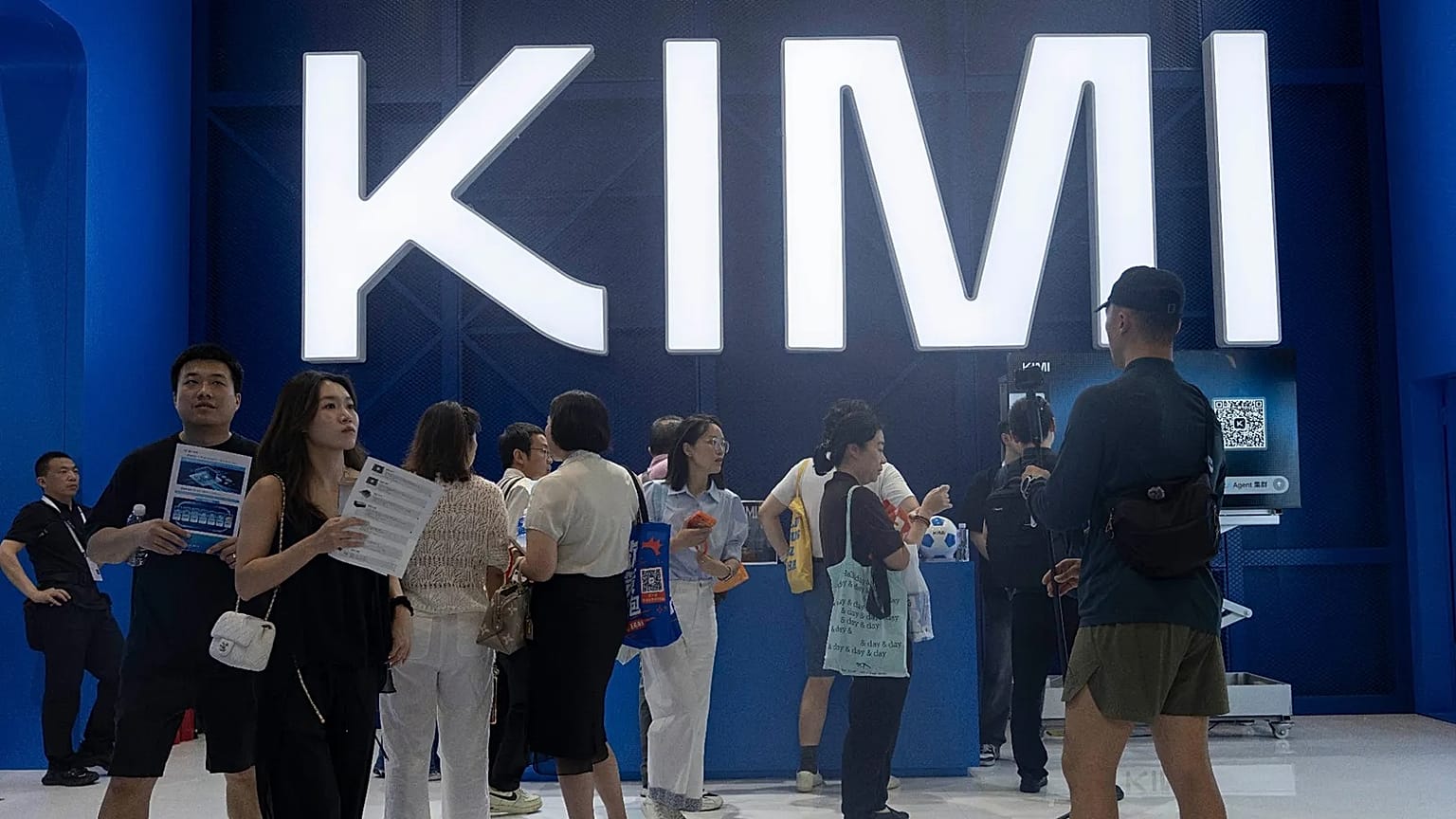
Moonshot AI paused new subscriptions to its Kimi K3 model just days after launch, as surging demand strained its computing capacity amid heightened competition between Chinese and US AI developers.
Chinese AI model Kimi K3 got too popular for its own good.
Just days after launch, Moonshot AI has had to pull the plug on new signups because so many people piled in to try it that the company ran out of computing power to cope.
The Beijing-based firm broke the news on X late on Sunday, admitting demand had "pushed close to the limits" of its systems in just 48 hours. The good news, if you already have an account: nothing changes for you.
The bad news for everyone else: new signups are paused until Moonshot can add more capacity, which it says will happen gradually, "in batches".
It is becoming a familiar pattern. Chinese AI labs keep building models good enough to grab headlines worldwide, then discover they do not have the servers to handle the stampede that follows. And that scramble to keep up says a lot about just how heated the AI rivalry between China and the US has become.
A crowded field of Chinese challengers
Kimi K3 is part of a wave of low-cost, openly available Chinese models that have gained traction internationally in recent months, following DeepSeek's V4 release and the market shock caused by DeepSeek's original model in early 2025, which prompted many to view China as a serious AI rival to the US.
Chinese frontier models tend to be open weight, meaning developers can examine and adapt the underlying system rather than access it only through a paid interface.
Moonshot launched Kimi K3 last week as a 2.8 trillion-parameter model, making it the largest open-weight system released to date.
According to the South China Morning Post, it has outperformed rivals including GPT-5.6 Sol and Claude Fable 5 on some benchmarks, including Arena's ranking for front-end coding capability, where it topped the leaderboard following its public release.
Analysts point to under-forecasting
Lian Jye Su, chief analyst at technology research firm Omdia, said new model releases typically generate a spike in interest that can strain existing infrastructure.
"This does show Moonshot AI does not have sufficient compute chips to serve the current surge in demand," he said.
Su added that the more likely explanation was that Moonshot underestimated how popular K3 would become, noting the model is unusually demanding in terms of compute, which makes allocating capacity both difficult and costly.
Pressure on US tech stocks
The release has weighed on shares of major US technology firms, amid concern that cheaper Chinese alternatives could squeeze the pricing power of American AI companies.
This comes despite US-led export restrictions that have already limited China's access to some of the most advanced chips on the market.
Kimi K3 is the latest in a string of Chinese releases to draw international attention.
Over the weekend, Alibaba previewed its Qwen3.8 Max model, which it said has 2.4 trillion parameters and ranks "second only to" Anthropic's Fable 5 among frontier systems — a claim made by Alibaba itself, with no independent benchmarks yet published to support it.
Last month, Chinese startup Zhipu, also known as Z.ai, released its GLM-5.2 model, which has seen swift uptake internationally.

No comments:
Post a Comment