Four engine failures abort Starship's 13th launch bid at the last second
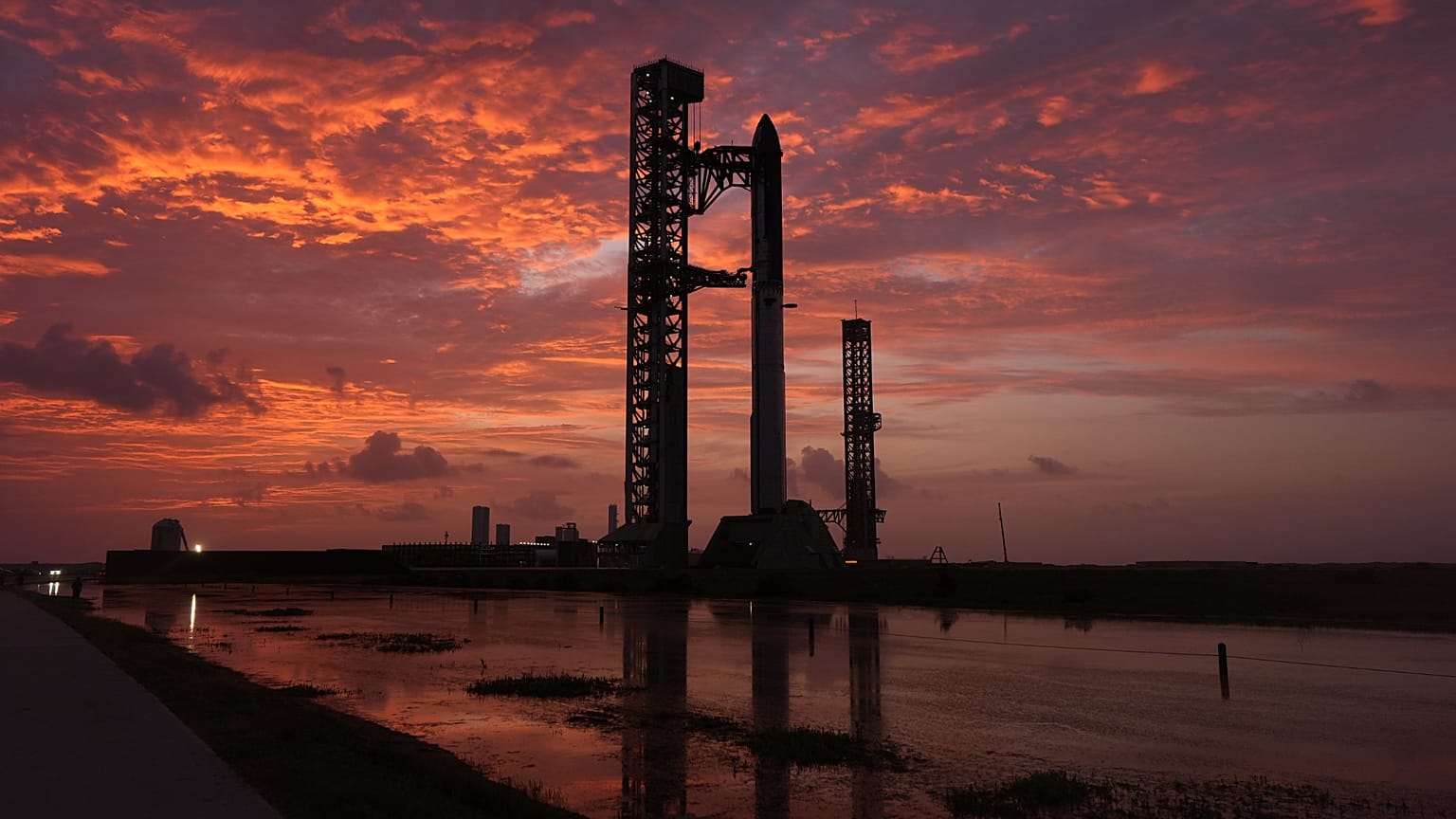
The world's biggest rocket was grounded Thursday when four of its 33 engines failed to ignite, leaving SpaceX to replace two engines ahead of a new launch attempt early next week.
SpaceX's mega Starship rocket came within a second of blasting off on a test flight Thursday, but some of the engines failed to ignite, triggering a launch abort amid billowing clouds of smoke and vapour.
Elon Musk, the company's founder and CEO, said two engines will be replaced "to be confident of a good flight" before sending Starship from Texas on a space-skimming journey halfway around the world.
It will be the 13th flight for Starship, which at 124 metres tall with 33 main engines is the world's biggest and most powerful rocket.
SpaceX's launch webcast showed engine ignition beginning three seconds before the planned liftoff, viewed from a drone high above the pad.
Although the company did not elaborate, onscreen data showed four engines failing to fire, with the remaining 29 immediately shutting down and keeping the rocket anchored to the pad. It was the first time a full-scale Starship experienced a last-second abort.
The launch team immediately began draining fuel from the rocket.
"Most probable launch timing is early next week," Musk said via X.
Everything was going SpaceX's way, even the weather, until the partial engine failure.
The rocket's automatic launch system worked as planned by halting everything — too few operating engines could have doomed the launch. Some earlier Starship flights ended in explosive fireballs.
Musk's most advanced Starlinks aboard
Twenty of SpaceX's newest and most advanced Starlinks were on board for release during the planned hour-long flight from Starbase, the company's hub near the Texas-Mexico border.
The internet satellites were to attempt communicating with Starlinks already in orbit while photographing Starship's heat shield.
Neither the first-stage booster nor the spacecraft were meant to be recovered, with both ending up in the sea.
Putting astronauts back on the moon
NASA is counting on Starship to land its astronauts on the moon within the next few years.
The space agency has hired SpaceX and Jeff Bezos' Blue Origin to build and fly the lunar landers that will return humanity to the moon's surface after an absence of more than half a century.
Both companies need their landers — Starship and Blue Moon — ready to fly by next year so that the newly named Artemis III crew can practise docking their capsule with them in orbit around Earth.
The mission after that — Artemis IV, planned for no earlier than 2028 — would use one of those landers to take two astronauts to the moon's south polar region.
Unplanned impact: NASA says SpaceX rocket parts could hit Moon
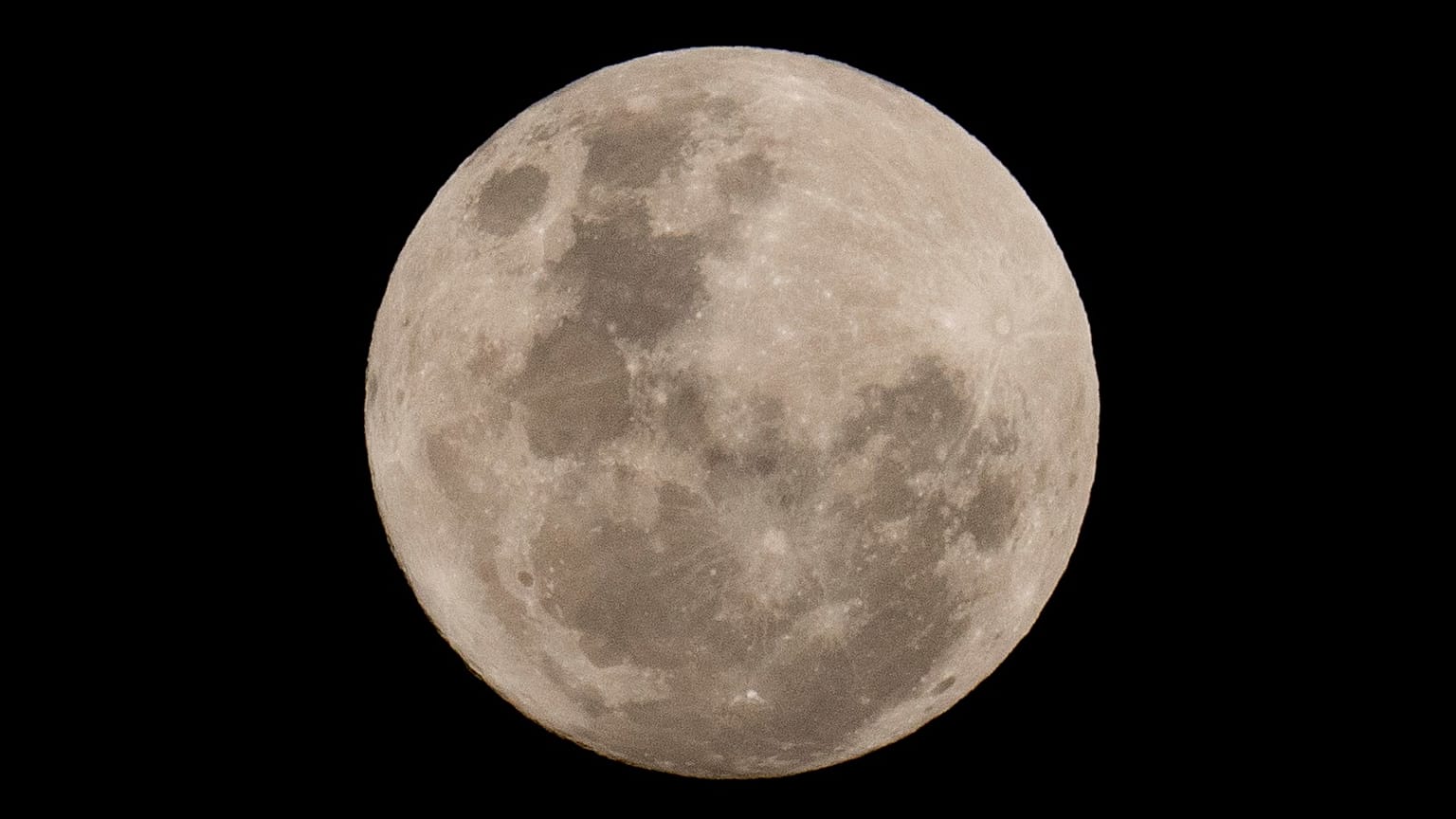
In August, parts of a SpaceX rocket are expected to crash into the Moon. It wasn't planned, but experts are monitoring it. Will the impact be visible from Earth?
Space exploration sometimes has consequences that are not immediately apparent. According to NASA scientists, a piece of rocket could collide with the Moon in early August.
In January 2025, around a year and a half ago, Elon Musk’s company SpaceX launched its "Falcon 9" rocket, sending two landers to the Moon. Now, US astronomer Bill Gray and the US space agency NASA, quoted by the news agency dpa, warn that an upper stage of the rocket could accidentally hit the Moon. Calculations suggest the impact is due to occur on 5 August.
The space portal Space.com reports that a panel discussion with experts on the impending impact was held in early July. It was organised by NASA’s Solar System Exploration Research Virtual Institute (SSERVI). The Moon is a dynamic environment, lunar observer Brian Day told the site; changes and impacts do occur.
Will the collision with the Moon be visible from Earth?
Experts are currently debating whether the collision will be visible from Earth. From Earth’s perspective, the rocket component could strike right at the edge of the lunar disc. The dust cloud created in the process could be illuminated by the Sun and thus become visible, the site adds.
The upper stage of the "Falcon 9" rocket weighs around four tonnes. According to the portal Space.com, the piece of space debris is currently travelling at more than two kilometres per second.
NASA considers the chances of observing the impact from Earth to be low. "I think it will be very, very hard to see, if not impossible," said William Cooke, a manager at the US space agency, according to the news agency dpa.
The calculation for the possible collision with the Moon was published back in September. It was carried out by astronomer Bill Gray of Project Pluto. He developed the Guide astronomy software, which allows amateur and professional astronomers to track near-Earth objects in space. His software predicted an impact on the Moon on 5 August 2026. Earlier calculations had even suggested that a collision in March was possible, as National Geographic also reported. He says the impact does not pose any danger.
Unplanned impacts caused by space debris
However, with the growing volume of space debris, such incidents could become more frequent.
A similar incident already occurred four years ago. Images from the "Lunar Reconnaissance Orbiter" probe showed space debris hitting the Moon. NASA scientists suspected a piece of an old Chinese rocket was behind the collision, but China rejected these reports. Impacts on the Moon also occur repeatedly for research purposes, though in those cases they are planned.
The predicted collision on 5 August 2026 was not planned. Elon Musk’s company has not yet responded to a dpa request for comment.

No comments:
Post a Comment