EU unveils new steel import quotas to protect its industry from overcapacity
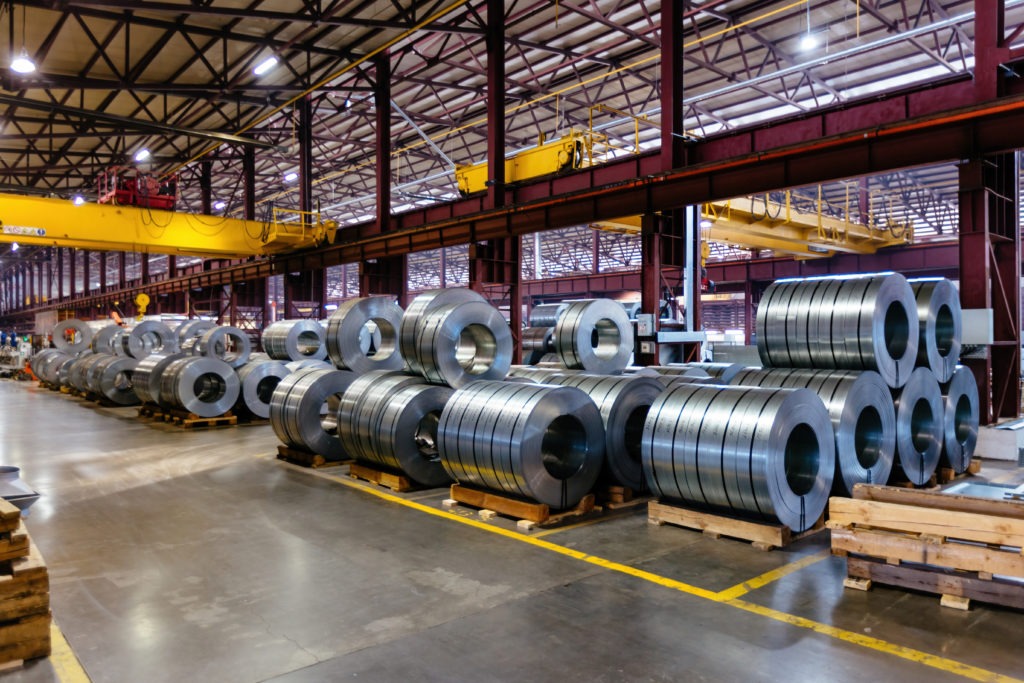
The European Commission unveiled quotas under the new system to limit duty-free steel imports into the EU, in a move designed to protect the bloc’s steel sector and increase its capacity utilization.

Under the new rules, the European Union’s annual tariff-free import quotas are slashed by 47% to 18.3 million metric tons, while an out-of-quota duty of 50% is introduced for 26 categories of steel products imported into the EU.
The rules, which come into effect on Wednesday, seek to increase steel capacity utilization in the bloc to 80%, the Commission said.
European steel association Eurofer, however, said the change in rules may only raise capacity utilization to 73%-75%, up from around 67% now, given slow demand.
EU steelmakers are likely to claw back some 15 million metric tons of production, Axel Eggert, Eurofer’s director general said, about half of what has been lost over the past few years.
Half of the import quotas have been reserved exclusively for free-trade agreement (FTA) partners, with the other half available to all trading partners, including those with an FTA.
Many of those partners will receive country-specific quotas proportionate to their historic volumes, the Commission added.
“Most of the EU’s FTA partners will therefore see a market access reduction significantly lower than the average reduction of 47% foreseen by the Steel Regulation,” it said.
A “significant number” of partners have provisionally agreed with these allocations, the Commission said.
The Commission said the rules were needed to protect the European steel industry from overcapacity elsewhere in the world and dumping practices.
“Persistent global overcapacity in the steel sector remains a serious global problem and continues to distort international markets,” it said.
“The measure restores fair competition in a market affected by distortions linked to overcapacity,” it added.
To have a more significant effect on the steel industry, the measure may need to be extended to downstream sectors, such as companies laminating steel or stamping sheets out for cars, Eggert at Eurofer said.
(By Bart Meijer, Phil Blenkinsop, Inti Landauro and Hugo Lhomedet; Editing by Sudip Kar-Gupta and Susan Fenton)
Europe’s top steelmakers warn against weakening carbon market
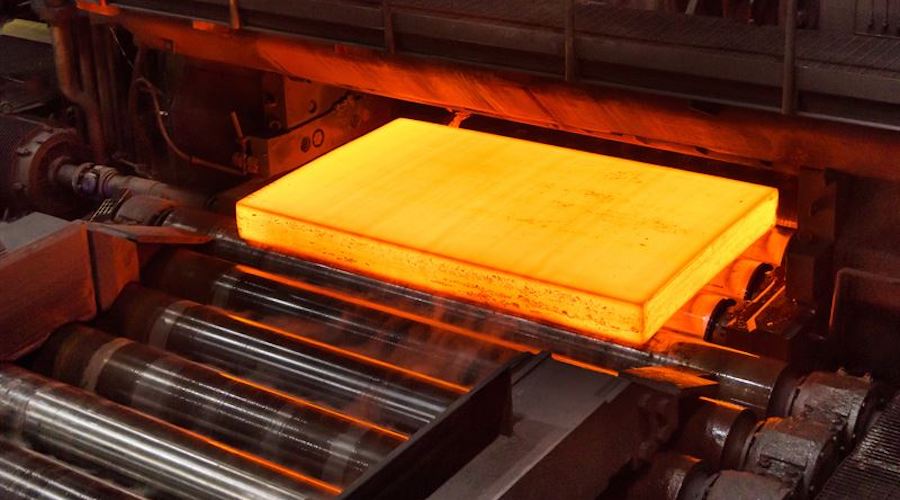
The European Union’s biggest steelmakers, including Salzgitter AG and SSAB AB, urged policy makers to avoid weakening the bloc’s flagship emissions market and to support strengthening its carbon border levy.
Dampening the EU Emissions Trading System would erode investment certainty, penalize companies that decarbonize faster and delay the industry’s transition of to clean energy, the steelmakers said in a statement on Tuesday.
The warning — which was also endorsed by Outokumpu Oyj, Saarstahl AG, Dillinger and SHS — comes two weeks before a key reform of the so-called EU ETS 1, which some governments and companies criticize for boosting Europe’s stubbornly high carbon prices and hurting competitiveness.
“The primary pressure on competitiveness comes from high electricity costs due to fossil fuel dependencies, infrastructure gaps and global steel overcapacity, not from carbon prices,” the steelmakers said.
The carbon market review is set to be unveiled by European Commission on July 15 to adjust the ETS to a new 2040 climate goal of reducing emissions by 90% from 1990 levels.
For the steel companies, the reform should preserve the carbon price signal by keeping the pace of annual emission reduction in the system at 4.4% to at least 2035 and avoiding measures to artificially increase the supply of allowances.
They also want the EU to maintain the trajectory for phasing out free allowances when gradually introducing the Carbon Border Adjustment Mechanism, which is meant to ensure a level playing field for local producers against rivals from countries with weaker climate policies.
“A strong ETS1 combined with a robust and fully implemented CBAM can reinforce Europe’s competitiveness, resilience and industrial renewal,” the steelmakers said. “To make this transition investable, revenues must be channeled back into industrial decarbonization, with a particular focus on CBAM sectors.”
(By Ewa Krukowska)

No comments:
Post a Comment