How Big Oil Seduced American Farming and Left Taxpayers With the Bill
Earlier last week in Washington, administration officials appeared before the Senate Appropriations Committee to defend an extraordinary spending proposal. Buried within the White House request for an $87.6 billion supplemental funding package is $10 billion in assistance designated strictly for U.S. crop producers. Testifying on Capitol Hill, Agriculture Secretary Brooke Rollins framed the assistance as a necessary bridge for growers facing market volatility. Yet to economists and taxpayers alike, this staggering outlay looks less like a temporary bridge through hard times and more like a permanent pier extending toward perpetual state reliance.
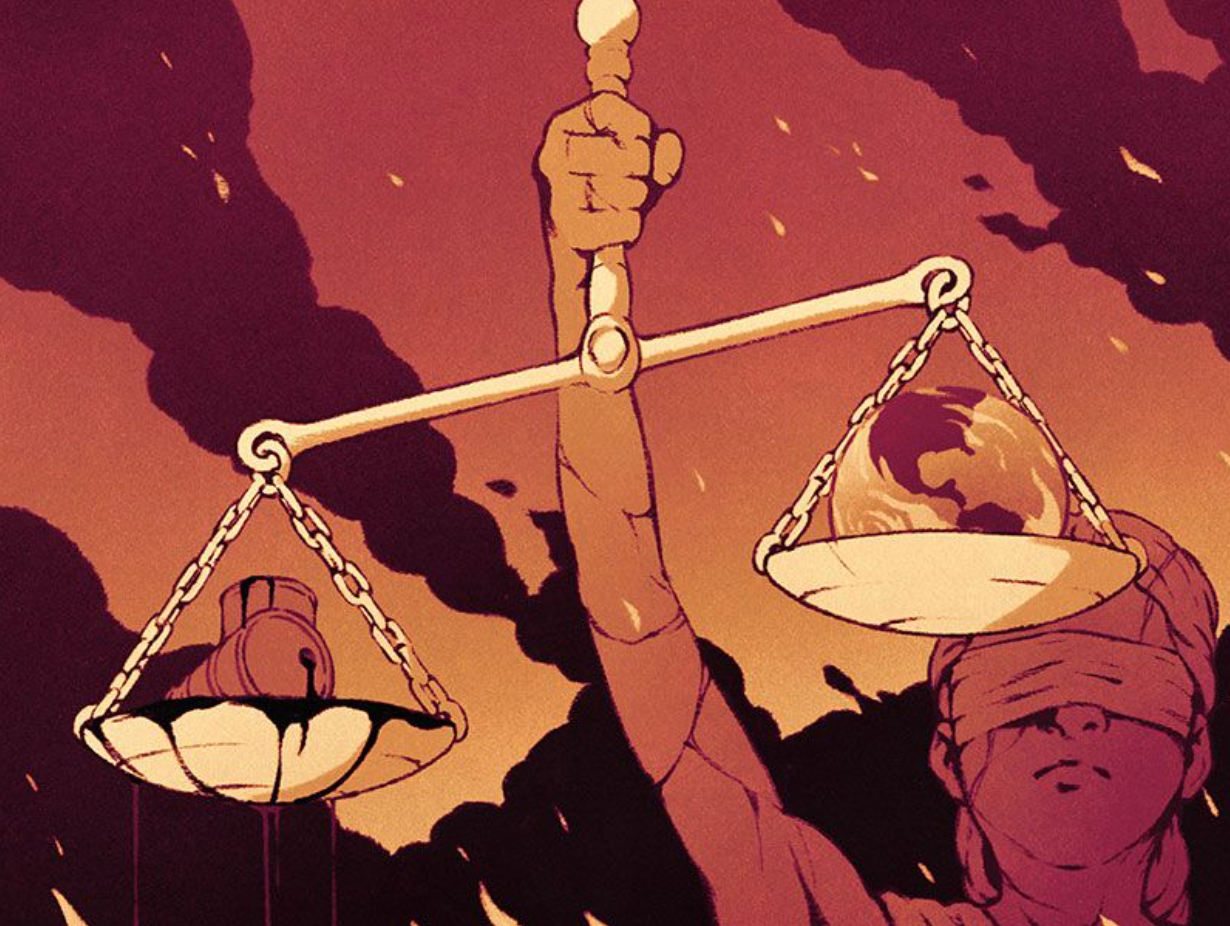
The underlying distress in the Heartland is neither a surprise nor a sudden quirk of bad weather. It is the predictable outcome of a deep structural flaw in how the United States produces its food. Over the past half century, American agriculture has effectively transformed into an offshoot of the global petroleum industry. Crude oil, natural gas, and refined petrochemicals power field machinery, but more critically, they form the chemical foundation of modern farming, supplying synthetic nitrogen fertilizers, crop pesticides, and essential plastics. According to data from the U.S. Department of Agriculture, roughly 48 percent of soybean oil is now used for biodiesel, while more than 45 percent of corn goes directly into ethanol manufacturing. When geopolitical shocks strike energy markets, the impact lands directly on American kitchen tables.
Consider the mechanics of the current strain. Since military actions in Iran disrupted Persian Gulf shipping corridors earlier this year, global energy and fertilizer supply lines have fractured. The Middle East accounts for nearly a quarter of global sulfur production and almost half of internationally traded sulfur shipments, which are vital for synthetic fertilizer manufacturing. Following the onset of regional conflict, domestic prices for nitrogen fertilizer climbed for 14 consecutive weeks. By early summer, urea reached $864 a ton while liquid ammonia surpassed $1,100 per ton. Survey data from the American Farm Bureau Federation revealed that 70 percent of farmers could no longer afford adequate fertilizer supplies for the full growing season.
For decades, federal policy sought to cushion farm income by binding crop production directly to transportation fuel. To mitigate rising fuel costs this spring, Washington granted administrative waivers allowing year-round E15 sales past standard seasonal limits. Yet this policy design harbors a fundamental flaw. While higher energy prices occasionally boost demand for corn and soybean oil, they inflate the cost of fertilizer, diesel, and electricity far faster. Department of Agriculture projections indicate that farm fuel and utility costs will jump as much as 41 percent by 2027, while net farm income across the nation is projected to drop 25 percent in 2026 compared to three years ago.
This financial squeeze has forced farmers into distorted operational choices. Because corn requires roughly three times as much nitrogen fertilizer as soybeans, thousands of Midwestern growers abandoned planned corn acreage this season to plant soybeans instead. But this emergency shift has caught producers in a classic triple squeeze: shrinking export demand, high input costs, and falling commodity prices. Meanwhile, the wheat belt is experiencing a severe contraction. Hit by rising diesel costs, fertilizer spikes, drought, and crop disease, American wheat production for 2026 is expected to fall to 1.56 billion bushels. That represents a 21 percent drop from last year and marks the lowest level since 1972. Lower crop yields inevitably ripple into livestock feed, driving ground beef prices past $7 per pound and steak past $12.80 per pound according to the Bureau of Labor Statistics, keeping consumer food inflation high and complicating interest rate decisions for the Federal Reserve.
Rather than confronting the root causes of this vulnerability, Washington has defaulted to administrative workarounds and emergency bailouts. To ease political pressure, FTC Chairman Andrew Ferguson launched a broad antitrust investigation into commercial fertilizer manufacturers, while the Commerce Department adjusted Section 232 tariffs to reduce duties on imported agricultural harvesters from 25 percent to 15 percent. Yet cash infusions and regulatory adjustments merely act as economic painkillers, masking structural defects while keeping input prices artificially high. When government payments guarantee that farmers can absorb inflated costs, suppliers face little market pressure to reduce rates. This dynamic has sparked growing political friction across rural America. In the Iowa Republican gubernatorial primary, outsider candidate Zach Lahn defeated an establishment contender by campaigning against corporate farmland ownership and rising chemical inputs.
A lasting solution requires treating food security as distinct from energy policy. First, Washington must stabilize global trade channels rather than relying on escalating tariffs. The target for China to purchase 25 million metric tons of American soybeans under existing trade guidance provides crucial market certainty for Midwestern farms, provided trade channels remain open. Replacing sweeping trade barriers with targeted, reciprocal tariff reductions under the World Trade Organization would lower the price of imported crop protection materials and farm machinery without requiring tens of billions in government subsidies. Second, federal policy must support a transition toward energy-efficient agricultural practices, precision fertilizer application, and alternative soil management that reduce baseline reliance on imported petrochemicals.
American agriculture remains one of the greatest technical achievements in modern economic history, capable of feeding millions at home and abroad. But its extraordinary productivity now rests on a precarious foundation of oil and natural gas. As long as the food supply remains bound to foreign energy chokepoints and papered over with emergency taxpayer checks, the system will remain fragile. Real security in the Heartland will not come from endless subsidy packages written in Washington. It will come from building a farming sector that can feed the nation without depending on the price of oil in the Persian Gulf.

No comments:
Post a Comment