Seacor is Reviewing Alternatives After Shareholders Called for Sale
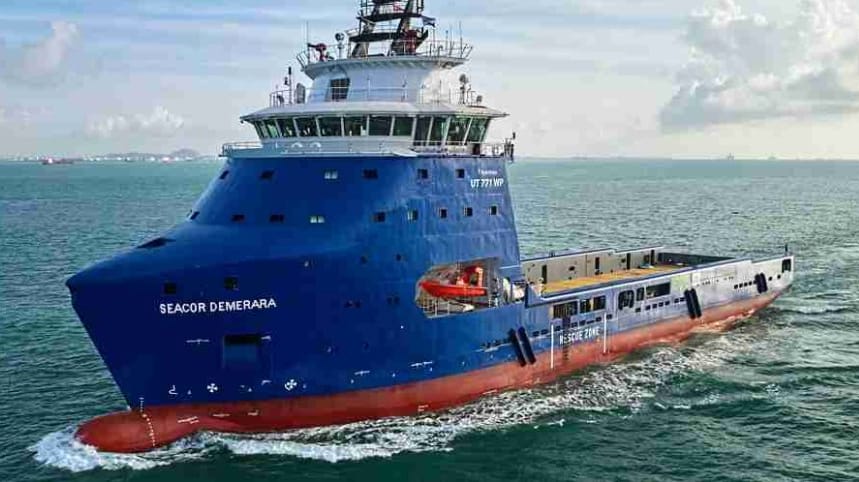
Weeks after two of the company’s largest shareholders called for the immediate sale to maximize value, Seacor Marine confirmed it has retained advisers and launched a “strategic alternatives review.” The news that the company is looking at options, including a sale of its fleet, assets, merger, or sale of the company, came after it reported improved utilization and day rates, but a decrease in revenues and direct vessel profit during the most recent quarter.
Seacor, which provides services to the offshore sector, including oil, gas, and wind farms, highlighted that its utilization improved following the repositioning of vessels. It also emphasized that it “remains constructive of opportunities across several of our international markets.”
The Middle East conflict, however, is impacting the company as it reports increased labor and insurance costs and a general softening in offshore activity, while it has six vessels active in the region, and two in maintenance. It said it continues to work for customers in Saudi Arabia and Qatar, but also said its two premium liftboats in the region are not expected to operate in the coming quarter.
Seacor reported progress off its lows in the first quarter, but still had a 10 percent decline in year-over-year revenues and a four basis point decline in vessel profit year-over-year. This quarter’s results also included the completion of the sale of five vessels and other equipment. It provided a recognized gain of $31.3 million.
“Over the past several years, the Company has worked diligently to optimize its fleet, strengthen its balance sheet, and position Seacor Marine to benefit from improving offshore market fundamentals,” said Andrew R. Morse, Non-Executive Chairman of the Board. However, the company also confirmed that it has launched a review process aimed at determining the best course to maximize value for shareholders.
This came after activist shareholder Pointillist Family Office, which owns more than seven percent of the stock and is the largest holder, demanded in June that the board begin a strategic review to sell the company or the fleet. Bloomberg reported that Jorey Chernett, CEO of the investment fund, said the company’s fleet was worth more than $1 billion and advocated for accelerating sales or selling the company.
Days later, Yoav Saffar, founder of Smarlenses Capital, which holds 3.5 percent of the stock, released a letter his group had sent to Seacor entitled “The Time has Come.” In it, he argues that competitors used the market downturn to restructure and emerged deleveraged, while Seacor maintained its fleet and continued to carry a substantially heavier debt burden.
Noting the strong market rebound, Saffar called Seacor’s current share price “woefully below the intrinsic value of its fleet and other assets.” He said the valuation gap has remained as the market recovered and management urged patience. He concluded Seacor “never had the scale required” for its strategy to succeed.
Furthermore, he concluded after analyzing the value of the assets that the board needed to initiate a process to realize the embedded value. He said the shareholders “have been waiting long enough, and the time has come.”
The share price jumped more than 23 percent on Thursday, July 30, after the board confirmed it had launched the process. It said there are no assurances, saying it could range from the outright sale of the company to assets, a merger, a business combination, or other transactions. The stock is now at $9.54, while Saffar noted that Clarkson had set a $22 figure in June for the intrinsic value.
The door has been opened for further consolidation in an industry that has seen a host of mergers and major transactions in the past few years.
The New Normal for Hull Husbandry: A Continuous Hull Record
Biofouling regulation is moving from voluntary guidance to mandatory rules. But the building throughline is this: hull management is becoming a matter of record, and keeping the hull clean is only part of what that record has to show.
The Rules are Changing
For most of the past decade, managing biofouling was a matter of good practice. The IMO's biofouling guidelines are still voluntary, but the direction remains strong.
Regionally, the rules are already here, and they are spreading. California requires vessels to keep a biofouling management plan and record book, as well as to file an annual report. Australia and New Zealand screen for biofouling on arrival. Brazil's standard, with new penalties, requires the same plan and record book and the logging of every inspection and in-water cleaning.
These rules all share the same directive. Operators need an established workflow to document the condition of the hull, record maintenance activities, and maintain an on-demand log with confidence.
The push is a steady tightening throughout the industry toward a world where a clean hull is not enough. Removing biofouling is only part of hull maintenance, and true visibility comes from data that is verified by frequency.
The Record is Half the Requirement
Proactive management was always the cheaper option on fuel. Now, it is also becoming the lower-friction path through regulation. The record keeping it enables is what gives it this designation. A proactively cleaned vessel provides more data and reporting from the frequency alone.
A cleaning with no documentation barely counts. What an inspector, a port authority, or an auditor wants to see is the history: what condition the hull was in, when it was inspected, what was done, and what resulted.
This is where many operators are exposed, and not because of negligence. A maintenance record is usually assembled through separate dive inspections, cleaning contractors, and port calls, all designed with relatively episodic methodology. This segmented approach does not provide a clear picture of hull condition.
Why the Insurer Cares Too
This is not only a regulatory matter, it is also a matter of risk; thus, the P&I clubs have also supported the shift to new documentation requirements.
A documented hull history is evidence, removing ambiguity, be it incurring a fine for a non-compliant port cleaning, a dispute over the hull condition, or an operational delay. A record kept as part of routine operations, simultaneously, is far stronger than one reconstructed under pressure afterward.
Even the Security Case Comes Back to the Record
Through 2025 and into 2026, a series of tankers were damaged by limpet mines attached to their hulls, in most cases after calling at or trading with particular ports, and with the devices often timed to detonate once the vessel had moved on. In at least one case, the mines were found only because the port required a hull inspection on arrival.
Although this is a specific threat tied to a specific trade, it illustrates the same point. The hull is the largest part of the vessel, yet it is routinely neglected. It is inherently a challenging surface to investigate. Dedicated threat inspection is a purpose-built job, and Greensea IQ builds for it separately, rather than pushing for a cleaning pass to double as a threat sweep. What you can see and document, you can manage.
Where the Record Comes From
Ultimately, all paths lead to the same practical requirement: a hull record that is continuous rather than occasional and generated as part of normal operations.
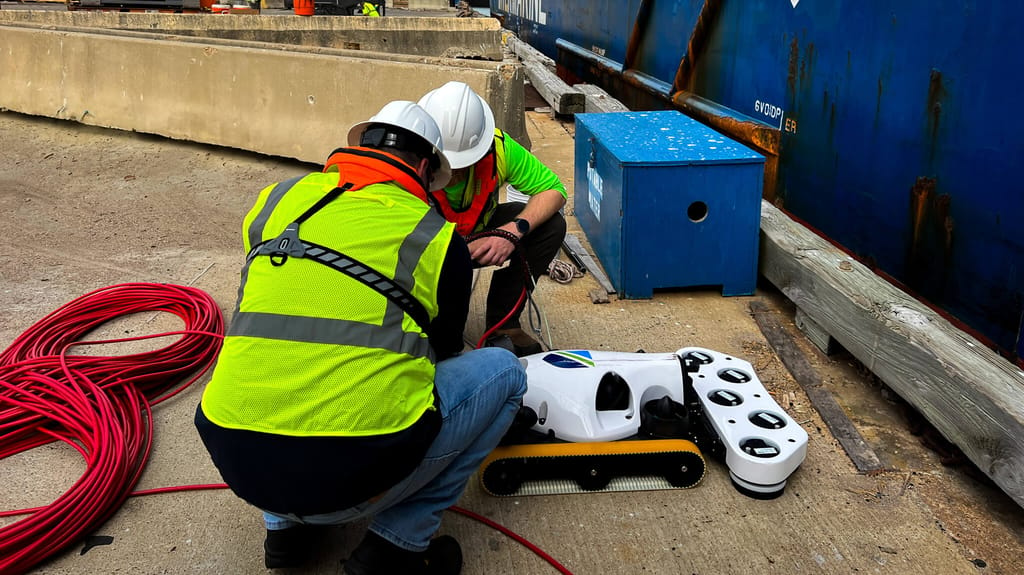
EverClean by Greensea IQ was built to produce exactly that. It began as an autonomous, proactive hull-grooming platform, but it was engineered on a design foundation to navigate, gather data, and report back. This framework allows it to accomplish more than grooming. When EverClean adheres and grooms the hull, it holds the fouling low, aligning with the regulation request, and records the hull's condition as it works, building a position-referenced account pass over pass. The cleaning and the record are the same activity, not two separate tasks to schedule and reconcile.
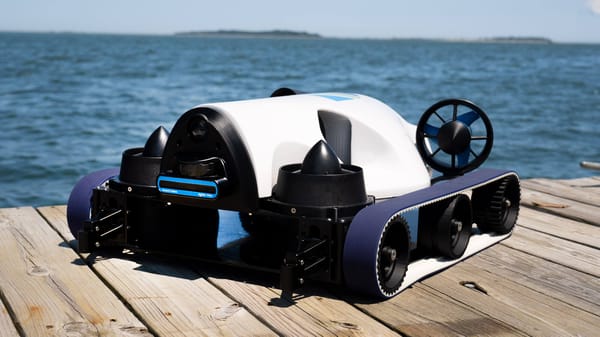
EverClean Inspection Vehicle by Greensea IQ
This same foundation allows EverClean to work as a separate inspection vehicle when grooming is not needed. It has the ability to free-fly the hull like a traditional ROV, then attach for close, position-referenced mapping; this hybrid range sets it apart from a fixed crawler or a free-swimming ROV.
The EverClean platform is powered by Greensea IQ's Core software, which supplies the navigational precision, advanced autonomy, and aggregated data reporting that is vital to a comprehensive inspection. The architecture was created to be flexible: Greensea IQ has built custom payloads to document measurements like hull-thickness measurement, and is always testing new sensors and configuration for added capability.
EverClean is designed as one platform with two work functions. It is deployed proactively when a hull needs cleaning, and it serves as a dedicated inspection vehicle to assess and record; both workflows report a digestible dataset that can be mapped over time.
Greensea IQ has spent two decades on the software that makes autonomous systems dependable in this environment. It is this maturity that provides peace of mind for a record that holds up when a surveyor, insurer, or security officer needs it most.
If you are looking to learn more about EverClean's inspection performance, as well as how proactive grooming keeps a vessel in line with developing regulations, request the EverClean capability brief.
This article is sponsored by Greensea IQ.
The opinions expressed herein are the author's and not necessarily those of The Maritime Executive.
Mounting Industry Pressures Reshape the Role of the Ship Manager
Copenhagen Business School and BIMCO announce a new academy to address evolving ship management challenges.

Published Aug 2, 2026 4:27 AM by The Maritime Executive
[By Copenhagen Business School]
Geopolitical disruption, decarbonisation, crew shortages, cyber risk and rising operating costs are changing the skills required of ship managers, Irene Rosberg, Blue MBA Programme Director at Copenhagen Business School, has said.
Ship managers are increasingly making complex decisions at speed, often with incomplete information and consequences for vessel safety, crewing, charter commitments, insurance and compliance.
Route disruption can affect bunker planning, voyage schedules, crew changes and emissions, while GPS spoofing, AIS interference, sanctions and war-risk requirements add further pressure. The role now demands commercial and contractual judgement alongside technical expertise, with managers balancing the interests of owners, charterers, crews, insurers and regulators while safeguarding the vessel and those on board.
Against this backdrop, the CBS Blue MBA Association and BIMCO will hold a five-day Ship Management Academy at Copenhagen Business School from 28 September to 2 October 2026.
Irene Rosberg, Blue BMA Programme Director at the Copenhagen Business School, said: “Ship managers are being asked to handle a much broader range of responsibilities than in the past, often in circumstances that can change very quickly. They need to understand the wider commercial, regulatory and human consequences of their decisions while continuing to protect the vessel and its crew.
She added: “Professional development must reflect the reality of the role. At Copenhagen Business School, we believe lifelong learning is essential if maritime professionals are to keep pace with changing regulation, technology and operational risk. Our work with BIMCO is intended to give participants a broader understanding of contemporary ship management and the practical judgement needed to operate effectively in an increasingly demanding environment.”
The Ship Management Academy will take place at Copenhagen Business School in Frederiksberg, Denmark, from 28 September to 2 October 2026.
The products and services herein described in this press release are not endorsed by The Maritime Executive.
BMT Expands International Maritime Design Expertise with One2three
BMT enhances its maritime design capabilities through the acquisition of One2three Naval Architects.
[By BMT]
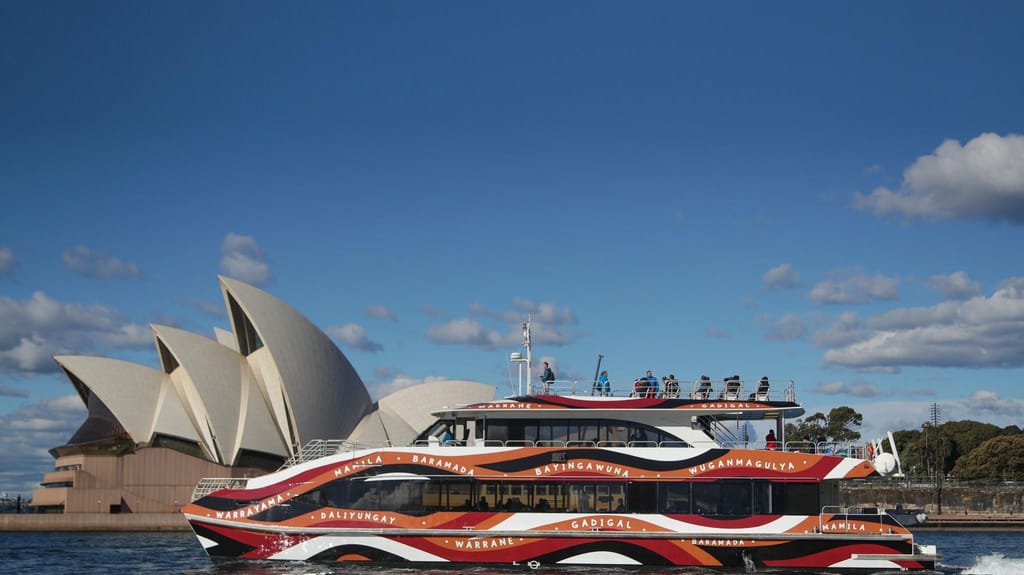
BMT’s acquisition of One2three Naval Architects strengthens its globally connected ship design offering across ferries, specialist craft and advanced vessel technologies.
(0900 AEST, Sydney, Australia) — BMT has acquired Australian naval architecture business One2three Naval Architects, further strengthening its position in independent global commercial and specialist vessel design. The acquisition expands BMT’s ability to support customers delivering complex vessel programs across international markets and broadens its strengths in maritime design across ferries, specialist craft, autonomy and advanced vessel technologies.
Founded in 2005, One2three has delivered more than 300 vessels across over 30 countries and is recognised internationally for its expertise in highly efficient hull form design and high-performance ferries. The Sydney-based business has established long-term customer relationships across Australia, Europe, Asia, the United Kingdom and the United States, with experience spanning commercial ferries, para-military craft, luxury yachts and battery-powered vessels.
The acquisition brings together complementary maritime design expertise and strengthens BMT’s position as a global maritime design and technical consultancy. Existing customer relationships, delivery teams and active projects will continue without disruption, ensuring continuity while providing customers with broader engineering support, expanded delivery resources and increased international reach.
The acquisition further scales BMT’s global ship design offering and strengthens its ability to support globally distributed shipbuilding programs across multiple international markets. Customers will benefit from increased access to globally connected design and engineering teams, enabling faster program responsiveness, closer collaboration with shipyards and geographical alignment with our customers.
The investment supports BMT’s long-term strategy to grow its ship design strengths globally and respond to increasing demand for advanced, efficient and sustainable vessel solutions across established and emerging markets.
The combined vessel design portfolio of One2three and BMT means enhanced support to shipyards, operators and maritime customers across key international markets.
Graeme Nayler, Regional Business Director, APAC at BMT, said:
“Over more than three decades, One2three has built a formidable reputation in commercial and specialist vessel design, including world-leading work in high-speed aluminium ferries and advanced multihull craft. Bringing that expertise into BMT, alongside our global engineering, consultancy and lifecycle heritage, strengthens the way we support customers as vessel programmes become more complex and internationally connected.
This is a deliberate, long-term investment in maritime design excellence and innovation and, following our acquisition of AMT, a further step in BMT's sustained growth across the Asia-Pacific region. Together, it deepens our independent ship design expertise and our ability to work alongside customers and shipyards worldwide, particularly as demand grows for commercial shipbuilding and ferry capability in markets such as the United States."
Steve Quigley, Managing Director at One2three Naval Architects, said:
“One2three has always focused on delivering high-performance vessel designs that meet the operational needs of customers and shipyards internationally. Joining BMT strengthens our ability to scale that experience globally while maintaining the responsiveness, technical quality and customer focus that define our business.”
“Access to BMT’s broader international engineering network, Ai initiatives, technical knowledge and lifecycle support creates significant growth opportunities for our people, our customers and the markets we support.”
The acquisition increases the scale, resilience and global reach of BMT’s ship design offering while strengthening its presence across major international maritime markets. Customers will benefit from local support, deeper technical knowledge, and greater access to globally connected engineering resources aligned to evolving market and shipyard requirements.
Being stronger together, these combined capabilities enable BMT and One2three the ability to support the next generation of commercial and specialist vessel programs with technically excellent solutions.
The products and services herein described in this press release are not endorsed by The Maritime Executive.
RightShip and NorthStandard Collaborate to Reduce Duplicate Inspections

[By: RightShip]
RightShip, the maritime industry's leading safety and risk intelligence platform, and NorthStandard, one of the world's leading P&I clubs, today announced a strategic collaboration that will see NorthStandard leverage RightShip's safety and risk intelligence to strengthen its loss prevention service. As part of the collaboration, NorthStandard can request existing RightShip inspection reports through RightShip's secure report-sharing capability, helping to reduce unnecessary duplicate inspections.
Developed in close collaboration with Orion Reederei, a dry bulk ship management company, whose participation helped test the operating model and demonstrate how trusted inspection information can be reused to reduce unnecessary burden.
Andrew Roberts, Executive Director, EMEA & Americas, RightShip, said: "NorthStandard shares our belief that better safety and risk outcomes depend on making trusted information easier to use across the maritime value chain. Through this collaboration, NorthStandard will use RightShip's safety and risk intelligence to enhance loss prevention and improve visibility of risk across its portfolio. Secure inspection report sharing is an important part of that, helping reduce duplicate inspections while making better use of inspection information that already exists.”
He added, “This collaboration demonstrates how organisations can work more collaboratively across the maritime value chain to make trusted safety information more accessible, reduce inspection demands on crews and enable better safety and risk decisions.”
Simon MacLeod, Loss Prevention Director, NorthStandard, said: " This collaboration gives us access to trusted safety and risk data that supports initial risk evaluations, strengthens loss prevention and helps us better understand and support our Members.
Requesting Rightship inspection reports ensures we can make better use of existing, high-quality inspection data reducing the need for separate club condition surveys. This minimises duplication of inspections, eases pressure on crews, and supports a more efficient, proportionate and focused approach to vessel assurance. At a time when seafarers face increasing operational demands, this is an important step in supporting safer, more effective vessel operations while maintaining robust risk oversight.”
Why this matters for the dry bulk and general cargo industry Across the dry bulk and general cargo industry, vessel Owners and Managers are frequently required to undergo inspections requested by multiple stakeholders, many of which assess similar aspects of vessel operations. This duplication increases operational disruption, places additional demands on crews and consumes resources that could be better directed towards managing risk.
Reducing duplicate inspections represents an opportunity to strengthen how inspections are undertaken across the dry bulk and general cargo sector by improving consistency, transparency and collaboration.
As RightShip continues to strengthen its inspection framework, the focus is on enabling trusted inspection information to be used more effectively—reducing unnecessary duplication while ensuring inspection effort is directed where it delivers the greatest value to maritime safety.
Christopher Saunders, Chief Maritime Officer, RightShip, said: "The dry bulk and general cargo industry doesn't need more inspections, it needs better use of trusted inspections. At RightShip, we believe inspections should be consistent, trusted and focused on identifying genuine safety risk rather than repeating work that has already been done. That's why we're continually strengthening RightShip Inspections—improving the consistency, transparency and quality of our inspection framework while advocating for greater alignment across the industry, so trusted inspection information can be used more effectively.”
He added, “Our ambition is to help enable more standardised, transparent and efficient inspections across the maritime industry—reducing unnecessary burden for vessel Owners, Managers and crew, while ensuring inspection effort is directed where it delivers the greatest value to maritime safety."
Philipp Reith, Managing Director, Orion Reederei, said: "Owners and Managers routinely accommodate inspections from multiple organisations, many of which assess similar aspects of vessel operations. Reducing unnecessary duplicate inspections benefits everyone. It reduces disruption to vessels and crew, improves operational efficiency and allows inspection effort to focus on the areas that genuinely improve safety. We welcome initiatives that strengthen collaboration and improve standardisation across the industry while maintaining robust inspection standards."
The products and services herein described in this press release are not endorsed by The Maritime Executive.
Resolve Marine Announces New Tacoma Facility Location
Resolve Marine relocates to enhance service capabilities in the Pacific Northwest.
Published Aug 2, 2026 4:27 AM by The Maritime Executive
[By Resolve]
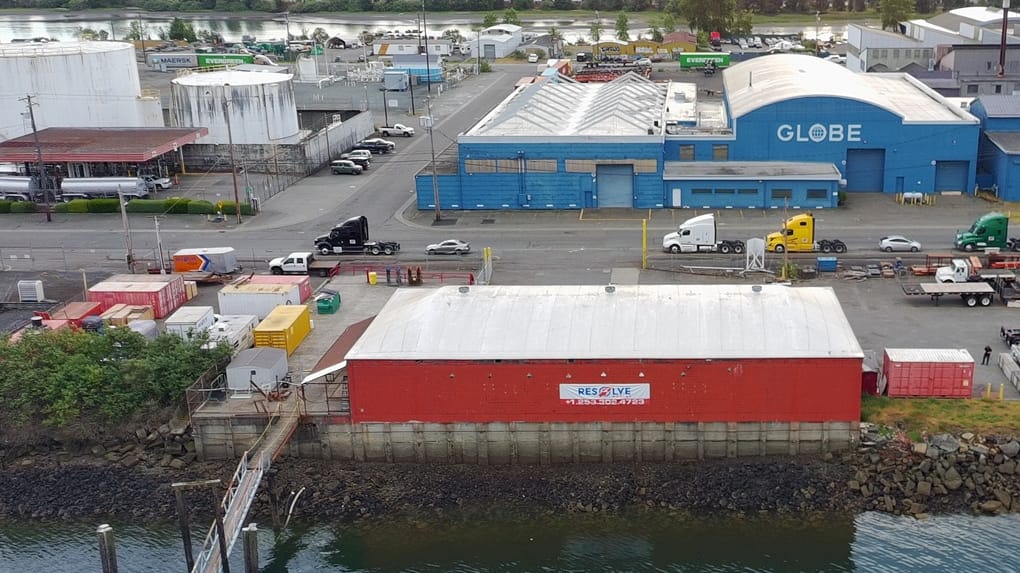
Resolve Marine, a global leader in innovative marine solutions, has moved its Pacific Northwest (PNW) facility to a new, strategically positioned location on the Foss Waterway in Tacoma, Washington. The move reinforces the company’s long-term commitment to the region and enhances its ability to deliver rapid, high-quality service to customers across the Pacific Northwest and beyond.
The new waterfront facility address is 700 E D Street, Tacoma, WA 98421. This location provides significant operational advantages, including dedicated dock space, expanded yard capacity, and upgraded equipment to support a growing range of marine services, including marine salvage and environmental response across the region.
Key features include:
- Private dock space and shoreline access for efficient vessel servicing
- Innovative hull cleaning and propeller polishing package for enhanced vessel performance
- Expanded, fenced, and secured outer yard for increased operational capacity
- Increased inventory of emergency response equipment to support rapid deployment
- Upgraded salvage equipment and capabilities to handle complex marine challenges
The facility’s strategic location strengthens Resolve Marine’s ability to support shipping, port operations, offshore industries and government partners throughout the region. Originally established in 2023, the Tacoma facility is also one of the company’s three Marine Service Centers, providing shipyard and husbandry services, commercial diving, vessel and underwater bridge inspections, marine construction, and dredging, repair and demolition services.
“This new facility location represents an important investment in our Pacific Northwest capabilities,” said CEO Joseph Farrell III. “With this enhanced space, greater access to the water, and expanded resources, we are better positioned to respond quickly and effectively to the needs of our customers.”
“Our expanded footprint and upgraded capabilities allow us to deliver faster response times, greater service flexibility, and innovative marine solutions to our customers,” added Facility Manager Chad Kasin. “We look forward to continuing to serve our customers are partners in the region.”
The products and services herein described in this press release are not endorsed by The Maritime Executive.
\

No comments:
Post a Comment