Iran ties Hormuz reopening to end of US strikes and naval blockade
Iran will not reopen the Strait of Hormuz to normal shipping while US military action and its naval blockade against the country continue, foreign ministry spokesman Esmaeil Baghaei said, Iranian state media reported on August 2.
The conditions harden Tehran's position on the waterway it effectively closed after the war with the United States began in February, through which about a fifth of the world's seaborne oil passes, signalling that a technical deal with Oman on shipping lanes will not by itself restore traffic. The Iranian official's comments also follow Donald Trump's statement that talks were underway later on August 3.
Baghaei said the strait's problem stemmed not from any Iran-Oman disagreement but from what he called US and Israeli military aggression since February.
"Agreement on a safe transit route is a necessary condition for reopening the Strait of Hormuz, but it is not a sufficient one," Baghaei said, according to the report. He said that as long as US actions, the naval blockade and what he described as aggression against Iran continued, no particular change in the strait's status should be expected.
Baghaei said Iran was not holding negotiations with the United States, and that the current talks were with Oman and focused on agreeing a temporary route to provide for safe passage through the strait.
He characterised these as bilateral talks between two coastal states, adding that others could play a constructive or destructive role but that the core matter concerned Iran and Oman.
The spokesman said matters relating to Iran and the United States would have to be examined at later stages depending on how the situation developed.
Baghaei used the briefing to accuse the United States of continuing to cause civilian casualties, citing what he said were the deaths of a taxi driver and members of his family on Qeshm island, and of several Iranian nationals killed in a US air strike in Iraq.
He also referred to the killing of a 23-year-old man from the northern port of Bandar Anzali in an attack on an Iranian merchant vessel in the Caspian Sea, which he attributed to Israel. The accounts could not be independently verified.
Baghaei said the foreign ministry's diplomatic activity was continuing at regional and wider levels, aimed at protecting Iran's national interests and security.
Trump said negotiations with Iran would resume on August 3 after he held off on a strike he had threatened over the weekend, telling reporters aboard Air Force One that a deal to end the war was imminent, several US outlets reported on August 3.
Trump said the emerging framework would include the immediate and total reopening of the Strait of Hormuz and an end to what he termed Iran's nuclear threat, and that Israel had joined the commitment to hold off on strikes while terms were worked out. He said Iran wanted an agreement, adding that this remained to be tested.
A regional official involved in the mediation said the proposal called for the United States and Iran to return to talks, for the reopening of the strait and a halt to attacks across the region including by Iran-backed militias, and in exchange for Washington to lift its naval blockade and allow Iran to export oil under the terms of the earlier ceasefire.
Iran's Foreign Minister Abbas Araghchi separately described parallel negotiations with Oman over the strait as in their final stages, telling the cabinet the talks were on the way to being finalised. The foreign ministry spokesman Esmaeil Baghaei said Iran had no direct negotiations with the United States and that agreement on a safe-passage route was necessary but not sufficient to reopen the waterway while US military action continued.
The United States and Israel attacked Iran on February 28, igniting a war during which Tehran laid claim to the Strait of Hormuz, through which about a fifth of the world's seaborne oil passes. An April ceasefire led to a memorandum of understanding signed in June, but implementation stalled in a dispute over shipping routes and fighting resumed in July.
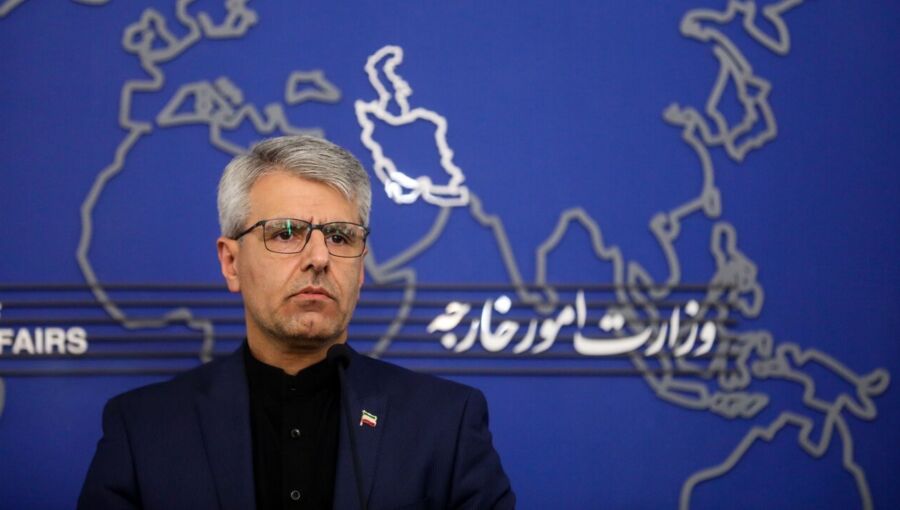
Iran will not reopen the Strait of Hormuz to normal shipping while US military action and its naval blockade against the country continue, foreign ministry spokesman Esmaeil Baghaei said, Iranian state media reported on August 2.
The conditions harden Tehran's position on the waterway it effectively closed after the war with the United States began in February, through which about a fifth of the world's seaborne oil passes, signalling that a technical deal with Oman on shipping lanes will not by itself restore traffic. The Iranian official's comments also follow Donald Trump's statement that talks were underway later on August 3.
Baghaei said the strait's problem stemmed not from any Iran-Oman disagreement but from what he called US and Israeli military aggression since February.
"Agreement on a safe transit route is a necessary condition for reopening the Strait of Hormuz, but it is not a sufficient one," Baghaei said, according to the report. He said that as long as US actions, the naval blockade and what he described as aggression against Iran continued, no particular change in the strait's status should be expected.
Baghaei said Iran was not holding negotiations with the United States, and that the current talks were with Oman and focused on agreeing a temporary route to provide for safe passage through the strait.
He characterised these as bilateral talks between two coastal states, adding that others could play a constructive or destructive role but that the core matter concerned Iran and Oman.
The spokesman said matters relating to Iran and the United States would have to be examined at later stages depending on how the situation developed.
Baghaei used the briefing to accuse the United States of continuing to cause civilian casualties, citing what he said were the deaths of a taxi driver and members of his family on Qeshm island, and of several Iranian nationals killed in a US air strike in Iraq.
He also referred to the killing of a 23-year-old man from the northern port of Bandar Anzali in an attack on an Iranian merchant vessel in the Caspian Sea, which he attributed to Israel. The accounts could not be independently verified.
Baghaei said the foreign ministry's diplomatic activity was continuing at regional and wider levels, aimed at protecting Iran's national interests and security.
Trump said negotiations with Iran would resume on August 3 after he held off on a strike he had threatened over the weekend, telling reporters aboard Air Force One that a deal to end the war was imminent, several US outlets reported on August 3.
Trump said the emerging framework would include the immediate and total reopening of the Strait of Hormuz and an end to what he termed Iran's nuclear threat, and that Israel had joined the commitment to hold off on strikes while terms were worked out. He said Iran wanted an agreement, adding that this remained to be tested.
A regional official involved in the mediation said the proposal called for the United States and Iran to return to talks, for the reopening of the strait and a halt to attacks across the region including by Iran-backed militias, and in exchange for Washington to lift its naval blockade and allow Iran to export oil under the terms of the earlier ceasefire.
Iran's Foreign Minister Abbas Araghchi separately described parallel negotiations with Oman over the strait as in their final stages, telling the cabinet the talks were on the way to being finalised. The foreign ministry spokesman Esmaeil Baghaei said Iran had no direct negotiations with the United States and that agreement on a safe-passage route was necessary but not sufficient to reopen the waterway while US military action continued.
The United States and Israel attacked Iran on February 28, igniting a war during which Tehran laid claim to the Strait of Hormuz, through which about a fifth of the world's seaborne oil passes. An April ceasefire led to a memorandum of understanding signed in June, but implementation stalled in a dispute over shipping routes and fighting resumed in July.
Iran says talks with Oman on new Strait of Hormuz shipping route nearing conclusion
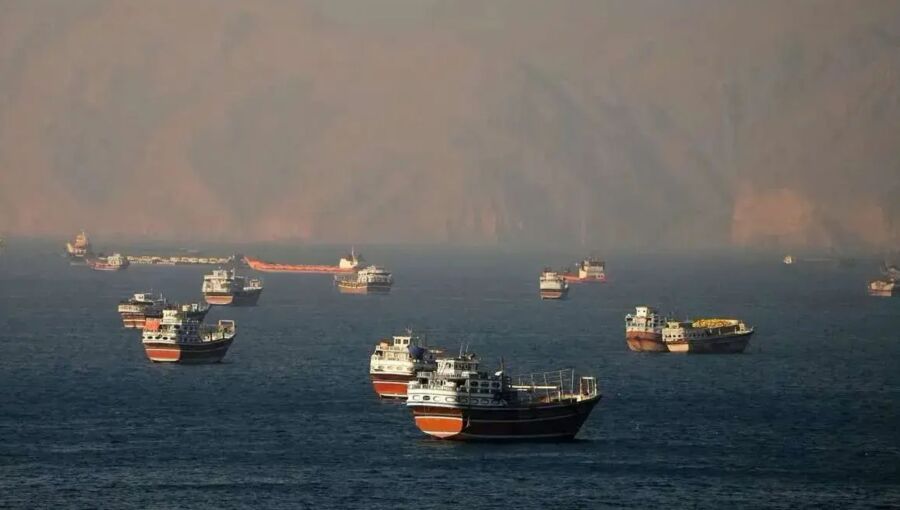
Iran's Foreign Minister Abbas Araghchi said talks with Oman on a new shipping route through the Strait of Hormuz were in their final stages, in a report to the cabinet, news agency Fars reported on August 2.
The talks aim to establish a new traffic separation scheme through the strait that Tehran says would protect its sovereign rights, but Iran has stressed that any agreement with Oman would not by itself reopen the waterway, which it has kept closed to shipping during its confrontation with the US. The strait normally carries about a quarter of the world's seaborne oil.
The Iranian position sits against US President Donald Trump's claim, in a Truth Social post late on August 1, that the outlines of a deal to end the war had been agreed, including the immediate, complete and total opening of the strait and an end to Iran's nuclear threat.
Trump said he would order US forces to hold off on new strikes, claiming Middle East allies had reached the (parameters) of a deal to end the five-month war. Iran's acting defence minister Majid Ebn-e-Reza dismissed the pullback as psychological warfare, saying Iran's forces treated every threat as real.
Foreign ministry spokesman Esmaeil Baghaei said the understanding with Oman was a necessary but not sufficient condition for reopening the strait, in an interview with state television.
"The closure of the Strait of Hormuz was not because of Oman, but because of US treaty violations, the naval blockade of Iran and the harassing actions the US has taken against Iran," Baghaei said. He said reopening the strait was a completely different equation.
Baghaei said the talks with Oman had run for about two months, beginning shortly after the ceasefire that ended the war, and that Iran had shared route maps prepared by its relevant agencies with the Omani side. He said the aim was to agree a route that was neither the northern nor the southern corridor, but one that secured both sides' sovereign rights.
He said the internationally recognised route approved by the International Maritime Organisation had, from 1968 until the war, passed entirely through Omani territorial waters. Under the ceasefire understanding, management of the strait was to be handled by Iran in consultation with Oman and regional states, he said.
The Fars news outlet said numerous ships remained stuck in the northern corridor of the strait in Iranian waters, able to pass only if Iran's armed forces allowed.
Baghaei said US intervention had repeatedly disrupted the talks rather than facilitating them, and that Iran would not let its national interests be affected by threats from US officials.
Iran issues Gulf-wide energy hit list if Trump carries through on threats to destroy Iran’s energy sector
US President Donald Trump threatened to destroy Iran’s energy sector in a joint operation with Israel, prompting Tehran to issue a hit list of some of the most valuable assets in the Gulf if he carried through with the threat.
Panicked that they would lose their biggest cash cows, which would also have serious implication for the already chaotic global energy markets, Gulf leaders called Trump persuaded him to backdown. But tension remain high after the failure of the 60-day ceasefire agreed in a Memorandum of Understanding (MoU) deal earlier this month.
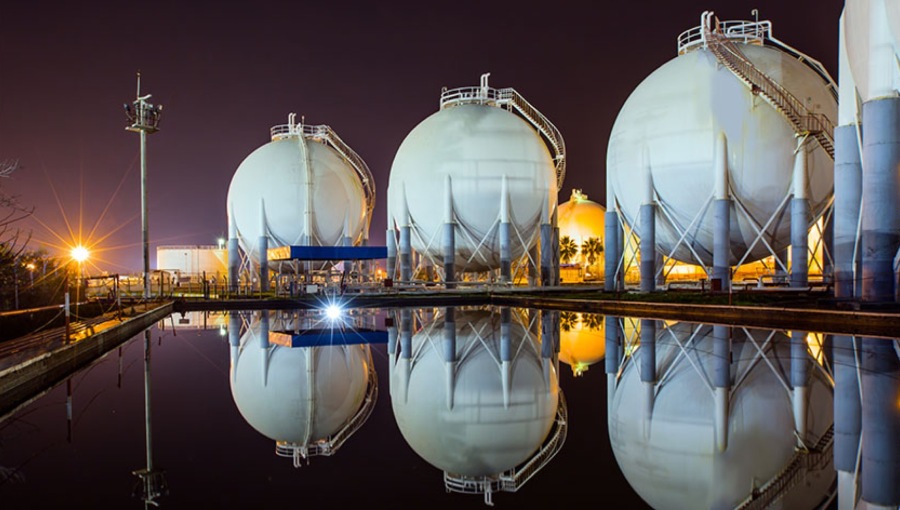
The list included Saudi Arabia's Ghawar oil field and Qatar's Ras Laffan LNG complex – two of the biggest complexes of their kind in the world – if the US and Israel go ahead with a threatened new bombing campaign.
The state-linked Fars news agency reported the seven targets on August 1-2:
- Saudi Arabia's Ghawar field, the world's largest onshore oilfield;
- Saudi Arabia's Abqaiq and Khurais processing complex, together with Ghawar handling more than 7mn barrels a day;
- the UAE's Ruwais refinery;
- the UAE's offshore Zakum field;
- Qatar's North Field gas reserve;
- Qatar's Ras Laffan LNG terminal, which handles roughly a fifth of the world's LNG trade;
- Kuwait's Burgan field;
- Bahrain's Sitra refinery;
- Israel's Leviathan and Tamar gas fields.
The threat follows reporting by CBS News that the US and Israel are planning what would be one of the harshest bombing campaigns of the conflict against Iranian power plants and refineries. “The US is locked and loaded,” Trump posted on social media on August 1 in the latest of string of extreme threats as he continues to flip flop between peace offers and threats of extreme violence. An Israeli official told CBS News that Israel had not been asked to join in the attack. The plan reportedly came up at a Trump cabinet meeting at Camp David on July 31, where some White House aides argued against it.
Iran-linked media framed the list as a deterrent rather than an imminent strike order, invoking the earlier, roughly six-week US-Israel-Iran war this summer, during which Tehran struck Qatar's South Pars gas processing facility in response to an attack on the field, prompting a public apology from Trump on Truth Social promising "it will not happen again."
The renewed threat lands as the Strait of Hormuz remains a live flashpoint: Iran said on July 21 the strait, through which roughly a fifth of the world's oil trade passes, would stay closed even as Qatar, Egypt and Pakistan proposed a 10-day truce. A separate US strike in late July on the Darkhoveyn nuclear plant construction site drew a similar warning of retaliation from Tehran.
Trump said on August 2 he was cancelling the planned attack after Saudi Arabia and other regional powers, including Qatar, the UAE, Turkey and Pakistan, pressed Washington to hold off, citing progress toward a deal that would reopen the Strait of Hormuz, with ships entering the Gulf routed through Iranian territorial waters and those leaving routed via Oman - contingent on Iran agreeing "rapidly." Tehran has not responded to the offer by the time of writing.
Biofouling From Hormuz Shutdown Poses Major Invasive Species Risk
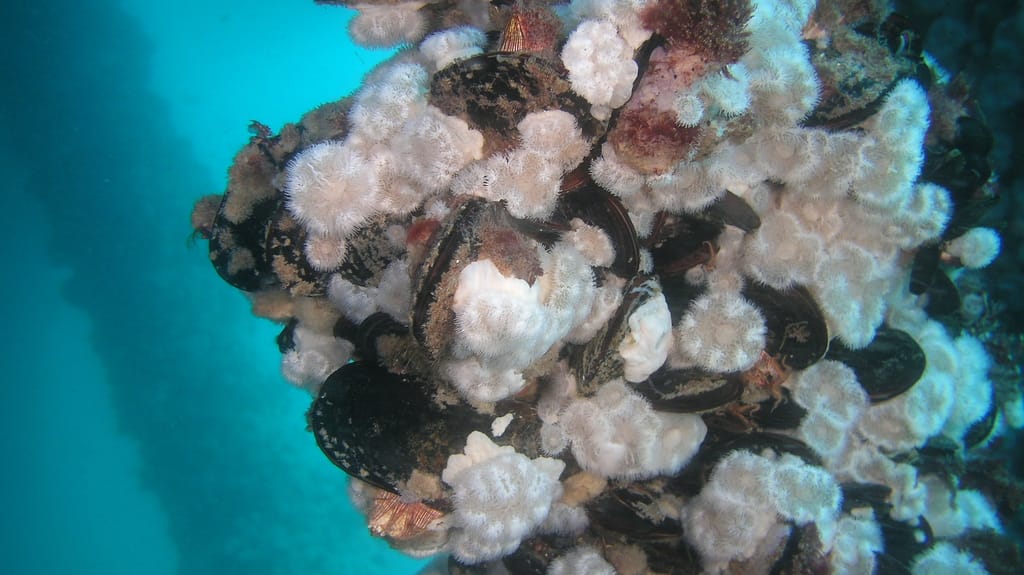
For months, industry analysts have noted that biofouling accumulation on vessels stuck in the Arabian Gulf would be a slow-down factor in restarting shipping operations through the Strait of Hormuz. Fouling pressure in the Gulf is intense, and hull cleaning services in the GCC nations' ports have reportedly been in high demand. But all of that biofouling also poses a risk to regional ecosystems in overseas ports, according to a new research paper: once the 1,500 affected ships in the Gulf get under way and begin moving around, they will be carrying a forest of invasive species on their hulls wherever they go.
"If you had to design the worst-case scenario, I don’t know if you could have done it differently. It is a perfect storm," environmental scientist and co-author Prof. Mario Tamburri told The Guardian.
In a new paper in the journal Biological Invasions, Tamburri and his colleauges noted that the Hormuz standoff is the largest single forced shutdown for the global fleet in modern history: 1,500 merchant ships have been waiting at anchor and accumulating fouling for months. sd
"Given the unprecedented scale and duration of this mass lay-up of ships, conditions are primed for a large-scale, marine bioinvasion 'super-spreader' event as regular maritime trade in the region resumes," Tamburri and his co-authors argued. "The combination of extensive biofouling growth and species accumulation, and the sheer number, size, and global reach of affected vessels, has created an immense international biosecurity threat."
The vessels arrived with fouling from other regions, and will pick up new species that reside in the warm waters of the Gulf. The timing - spring and summer, when waters are warmest - is highly conducive to invasives' growth and reproduction. The specific strains of barnacles, algaes, aquatic plants found in the Gulf are likely to have higher heat tolerance and overall hardiness from surviving in a hot, competitive environment, and might be especially invasive compared to similar examples of the same organisms elsewhere.
Inevitably, the ships will carry these collections with them when they leave, spreading invasives around the world. IMO guidance recommends "immediate actions" to clean off the hull after a layup of more than 18-30 days. The researchers advised performing in-water cleaning before departure in order to scrape off the fouling, helping to reduce the risk of invasives and reduce the ship's fuel consumption at the same time - but acknowledged that for most ships, this will not happen.
In the Gulf, there is limited in-water cleaning capacity to service 1,500 ships, especially on shifting, uncertain timelines for the reopening of Hormuz. Most of the trapped vessels will take the first possible opportunity for departure, without waiting for optimal hull cleanliness. This will push the need for cleaning to the next port of call, or the one after that. "We therefore strongly encourage a coordinated global network of safe and effective [in-water cleaning] services," the researchers concluded.
Ideally, each ship would try to visually estimate the degree of fouling on the hull before leaving, and would calculate the change in fuel efficiency while under way. This information could then be used to prepare other ports to receive these ships in a prepared manner, with adequate resources for providing hull cleanings. In-water monitoring for new invasives (at high-risk ports of call) would help local authorities to respond if necessary to contain any outbreak of invasives.
"Whether it becomes a global bioinvasion super-spreader event will now depend less on the biofouling communities already present on vessels than on the speed, coordination, and effectiveness of the responses that follow," the team concluded. "Prevention is consistently recognized as the most effective and cost-efficient management strategy compared with post-introduction control."

No comments:
Post a Comment