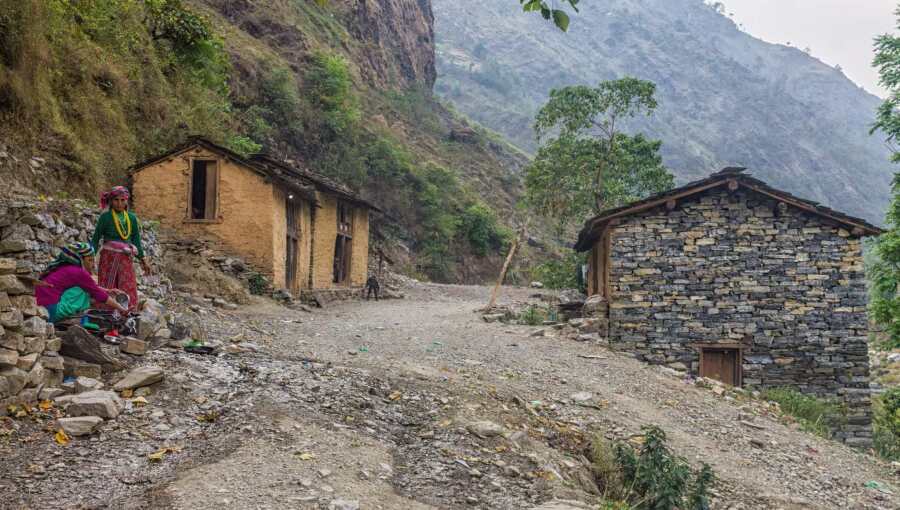
The death toll from severe flash floods in Nepal has risen to 955, while more than 4,471 remain missing, according to a report by CNN.
Debris has obstructed nine hydropower tunnels under construction in Rasuwa and Nuwakot districts, trapping more than 900 workers from Nepal, South Korea and China. The scale of the underground emergency has complicated rescue operations and increased pressure on already stretched response teams, who are reportedly struggling to detect signs of life even with heat signature tracking equipment. Domestic rescue teams reportedly lack sufficient heavy machinery and equipment capable of accurately locating people underground.
Emergency personnel from India, China, South Korea and Australia are working alongside Nepal’s military and police in efforts to extract workers from the blocked tunnels. The multinational response reflects the technical complexity of searches conducted in unstable underground environments.
Nepal rejected the notion that it was limiting the scope of foreign assistance. A report by NPR quoted Nepal’s Minister of Finance, Swarnim Wagle as saying that Nepal had accepted support based on “the needs on the ground”.
However, it is likely that geopolitical sensitivities and the specter of possible foreign interference may have been a possible factor behind the reluctance to accept foreign assistance, as traditionally Kathmandu has been a subject of soft power rivalries between regional heavyweights India and China.
According to a report by Reuters, China’s Foreign Ministry rejected allegations that authorities had failed to issue adequate warnings or had understated casualties in Chinese territory.
Difficult weather conditions continue to hamper rescue operations, while the possibility of further glacial collapses poses additional risks to search teams and nearby barrier lakes.
The evolving hazards could prolong recovery efforts and increase the potential for further casualties, underscoring the need for specialised equipment, cross-border coordination and sustained international assistance as conditions remain unstable.
Authorities in Nepal carry out temporary burials of unidentified flood victims causing public outrage
Temporary burials of hundreds of the catastrophic flood victims have caused public outrage in parts of the country who accused authorities of not following Hindu burial rites and mismanaging the situation.
Nepal was burying on Monday some of the hundreds of bodies retrieved after a deadly, tsunami-like flood crashed through the Himalayan region, sweeping away villages and causing widespread destruction in its path.
In south-central Nepal's Chitwan district, hundreds of victims were being buried while awaiting identification in hastily dug trenches serving as temporary graves, prompting accusations from locals that Hindu funeral traditions were being ignored.
Government officials have noted that the measure is needed due to the severity of the situation, as the catastrophic floods are estimated to have killed at least 903 people, a number which could rise dramatically as 4,247 more are still reported missing.
Some of the bodies that were buried were carried hundreds of kilometres downstream by the Bhotekoshi River from the flood's epicentre before being recovered in Chitwan.
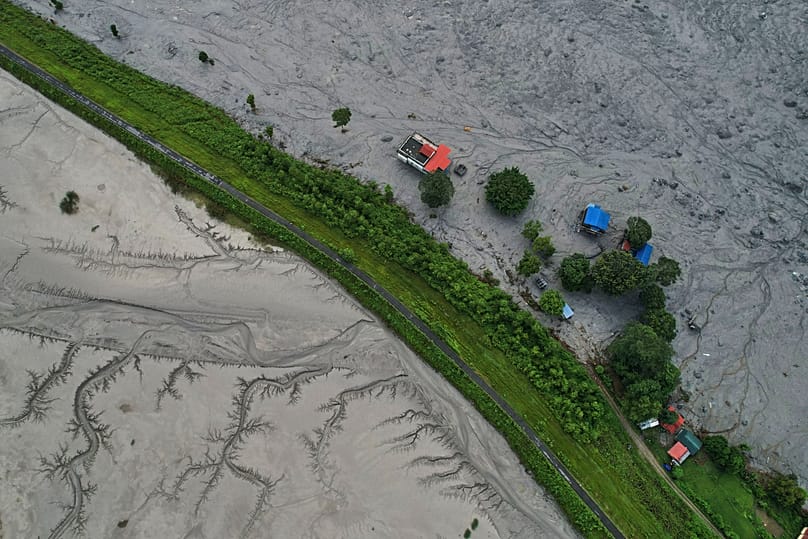 A drone view shows a major section of Pasang Lhamu highway washed away along swollen Trishuli river. 31 August, 2026 AP Photo
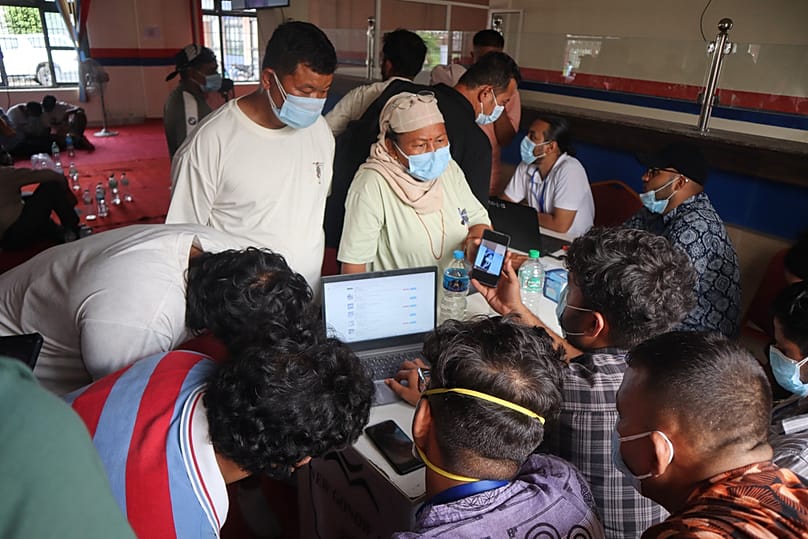
Distraught families have packed rescue stations and hospitals in search of their missing relatives, while others have faced the grim task of identifying bodies at overflowing morgues.
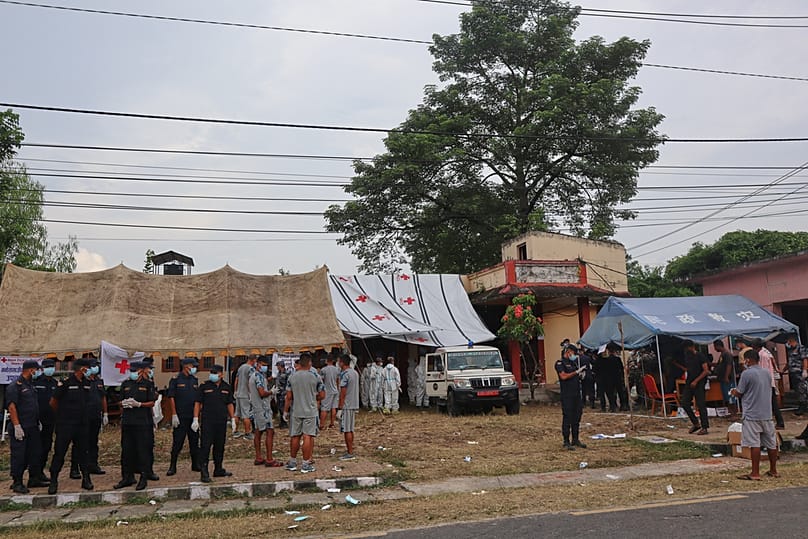
Authorities carried out a temporary burial of about 100 victims on Saturday, officials said, as forensic teams struggled to cope. A convoy of vehicles carrying bodies entered a lush, forested area as an excavator dug a wide trench in the red earth while officials and media looked on.
Anil Thapa, a police inspector coordinating the handling of the bodies, said another 50 bodies were having DNA samples taken ahead of their likely burial on Sunday.
Limited forensic infrastructure and inadequate morgue capacity in the district further strained efforts to manage the overwhelming number of bodies recovered from the disaster, officials said.
High humidity and sweltering heat accelerated decomposition, compounding the challenges as health experts warned that leaving the remains exposed could increase the risk of disease.
As survivors grappled with the aftermath, criticism of the burials mounted. Some residents said the dead had waited days for their last rites and were denied dignity in death. Families still waiting to locate missing relatives and some public figures questioned whether authorities moved too quickly.
The issue is particularly sensitive in Nepal, a predominantly Hindu nation where the dead are traditionally cremated. Ruby Chaudhary, who has two missing relatives, said the burials should not proceed without families’ consent.
“The dead deserve to be treated with dignity,” she said. “Our tradition is to cremate them on the riverbank, surrounded by their immediate family.”
“People are worried that this could be a permanent burial, but it is only temporary management,” said Thapa. “If someone is able to verify the identity later using the available information, they can take back the body and perform the appropriate funeral rites.”
Amrit Bahadur Rai, Nepal’s foreign secretary, said the temporary burial of unidentified bodies was carried out in line with internationally accepted disaster-management protocols, including those of the International Committee of the Red Cross.
“Families can match records later, and will be allowed to exhume (the remains later) for necessary rituals,” Rai said at a press briefing in the capital Kathmandu.
In shadow of Nepal-Tibet disaster Tajikistan searches for glacial lakes at risk of catastrophic outburst
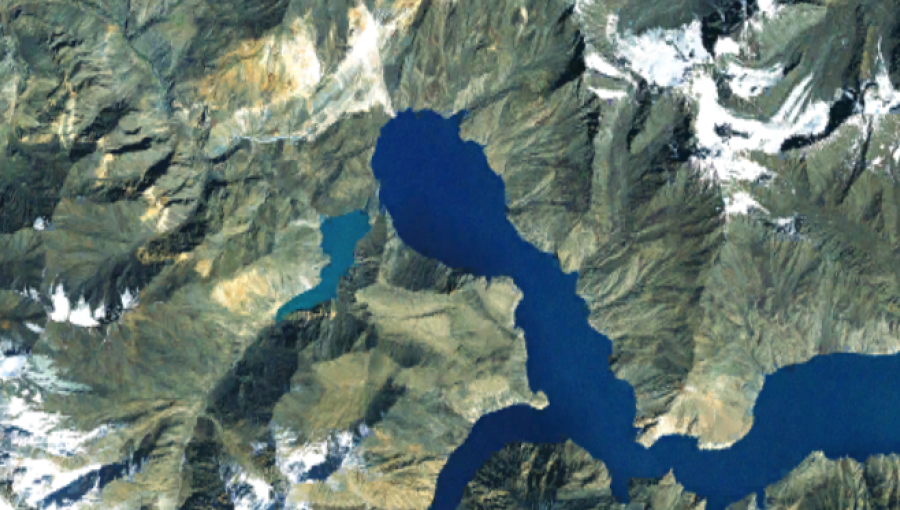
Mountainous Tajikistan is using satellite technology to search for mountain lakes that pose a risk of catastrophic outbursts.
The announcement of the lake surveillance, reported by Asia-Plus on August 30, comes as rescuers continue to search the Nepal-Tibet border region of the Himalayas for survivors of the August 26 disaster in which a wall of water, released by a glacial collapse, surged downstream, claiming the lives of hundreds, and likely thousands. As of August 30, around 3,000 people were still missing.
Among the lakes that Tajik scientists are monitoring for changes – using the Transient Hydrologic Anomalies Weekly (THAW) automated tool – are Lake Sarez and other high-altitude water bodies of the Pamir mountains, including the glacial lakes of Baralmoos. Glacial lake outburst floods (GLOF) pose a particular threat to life and property as, when an outburst occurs, the flow can carry large volumes of water, rocks, ice and mud, which can destroy roads, homes and agricultural land.
Lake Sarez was formed amid mountains by an earthquake that struck Rushon District of Tajikistan’s eastern Gorno-Badakhshan Autonomous Oblast (GBAO) in 1911. The tremor caused a landslide that blocked the Murghab River.
The lake spans 61 kilometres (38 miles) in length and reaches depths of 500 metres. Seismologists remain worried that, while the natural damming of the lake appears stable, another major earthquake in the vicinity could cause catastrophic flooding of land below the location of the lake. Asia-Plus said scientists have detected some land movement in the slopes around the lake, which research suggests contains approximately 16-17 cubic kilometres (16,000 to 17,000 million cubic metres) of water.
In June 2024, IntelliNews reported on a proposal to export freshwater from Sarez to Gulf countries and other regions experiencing water stress and scarcity.
The THAW system uses data from the Sentinel-1 SAR satellite and the Google Earth Engine platform. The objective is to locate water bodies that require additional monitoring.
Climate change is leading to accelerated glacier melting and the formation of new unstable lakes in high-altitude areas
According to an academic’s research data, Tajikistan has approximately 500 to 600 glacial lakes.

No comments:
Post a Comment