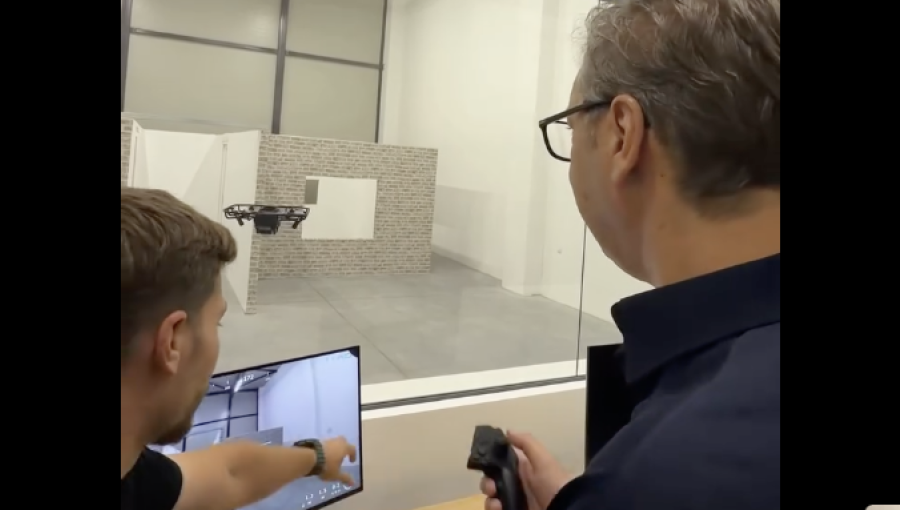
Serbia’s President Aleksandar Vucic on September 17 opened a factory for assembling Israeli-made drones, part of Belgrade's efforts to modernise its armed forces and expand domestic defence production.
The plant will employ about 100 people and supply drones to the Serbian military as well as the armed forces of other countries, Vucic said in a post on Instagram.
"Our plans are huge," Vucic said, adding that Serbia and its Israeli partners planned to open at least three more factories across the country.
Vucic said journalists were not invited to tour the facility because of the confidentiality of the production process. A video accompanying his announcement showed several drone models being assembled at the plant, but he gave no further details about its location, investment or production capacity.
Vucic confirmed in April that Serbia would jointly produce combat drones with Israel as part of a broader drive to strengthen its military capabilities and increase arms exports.
Israeli defence company Elbit Systems holds a 51% stake in the joint venture, with Serbia's state-owned arms producer Jugoimport SDPR holding 49%, according to documents obtained by BIRN and Haaretz and reported earlier this year.
The companies plan to produce two types of drones for short- and long-range missions, according to the reports.
In April, Vucic said Serbia could not produce drones at the same level as Israel on its own and would therefore develop them jointly with Israeli partners.
Serbia has stepped up military spending and procurement in recent years, buying equipment from France, Israel, China and other suppliers as it seeks to replace ageing Soviet-era systems.
Belgrade purchased artillery systems and drones from Elbit worth about $335mn in early 2025 and signed a separate deal with the company in August 2025 worth about $1.6bn for long-range missiles, drones and electronic warfare systems.
Serbia has also ordered 12 Rafale fighter jets from France's Dassault Aviation for about €2.7bn, while acquiring aircraft and helicopters from Airbus and missile and drone systems from China.
The country formally maintains a policy of military neutrality and is seeking European Union membership, while retaining longstanding ties with Russia and developing closer strategic and economic links with China.
Operations resume at Luxembourg airport after 'unauthorised' drones halt flights

The airport has warned of knock-on delays and disruption as airlines work to restore regular flight schedules.
Flights were temporarily suspended at Luxembourg airport overnight due to "unauthorised" drone activity.
"Flight operations at Luxembourg Airport (ELLX) have resumed following the temporary suspension on the evening of Friday, 18 September 2026, due to the detection of unauthorised unmanned aircraft systems (UAS) in the vicinity of and subsequently over the aerodrome," a statement on the airport's website said.
The airport - the main hub for Luxembourg's national airline Luxair and cargo airline Cargolux - did not provide any details on where the drones may have come from or who was operating them, but it said it was continuing to monitor the situation alongside relevant authorities, airlines, and air traffic services.
It also warned of knock-on delays and disruption as airlines work to restore regular flight schedules.
"The temporary suspension of flight operations was implemented as a precautionary measure to ensure the safety of passengers, airline crews, airport personnel and aircraft," the airport added in its statement.
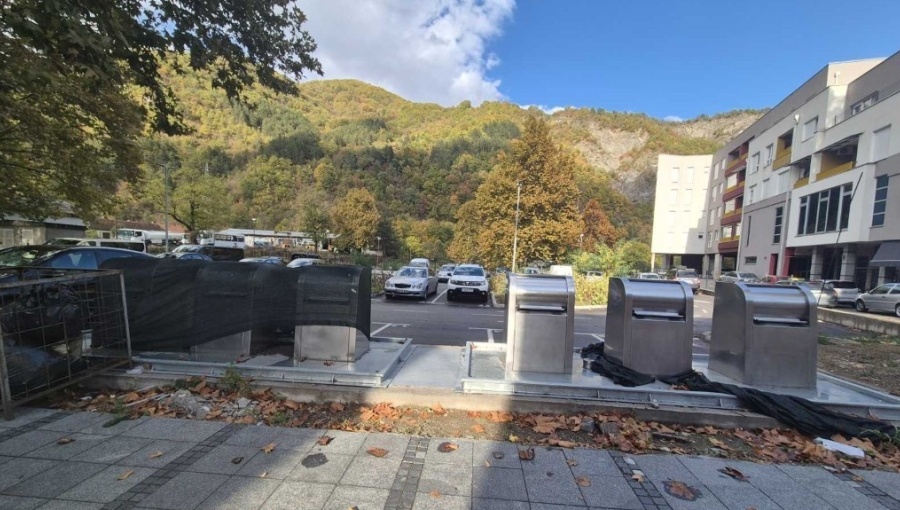
Bosnia & Herzegovina’s Jablanica municipality will deploy drones equipped with artificial intelligence cameras to detect illegal waste dumps as part of a €1.13mn cross-border project aimed at improving waste management around tourist lakes.
The Stockholm Environment Institute (SEI) reports that around 25% of all waste disposed of in Bosnia ends up in illegal dump sites, of which there are more than 1,400 illegal waste disposal sites, according to the UNDP.
The CIRCULARlakes project, funded mainly by the European Union through the INTERREG VI-A IPA Croatia-Bosnia and Herzegovina-Montenegro programme, will also introduce smart bins, composters and biowaste shredders, the municipality said.
Jablanica has secured BAM793,150 (€405,531), including BAM674,711 in EU funding, for activities in the municipality. The project runs until July 2028.
The initiative covers Jablanica Lake, Croatia’s Baćina Lakes and Montenegro’s Lake Skadar and aims to develop what organisers describe as an AI-supported circular economy model for areas exposed to intensive tourism.
It will include digital tools to optimise routes for municipal waste collection vehicles, while an application and gamification platform will be developed for residents and tourists.
The project also aims to increase local processing of organic waste, with a target of at least 50% being composted locally once the proposed waste-management model is adopted by municipalities and utility companies.
“The main goal of the project is the development and implementation of a smart, locally based and artificial intelligence-supported circular economy model,” the municipality said.
Other partners include Croatia’s City of Ploče, Montenegro’s capital Cetinje, Zero Waste Montenegro and Mostar-based LINK Entrepreneurial Center, which is leading the project.
The EU is providing €963,425.70, or 85% of the project’s total cost, with the remainder covered by the participating organisations.

No comments:
Post a Comment