Travis Gettys
August 31, 2026
RAW STORY
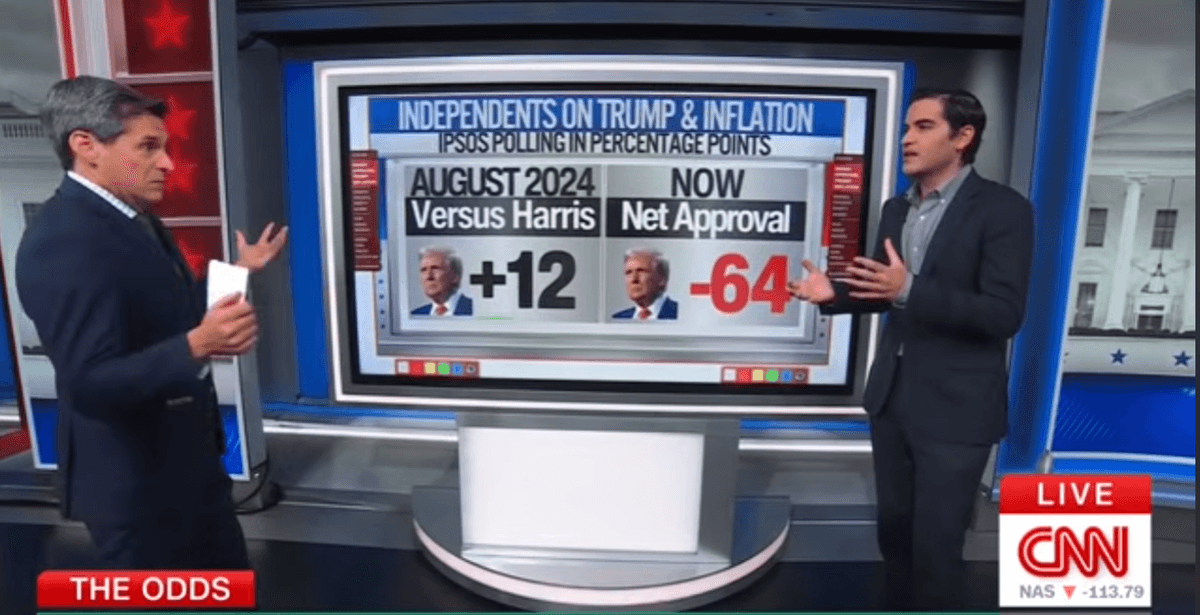
(Screengrab via CNN)
The decisive voter bloc in this year's midterm elections has dramatically shifted away from President Donald Trump and the Republican Party on the issue that helped elect him, according to CNN's Harry Enten.
In August 2024, independents trusted Trump over then-Vice President Kamala Harris on inflation by 12 percentage points, a margin Enten described as a key factor in Trump's victory. That advantage has since collapsed, and Trump's net approval rating on inflation among independents now stands at 64 points underwater – marking a swing of 76 points in a little over two years.
"Whoa!" Enten said. "You don't see changes like this. But the key issue that got him elected, now he's way down there in the Gulf of Mexico.
A similar reversal has occurred at the party level. In August 2022, ahead of that year's midterms, independents trusted Republicans over Democrats on inflation by 27 points, a margin that helped the GOP retake the House, but independents now say they trust Democrats more on the issue, by 18 points — a 45-point swing from four years ago.
Enten said such large shifts in voter trust on a single issue are unusual, and noted that the change matters because inflation remains the top concern for independent voters heading into November.
According to the data presented, 38 percent of independents named inflation as their top issue, followed by 14 percent who cited the broader economy and 10 percent who pointed to the conflict with Iran, which Enten said is also closely tied to economic concerns. Combined, more than half of independents identified inflation or the economy as their most pressing issue.
Gas prices, a visible driver of inflation concerns, may not offer Republicans relief before Election Day.
Enten said the combination of persistently high gas prices and the sharp erosion of trust on inflation, the very issue that fueled Republican gains in both the 2022 and 2024 elections, could pose a significant risk for the party in this year's midterm contests, given how central the issue clearly remains to independent voters' concerns.
GOP Senate alarms blare as Trump now in 'serious trouble with farm country'
Travis Gettys
August 31, 2026
Farm-state Republicans point to a combination of tariffs, expensive diesel and fertilizer, and administration moves to ease tariffs on imported beef as driving frustration among agricultural voters who have historically backed the party.
Cramer said the beef issue in particular has infuriated producers. "The one ag producer making money for a change and you shrink his revenue," he said.
Democratic candidates say they're hearing similar frustration on the trail. Josh Turek, running for Senate in Iowa against Rep. Ashley Hinson, has described conditions facing farmers as a second farm crisis. Adam Hamilton, a former pastor challenging Sen. Roger Marshall in Kansas, said many Republican voters are reluctant to criticize Trump directly but expect their senators to push back on policies hurting them.
Iowa, which Trump carried three times but which hasn't elected a Democratic senator since 2008, is considered a bellwether for whether the discontent extends beyond reliably blue territory. Republicans are also watching unusually competitive polling in Kansas, Nebraska and parts of the South, along with Maine and Alaska, states with economies tied closely to trade and fuel prices.
Adding to the frustration is the hundreds of millions of dollars sitting in GOP-aligned groups, much of it controlled by Trump, that officials say hasn't been deployed to help endangered incumbents. Republicans have privately complained the president is focused more on personal priorities than defending the party's majorities.
Sen. Susan Collins (R-ME) said she has urged Trump to reconsider his approach toward Canada, a major trading partner for border states. "I would remind him that Canada is our friend, our closest ally and our biggest trading partner," Collins said, adding that damaging that relationship would hurt Maine and other states along the border.
Republican strategists have compared the environment to 2006 and 2018, both rough midterms for the party in power, with uncertainty over which precedent fits this November.
Travis Gettys
August 31, 2026
RAW STORY
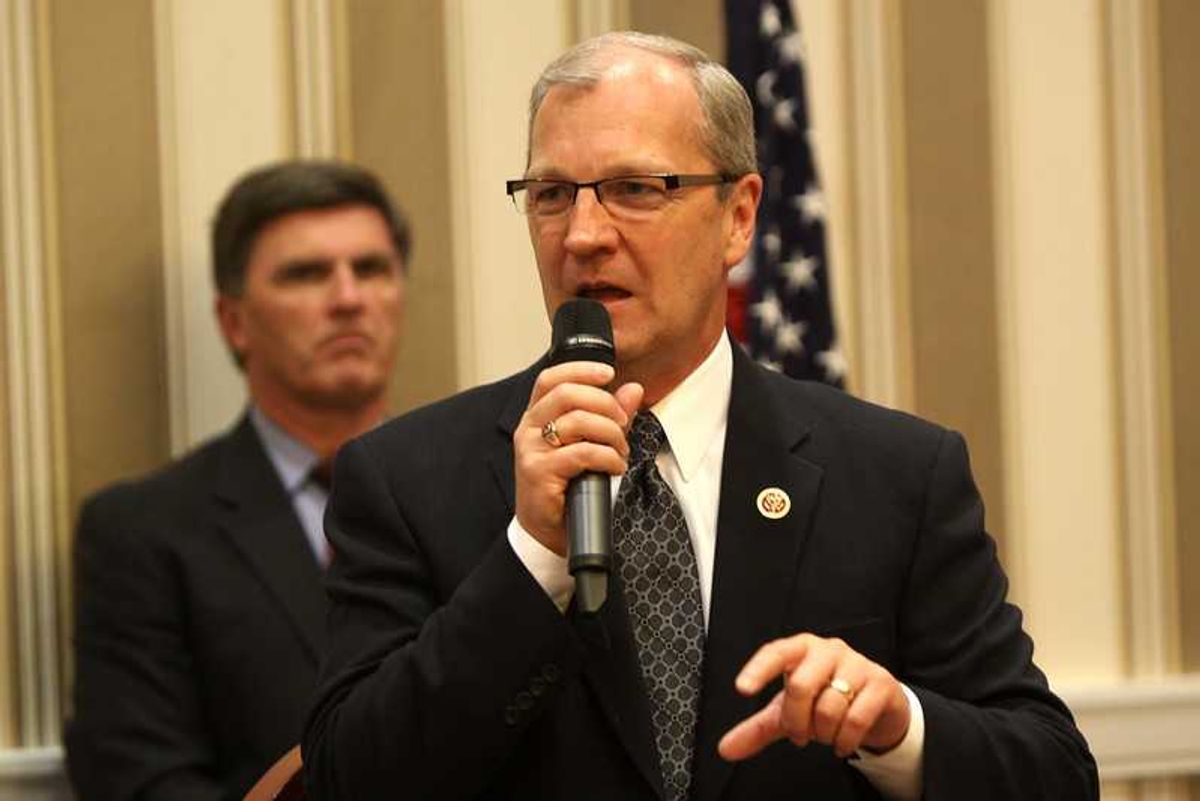
Sen. Kevin Cramer (R-ND). (Photo credit: Gage Skidmore / Flickr)
Republican senators are increasingly convinced the battle for Senate control will be decided in the Midwest, and that agricultural voters angered by tariffs, fuel costs and beef imports could hand Democrats the majority
Democrats need a net gain of four seats to flip the chamber, and strategists say that becomes attainable if they capture Republican-held seats in Ohio and Iowa while holding Michigan, then find a fourth seat in North Carolina or a longer-shot state, reported Politico.
"He's in serious trouble in farm country," Sen. Kevin Cramer (R-ND) said of President Donald Trump. "He being Trump — and Trump is us. I'm not very optimistic."
Sen. Kevin Cramer (R-ND). (Photo credit: Gage Skidmore / Flickr)
Republican senators are increasingly convinced the battle for Senate control will be decided in the Midwest, and that agricultural voters angered by tariffs, fuel costs and beef imports could hand Democrats the majority
Democrats need a net gain of four seats to flip the chamber, and strategists say that becomes attainable if they capture Republican-held seats in Ohio and Iowa while holding Michigan, then find a fourth seat in North Carolina or a longer-shot state, reported Politico.
"He's in serious trouble in farm country," Sen. Kevin Cramer (R-ND) said of President Donald Trump. "He being Trump — and Trump is us. I'm not very optimistic."
Farm-state Republicans point to a combination of tariffs, expensive diesel and fertilizer, and administration moves to ease tariffs on imported beef as driving frustration among agricultural voters who have historically backed the party.
Cramer said the beef issue in particular has infuriated producers. "The one ag producer making money for a change and you shrink his revenue," he said.
Democratic candidates say they're hearing similar frustration on the trail. Josh Turek, running for Senate in Iowa against Rep. Ashley Hinson, has described conditions facing farmers as a second farm crisis. Adam Hamilton, a former pastor challenging Sen. Roger Marshall in Kansas, said many Republican voters are reluctant to criticize Trump directly but expect their senators to push back on policies hurting them.
Iowa, which Trump carried three times but which hasn't elected a Democratic senator since 2008, is considered a bellwether for whether the discontent extends beyond reliably blue territory. Republicans are also watching unusually competitive polling in Kansas, Nebraska and parts of the South, along with Maine and Alaska, states with economies tied closely to trade and fuel prices.
Adding to the frustration is the hundreds of millions of dollars sitting in GOP-aligned groups, much of it controlled by Trump, that officials say hasn't been deployed to help endangered incumbents. Republicans have privately complained the president is focused more on personal priorities than defending the party's majorities.
Sen. Susan Collins (R-ME) said she has urged Trump to reconsider his approach toward Canada, a major trading partner for border states. "I would remind him that Canada is our friend, our closest ally and our biggest trading partner," Collins said, adding that damaging that relationship would hurt Maine and other states along the border.
Republican strategists have compared the environment to 2006 and 2018, both rough midterms for the party in power, with uncertainty over which precedent fits this November.

No comments:
Post a Comment