Monday, November 15, 2021

Scientists skeptical on how alive 1.5 temperature limit is

Seth Borenstein
The Associated Press
Sunday, November 14, 2021 
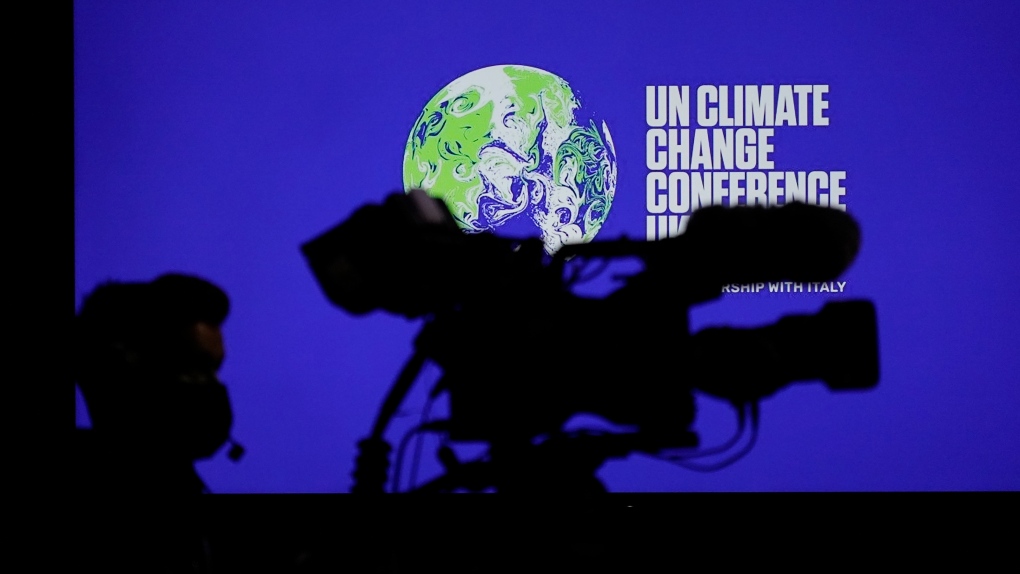
A video camera operator is silhouetted against a COP26 logo as British Prime Minister Boris Johnson gives a press conference at the COP26 U.N. Climate Summit, in Glasgow, Scotland, Wednesday, Nov. 10, 2021. 
(AP Photo/Alberto Pezzali)

GLASGOW, SCOTLAND -- While world leaders and negotiators are hailing the Glasgow climate pact as a good compromise that keeps a key temperature limit alive, many scientists are wondering what planet these leaders are looking at.

Crunching the numbers they see a quite different and warmer Earth.

"In the bigger picture I think, yes, we have a good plan to keep the 1.5-degree goal within our possibilities," United Nations climate chief Patricia Espinosa told The Associated Press, referring to the overarching global goal of limiting warming to 1.5 degrees Celsius (2.7 degrees Fahrenheit) since pre-industrial times.

United Kingdom Prime Minister Boris Johnson, the conference host, agreed, calling the deal a "clear road map limiting the rise in global temperatures to 1.5 degrees."

But many scientists are far more skeptical. Forget 1.5 degrees, they say. Earth is still on a path to exceed 2 degrees (3.6 Fahrenheit).

"The 1.5C goal was already on life support before Glasgow and now it's about time to declare it dead," Princeton University climate scientist Michael Oppenheim told The Associated Press in an email Sunday.

A few of the 13 scientists the AP interviewed about the Glasgow pact said they see just enough progress to keep alive the 1.5-degree Celsius limit -- and with it, some hope. But barely.

The optimists point to many agreements that came out of Glasgow, including a United States-China deal to work harder together to cut emissions this decade, as well as separate multi-nation agreements that target methane emissions and coal-fired power. After six years of failure, a market-based mechanism would kick-start trading credits that reduce carbon in the air.

The 1.5-degree mark is the more stringent of two targets from the historic 2015 Paris climate accord. United Nations officials and scientists consider it key because a 2018 scientific report found dramatically worse effects on the world after 1.5 degrees.

The world has already warmed 1.1 degrees (2 degrees Fahrenheit) since pre-industrial time, so this is really about a few tenths of a degree more. The United Nations calculated that to limit warming to 1.5 degrees, countries need to cut their emissions in half by 2030. Emissions are now going up, not down, by about 14% since 2010, Espinosa said.

German researcher Hans-Otto Portner said the Glasgow conference "got work done, but did not make enough progress."

"Warming will by far exceed 2 degrees Celsius. This development threatens nature, human life, livelihoods, habitats and also prosperity," said Portner, who co-chairs one of the Intergovernmental Panel on Climate Change scientific reports the United Nations relies on.


Instead of big changes in bending the temperature curve as the United Nations had hoped for from Glasgow, they got only tiny tweaks, according to scientists who run computer simulations.

"Heading out of Glasgow we have shaved maybe 0.1C off of warming ... for a best-estimate of 2.3C warming," Breakthrough Institute climate scientist and director Zeke Hausfather said in an email. Hausfather has done climate modeling with colleagues for Carbon Brief.

MIT professor Jon Sterman said his Climate Interactive team crunched some preliminary numbers after the Glasgow deal came out and it didn't match leaders' optimism.

"There is no plausible way to limit warming to 1.5 or even 2 (degrees) if coal is not phased out ... and as rapidly as possible, along with oil and gas," he said.

On Saturday, India got a last-minute change to the pact: Instead of the "phase out" of coal and fossil fuel subsidies, the subsidies are to be "phased down." Several of the scientists said that regardless of what the deal says, coal needs to end, not just decrease, to lessen future warming.

"'Lessening' will do less to slow the harmful effects of climate change than 'eliminating,"' former NASA chief scientist Waleed Abdalati, who runs environmental research at the University of Colorado, said in an email.

Before the pact was finished, Climate Action Tracker, which also analyzes pledges to see how much warming they would lead to, said emission-cut pledges would lead to 2.4 degrees of warming.

The 1.5 figure "is balanced on a knife edge," said tracker scientist Bill Hare of Australia.

One paragraph in the pact -- which calls on countries whose emission-cutting goals aren't in line with 1.5- or 2- degree limits to come back with new stronger goals by the end of next year -- gives hope, Hare said.

But U.S. climate envoy John Kerry said Saturday night that paragraph probably doesn't apply to the United States, the second-largest coal emitter and the largest historically, because the U.S. goal is so strong.

Jonathan Overpeck, a climate scientist who is dean of the University of Michigan's environment school said the pact provided "watered down hope. ... We got an incomplete plan for slower action."

"I went into the (conference) thinking 1.5C was still alive, and it appears the world's leaders just didn't have the backbone for that," Overpeck said in an email.

Some progress was made, said University of Illinois climate scientist Donald Wuebbles, one of the key authors of the U.S. national climate assessment. "But the probability of getting to 1.5 degrees is much reduced, even to the point of almost being impossible. Even being able to get to 2 degrees is less likely."

But some scientists held out hope.

"For the first time, I can really see a potential path forward to limiting warming to 1.5C," Pennsylvania State University climate scientist Michael Mann said in an email. "But it will require both (a) countries making good on their current pledges and (b) further ratcheting up their current commitments."

Johan Rockstrom of the Potsdam Institute for Climate Impact and Research in Germany highlighted the "optimistic" scenario he and a few others see if all the countries that have promised net-zero emissions by mid-century actually achieve the goal -- something most haven't started concrete action on.

In that case, warming could be limited to 1.8 degrees or 1.9 degrees, Rockstrom said.

"That is a significant progress, but far from sufficient," he said.
Canadian photojournalist wins COP26 photography competition

A winning image taken by Jo-Anne McArthur showing the devastation after an Australian fire (Jo-Anne McArthur/We Animals Media)

Christy Somos
CTVNews.ca Writer
 Sunday, November 14, 2021 

TORONTO -- A Canadian photographer won top prize at the UN climate conference photo competition.

Jo-Anne McArthur’s images of animals won two prizes at COP26, which officially wrapped up in Glasgow, Scotland on Nov. 12.

McArthur said on CTV News Channel that the most crucial photo she snapped was of cows in transport at the Bulgarian-Turkish border.

“For me that’s the most important image here in fact, the hidden aspect of eating animals, using animals and animals in transport,” she said. “Here in Canada we transport millions of animals every year, you know it’s one of the things we don’t think about when we’re eating animals.”

McArthur, who is vegan, said that “when it comes to our use of animals, we often don’t think of the other ramifications – of course it’s not good for the animals, but its not good for its contributions to climate change as well.”
Sign up for The Climate Barometer, delivered to your inbox every week

McArthur related the science of greenhouse gas emissions to her work, which has explored the devastation of climate-change induced extreme weather events like wildfires -- which led to an award-winning photograph of a kangaroo in the midst of the burnt remnants of a forest in Australia.

“It’s interesting how we talk about climate change, and what climate change is causing,” she said. “Because we have to remember that we are causing climate change. I think it’s interesting to always bring it back to that language.”

Discussing her work, which requires McArthur to travel extensively and sometimes in dangerous situations, she acknowledged that her travel contributes to climate change but that “in the greater good,” her work makes the plight of these animals, which are affected by human-made climate change, visible.

“We don’t see the animals that are affected by climate change, they’re in factory farms by the billions…so that is what I do in particular, focusing on animals and their sentience, how they’re affected by us and how us using them affects the rest of the world,” she said.

Helen Betty Osborne: The Cree woman whose brutal murder helped expose racism in the justice system


Brooklyn Neustaeter
CTVNews.ca Writer
 Saturday, November 13, 2021


TORONTO -- A Manitoba community is remembering the life and legacy of a Cree woman who was brutally murdered 50 years ago by four non-Indigenous men while walking home after a night out with friends.

On Nov. 13, 1971, Helen Betty Osborne was abducted near The Pas, Man. The 19-year-old had moved to the community from her home of Norway House Cree Nation to continue her education and become a teacher.

“She was never given that chance,” Rebecca Ross, a childhood friend of Osborne and one of the last people to see her alive, told CTV News. “I often wonder how many hundreds of students she would have touched.”

Related Links
Report of the Aboriginal Justice Inquiry of Manitoba

It took RCMP months to discover the names of the four men implicated in Osborne's abduction and killing, and it was not until 1987 – more than 16 years later – that one of the four men was convicted.

Experts say Osborne's murder and the flawed investigation that followed was part of what led to the historic Aboriginal Justice Inquiry (AJI). The provincial inquiry, which was commissioned in 1988, was one of the first to examine the racism experienced by Indigenous people in Manitoba's justice system.

At the time of the inquiry, Manitoba had the highest proportion of Indigenous people in its population in Canada.

According to the AJI's final report, Osborne was picked up in the common town practice of targeting Indigenous women "to party." She was forced into a vehicle and at two different locations, she was repeatedly raped, beaten, stabbed and burned by the four men. Her body was then dragged and left in the bush.

Of the four men, only one, Dwayne Johnston, was convicted in December 1987 and sentenced to life in prison for Osborne's murder. His conviction was upheld by the Manitoba Court of Appeal, and the Supreme Court of Canada refused to hear his appeal.

The three other men involved in Osborne's abduction and murder were not convicted. James Houghton was acquitted, Lee Colgan received immunity from prosecution to testify against Houghton and Johnston, and Norman Manger was never charged.

Renee Kastrukoff, director of The Pas Family Resource Centre, told CTV News Channel on Saturday that Osborne's case was "instrumental in the development and implementation" of the Missing and Murdered Indigenous Women and Girls (MMIWG) inquiry.

"It's 50 years later, and we are still seeing the same sort of thing that occurred when Helen Betty Osborne was abducted and murdered," Kastrukoff said.

She said that there are currently four unsolved missing and murdered cases in The Pas, however, she said they are "not at the forefront of the community" due to "systemic racism and apathy."

"I don't want to do this discussion when my two little granddaughters, who are ages two and five, become young women. We want the world to be a different place for them," Kastrukoff said.

The AJI said in its report that "allegations of racism, neglect and indifference" on the part of the town and its authorities were made throughout the investigation, suggesting that because Osborne was an Indigenous woman, her murder was "unimportant."

After months of hearing testimony and reviewing evidence, the AJI declared in 1989 that racism played a "significant role" in Osborne's case.

"It has been suggested that the delay in bringing the case to court indicated racism and that the police would have exerted more effort if the deceased had been non-Aboriginal. It also has been suggested that residents of The Pas were in possession of valuable information and kept that information from the police because the victim was Aboriginal," read the report.

On Saturday, Manitoba's Indigenous Reconciliation and Northern Relations Minister Alan Lagimodiere and Cathy Cox, the provincial minister responsible for the status of women, issued a statement saying it is important for Manitobans to recognize the factors that contributed to Osborne's murder are "deeply rooted in the ongoing legacy of colonization."

They said these factors include systemic racism, social and economic marginalization, multigenerational and intergenerational trauma, and "continued disrespect" for Indigenous women.

"Though Helen Betty Osborne was not the first woman to be victimized in the national tragedy of missing and murdered Indigenous women and girls, her heartbreaking death and the many significant issues during the investigation are often seen as the ground zero of the MMIWG movement in Manitoba," the statement read in part.

While it has been 50 years since Osborne was killed, the ministers said the case and the epidemic of MMIWG continues to "affect individuals, families and communities across the province and throughout Canada."

"The 50th anniversary of her death is a sombre reminder of the important work that remains ahead to advance reconciliation and healing," read the statement.

Kastrukoff said Indigenous women should be seen as valued members of any community in Canada and supports need to be put in place to protect them from targeted attacks that continue to this day.

"I think it's past time that everybody really, really take a look and see just how sacred our Indigenous women and girls are," she said.


Inside U.S. federal prisons, employees are committing the crimes
Michael Balsamo and Michael R. Sisak


The Associated PressStaff
 Sunday, November 14, 2021


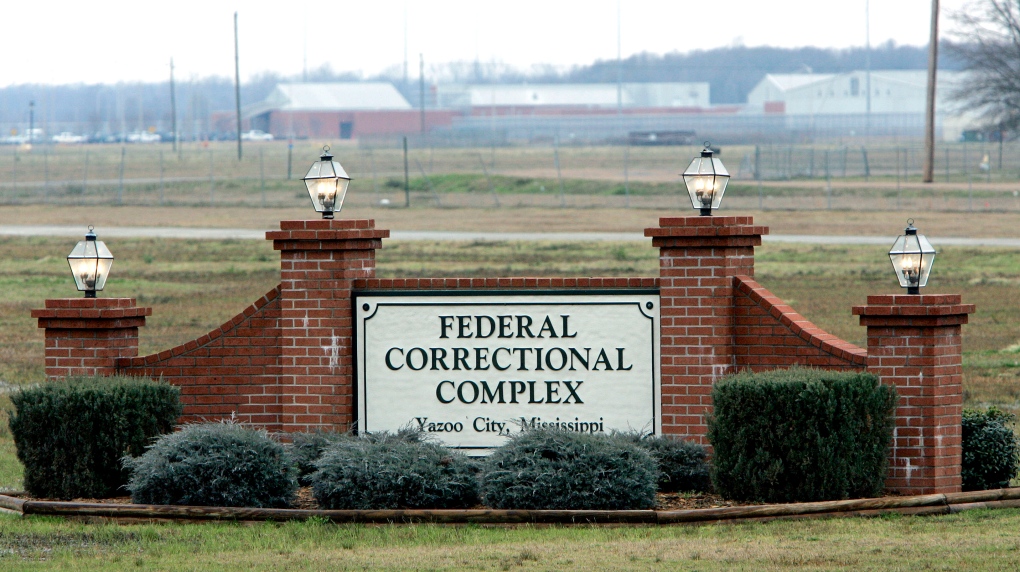
FILE - The Yazoo City Federal Corrections Complex in Yazoo City, Miss., is shown Feb. 9, 2007. (AP Photo/Rogelio V. Solis, File)

WASHINGTON -- More than 100 U.S. federal prison workers have been arrested, convicted or sentenced for crimes since the start of 2019, including a warden indicted for sexual abuse, an associate warden charged with murder, guards taking cash to smuggle drugs and weapons, and supervisors stealing property such as tires and tractors.

An Associated Press investigation has found that the federal Bureau of Prisons, with an annual budget of nearly US$8 billion, is a hotbed of abuse, graft and corruption, and has turned a blind eye to employees accused of misconduct.

In some cases, the agency has failed to suspend officers who themselves had been arrested for crimes.

Two-thirds of the criminal cases against Justice Department personnel in recent years have involved federal prison workers.

Of the 41 arrests this year, 28 were of BOP employees or contractors. The FBI had just five. The Drug Enforcement Administration and the Bureau of Alcohol, Tobacco, Firearms and Explosives each had two.

The numbers highlight how criminal behavior by employees festers inside a federal prison system meant to punish and rehabilitate people who have committed bad acts.

The revelations come as advocates are pushing the Biden administration to get serious about fixing the bureau.

In one case unearthed by the AP, the agency allowed an official at a federal prison in Mississippi, whose job it was to investigate misconduct of other staff members, to remain in his position after he was arrested on charges of stalking and harassing fellow employees.

That official was also allowed to continue investigating a staff member who had accused him of a crime.

In a statement to the AP, the Justice Department said it "will not tolerate staff misconduct, particularly criminal misconduct."

The department said it is "committed to holding accountable any employee who abuses a position of trust, which we have demonstrated through federal criminal prosecutions and other means."

Attorney General Merrick Garland has said his deputy, Lisa Monaco, meets regularly with Bureau of Prisons officials to address issues plaguing the agency.

Federal prison workers in nearly every job function have been charged with crimes.

Those employees include a teacher who pleaded guilty in January to fudging an inmate's high school equivalency and a chaplain who admitted taking at least US$12,000 in bribes to smuggle Suboxone, which is used to treat opioid addiction, as well as marijuana, tobacco and cellphones, and leaving the items in a prison chapel cabinet for inmates to retrieve.

At the highest ranks, the warden of a federal women's prison in Dublin, California, was arrested in September and indicted this month on charges he molested an inmate multiple times, scheduled times where he demanded she undress in front of him and amassed a slew of nude photos of her on his government-issued phone.

Warden Ray Garcia, who was placed on administrative leave after the FBI raided his office in July, allegedly told the woman there was no point in reporting the sexual assault because he was "close friends" with the person who would investigate the allegation and that the inmate wouldn't be able to "ruin him." Garcia has pleaded not guilty.

Garcia's arrest came three months after a recycling technician at FCI Dublin was arrested on charges he coerced two inmates into sexual activity.

Several other workers at the facility, where actresses Felicity Huffman and Lori Loughlin spent time for their involvement in the college admissions bribery scandal, are under investigation.

Monaco said after Garcia's arrest that she was "taking a very serious look at these issues across the board" and insisted she had confidence in the bureau's director, Michael Carvajal, months after senior administration officials were weighing whether to oust him.

In August, the associate warden at the Metropolitan Detention Center in New York City was charged with killing her husband -- a fellow federal prison worker -- after police said she shot him in the face in their New Jersey home. She has pleaded not guilty.

One-fifth of the BOP cases tracked by the AP involved crimes of a sexual nature, second only to cases involving smuggled contraband.

All sexual activity between a prison worker and an inmate is illegal. In the most egregious cases, inmates say they were coerced through fear, intimidation and threats of violence.

A correctional officer and drug treatment specialist at a Lexington, Kentucky, prison medical center were charged in July with threatening to kill inmates or their families if they didn't go along with sexual abuse.

A Victorville, California, inmate said she "she felt frozen and powerless with fear" when a guard threatened to send her to the "hole" unless she performed a sex act on him. He pleaded guilty in 2019.

Theft, fraud and lying on paperwork after inmate deaths have also been issues.

Earlier this month, three employees and eight former inmates at the notorious New York City federal jail where financier Jeffrey Epstein died by suicide were indicted in what prosecutors said was an extensive bribery and contraband smuggling scheme.

The Justice Department closed the jail in October, citing deplorable conditions for inmates. Last year, a gun got into the building.

One of the charged employees, a unit secretary, was also accused of misrepresenting gang member Anthony "Harv" Ellison as a "model inmate" to get him a lesser sentence.

The Bureau of Prisons, which houses more than 150,000 federal inmates, has lurched from crisis to crisis in the past few years, from the rampant spread of coronavirus inside prisons and a failed response to the pandemic to dozens of escapes, deaths and critically low staffing levels that have hampered responses to emergencies.

In interviews with the AP, more than a dozen bureau staff members have also raised concerns that the agency's disciplinary system has led to an outsize focus on alleged misconduct by rank-and-file employees and they say allegations of misconduct made against senior executives and wardens are more easily brushed aside.

"The main concern with the Bureau of Prisons is that wardens at each institution, they decide if there's going to be any disciplinary investigation or not," said Susan Canales, vice president of the union at FCI Dublin. "Basically, you're putting the fox in charge of the henhouse."

At the federal prison in Yazoo City, Mississippi, the official tasked with investigating staff misconduct has been the subject of numerous complaints and multiple arrests.

The bureau has not removed him from the position or suspend him -- a deviation from standard Justice Department practice.

In one instance, a prison worker reported that the official assaulted him inside a housing unit, according to a police report obtained by the AP. Internal documents detail allegations that the official grabbed the officer's arm and trapped him inside an inmate's cell, blocking his path.

The same official was arrested in another instance when a different employee contacted the local sheriff's office, accusing him of stalking and harassing her. The AP is not identifying the official by name because some of the criminal charges were later dropped.

In both instances, the victims said they reported the incidents to the prison complex warden, Shannon Withers, and to the Justice Department's inspector general. But they say the Bureau of Prisons failed to take any action, allowing the official to remain in his position despite pending criminal charges and allegations of serious misconduct.

A bureau spokesperson, Kristie Breshears, declined to discuss the case or address why the official was never suspended.

Breshears said the agency is "committed to ensuring the safety and security of all inmates in our population, our staff, and the public" and that allegations of misconduct are "thoroughly investigated for potential administrative discipline or criminal prosecution."

The bureau said it requires background checks and carefully screens and evaluates prospective employees to ensure they meet its core values.

The agency said it requires its employees to "conduct themselves in a manner that fosters respect for the BOP, Department of Justice, and the U.S. Government."

------

Sisak reported from New York.
Astroworld Is Travis Scott’s Altamont (Column)

... if he's that lucky.


By Chris Willman
VARIETY
ImageSpace/MediaPunch/MediaPunch


For more than 50 years, there was one word that crystallized the usually unspoken fear that a major concert event could turn deadly: Altamont. Now, for years to come, and maybe even generations, barring any worse disasters, that buzzword is likely to be Astroworld. And however the investigations and lawsuits play out, what went down at NRG Stadium on Nov. 5 — where nine lost their lives — will, in the public imagination, likely be Travis Scott’s mass-casualty event to bear.

Saying that Astroworld is going to be Scott’s Altamont sounds harsh — but, really, that might be a best-case scenario for the rapper. How badly did things turn out for the Rolling Stones, ultimately? There was a tarnishing of their image from having been at the helm of a festival that’s still legendary for its fan fatality — something they’ll always carry, but increasingly as a minor footnote in their rich history — yet they’ve gone on to remain superstars who still fill stadiums a half-century-plus later. The band was Teflon. So, following in their footsteps, Scott suffers such career damage from this catastrophe that he’s still headlining stadiums in 2071? He should be so lucky.

He may not be. There’s a key point of comparison that may be useful in thinking how this may not turn out to have as much of a best-case-scenario as the Stones enjoyed in playing out their career. The Altamont debacle revealed itself slowly, in a pre-Internet age, after Meredith Hunter was killed by bikers the Stones’ organization had foolishly drafted as security for the Dec. 6, 1969 event. It took until a Jan. 21, 1970 Rolling Stone cover story for many of the details to really become known, in a gradual dispersal of outrage that seems unfathomable in the instant-judgment chambers of 2021.

Not many people saw any footage of the mayhem until the “Gimme Shelter” documentary included a scene of members of the Stones gathering in an editing bay to watch raw 16mm reels that were about as murky as the Zapruder JFK assassination footage. The Maysles brothers’ film, which wasn’t all that sensationalist and largely left viewers to fill in their own to figure out how affronted to be, was released Dec. 6, 1970 — exactly one year after the fateful, fatal concert.


Mick Jagger sings at the Altamont Rock Festival at Livermore, Calif. on Saturday, December 6, 1969 while Hells Angels cross stage during melee to help fellow motorcyclists. The Rolling Stone hired the Hells Angels to police the concert for $500 worth of beer. (AP Photo))AP

In 2021, of course, everybody’s a Maysle brother, carrying a world-class documentary movie camera in their pockets. And the “Gimme Shelter” filmmaking team could have only wished to have footage of young men and women climbing onto platforms to plaintively scream that people were dying and the show needed to be stopped… or the Instagram video with a shocking perspective that showed Scott continuing to perform as a lifeless-looking body was being passed overhead by the crowd seemingly almost under his nose.

Any one social media clip does not provide a big picture of what was going down. So is it not just possible but highly likely that Scott couldn’t see below from his floodlit perspective? Could it even be true, as one of Scott’s attorneys said in a news conference Friday, that when the performer briefly paused the show as medics drove into the audience to retrieve victims before abruptly restarting it, that he couldn’t be sure whether he was seeing a golf cart or an ambulance? Without yet knowing what, if any, information was being fed into Scott’s earpiece, does he have plausible deniability when it comes to being aware that he was presiding over injury and death for the hour-plus duration of his set?

There’s a good chance that he was in that protected and impenetrable of a bubble during what looks on the surface like callous indifference. Just as Mick Jagger had little or no clue that actual bloodletting was going on on his watch. But in this case, the riveted watching world knows what it thinks it sees. Moreover, even if Scott turns out to be blameless for what he could or couldn’t see or hear once his set started, there’s still the matter that this was his festival, just as Altamont was the Stones’ brainchild, and the buck has to stop at the top of the bill. Maybe a succession of investigatory boards and juries will find that to be so in Scott’s case, or maybe promoters, security or even law enforcement will end up bearing the brunt of the legal heat. What’s for sure is that any angry public currently has a mindset of Sue ‘em all and let God sort ‘em out, with Scott at the top of a substantial litigation heap.

There will be a great deal of side-eye to come as ridiculous defenses are offered in the days to come as well as realistic ones. At Friday’s news conference, Scott’s rep, Former Mayor of Baltimore Stephanie Rawlings-Blake offered the somewhat risible argument that his client had no power to halt his own show. “This notion that Travis had the ability to stop the concert is ludicrous,” Rawlings-Blake said. “They have a 59-page operations plan and it clearly says the only two people that have the authority to stop the concert were the executive producer and the concert producer.” Because we all know that even in the event of a heart attack on stage, a performer is obligated to just keep going, without medical assistance, until an executive producer can be reached. And of course we all remember Jason Aldean on stage at the Route 91 Harvest Festival in Las Vegas, calmly remaining on stage and continuing to finish his set despite 60 people being mowed down, because the promoter couldn’t be reached to authorize his retreat. (This is sarcasm, just for the record.)

If it turns out that Scott is rendered legally innocent, how will he fare after it’s all shaken out? Will he get a mass pardon from a public that leaped to conclusions? That would likely be a split verdict. Even performers who’ve been accused and convicted of the most heinous crimes possible can hold onto significant parts of their fanbases, as anyone who’s followed the R. Kelly saga can testify. Public affection at large does not have a morals clause — at least not with artists who’ve already cultivated an outlaw image. Culpable for anything or scot-free in the end, Scott will long have a massive following either way. What may suffer is his ability to make extracurricular mainstream deals: Imagine how fast McDonald’s would be swimming away from him right now if the Travis Scott meal deal hadn’t expired a year ago. And at least in the short term there’ll be a crimp in his ability to tour (Scott had to cancel a $5.5 million gig in Saudi Arabia, for example). Whether he was relieved of headlining duty from this weekend’s Day N Vegas festival or proactively withdrew, that gig was just not going to happen… and it’s unclear whether his main stage closer status at the 2022 Coachella Festival will land on the right side of mass exoneration, but his fans shouldn’t be counting on it.

What won’t go away any time soon, whether it has to do with Scott concerts particularly or shows generally, is how this tragedy has tapped into fears we may not all realize we even had. There have been much deadlier gigs that this one, which may have instilled a healthy dread of what can go wrong at a concert and how quickly. There was the Who trampling disaster of the late ‘70s, which went down before the show even started. There was Rhode Island’s Station nightclub fire of 2003, which left a staggering 100 dead. The aforementioned Route 91 Harvest Festival in 2017, where 60 lost their lives. But those tragedies were nearly instantaneous and didn’t leave behind untold hours’ worth of YouTube and Instagram footage, not to mention a high-definition Apple Music stream, in which the world could see chaos and yet the show must go on. It wasn’t experienced that way by everyone at the show; people at the back of the crowd reported they didn’t know what was afoot, and they went out for an untroubled dessert afterward, just like Scott and Drake went out to party at Dave and Buster’s until reality kicked in. But watching those videos of people yelling and screaming in vain, unable to get anyone’s attention, it felt like being at Carrie’s prom, only the band is playing on even as pig’s blood rains down and the banners are on fire.

The Stones had one other advantage in recovering from Altamont that Scott won’t enjoy: the weird fetishism of that show as some kind of supernatural event. The legend that the Stones were playing “Sympathy for the Devil” when the stabbing happened — they weren’t — kind of let the band off the hook, for the superstitiously inclined. (After all, it wasn’t you and me… it was… Satan.) That it came months after the then-unsolved Manson Family murders in the southern part of the state also contributed to the darkness of that fateful day

Looking at Scott’s set list, this is just going to be a tougher tragedy for anyone to romanticize, unless you want to look at fans desperately searching for a way out of the surge as he performed “Escape Plan” as some kind of cosmic synchronicity. There are already conspiracy theories afloat for those who want them, from virus-related explanations to, yes, demons. But the scary thing most have come away from Astroworld with is the realization that it doesn’t take the devil to turn a concert deadly; given a little laxness or incitement, it could be your fellow fans. With no way to villainize an audience that’s caught up in frenzy, this is a nightmare that, for now, has Scott as its not-so-mythological human face.
Critics say Spire Missouri’s warning of natural gas outages a “manufactured crisis”

November 12, 2021 Allison Kite


(Missouri Independent) – As federal energy regulators prepare to decide the fate of a St. Louis natural gas pipeline, Spire Missouri is warning customers their gas service could fail this winter.

Business industry groups and the utility maintain their responsibility to keep customers informed. But environmental groups and some local elected officials — who note federal regulators seem poised to extend the pipeline’s authorization — call it a fear campaign.

“Spire is using a crumb of uncertainty to create fear and distract from its self-dealing,” St. Louis County Councilwoman Lisa Clancy said in a virtual news conference with members of the Sierra Club and the Environmental Defense Fund Thursday afternoon.

She described Spire’s warning as a “manufactured crisis.”

Clancy and Councilman Ernie Trakas want a special hearing on the issue, the St. Louis Post-Dispatch reported Wednesday.

The Spire STL Pipeline, which runs from Illinois into St. Louis, had its original permit vacated by a federal appeals court this summer. It’s operating on a temporary certificate issued by the Federal Energy Regulatory Commission that expires on December 13. That agency announced Thursday it would consider an extension of the certificate at its Nov. 18 meeting.

Last week, Spire Missouri warned its St. Louis area customers in an email that the pipeline was in jeopardy and forecasted dire circumstances for this winter if the pipeline’s certificate is not extended.

“We want to keep you informed and prepared for potential natural gas disruptions — and outages — this winter if the pipeline is not kept in service,” the email said, blaming a “New York-based environmental group” that challenged the pipeline in court.

In its news conference just before the environmental groups’ event, Spire maintained its goal was to inform, not fearmonger or pressure FERC.

“If we come up later and say there’s an issue, to the extent we’ve told customers in advance that that risk exists, hopefully, partly, they’re prepared for it and then they’re ready to work with us on our contingency plans, on how we keep them safe and how we control the system to our best ability while best serving the customer and best meeting their needs in that scenario,” Carter said.

Spire has built a webpage — spireenergy.com/critical — with a video warning of “serious service disruptions” and directing customers to submit supportive comments to FERC.

Since the email, St. Louis residents have submitted a flood of those comments to FERC, worrying they might lose gas service this winter.

“There are pros and cons to any source of energy but how can an activist group or judicial system just decide, right before winter, that we do not deserve the efficiency of OUR source of heat!” Kellie Tanksley, of St. Louis, wrote to FERC.

Battle over the pipeline


Spire announced its intent to build the pipeline in 2016 and invited natural gas “shippers” to enter contracts for the gas the pipeline would transport. None committed, according to an order from the U.S. Court of Appeals for the D.C. Circuit.

Under the Natural Gas Act, for FERC to issue a certificate for a gas company to build, it must find that the pipeline “is or will be required by the present or future public convenience and necessity.”

But Spire STL and Spire Missouri, which are affiliates, entered a contract for 87.5% of the pipeline’s capacity, which the court said was “plausible evidence of self-dealing.”

FERC granted Spire approval anyway in 2018 and denied a request from EDF for a rehearing. EDF has, among its members, St. Louis area landowners who lost property to the pipeline.

The nonprofit appealed FERC’s approval in January 2020, saying the agency had not rigorously studied the need for the pipeline. The U.S. Court of Appeals this summer sided with EDF and vacated FERC’s approval and sent the pipeline back to the agency for further review.

In September, FERC granted Spire a 90-day temporary certificate to allow it to keep operating the pipeline in the interim.

Natalie Karas, senior director and lead counsel for the Environmental Defense Fund, said she believes FERC will extend the pipeline’s certificate. EDF supports extending the certificate to ensure there are no disruptions to customers’ service.

But it wrote to FERC earlier this week to urge the agency to move quickly because of Spire’s messaging.

“In recent days, Spire Missouri has issued a harmful communication to its customers warning of potential outages and service disruptions,” the letter says. “Setting aside the problematic, numerous misstatements and omissions in this transmission, Spire’s email has created panic and fear throughout the St. Louis region, causing undue distress to its most vulnerable customers and also prompting vitriolic, personal attacks directed at EDF and its employees.”

The upcoming winter

While short natural gas supply brought energy and gas providers in parts of the Midwest to the brink and wreaked havoc in Texas, Spire argues its pipeline spared St. Louis customers a similar fate.

And since building the pipeline, which became operational in 2019, Spire Missouri stopped buying large amounts of natural gas from other pipelines in the region. The natural gas industry is also expected to face high prices for the winter.

Spire says it’s working on contingency plans. It’s expected to present those to the Missouri Public Service Commission next week. But without the pipeline’s capacity, the companies claim huge swaths of Spire Missouri’s customers could be left without service.

Spire STL Pipeline’s general counsel has said previously that without the pipeline, as many as 175,000 Spire customers would be at risk of losing service when temperatures dip below 9 degrees. At that point, the utility would have to pull from its reserves. If it had to deplete reserves completely, he said, service for as many as 400,000 customers could become unreliable at temperatures as warm as 38 degrees.

Spire STL Pipeline’s general counsel, Sean Jamieson, stressed during the news conference that, right now, there is “no guarantee” that the pipeline can keep operating.

St. Louis Alderwoman Christine Ingrassia called Spire’s communications to customers “extremely reckless.” She said she had heard from numerous constituents worried they would lose gas service in the dead of winter.

“I think that communicating with residents and customers is one thing, but what they did completely overstepped the line,” Ingrassia said.

(Photo via screen capture of Spire Youtube video)
Income growth for high earners vastly outpaced everyone else in 2019: StatCan
A Lamborghini luxury sports car is pictured in Vancouver, Thursday, May 16, 2019. 
THE CANADIAN PRESS/Jonathan Hayward

Tom Yun
CTVNews.ca writer
Published Nov. 13, 2021 

TORONTO -

A new report from Statistics Canada has found that incomes for the highest earners grew at a faster pace than everyone else's in 2019.

The data, published on Friday, shows that Canadians in the top one per cent made an average of $513,700 in 2019, compared to $505,900 in 2018. That represents a 1.8 per cent growth in income.

But for those who make less than $37,200 and are at the bottom 50 per cent of earners, average income only rose 0.8 per cent, from $18,200 to $18,400.

RELATED LINKS
Report from Statistics Canada on high-income Canadians

There was little change for those in the 51st to 90th income percentiles, who made $61,000 on average in 2019.

Incomes grew at an even faster pace for those at the very top of the income distribution. The top 0.1 per cent saw their average income rise 5.5 per cent, from $1,701,900 to $1,774,500. Meanwhile, the average income for the top 0.01 per cent grew from $5,734,000 to $6,411,800, an increase of 13.9 per cent.

StatCan says the income growth for high earners was largely driven by dividend income. While employment income for the top one per cent only grew by 0.5 per cent, their dividend income grew 10.5 per cent. Dividend incomes for the top 0.1 per cent and 0.01 per cent grew by 18.9 per cent and 34.8 per cent, respectively.

While the highest income brackets continue to be dominated by men, StatCan found that more women have been entering the top one per cent. The number of women in the top one per cent grew 3.2 per cent in 2019. As a result, women make up 24.7 per cent of the top one per cent of earners, compared to 24.3 per cent in the previous year.However, even within the top one per cent, StatCan says women continue to have lower average income than men.

The report also found that in the resource-rich provinces of Newfoundland and Labrador, Alberta and Saskatchewan, the number of earners in the top one per cent fell in 2019. StatCan says this was driven by declining oil prices at the time. Meanwhile. the number of Canadians at the top one per cent increased in Ontario, B.C. and Quebec.


Toyota Forms ‘Team Japan’ To Help Keep Combustion Engine Alive

Toyota has assembled a team consisting of themselves and four other Japanese marques in an effort to keep ICE vehicles relevant.


Nov 14, 2021 
By: Ben O'Hare

Toyota’s continued resistance to BEVs is becoming more and more prevalent. Just days after refusing to sign a climate pledge aiming to phase out fossil-fuel vehicles by 2040, Toyota has organized a team to promote the combustion engine in the electric age. ‘Team Japan’ consists of Toyota, Subaru, Mazda, Kawasaki and Yamaha. The group will work together on the development of greener fueling options as well as hydrogen tech.

The coalition will see the five companies develop carbon-neutral fuels for racing, meanwhile Toyota and Mazda will together develop a 1.5-liter Skyactiv-D engine powered by biodiesel. Subaru will work with Toyota for 2022’s Super Taikyu Series endurance season, with both companies collaborating to make a biomass-derived synthetic fuel. Furthermore, Yamaha and Kawasaki are considering working on a hydrogen engine for motorcycles.

Toyota clearly believes other solutions such as hydrogen will play their part in a sustainable future, an idea Tesla CEO Elon Musk has labelled “mind-bogglingly stupid” in the past. Despite all this, Toyota still intends to compete in the BEV space through the bz4x crossover which will arrive in mid-2022.

Toyota released the following statement after the announcement of the coalition:

"By promoting further collaboration in producing, transporting and using fuel in combination with internal combustion engines, the five companies aim to provide customers with greater choice."

Greater choice? Perhaps, although only time will tell if the proposed alternatives are viable solutions. Toyota has seen limited success with the hydrogen-powered Mirai, with a lack of infrastructure and high running costs being key obstacles for consumers.


JUST LIKE HERTZ

Elon Musk Confirms PepsiCo Will Not Get Semis This Year


14 Nov 2021, 08:47 UTC

When Ramon Laguarta told CNBC PepsiCo would get its first set of Tesla Semi on Q4 2021, we mentioned it looked like something Elon Musk would later deny on Twitter. It took only four days to confirm that. When asked about it, the Tesla CEO said it would not happen.
 9 photos
Tesla SemiTesla SemiTesla SemiTesla SemiTesla SemiTesla SemiTesla SemiTesla Semi
When a Tesla fan asked Musk about Semi deliveries, the executive said that the “company is constrained by chip supply short-term, cell supply long-term.” That said, it would not be “possible to produce additional vehicles in volume until both constraints are addressed.” Ironically, Musk did not mention the issue with batteries is even more profound than just supply. It relates to achieving mass production of 4680 cells.

As we have said over and over, Tesla has based all its new products on the new battery format. It built two new factories expecting to produce vehicles conceived around it. Yet, the company has not finished developing that crucial element for both the factories and the cars they will make. That is a precarious thing to do, to say the least.

If the 4680 tabless cells were ready, then Musk could talk about a supply constraint. At this point, there’s not even a 4680 cells supply: it is yet to be created. This is what made it so evident that the Semi, the Cybertruck, and the Roadster will not arrive anytime soon, as optimistic as Tesla customers such as PepsiCo may be.

With Musk’s public dismissal of Semi deliveries in 2021, all that is left is to see what PepsiCo will do about that. Laguarta may admit he was wrong. He may also just avoid talking about it in hopes that people will eventually forget about it. A more extreme measure would be to cancel PepsiCo’s Semi orders and buy anything the competition can deliver right now. Volvo already sells the VNR Electric, and there are plenty of competitors about to hit the market.

 Tesla's Semi concept is shown

Pepsi Says Their Tesla Semi Trucks Are Arriving This Year—But Elon Musk Says Production Starts In 2023

Ever since they were announced in 2017, Tesla’s electric semi trucks have been highly anticipated additions to America’s supply chain. While the eco-friendly big rigs have yet to hit the road, they may be very close — depending on whom you decide to believe.

Ramon Laguarta, the top executive at PepsiCo, which initially placed the biggest public order for Tesla’s semis, recently said he expects to see his company’s trucks by the end of 2021. Considering it’s been four years since the order was placed, that doesn’t seem out of the question, but it doesn’t exactly match the timetable laid out by the automaker.

“We’re getting our first deliveries this Q4,” Laguarta told CNBC on Nov. 8 during an interview at the United Nations Climate Change Conference in Scotland. Q4 would refer to the final quarter of 2021, which ends on Dec. 31.

Pepsi CEO Ramon Laguarta
AP Photo/Bill Kostroun

Laguarta didn’t specify how many Tesla trucks he was expecting by the end of the year but a press release from PepsiCo in March stated that the company would have 15 electric semis deploying before 2022. That doesn’t sound like too many vehicles, but the order might be difficult to fill when Tesla hasn’t even put them into production yet.

According to CNBC, Tesla CEO Elon Musk initially expected his company to begin making the rigs in 2019 but that has since been pushed back several times. He has blamed current raw materials shortages for further delays. Fortune has reported that Musk most recently stated that they will go into production in 2023, which obviously puts Laguarta’s plans of shipping soda and snacks in them in a matter of months way off the mark.

AP Photo/Chris Carson

The investment in Tesla’s exciting new tech was likely a major one for PepsiCo. The company pre-ordered 100 of the electric vehicles at an estimated total price of $2 million. It’s unclear whether the soda giant will be leasing or buying the trucks outright, adding another unknown to this entire enterprise for PepsiCo stockholders.

Tesla

While 100 new semi trucks sounds like a big deal, it will really just be a drop in a bucket of Mountain Dew for PepsiCo, which operates one of the largest private fleets of any American company. In 2019, Pepsi’s senior director of transportation global procurement Rodney Noble told a Congressional subcommittee that the company had 36,000 trucks.

Iceland Trolls Mark Zuckerberg and His Meta Vision in Tourism Video
Heralding “enhanced actual reality without silly-looking headsets.”

Uncategorized
18 Hrs ago
TEXT BY James Buttery

Iceland’s tourism board has mercilessly trolled Facebook’s new Meta-verse strategy with a video mocking both Mark Zuckerberg and augmented reality.

The two-minute video on the “Inspired by Iceland” YouTube channel introduces the Icelandverse, a “revolutionary approach on how to connect our world without being super weird” calling it “enhanced actual reality without silly-looking headsets.”

The concept is explained by “Chief Visionary Officer” Zack Mossbergsson, whose haircut, overly enthusiastic application of sunscreen and awkward mannerisms all point to Facebook’s billionaire founder.

The film reveals Iceland’s completely immersive “open world environment” where “everything is real,” from its aurora borealis and its volcanic landscape, to its “really big geysers” to the “birds you can watch,” all the while drawing attention to the country’s many epic, cinematic landscapes which will be familiar to anyone who has watched “The Vikings.”

THE ORIGINAL METAVERSE ANNOUNCEMENT