Sunday, March 13, 2022

Mormon Mythistries–Richard Hansen in El Mirador

U.S. settler-colonial-capitalist-imperialism, white-Christian-Zionism, and eco-fascist conservation in Guatemala

BY NICHOLAS B JACOBSEN - KOBI WEAVER
MARCH 13, 2022


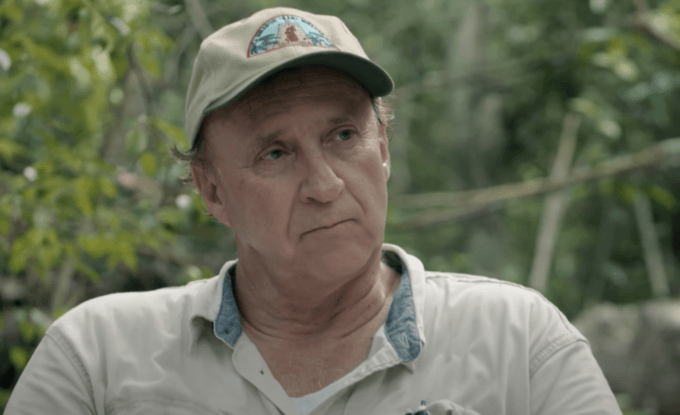
Richard Hansen in an interview with Vice News, 2020.

Richard Hansen is a white, Mormon archeologist and capitalist from the United States. He has been working for over 40 years in Petén, Guatemala in the Maya Biosphere Reserve among the ancient Maya city of El Mirador. Coupled with his archeology, Hansen has been working toward building a privately-owned ecotourist wilderness resort in the forests of El Mirador. Most of the Maya Biosphere Reserve is occupied by concessions communities that manage these forests through sustainable logging. These communities are made up of Indigenous Maya and local Ladino communities, some of which have been stewarding these forests for generations despite decades of anti-leftist, genocidal, “scorched earth” campaigns enacted against them by their own government (funded-and-backed by the U.S. and Israel, of course). Hansen’s project would ban logging, turning Maya and local communities from collective stewards of a forest to employees of a park. It would also bring “spiritual tourism” from Book of Mormon-themed companies like Anderson Tours, LDS Tours Cancun, Helaman Tours, Alma's LDS Tours, and LehiTours (Helaman, Alma, & Lehi are Book of Mormon names).

“Any use of this particular area of forest other than ecotourism would be, to me, the equivalent of using the Grand Canyon for a garbage dump.” Hansen told Smithsonian Magazine while they flew over the Reserve. Just as many U.S. National Parks were created through settler enacted massacres & forced displacements of Indigenous Peoples of this land, Hansen’s project would also take a militarized anti-Indigenous approach to establish this private park in Maya land.

nicholas b jacobsen is a seventh-generation Utah-Mormon, trans-nonbinary settler raised in Nuwu (Southern Paiute) homelands. As a creative historian, culture critic, & visual artist, their work addresses their personal and ancestral connections to the U.S. & Mormon settler-colonial-imperialist project via performance, video, installation, writing, digital collage, pottery, and found-object sculpture. Through this, they work to disassimilate from the myths of supremacy and innocence central to Mormon & U.S. cultures.

Kobi Weaver was raised in Mescalero Apache land, where they grew up a rebellious mormon, drawn to all the things forbidden or sacrilegious until they left the church and went to explore the outside world. They currently reside on occupied Tiwa Territory where they live with their partners and dogs by the Rio Grande river. They are an archaeologist by trade and organizer thanks to the people who taught them what it means to be in community and have international solidarity.


CLICK ON TITLE TO GO TO ARTICLE AT COUNTERPUNCH


Dr. Richard Hansen: El Mirador, The Birth of Maya Pyramid Culture - Earth Ancients

Noted as the foremost authority on the rise of Maya culture, Richard Hansen has spent the better part of twenty years, excavating, securing and protecting the massive El Mirador complex in Guatemala.

Built more than 2,000+ years ago—long before archaeologists believed such a place could exist at that era in Maya history—El Mirador was a busy metropolis covering six square miles, home to tens of thousands of people, and filled with grand buildings, pyramids and plazas. It’s now thought to be the cradle of Maya civilization.

At the heart of El Mirador is the grand plaza with the massive La Danta pyramid complex. At 230 feet, it is not as tall as the great pyramid at Giza, but, according to Hansen, it is more massive, containing some 99 million cubic feet of rock and fill.

In this program, we’ll discover the importance of this very old Maya city, what new carbon dating reveals about its true age, and the possibility of culture exchange among other groups,

Dr. Richard D. Hansen, an archaeologist specializing in the early Maya, is Director of the Mirador Basin Project and Adjunct Professor of Anthropology at the University of Utah. He has written extensively on his work and been featured in many documentaries on the Maya.


Open letter to archaeologist, Richard D. Hansen
regarding his imperialist and colonial drive to expropriate our territories and sacred sites
[Spanish Version HERE]

Mister Hansen:

We are from diverse Maya Nations, defenders of life, deeply respectful of Mother Earth, defenders of our ancestral-contemporary territories, and of our millennial history and memory. As activists, weavers, writers, artists, and academics that live in and outside of Guatemala, we express our deep concern over the proposed Mirador-Calakmul Basin Maya Security & Conservation Partnership Act. Our nations were never consulted nor informed about this proposal and have never given their consent. We have seen the short news video from VICE News Mayan Ruins in Guatemala Could Become a U.S.-Funded Tourist Attraction (June 17, 2020), in which it informs us that you are leading a campaign in Guatemala and the United States to generate funding to transform the sacred El Mirador site into a tourist attraction and in that way bring, “economic benefits to Guatemalans.”

For many years, we have known about your interference in Guatemala through your archaeological projects and your relationship with White, Ladino and Criollo-Mestizo political and economic elites, which is seen not only in the VICE documentary, but also in your Ted Talk 8th Wonder of the World: The Mayan Legacy (June 18, 2018), where you talk about your findings at El Mirador. We also know about the academic and journalistic articles about you, such as King of the Jungle: The Mayan Empire of Archeologist Richard Hansen. We know that you and your people are used to dividing up the world and to plundering with impunity, and as a result journalists give you ownership of the “Maya Empire” as if it were property. This is especially obscene since you know full well that Maya peoples still exist and you are excavating our territory or what we call Our Big House.

Your Wikipedia page also reveals your alliance with certain senators such as Jim Inhofe from Oklahoma who is well known in the United States for denying the climate crisis. Another revealing fact is that you graduated from Brigham Young University (BYU), which belongs to the Church of Jesus Christ of Latter-day Saints in Utah, a church known for “hunting for treasure” in the “Third World.” There, according to Teena Clipson in her article, “Dr. Rirchard D. Hansen and his fight for El Mirador”, you gave your first steps with regards to your interest in archeology, after you heard the academic talk offered by University of Harvard’s professor, David Freidel. Consequently, John E. Clarck, a Mormon archeologist, became the head of the anthropology department at BYU and director of the New World Archeological Foundation (NWAF). You and Clark became great friends, and since then have generated pseudo-scientific arguments that propose that the ancestors of Mormons (nephit Israelites) built sacred sites in Mesoamerica. This is an odd way to try and give yourself legitimacy in the archaeological field and to legitimize the business you are trying to build on top of it–all in search of a supposed superiority always claimed by white people. Theories like these are not only absurd and laughable, but they also increase the probability of actual looting. Your intentions do not surprise us, since both Mormons and other groups who have built their wealth by looting many territories of Latin America and the so-called “third world,” have made this same argument. Denying our greatness and submitting us to misery are old strategies of those who steal our history because they themselves have no roots, since they only exist while they colonize and plunder us.

You also proudly indicate that, for your business, you already have the interest of investors such as Mel Gibson, Morgan Freeman, and Prince Albert of Monaco. Who has given you the right to sell our territory and Our Big House to such characters or whatever they are? Who did you ask permission from? Mel Gibson already amassed great fortunes with his disgusting film Apocalypto, where he degrades us and represents us with lies. Were you his main advisor? Are these the ideas about our ancestors that you develop with your scientific theories? We know very well that the vast majority of gringo and European researchers come to plunder our knowledge and take it to the audiences of their countries. They have no real interest in returning it to us because that is the way of colonial and imperial science, always at the service of power and capital, like you very well show.

Anyway, we bring attention to some disturbing questions that emerge from your statements in the videos and the documentation that we have found about your business. Your “progressive” offer reproduces that long liberal imperialist tradition that justifies your theft on the grounds that white people or non-indigenous scholars are the saviors of our peoples and they possess a truth that we do not possess … but, let’s go step by step.

First. Your findings shared through your Ted Talk are simplistic; it is a lecture made to impress an unfamiliar and misinformed audience. Our cities and sacred sites were built from the architectural, political, economic and spiritual complexity that defined our civilization. We know of the immense wealth of our societies and their great contributions to humanity. For this reason, we find it aberrant when you, in that same video, condemn our ancestors by affirming that, “by their predatory actions [Mayan] civilization collapsed.” Our civilization never collapsed, sir. The Maya are still alive and defending ourselves against looters. Our current epistemologies, cosmovision and ways of life contrast with the “predatory” theory that you impose on us. And we are not based on the idiocy of business and money, which comes out of your mouth all the time, but from the greatness of life itself and from the deep respect for Our Mother Earth. Know that your theories are the same that the colonizers, Hispanics, Whites, Criollo-mestizos and Ladinos have always told us: that our civilization collapsed and that the current Maya are not really the descendants of the nations that made the very cities you excavate. Surely you are unable to understand the meaning of life and the wisdom of the Maya Nations who prioritize respect for everything that life creates over money and business. But perhaps you will listen to your own colleagues, who have questioned deceptive, fraudulent, and simplistic theories like yours. This is the case of Arthur Demarest who, in his comment to the book The Great Mayan Droughts: Water, Life and Death (2000) by Gill Richardson, points out several fallacies built on a range of highly selective and consequently misleading archaeological evidence. Richardson, according to Demarest, ignores and does not take into account the complex social aspects of the life of the Maya of that era. Demarest also adds that it is sought from the start to amaze people, the author, “presents a highly selective and consequently misleading range of archaeological evidence.” About your pseudo-theories you want to sell us to the world to carry out your ecotourism business.

Second. In the video “8th Wonder of the World”, you propose to make “positive changes, involving people in an economic model” and declare “the basin, ‘the first wilderness area in Latin America.’” Such an alternative economic model resides in building a “Tourist Route in the Cradle of the Maya Civilization” with “a natural border using the same forest to prevent the entry of illegal invaders.” The archaeological site of El Mirador – you conclude – is the economic catalyst to get Guatemala out of “misery.” According to you, this project will not only provide employment opportunities to the surrounding families, but will also create educational opportunities. People, you say, are learning to read and write and conserve their forests. But we note that, in the VICE video, you are already aware that there is resistance against your project when you speak of being accused of being, “an imperialist gringo who wants to get rich at the expense of us [Guatemalans].” You end the sentence by saying that this is precisely your criticism of Guatemalans: “they have no vision.” Who are you referring to specifically? If it refers to the economic, political, ruling elites, drug traffickers, loggers and looters of Maya treasures that, in general, are Criollos-mestizos/Ladinos; then yes, you are absolutely right. But we the Maya are not them, because Criollos-mestizos/Ladino’ elites can only think about doing business with our millennial past and our present full of wealth.

These sectors have sought to make Guatemala a mirror of Europe and the United States through policies of whitening and genocide. Yes, through these processes they have sought to eliminate us in order to lay the foundations for an industrialized country that is supposedly acceptable in the eyes of the world; in other words, to promote the idea of ​​a White country. Don’t you know that the Guatemalan state sought to eliminate us during the armed conflict? In case you do not know that history, we recommend that you read the Commission for Historical Clarification, Guatemala: Causes and Origins of the Internal Armed Conflict. There you will find information on how the genocidal and ethnocidal policies implemented by the Guatemala state were supported logistically and economically by the United States and Israel. Therefore, when these Criollos-mestizos/Ladino elite sectors and governmental officials see you, a privileged white gringo with access to investment capital from the likes of Mel Gibson, Morgan Freeman, Prince Albert of Monaco and US senators, these same elites open the door and fall to their knees before you. You have won the attention of those who now sell Guatemala and her natural assets to the highest bidder, such as President Alejandro Giammattei, congressmen, and investors who are also interested in amassing wealth with the crumbs that you offer them, selling what doesn’t belong to them, selling what belongs to us, the Maya.

Third. All of you share an admiration for the material legacy of our ancestors, those great achievements that have impressed the world. But when it comes to us, the Maya descendants of today, you despise, humiliate, and plunder us with contempt. You only see us as servants in your homes, as cheap labor on your plantations and excavations, as despicable and dehumanized objects. You only accept us if we bow our heads and say nothing- or if we applaud your projects framed in your definitions of “progress,” without question. So, like others, we concur that you are just another imperialist and colonizing white gringo who seeks to enrich himself at the expense of our sacred millennial legacy. We ask ourselves, for example, what will happen to the Association of Forest Communities of Peten (Acofop) and the surrounding communities if your project is carried out? Will they, you think, clean the hotel bathrooms and bedrooms and bring the food to your tables? Don’t tell us that these are the great job opportunities that your ecotourism offers us? Are you kidding us!?

What is your idea of development and progress, Mr. Hansen? On the one hand, you are talking about an alternative model, but on the other, you are proposing a multimillion-dollar tourism project that in the long run – there is no doubt – will benefit more foreign investors, Criollo-mestizos and Ladinos with whom you have made secret deals. Do you really believe that the answer to our economic situation is a capitalist project like the one you are proposing? How exactly will it benefit our peoples if in your project you believe yourself to be the owner of El Mirador?

Fourth. With the conclusion of your Ted Talk and, later, with the VICE video, the first thing we ask ourselves is: What Maya peoples or groups have you consulted to carry out these alternative economic proposals? Have you taken seriously the position of the community members who have worked with you on these projects? And, if you don’t know, there is a wide range of Indigenous or Maya organizational processes and governance structures in Guatemala, including 48 Cantones in Totonicapán, Indigenous Governance from Sololá, The Kaqchikel Government from Chuarrancho, Indigenous Ixil Mayorship, Indigenous Achi Mayorship, The Twelve Indigenous Mayorships that live around the Atitlán Lake, and Indigenous Q’eqchi Authorities located in the Verapaces and Petén area. Indigenous governments and Indigenous authorities operate from local to national levels. There are also organizations such as the Council of Maya Spiritual Guides, B’eleje’ No’j, The National Council of Principal Elders and Maya, Xinca and Garifuna Spiritual Guides, The Council of Maya Peoples, The National Maya Coordination and Convergence, Waqib’ Kej, The U’k’ux B’e Maya Association, Association of Forest Communities of Peten, The Committee of Peasant Unity, among many others. Have these organizations been consulted? Or is it that you take the title of “The King of the Jungle” seriously and you think that you are the owner of our territory or Our Big House, located in the place where you have been excavating?

Fifth. The other aspect that is disturbing to us is that in both the VICE documentary and the article, “King of the Jungle,” it is noted that Mormons from the Church of Jesus Christ of Latter-day Saints visit our sacred sites. These Mormons from Utah believe that thousands of years ago a group of Nephites who fled Jerusalem in 597 BC came to Mesoamerica and built great cities. Mormons, who consider themselves descendants of the Nephite Israelites, provide resources for your excavations in exchange for appropriating our territory and sacred site. We are aware of our codices. We know that our ancestors welcomed exchanges with other societies, people today known as Arab, Asian, or African. Our ancestors were wonderful hosts, just like we continue to be. They always received visitors with food and gifts until the colonizers and imperialists arrived. They reciprocated our welcome, food, and gifts with treason, slavery, death, and looting.

It is the ridiculous myth about Columbus that has erased the possibility from continuing this ancestral tradition of exchange, since he has been considered the “first” to “discover” us. So if they wanted to, Arabs, Asians, and Africans could have theories similar to yours. As we say again, our ancient history is so rich and so astonishing that we will say ironically that even aliens believe they are descendants of those who created it, our ancestors. You, Mr. Hansen, are following in the footsteps of Mormon lawyer Thomas Stuart Ferguson (1915-1983), who pursued (without any success) evidence of that Nephite presence in Maya sacred territories.

Finally, Mr. Hansen, through this letter, we denounce your imperialist and colonial impulse, your grotesque desire to amass wealth at our expense. You are just another imperialist and colonizing gringo who, like the Criollo-mestizo and Ladino elites of Guatemala, have a long tradition of dispossession, looting, and extractivism. Respect our territory, our Big House, they belongs only to us, the Maya Nations. There are people who thank you for your archeological excavations. We have nothing to thank you for, we have never asked you to make your explorations on our territory, our Big House.

Enough with stealing our territory and looting our ancient cities!

Ixbalamke Junajpu Winaq’
Aura Cumes (Maya Kaqchikel)
Edgar Esquit (Maya Kaqchikel)
Emil’ Keme (Maya K’iche’)
Jorge Santiago Matias (Maya Tujaal)
Juanita Cabrera Lopez (Maya Mam)
Kaypa’ Tz’iken (Maya Tujaal)

June 25, 2020

English translation by Floridalma Boj-Lopez (K’iche’ Maya)


UK
MPs’ pension fund drops Russian-linked investments in protest

Cross-party group expresses unease about the fund’s stake in HSBC, which has held shares in Moscow’s oil and gas giants
MPs says HSBC holds investments in Gazprom, whose chief executive Alexei Miller, right, is pictured showing Vladimir Putin around a pipe-laying ship in 2017. 
Photograph: Mikhail Metzel/SPUTNIK/AFP/Getty Images


Toby Helm, Political Editor
THE GUARDIAN
Sun 13 Mar 2022 

Trustees of the pension fund for members of parliament have agreed to sell all investments linked to Russia after a cross-party group of more than 60 MPs raised concerns about connections to Russian oil and gas companies.

The trustees met last Thursday, having received the MPs’ letter, and agreed to act immediately to ensure the fund was cleansed of both direct and indirect Russian interests.

The Labour MP Clive Betts, a member of the board of trustees, said: “Should we be disinvesting from Russian interests? Yes, as quickly and as far as possible, though we have to do this through our fund managers.”

A host of international companies have ceased or paused business with Russia after its invasion of Ukraine. Last week McDonald’s, Starbucks, Coca-Cola and PepsiCo bowed to public pressure and suspended operations in Russia. Big public and private pension funds are now under pressure to clean up their portfolios and investigate how funds they have invested in are linked to Russia.

In their letter to the trustees, co-ordinated by the Green party’s Caroline Lucas, the MPs noted that in the 2020 annual review of the fund, HSBC was listed as one of the scheme’s top 20 holdings. “According to Bloomberg data, HSBC, through its asset management arm, owns equity stakes in five of the biggest Russian oil and gas companies – Gazprom, Rosneft, Tatneft, Lukoil and Novatek,” the MPs wrote.


“HSBC doesn’t just do business with Russian oil and gas companies – it owns them. We therefore call for the immediate withdrawal of the fund’s investments from HSBC and from any other companies that are implicated in Russia in similar ways.”


Documents about the fund show that about 49% is invested in global equities, and 8% in European loans.

Lucas welcomed the trustees’ commitment and called for a “root and branch investigation so we can be confident that not one penny of our pension funds are directly or indirectly linked with Putin’s murderous regime”.

Last week, the Church of England announced it had sold all £20m of investments in Russian companies in response to what the archbishops of Canterbury and York described as Vladimir Putin’s “act of evil” in Ukraine.

The Local Government Pension Scheme advisory board has also told its members running schemes for councils around Britain to examine their portfolios for links to Russia.


An HSBC spokesperson said: “In recent days, we have suspended our Russia-only funds and further reduced other funds’ exposure where this has been possible. As you would expect, HSBC is complying with all international sanctions.”
UN biodiversity negotiations set to begin, as experts warn of mass extinction

Issued on: 13/03/2022 -
Tourists pass by a floral decoration celebrating the U.N. Biodiversity Conference (COP 15) in a park in Kunming, the host city, in southwestern China's Yunnan province, on Oct. 2, 2021. AP

Text by: David Coffey

United Nations biodiversity talks get underway in Geneva tomorrow, Monday, with global efforts to cut plastic, agricultural pollution, wilderness protection and aspirations to live "in harmony with nature" set to dominate the negotiations.

Almost 200 countries are due to adopt a global framework this year to safeguard nature from human destruction by the mid-21st century, with a key milestone of 30 percent of "wild spaces" to be protected by 2030.

The aim of the talks is also to safeguard the "services" nature supplies, such as the air we breathe, the water we drink and the soil that yields the food we eat.

The meeting in Geneva will set the stage for a crucial UN biodiversity summit, that was initially due to be held in China in 2020 but postponed several times, and which is now expected to take place at the end of August.

According to Nature Conservancy, the Geneva talks are seen as a chance to strengthen a draft global biodiversity agreement "that many observers feel currently lacks the teeth needed to meaningfully address interconnected biodiversity and climate crises that cannot be solved in isolation."

France, Costa Rica push to protect third of planet at biodiversity summit


Mobile Film Festival awards: 1001 ways to 'make peace with nature'

Climate change, biodiversity loss


For years, campaigners have called for a deal on halting the loss of biodiversity similar to what was defined at the COP21 Paris Climate Agreement in 2015.

Previous efforts to halt the continuing degradation of the planet's biodiversity have fallen short, with countries having failed to meet previous biodiversity targets set in 2010.

Despite often being overshadowed by the combat against climate change, the plight of the natural world is no less catastrophic.

Intensive agriculture has depleted soil fertility and polluted waterways. The world's oceans have been overfished. Plastics and other pollutants have invaded ecosystems, threatening global health.

In February, the UN's Intergovernmental Panel on Climate Change warned that nine percent of all the world's species will likely be "at high risk" of extinction even if global warming is capped at the target of 1.5°Celsius.

UN biodiversity experts have raised fears that the world is entering its sixth era of mass extinction in the last half-billion years.

Twenty goals by 2030

However, the United Nations Convention on Biological Diversity is aiming to reverse the downward trend with its global framework.

The latest round of negotiations began in Rome in February 2020 but was swiftly brought to a halt by the Covid-19 pandemic, although online sessions continued and a draft text was completed in 2021.

It is hoped this weeks' in-person gathering in Geneva will move the process closer to a global deal at the UN's COP15 summit in China.

The draft outlines some twenty targets for 2030, including the high-profile ambition to protect at least 30 percent of the Earth's land and water habitats.

It also outlines objectives on reducing the amount of fertilisers and pesticides released into the environment and cutting at least $500 billion per year of subsidies harmful to the stability ecosystems.
New storybook introduces young children to complex AI concepts
Alyssa Yong, seven, and her drawing that contributed to the final design of Daisy during the AI for Kids (AI4K)® storybook launch at National Library on March 13, 2022. 
ST PHOTO: KEVIN LIM

SINGAPORE - Binary code, machine learning and data can be unwieldy concepts to grasp - even more so for young children.

But this is exactly what Artificial Intelligence (AI) Singapore hopes to achieve with a children's storybook launched by the research institute on Sunday (March 13).

Aimed at lower primary pupils, the book marks the first time AI Singapore's literacy programme AI For Kids (AI4K) is extended to young children to help them understand technology and how to use it effectively and responsibly.

Sponsored by Meta, 10,000 free copies of the illustrated book titled Daisy And Her AI Friends will be handed to low-income families and stocked in public libraries next month. It is not for sale.

The 30-page book centres on Daisy, a computer with legs, who is lost on her first day in school as she is only able to speak in binary code. Daisy meets other characters, who each teach her a new tech-related concept to help her to find her way.

The names of the seven main characters are a play on the letters "AI", such as the camera-inspired Aishwarya, a computer vision app who can identify objects; Aiman the sensor who can scan for temperature changes; and their teacher, Miss Ai.

The characters are based on 10 winning designs chosen from a competition for primary school pupils that received more than 230 submissions.

Illustrator Tan Jia En, 21, took elements of these winning designs to inspire the final appearances of the characters in the book, which was written by AI Singapore and does not have a credited author.


The book Daisy And Her AI Friends marks the first time AI Singapore's literacy programme AI For Kids is extended to young children.
 ST PHOTO: KEVIN LIM


Elements of primary school pupil Alyssa Yong's sketch were adapted into the final design of the book's protagonist, including the eye-catching daisy worn on its head.

Alyssa, seven, said her character's design was inspired from items at home, such as the hands of a Lego mini-figure, roller skates for quick traversal and arms based on a shower hose.

Her father Yong Chern Chet, 42, a doctor, said of the book: "It's good that kids learn about these things early. Reading and writing for them will be increasingly linked to coding, which will be part of everyday life."

Speaking at the book launch on Sunday, AI Singapore senior deputy director of AI innovation Koo Seng Meng said copies will be given to lower-income families to ensure equal opportunities for all to learn about AI concepts.

Illustrator Tan Jia En sharing her inspiration and work process during AI for Kids (AI4K)® storybook launch at National Library on March 13, 2022. 
ST PHOTO: KEVIN LIM

He said at the National Library: "It is never too early to introduce and demystify AI for kids. We made a book to make AI relatable to them."

Minister of State for Education and Manpower Gan Siow Huang, who was guest of honour at the launch event, said the pandemic has reshaped the way children use technology and that digital skills are increasingly important in jobs today.

Contributors of drawings to the storybook and Minister of State for Education and Manpower Gan Siow Huang (centre) at the launch on March 13, 2022. 
ST PHOTO: KEVIN LIM

Eight-year-old Sarrah Ali Asghar, one of the first people to read the book, said she learnt a list of new tech-related words and proudly explained the meaning of binary code: A language made by humans that only computers can speak.

Her father, Mr Ali Asghar, 35, a science, technology engineering and mathematics educator, said: "It's interesting that these ideas are made into a story that is relatable to kids and can introduce them to these concepts."
Ivory Coast: Building safety in question after a series of buildings collapse

ght © africanewsAFP
By Rédaction Africanews
with M’ma Camara Last updated: 36 minutes ago


More than a week after two deadly buildings collapse occurred in Abidjan two questions haunt the survivors: why are buildings failing? And whose fault it is?

In the Cocody disdrict, these Ivorians have a distraught look in their eyes. It is because in just a few minutes their world fell apart. As they contemplate what remains of the four-storey building they use to call home, the survivors feel hopeless. It was the second building collapse in a week here in Abidjan. When the apartment block collapsed, it killed 13 tenants. Days after the tragic accident, Aziz moudjib who used to live here in the Cocody disdrict wonders whose fault it is. "We cannot do anything about it. We are powerless. We call on the authorities, the Ivorian government. Is the quality of the building materials at fault or the construction workers? Buildings collapse here and there. Why are our buildings failing? It's not our field of expertise. But the questions needs to be adressed."

For now, his questions remain unanswered. The government blames the collapse on the project managers when civil society demands the authorities take their responsibility.

"We don’t know whose responsible or who is to blame today, Issiaka Diaby the president of the Victims association in Ivory Coast says. All parties are playing the blame game. We consider that the state is essentially to blame because the state is organized in such a way that institutions exist and they have levers to control the conformity of all products and ensure that all products on the Ivorian market are guaranteed a certain quality."

In the meantime, civil society takes the lead. Ivorians share on social media their concerns on some buildings. In the Koumassi district, south of Abidjan, a villa was rapidly turned into a four storey building. Nahounou Daleba, a volunteer considers the government’s silence could proof for its complicity. "I protested against this project when it was still at street-level. Not because I say it does not comply by the rules but because I don’t want it to become a building that will cause deaths."

On the side of the survivors, they are already wiping their tears away to try to from scratch. But what about the trauma the experience leaves behind. Their building had no building permit.

A problem according to the president of the architects Association: "In Ivory Coast there are over two hundred architects who are professionals and qualified. There are more than a hundred engineering consulting firms. And anyone can look for advice for free."

In Ivory Coast, it is estimated that there is a need for approximately five hundred thousand homes. This housing crisis is acute in the big Abidjan, which experiences a demographic boom. In the capital city, 80% of building don’t have building permits. The recent buildings collapse ask a simple question: despite the existing laws, who is in charge of the safety of the building trade in Ivory Coast?

VIDEO

‘We look to the UK to do more’ – Tamil MPs call for sanctions

A group of Tamil politicians in Sri Lanka have written to the British minister for South Asia, Lord Tariq Ahmad, urging the UK to impose Magnitsky sanctions on alleged Sri Lankan war criminals and pursue prosecutions under universal jurisdiction.

“We look to the UK, as the penholder for the Geneva process, to do more to vet and screen Sri Lankan officials it engages with, to apply Magnitsky Sanctions to Sri Lankan alleged war criminals, to exercise universal jurisdiction over alleged perpetrators and to speak out about ongoing grave violations of human rights that drive so many of our people to flee their homes and seek refuge abroad” the joint letter read. The letter follows Lord Ahmad's 3-day tour of Sri Lanka in January.

Read more here: Trade, climate and human rights – Britain’s South Asia Minister tours Tamil homeland


White van abductions

The letter detailed attacks on the home of journalist Chamuditha Samarawickrama and an attempt to kidnap ITAK youth wing Assistant Secretary, Nithanshan by unknown men travelling in white vans.

A recent Amnesty International report similar highlights the return of ‘white van’ style abductions, a tactic that had previously caused thousands of enforced disappearances from 1983-2009. These attacks have escalated since the appointment of Gotabaya Rajapaksa to the presidency. Rajapaksa stands accused of overseeing white van abductions and disappearances of journalists.

The letter notes that the cases of Nithanshan and Samarawickrama are “just the tip of the iceberg” and request a meeting to discuss this in further detail.


Extrajudicial killing

The signatories further highlight two cases in which men were detained by Sri Lankan police only to be reported dead the following morning. Citing Sri Lanka’s Bar Association, they note that deaths within police custody have “all the hallmarks of extrajudicial killings”.

This stands alongside repeated reports of torture, including the case of Mishara Ranasinghe who was reportedly stripped naked by Senior DIG officer, Ranmal Kodituwakku, assaulted and sexually tortured. Lawyers defending Ranasinghe detailed injuries to the victim’s neck, stomach and genitals suffered at Kiriella police station.

The International Truth and Justice Project (ITJP) has documented 178 credible cases of torture from 2015-2018, excluding 22 individuals abroad who reported torture following the UN special investigation. A further report detailed the testimonies of 15 Tamils who were abducted and tortured since Gotabaya Rajapaksa assumed the office of the President in 2019.

Whilst the signatories welcome Police Scotland to end its training contract with Sri Lanka, they raise concerns over its possible resumption. Speaking in parliament, Vicky Ford, Parliamentary Under-Secretary for the Foreign, Commonwealth and Development Office maintained that Britain would continue to support Sri Lanka through its Conflict, Stability and Security Fund. In October 2019 it was revealed that of the £10.75 million allocated to Sri Lanka, funding would be distributed to six areas: “peacebuilding, de-mining, policing, defence, corruption and cross-party reconciliation”.

Read more here: Sanctions on Shavendra Silva – Why does Britain remain silent?

The letter further notes that several of the cases they document “were brought out by Sri Lankan journalists outside the country – indicating that sources outside the country are often able to report human rights violations because they have more space to operate in safety than we who are in the country and who live-in fear”.


Harassment of journalists

The letter further details the continued harassment of Tamil journalists noting that last year, Tamil journalist Sasikaran was repeatedly pressured by the Batticaloa police special crime branch to reveal his sources.

Journalist Selvakumar Nilanthan was also questioned by members of the Batticaloa terrorism investigation division last July and pressured to hand over the passwords that would give them access to his messaging services and bank accounts.

Sri Lanka which is currently ranked 127th out of 180 countries in Reporters Without Borders (RSF) 2021 World Press Freedom Index, has seen an alarming increase in attacks and harassment against journalists, particularly in the North-East for reporting on issues affecting Tamils in the homeland.

The letter further “ongoing unlawful arrests, abductions, illegal detentions by the security forces of Tamils, including astonishingly the first one listed below which occurred while an EU human rights’ investigation team was in the country”.

Within the cases they list are individuals who attended the peaceful Pottuvil to Polikandy (P2P) march and one individual who had a photo of  the Liberation Tigers of Tamil Eelam (LTTE) leader Velupillai Prabhakaran on his smartphone.

“Victims tend to be young men from the north and east who had no connection with the LTTE – indeed they were children during the war”.

Harassment of former cadre

They raise concerns that continued harassment and arrest of former LTTE cadre is to further a narrative of a supposed resurgence and used to fear monger against Tamils as well as justify the continued militarisation of the north and east.


Harassment of parliamentarians

They also note that several elected Tamil officials have been subject to interrogations, arbitrary arrests and intimidation for their political activism.

- In December 2021, Secretary of former Tamil National Alliance (TNA) MP Sivasakthi Anandan was questioned by TID over a protest held by Tamil families of the disappeared.

- In September 2021 MP Selvarajah Kajendran was arrested for remembering Thileepan who died campaigning for Tamils.

- In May 2021 the Counter-Terrorism Investigation Division visited the house of Batticaloa District Civil Society Forum's president S. Sivayoganathan & interrogated him for over an hour about his involvement in organising P2P protest march in February.34

- In April 2021, the Jaffna Mayor was arrested and accused of prompting LTTE ideology.

- In February 2021, MP Shanakiyan Rasamanickam was interrogated by six Police officials on the P2P protest (held from Pottuvil to Polikandy)

-  In July 2020, the former Chief Minister, Justice C V Wigneswaren MP was called for questioning by the CID.

The letter was signed by Mavai S Senathirajah, President of Ilankai Tamil Arasu Kadchi (ITAK); Suresh Premachandran Leader & Secretary-General of the Eelam People’s Revolutionary Force (EPRLF); and, Thavaraja Kalai Arasan, member of ITAK.

Read the full letter here.

Massive offensive on Kyiv on its way

Russia is getting ready to relaunch a massive offensive on Kyiv, the war’s main goal. Experts believe that seizing the capital might be too difficult for the Russians. It's more likely that they will try and establish a blockade amid relentless shelling and airstrikes in order to force Kyiv into surrendering, writes defense reporter Illia Ponomarenko at The Kyiv Independent

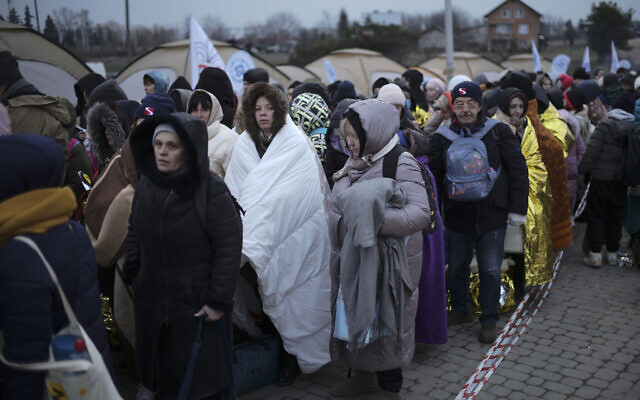
Approximate Russian (red) and Ukrainian (blue) positions and axes of attack in the Battle of Kyiv as of March 12, 2022 (The Kyiv Independent)
by Illia Ponomarenko

Despite a very complicated situation with many of its main axes of attack throughout Ukraine, Russia keeps throwing more military power west and east of Kyiv, in a bid to possibly surround and penetrate the city. Satellite images issued by U.S. company Maxar reveal Russia’s very recent activity close to the Hostomel Airfield, including armored units and towed artillery. 

'Russia is likely seeking to reset and re-posture its forces for renewed offensive activity in the coming days,' as the British Defense Ministry said in its March 11 intelligence update. 'This will probably include operations against the capital, Kyiv.' As the expert community believes, Kyiv should brace itself for a hard defense within short notice, potentially for Russian attempts to impose a full blockade and trigger a humanitarian disaster to force the Ukrainian leadership into a deal. 

Nonetheless, as the situation suggests, Russian prospects look increasingly grim as well. With Russia’s failed attempts to seize Kyiv in a blitz attack, along with steady defense efforts, the capital city has all chances to grind over and bleed dry invading forces in fierce urban combat, effectively precipitating a strategic victory over Russia.

Russia’s scarce progress

As in any of the key areas, such as Mykolaiv, or Kharkiv, or Chernihiv, Russia has demonstrated very little progress in the battle for Kyiv over the last few days. A series of fierce attacks before March 8-9 ended up with Russia gaining a foothold northwest of Kyiv, in the satellite cities of Irpin, Bucha, and Hostomel, a key junction on the E373 road, more commonly known as the Warsaw Highway. 

Along with the P02 road to the north, this has become the Russian military’s vital throughway between the Kyiv metropolitan area and Belarus via the Chornobyl Exclusion Zone. At huge costs, Russia has formally secured this passage for supplies and fresh troops. However, as multiple evidence suggests, the narrow corridor is still prone to extreme logistics issues, which end up causing fuel and food shortages among Russian forces advancing towards Kyiv.

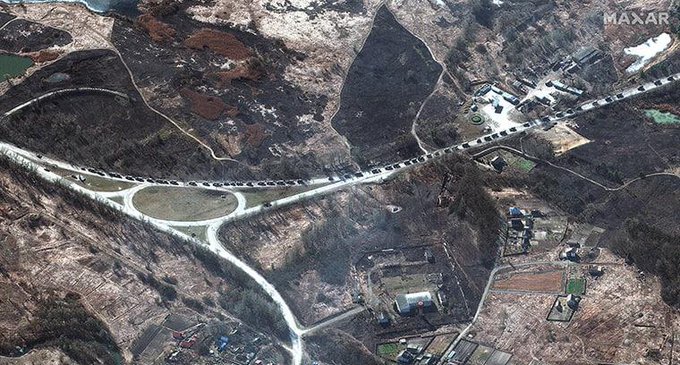
Very illustrative was the situation regarding the ill-fated Russian military convoy stretching 64 kilometers along the highway northwest of Kyiv. For many days, numerous satellite pictures showed the convoy, basically, a giant traffic jam, standing still, very likely due to fuel shortage and poor technical condition of vehicles that effectively stalled the movement.

military convoy near kyivRussian military convoy near Kyiv has been relocated an dispersed. Photo Maxar
But according to the latest observations, the giant convoy has largely dispersed, likely redistributed among multiple Russian units in the area. After gaining a foothold in parts of Hostomel, Bucha, and Irpin, Russia also demonstrated very limited success trying to advance further south to the defunct E40 road connecting Kyiv and Zhytomyr.

According to Ukraine’s General Staff, this group of Russian forces is most probably poised to partially surround Kyiv from the west and cut the capital city off from supplies. On March 8, the Institute For the Study of War (ISW), a Washington D.C.-based think tank, said Russian forces were concentrating on a possible assault against the capital in the coming 24 to 96 hours.

Nonetheless, amid extremely slow progress due to logistical issues and a strong Ukrainian defense, Russia has probably decided to take a breathing spell in operations and agreed on civilian evacuation from Bucha, Irpin, Hostomel, and Borodyanka, the cities that have been largely ruined.

As the Ukrainian military suggests, Russian forces in many ways used this lull to try and re-array west of Kyiv and possibly get its logistics issues resolved for an effective onslaught. The last few days in the area have been relatively calm, although the warring parties have had sporadic clashes. Russia is also investing a lot of effort into trying to gain a foothold east of Kyiv, particularly the Brovary area. But this axis has proved even less successful.

Two key cities not controlles by Russia

Similarly to the Dnipro west bank, Russia is also confined to a few key highways leading northeast to Russia and Belarus, particularly the E-95, M-02, and H-07 roads. And the problem for Russia is that it has so far failed to seize or effectively block two key cities on its way to Kyiv, namely Chernihiv and Sumy, both of which continue offering fierce resistance since day one of the invasion and inflicting severe enemy casualties. Without the stiff control of either of the two cities, along with ensuring safe communications along the highways, gaining ground east of Kyiv is also extremely problematic.

As a result, Russia has no effective control over the vast territories between Kyiv and Chernihiv or Sumy, where Ukrainian regular military and territorial defense forces are practicing hit-and-run tactics. 'Sending large military forces to Kyiv from the north means long convoys moving along roads in the forest,' says Andriy Zagorodnyuk, former Ukraine’s defense minister and the chairman of the Kyiv-based Center for Defense Strategies. 

'Convoys are very vulnerable in such a terrain. One needs to just target the convoy head, and the whole convoy effectively stops. And then it gets decimated. And this is what we see on a constant basis. The local geography is not on the invader’s side.' 

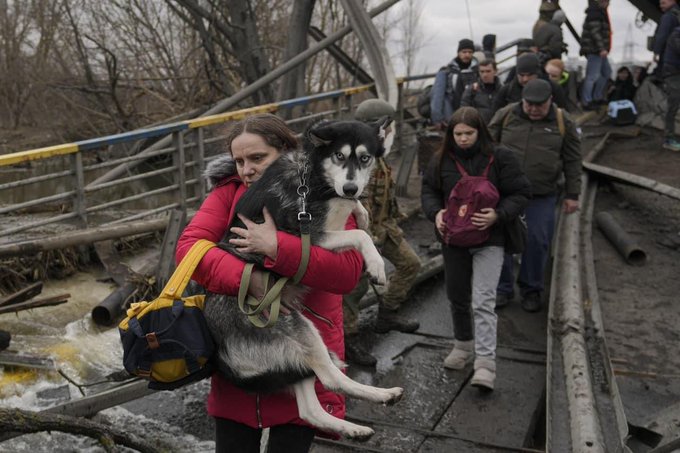
irpinInhabitants of Irpin, near Kyiv, are being evacuated after their town was shelled and isolated for two weeks. Photo from twitter
Day after day, the Ukrainian military and local social media users indicate multiple pieces of evidence of Russia’s massive loss of manpower and hardware in combat, especially in Chernihiv, Sumy, and Kyiv regions. As one of the latest developments, a Russian battalion tactical group, part of the 90th Armored Division’s 6th Regiment, sustained severe losses close to Brovary on March 10. According to Ukrainian statements, most of the regiment’s personnel, along with the commanding officer Colonel Andrey Zakharov, were killed in action. The division’s advancing groups had to retreat and stay on the defensive. 

The Ukrainian victory likely further disrupted Russian efforts to set conditions for offensive operations east of Kyiv, as the Institute For the Study of War commented on the engagement. 'The episodic, limited, and largely unsuccessful Russian offensive operations around Kyiv increasingly support the Ukrainian General Staff’s repeated assessments that Russia lacks the combat power near the capital to launch successful offensive operations on a large scale,' the think tank said on March 10.

Besides, the ISW added, Ukrainian air force and air defense operations continue to hinder Russian maneuvers on the ground by likely limiting Russian close air support and also exposing Russian mechanized forces to Ukrainian air and artillery attacks. This suggestion was clearly illustrated by the March 10 engagement at Brovary, where the advancing Russian armored convoy moving concentrated on a highway was spotted and then decimated by intense and dense Ukrainian artillery and tank strikes. 

Moreover, according to the ISW conclusions, the likelihood is increasing that Ukrainian forces could fight the Russian forces advancing to take Kyiv to a standstill, eventually. Logistics and organization issues, as well as poor morale and inadequate planning, have already cost it the swift victory it had evidently hoped for on Feb. 24.

'There are as yet no indications that the Russian military is reorganizing, reforming, learning lessons, or taking other measures that would lead to a sudden change in the pace or success of its operations,' the ISW also said on March 10. 'Although the numerical disparities between Russia and Ukraine leave open the possibility that Moscow will be able to restore rapid mobility or effective urban warfare to the battlefield.' 

Blockade

The expert community has a consensus that Russia’s chances of seizing Kyiv are at least questionable, given the general performance to date. The blitzkrieg plan that would see the Ukrainian leadership in Kyiv being captured and forced into a deal within days has ultimately failed.

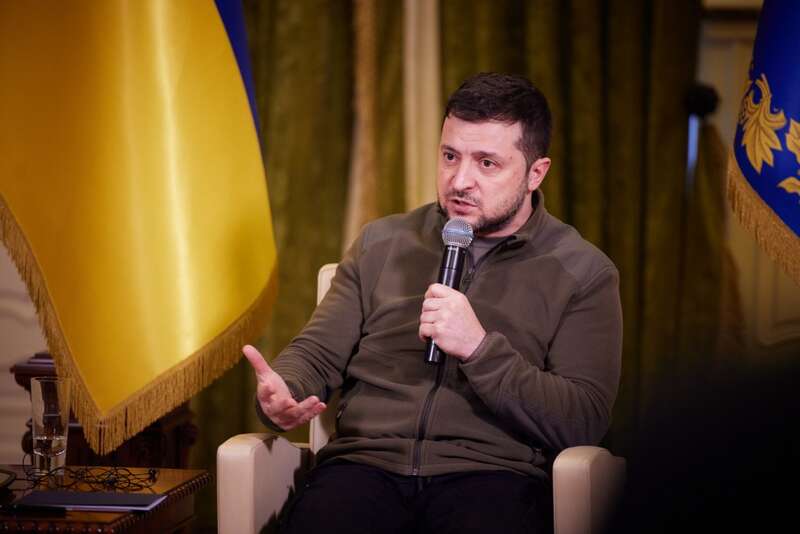
zelensky 12 maart 2022The Russian blitzkrieg failed. President Zelensky gives a press conference in his office on March 12. Photo president.gov.ua  

Nonetheless, all sources suggest a concentration of Russian forces near Kyiv, despite seemingly unfavorable terms on the ground. 'The Kyiv axis is among their top priorities,' says Ruslan Leviev of the Conflict Intelligence Team, an online investigation group checking Russia’s military activity. 'As we believe, Russians may acknowledge the fact that at some point they will have to seek talks and offer a deal. So they need the strongest leverage they can get for the talks, which is the siege of Kyiv and a humanitarian disaster in the city.' 

The Russian perspective of encircling Kyiv does not seem promising, given the mission’s complexity, the group believes. But even in case of an uneven success, Russia will unlikely resolve to try and break through the city defenses. It is much more likely that Russians will try and establish a blockade amid relentless shelling and airstrikes. Such tactics of forcing cities into surrendering via total terror have so far barely worked against Mariupol, Sumy, and especially Kharkiv, which carry on with their fierce resistance despite massive destruction and loss of life. 

Kyiv, being a very large and well-fortified city, is an incomparably more difficult target for a Russian blockade, let alone an all-out assault, as experts believe. 'Assaulting Kyiv in this situation would a stupid thing to do,' says former defense minister  and chairman of the Kyiv-based Center for Defense Strategies Zagorodnyuk. 

'But we have already seen them doing stupid things — so we should not rule this out.' 

We republished this article from The Kyiv Independent in a slightly shortened fashion 

Russia’s media censorship agency has been hacked and releases 364,000 Files

By Mehr Ali / in Science & Tech / on Saturday, 12 Mar 2022 


Anonymous has breached the database of Roskomnadzor, the Russian federal executive agency responsible for monitoring, controlling, and censoring Russian media.

The cyberattack allowed the hacktivist group to seize more than 360,000 files, which have now been released to the public.

The 820GB data dump focuses primarily on documents concerning the republic of Bashkortostan, one of the largest provinces in the Russian federation.

According to Anonymous, Roskomnadzor’s activities are a matter of public interest ‘to the people of Russia and to the world’.

“Their recent actions have only emphasized this,” Anonymous said in a statement.

“Roskomnadzor has given instructions about what can be said and ordered media outlets to delete stories that call Russia’s invasion of Ukraine an invasion.

“In response to Facebook’s fact-checking Russia’s statements about the war, Roskomnadzor began restricting access to Facebook before later blocking it.

“Roskomnadzor also threatened to block access to Russian Wikipedia over their article about the Russian invasion of Ukraine.

“This follows an established history of similar actions in the past.”

According to Distributed Email of Secrets, their source from Anonymous felt ‘the Russian people should have access to information about their government’ after being cut off from independent media and news outlets from the outside world.

“We are publishing this release in anticipation of Russia potentially being cut off from the global internet on March 11, and hope Russians will have time to download this data, before then,” the statement issued from Distributed Email of Secrets said.

Kyiv chief rabbi: 'Putin has united Ukrainians and Jews'

DW speaks to Rabbi Moshe Reuven Azman, one of Ukraine's leading clerics, who recently made a passionate plea to Russians to stand up against the Kremlin and protest the current war in Ukraine.


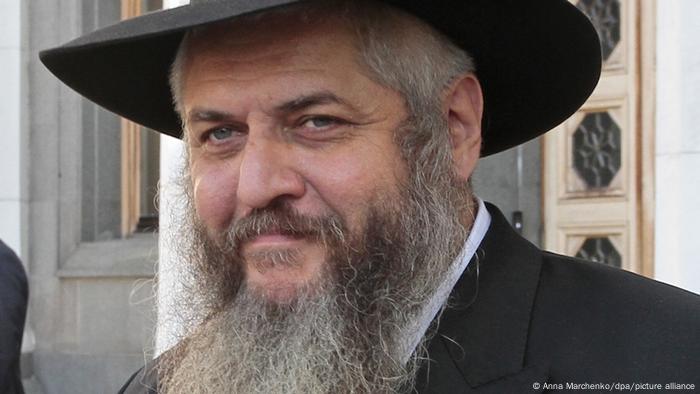
Moshe Reuven Azman

Rabbi Moshe Reuven Azman is the chief rabbi of the Brodsky Synagogue in Kyiv. He recently made an impassioned video address in which he accused Russian President Vladimir Putin of committing war crimes and crimes against humanity. He called on Russians and Jews to protest and help bring an end to the war in Ukraine. DW spoke to him about his motivation and the reactions to his plea, and for his assessment of events.

DW: The Kremlin says that "denazification" is one of the goals of its military operation in Ukraine. What is your response?

Moshe Reuven Azman: Against whom is this "denazification" directed? Against President [Volodymyr] Zelenskyy, who is Jewish? Or against opposition leader [Vadim] Rabinovich? Only somebody who has been brainwashed by television, which spreads all sorts of nonsense, could believe such rubbish. There is no Nazism in Ukraine; there aren't even any nationalist parties in parliament. No normal person believes this drivel. Moscow just needs a pretext to satisfy its imperial ambitions.

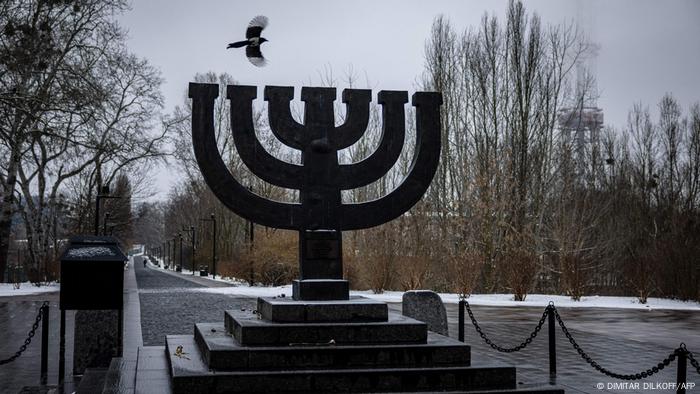
How would you evaluate the Russian airstrike on the TV tower in Kyiv, which also affected the Babi Yar memorial?

It's a sign! I think it was a warning from above about where this war could lead. Thank God there have not been any punitive operations yet, but just the fact that peaceful residents are being shot at, and cars and buildings too, already constitutes war crimes in my opinion.

Do you expect help from Jewish communities abroad?

Russia and Putin have united the Ukrainian and Jewish people, the whole world, against them. Today, everyone is praying both for Ukrainians and for Jews. We have all become victims of the same tragedy. That is why I will continue to ask for prayers and for protests. I ask you to do everything in your power. I have already told the Jews of Russia that they should do this. I realize that some of them have been brainwashed, and some are scared. I was born in Leningrad myself, in the Soviet Union, when the KGB still existed. But I was not afraid. Because of my activities, I was brought to the KGB to be interrogated. Now again, everyone must decide for themselves whether they want to be with good or evil, whether they choose to participate in crime. If everyone in Russia had adopted a clear position, the whole junta would have been got rid of a long time ago.

What reactions did you get to your video?

I addressed the Jews of Russia with all my heart and the Russians, those people on whom the outcome of this war depends. I was not reading a text. I reminded them that they couldn't just sit in front of their TVs and grin, that they would have to bear responsibility for what is happening, with their tacit or non-tacit consent.


The memorial at Babi Yar in Kyiv was affected by a Russian attack on the nearby television tower

I have been called by Jews and Russians from Russia. Some said that I had opened their eyes; others said they had known what was going on for a long time but were afraid to talk about it. I am glad that I was able to open the eyes of people with my sincere plea. In Ukraine, I'm told that I have given strong emotional support to people here on the ground.

What is of most concern to the Jewish community in Ukraine now?

We have set up a call center to take calls from people in need of help. We are organizing buses to take people to safety in Israel and Europe. Jewish men who are eligible for conscription feel the need to defend Ukraine. They're going to war, joining the army or territorial defense forces.

I receive thousands of messages every day. We're trying to save people. We're bringing food and medicine to people. There are many elderly people who cannot move on their own or are bedridden, including people who miraculously escaped the Holocaust during World War II, and have now been forced to flee Luhansk and other towns in Donbas. This is the third and even fourth time in their lives. They are shocked that the Russian army, which once beat the Nazis, is now bombing them, destroying their homes and killing peaceful Ukrainians.

This interview was conducted in Ukrainian

REFUGEES WON'T GET WORK PERMITS OR HEALTH, EDUCATION RIGHTS

Israel said to reach cap on non-Jewish Ukraine refugees, days after announcing limit

Immigration authority says over 7,000 Ukrainians have arrived since start of fighting, of whom 5,000 don’t have immigration rights — the maximum the government will allow
Today

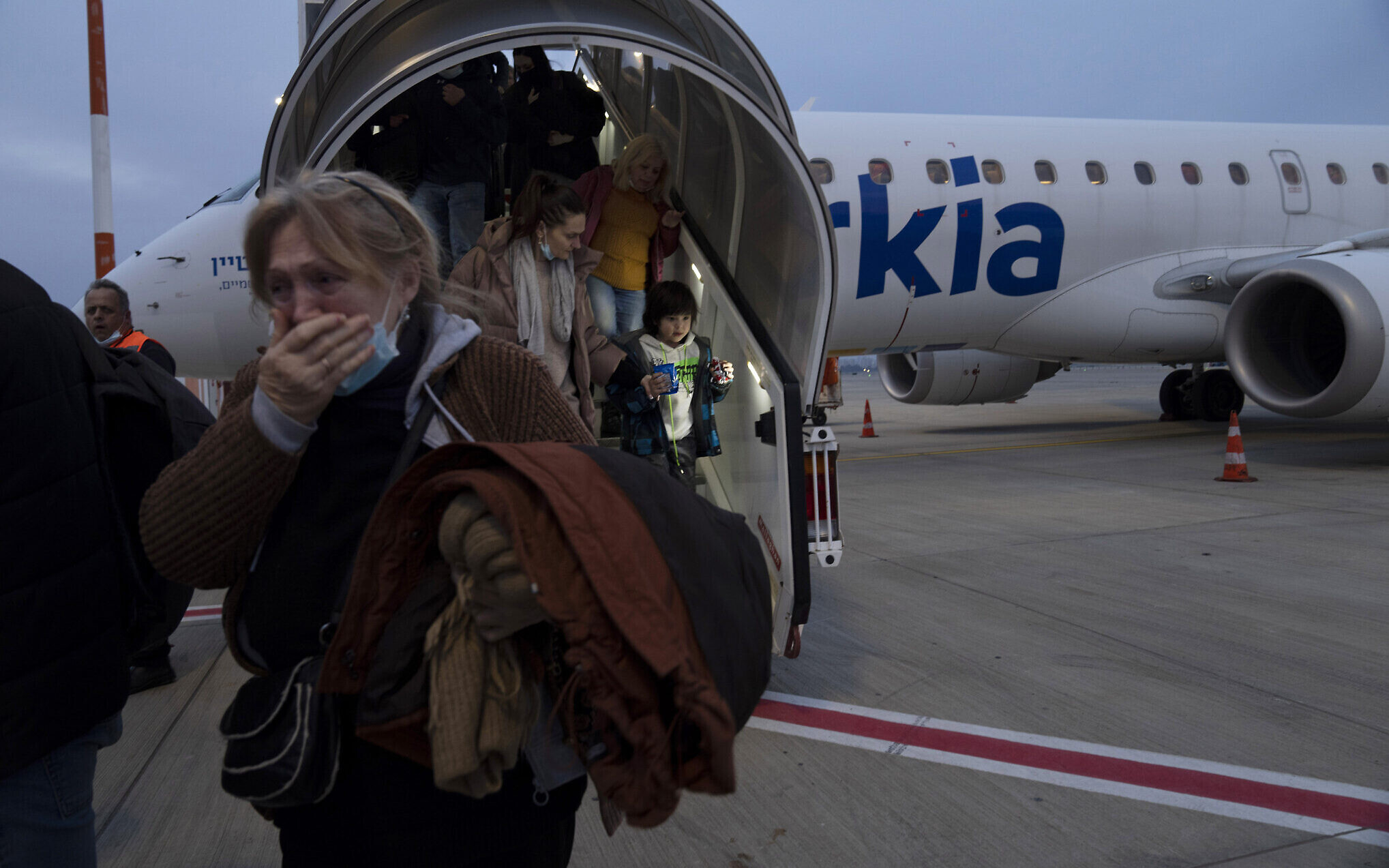
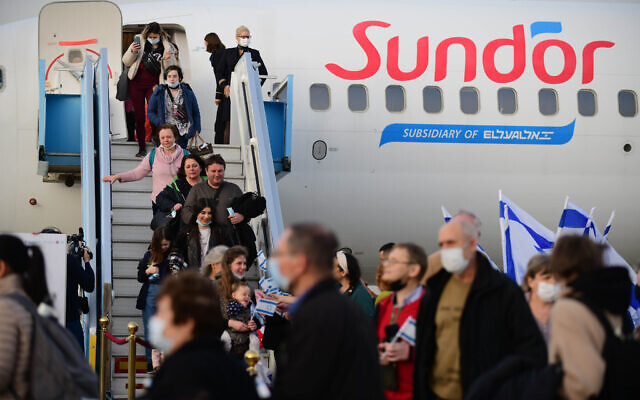
Illustrative: Ukrainians disembark from a special flight to Israel from Romania upon landing at Ben Gurion Airport, March 8, 2022 (AP Photo/Maya Alleruzzo)


Israeli authorities said that Sunday several thousand refugees from Ukraine have already arrived in the country, apparently already hitting the maximum number of refugees not of Jewish descent that the country was prepared to accept.

The government has seen internal debate over policy on Ukrainians seeking refuge — that is, those who do not automatically qualify for immigration to Israel under the Law of Return, which allows anyone who has a Jewish parent or grandparent to receive Israeli citizenship.

Interior Minister Ayelet Shaked said last week Israel would allow some 20,000 Ukrainians who were on tourist visas or in the country illegally before the Russian invasion to remain in the country, and would also grant visas to a further 5,000 non-Jewish refugees seeking to escape the war.

Those 5,000 visas would solely allow the refugees to remain in the country without fear of deportation.

It would not allow them to work legally, send their children to school or get access to Israel’s health care.

All Jewish Ukrainians are allowed into Israel and given citizenship under the Law of Return, and the government expects the fighting to prompt tens of thousands of Russian and Ukrainian Jews to move to Israel.

The Population, Immigration, and Border Authority said Sunday that 7,179 people have arrived from Ukraine since the start of Russia’s invasion on February 24, of whom 221 were refused entry.


In total, around 2,000 of the Ukrainians who have arrived have immigration rights, meaning that the cap on non-Jewish refugees has apparently been reached.

There was no immediate response from Israeli officials on the matter.


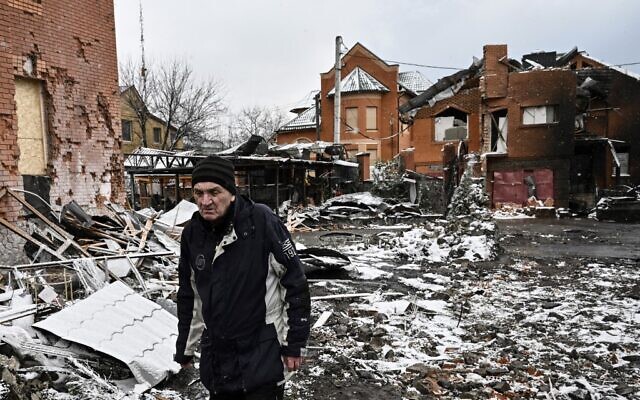
A man walks between houses destroyed during air strikes on the central Ukranian city of Bila Tserkva on March 8, 2022. (Aris Messinis / AFP)

Immigration lawyer Alex Zarnopolsky, who has been working to help the refugees, told The Times of Israel that the 5,000 limit on non-Jews entering has been reached.

“It was clear that by the time the quota would be applied, it would already be full,” he said. “In practice, we are not taking in refugees from Ukraine.”

Most of those who were able to enter the country have gone to stay with family or friends.

Zarnopolsky explained that many of the non-Jewish refugees have family members who are Israeli citizens or otherwise are in the country, but nonetheless do not qualify for citizenship under the Law of Return.

Two hotels are being used in Tel Aviv to house refugees while their paperwork is processed, the Dan Panorama Hotel and the Grand Beach Hotel. The refugees were moved to hotels after public outcry over the dismal conditions they were being held in at Ben Gurion Airport.

Zarnopolsky said there has been no update from the Interior Ministry and that it is unclear what the current situation is, or whether the country will let more people in.

He charged that “they are trying as much as possible to refuse people.”


Jewish immigrants fleeing the war in Ukraine, arrive at Ben Gurion airport near Tel Aviv on March 6, 2022.
 (Tomer Neuberg/FLASH90)

Whereas Jewish refugees have been welcomed to Israel in what is seen as a fulfillment of an essential role of the Jewish state, Zarnopolsky said that arrivals who are not eligible for citizenship are not being given any social welfare rights, their children cannot enter the Israeli school system, and elderly refugees do not have health coverage.

But, most of those who have come to Israel have no intention of staying in the country, he asserted, and intend only to wait out the war and then return to their homeland.
Cabinet to review cap

Deputy Economy Minister Yair Golan, whose Meretz party opposes the cap, told the Kan public broadcaster on Sunday, “We never miss an opportunity to do nonsensical things.”

“All that is needed is a little courage and a little generosity,” he said. “Why do we have to be perceived in the world as miserly, racist, as not offering a hand?”


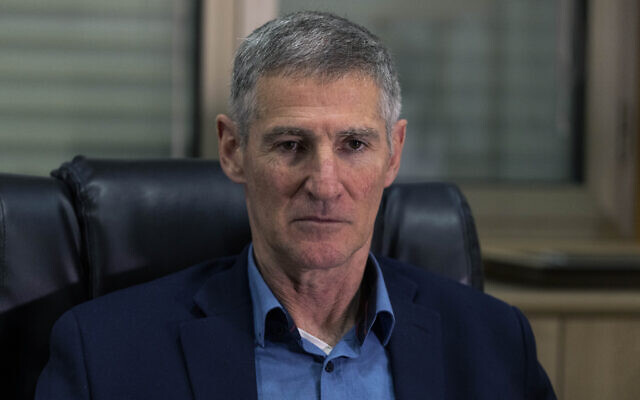
Deputy Economy and Industry Minister Yair Golan, a legislator with the dovish Meretz party, in his office at the Knesset, in Jerusalem, on January 17, 2022.
 (Tsafrir Abayov/AP)

Golan rejected the suggestion that Israel needs to reserve its resources for the expected waves of tens of thousands of new immigrants prompted by the fighting.

“We can open our gates to a few thousand refugees and in parallel absorb broad immigration,” he said.

Golan said the country is able to take in 30,000 refugees without needing to differentiate between those who are Jewish and those who aren’t.

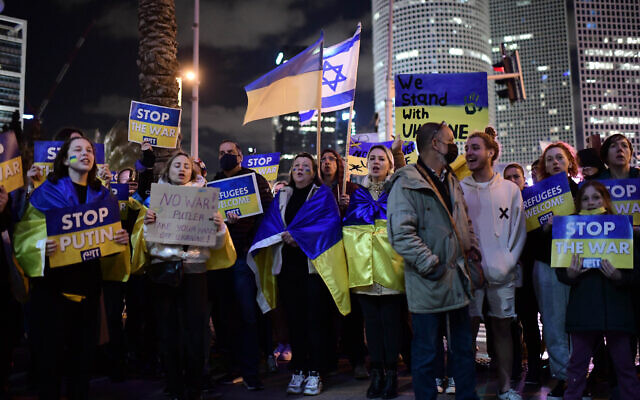
Dozens of people protested outside Shaked’s home on Saturday night calling for more refugees to be allowed to enter Israel, and hundreds demonstrated in central Tel Aviv.


Demonstrators carry placards and flags during a protest in Tel Aviv against the Russian invasion of Ukraine, on March 12, 2022. (Tomer Neuberg/Flash90)

Israel’s policy toward non-Jewish Ukrainian refugees has sparked debate since Russia’s invasion began late last month, with critics inside and outside of the country slamming the policy as woefully insufficient.

During Monday’s upcoming cabinet meeting, left-wing members of the government are expected to push for raising the cap on the number of non-Jewish Ukrainian refugees allowed to stay in Israel.

The Meretz party said its ministers will demand that Israel “give refuge to all refugees.”

“No quotas, without differentiation of religion, race, or gender,” the party said. “This is our basic duty as Israelis and human beings.”


Diaspora Affairs Minister Nachman Shai of the Labor party will demand during the meeting that a ministerial committee be formed to decide on Israel’s refugee policy, Walla news reported.

“Israel doesn’t have a defined and clear immigration policy. The refugee crisis from Ukraine requires a government decision that is agreed upon by all the different elements of the government,” said Shai, who has campaigned on behalf of the refugees.


Interior Minister Ayelet Shaked speaks at a conference in Jerusalem on March 7, 2022.
 (Yonatan Sindel/Flash90)

Shaked said Saturday that Foreign Minister Yair Lapid, who leads the Yesh Atid party, was a “partner” in the decision to cap the number of non-Jewish Ukrainians allowed to stay in Israel.

In an interview with Channel 13 news, Shaked said determining immigration policy is under her “clear authority.”

Pressed further on Lapid’s role in the refugee cap announced Tuesday, Shaked said, “We built this proposal together.”

Ukraine’s embassy in Israel on Saturday said it backed a petition to the High Court of Justice against Israel’s limitations on Ukrainian refugees.

The appeal argues that the government’s cap on refugee entries violates international agreements between the nations as well as international conventions to which Israel is a party, and was imposed without proper authority.

Over 2.5 million Ukrainians have fled the war, with the majority going to neighboring Poland. Millions more are internally displaced.


Refugees wait in a crowd for transportation after fleeing from the Ukraine and arriving at the border crossing in Medyka, Poland, March 7, 2022 (AP Photo/Markus Schreiber)

Ukraine has consistently pressed Israel for more support during the conflict.

Israel has provided humanitarian aid to Ukraine, including 100 tons of medical and cold-weather equipment flown out of Ben Gurion Airport last week. However, it has sought to walk a tightrope to maintain good relations with both Ukraine and Russia. Russia maintains a military presence in Syria and is negotiating Iran’s return to a nuclear deal.

Bennett has mediated between Ukraine and Russia, and on Saturday, Ukrainian President Volodymyr Zelensky proposed a summit in Jerusalem with Russian President Vladimir Putin.

Russian oligarchs are moving to Israel: media reports

At least 7 rented private jets are suspected of carrying wealthy Russian oligarchs to Israel in an effort to escape sanctions imposed on Moscow


March 8, 2022 


At least seven rented private jets are suspected of carrying wealthy Russian oligarchs to Israel in an effort to escape sanctions imposed on Moscow.

According to the Times of Israel, the planes originate from a company in Turkey that provides jets for hire in Europe.

Tracking data showed the planes made trips to Moscow and St. Petersburg, then from those cities to Tel Aviv.


This comes after several Russian oligarchs have been sanctioned by the US, UK and EU, resulting in them being cut off from the US financial system, with their assets frozen and property blocked off.

Israel has not joined the imposition of sanctions but has said oligarchs cannot leave their planes or yatchs on its soil for more than 48 hours.

"We will not give oligarchs on the sanctions list their yachts and airplanes in Israel. We must not be seen as a country used to evading sanctions," an official told Ynet.

Despite the sanctions on Russia, the Bank of Israel has yet to issue instructions on how local banks should deal with Russian banks in general, and Russian oligarchs in particular, who hold Israeli bank accounts.

Channel 12 news on Friday reported that an inter-ministerial committee is set to give recommendations to the government this week regarding sanctions that Israel could impose against Russia.

It added that there is no legislation that would prevent oligarchs with Israeli citizenship from putting their money into bank accounts in Israel.