Wednesday, March 18, 2026

National park land literally blown up by Trump's obsession in key swing state

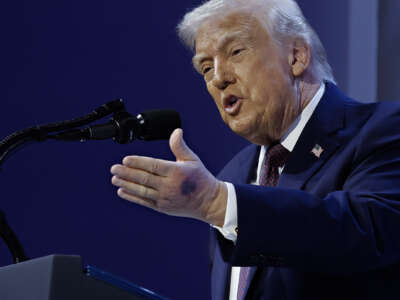
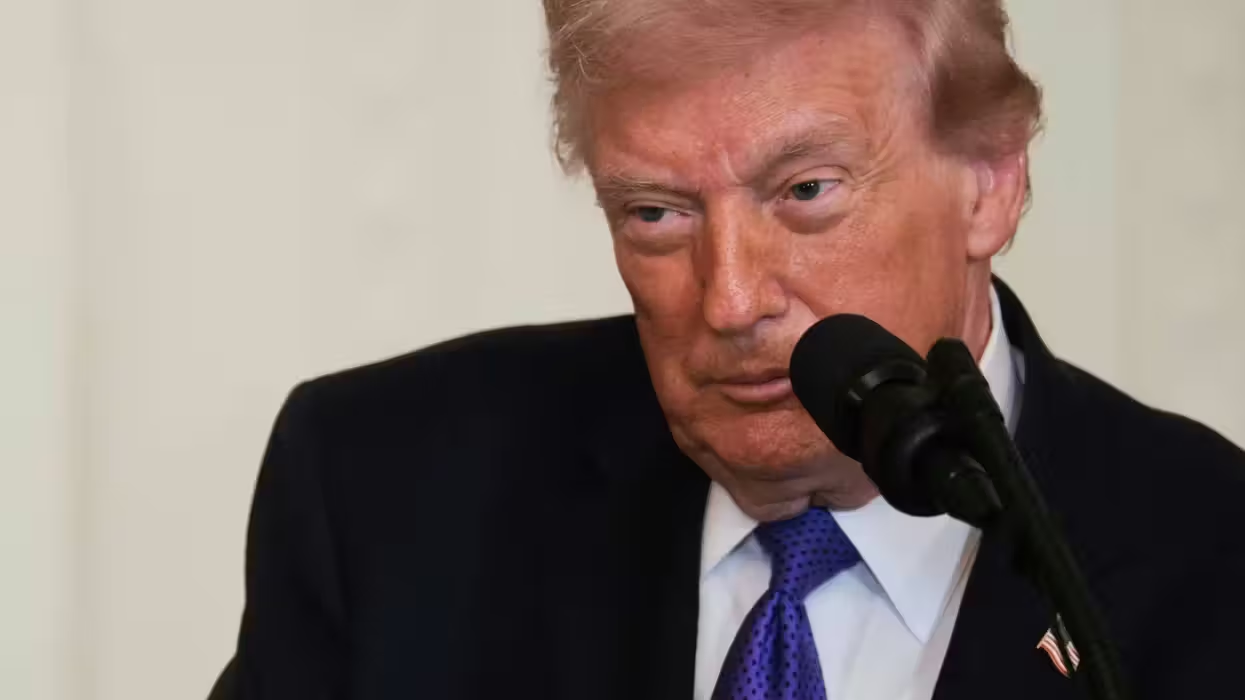
U.S. President Donald Trump speaks, as a patch of blemished skin is visible above his shirt collar, during a Medal of Honor ceremony at the White House in Washington, D.C., U.S., March 2, 2026. REUTERS/Ken Cedeno

March 18, 2026
ALTERNET

In the past, Arizona had a reputation for being reliably conservative. Sen. Barry Goldwater (R-Arizona), despite his vehement disdain for the Religious Right, was a highly influential figure in the Republican Party — and his successor, GOP Sen. John McCain, identified as a "Goldwater Republican."

But Arizona has evolved into a volatile swing state. Arizona has a Democratic governor (Katie Hobbs) and two Democratic U.S. senators (Mark Kelly and Ruben Gallego), yet Donald Trump carried Arizona by roughly 5.5 percent in 2024. And Republicans have majorities in both houses of the Arizona State Legislature.

Arizona is having plenty of heated political debates in 2026, and one of them involves the border wall project that got underway during Trump's first presidency. MAGA Republicans in Arizona want to see the construction of a U.S./Mexico border wall continue to move forward, but other Arizona residents are saying that while they want border security, they also have environmental concerns.

The Atlantic's Nick Miroff addresses those concerns in an article published on March 17, describing the effect of national park lands in the key swing state.

"At Coronado National Memorial in Arizona," Miroff explains, "the demolition crews blowing up national-park land tend to announce explosions at least a day in advance, as a warning for hikers to stay away. The crews have been working their way up the western slope of the park for the past couple of months, right along the international boundary with Mexico. President Trump's border wall needs a smooth, straight path, and there are mountains in the way. Trump didn't build along this stretch of the border during his first term, but his crews are now working at a furious pace."

Miroff adds, "They have already completed about five miles of 30-foot-tall barrier, painted jet black at the president's insistence because he thought it looked more intimidating and would be hotter to the touch."


One of the longtime Arizona residents who is openly critical of border wall construction in the San Raphael Valley area is Kate Scott, who said that seeing the wall makes her feel "physically sick."

Scott told The Atlantic, "I refuse to allow people to take our land, annihilate our animals, our plants, our water. I do not accept that as my reality. And if more people started to understand that it's not our reality to accept, they will come up with ways to push back."

Zay Hartigan, a local fire chief in that area of Arizona, told The Atlantic he considers the border wall "just a waste of money" and that surveillance towers deter smugglers.

"The valley had been shaped across tens of millions of years, by volcanoes, floods, earthquakes," Miroff notes. "Native peoples, Spanish explorers, Mexican settlers, Apache warriors, cowboys, and mountain bikers all passed through. None of them has left anything as immense and lasting as what Trump is building."

Tuesday, March 17, 2026

Judge Blocks CDC Childhood Vaccine Changes Made by RFK Jr. Panel Picks

The ruling also places a stay on Kennedy’s appointments to a vaccine recommendation panel within the CDC.

By Chris Walker
Truthout
March 17, 2026


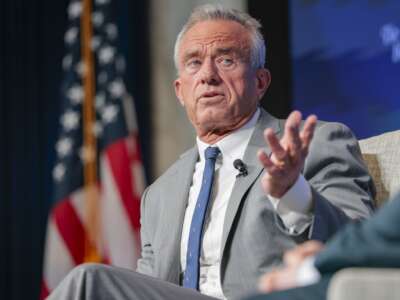
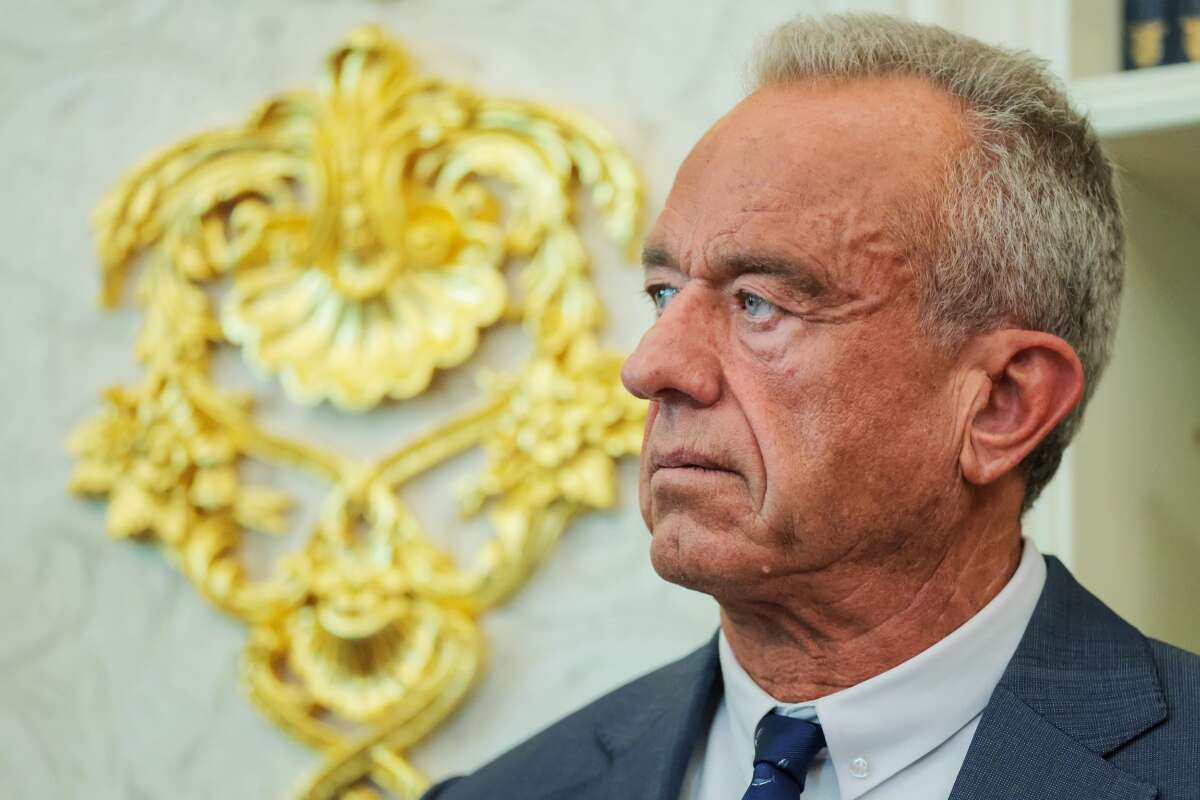
Health and Human Services Secretary Robert F. Kennedy Jr. attends the signing of an executive order in the Oval Office of the White House on December 18, 2025
.Anna Moneymaker / Getty Image

Afederal judge has placed a temporary injunction on new vaccine rules for children established earlier this year by the Centers for Disease Control and Prevention (CDC), finding that the panel that had recommended them to the agency was improperly appointed by Department of Health and Human Services (HHS) Secretary Robert F. Kennedy Jr.

The order issued on Monday by Massachusetts-based U.S. District Judge Brian Murphy also vacates previous decisions by the panel in question, and suspends, for the time being, several members due to their lack of qualifications.

In December, the Advisory Committee on Immunization Practices (ACIP) voted on recommending changes to the childhood vaccine schedule, reducing the number of vaccines from 17 to 11. Vaccines removed from those previously recommended included hepatitis A, hepatitis B, meningococcal disease, rotavirus, influenza, and respiratory syncytial virus (RSV). The changes also lessened the number of vaccine doses recommended to prevent human papillomavirus (HPV).

ACIP made those changes just half a year after Kennedy disbanded the previous iteration of the board, and filled its vacancies with individuals who shared many of his anti-vaccine views. In January, the CDC formally adopted the new recommendations.

Health officials in the Trump administration have justified the changes by claiming they further align the U.S. with vaccine recommendations for children in European countries. But health experts — including some from Europe — have said that such an approach flouts the scientific method.


One expert said Kennedy’s pick once met with her to discuss his research, but came with his own “agenda” instead. By Chris Walker , Truthout March 12, 2026

“I do not think this makes sense scientifically,” Anders Hviid of Denmark’s Statens Serum Institute said at the time. “Public health is not one size fits all. It’s population-specific and dynamic. Denmark and the U.S. are two very different countries.”

Reacting to those changes, several U.S.-based health groups, including the American Academy of Pediatrics (AAP), the American College of Physicians, and the American Public Health Association, filed a lawsuit against HHS, accusing Kennedy of “packing” the ACIP board so that it would produce opinions he favored, rather than issuing recommendations based on scientific study and vigorous debate. The lawsuit decried the changes made to the childhood vaccine schedule, deeming them both “harmful” and “unlawful.”

In issuing his ruling, Murphy agreed with the plaintiffs, finding that HHS and the Trump administration had disregarded methods for picking ACIP members that were “scientific in nature and codified into law through procedural requirements.” The decision to disband ACIP last year and replace its members with persons mostly agreeable to Kennedy’s views “undermined the integrity” of the panel’s decision-making process, Murphy also wrote in his ruling.

Murphy found that Kennedy’s process had violated the Federal Advisory Committee Act (FACA), which includes in its text a rule requiring federal advisory committees to be “fairly balanced in terms of the points of view represented and the functions to be performed” relating to whatever federal agencies they provide guidance for.

In his ruling, Murphy explained that:


For our public health, Congress and the Executive have built — over decades — an apparatus that marries the rigors of science with the execution and force of the United States government. … [T]here is a method to how these decisions historically have been made — a method scientific in nature and codified into law through procedural requirements. Unfortunately, the Government has disregarded those methods and thereby undermined the integrity of its actions.

Kennedy had improperly assembled the new ACIP board by appointing board members who were nearly unanimous in their anti-vaccine views — and thus, their vote on changing the vaccine schedule should be voided, Murphy said.

In addition to invalidating the changes to childhood vaccine recommendations, Murphy voided other votes that ACIP has made since last year. He also stayed the appointments of 13 ACIP members Kennedy selected, finding that they were not adequate for the purposes of advising the CDC on the issue of vaccines.

“Of the fifteen members currently on ACIP, even under the most generous reading, only six appear to have any meaningful experience in vaccines — the very focus of ACIP,” Murphy wrote in his decision.

He also noted that, of those six, three members lack the “expertise” needed to study vaccines and immunizations — including MIT mathematician Retsef Levi, who has no health background whatsoever and whose research has been widely criticized for pushing an “agenda.”

The stay of more than a dozen ACIP members’ appointments to the panel means that it is effectively stalled from making other health decisions at this point.

The Trump administration criticized the ruling, and a spokesperson for HHS said the department planned to appeal.

A lawyer representing the health groups that brought forward the lawsuit praised Murphy’s decision.

“This is a significant victory for public health, evidence-based medicine, the rule of law, and the American people,” lawyer Richard Hughes said in a statement. “The government may appeal this decision, and we have much more work to do to achieve a full victory on the ​merits. But for now, we get to celebrate a rare bit of good news.”

AAP president Andrew Racine also lauded the ruling, stating that ACIP was influenced by Kennedy’s views rather than scientific evidence.

“When Secretary Kennedy made unsupported and unscientific changes to pediatric immunization recommendations last year, the American Academy of Pediatrics (AAP) was mission-bound to step up and push back against these dangerous actions that have sown chaos and confusion for parents and pediatricians across the country,” Racine said. “This decision effectively means that a science-based process for developing immunization recommendations is not to be trifled with and represents a critical step to restoring scientific decision-making to federal vaccine policy that has kept children healthy for years.”


US-Backed Repression in Latin America Paved the Way for ICE

The struggle for immigration justice has become increasingly inseparable from the global fight against authoritarianism.


Washington has helped revive state terror in Central America, while fostering an epidemic of forced disappearances.
March 16, 2026

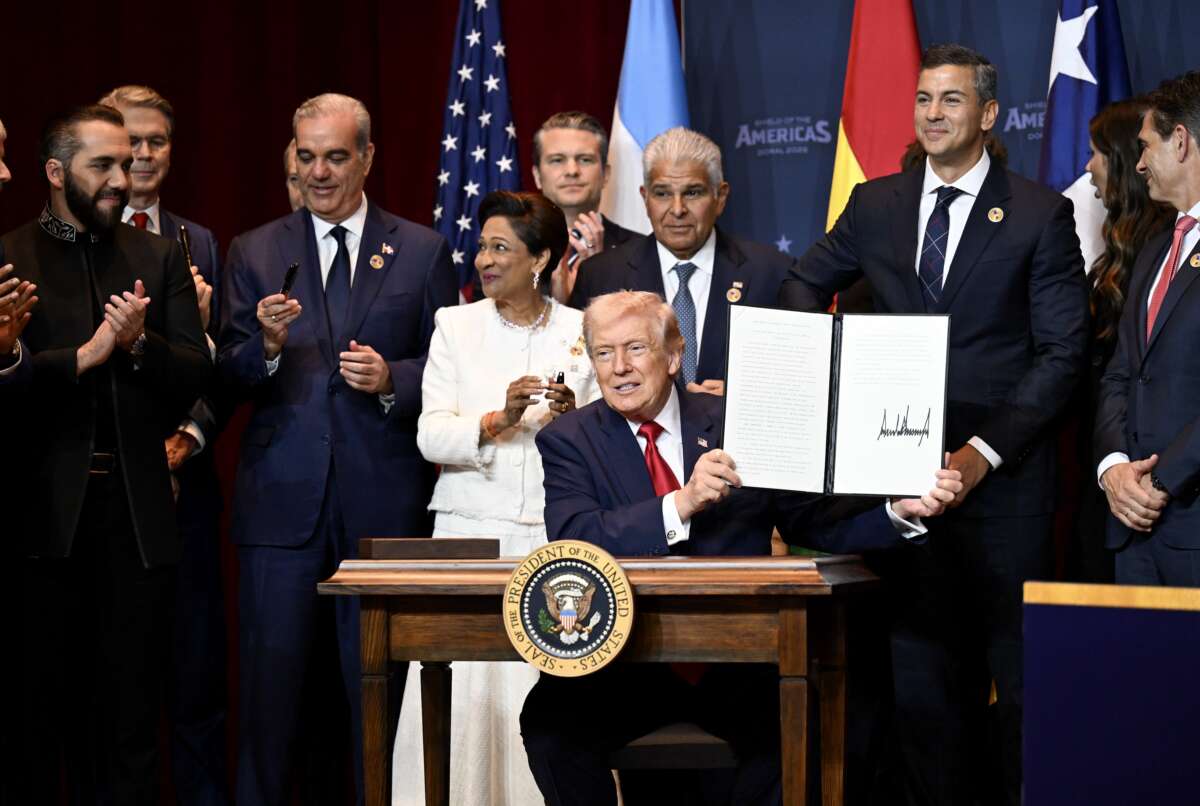
Donald Trump holds a document that he signed while surrounded by heads of state and government officials from 12 countries in the Americas as he hosts the the "Shield of the Americas Summit“ at the Trump National Doral Golf Club on March 7, 2026, in Doral, Florida.Roberto Schmidt / Getty Images

Josué Aguilar Valle, a Honduran national, recalls the “terrible” conditions at the migrant jails where U.S. immigration authorities imprisoned him last year. In La Salle County, Texas, Aguilar shared a frigid cell with 50 men, sleeping on the concrete floor. “I thought I was going to experience hypothermia,” he explained.

Aguilar’s wife struggled to locate him, as authorities repeatedly shuffled him between facilities in Florida and Texas. Aguilar became a statistic lost inside an impenetrable bureaucracy. “Every time I tried to visit him, they moved him,” his wife recounted. “It’s like they’re trying to wear families down.” Last May, Immigration and Customs Enforcement (ICE) deported Aguilar to Honduras, separating him from his U.S. family.

His experience is not unique. Human rights experts claim that President Donald Trump’s administration has restructured the immigration system to “disappear” people, undermining due process and expediting deportations by abducting civilians, hiding detainees, and deleting their data. Those searching for the vanishing victims of ICE arrests have compared the institution’s clandestine practices to “trafficking people.”

The recent wave of disappearances follows a long and traumatic historical arc. Since the 1970s, the U.S. government and its Latin American allies have frequently disappeared civilians to eliminate dissent and members of marginalized communities, while pursuing law enforcement initiatives that make immigrants vulnerable to human trafficking and state violence. In many ways, Trump’s deportation drive reflects this deeper past, as the legacy of imperialism abroad returns home — threatening both immigrant families and the remnants of U.S. democracy.


With Donroe Doctrine, Trump Threatens to Export His Brand of Authoritarianism
International solidarity, not liberal imperialism, is the only way to stop Trump’s global class war. By Ashley Smith , Truthout January 24, 2026


Disappearing Dissent

The term “disappearance” entered the global political lexicon after President Richard Nixon’s administration helped Chilean military leaders seize power in 1973, toppling a popular and democratic socialist government. Nixon offered Gen. Augusto Pinochet unflinching support as the archconservative officer executed thousands of leftists and imprisoned tens of thousands more. Reluctant to offend the budding dictatorship, the United States embassy in Santiago even denied protection to Americans seeking refuge from gunfire in the streets. Its indifference allowed Chilean soldiers to disappear two U.S. citizens, Charles Horman and Frank Teruggi, without pushback.


The legacy of imperialism abroad returns home — threatening both immigrant families and the remnants of U.S. democracy.

In Chile in Their Hearts, John Dinges demonstrates that the State Department treated their deaths as “an obstacle to be removed,” while refusing to recognize that Pinochet’s regime killed them. Horman and Teruggi became two of the more than 1,400 victims that the junta disappeared. For years afterward, U.S. law enforcement and intelligence assistance helped Chile and neighboring dictatorships undertake Operation Condor, a campaign of state terror that disappeared hundreds of leftists, often shuffling their corpses across borders to thwart investigators.

Following the Nicaraguan Revolution in 1979, forced disappearances skyrocketed in Central America, where President Ronald Reagan financed counterinsurgency operations against leftist movements. El Salvador became the third-largest recipient of U.S. aid; at the time, its leading politician, Roberto D’Aubuisson, announced the names of future death squad victims on television.

The courageous human rights defender Marianella García Villas routinely visited the Salvadoran countryside to photograph the corpses dumped by state forces. “All the women were raped before being murdered,” she emphasized. To stifle her investigations, the U.S.-trained Atlácatl Battalion abducted García Villas in 1983, before executing her the same way. Meanwhile, the Reagan administration harassed and spied on the sanctuary movement, which religious leaders established in the United States to protect Central American refugees. By fostering a climate of intimidation, Washington helped Salvadoran death squads sow terror as far as California.

More than anywhere, Reagan’s support for repression proved to be stomach-churning in Guatemala. Even before his election, two campaign supporters reportedly visited the country to assure officials that “Reagan recognizes … a good deal of dirty work has to be done.” His administration supplied munitions and foreign aid, while the military waged a genocidal offensive against the left and Indigenous population.

Their military instructors and equipment helped President Efraín Ríos Montt undertake a scorched-earth campaign that destroyed more than 400 Indigenous communities. In November 1982, the U.S. embassy relayed reports that state forces slaughtered hundreds of civilians in La Estancia. Survivors described victims “ripped open with machetes,” men arrested to “never [be] seen again,” and grenades shredding women and children.

Shortly afterward, Reagan visited Central America to express his support for Ríos Montt. He called the dictator “a man of great personal integrity” and slammed critics for giving him a “bum rap.” The next day, Guatemalan soldiers entered Dos Erres, before commencing a three-day orgy of violence that killed at least 162 people. In 2013, judges concluded that Ríos Montt was guilty of genocide since he intended to “cause the physical destruction of the [Indigenous] Ixil group,” in order to deprive guerrillas of support.

Beyond fomenting forced disappearances, Washington’s militarized drug policy fostered staggering levels of corruption.

In 1996, the counterinsurgency in Guatemala ended after disappearing 45,000 people and claiming 200,000 lives, and President Bill Clinton passed a landmark immigration act that further militarized the border and made it harder for Guatemalan refugees to secure asylum. The conflict was a harrowing illustration of U.S. Cold War strategy. For decades, Washington backed repressive regimes to protect global capitalism and its hemispheric dominance. From Chile to Central America, extrajudicial detentions and executions became commonplace, as U.S. allies literally disappeared dissent.

Death Lands

During the Cold War, U.S. and Latin American elites abducted dissidents to eliminate opposition to unfettered capitalism. But since then, they have disappeared migrants who have been displaced by the very system they created.

The “dirty wars” in Central America left fractured societies, while stimulating undocumented immigration to the United States. Over the 1990s and 2000s, U.S.-sponsored reforms spiked poverty levels in Central America and Mexico by shrinking the public sector, eliminating social services, and boosting import competition.

Most notably, the State Department collaborated with business-friendly governments, while spearheading the North American Free Trade Agreement (NAFTA). Despite promises to the contrary, NAFTA flooded Mexico with cheap grain and undercut small producers. Scholars such as Salvador Maldonado Aranda demonstrate that impoverished peasants immigrated or turned to drug trafficking to survive.

In 2006, President Felipe Calderón assumed power in Mexico, while facing credible accusations of electoral fraud. To boost his legitimacy, Calderón declared war against the Zetas and other drug cartels. The United States then unfurled the Mérida Initiative, which awarded Mexico nearly $3 billion in security aid. Over the following decade, U.S. officials provided advanced aircraft, surveillance technology, police equipment, and extensive law enforcement cooperation.

Yet the history of security assistance in Mexico was already checkered. The founders of the Zetas were former Mexican soldiers who received U.S. instruction at Fort Bragg. “They were given map reading courses, communications, standard special forces training, [and] light to heavy weapons,” Lt. Col. Craig Deare recalled. Even the Zetas’ name was a grotesque nod to their origins, a reference to the radio code used by soldiers targeting drug traffickers.

Washington has helped revive state terror in Central America, while fostering an epidemic of forced disappearances.

Rather than enhancing security, U.S.-Mexican cooperation spawned an uncontrollable war, while encouraging cartels to acquire military-grade firepower and diversify into human trafficking. During Calderón’s presidency, the homicide rate rose nearly 200 percent to more than 121,000 victims. And “narcofosas” (mass graves) proliferated across the countryside, as an epidemic of forced disappearances swept Mexico. Perversely, U.S. authorities across the border exploited the Anti-Drug Abuse Act of 1988 to incarcerate and expel undocumented immigrants fleeing the chaos.

Throughout the Mérida Initiative, Washington ramped up security assistance, despite knowledge that Mexican authorities helped cartels abduct civilians. In May 2010, Consul General Bruce Williamson in Monterrey concluded that violence “made travel chancy on roads” heading north. Months later, the Zetas reportedly intercepted and massacred 72 migrants in San Fernando. Forced disappearances multiplied. “Immigrants from Central America,” the U.S. embassy relayed in 2011, “accused the immigration agents of pulling them off buses and handing them over to drug gangs in the state of Tamaulipas.”

That very year, the Zetas massacred another 193 migrants there. In the aftermath, Mexican authorities confided to U.S. consular staff that they were splitting up the bodies to “make the total number less obvious.”

Beyond fomenting forced disappearances, Washington’s militarized drug policy fostered staggering levels of corruption. Over six years, Mexican authorities arrested thousands of veterans for drug-related charges, and soldiers became popular cartel recruits. Secretary of Public Security Genaro García Luna himself received bribes from drug lords, while directing Calderón’s counternarcotics crusade. Nonetheless, the U.S. officials overseeing Mérida considered him “our go-to guy” and “the most efficient partner we had.”

Ultimately, the drug crackdown discredited the government, ravaged communities, and instigated an arms race among narcotics traffickers. And as cartels kidnapped civilians to raise war funds, the country became a no-man’s land for Central and South American migrants heading north. According to the migrant rights group Movimiento Migrante Mesoamericano, 72,000 to 120,000 disappeared in Mexico between 2006 and 2016. Political scientist Pilar Calveiro concludes that the conflict created “territories of death.” U.S. leaders helped turn Mexico into a sunwashed abyss, where entire migrant convoys — the victims of Washington’s dirty wars and reforms — disappeared without a trace.

The Permanent Exception

To a disturbing degree, the exodus of migrants from Central America is itself a symptom of U.S. policies. For over a decade, support for right-wing forces in Honduras, El Salvador, and elsewhere has spurred immigration, while paving the way for forced disappearances across the region.

In 2009, U.S.-trained officers abducted President Manuel Zelaya of Honduras, then flew him out of the country from a U.S. military base. Afterward, Secretary of State Hillary Clinton recognized the new right-wing government, while helping organize sham elections to lend it legitimacy.

The MAGA movement is imposing its own state of exception to freeze immigration and stifle dissent, as masked ICE agents come to resemble the very agents of oppression that immigrants first fled.

The historian Greg Grandin concludes that the coup inaugurated “a permanent counterinsurgency on behalf of transnational capital” that only Clinton’s cooperation made possible. Over the following years, security forces murdered the environmentalist Berta Cáceres, and disappeared activists resisting the authoritarian slide. Notably, a foreign mining corporation, Entre Mares, hired a former death squad member to oversee security — superimposing the legacy of the Cold War onto the post-coup repression.

Across the border, U.S. officials also tightened relations with President Nayib Bukele in El Salvador after he assumed power in 2019. Before heading the embassy, Ambassador Ronald Johnson was a U.S. military adviser to El Salvador who led combat operations during the dirty war. In office, he protected Bukele from a probe into his negotiations with gang leaders, while the president desperately sought to reduce homicide rates. Afterward, another diplomat discovered that in August 2020, “Bukele requested Johnson remove” a U.S. contractor investigating his pact with local kingpins, and “that was what happened.”

Indeed, Republican politicians became major allies of the conservative upstart, as he branded himself “the coolest dictator in the world.” In 2020, Bukele deployed soldiers to occupy Congress in order to ramrod a security bill through. Elsewhere, U.S. foreign assistance enabled death squad activity. Armed with U.S. equipment, police moonlighted as hitmen for hire, killing at least 279 victims between January 2019 and September 2021.

In 2022, Bukele declared a “state of exception,” clamping down on both violent crime and political dissent. The law enforcement spree has generated another wave of forced disappearances: Repeatedly, masked police in unmarked vehicles have arrested civilians for alleged gang activity. By April 2024, the government had apprehended 79,211 people: imprisoning more than 1 percent of the Salvadoran population.

The human rights organization Cristosal reviewed 1,178 detentions. It found that authorities did not provide evidence in a single case demonstrating that the defendant committed a crime. Instead, Cristosal discovered a pattern of “arbitrary detentions and systematic human rights violations.”

Its findings are chilling. Police have invaded schools to arrest teenagers for their social media posts. They have sexually harassed mothers in front of their children, then hauled them off to prison. And they have raped 13-year-old girls while threatening to incarcerate them if they resist. In one case, they even imprisoned a police employee who had rejected the sexual advances of her boss. After receiving an anonymous tip, officers arrested the woman by dragging her naked from a workplace shower. Nonetheless, Trump has praised Bukele for his “fantastic job” tackling crime and reinforced law enforcement cooperation.

In short, Washington has helped revive state terror in Central America, while fostering an epidemic of forced disappearances. Working with U.S. security agencies, local powerbrokers now attack obstacles to political control and capital accumulation. Bodies dumped by roadsides and packed prisons have become symbols of a permanent state of exception: a new order imposed with U.S. arms and complicity.

The Deep Freeze


The political turmoil and forced disappearances in Central America offer the crucial context for Trump’s deportation drive. U.S. security policies have long exacerbated a refugee crisis in the region. But now, the MAGA movement is imposing its own state of exception to freeze immigration and stifle dissent, as masked ICE agents come to resemble the very agents of oppression that immigrants first fled.

Upon taking office again, Trump cut an agreement with Salvadoran authorities. He scuttled a Department of Justice investigation in order to conceal information about Bukele’s gang negotiations. In return, Salvadoran officials agreed to warehouse more than 250 Venezuelan deportees in the CECOT mega-prison.


The ACLU now registers “enforced disappearances” across the United States as federal authorities undertake dragnet operations.

Human Rights Watch concludes that their transfers constitute “enforced disappearances.” ICE shipped them to El Salvador, while agents “repeatedly refused to provide information” on their whereabouts to family members, even erasing their files from the agency’s database. Prison authorities at CECOT smashed teeth, broke a nose, blasted detainees with rubber bullets, and sexually assaulted victims with batons. CECOT’s director informed the Venezuelans that they would leave in a body bag. Last July, they finally returned to Venezuela in a prisoner exchange.

The state of exception has become the norm for regional governments, including the Trump administration. Under political pressure, Honduran and Guatemalan officials have also declared national emergencies to reduce violent crime, and Costa Rica is building a mega-prison based on CECOT. And while trampling civil liberties, the Trump administration has allocated over $170 billion to immigration enforcement, tripled ICE’s annual budget, and kickstarted a wave of prison construction. Its deportation drive allows officials to turn immigration officers into shock troops of the MAGA movement, while appealing to their political base and intimidating dissent.

The ACLU now registers “enforced disappearances” across the United States as federal authorities undertake dragnet operations. Last October, masked ICE agents detained about 400 people at an Idaho racetrack, while shouting racial slurs and manhandling civilians. They kept adults and children zip-tied for hours, depriving them of access to food, water, and restrooms — and forcing them to urinate in full view of others.

More broadly, the ACLU calls prisons such as “Alligator Alcatraz” in Florida a black hole where officials “disappear” detainees by frequently failing to record their information or inform their families of their location, turning hundreds of prisoners into lost statistics. At the Everglades site, guards have kept civilians shackled in zoo cages under the pounding sun. Officers at the nearby Krome facility have also tortured numerous victims, at one point crushing the hand of a detainee in front of human rights monitors.

This March, the inauguration of the Shield of the Americas, a multinational coalition targeting drug trafficking and immigration, dramatized the hemispheric scope of Trump’s repressive agenda. The popular Latin American news show “Macondo” dubbed it the summit of “bootlickers,” since most attendees from the region — including Bukele — are unconditional supporters of the MAGA program. Addressing the conference, Trump expressed contempt for the “damn language” of his Spanish-speaking allies while defending the latest war on drugs. Days afterward, jurists concluded that the governments of his closest regional partners, Bukele and President Daniel Noboa of Ecuador, have forcibly disappeared civilians — including children.


As Trump exploits fears about migrants to dissolve constitutional safeguards, the struggle for immigration justice becomes increasingly inseparable from the global fight against authoritarianism.

Ultimately, the current immigration crackdown obscures a long history of U.S. imperialism, while displaying the authoritarian ambitions of Trump and his hemispheric allies. Since the 1970s, the United States has promoted security measures that have disappeared thousands of civilians in order to maintain imperial supremacy, curtail crime, and undercut progressive movements. In turn, these militarized law enforcement policies have propelled waves of immigration, effectively creating a population vulnerable to human trafficking and state violence.

Rather than address these issues, ICE imprisons or deports those affected by them — literally displacing policy contradictions across borders. In the process, federal authorities not only threaten to disappear immigrants but what remains of U.S. democracy. Thus, the legacy of imperialism abroad has returned home to haunt the United States. Masked agents in unmarked vehicles now snatch civilians off the streets, just like Washington’s repressive allies in Latin America. As Trump exploits fears about migrants to dissolve constitutional safeguards, the struggle for immigration justice becomes increasingly inseparable from the global fight against authoritarianism.

The author would like to thank Sarah Priscilla Lee of the Learning Sciences program at Northwestern University for reviewing this article.

This article is licensed under Creative Commons (CC BY-NC-ND 4.0), and you are free to share and republish under the terms of the license.


Jonathan Ng

Jonathan Ng is a postdoctoral fellow at the John Sloan Dickey Center for International Understanding at Dartmouth College.


INSIDE JOB

MAGA infighting ignites over accusation Trump staged assassination


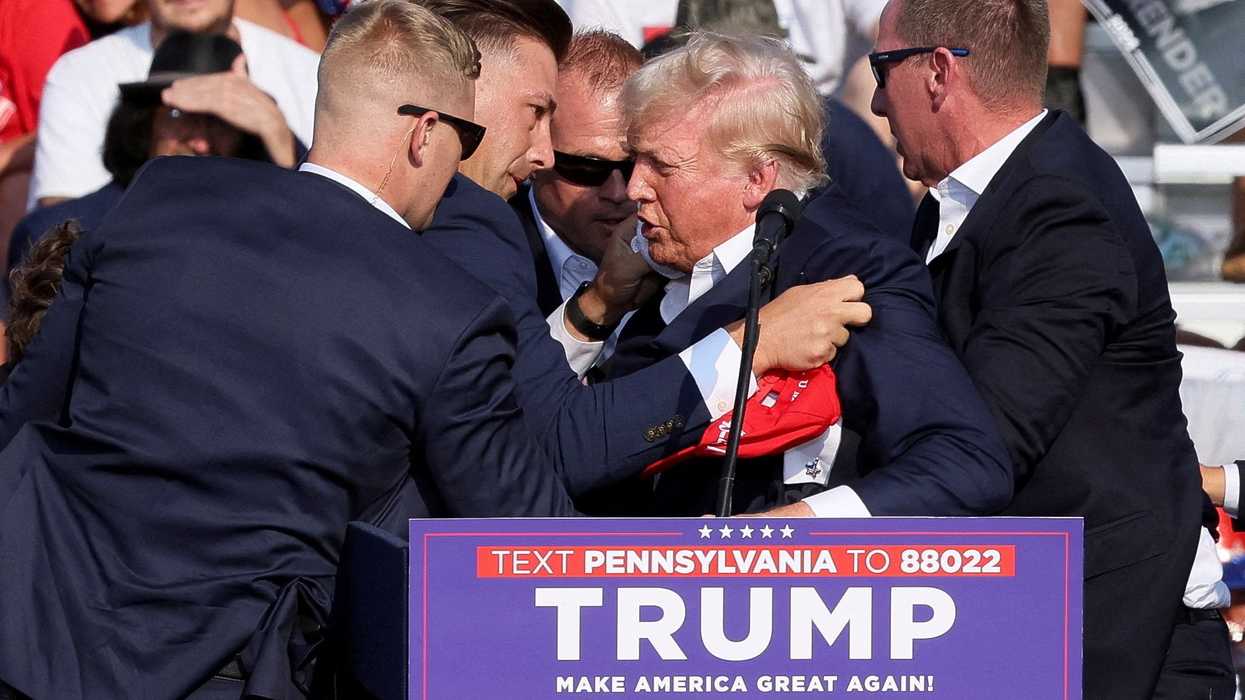
FILE PHOTO: Donald Trump is assisted by guards during a campaign rally at the Butler Farm Show in Butler, Pennsylvania, U.S., July 13, 2024. 
REUTERS/Brendan McDermid/File Photo

March 16, 2026 
ALTERNET

Infighting has erupted amongst conservatives online after a major voice in the MAGA media sphere expressed belief in the conspiracy theory claiming that President Donald Trump staged his 2024 assassination attempt.

This theory about the assassination attempt in Butler, Pennsylvania, on the presidential campaign trail is not new, but has to date largely circulated among fringe left-wing sources. The accusation hinges on several aspects of the incident, including the lack of scar left on Trump's ear, the situational wherewithal needed to defiantly raise his fist afterward, and the fact that the alleged gunman had supported him in the past, leading some to suspect that it was staged for political gain in an election that had existential stakes for Trump.

Now, however, as Trump has made numerous decisions in his second term that have run afoul of his MAGA supporters, an increasing number of them have also begun to cast doubt on the official narrative surrounding his assassination attempt. One of the most prominent names so far has been far-right pundit and influencer, Milo Yiannopoulos.

"I hate myself for thinking it but dude that s——t wasn't real," Yiannopoulos wrote in a recent post to X, responding to another similarly skeptical user. "There was no assassination attempt. It didn't happen. I'm sorry it just didn't."

"As we learn more about the scam filled life of Donald Trump, why isn't there a serious investigation into the staged 'assassination' attempt in Butler, PA," another X anti-Trump Republican X user wrote in a post. "THAT was the moment when Trump stole the 2024 election. Get after it investigative journalists! America deserves the truth!"

"I’ve never re-watched this clip until now," Hannah Cox, a self-described libertarian-conservative and president of BASEDPolitics, wrote in response to another user sharing a clip of the attempt from a news broadcast. "Look at the people behind him and their reactions. No one on earth would sit there like that after a public shooting broke out. Compare this to the crowd and people around Charlie Kirk when he’s shot."

In response to these skeptical conservative voices, infighting has broken out as others attempt to push back on their skepticism.

"President of BASEDpolitics (who was never based, of couse) suggesting Trump staged his own assassination attempt," Jeremy Carl, a senior fellow at the Claremont Institute, posted in response to Cox. "These grifters and clowns can’t leave the scenes fast enough for me."

Another user, going by "Brick Suit," attempted to shut down these theories by sharing their own front row footage from the Butler event itself. Trump's combative White House communications director shared their post, adding, "For those of us who were there with POTUS at Butler, anyone saying it was staged truly needs to have their heads checked out because they have no sense of reality."


'Nightmare scenario' that could mean the end of US democracy: report


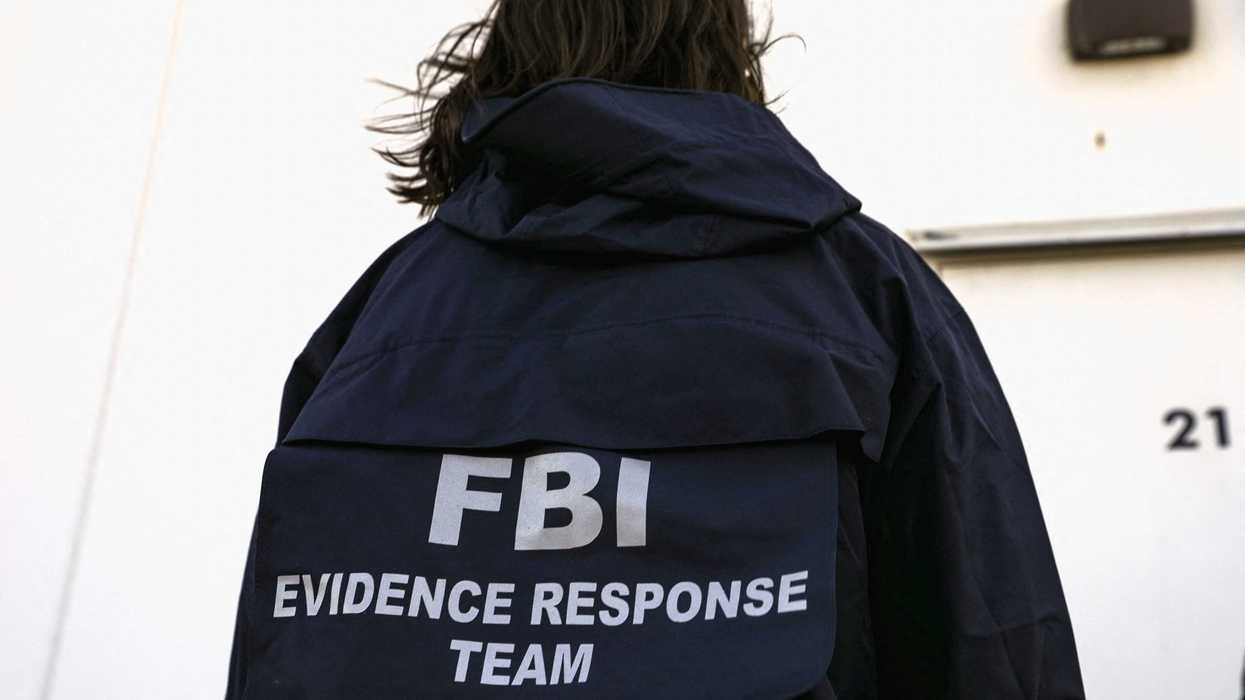
A member of the Federal Bureau of Investigation (FBI) Evidence Response Team prepares to enter the Fulton County Election Hub and Operation Center after the FBI executed a search warrant there in relation to the 2020 election, according to a law enforcement official familiar with the matter, in Union City, Georgia, U.S. January 28, 2026. REUTERS/Alyssa Pointer


February 09, 2026 
ALTERNET

President Trump is trying to steal the 2026 midterm elections in real time, experts say. But his opponents have the power to stop him.

In a recent report for Vox, Eric Levitz broke down the various methods that Trump may use to rig the results in his favor. These include ordering the military to seize voting machines and ballots in key districts before they have been counted, then altering the results so that the House Republicans can reject enough Democrats on the grounds of their “qualifications” to retain control of that chamber.

Levitz also pointed to Trump’s recent baseless raid on Fulton County, Georgia voting machines, with Director of National Intelligence Tulsi Gabbard present, as proof that Trump is considering doing this while claiming to protect national security. Finally Levitz observed that Trump has talked about stationing ICE at polling stations, which could chill voter turnout.

"For anybody who doubted that this administration is laying the foundation to interfere in elections, the deluge of activity over the last two weeks should lay those doubts to rest,” Wendy Weiser, Vice President of Democracy at the Brennan Center for Justice, told Vox. Weiser’s perspective was echoed by Derek Clinger, Senior Counsel at the State Democracy Research Initiative, University of Wisconsin Law School.

"The nightmare scenario used to be that Trump would invoke the Insurrection Act and have the military seize ballots and machines from a swing state on election night,” Clinger said. “But Fulton County suggests a much more plausible scenario: one where the seizure of ballots is conducted with the appearance of a legal process. I think that approach is both more likely to happen and also harder to challenge in real time."

Yet Levitz argues that Trump’s attempts could fail. Although Justin Levitt, a former Justice Department Official and professor at Loyola Law School, told Vox he believes Trump will do things like misuse ICE to deter people from voting, he does not think Trump’s attempts to directly meddle with voting will be upheld by courts.

"I think every magistrate judge in the country would understand the difference between a search warrant to seize materials for an election that happened five years ago and a search warrant to seize election materials from an election in progress,” Levitt told Vox. Referring to the courts upholding Trump’s Fulton County raid, Levitt said that “I understand why people are worried. But it's not remotely the same."

Levitz further added that any military seizure order would face judicial, political and potentially military resistance, with even some of Trump's own party members rebuking his election takeover remarks. Additionally, ICE does not have enough people to blanket large areas, and their presence at voting stations may inspire heavy turnout rather than intimidate voters into not showing up. Indeed, this is exactly what happened in a Minnesota special election following ICE operations.

As a result of Trump’s recent election meddling efforts, such as assigning an FBI Election Executive, House Minority Leader Hakeem Jeffries warned that “what Donald Trump wants to do is try to nationalize the election. Translation: steal it. And we're not going to let it happen.” Elie Mystal of The Nation condemned people who downplay the threat of Trump stealing the elections, arguing “to ignore the threat posed by Trump, to pretend like everything is going to be okay, to assume that upstanding members of the courts will rise to prevent the theft of the election is to stick your head in the sand.”

He added, “Trump and the Republicans have no intention of letting the upcoming midterms (in which Republicans are predicted to lose control of the House) proceed fairly.”

Although Trump claims the 2020 election was stolen from him, the president has a long history of making baseless claims of theft whenever he loses. When “The Apprentice” was snubbed for Emmys, he accused the process of being rigged. After losing the 2016 GOP Iowa caucuses, he claimed Texas Senator Ted Cruz had stolen them. Before the 2016 presidential election against Hillary Clinton, he declared he'd only accept results "if I win." Then, despite winning in the Electoral College against Clinton, Trump falsely alleged millions voted illegally to explain his vote loss in the popular vote. When he lost in both the Electoral College and popular vote to former President Joe Biden in the 2020 presidential election (despite trying to throttle mail-in votes by jamming up the Post Office), he filed dozens of lawsuits — losing 59 cases out of 60 cases that were rejected by over 90 judges, including many of his own appointees. Even Trump's then-Attorney General, William Barr, found no evidence Trump lost through fraud.

 The Weapons Makers Who Fund the Iran War Cheerleaders on Your TV


After the American public soured on the Iraq War, many groups that pushed for the invasion tried to downplay their role in the debacle. Here we go again.


Rebeccah Heinrichs, a fellow with the right-wing Hudson Institute, appearing on FOX News to discuss pending war in the Middle East.
(Photo: Screenshot/Fox News/Hudson Institute)
Julian Cooper
Mar 17, 2026
Responsible Statecraft


As the US-Israeli military campaign against Iran intensifies, Americans have shown little appetite for another war in the Middle East. Far fewer Americans support the war than in previous conflicts at this stage, including Iraq, Afghanistan, or Kosovo.

Washington think tanks, however, have been far more enthusiastic. They also happen to be funded by weapons contractors that stand to profit handsomely from the war.

For instance, many fellows employed by the Hudson Institute are supportive of strikes on Iran. As the Trump administration built up its military presence, Hudson Institute fellow Rebeccah Heinrichs went on Fox News and celebrated Trump’s initiative to “push the regime over” as a “major strategic opportunity for peace and stability in the Middle East.” After a week of strikes, Heinrichs celebrated the escalation of the military campaign. “We have a lot more of those kinds of munitions, and now I would suspect that we are just going to continue to destroy the production capabilities and any other storage facilities that they have deeply buried underground, so that’s good for the United States,” Heinrichs told Fox.

The Hudson Institute has received over $4 million from the defense industry since 2019, with Lockheed Martin, Northrop Grumman, and General Atomics CEO Neal Blue among their largest donors. Those companies’ weaponry has been used extensively in Iran. Northrop Grumman manufactures the $2 billion B-2 stealth bombers that are used to strike Iran. Lockheed Martin manufactures a variety of aircrafts used in the attacks, as well as the $300 million THAAD radar system that was recently destroyed by Iran. General Atomics, for its part, produces the MQ-9 Reaper drones used in the campaign. RTX, the manufacturer of the Tomahawk missile that killed 168 girls at their elementary school in Minab, Iran, is also a major donor.

General (Ret.) Jack Keane, Chairman of the Institute for the Study of War, took to the airwaves to claim the US should “take Iran off the map.” In a segment on Fox, Keane made the case against exiting the conflict prematurely over rising oil prices; “Are we saying we can’t accept several weeks of oil prices being higher than what they should be to take Iran off the map as a predator in the Middle East for decades to come?” asked Keane. “I think we’re much tougher than that frankly.”

ISW, Keane’s think tank, has received funding from major Pentagon contractors General Dynamics and CACI, but recently delisted the names of both donors from the website. In response to a request for comment, Alexander Mitchell, Director of External Relations at ISW, said, “ISW does not share information about our supporters or their giving histories outside standard 990 reporting.” ISW does list several other corporate sponsors on its website.

The Atlantic Council, which accepts more funding from the defense industry than any other think tank, hired an Israeli national security insider in the lead-up to the war, who used his new perch to make the case for US attacks. Michael Rozenblat, who the Atlantic Council describes as a “visiting research fellow from the Israeli security establishment,” published an article titled “Six reasons why Trump should choose the military option in Iran” less than two weeks before the strikes, framing an attack as a “moral imperative.” Rozenblat concluded that “a decisive US-led coalition effort aimed at regime change may offer a more sustainable strategic outcome” in Iran.

Last year, the Atlantic Council published a report recommending that the US procure more THAAD and SM-3 missiles to deal with threats abroad, including Iran. The manufacturers of those missiles, RTX and Lockheed Martin, have given the Atlantic Council $850,000 and $700,000 respectively since 2019. Both systems have been used extensively for missile defense against Iran.

War has been good for those donors’ pocketbooks. As stock exchanges opened the week after the US-Israeli attack on Iran, the share price of weapons manufacturers RTX, Northrop Grumman, and Lockheed Martin soared.

On March 12, the senior director of the Atlantic Council Scowcroft Center Matthew Kroenig defended the military campaign on Iran during a debate with Trita Parsi of the Quincy Institute, which publishes RS. “Removing the Islamic republic from the chessboard, or significantly weakening it for years or a decade I think stands to greatly improve regional and global security, and the lives of ordinary Iranians,” said Kroenig.

Many of the most outspoken voices pushing for regime change in Iran come from dark money think tanks, which reveal nothing at all about their donors. Around 40% of the US top think tanks fall into this category, according to the Quincy Institute’s newly updated Think Tank Funding Tracker.

The Foundation for Defense of Democracies (FDD), a prominent dark money think tank, has been advising the US to topple the Iranian regime for years. Founded with a goal to “enhance Israel’s image in North America,” FDD played a critical role in pushing Trump to withdraw from the Iran nuclear deal.

On the day of the US-Israeli strikes, FDD CEO Mark Dubowitz and senior analyst Ben Cohen wrote in an op-ed that “the survival of this regime – a nuclear-seeking, terror-sponsoring, protest–crushing dictatorship – is far more dangerous than the risks that come with its collapse.” Dubowitz has been cheering on the regime change effort since, recently retweeting an AI-generated video from Mossad encouraging Iranians to work with Israeli intelligence in overthrowing the Islamic Republic. FDD’s experts are invited to testify to the House Foreign Affairs Committee more than almost any other think tank, second only to the Center for Strategic and International Studies.

The Jewish Institute for National Security of America (JINSA) is another dark money think tank pushing for the military campaign on Iran. JINSA’s fellows include Benjamin Netanyahu’s former National Security Advisor, the former Commander of the Israeli Air Force, and Trump’s former Iran adviser, Elliott Abrams, as well as over a dozen retired US generals and admirals. In 2020, after the US assassinated Iranian military officer Qasem Soleimani, two JINSA scholars argued in the Washington Post that the United States “must keep up the attacks against Iranian assets in the region and join Israel in rolling back Iranian aggression,” with the goal of provoking a regime collapse.

When the military operation on Iran began, JINSA published an open letter signed by 75 retired generals and admirals in support of the war. Blaise Misztal, Vice President for Policy at JINSA, argued in an article titled “Iran is not Iraq” that fears of repeating the failures of Iraq are overblown.

In a recent appearance on Fox Business, JINSA strategic advisor Vice Admiral Robert Harward described the closure of the Strait of Hormuz as a “short-term problem” and argued that ending the war on Iran now would “only exacerbate” problems in the region.

Many other think tank experts have expressed support for the US pursuing a military campaign against Iran. Analysts from the Washington Institute, which was founded as a spin-off of the American Israel Public Affairs Committee, have long pushed for Congress to pre-emptively authorize the use of military force against Iran.

The Middle East Forum, meanwhile, recently published an article pushing Congress to appropriate funds not just for missile stockpiles but also nation-building efforts in Iran. Gregg Roman, the Executive Director of the Middle East Forum, suggested the US should fund “transitional governance planning” including “constitution-drafting support, judicial reform expertise,” and “lustration frameworks that remove regime loyalists” in Iran.

The Atlantic Council, the Hudson Institute, FDD, JINSA, the Washington Institute, and the Middle East Forum did not respond to a request for comment.

After the American public soured on the Iraq War, many groups that pushed for the invasion, including FDD, tried to downplay their role in the debacle.If the US-Israel bombing campaign on Iran continues on its perilous trajectory, one can’t help but wonder whether these pro-war organizations will once again attempt to memoryhole their supporting role in America’s latest military misadventure.
Pete Hegseth: Trump’s Dumbest Cabinet Member

It’s difficult to select one of Trump’s Cabinet members as the stupidest, but in the end the Secretary of Defense is in a class of stupidity completely his own.


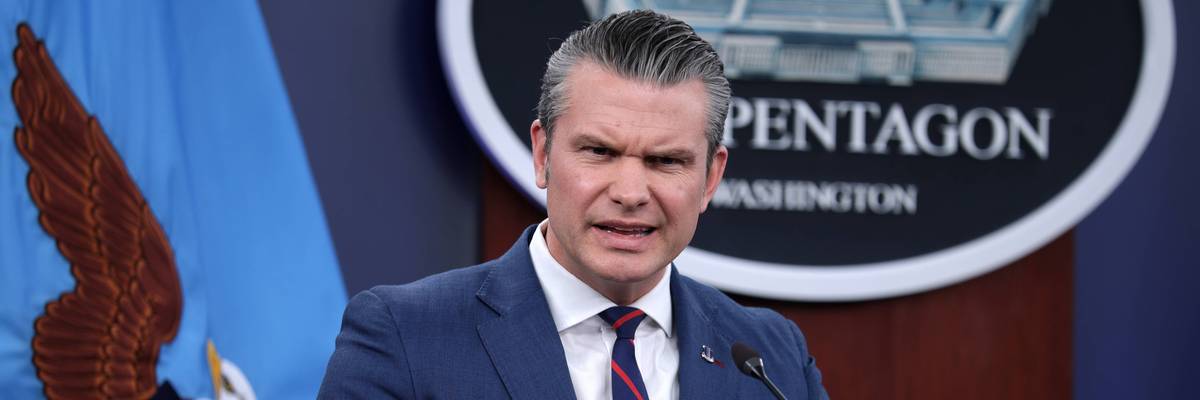
US Secretary of Defense Pete Hegseth speaks during a news conference at the Pentagon on March 2, 2026 in Arlington, Virginia. Secretary Hegseth and Chairman of the Joint Chiefs of Staff General Dan Caine held the news conference to give an update on Operation Epic Fury.
(Photo by Alex Wong/Getty Images)

Robert Reich
Mar 16, 2026
Inequality Media

At a press briefing on Friday, Defense Secretary Pete Hegseth complained about a CNN report that the Trump administration had underestimated Iran’s ability to disrupt global oil traffic by closing the Strait of Hormuz.

“Patently ridiculous,” Hegseth told reporters, adding — even as the strait’s blockage was proving to be Iran’s most powerful leverage in the war — we “don’t need to worry about it.” He also denied that the U.S. bombed the school where some 175 children were killed. Hegseth added that, as to CNN, “the sooner David Ellison takes over that network, the better.”

These remarks are remarkably stupid, on several levels.

First, CNN got it absolutely right in reporting that Trump’s national security team had underestimated Iran’s ability to disrupt global oil traffic. CNN cited “multiple sources familiar with the matter.”

The New York Times published a similar story, reporting that in the lead-up to the U.S.-Israeli attack, “Trump downplayed the risks to the energy markets.”

Even The Wall Street Journal, hardly a New York Times or CNN clone, substantiated the story on Friday, reporting that Trump rejected warnings that Iran would likely retaliate by closing the strait because he believed Iran would capitulate before doing so, and he assumed that even if Iran tried to close it, the U.S. military could handle it.

Second, Hegseth’s comment that we “don’t need to worry about” the blockage of the strait is not only false but flippantly insulting to an American public that deserves to know what the Trump regime is planning to do about soaring prices at the gas pump, directly due to that blockage.

Third, even if Hegseth believes that David Ellison’s ownership of CNN will silence CNN’s critical coverage of Trump, it’s remarkably stupid of Hegseth to say it out loud. “The sooner David Ellison takes over CNN, the better” is an open admission that Trump backed Ellison’s bid to acquire Warner Bros. Discovery, CNN’s parent, to silence criticism.

That deal is still pending, so Hegseth’s admission is likely to fuel even more opposition to it. California’s attorney general has already suggested he’ll go to court to block it. Now other attorneys general, the ACLU, and Democrats in Congress may join the case as co-plaintiffs.

Hegseth’s admission also confirms CNN’s worst fears that Ellison will throttle criticism of Trump — a fear that’s already caused several leading lights to exit. As Variety put it, “Anderson, cooped. Jake, tapped. Erin, burnt. Kasie, hunted. Wolf, blitzed.”

Ellison has already proven himself an unreliable steward of journalistic independence at CBS News. One departing producer there explained in a farewell memo to colleagues that she could no longer work where stories are “evaluated not just on their journalistic merit, but on whether they conform to a shifting set of ideological expectations — a dynamic that pressures producers and reporters to self-censor or avoid challenging narratives that might trigger backlash or unfavorable headlines.”

Finally, Hegseth’s denial that the U.S. is responsible for the deaths of nearly 200 schoolchildren in Iran is belied by mounting evidence that the U.S. did bomb the school. Hegseth’s further insistence that the U.S. “never targets civilians” is refuted by the U.S. military’s killing of at least 157 people on 40 small boats in the Caribbean without evidence they were “narcoterrorists” rather than civilians.

And, friends, this was just one news conference.

Pete Hegseth’s job is so far over his head that he can’t even see it. He evidently believes it’s to cheerlead and defend Trump with bonkers claims like “We didn’t start this war, but under President Trump we’re finishing it” and “America is winning decisively, devastatingly, and without mercy” and “we will show no quarter for our enemies.” (“No quarter” means kill everyone and take no prisoners, which is a war crime.)

In the days leading up to the U.S. attack on Iran, Hegseth spent his time criticizing “wokeness” at American universities, feuding with Anthropic over safeguards for AI, and, in the day before the war began, forcing Scouting America to abandon programs aimed at promoting diversity.

He dismisses war crimes, pooh-poohs the rules of engagement, and projects unequivocal belligerence at a time when the United States is rapidly losing whatever moral standing it had in the world.

Granted, it’s difficult to select one of Trump’s Cabinet members as the stupidest. But Pete Hegseth stands out for sheer boneheaded ignorance.

Pray for America and the world.


© 2025 Robert Reich


Robert Reich
Robert Reich is professor emeritus of public policy at Berkeley and former US secretary of labor. His latest book is the No. 1 New York Times best-seller, "Coming Up Short."
Full Bio >


Trump’s defense chief is talking his way into war crimes: expert
March 17, 2026 
ALTERNET


Secretary of Defense Pete Hegseth has deployed a lot of over-the-top rhetoric to try and spin the success of President Donald Trump's war in Iran, but according to a new analysis from MS NOW, some of his words may have opened him up to prosecution for war crimes.

Brian Finucane is a senior adviser for the U.S. Program at the International Crisis Group, which focuses on developing and advocating for strategies that lessen the reliance on military intervention in foreign affairs. In a piece for MS NOW on Tuesday, he highlighted a troubling phrase from Hegseth's March 13 press briefing about the state of the conflict with Iran, which could indicate that he is pushing the military into territory that violates U.S. and international laws around warfighting.

"We will keep pushing, keep advancing. No quarter, no mercy for our enemies," Hegseth said during the briefing last week.

According to Finucane, the secretary's pledge of "no quarter" could put him in major legal hot water. The phrase refers to the practice of refusing to take prisoner any subdued enemy soldiers who no longer pose a threat, and opting instead to execute them. As Finucane explained, such practices have been outlawed by the U.S. since the Civil War, with such provisions being added to international treaties that the U.S. has been a part of ever since then as well.

"Hegseth’s declaration of 'no quarter' implicates a foundational prohibition under the law of war," he explained. "These are the binding rules agreed to by states that seek to mitigate the horrors and bloodshed of conflict through pragmatic balancing of humanitarian and military considerations. The prohibition of the denial of quarter is a paradigmatic illustration of the law of war advancing both sets of considerations."

Finucane further argued that Hegseth's mere mention of "no quarter" runs afoul of the "Department of Defense’s own Law of War Manual," which includes "a prohibition on simply declaring no quarter itself." Hegseth, therefore, may be liable for breaking war crimes law, even if no evidence of "no quarter" practices emerges from Iran.

"Once a television personality, Hegseth may have intended his bellicose rhetoric as a made-for-TV flourish," Finucane wrote. "But his job description is different now. Despite his civilian attire, the Secretary of Defense is a military leader in the chain of command. Whether he appreciates it or not, his words alone have legal significance."

 ‘Enormous Relief’ as Palestinian Leqaa Kordia Freed From ICE After a Year, But Fight Continues


“We will continue this fight in both immigration and federal courts for as long as it takes, not only for Leqaa but for the freedom of all people facing unjust retaliation for speaking out against genocide,” said one lawyer.


Leqaa Kordia, a 33-year-old Palestinian and longtime New Jersey resident, was freed from US Immigration and Customs Enforcement detention on March 16, 2026.
(Photo by CLEAR/X)
Jessica Corbett
Mar 16, 2026
COMMON DREAMS

Leqaa Kordia, along with her family and legal team, celebrated on Monday when the 33-year-old Palestinian was released from US Immigration and Customs Enforcement after over a year in detention—but they also pointed to the battles ahead as President Donald Trump’s administration continues to crack down on immigrants and critics.

“We are elated and relieved that Leqaa can finally return home to her family in New Jersey after a long year in ICE detention,” said Sarah Sherman-Stokes, supervising attorney with the Boston University School of Law Immigrants Rights Clinic, in a statement.

“This is an important step in restoring Leqaa’s rights as she continues to be unlawfully targeted by the government for her advocacy for Palestinian rights,” Sherman-Stokes said. “We will continue this fight in both immigration and federal courts for as long as it takes, not only for Leqaa but for the freedom of all people facing unjust retaliation for speaking out against genocide.”

Kordia is one of several immigrant advocates of Palestinian rights targeted by the Trump administration. The New Jersey resident was arrested during an ICE check-in last March and swiftly transferred to Prairieland Detention Center in Texas.

An immigration judge ordered Kordia’s release a third time last Friday, on the one-year mark of her detention, as various advocacy groups including Amnesty International USA and Defending Rights & Dissent renewed calls for her freedom.

“We are overwhelmed with relief and gratitude at the release of our beloved Leqaa Kordia,” her cousin Hamzah Abushaban said Monday. “This past year has taken an unimaginable toll on Leqaa and our entire family. We are grateful to our community that stood beside us every step of the way, and for the countless prayers offered during this past Ramadan—those moments of sincerity and hope carried us through some of our darkest days.”

“While today marks a powerful and emotional milestone, we recognize that this is only the beginning,” Abushaban continued. “Leqaa’s voice, her resilience, and her story will continue to echo as we push for justice in a system that too often relies on unjust tactics, separating families, and inflicting lasting harm, as they have done to ours for over a year. We remain committed to advocating for every person who has been unjustly detained. No family should have to endure what ours has experienced. Today, we celebrate Leqaa’s return home. Tomorrow, we continue the fight for justice.”

Amal Thabateh, staff attorney with Creating Law Enforcement Accountability & Responsibility (CLEAR), one of the organizations representing Kordia, stressed that “Leqaa should not have spent a single moment in ICE detention, let alone an entire year.”

“Leqaa, like others, was punished for speaking out in defense of Palestinians, including her own family,” Thabateh said. “While it took too many months and too many bond hearings for Leqaa to be released, a just result is finally here. We will continue to defend Leqaa’s and others’ rights to speak out for Palestinian liberation.”


According to her Kordia’s legal team, she lost nearly 200 relatives in the US-backed Israeli assault on the Gaza Strip, which has continued to kill Palestinians in the territory despite an October ceasefire deal.

“It is an enormous relief that Leqaa is finally liberated from surviving one year of retaliatory and arbitrary immigration confinement for daring to speak her truth and protest against the genocide in Gaza,” said Sadaf Hasan, staff attorney at Muslim Advocates. “It’s outrageous that it took the government this long to comply with an immigration judge’s repeated orders to release her.”


While Kordia can now return to her family, the Trump administration may continue to target her. The Associated Press reported Monday that “an attorney for the Department of Homeland Security, Anastasia Norcross, said the government opposed the release of Kordia, regardless of the bond. She did not say at the time whether it would appeal for a third time.”

Hasan said that Kordia walking free, at least for now, “is a long-overdue reminder that the government can’t silence the movement for Palestinian liberation,” but also is “about calling for an end to an immigration system that profits daily by subjecting tens of thousands of people to the abuses and indignities that Leqaa suffered.”

As Trump has aimed to round up immigrants across various US cities, often by sending in hordes of masked federal agents, the number of people in ICE detention has climbed to nearly 70,000, as of last month. Despite the administration’s claims that it is working to deport “the worst of the worst,” data have repeatedly shown that most detainees lack criminal convictions.

Agents roaming streets in cities including Chicago and Minneapolis have also openly violated the rights of protesters and legal observers, even fatally shooting US citizens Renee Good and Alex Pretti in the latter city earlier this year.

Travis Fife, staff attorney with the Texas Civil Rights Project, said Monday that “Leqaa going home today is the bare minimum. We must continue to assert the fundamental First Amendment principle that the government cannot abuse power to punish people for using their voice.”

LIKE LEILA KHALED SAID

BEFORE THEY BECAME COLDPLAY