Sunday, May 31, 2026

Israel 
ZIONIST IMPERIALISTS plant flag on medieval CRUSADER  castle, pushes Lebanon ground operation


By AFP
May 31, 2026


An Israeli flag flies over Beaufort Castle in southern Lebanon as Israel extends ints ground operation deeper into the country - Copyright AFP -

Israel’s flag flew over the medieval fortress on Beaufort in Lebanon on Friday as it warned Lebanese civilians to evacuate a large area of the south of the country ahead of stepped up ground operations.

Shelling was audible and smoke rose from the surrounding area as the invading army’s banner was seen by AFP above the castle, which Israeli forces famously used as a base during their previous two-decade long occupation.

Israeli Defence Minister Israel Katz said troops had captured the historic strongpoint, which commands sweeping views of south Lebanon, as they expanded their ground operations, which Lebanon’s prime minister has condemned as a “scorched earth” policy.

“Forty-four years after the heroic Battle of Beaufort, and on this day commemorating the soldiers who fell in the First Lebanon War, our troops have returned to the summit of Beaufort and once again raised the Israeli flag there,” Katz said, in a social media post.

“Under Prime Minister Benjamin Netanyahu and my direction, the IDF expanded the operations in Lebanon, crossed the Litani River, and captured the Beaufort Ridge — one of the most important strategic points for defending the communities of the Galilee and safeguarding the security of our forces.”

The push to Beaufort came as the Israeli military issued a sweeping evacuation order to areas south of the Zahrani River, north of the Litani and around 40 kilometres (25 miles) from the border, warning that it was targeting the Iran-backed Hezbollah armed group.

“Anyone present near Hezbollah elements, facilities, or combat means endangers their life. Any building used by Hezbollah for military purposes may become subject to targeting!” Israeli military spokesman Avichay Adraee said, in a social media post.


– ‘Collective punishment’ –


“A significant number of IDF ground soldiers commenced offensive operations aimed at expanding the Forward Defense Line… The operation is currently expanding to additional areas,” the Israeli military said.

Lebanon’s prime minister Nawaf Salam had accused Israel on Saturday of pursuing a “scorched-earth policy and collective punishment” in the south, urging a halt to the fighting and warning it was “destroying towns and villages, and forcing their inhabitants into exile”.

Military delegations from both countries held security talks in Washington on Friday, with more US-brokered negotiations planned next week.

Salam said the outcome of the negotiations was “not guaranteed”, but called them “the least costly path for our country and our people”.

A truce to halt the fighting between Israel and Tehran-backed Hezbollah officially began on April 17, but has never been observed. Both Israel and Hezbollah accuse each other daily of violating the ceasefire and justify their attacks by the other’s alleged breaches.

A US statement issued after Friday’s Israel-Lebanon talks made no mention of the truce, but said the “productive military-to-military discussions” would inform next week’s political meeting.

Hezbollah vehemently opposes the direct talks.

On Saturday, the Iranian-backed armed group said it launched multiple attacks targeting northern Israel and clashed with Israeli soldiers in southern Lebanon.


– ‘Drone death’ –


Hezbollah said it was confronting Israeli forces around the outskirts of the towns of Zawtar al-Sharqiyah, Yohmor al-Shaqif and Dibbine, adding that the troops “had not yet succeeded in taking control of the towns”.

The Israeli military told AFP that more than 25 projectiles were launched from Lebanon towards Israel on Saturday, while air alert sirens sounded in the northern cities of Karmiel and Safed for the first time since the ceasefire, according to the army’s Home Front Command.

Public broadcaster Kan aired footage shared on social media showing rockets falling into the sea off Israel’s Nahariya, near the border, sending beachgoers fleeing.

The Israeli army also said on Sunday that one of its soldiers had been killed a day prior by a Hezbollah explosive drone, bringing to 25 the number of Israeli military deaths in Lebanon since early March.

The Lebanese health ministry says that Israeli attacks have killed more than 3,371 people since March 2.

burs-ris/dc


Inside 900-year-old Beaufort Castle, a strategic ridge captured by Israel in Lebanon

The seizure of the medieval fortress and nearby ridge expands Israel's presence in
Lebanon at a time when clashes between Israeli forces and Hezbollah continue.


May 31, 2026 
By HT News Desk

Israeli troops seized control of the 900-year-old Beaufort Castle and the surrounding strategic ridge in southern Lebanon, the military said on Sunday in what appears to be a huge gain against Iran-backed Hezbollah despite a ceasefire that came into effect more than six weeks ago.

An Israeli flag and a flag of the Golani Brigade are raised on Beaufort Castle, as seen from Marjayoun, southern Lebanon. (REUTERS)


The seizure of the medieval fortress and nearby ridge expands Israel's presence in Lebanon at a time when clashes between Israeli forces and Hezbollah continue.

The development comes after one of the heaviest days of Hezbollah attacks on northern Israel since the April ceasefire.

The significance of Beaufort Castle

The capture of Beaufort Castle, located near the city of Nabatiyeh, comes after several days of airstrikes and fighting in nearby villages, where Israeli troops battled Hezbollah fighters.

The Israeli military's spokesperson, Avichay Adraee, shared a photograph on X showing Israeli soldiers outside the fortress. The country’s defence minister, Israel Katz, also posted on X, saying troops had raised the Israeli flag over the site.

Israeli forces had previously captured the castle in 1982 and maintained control of it until withdrawing from Lebanon in 2000.

Situated high above Lebanon's green hills and overlooking the Litani River, the Beaufort fortress has served as a key military position for various armies for nearly 1,000 years.

The site lies a few kilometres north of the Israeli border and provides views across large areas of southern Lebanon and northern Israel, Associated Press reported. In Arabic, it is known as Al-Shaqif Castle, a term derived from an old Syriac word describing the area's steep and rocky landscape.

Israeli soldiers operate at Beaufort Ridge in southern Lebanon. (REUTERS)

Originally built by Crusaders in the 12th century on the remains of earlier fortifications, the castle has been occupied over the centuries by the Crusaders, Saladin's Jerusalem army, the Mamluks, the Ottomans, the French Mandate authorities, the Palestine Liberation Organization, and the Israeli military.

After partial restoration, it was later reopened to visitors. The Crusaders gave it the name Beaufort, an Old French term meaning "beautiful fortress".

1982 capture of Beaufort Castle


The fortress's capture from the Palestine Liberation Organization in 1982 was considered a major success for the Israeli military, which was then led by defence minister Ariel Sharon, who later became Israel's prime minister.

Israeli forces used the castle, also known as Qalaat al-Shakif, as a military base during their earlier occupation of southern Lebanon, which lasted for nearly two decades before ending in 2000, news agency Reuters reported.

During the previous Israel-Hezbollah conflict in 2024, UNESCO granted protection status to 34 cultural sites across Lebanon, including Beaufort Castle, to shield them from potential damage.

With inputs from agencies
ISRAEL TAIL WAGS US DAWG

House GOP stealthily moves to reshape US military in ‘unprecedented’ fashion: report


Alexander Willis
May 29, 2026 
RAW STORY

House Republicans on the Armed Services Committee released their defense budget proposal this week for fiscal year 2027, which includes more than $1.1 trillion in spending, but buried within the 500-plus-page document is a provision that one foreign policy analyst warned Friday was “unprecedented,” and could reshape the U.S. military indefinitely.

That provision is titled the “United States-Israel Defense Technology Cooperation Initiative,” and according to Ben Freeman, a foreign policy analyst at the Quincy Institute for Responsible Statecraft, it would “provide a higher level of military-industrial integration [with Israel] than the U.S. has with any other country in the world.”


Writing in a report published by Responsible Statecraft, Freeman noted that the United States and Israel “already work together heavily” on military operations and intelligence sharing. He also acknowledged that the United States “has worked closely with its NATO partners” militarily. The provision buried within the defense spending proposal, however, was “a different beast entirely,” Freeman warned.

“It would fuse the U.S. and Israeli defense sectors in multiple areas vital to the battlefields of the future, like autonomous systems and cyber,” Freeman wrote. “It would also bring extraordinary Israeli influence to the U.S. beyond what it already has through the Israel lobby and its robust network of social media influencers.”


The expanded Israeli influence on U.S. politics that the budget provision may clear a path for, Freeman cautioned, could become irreversible.

“It would give the Israeli government the opportunity to greatly expand one of the most powerful levers of influence in U.S. politics: jobs in the U.S.,” Freeman wrote.

“By expanding or starting new co-production facilities like it already has in Mississippi and Arkansas, the Israeli government could boast of providing jobs on U.S. soil, thereby securing allies among members of Congress who represent the districts where those jobs lie.”

Freeman continued, “The result could well be a U.S. political system even more susceptible to the whims of an Israeli government that seemingly has no qualms about drawing the U.S. into military conflicts in the Middle East.”


Congress, Act Now to Stop the Israeli-US Military-Industrial Merger in Its Tracks

A new House Bill provision would arguably do more to intertwine the US military with the Israeli military than the more than $200 billion (inflation adjusted) in military assistance Israel has received from the US since its founding in 1948.


Israeli tanks are seen by the border as the Israeli army announced that it has taken control of the Palestinian side of the Rafah border crossing in Rafah, Gaza on May 6, 2024.
(Photo by IDF - Handout/Anadolu via Getty Images)

Ben Freeman
May 31, 2026
Responsible Statecraft


At a time when the American public is expressing unprecedented levels of distrust in the Israeli government, Congress just proposed tying the US to the Israeli military more than ever before.

Buried in the House’s version of the 2027 National Defense Authorization Act (NDAA) released on Tuesday, is section 224, entitled “United States-Israel Defense Technology Cooperation Initiative.” The provision would arguably do more to intertwine the US military with the Israeli military than the more than $200 billion (inflation adjusted) in military assistance Israel has received from the US since its founding in 1948.

Section 224 lays the groundwork for bilateral research and development, co-production of weapons, joint ventures, licensing agreements, and seemingly every manner of US-Israeli military-industrial complex cooperation. The US and Israel already work together heavily on missile defense, but this provision would greatly expand coordination to seemingly every area of defense tech, including AI, quantum, autonomous systems, directed energy, cyber, biotech, and many more. It also proposes “network integration” and “data fusion.” In other words, the US military’s data could soon be the Israeli military’s data.

If fully enacted, this proposal would provide a higher level of military-industrial integration than the US has with any other country in the world. To be sure, the US has worked closely with its NATO partners on co-production and shared supply chains, most notably via the Defence Production Action Plan. And, as the No. 1 arms dealer in the world, the US provides weapons to militaries across the globe. But that is mostly a one-way street, with the US providing weapons to foreign buyers who only occasionally make parts for those weapons themselves, as in the case of the F-35’s global supply chain.

The enormous gulf between what most Americans want and what the president is doing when it comes to Israel and what Congress is proposing here should not be ignored.

Section 224 would be a different beast entirely. It would fuse the US and Israeli defense sectors in multiple areas vital to the battlefields of the future, like autonomous systems and cyber. It would also bring extraordinary Israeli influence to the US beyond what it already has through the Israel lobby and its robust network of social media influencers. It would give the Israeli government the opportunity to greatly expand one of the most powerful levers of influence in US politics: jobs in the US. By expanding or starting new co-production facilities like it already has in Mississippi and Arkansas, the Israeli government could boast of providing jobs on US soil, thereby securing allies among members of Congress who represent the districts where those jobs lie.

The result could well be a US political system even more susceptible to the whims of an Israeli government that seemingly has no qualms about drawing the US into military conflicts in the Middle East.

This unprecedented level of US-Israeli military integration stands in stark contrast to the traditional aid model of defense cooperation, in which Israel already stood out as the top recipient of US military assistance. As laid out in a recent Quincy Institute brief, authored by Steven Simon, this shift from an aid model to a military integration model has troubling implications, namely:
The shift will strip away the political and diplomatic oversight mechanisms that make the relationship publicly accountable, moving it from a visible annual aid vote into the opaque machinery of defense acquisition, where oversight is limited and political accountability is minimal. The result would be a defense relationship that is simultaneously deeper and less transparent.

This all comes at a time when the Israeli military has repeatedly used US weapons in strikes that have violated international humanitarian laws in Gaza, and as Israel has repeatedly violated ceasefires (as has the US itself) in the Trump administration’s unnecessary war with Iran.

The enormous gulf between what most Americans want and what the president is doing when it comes to Israel and what Congress is proposing here should not be ignored. Just 30% of respondents to a New York Times-Sienna poll from mid-May believe President Donald Trump made “the right decision” to go to war with Iran, with 64% saying it was wrong. An Institute for Global Affairs poll released earlier this week dove even deeper into the American psyche when it comes to arming Israel, finding that “just 16% say the United States should keep supplying Israel with weapons without new restrictions. Thirty-eight percent want to stop supplying weapons entirely, and another 24% want weapons conditioned on how they’re used.”

Yet, mainstream leadership in both parties remains largely pro-Israel and continues to shape the base legislative text before amendments and broader congressional debate open it to the full body, as is the case with this NDAA provision.

Though slowly, tides within both parties are shifting as more and more members speak out against the growing divide between Israel’s actions and America’s interests. For example, Sen. Chris Van Hollen (D-Md.) wrote in The New York Times on Tuesday that, “the Democratic Party has provided reflexive and unconditional support to Israeli governments, even as their actions have increasingly undermined American interests and values.” On the Republican side of the aisle, Rep. Thomas Massie (R-Ky.) and former Rep. Marjorie Taylor Green (R-Ga.) have openly decried the Israel lobby’s corrosive influence—a stance that may have, at least partially, cost both of them their seats in Congress.

What can other members of Congress who are concerned about Israel’s destabilizing actions do right now? Stop the Israeli-US military-industrial merger in its tracks. Lawmakers should reject Section 224 from the NDAA to avoid deep integration with Israel’s military at a time when a growing number of Americans oppose Israel’s actions in the region.

© 2023 Responsible Statecraft


Ben Freeman
Ben Freeman is the director of the Foreign Influence Transparency Initiative at the Center for International Policy (CIP).
Full Bio >


‘Now More Than 200 Trump Summary Executions’ as US Bombs Another Boat

One legal expert said the grim milestone raises the question of whether the US is committing a “crime against humanity.”


A boat burns after being bombed by US forces in the Pacific Ocean on May 29, 2026.
(Photo by US Southern Command/screen shot)

Brett Wilkins
May 31, 2026
COMMON DREAMS

The US military on Friday bombed another boat it claimed was smuggling drugs in the eastern Pacific Ocean, killing three more people in what experts say is an illegal campaign whose death toll has now topped 200.

US Southern Command said in a statement that “Joint Task Force Southern Spear,” the nine-month campaign ordered by President Donald Trump, “conducted a lethal kinetic strike on a vessel operated by Designated Terrorist Organizations.”

“Intelligence confirmed the vessel was transiting along known narco-trafficking routes in the Eastern Pacific and was engaged in narco-trafficking operations,” SOUTHCOM added, providing no evidence to support its claim. “Three male narco-terrorists were killed during this action. No US military forces were harmed. SOUTHCOM is unwavering in its commitment to applying total systemic friction on the cartels.”

Friday’s strike brought the number of people killed during Southern Spear to 202 in at least 60 strikes in the Caribbean Sea and Pacific Ocean.


The Trump administration has tried to justify the strikes by claiming that the US is in an “armed conflict” with drug cartels. Many legal experts disagree.

Former longtime Human Rights Watch executive director Kenneth Roth wrote on X: “Now more than 200 Trump summary executions—blatant murders.”

“Legal experts agree: The Trump-ordered strikes on suspected drug boats are illegal extrajudicial killings because the military is not permitted to deliberately target civilians—even suspected criminals—who do not pose an imminent threat of violence,” Roth said in a separate post.

Just Security editor-in-chief and New York University School of Law professor Ryan Goodman said that the “overwhelming consensus of experts, myself included, assess these to be murder because no armed conflict” is occurring, adding that they would be a “war crime if it were armed conflict.”

Goodman said that, with 200 people killed, the strikes raise the question of whether the US is committing a “crime against humanity.”

The boat strikes were fraught from the start. In the first known attack, US forces killed nine people in an initial strike and then two men clinging to the boat’s wreckage in a follow-up bombing.

The bombings have drawn widespread condemnation, including from Colombian President Gustavo Petro, who accused the US of “murder,” and Venezuelan President Nicolás Maduro, who was abducted during a US invasion in January and imprisoned in the United States on dubious narco-terrorism charges.

Regional leaders and relatives of survivors say that at least some of the victims of the US bombings were fishermen with no ties to narco-trafficking. In January, relatives of two Trinidadian fishers killed in the strikes filed a federal wrongful death lawsuit in Massachusetts.

The bombings have terrorized fishing communities along the Caribbean and Pacific coasts to the point where many people have given up the only means they had of supporting their families.

Congressional war powers resolutions aimed at reining in Trump’s ability to extrajudicially execute alleged drug traffickers in or near Venezuela failed to pass the Senate last October and the House in December.

“Not only are these killings illegal, they are immoral. People of good conscience cannot allow this to continue, yet Congress has so far failed to halt, or even slow down, this lethal and unlawful campaign,” Amnesty International USA national director for government relations Amanda Klasing said in a statement Wednesday.

“Lawmakers must do everything in their power to halt this campaign and hold everyone responsible accountable for their role in these extrajudicial killings,” she added.


Watch: Trump Admits ‘We Shouldn’t Have Been in Iran’

The president also simultaneously claimed to have left Iran’s military alone and destroyed its navy and air force.


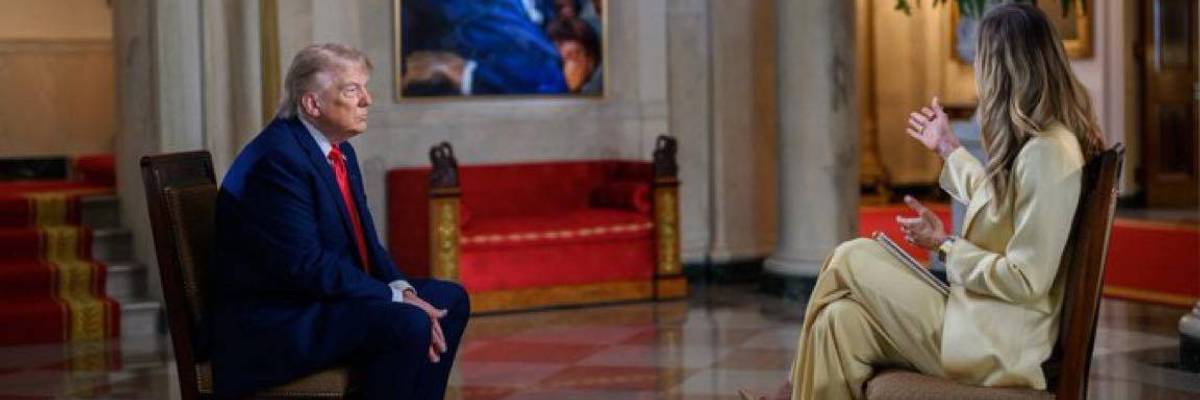
US President Donald Trump sits for an interview with his daughter-in-law Lara Trump, who hosts the Fox News show “My View,” on May 30, 2026.
(Photo by White House)


Brett Wilkins
May 31, 2026
COMMON DREAMS

President Donald Trump said Saturday during an interview with his daughter-in-law that the US should not have waged war on Iran, while making contradictory claims about destroying Iran’s military and leaving it alone.

“You look at what happened with Iraq. We did so bad. It was such a foolish thing what we did. We shouldn’t have been there in the first place, by the way,” Trump told Lara Trump, who hosts Fox News’ “My View.”

“We shouldn’t have been in Iran, but Iran has the capability,” he said, referring to the Islamic Republic’s nuclear program.


Former US Director of National Intelligence Tulsi Gabbard testified before the Senate Select Committee on Intelligence last year that “Iran is not building a nuclear weapon and [the late] Supreme Leader Khamanei had not authorized the nuclear weapons program he suspended in 2003.” US intelligence agencies have repeatedly come to the same conclusion since the George W. Bush administration.

Trump claimed that without US bombing, Iran “would have a nuclear weapon right now and will be a whole different story.”

“If we didn’t hit them with B-2 bombers, nine months ago, they would have a nuclear weapon right now,” he said.

“Their military, we’ve sort of left it alone because we think that their military is somewhat moderate,” Trump said right after saying that “their navy is gone, 100%,” and “their air force is gone, 100%.”

The president also claimed that he will negotiate a “great” end to the war with Iran, or “we’ll just go back and finish it off militarily.”

“We’re close to a very good deal,” he said.

You saw Venezuela,“ Trump said, referring to the country the US bombed and invaded in January to abduct President Nicolás Maduro and bring him to the United States to face dubious narco-terrorism charges.

At least 3,468 people have been killed in US-Israeli attacks on Iran since February 28, according to Iran’s Ministry of Health, including 496 women and 376 children.


Venezuela Under Siege: Defending the Bolivarian Revolution Against US Imperialism

What some may regard as unjustifiable compromises by the Venezuelan government pale in comparison with our obligations as international solidarity activists: defending Venezuela and Cuba against the policies of imperialism.


Supporters of Venezuela’s President Nicolas Maduro gather in the streets of Caracas on January 3, 2026, after US forces captured him.
(Photo by Federico Parra / AFP via Getty Images)
Common Dreams

In response to recent developments in Venezuela under imperialist siege, international solidarity activists should adopt a stance that does not inadvertently reinforce Washington’s drive for domination. Our central responsibility is not to adjudicate every tactical decision made under siege conditions, but to oppose the imperialist aggression that creates those conditions.

The overwhelming structure of US hybrid warfare against Venezuela remains intact, continuing to suffocate the country’s economic recovery and undermine its sovereignty. Washington continues to exert decisive pressure over the country’s principal source of national revenue, the oil sector. It uses sanctions, financial coercion, and domination of global banking systems, as it has against other targeted states such as Iraq and Syria.

At the same time, the threat of direct military escalation remains ever present, a danger underscored by continuing military deployments, aggressive rhetoric, and repeated threats.

What some may regard as unjustifiable compromises by the Venezuelan government pale in comparison with our obligations as international solidarity activists: defending Venezuela and Cuba against the policies of imperialism. The US continues to intensify blockades, sanctions, destabilization efforts, and military threats against these revolutionary processes while simultaneously waging disinformation campaigns against the Chavista leadership and the Cuban Revolution.

The role of internationalists is to oppose imperialism at home, not to instruct Venezuelans on how to defend their revolution.

Both Fidel Castro and Hugo Chávez identified US imperialism as the principal enemy of humanity. Our primary political focus should therefore remain opposition to imperialist domination, rather than allowing secondary disagreements to obscure the central contradiction.
The Responsibilities of Internationalists

First and foremost, the main blow must be directed against US imperialism. Any discussion of shortcomings, compromises, or concessions should be understood within the context of relentless external aggression, destabilization efforts, and military threats.

That is why internationals vigorously campaign both for the safe return to Venezuela of President Nicolás Maduro and First Lady Cilia Flores and for the immediate and unconditional lifting of all sanctions.

The political choices made by the Venezuelan leadership must ultimately be resolved within Venezuela itself. The role of internationalists is to oppose imperialism at home, not to instruct Venezuelans on how to defend their revolution.

Support for Venezuela against US imperialism does not require agreement with every decision taken under conditions of coercion. Understanding political decisions made under such circumstances is to situate them within the realities imposed by imperialist military power. This includes the extradition of Alex Saab.

A longstanding objective of US policy has been to fracture the unity of the Chavista leadership, military, and popular base. Despite immense pressure, that unity has largely held. Attempts to counterpose solidarity with the popular base against solidarity with the leadership, however well intentioned, objectively strengthen imperialist aims.
The Conditions Facing Venezuela

We do not know the full extent of the pressures exerted on the Venezuelan government, nor the range of alternatives realistically available under present conditions. The Venezuelan leadership operates under severe geopolitical constraints. The US openly threatens Libya- or Iran-style retaliation. Another major military escalation remains entirely possible.

Unlike in earlier periods, Venezuela today lacks strong regional allies, while in the context of the ongoing Gaza genocide, so-called “international law” offers little meaningful restraint on US power.

In conclusion, under conditions of economic warfare, military threat, diplomatic isolation, and perpetual destabilization efforts, Venezuela’s contradictions cannot be analyzed abstractly or outside the realities of imperialist power.

Given the vast military asymmetry between the two countries, the consequences of direct military confrontation would be catastrophic for Venezuela, potentially including the destruction of vital infrastructure and long-term devastation of the oil industry upon which the country depends.

If the US succeeds in placing the extreme right-wing opposition in power, the likely result would be devastating political repression directed against Chavismo and the popular sectors.
Strategic Realities and Political Continuity

While continuing to rely upon the Chavista base, the government also recognizes the necessity of building a broader patriotic bloc capable of resisting imperialist pressure more effectively.

Even amid forced compromises, the central achievements of the Bolivarian process remain significant: preservation of the revolutionary leadership, survival against destabilization efforts, and avoidance of a full-scale invasion.

Years of sanctions and economic warfare severely degraded Venezuela’s oil infrastructure. Restoring productive capacity, reestablishing trade, and attracting investment have therefore become vital imperatives.

The political transitions from Chávez to Maduro to Delcy Rodríguez largely reflect changes in the international geopolitical landscape. Yet there has remained substantial political continuity within Chavismo, evident in continued solidarity with Cuba, the vitality of the communal system, and the endurance of the revolutionary mass movement.

In conclusion, under conditions of economic warfare, military threat, diplomatic isolation, and perpetual destabilization efforts, Venezuela’s contradictions cannot be analyzed abstractly or outside the realities of imperialist power. The primary task of solidarity movements within the imperial centers remains what it has always been: opposing the aggression of our own ruling classes.
Trump's plan to send Ebola-exposed Americans to Kenya suffers major court blow

Bennito L. Kelty
May 29, 2026 
RAW STORY


Red Cross workers wearing personal protective equipment (PPE) load on a pickup truck the coffin with the body of Dr Tibenderana Katho Blaise who worked at the Centre Medical Evangelique (CME) in Hoho commune and died of Ebola virus, as aid agencies intensify efforts to contain a new Ebola outbreak caused by the Bundibugyo virus, before his burial in Bunia town, Ituri province, Democratic Republic of Congo, May 26, 2026. REUTERS/Stringer

Trump's plan to send Ebola-exposed Americans to Kenya instead of bringing them home suffered a major blow, according to reporting by The Daily Beast.

A Kenyan court suspended Trump's plans the day they were supposed to begin, The Beast reported. United States officials planned to quarantine Americans at a Kenyan air force base, with the White House describing it as a "state-of-the-art facility," ABC News reported.


The epicenter of the current outbreak, which has led to more than 1,000 suspected cases and nearly 250 deaths, is the Democratic Republic of the Congo. Although no Americans have been reported infected on U.S soil, a doctor was treated for the virus in Germany, and six Americans have reportedly been exposed, The New York Post reported.

Kenyan Court Rejects Plan for US Ebola Quarantine Center Amid Growing Outbreak

Kenya’s largest medical professionals union, which welcomed the ruling, argued that if setting up an Ebola quarantine facility “is too dangerous for America, it is too dangerous for Kenya.”


A member of the Médecins Sans Frontières (MSF) Ebola response team disinfects a restricted area outside the General Referral Hospital of Mongbwalu during outbreak preparedness and infection prevention activities on May 26, 2026 in Mongbwalu, Democratic Republic of Congo.
(Photo by Michel Lunanga/Getty Images)

Brett Wilkins
May 29, 2026
COMMON DREAMS

A day after US officials said Kenya had approved a request to open a quarantine center for Americans exposed to a rare strain of the Ebola virus, a court in the East African nation on Friday temporarily blocked the plan amid a growing outbreak in neighboring Uganda and the Democratic Republic of Congo.

The High Court prohibited the Kenyan government from establishing or operating any Ebola exposure, quarantine, isolation, or treatment facility in the country under any agreement with the United States or any other foreign government or agency.


‘A Dramatic Abdication’: Trump Admin to Send US Citizens With Ebola Exposure to Kenya


Trump Admin’s Insistence That Ebola Is Other Countries’ Problem Is ‘Opposite’ of Successful 2014 Response

The court also blocked Kenya’s government from allowing anyone infected with or exposed to Ebola into the country pending the outcome of the case, which was filed by the Katiba Institute, a civil rights group.

“At its core, the case is about preserving constitutional accountability, protecting public health, and ensuring that no government may place expediency above the lives and safety of the people of Kenya,” Katiba Institute executive director Nora Mbagathi said Thursday.

A 50-bed Ebola quarantine center was set to open Friday at Laikipia Air Base in Nanyuki, located approximately 125 miles north of Nairobi. The facility would have been operated by members of the US Public Health Service, a uniformed branch of the Department of Health and Human Services.

US Secretary of State Marco Rubio said Thursday during a Cabinet meeting that “we cannot and will not allow any cases of Ebola to enter the United States.”

However, US public health officials strongly criticized the plan to quarantine Americans in Kenya instead of repatriating them, with one emergency physician accusing the Trump administration of “a dramatic abdication of what we owe our own.”

Elected leaders in Laikipia County welcomed the High Court’s ruling. They had opposed the US quarantine center, and had asked in a joint statement prior to the decision, “Why Laikipia?”

“What does the US government know about this that they are not accepting their own affected citizens into their soil but are ready to have them elsewhere?” the officials added.

The Kenya Medical Practitioners, Pharmacists, and Dentists Union (KMPDU), which had strongly opposed the quarantine center and had threatened to strike, also welcomed the High Court ruling.

“We are utterly disgusted by the government’s apparent willingness to trade national biosecurity and the lives of its citizens for foreign aid,” KMPDU secretary general Davji Bhimji Attelah said in a statement Thursday, referring to the $13.5 million the Trump administration pledged for Ebola preparedness in Kenya, part of a broader $125 million US commitment toward fighting the disease.


“We will not sit back and watch Kenya be treated as a containment colony for a lethal pathogen that we did not generate,” Attelah added. “We will not tolerate an apartheid healthcare model on Kenyan soil. If it is too dangerous for America, it is too dangerous for Kenya.”

Critics say President Donald Trump’s ideologically driven decision to withdraw the US from the World Health Organization (WHO), his administration’s dismantling of the US Agency for International Development, and reduced funding for the US Centers for Disease Control and Prevention’s global public health efforts have adversely affected the response to the current Ebola epidemic, compared with 2014 and 2019 outbreaks.

The WHO said Friday that there were a total of 906 suspected Ebola cases and 223 suspected deaths reported in the Democratic Republic of the Congo as of Wednesday, and 125 confirmed cases in the DRC and 9 in Uganda, with 18 deaths among the confirmed cases in both countries.

Ebola—which typically kills between 25% and 90% of infected people, depending upon the strain of the virus and quality of available medical care—causes widespread and often catastrophic damage to the body’s blood vessels, immune system, and organs. The virus is transmitted to people from wild animals, including fruit bats, porcupines, and non-human primates, and then spreads between humans through direct contact with the blood or bodily fluids of infected people.
Trump takes shot at pope as pontiff meets with his hometown mayor


David McAfee
May 30, 2026 
RAW STORY

President Donald Trump took to Truth Social over the weekend to attack Chicago Mayor Brandon Johnson while Johnson was at the Vatican meeting with Pope Leo XIV, calling the Democratic mayor "useless" and urging someone to inform the pontiff of that fact.

"Someone should explain to the Pope that the Mayor of Chicago is useless, and that Iran cannot have a Nuclear Weapon!" Trump wrote, signing the post with his full name and title: "President DONALD J. TRUMP."

Johnson had shared photos of the meeting on X, describing it as "one of the most awe-inspiring and humbling experiences of my life." He called Pope Leo XIV "a magnificent human" and said he was honored to share time with him.

Trump's post drew attention not only for its attack on a sitting mayor's audience with the head of the Catholic Church, but also for the jarring pivot to Iran nuclear policy in the same sentence, a rhetorical non sequitur that nonetheless reflects two of the administration's persistent preoccupations.

The post comes as Trump has frequently used Truth Social to target Democratic mayors of major cities, framing urban governance failures as emblematic of broader Democratic dysfunction. Johnson, for his part, has been an outspoken critic of the administration's immigration policies and federal funding cuts to cities.

The Vatican meeting appeared to be part of a broader multi-faith prayer gathering, according to Johnson's office. Trump was not among those in attendance.


Alaska Senate race takes bizarre turn as a second Dan Sullivan files against GOP incumbent

Matthew Chapman
May 29, 2026
RAW STORY


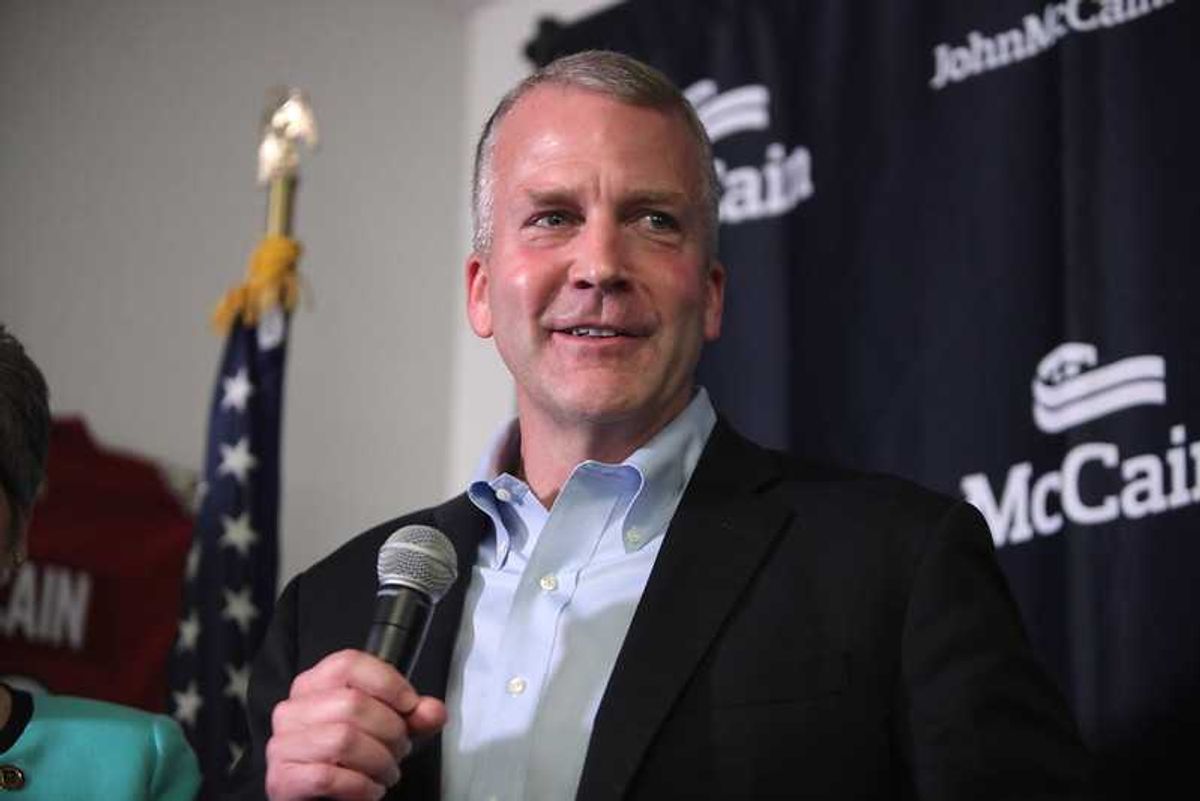
U.S. Sen. Dan Sullivan of Alaska speaking with supporters of U.S. Senator John McCain at a campaign rally with fellow U.S. Senators Joni Ernst, Cory Gardner and David Perdue at Team McCain headquarters in Phoenix, Arizona. (Photo credit: Gage Skidmore / Flickr)

Alaska Republicans just got a bizarre monkey wrench thrown into their U.S. Senate election, as incumbent Sen. Dan Sullivan is facing a challenge — from Dan Sullivan.

According to the Alaska Landmine news outlet, "A Dan Sullivan from Petersburg says he is filing for the U.S. Senate race," specifically, Dan James Sullivan, not to be confused with the incumbent Dan Scott Sullivan.

"For too long, Senator Sullivan has failed to put Alaska first," said Dan James Sullivan, who will run as an independent, in his press release. "When you truly care about a people and a place, you have a duty to make every sacrifice within your power to protect them. That's why I'm running."

If Dan James Sullivan qualifies for the ballot, it could prove a headache for Republicans, who are already at serious risk of losing to former Rep. Mary Peltola, the only Democrat to win a statewide election in Alaska in the last 10 years; many polls show Peltola leading the Senate race.

Alaska uses a "top four" ranked-choice voting system, where the four most popular candidates in the primaries advance to a general election, and voters rank them in order of preference rather than simply selecting one.

These are not the only two Dan Sullivans involved in Alaska politics; a third, Dan Albert Sullivan, previously served as the Republican mayor of Anchorage, and even briefly mounted a campaign of his own for Senate in 2016 against Alaska's other senator, Lisa Murkowski, before swiftly dropping out.
'Something happening' in Texas as furious GOP voter says she will 'turncoat' against party

Tom Boggioni
May 29, 2026 
RAW STORY


Texas Republican Cheryl Shadden (MS NOW screenshot)

Texas Republicans have to deal with more than just being stuck with scandal-plagued Attorney General Ken Paxton as they hope to hang onto a US Senate seat sought by Democratic rising star James Talarico.

According to a report from MS NOW’s Josh Einiger, there is a massive groundswell of anger aimed at AI data centers and voters are blaming the Republican Party for turning a blind eye to their concerns.

As one Republican voter put it, she didn’t care if the Senate flipped to the Democrats because she feels betrayed.

After speaking with multiple Republican voters in Burlington, Texas, Einiger told host Chris Jansing, “They feel taken for granted and left behind by the very people they elected to represent them, whether it's at the local level, the state level, or in the White House. Of course, you know, this is an area where people are very conservative, Christian conservatives, and they blame the president, their governor, for creating a world where a lot of these AI data centers are able to come in there.”

“There's not a lot of regulation,” he elaborated. “These are unincorporated parts of central Texas. And, you know, these large tech companies come in there, they're able to negotiate tax incentives, tax abatements. They spend less in tax than they would perhaps otherwise. And in exchange, people are getting higher, you know, electricity rates because the point of these facilities is they just they just swallow up so much power because what they're doing is they have just millions of computers. They have to keep them cool. Cooling them takes power — it takes water. And so just the natural resources. And it's really, really upsetting a lot of the people who live nearby.”


Conservative voter Rena Schroeder told him, “Conservative Republicans feel like they're not being heard anymore. That was a big voice that I heard through the whole campaign. They're not being heard by Republican candidates and officials, elected officials. I'm very disappointed and I'm hurt, and I do not like to be lied to.”


Self-identified GOP voter Linda Polley agreed and added, “I'm just heartbroken. I mean, I am absolutely heartbroken. The public is now seeing through the illusion. They are now realizing that left and right has been nothing more than to keep us divided.”

GOP voter Cheryl Shadden was even more vehement when asked if she is going to vote for Democrat Talarico.

“Oh, absolutely. I will turncoat and vote for any Democrat that is championing the cause of the community,” she snapped.


Einiger told host Jansing, “Fascinating, right? And I asked that woman, I asked her in a different way. I said, so, you know, this is obviously the Senate race. It's a race [for a seat] been held by Republicans in 1993. You know, Ken Paxton just won the nomination. And and James Talarico is the Democrat in the race. And I said to her, I said, if you vote for Talarico and you want this Texas seat to flip to blue — that means you're willing to flip the Senate to the Democrats. And you have all these issues that you're conservative on that you believe in, you've been voting on for your whole life. You're willing to let them all, leave them all behind. She said ‘yes.’”

“And she knows a lot of people who feel the same way,” he added. “So look, Chris, this is anecdotal. This is a small number of people, it's not scientific, but there's something happening on the ground in this very ruby red area of a red state that is definitely worth watching.”


Trump slip-up reveals he's willing to drag GOP down in latest 'delusion': columnist

Nicole Charky-Chami
May 28, 2026 
RAW STORY


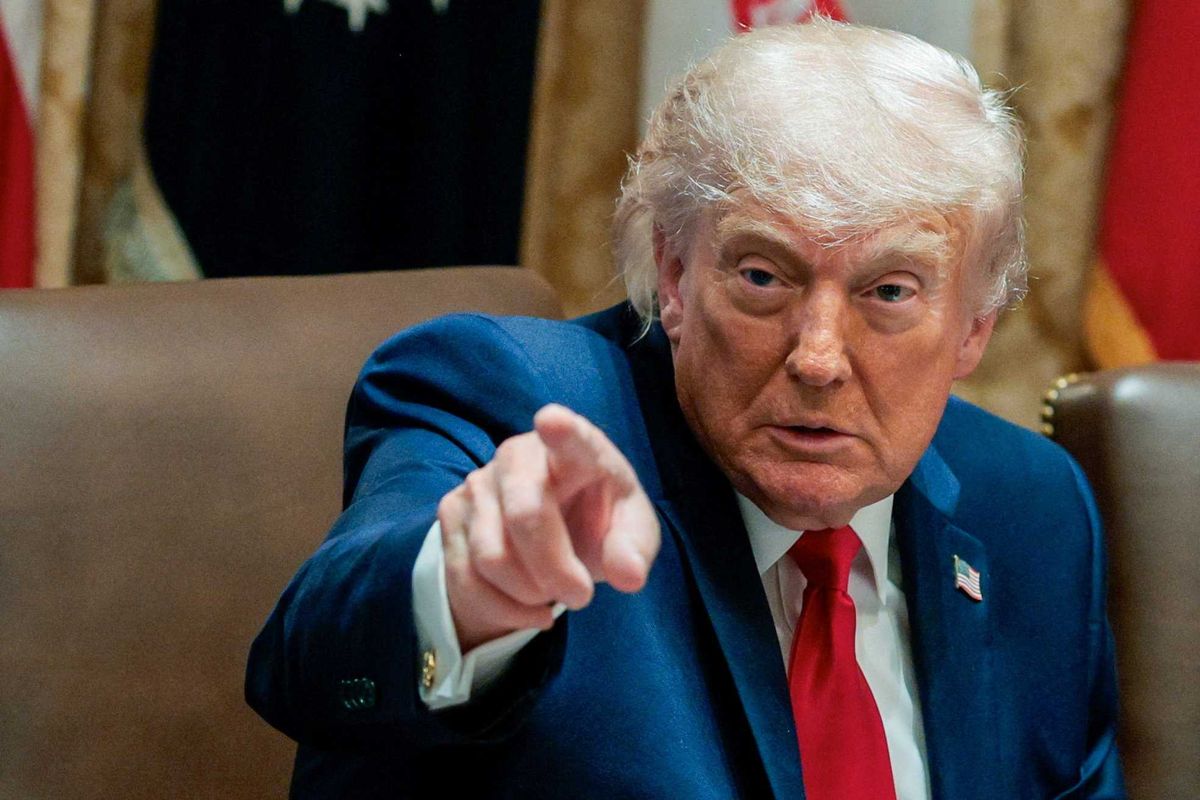
President Donald Trump points his finger during a cabinet meeting in the Cabinet Room at the White House, in Washington, D.C., on May 27, 2026. REUTERS/Evan Vucci

President Donald Trump blurted out an "extraordinary quote" this week that was a stunning admission, a political columnist said on Thursday.

In a new episode of "The Daily Blast" podcast from The New Republic, Greg Sargent described why Trump's statement during the Cabinet meeting at the White House on Wednesday — "I don't care about the midterms" — was so revealing, especially as the Republican Party has started to signal panic about the fall elections.

"In discussing what just happened in Texas, where the MAGA extremist will now be the GOP nominee in the Senate race, Trump accidentally revealed that he’s still under the delusion that he and MAGA are popular," Sargent said.

"Meanwhile, three different indicators in the polling contain terrible news for Trump and the GOP. And new reports say that Republicans are growing more alarmed about the midterms. Some of them are plainly afraid to say so. So how much longer can they stand by while Trump drags them down?"

Sargent described what Trump might actually think, despite fears among GOP leaders.

"I think this is quite literally true," Sargent said. "He doesn’t care what happens to Republicans, really. He really doesn’t give a s---. And it’s also true that Trump’s war is absolutely tanking their chances."

Sargent's guest on the podcast, The New Republic contributing editor Felipe De La Hoz, viewed Trump's comments as equivalent to throwing his allies under the bus.

"I think it could be interpreted as him saying that this is an indication of the strength of his brand, which I think is mistaken," De La Hoz said.

"We saw something similar play out in 2018 and 2022 with his MAGA candidates winning primaries and then getting slaughtered in the general," De La Hoz added.

Trump's endorsement of Texas Attorney General Ken Paxton to challenge longtime Texas Republican Sen. John Cornyn might have left him feeling more confident after Paxton's victory in the runoff in Texas on Tuesday. But it also gives Democrats a path to potentially flip the deep red state's Senate seat blue with candidate Rep. James Talarico (D-TX), which De La Hoz argued could be possible.

"I think in my lifetime — presuming that we maintain the same sort of electoral political system — I think that it’s entirely conceivable, and I would say even likely, that at some stage a Democrat will win a statewide race in Texas, just given the demographics, given what we’ve seen," De La Hoz said. "I don’t know if it’ll be Talarico, but it could be. I don’t think that this is a crazy pie-in-the-sky idea."

But it won't be easy for Democrats, Sargent argued.

"It’s going to be a big lift for Talarico to get there," Sargent said.

"It’s not impossible though. And even if he loses, he’s probably going to end up forcing Republicans to spend hundreds of millions of dollars to save Texas, which could impact the rest of the map. Just want to clarify though — Talarico could win. It’s possible, just very hard," Sargent added.

Graham Platner's wife breaks silence about 'gossip' in video response to sexting scandal

Bennito L. Kelty
May 30, 2026 
RAW STORY


Senate candidate Graham Platner's wife, Amy Gertner, blasted the attention paid to her husband's sexting scandal (X/Graham Platner for Senate/screenshot)

The wife of embattled Democratic Maine Senate candidate Graham Platner fired back at headlines swirling around her husband's newly revealed sexting scandal.

In a video posted by Platner's campaign, Amy Gertner said she's feeling "angry" and "disappointed." According to new reporting by the Wall Street Journal, Gertner told the campaign last August about sexually explicit texts she found on Platner's phone.

"I find it really shameful that there's a group of media outlets and people willing to spread gossip instead of talking about real issues that Graham is running on, like health care and education, and child care," Gertner said. "It's shameful behavior to spend time and energy and resources on negative ads and negative stories."

She defended Platner, who's running to unseat Sen. Susan Collins (R-ME).

"I admire the f--- out of him," Gertner said. "I don't want a perfect marriage. I want my marriage, and I want to be married to Graham. I knew the man I married is wonderful and dynamic and probably a genius."

She also spoke about challenges with infertility, saying, "Being newly married, going through infertility, and a Senate campaign is hard," and describing the situation as "extra s---."