Sunday, May 31, 2026


Port of Itajai Plans to Remove 133-Year-Old Wreck to Prepare for Dredging

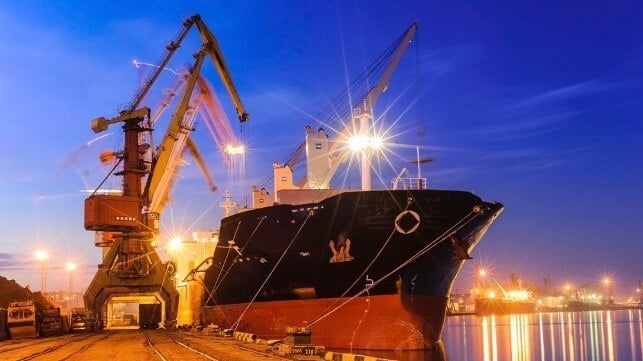
Port of Itajai
File image courtesy Universidade de Brasilia / Emilia Silberstein / CC BY 2.0

Published May 31, 2026 4:49 PM by The Maritime Executive


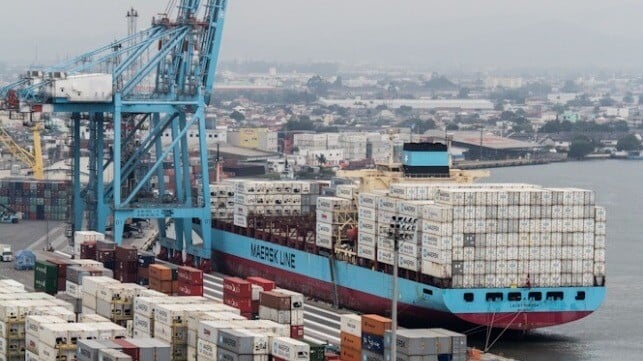
The Brazilian Port of Itajaí has embarked on a project to remove the wreck of a merchant ship that has been lying on the bottom of a critical shipping channel for more than 130 years. The move is expected to pave the way for deepening of the channel to allow larger vessels to access the port.

Itajaí, Brazil's second-largest container port, said it has signed an agreement with the University of Vale do Itajaí (Univali) to carry out a technical study on the removal of the wreckage of the ship Pallas, a vessel that was wrecked in 1893 and still obstructs access to the port complex.

Historical accounts indicate that Pallas was a merchant ship built in England in 1891 and incorporated into the Brazilian fleet the same year. During its short period of service, the ship transported passengers and supplies between Rio de Janeiro in Brazil and Buenos Aires in Argentina.

Historians believe Pallas was scuttled by its captain in October 1893 during the Federalist Revolution to prevent it from falling into rebel hands, with its remains buried under sediment in the Itajaí River between buoys 9 and 11, near to the modern port's Evolution Basin No. 2. Since its scuttling, the wreck has remained submerged in the access channel to the port for more than a century, becoming part of local maritime history.

With the Port of Itajaí embarking on a major modernization, the presence of the wreckage is a major obstacle to the deepening of the waterway, limiting the expansion of the port's operational capacity. The busy port handled 1.2 million tonnes of cargo during the first quarter of this year, and wants to have room to grow. For that reason, it has become essential to remove the wreck to allow for dredging and expansion of a large turning basin. Currently, the channel has a depth of 14 meters, but the plan is to deepen it to 16 meters to enable larger vessels to access the port, in line with the growing size of modern ships. 

Itajaí says that in addition to accommodating bigger vessels and enhancing the port's operations, the removal of the wreck is also needed for facilitating safe maneuvers, increasing productivity, reducing logistics costs and strengthening the competitiveness of the port complex. The cost of removing the wreck is estimated at $12.8 million.

"This agreement means much more than the beginning of a technical study. It symbolizes vision, boldness, resumption and confidence in the potential of the Port of Itajaí," said Artur Antunes Pereira, superintendent of the Port of Itajaí.

Removal of the wreck is part of a major modernization project at the Port of Itajaí that is being financed by the federal government at a cost of $158.8 million over the next four years. The project also involves the dredging of the channel, the reconfiguration of the Navegantes jetty and the construction of a pier for cruise ships. Itajaí is operated under the supervision of the state-owned Santos Port Authority.

File image courtesy Universidade de Brasilia / Emilia Silberstein / CC BY 2.0

The Hidden Clause Contradictions Driving Demurrage Claims

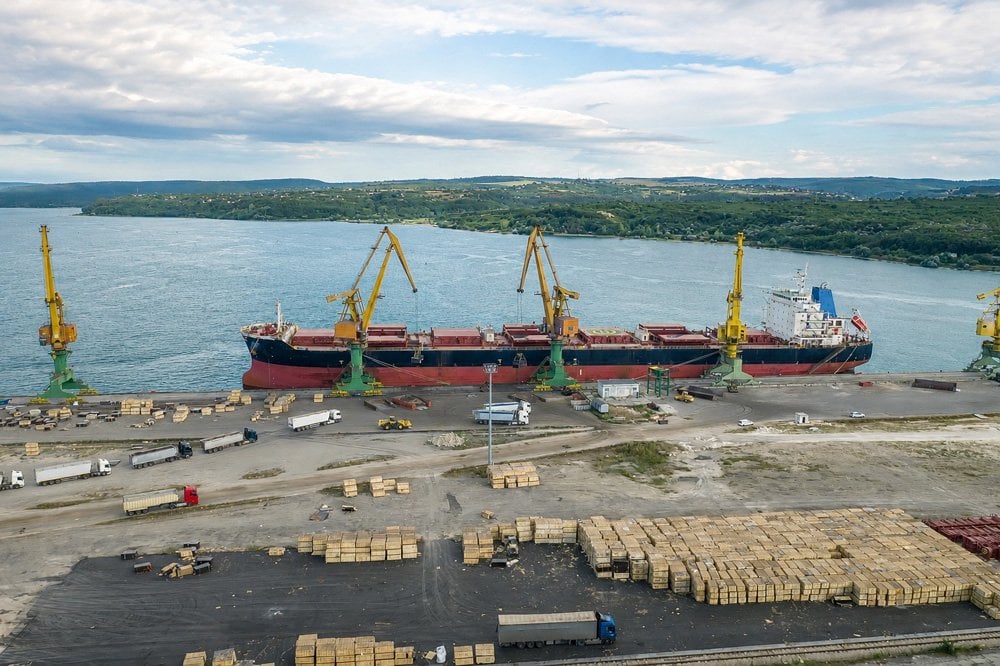
vessel in port

Published May 31, 2026 11:59 PM by Janani Yagnamurthy


A bulk carrier arrives at Paranagua on a Saturday morning at 08:00 local time. Sugar cargo, clean fixture, terms agreed weeks earlier in what looked like a routine email exchange. The master tenders Notice of Readiness on arrival.

The vessel waits. Laytime does not start counting until Monday at 08:00, leaving two full days on the owner's side of the ledger as unpaid time. Three weeks later, when the Statement of Facts (SOF) lands on the demurrage analyst's desk, the claim is already mature.

The charterer points to one clause, the owner to another. Both are in the fixture, but they contradict each other.

This is the kind of demurrage dispute that gets settled slowly, expensively, and without anyone learning much from it, because the contradiction sits at fixture stage while the cost surfaces at claim stage, and the two ends of the workflow rarely meet.

It is also more common than the industry tends to admit.

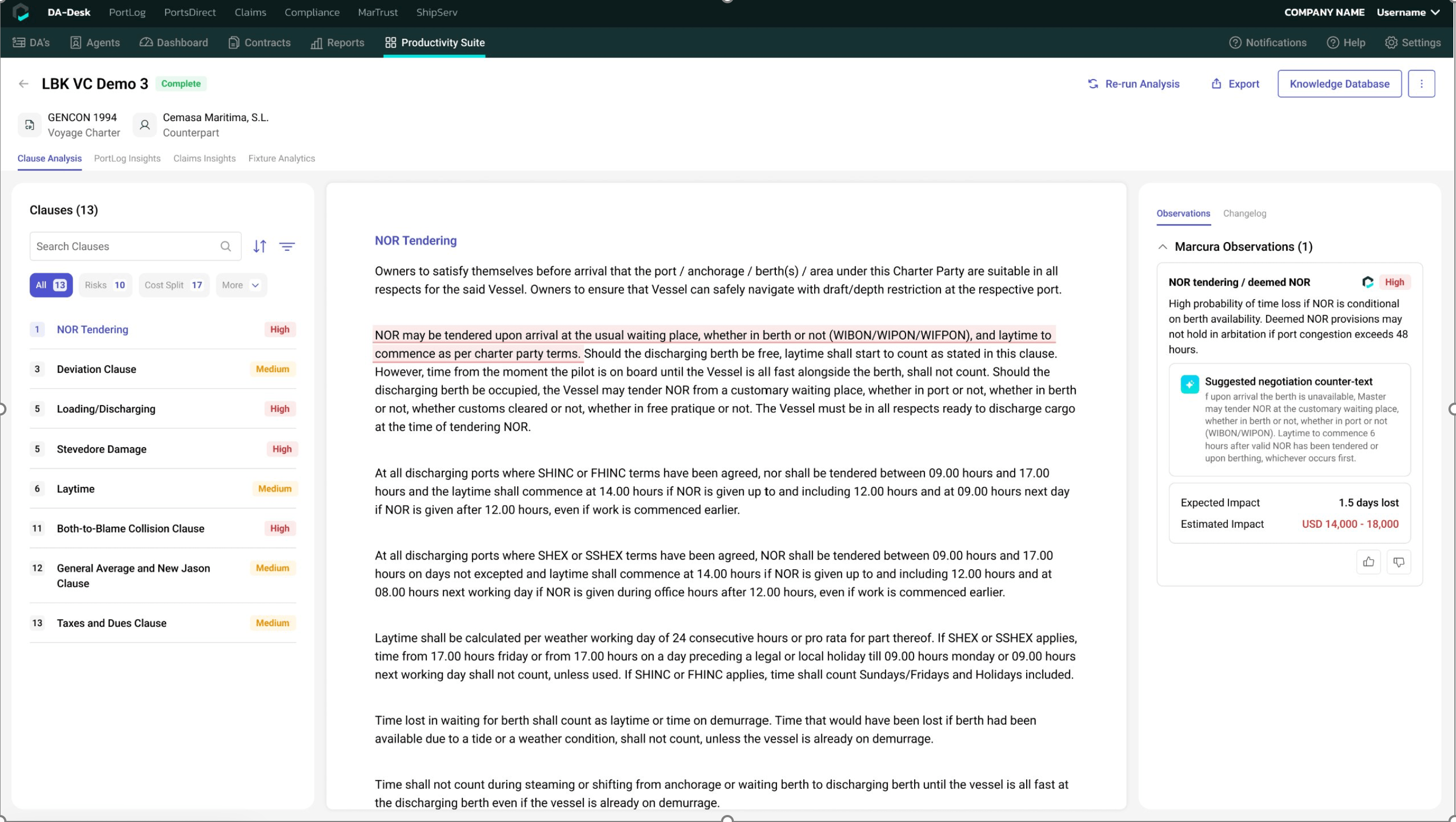
When Marcura’s laytime and demurrage team reviewed a sample of recent fixtures to see how often the same pattern recurred, the answer was 15%. About one in seven fixtures carried a contradiction between the Notice of Readiness (NOR) terms and the cargo operation terms that would not surface until a claim was already on the table.
 

SHEX, SHINC, and the gap in between

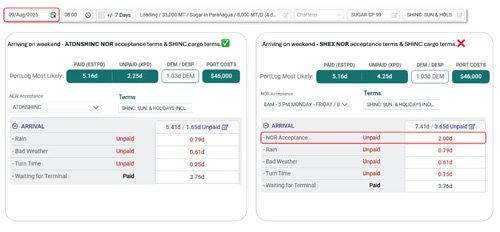
The cargo terms on this particular fixture were SHINC (Sundays and Holidays Included). On paper, that reads as the more permissive arrangement: laytime counts continuously, weekends and holidays alike.

The NOR acceptance clause, however, restricted tender to working hours: 08:00 to 17:00 Monday to Friday, and 08:00 to 12:00 Saturday. Outside those windows, NOR could not be validly tendered.

The vessel arrived at 08:00 on a Saturday, past the Saturday cut-off in some operators' reading of the clause, and certainly outside the Monday-to-Friday window.

The NOR was accepted, but the clock did not start until the next valid acceptance window. Two days of working time disappeared into the gap between two clauses that, read separately, both looked entirely reasonable.

If the NOR acceptance had been ATDNSHINC (Any Time Day or Night, Sundays and Holidays Included), the Saturday arrival would have carried no penalty. The cargo terms and the acceptance terms would have aligned, and the two days would have counted.

A single wording difference created two days of unpaid time and a claim then took weeks to resolve because the contradiction was real, not simply a misread.


Why this keeps happening: "as per last"

The Paranagua fixture inherited its NOR clause from a previous one. "As per last" is the shorthand. A charterer or broker carries terms forward from a recent fixture into a new one, sometimes without revisiting every clause.

The intent is speed. The effect is that clauses written for a different trade, port, or season are carried into a fixture they were never tested against.

In the sample reviewed, "as per last" was the single most common origin of an inherited contradiction.

The fixture template moves. The cargo type changes. The port rotation changes. The NOR clause moves with the template, even when the cargo terms underneath it have shifted.

That is how SHINC cargo terms end up under a restricted-hours NOR clause. It is also how a daylight restriction designed for one terminal ends up applied to another where it was never needed.

Closing the loop between claims and chartering

The deeper issue with the Paranagua case is not the contradiction itself. It is that nothing in the way most operators manage claims and chartering ensures the next fixture is written with that lesson already learned.

Demurrage and laytime claims generate, by far, the richest dataset a maritime company holds on its own operational behaviour.

Every closed claim is a record of which clause was contested, which port it played out in, which counterparty disputed it, and which interpretation prevailed. In aggregate, that data does something a single analyst's memory cannot.

It reveals patterns: the clause-port combinations that recur, the counterparties that test the same wording fixture after fixture, and the inherited "as per last" templates that travel from one trade into another while quietly carrying unpaid time with them.

In practice, the Paranagua contradiction is the kind of issue that needs to be caught in two places: once before the fixture is signed, so it never reaches the vessel, and once after the claim closes, so the pattern is captured for the next fixture.

Connecting those two stages creates a practical feedback loop between chartering and claims handling. Marcura works at both ends, and the integration between them is what turns the process into an operational discipline.

Before the fixture is signed, the Charter Party Risk Analyser reads the full charter party in around six minutes and flags clause-level contradictions, including the SHEX-against-NOR-window mismatch that cost the Paranagua fixture its two days.

Each flag comes with the reasoning behind it, allowing the chartering desk to see why the clause has been surfaced and decide whether to accept the risk, renegotiate the wording, or review the inherited clause.
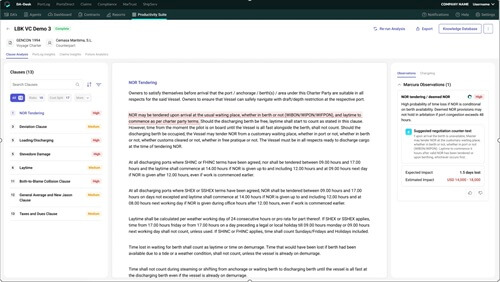


After the claim closes, Marcura Claims captures the contradiction as structured data, including clause type, port, counterparty, arrival-day pattern, and settlement outcome. Over time, that record becomes the operator's own pattern library, drawn from more than 20,000 claims processed annually across dry bulk, tankers, chemicals, and project cargo.

When the next fixture is being drafted, patterns from previous claims are surfaced directly into the chartering view through the Marcura platform.

The wider point

Demurrage and laytime claims are usually treated as a downstream problem. The Paranagua case is a reminder that the decision-making window sits much earlier. By the time the SOF arrives, the contradiction is already locked into the fixture.

The fix is not simply a new system. It is the discipline of reading the NOR clause and the cargo clause as a single instrument, treating "as per last" as a question rather than an answer, and closing the loop between the claims data that already exists and the fixture decisions that have yet to be made.

In a market where freight margins are thin and counterparties are sophisticated, that loop is increasingly becoming the difference between a demurrage book that quietly leaks and one that compounds in the operator's favor.
 

About the author:

Janani Yagnamurthy is SVP, Product, Strategic Growth at Marcura.


This article is sponsored by Marcua. For more information, visit the company online.

The opinions expressed herein are the author's and not necessarily those of The Maritime Executive.
Op-Ed

Trump’s Violent Memes Expose Long-Simmering Truths About US Imperialism


Trump’s white nationalist revanchism is on display as he turns state violence into entertainment.
May 31, 2026

It seemed on brand for our meme-obsessed President that the U.S. launched Operation Epic Fury with an epic video mashup. While Trump never bothered to articulate a real justification for waging war on Iran, he gestured toward a righteous mission with a montage of dramatic violent scenes, featuring heroic and antiheroic characters from Braveheart to Walter White of “Breaking Bad,” spliced like a Hollywood trailer under a banner proclaiming “JUSTICE THE AMERICAN WAY.” The cinematic celebration of American “justice” came about a week after about 155 people, mostly children, were killed by a U.S. strike on a school in Minab, in a spate of bombings aimed at schools and hospitals across Iran.

The valorization of military power as a force of justice has always colored the nation’s imperial imaginary. Around 130 years ago, Puck magazine promoted the Spanish-American War to readers with “The Cuban Melodrama,” a cartoon depicting a gallant Uncle Sam in a feathered cap and star-print pantaloons shielding a damsel in distress with a pro-U.S.-annexation flag emblazoned on her hip, while her swarthy Spanish colonial master scowled behind a bandit’s cloak. People in the U.S. continue to see Cuba through media spectacle, detached from the reality of the war back then, and from the cruel U.S. economic siege of the island now. The White House has fired off many such spectacles to glorify or sanitize U.S. and Israeli military operations, including an action-moviestyle video depicting the kidnapping of Venezuelan President Nicolas Maduro and a grotesquely surreal AI-slop showcase of a genocide-ravaged Gaza rebranded as Palestine’s Vegas Strip.

The aestheticization of military brutality is not limited to warfare abroad. The administration has posted propaganda videos of immigration raids in Black and Brown communities, lionizing the ferocity with which ICE agents are tearing apart families.

Never miss another story

Get the news you want, delivered to your inbox every day.

Email*


Trump’s treatment of state violence as entertainment speaks to a longstanding animating force behind U.S. jingoism and militarism: the lust for empire has been as much about projecting dominance as it is about grappling with the U.S.’s internal racial and class tensions and the surrounding infrastructure of oppression.
American Injustice

Trump’s boorish war cheerleading recalls past symbols of U.S. empire as providence, a political and media narrative that lashed the nation’s fate to the expansion of slavery, and the dispossession of Indigenous lands under the halo of “Manifest Destiny.” It also evokes the image the nation has long projected as a crusader for “freedom” while imposing its economic and political hegemony abroad. The current warmongering overseas accompanied by domestic anti-immigrant crackdowns represent twin faces of settler colonial violence, both constitutive of the nation’s founding myth: that the U.S.’s destiny is to grow — to expand westward, to open new markets, or, as Trump mused about Venezuela and Iran, to “take the oil.”

Related Story
Op-Ed |
War & Peace
Trump Has Made the US War Machine a Spectacle – and It’s Spectacularly Unpopular
Trump has brought the full extent of the war machine out into the open. Let’s channel public anger into organizing.
By Khury Petersen-Smith & Azadeh Shahshahani , Truthout/InTheseTimesMarch 3, 2026

As historian Nikhil Pal Singh noted in a recent talk with fellow historian Greg Grandin (a talk hosted by Democratic Socialists of America Academy in New York City that I helped to organize), Trump’s brand of imperialism departs from the Cold War “liberal” order, which nominally enshrined civil rights and racial equality in a framework of egalitarian, free-market capitalism. Instead, Trump pushes a revanchist, white supremacist ideology that the U.S. is what Singh described as “a nation based upon a particularistic ethno-racial conception of heritage or ancestry.”

Fueling Trump’s neoimperialist adventures, Singh explained, is a drive to “revalorize white supremacy as the basis of U.S. citizenship.” The White House and the MAGA movement have channeled their white nationalist fervor into “a project of mass deportation,” to roll back the whole edifice of civil rights legality” that buttressed the liberal ideal of “a nation of equals.” But in breaking from the veneer of egalitarian democracy, Trump lets the mask slip on the brutality underwriting the American Dream.

While the conventional narrative myth of U.S. society emphasizes inclusive democracy, the ideal of liberal values has always belied a paradox of colonial and imperial oppression. As Grandin explained, “what we think of as liberalism, all the great progressive advances … has all been in many ways achieved through a trade off with empire, with expansion. Andrew Jackson’s extension of suffrage of white men was tied to indigenous dispossession. … During the Cold War, the expansion of civil rights was a tradeoff for support of containment [of Communism].”

The prosperity that came with industrialization and global commerce was premised on the entrenchment of wage capitalism and the exploitation of Black and migrant labor, which in turn paralleled the marginalization and eventual exclusion of “undesirable” foreigners who were deemed biologically and morally deficient. Today, the perception of immigrants, particularly those who are not white or Christian, as dangerous social parasites, is key to the Trump administration’s narrative of “securing” the border. Sidestepping the fact that the U.S. has in many cases exacerbated the “migrant crisis” by political intervention and economic destabilization of countries in the Global South, Trump adviser Stephen Miller warned that “migrants and their descendants recreate the conditions, and terrors, of their broken homelands.”
The Long History of U.S. Nativism

Since the 19th century, the systematic exclusion and criminalization of “aliens” has been integral to the enforcement of the boundaries of whiteness (even though the category derives its power largely from its arbitrariness), giving rise to the security apparatus built along the Southern border, along with restrictive ethnic quotas that privileged white Western Europeans.

The globalization of white nationalism under Trump and other right-wing leaders reflects the enduring concept of “herrenvolk democracy,” (a reference to the Nazi “Master Race” idea) which frames democratic rights as the province of a racial in-group. In politics and culture, historian Cristina Beltrán writes, “herrenvolk democracy was a mass-based, participatory endeavor, reproduced and administered from both above and below.”

Both herrenvolk nativism and imperialism derive from the overarching concept of a nation built on the freedom of some to subjugate others, whether they live down the street or across an ocean. In enforcing the boundaries of empire and the internal social borders of race and class, a pattern of dehumanization through institutionalized violence has spanned the globe, extending from the Black Codes and racial pogroms in the post–Civil War South, to the U.S.’s first colony in Asia a generation later. It was in the Philippine-American War that the modern torture technique of waterboarding was first routinely used by U.S. soldiers on Filipino people before becoming an officially authorized practice in the U.S. “war on terror.” During the U.S. occupation of the archipelago, during which U.S. troops committed many acts of torture and sexual abuse, a soldier wrote that the land “won’t be pacified until the [anti-Black slur] are killed off like Indians.” Invoking an anti-Black slur to refer to Filipinos, he seems subconsciously to grasp that he is fighting a much deeper war, which traces its lineage from the cleansing of North America of its Indigenous inhabitants, to the enslavement of Africans, and to the suppression of so-called “savages” in newly colonized land across the Pacific.

Under Trump, the crusade to bolster U.S. hegemony continues with an added boost of racial panic. The Trump administration is pushing the narrative that white men’s dominion is existentially endangered: the white share of the population is shrinking amid broader demographic shifts, while the U.S.’s superpower status appears to be waning, at least in Trump’s narrative of populist grievance, stoking paranoia about national decline and “white replacement.”

The fusion of authoritarian repression with imperial power dynamics is evident in the chaotic expansion of Immigration and Customs Enforcement (ICE) as a paramilitary-like force. In recruiting some 12,000 new agents, the Department of Homeland Security (DHS) has lowered training standards systematically, reducing the length of its course for new recruits from 22 weeks to just eight weeks and centering the curriculum on “more tactical and operational drills” rather than studying the immigration laws they are supposed to be enforcing. The barrage of social media posts vilifying immigrants as alleged criminals and flashy videos of vicious ICE raids formed the backdrop to DHS’s claims that the killings of two individuals during protests in Minnesota, Renee Good and Alex Pretti, were somehow justified. The brazen aggression, directed in this case at white citizens, suggests that a so-called imperial “boomerang” may be in play, in which the practices of right-wing authoritarian militarism and repression in the Global South, often supported covertly by the U.S., are now mirrored within the homeland.
Anti-Imperialism From Within

Yet the historical resonance of Trump’s domestic and international tyranny points to a history of anti-imperialist, anti-fascist resistance from within. The Black Power and Third World movements of the late 1960s understood the U.S.’s racial hierarchy as an imperial project and oppressed communities as internally colonized peoples.

As the Black radical organizer Kwame Ture (who then went by the name Stokely Carmichael) explained in his 1967 address to the Organization of Latin American Solidarity in Havana, Black power was the domestic battlefront against a white supremacist empire. “Our people are a colony within the United States,” he told the gathering of liberation movement activists from across Latin America. “You are colonies outside the United States. It is more than a figure of speech to say that the Black communities in America are the victims of white imperialism and colonial exploitation.” But the connective tissue of oppression could also be a source of empowerment, he added, saying:


Black power means that we see ourselves as part of the Third World; that we see our struggle as closely related to liberation struggles around the world…. We must, for example, ask ourselves: When Black people in Africa begin to storm Johannesburg, when Latin Americans revolt, what will be the role of the United States and that of African Americans?

What would a movement for democracy and self-determination look like for working-class and oppressed communities in this country? Such a movement might emerge from the grassroots coalitions and ideological connections being forged as communities confront ICE assaults on immigrants and constitutional rights.

The Sunrise Movement, for example, incorporates ICE resistance into a global agenda for environmental and economic justice, connecting the crackdown on immigrants to the fossil fuel industry’s global expansionism. The organization targets a “self-sustaining cycle” in which fossil fuel corporations collaborate with governments to pursue mineral extraction, economic coercion, imperialist expansion abroad, and the corruption of democracy at home. Under the convergence of state and corporate oppression, “extraction drives instability, and enforcement manages the consequences.”

The United Electrical, Radio & Machine Workers Union of America (UE) — which has for years organized cross-border labor solidarity campaigns — has condemned Trump’s assaults on immigrant communities within a broader critique of U.S. foreign policy and trade policy, especially as migration is oftena response to political and economic crises fomented by Washington. In its recent statement calling for a pro-worker foreign policy, the union argued, “The biggest threat to the people of the U.S. is not Iran, China, or military invasions from other countries, but a rapacious military-industrial complex, which fails to provide living-wage jobs, affordable healthcare, education, housing, and necessary social services…. Further, we must recognize our responsibility, as workers in the U.S., to workers elsewhere who are affected by U.S. foreign and military policies.”

What responsibility do denizens of an empire bear toward subjects of neocolonial oppression, whether they are being attacked abroad or exploited at home? Amid the wars raging inside and outside U.S. borders, working-class communities are realizing that the fight against empire starts at home, and the homeland itself must be liberated from the imperial framework behind its myth of liberal democracy. Turning away from brutal spectacles of “Justice the American Way,” we can start to envision a society built not on dominion, but on equity and dignity for all.


This article is licensed under Creative Commons (CC BY-NC-ND 4.0), and you are free to share and republish under the terms of the license.


Michelle Chen  is a contributing editor at Dissent Magazine, and a contributing writer at The Nation, In These Times and Truthout. She is also a co-producer of the “Asia Pacific Forum” podcast and Dissent Magazine’s “Belabored” podcast, and teaches history at the City University of New York. Follow her on Twitter: @meeshellchen.


Trump 'dementia' claims fly amid 'completely insane' posting spree: 'Nonstop nuttery'


David McAfee
May 30, 2026
RAW STORY


U.S. President Donald Trump reacts while sitting next to the President of Poland Karol Nawrocki during a meeting in the Oval Office at the White House in Washington, D.C., U.S., September 3, 2025. REUTERS/Brian Snyder


Donald Trump lit up Truth Social on Saturday afternoon with a stream of posts that left onlookers across the political spectrum questioning his state of mind, ranging from a drone port rendering on top of the White House to an AI image of himself appearing to blow his nose on an American flag.

The spree drew immediate reaction from all corners of social media sites. "Trump's Truth Social posting over the last hour or so is completely bats--- insane," independent journalist Aaron Rupar wrote on X. "Get a load of this nonstop nuttery."

In a later post, Rupar declared, "Trump’s behavior on social media today is so unhinged even by his standards that I can’t help but wonder what the doctors really told him the other day. This is a deeply unwell person."

Among the posts, Trump shared attacks on judges, criticisms of musical performers who bailed on his event, and a rendering of what he called a "DronePort" on the roof of his proposed White House ballroom. Regarding the latter, Bill Kristol, the veteran Republican commentator, noted the structure would also include a bunker underneath. "It's not just a childish extravagance," Kristol wrote. "It will be a kind of military encampment. All the more reason, obviously, for Congress to stop it."

Trump also posted a meme depicting Rep. Lauren Boebert and several other Republican lawmakers in a vehicle captioned "GET IN LOSER, WE'RE GOING LOSING" — this despite the fact that Boebert had recently pushed for the release of the Epstein files, a cause popular with the MAGA base.

Separately, Trump posted an AI-generated watercolor image of himself clutching the American flag to his face in a pose that critics immediately compared to using it as a tissue.

He also reshared an old post of himself declaring, "I just want to stop the world from killing itself," which prompted the PatriotTakes account to reply: "Says the guy who bombed a girls elementary school."

Political analyst Molly Jong-Fast offered a dry summary: "He's probably fine, right?"

Former Ambassador Dan Shapiro kept it simple: "It's a beautiful day in Washington. Wish he would go outside and touch grass."

Spanish-language commentator Dr. Mario Muñoz offered a blunt diagnosis of the afternoon's activity. "The gentleman with dementia who lives in the White House is bored," he wrote on X, according to a translation.

Melanie D'Arrigo, a progressive activist and former congressional candidate, similarly connected the dots between the posting spree and broader questions about Trump's fitness for office. "When a President is posting insane stuff like this, it really doesn't matter how many dementia tests he passes to tell that he's not mentally fit for office," she wrote.


'Such a baby': Trump ridiculed after 'crash out' over Kennedy Center 'narcissistic injury'

David McAfee
May 30, 2026 
RAW STORY


President Donald Trump points a finger during a meeting with Canada's Prime Minister Mark Carney (not pictured) in the Oval Office at the White House in Washington, D.C. on Oct. 7, 2025. REUTERS/Evelyn Hockstein

Donald Trump's Saturday Truth Social spiral drew swift mockery from critics across the political spectrum, with a prominent journalist declaring the president was "really crashing out" and a former Republican congressman summing it up in three words.


Trump said Saturday:

"We should have a giant MAKE AMERICA GREAT AGAIN RALLY, for 250, instead of having overpriced singers, who nobody wants to hear, whose music is boring, and yet who do nothing but complain. Cancel it, just like I canceled my involvement with the failing and unsafe to be in Kennedy Center, because a Highly Conflicted, Crooked Federal Judge, said that I should not be allowed to spend my time and money in order to MAKE THE CENTER GREAT AGAIN, actually, far greater than it ever was before! It would have also been nice to see a Republican/Democrat union bring it back to life. The Kennedy Center is broken, unsafe, and $busted, and has been for many years! Judge Cooper also stated that the highly prestigious Board of the Center was not authorized to add on the name 'TRUMP' despite the fact that hundreds of millions of dollars of my time and money will be necessary for its successful reincarnation. So now, the Kennedy Center will collapse, both structurally and financially. Judge Cooper and his wife, Amy Jeffress (obfuscation anyone?), should be ashamed of themselves. Judge Cooper, like numerous other Crooked Judges on my cases, should be IMPEACHED."

Aaron Rupar, who has built a large following tracking Trump's online behavior, quoted Trump's lengthy rant calling for a MAGA rally to replace the America 250 concert and his threats that the Kennedy Center would collapse without him. "Holy s---, Trump is really crashing out," Rupar wrote.

Adam Kinzinger, the former Illinois Republican congressman who voted to impeach Trump and has since become one of his most outspoken GOP critics, had a shorter take. Quoting Rupar's post, Kinzinger wrote simply: "Such a baby."

Author Jennifer Erin Valent chimed in, "His notorious self obsession has reached the stage of derangement, and still, no one seems inclined to do a thing about it. The dereliction of duty in our time is truly staggering."

Academic Karen Piper said, "This is called a narcissistic injury."

The posts came as part of a broader meltdown that included Trump unveiling a drone port rendering for the White House roof, posting an AI image of himself appearing to use the American flag as a tissue, calling Republican allies "losers," and demanding that Judge Christopher Cooper be impeached after the jurist ordered Trump's name removed from the Kennedy Center.


US Disability Rights Are at Risk as 7 States Back Case Attacking Key Protections

Advocates for disability rights are fighting the lawsuit, which would push more people to be warehoused in institutions.
May 30, 2026
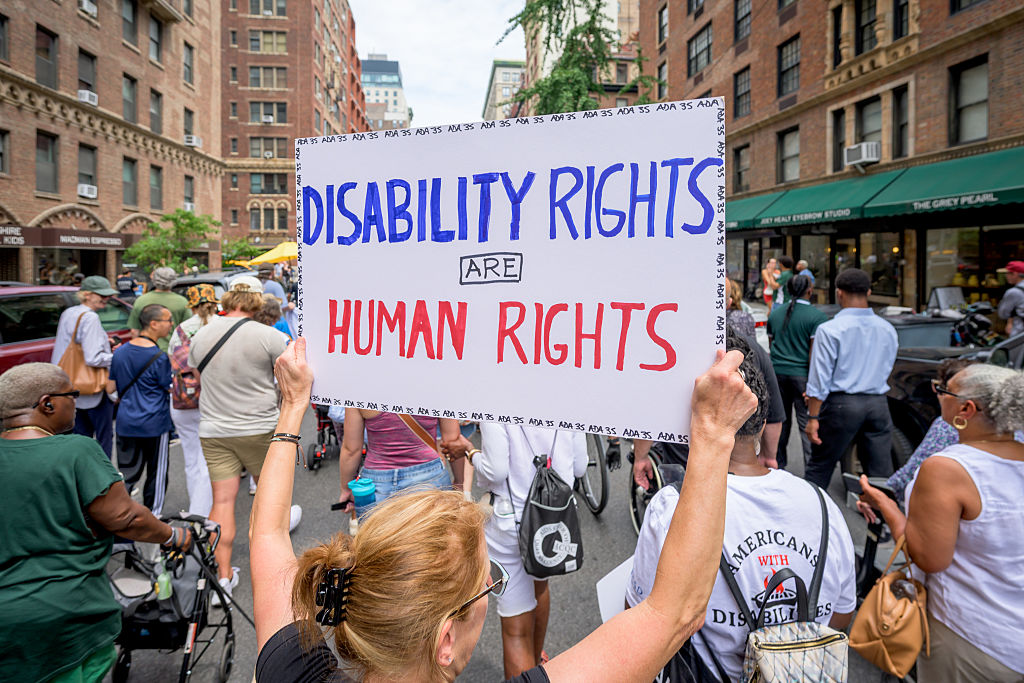
On the 35th anniversary of the Americans with Disabilities Act hundreds of members and allies of disability advocacy activist groups from all across New York gathered at Washington Square Park for the ADA35 NYC Protest, Rally, and March in New York City, on July 26, 2025.
Erik McGregor / LightRocket via Getty Images


Truthout is a vital news source and a living history of political struggle. If you think our work is valuable, support us with a donation of any size.

The right of disabled people to live in community rather than being warehoused in institutions is under attack in a lawsuit currently being pursued by Texas and six other states. But advocacy efforts are persuading states to pull out of the suit against the Department of Health and Human Services (HHS) and Secretary of HHS Robert F. Kennedy Jr., called Texas v. Kennedy.

Two state plaintiffs withdrew from the case in May after hearing concerns from the disability community, bringing the number of remaining state plaintiffs to only seven in an amended case that began with seventeen.

“[The case] could really alter the legal landscape for people with disabilities who have support needs,” Claudia Center, legal director at Disability Rights Education and Defense Fund (DREDF), told Truthout. Alongside Texas, the other state plaintiffs are Alaska, Florida, Kansas, Louisiana, Missouri, and Montana. Indiana and South Dakota dropped this month.

The lawsuit targets Section 504 of the Rehabilitation Act of 1973, a landmark piece of disability rights legislation that prohibits discrimination on the basis of disability in federal programs or programs that receive federal funding. Since that legislation, as well as the Americans with Disabilities Act of 1990 (ADA), came into force, federal guidance and court rulings have helped clarify how the laws must be applied and who is protected under them.

Texas v. Kennedy also targets some of those precedents, especially a body of regulations and decisions often collectively called Olmstead (or Olmstead rules), which ban the unnecessary segregation of disabled people and allow them to receive services in the community rather than in institutions. The name comes from the 1999 Supreme Court decision in Olmstead v. L.C., which held that segregating disabled people when needed support could be provided in community is a form of discrimination prohibited by the ADA.

Related Story

DOJ Just Shut Disabled People Out of Essential Online Services for Another Year
Disability rights advocates say everything from filing for unemployment to voting in the midterms just got much harder. By Marianne Dhenin , Truthout May 24, 2026


If a decision in Texas v. Kennedy narrows existing protections under disability rights law, federal regulations, and legal precedents, Center told Truthout, “disabled people could be pushed into institutional settings,” adding: “Some of them depending on their disabilities and situations, could be pushed into jails and prisons, and some would die. We certainly have seen deaths in the past when support programs for people with disabilities have been cut.”

Seventeen state plaintiffs first filed the case during the Biden administration as Texas v. Becerra after the agency released a long-awaited rule updating Section 504. The updated rule strengthened anti-discrimination protections and the right of disabled people with support needs to receive home and community-based services. The rule clarifies that the so-called integration mandate, first outlined in the ADA, requires entities receiving federal dollars to serve disabled people in the most integrated setting appropriate, one that “provide[s] opportunities to live, work, and receive services in the greater community” and “afford[s] individuals choice in their daily life activities.” It also clarifies that disabled people can bring a nondiscrimination suit if they are at serious risk of institutionalization due to a lack of community-based services, even if they have not yet been institutionalized.

Eight states withdrew from Texas v. Becerra before an amended complaint was filed as Texas v. Kennedy in January 2026 after Kennedy’s HHS announced a trio of anti-trans rules the previous month. One of those rules addressed part of the original complaint, which argued that the Biden-era rule was unlawful because it acknowledged in its preamble that gender dysphoria may be a disability. Instead of that claim being settled in court, Kennedy’s HHS proposed new federal regulations to explicitly allow recipients of federal funds to discriminate against people with gender dysphoria on the basis of disability — a change that LGBTQ+, civil, and disability rights groups came together in opposing and condemning.

Still, several states have continued their attack on the Biden-era rule.

According to Biden’s HHS and experts in disability rights law, the Biden-era rule simply codifies decades of case law that followed from Olmstead v. L.C. But the remaining plaintiffs in Texas v. Kennedy argue the rule is unlawful and unconstitutional and should be blocked.

The thought of Olmstead protections being rolled back is frightening to disability rights advocates, who recall with horror the not-so-long-gone era when warehousing intellectually and developmentally disabled people in so-called state schools was the norm. Consensus only began to shift following a 1972 civil rights lawsuit that challenged living conditions at Willowbrook State School in New York, where residents were being beaten, experimented on, and deprived of fundamental rights to food, medical care, and access to hygiene facilities.

Plus, advocates argue that community-based models of care are far superior to institutional models. Their arguments are backed by research showing that aging and disabled people who live in community tend to enjoy richer lives and better health outcomes. Community living also costs less than institutional options for most people, and it’s what most aging and disabled people and their families and fellow community members want.

“It has been well recognized across the country that community-based care with home and community-based services versus institutional models of care is the way to go,” Tom Crishon, chief legal officer at The Arc of Indiana, told Truthout. “People have better lives in the community than when they are institutionalized.” The Arc is a national organization that advocates for people with intellectual and developmental disabilities.

Nationwide, and particularly in states that remain plaintiffs in Texas v. Kennedy, disability rights groups, including DREDF and The Arc, are doing everything they can to educate about the dangers of narrowing Olmstead rules and chip away at support for the case. These efforts were integral in Indiana and South Dakota withdrawing from the suit in May, bringing the number of states pursuing it down to the current seven.

Indiana became the first state to withdraw from the amended complaint on May 1. A press release from Indiana Attorney General Todd Rokita’s office cited HHS’s recent anti-trans rule as its reason for dropping the case.

Disability community organizing and advocacy also played an important role in Indiana’s decision.

Crishon, who is also quoted in the press release from Rokita’s office, told Truthout he had been in contact with the office ever since the case was first filed in 2024, and he met with Rokita and the solicitor general arguing the case ahead of their May 1 withdrawal. “I made the argument that this case carries meaningful risks to the disability protections that have been consistent and longstanding, both in federal law and Indiana’s own policy, including Indiana’s decades-long commitment to home and community-based services for people with disabilities,” he said.

Importantly, Indiana no longer warehouses people with intellectual and developmental disabilities in state institutions, unlike tens of other states, including Texas, which maintains over a dozen state institutions, formerly called state schools, where individuals with certain disabilities are held. Texas’s centers have long been plagued by allegations of abuse, exploitation, and neglect, as well as repeated findings of health and safety violations.

Crishon told Truthout that Indiana residents are proud to have closed their state institutions and to provide support that allows disabled people to live in community — a legacy that The Arc of Indiana wants to preserve. “Continued participation for the state of Indiana in the lawsuit could be interpreted as signaling a retreat from community-based principles that Indiana has had for many, many years,” Crishon said.

Having notched that success, Crishon told Truthout that The Arc of Indiana is now “answering any calls that we get to help those advocacy groups that are based in those states [that remain in the case] share what we did and what worked here and kind of brainstorm what may work there.” South Dakota has already followed Indiana’s lead; it dismissed its claims in the case on May 12.

It’s not only advocacy groups getting involved in efforts to end Texas v. Kennedy. DREDF has helped mobilize hundreds of individuals to express their concerns about the case through action alerts and campaigns to contact state attorneys general via phone or mail. The organization’s recent webinar on the casewas its best attended webinar in its history, with close to 4,000 people logged on to learn about it and how to organize against it. An info sheet on the case is also the organization’s most-visited webpage. “It shows how critical Section 504 and Olmstead are to our community,” Center told Truthout.

Advocates who spoke to Truthout said they are hopeful that more states will listen to the disability community’s concerns and choose to dismiss their claims in Texas v. Kennedy, as Indiana and South Dakota already have. They believe those decisions send a strong message about the power of advocacy and the importance of protecting the rights of disabled Americans.

Unfortunately, with Texas leading the case, it is unlikely the suit will be stopped before a court rules. Richard LaVallo, legal director at Disability Rights Texas, told Truthout the state’s attorney general, Ken Paxton, is known for being unmovable on cases that threaten disability rights, including several that LaVallo’s team have fought. “We’ve been in litigation against the office for as long as he’s been in office, but Texas doesn’t settle anything,” he said.

Still, Center told Truthout, she recommends that those who live in Texas — as well as in the other plaintiff states of Alaska, Florida, Kansas, Louisiana, Missouri, and Montana — keep up the pressure on their state attorney general.

“There is sort of a societal consensus that people should be able to live in the community with support and not be put away in institutions,” she said. “Somehow, I’m hoping that settled belief can rise to the top. But we’ve got to keep on fighting.”
Trump’s Loyalty to Fossil Fuel Companies Is Driving Up Inflation

The sooner we transition off fossil fuels, the healthier we — and our wallets — will be.
May 30, 2026

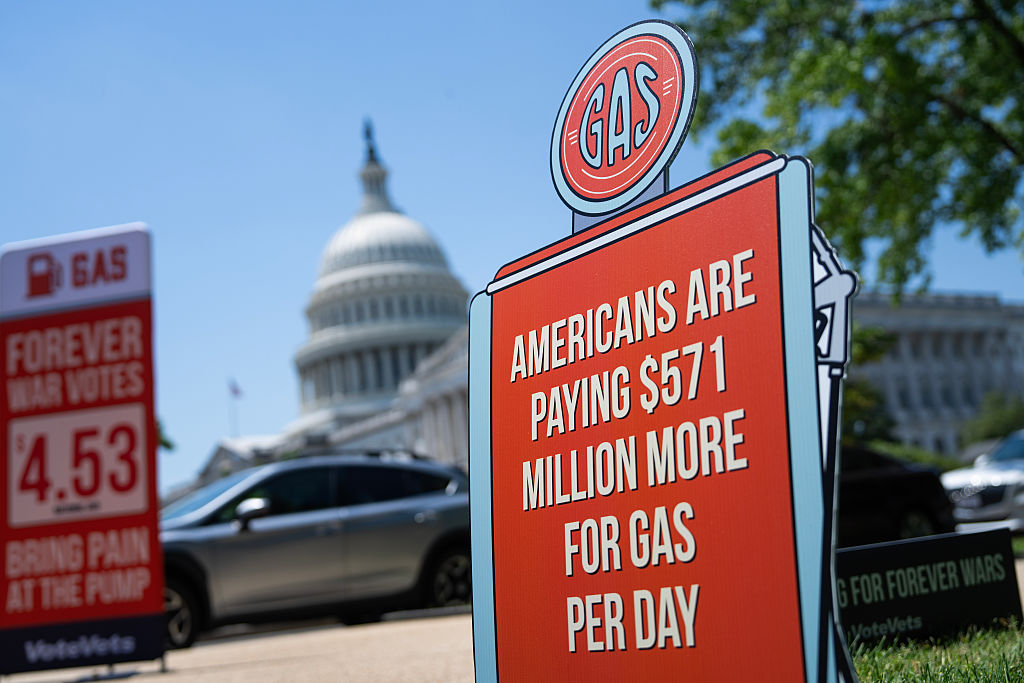
A sign referencing high gas prices is seen at an event hosted by VoteVets to "call on Congress to do everything in its power to stop Trump's Iran war," outside the U.S. Capitol in Washington D.C, on May 20, 2026.
Tom Williams / CQ-Roll Call, Inc via Getty Images


Honest, paywall-free news is rare. Please support our boldly independent journalism with a donation of any size.

Throughout his second term, President Donald Trump has been on a relentless push to boost fossil fuels, undermine renewable energy, and end all federal regulation to address climate change. The administration claims that this push will help people in the U.S. save money.

But in reality, the opposite is true: Fossil fuel dependence makes life more expensive.
Global Price Shock

Thanks to the U.S.-Israeli war on Iran, crude oil prices are soaring — leading to sky-high prices for gasoline and diesel. With that war, Trump has set off a domino effect, showing how deeply the fossil fuel industry has baked its prices directly into the U.S. economy.

For example, the price of food had already been increasing before the U.S. began its war. But now, economists have said that trend upwards will continue in coming months. One reason for that is the price spike for fertilizers. Chemical fertilizers providing nitrogen, an essential plant nutrient, are made using natural gas. And around 10 percent of the world’s supply of urea, a common nitrogen fertilizer, comes from the Middle East — and is impacted by the closure of the Strait of Hormuz. Additionally, because most food products are distributed using diesel-powered trucks, we’re seeing the impact of diesel prices on rising food prices in real time.

Trump’s unprovoked war would have been a disaster in any context. But people in the U.S. and worldwide, especially in the Asia-Pacific region and in Africa, would have felt a whole lot less economic pain if we hadn’t been so dependent on oil and gas in the first place. Experts forecast that the worst impacts are yet to come.

The Federal Reserve Bank of Dallas said back in March that a prolonged closure of the Strait of Hormuz could cause a global economic downturn. Now, two months later, the World Bank is forecasting the possibility of an additional 45 million people worldwide facing acute food insecurity, and significantly higher inflation and slower economic growth in developing economies. But even if the Strait were to open tomorrow, idled oil wells and refineries will take time to restart, leading to a severe supply crunch and further price increases.

Expensive Electricity

Another example of fossil-fueled inflation is the surge in residential electric bills. Fracked gas is the largest energy source for electric power generation in the U.S. But since the start of the fracking boom in the early 2000s, U.S. producers are increasingly producing gas for export. Consequently, gas prices — and our utility bills — are exposed to increased global price volatility.

The proliferation of energy-hungry AI data centers is another factor driving up electric bills. Besides their direct impact on utility bills, data centers are also causing growth in gas-fired power generation, leaving rate payers even more susceptible to gas price spikes. Yet the Trump administration has made it a national policy priority to promote AI technology.

Meanwhile, renewable wind and solar energy, which are the cheapest sources of energy worldwide, provide only about 20 percent of electricity in the U.S. Yet the Trump administration is using legally questionable methods to actively block new renewable energy from being built, locking in our dependence on expensive fossil fuels.

Climate Change Is Costly

It’s not just the fuels themselves that are making everything more expensive. It’s also the effects of digging them up and burning them.

Rising atmospheric greenhouse gas levels are leading to expensive wildfires, storms, and floods. The cumulative cost of climate disasters has increased sharply; the last three calendar years have had the highest total disaster costs over the entire 45-year period covered by the Climate Central database of billion-dollar weather and climate disasters in the U.S. Some of these costs are picked up by taxpayers through government-funded recovery, some are borne by insurance companies, and some are shouldered by impacted people.

Of course, this is just scratching the surface.

These disasters are raising home insurance premiums in disaster-prone regions. And because lenders require an adequate home insurance policy as a condition for a mortgage, rising insurance premiums effectively make homeownership unaffordable for many.

Prolonged droughts, severe floods, and other extreme weather events exacerbated by climate change also impact food production and drive up food prices. Drilling and fracking for oil and gas contaminates drinking water, leading to all kinds of costs for households. These include medical bills for cancer and other serious illnesses from drinking contaminated water, and the cost of having to buy bottled water instead of using contaminated tap water or well water.

Burning fossil fuels also pollutes the air, potentially causing cancer, respiratory diseases, and other illnesses. Particulate matter and ozone pollution from vehicle tailpipes alone was responsible for 385,000 deaths and $1 trillion in health damages worldwide in 2015.

So the next time any political figure — whether they’re a member of the Trump administration or a feckless fossil-fueled Democrat — tells you that they’re clinging to the fossil energy status quo to save you money, don’t believe them.

They are protecting the profits of a powerful industry, at our expense. And the sooner we transition off fossil fuels, the healthier we — and our economy — will be.


This article is licensed under Creative Commons (CC BY-NC-ND 4.0), and you are free to share and republish under the terms of the license.


Basav Sen directs the Climate Policy Project at the Institute for Policy Studies.
Trump Admin Uses Iran War Oil Shock to Push Drilling in Alaskan Wilderness

The five-year plan is expected to cause 4,000 additional oil spills and the destruction of fragile ecosystems.
May 31, 2026
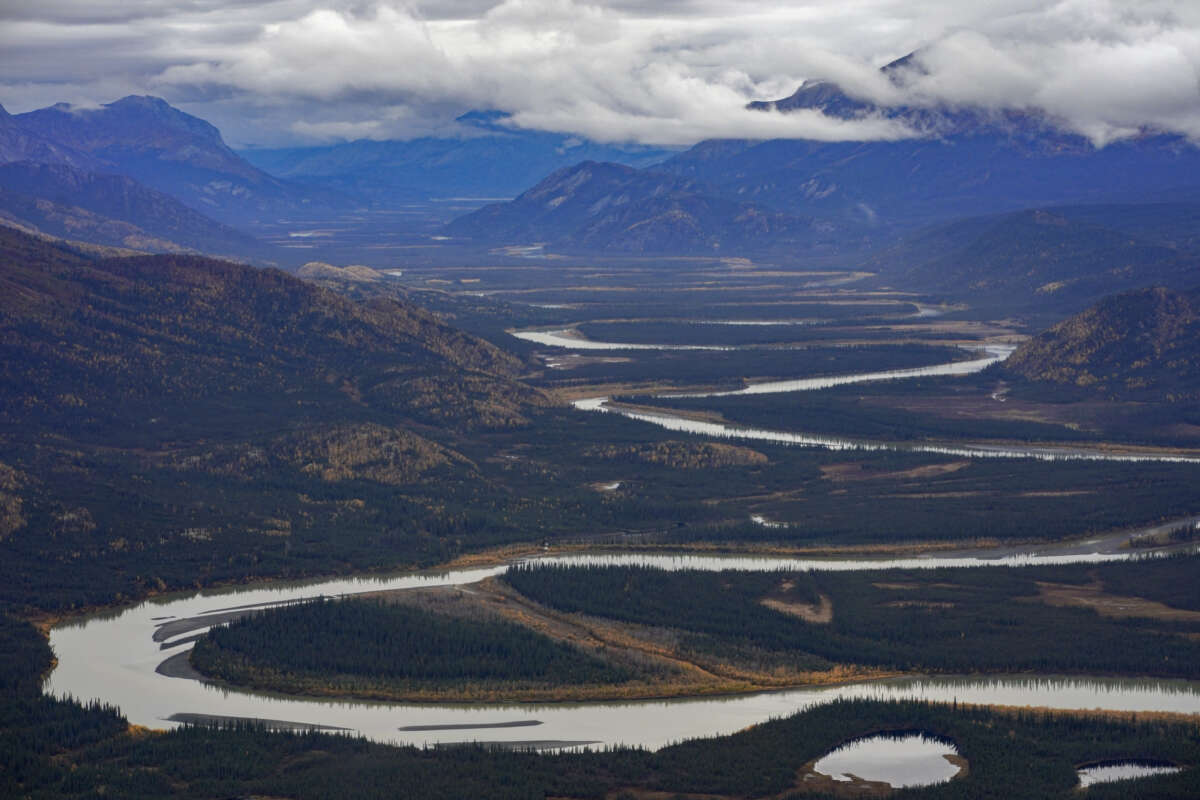
A slow moving serpentine river snakes outside Gates of the Arctic National Park and Preserve, in Alaska, on September 11, 2022. The Ambler Access Road, a controversial 211-mile industrial road has been proposed to link the Ambler mining district to the Dalton Highway, would run through the park, a significant wilderness area.
Bonnie Jo Mount / The Washington Post via Getty Images

The Trump administration and fellow Republicans are citing the Iran war as a pretext for oil drilling in Alaska, in an attempt to rapidly implement longstanding policy goals in the state.

In April, President Donald Trump declared that the Strait of Hormuz blockade could be a boon for U.S. oil production, including in Alaska. This narrative was celebrated by Alaska Republicans, like Governor Mike Dunleavy, who praised Trump for working to unleash “Alaska’s extraordinary resource potential.”

Senator Lisa Murkowski (R-Alaska), one of the only Republican lawmakers who occasionally criticizes the president, also voiced support for this vision.

“The situation in Iran is not good,” Murkowski recently stated. “The situation, as it’s going to impact Alaskans in their homes, is not good, but could the state benefit because there is this increased focus on resource shortages and volatility?”


“We have seen what it means to be vulnerable from a resource perspective, and you have seen this president turn that around in a strong way,” she added.

On May 6, the Trump administration announced that it was transferring 1.4 million acres of national public lands in Alaska’s Dalton Utility Corridor to the state’s government, which has sought to expand industrial development in the region. The Interior Department noted in a statement that the corridor contains portions of the proposed route for a 211-mile road to the Ambler mining district and fully developing the Alaska Liquefied Natural Gas project.

“For far too long, we have been at a relative standstill on statehood entitlements because these critically important lands were off the table,” gushed Kevin Pendergast, state director for the Bureau of Land Management, in celebration of the news.

Ten environmental groups are suing over the move, which they say will harm local tribes and endanger wildlife. “The Interior Secretary broke the law when removing federal protections for over 2 million acres of public lands in February without hearings in local communities, without a public comment period, and without addressing that decision’s impacts on land, water, and subsistence users,” said Bridget Psarianos, an attorney representing the plaintiffs, in a statement.

The U.S. Interior Department announced it would streamline the permitting process for oil development in the Alaska National Petroleum Reserve.

On May 15, the U.S. Interior Department announced it would streamline the permitting process for oil development in the Alaska National Petroleum Reserve. Under the new rules, some drilling operations, like the controversial Willow Project, could be rubber-stamped for approval in just 30 days.

“The faster we can cut through the speed of those regulations, the faster we can bring down prices for America,” declared Interior Secretary Doug Burgum.

On June 5, the Interior Department’s Bureau of Land Management will host the first of four legally mandated lease sales in the Coastal Plain of the Arctic National Wildlife Refuge (ANWR). The 1.5 million-acre stretch is known for its hills, lakes, and tundra vegetation. “Caribou travel to the coastal plain during June and July to give birth and raise their young. Migratory birds and insects flourish here during the brief arctic summer,” notes the U.S. Fish and Wildlife Service’s website. “Tens of thousands of snow geese stop over on the coastal plain during September to feed prior to migrating south, and muskoxen live here year-round.”

The U.S. Geological Survey (USGS) estimates that the plain holds between 4.25 billion and 11.8 billion barrels of recoverable oil, and Trump is poised to disrupt the aforementioned habitat via heavy drilling in areas that have historically been protected. The plan has been condemned by Indigenous peoples of the Arctic Refuge, including the Gwich’in Nation, who say that any drilling “would negatively impact our subsistence and violate our rights as Indigenous people.”


The plan has been condemned by the Gwich’in Nation, who say that any drilling “would negatively impact our subsistence and violate our rights as Indigenous people.”

These developments come on the heels of an Interior Department draft plan that seeks to dramatically expand offshore drilling over the next five years. The extraction strategy includes 21 areas off the coast of Alaska. An analysis by the Center for Biological Diversity, which is based on historical data and anticipated oil production, estimated that the five-year plan could result in more than 4,000 additional oil spills, releasing over 12 million gallons of oil into the ocean.

Environmental groups are also rejecting the idea that domestic drilling will aid the flailing U.S. economy.

Bobby McEnaney, director of land conservation at the Natural Resources Defense Council (NRDC), told Truthout that, if the United States could actually drill its way to economic success, it would have done it already.

“The United States produced a record amount of oil last year — for the fourth year in a row — more than any other country in history. That hasn’t kept our families and businesses from getting gouged at the pump, on the farm, and at the grocery store from yet another oil shock beyond our control,” said McEnaney.

“Exposing irreplaceable Arctic habitat and lands to the hazard and harm of drilling won’t fix that,” he continued. “We must break our addiction to oil. Our dependence on oil is the vulnerability, not the solution.”


“Using a war in the Middle East as a political excuse to expand drilling in one of America’s most fragile and ecologically important landscapes is as cynical as it is dangerous,”

These sentiments were echoed by Athan Manuel, director of Sierra Club’s Lands Protection Program.

“Using a war in the Middle East as a political excuse to expand drilling in one of America’s most fragile and ecologically important landscapes is as cynical as it is dangerous,” said Manuel. “The reality is that opening more of Alaska to oil drilling won’t lower gas prices, won’t meaningfully address energy security concerns, and will only deepen our dependence on the volatile fossil fuel markets that are squeezing American families.”

“What it will do is put Alaska’s public lands, wildlife habitat, and Indigenous communities at greater risk for the benefit of oil company profits,” he continued.
Oil Companies Eye Alaska Amid Deregulation

Republicans have been pushing for expanded drilling for decades, and their plans for Alaska predate the current international crisis. In October 2025, the GOP-controlled Senate voted to repeal a land management program that was enacted at the end Joe Biden’s term to limit development in interior Alaska. A month later, Trump finalized the rollback of preexisting drilling limits. Trump’s infamous “One Big Beautiful Bill Act” also opened up vast amounts of land to oil and gas leasing.

There’s reason to believe that oil companies are taking the Republican rhetoric about domestic production seriously.

Lease sales in the Arctic Refuge have not always drawn a lot of interest from such companies. “Drilling in a remote and sensitive region with little to no supporting infrastructure makes both the oil and gas industry and its wall street investors hesitant to participate,” notes the group Taxpayers for Common Sense. However, in March, ExxonMobil, Repsol, and Shell were among the oil companies that bid some $163 million to secure leases in the reserve. “The energy crisis sparked by the Iran war has … underlined the importance of supply diversity beyond the Middle East, further boosting the state’s appeal,” explained the Financial Times.

“This is the hottest play in the world right now,” independent oil prospector Bill Armstrong told the paper.


“We can’t afford to lock in decades of new carbon emissions while destroying irreplaceable wildlife habitat.”

“Alaska is a fantastic opportunity,” said Repsol’s head of exploration and production, Francisco Gea, adding “the reversal in the decline of oil production in the great state of Alaska is going to help put more oil in the Pacific area at an important moment.”

The consultancy group Wood Mackenzie predicts that oil production in the state will go up to roughly 750,000 barrels per day by 2030, a 275,000 barrel a day increase from 2024.

Cooper Freeman, Alaska director at the Center for Biological Diversity, says drilling could do irreparable damage to an area that is already threatened by climate change.

“Fast-tracking oil and gas exploration in Alaska is a shortsighted bid for corporate profit that ignores the devastating reality on the ground,” he told Truthout. “The Arctic is already one of the most rapidly warming ecosystems on Earth, yet it remains a vital refuge for polar bears, caribou, and millions of migratory birds. We can’t afford to lock in decades of new carbon emissions while destroying irreplaceable wildlife habitat and delaying the necessary renewable energy transition.”


This article is licensed under Creative Commons (CC BY-NC-ND 4.0), and you are free to share and republish under the terms of the license.


Michael Arria is the U.S. correspondent for Mondoweiss. Follow him on Twitter: @michaelarria.