Sunday, May 31, 2026

The Iran War’s First 90 Days Upended Energy Markets

  • The Iran war and near-closure of the Strait of Hormuz have triggered the largest oil and LNG supply disruption in history.

  • Global inventories are falling rapidly as the world has already lost roughly 1 billion barrels of crude and condensate supply, while shortages are beginning to emerge across Asia.

  • Shipping routes and tanker operations have been fundamentally reshaped, with rising dark-mode tanker activity and rerouted exports making global oil flows increasingly difficult to track.

The Iran war suddenly turned what had started as a year of oversupply in global oil and LNG markets into the worst oil and gas supply disruption in history.

Three months after the U.S.-Israeli strikes on Iran began on February 28, the world has already lost 1 billion barrels of crude oil supply, oil and gas prices have found a new, much higher floor, and whipsaw with violent volatility nearly every day, trade routes have shifted, and tanker rates have spiked. Actual supply shortages are emerging in Asia, while global crude and fuel inventories are crashing, suggesting the oil market could soon exhaust the buffers that kept prices from soaring to $150 and beyond during the worst supply crisis the world has ever seen.

As the Strait of Hormuz was de facto closed and traffic through the chokepoint, which handles 20% of global oil and LNG supply, collapsed by about 90%, Middle Eastern oil producers were quickly forced to curtail upstream output as storage spaces filled up. More than 10 million barrels per day (bpd) of crude were wiped off global daily production volumes, a figure no increase in supply from other parts of the world could offset.

LNG volumes from Qatar and the United Arab Emirates (UAE) were also trapped in addition to Qatar halting LNG production as early as March 2. Qatar later in March advised that its LNG export capacity may not return to pre-war levels for up to five years due to damage from Iranian missile strikes on the Ras Laffan complex, the world’s single largest liquefaction site.

The world has now lost 1 billion barrels of crude and condensate supply, data from Kpler showed. As of May 22, cumulative crude and condensate supply losses in the Middle East had reached 961 million barrels, with the 1 billion mark breached by the end of May. Outright production shut-ins have also inched higher, with another 100,000 bpd likely to have gone offline in the past week, due to continued pressure in Iraq and Saudi Arabia.

In the Middle East, “seasonally-higher demand is coming, which could incrementally boost regional supply to meet demand, though the economic realities in the region may force some organic demand destruction as well, capping any summer-linked marginal increase in production levels,” Kpler’s Naveen Das wrote last week.

Amid the massive supply disruption, inventories are declining at an increasingly faster pace, including in the United States.

Excluding China, which has accumulated large buffer stocks of more than 1.2 billion barrels over the past year, the rest of the world has seen onshore stocks draw at an accelerating pace, according to Kpler.

Global stocks drew down at a pace of just over 1.5 million bpd in early May. This drawdown rate has now jumped to nearly 1.7 million bpd, Kpler’s data showed, suggesting that further tightness could lie ahead.

Shipping rates and routes have also fundamentally changed. Saudi Arabia, the world’s top crude exporter, is shipping oil out of its Red Sea port of Yanbu, bypassing the Strait of Hormuz, while the UAE is boosting and plans to further increase its capacity outside of the Strait with a new pipeline to Fujairah.

Moreover, the threat to tankers attempting to pass the Strait of Hormuz has created a new shipping reality. Dark-mode activity, with transponders switched off, is no longer for Iran-linked vessels only. It has spread to commercial shipping of non-sanctioned barrels and other goods that typically move through the chokepoint, data from Vortexa showed on Friday.

The vessels still willing to cross are increasingly doing so dark, “but the more important shift is not just the scale of dark activity; it is who is participating,” said Claire Jungman, Director of Maritime Risk & Intelligence at Vortexa.

“AIS-off movements through Hormuz are no longer only a sanctions-evasion signal. They have become a wider commercial response to conflict risk, operational uncertainty, and the need to keep Gulf cargo moving through one of the world’s most important energy chokepoints,” Jungman added.

The implication for the market is that it’s now more difficult than ever to track oil shipments in real time, according to Jungman.

“When clean products, LPG, and LNG also move with reduced AIS visibility, the uncertainty extends into refinery supply, product availability, regional inventories, and destination-level demand reads.”

By Tsvetana Paraskova for Oilprice.com


Australian Police Find Cocaine Inside a Luxury Bus Aboard a Ro/Ro

Cocaine Bus
Courtesy ABF

Published May 31, 2026 8:49 PM by The Maritime Executive


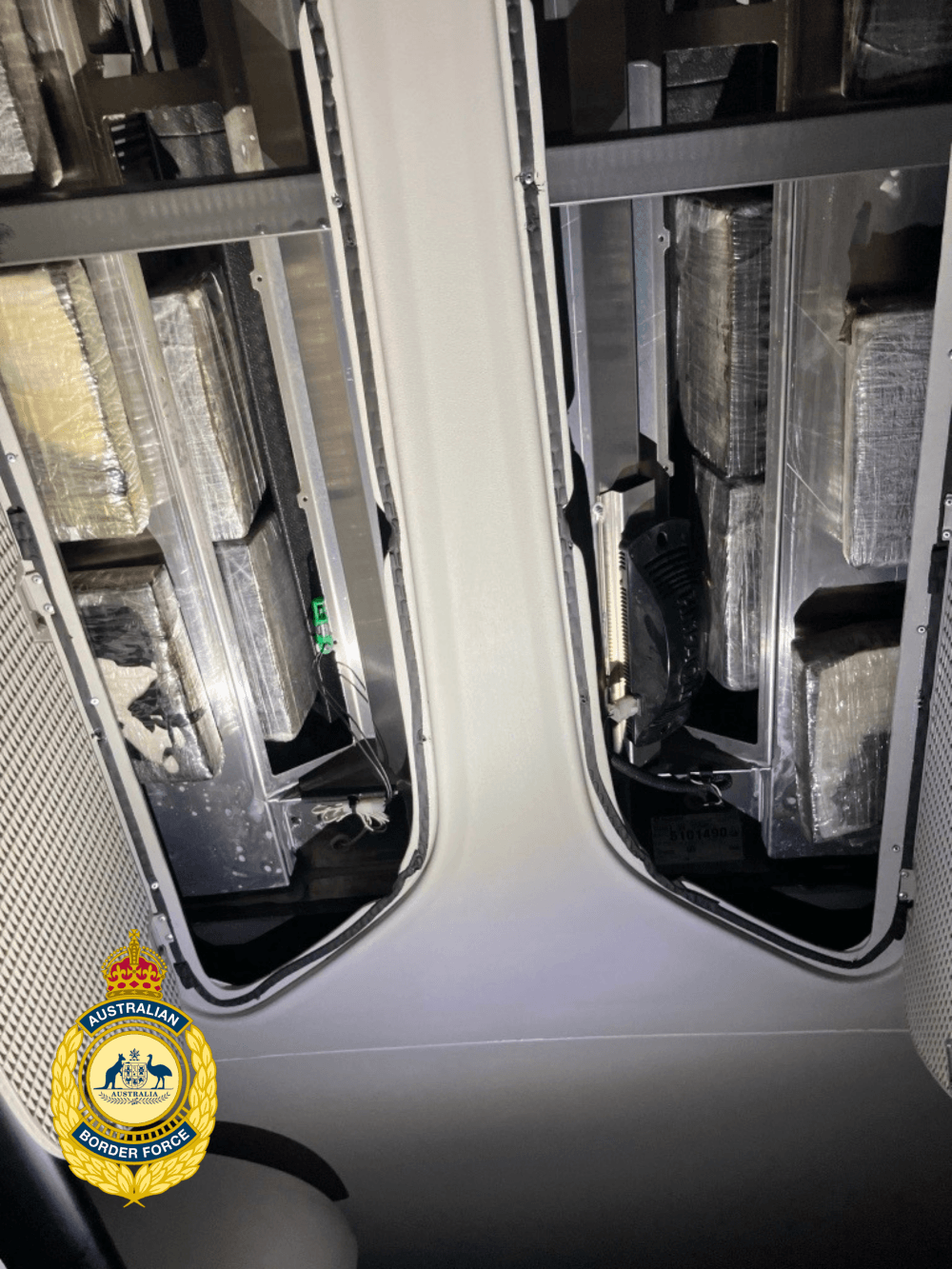
The Australian Border Force (ABF) has once again busted a cocaine shipment tucked inside an imported luxury bus aboard a ro/ro - an unusual choice of concealment, but one that it has encountered before. 

On May 6, ABF officers searched a ro/ro at the Port of Fremantle and examined its rolling cargo, including a high-end motor coach. Hidden behind panels in the ceiling of the bus, they found about 34 kilos of cocaine in packages. At sky-high Australian pricing of about $230,000 per kilo - about 60 percent more than the price of gold - the overall consignment was worth about US$8 million, according to the ABF. 

“Our highly trained ABF officers are equipped with the expertise, intelligence and operational capability to detect and disrupt illegal activity at the border,” Superintendent  Shaun Senior said. “Criminal syndicates continue to test our borders, including through complex concealments in cargo such as roll-on/roll-off vessels.”

Courtesy ABF

The ABF is investigating the shipment and is interested in receiving tips from the public. 

It is not the first time that cocaine has arrived in Fremantle this way. In 2024, ABF officers found 139 packages inside a shipment of 13 luxury buses on the ro/ro Gracious Ace during a call at the port. They allowed the buses to be offloaded and delivered to a storage site, then arrested two men who showed up to break into the buses to retrieve the packages. The suspects were charged with attempting to possess a commercial quantity of cocaine, an offense punishable by up to life in prison in Australia. 

Per capita, Australia is the world's busiest market for cocaine sales: about 13 percent of Australians try it at some point in their lives, and about 4.5 percent self-report that they've used it in the past 12 months. The continent's isolation and strict law enforcement also make it one of the most lucrative markets. While total volumes are low when compared to the European trade lane, significant cocaine busts have become a matter of routine for the ABF, and the problems associated with trafficking are proliferating on the Pacific island route to Australia's market. 


After Iranian Attack, Activists Renew Push for Live Export Ban

Sheep

Published May 31, 2026 4:49 PM by The Maritime Executive


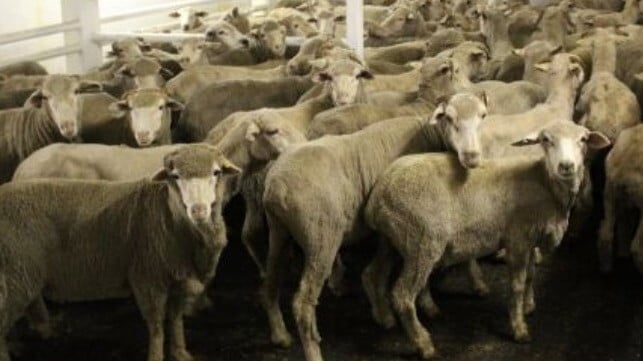
Animal welfare organizations are renewing their push for a total ban on seaborne livestock exports after some 4,000 sheep and goats died off the coast of Oman earlier this month.

Maritime intelligence firm Windward reported that the Indian-flagged cargo vessel MSV Haji Ali sank following a suspected drone attack in the volatile Strait of Hormuz region. The 57-meter vessel was traveling from the Port of Berbera in Somalia to the Port of Sharjah in the United Arab Emirates with a load of about 4,000 sheep and goats when the attack occurred. The attack triggered a fire that caused the ship to sink, with all 14 crew members rescued by the Oman Coast Guard.

According to Windward, the vessel was operating with its automatic identification system switched off at the time of the incident.

Somalia, which has one of the largest livestock populations in Africa, is a leading exporter of live animals to the Middle East. In recent years, the country has taken advantage of Australia's ban on live exports and the war in Sudan to increase its control of the lucrative Middle East market, exporting between four million and six million head of livestock annually and raking in more than $1 billion last year. Livestock exports to the Middle East reach peak levels in May, when the Muslim world gears up to mark Eid-ul-Adha (Festival of Sacrifice).

Indian authorities, through the Ministry of External Affairs, described the attack on MSV Haji Ali as "unacceptable." Animal welfare organizations are using the event to highlight their push for a total ban on seaborne livestock exports.

According to World Animal Protection (WAP), the sinking of the vessel is a reminder of the risks of the live animal trade. The animals were confined in crowded conditions typical of live export journeys and were left to die when the vessel was attacked and sank.

"These animals endured unimaginable suffering in their final moments — confined and unable to escape. This, sadly, is not an isolated accident. Every year, millions of animals are transported long distances across oceans in overcrowded and stressful conditions, where they are exposed to extreme heat, disease, injury, exhaustion, and death. Live export should no longer be an option," said Michelle Baxter Wickham, Head of Food Systems Strategy at WAP.

The NGO highlighted that transporting animals over long distances by sea exposes them to a range of serious welfare risks, specifically extreme heat, overcrowding, exhaustion and disease. Routes to the Middle East can be especially dangerous, with high temperatures putting animals under severe stress.

Owing to the long and grueling sea voyages that animals have to endure, WAP, along with other organizations, is calling on governments to end live export and invest in alternatives that do not rely on transporting animals over long distances. Australia is among countries that have banned seaborne livestock exports and intends to phase out live sheep exports by sea by May 2028. Other countries that have banned the trade include New Zealand and Britain.


No Signs of Peace in the Gulf

Claimed wreckage of the Orbiter drone on the beach at Qeshm Island (Tasnim)

Published May 31, 2026 1:47 PM by The Maritime Executive


From activity noted, there are few if any indications from the Gulf region or in the Strait of Hormuz area that a ceasefire or an end to the war is imminent.

The blockade of Iranian ships and ports goes on unabated. On May 29. U.S. Central Command reported that US naval forces had disabled Gambian-flagged 71-meter general cargo vessel MV Lianstar (IMO 9072692) in the Gulf of Oman after the vessel ignored repeated warnings that it should not attempt to make for an Iranian port. A U.S. helicopter fire a Hellfire missile into the ship’s engine room, disabling the vessel.

The day after, the Iranian Army showed off the debris of an Orbiter reconnaissance drone which it shot down just off the coast of Qeshm Island.

Oman’s Maritime Security Centre warned all shipping on May 29 that an object floating west of the westbound channel of the recognized Traffic Separation Scheme was probably a sea mine, warning shipping to be on special alert and to report any suspicious sightings.

At the Kharg Island terminal further into the Gulf, there were no ships on the eastern loading piers. The last time there was activity spotted was on May 21, when two small tankers were at the pier, suspected of loading oil for internal transfer within the Gulf. A large number of tankers were waiting off the terminal on May 28, as there have been now for several weeks.

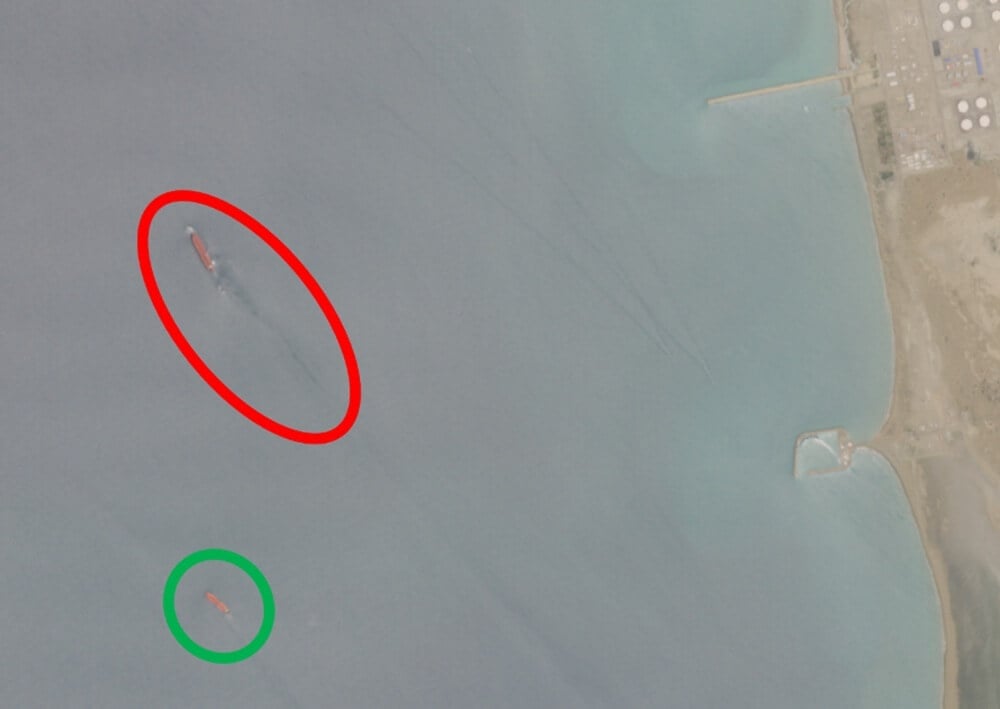
Perhaps prompted by reports that the Kooh Mobarak oil terminal near Jask was inoperable, despite the huge investment made in developing it as an alternative export terminal on the Gulf of Oman, a 313m-long tanker arrived at the Single Point Mooring (SPM) on May 29. From a visible oil slick it appeared to be loading. As in previous days, the Guinea-flagged and OFAC sanctioned Vernon (IMO 9232876) was seen anchored 1.75nm due south of the SPM, where she has been since May 19.

A 313m-long tanker (red) loading on the Kooh Mobarak SPM on May 29, with the Aframax Vernon (green) still anchored close by (Sentinel-2)

On the political front, the Iranian parliament has been pressing forward with legislation to enable the so-called “Persian Gulf Strait Authority,” which now handles administrative functions for the IRGC-operated shipping channel near Larak and Qeshm. At the same time, US Treasury Secretary Scott Bessent has warned that anyone dealing with or handling money with the authority will be subject to US sanctions, which will effectively deter most global shipping lines from using the channel in Iranian waters.

Secretary Bessent also has been pointing out what has become increasingly obvious from the to-and-fro of the US-Iranian negotiations – that the Iranians are desperately short of money. The economic situation before the war in Iran was already very serious. Now the Iranian government also has the cost of restoring destroyed infrastructure, to add to the pre-existing financial difficulties. Even if sanctions are lifted, it will take many months for oil money to start flowing into Iran’s Ministry of Finance – but to fend off social unrest in the days after the war is settled, for example by raising food subsidies or purchasing food supplies from abroad, the need for emergency funding is immediate.

Statements of defiance from Mohammad Baqer Qalibaf, Speaker of the Iranian Parliament and head of Iran’s negotiating team, expressing Iran’s determination to concede nothing and accept nothing on the basis of promises, do not necessarily reflect a hardening of Iran’s negotiating position - although Iran has certainly created some bargaining strength by its shut-down of the Strait of Hormuz. It can also be interpreted as a desperate need to obtain immediate funding up-front, without which the Iranian security structure will have difficulty keeping unrest under control.

On balance, Iran has the greater need to settle the war quickly, whereas the United States can carry on with its blockade at relatively low risk of casualties and with little direct impact so far on the US economy (except for a 2.4 percent increase in consumer prices and a 50 percent increase in the price of gasoline since February). The Gulf states are divided. But most do not want to see the war restarted, and have adapted to living without access through the Strait of Hormuz for the time being; as the Qataris have demonstrated in their bilateral negotiations with the Iranians this week in Doha, they do not want to see the Iranian regime boosted by being granted access to immediate funding.


Four Fleet Designs: Which Navy is Best for America?

Truman hard turn
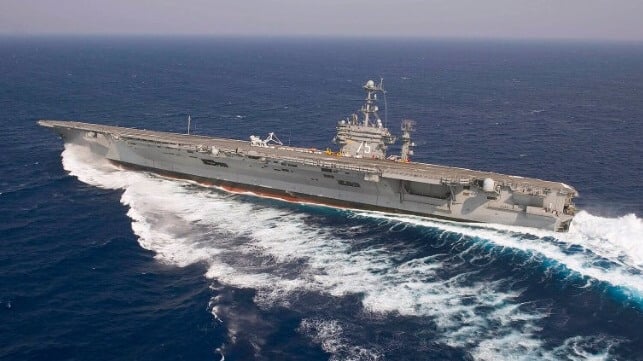
USS Harry S. Truman makes a hard turn to port at full speed during sea trials (USN file image)

Published May 31, 2026 4:49 PM by CIMSEC


[By Capt. George Galdorisi, USN]

Military leaders often use military-industry conferences to unveil new strategies. Coming on the heels of a new National Security Strategy (NSS) issued in December 2025 and a National Defense Strategy (NDS) issued in January 2026, the U.S. Chief of Naval Operations, Admiral Daryl Caudle, revealed the Navy’s strategy designed to support the NSS and NDS, the U.S. Navy Fighting Instructions in February 2026.

The venue for unveiling this document was The Armed Forces Communications and Electronics Association (AFCEA)/U.S. Naval Institute (USNI) “West” symposium, the largest military/industry symposium on the West Coast with over 10,000 registered attendees. Admiral Caudle was the keynote speaker on day one of this event, and he provided a briefing on the U.S. Navy Fighting Instructions.

One of the key points the CNO made during this keynote, as well as during a subsequent Service Chiefs panel, was that the U.S. Navy is a differentiator. Here is how he described it in the Fighting Instructions:

“Winners set themselves apart by excelling in difficult endeavors. It is what separates successful businesses or world-class athletes from the competition. Doing difficult things well means identifying and delivering differentiated value. For the United States Navy, prioritizing what the Navy does better than anyone else—any other Service, any other Nation—is central to ensuring that the Chief of Naval Operations designs and resources a strategy that ruthlessly prioritizes the Sailors, Foundry, Fleet, and Fight needed to execute our essential global missions. We provide differentiated value to two primary stakeholders: the Nation and the Joint Force.”

The CNO’s emphasis on the U.S. Navy as a differentiator comes at a time when there is intense discussion regarding the different options for what the Navy-After-Next will look like. The discussions within the Navy, the Department of Defense, the Executive Branch, the U.S. Congress, think tanks and a plethora of other stakeholders and influencers and others have never been more varied or intense, and much of that discussion occurred during the “West” symposium.

Which Fleet?

Four options for fleet composition have gained purchase within the U.S. Navy.

The first is the Navy’s current shipbuilding plan as reported by the Congressional Research Service. This includes 381 crewed ships and a number of uncrewed surface vessels. This number comports with the recently released Navy Shipbuilding Plan which envisions a battle force inventory reaching 382 crewed ships in 2056.

The second option that has gained traction is called the “hybrid fleet.” This concept was unveiled by then-Chief of Naval Operations, Admiral Michael Gilday, and endorsed by his successors. This envisions a Navy of 350 crewed ships and 150 uncrewed surface vessels. The idea of a hybrid fleet evolved due the U.S. Navy’s ongoing challenge of building enough crewed ships to adequately meet the Navy’s global commitments.

The next option is called the “hedge fleet.” This envisions a forward-deployed force of robotic autonomous systems and crewed ships to be employed quickly in any crisis. Of the four options, the CNO spoke most extensively about the hedge fleet, explaining the rationale this way: “We need ‘tailored forces’ and a Navy that has other battle formations beyond carrier strike groups. Tailored offsets include capabilities such as attritable and easily replenishable unmanned surface vessels, unmanned undersea systems, mine warfare and cost-effective counter drone defense. The hedge fleet avoids a brittle single-purpose force.”

The final option is the “golden fleet,” a recent initiative announced by President Trump in late 2025 to rapidly expand and modernize the fleet. This plan focuses heavily on battleships alongside frigates and uncrewed surface vessels. While media reporting regarding the golden fleet centers primarily on large ships, knowledgeable observers have suggested that the small- and medium-sized uncrewed surface vessels armed with long range strike and missile defense systems will be the most strategically impactful in the near term.

One common feature among these four options is the inclusion of uncrewed surface vessels as vital assets within a future fleet. There are two reasons for this sea change.

The first is that ships are expensive to build and operate. The cost of Ford-class aircraft carrier is $13B and an Arleigh Burke destroyer is $2.2B. The new Columbia-class ballistic missile submarine approaches $10B. However, those procurement costs only represent the tip of the iceberg. Populating those vessels with sailors is also increasingly expensive, given that seventy percent of the total operating cost (TOC) of a ship over its lifespan is providing a crew year-over-year.

The second is that after over a decade of development the Navy has confidence that uncrewed surface vessels have reached a point in their development that they are no longer prototypes, but production-ready vessels (some are commercial-off-the-shelf or COTS). that are ready to deploy with their crewed counterparts.

As evidence of this technological maturity, the CNO noted how Navy and Marine Corps exercises, experiments, and demonstrations such as the those conducted by Fifth Fleet/CTF-59, Fourth Fleet and a series of uncrewed surface vessel-focused events with NATO allies have accelerated the development of these craft. As just one of many examples of this testing in recent years, MARTAC, a U.S. uncrewed surface vessel designer/builder, has frequently been invited to showcase its MANTAS T12, Devil Ray T24 and Devil Ray T38 unmanned surface vessels (USV) to a wide range of Navy and Marine Corps at-sea events.

These events have included the U.S. Pacific Fleet-led Integrated Battle Problem series of exercises, the Integrated Maritime Exercise series held under the auspices of U.S. Naval Forces Central Command/Commander Task Force 59 in the Arabian Gulf, NATO exercises BALTOPS, REPMUS, and the follow-on Dynamic Messenger, Australian Defence Force Exercise Autonomous Warrior, among others.

The Navy Shipbuilding Plan reveals how this confidence in the technical maturity of uncrewed surface vehicles has given the Navy confidence to provide funding for USVs to: “serve as a direct, dual-use supplement to existing ready forces, providing a flexible “tailored force” to enhance the nation’s maritime posture.”

The number of medium uncrewed surface vessels (MUSVs) projected in the Shipbuilding Plan are substantial, growing from 39 in FY27 to 83 in FY31 when MUSVs will comprise 18% of the Navy’s fleet. As the Plan explains, MUSV integration will unburden higher-value assets, such as Arleigh Burke-class destroyers, as the autonomous fleet can take up long endurance maritime domain awareness missions.

The Road Ahead

Regardless of which design for the Navy-After-Next prevails in the coming years – be it one of the existing conceptual designs, a hybrid design drawing elements from among these options, or a completely different design – a future U.S. Navy comprised of formations of integrated crewed ships and uncrewed surface vessels represents a once-in-a-generation sea change for the U.S. Navy.

While deciding on the composition of the Navy-After-Next is a necessary first step it is not a sufficient one. The U.S. Congress has been reluctant to authorize the Navy’s planned investment of billions of dollars in USVs until the Service can come up with a concept-of-operations (CONOPS) for using them. Congress has a point.

Via the Navy Shipbuilding Plan, the Navy has announced plans to procure large numbers of uncrewed systems—especially medium uncrewed surface vessels—but a CONOPS, in even the most basic form, has not yet emerged. Such a CONOPS must be thoughtfully conceived, analyzed, vetted through stakeholders, war-gamed and widely distributed. Only through this disciplined process can the Navy-After-Next be the strongest Navy the nation can field.

Captain George Galdorisi, USN (Ret.) is a career naval aviator and national security professional. During his 30-year career he had four tours in command and served as a carrier strike group chief of staff. Additionally, he led the U.S. delegation for military-to-military talks with the Chinese Navy. He is the Emeritus Director of Strategic Assessments and Technical Futures at the Naval Information Warfare Center Pacific.  

This article appears courtesy of CIMSEC and may be found in its original form here

The opinions expressed herein are the author's and not necessarily those of The Maritime Executive.


Op-Ed: NZF is the Only Option for Delivering on IMO's Climate Commitments

Alternative proposals do not meet the standards of the 2023 GHG Strategy, and there is no need to relitigate a carefully-crafted agreement

IMO
IMO file image

Published May 31, 2026 12:24 PM by John Maggs


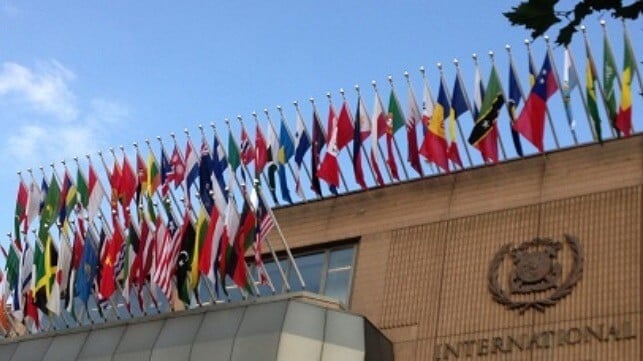
The IMO’s Net-Zero Framework is back on track. A majority of International Maritime Organization member states continue to support the framework - which aims to reduce greenhouse gas (GHG) emissions from ships in line with its 2023 greenhouse gas reduction strategy - despite significant pressure from the US, Saudi Arabia, UAE, Panama and Liberia.

The NZF’s supporters have been further vindicated by last week’s landslide vote by the UN General Assembly to adopt the International Court of Justice’s climate crisis ruling. Now it is clear that for the UN,  "tackling the climate crisis is a legal duty under international law, and not just a political choice."

While pressure on the NZF now seems to have eased somewhat, supportive governments - many of which have called for the NZF’s urgent adoption - will need to remain vigilant and strong in order to parry inevitable future attacks and attempts to further delay the process of adoption, which is currently scheduled for early December.

The same applies to the majority of shipping industry associations and other stakeholders, which have supported the NZF and the 2023 IMO GHG Strategy that preceded it. They have a lot to lose through an unplanned, chaotic, and uncertain energy transition. Such a scenario will be disruptive, more costly and bad for business. Now is not the time for them to sit on the sidelines.

So why is the NZF - as it stands - so important? The framework includes a global fuel standard (GFS), requiring ships to gradually reduce how polluting their fuel is (i.e., how much greenhouse gas is emitted for each unit of energy used, across a fuel’s life cycle). The framework also introduces a mechanism that puts a price on the greenhouse gases ships emit, giving the shipping industry a clear financial reason to reduce emissions in line with the global fuel standard.

The NZF will apply to all oceangoing ships over 5,000 gross tonnage (GT) - responsible for over 85 percent of global shipping emissions. This is crucial - the global shipping industry emits around three percent of global emissions, equivalent to a major industrialized country like Japan - and reductions are essential if dangerous global heating is to be avoided.

While the NZF is not perfect - the Clean Shipping Coalition, along with many progressive states, wishes it had gone further and been more ambitious - it contains an important foundation that can be built upon in the future.

The IMO's 2023 GHG Strategy set out a roadmap for reducing greenhouse gas emissions from global shipping, with targets to reduce emissions by 30 percent by 2030, 80 percent by 2040 (both in comparison to 2008 levels) and to achieve net-zero emissions by 2050. This will only be possible if the NZF is adopted "as is," and paired with a revised and strengthened Carbon Intensity Indicator - a key IMO tool for measuring and driving improvements in the energy efficiency and thus climate emissions of ships.

The NZF is set to be discussed at two IMO intercessional meetings, one in September and another immediately prior to December’s MEPC 85, which will itself immediately precede a resumed Extraordinary Session 2, during which the NZF is scheduled for adoption.

These intercessional meetings are only taking place before the planned adoption so that concerns about the NZF can be properly discussed. They are not a green light for alternative “technical measure only” proposals that are incapable of delivering the shipping climate obligations enshrined in the 2023 GHG Strategy.

Neither the Panama/Liberia/Argentina proposal nor the one from Japan are fit for that purpose, nor do they have enough support for approval. Only seven countries expressed support for progressing Japan’s proposal. The lack of a GHG pricing component in these two proposals means that the only option for enforcement is to arrest ships that are found to be non-compliant. Not only does this fail to raise the money that is essential to ensure a just and equitable transition and provide the necessary subsidising of higher-priced zero-emission fuels, it creates high-stakes risks for the industry, which would have to make judgments on how best to manage exposure to this ultimate sanction. This can only result in high volatility and uncertainty in how decarbonization and transport costs will evolve.

If the NZF was to be reopened at the request of those that want it weakened, those that want it further strengthened would have every right to have their proposals considered as well. However, there really is no need for reopening this process - the NZF is as it is because it already represents a carefully negotiated balance of interests.

Every alternative has already been considered and failed to gain enough support. If conducted in good faith, a lengthy re-litigation process would in all likelihood end up in the same place, with valuable time lost.

Supporters of the NZF, IMO member states in particular, but also industry stakeholders, must be clear: the NZF “as is” is the only option on the table with the potential of delivering the commitments made in 2023, and any alternative policy framework that stalls the maritime energy transition - or reverses it - is unacceptable. The stakes are too high.

In a world that is getting hotter, the Net-Zero Framework will bring certainty to the shipping sector, and give shape to an energy transition that leaves no country behind. Governments that have supported the Net-Zero Framework must now double their efforts to protect it as it moves towards IMO adoption.

John Maggs is the Clean Shipping Coalition’s Representative to the International Maritime Organization.

The opinions expressed herein are the author's and not necessarily those of The Maritime Executive.


Op-Ed: The Jones Act Waiver Is Reshaping More Than Maritime Transportation

Temporary waivers are creating tax distortions, disadvantaging American operators, and undermining confidence in the merchant marine

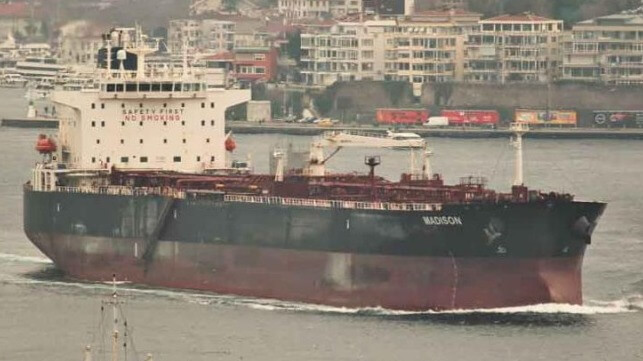
Tanker Cabo Deseado (seen here under a previous name) shuttled products between California ports, a task normally handled by U.S. tug-and-barge firms (Cengiz Tokgoz / VesselFinder)

Published May 31, 2026 1:47 PM by William P. Doyle


The recent Jones Act waiver debate has largely focused on vessel availability, fuel prices, and emergency logistics. Far less attention has been paid to a more consequential issue: the tax and regulatory distortions that arise when foreign-flag carriers enter domestic U.S. coastwise commerce, displacing American shipping companies and American merchant mariners.

The effects are no longer theoretical. They are unfolding in real time.

Consider two foreign-flag vessels currently operating under the Jones Act waiver environment.

The first is the Chinese-flagged Jin Zhou Wan, operated by COSCO Shipping, a company wholly owned and controlled by the government of the People's Republic of China. Throughout May, the vessel traded between U.S. ports carrying liquid cargoes between Paulsboro, New Jersey; Pascagoula, Mississippi; New Orleans, Louisiana; and New Haven, Connecticut. As of this writing, the vessel remains anchored in New Haven awaiting orders from its state-owned parent company in China.

The second is the Marshall Islands-flagged tanker Cabo Deseado. The vessel is commercially associated with Chile-based Cape Management and technically managed by Fleet Ship Management PTE, a Singapore-based company that is part of the Hong Kong, China-based Caravel Group. Since early April, the vessel has conducted multiple coastwise voyages entirely within California, transporting vacuum gas oil, low-sulfur gasoil, and heavy crude oil between Martinez, Long Beach, and Los Angeles. It is currently anchored in the Bahamas awaiting orders for its next commercial assignment.

Every voyage performed by a foreign-flag vessel under the waiver is a voyage not performed by a U.S.-flag operator. Every barrel moved by a foreign carrier is revenue unavailable to American shipping companies that pay U.S. taxes, employ American merchant mariners, support maritime academies, and invest billions of dollars in vessels built and operated under one of the world's most stringent regulatory systems.

The Jones Act waiver is creating a legal and financial windfall for foreign operators while opening the door to what increasingly appears to be a tax avoidance structure operating inside domestic U.S. commerce to the disadvantage of American companies, mariners, and shipyards.

The United States has long maintained a clear distinction between international shipping and domestic coastwise transportation. That distinction underpins federal tax law, maritime regulation, and the investment decisions of vessel owners, lenders, shipyards, cargo interests, and maritime labor.

Jones Act operators pay federal corporate income taxes, payroll taxes, state taxes, property taxes, and substantial compliance costs associated with labor, safety, environmental, and security requirements. They employ American mariners, build ships in American shipyards, and finance vessels with the expectation that the United States will maintain a stable and predictable coastwise regulatory framework.

Foreign operators function under a fundamentally different model. Many utilize flags of convenience, employ foreign labor, build ships overseas, and rely upon international shipping tax exemptions under Section 883 of the Internal Revenue Code and related reciprocal tax arrangements. Those provisions were designed to facilitate international commerce and not to be utilized for domestic U.S. coastwise trade.

This imbalance should concern anyone focused on market integrity.

Maritime and tax practitioners are already raising questions about whether foreign carriers engaged in domestic transportation may face exposure to effectively connected income rules, branch profits taxes, withholding obligations, and potential limitations on Section 883 protections. It increasingly appears that some foreign operators may be treating a temporary Jones Act waiver as a temporary tax amnesty. The Jones Act may be temporarily waived. The Internal Revenue Code has not been.

The issue extends beyond taxation. It goes directly to the long-term stability of the American maritime industry. Domestic operators cannot offshore their tax obligations, crews, regulatory compliance, or corporate responsibilities. They make long-term investments based on the expectation that the United States will preserve a predictable coastwise transportation system.

The Jones Act is not some one-off American anomaly. It reflects a principle embraced by maritime nations around the world: domestic transportation is a strategic national asset and fosters economic and national security. China, for example, strengthened its cabotage laws in the 1990s and continues to reserve its domestic waterborne commerce for Chinese interests. It does so because it understands that maritime capability is inseparable from economic security, industrial resilience, military readiness, and sovereign control over transportation infrastructure. The United States has long recognized those same principles.

The current waiver debate therefore extends well beyond short-term shipping economics. It raises fundamental questions about whether the United States intends to preserve a domestic maritime industry governed by consistent taxation, fair treatment of America’s organic fleet, and long-term policy stability.

These conversations are taking place right now within the corps of cadets at the state maritime academies and the United States Merchant Marine Academy. Cadets are asking a simple but important question: Is a career at sea still a stable and worthwhile path? We do not want confidence in the future of the U.S. Merchant Marine to erode.  They are watching closely to see whether the United States remains committed to an American-built, American-owned, American-crewed, and American-flagged maritime industry. Today's cadets are tomorrow's captains, chief engineers, military sealift officers, and maritime industry leaders.

William P. Doyle is a former U.S. Federal Maritime Commissioner and officer in the U.S. Merchant Marine. He is a graduate of Massachusetts Maritime Academy and Widener Commonwealth Law School and serves as Chief Executive Officer of the Dredging Contractors of America.

The opinions expressed herein are the author's and not necessarily those of The Maritime Executive.


Op-Ed: Three Countries Could Scuttle WTO's Fishing-Subsidy Limit Agreement

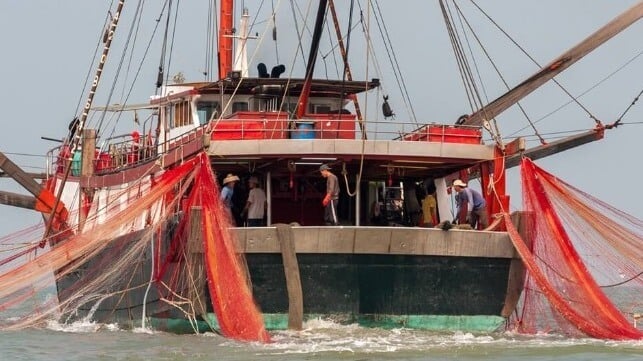
Trawler
iStock / Winhorse

Published May 31, 2026 3:12 PM by The Lowy Interpreter


More than 600 million people around the world seek to make their living through fishing or from processing the catch. Most of those workers – often impoverished – rightly pay little attention to the intricate debates of the World Trade Organization, but a newly struck Agreement on Fisheries Subsidies (FSA) heralds a breakthrough for the marine environment as well as a timely boost for multilateral rules-based cooperation.

Following 20 years of negotiations, the FSA came into force on September 15, 2025. The first phase of the agreement, known as “Fish 1”, targets subsidies linked to illegal, unreported and unregulated (IUU) fishing, overfished stocks, and unregulated fishing on the high seas.

For Pacific Island countries, the FSA means fairer competition, greater protection of vital marine resources, and increased economic security for artisanal fishers and fish exporters.

But many of the benefits could be undermined if just three countries – India, Indonesia and the United States – stall the second phase of the FSA negotiations, Fish 2.

Global fisheries subsidies total around US$35 billion annually, with approximately US$22 billion considered harmful. Subsidies such as fuel assistance, tax exemptions and vessel construction support allow distant-water fleets to fish profitably even when stocks decline. This creates overcapacity, encourages overfishing and contributes to IUU fishing. Most subsidies come from major economies including China, Japan, the United States and European Union members.

Pacific Island exporters account for over half of the world’s tuna catch – yet distant-water fleets can continue fishing even when catch stocks run low.

In the Pacific, IUU fishing causes estimated annual losses of US$333 million. Most violations are committed not by unlicensed vessels, but by licensed industrial fleets that underreport catches or breach licence conditions.

These practices reduce government revenue and threaten local food security, but also have major implications for employment and export industries in Pacific Islands countries. Locally based, industrial tuna vessels in member countries of the Pacific Island Forum Fisheries Agency (FFA) employ around 26,000 people. Many Pacific islands are significant exporters of marine animal products. Tuna exports from PNG make up about 18% of the global tuna catch, while Kiribati, Vanuatu, Solomon Islands, Tuvalu and Fiji are also major exporters. In fact, Pacific island exporters account for over half of the world’s tuna catch, either selling fishing access rights or exporting directly.

Subsidies and IUU fishing not only limit the ability of Pacific exporters to compete, but “foreign” fleets have far greater capacity to continue fishing in Pacific waters even when catch stocks are low. This means local fishers, whose livelihoods rely on fishing, face serious food shortages and loss of income.

The FSA seeks to address these problems by prohibiting subsidies for unregulated high-seas fishing and improving monitoring and transparency obligations. At a recent webinar on fisheries subsidies facilitated by the Institute for International Trade, Ambassador Mere Falemaka, Permanent Representative of the Pacific Islands Forum to the WTO, described the agreement as an important additional tool for protecting tuna stocks and supporting sustainable fisheries management. Falemaka highlighted the establishment of the WTO Fish Fund, which provides grants to developing countries to implement the agreement, strengthen fisheries regulation and improve surveillance capacity.

The impact of the FSA also extends to non-WTO members such as Kiribati and Tuvalu, by improving ocean health, reducing distant-water fleet pressure, curbing IUU fishing and supporting the livelihoods of small-scale fishers.

Despite these advances, the future of the agreement depends entirely on negotiations over Fish 2, which has broader aims to address subsidies contributing to overcapacity and overfishing. The FSA includes a sunset clause, meaning if WTO members fail to conclude Fish 2 negotiations by 15 September 2029, the entire agreement could terminate.

India and Indonesia argue that stronger subsidy disciplines could infringe upon national sovereignty and disadvantage developing fishing industries and small-scale fishers. Such claims are rejected by the overwhelmingly majority of WTO members and directly contradicted by Article 11 of the FSA, which preserves the jurisdictions, rights and obligations of members under international law, including the United Nations Convention on the Law of the Sea. The United States initially supported the agreement, but under President Donald Trump has adopted a more cautious stance.

For Pacific Island countries, concluding Fish 2 is critical. Australia and New Zealand need to throw their full support behind the “Blue Pacific” agenda. The three remaining Pacific Islands WTO members yet to ratify the FSA – Papua New Guinea, Vanuatu and Solomon Islands – should do so as soon as possible to amplify the Pacific’s voice in Fish 2 negotiations. Non-WTO Pacific Island countries can voice support through regional organizations.

Diplomatic pressure should be maintained on the United States, which says it is still committed to supporting a meaningful outcome. China, and other major users of fisheries subsidies, have to date been supportive of the FSA and Fish 2, and the United States should likewise offer its support to rebuild its flagging credibility in the Pacific

The success of the FSA will strongly reinforce that global cooperation, not narrow-minded nationalism, is the best way forward for a more sustainable and equitable planet. The recently concluded 14th WTO Ministerial Conference in Cameroon saw governments pledge to restart the stalled Fish 2 negotiations and finalise the second part of the agreement by mid-2028, so there is room of cautious optimism. The Pacific, more than most, will be watching.

Jim Redden is Director, Trade and Development at Economic Development Services Ltd, and a Visiting Fellow, Adelaide University.

Professor Peter Draper is Executive Director of the Institute for International Trade at the University of Adelaide

Jameson Henderson-Redden is an International Relations Research Assistant, Economic Development Services Ltd.

This article appears courtesy of The Lowy Interpreter and may be found in its original form here

The opinions expressed herein are the author's and not necessarily those of The Maritime Executive.


Ukraine Damages Product Tanker and Oil Terminal on Sea of Azov

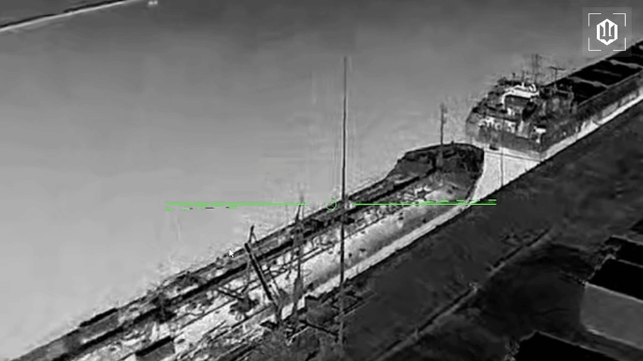
A Ukrainian drone closes in on a product tanker at Taganrog (USF)

Published May 31, 2026 8:25 PM by The Maritime Executive


On Friday night, Ukraine's drone forces launched another large-scale attack on targets in Russian-occupied Crimea, damaging a tanker and two petroleum terminals. 

Unmanned Systems Force (USF) Commander Robert "Madyar" Brovdi reported that airborne drones from his division hit 23 different targets around the region. In Taganrog, a small port at the northeastern end of the Sea of Azov, a drone struck and damaged a product tanker, causing a substantial fire on board. At about the same time, USF drones hit a petroleum product depot (the Kurgannefteprodukt site) in Taganrog, along with a large fuel tank farm inside of the seaport complex. 

Separately, at the small port of Feodosia in southeast Crimea, Ukrainian drones hit and damaged a terminal used for Russian military fuel transfers. Video footage released by Madyar shows multiple successive strikes, with little sign of resistance from Russian air defenses, which have been thinned out over the course of the past year. 

All of these fuel-infrastructure strikes can be viewed within the context of a broader Ukrainian "middle strike" effort to dismantle Russian military logistics on the corridor between Crimea and mainland Russia. Ukraine's new midsize drones are within reach of the M14 highway from the Russian border to Melitopol, and they have been pounding Russian fuel and ammunition trucks day and night. The strikes do not discriminate between civilian and military fuel shipments, and gasoline shortages and rationing measures have been reported at civilian gas stations across Crimea.