Sunday, May 31, 2026


The magnet wars and how China still holds the keys to electric mobility

The magnet wars and how China still holds the keys to electric mobility
/ Michael Förtsch - UnsplashFacebook
By IntelliNews June 1, 2026

The global transition to electric mobility has run directly into a geopolitical choke point. While western carmakers rush to roll out new electric models, their production lines remain tethered to an extraction and refining network dominated by a single superpower, making the clean energy transition an arena of intense resource nationalism.

China still controls 90% of the global supply chain for the permanent magnets powering electric vehicles (EVs) produced by Tesla, Ford and General Motors, Autonocion reports. To help counter this, the US Department of War headed by Pete Hegseth signed a $96mn deal with Australian mining company Lynas Rare Earths to secure rare-earth oxides outside Chinese borders, the company announced from Sydney on March 16. The agreement establishes a coordinated allied price floor of $110 per kilogram for neodymium-praseodymium (NdPr) oxide to insulate non-Chinese processors from predatory state-backed pricing tactics used by Beijing.

This supply network makes up a significant geopolitical bottleneck for much of Western industrial EV and other sector strategy. The deal builds on previous efforts to establish a non-Chinese critical mineral pipeline for Western defense and automotive sectors. To this end, Washington executed a similar contract with California-based MP Materials on July 4, 2025, taking a 15% preferred equity stake via a $400mn investment, extending a $150mn loan and locking in an identical $110 per kilogram NdPr oxide price floor for 10 years.

The $110 minimum benchmark is now a Transpacific allied standard. Japan Australia Rare Earths, the procurement vehicle for Japanese industrial buyers, signed an updated contract with Lynas on March 16. The deal guarantees a minimum of 5,000 tonnes of annual NdPr oxide deliveries through 2038 at the same $110 level.

A typical motor under the hood of a 2026 Mustang Mach-E or Tesla Model Y carries one to three kilograms of neodymium-praseodymium-iron-boron permanent magnet. Preventing demagnetisation under hard acceleration requires 50 to 200 grams of heavy rare earths, specifically dysprosium and terbium. Yet no commercial-scale isolation of these materials happens inside US borders.

The Western pipeline

Physical chemical processing instead occurs at the Lynas Advanced Materials Plant in Gebeng, Malaysia, according to Autonocion. The 100-hectare facility houses three integrated processing areas: cracking and leaching, solvent extraction and product finishing. Samarium oxide production began at the plant in March, making Lynas the only commercial-scale producer of separated heavy rare earths outside China - and one much more culturally in tune with Beijing than Washington. The company reported quarterly revenue of AUD265mn ($190.4mn) for the period ending March 31, more than doubling its prior-year performance, with total rare-earth oxide production hitting 3,233 tonnes.

However, the Malaysian processing hub faces intense local and diplomatic friction. A coalition of 57 Malaysian civil society organisations sent an open letter to Prime Minister Anwar Ibrahim on April 13, opposing the deal because it directly links Malaysian soil to foreign military supply chains. The plant has generated low-level radioactive thorium-bearing residue since 2012, totalling 451,564 tonnes by 2018, according to the Malaysian Ministry of Environment, Science, Technology and Climate Change. The issue will be raised in the Malaysian Parliament in June, reported member of parliament Wong Chen.

Concurrently, Western carmakers face severe commercial pressure that pushes them toward cheaper Chinese components, Pulse Korea reports. Global trade disputes and supply chain risks drove component costs higher, forcing volume producers to review their sourcing. Hyundai Motor Group purchased KRW84 trillion ($55.4bn) worth of parts for its global production facilities last year, up 45% from 2021, while domestic plant purchases rose 31% to KRW42.8 trillion.

Chinese automotive components are routinely estimated to be over 30% cheaper than South Korean or Western equivalents due to automated manufacturing and massive economies of scale, according to Pulse Korea. To remain price-competitive, Hyundai installs battery packs from Contemporary Amperex Technology Co., Limited (CATL) in the Kona EV, while Kia uses CATL batteries in its Ray EV, Niro EV, EV5 and PV5 models.

This reliance persists despite regulatory blockades. The US Department of War designated CATL as a "Chinese military company" on January 7, 2025. This triggered Foreign Entity of Concern regulations, disqualifying any vehicle using battery components processed by enterprises with 25% or more Chinese state control from receiving federal clean energy subsidies. Consequently, CATL pivoted to asset-light technical licensing agreements, such as its intellectual property partnership with Ford in Michigan, while redirecting direct capital expenditures toward Europe and Southeast Asia, according to Fitch Ratings.

Commercial gravity VS geopolitical barriers

Where trade barriers are lower, Chinese-made vehicles dominate mass-market segments, Pulse Korea adds.

Tesla sold 25,409 units of its Model Y in South Korea between January and April, with most units manufactured at its Shanghai factory, according to data from the Korea Automobile Importers & Distributors Association. This single Chinese-built model outsold Kia’s EV5 at 10,192 units, the Hyundai Ioniq 5 at 7,625 units and even Hyundai’s bestselling Grandeur petrol sedan at 23,145 units.

The result is clear - competing effectively without Chinese suppliers is becoming impossible for traditional carmakers. Chinese automakers benefit from lower labour costs and integrated supply chains, allowing them to manufacture vehicles at costs roughly 30% to 40% below global competitors, said Kia Chief Executive Song Ho-sung, Pulse Korea reports.

The non-Chinese EV mineral map therefore remains a fragmented network of four incomplete nodes: the Mt Weld mine in Australia, the contested refinery in Malaysia, the Mountain Pass facility in California and a planned joint venture refining facility in Saudi Arabia with the Saudi Arabian Mining Company. The Pentagon's $96mn intervention moved the Malaysian node forward, but alternative supply chains are not yet operating at the scale required to break Beijing's market dominance, Nikkei Asia, indicates.


Morocco Is Emerging as a Renewable Energy Superpower

  • Morocco has expanded renewable energy capacity to roughly 5.5 GW and aims for renewables to account for 52% of its electricity mix by 2030.

  • Strong solar resources, supportive regulations, and foreign investment are driving major new solar and wind projects across the country.

  • The government is investing heavily in green hydrogen production and port infrastructure to become a leading supplier of low-carbon fuels for industry and shipping.

Morocco is rapidly becoming a renewable energy powerhouse thanks to its favourable weather conditions and proximity to Europe. The North African country has rapidly developed its solar energy sector and is now looking to become a major green hydrogen and sustainable shipping hub.

Morocco has long been heavily dependent on fossil fuel imports and continues to use coal to produce around 60 percent of its electricity. However, in recent years, it has been working to develop its renewable energy sources, with high levels of private investment in the sector supporting these efforts. The growth in the country’s green energy capacity is expected to help it tackle energy price volatility. The Moroccan government aims to achieve a 52 percent renewable energy share in the electricity mix by 2030 and 70 percent by 2050.

By the end of 2025, Morocco had an estimated 5.5 GW of operational renewable energy capacity, accounting for 45.4 percent of Morocco’s total installed capacity. This includes 2.1 GW of hydropower, 2.4 GW of wind power, and 961 MW of solar installations. In previous decades, Morocco has focused on expanding its wind power; however, with significant interest in the country’s solar sector, its solar power capacity is expected to rapidly increase in the coming years.

Morocco is highly suited to solar power installations, with one of the highest solar insolation rates in the world, at over 3,000 hours of sunshine per year. The North African country’s solar technology imports have risen by around 46 percent in the first quarter of 2026, demonstrating the growing interest in developing the sector.

The Moroccan Agency for Sustainable Energy (MASEN) has authorised approximately 66 renewable energy projects with a combined capacity of 6 GW since 2021. MASEN and the national utility ONEE are now jointly planning to add around 4.4 GW of renewable capacity by 2030, including 2.5 GW of new solar installations and 1.9 GW of new wind capacity. This will be achieved with support from private investors. Law 13-09, enacted in 2009, opened Morocco’s market to private developers, allowing them to develop renewable plants and sell electricity directly to consumers via the national grid.

Saudi Arabia's renewables developer ACWA Power has been awarded the Noor Midelt II and Noor Midelt III solar projects, each with a 400 MW capacity and a 602 MWh battery capacity. France’s EDF, Masdar, and Green of Africa were selected to construct the first stage – an 800-MW complex incorporating both PV and concentrated solar power (CSP) technologies.

In May, the Chinese Jinko Solar company announced plans to develop a 90 MW power plant project in Morocco. It will use Tiger Neo 3.0 modules that are designed for hot, extreme summer heat regions. The modules have advanced resistance to dust and sand, making them suitable for deployment in the country’s desert regions.

Morocco has attracted high levels of private investment in its solar sector, largely thanks to its proximity to Europe, as several countries aim to import clean solar power from the North African country, which is better suited to solar energy production. Several European powers are now looking to diversify their energy mixes more rapidly, as they have reduced reliance on Russian energy following Moscow’s invasion of Ukraine in 2022, and due to ongoing geopolitical issues affecting energy trade.

In addition to expanding its solar and wind power capacity, Morocco is aiming to become a global leader in green shipping. Global shipping contributes roughly 3 percent of total human-caused greenhouse gas emissions annually, a figure that is expected to rise as international trade continues to increase unless more is done to decarbonise the sector.

One of the most promising methods to reduce shipping emissions is the replacement of traditional shipping fuels with green hydrogen. Several factors make Morocco attractive to green hydrogen developers, including its advantageous geographic position, abundant renewable energy resources, and cost-effective hydrogen production potential.

In 2025, a Moroccan government committee approved green hydrogen projects valued at $32.5 billion to produce ammonia, steel, and industrial fuel. The government hopes green hydrogen – produced by splitting water through electrolysis, using renewable energy – will help it meet its domestic energy goals as well as boost exports to the European Union.

The Moroccan government’s strategic framework for developing the green hydrogen sector focuses closely on improving the country’s port infrastructure. One World Bank study analyses four key ports – Tanger Med, Mohammedia, Jorf Lasfar, and a port in the vicinity of Tan-Tan – that could all be vital to the success of Morocco’s green hydrogen ambitions. At present, Tanger Med, one of the world’s largest container ports, handles around 1.5 million tonnes of fossil-based bunker fuel every year. By shifting to green hydrogen, the port could provide a blueprint for other major ports to support more sustainable shipping practices.

By Felicity Bradstock for Oilprice.com


Cuba Bets on Solar Power as Energy Crisis Deepens

  • Cuba is facing a worsening energy crisis marked by chronic blackouts, fuel shortages, and aging energy infrastructure.

  • The government is encouraging private-sector participation in energy and other strategic industries while expanding renewable energy capacity.

  • Chinese-backed solar projects are central to Cuba’s plan to reduce fuel imports and increase renewable generation over the coming decades.

Cuba has been experiencing a worsening energy crisis for several years, which previously led it to rely heavily on Venezuela for its fuel. Following the United States’ intervention in Venezuela in February, the energy crisis has grown even worse, as Cubans face regular blackouts and the economy suffers.

Cuba requires about 100,000 barrels a day to power its grid and meet the regular transportation demands. It fulfils just 40 percent of this demand domestically. In January, the Trump administration imposed a fuel blockade on Cuba, which led to severe power outages and fuel shortages, exacerbating the energy crisis that had previously emerged due to years of underinvestment in Cuba’s energy infrastructure. This has had a knock-on effect on the country’s economy, as businesses face regular blackouts and the high cost of fuel prevents many from operating.

Cuba could previously meet its minimum energy demand by importing fuel from Venezuela. However, after the U.S. invaded Venezuela in February, it stopped all energy imports from Caracas to Havana. When Mexico quickly stepped in to fill the gap, Trump threatened any power that provided Cuba with fuel with high trade tariffs. President Trump signed an executive order that threatens tariffs on third parties looking to sell oil to Havana, and introduced U.S. measures to penalise companies that want to invest in Cuba.

In recent months, the Cuban government has introduced new regulations aimed at providing private sector actors with more opportunities, thereby loosening its long-standing policy of state centralism. In particular, the state is encouraging the private sector to invest in energy diversification, providing greater tax exemptions for the import of solar panels by any type of business.

The biggest shift to date took place in March, when the government introduced a new law for mixed limited liability companies, allowing private capital to merge with state companies for the first time. This is expected to spur greater private investment in industries historically controlled by the government, such as sugar and precious mineral mining.

In May, Cuba’s President Miguel Díaz-Canel said in a social media post that U.S. sanctions on the Caribbean island were “immoral, illegal, and criminal” after the U.S. imposed stricter sanctions on 11 Cuban officials and its main intelligence agency. Díaz-Canel said that Cuba would “continue to denounce, in the firmest and most energetic way possible, the genocidal siege that seeks to strangle our people.”

Earlier this month, CIA director John Ratcliffe visited Cuba. The message from the trip was that the United States had reiterated its offer of assistance to Cuba in exchange for “fundamental changes” to its communist political regime.

Trump has previously suggested that there may be a “friendly takeover” of Cuba and stated that Washington may set its sights on Cuba after the Iran war. Trump has also said that he thinks he will have the “honour” of “taking Cuba.” The U.S. President said this month that he intends to hold talks with Cuban officials, without offering more details.

In spite of repeated threats on trade by President Trump, the governments of Mexico and Uruguay sent humanitarian aid to Cuba in May, including food, medical supplies, and critical materials. Meanwhile, in the face of growing energy insecurity, the Cuban government is striving to achieve greater energy diversification to boost energy security and reduce its dependence on foreign powers for fuel. 

Foreign Minister Bruno Rodríguez recently wrote on the X social media site, “Cuba is moving on with its energy transition program to achieve greater sovereignty in this sector, under the leadership of our Party and Government. It has been estimated that this year, the renewable energy coverage will increase to 15 percent and by the year 2030, this figure will rise to 24 percent. By the year 2035, renewable energies are estimated to cover 40 percent of the demand, which will make it possible to eliminate the import of fuels. According to this program, by the year 2050, renewable energies will cover 100 percent of the demand.”

Cuba is accelerating its green transition by developing new projects with China, which is a powerhouse in renewable energy. The two powers have established a deal to install 92 solar parks by 2028, bringing almost 2 GW of power online. This could provide enough electricity to power over 10 percent of Cuba’s households and reduce Havana’s reliance on fuel imports. 

Cuba’s solar panel imports rose from a value of around $3 million in 2023 to $117 million in 2025, in a bid to meet the country’s energy demand as its fossil fuel infrastructure continues to fall into disrepair. Increasing Cuba’s solar energy capacity could help make the island nation more self-sustainable, which would reduce the impact of U.S. sanctions and oil price volatility on Havana. However, in the current state of crisis, it remains uncertain whether Cuba can endure the U.S. blockade long enough to achieve this aim. 

By Felicity Bradstock for Oilprice.com

Sanctioned Russian Tanker Carrying Diesel to Cuba Diverts to the South

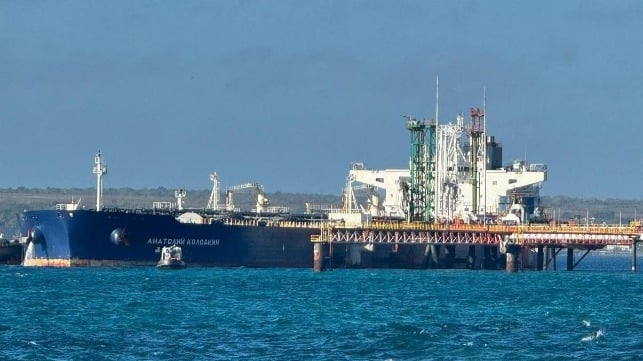
Russian tanker docked in Cuba
Anatoly Kolodkin docked in Cuba offloading at the beginning of April (Russian Embassy in Havana)

Published May 28, 2026 3:02 PM by The Maritime Executive


A sanctioned Russian-flag tanker that is loaded with a cargo of diesel appeared to divert south, possibly heading to South America after lingering in the Atlantic for a month. The product tanker Universal (50,923 dwt) was thought to be carrying a second relief shipment from Russia to the struggling island of Cuba.

Russian officials had said in March that they planned to send emergency shipments of fuel to Cuba as a sign of solidarity. “Russia does not intend to seek permission from other countries to supply its oil,” said Dmitry Birichevsky, MFA Director of the Department for Economic Cooperation.

The first shipment arrived on March 31 aboard the tanker Anatoly Kolodkin, after reports that Donald Trump said he was not concerned about the shipment. The tanker supplied 730,000 barrels of crude, but recently, Cuban officials admitted it had been quickly used and is now depleted. Russian officials had said a second shipment was close behind.

The tanker Universal, which is under sanctions from the U.S., UK, and EU, departed a Baltic terminal loaded with approximately 250,000 barrels of diesel fuel in early April. It was escorted through the English Channel by the frigate Admiral Grigorovich and then began the Atlantic crossing, apparently bound for Cuba. Its AIS signal, however, has said “for orders.”

Since mid-April, the vessel had been mysteriously holding in the middle of the Atlantic. It was approximately 1,000 miles from Cuba, and it was not attempted to proceed. Tracking services spotted that the tanker got back underway yesterday, May 27. It is making over 10 knots but turned to the southeast, sailing away from Cuba.

There was a similar situation earlier in the year when the Chinese-owned product tanker Sea Horse also appeared to be bound for Cuba carrying Russian fuel. The vessel stopped in the Atlantic while tensions were high with the United States actively turning away other tankers headed for Cuba. The Sea Horse, held in the Atlantic and appearing unready to challenge the U.S., ultimately turned south, heading to Trinidad and Venezuela. 

While the U.S. may be continuing to challenge fuel shipments to the island, other relief ships are proceeding. A cargo ship arrived from Mexico carrying donated humanitarian aid, and last weekend, a Chinese general cargo ship arrived with a shipment of rice. 

On May 1, the Trump administration issued an executive order targeting the assets of any foreign entity that assists the Cuban government. After that, two of the largest shippers, CMA CGM and Hapag-Lloyd, said that they were suspending bookings to Cuba. They cited the compliance risks of continuing to engage in Cuban trade.


The Race to Build the World’s Largest Solar Farms Is Accelerating


  • China’s Talatan Solar Park, with 16.9 GW of capacity, demonstrates how large-scale solar development can benefit from high-altitude desert environments.

  • California is planning a 21 GW solar project that would rely on large battery storage systems and new transmission infrastructure to deliver power to major population centers.

  • India’s Khavda Renewable Energy Park is targeting 30 GW of combined solar and wind capacity, making it one of the world’s most ambitious renewable energy developments.

Over the last two decades, solar panels have fallen in price while efficiency has increased. Greater uptake and high levels of investment in research and development have led to vast improvements in solar power technology. As panel prices fall and governments worldwide look to diversify their energy mix and cut emissions, several developers are now launching mega-projects to meet the growing demand.

Most major solar projects developed in recent years provide hundreds of megawatts of clean power. However, as operators become more ambitious and governments worldwide open up more land for development, we are seeing the rise of the giga-scale solar park. This was first seen in China, which has developed several gigawatt-scale projects. However, the United States and other countries are quickly developing their own giant solar projects. 

To develop gigawatt-scale solar projects, operators must have access to vast quantities of land, a large, skilled workforce, and invest in the necessary transmission infrastructure. The heavy land use suggests that we may see more large-scale solar development in remote areas on non-arable land, such as deserts and regions plagued by drought.

In China, the largest group of solar farms is the 16.9 GW Talatan Solar Park. The park covers 162 square miles in Gonghe County, an alpine desert in sparsely inhabited Qinghai, in western China. The unique thing about Talatan is that it is situated extremely high up, using higher altitudes for solar than any other country. 

Electricity from solar and wind power in the desert, situated in the northern third of the Tibetan Plateau, costs around 40 percent less than coal-fired power. While the high altitude makes it perfect for solar panels to operate, the cold mountain air improves efficiency. China is further expanding the solar park, aiming to add vast quantities of clean energy to the region by installing solar panels alongside wind turbines and hydroelectric dams.

While China is racing ahead in terms of gigawatt-scale solar farm deployment, the United States is also developing several ambitious solar projects. In California, Golden State Clean Energy is developing a 21 GW solar farm, enough to power an entire city. The project is being built across 200 square miles of land. Huge batteries will help make the energy supply more reliable, storing energy to feed to the grid during the night.

While many farmers and politicians have raised concerns over such vast land use for solar projects in recent years, farms in this particular area are facing more severe droughts each year, meaning that they do not have enough water to grow so many crops. This has led many to seek alternative uses for their land. 

Patrick Mealoy, a partner at Golden State Clean Energy, explained that the company is looking to develop a large-scale solar project, as to make the case to construct new multibillion-dollar power lines to carry electricity from the San Joaquin Valley to Los Angeles and Silicon Valley, the firm needs to develop a large enough solar capacity to make it worthwhile. “To actually have solar be productive, you need size and scale, a mass of projects that support the necessary investment in high voltage transmission lines to collect the electrons and move them,” said Mealoy. 

However, Golden State Clean Energy still needs to get California’s electrical grid to approve the development of the necessary transmission infrastructure to commence construction on the project. As the project is so vast, Golden State will also require other companies to develop parts of the solar park, which could take around a decade to complete. “The state needs it. It’s permitted. It’s the right place for it. I’m excited about this,” stressed Mealoy.

Meanwhile, in India, the Khavda Renewable Energy Park is expected to provide 30 GW of combined solar and wind capacity once complete, with utility-scale batteries installed to provide power day and night. The park is being developed over 200 square miles of land in the Rann of Kutch, a seasonally flooded salt flat in Gujarat, in western India. The region is known for its strong winds and abundant sunshine. Construction on the project commenced in 2023, and the first 551 MW of clean power came online in February 2024.

The project is being developed by billionaire Gautam Adani, who grew his wealth building ports, airports, and coal plants, and has since turned his hand to manufacturing and installing solar cells and panels. Power from Khavda is sent to customers in Mumbai and surrounding areas using an Adani-owned transmission corridor. Generation from the park currently stands at around 13 GW. 

Several countries are now developing gigawatt-scale solar power projects as governments look to diversify their energy mix, and the price of solar panels continues to fall while efficiency increases. Some of the ambitious new projects in China, the United States, and India signal the trend that’s to come. 

By Felicity Bradstock for Oilprice.com


America’s LNG Boom Is Real — But China Is Planning Beyond It

  • The Iran war and Hormuz disruption have turbocharged U.S. LNG exports, giving Washington a major short-term energy dominance boost as Asia and Europe scramble for alternative supply.

  • China, however, enters the crisis from a position of greater energy resilience after years of investment in domestic production.

  • The U.S. still has a major long-term opportunity, but sustaining dominance will require turning crisis-driven demand into lasting partnerships

The Iran war has handed the United States a rare opportunity: a new dawn of energy dominance in an increasingly fractured world. With coordinated US-Israeli strikes disrupting the Strait of Hormuz from late February, roughly 20% of global LNG supply has been stripped from the market since early March. Prices have surged across Asia and Europe. And into that vacuum, American gas has flowed.

The numbers speak for themselves. US LNG exports to Asia jumped sharply in April, with nearly a quarter of all American cargoes heading to a region that simply cannot afford to go dark. Deals are being signed, pipelines planned, and $100 billion in private investment is pouring into liquefaction plants and terminals, putting the US on a trajectory toward 220 MTPA of export capacity within five years. The administration's energy dominance agenda, backed by promises to streamline permitting, has given producers a powerful political tailwind and reassured global buyers seeking reliability. Washington's case for American LNG has never been easier to make.

But dominance built on a crisis is not the same as dominance built on trust. And there is a competitor watching this moment very carefully.

China entered this crisis in a structurally different position. Two decades of sustained investment in domestic energy production, spanning generation, storage, and distribution, have left Beijing considerably less exposed to the supply shocks rattling Western and Asian markets alike. Its economy has not been immune, but it has been buffered. That resilience has not gone unnoticed by governments scrambling to explain surging energy bills to their populations. While the US capitalises on the immediate demand surge, China is quietly accumulating something more durable: the perception of strategic foresight.

Yet beneath the boom lies a fault line. The conflict has been a short-term windfall for American producers; cash is flowing and the geopolitical case for US LNG writes itself. But the longer the crisis persists, the more urgently governments around the world will prioritise the same fundamental objective: never being held hostage to a single chokepoint again. The Hormuz disruption has concentrated minds in a way that years of energy dialogues have never quite managed. Countries across Asia and Europe are now accelerating plans to diversify supply sources, build strategic reserves, and develop domestic generation capacity across every available technology. The goal is insulation from the kind of shock this war has delivered, and that shift in priorities will outlast the conflict itself, because the memory of this vulnerability will not fade quickly.

This does not mean the window for American gas has closed. The transition to more resilient, independent energy systems will take decades, and reliable LNG from a powerful economy is precisely what energy-hungry Asian economies need throughout that journey. The US has the reserves, the infrastructure, the financial markets, and the geopolitical credibility that no other supplier can currently match. But Washington cannot afford to mistake a crisis-driven demand surge for a permanent structural advantage, because what buyers are ultimately building toward is a system in which no single disruption, whether in the Strait of Hormuz or anywhere else, can send their economies into shock again. The US needs to be architected into that system as an indispensable partner, not treated as an emergency option.

That requires more than competitive pricing and export capacity. It requires the kind of long-term supply relationships, infrastructure partnerships, and government-to-government commitments that turn a transaction into a dependency, the good kind, built on reliability rather than vulnerability. It requires Washington to show up as a strategic partner invested in the energy security of its buyers. And it requires the Iran conflict to reach a resolution that restores stability to global flows, because sustained disruption ultimately accelerates the very diversification strategies that could reduce the world's reliance on any single fuel source.

That is why forums like Gastech matter far beyond the conference floor. At Gastech 2025 in Milan, a high-profile US delegation led by Secretary of Energy Chris Wright and Secretary of the Interior Doug Burgum used the event to demonstrate Washington’s commitment to the global market and deepen long-term partnerships with European buyers. This September, the same strategic imperative shifts to Asia, as Gastech convenes ministers, industry CEOs, and technology leaders in Bangkok around the urgent supply security and resilience priorities now defining the global energy agenda. Bangkok demands the same level of engagement, but with even greater stakes. Positioned at the heart of the world’s fastest-growing demand region, it is where the contracts signed today will shape the architecture of energy relationships for the next decade. It is where the US can arrive not only as the world’s largest LNG exporter, but as the partner that helped Asia build the resilient, diversified, and secure energy systems its economies need, with American technology, American capital, and American gas at the centre of that architecture.

The use of energy as a diplomatic instrument, as a foundation for alliances and a signal of long-term intent, has already demonstrated its capacity to stabilise relationships and strengthen the position of reliable partners. But leverage only holds if buyers believe the relationship will endure beyond the current emergency. And that is ultimately what is being decided right now: whether the world organises its energy future around American reliability, or looks elsewhere for the security guarantees it needs.

American energy dominance is real, and the Iran war has made that case powerfully. But dominance has to be earned continuously, through the infrastructure being built, the contracts being signed, and the diplomatic relationships being deepened, conference room by conference room, deal by deal. The window is open. What matters now is how Washington chooses to use it.

By Cyril Widderhoven for Oilprice.com


China mine collapse kills five, days after deadly Shanxi blast

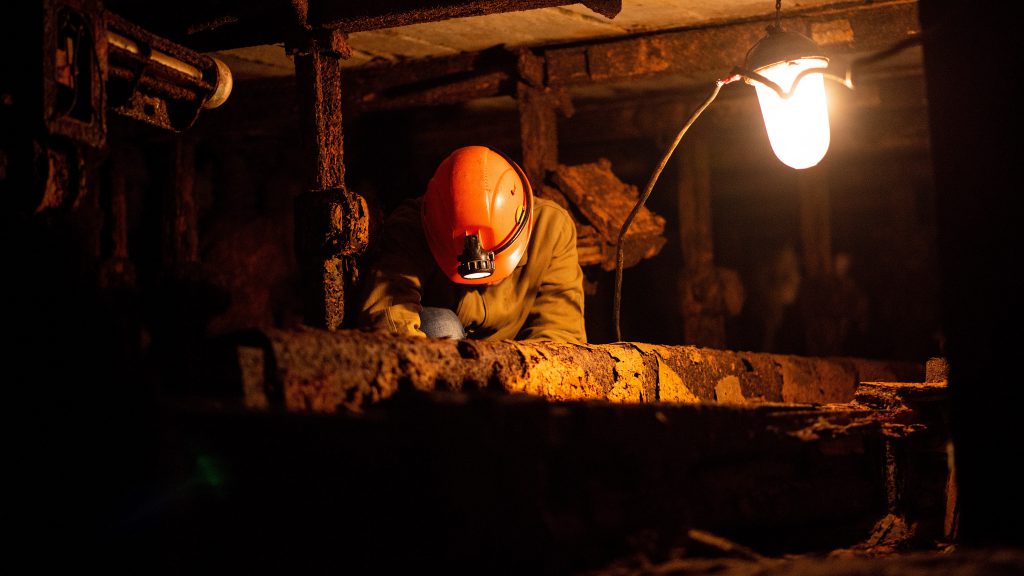
Stock image.

Five workers died after a collapse at a mine in southwestern China, underscoring persistent safety issues and increased scrutiny following a gas blast at a coal mine in Shanxi earlier this month that killed at least 82 people.

An illegal excavation site collapsed in Huize County, Yunnan province, at about 4:30 a.m. local time on Sunday, trapping six workers, Xinhua News Agency reported, citing local authorities. Rescue teams retrieved the victims from the site and rushed them to hospital, but five later died from their injuries. The condition of the survivor is stable. Investigations are ongoing as officials assess accountability, Xinhua said.


The latest incident comes after the deadly May 22 gas explosion in Shanxi that also injured more than 120 people and marked China’s deadliest mining disaster in over a decade.


The latest collapse also follows a national safety meeting chaired by Premier Li Qiang on Saturday.

Li warned that frequent accidents in some regions and sectors have caused heavy losses, urging officials to step up inspections, crack down on violations and falsification, and tighten oversight in high-risk industries including mining, fireworks, transport and construction.

Yunnan is a major coal-producing province in southwestern China, with significant lignite reserves.


Zijin’s $4B acquisition of Allied Gold faces delay in China: FT


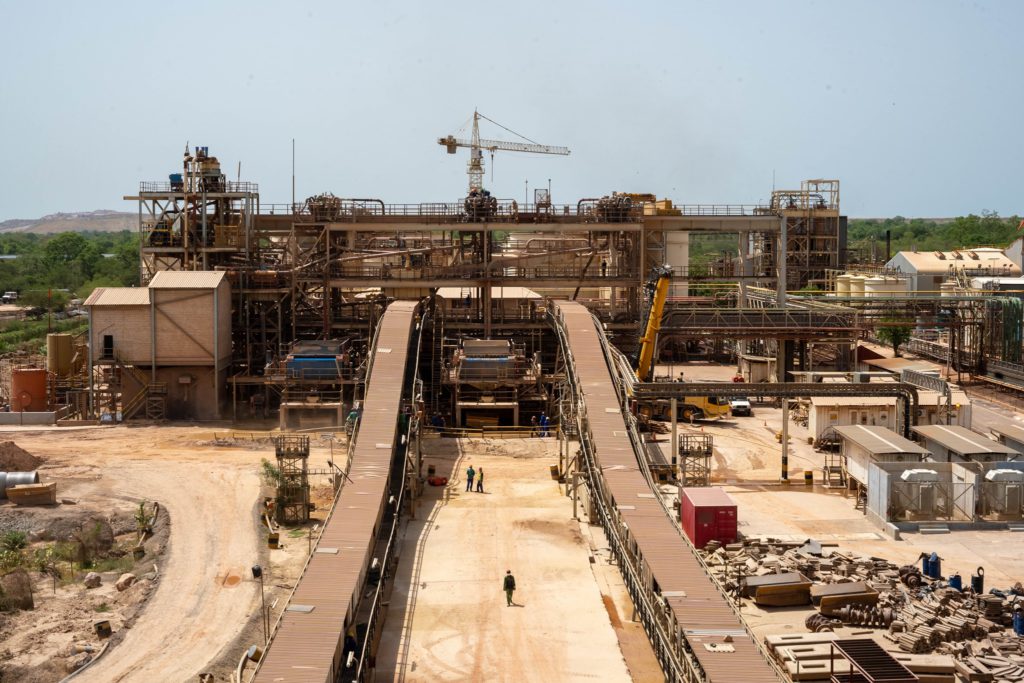
Sadiola mine in Mali. Credit: SEMOS SA via Facebook

The proposed $4 billion acquisition of Allied Gold (TSX, NYSE: AAUC) by China’s Zijin Gold is said to be facing delays due to internal concerns over valuation and risks, the Financial Times said on Friday.

According to the FT report, Chinese regulators are having doubts over the transaction, namely the premium that Zijin is paying and jurisdiction risks associated with Allied’s assets, leading to a delay in approving the deal.

In December, Zijin Gold, fresh off a strong listing debut in Hong Kong after spinning out of Zijin Mining Group, made its first big move with the proposed C$5.5 billion (approximately $4 billion) cash offer for Allied.

The deal, if completed, would add three producing/near-production assets to Zijin’s portfolio: the Sadiola mine in Mali, a large mining complex in Côte d’Ivoire and the Kurmuk project in Ethiopia. The first two produced nearly 380,000 oz. of gold in 2025, exceeding Allied’s expectations, while the Kurmuk mine is set to produce its first gold this year.

Chinese concerns

Despite Allied’s shareholders approving the transaction in April, those at China’s National Development and Reform Commission are unsure of the valuation, the FT sources said, given the approximate 5% premium that Zijin would pay. The Commission is also said to be concerned about the mining risks in Mali, which accounts for about half of Allied’s gold output.

As of Friday, Allied Gold traded at a market capitalization of C$4.4 billion in Toronto. The stock fell about 6.5% after news of the delay.

“There is strong industrial and commercial logic for this transaction, and both parties continue to work diligently towards closing,” an Allied spokesperson told FT.

To accommodate the delay, the outside date of completion has been extended by a further two months to the end of July, the gold miner said in a press release on Friday, while announcing approvals by both Canadian and African regulators of the deal.

These regulatory approvals and clearances represent important milestones as the parties continue to advance the transaction to completion, it said.