Wednesday, June 17, 2026


Philippine Passenger Vessel Grounds Off Palawan

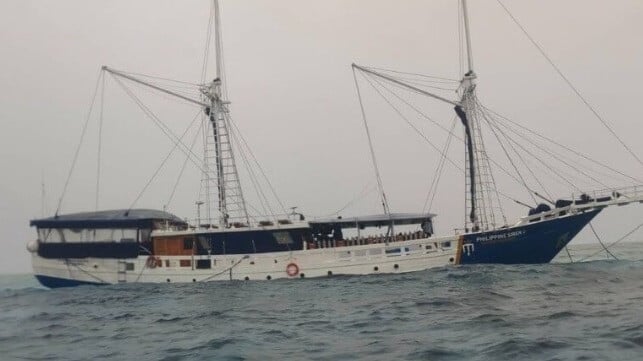
Philippine Siren 2 aground (PCG)

Published Jun 15, 2026 4:05 PM by The Maritime Executive

A Philippine passenger vessel has gone aground off the coast of Palawan, prompting a response from the Philippine Coast guard. 

On Sunday, the charter yacht Philippine Siren 2 grounded at Tubbataha Reefs Natural Park, off the coast of Palawan. 28 people were on board and had been under way since the 10th on a dive excursion. 

The vessel was moored on a buoy at a position about seven nautical miles off the reef on Sunday morning. At about 0500 hours, a squall picked up and pushed the vessel aground. 

No signs of pollution have been observed, and all passengers and crew are safe, PCG spokesperson Commodore Noemie Cayabyab said in a statement. 

10 crewmembers remain aboard the yacht to monitor the situation, and the response vessel BRP Cape EngaƱo has been dispatched to provide support and environmental protection services. 

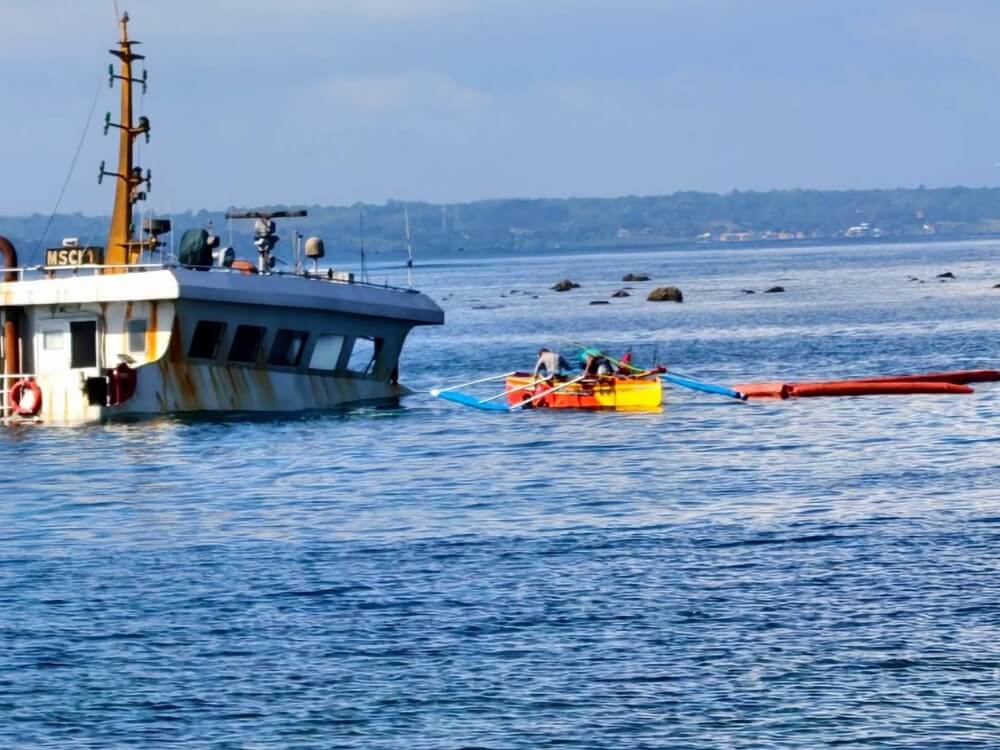
Meanwhile, off the coast of Luzon, the stricken ro/ro landing vessel MSCI 1 has fully sunk, the PCG said Sunday. After a comprehensive survey, the agency determined that the vessel's wreck poses no pollution risk, and no further sheening has been observed. Continuous inspections are ongoing and preparations for a refloat attempt and salvage are under way. 


MSCI 1 aground off Luzon (Courtesy PCG)


Criminal Charges Revealed for Chief Engineer of Containership Dali

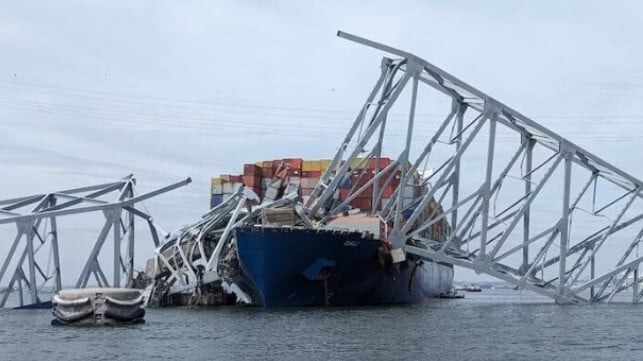
Dali and wreckage of Francis Scott Key Bridge
Chief Engineer of the Dali is being prosecuted for failing to report dangerous conditions on the ship when it arrived in Baltimore (USACE photo)

Published Jun 16, 2026 1:05 PM by The Maritime Executive

U.S. attorneys revealed in a court filing on Monday afternoon in Maryland that criminal charges have been brought against the chief engineer of the containership Dali, making him the first officer from the ship to face charges. The charges, however, only stem from a failure to notify the U.S. Coast Guard about dangerous conditions aboard the vessel, and the federal attorneys revealed they have also entered into a deferred prosecution agreement.

Karthikeyan Deenadayalan, reported by the media to be age 46, had been serving as chief engineer aboard the Dali since January 2024. The filing reveals a single count of violating the Port & Waterways Safety Act passed by the U.S. Congress in 1972 that requires immediate notification to the U.S. Coast Guard “whenever there is a hazardous condition, either aboard a vessel or caused by the vessel or its operation.”

It is alleged that the chief engineer “knowingly and willfully failed” to notify the USCG about conditions aboard the Dali when it arrived in Baltimore. It cites the fact that redundant supply and booster pumps for generators 3 and 4 were not being used and that a non-redundant flushing pump was being used in their place. The indictment charges that the first blackout on the Dali on March 26, 2024, was likely caused by a loose wire and that the second blackout, which was the cause of the fatal allision with the Francis Scott Key Bridge, occurred because the Dali relied on a non-redundant flushing pump to supply fuel to two of the ship’s four generators. This mirrors the assertions the U.S. is making in the criminal indictment revealed in May against the operators, Synergy Marine and one of its technical superintendents.

A hearing was scheduled for Tuesday, June 16, to review a deferred prosecution agreement that has been reached with the chief engineer. The U.S. did not detail the conditions of the agreement, but it is speculated that the chief engineer agreed to plead guilty and that it is possibly contingent on his testimony in the criminal case against the operator of the vessel.

The chief engineer is one of several senior officers and crewmembers who have remained in the United States since the incident that destroyed the Key Bridge in Baltimore in March 2024. Each of the individuals, however, invoked their rights against self-incrimination during the discovery phase of the civil trial. The hearing in Deenadayalan’s criminal case has been assigned to Judge James Bredar, a senior judge in the court who is also presiding over the civil trial.

U.S. attorneys in separate filings are proposing an October 2027 trial date in the criminal case against Synergy Marine and its technical supervisor. They also said that they are asking the court to issue trial subpoenas for several witnesses. Under federal law, the witnesses can be compelled to testify.

It is the latest step in the entailed legal filings against Grace Ocean as the vessel’s owner and Synergy Marine. In a separate filing also with Judge Bredar, the two companies made a claim to dismiss the remaining civil claims. About a dozen claims remain in the civil case, including the City and County of Baltimore, which claims economic loss for the destruction of the bridge, longshoremen who claim a loss of income while the port was closed and recovered, and various local businesses that claim economic loss of business. 

The companies have settled the claims from the six families of the roadworkers who were killed, and with the survivors from the road crew. They have also settled with Maryland for the loss of the bridge and the federal government for the costs of the salvage and recovery efforts. More than 30 of the 50 claims, including cargo claims, were settled, while a few claims were also dismissed.

The companies are citing a 1927 U.S. Supreme Court ruling saying the remaining claims are not valid. The Supreme Court ruled in a suit against Robins Dry Dock & Repair Company that claimants had to have a proprietary interest in the property that was damaged or destroyed to seek recoveries. The charterer of a vessel that was damaged during a drydocking had sued Robins but was denied its claim as it did not have a proprietary interest in the damaged vessel. 

Lawyers are arguing that the remaining claimants had no proprietary interest in the Key Bridge. Baltimore is arguing that it was the “intended beneficiary” of the bridge since it was built and as such entitled to recoveries for its economic losses.

Separately, in a U.S. District Court in Pennsylvania, another case has been filed by Grace Ocean against HD Hyundai as the builders of the containership. The companies are claiming manufacturing defects, while the shipyard highlights that the ship had been in service for more than a decade and they had no role in its maintenance during that time. A hearing over jurisdiction is scheduled for July in this case.


The Most Dangerous Speed Is Not the Highest One

Kneubler
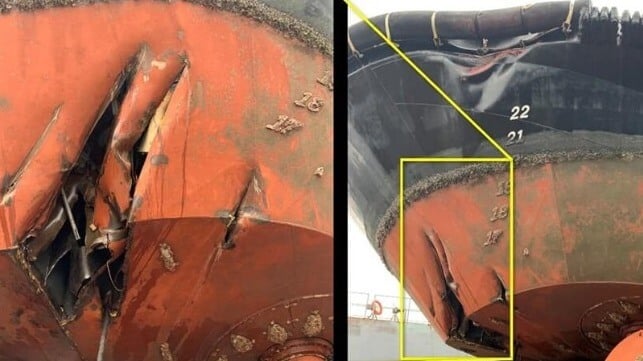
Habitual high speed during escort operations left the tug Mark E. Kneubler with insufficient margin for maneuvering, contributing to her collision with the VLCC Nisalah at Houston in 2023 (NTSB)

Published Jun 16, 2026 2:20 PM by Capt. Volodymyr Smirnov

Most marine discussions treat speed as a linear risk factor: Higher speed = Higher risk.

In reality, this is often incorrect. The most dangerous speed is not necessarily the highest one. It is the speed at which the system begins to behave differently.

The Illusion of “Manageable Speed”

There is a range of speed that feels operationally safe:

- Controllable

- Familiar

- Compatible with the schedule

- Not obviously excessive

This is where risk perception can become distorted, because “manageable” does not necessarily mean “stable”.

Threshold Behaviour in Navigation

Marine systems are rarely linear. At certain speeds, relatively small increases can produce disproportionately large operational consequences:

- Reduced reaction time

- Increased squat

- Longer stopping distances

- Stronger interaction effects

- Greater influence of wind and current during maneuvering

Consider a laden tanker approaching a shallow-water channel. At one speed, a minor heading deviation may be corrected routinely. A few knots faster, the same deviation may require significantly greater intervention because available time, maneuvering margin, and stopping distance have already begun to shrink.

The speed difference may appear small, but the operational consequences may not.

Operational Speed vs Safe Speed

Operational speed is often influenced by schedule pressure; traffic flow; commercial expectations; and efficiency targets.

Safe speed is determined by available maneuvering margin; environmental conditions; vessel response characteristics; and the crew’s ability to recover from developing situations.

These two speeds are not always the same.

The Critical Misjudgement

The most dangerous moment is rarely when speed is obviously excessive. It is when speed remains acceptable by routine standards but has already pushed the operation beyond a critical threshold.

At that point, confidence often remains unchanged while recovery margins begin to disappear. The vessel continues to obey the laws of physics - what changes is the crew’s ability to recover from small deviations before they escalate.

Risk Begins Before It Looks Like Risk

The most dangerous speed is not the highest one. It is the speed at which available safety margins begin to shrink faster than the crew realizes.

By the time risk becomes visible, the threshold may already have been crossed.

Volodymyr Smirnov is a Master Mariner with over 25 years of experience on large ocean-going vessels, including more than 18 years in command with senior operational accountability. His professional focus includes operational risk management, bridge team decision-making, and confined-water navigation strategy.

The opinions expressed herein are the author's and not necessarily those of The Maritime Executive.
 

UK Court Holds Captain of Shadow Fleet Tanker for Trial

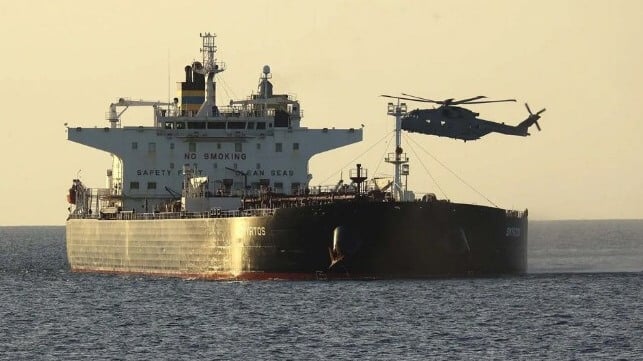
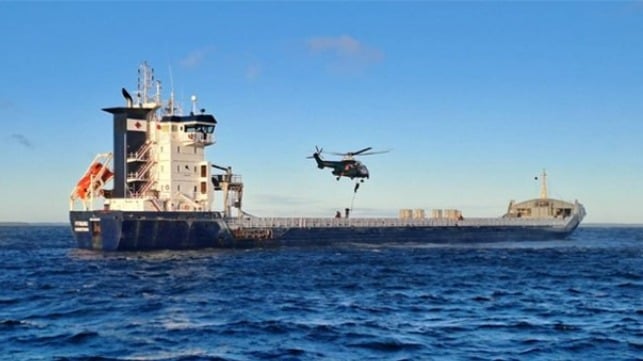
Royal Navy boards tanker
Captain of the Smyrtos is being held on charges of violating UK sanctions (Royal Navy)

Published Jun 16, 2026 4:02 PM by The Maritime Executive

A UK court on Tuesday, June 16, ordered the captain of the sanctioned tanker Smyrtos held for trial on charges of sanctions violations. It came after the master was arrested late on Sunday, hours after UK troops boarded the tanker as it was westward bound through the English Channel.

The captain, Ajay Pant, age 38 and an Indian citizen, is being held by the Bournemouth police and appeared via video at the hearing in the Southampton Magistrates Court on Tuesday. He confirmed his name, age, and residence, but there was no indication of a plea. Lawyers speaking on his defense said he was simply an employee following corporate orders. They told the court he had no choice in where the vessel went or the cargo it was carrying.

The Crown Prosecution Service had said it was bringing charges of sanction violations against the captain after he was arrested by Britain’s National Crime Agency. He was officially charged with directly or indirectly supplying or delivering by ship prohibited oil / oil products from Russia to a third country in contravention of UK sanctions. Prosecutors said he faced a substantial sentence of up to 10 years in prison if found guilty.

They reported the vessel has approximately 98,000 tonnes of oil aboard, and according to its AIS signal, it had loaded at Ust-Luga, Russia, and was heading to the Suez Canal. Prosecutors highlighted that the vessel was sailing without a legitimate flag.

British commandos boarded the tanker around midnight on Saturday in an operation that included HMS Sutherland and HMS Ledbury as well as Royal Marine helicopters. The operation lasted for about six hours and ended with the warships directing the tanker into an anchorage off Portsmouth. UK Transport Secretary Heidi Alexander said on Monday an order had been issued to formally prevent the tanker from leaving the UK. The crew of 24, from India and Georgia, is being held on the vessel.

The tanker, which was built in 2009, was under legitimate operations with George Economou’s TMS Group and sold in February 2025. Speaking to the Financial Times, the company said it had acted within all applicable sanction regimes when the ship was sold.

Data shows it was apparently sold to what appeared to be a front company based in the Seychelles. It was later resold to a Chinese company based in Hong Kong. It first claimed a flag in Gambia and later in Cameroon. Since May 2026, the flag has been listed as unknown. The EU sanctioned the vessel in July 2025, and the UK followed suit in October 2025.

After today’s brief hearing, the court ordered Pant remanded in custody. He is next scheduled to appear at the Bournemouth Crown Court on July 16. 

The UK follows France, Sweden, and Finland, which have also attempted to prosecute the captains of shadow fleet tankers. France sentenced one captain in absentia, and the others were released with fines. Sweden released the captains, saying it was difficult to prove they were aware they were presenting false papers, while a Finnish court released three individuals charged with damaging subsea cables, saying the incident happened outside Finland’s area of responsibility. Sweden continues to hold another captain on charges of presenting false information, and Finland yesterday said it was prosecuting a captain and a bosun for damage done to two subsea telecom cables.


Trump Predicts Restoration of U.S. Sanctions on Russian Oil "Soon"

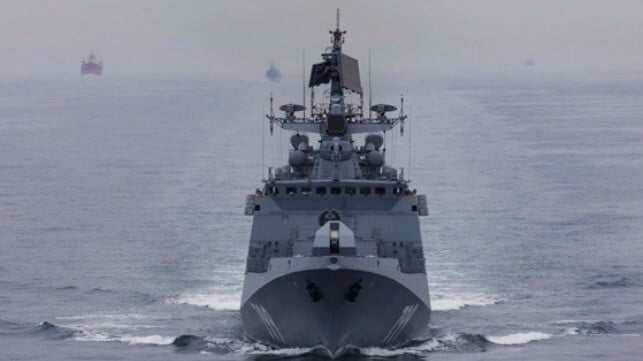
Makarov

Published Jun 16, 2026 5:14 PM by The Maritime Executive

At this week's G7 summit in Evian, France, President Donald Trump suggested that the U.S. might reimpose sanctions on Russian oil ahead of schedule, given progress in resolving the Strait of Hormuz crisis. 

At the height of the Iranian blockade of the strait, the White House lifted sanctions on Iranian and Russian oil already loaded and afloat, hoping to ease global supply concerns by augmenting available volumes (outside of the Chinese market). The waiver on Russian sanctions was extended in May, despite Ukraine's protests. Russia's oil revenues have soared in tandem with rising global prices, increasing Russian defense funding by billions of dollars and easing pressure on the Kremlin's strained federal budget.

"We took sanctions off because obviously we're not looking to impede the oil. But we're in a position to do that soon," Trump told Politico, hinting at the prospect of more abundant oil supplies via Hormuz in the near future. Separately, he told DPA that "Russia should make a deal," noting the high casualty rates on the battlefield in Ukraine. 

Renewed U.S. pressure on Russian exports would help augment European and British sanctions. Both the UK and the EU doubled down on their respective sanctions regimes targeting Russia this week, taking aim at officials, businesses and individual ships. The EU added 34 people and 47 companies to its list, notably insurers and brokers who had helped smooth the flow of seaborne Russian crude shipments. Two figures in Russian shipping were named: Tahir Garayev, founder of notorious shadow fleet vessel operator Coral Energy; and Konstantin Rogach, a partner at the firm Maritime Risk Management, which arranged alternate insurance coverage for Russia-linked shadow fleet tankers after the major EU insurers backed out of the market. 

Garayev (an Azeri national) started up Coral Energy in 2010 and later renamed it 2Rivers Group, a well-known name in sanctions enforcement. His firm has cultivated a close relationship with Russian oil giant Rosneft, according to the Washington Post and Wall Street Journal. The EU believes that Dubai-based 2Rivers "controls and utilizes a large proportion of the vessels in Russia's so-called 'shadow fleet,'" which is owned and managed in no small part within 2Rivers' own backyard in the UAE.

Meanwhile, the UK sanctioned more than 20 tankers and LNG carriers linked to the Russian shadow fleet, including - for the first time - ships tied to the sanctioned Arctic LNG 2 project. The additions augment the list of 600 vessels that Britain has sanctioned previously. 

"As the Kremlin resorts to ever more shady tactics to sustain its war, from its ageing shadow fleet to covert finance networks, the UK remains one step ahead in shutting them down," said UK foreign secretary Yvette Cooper. "These sanctions strike at the heart of these murky efforts, to starve Putin’s war machine and defend Britain’s security."


CMA CGM and Capital Clean Energy Carriers Form JV for LNG Bunker Vessel

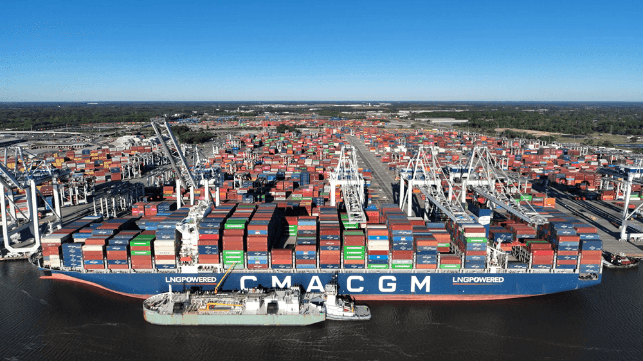
containership with bunker vessel alongside
JV for LNG bunkering will support the growth of CMA CGM's LNG dual-fuel fleet (CMA CGM)

Published Jun 16, 2026 5:57 PM by The Maritime Executive

Continuing efforts to expand the development of LNG bunkering capabilities, CMA CGM and Capital Clean Energy Carriers reported they are forming a new 50-50 joint venture for LNG bunkering. It marks a first for Capital Clean Energy and will help CMA CGM as it continues to expand its fleet of LNG-fueled vessels.

The new company was formed for the purpose of constructing, chartering, and operating a 20,000 cbm dual-fuel LNG bunkering vessel. In connection with the transaction, the JV company has also entered into a shipbuilding contract with Nantong CIMC Sinopacific Offshore & Engineering Co. for the construction of the LNG bunker vessel. The contract is at a price of $82.8 million, with delivery expected in the third quarter of 2028.

According to the companies, the vessel will incorporate the latest technologies and is designed to enable safe and reliable LNG transfers across a wide range of operating conditions. It will be equipped with advanced emissions reduction systems, combined with highly efficient dual-fuel power generation, designed to help the vessel meet applicable environmental standards of the global shipping industry.

The Joint Venture is also expected to enter into a 12-year time charter with a joint venture company formed between CMA CGM and TotalEnergies, commencing upon delivery of the vessel from the shipyard.

“This joint venture marks CCEC’s entry into LNG bunkering — a natural extension of our gas platform from carriage into marine fuel supply,” said Jerry Kalogiratos, CEO of Capital Clean Energy Carriers. “Working alongside counterparties of the caliber of CMA CGM and TotalEnergies, we can help build the infrastructure that allows LNG to deliver a cleaner emissions profile, alongside security and diversity of supply, while opening a new, long-term contracted revenue stream for the company through the Joint Venture.”

Capital Clean Energy Carriers Corp. today focuses on gas carriage solutions with a focus on energy transition after having spun off its crude oil operations. Its fleet includes 13 LNG/Cs, one dual-fuel medium gas carrier, and two handy LCO?/multi-gas carriers. In addition, it has additional LNG carriers under construction and has ordered multi-gas carriers able to transport ammonia.

CMA CGM was a pioneer in large dual-fuel LNG container vessels. The company reports it now has over 60 LNG, or e-methane-ready liquefied natural gas (LNG) and biomethane dual-fuel vessels. Its goal is to double the number of vessels by 2028 capable of running on low-carbon alternative fuels.


Rotterdam Demonstration Marks Milestone in Autonomous Inland Shipping

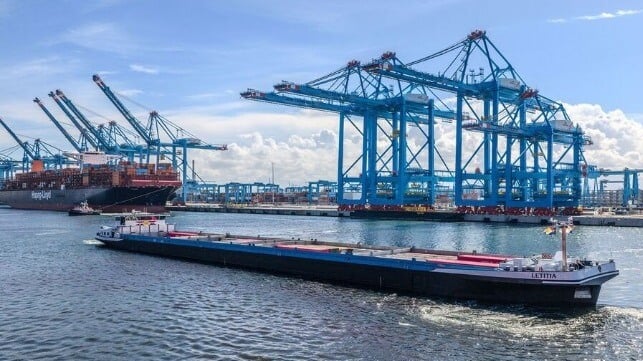
autonomous inland container barge sailing Port of Rotterdam
Letitia demonstrated autonomous shipping through the busy Port of Rotterdam (Rotterdam)

Published Jun 16, 2026 5:20 PM by The Maritime Executive

A new milestone was marked in the ongoing development of autonomous shipping with an inland container vessel successfully navigating through the Port of Rotterdam. It was part of an European innovation project aimed at accelerating the transition to climate-neutral ports.

The Letitia, a 135-meter (443-foot) container vessel built in 2024, was selected for the demonstration project. Flagged in the Netherlands and operated by the HTS Group, it is typical of the critical fleet of inland vessels that regularly move containers and cargo from Rotterdam and other key European seaports inland to the hinterlands. The vessel carries up to 610 TEU.

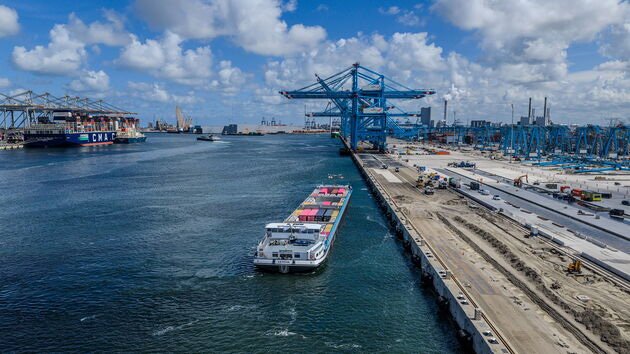
During the demonstration, the Letitia sailed from Amaliahaven on the Maasvlakte via Europoort and the Nieuwe Waterweg to Waalhaven in Rotterdam, navigating safely among regular maritime traffic. Port officials said it showed how an inland vessel can sail independently from one terminal to another in a busy port.

The vessel was able to perform maneuvers such as undocking, sailing through the port and along the river, as well as docking independently. At the same time, the system continuously monitored its surroundings, detecting other vessels and safely avoiding them where necessary, taking the environment into account. 


The vessel docked and undocked as well as maneuvered through the busy shipping traffic (Port of Rotterdam)


“Autonomous sailing enables new logistics concepts that improve the flexibility, efficiency, and reliability of inland shipping, which is an important hinterland transport modality for the Port of Rotterdam,” said Oscar van Veen, Director of Innovation at the Port of Rotterdam Authority. “Containers, bulk, and liquids transported via inland waterway reduce pressure on the road network and are moved more energy-efficiently than by road. With the growth in freight throughput, it is essential that inland shipping maintains and expands its share of freight transport. Autonomous sailing could play a role in this.”

The demonstration was part of the European MAGPIE project (sMArt Green Ports as Integrated Efficient multimodal hubs), which aims at accelerating the transition to climate-neutral ports. Coordinated by the Port of Rotterdam and co-funded by the European Union, MAGPIE brings together 45 partners to develop, test and scale innovations in clean energy, digitalization, and sustainable logistics. Autonomous shipping is one of the ten demonstration projects within MAGPIE.

Project partners Alphatron Marine, Argonics, and Argonav report that they will integrate elements of the demonstration into their assistance products for inland vessels. argoPositionPilot is now available for vessels with a fixed propeller and rudder, while argoRadarPilot can display intentions and will feature collision detection. The skipper remains ultimately responsible and can intervene at any moment, while the system provides support for the navigation and decision-making.


Ships Report Trading Shots with Pirates, Including a 30-Minute Firefight

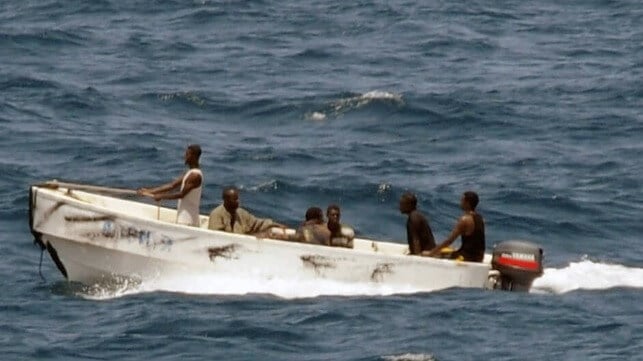
small boat with pirates
Shots were reported fired in three incidents with small boats off Somalia and Yemen in the past two days (USN file photo)

Published Jun 15, 2026 12:13 PM by The Maritime Executive

The incidents of commercial shipping being approached by pirates between Somalia and Yemen are continuing and appearing to get more brazen, with multiple reports of shots fired. One cargo ship said its security guards returned fire for approximately 30 minutes on Sunday with two small boats.

The Maritime Security Center Indian Ocean (MSCIO), which was established by the European Union Naval Force (EUNAVFOR) Atalanta, reported two new incidents on Monday and another on Sunday while repeating its cautions to vessels operating in the area.  It is “strongly advised to maintain heightened vigilance” in the region, MSCIO wrote in its alert.

A container vessel sailing approximately 14 nautical miles off the coast of Yemen, between Aden and Ahar, reported today that it was approached by a small skiff. It said the boat opened fire and was attempting to board the container vessel.

Maritime security firm Vanguard Tech is reporting the vessel as the Egyptian-owned Greta Star (22,968 dwt). The ship, which has a capacity of 1,730 TEU and is registered in Panama, is showing on its AIS that it was sailing between Oman and Djibouti. Vanguard reports it as “heavy firearms,” but that the ship was able to increase speed and prevent the boarding.

Several hours later, UK Maritime Trade Operations received information from the master of a tanker that it too had been approached today, June 15. The vessel was 111 nautical miles southeast of Aden, Yemen. A small skiff with four people approached and reportedly opened fire with an RPG.

On Sunday, June 14, an unidentified cargo ship said it was approached by two small boats, each with six people aboard. It was sailing along the northern coast of Yemen, south of the Horn of Africa, and near Xaafunn. The small boats reportedly hailed the cargo ship, ordering it to stop. The small boats opened fire, and the security team returned fire for approximately 30 minutes before the boats turned away.

These recent incidents followed another last Wednesday, June 10, when a small boat with six armed individuals approached a cargo vessel also in the Gulf of Aden. The vessel was 88 nautical miles southwest of Balhaf, Yemen, and there was another exchange of gunfire. The small boat also turned away after the security team returned fire.

Atalanta has reported an increase in the number of incidents since April of this year. Three ships, including two small laden tankers, were reported boarded and taken to positions of the coast of Yemen. The EU initiative is working with the local authorities and investigating the rash of incidents in the region. 


U.S. Forces Rescue Indian Crewmembers From Life Raft in Indian Ocean

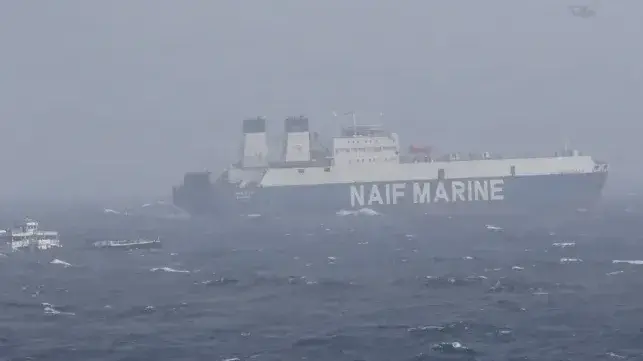
Naif Marine
Courtesy U.S. Central Command

Published Jun 14, 2026 3:06 PM by The Maritime Executive

[Brief] 

On Sunday, the U.S. Navy and a good Samaritan vessel rescued 14 Indian mariners from a life raft in the Indian Ocean. 

The mariners became stranded and in distress aboard an unnamed vessel in rough weather, and they put out a distress call at about 1000 hours local time. A U.S. Navy P-8 patrol aircraft responded to the scene and dropped a SAR kit, including a liferaft. The mariners boarded the raft to await rescue. 

Shortly after, the ro/ro freighter Jabal Ali 9 arrived at the scene. Destroyer USS Michael Murphy also responded to the call. Jabal Ali 9's crew proceeded to retrieve 11 crewmembers from the raft.  

Unfortunately, the raft capsized in rough seas, putting the remaining three crewmembers in danger. An MH-60 Sea Hawk rescued them from the water and delivered them safely to the Jabal Ali 9 in good condition. 


Finland Prosecutes Captain and Bosun in Anchor Dragging Incident

Finnish troops board cargo ship
Finland stopped the Fitburg in December 2025 and has now charged the captain and bosun for subsea cable damage (Finnish Coast Guard)

Published Jun 15, 2026 3:09 PM by The Maritime Executive


Finnish prosecutors filed charges against the captain and bosun of a small cargo ship that they reported damaged two subsea telecom cables on December 31 and that they believe were attempting to damage additional cables when the ship was stopped. A decision on possible charges against two other officers from the cargo ship, who are also detained in Finland, will be made at a later date, prosecutors said.

The captain, who is a Russian citizen, and the bosun, who is an Azerbaijani citizen, were each charged with “aggravated criminal mischief” and aggravated interference with telecommunications. Prosecutors said the charges also include alternate indictments, with the newspaper reports saying the offenses carry prison sentences ranging between two and ten years.

The charges stem from an incident on December 31, 2025, when Finnish telecom company Elisa reported a fault on one of its cables running between Estonia and Finland. Later, Swedish telecom company Arelion also reported an interruption on another cable running between Estonia and Finland. 

The Finnish Coast Guard launched an investigation and initially identified three ships, but within a matter of hours had centered on the Fitburg, a 9,900 dwt cargo ship owned by a Turkish businessman with links to Russia. The ship had departed Saint Petersburg the prior day, and was spotted by the Coast Guard moving from the Estonian to Finnish EEZ with its anchor down.

The Coast Guard ordered the ship to stop and to raise its anchor. Finnish troops boarded the ship for an inspection and directed it into a Finnish anchorage. Multiple investigations were launched, including possible sanctions violations. The ship was released after about two weeks, but the master and three others were detained in Finland. The bosun was initially held in pre-trial detention but was released in March.

Prosecutors report the anchor was dragged for 130 kilometers (more than 80 miles), and they assert the ship was attempting to damage up to eight other subsea connections. In addition to the damage to the telecom lines, prosecutors said electricity and gas networks were in danger.

The two individuals have denied committing the offenses. Their lawyers are also questioning Finland’s jurisdiction in the case as the cables were outside Finnish territorial waters. Prosecutors said that would be an issue for the court to decide.

In 2025, Finnish prosecutors failed in their efforts to convict three crewmembers from the shadow tanker Eagle S on similar charges. The court ruled Finland did not have jurisdiction because of the location of the damage, but the prosecutors have appealed that ruling. 

Fitburg, a general cargo ship, is 132 meters (433 feet) in length and has been owned and operated by a Turkish company since 2021. The ship is registered in St. Vincent and the Grenadines, and there were 14 crewmembers aboard when the incident happened. Finnish Customs seized the cargo on structural steel, reporting that they believed it was a violation of EU sanctions, but since the ship had not intended to stop in Finland, it was released on a technicality.