Thursday, July 02, 2026


Conditions Deteriorating for Hijacked Seafarers as Somalia Piracy Continues

bulker aided by Indian Navy frigate
Indian Navy released the crew of one bulker which had secured itself in a citadel (Indian Navy)

Published Jul 2, 2026 2:03 PM by The Maritime Executive


The IMO released a statement highlighting the deteriorating conditions for three crews stuck in Somalia after their vessels were seized by pirates while calling for more action from the international community. It came as the Indian Navy responded to a new distress call and was able to release a crew sheltering from pirates in their vessel’s citadel.

The current chair of the Djibouti Code of Conduct/Jeddah Amendment, a regional initiative implemented by the International Maritime Organization, reports deteriorating humanitarian conditions for the crew of the MT Honour 25, which was seized on April 24, as well as for the crews of the Sward and Eureka, which were also seized around the same time.

According to the statement released by the IMO, the captain of the Honour 25 says the crew is caught between two factions in Somalia. The rival group recently tried to storm the ship, and there was an exchange of gunfire between the two groups.

Five of the 17 crewmembers, including the captain, of the Honour 25 are now suffering from health problems. The captain reports that the food supplies have been reduced to rice, and the available water is unsafe for drinking. 

As a result, the Chair of the IMO initiative, Metse Ralephenya of South Africa, is calling for “urgent, coordinated and decisive international intervention to secure the immediate, safe, and unconditional release of the crews.”

His statement came as Egypt’s Foreign Ministry reported it was increasing its diplomatic efforts to gain the release of its nationals aboard the Eureka. The report said the pirates, however, had changed their demands.

Another crew was able to avoid abduction, however, as the Indian Navy’s frigate Trikand reached the bulker Golden Arsenal, which had been boarded on Wednesday, July 1. The crew of 21 had been able to retreat to the citadel aboard the 28,221-dwt bulker, which was sailing between Yemen and Somalia.

The bulker registered in St. Vincent and the Grenadines had sailed from Aden, Yemen, and was reporting that it was heading to Tuticorin, India. It was approximately 300 nautical miles east-northeast of Djibouti when it was overtaken by a skiff with four heavily armed individuals. Reports yesterday said the pirates had RPGs.

The pirates were able to board the vessel and damage the bridge and some of the surrounding compartments, but were unable to beach the citadel. The crew had issued a distress call and remained sheltered. The pirates appeared to have abandoned the ship, but the crew saw that the boarding ladders were still in place and decided to remain in the citadel until assistance could reach them.

Sailors from the Indian Navy boarded the Golden Arsenal and searched the vessel, confirming the pirates had fled. They released the crew from the citadel and assisted in restoring the vessel so that it could continue its voyage.

The Indian Navy also undertook aerial surveillance in the area. This came after reports that the pirate group had pursued another vessel on Monday, and the authorities warned the group was likely still looking for targets.


Pirates Board and Damage Vessel and Then Pursue Second Ship in Gulf of Aden
pirate attack Gulf of Aden
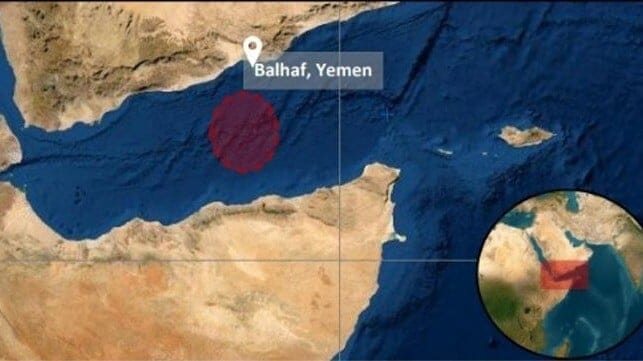
Two vessels were attacked in the same area between Yemen and Somalia (UKMTO)

Published Jul 1, 2026 12:52 PM by The Maritime Executive


A pirate action group was active in the Gulf of Aden on July 1, as the level of activity continues at an increased level in the area. UK Maritime Trade Operations and MSCIO are reporting the pirates were able to board one vessel but abandoned it when the crew locked into the citadel, but a short time later, the same group was pursuing a second vessel.

The first incident took place in a position approximately 76 nautical miles south of Balhaf, Yemen, and 110 nautical miles northeast of Bosaso, Somalia. An unnamed bulker reported it was being approached by a small boat with four people aboard. They were heavily armed, including the RPGs.

Being overtaken, the crew of the bulker stopped the vessel and proceeded to enter the citadel to issue a distress call. They were awaiting assistance.

The crew later left the citadel to inspect the ship, reporting the pirates had fled. While they could not find any of the pirates, they saw that the boarding ladders were still on the hull of their ship. As a precaution, they re-entered the citadel until assistance arrived. 

The reports indicated that four pirates had boarded the ship. The crew observed damage to the bridge and several compartments around the bridge.

Later, four people, also heavily armed, were observed in pursuit of a second merchant ship. MSCIO said it was likely the same group based on the timing and location. 

The second vessel reported that it was able to evade the pirates. The skiff discontinued the pursuit. The authorities, however, are warning that the group appears to be searching for additional targets.

Three other ships continue to be held by pirate groups in Somalia since late April and early May. Egypt’s Foreign Ministry has ordered an increased effort in an attempt to free Egyptian sailors being held on one of the vessels.


Egypt Intensifies Efforts to Free Crew of Hijacked Tanker
warship monitoring hijacked vessel
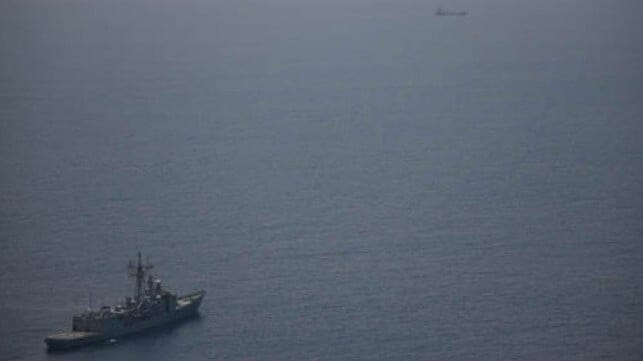
EU Navy forces have been monitoring the three hijacked vessels (EUNAVFOR Atalanta)

Published Jun 30, 2026 2:22 PM by The Maritime Executive


Egypt is intensifying efforts to free the crew of a tanker that has been held by pirates off Somalia since early May. The Foreign Ministry, in a new statement, emphasized the efforts while also working to support the families of the Egyptian sailors aboard the tanker.

The efforts come after the head of Egypt’s Maritime Officers Syndicate said last week talks had collapsed, according to The National news outlet in Egypt. It reports that the liaison to the International Transport Workers’ Federation said that the pirates demanded a higher ransom. He told the outlet that the issue was back to “square one.”

The incident started on May 2 while the tanker Eureka (3,353 dwt) was at anchorage off Qana Port, Shabwa, Yemen. Armed individuals reportedly boarded the vessel and took control. Later reports stated the vessel was underway toward Somalia, and at last report, it is anchored off the coast in the Puntland region.

The vessel, which is owned by interests in Yemen, was built in 2006 and registered in Togo. It has a crew of 22 aboard, including eight Egyptians.

The ministry reports it is coordinating efforts to ensure the welfare of the crewmembers. The embassy in Mogadishu made arrangements to enable the crew to communicate with their families.

The foreign minister has directed that they maintain daily monitoring while they work toward the release of the crew. At the same time, it has been communicating with the shipowner in Yemen and enlisted the aid of the Egyptian embassy in Riyadh, which is accredited in Yemen, to coordinate with the Yemeni authorities.

The hijacking of the Eureka was one of three incidents reported over a matter of days in late April and early May. EUNAVFOR Atalanta reports it is monitoring the situation and, as of last week, listed all three hijackings as ongoing.

Pirate activity increased dramatically this spring off the coast of Somalia and in the waters toward Yemen. Several ships reported being approached and getting into gun battles with the pirates, while others were able to outrun and maneuver to avoid boarding attempts.

Cargo Ship Grounds In Strait Of Hormuz As Iran Defends Shipping Controls

July 1, 2026 
Al Bawaba News
By Mansour Al-Maswari

(Albawaba) — A foreign container ship ran aground in the Strait of Hormuz after sailing through what Iranian authorities described as an unauthorized route, with Iranian state media portraying the incident as evidence of the need to follow Tehran-approved navigation channels.

Iranian state television reported that the vessel became stranded in shallow waters after deviating from routes designated by Iranian authorities, leaving it unable to continue its voyage. Officials did not immediately identify the ship, its flag, destination, or cargo.

The grounding comes amid heightened tensions over maritime navigation in the strategic waterway following recent U.S.-Iran hostilities and the fragile Islamabad Memorandum of Understanding.

Iran has repeatedly warned that it cannot guarantee the safety of vessels using routes outside those approved by its authorities and has insisted that commercial shipping coordinate transit through the Strait of Hormuz with Iranian officials.

The United States has backed alternative shipping routes intended to preserve freedom of navigation without requiring coordination with Iran. Iranian media claimed the grounded vessel had been using one of those alternative routes.

The incident is likely to add to security and insurance concerns for commercial shipping in the Strait of Hormuz, a vital global energy corridor through which about one-fifth of the world’s oil trade passes. It also comes as U.S. and Iranian negotiators continue technical talks in Doha on implementing a ceasefire framework and establishing long-term maritime security arrangements.

About Al Bawaba News
Al Bawaba provides top stories and breaking news about the Middle East and the world. The Al Bawaba network consists of several web portals and media platforms.
View all posts by Al Bawaba News →


Iran Exploits Containership Grounding to Assert Hormuz Control

containership aground near Hormuz
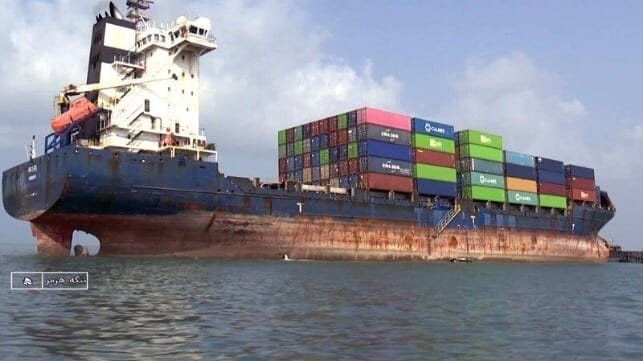
Image from Iranian state media of a containership it says is aground near Hormuz (Iribnews)

Published Jul 1, 2026 10:21 AM by The Maritime Executive


Iranian state media released a video and is reporting that a containership went aground because it was operating outside its designated shipping lane in the Strait of Hormuz. The IRGC, however, appears to be exploiting an incident involving a shadowy vessel that was operating on an Iranian coastal route.

The state media report only identified the vessel as “foreign” and said it had gone aground on July 1. It asserted the ship was “bypassing” the Strait of Hormuz outside the designated route when it went into the mud. 

“According to the IRGC Navy’s warning to the captains, owners, and officials of the world shipping companies, any entry and exit other than the path of authority in the Persian Gulf will cause irreparable events,” the report said. Iran has repeatedly asserted that it has the only route through the Strait and, in last week’s break with the ceasefire, launched drones at multiple ships sailing the route along the Omani coast. An Evergreen containership and a tanker were both struck before the ceasefire was restored.

The Iranian reports are not identifying the vessel, but one ship shows aground based on its AIS signal. The Arita (20,643 dwt), which was transmitting that it was traveling to Asseluysh, Iran. The vessel’s position is north of Hormuz Island and well north of the Iranian route near Lark Island. 


Equasis lists the vessel as having been sold in 2025 to unknown owners and sailing under a false Comoros flag. The ship is 168 meters (551 feet) in length. Its last registered inspection was at the beginning of 2026 in Novorossisk, Russia. The images show the vessel riding high in the water with containers loaded on deck.

Despite Iran’s claim about the Strait of Hormuz, Kpler tracked a total of 34 verified crossings on June 30. It reports they were fragmented across Iran’s route, the Omani/IMO route, or some transited dark. It says there was a broad mix of types of vessels making the transit.

The IMO paused its evacuation program last week after the Evergreen containership was struck, and there were new reports of Iran demanding guarantees. However, the United States continues to assert that the Strait of Hormuz is open and is also reporting progress in the latest round of talks with Iran.

More than 100,000 killed in Myanmar since 2021 coup, monitor says

Since a 2021 coup ousted Myanmar's democratically elected government and triggered a civil war, 100,114 people have been killed across the country, according to a report by monitoring group Armed Conflict Location & Event Data (ACLED) released Wednesday.


Issued on: 01/07/2026 
By: FRANCE 24

Mourners grieve as bodies are laid out at a cemetery after a Myanmar military strike at a hospital killed more than 30 people in western Rakhine state on December 11, 2025. © AFP file photo

More than 100,000 people have been killed across all sides in Myanmar since a military coup five years ago triggered civil war, a conflict monitor said Wednesday.

The military ousted the elected government of Aung San Suu Kyi in February 2021, detaining the Nobel Peace Prize laureate and ending Myanmar's decade-long experiment with democracy.

Anti-putsch protests were put down by security forces, but activists quit the cities to form pro-democracy guerrilla groups, fighting alongside ethnic minority armies which have long resisted central rule.

Since the coup there have been 100,114 conflict related fatalities, according to latest data from monitoring group Armed Conflict Location & Event Data (ACLED), which tallies media reports of violence.

There is no official toll and estimates vary widely, but analysts regard the half-decade civil war as Asia's deadliest active conflict.

"The pain is just endless," said 49-year-old Thein Aye Nu, whose husband was killed in an air strike in the western state of Rakhine last month.

"I am so deeply resentful and very angry. But I don't even know who to be angry at anymore. I just have to console myself by accepting it as fate."
Whole-country conflict

After the coup, Myanmar was ruled by diktat for five years by military chief Min Aung Hlaing.

He retired from the armed forces to take office as civilian president in April after deeply restricted elections blocked by rebels from their territory, and in which Suu Kyi's party was sidelined.

Democracy monitors dismissed the vote as a charade to rebrand Min Aung Hlaing's rule and rebels rejected his call for fresh peace talks as an insincere ploy to launder his image abroad.

"If there was no coup, children would be studying at schools," said one man in Myit Chay town in central Magway region, whose teenage son was recently killed.

His son died in combat after running away from home to fight for pro-democracy rebels, he said.

"We didn't even get a chance to properly chant Buddhist funeral rites. Heavy artillery was being fired," he said.

"He left so many memories – I am not satisfied to do have done so little for him."

More than 3.7 million people are internally displaced in Myanmar, according to the United Nations, and more one in five people face acute food insecurity amid a national backslide into poverty.

In the largest city, Yangon, violence can take the form of occasional assassinations.

Other places are riven by entrenched warfare or pounded by daily air strikes by the military's Russian- and Chinese-supplied jets.

Myanmar was the second most conflict-hit nation in the world last year, according to ACLED, behind only the Palestinian territories.

ACLED has registered more than 1,200 distinct armed groups in the civil war, calling it "the most fragmented conflict in the world".

"It's deadly, it's dangerous to civilians, the conflict has spread across the whole country," said ACLED senior analyst Sun Mon Thant.

The conflict dynamic has shifted at times in favour of both sides.

A combined offensive among some rebels starting late 2023 saw them win stunning advances, bearing down on the second largest city Mandalay – with speculation they may even capture the ancient royal capital.

But the tide has turned back in favour of the military, analysts say, after China threw support behind it and Beijing-backed truces were signed with two of the most powerful ethnic minority armies.


'Sent to die'

In February 2024, the military activated conscription legislation, aiming to bolster its ranks by forcibly recruiting 50,000 citizens.

"These conscripts can't do anything. It's like they are just being sent to die," said one former military conscript who deserted after serving on the front lines.

"If you don't die in one place, they send you to another," said the 20-year-old, anonymous for security reasons.

The war has also had far-reaching consequences abroad, filling camps in neighbouring Thailand and Bangladesh with an exodus of refugees, and creating fertile ground for transnational criminal enterprise.

Armed groups on all sides fill their war chests with profits from the booming production of drugs such as heroin and methamphetamine, monitors say.

Meanwhile Myanmar's loosely governed borderlands have become a hotbed for online scam centres often operating out of fortified compounds guarded by militants.

(FRANCE 24 with AFP)

SPACE/COSMOS

Rocket Lab to Buy Iridium for $8 Billion

Iridium
Press handout courtesy Iridium

Published Jun 30, 2026 11:00 PM by The Maritime Executive


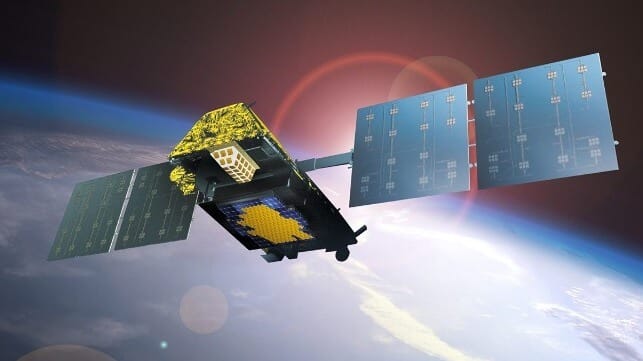
Iridium, the high-uptime LEO satcom operator, will soon be acquired by launch services company Rocket Lab, the two firms announced Monday. The $8 billion deal will create a vertically integrated rocket-plus-satcom company, comparable in structure to the core businesses of SpaceX/Starlink. 

Rocket Lab plans to pay each Iridium shareholder $27 per share in cash, plus new shares of Rocket Lab to bring the total near to about $54 per share. The deal should close in mid-2027, once shareholder approvals are received. 

"As the worlds of space and terrestrial communications continue to converge, more critical services will depend on space-based capabilities," said Iridium's CEO, Matt Desch. "Success will come from those who can bring new innovations to space quickly and sustain them over time as efficiently as possible."

Iridium is a well-established and well-known service provider for shipping, one of the company's core markets. It has been in operation since 1998, and is an authorized provider of GMDSS satellite emergency messaging. Its new network also supports resilient positioning, navigation and timing, performing functions comparable to GPS. Iridium's 66-strong constellation has full polar coverage, a virtue of the low earth orbit model, and its L-band network is less affected by weather than most broadband services. It has 2.5 million subscribers across aviation, maritime, commercial and government user bases. 

"By marrying Iridium's deep heritage, trusted infrastructure, and highly sought-after spectrum with Rocket Lab's extensive and proven launch and manufacturing capabilities, we have the capability to unlock entirely new markets," said Rocket Lab founder and CEO Peter Beck in a statement. 

The merged entity will look more like SpaceX's business, which combines orbital launch services (for other satellite operators) and its own broadband satcom fleet (launched into orbit on its own rockets). The two businesses are synergistic and have propelled SpaceX to a remarkable valuation, driving the largest single IPO of all time. 


NASA robot rescue mission sets sights on a space telescope plummeting to Earth

US space agency NASA is preparing to launch a robotic rescue mission to haul an ageing telescope into a higher orbit to save it from burning up as it falls back down to Earth. The next launch attempt is set for Wednesday after a previous liftoff was pushed back due to the weather.


Issued on: 30/06/2026 - 
By: FRANCE 24

Mission Control Centre at NASA’s Johnson Space Centre. © NASA

NASA is set to launch a daring robotic rescue mission to prevent one of its ageing telescopes from vanishing into dust.

If successful, the effort could pave the way for giving other satellites a second life.

The operation is set to last several months, kicking off with the launch of a robot designed to rescue the Swift space telescope that's currently falling towards Earth.

Without intervention, Swift is expected to soon burn up in the atmosphere.

The rescue spacecraft developed by the US startup Katalyst was slated to lift off Tuesday at 1023 GMT from a Pacific Ocean atoll aboard a small rocket named Pegasus.

But NASA postponed the launch, citing unfavourable weather conditions, and set the next launch attempt for "no earlier than Wednesday, July 1" at 0943 GMT.

The rocket-propelled launch vehicle will not take off from a launch pad. Instead, it will be released from a jet.

This photo provided by NASA shows Kieran Wilson, LINK's principal investigator, and Hunter Robertson, a space systems engineer, both at Katalyst Space, standing next to their spacecraft inside the SES (Space Environment Simulator) at NASA's Goddard Space Flight Center in Greenbelt, Maryland, April 17, 2026, ahead of thermal vacuum testing. © Sophia Roberts, NASA via AP

"Everything about this mission is so crazy," NASA astrophysicist Regina Caputo said with a laugh.

After it reaches an orbit near that of the telescope, the robot must locate Swift across the vastness of space.

The aim is then for the robot to maneuver around the telescope and latch on with three movable arms.

It will then vie to tow Swift into a stable orbit over the course of at least a month, rescuing it from destruction by moving it about 300 kilometres higher.

Only China has attempted a mission like the upcoming one, successfully boosting a satellite into a higher graveyard orbit four years ago.

"This is a lot of firsts stacked on top of each other," said Shawn Domagal-Goldman, the director of NASA's astrophysics division, during a recent call with reporters.

"I'm just deeply thankful that we're even giving this a go."

'Special' telescope

The idea of such a rescue might seem odd at first glance.

The Neil Gehrels Swift Observatory telescope was launched in 2004, and was originally designed for a two-year mission.

The device was intended to study gamma-ray bursts, what Caputo called "the most energetic things that happen in the universe".

She likened it to a supercharged version of a supernova, which is a dramatic, explosive death of a star.

Gamma-ray bursts are extremely brief, she explained, so the telescope was placed at an altitude of approximately 600 kilometres in low Earth orbit, so it could remain in constant communication with researchers.

But with that pro came a con – at such an altitude, the device without its own propulsion would eventually drift closer to Earth and burn up in the atmosphere.

Caputo said that phenomenon was expected and normal, because when the Sun is in its more active cyclical stages, it emits more particles and causes an expansion of Earth's atmosphere.

That creates drag, meaning satellites in low Earth orbit lose altitude.

Yet when forecasts in early 2025 indicated the telescope was nearing the end of its life, NASA began considering a possible rescue.

"We decided, yeah, we want to go save this one this time, because of how special it is," said Domagal-Goldman.
'50-50'

Despite its age, the Swift telescope remains in high demand within the scientific community, not least for its rapid response capabilities.

Should it burn up, it could not be immediately replaced.

The mission attempting unprecedented maneuvers has a projected cost of $30 million to save the device, which originally cost $250 million.

Cover image: © FRANCE 24
10:44


The rescue robot, named LINK, has its work cut out for it.

Engineers do not have a clear picture of what the back of the telescope actually looks like – even though that's where the robot must latch on.

With a laugh, Caputo projected the chances of success at "maybe 50-50".

Still, both NASA and the company Katalyst believe the mission – which could run into the fall – might pave the way for new possibilities in spacecraft management, and is worth a shot.

Robert Lamontagne, a vice president at Katalyst, said during a call with journalists that it could represent the "start of a new model" to "refuel, reposition, repurpose, repair, and even upgrade satellites, even if they were never prepared for it".


INTERVIEW

'An honour to be chosen': Italian astronaut on piloting Nasa lunar mission

Italian astronaut Luca Parmitano will be the first European to participate in Nasa's lunar programme, as part of the Artemis III mission in 2027. He spoke to RFI about the challenges of such a mission, and the risks.


Issued on: 27/06/2026 - RFI

Luca Parmitano speaks at the unveiling of the Artemis III mission at Nasa's Johnson Space Center in Houston, Texas, 9 June. REUTERS - Antranik Tavitian

Nasa's Artemis III mission follows the successful Artemis II flight completed in April – the farthest humans have travelled from the Earth.

The crew will undertake a series of challenging tests in Low Earth Orbit in 2027, in preparation for Artemis IV, the first planned crewed mission to the lunar South Pole, in 2028.

At the helm will be Italy's Luca Parmitano, heading up a four-member crew expected to remain in space for around two weeks.

Selected by the European Space Agency (ESA) as an astronaut in 2009, Parmitano has a master’s degree in experimental flight test engineering from the Institut Supérieur de l’Aéronautique et de l’Espace in Toulouse. He has logged more than 2,000 flight hours across 40 types of aircraft.


RFI: Nasa announced on 9 June that you will be part of the next Artemis mission in 2027 – the first European to participate in a mission of the American space agency's lunar programme. How does it feel to be selected for such an adventure?

Luca Parmitano: It's incredible. I'm truly honoured to have been chosen for this role and this pilot position. It was completely unexpected. I'm approaching this role with humility because I know it's a very complex mission. I have a lot to learn.

RFI: What do you think made Nasa choose you?

LP: I think they looked at the experience, the background, the rank of the test pilots, and I think they looked at my experience as an astronaut with two missions to the International Space Station, station controls, spacewalks... They looked at all of that. They also looked at the coordination between who was going to fly, with what experience. So I was there at the right time, where my experience had the characteristics they were looking for.

RFI: You've already spent more than a year in space with two missions aboard the International Space Station – as a European on an American mission. Would you say international space cooperation still exists?

LP: I think this is a very good sign of international collaboration. In fact, I think it's a statement that Nasa believes everything we have to offer – our experience, our technology, our science, but also our personnel – is valuable, something that Nasa needs. And that's why I think it's a really good sign for now and for the future, because the Artemis project is very large, and so there are still many European contributions to this major exploration programme [to come].

RFI: So you'll be the first European on this Artemis programme, but perhaps not the last?

LP: I'm sure I won't be the last. I'm the first for this mission. But afterwards, the goal is to broaden our contribution in order to have boots on the moon.

RFI: There will be four of you on the mission, and you will be testing two lunar modules. What sort of activities will you be doing?

LP: With our crew, we're going to create the procedures for the in-orbit connection between the Orion space shuttle and the Human Landing System, the shuttles that will take the astronauts to the lunar surface until that point. We don't have anything like this yet. This procedure doesn't exist. We have to develop it. Our mission is to do it twice.

You might think it's simple because we're not going to the Moon, but in fact that's why it's much more complex, because the spacecraft is a Deep Space Shuttle. It was designed to work in space around the Moon, so working with it around Earth is much more difficult. And on top of that, we'll be working with two shuttles that have never flown. So it's really an experimental, testing mission, and that's why I'm so busy as a test pilot.

RFI: Do you think about the risks when you embark on this kind of mission?

LP: It's clear there will be risks. That's why we're going to do them in an environment we can control more easily. Because if there are major problems, we can quickly get back on the field. But risks are a bit like the salt of life. If there's no salt, life has no flavour. If there's too much, you can't enjoy it. You need the right level of risk to appreciate life.

RFI: During your first trip to the ISS, you had a problem during a spacewalk that could have been fatal when water got into your helmet and you nearly drowned...

LP: It was an experience that showed us that space flight is never what you expect. There will always be situations we haven't experienced. And you have to be prepared for them. [But] even when you're not prepared, it's clear that the training you receive is enough to give you the ability to cope, even when you don't have a procedure to follow.

RFI: The Artemis mission is at the end of 2027, almost a year and a half away. What will you be doing between now and then?

LP: We've started with training on the Orion shuttle. It's a shuttle that I don't know at all. I need to know it like my own car, or even better, within a few months, because the team will be working with this shuttle, along with other shuttles we don't know at all. So the Orion system needs to become my area of ​​expertise, something I know very well, including the procedures and systems. So I have a lot of work to do.

This interview has been adapted from the original version in French by Arnaud Pontus and lightly edited for clarity.
‘Beyond The Limit’: One Million Satellites And Mirrors In Space Pose Grave Threat To The Night Sky


This image shows satellites crossing the night sky above the northern Atacama Desert in Chile, over a period of just one hour. It is a stack of a time-lapse video taken on 15 October 2025 about two hours after sunset. A few streaks are caused by planes, and can be easily identified by their blinking-coloured lights, but most trails are due to satellites. In the foreground we see the dome of ESO’s Extremely Large Telescope (ELT), the world’s largest optical/infrared telescope, currently under construction atop Cerro Armazones. Behind it we see the lasers of ESO’s Very Large Telescope (VLT) at Paranal Observatory, 22 km away from the ELT. CREDIT: F. Kamphues, ESO/M. Kornmesser

July 1, 2026 
By Eurasia Review


A new European Southern Observatory (ESO) study has found that current proposals to launch over 1.7 million satellites into orbit, including extremely bright ones, would have “devastating consequences for astronomy.” According to the study, no more than 100 000 faint satellites, below naked eye visibility, should orbit Earth, to safeguard our ability to observe the night sky with modern telescopes. The study is the first to compute the extent to which large and bright satellite constellations — which have also raised concerns about their impacts on health and the environment — would affect astronomical observations by making the night sky brighter.

Since 2019, the number of satellites orbiting Earth has increased rapidly, to over 14 000 today [1] — dominated by SpaceX’s Starlink telecommunications satellites. Satellite proposals have also escalated, both in number and in potential impact. “Until now we have managed, but it’s getting worse,” stresses Olivier Hainaut, who has been involved in developing recommendations to mitigate the impact of satellite constellations on astronomy. While companies like SpaceX have taken measures to make their satellites less bright, current satellite proposals are going “beyond the limit” of what astronomy can withstand, he says. Hainaut, an astronomer at ESO for over 30 years, is the author of the peer-reviewed study on the impacts of satellite constellations accepted for publication in Astronomy & Astrophysics.

SpaceX plans to send one million more satellites into orbit, for space-based data centres, which would significantly alter the appearance of the sky. The new study shows that, for a large fraction of each night, hundreds of satellites would be visible and, at certain times, up to several thousand, similar to the number of stars seen with the naked eye in good conditions. Other planned satellite constellations such as E-Space’s Cinnamon and China’s CTC-1 and 2 would add hundreds of thousands more satellites into orbit, compounding the problem.

Reflect Orbital, a US start-up, aims to launch a constellation of very large mirror-like satellites to provide sunlight at night, with reflected beams that span at least five kilometres on Earth’s surface. They intend to start with a prototype satellite in orbit this year and plan to increase their satellite population to 50 000 by 2035. These satellites would be the brightest ever in orbit, with damaging consequences for dark skies on Earth. Hainaut’s calculations show that the full constellation would fill the night sky with hundreds of very brightly visible satellites. Seen from within a reflected beam, the satellite delivering sunlight would appear four times brighter than the full Moon. Even if no satellite points its beam directly at an observer, each would be as bright as the planet Venus, the ‘morning star’. From a light-polluted city, like Munich, Germany, these hundreds of satellites would be the only ‘stars’ visible in the night sky.


These proposals, combined with others considered in the study, would dramatically brighten the night sky, hindering humankind’s ability to observe faint cosmic targets, including far-away galaxies, some Earth-like planets around other stars, and even asteroids potentially dangerous to Earth.
Bright trails and brighter skies

Hainaut explains that “satellites, illuminated by the Sun, are much brighter than distant galaxies. When a satellite crosses what we observe, it makes a bright streak on our image, zapping whatever is behind it.”

To compute the impact of this and other effects of satellite constellations on astronomical observations, Hainaut simulated the positions, motion and brightness of all present and planned satellite constellations.

For the SpaceX satellite mega-constellation, he found that dozens of trails would appear in each image taken two hours into the night with ESO’s Very Large Telescope (VLT) at Paranal Observatory in Chile, representing field-of-view losses of up to 28% [2]. This assumes that the satellites would be faint enough not to be seen with the naked eye in good conditions. If they are just a little brighter, some instruments would be even more affected: for instance, a camera like that of the US National Science Foundation’s Vera C. Rubin Observatory could have most of its images rendered unusable for several hours each night [3].


Hainaut’s simulations assumed that no Reflect Orbital satellite would point its beam directly at or near an observatory. Even so, the trail from a single mirror-satellite could spoil an observation with a camera like that of Rubin Observatory. With the full fleet of Reflect Orbital satellites in orbit, every image from such a camera would be lost when the satellites are illuminated by the Sun.

However, it’s not just the criss-crossing paths of satellites that limit what we can observe: their light can pollute the entire sky. Satellites too faint to be seen directly produce a veil of ‘diffuse’ light, while light from brighter satellites is ‘scattered’ in all directions as it passes through the atmosphere. Both contributions increase the overall brightness of the night sky. This study is the first to consider the impacts on astronomy due to the contribution of satellite constellations to background sky brightness, revealing the full extent of satellite light pollution.

Very bright constellations like Reflect Orbital would have a particularly significant effect on background sky brightness. With the full 50 000 Reflect Orbital satellites, the sky would be up to three to four times brighter overall.

Limiting satellites to safeguard the night sky

Hainaut concludes that the proposed 1.7 million new satellites would have drastic consequences for ground-based astronomy. These impacts can only be avoided by limiting the total, of both existing and future satellites, to 100 000 satellites faint enough not to be seen with the naked eye from a dark site. “This is not a hard number, like 99 999 is good and 100 001 is bad: clearly I’d prefer 50 000,” says Hainaut. “But 100 000 causes losses at about the level of other technical losses, such as equipment failure.” However, he adds, the satellites must be fainter than visual magnitude 7 [4]; should some of them be too bright — above the minimum threshold for naked-eye visibility — the total number would need to be much lower.


SpaceX and Reflect Orbital, responsible for the most extreme new proposals, have each filed with the US Federal Communications Commission (FCC) for permission to launch. This new study served as the basis for a response to the FCC on these proposals by ESO, in collaboration with the UK’s Royal Astronomical Society and the International Astronomical Union.

“The FCC received over 1800 comments regarding Reflect Orbital and nearly 1500 comments on the application by SpaceX,” explains ESO Institutional Affairs Officer Betty Kioko, responsible for coordinating ESO’s response to the proposals. “The ball is now in the FCC’s court, and we wait to see the determinations they make on both filings. For optical astronomy, this is an existential threat, and we hope that the regulators will share that view.”

“Astronomy generates huge value for humankind, including scientific, technical, economical, and educational, and helps us understand our place in the Universe,” says ESO Director General Xavier Barcons. “The large number of planned satellites in low-Earth orbit challenges that capacity, underscoring the need to limit future satellite launches and for astronomers, engineers, satellite operators and other stakeholders to work together to adopt strict mitigation measures.”

“Sending thousands of satellites has implications: economical, ecological, and astronomical,” adds Hainaut. Light pollution from very bright satellite constellations can impact the health and functioning of life on Earth, by disrupting biological clocks and ecosystems. Large constellations also have direct impacts on air quality from the numerous launches required to send and maintain thousands of satellites, as well as from the atmospheric pollution caused as they burn up on re-entry at the end of life. “My job is astronomy, so I quantify the effects on astronomy,” explains Hainaut, “I hope others will evaluate the other impacts in their field of expertise.”

Hainaut concludes: “Low Earth orbit is a celestial seashore that provides immense value to modern life, from global connectivity to our clear access to the Universe. However, we must manage the footprint of mega-constellations — from the light pollution affecting astronomy to the atmospheric effects of satellite re-entry — to ensure this resource remains pristine and accessible for future generations.”

NotesThe number of satellites currently in orbit rises to 32 000 if dead satellites and debris are included.
The instrument considered for the simulation is FORS2, the VLT workhorse, which is representative of traditional cameras on large telescopes.
In cameras like the one on Rubin Observatory, with high-density, complex electronics, a satellite trail bright enough to saturate the detector causes not only a broad streak on an astronomical image, but also a series of ghost trails that multiply the losses and can potentially contaminate an entire image.
A satellite below visual magnitude 7 ensures it does not saturate the detector of cameras like that of the Rubin Observatory. It also means, coincidentally, that satellites would be too faint to be viewed to the naked eye, even under pristine dark skies.


Did The Simpsons really predict the final of the 2026 World Cup?

Did The Simpsons really predict the final of the 2026 World Cup?
Copyright Fox - Disney

By David Mouriquand
Published on

Some people believe that they know who will face off in the final of this year’s FIFA World Cup – all because of an episode of The Simpsons from 1997. The claim is going viral on social media, and many are affirming that this is the US animated sitcom predicting the future once more...

The belief that The Simpsons can predict the future has become something of a pop culture phenomenon over the years.

Frequently cited successful predictions include foretelling the Donald Trump presidency, the censorship of Michaelangelo’s David, Disney’s acquisition of 21st Century Fox, and the 2015 FIFA corruption scandal.

There were even viral posts this year suggesting that the show had warned viewers about Epstein island as far back as 2000.

Now, a viral claim circulating on social media alleges that The Simpsons predicted the final of the 2026 FIFA World Cup in a 1997 episode titled “The Cartridge Family”.

In the Season 9 episode, a TV ad promotes a football – sorry, “soccer” - match to determine "which nation is the greatest on Earth". The game sees Mexico facing off against Portugal.

Many have run with this as evidence that the show’s hot streak of premonitions about actual real-life events continues.

In reality, the clip is real, but the claim is fake.

The segment in the 1997 episode does not mention the year 2026, nor does it make reference to the FIFA World Cup.

Also, the identical claim citing “The Cartridge Family” previously circulated during both the 2018 and 2022 World Cups. It seems to have gained more momentum this year simply because Mexico is one of the host nations - as well as the fact current fixtures could see both teams face off in the final.

There is also no reference to Cristiano Ronaldo in the episode, as many as asserting online... And for good reason, since Ronaldo was 12 years old when the episode aired.

In case you were wondering, The Simpsons' Mexico vs Portugal match is so tedious that the Springfield crowd riots and no winner is shown.

The 2026 FIFA World Cup final will be played at MetLife Stadium at the Meadowlands Sports Complex in New Jersey on Sunday 19 July. Expect mayhem online if it does turn out to be Mexico vs Portugal.


Iran players depart unwelcoming World Cup, jeered by US official but saluted by fans


In a World Cup co-hosted by a country waging war on their homeland, the odds were always stacked against Iran’s Team Melli, who narrowly missed out on the knockout stage despite being undefeated. Their players departed North America on Tuesday, mocked by a senior official in the Trump administration but saluted by fans at their replacement base in Mexico’s Tijuana.


Issued on: 01/07/2026 

FRANCE24
By: Benjamin DODMAN

Fans salute Iran's Team Melli as they leave their hotel in Tijuana, on June 30, 2026. © Gregory Bull, AP


The Iranian national team left their World Cup base in Mexico on Tuesday following a troubled tournament marked by repeated spats with US officials, flashes of athletic brilliance and, ultimately, disappointment over barely missing out on a historic place in the knockout stage.

The players return to a homeland still in the grips of an unresolved conflict with Israel and the United States. But their fans say they should be proud.

“I think even though they lost, it gave people a sense of hope,” said Mohammad Modarres, 38, who traveled from San Diego to bid the team farewell.

After their three group stage matches ended in battling draws, Iran's World Cup future depended on either Algeria or Austria winning their final group match on Saturday – and avoiding a draw.

Watching from the lobby of their Tijuana hotel, the team erupted in celebration when Algeria took a 3-2 lead in stoppage time.

“I've never seen a room explode like that,” said Kimia Ranjbar, 25, a lifelong fan of Team Melli who had driven down from the Los Angeles area. But moments later, in the final minute of injury time, Austria tied the game again, leaving the lobby in dismayed silence.

It was the last of many disappointments throughout the tournament, including when a late goal by Shoja Khalilzadeh gave Iran the lead in its last match, against Egypt, before being ruled offside.

US official's 'happy dance'

Distractions abounded off the pitch before and during the tournament, beginning with questions over whether Team Melli would even be allowed to play in light of the US and Israeli war with Iran. A Trump envoy at one point came up with the extraordinary suggestion that FIFA replace the Iranians with Italy, who had failed to qualify.

Iran then relocated their base from Arizona to Mexico but were denied a request to move their matches there too. The US refused to grant visas to key members of the Iranian team's staff and also rejected Iran's request to travel to the US two days before its Los Angeles matches, only relaxing some restrictions for Iran's last match.


Cover image: © France 24
01:53


During a World Cup security briefing Monday, Homeland Security Secretary Markwayne Mullin told reporters that the US had made several accommodations for Iran's travel and repeated assertions that many of the people Iran originally requested to travel with the team to the US were associated with Iran's Revolutionary Guard.

“I'm just glad they're done and they're not coming back,” Mullin said, adding that he “might have sung a song or two or maybe even danced a happy dance”.

In a statement to The Associated Press on Monday, the Iranian team said Mullin's remarks showed a lack of commitment to international law and the basic standards expected to host a global tournament.

“The fact that he openly celebrates Iran’s elimination says far more about him than it does about our team. It reflects a level of pettiness that cannot even tolerate the presence of a football team competing on the world’s biggest stage,” said the team, which declined requests to interview players and staff.

Before decamping Tuesday, the team thanked Mexico and Tijuana for their “kindness” but questioned its treatment at the tournament by the US.

“What we experienced was a series of decisions, logistical arrangements, and circumstances that undermined the sense of fairness – an impression only reinforced by the events of the final matchday of our group,” the team said in a statement.
Diaspora casts politics aside

Members of the Iranian diaspora were also divided about whether supporting the team showed tacit backing for Iran's theocratic government, which many of them oppose. Some wanted to keep politics and sports separate.

“You don't see someone screaming at (US soccer star) Christian Pulisic for something Trump does,” Modarres said.

Though the team spoke out against its travel restrictions, it avoided commenting directly on the war. But it did not shy away from spotlighting the victims of a deadly missile strike on an elementary school at the start of the conflict.

Players wore pins with the number “168” when they first landed in Mexico, referencing the number of people, mostly children, killed in the attack, which was likely launched by the US. They left a note in the locker room at Los Angeles Stadium, calling for peace “among all nations” and with the hashtags #168 and #minab, the school’s name.

Sherry Ghaemi, an Iranian living in Los Angeles, called their stand for the young victims “honorable”.

Amid the strife, players tried to focus on the sport. There were high notes, like when goalkeeper Alireza Beiranvand made seven saves to hold Belgium to a scoreless draw, and when Ramin Rezaeian scored off the outside of his boot to equalize against New Zealand.

“They’re going home not as losers, they’re going home as winners," said Ghaemi. “We’re proud of them.”

Meeting some of the players was a thrill for Siavash Khosrowshahi, a 32-year-old Iranian American who drove from Los Angeles to Tijuana on Sunday, the day after the team was eliminated.

“It’s been really tough and stressful,” Khosrowshahi said of the months since the US and Israel started the war. There were times during the conflict when he couldn't reach his parents in Tehran – but not Sunday, when he called his mother from the hotel and surprised her by putting Beiranvand on the phone.

“It’s a source of happiness for her,” he said.

A Mexico fan salutes Iran's "brothers" as the players leave their hotel in Tijuana.
 © Gregory Bull, AP

Iranians and Mexicans also deepened a bond, as Tijuana embraced the team throughout its visit.

“Irán, hermano, ya eres Mexicano!" (Iran, brother, now you are Mexican) fans chanted in Spanish whenever they saw Team Melli.

“Iran are taking home the best of our country, and this city, which is the way in which outsiders are received,” said Arely Ramírez, a Tijuana resident who turned up at the team's hotel Sunday hoping to meet some of the players.

The feeling was mutual, as head coach Amir Ghalenoei said through an interpreter before the Iranian team left for the airport: “We’re leaving Tijuana today, but our heart and soul stay here.”

(FRANCE 24 with AP)
Trump's massive July 4 firework show raises health alarms

Washington (United States) (AFP) – An "unforgettable" tribute to America, or a health hazard that will terrorize animals and pollute the environment?


Issued on: 02/07/2026 - FRANCE25=
Independence Day fireworks go off over the National Mall in Washington, DC, as seen from the area of the US Marine Corps War Memorial in Arlington, Virginia, on July 4, 2024 © ANDREW CABALLERO-REYNOLDS / AFP/File


That's the question as Washington prepares to break the record for the world's largest fireworks display on the United States' 250th birthday on Saturday.

The Trump administration's "Freedom250" project has hired Pennsylvania-based Pyrotecnico to launch more than 850,000 fireworks shells across 10 sites around the Lincoln Memorial and Potomac River, starting at 10:30 pm and lasting 40 minutes.

That is around 40,000 more than the current Guinness World Record, set in Bocaue, Philippines in 2016, and roughly 50 times more than Washington's usual annual show.

"Freedom250" has billed it as the "unforgettable" capstone for a day of performances, flyovers and acrobatics displays at the National Mall, claiming it will bring hundreds of thousands of visitors and calling it a generational event.

They haven't however disclosed the bill for the affair and did not respond to a request seeking the sum.

- 'Frightening' numbers -

"Fireworks are a tried-and-true American tradition," Jodi Dague, Pyrotecnico's director of marketing, told AFP. "They bring back childhood memories and allow families to create new ones. It's a reason to gather and celebrate."

Not everyone is convinced.

"First let me say, I like fireworks -- I think they're fun," Russell Dickerson, a professor of atmospheric chemistry at the University of Maryland told AFP, but said the number in question was "frightening."

"In my professional opinion, it's probably ill-advised to try to set off 850,000 fireworks... on a hot, stagnant, already polluted day. I'm not going down to the Mall and I certainly would not bring my grandchildren there."

The biggest concern is fine particulate matter, he explained -- particles 2.5 micrometers or smaller that can penetrate deep into the lungs, enter the bloodstream and even cross the blood-brain barrier.

The EPA's 24-hour standard caps exposure at 35 micrograms per cubic meter. After a fireworks show, "it dissipates substantially in a few hours, but in those few hours, people are going to be exposed to huge amounts," Dickerson said, adding that the smoke could cut visibility to a few hundred yards.

Making matters worse is a heat wave gripping the East Coast, with firework smoke and pollution liable to last longer without rain to clear it, and hot weather itself increasing background levels of pollution as the power grid strains under increased demand for cooling and as vehicles emit more.

"The amount of pollution that we produce is apocalyptic during this one particular day," Glory Dolphin Hammes, CEO of IQAir's North American division, told AFP.

Data compiled by the Swiss-based company from public and private sources showed that hourly PM2.5 in Washington peaked at 11 pm on July Fourth, last year at 133 micrograms per cubic meter. The Air Quality Index peaked at 208, levels more commonly associated with South Asian cities.

Epidemiologically, PM2.5 spikes are linked to a rise in emergency room visits, Hammes said, with longer-term impacts on heart and lung health from chronic exposure. Beyond particulate matter, fireworks contain trace metals that produce their bright colors, and burning them releases harmful volatile organic compounds.

- Sounds of freedom -

Fireworks are also traumatizing for pets, particularly dogs, which tremble and even bolt from their homes in fear.

Adrian Aceves, a physician living in downtown Washington, said he'd be staying in with his five-year-old mutt Rosy, "trying to distract her with treats and toys, and I will medicate her."

Then there's wildlife: a recent European study found Arctic migratory geese flew away from their sleeping sites in response to New Year's Eve fireworks and never returned.

And a 2016 US government study found perchlorate, an oxidizing agent used in fireworks, had made its way into groundwater and surface water around Mount Rushmore National Memorial, which holds annual July 4 shows.

But Erica Walker, an assistant professor of epidemiology at Brown University School of Public Health, said the harms of fireworks need to be weighed against the joy they bring, drawing a distinction between ongoing sources of noise and pollution and those confined to a single day.

"As an American who has ancestors here who descended from slavery, Independence Day for me is incredibly relevant," she said. "I think for me those are the sounds of independence... it's also the sound of freedom, without trying to sound all corny."

© 2026 AFP