Sunday, July 05, 2026


India Objects to Adani’s Handling of MSC’s $1.4B Investment
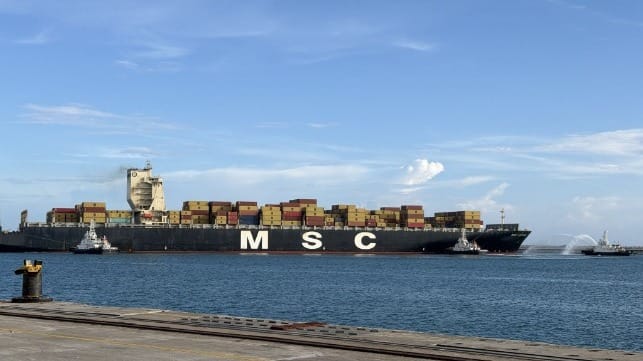
MSC containership arriving in India
MSC Luciana became the 1000th ship to arrive at the Indian ports days before the announcement of the investment (Vizhinjam International Seaport)

Published Jul 3, 2026 1:59 PM by The Maritime Executive

Global shipping giant Mediterranean Shipping Company (MSC) is poised to make the largest foreign private investment in India’s port infrastructure, but the $1.4 billion deal is not without controversy. Adani Ports developed the Vizhinjam port and announced it had struck a deal with MSC, but the local government is expressing its “strong displeasure” that it was not consulted about the proposed investment.

MSC, which has been aggressively expanding its terminal operations through its subsidiary Terminal Investment Limited (TiL), entered into a definitive agreement with Adani Ports and Special Economic Zone (APSEZ) to acquire a 49 percent stake in Vizhinjam port. Adani, which holds a 40-year concession for the port secured in 2015, will retain a 51 percent stake at the facility.

The State Government in Kerala, where the port is located, however, said late on Thursday that a change in the ownership of the concession requires government approval. They said the deal would be examined “strictly under the provisions of the concession agreement and anticipated regulations.

Adani announced the deal on June 29 saying it would cement Vizhinjam’s emergence as a dominant transshipment gateway in the Indian Ocean. The investment by TiL comes barely two years after Vizhinjam port was commissioned in December 2024.  

Despite being in operation for less than two years, Vizhinjam port’s profile has been on the rise driven by its strategic location just 10 nautical miles from the East-West shipping route connecting Europe, the Persian Gulf, and the Far East. Officials highlight that the port features a natural draft of 18–20 meters (59-65 feet), a 2.9-kilometer breakwater, an 800-meter berth, and advanced infrastructure, including eight quay cranes and 24 fully automated yard cranes.

With a total capacity of 1.6 million TEU, Vizhinjam has been described as India’s first deep-draft mega transshipment port. In its first year of operation, the port handled 1.3 million TEU and 615 vessels, becoming the fastest Indian port to cross the 1 million TEU milestone. Last week, the MSC Luciana became the 1000th commercial vessel to arrive at Vizhinjam International Seaport. 

Vizhinjam is being touted as India’s first automated port that combines cutting-edge container handling systems, a world-class IT platform, and an AI-enabled indigenous vessel traffic management system that is designed to drive operational efficiency, safety, and reliability. An ongoing expansion project is expected to increase the port’s capacity to 5.7 million TEU by December 2028.

Adani Group secures $15 billion capital as US legal clouds clear
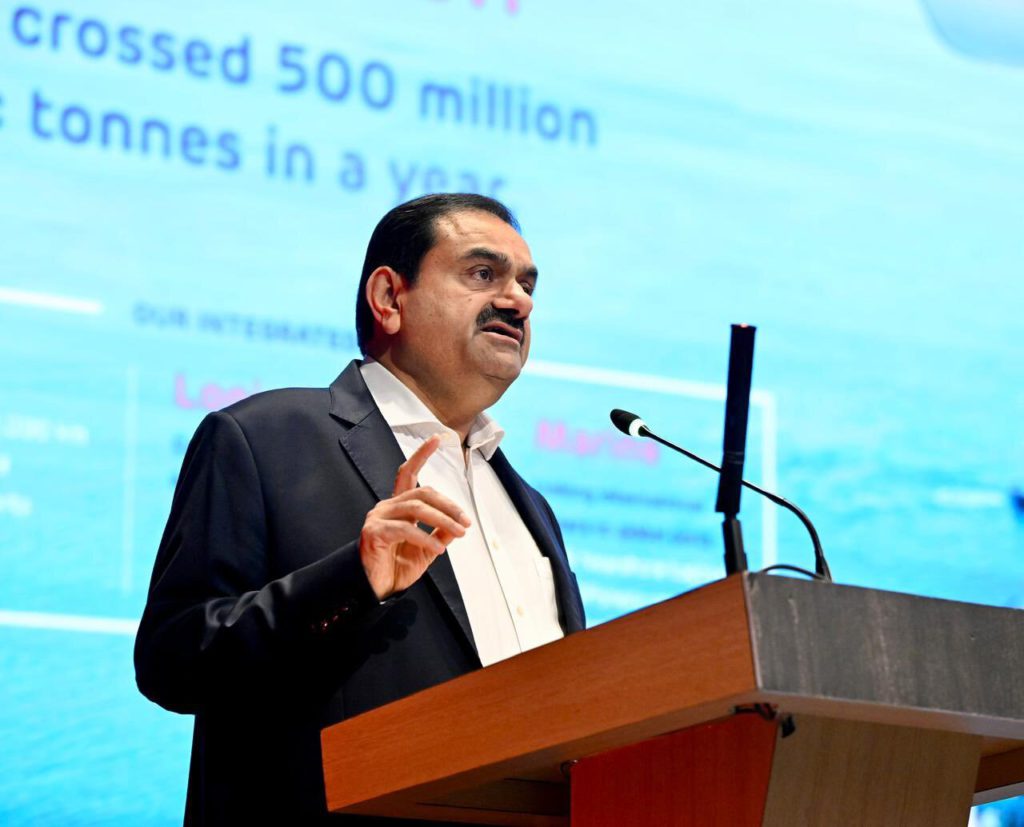
Indian billionaire Gautam Adani. Credit: Gautam Adani | X

In one week, billionaire Gautam Adani has announced nearly $15 billion in investment commitments across its ports, mining and flagship businesses.

The string of announcements signals that the group helmed by Asia’s richest person is back on the front foot after drawing a line under its US regulatory and legal woes. It also shows the conglomerate is rapidly regaining ground with investors, including US-based banks who will now have a free hand to do business with one of India’s most important conglomerates.

Adani Enterprises Ltd., the parent of the ports-to-power group, upsized its share sale by 50% to 150 billion rupees ($1.6 billion) and saw marquee American investors like The Capital Group, Goldman Sachs Group Inc., Vanguard Group Inc. and BlackRock Inc., Bloomberg News reported Friday citing people familiar with the matter.

The successful share sale, where the order book was fully filled up before the launch, was announced less than a day after the Ahmedabad-based company signed a pact with Abu Dhabi’s International Holding Co. to invest $11.5 billion in an aluminum project in the eastern India.

On Tuesday, Adani Ports and Special Economic Zone Ltd. announced a $1.4 billion deal with MSC Mediterranean Shipping Company SA in return for a 49% stake in its transshipment port in Vizhinjam.

“The Adani Group appears to have decisively shifted from defense to offense,” said Sunil Chandiramani, Mumbai-based chief executive officer of Nyka Advisory Services. The flurry of capital raising and strategic investments “indicates that global investors are once again willing to back the group’s long-term infrastructure story.”

An Adani Group representative did not immediately comment on this week’s deals spree.

Dropped charges

The investment announcements come weeks after a sweeping set of resolutions with the US authorities who had indicted the group’s founders — Gautam and his nephew, Sagar Adani — in November 2024 in a $250 million bribery scheme in India.

In May, the US Department of Justice moved to drop criminal charges against the Adanis in the bribery probe. This followed an agreement by Adani founders to pay a combined $18 million to settle a parallel civil fraud case with the US Securities and Exchange Commission.

Separately, Adani Enterprises agreed to pay $275 million to resolve an Office of Foreign Assets Control sanctions probe. The Adanis and the company did not admit any wrongdoing.

Yet it’s not all smooth-sailing for the group.

The chief of the southern Indian state of Kerala, where Adani’s Vizhinjam port is located, has objected to MSC buying into the Adani-run terminal saying this was done without prior consultation with the state government.

The Swiss firm is under scrutiny after a May 2025 incident when one of its vessels capsized and spilled its fuel oil cargo off the Kerala coast.

This week’s investments reflect renewed investor confidence. Adani stocks were roiled by a scathing short-seller report in early 2023 and a US bribery probe in 2024 but a euphoric share rally this year has already added more than $40 billion to the group market value this year.

As a result, the combined market value of nine Adani Group firms has surged past $202 billion, according to data compiled by Bloomberg.

This has also flowed through in Gautam Adani’s net worth estimates. It has ballooned by almost $36 billion this year to little over $120 billion, toppling Mukesh Ambani from the no.1 spot in Asia wealth rankings, according to Bloomberg Billionaires Index.

With the US legal overhang no longer dictating its growth agenda, Chandiramani says the group is stepping on the gas.

“This renewed expansion is significant because it gives Adani the financial firepower to accelerate its next phase of growth across infrastructure, logistics and manufacturing,” he said.

(By P R Sanjai)


LME approves Adani’s major copper smelter in India as listed brand
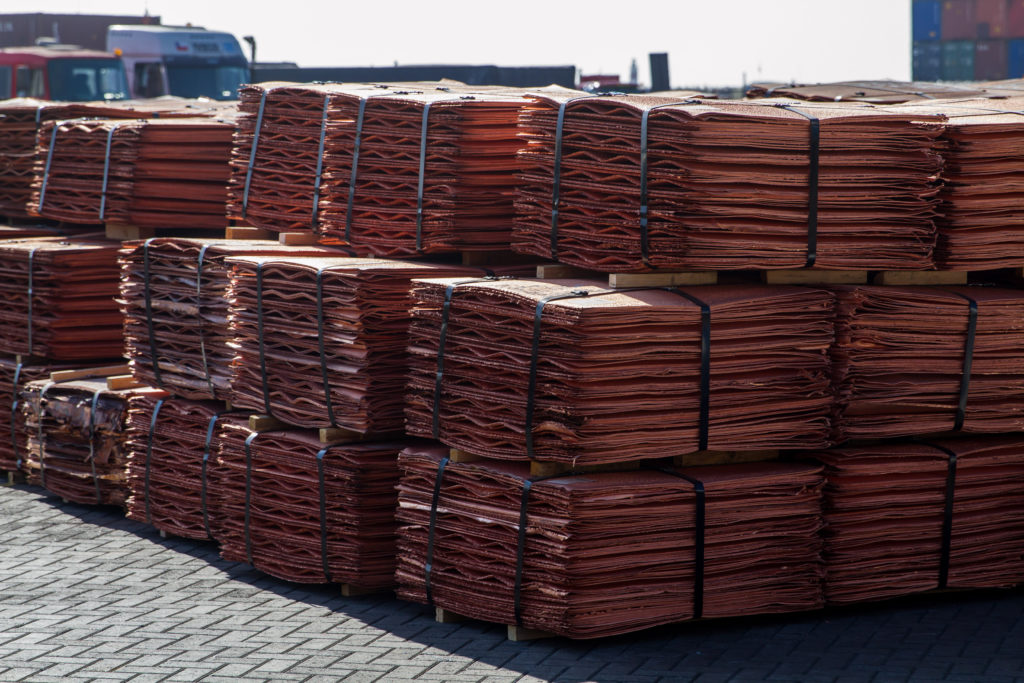
Stock image.

The London Metal Exchange has approved the Adani Copper brand for delivery against its copper contracts, the exchange said on Friday.

Warrants for the brand can be issued from July 10, although the LME-registered warehouses holding Adani Copper metal must include the brand in their off-warrant stock reports with immediate effect, the LME added.

The brand is produced by Adani Enterprises-owned Kutch Copper, one of India’s largest copper smelters, with annual production capacity of 500,000 metric tons. The company applied for LME registration in August 2025.

According to Adani, this $1.2 billion Kutch Copper facility in the western state of Gujarat is the world’s biggest single-location plant of its type, expected to reduce India’s reliance on imported copper.

India imported 238,080 tons of refined copper in 2025, down 18% from a year earlier, according to Trade Data Monitor data, with Japan remaining the country’s largest supplier.

(By Polina Devitt; Editing by Louise Heavens)


Congo plans first stock market as AI mineral boom draws interest


Downtown Lubumbashi, Democratic Republic of the Congo. Credit: Wikipedia.

The Democratic Republic of Congo is drawing up plans for its first stock exchange as it seeks to attract more investment to an economy that’s benefiting from soaring demand for minerals critical to the artificial intelligence buildout.

The new exchange will list securities denominated in both the Congolese franc and the US dollar, Finance Minister Doudou Fwamba Likunde Li-Botayi told Bloomberg News. In the meantime, the government is working with the International Finance Corp. to create a capital markets framework, he said.

The planned Kinshasa Stock Exchange is part of the government’s strategy to capitalize on growing foreign interest in Congo’s economy and broaden companies’ sources for capital, Li-Botayi said. Authorities also hope the dual-currency exchange will encourage greater use of the Congolese franc over time.

“The reality of our economy is that it is strongly dollarized,” Li-Botayi said in emailed comments, noting that more than 95% of total banking system deposits and over 80% of public securities are held in dollars. “We cannot design a stock exchange that ignores that reality.”

“We are building for the market as it exists today, while keeping sight of where we want it to go,” he added.

The move will add to other reforms the Central African nation has embarked on to spur wider market participation. They include liberalizing the mining sector, transforming state enterprises into commercial companies, opening the insurance market to private investors and creating a Treasury bond market, Li-Botayi said.

The International Monetary Fund said this week that the reforms are progressing well although an “accelerated pace is necessary.”

Congo is the latest African nation to try and establish an equity market, following launches in Ethiopia and Somalia in 2025. Prior to that, Zimbabwe set up an exchange in 2020 to allow trading in dollar-denominated securities.

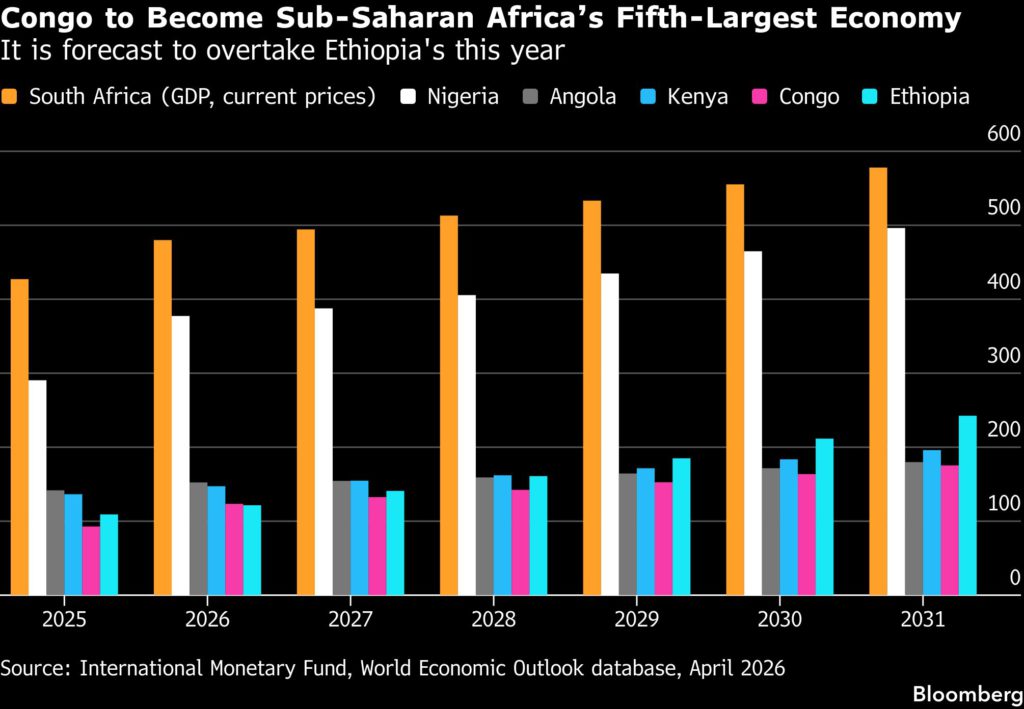
The timing may be in Congo’s favor. It is Africa’s largest copper producer and a major source of cobalt and lithium, all of which have spurred investor interest, amid rising demand for the minerals crucial for AI infrastructure. Booming metals exports are expected to make the economy sub-Saharan Africa’s fifth largest this year, according to IMF projections.

African stocks are also currently in vogue, benefiting from high commodity prices and inflows from investors keen to diversify from Asian technology heavyweights. Ghana, Nigeria, Zambia and Kenya all rank in the 20 best-performing indexes globally this year, adding to 2025’s stellar run.

The government is also on a drive to open its economy to foreign investors, striking deals with overseas firms for exploration and production. Its debut $1.25 billion eurobond in April was heavily oversubscribed and has handed investors returns of about 3% since, outperforming the emerging-market average. While the Congolese franc has weakened this year against the dollar, that comes after a 21% surge in 2025.

A finance bill establishing legal frameworks for markets is now before the country’s Senate and is expected to be signed off by year-end and the Finance Ministry is finalizing a decree to set up an independent regulator, which will license the exchange operator.

Li-Botayi identified mining firms as an priority target for stock-market listings, but said authorities will also work with the wider business community to build a pipeline of initial public offerings. While publicly traded companies will benefit from lower corporate income tax rates, the aim is also to boost public participation in markets.

“We want Congolese people to be able to own a piece of the companies that drive this country’s economy,” he said.

(By Ray Ndlovu)


Congo cobalt exporters fear losing quotas due to administrative glitch

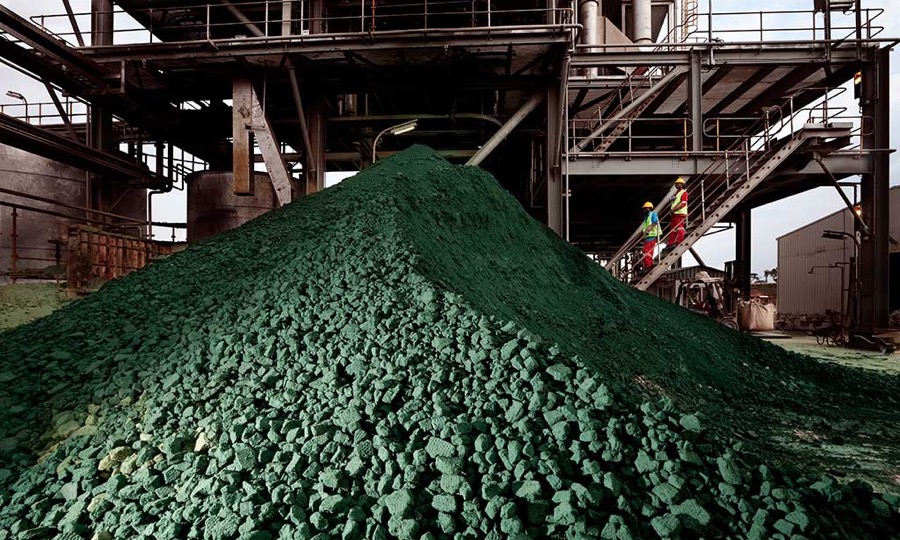
Processing facilities at Tenke Fungurume mine in 2016 before the CMOC acquisition. (Image courtesy of Lundin Mining.)

Major cobalt producers in the Democratic Republic of Congo risk losing some of their first-half export quotas due to an administrative glitch affecting a customs platform, according to industry officials and a letter seen by Reuters.

Due to newdirectives withdrawing unused quotas, the disruption threatens exports of the battery metal from leading global producers and could result in as much as 20,000 metric tons of missed shipments worth $1.1 billion at current prices, one industry source estimated.

Congo produces about 70% of the world’s cobalt and hosts operations by China’s CMOC and London-listed miner Glencore, the world’s largest and second-largest cobalt producers, as well as Eurasian Resources Group and Huayou Cobalt.

Congo tightens export controls

Congo has tightened control of the market through export suspensions and quotas to support prices, which have surged 160% since February 2025 to $26 a pound, or $57,320 a metric ton.

ARECOMS, Congo’s strategic minerals regulator, set a July 5 deadline for exporters to use their first-half quotas, after which unused volumes would be withdrawn and reallocated.

About 60-75% of companies are unlikely to meet the deadline due to administrative delays, a mining executive said.

The regulator has also set a 96,600-ton annual export cap for 2026 and 2027.

A July 2 letter from Congo’s Chamber of Mines to ARECOMS, seen by Reuters, said producers have been unable to register export declarations as required on the customs platform since July 1.

The letter said the blockage on the platform was due to the absence of a formal notification from ARECOMS authorizing customs to continue processing export quotas.

Mining companies have urged ARECOMS to resolve the issue and extend the deadline, the executive said, adding that they had also asked the prime minister to intervene.

ARECOMS, the Mining Ministry and the industry chamber did not immediately respond to requests for comment.

A source at CMOC said the company had requested an extension of the July 5 deadline from ARECOMS but had yet to receive a response, adding that a one-month extension “would be enough”.

CMOC did not immediately respond to a request for comment.

CMOC could lose almost all its second-quarter export quota if the issues are not resolved quickly, the source added. Like the other industry sources, the source spoke on condition of anonymity because they are not authorized to speak to the media.

(By Ange Adihe Kasongo, Tom Daly, Pratima Desai and Maxwell Akalaare Adombila; Editing by Helen Popper)

POLAND

KGHM launches $8.55 billion investment plan


ALL CAPITALI$M IS STATE CAPITALI$M


Polkowice-Sieroszowice mine. Credit: KGHM

Polish state-controlled copper and silver producer KGHM on Friday set a new strategy committing more than 32 billion zlotys ($8.55 billion) in investment through the end of the decade while setting new output and profit targets.

The plan, called “Strategy 2055+,” targets average annual adjusted core profit, measured as earnings before interest, taxes, depreciation and amortisation (EBITDA), of 12 billion zlotys, paid copper output of 730,000 tonnes and silver production of 1,290 tonnes between 2026 and 2030.

“After 2035, we want KGHM to be a modern, multi-raw material industrial group,” chief executive Remigiusz Paszkiewicz said, adding the company planned to build a new mine dubbed “KGHM 2.0” in Poland.

The plan reflects KGHM’s push to secure ore supplies closer to its Polish smelters and to cut logistics costs. The company expects about 80% of copper output to come from domestic assets, with the rest from mines abroad.

The strategy also places fresh emphasis on overseas operations.

KGHM said nearly 80% of planned investment would go to its core Polish business, with the rest allocated to assets in Chile, the US and Canada. Overseas assets generated about 48% of the group’s EBITDA in 2025, helped by the Sierra Gorda mine in Chile, in which KGHM owns a 55% stake, and the Robinson mine in Nevada.

“We want the position of our foreign assets to grow, because this builds the company’s global credibility and resilience to structural changes,” deputy chief executive for foreign assets Anna Sobieraj-Kozakiewicz said.

She said the company would seek new opportunities based on efficiency analysis.

($1 = 3.7415 zlotys)

(By Alicja Surdy and Rafal Nowak; Editing by Matt Scuffham)


Mining Firm Acquires Cruise Ship to House Project Workers in Greenland

cruise ship used as housing for a mining camp in Greenland
The company plans to use the cruise ships as housing in Greenland (Critical Metals Corp.)

Published Jul 3, 2026 3:28 PM by The Maritime Executive

A U.S. mining, exploration, and development company has become the latest owner of a former Soviet passenger ferry that was later converted to a cruise ship. In recent months, the ship gained prominence for housing troops and personnel in Greenland.

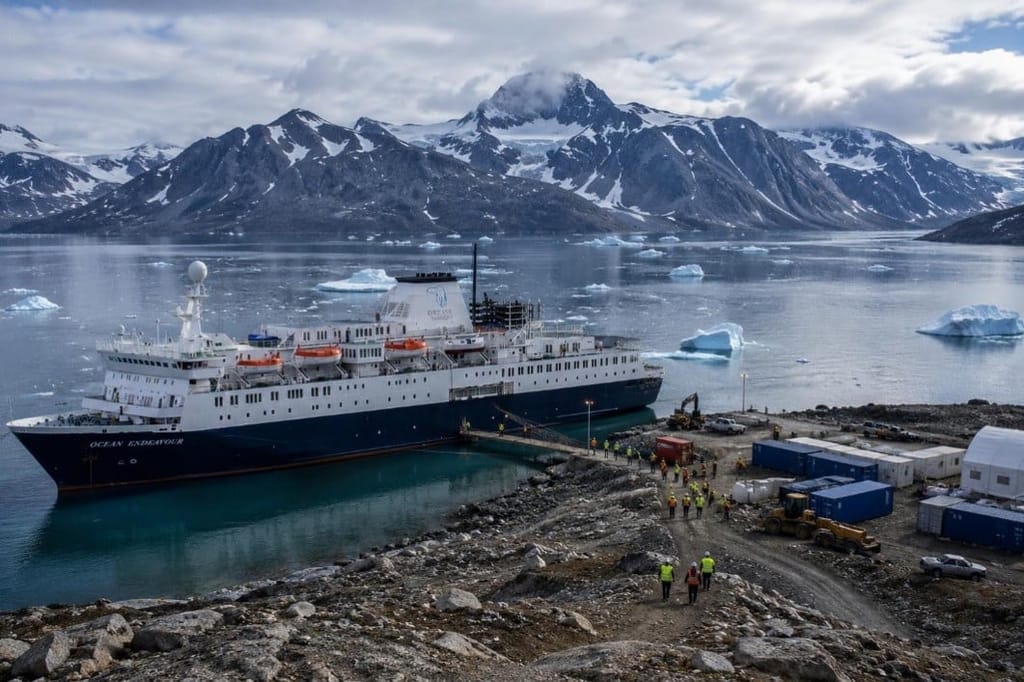
Critical Metals Corp., which is undertaking a major rare earth mineral project in Greenland, has acquired the former expedition cruise ship Ocean Endeavour at a cost of €7.5 million ($8.5 million) to house about 300 workers for its Tanbreez project in Greenland.

The vessel was owned by SunStone Marine Group and has been chartered to various companies. Early this year, the Danish Defence chartered the 12,900 gross ton vessel that has a capacity to accommodate 190 passengers and a crew and staff of 124 to house Danish and NATO troops during the Arctic Endurance exercise.

The Ocean Endeavour has an interesting history, having been built in Poland in 1982 as a Soviet passenger ferry. The vessel originally operated as Konstantin Simonov in the Baltic Sea and has changed ownership several times. In the early 2000s, she was converted to a cruise ship and briefly operated for an Israeli company before being outfitted for polar cruising in 2015. Last month, SunStone announced that the 137-meter vessel was up for sale.

The Nasdaq-listed Critical Metals said it has purchased the ice-strengthened vessel owing her proven operating history in both the Arctic and Antarctic environments. It said it would make the ship well-suited to support year-round activities associated with the development of the Tanbreez critical minerals project.

The company highlighted that Ocean Endeavour will provide flexible housing capacity for up to 300 project personnel, in effect minimizing demand on local housing and hotel capacity in Greenland. For Critical Metals, providing self-contained accommodation for its workforce means there will be minimal strain on the limited hotel and tourism infrastructure in Qaqortoq and the surrounding region. The vessel will be moored adjacent to the Tanbreez project.

“The Ocean Endeavour provides us with a flexible, proven platform that will support our workforce, improve logistics, and enhance operational efficiency as we continue to progress our development activities in Qaqortoq,” said Tony Sage, Critical Metals Chairman.

He added that the vessel strengthens the company’s ability to execute its long-term growth plans while maintaining a strong focus on safety and operational excellence in a geographically and culturally sensitive area with limited infrastructure capacity.

In 2024, Critical Metals acquired a controlling stake in the Tanbreez project that has been touted as one of the world’s largest undeveloped rare earth projects. Located in southern Greenland, the project is said to contain significant concentrations of heavy rare earth elements that are critical for defense applications, clean energy transition, and next-generation technologies.


Ocean Surface Temperatures Are Setting New Records Again

Copernicus Marine Service

Published Jul 2, 2026 11:07 PM by The Maritime Executive

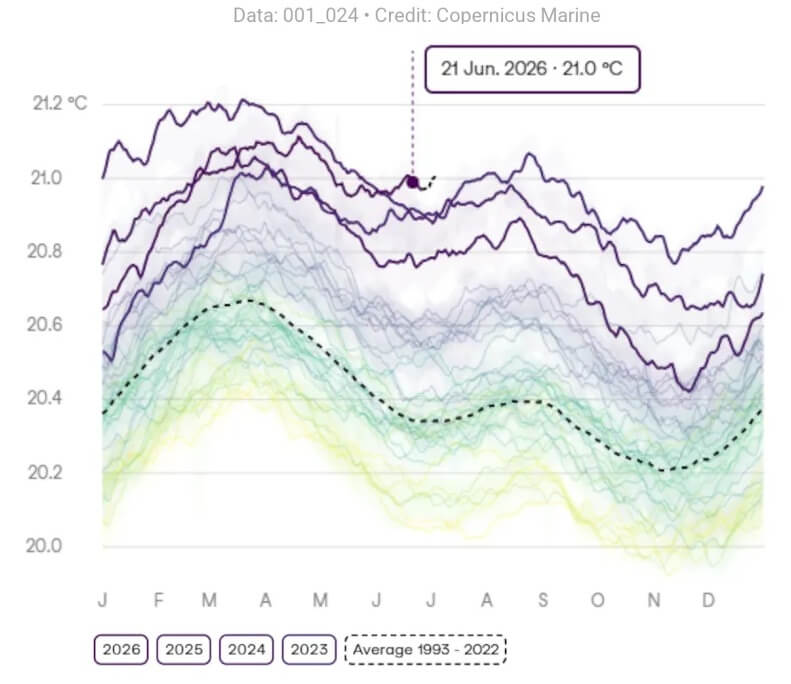
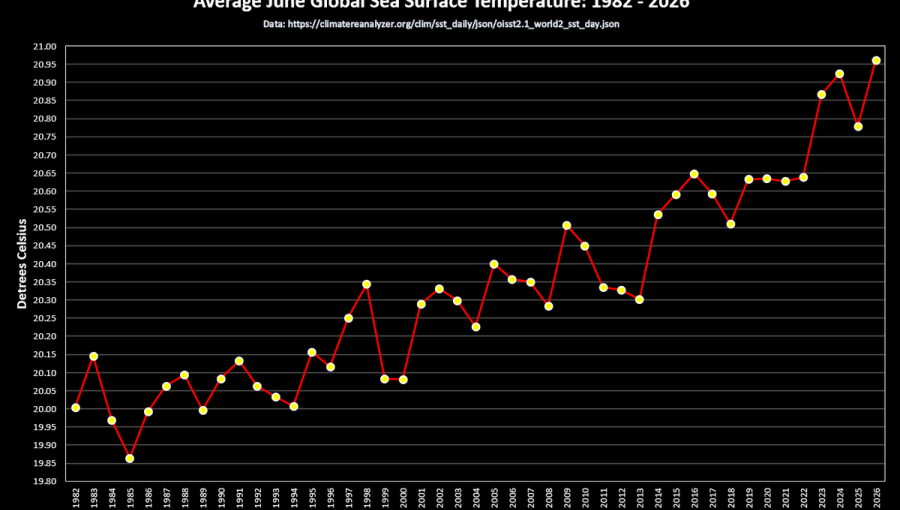
Amidst a record-setting summer heat wave in Europe, the EU-sponsored Copernicus Marine Service has released a familiar message: a new record global sea surface temperature, making 2026 the third year in the last four that this threshold has been passed.

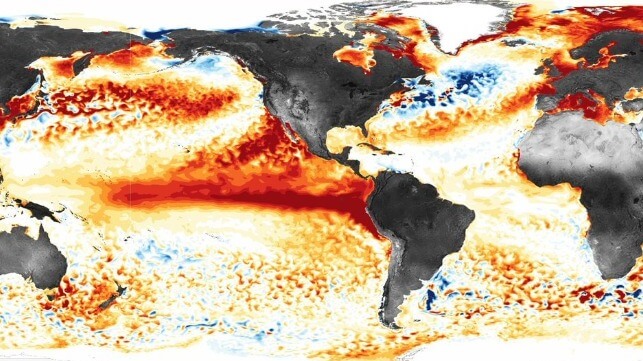
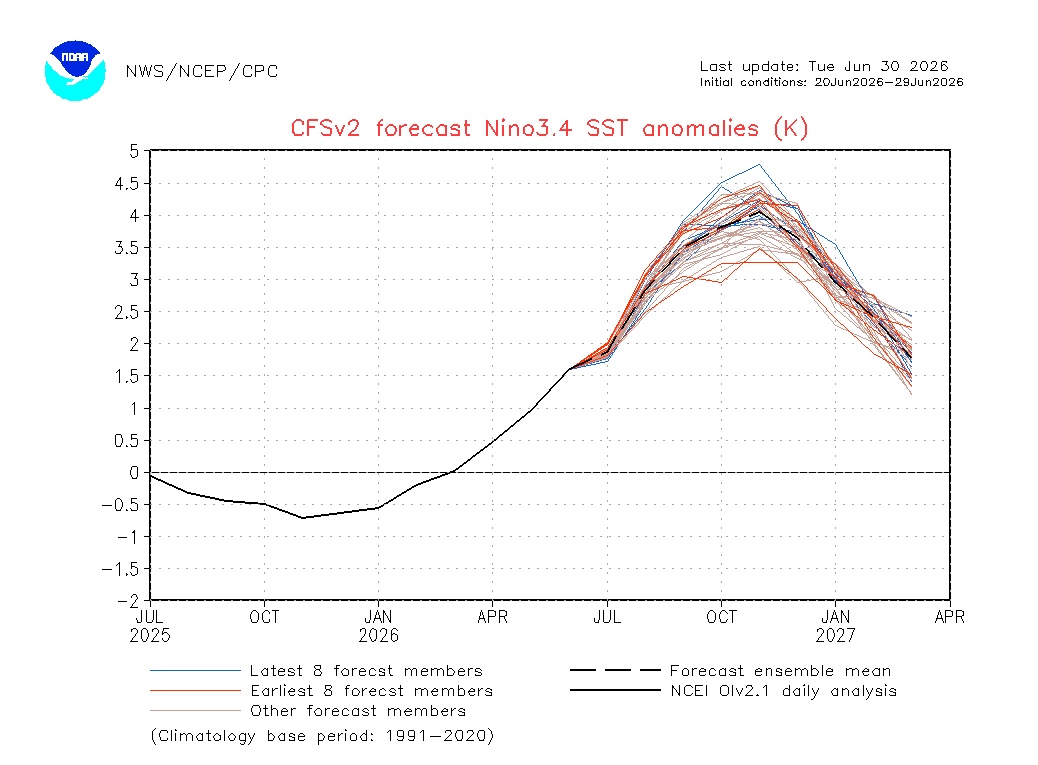
The incremental difference is small, about 0.1 degrees C over the previous records for the date of June 21, and it was expected. With El Nino conditions arriving in the Pacific, and high heat events observed in other ocean basins, the average was predicted to rise - and more daily records are expected in the weeks to come.

The new daily record was confirmed by a sister institution, the European Centre for Medium-Range Weather Forecasts (ECMWF).

“With ocean temperatures at these levels and El Niño on the horizon, we are likely to see more temperature records fall in the coming months. That Copernicus Marine data reaches the same conclusion through independent methods speaks to the strength of European science — and to why open, robust data matters now more than ever,” said Carlo Buontempo, Copernicus Climate Change Service Director at ECMWF.

El Nino events cause surface temperatures to soar in the equatorial Eastern Pacific, affecting weather patterns around the world. Increased average global air temperature and more extreme weather events (droughts, storms and heat waves) typically accompany El Nino years. Climate scientists expect 2027 to bring record global temperatures, driven by El Nino conditions - and the effects could be unique this time, given the size of this year's event.

"This El Niño is unusually large for this early in the year, and it is occurring in a warmer climate that is fundamentally different than past decades," climate scientist Kim Cobb told CNN.  

Sea surface temperatures are an important part of the picture for weather, but the rest of the ocean is getting warmer too. Last year, deep ocean waters from 0-2,000 meters of depth set a new record for heat content, a joint Chinese-U.S. research team wrote in Advances in Atmospheric Sciences.

In a related paper in Nature Climate Change penned by many of the same authors, researchers suggested that this work depends on the integrity of a global network of sensors, created by many nations but underpinned by U.S. research investments. Any reductions in this international partnership, known as the Global Ocean Observing System - for example, the Trump administration's early removal of a $370 million deep ocean monitoring megaproject - will reduce future data quality on ocean heat content. This will have an outsize impact on climate research, experts in the field say. 

"Ocean heat content is the most robust indicator of climate change we have - not just of what is happening in the ocean, but of the entire climate system," French oceanographer Sabrina Speich told The Guardian. "Lose them, and you lose your ability to track not just ocean warming but the climate system as a whole."


Record ocean temperatures push climate into uncharted waters

Record ocean temperatures push climate into uncharted waters
Ocean temperatures are beyond breaking all time high records as the Climate Crisis enters a new phase. / bne IntelliNewsFacebook
By IntelliNews July 3, 2026

The world's oceans reached their highest average June surface temperatures on record this year, underscoring growing concern among scientists that the planet is entering a new phase of climate instability in which extreme weather events become both more frequent and more severe.

According to the EU's Copernicus Climate Change Service (C3S) and Copernicus Marine Service (CMEMS), global sea-surface temperatures exceeded the previous June records set in both 2023 and 2024. On June 21, average sea-surface temperatures reached between 20.86°C and 21.0°C, the highest ever recorded for this time of year.

The record comes as Europe recovers from an exceptional early-summer heatwave that shattered temperature records across much of the continent, while forecasters warn that the emergence of a potentially powerful El Niño later this year could intensify global weather extremes even further.

Although the oceans cover more than 70% of the Earth's surface, they absorb more than 90% of the excess heat trapped by greenhouse gases. Rising sea temperatures therefore provide one of the clearest measures of long-term global warming, but they also act as a powerful amplifier of extreme weather by transferring heat and moisture into the atmosphere.

"Current conditions could indicate the beginning of a new phase, leading, once more, to uncharted territory," said Carlo Buontempo, director of the Copernicus Climate Change Service. "With ocean temperatures at these levels and El Niño on the horizon, we are likely to see more temperature records fall in the coming months."

The Mediterranean Sea  heatwave is so severe, climatogists complained they ran out of colors to paint the extreme on maps.  Sea surface temps peaked at 8°C above normal.  Perhaps more impressive is how expansive the area of 6°C  anomalies are. Much of the water is 29-32°C.

“The Sea is now record hot for early July beating - you guessed it - the old record set last year. This is obviously a consequence of the most severe heatwave in Europe history last week. And this weekend another intense heatwave is due to arrive,” Jeff Berardelli a climatologist said in a social media post.

Scientists stress that the current warming reflects two forces acting simultaneously. Long-term climate change has steadily increased baseline ocean temperatures over recent decades, while the re-emergence of El Niño—a natural warming of the tropical Pacific that occurs every two to seven years—is now adding another layer of heat to an already warmer planet.

The consequences extend far beyond hotter beaches. Warmer oceans provide additional energy for tropical cyclones, increase evaporation that can fuel heavier rainfall and flooding, accelerate sea-level rise through thermal expansion and place increasing stress on marine ecosystems, particularly coral reefs already suffering repeated bleaching events.

Marine heatwaves have become increasingly widespread. Copernicus estimates that around 82% of the world's oceans experienced marine heatwave conditions during the first half of this year, with parts of the Mediterranean recording sea-surface temperature anomalies of as much as 6°C above the long-term average.

The timing is especially concerning because global sea temperatures typically continue rising through July and August. Forecasts suggest El Niño will strengthen through the second half of the year, potentially reaching levels not seen for decades. If that occurs, meteorologists warn that already elevated ocean temperatures could help drive another year of record-breaking global heat, alongside greater risks of droughts, floods and powerful storms.

For climate scientists, the latest milestone reinforces a broader trend. The world's oceans have now spent much of the past three years at or near record temperatures, suggesting that what once appeared exceptional is rapidly becoming the new baseline. The question is no longer whether the oceans are warming, but how quickly societies can adapt to the increasingly volatile climate system that follows.


Summer Cruise Boom Supports B.C. Businesses and Tourism Operators

Vancouver cruise ships

Published Jul 3, 2026 8:49 PM by The Maritime Executive

[By Vancouver Fraser Port Authority]


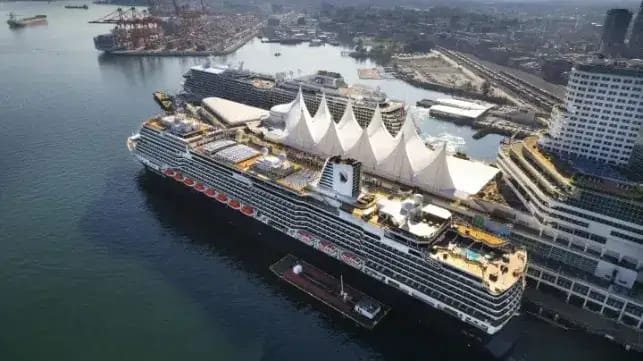
B.C. businesses and tourism operators are set for a welcome boost in coming months, with July and August on track to be the busiest months ever for the Canada Place cruise terminal.

A record-breaking 290,000 passengers are expected to pass through Canada Place in July—the most ever for a single month—with similar passenger numbers also anticipated in August.

The strong cruise volumes will provide a significant boost for the local economy with new passenger survey data revealing cruise visitors spend an average of more than $1,100 each locally on hotels, restaurants, shopping, tours and local attractions, and more.
 
“The Canada Place cruise terminal at the Port of Vancouver continues to demonstrate its importance as a vital driver for Canadian tourism year-over-year,” said Chance McKee, Senior Account Representative at the Vancouver Fraser Port Authority.

“We are seeing these strong cruise volumes translate into ongoing meaningful benefits for local and regional businesses and communities. The continued success of Vancouver’s cruise sector reflects strong collaboration and shared local commitment to ensuring Vancouver remains one of the best and most sustainably managed cruise ports in North America.”

Vancouver is also increasingly becoming an added destination on many cruise passengers' travel itineraries, with more than three-quarters of travellers spending time locally before or after their cruise (up from 70% in 2023), according to the 2025 Cruise Passenger Survey by the Pacific Rim Cruise Association. The same survey found average local spending per cruise passenger had grown to $1,144.

The growing popularity of the Alaska cruise market has helped Vancouver cruise to thrive in recent years, with upwards of 1.2 million passenger visits and 300-plus ship calls a year the new post-pandemic normal for Canada Place. In 2026, there will be an estimated 1.4 million passenger visits and 360 cruise ship calls—a 30% increase in passenger volumes compared to 2019.

The Port of Vancouver is a full-service homeport where cruise lines base their ships for the Alaska season, with passengers embarking and disembarking, and ships re-stocking between sailings. Each cruise ship visit to the Canada Place cruise terminal injects about $3 million into the local economy as cruise lines, such as Carnival Corp.’s brands Holland America Line, Princess Cruises and Seabourn Cruise Line, look to local goods and services providers to keep their operations running smoothly.

“As we reach the heart of summer cruise season, we’re once again reminded what makes sailing from Vancouver so special,” said Beth Bodensteiner, president of Holland America Line. “We’re proud to introduce guests to the wonders of Alaska, Hawaii, the South Pacific, Asia and beyond, all from Canada Place—while also supporting local businesses and Vancouver’s vibrant tourism economy. And we look forward to celebrating our milestone 80th year visiting Alaska with our partners at Port of Vancouver next year.”

“Vancouver plays an important role in Seabourn’s Alaska season, and we’re pleased to have Seabourn Encore sailing from this beautiful city for the first time this year,” said Mark Tamis, president of Seabourn. “As one of the more spacious luxury small-ship vessels in our fleet, she allows us to give more guests immersive Alaska experiences in both popular destinations and towns, as well as in lesser-known ports and hideaways, connecting them more closely to the region’s landscapes and communities, and supporting local businesses.”

“Princess Cruises will deliver its largest Alaska season ever in 2026, with seven ships visiting Vancouver, including our newest ship, Star Princess,” said Gus Antorcha, president of Princess Cruises. “Whether guests begin or end their journey in Vancouver, they’ll have access to unforgettable Alaska experiences – from breathtaking glacier viewing to our immersive North to Alaska program – designed to connect guests more deeply with the region’s natural beauty, rich culture and iconic wildlife.”

Strong cruise volumes and ongoing FIFA World Cup 2026 festivities mean those planning to visit downtown Vancouver and Canada Place should plan for increased crowds and traffic.
 

The products and services herein described in this press release are not endorsed by The Maritime Executive.


Rijkswaterstaat Program for Zero-Emission Emergency Response Towing Vessel

Damen Shipyards Group
ijkswaterstaat launches development programme for zero-emission ERTV 1.

Published Jul 4, 2026 5:32 PM by The Maritime Executive

[By: Damen Shipyards Group]

Rijkswaterstaat has launched the research and development phase of the Power2Tow project. Under this innovation partnership, three consortia will simultaneously develop new solutions for near zero-emission Emergency Response Towing Vessels (ERTVs) and the associated charging infrastructure at sea and onshore. To mark the start of this project, Director-General Martin Wijnen signed cooperation agreements with the three consortia on 30 June.

A key feature of Power2Tow is that Rijkswaterstaat is entering the research and development phase alongside the consortia. Within the innovation partnership, all three consortia have been awarded the contract and will receive a compensation to further develop and refine their proposed innovative solutions. This approach provides scope for different technological approaches and innovative ideas. In doing so, the consortia are developing solutions for the vessels, the offshore and onshore charging infrastructure, and the operational deployment of the complete system.

During the research and development phase, the proposals will be further developed, tested and evaluated. Ultimately, one consortium will be selected to deliver the project for Rijkswaterstaat. This will allow the contract for construction and operation to be awarded directly, without the need for a further procurement procedure. Each consortium comprises a partnership of various companies and/or organizations, each bringing its own specialist expertise.

The consortia selected for the research and development phase are:

  • Kustkracht: Kotug International B.V., IHC Defence B.V. and Bluewater Energy Services B.V.
  • Multraship Ocean Towage B.V., Damen Shipbuilding & Cooperation B.V. and Stillstrom A/S
  • Smit Terminals Europe B.V. & Smit Salvage B.V.

Safety and sustainability in the North Sea
Through Power2Tow, Rijkswaterstaat is developing a future-proof emergency towing capability in the North Sea. The project includes the development of three electric ERTVs, capable of charging offshore using wind energy, to help protect the offshore wind farms from collisions involving vessels in distress. The development of offshore and land-based charging infrastructure, together with the provision of services for a period of 25 years, also forms part of Power2Tow. The vessels will operate on electric power wherever possible, while sustainable e-methanol will be used for emergency towing operations. This represents an important step towards the further decarbonisation of the maritime sector.

Part of the Rijksrederij Fleet Renewal programme
Power2Tow forms part of the Fleet Renewal Programme for the Rijksrederij (Netherlands Government Shipping Company). Through this programme, Rijkswaterstaat is working to ensure the timely and sustainable renewal of the national fleet. In addition, Power2Tow contributes to the maritime sector agenda, "No guts, no Hollands glorie!" under which the strategic interests of the maritime manufacturing industry are given greater consideration in government procurement processes. The Power2Tow project is being delivered in collaboration with the Ministry of Infrastructure and Water Management, the Ministry of Economic Affairs and Climate Policy, the Netherlands Coastguard and the interdepartmental Maritime Manufacturing Industry Coordination Office (Rijksregiebureau Maritieme Maakindustrie).

The products and services herein described in this press release are not endorsed by The Maritime Executive.


Investment Firm KKR Sells Ocean Yield to A.P. Moller Holding

gas carriers
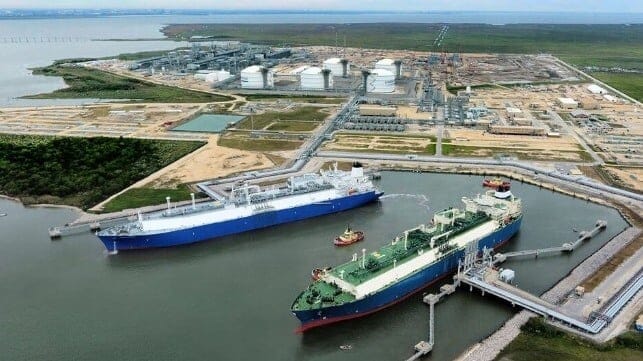
Ocean Yield has nearly half its fleet in LNG, including a deal for gas carriers to be chartered to Cheniere Energy (Cheniere Energy file photo)

Published Jul 2, 2026 5:38 PM by The Maritime Executive

The investment arm of the Maersk family, A.P. Moller Holding, is expanding its large portfolio of maritime investments, reporting it has agreed to buy Norway’s Ocean Yield, a large shipowner-lessor. According to A.P. Moller, the acquisition will strengthen its maritime portfolio and build on its experience in the segments of the maritime industry.

Headquartered in Oslo, Norway, Ocean Yield holds interests in over 70 vessels across several core shipping sectors, including gas carriers, container ships, LNG carriers, crude, product and chemical tankers, and dry bulk carriers. The acquisition expands A.P. Moller’s exposure in the LNG sector, where Ocean Yield currently has nearly half its investment, or a total of 30 vessels.

Ocean Yield is continuing to grow its exposure in the energy sector, reporting that it recently extended a deal with NYK to add four additional LNG carriers in a joint venture. That will bring the total of this JV to eight vessels, all of which will operate under charter to Cheniere Energy. Similarly, it recently took delivery of new vessels which are chartered to Qatar Energy.

The other large segments of Ocean Yield’s fleet include 12 crude oil tankers and 10 containerships. It also has dry bulk carriers and other vessels.

“Since 2021, we have strengthened Ocean Yield as a globally diversified maritime leasing platform with long-duration, high-quality contracted cash flows and a modern fleet positioned for the energy transition,” said Andreas Røde, CEO of Ocean Yield.

Established in 2012, Ocean Yield was acquired by the well-known investment firm KKR (Kohlberg Kravis Roberts & Co.) in 2021. KKR highlights that it has significantly scaled and diversified Ocean Yield’s platform with more than $3 billion invested, strengthened its long-term contracted revenue base, and supported its transition toward a more modern and sustainable fleet. KKR will continue to hold its joint investment with Ocean Yield in CapeOmega Gas Transportation, which owns 10 of the LNG carriers.

A.P. Moller Holding, established in 2013 by the Maersk family as an investment vehicle, is the parent company of the A.P. Moller Group. It has a broad range of holdings in the maritime sector, including, in addition to Maersk, investments in Svitzer tugs, DOF offshore, Noble Drilling, Maersk Tankers, Maersk Offshore Wind, and other non-shipping investments.
 

Port of Galveston Opens New Berth with 1st Cargo Vessel Call

Galveston, Texas

Published Jul 4, 2026 6:11 PM by The Maritime Executive

[By Port of Galveston]


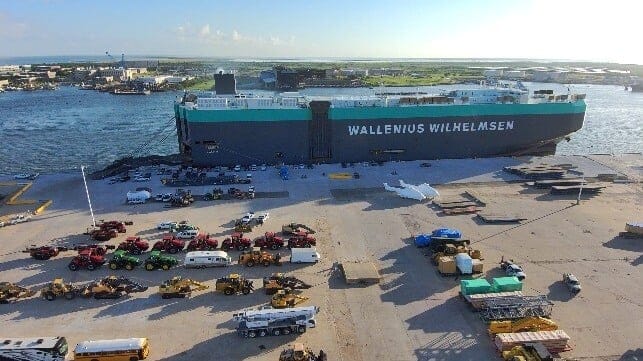
The Port of Galveston’s new cargo berth officially opened for business July 2 with a Wallenius Wilhelmsen cargo carrier delivering roll-on/roll-off cargo at the West Port Cargo Complex.

The 656-foot-long MS Toledo offloaded hundreds of pieces of heavy construction equipment from Brazil and the Far East to be transported by truck to destinations in Texas and Middle America. Then union workers loaded heavy construction and farm equipment bound for Brazil and Australia.

The 1,410-foot-long berth at Pier 39-40 is part of the port’s $106 million cargo facility expansion project begun in 2024 and completed in 2026. Work to repair and expand the cargo area also included enclosing two outdated slips, filling one slip, repaving and repairing cargo handling areas, and demolishing a decommissioned grain elevator.

The project, which will add almost 30 acres to the previously 60-acre facility, was funded with port operating revenues and a $36 million Texas Department of Transportation (TxDOT) grant. A future phase will include filling the second slip to add another 6 acres.

Galveston Wharves Port Director and CEO Rodger Rees, said, “This is the first time in decades that the port has made a significant investment in its cargo business. Driven by cargo tenant demand, the expansion paves the way for major cargo growth to generate hundreds of new jobs and tremendous economic growth for the region. Additional land also allows us to consider other types of cargo not previously handled.”

Rees credited the Galveston Wharves Board of Trustees for its commitment to the major project and the Texas Legislature and TxDOT for jumpstarting the project with critical funding. He added that the port’s growing cruise business generated the revenues to fund the cargo area improvements.

TxDOT Maritime Division Director Geir-Eilif Kalhagen added, “This $36 million state investment added capacity and will help the Port of Galveston operate more efficiently as demand continues to grow. When the state partners with seaports on projects like this, we’re not just improving infrastructure, but strengthening the supply chain, supporting job growth, and ensuring Texas remains competitive nationally and globally.”

Located on Galveston Harbor, one of the nation’s busiest cargo waterways, the port moves 3 million tons of general and breakbulk cargos, including roll-on/roll-off (ro-ro) and giant wind turbine pieces a year. Cargo handling at public and private facilities on the harbor generates almost 20,000 jobs and a $6.5 billion economic impact statewide.

The products and services herein described in this press release are not endorsed by The Maritime Executive.


Bureau Veritas Signs Cooperation Agreement with Shenzhen Port Group

Bureau Veritas Marine & Offshore
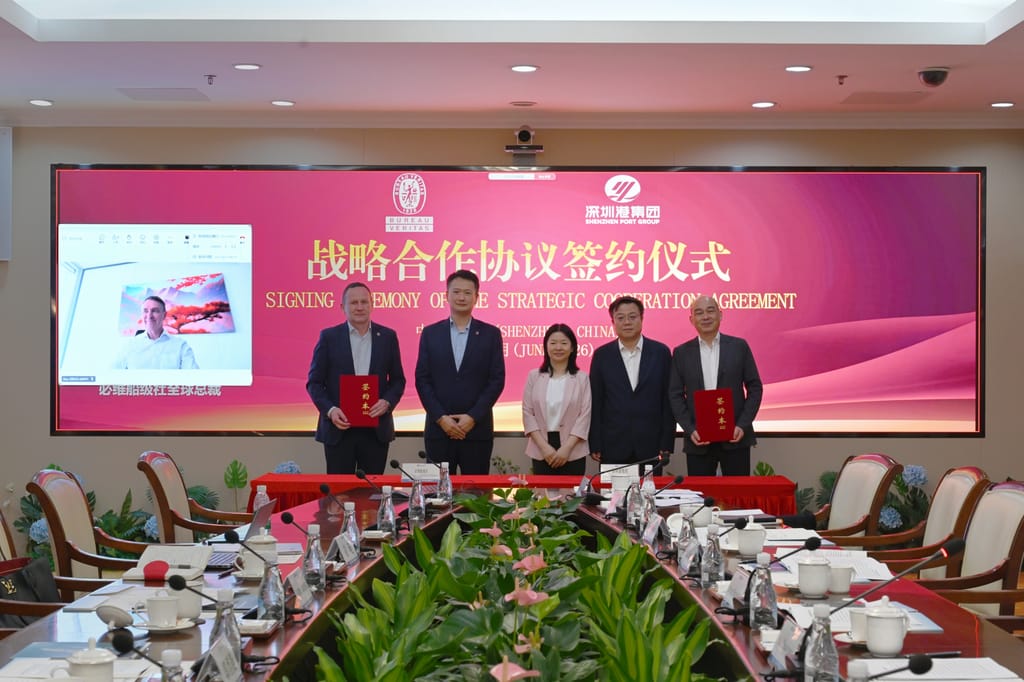
Signing ceremony

Published Jul 4, 2026 5:24 PM by The Maritime Executive

[By: Bureau Veritas Marine & Offshore]

On June 29, Shenzhen Port Group and Bureau Veritas Marine & Offshore (BV) signed a strategic cooperation agreement in Shenzhen, China. The two parties engaged in in-depth discussions on strengthening collaboration across key sectors and jointly advancing the development of green shipping corridors.

Under the agreement, both parties will leverage their respective strengths and resources to deepen collaboration focused on the development of green shipping corridors and related businesses. Through resource sharing and complementary capabilities they will jointly develop green shipping projects to deliver replicable and scalable outcomes.

Bureau Veritas will provide professional technical support to Shenzhen Port Group and industry players at large, helping them navigate evolving maritime regulatory policies and translate emerging international rules into practical, implementable measures to align domestic and global industry standards. Backed by its comprehensive global business footprint, BV offers end-to-end testing, inspection and certification services covering the entire green fuel industrial chain, spanning renewable energy production to bunkering infrastructure for marine fuels. It has also built extensive hands-on experience in numerous domestic green fuel projects.

Alex Gregg-Smith, President, Bureau Veritas Marine & Offshore, said: "Global decarbonization of the shipping industry requires concerted efforts and in-depth collaboration across the entire industrial value chain. As a world-class port conglomerate, Shenzhen Port Group boasts strengths that are highly complementary to Bureau Veritas’s expertise in technical services and standard-setting. Deepening our partnership is of great significance for the green transition of the shipping sector. We hope this collaboration will serve as a catalyst to align domestic and international standards and jointly develop viable pathways for low-carbon maritime trade.”

Hu Zhaoyang, Secretary of the Party Committee and Chairman of the Board at Shenzhen Port Group, stated: “Bureau Veritas Marine & Offshore is a globally recognized authoritative body in the maritime sector, with a wealth of decarbonization solutions and practical experience for the global shipping industry. Its vision aligns perfectly with Shenzhen Port Group’s green development strategy. Building on this agreement, we will further expand all-round cooperation across relevant fields, and maximize the combined value of Shenzhen Port Group’s diverse industrial application scenarios and BV’s authoritative technical certification capabilities to achieve mutual benefit through complementary strengths."

The products and services herein described in this press release are not endorsed by The Maritime Executive.