Copper's Next Move Depends On Washington, Not The Strait Of Hormuz
- Aluminum's war-driven price spike has mostly unwound even as Gulf shipping recovery slips toward 2027.
- Copper's next major price move now hinges on a delayed Trump administration tariff decision, not the Strait of Hormuz.
- Tin and lead, both untouched by the Iran war, posted H1's biggest swings in opposite directions, up 27% and down 7%.
Six months after Operation Epic Fury upended the metals complex, the Strait of Hormuz still can't decide if it's open. Days after the two countries signed a memorandum of understanding on June 17, Iran's military declared the strait closed again, only for Iran's own foreign ministry to tell state media shipping was “operating normally.”
Under that same agreement, Washington has until July 19 to fully lift its naval blockade, while Tehran is only committed to its “best efforts” to restore pre-war traffic. Base metals have spent the first half of the year pricing exactly that kind of confusion. What's changing heading into the second half is which risk is actually moving the tape.
The LME Index, the exchange's basket of six base metals, swung from euphoria to dejection and closed H1 somewhere in the middle. The dispersion underneath that number tells the real story: metals with direct Gulf exposure are unwinding their war premium, while the ones without one never needed it.
Missile strikes on smelters in the UAE and Bahrain knocked out roughly 2 million tons of regional annualized output between February and May, sending LME three-month aluminum to a four-year high above $3,780 a ton in early June. Most of that premium has already unwound as the market prices in something like normality, even as Gulf oil flows through Hormuz remain years from fully recovering.
The strait closure squeezed sulfuric acid supply, hitting leach producers, while collapsing smelter treatment terms have left processors relying on byproducts just to stay afloat. Copper prices topped $14,000 a ton in June, within reach of January's record. But copper's real swing factor now sits in Washington, not the Gulf.
Commerce Secretary Howard Lutnick's June 30 review of the domestic refined copper market was supposed to tell President Trump whether to impose a tariff starting at 15% in January 2027, and the decision still hasn't landed. BNP Paribas metals strategist David Wilson said opponents are “still actively and significantly lobbying to not have a tariff,” a sign the outcome remains genuinely contested.
Zinc, largely insulated from the war, was H1's surprise performer, up 14% by June on an unexpected global deficit outside China. Nickel tracked Indonesian mining quotas more than anything in the Gulf, spiking on production cuts before sliding back on talk of a loosening. Tin and lead, untouched by the conflict entirely, simply followed their own fundamentals: tin up 27% on a structural supply squeeze, lead down 7% on surplus and warehouse arbitrage.
As Vandana Hari of Vanda Insights put it, the strait “continues to reopen but it's patchy, unpredictable, and not fully transparent.” Once that premium finishes fading, base metals will trade the way they always have, on their own supply and demand, and, for copper, on whatever Washington decides next.
By Michael Kern for Oilprice.com
Codelco debt and high costs hurt competitiveness, document says
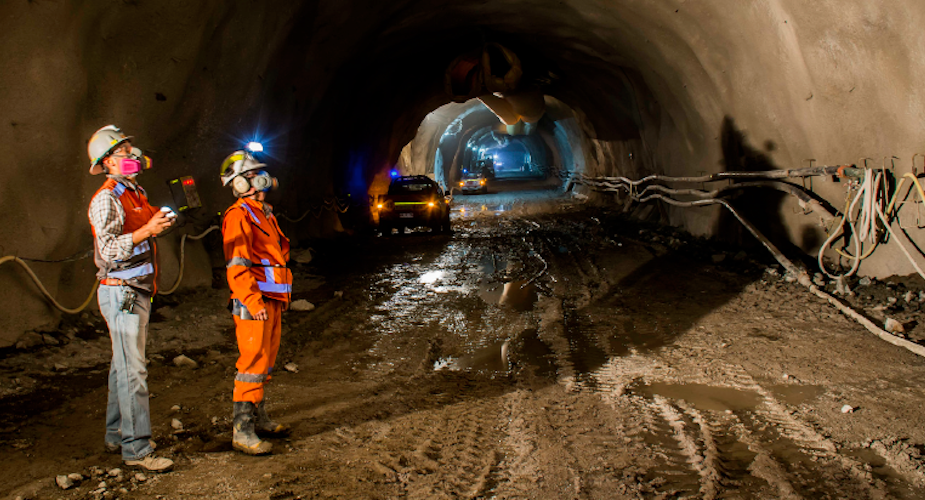
Chile’s state-run copper giant Codelco sees soaring costs, which are over one-and-a-half times above its global rivals, and heavy debt are the main challenges to the struggling company’s competitiveness, according to an internal document seen by Reuters.

The document said that, compared with industry rivals, Codelco has “significantly higher” costs, with a direct cost (C1) 57% higher than major international mining companies and 72% higher than the main national operations.
“The main competitive gap identified by the comparison is concentrated in operational costs, which remain significantly above international and national benchmarks,” the report said.
The analysis also highlighted that the company’s net debt to EBITDA is 3.8x, compared to 0.7x for global mining and 0.5x for the industry in Chile.
Despite losing its spot as world’s largest copper producer in 2025, the report showed that the quality of its mining resources weren’t the main detriment compared to competitors.
The document showed that Codelco’s average ore grade was 0.62% compared to 0.59% at its global counterparts, despite being below the 0.80% of other miners in Chile.
“Codelco’s main challenges are focused on increasing operational competitiveness, improving profitability and increasing the return on the significant investments made, rather than on its production scale or the quality of its resource base,” the report said.
It added that comparisons showed that there are “significant room for improvement in productivity, operational efficiency, and economic performance.”
In its latest earnings, the company said it faced rising costs across several of its mines for varying reasons, including the fatal accident in El Teniente, poor ore grade in Ministro Hales and maintenance costs in Chuquicamata, El Salvador and Gabriela mistral.
The results said costs also rose due to currency appreciation, the rising cost of materials and lower production.
After a scandal involving inflated production figures, Codelco’s new chairman, Bernardo Fontaine, has said he’s reviewing all the company’s operations and projects to restructure its investment and production plans.
Codelco, by law, must return all its profits to the state and debt has become its main source of financing. That debt has also ballooned due to its multi-billion mine expansion projects that were intended to counteract declining ore grades but have been plagued by missteps, cost overruns and accidents.
(By Fabian Cambero; Editing by Alexander Villegas and Nick Zieminski)

No comments:
Post a Comment